The Anonymous Widower

Could Battery-Electric Hitachi Trains Work LNER’s Services?

Before I answer this question, I will lay out the battery-electric train’s specification.

Hitachi’s Proposed Battery Electric Train

Based on information in an article in Issue 898 of Rail Magazine, which is entitled Sparking A Revolution, the specification of Hitachi’s proposed battery-electric train is given as follows.

  • Based on Class 800-802/804 trains or Class 385 trains.
  • Range of 55-65 miles.
  • Operating speed of 90-100 mph
  • Recharge in ten minutes when static.
  • A battery life of 8-10 years.
  • Battery-only power for stations and urban areas.
  • Trains are designed to be created by conversion of existing Class 80x trains

For this post, I will assume that the train is five  or nine-cars long. This is the length of LNER‘s Class 800 and 801 trains.

LNER’s Services

These are LNER services that run from London to the North of England and Scotland.

I shall go through all the services and see how they would be affected by Hitachi’s proposed battery-electric Class AT-300 train.

London Kings Cross And Edinburgh

  • The service runs at a frequency of two trains per hour (tph)
  • Some services extend to Aberdeen, Stirling and Inverness and are discussed in the following sections.

This service can be run totally using the existing electrification.

London Kings Cross And Aberdeen

  • The service runs at a frequency of four trains per day (tpd)
  • Intermediate stations are York, Darlington, Newcastle, Berwick-upon-Tweed, Edinburgh, Haymarket, Inverkeithing, Kirkaldy, Leuchars, Dundee, Arbroath, Montrose and Stonehaven.
  • Currently, the electrification goes 394 miles to Haymarket.

The service is 524 miles long and takes seven hours and four minutes.

To ascertain, if the Hitachi’s proposed battery-electric Class AT-300 train, could run this route, I’ll display the various sections of the route.

  • London Kings Cross and Haymarket – 394 miles – Electrified
  • Haymarket and Inverkeithing – 12 miles – Not Electrified
  • Inverkeithing and Kirkcaldy – 13 miles – Not Electrified
  • Kirkaldy and Leuchars – 25 miles – Not Electrified
  • Leuchars and Dundee – 8 miles – Not Electrified
  • Dundee and Arbroath – 17 miles – Not Electrified
  • Arbroath and Montrose – 14 miles – Not Electrified
  • Montrose and Stonehaven – 24 miles – Not Electrified
  • Stonehaven and Aberdeen – 16 miles – Not Electrified

Note.

  1. Haymarket and Dundee is a distance of 58 miles
  2. Dundee and Stonehaven is a distance of 55 miles

So could the service be run with Fast Charge systems at Dundee, Stonehaven and Aberdeen?

I think it could, but the problem would be charging time at Dundee and Stonehaven, as it could add twenty minutes to the journey time and make timetabling difficult on the route.

Perhaps, an alternative would be to electrify a section in the middle of the route to create an electrification island, that could be reached from both Haymarket and Aberdeen.

The obvious section to electrify would be between Dundee and Montrose.

  • It is a distance of 31 miles to electrify.
  • I have flown my virtual helicopter along the route and it could be already gauge-cleared for electrification,
  • Dundee station has been recently rebuilt.
  • Haymarket and Dundee is a distance of 58 miles.
  • Montrose and Aberdeen is a distance of 40 miles.
  • Pantographs could be raised and lowered at Dundee and Montrose stations.

With this electrification and a Fast Charge system at Aberdeen, I believe that Hitachi’s proposed battery-electric Class AT-300 train could run between London Kings Cross and Aberdeen.

As an alternative to the Fast Charge system at Aberdeen, the route of Aberdeen Crossrail between Aberdeen and Inverurie could be electrified.

  • This would enable battery-electric Class 385 trains to run between Inverurie and Montrose.
  • The route through Aberdeen is newly-built, so should be gauge-cleared and reasonably easy to electrify.

It should also be noted that if battery-electric trains can run between Edinburgh and Aberdeen, then these services are also possible, using the same trains.

  • Glasgow and Aberdeen
  • Stirling and Aberdeen

All passenger services  between Scotland’s Cenreal Belt and Aberdeen appear to be possible using battery-electric trains

London Kings Cross And Stirling

  • The service runs at a frequency of one tpd
  • Intermediate stations are York, Darlington, Newcastle, Berwick-upon-Tweed, Edinburgh, Haymarket, Falkirk Grahamstown

This service can be run totally using the existing electrification.

London Kings Cross And Inverness

  • The service runs at a frequency of one tpd
  • Intermediate stations are York, Darlington, Newcastle, Berwick-upon-Tweed, Edinburgh, Haymarket, Falkirk Grahamstown, Stirling, Gleneagles, Perth, Pitlochry, Kingussie and Aviemore.
  • Currently, the electrification goes 429 miles to Stirling, but I have read that the Scottish government would like to see it extended to Perth, which is 462 miles from London.

The service is 581 miles long and takes eight hours and six minutes.

To ascertain, if the Hitachi’s proposed battery-electric Class AT-300 train, could run this route, I’ll display the various sections of the route.

  • London Kings Cross and Haymarket – 394 miles – Electrified
  • Haymarket and Falkirk Grahamsrown – 23 miles – Electrified
  • Falkirk Grahamsrown and Stirling – 11 miles – Electrified.
  • Stirling and Gleneagles – 17 miles – Not Electrified
  • Gleneagles and Perth –  16 miles – Not Electrified
  • Perth and Pitlochry – 28 miles – – Not Electrified
  • Pitlochry and Kingussie – 44 miles – Not Rlectrified.
  • Kingussie and Aviemore – 12 miles – Not Rlectrified.
  • Aviemore and Inverness – 34 miles – Not Electrified

Note.

  1. The distance between Dunblane, where the electrification actually finishes and Perth is only 28 miles, which shouldn’t be too challenging.
  2. All the sections North of Perth are well within range of a fully charged train.
  3. Some sections of the route are challenging. Look at the video I published in Edinburgh to Inverness in the Cab of an HST.
  4. Hitachi run diesel Class 800 trains to Inverness, so they must know the power required and the battery size to run between Perth and Inverness.

I also believe that the Scottish Government, ScotRail, the Highland tourist industry and Hitachi, would all put their endeavours behind a project to get battery-electric trains between Perth and Inverness.

It would send a powerful message, that if battery-electric trains can run on one of the most scenic rail lines in the world without electrification, then nowhere is out of reach of battery trains.

Looking at the figures, I am convinced that a series of Fast Charge systems at stations like Pitlochry, Kingussie and Aviemore could supply enough power to allow a nine-car version of Hitachi’s proposed battery-electric Class AT-300 train to work the route.

This battery-electrification, would also enable battery-electric Class 385 trains to work the route.

If all this sounds a bit fanciful and over ambitious, read the history of the North of Scotland Hydro-Electric Board, which brought electricity to the area in the 1940s and 1950s.

This battery-electrification is a small project compared to what the Hydro-Electric Board achieved.

I can see a time, when similar techniques allow battery-electric trains to run these lines from Inverness.

  • Far North Line – 174 miles
  • Inverness and Kyle of Lochalsh – 82 miles
  • Inverness and Aberdeen – 108 miles

The Far North Line would probably need two or three Fast Charge systems at intermediate stations, but the other lines would probably only need one system, somewhere in the middle.

I think that this analysis for London and Inverness shows that all parts of England, Scotland and Wales can be served by modern battery-electric trains.

It would also appear that the cost of the necessary Fast Charging systems, would be much more affordable than full electrification, North of Perth.

I estimate that less than a dozen Fast Charging systems would be needed, North of Perth.

  • Some electrification might be needed in Inverness station.
  • Electrification between Inverurie and Aberdeen could help.
  • There’s no shortage of zero-carbon electricity from wind and hydro-electric power.

A couple of years ago, I speculated in a post called London To Thurso Direct.

Could it happen on a regular basis in the summer months?

London Kings Cross And Leeds

  • The service runs at a frequency of two tph
  • Intermediate stations are Stevenage, Peterborough, Grantham, Doncaster and Wakefield Westgate

This service can be run totally using the existing electrification.

London Kings Cross And Harrogate

  • The service runs at a frequency of six tpd
  • Intermediate stations are Stevenage, Grantham, Doncaster and Wakefield Westgate
  • Leeds and Harrogate is a distance of nineteen miles and is not electrified.
  • Hitachi’s proposed battery-electric Class AT-300 train should be able to go from Leeds to Harrogate and back, using battery power alone.
  • Batteries will be charged using the electrification at and around Leeds.

This service can be run totally using the existing electrification.

London Kings Cross And Bradford Foster Square

  • The service runs at a frequency of one tpd
  • Intermediate stations are Stevenage, Peterborough, Grantham, Doncaster and Wakefield Westgate
  • Leeds and Bradford Forster Square is a distance of fourteen miles and electrified.

This service can be run totally using the existing electrification.

London Kings Cross And Skipton

  • The service runs at a frequency of one tpd
  • Intermediate stations are Stevenage, Peterborough, Grantham, Doncaster and Wakefield Westgate
  • Leeds and Skipton is a distance of twenty-six miles and electrified.

This service can be run totally using the existing electrification.

London Kings Cross And Lincoln

  • The service runs at a frequency of one train per two hours (1tp2h)
  • Intermediate stations are Stevenage, Peterborough, Grantham and Newark North Gate
  • Newark North Gate and Lincoln is a distance of sixteen miles and not electrified.
  • Hitachi’s proposed battery-electric Class AT-300 train should be able to go from Newark North Gate to Lincoln and back, using battery power alone.
  • Batteries will be charged using the electrification between Newark North Gate and London Kings Cross.

This service can be run totally using the existing electrification.

London Kings Cross And York

  • The service runs at a frequency of 1tp2h
  • Intermediate stations are Stevenage, Peterborough, Grantham and Newark North Gate, Retford and Doncaster

This service can be run totally using the existing electrification.

London Kings Cross And Hull

  • The service runs at a frequency of one tpd
  • Intermediate stations are Stevenage, Peterborough, Grantham and Newark North Gate, Retford and Doncaster
  • Temple Hirst Junction and Hull is a distance of thirty-six miles and not electrified.
  • Hitachi’s proposed battery-electric Class AT-300 train should be able to go from Temple Hirst Junction and Hull and back, using battery power and a Fast Charge system at Hull.
  • Batteries will also be charged using the electrification between Temple Hirst Junction and London Kings Cross.

This service can be run totally using the existing electrification.

Consider.

  • The train runs seventy-two miles to get to Hull and back on lines without electrification..
  • Hitachi state that the trains maximum range on battery power is sixty-five miles.
  • Hull Trains and TransPennine Express also run similar trains on this route, that will need charging at Hull.

So rather than installing a Fast Charge system at Hull, would it be better to do one of the following.

  • Create a battery-electric AT-300 train with a bigger battery and a longer range. A One-Size-Fits-All could be better.
  • However, the larger battery would be an ideal solution for Hull Trains, who also have to reverse and go on to Beverley.
  • Electrify the last few miles of track into Hull. I don’t like this as electrifying stations can be tricky and getting power might be difficult!
  • Electrify between Temple Hirst Junction and Selby station and whilst this is done, build a solution to the problem of the swing bridge. Power for the electrification can be taken from the East Coast Main Line.

I’m sure a compromise between train battery size and electrification can be found, that creates a solution, that is acceptable to the accountants.

Conclusion

I think it could be possible, that LNER could use a fleet of all-electric and battery-electric AT-300 trains.


February 27, 2020 Posted by | Transport/Travel | , , , , , , , , , , , , , , , | Leave a comment

Hydrogen-Powered Train To Be Tested In Scotland As Fuel Of Future

The title of this post, is the same as that of this article on the Scotsman.

Points from the article.

  • The train would be a converted recently-retired Class 314 train.
  • The train could be tested on a heritage railway, as the battery-electric Class 230 train, was tested on the Bo’ness and Kinneil Railway.
  • The technology involved will be developed by Arcola Energy of Dalston in London and the University of St. Andrews.

Dr. Ben Todd of Arcola Energy described the project as a small feasibility study.

February 21, 2020 Posted by | Transport/Travel | , , , | 1 Comment

Abellio To Lose ScotRail Franchise Three Years Early

The title of this post is the same as this article on Rail Magazine.

This is the introductory paragraph.

The ScotRail franchise managed by Abellio will end in March 2022 – some three years earlier than planned, Scottish Transport Secretary Michael Matheson confirmed on December 18.

I don’t live in Scotland, so perhaps I shouldn’t comment too strongly.

  • When I’m in Scotland, I find the performance of ScotRail little different to Greater Anglia, which is also managed by Abellio.
  • In the last three or four years, I have only suffered serious delays a couple of times on Greater Anglia and one was severe weather-related and the other was the usual suspects trying to steal the overhead wires.
  • In that period, I can’t remember being delayed seriously in Scotland.
  • I was also in Scotland for the Commonwealth Games and the rail service coped well with all the visitors.

But Scotland has suffered more than its fair share of Network Rail and train delivery problems.

  • Late delivery of electrification.
  • Poor design of the Borders Railway.
  • Problems with the new Class 385 trains from Hitachi.
  • Problems with the delivery of the Inter7City trains.
  • Disruption caused by the rebuilding of Glasgow Queen Street station.

Is another factor, the endorsement of the SNP in the recent General Election?

I have a feeling that this enforced divorce will be a pension pot for lawyers.

December 21, 2019 Posted by | Transport/Travel | , , , | 4 Comments

Election 2019: DUP Manifesto At A Glance

The title of this post, is the same as that of this article on the BBC.

This is said under Infrastructure.

The infamous bridge from Northern Ireland to Scotland makes an appearance in the manifesto. It has been mooted on a number of occasions, despite a number of potential barriers to its construction.

Not everyone believes those barriers are insurmountable, though.

I don’t and feel strongly, that the bridge should be built and linked to High Speed Two

  • London and Belfast in four hours
  • London and Dublin in five hours.
  • Belfast and Glasgow in under two hours.

Not forgetting, it would become an important freight route..


December 2, 2019 Posted by | Transport/Travel | , , , , , , , , , , | Leave a comment

Caledonian Sleeper Considers Seven-Day Running

The title of this post, is the same as that of this article on Rail Magazine.

This is the introductory paragraph.

More routes and seven-day-a-week running could feature for Caledonian Sleeper in the future.

To my mind, it should always be a service that runs seven days a week, as the make-up of passengers seems to contain, a lot of those who want to travel on the day they want.

As to more routes, I wrote about possible services between the Far North and Edinburgh in Rail Sleeper Plan Between Caithness And Edinburgh

This was my conclusion.

I feel that not next year, but once Scotland’s rail system is fully developed, with the shortened Inter-City 125s serving the longer routes and electric trains all over the Central Belt, that a Sleeper Train between Edinburgh and Thurso will be viable.

I’d certainly give it a go!

Conclusion

I can’t see any reasons for investigating the roll out of extra Caledonian Sleeper services, once the company sorts out their current operational problems.

Hopefully, the Scottish Government and tourism industry will give the services their backing.


October 9, 2019 Posted by | Transport/Travel | , , | 7 Comments

Leuchars Station – 21st Aug 2019

I took these pictures at Leuchars station after arriving on an Inter7City train from Edinburgh.
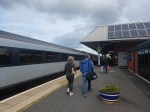
I didn’t stay log as I was running late and needed to get to Edinburgh for my train home.

My reason for going to Leuchars was to look at the proposed St. Andrews Rail Link.

This Google Map shows the position of St. Andrews in relation to Leuchars station.
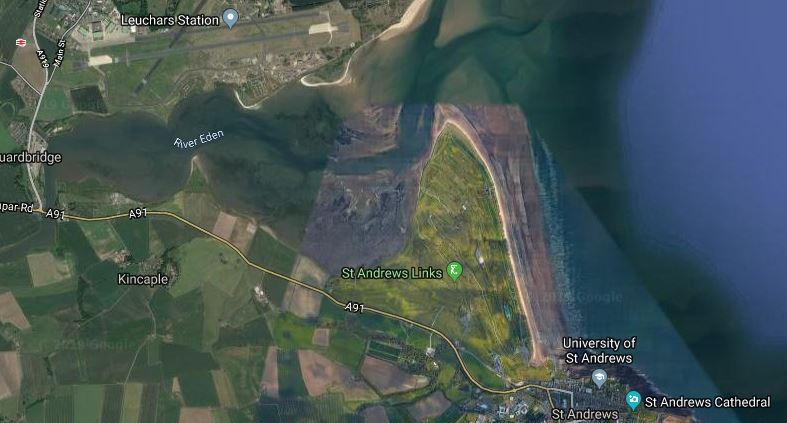
Leuchasrs station is in the North-West corner of the map, with St. Andrews in the South-East.

It looks like most of the route has been dismantled or built on and it might not be the easiest route to reinstate.

Wikipedia says this about an alternative plan.

The original reinstatement plan espoused by StARLink was simply a reestablishment of the historical Leuchars – St Andrews line but since the publication in 2012 of a report by Tata Steel Rail Consultancy StARLink now advocates an entirely new 21st-century layout with a twin-cord high-speed rail link travelling west and southwards via Cupar and northwards via Leuchars. StARLink has estimated that the railway could be reinstated for £76 million.

I am rather suspicious of the low value of the costing.

What ouzzled me at Leuchars was that there were no signs that I saw, telling visitors how to get St. Andrews.

August 21, 2019 Posted by | Transport/Travel | , , | Leave a comment

Thurso Company Powers Up UK’s First Green Train

The title of this post is the same as that of this article on the John O’Groat Journal.

Lithium-ion batteries for a hydrogen-powered Class 799 train are not the sort of product, you’d expect to be sourced from the Far North of Scotland.

June 29, 2019 Posted by | Transport/Travel | , , , | Leave a comment

Speculation Increases Over Use Of HSTs

The title of this post, is the same as that of this article on Rail Magazine

This is the second paragraph.

GWR and ScotRail are both introducing modified four and five-coach HSTs on various duties, with GWR’s operating regional services and ScotRail’s Inter7City sets to be used on its core inter-city routes.

I’ve yet to take a ride in either of the GWR oe Scotrail version of the trains and I shall be looking forward to riding both, later in the year.

I’ve only seem one close-up once at Dundee.

But they seem to be very slow in coming in to service.

Abellio Scotrail’s Proposed Fleet

Abellio Scotrail seem to have 54 Class 43 locomotives and 121 Mark 3 coaches, which according to Wikipedia, will be formed into 26 sets: 17 five-car and 9 four-car trains.

Routes include connecting Scotland’s seven cities.

GWR’s Proposed Fleet

Great Western Railway seem to have retained 24 Class 43 locomotives and 48 Mark 3 coaches, which will be formed into 11 four-car trains.

Routes include between Cardiff and Penzance.

Will These Short HSTs Be Successful?

A number of factors will come into play.

  • The trains are liked by passengers and drivers.
  • They are an ideal size for a lot of routes.
  • They have an excellent ride.
  • They have a lot of capacity for oversized baggage, like bicycles, surf boards, sporting equipment and even some urgent or perishable freight.

Only time will tell, but it is my view, they have a good chance of being a success.

Do Short HSTs Have Any Problems?

The two big problems are their age and that they are diesel-powered I wouldn’t be surprised to see some of the new franchises in the next few years, deciding to go all electric, with only a small number of diesel or hybrid trains.

Would Short HSTs be able to get an exception on heritage grounds?

The technology now is at a level, that by 2030, the UK railways could be diesel-free, with all trains electric, battery or zero-carbon hybrid.

Are There Any Other Routes Where Short HSTs Could Be Used?

I will break them down by franchis, in this incomplete list.

East Midlands Railway – Norwich And Derby

This new route for East Midlands Railway will be created by splitting the current service between Norwich and Liverpool Lime Street stations.

  • The route is 152 miles long.
  • I estimate that current trains will take three hours.
  • The service needs four-car trains at certain times.

Would it be possible for Short HSTs to do a Norwich and Derby round trip in six hours?

GWR – Cardiff And Portsmouth

If the Castles can work Cardiff and Penzance, could they work Cardiff and Portsmouth?

Scotrail – Far North Line

What has surprised me is that Abellio Scotrail are not going to use their Inter7City trains between Inverness and Wick stations on the Far North Line.

  • The distance is 174 miles
  • The current trip takes four and a quarter hours
  • The round trip is nine hours.

So could a short HST do the round trip in eight hours?

A single train could then run to the following schedule.

  • Leave Inverness at 0600.
  • Return from Wick at 1000.
  • Leave Inverness at 1400
  • Return from Wick at 1800

The train would arrive back in Inverness at 2200.

In Is This The Most Unusual Idea For A New Railway Service in The UK?, I wrote about a proposal to introduce Class 230 trains between Wick and Thurso at the far north of Scotland.

This Far North Metro, would sit well with a two train per day service to Inverness.

  • Mark 3 carriages have large windows for sightseeing.
  • A buffet and small bar could be provided.
  • The trains have space for parcels, urgent and perishable freight.
  • The service could link with the ferries to the Orkneys.

A subsidiary objective would be to bring some prosperity to a remote region.

Scotrail – Kyle Of Lochalsh Line

If Short HSTs can work their magic on the Far North Line, I just wonder if they could provide services on the Kyle Of Lochalsh Line.

  • The distance is 83 miles
  • The current trip takes two hours and forty minutes.

So could a short HST do the round trip in six hours?

As with the Far North Line, there would be a much improved service for both those that live along the line and the many visitors.

Transport for Wales – Cardiff And Holyhead

Transport for Wales run a two-hourly service between Cardiff and Holyhead stations. The rolling stock for some services will be a rake of four Mark 4 carriages, a Class 67 locomotive and a driving van trailer.

Isn’t this in effect a train with a similar purpose to a Short HST?

Obviously, Transport for Wales have got good reasons for not running Short HSTs on this route, but the choice of rolling stock does show similar thinking that led to the creation of the Short HST.

Transport for Wales – Heart Of Wales Line

The Heart Of Wales Line runs between Llanelli in West Wales and Craven Arms in England.

  • It is around 150 miles long.
  • Trains take a few minutes over four hours between Swansea and Shrewsbury stations.

It is one of those rail lines, that could be a serious tourism asset.

Would Short HSTs add to the experience?

Transport for Wales -North Wales Main Line

The North Wales Main Line is another line, where iconic Short HSTs might attract passengers.

Conclusion On Routes

There are certainly several places where Short HSTs could be gainfully employed.

Could Any Other Trains Be Used?

The specification could be something like this.

  • Four or five carriages.
  • Diesel, diesel bi-mode or hydrogen bi-mode.
  • Quality interior
  • 100, 110 or 125 mph top-speed.

Trains could be either new build or a rebuilt and/or refurbished older train.

Class 802 Train

Hitachi’s Class 802 train is in service.

  • It meets the specification.
  • It can seat somewhere between 326-342 passengers.
  • It can use electrification if it exists.

It would do a good job.

Class 755 Train

Stadler’s Class 755 train will soon be in service.

  • It meets the specification.
  • It is only a 100 mph train, but I suspect it can be uprated to 125 mph, as the electric version can handle this speed.
  • A four-car train  can seat 227 passengers.
  • It can use electrification if it exists.

It should do a good job.

Could HSTs Have Any Parcel Or Freight Applications?

This is always being suggested, but anything concerning freight or parcels must have the following characteristics.

  • They must be reliable.
  • They must be able to stick to a timetable.
  • They must have a hard-wearing interior, as they will have a hard life.
  • The small single doors would need to be replaced.
  • They must be able to accept standard freight pallets.
  • They must be quick and easy to load.

My biggest worry would be over the last two points. Would the trains just need three much modification to make them suitable for freight and parcels.

Could HSTs Have Heritage Applications?

Already a rake of Mark 3 coaches is going to be used with the  60163 steam locomotive.

But could HSTs in their own right find use in the heritage sector?

I think, that there could be space in the market for a few HSTs, which may have the sort of appeal to the younger generation, that steam trains had to my generation.

After all, I’ve had some of the best meals in my life in an HST.

Conclusion

They may be applications, but each will only use small numbers of trains.

So I’m afraid that some of these trains will go to scrap.

But then no-one can say, that they haven’t done well!


June 16, 2019 Posted by | Transport/Travel | , , , , , , , , | Leave a comment

Promoting The Highland Main Line

On Wednesday, the Highland Main Line Community Rail Partnership were in Kings Cross station promoting the Highland Main Line as a tourism destination.

I very much agree with the Partnership’s objective of encouraging more visitorsto the Scottish Highlands.

The Highland Main Line Community Rail Partnership Web Site

The Partnership were giving out an excellent brochure brochure which documents the wide range of attractions along the line between Perth and Inverness.

The Highland Main Line Community Rail Partnership web site has an on-line copy of the brochure.

The web site is also a valuable resource about the line and the area.

An Improving Domestic Rail Service

There is an approximately two-hourly service between Perth and Inverness and it is planned that this will be improved in the next couple of years.

  • Reducing journey times is an objective.
  • An hourly service is also an objective.
  • Inter7City trains, which are shortened, refurbished and modernised InterCity 125 trains will be introduced.

This service will enable visitors to base themselves close to one of the stations along the line and use the trains to visit other places.

Azumas To Inverness

LNER currently run InterCity 125 trains between London and Inverness

  • There is a single service each day in both directions.
  • The Northbound train leaves London at midday.
  • The Southbound train leaves Inverness just before eight in the morning.
  • The journey currently takes around eight hours.
  • The trains stop at all stations between Perth and Inverness.

The service needs two trains to run one train per day in both directions.

LNER have just launched the new Class 800 trains, which they are marketing as Azumas.

My observations show that Azumas could save between thirty and sixty minutes on the trip.

The following improvements will all help.

  • Improvements to the Highland Main Line.
  • Steo-free access between train and platform at all stations.
  • Faster acceleration and deceleration at all stops.
  • Electrification to Stirling and possibly as far as Perth.
  • As digital signalling is introduced South of Edinburgh, speeds of up to 140 mph could be possible.

Many of these improvements are currently planned and most will be completed by 2024.

This video was one I made travelling in the cab of an InterCity 125.

Will LNER invite to take one from an Azuma?

The Possibility Of Extra Services

The journey time between London and Inverness will surely get shorter in the next few years.

If say it was seven hours, then allowing an hour for cleaning, loading supplies and refuelling in Inverness would mean that a round trip from London would take fifteen hours.

  • A train leaving Kings Cross station at 07:00 would arrive in Inverness at 14:00.
  • The return journey would leave at 15:00 and be in London by 22:00.
  • A second service could start in Inverness and mirror the service starting in London.

The service would need two trains.

So it appears that by saving time on the journey, the possibility of extra services is opened up.

The Improved Sleeper Service

I have taken the current Caledonian Sleeper to Inverness and it is a spectacular ride through the Highlands in the early morning.

But the elderly trains are being replaced and I wouldn’t be surprised to see a lot more passengers decide to  use the sleeper to the Highlands.

Over the last few years, the Austrians, the Swedes and the Scots have all ordered new rolling stock for their sleeper trains and I believe that we’ll see a revival in this form of transport, throughout Europe.

A Caithness To Edinburgh Sleeper

This has been proposed and I wrote about it in Rail Sleeper Plan Between Caithness And Edinburgh.

This was my conclusion.

I feel that not next year, but once Scotland’s rail system is fully developed, with the shortened Inter-City 125s serving the longer routes and electric trains all over the Central Belt, that a Sleeper Train between Edinburgh and Thurso will be viable.

The proposed increase in capacity between London and Edinburgh, probably adds to the viability.

Sleeper One Way And Azuma The Other

I can see this becoming a popular way to visit Scotland.

  • It will be new trains both ways.
  • Both trains stop at all stations between Perth and Inverness.
  • The price of a sleeper ticket compares well with the cost of a reasonable hotel.

The combinations are many and varied.

Cycling

Cycling holidays seem to be increasing everywhere and Scotland is no exception.

On the West Highland Line between Gl;asgow and Oban, passengers with cycles are increasing in number, so Scotrail are converting redundant Class 153 trains into multi-purpose carriages to add capacity to the trains.

On the Highland Main Line, for those, who want to explore the area on their bicycles, the Inter7City trains should be able to provide enough space for bicycles in the back of the two Class 43 locomotives.

Conclusion

The more I look at the Highland Main Line, the more I think it has a rosy future.

All it needs to seal its future is a visit from Michael Portillo and his camera crew.


May 18, 2019 Posted by | Transport/Travel | , , , , , | 2 Comments

A First Ride In One Of LNER’s New Azumas

The Azuma is the name given by LNER‘s new Class 800 trains.

I rode in one today from Peterborough to Kings Cross after deliberately doing the trip the other way in an InterCity 125.

I took these pictures.

These are my thoughts.

The Brand-Name

The Azuma brand-name is one of those names, that was either thought-up for a fee of several million pounds by a specialist agency or it was thought up by a few serious real-ale drinkers in a comfortable pub, in front of a roaring fire or a blazing sun.

  • It is actually Japanese for East, so I doubt it will be controversial.
  • It is catchy and if say Simon Calder said that he liked the new Azuma, it might result in extra ticket sales.
  • It will differentiate LNER from their competitors running differently-liveried examples of the same Class 800 train.
  • Does it suggest speed in English, with the zoom in the middle?

LNER obviously like it, as Wikipedia says they retained the name, which was devised by the previous franchise holder; Virgin Trains East Coast.

Thinking through the history of the East Coast Main Line, I can only remember one class of locomotives or trains, that got a name; the Class 55 locomotive or Deltic. For those of my generation, Deltics are often iconic. In The Thunder of Three-Thousand Three-Hundred Horses, I describe a memorable trip behind a Deltic.

The Livery

The livery is distinctly cheeky, with an eye suggested around the front side-window!

The eye certainly stands out, which could be a good way to get extra seat sales.

It also appears that the livery has changed from the original Virgin East Coast design.

I like it!

The Interior

The interior is simple, practical and bright with some innovative touches.

  • I was in Standard and there were a reasonable number of good-sized tables, which is always welcome.
  • The seats seemed better than those fitted to the Class 800 trains on Great Western Railway (GWR).
  • The electronic seat registration status displays were clear and understandable.
  • I didn’t use the wi-fi or the charging points, but others were using them and one guy said they worked fine.
  • Our ticket collector had a moan and I suspect there are a few problems that will be corrected as necessary.

But then trains always get a lot better after their first major update.

Comparison With Great Western Railway’s Version

The general consensus between two other passengers and myself, was that the seats in the Azuma were more comfortable, than those of GWR’s Class 800 trains.

A Three Class Train

Like some other services in the UK, the Azuma is effectively a three-class train.

  • First Class
  • Standard Class with a table.
  • Bog Standard Class

I find it interesting that East Midlands Railway are promising that all seats will have tables, which already happens on some services on Chiltern Railways.

I wonder if LNER’s competitors; East Coast Trains, Grand Central and Hull Trains will offer more tables.

As a regular user of Chiltern Railways, I can see more tables being added to all main line services.

Performance

As the pictures show, I followed the train speed with the Speedview app on my phone.

After accelerating away from Peterborough 125 mph was held to Stevenage and then after slowing for the twin-track section over the Digswell Viaduct, the train maintained 100 mph for most opf the way until Kings Cross.

I think we will see improved performance onf the East Coast Main Line, with speeds increasing and journey times decreasing.

  • There are plans to add extra tracks between Huntingdon and Peterborough.
  • The flyunder at Werrington will be completed.
  • There are plans for improvements to the North at Newark, Doncaster and York.
  • Digital signalling will allow 140 mph running of Azumas and other Class 800 trains.
  • It has been suggested that capacity on the route would improve with 125 mph trains running to Kings Lynn.

If all operators were running Class 800 trains, this would surely increase capacity.

Splitting And Joining

This document on the Hitachi web site is entitled Development of Class 800/801 High-Speed Rolling Stock For UK Intercity Express Programme.

This is a sentence from the document.

It also incorporates an automatic coupling system that shortens the time taken to couple or uncouple trains while stopped at a station.

Their Kentish cousins have been at it for several years.

LNER have not disclosed how they will use splitting and joining, but there are possibilities, where two five-car trains leave London as a ten-car train and then split en route to serve two destinations.

  • London to Aberdeen and Inverness, splitting, at Edinburgh.
  • London to Harrogate or Skipton and Middlesborough, splitting at Leeds.
  • London to Lincoln and Hull, splitting at Newark.

Trains would join at the same stations, when returning South.

The splitting and joining has advantages over the current fixed-length InterCity 125 and InterCity 225.

  • A five-car Azuma, only needs a 130 metre long platform. So services to destinations like Lincoln, Middlesbrough, Scarborough and Sunderland without a long platform become possible without expensive platform extensions.
  • Train paths on the East Coast Main Line are being used more efficiently, as in some cases two destinations are served by one service into Kings Cross.

There are some disadvantages.

  • Travellers must make sure they get into the correct part of the train.
  • There is probably more staff on the train, as both five-car trains need a full crew.
  • Returning South, trains must keep to time precisely to the joining station, to avoid delaying another service.
  • All possible calling points on the East Coast Main Line, must be able to handle ten-car trains But as these are less than twenty metres longer than an InterCity 225, lengthening shouldn’t be a major exercise.

It’s probably best to consider the two five-car trains as separate services, which happened to be coupled together on the Southern section of the East Coast Main Line.

It should also be noted that several stations like Kings Cross, Doncaster, York and others have entrances in the middle of the platform, which is convenient for either the front or rear train.

Bicycles, Surf Boards And Oversized Luggage

I don’t think you get many surfboards on London to Leeds services, but a member of LNER’s staff told me, that during the recent Tour de Yorkshire, there were a lot of passengers with bicycles. This could be a problem on the Azuma,, as the nine-car train has only four spaces, with a five-car just two.

With the conversion of Scottish services to Azumas, I can see that luggage could be a problem.

I took this picture at Edinburgh, where this luggage is about to be swallowed by the locomotive of an InterCity 125.

I can see a time, when there will be a need to add another car to some nine-car trains, to make sure all the bicycles, surf boards and oversized luggage can be accommodated on the train.

  • Are LNER cutting themselves off from upmarket golf tours, where passengers travel between London and Gleneagles in First Class luxury?
  • GWR have a similar problem on South West England services and I think, it will get more serious in the next few years, as more people take up cycling and surfing.
  • It appears GWR have resorted to banning surf-boards.
  • ScotRail have opted to convert redundant single-car Class 153 trains, into multi-purpose additional carriages to enhance services on the West Highland Line.

I can also see a problem on the London to Inverness services. In Promoting The Highland Main Line, I wrote about the efforts of the Highland Main Line Community Rail Partnership to encourage more visitors to their iconic line and the surrounding area.

Many of the visitors that are attracted to the area, might come with bicycles, golf bags, climbing equipment and other oversized baggage.

So could we see an extra multi-purpose car added to some Azumas working between London and Scotland?

  • The Class 800 trains can be lengthened to as long as twelve cars.
  • Manufacturing of extra cars in the next few years, should be relatively easy.
  • Adding extra cars is a simple cut-and-paste, with the train software ascertaining the train formation.
  • Most platforms are probably long enough for at least ten-car trains.
  • A ten-car Class 800 formation is only fifteen metres longer than a nine-car InterCity 225.
  • There may be opportunities to carry high-value, urgent or perishable freight.

Obviously, the train operators’ needs to satisfy their markets and their finances will decide if extra cars are worth adding.

But I think, that we’ll see some ten-car Azumas on the London and Aerdeen, Edinburgh and Inverness routes.

Conclusion

The train appears to meet the specification, but as regards bulky luggage, it could be that the specification is lacking.


May 16, 2019 Posted by | Transport/Travel | , , , , , | 6 Comments