Plans For East Midlands Hub Station For HS2 Are Beginning To Emerge
East Midlands Hub (Toton) station depending on who’s writing the words is beginning to emerge from HS2’s plans. (I shall use Toton HS2 in this post, to emphasise I mean the HS2 station.) Wikipedia says this about the station.
It is intended to be located on the existing railway sidings in Toton, situated between Nottingham and Derby. A connection to the Nottingham tram system and new connections to existing rail services are proposed, to link the station to Nottingham, Derby and Leicester railway stations. The station would be located adjacent to the M1 motorway in Nottinghamshire, close to the border with Derbyshire.
This Google Map shows the location.
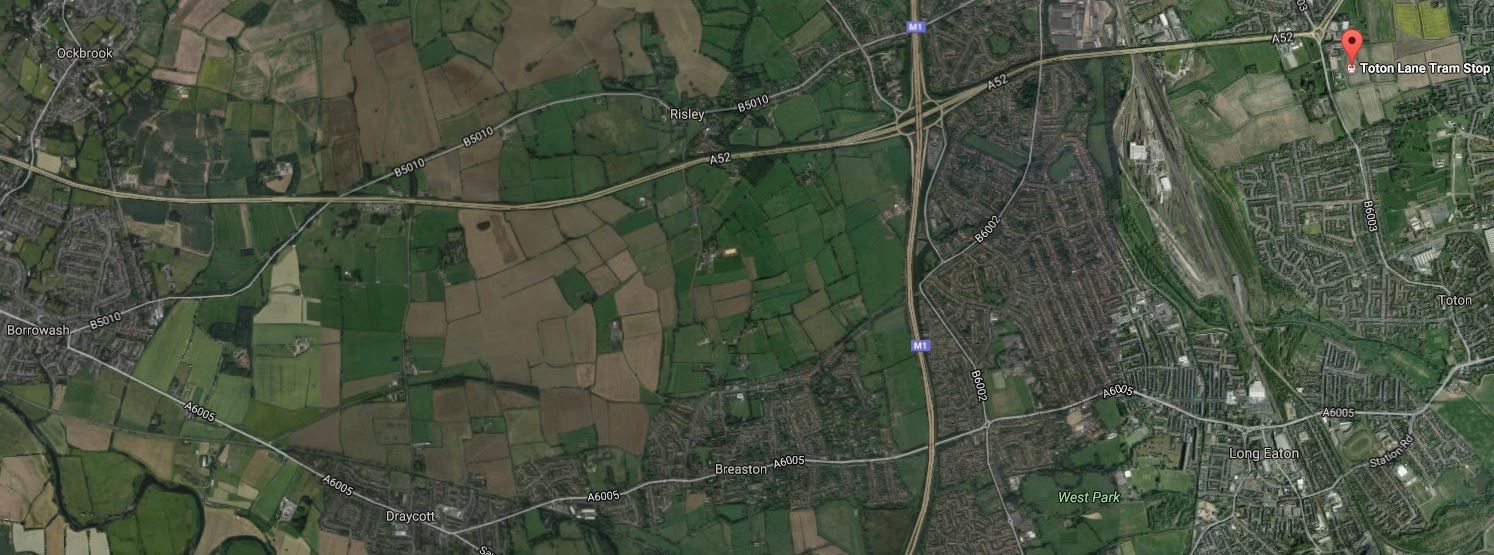
The red arrow marks Toton Lane Tram Stop, which is a Psrk-and-Ride terminus of the Nottingham Express Transit. Between the tram stop and the M1, the Erewash Valley Line passes through in a North-South alignment. South of the East-West A52 is the site of Toton Sidings, which is proposed for the new Toton HS2 station.
I think that HS2 have made a good start in the planning of the connections at this station.
Link To Nottingham Express Transit
Extension of route 1 to serve HS2 at Toton and Derby is a section in the Wikipedia entry for the Nottingham Express Transit.
This is said.
News that a station for the proposed HS2 line (the East Midlands Hub) is likely to be built on the site of Toton sidings, only a short distance from the Toton Lane terminus has fuelled speculation that the line could be extended to the new station. In November 2015 there was a proposal for the tram network to be extended from Toton to Derby. Two routes were later proposed by the D2N2 local enterprise partnership for the route to Derby. The first route would be via the A52 while the second would be via Borrowash and Spondon.
This is not a cheapskate extension to connect Nottingham to HS2, but a proper solution, that creates a high-capacity link running from Nottingham to Derby via the new Toton HS2 station.
- The A52 is the East-West road connecting Derby and Nottingham, which is clearly shown on the Google Map.
- Borrowash is a village at the Western edge of the Google Map, with Spondon, which has a station on the Midland Main Line to Derby, just off the map to the West.
I wouldn’t rule out the possibility of extending the trams from Toton HS2 using tram-trains to go via Long Eaton and Spondon to Derby.
- Tram-trains could use existing track between Toton HS2 and Derby, provided it was electrified.
- Daul-voltage tram-trains would be needed to work on main line and tramway electrification.
- Journey time from Derby to Toton HS2 could be around 20 minutes.
- Network Rail’s plan to move Long Eaton station should make this easier.
- A high frequency service could be run.
- Extra stops could be introduced.
- There are tram-train versions of the Alstom Citadis trams used in Nottingham.
Tram-trains would need 25 KVAC electrification along the route between Toton HS2 and Derby stations. But surely the Midland Main Line electrification will have got to these two stations by 2026 or so!
Nottingham To Derby Via Toton HS2
Nottingham and Derby are two very different cities, but both are successful in their own ways.
Currently, there are about three direct trains per hour (tph) between the two cities.
- Birmingham-Coventry has 7 tph
- Birmingham-Wolverhampton has 9 tph and the Midland Metro.
- Manchester-Leeds has 8 tph
- Leeds-Bradord has 6 tph
Nottingham and Derby get a very raw deal and working on the London Overground/Merseyrail principle of Turn-Up-And-Go , Derby and Nottingham need a four tph connecting service to give passengers something that is acceptable.
As with Birmingham-Woverhampton, a mix of heavy rail, tram and perhaps tram-train might give the two cities the service to Toton HS2 and between themselves, that they need.
Bssed on good practice in London, Birmingham and Liverpool, I would provide the following minimum service.
- 4 tph – Express heavy rail stopping at Beeston, Toton HS2, Long Easton and Spondon.
- 4 tph – Tram-train stopping everywhere between Hucknall and Derby via Beeston, Toton HS2, Long Eaton and Spondon.
- 3 tph – Extra long distance trains calling at both, which would probably also stop at Toton HS2.
It would be a darn site better than what is currently provided.
A Notts/Derbys Crossrail
There might even be a case for a Newark to Burton-on-Trent service via Nottingham, Toton HS2, Long Eaton and Derby. It would be Notts/Derbys version of Crossrail, feeding passengers from all over the area to HS2.
Nottingham City Centre To London In Under 90 Minutes
Currently Nottingham to London takes one hour forty minutes by the fastest trains. But after HS2 opens, it would take 30 minutes from Nottingham to Toton HS and the 52 minutes by HS2 to London.
So even if the classic service to St. Pancras gets faster and more frequent, will passengers opt for the quicker HS2 from Toton HS2?
If say Toton HS2 to London was four tph and run on almost a Turn-Up-And-Go basis, and the connections to Derby and Nottingham were upwards of six tph, the classic trains will have to work hard to maintain market share.
Derby to London wouldn’t show the same improvement as Nottingham to London, but the service could be more frequent and probably well under ninety ,minutes.
The big winners would be the passengers from the Far West of Derby to the Far East of Nottingham.
Using The Erewash Valley Line
Network Rail is improving the Erewash Valley Line. Under Future is a section in the Wikipedia entry for the line.
This is said.
Network Rail as part of a £250 million investment in the regions railways has proposed improvements to the junctions at each end, resignalling throughout, and a new East Midlands Control Centre.
As well as renewing the signalling, three junctions at Trowell, Ironville and Codnor Park will be redesigned and rebuilt. Since the existing Midland Main Line from Derby through the Derwent Valley has a number of tunnels and cuttings which are listed buildings and it is a World Heritage Area, it seems that the Erewash line is ripe for expansion.
It would seem that Network Rail are creating a 125 mph-plus line between East Midlands Parkway and Chesterfield stations. Is this part of a pragmatic philosophy to improve services from London to Chesterfield and Sheffield.
- Derby to Chesterfield along the Derwent Valley will not be electrified because of heritage and engineering reasons.
- Derby to Sheffield via Chesterfield will be served by bi-mode or other independently-powered trains.
- The Erewash Valley Line will be electrified and could even be cleared to allow 140 mph running.
- London to Sheffield trains would go via East Midlands Parkway, Long Eaton, Toton HS2 and Chesterfield.
Even if HS2 isn’t built, Chesterfield and Sheffield would get a vastly improved service to London.
When HS2 is built to Toton HS2, HS2 can take advantage of the Erewash Valley Line to create faster services to the North.
Extending HS2 To Sheffield
If HS2 can get to Toton HS2 in 52 minutes, surely this could mean a London-Sheffield time of well under two hours once the Erewash Valley Line is electrified, even if passengers had to change trains.
But I think we know enough about the dynamics of High Speed Trains, that can run at 225 mph on High Speed Lines to get them to run at 125 or even 140 mph on high standard main lines, like the Midland Main Line.
After HS2 opens to Toton HS2, Chesterfield and Sheffield would get a better service from London in three ways.
- Direct from London on the Midland Main Line.
- By HS2 with a change at Toton HS2 to a classic service.
- By HS2 direct.
All services would use the electrified Erewash Valley Line to get to Chesterfield.
It should be noted that from 2020, London-Norwich will be on a frequency of 3 tph. Surely, the much larger Sheffield needs 4 tph to and from London.
Using The Robin Hood Line
The Robin Hood Line goes between Nottingham in the South to Mansfield Woodhouse and Worksop in the North.
- It is an underdeveloped line with diesel multiple units running to a frequency of 2 tph.
- The Southern end of the line connects to the tracks through Toton HS2, so it wouldn’t be difficult to use the new station as an additional terminus for the Robin Hood Line.
- At the Northern end, there is scope to develop new branches.
I can envisage Nottingham developing the Robin Hood Line into a suburban network feeding passengers to both the City Centre and Toton HS2.
Extending HS2 to North Nottinghamshire And Lincoln
In After The Robin Hood Line Will Nottingham See The Maid Marian Line?, I wrote about an article in the Nottingham Post is entitled Hopes HS2 could see ‘Maid Marian Line’ opened to passengers.
There is a freight only line, that if reopened to passenger traffic would allow trains to connect from Toton HS2, through Ilkeston and Langley Mill to North Nottinghamshire and all the way across Lincolnshire to Lincoln, thus giving a large area direct access to HS2.
Lincoln to London would be under two hours with a change at Toton HS2.
Will All Sorts Of Towns And Cities Get The Benefit Of Direct HS2 Trains?
I have mentioned a lot of stations at various town and cities in this post.
To take Langley Mill station as an example, currently this gets at least one fast train a day to and from St. Pancras.
When the new HS2 trains are running between London, Chesterfield and Sheffield via Toton HS2, will they do the same thing?
If they do, then stations like Ilkeston, Langley Mill and Alfreton could get a direct HS2 service to and from Birmingham and London.
One of the things to note, is that the new trains will be much faster at stopping and getting on their way again, than the current generation of trains, so adding stops between Toton HS and Sheffield. won’t delay the service like it does today.
As I said earlier, I believe there could be a similar connecting service from Toton HS2 to Lincoln, calling at Kirkby-in-Ashfield, Mansfield, Gainsborough, Lincoln and Cleethorpes.
The train to Lincoln would probably be a short five can train and it would couple and uncouple with a similar train at Toton for the express journey South.
Other destinations from Toton HS, might include Doncaster, Doncaster Airport and Hull.
It’s one thing for a short train to trundle round Nottinghamshire and Lincolnshire at 100 mph, but when on HS2, you probably need two trains coupled together to maximise the use of a limited number of train paths.
Connections could also be created using slower trains! But they wouldn’t be so sexy!
A New City At Toton
The Sunday Times has an article this week, which was entitled Next Arrival On The HS2 Line: A Brand New City.
It is an interesting proposition.
- There’s certainly space between Derby and Nottingham.
- Birmingham will be 19 minutes away by HS2.
- London will be within the hour.
- The M1 will pass right through the city.
But above all we need more housing.
Conclusion
The HS2 station at East Midlands Hub or Toton HS2, is a lot more than a HS2 station for Nottingham and Derby.
I would do the following.
- Electrify to Sheffield on the Erewash Valley Line and between Derby and Nottingham.
- Extend the Nottingham Express Transit to Derby via Toton HS2 using tram-train technology.
- Run a 4 tph express local service between Derby and Nottingham via Toton HS2.
- Make sure that HS2 reaches Toton HS2 as soon as possible.
- Build the new city at Toton.
Surely because the Nottingham-Derby area has a lot to gain from HS2, it would probably be very beneficial for HS2’s revenue.
Does Sheffield Get The Public Transport It Needs?
I ask this question, as I spent a day in Sheffield yesterday, watching Ipswich play Sheffield Wednesday. These are some observations.
The London Sheffield Train Service
In the 1960s and before, Sheffield had a higher priority than it does now in the Government’s rail policy.
One of the flagship services was the Master Cutler going into Kings Cross.
I can remember this train with an iconic Class 55 locomotive on the front, speeding through Oakleigh Park station.
The service between London and Sheffield station isn’t bad, but to put it mildly, the First Class isn’t first class compared to say, Leeds, Liverpool, Manchester and Newcastle.
Yesterday on my trips up and down, not as much as a cup of coffee was offered. Perhaps more importantly, tickets weren’t checked coming back to London. Wi-fi wasn’t working on the way up, but I didn’t check it, as I generally don’t use it, as logging in on some services generates spam.
The other big problem with all services out of St. Pancras, is that their are no late trains back to the capital, whichy must encourage people to drive.
Two developments should improve the service to London.
- Electrification, which surely must see a time around two hours to London.
- The new East Midland Franchise.
If the second has the same affect, as the new East Anglian Franchise did, we should see serious improvements.
Sheffield needs at least three trains-per-hour (tph) to and from London and the South. In my view this is the minimum frequency for a journey that could be two hours or under from London. Manchester and Norwich have or will have it, so why not all cities and major centres between these two sizes?
One of the problems of increasing the frequency from 2 tph or even lengthening trains, is my Aunt Sally or that Fur Coat And No Knickers Station of St. Pancras.
So something radical will have to be done by the new Franchise, as increasing services out of St. Pancras will need some clever train scheduling.
Sheffield’s Non-Standard Tram System
The Sheffield tram seems to work, but if they were being designed today, they would be very different, as would be the Manchester Metrolink.
- The Siemens-Duewag Supertram are to a special design to cope with gradients.
- The trams are only 40% low-floor.
- The trams are long, to avoid running in multiple.
- There is a lot more street running, than other systems.
This all means that expanding the system will be difficult and expensive.
On my trip yesterday, I encountered some problems.
- The trams were very crowded.
- There was a long delay because someone had parked on a double-yellow line blocking the tram tracks.
- The frequency is not high enough.
Some problems would be solved in say Manchester and other tram systems in the UK, would be solved by just ordering more trams. I suspect that because of the non-standard nature of the system, and the obselete tram design, that this is not possible, at an affordable cost.
Sheffield’s solution is to add a new route to Rotherham using Class 399 tram-trains. They will also order some extra vehicles to improve frequencies on the existing network.
Progress has been slow to say the least, and I can’t help thinking that designers of CAF, who have produced the excellent Urbos 3 trams for Edinburgh and the Midland Metro, couldn’t have rearranged some of their solutions to provide extra trams to improve the current Sheffield network.
At some point the original trams will need to be replaced and the tram-train might provide a solution for this, but surely a 100% low-floor tram designed especially for Sheffield’s non-standard network, could be a more affordable solution.
Progress On The Tram-Train
I took a walk along the River Don and this must be the slowest railway project in the UK. That says something, considering we’ve got some real dogs out there.
Tram-train services to Rotherham are supposed to start in 2017.
There is still a lot to do.
Trams To Hillsborough Stadium
The Hillsborough Disaster happened on the fifteenth of April 1989 and the Sheffield Supertram opened on the 21st March 1994.
As one of the causes of the Hillsborough disaster was traffic problems on the M62 from Liverpool, surely you’d think that the design of the Supertram would have been arraqnged so that supporters could get to the stadium eaqsier.
But not a jot of it, as I suppose that the powers that be, decided that lightning doesn’t strike the same place twice.
This Google Map shows Hillsborough Stadium.
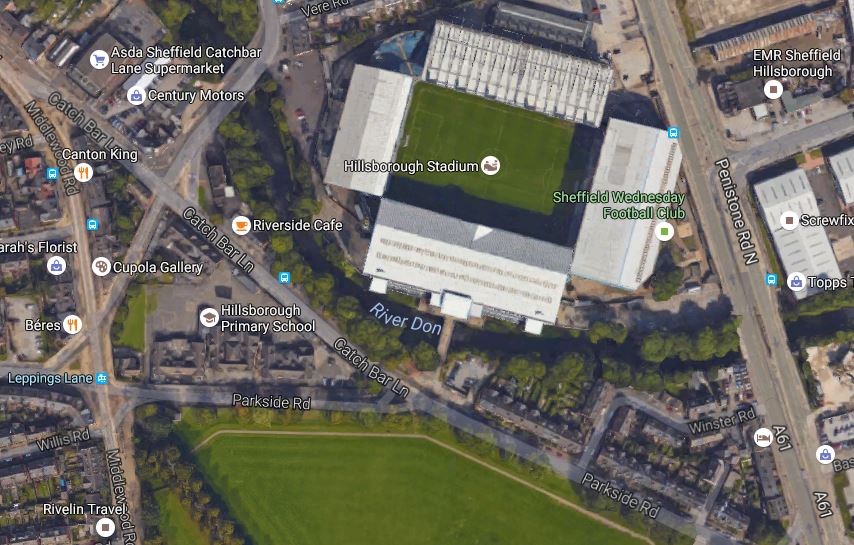
Hillsborough Stadium And The Supertram
The Supertram has a stop at the top of Leppings Lane, which is ideal for the Visitors end.
The tram route runs on the North-South road at the West of the map.
This Google Map shows the area of the Leppings Lane tram stop.
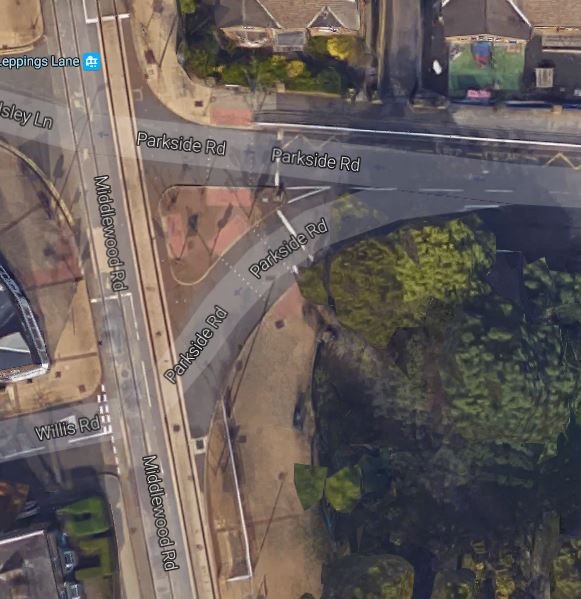
Leppings Lane Tram Stop
It doesn’t seem to be the most difficult project to improve the access to the Supertram at this stop.
Given Sheffield Wednesday’s new owners, it is not inconceivable that the club ends up in the Premier League.
From my experience yesterdsy, the current arrangements would be difficult, so something creative needs to be done.
Getting between the station and Hillsborough is not easy, as a change of tram is needed.
Leppings Lane is only one stop from the end of the line at Middlewood. Surely, on match days, one simple solution would be to run trams direct to the station from Middlewood.
But the restricted number of trams probably makes this impossible.
Conclusion
Sheffield’s public transport network needs improvement.
Does Sheffield Need A Super High Speed Line To London?
I ask this question because HS2 was put forward in the days, when brute force and high speed was the only way to get fast journey times.
In this article on the BBC, which is entitled HS2 South Yorkshire route change threatens new estate, the following is stated.
- 120 mins – Fastest existing Sheffield to London service
- 79 mins – Fastest Sheffield to London service via HS2
I have not seen any details as to how fast conventional trains could do Sheffield to London, but we do have some useful figures from the Great Eastern Main Line, which I wrote about in Could Class 387 Trains Do Norwich In Ninety And Ipswich In Sixty? I came to the conclusion that a 200 kph Aventra with modest track improvements could reduce the current 120 minutes to ninety.
Compare the Great Eastern Main Line (GEML) with the Midland Main Line (MML)
The GEML is about 180 km long and fully electrified, with only two tracks except South of Shenfield and a 160 kph line speed.
The MML is about 250 km long and not electrified past Bedford, with generally more than two tracks and quite a bit of 200 kph running.
The MML has a lot of potential for improvement.
- In several places there is space to add extra tracks and improve junctions.
- A fully-developed Erewash Valley Line, could possibly be used as a higher-speed diversion, avoiding the line through the Derwent Valley, which is a World Heritage Site.
- The MML is currently being electrified.
- Modern electric trains with regenerative braking would speed stops on the MML.
- Some of the stations on the MML, could be rebuilt to speed trains through.
- This is just the sort of line for which the Digital Railway could have a large positive affect.
I feel that after the line is fully electrified and upgraded between London and Sheffield, that there could be a big improvement in journey times.
I do wonder if the revised plan for HS2 to serve Sheffield, , has come about because engineers have been able to devise a plan to improve the MML, that has created enough capacity from Clay Cross to Sheffield, to allow HS2 to share.
In HS2 Does The Right Thing In Sheffield, I postulated that if the MML from Clay Cross, where it bis joined by HS2 to Sheffield, were to be built to HS2 standards, when it was electrified, then this would have benefits for both lines.
- HS2 trains could approach Sheffield, using the sort of speed profile, they’d use into other stations.
- 200+ kph trains on the MML would knock a few minutes off schedules.
- Any extra tracks would probably fit on railway land.
- Chesterfield station could be rebuilt to accept HS2 trains.
There would be a large saving in costs, as only two tracks would be built. They would also be built when the MML is electrified.
We might not see trains on the classic route between London and Sheffield do the trip in the 79 minutes of HS2, but they would certainly be some minutes quicker than the two hours of today.
HS2 Does The Right Thing At Sheffield
In HS2 Does The Right Thing At Leeds, I put my case for HS2 stations to be in City Centres, so that when passengers arrived, they could use all the current and often well-developed local trains and trams to get to their ultimate destination.
I said this.
I don’t like the concept of most of the HS2 stations.
Euston, isn’t too bad, as the HS2 platforms are alongside those for the main station and I suspect that when and if I see it in reality, I will be able to arrive in the station on perhaps a London Midland train from Bletchley or Tring and just walk across to the HS2 platforms.
At some of our better interchange stations like Reading, to change trains, you go up escalators to a wide overbridge and then walk across to the escalator for the platform of your departing train. The design also allows seats and cafes in a totally non-claustrophobic environment. I have a feeling that the new London Bridge will raise the bar of this type of station even higher!
To my mind the designs for HS2 station at Birmingham is absolute rubbish and truly terrible. Birmingham is developing a local train, tram and bus network centred on New Street station, so instead of HS2 arriving into this hub, it arrives at a separate station some distance away and many passengers will have to get a tram to connect to their ongoing service.
After seeing the light at Leeds and proposed something much more sensible, HS2 has now done a similar thing at Sheffield.
This article on the BBC explains it all.
- HS2 will now serve the main Sheffield station.
- HS2 will now pass to the East of Rotherham.
- HS2 will reach Sheffield on classic lines from a junction near Clay Cross and via Chesterfield.
- Sheffield City Council say the new route will create 6,500 more jobs in Sheffield.
- The old route might have created congestion around Meadowhall.
This map shows the new and the old routes.

HS2 Through South Yorkshire
The yellow route is the old one and the blue one is the new one.
Note how the on the map it says “Link to Sheffield Midland on Existing Railway”
I have followed this route on Google Maps and with the exception of perhaps Chesterfield station, there would appear to be space to get four tracks from the junction at Clay Cross to Sheffield station. There also appears to be few houses close to the line, which seems to be in a wooded corridor between industrial premises.
Good planning says that this line should be upgraded and Chesterfield station should be remodelled, when the Midland Main Line (MML) is electrified.
Is this one of the reasons, that HS2 has chosen this route and moved the station from Meadowhall to Sheffield?
Clay Cross to Sheffield is about twenty miles and if two tracks were rebuilt or added to the MML, to HS2 standards, it would have the following benefits.
- HS2 trains could approach Sheffield, using the sort of speed profile, they’d use into other stations.
- 200 kph trains on the MML would knock a few minutes off schedules.
- Any extra tracks would probably fit on railway land.
- Chesterfield station could be rebuilt to accept HS2 trains.
There would be a large saving in costs, as only two tracks would be built. They would also be built when the MML is electrified.
Unfortunately, this change of route will cause problems as the BBC article explains.
It’s a pity they didn’t lay down a few objectives at the start of the detailed design of HS2.
One of which would have been, that HS2 should access existing well-developed stations if possible.
My First Pictures Of A Class 399 Tram-Train
In Sheffield, I took these pictures of a Class 399 tram-train in the depot on the way to Meadowhall.
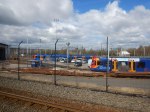

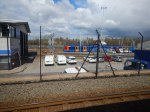
In two picture theres is also one of the current Supertrams.
The difference between the two trams, is that the current ones have full length windows in the doors, whereas the tram-trains have shorter windows.
Although, work appears to be continuing at South Meadowhall to connect the tram and heavy rail networks, nothing much was worth photographing.
Tram-Trains In Stockport
In the Proposed Systems section for the United Kingdom in the Wikipedia entry for tram-trains, there is a reference to tram-trains being proposed for Manchester to Marple.
I have also found this report on the Stockport Council web site, which is entitled Stockport Rail Strategy. The strategy has been developed by respected engineers; WSAtkins.
Search the report for tram-train and you get 35 hits, including references to Manchester to Marple.
The report also has this helpful map of tram-train routes in the Stockport area.
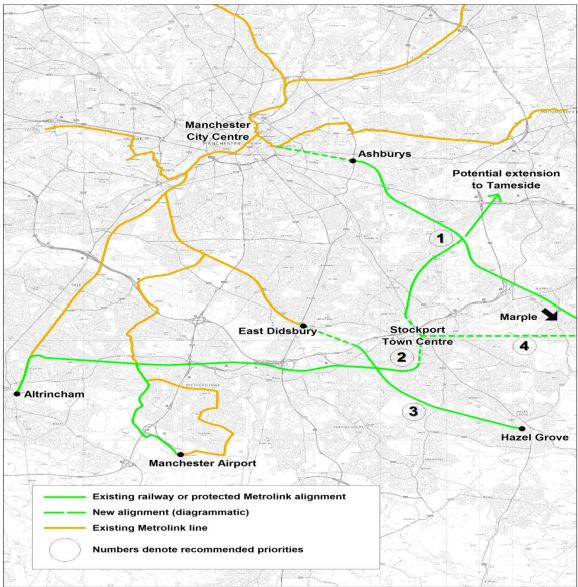
Possible Stockport Tram-Train Routes
I’ll look at some of the routes.
Manchester to Marple
Note that Manchester to Marple is given the highest priority of 1.
In Section 5.5.1 of the report, this is said about the Manchester to Marple route.
Manchester – Marple Metrolink would replace local rail services on the Manchester – Marple via Bredbury line with a more frequent service that would access the heart of Manchester City Centre. A further benefit of the scheme is that it contributes to relieving platform capacity constraints to Manchester Piccadilly, since the scheme would enter Piccadilly via the Metrolink platforms.
It also says it won’t go through Stockport Town Centre.
As the map shows the Manchester to Marple route goes via Ashburys station, which is to the South of the Etihad Stadium.as this Google Map shows.
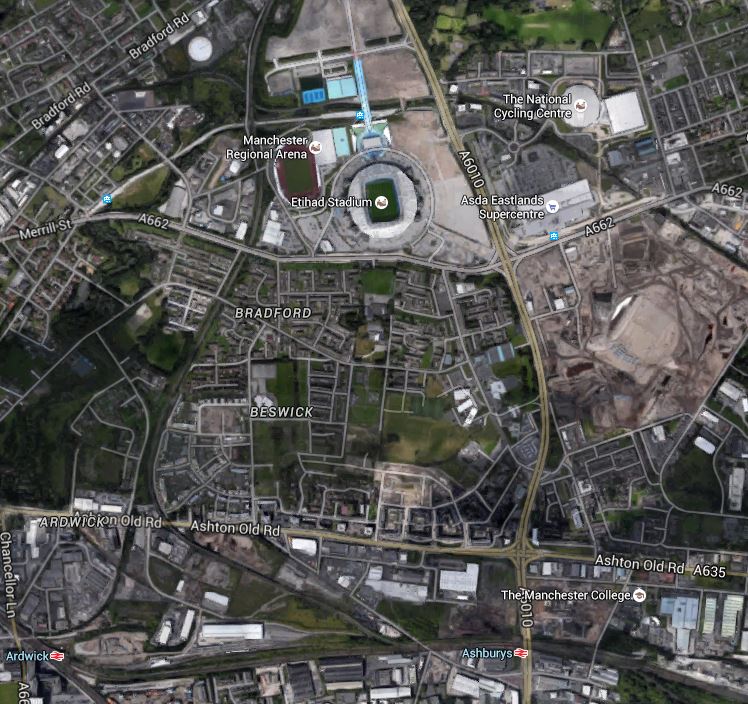
Ashburys And Etihad Stadium
Note Ardwick and Ashburys stations on the line used by trains between Manchester Piccadilly and Rose Hill Msrple Marple stations.
A second Google Map shows the Etihad Campus tram stop, surrounded by various stadia, centres and arenas.

Etihad Campus
Note in both maps there is a rail line that leaves the rail line to the west of Ashburys station and goes north to the west of Etihad Campus.
This is one route that could be used to get tram-trains into the Manchester Metrolink.
In the Wikipedia entry for Ashburys station, this route is also proposed.
Significant new infrastructure works would be required between Piccadilly and Ashburys station, known as ‘Piccadilly Link’. It would be incorporated within a major mixed-use development by Grangefield Estates, known as ‘Chancellor Place’, around the former Mayfield Station site.
It would appear that both routes have their advantages.
But surely, the Etihad route has these specific ones.
- ,It would only need a connection between the rail line and the tram line to Etihad Campus.
- It doesn’t rely on the ever-changing fortunes and minds of large property companies to deliver the infrastructure on the Mayfield Station site.
- The route would not interfere with the addition of the two new platforms proposed for Manchester Piccadilly.
- The trams end up under Piccadilly station from where they could continue to any number of destinations.
- Manchester to Marple services are removed from the crowded Piccadilly station.
- A station or tram stop could be provided to the west of the Etihad Stadium, if that was required.
- Delivery of the scheme would be down mainly to Manchester Metrolink, Network Rail and the various councils, with perhaps some input from the owners of the Etihad Campus.
On a rough analysis, I suspect that going the Etihad route would be more affordable and a lot easier to bring to fruition.
The WSAtlins report also suggests this for tram-trains between Manchester and Marple.
Stockport station could be served by using the Stockport to Stalybridge Line.
- A proposed service would be five trains per hour from Manchester City Centre to both Stockport and Rose Hill Marple.
- There would be a tram-train every six minutes on the busiest part of the route between Reddish North and Manchester.
- Other services between Manchester and Marple would go via Hyde.
Obviously, there are questions to be asked.
- The tram-trains get to Manchester City Centre, but where do they go from there?
- Could we see a tram and tram-train interchange in Piccadilly Gardens, just as I saw in the centre of Kassel and wrote about in The Trams And Tram-Trains Of Kassel?
- Could Manchester’s tram network be used by a Class 399 tram-train, as is being trialled in Sheffield?
I can understand why the Manchester to Marple route was offered as a place to do the tram-train trial!
It strikes me, that if the costs add up, then it would be a good proposal.
Stockport To Tameside
The WSAtlins report says this about a link from Stockport to Tameside.
A further possibility utilising the proposed section of Metrolink route between Stockport and Reddish would be a direct link from Stockport to Tameside, possibly terminating in Ashton Town Centre.
Note the following.
- This would use the Stockport to Stalybridge Line, which currently has only one train a week on a Friday morning.
- The report gives this line a priority of 2.
- Tram-trains to Ashton Town Centre would go via Reddish South, Denton and Guide Bridge.
- There was also a station at Ashton Park Parade to the South of Ashton Town Centre.
- Ashton Town Centre has Ashton-under-Lyne station to the North.
- Ashton-under-Lyne Metrolink station is the terminus of the East Manchester Line and it has five trams per hour to Manchester City Centre.
- Stalybridge station, which is another natural terminus for tram-trains from Stockport, is served by services from Manchester Victoria to Huddersfield and the East.
This Google Map shows Ashton Town Centre.
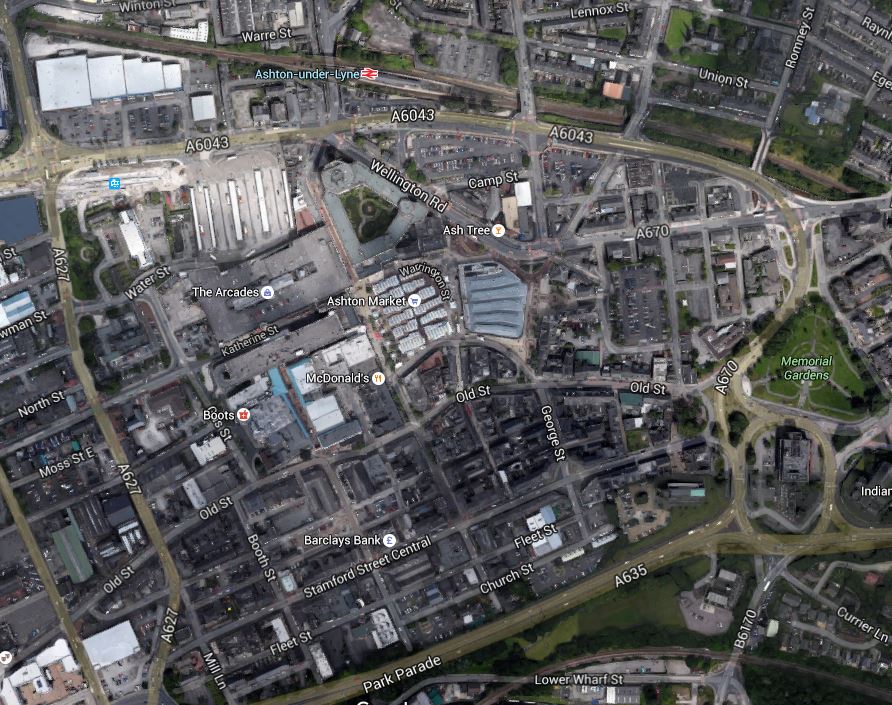
Ashton Town Centre
Note.
- The Stockport to Stalybridge Line at the bottom of the map.
- Park Parade is shown and I suspect Ashton Park Parade was in this area.
- Ashton-under-Lyne station at the top.
- Ashton-under-Lyne Metrolink station is in the top left of the map.
- Ashton-under-Lyne has a five trams per hour service to Manchester City Centre.
In my view, there are lots of possibilities to improve the transport links in Ashton Town Centre.
West of Stockport
The WSAtlins report discusses routes to the west of Stockport.
This group of routes would utilise the Stockport – Altrincham railway line west of Stockport Town Centre, which would be restored to a double-track formation with new stops being added in residential areas.
This Google Map shows Stockport station and Edgeley Junction.
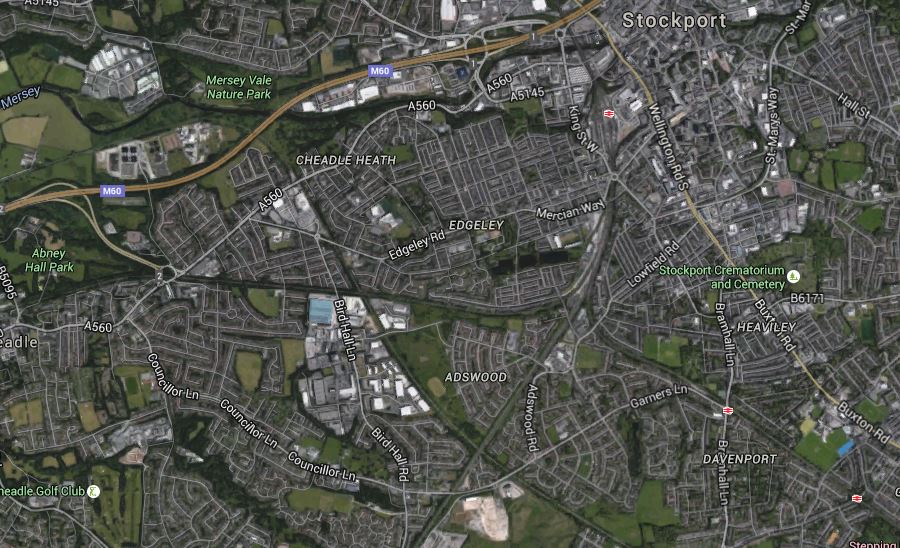
Stockport Station And Edgley Junction
The Mid-Cheshire Line, that goes between Stockport and Altrincham goes off to the west, passing south of Abney Hall Park and the Buxton Line goes to the south east, with stations at Davenport and Woodsmoor being visible.
The report also says this.
A new section of Metrolink route would be created from Stockport Interchange to the start of the Stockport – Altrincham railway line immediately south of Edgeley Junction. That would include a new stop adjacent to Stockport Station, fulfilling a long-held aspiration to provide a direct public transport link between Stockport Station and Stockport Interchange.
This Google Map shows the location of Stockport Interchange with respect to Stockport station.
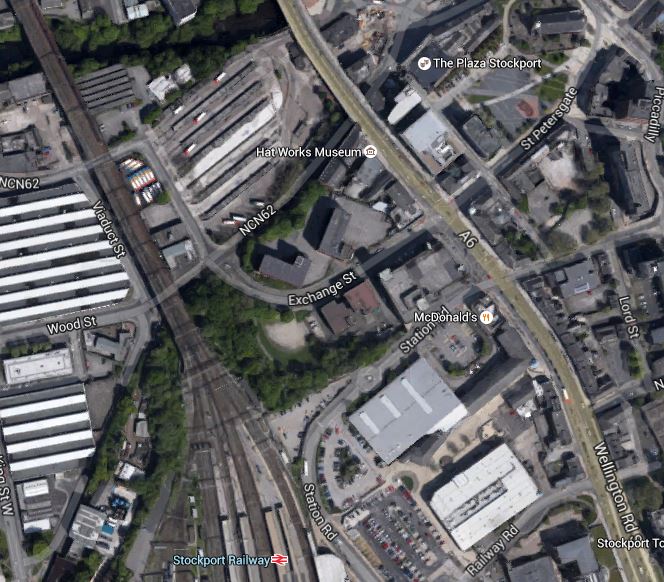
Stockport Bus AndTrain Stations
Stockport Interchange is between the railway and the A6 towards the top and Stockport station is towards the bottom.
I suspect that given the layout of the Town Centre and the various modes of transport to connect, that an innovative solution will be needed.
- Stockport Interchange and Stockport station are about four hundred metres apart.
- Stockport station is on the thirty-three metre high, Grade 2* Listed Stockport Viaduct.
- Tram-trains from Manchester will come and go to the North.
- There could be five tram-trains per hour to each of Ashton and Manchester City Centre.
- Tram-trains from the Mid-Cheshire Line will come and go to the South.
- Was the new Platform 0 built to make the station more suitable for tram-train services?
A good design probably won’t be easy.
One solution would be to cut Platforms 0 and 1 in half, with the Northern ends accepting tram-trains from the North and the Southern ones, those from the South.
The area in between the two halves could be made into a small courtyard with seats, a coffee stall and a kiosk, so passengers arriving from the North would just walk to the court and wait for the appropriate tram-train to the south and vice-versa.
The tram-train platforms would also have level step-free access to Platform 2 for the expresses going South through Stockport.
Stockport to Manchester Airport
The WSAtkins report has a lot to say about the value of this route.
The main driver for the Stockport – Airport route is the expected transformation of Manchester Airport and its surrounding area into a multi-purpose regional economic hub. That will require a step-change in the proportion of trips to/from the area using non-car modes. A high proportion of trips travel to the area is from distances greater than 8km, for which stopping bus services cannot usually provide an attractive alternative to car travel, even with ambitious bus priority measures. TfGM indicated that there are many trips to the Airport that currently originate in or near Stockport.
It also says this about the route.
The route to the Airport would be achieved by a new curve at Baguley linking the Stockport – Altrincham line with the planned Manchester Airport Western Loop Metrolink line. TfGM has indicated that it expects many trips accessing the Manchester Airport area would interchange onto Metrolink from bus and heavy rail in Stockport Town Centre. The route would also facilitate access from its residential catchment to the national rail network at Stockport Station and at the proposed HS2 Station near Manchester Airport.
This Google Map shows the area to the north of Baguley Metrolink station.
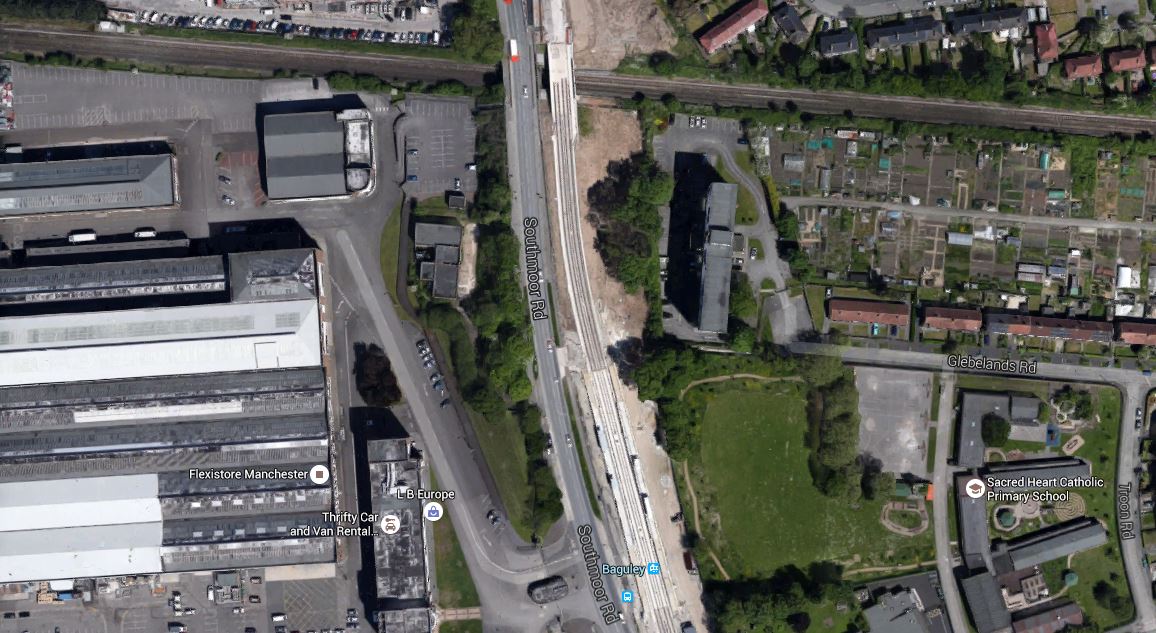
The Baguley Curve
The Stockport to Altrincham Line runs across the top and the scar down the middle is now the Airport Branch of the Manchester Metrolink.
Building a curve shows one of the useful advantages of tram-trains, which can turn tighter than a standard train.
The question has to be asked if tram-trains would run to the airport from both Althincham ans Stockport!
Stockport To Altrincham
The WSAtkins report has this to say about the route.
A Stockport – Altrincham service would connect residential areas on the Stockport – Altrincham corridor with both of their main local centres. The residential areas expected to benefit from new stops include Adswood, Cheadle Heath, Cheadle, and Gatley. The service would also improve the link between Altrincham and Stockport and its onward inter-urban rail connections.
I would assume that as nothing is menbtioned about the terminus at Althincham, this is not considered to have any issues.
Stockport To East Didsbury
Plans for this route have existed since the late 1990s. But following a southern raoute, rather than one along the Mersey could offer cost savings. The WSAtkins report has this to say about the new route.
This southern route from Stockport to East Didsbury would join the Hazel Grove to Sharston freight line via a new junction at Cheadle Heath, and then cross the River Mersey via a new alignment to East Didsbury. This has the potential to provide a new stop at Gorsey Bank, providing sustainable transport access to the proposed new development site. This route would provide Metrolink services to Manchester City Centre from the Edgeley and Adswood areas, and would provide much-improved connections from Stockport to Didsbury, Chorlton and Salford Quays and Trafford Park.
This Google Map shows the routes of the Stockport to Altrincham Line, the freight line from Hazel Grove to Sharston, the M60 Motporway and the River Mersey in the west of Stockport.
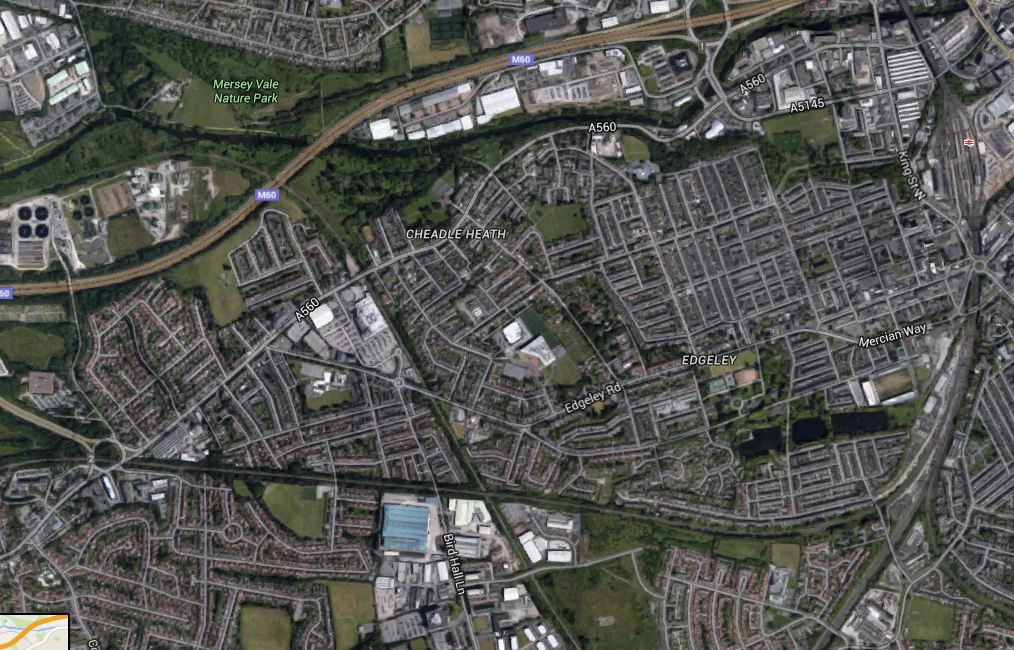
Stockport To East Didsbury
Note.
Stockport Station and Edgeley Junction in the East.
The Stockport to Altrincham Line runs horizontally across the map.
The freight line crosses the motorway, just to the right of the blue M60 label.
Towards A Circular Metrolink
The WSAtkins report says this.
With both the Manchester – Belle Vue – Marple/ Stockport and Stockport West routes built, a Manchester – Belle Vue – Stockport – Airport service could operate. This route would combine radial and orbital elements and could potentially be developed in the longer term into a more extensive orbital Metrolink system, for example by extending northwards beyond Reddish to Ashton-under-Lyne.
I suspect Manchester feels rather pleased that all those old railway lines across and around the city, weren’t dug up for housing and motorways.
Hazel Grove to East Didsbury
The WSAtkins report says this about running tram-trains betwen Hazel Grove station and East Didsbury Metrolink station.
The Hazel Grove to East Didsbury tram-train route would form an extension to the Manchester to East Didsbury Metrolink line, and would result in a Manchester – Hazel Grove Metrolink service.
It would utilise the following rail/ Metrolink lines.
- New Metrolink line from East Didsbury to Gorsey Bank, crossing the river Mersey to join the rail (presently freight only) line at a point north of the M60.
- Existing rail (presently freight only Sharston to Hazel Grove line) redoubled from Gorsey Bank to Hazel Grove.
The report also says this about the route.
It is envisaged that new stops would be provided at Gorsey Bank, Edgeley Lane, Davenport and Woodsmoor. The section of the scheme between East Didsbury and the existing Stockport-Altrincham rail line is identical to that proposed in the Stockport West group of routes, offering cost savings if both schemes were progressed. This service would not replace the existing heavy rail service but further work would be needed to define the appropriate mix of Metrolink and local rail services between Manchester and Hazel Grove.
So it looks like to create improved connectivity from East Didsbury can be delivered by tram-trains, some doubling of lines, electrification, signalling and devising a better timetable.
Tram-Trains Running On Manchester Metrolink
The WSAtkins report says this about possible constraints on running tram-trains on the Manchester Metrolink.
In Greater Manchester Metrolink has been developed by converting existing railway lines and disused rail alignments and building new on-street embedded rails. Metrolink therefore currently runs on a separate network to heavy rail, with an operating system managed on behalf of TfGM. The concept of a Metrolink type service utilising currently active heavy rail lines, which would continue to be used by trains as well as a Metrolink service, has been discussed for a number of years. This type of operation is referred to as ‘tramtrain’.
Tram-train is currently used in several locations in mainland Europe, and a pilot project in Sheffield was commissioned by the Department of Transport to consider the potential of adopting this approach in the United Kingdom. The pilot project is considering the technical issues but the actual running of a tram on a rail way has been delayed several times. The most recent timescale is to start running sometime in 2016.
The Greater Manchester Metrolink vehicles are of a different design to the Sheffield trams as they were designed to operate on converted heavy rail lines. As such, it is anticipated there may be fewer technical issues associated with tram-train operation in Greater Manchester. The outcome of the pilot is expected to influence the prospects for tram-train elsewhere in the UK.
I would hope that the Manchester Metrolink and the Sheffield Supertram, both decide to use the same tram-trains, as this would enable tram-trains to start in the centre of Sheffield and then run on the Hope Valley Line to Srockport and Manchester City Centre.
Conclusion
In my view, if the use of tram-trains happens in around Stockport, it would be a good thing for the area.
I would hope that the Manchester Metrolink and the Sheffield Supertram, both decide to use the same tram-train, as this would enable tram-trains to start in the centre of Sheffield and then run on the Hope Valley Line to Srockport and Manchester City Centre.
If the concept works and the tram-train tril is successful, Sheffield, Manchester and a lot of other places in the UK, are going to have tremendous fun with tram-trains.
T
Tram-Trains Hit The National Papers
Unless you live in Sheffield, the saga of the tram-train to Rotherham, will probably be unknown to you.
But today there is a balanced news item in The Times, which is entitled Tram-train plan to put commuters on track.
This is the first time, I’ve seen an item about tram-trains in the national media.
Perhaps, journalists are at last realising that the revolution is coming here!
Two Bits Of Progress For Sheffield’s Tram-Train
There were two positive articles on the web about Sheffield’s delayed tram-trains.
This article in the Construction Index is entitled Green Light For Sheffield’s Tinsley Chord.
It describes how the papers have been signed and work can start on creating the Tinsley Chord to connect Sheffield’s Supertram to Rotherham. The article says that the track will be ready by the end of 2016.
There is also this article in Railway Gazete International entitled First tram-train heads for Sheffield.
The Class 399 tram-train is expected to arrive in Sheffield at the beginning of December.
So at last something seems to be happening, which in my view is one of the most important rail projects in the country.
Wikipedia has this of places in the UK, who are looking at tram-trains.
Eighteen places are mentioned.
From Hull To Sheffield
I escaped from Hull on a train to Sheffield, as on my walk across the city from my hotel to the station, I didn’t pass one welcoming looking cafe or a suitable shop to buy my copy of The Times. I did finally find a cafe in the station called the London Way Cafe, but I’d already bought my ticket and didn’t fancy waiting an hour and a half for the train after the one I was catching.
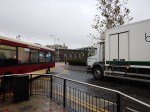


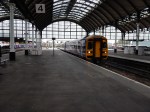

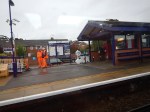





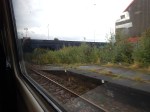

The route to Sheffield via Goole and Doncaster is across very flat country as the pictures show.
Can I come to any conclusions?
- I think the last time, I did this journey it was in a dreaded Pacer, but this time it was a clean Class 158 train. So some things are getting better!
- Part of Hull station has been turned into a bus station, which is properly integrated with the trains.
- The signposting in the station to local attractions like The Deep and the KC Stadium can’t even be judged on quality, as there isn’t any.
Much of the line is the Hull to Doncaster branch, which effectively connect the two TransPennine routes into Hull and Cleethorpes at Gilberdyke and Thorne. It is not electrified, but given the fact that Doncaster is and Sheffield could be in a few years, this line would be ideal for IPEMUs running a possible half-hourly electric service between Hull and Sheffield via Doncaster.
At present Hull trains from London take two hours thirty minutes for a direct run via Selby and if you change at Doncaster it takes a few minutes under three hours using Virgin East Coast.
So perhaps if the Sheffield to Hull service is improved using IPEMUs and a bit of selective electrification is installed from say Doncaster to Thorne or in Hull station, the service from London with a change at Doncaster could be reduced to almost the two and half hours using the direct train.
But if IPEMUs can do Doncaster to Hull, then surely Hull Trains could use them on the Doncaster route to go to Hull as an all-electric alternative. They could still serve Brough, but Selby would need to use that route.
This simple exercise shows how IPEMUs could change the rail landscape of the UK.
Breakfast By The Don
The Meadowhall Shoppin Centre in Shefield sums up what is right and wrong about shopping centres.
To like it has a big Marks and Spencer by the train station, so I can can get gluten-free snacks and sandwiches on my travels. It also has a Carluccio’s for something a bit bigger and like today, I can walk out by the River Don to have my breakfast.
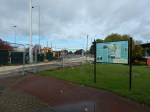

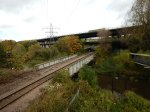





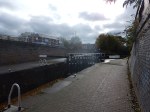
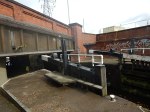

As this is the site of the Tinsley Chord, which is supposed to be built by 2017, there didn’t seem much going on. This article on the BBC says everything is starting to run late.
Other than that there are no maps, so that once they get you inside the doors, you get lost and hopefully for them, you buy something you don’t need.
It just makes me angry and I hate the place with a vengeance.
But then the only reason, I go there is to get fed! Or change trains or between a tram and a train!
 The Anonymous Widower