Is Last Energy The Artemis Of Energy?
In Raft Of US-UK Nuclear Deals Ahead Of Trump Visit, I quoted from this article on World Nuclear News.
The article also contains, these two paragraphs, with talk about an MoU between Last Energy and DP World.
An MoU has also been signed between US-based micro-nuclear technology developer Last Energy and DP World, a global leader in logistics and trade, to establish the world’s first port-centric micro nuclear power plant at London Gateway. A proposed PWR-20 microreactor – to begin operations in 2030 – would supply London Gateway with 20 MWe of electricity to power the logistics hub, with additional capacity exported to the grid.
“The initiative represents a GBP80 million (USD109 million), subsidy-free investment for the development of Last Energy’s first unit, unlocking clean power supply for DP World’s ongoing GBP1 billion expansion of London Gateway,” Last Energy said. “The partnership is closely aligned with both UK and US ambitions to increase nuclear capacity and strengthen long-term energy security.”
Note.
- Last Energy are proposing a micro-reactor of just 20 MW.
- DP World own and/or operate sixty ports in over forty countries, so should know their energy requirements well.
- It appears that DP World are investing £80 million in Last Energy’s first unit.
- Thurrock Storage is a 300 MW/600 MWh battery close to London Gateway and the Port of Tilbury.
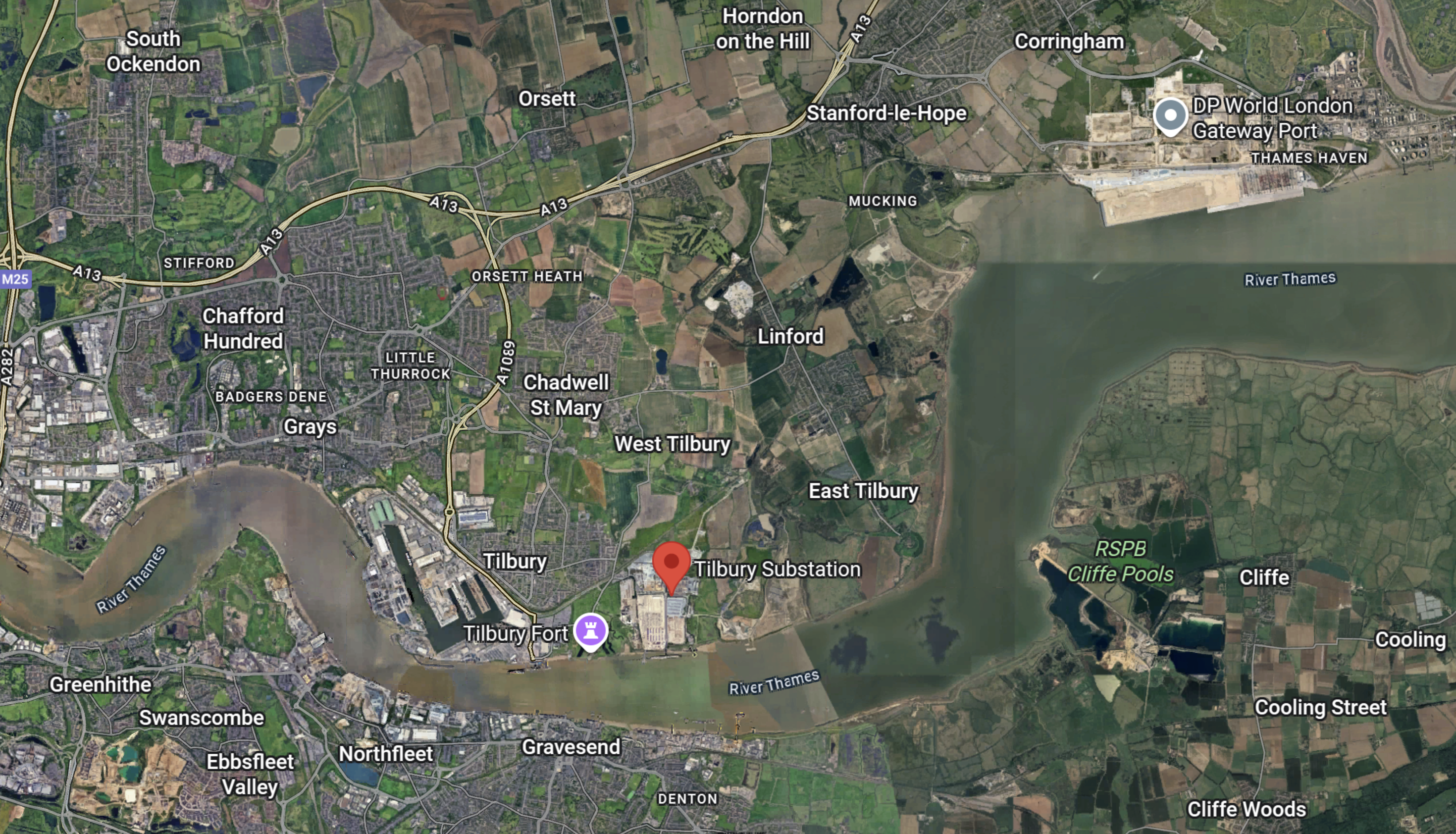
This Google Map shows London Gateway and the Port of Tilbury.
Note.
- DP World London Gateway is in the North-East corner of the map.
- The A13 road runs across the North-West corner of the map and links the area to London and the M25.
- Thurrock Storage is next to the Tilbury substation, which is marked by the red arrow.
- The Port of Tilbury is to the West of the substation.
I wonder if DP World London Gateway have had power supply problems.
The Design Of The First Artemis Project Management Software System
Before Artemis, project management was usually done on a large mainframe computer like an IBM-360-50, that I’d used extensively for solving simultaneous differential equations in a previous job at ICI.
Mainframe computers worked on complex problems, but to put it mildly, they were slow and needed a team to operate them and a big air-conditioned room to keep them happy.
When the four of us decided to create Artemis, our vision was something simpler.
- A processor – something like a PDP-11, which I judged would be big-enough for the computing.
- A visual display unit.
- A printer.
- A standard-size desk to hold the hardware.
- Ability to run from a 13-amp socket.
When it came to writing the software, I took few risks.
- Much of the data decoding software, I’d developed when I left ICI to write a program to solve up to a thousand simultaneous differential equations.
- The scheduling software was generic and I’d first used it for different purposes in two programs at ICI.
- The aggregation software had been devised, whilst I was a consultant at Lloyds Bank over several bottles of wine with their Chief Management Accountant, who was a wizard with numbers. I suspect, but can’t prove it, that if the idiots that programmed the Horizon system for the Post Office had used that algorithm, the problems there would have been much smaller.
- I also spent a lot of time reading old papers from the 1950s in IBM’s library on the South Bank, looking for better algorithms.
- I also made sure, I chose the best hardware and I believe HP did us proud.
- I used HP’s operating system and proprietary database to cut down, what could go wrong.
- Almost all of the first system was written by one person – me!
But we also put the right features into how we supported, delivered and trained users of the system.
I certainly, think we made few mistakes in the design of that first system.
Have Last Energy Used A Similar Cut Back Approach?
Reading their web site, I think they have.
They have obviously chosen, the 20 MW unit size with care.
But from worldwide experience with wind turbines, linking smaller power sources together, is not as difficult as it once was.
These are some of the statements on their web site’s introductory screens.
- Fully Modular, Factory Made
- A Scalable Solution
- <24 Month Delivery
- 100+ Supply Chain Partners
- 300+ Pressurised Water Reactors Operating Globally
- 0.3 acre – Plant Footprint Fits Within A Football Field
But a chain is only as strong as its weakest link.
It should be noted, that I have been over several nuclear power stations.
Three were a tour to show me how Artemis was being used to track and sign off, the problems identified after the Three Mile Island incident.
The other was a trip over Sizewell A, a couple of years before it was decommissioned.
Comparing these experiences with some of the chemical plants, that I’ve worked on, I would prefer to be close to a nuclear power plant.
LionLink: Proposed Windfarm Cabling Sites In Suffolk Are Revealed
The title of this post, is the same as that of this article on the BBC.
This is the sub-heading.
National Grid has revealed where it wants to build energy infrastructure for cabling between the UK and the Netherlands.
These four paragraphs describe the project.
The power line, called LionLink, would connect offshore wind farms in the North Sea.
The energy company wants the cables to reach land at either Walberswick or Southwold, both in Suffolk.
A converter station would be built on the outskirts of nearby Saxmundham and could cover a six-hectare area.
That would then connect to a substation being built at the village of Friston, also in Suffolk, as part of the offshore wind plans.
But the plans have brought the Nimbies out in force.
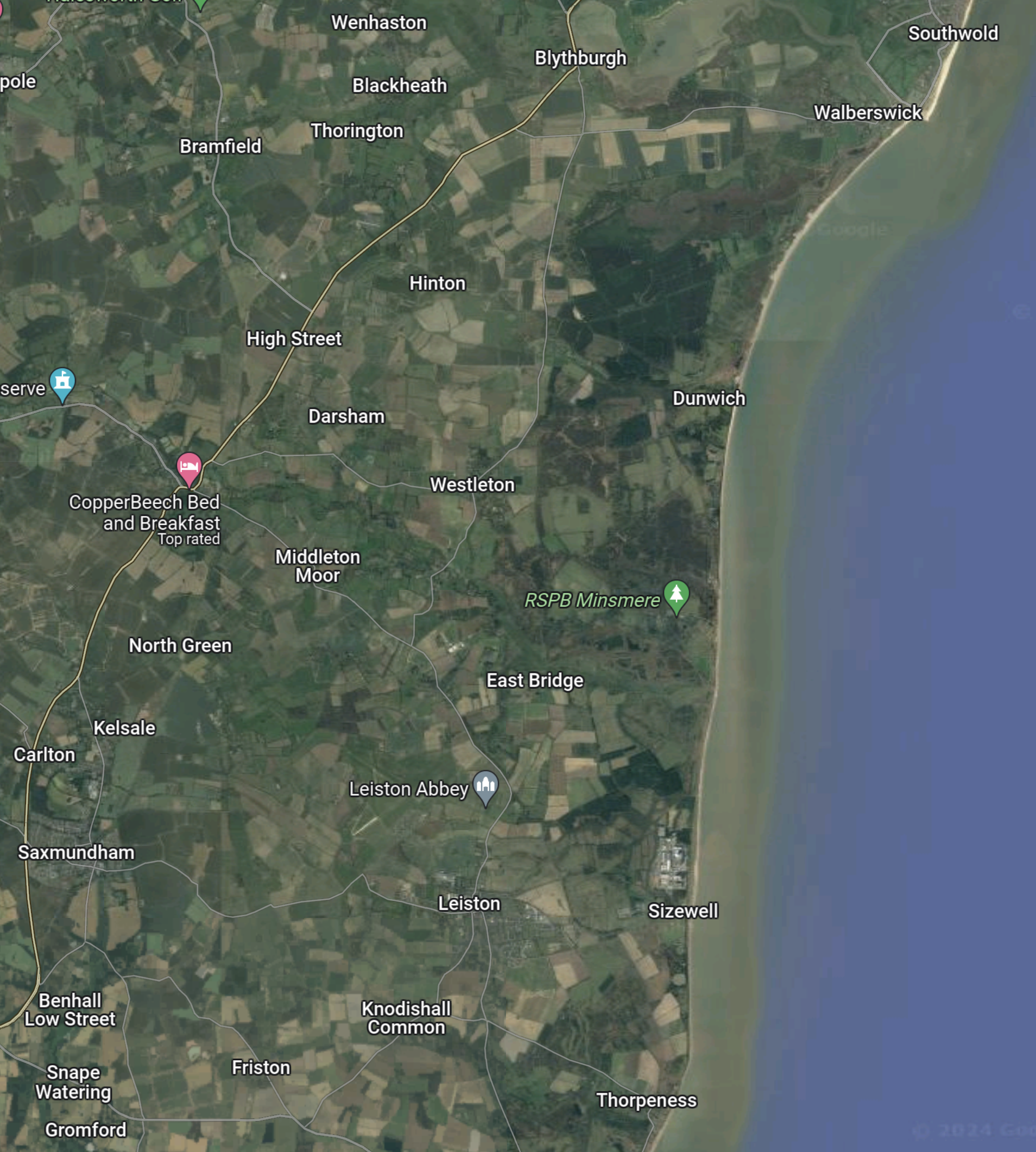
This Google Map shows the Suffolk Coast, to the South of Southwold.
Note.
- Southwold and Walberswick in the North-East corner of the map.
- Saxmundham is just up from the South-West corner of the map, with Friston to its East.
- Sizewell with the 1.2 GW Sizewell B nuclear power station is on the coast directly East of Saxmundham.
- Sizewell B is planned to be joined by the 3.2 GW Sizewell C nuclear power station.
- LionLink is likely to have a capacity of 2 GW.
- I also believe that at least another GW of offshore wind power will be squeezed in along this section of coast.
The Sizewell site is connected to the National Grid at Bullen Lane substation to the West of Ipswich.
These pictures show the pylons that were built in the 1960s to connect Sizewell A to the National Grid.
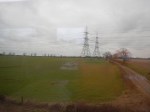





I doubt, they would be allowed to be erected today.
One alternative would be to use T-pylons, like these built to connect Hinckley Point C to the National Grid.

There is more on T-pylons in this press release from National Grid, which is entitled National Grid Energise World’s First T-Pylons.
This Google Map shows the area between Ipswich and the coast.
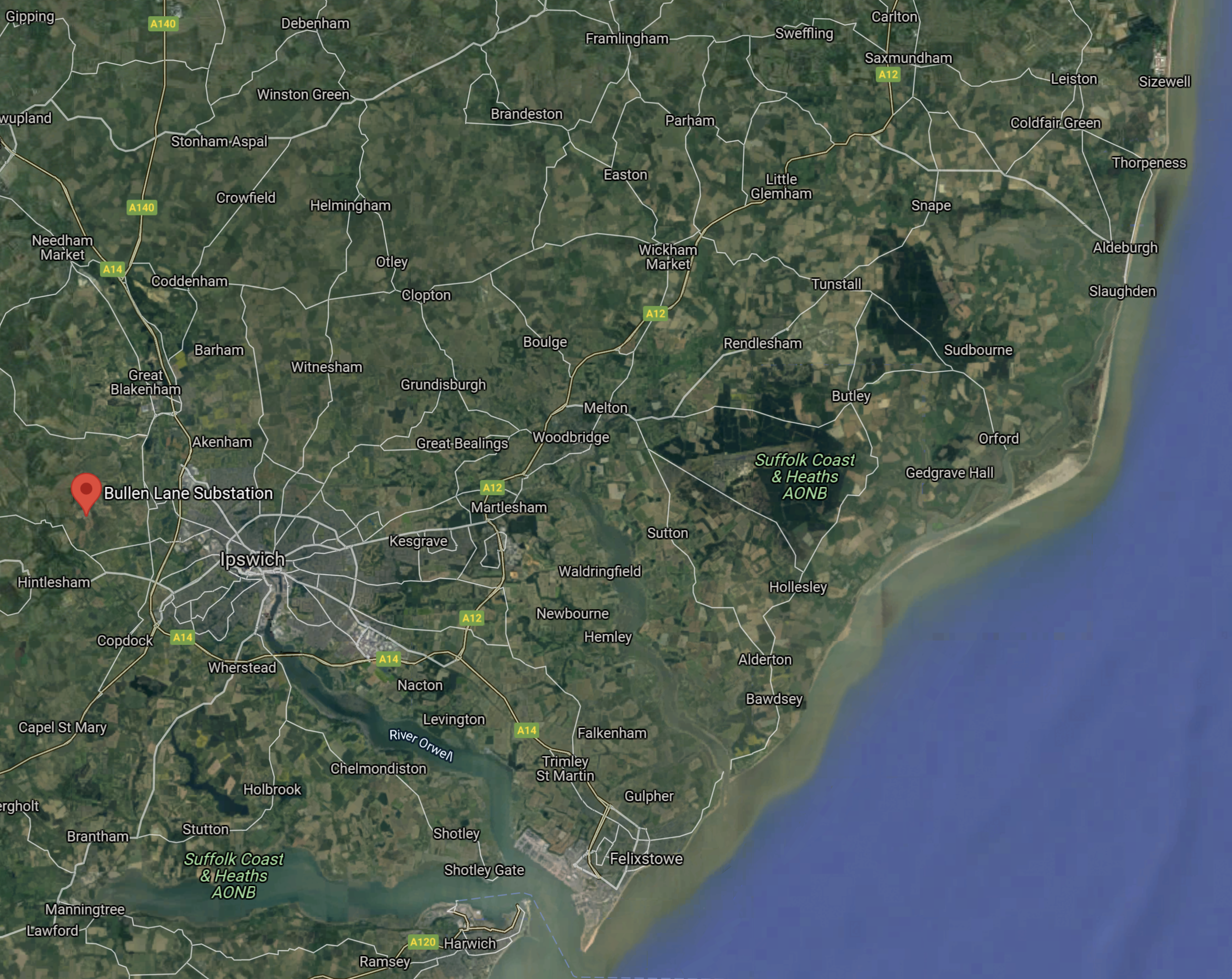
Note.
- Sizewell is in the North-East corner of the map.
- Felixstowe, Harwich and Freeport East are at the mouth of the rivers Orwell and Stour.
- The Bullen Lane substation is to the West of Ipswich and shown by the red arrow.
Looking at maximum power flows in Suffolk and Somerset, we get.
- North-East Suffolk to the National Grid at Bullen Lane – 7.4 GW.
- Hinckley Point C to the National Grid – 3.26 GW.
I am led to the conclusion, that there need to be a doubling of the pylons between North-East Suffolk and Bullens Lane.
I can understand why the Nimbies have been aroused.
I believe that National Grid will have to take the undersea route along the coast of Essex and Suffolk, to get the electricity to its markets.
Low Carbon Construction Of Sizewell C Nuclear Power Station
Sizewell C Nuclear Power Station is going to be built on the Suffolk Coast.
Wikipedia says this about the power station’s construction.
The project is expected to commence before 2024, with construction taking between nine and twelve years, depending on developments at the Hinkley Point C nuclear power station, which is also being developed by EDF Energy and which shares major similarities with the Sizewell plant.
It is a massive project and I believe the construction program will be designed to be as low-carbon as possible.
High Speed Two is following the low-carbon route and as an example, this news item on their web site, which is entitled HS2 Completes Largest Ever UK Pour Of Carbon-Reducing Concrete On Euston Station Site, makes all the right noises.
These three paragraphs explain in detail what has been done on the Euston station site.
The team constructing HS2’s new Euston station has undertaken the largest ever UK pour of Earth Friendly Concrete (EFC) – a material that reduces the amount of carbon embedded into the concrete, saving over 76 tonnes of CO2 overall. John F Hunt, working for HS2’s station Construction Partner, Mace Dragados joint venture, completed the 232 m3 concrete pour in early September.
The EFC product, supplied by Capital Concrete, has been used as a foundation slab that will support polymer silos used for future piling works at the north of the Euston station site. Whilst the foundation is temporary, it will be in use for two years, and historically would have been constructed with a more traditional cement-based concrete.
The use of the product on this scale is an important step forward in how new, innovative environmentally sustainable products can be used in construction. It also helps support HS2’s objective of net-zero construction by 2035, and achieve its goal of halving the amount of carbon in the construction of Britain’s new high speed rail line.
Note.
- Ten of these slabs would fill an Olympic swimming pool.
- I first wrote about Earth Friendly Concrete (EFC) in this post called Earth Friendly Concrete.
- EFC is an Australian invention and is based on a geopolymer binder that is made from the chemical activation of two recycled industrial wastes; flyash and slag.
- HS2’s objective of net-zero construction by 2035 is laudable.
- It does appear that this is a trial, but as the slab will be removed in two years, they will be able to examine in detail how it performed.
I hope the Sizewell C project team are following High Speed Two’s lead.
Rail Support For Sizewell C
The Sizewell site has a rail connection and it appears that this will be used to bring in construction materials for the project.
In the January 2023 Edition of Modern Railways, there is an article, which is entitled Rail Set To Support Sizewell C Construction.
It details how sidings will be built to support the construction, with up to four trains per day (tpd), but electrification is not mentioned.
This is surprising to me, as increasingly, big construction projects are being managed to emit as small an amount of carbon as possible. Sizewell C may be an isolated site, but in Sizewell B, it’s got one of the UK’s biggest independent carbon-free electricity generators a couple of hundred metres away.
The writer of the Modern Railways article, thinks an opportunity is being missed.
I feel the following should be done.
- Improve and electrify the East Suffolk Line between Ipswich and Saxmundham Junction.
- Electrify the Aldeburgh Branch Line and the sidings to support the construction or agree to use battery-electric or hydrogen zero-carbon locomotives.
Sizewell C could be a superb demonstration project for low-carbon construction!
Sizewell C Deliveries
Sizewell C will be a massive project and and will require a large number of deliveries, many of which will be heavy.
The roads in the area are congested, so I suspect rail is the preferred method for deliveries.
We already know from the Modern Railways article, that four tpd will shuttle material to a number of sidings close to the site. This is a good start.
Since Sizewell A opened, trains have regularly served the Sizewell site to bring in and take out nuclear material. These occasional trains go via Ipswich and in the last couple of years have generally been hauled by Class 88 electro-diesel locomotives.
It would be reasonable to assume that the Sizewell C sidings will be served in the same manner.
But the route between Westerfield Junction and Ipswich station is becoming increasingly busy with the following services.
- Greater Anglia’s London and Norwich services
- Greater Anglia’s Ipswich and Cambridge services
- Greater Anglia’s Ipswich and Felixstowe services
- Greater Anglia’s Ipswich and Lowestoft services
- Greater Anglia’s Ipswich and Peterborough services
- Freight services serving the Port of Felixstowe, which are expected to increase significantly in forthcoming years.
But the Modern Railways article says this about Saxmundham junction.
Saxmundham junction, where the branch meets the main line, will be relaid on a slightly revised alignment, retaining the existing layout but with full signalling giving three routes from the junction protecting signal on the Down East Suffolk line and two in the Down direction on the bidirectional Up East Suffolk line. Trap points will be installed on the branch to protect the main line, with the exit signal having routes to both running lines.
Does the comprehensive signalling mean that a freight train can enter or leave the Sizewell sidings to or from either the busy Ipswich or the quieter Lowestoft direction in a very safe manner?
I’m no expert on signalling, but I think it does.
- A train coming from the Lowestoft direction needing to enter the sidings would go past Saxmundham junction on the Up line. Once clear of the junction, it would stop and reverse into the branch.
- A train coming from the Ipswich direction needing to enter the sidings would approach in the wrong direction on the Up line and go straight into the branch.
- A train leaving the sidings in the Lowestoft direction would exit from the branch and take the Up line until it became single track. The train would then stop and reverse on to the Down line and take this all the way to Lowestoft.
- A train leaving the sidings in the Ipswich direction would exit from the branch and take the Up line all the way to Ipswich.
There would need to be ability to move the locomotive from one end to the other inside the Sizewell site or perhaps these trains could be run with a locomotive on both ends.
The advantage of being able to run freight trains between Sizewell and Lowestoft becomes obvious, when you look at this Google Map, which shows the Port of Lowestoft.
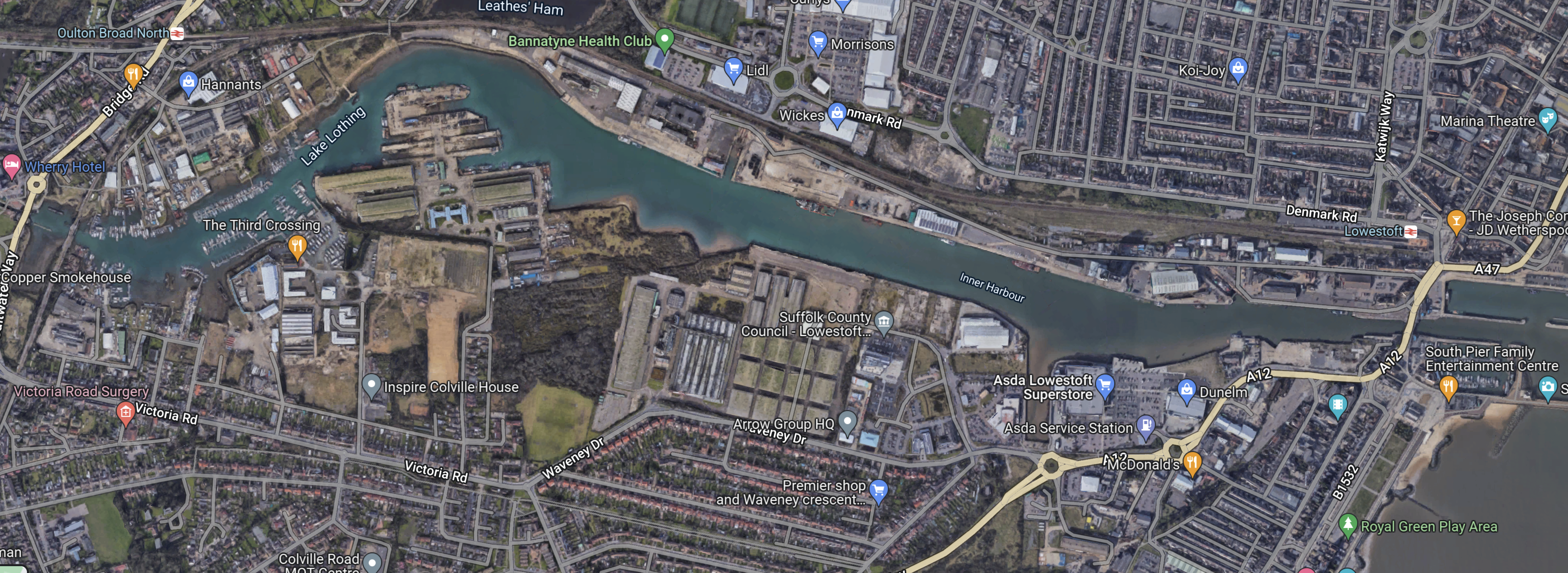
Note.
- The Inner Harbour of the Port of Lowestoft.
- The East Suffolk Line running East-West to the North of the Inner Harbour.
- Lowestoft station at the East side of the map.
I doubt it would be the most difficult or expensive of projects to build a small freight terminal on the North side of the Inner Harbour.
I suspect that the easiest way to bring the material needed to build the power station to Sizewell would be to do the following.
- Deliver it to the Port of Lowestoft by ship.
- Tranship to a suitable shuttle train for the journey to the Sizewell sidings.
- I estimate that the distance is only about 25 miles and a battery or hydrogen locomotive will surely be available in the UK in the next few years, that will be able to provide the motive power for the return journey.
In The TruckTrain, I wrote about a revolutionary freight concept, that could be ideal for the Sizewell freight shuttle.
In addition, there is no reason, why shuttle trains couldn’t come in from anywhere connected to the East Suffolk Line.
Zero-Carbon Construction
Sizewell C could be the first major construction site in the UK to use electricity rather than diesel simply because of its neighbour.
Conclusion
I shall be following the construction methods at Sizewell C, as I’m fairly sure they will break new ground in the decarbonisation of the Construction industry.
Is Sizewell The Ideal Site For A Fleet Of Small Modular Nuclear Reactors?
As someone who spent forty years in project management, the Small Modular Nuclear Reactor or SMR could be a project manager’s dream.
Suppose you were putting a fleet of SMRs alongside Sizewell B.
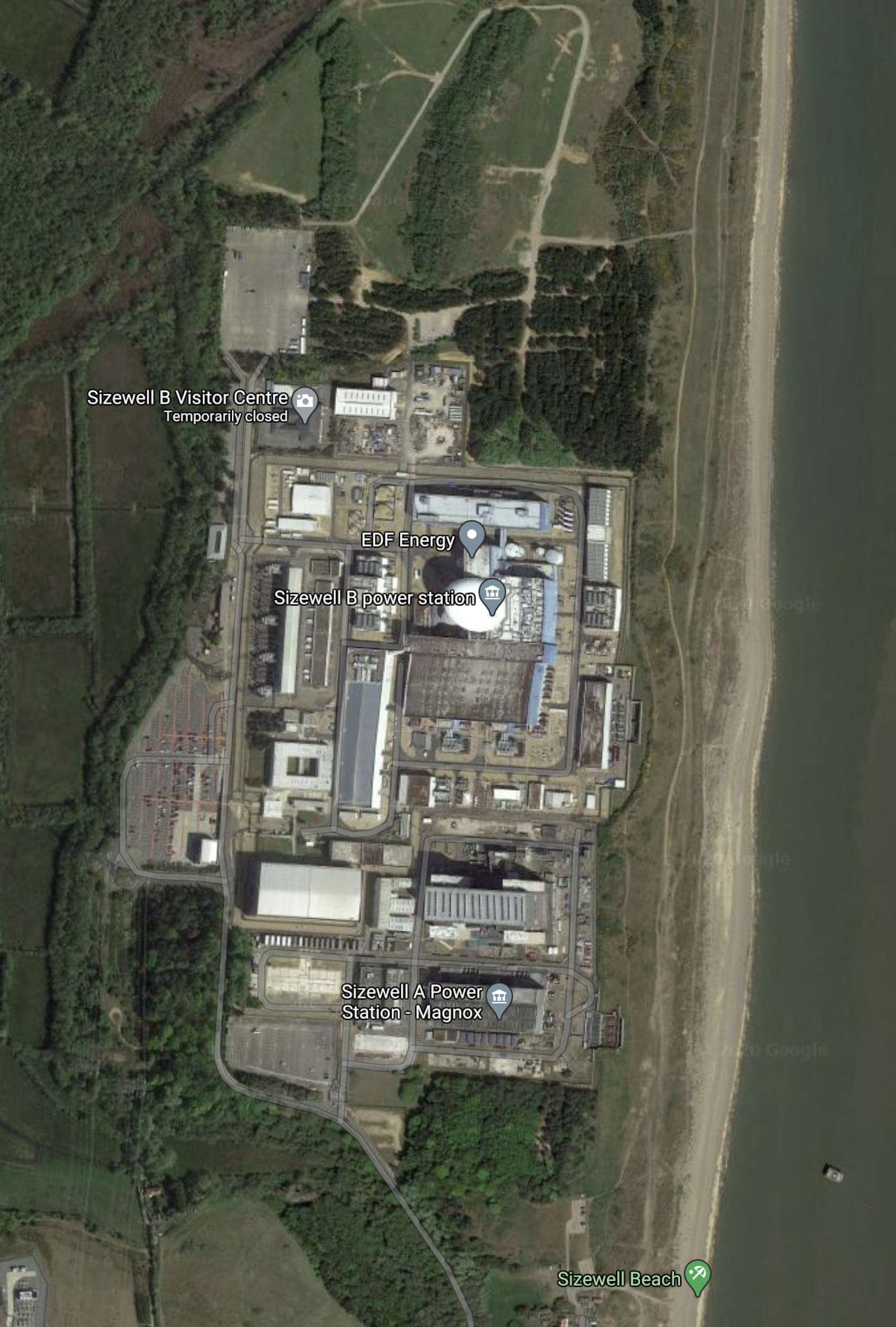
This Google Map shows the current Sizewell site.
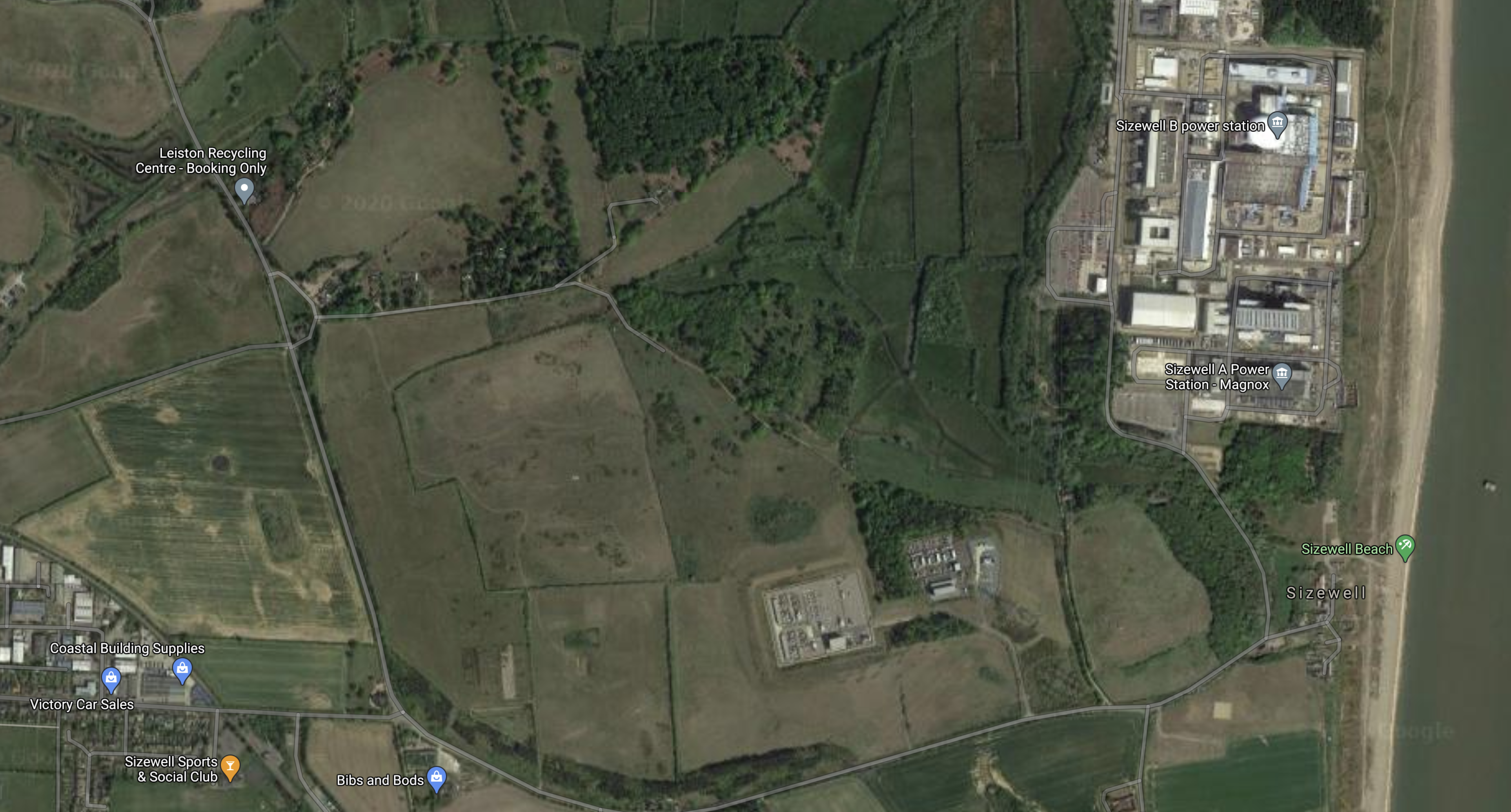
Sizewell A power station, with Sizewell B to its North, is on the coast.
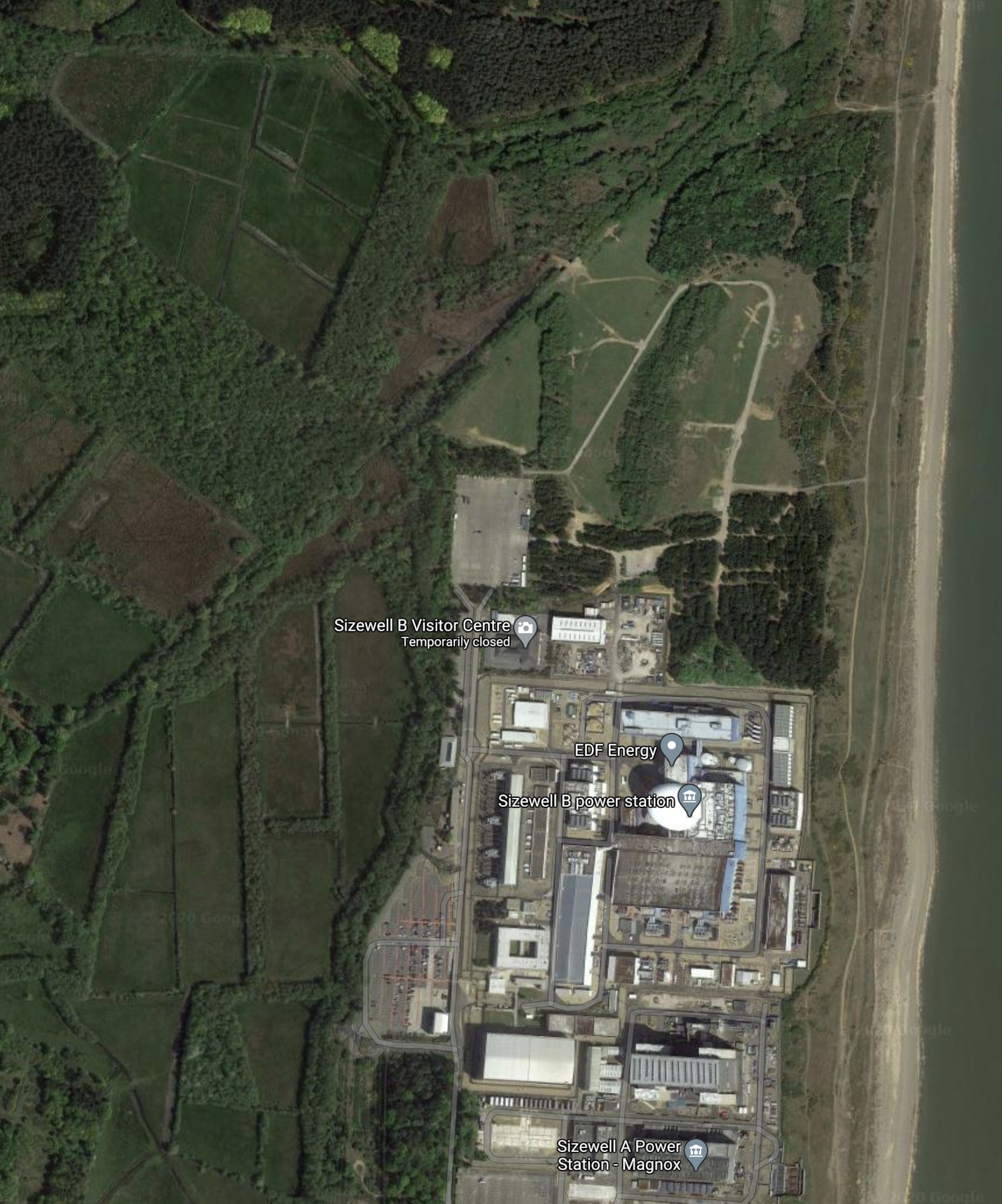
This second Google Map shows the power stations to an enlarged scale.
Note the white dome in the middle of Sizewell B.
Sizewell A
Sizewell A power station was shut down at the end of 2006 and is still being decommissioned, according to this extract from Wikipedia.
The power station was shut down on 31 December 2006. The Nuclear Decommissioning Authority (NDA) is responsible for placing contracts for the decommissioning of Sizewell A, at a budgeted cost of £1.2 billion. Defuelling and removal of most buildings is expected to take until 2034, followed by a care and maintenance phase from 2034 to 2092. Demolition of reactor buildings and final site clearance is planned for 2088 to 2098.
Only a few of those, reading this post, will be around to see the final end of Sizewell A.
Note that the size of the Sizewell A site is 245 acres.
It appears to me, that if any power station will be able to be built on the cleared site of Sizewell A, until the late 2080s or 2090s.
Sizewell B
Sizewell B power station opened in 1995 and was originally planned to close in 2035. The owner; EDF Energy, has applied for a twenty-year extension to 2055.
Sizewell C
Sizewell C power station is currently under discussion.
- It will be built by the French, with the help of Chinese money.
- It will have an output of 3260 MW or 3.26 GW.
- It will cost £18 billion.
- It will take twelve years to build.
This Google Map shows Sizewell B and the are to the North.
I would assume it will be built in this area.
A Fleet Of Small Modular Nuclear Reactors
These are my thoughts on building a fleet of SMRs at Sizewell instead of the proposed Sizewell C.
Land Use
In Rolls-Royce signs MoU With Exelon For Compact Nuclear Power Stations, I gave these details of the Rolls-Royce design of SMR.
- A Rolls-Royce SMR has an output of 440 MW.
- The target cost is £1.8 billion for the fifth unit built
- Each SMR will occupy 10 acres.
- Eight SMRs would need to be built to match the output of Hinckley Point C, which will occupy 430 acres.
It looks on a simple calculation, that even if the SMRs needed fifteen acres, the amount of land needed would be a lot less.
Connection To The National Grid
The transmission line to the National Grid is already in place.
This Google Map shows the sub-station, which is to the South-West of Sizewell A.
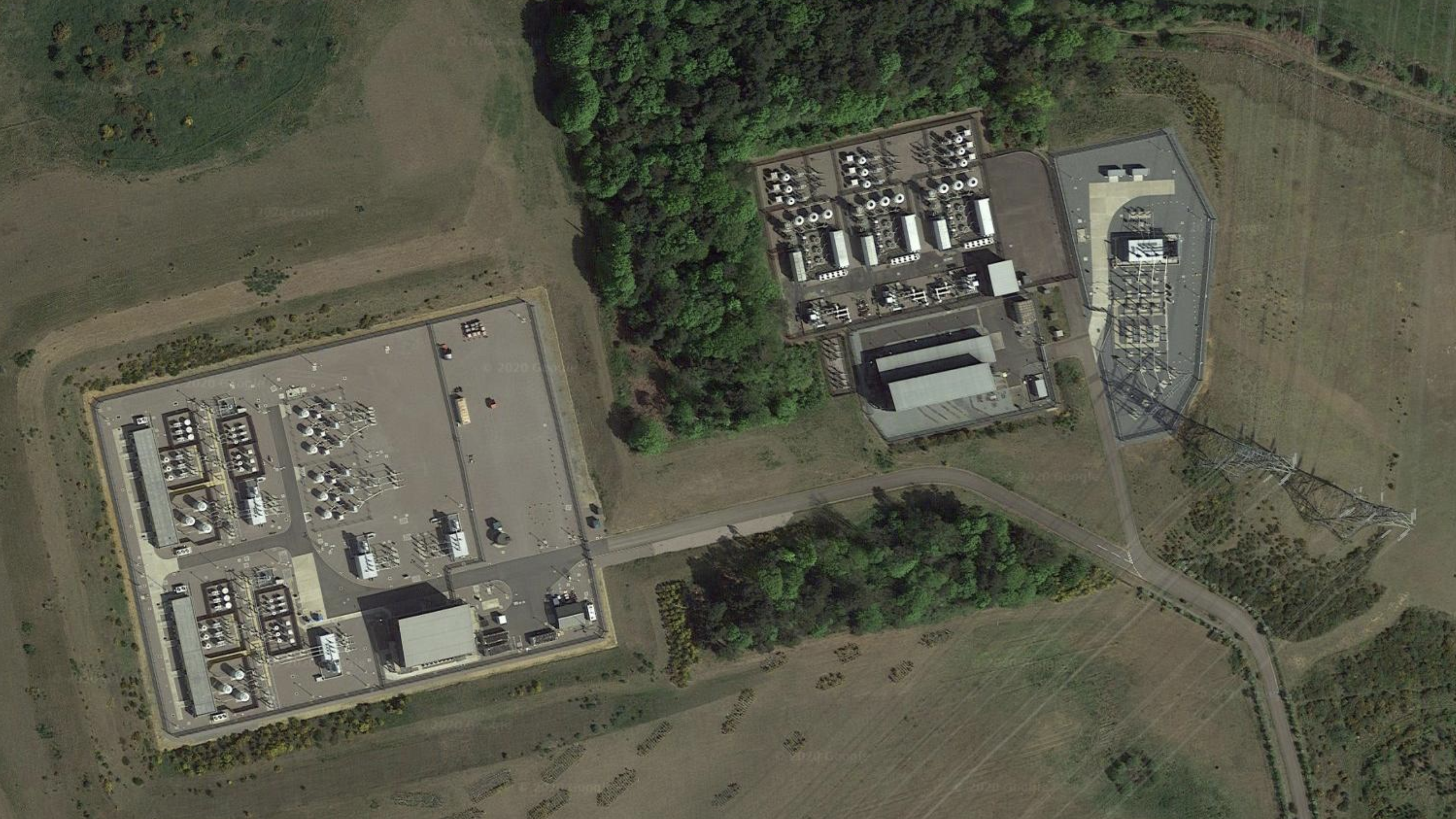
From Sizewell, there is a massive twin overhead line to Ipswich.
This Google Map shows the overhead line as it crosses Junction 53 of the A14 to the West of Ipswich.
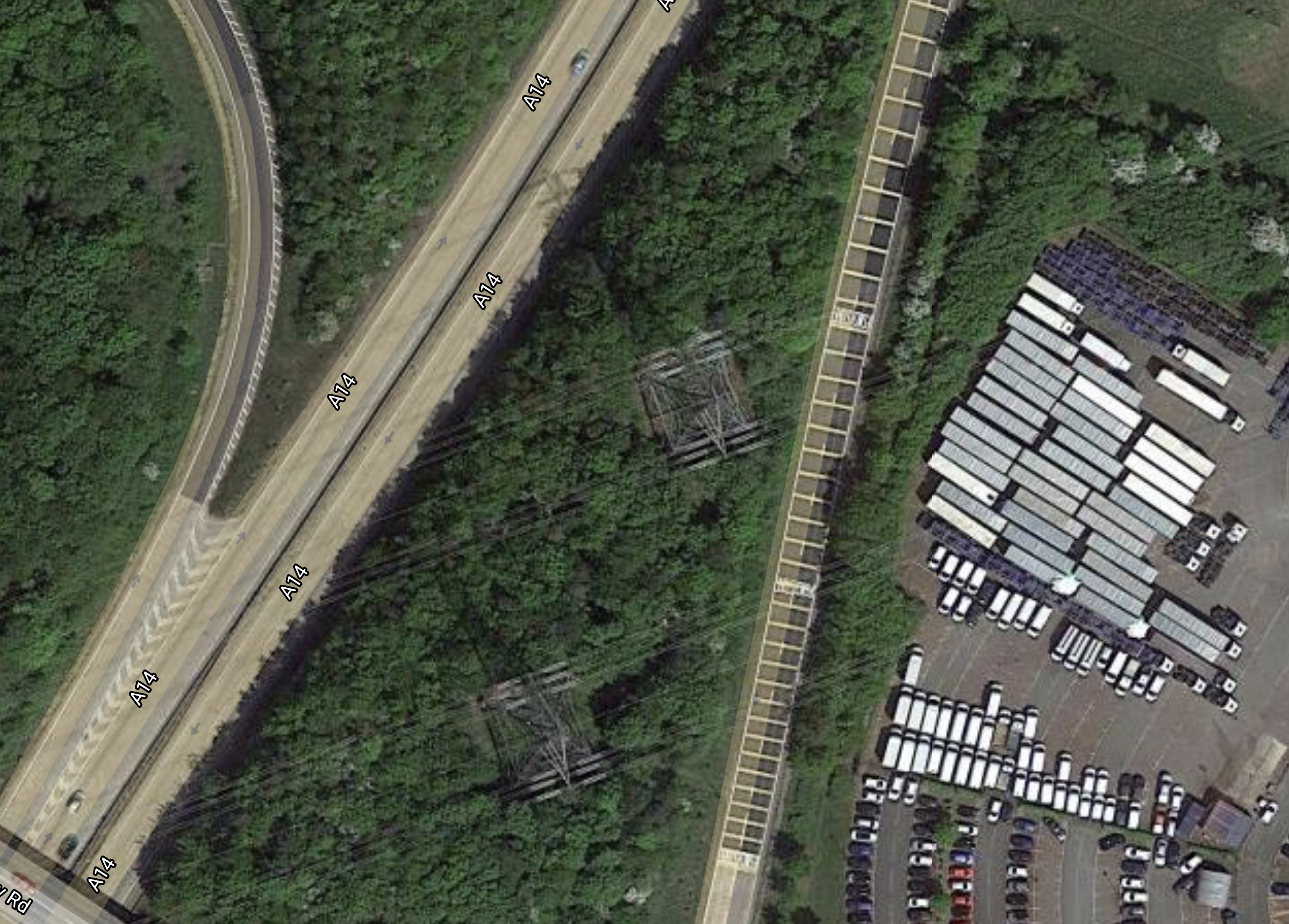
The pylons are in the centre of the map, with the wires going across.
The line has been built for a massive amount of nuclear power at Sizewell.
The Sizewell Railhead
This Google Map shows the railhead at Sizewell.
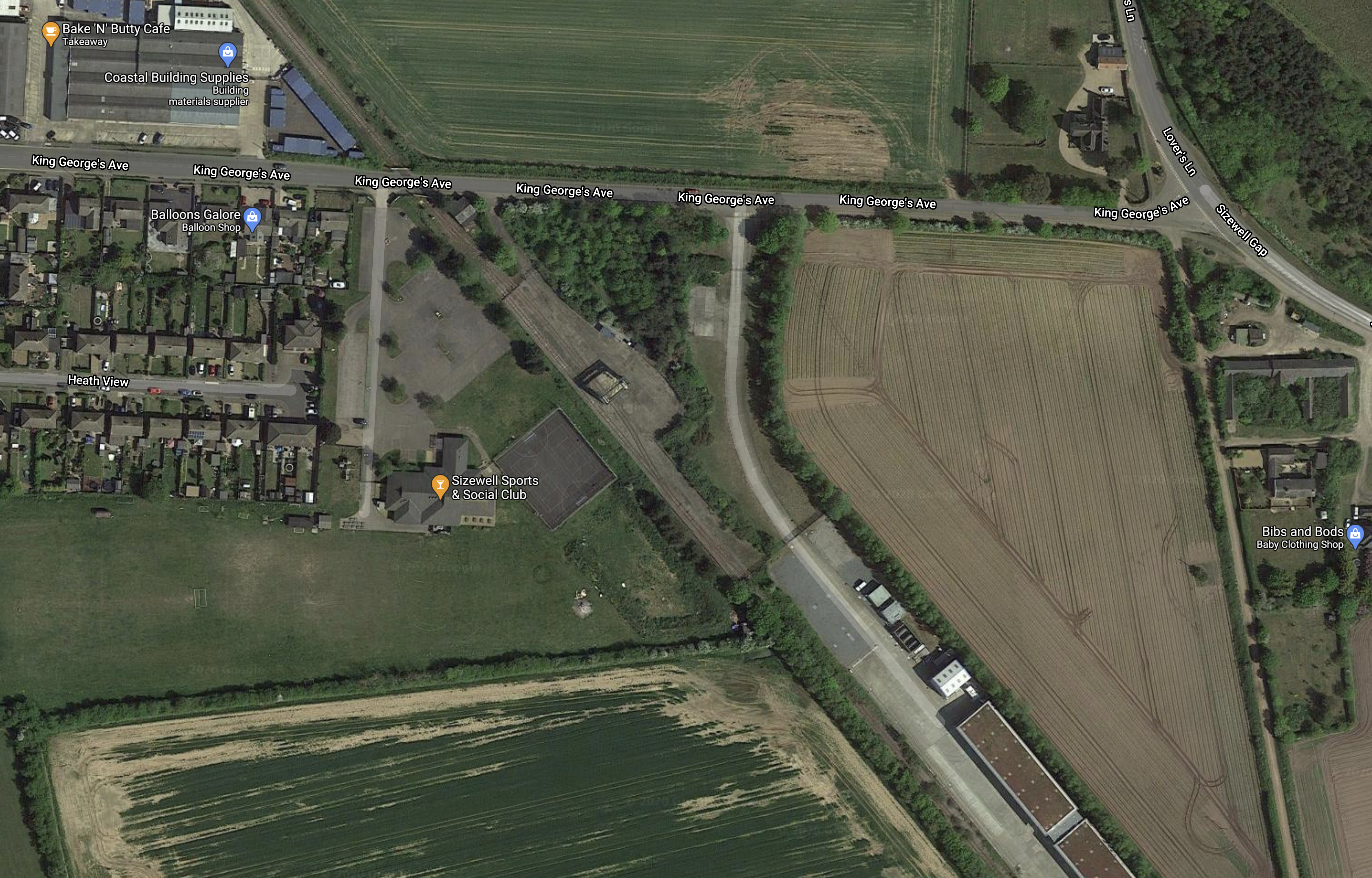
It can also be picked out in the South West corner of the first map.
- The railhead is used to take out spent fuel for processing.
- In the past, it brought in construction materials.
- Wikipedia suggests if the Sizewell C is built, the might be a new railhead closer to the site.
- If a fleet of SMRs were to be built, as the modules are transportable by truck, surely they could be move in by rail to avoid the roads in the area.
- I am an advocate of reinstating the railway from Saxmundham to Aldeburgh, as this would be a way of doubling the frequency on the Southern section of the East Suffolk Line between Saxmundham and Ipswich stations.
I hope that whatever is built at Sizewell, that the rail lines in the area is developed to ease construction, get workers to the site and improve rail services on the East Suffolk Line.
Building A Fleet Of SMRs
One of the disadvantages of a large nuclear power station, is that you can’t get any power from the system until it is complete.
This of course applies to each of the individual units, but because they are smaller and created from a series of modules built in a factory, construction of each member of the fleet should be much quicker.
- Rolls-Royce are aiming for a construction time of 500 days, from the fifth unit off the production line.
- That would mean, that from Day 501, it could be producing power and earning money to pay for its siblings.
- If the eight units were built in series, that would take eleven years to build a fleet of eight.
But as anybody, who has built anything even as humble as a garden shed knows, you build anything in a series of tasks, starting with the foundations.
I suspect that if a fleet were being built, that construction and assembly would overlap, so the total construction time could be reduced.
That’s one of the reasons, I said that building a fleet could be a project manager’s dream.
I suspect that if the project management was top-class, then a build time for a fleet of eight reactors could be nine years or less.
Resources are often a big problem in large projects.
But in a phased program, with the eight units assembled in turn over a number of years, I think things could be a lot easier.
Financing A Fleet Of SMRs
I think that this could be a big advantage of a fleet of SMRs over a large conventional large nuclear power station.
Consider
- I said earlier, that as each unit was completed, it could be producing power and earning money to pay for its siblings.
- Hinckley Point C is budgeted to cost £18 billion.
- Eight Rolls-Royce SMRs could cost only £14.4 billion.
I very much feel that, as you would get a cash-flow from Day 500 and the fleet costs less, that the fleet of smaller stations is easier to finance.
Safety
SMRs will be built to the same safety standards as all the other UK reactors.
In this section on Wikipedia this is said about the Rolls-Royce SMR.
Rolls-Royce is preparing a close-coupled three-loop PWR design, sometimes called the UK SMR.
PWRs or pressurised water reactors are the most common nuclear reactors in the world and their regulation and safety is well-understood.
This is from the History section of their Wikipedia entry.
Several hundred PWRs are used for marine propulsion in aircraft carriers, nuclear submarines and ice breakers. In the US, they were originally designed at the Oak Ridge National Laboratory for use as a nuclear submarine power plant with a fully operational submarine power plant located at the Idaho National Laboratory. Follow-on work was conducted by Westinghouse Bettis Atomic Power Laboratory.
Rolls-Royce have a long history of building PWRs, and Rolls-Royce PWRs have been installed in all the Royal Navy’s nuclear submarines except the first. The Royal Navy’s second nuclear submarine; HMS Valiant, which entered service in 1966, was the first to be powered by a Rolls-Royce PWR.
How much of the design and experience of the nuclear submarine powerplant is carried over into the design of the Rolls-Royce SMR?
I don’t know much about the safety of nuclear power plants, but I would expect that if there was a very serious accident in a small reactor, it would be less serious than a similar accident in a large one.
Also, as the reactors in a fleet would probably be independent of each other, it is unlikely that a fault in one reactor should affect its siblings.
Local Reaction
I lived in the area, when Sizewell B was built and I also went over Sizewell A, whilst it was working.
From personal experience, I believe that many in Suffolk would welcome a fleet of SMRs.
- Sizewell B brought a lot of employment to the area.
- House prices rose!
- Both Sizewell A and B have been well-run incident-free plants
Like me, some would doubt the wisdom of having a Chinese-funded Sizewell C.
Conclusion
Big nuclear has been out-performed by Rolls-Royce
The Car Park at the End of the World
Or should I say the end of Suffolk?
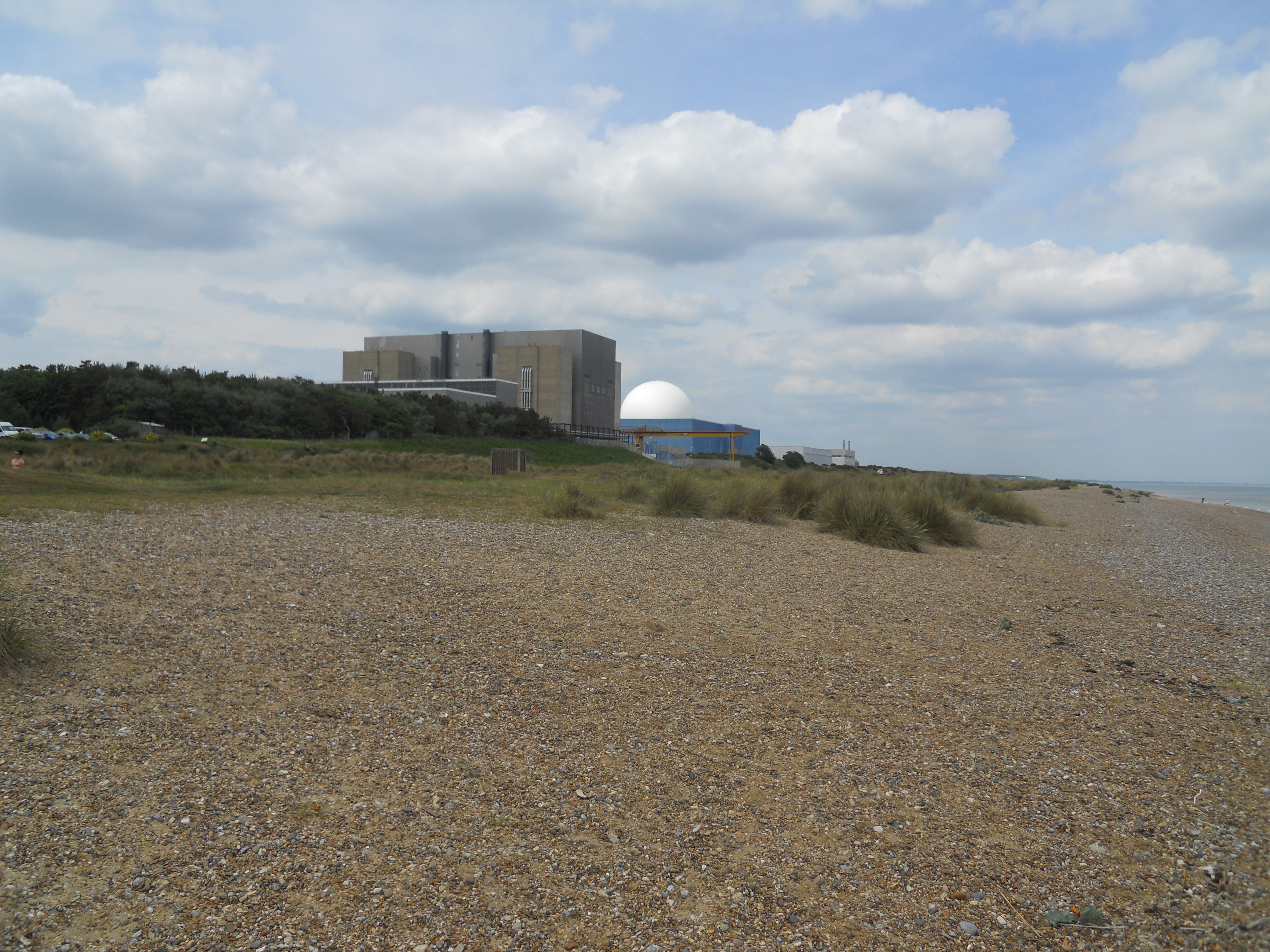
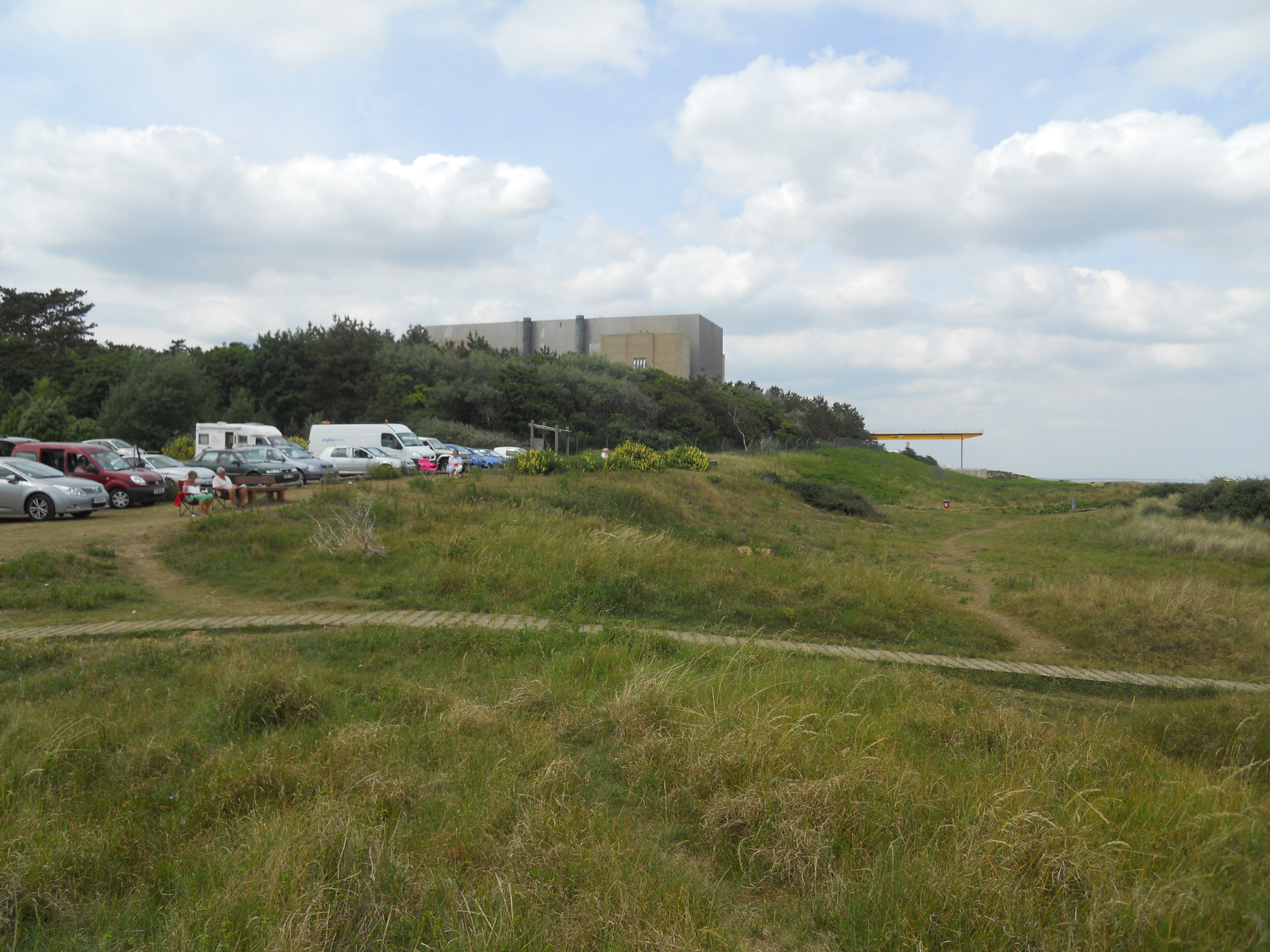
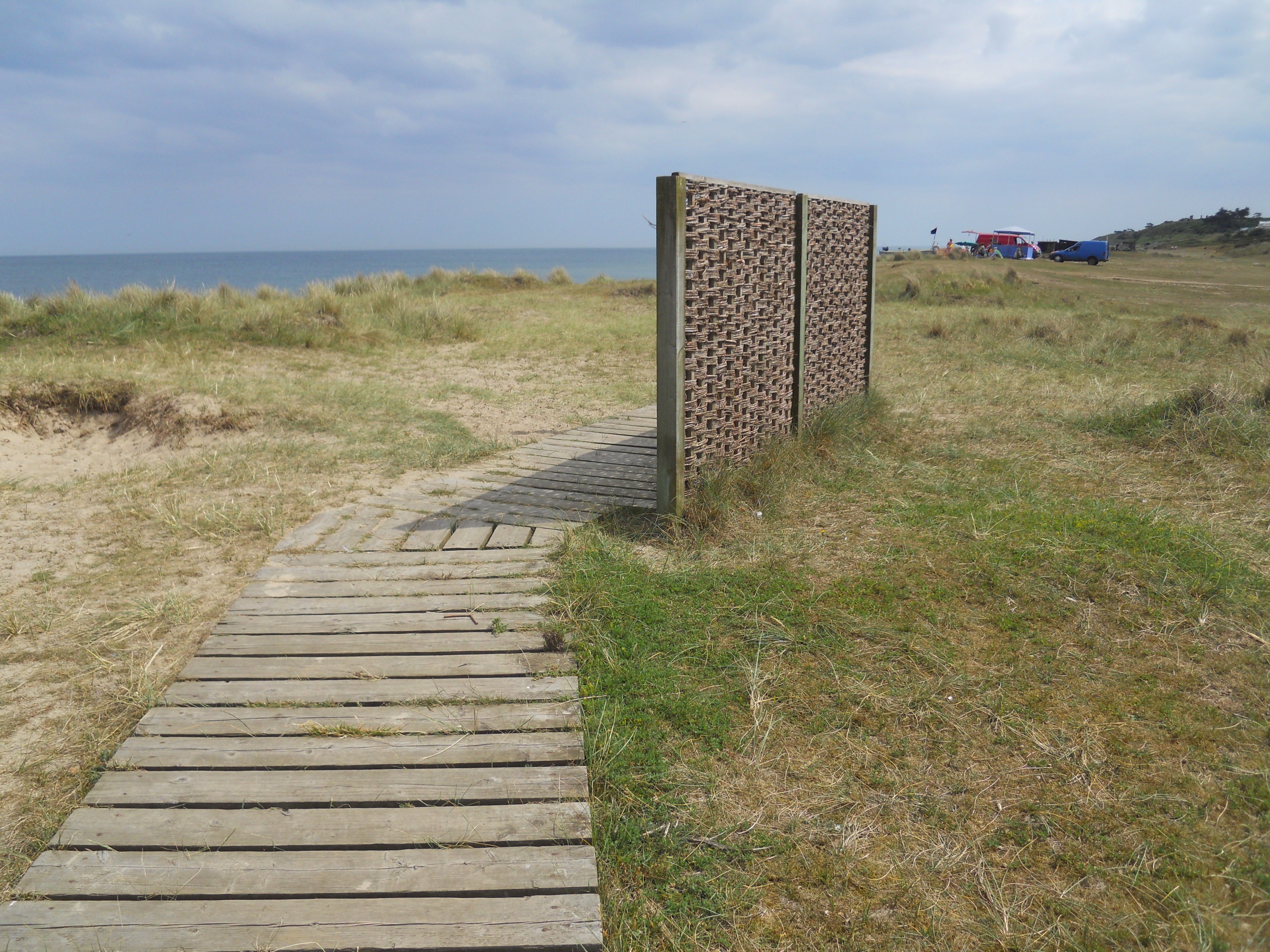
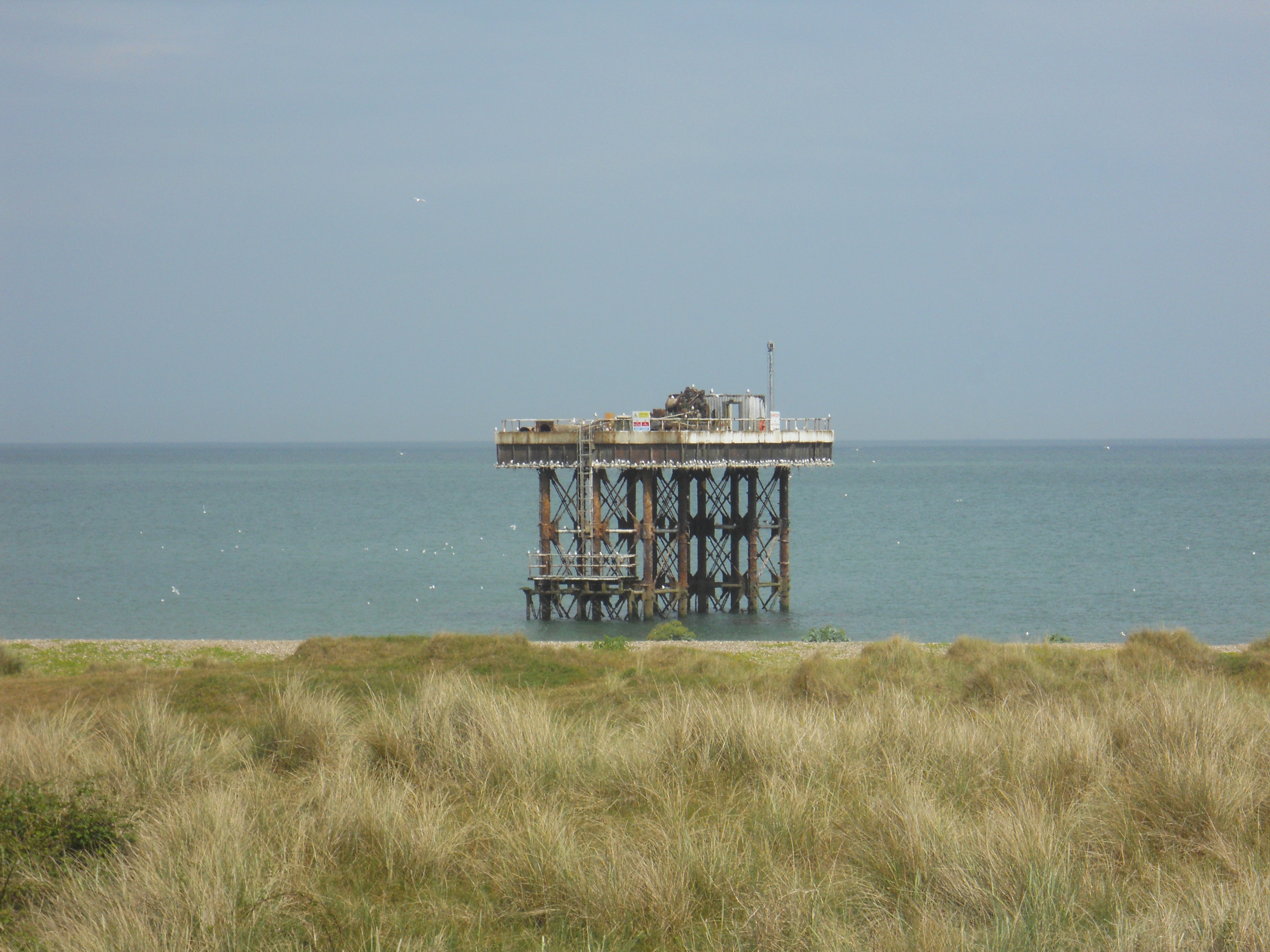

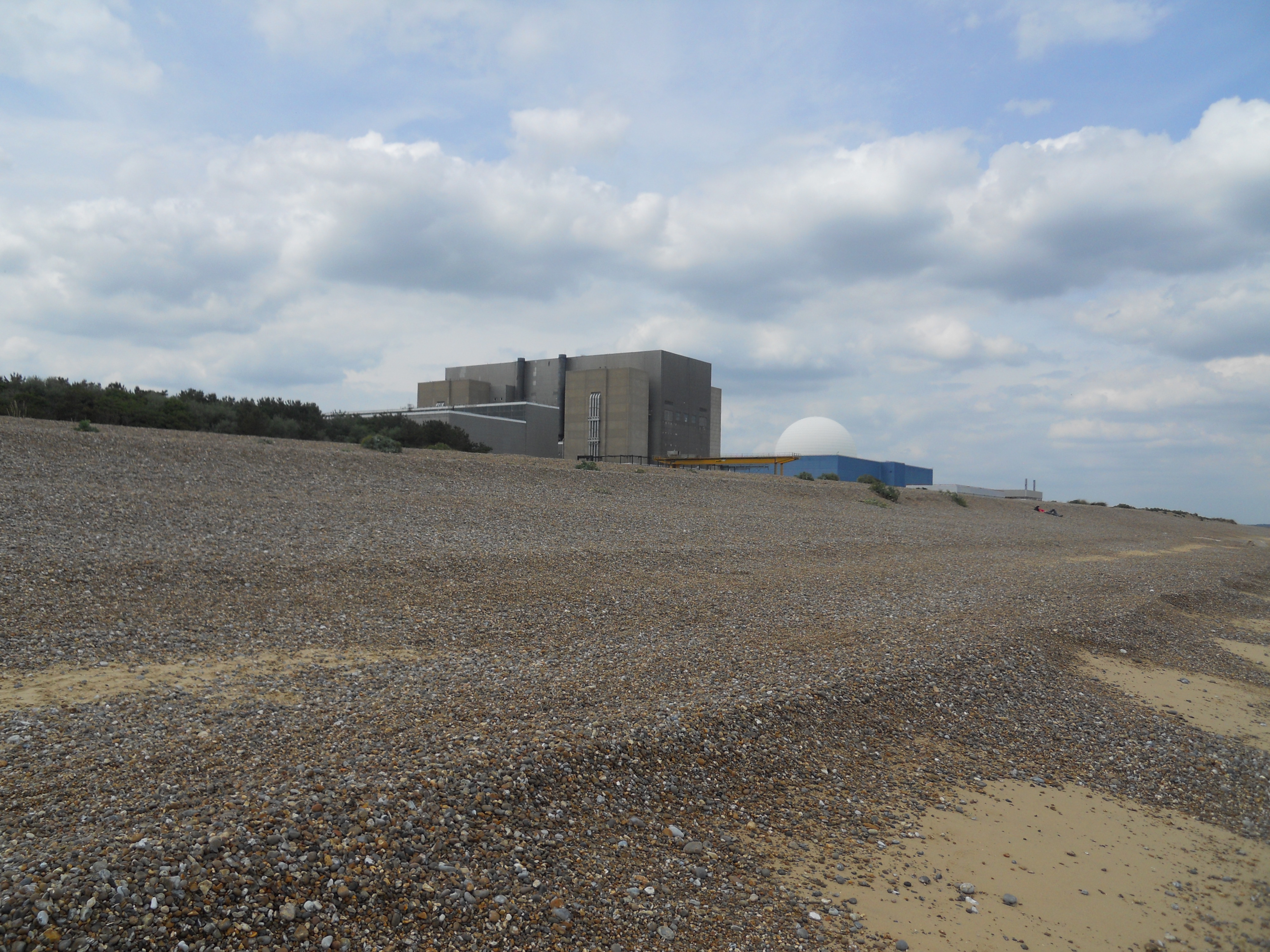
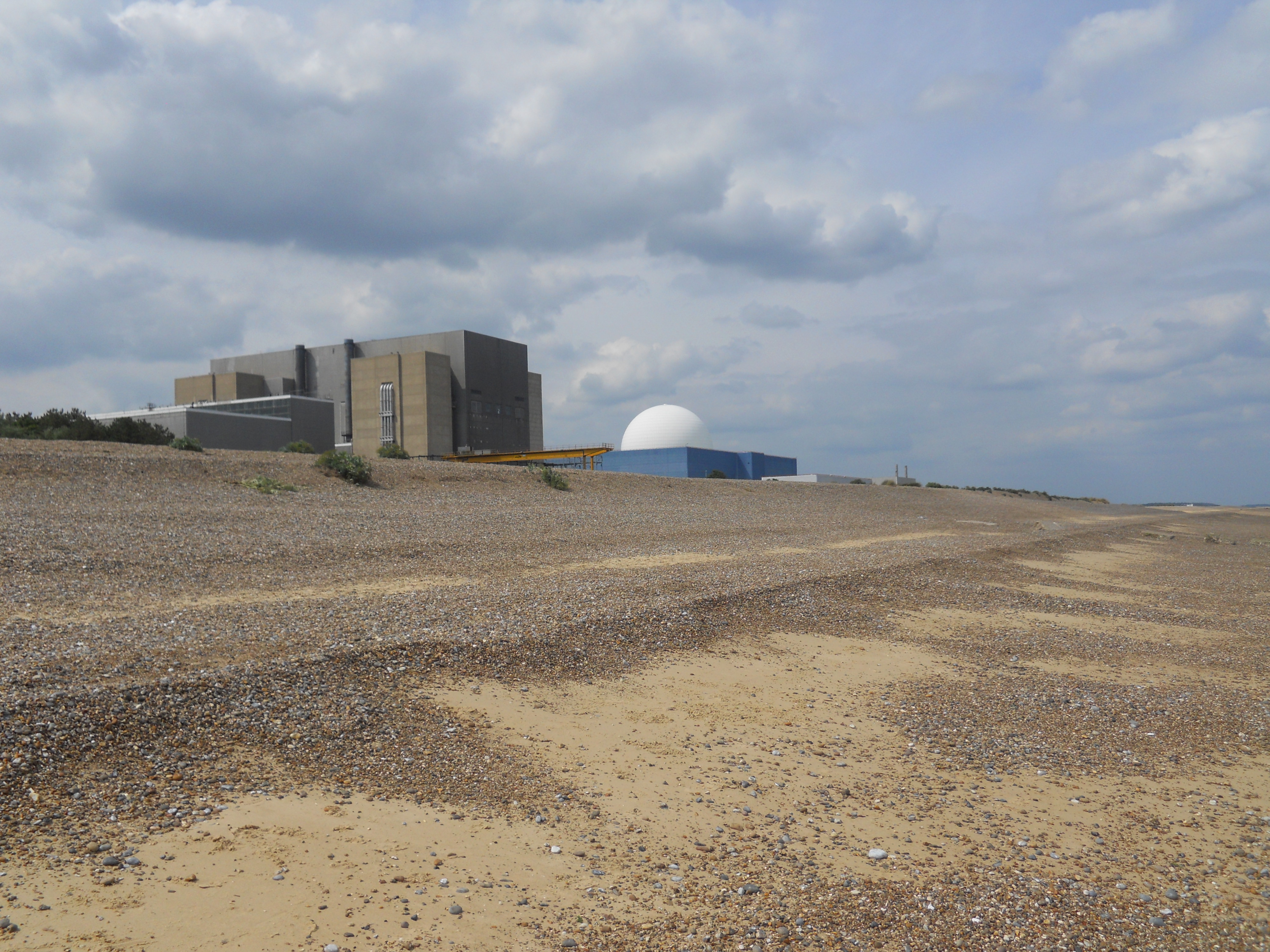

To many it would be an odd place to go for a walk. But the beach is pleasantly part-sand, you have lot of birds, including kittiwakes nesting on the rigs, interesting plants and protection from the wind because of the dunes. There is also a nice cafe and toilets.
Who would have expected it all, in the shadow of two nuclear power stations?
In the 1980s, I went over Sizewell A, which is the square station in the front. It is a Magnox station, was built in the 1960s and will soon be completely decommisioned. To plan their annual shutdown, they had one of the best planning systems, I have ever seen. It was a long white perspex wall, where the critical path network was drawn and updated. Different colours meant different things and through the months before the shutdown, all information was added in the correct place. Like everything I saw on that visit, it was all very professional.
I must relate a hunting story about Sizewell. We were hunting from Knodishall Butchers Arms and were about a couple of kilometres from the sea with Sizewell A in the distance. You might think that we were all against the station with its environmental implications. But being on the whole practical people we realised that you have to get electricity from somewhere and that the plant was a large local employer in an area of the country, that had suffered large job losses with the closure of Garretts of Leiston. But what really annoyed us, was the fact that the local farmer had grubbed out all of the trees and hedges. It was like riding in a lifeless desert.
I feel that we must build more nuclear power stations, but perhaps more importantly, we should be more economical with our energy use. Incidentally, as Sizewell is well connected to the electricity grid, from works we saw yesterday, it is being used as a ditribution point for the electricity generated by offshore wind farms. But I for one would not mind seeing Sizewell C and possibly D added to the Suffolk coast
 The Anonymous Widower