Boralex Commissions BESS At Wind Farm In France In EU-Supported Demonstration Project
The title of this post, is the same as that of this article on Energy Storage News.
These two paragraphs outline the project.
Canada-based renewable energy firm Boralex has turned on a 3.3MWh battery storage unit attached to a wind farm in France.
The battery storage project has been installed at the site of the Plouguin wind farm, an 8MW generating facility in the Finistere department of Brittany, northwest France.
Note.
- The project was co-financed by the European Union through its European Regional Development Fund (ERDF).
- The project was launched to demonstrate the technical feasibility of a hybrid wind-plus-storage project.
- Boralex added in its announcement that the project will contribute to the stability of the French electricity grid.
There will be a lot of projects like this in the future.
This paragraph makes an interesting point about using batteries with solar and wind power.
Wind farms are less frequently hybridised with energy storage than solar PV because of the larger minimum project size and less predictable variability, with sharper peaks meaning heavier battery cycling and potentially faster degradation.
My control engineering knowledge and experience says that larger power sources and those that are highly variable will need batteries with more capacity for the same stability and quality of power output.
This sounds to me like a very good reason for developing larger and more affordable batteries, like those of Cheesecake Energy, Energy Dome, Gravitricity and Highview Power.
It also probably means that to stabilise several gigawatts of wind power, you need a very large amount of storage, that can only be provided by pumped storage hydroelectricity.
Conclusion
A very large amount energy storage is going to be needed.
Projects like these are essential to make sure we use them to their full possibilities.
UK Government Grants £30 Million For Long Duration Energy Storage Projects
The title of this post, is the same as that of this article on Solar Power Portal.
These two paragraphs outline the grants and their recipients.
The UK Department for Energy Security and Net Zero (DESNZ) is providing £30 million in grants for three long-duration energy storage (LDES) projects using novel energy storage technologies.
The three projects awarded funding are from Synchrostor, Invinity Energy Systems and Cheesecake Energy. Synchrostor and Cheesecake Energy are to receive £9.4 million each to fund thermal energy storage systems and Invinity Energy Systems receiving £11 million to develop a vanadium flow battery.
The UK Government seems to give out a lot of these grants for research and development purposes and from feedback I have received from recipients and also by applying my own experience, I am of the opinion, that they are spending tax-payers money more in a wise, rather than a foolish direction.
Cheesecake Energy
I wrote about Cheesecake Energy’s grant in Cheesecake Energy Collects £9.4m Government Funding.
The Government’s press release says this about Cheesecake’s grant.
Cheesecake Energy Ltd, Nottingham, which will receive £9.4 million to test their FlexiTanker technology which stores electricity using a combination of thermal and compressed air energy storage and uses a reversible air compression / expansion train to charge and discharge. They will then install pilot units at 2 sites within a microgrid development in Colchester.
If this project proves successful, it surely is one that can be duplicated in many places.
I have had my eye on Cheesecake Energy for some time and this could be their breakthrough.
Invinity Energy Systems
I first wrote about Invinity Energy Systems in UK’s Pivot Power Sees First Battery On Line By 2021.
The Government’s press release says this about Invinity’s grant.
Invinity Energy (UK) Limited, Scotland, which will receive £11 million to develop and manufacture their 7MW, 30MWh 4-hour Vanadium Flow Battery (VFB), the largest in the UK. Invinity will manufacture the 30 MWh VFB at the Company’s factory in West Lothian, Scotland. The location of the plant will be confirmed in due course.
In this article on renews.biz, which is entitled Invinity Wins Funds For 30MWh UK Battery, these two paragraphs introduce the project.
Invinity Energy Systems plc has today been awarded £11m in funding by the Department for Energy Security and Net Zero to build what it says is the largest grid-scale battery ever manufactured in the UK.
The £11m in funding will come from the Longer Duration Energy Storage Demonstration (LODES) Competition, with funding matched by Invinity’s, as yet unnamed, project partner.
These are other points from the article.
- It will be a fast-response 30MWh battery.
- The battery will be assembled at Bathgate in Scotland.
- It will operate as a stand-alone energy storage asset.
- It will be connected to the National Grid.
- Invinity’s vanadium flow batteries are an alternative to lithium-ion.
The aim is to go live by 2025.
This paragraph indicates the differences between a vanadium flow battery and a traditional lithium ion one.
Invinity said this battery is safer as they cannot catch fire, more durable as they do not degrade with use and are almost completely recyclable at the end of their 25+ year life, reducing environmental impacts and disposal costs for project owners.
I believe that there will come a point, when fully-developed vanadium flow batteries, will become very attractive for financial reasons to the successful energy storage funds like Gresham House and Gore Street.
If the UK government’s funding hastens the day, when energy storage funds feel that these new-fangled vanadium flow batteries are a safe investment, then it is money well spent.
It is not as though the money is going to an early start-up, as this page on the Invinity Energy Systems web site indicates at least a dozen installations.
This project for an as yet unnamed customer, which has a capacity of 30 MWh, is probably much bigger and the Government help is probably very much welcomed.
SynchroStor
SynchroStor was new to me, today.
The Government’s press release says this about SynchroStor’s grant.
Synchrostor, Edinburgh, Scotland, which will receive £9.4 million to build a Pumped Thermal Energy Storage (PTES) grid-connected demonstration plant operating at 1MW, with the ability to charge and discharge for a period of 10 hours, longer than current battery technology.
This page named Technology on their web site, explains their technology, both with words and diagrams.
It is probably the most complex technologies of the three batteries, but I don’t think that will be a problem.
Conclusion
The Government has given grants to three different storage technologies.
If all goes well three good sizable pilot plants will be created and those companies like Centrica, Gore Street, Gresham House, National Grid, Ørsted, SSE and others, will be able to judge, which system is best for their needs.
Centrica Plan Green Energy Hub At Former Gas Power Plant
The title of this post, is the same as that of this news item from Centrica.
These three paragraphs outline the project.
A former gas fired power plant in North Yorkshire is to be turned in to a green energy hub under ambitious plans by Centrica.
The energy company has acquired the four-acre former Knapton Generating Station from Third Energy and plans to develop a 28MW battery on the site.
In addition, Centrica is exploring how Knapton could be used for off-grid hydrogen production, as well as the possibility for solar energy in the surrounding area.
Over the last few months, I’ve written about other small projects from Centrica.
- Centrica Business Solutions Begins Work On 20MW Hydrogen-Ready Peaker In Redditch
- Centrica And HiiROC To Inject Hydrogen At Brigg Gas-Fired Power Station In UK First Project
The company has also announced links with other companies.
- Centrica Announces Hydrogen Ready Combined Heat And Power Partnership With 2G
- Lhyfe And Centrica To Develop Offshore Renewable Green Hydrogen In The UK
- Centrica And Ryze Agree To Develop Hydrogen Pathway
Note, that the first concerns generators and the others concern hydrogen.
The Centrica news item about the Knapton generating station has this fourth paragraph.
The multi-million pound deal is part of Centrica Business Solutions strategic plan to create a 900MW portfolio of solar and battery assets by 2026.
It seems obvious to me that the Brigg, Knapton and Redditch projects fit this Centrica Business Solutions strategic plan, with sizes as follows.
- Brigg – 49 MW
- Knapton – 41.5 MW
- Redditch – 20 MW
I would expect to see Centrica behind several more of these smaller energy projects.
For that reason I have tagged all articles dealing with these projects as Centrica Small Energy Projects.
These are my thoughts about the Knapton generating station.
Third Energy
Third energy’s web site defines Third Energy as an unusual fossil energy company.
- The History page says that Knapton Generating Station was producing electricity using gas from the Vale of Pickering for over 25 years.
- The Net Zero Rise page describes their involvement in the Net Zero RISE consortium with Durham, Leicester and Oxford Universities.
- The Plug & Abandon and Geothermal pages are very much worth a read.
According to the Centrica news item, Third Energy will retain the ownership of the 12 well-sites and associated gas pipeline network.
I shall be watching this company and their developing relationship with Centrica.
The Net Zero RISE Consortium
The Net Zero RISE Consortium has a home page on the Newcastle University web site.
The page has this sub-heading.
Research Infrastructure for Subsurface Energy: an academic-industry partnership to deliver the UK’s first deep test sites.
This is said under a heading of Our Ambition.
This is the most cost-effective way of developing the UK’s first deep test site onshore.
Repurposing wells leverages previous capital investment. Using an onshore site with existing wells and geophysical data:
- eliminates the major cost of drilling and engineering
- reduces uncertainty by drawing on knowledge of the well and surrounding geological conditions
- is safer and easier access than offshore locations
We propose developing three test sites: CO2 storage; H2 storage and geothermal.
This seems to be a very sensible research collaboration and I wouldn’t be surprised to see more companies and universities join.
The Battery
The Centrica news item says this about the battery.
The first project at the site near Malton will be a 56MWh battery which will utilise some of the 41.5MW export capability of the existing grid connection. It’s anticipated the battery would be able to power around 14,000 homes for two hours.
This paragraph would indicate that the battery is supplying just 2 kWh per hour.
A common figure on the Internet is that the average house uses 8 kWh per day, which is 0.33 kWh per hour.
I have a feeling that the figures need correcting somewhere.
Solar Power
The third paragraph of the Centrica news item mentions solar energy.
In addition, Centrica is exploring how Knapton could be used for off-grid hydrogen production, as well as the possibility for solar energy in the surrounding area.
This Google Map shows the site.
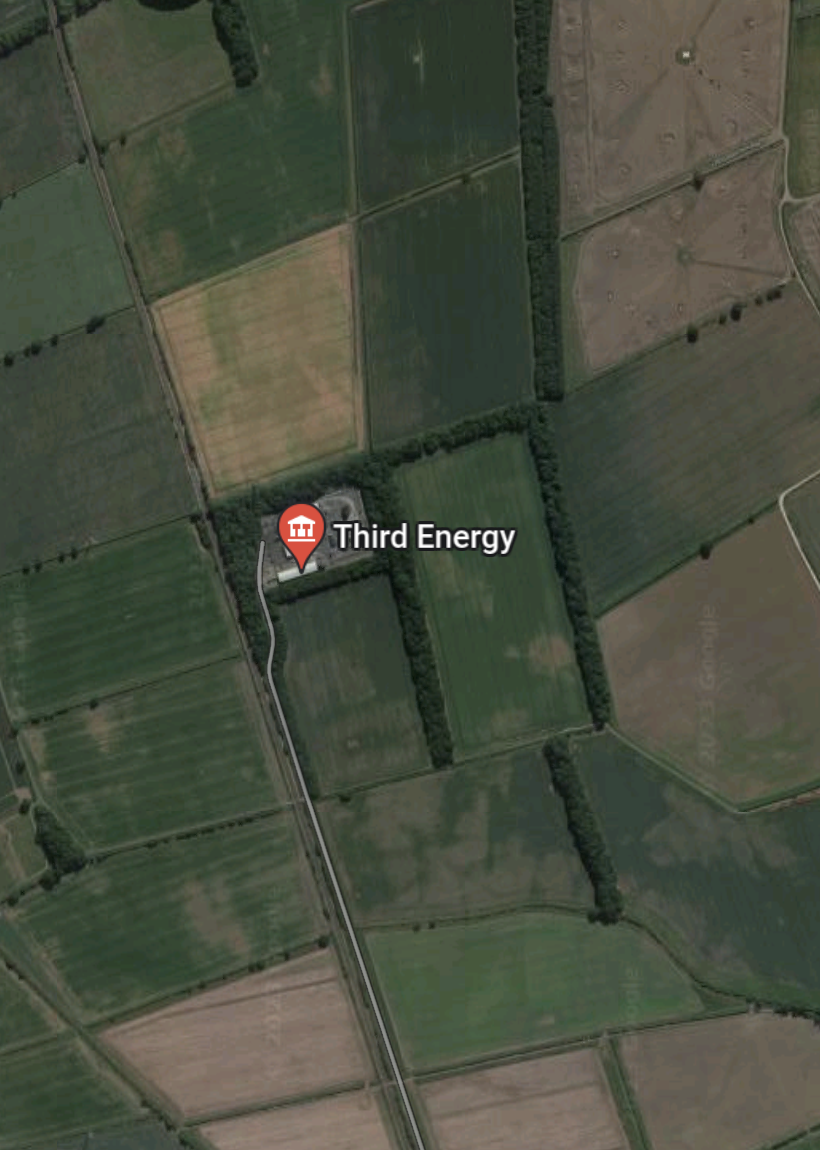
It appears to be several hundred metres to the nearest house.
I have read a very simple rule, that says a hectare, which is about the size of a full-size football pitch can accommodate a MW of panels. Obviously Centrica will have accurate calculations.
Off-Grid Hydrogen Production
The third paragraph of the Centrica news item mentions off-grid hydrogen production.
In addition, Centrica is exploring how Knapton could be used for off-grid hydrogen production, as well as the possibility for solar energy in the surrounding area.
Consider these points about the Knapton site.
- It has been handling gas for at least twenty-five years.
- It is connected to the electricity and gas grids.
- It has connections to a dozen gas wells.
- There would be space for a smaller electrolyser.
- Hydrogen could be exported from the site, by blending into the natural gas grid.
If Third Energy and the Net Zero RISE Consortium develop Knapton as a site for their H2 Storage test well, Centrica and an off-grid hydrogen production facility would be ideal partners.
Centrica could even use the site to try out new ideas.
This appears to be one of those engineering projects, that has been thought through whilst drinking several pints of real ale in a welcoming hostelry nearby.
Geothermal Engineering
This site could be used for experiments with geothermal engineering, but there doesn’t seem many places nearby, that would need a good supply of hot water.
Conclusion
There’s more to this deal, than meets the eye.
Are These Turbines An Alternative To Solar Panels?
I took this picture yesterday of the Ventum Dynamics turbine on Skegness Pier.
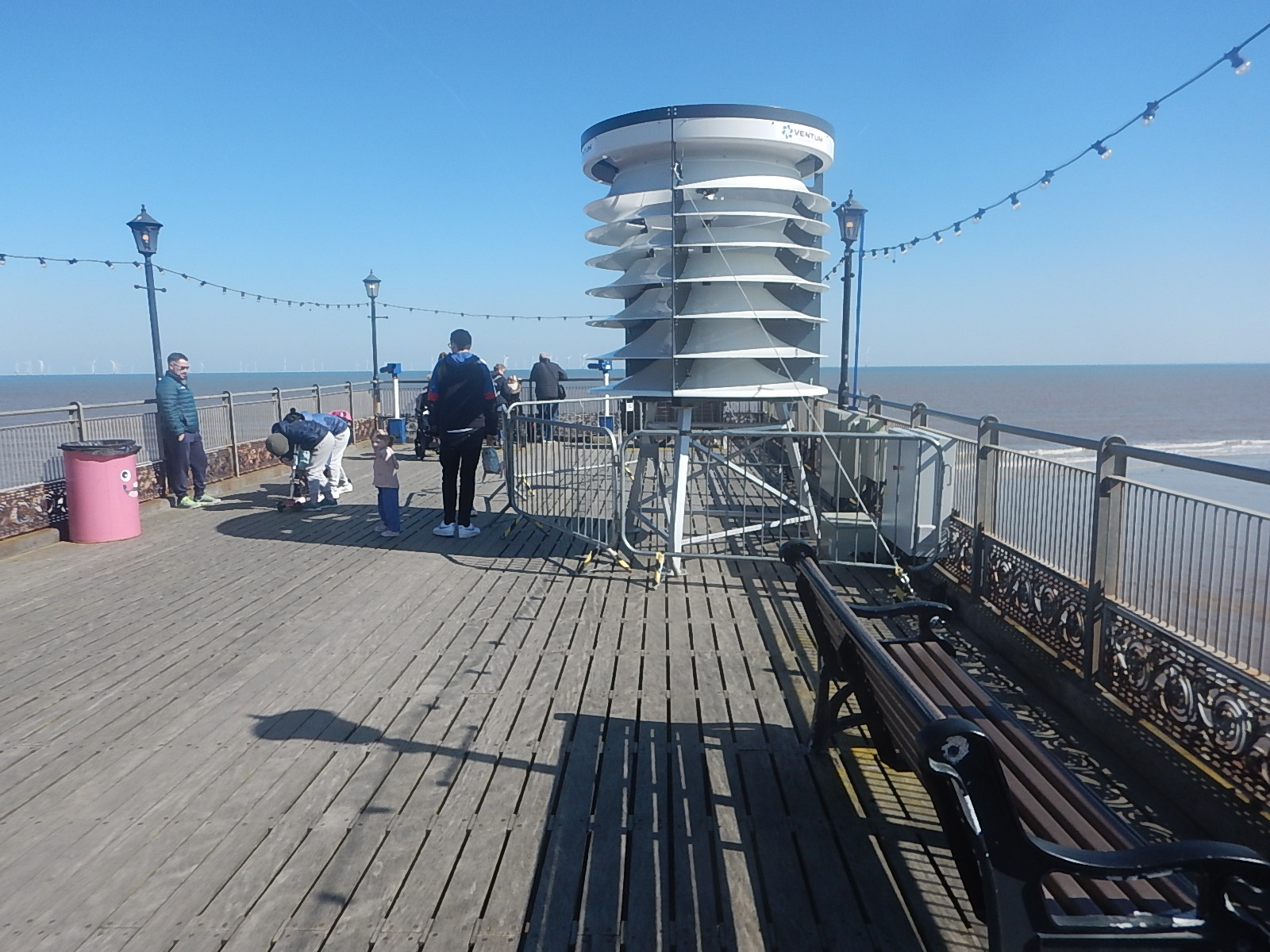
On the Ventum Dynamics web site, there are several pictures of buildings with flat roofs, that have several turbines on each.
I have some thoughts.
Connecting The Turbines
The Skegness turbine has been installed to light up the pier, but it doesn’t seem to have masses of cabling!
So can one of these turbines or a whole fleet of them be connected up by a qualified electrician, who is familiar with connecting up solar panels?
It would certainly, be a positive feature if they could, as these turbines could be another string to the bow of a solar power company.
I would design them to be electrically interchangeable with solar panels, so that roofs could be covered by a mixture of both solar and wind power.
Will We See more Hybrid Systems?
Cleve Hill Solar Park in Kent is being built as a solar park with a battery close to the London Array offshore wind farm.
I can see batteries and Ventum’s turbines being added to solar farms.
Conclusion
Ventum’s turbines are both an alternative and a partner to solar panels.
Dutch Take Aim At Lower Green Hydrogen Costs By Combining Offshore Wind And Floating Solar
The title of this post, is the same as that of this article on offshoreWIND.biz.
This is the sub-heading.
A consortium of Dutch companies has launched a government-backed project to explore the synergies between offshore wind, offshore solar and hydrogen production at sea for improved sustainability of North Sea renewable energy projects.
T thought about calling this post, The Dutch Go For The Full Monty, but there is no mention of wave or tidal power.
These two paragraphs outline the project.
The four-year project, dubbed Solar Enhanced North Sea Energy Hub (SENSE-HUB), is expected to accelerate the rollout of offshore solar into offshore renewable energy systems.
Let by TNO, short for Netherlands Organization for Applied Scientific Research, the project will address the integration of various energy system modules for the Dutch North Sea by understanding and removing the implementation barriers for future SENSE-HUBs from a technical, economical, ecological, legal and societal perspective.
I wouldn’t be surprised to see more integrated systems like this in the waters around our coasts.
I also believe that the ultimate offshore energy production system will also use wave and tidal power to generate electricity and have inbuilt energy storage.
Vattenfall Invests In 76-Megawatt Agrivoltaic Project
The title of this post, is the same as that of this media report from Vattenfall.
This is the sub-heading.
Agrivoltaics is the combination of sustainable agriculture and solar power generation on the same agricultural land. Vattenfall has now made a final investment decision for a 76-megawatt solar park Tützpatz in Mecklenburg-Western Pomerania. The project is being set up without state support.
These two paragraphs outline the project.
Photovoltaics is now one of the cheapest technologies among renewable energies, and solar power has a high level of acceptance among the population. However, critics of open space photovoltaics fear that expansion could take place at the expense of agricultural land used for food production. The relatively young technology of agrivoltaics, which can reconcile agricultural use and photovoltaics, can help to resolve this competitive situation.
For the first time, Vattenfall will implement this innovative concept of land use on a commercial scale with partners. The aim of the project in Tützpatz is to combine module types on different mounting systems with suitable agricultural uses over an area of 95 ha, and thus gain further practical experience for future commercial projects of this kind. According to current plans, construction at Tützpatz is scheduled to start in early summer 2023.
Note.
- Tützpatz is a few miles North of Lincoln.
- This project is subsidy-free.
- At Tützpatz, 76 MW is to be installed in 95 hectares, which is an energy density of 0.8 MW per hectare.
- Agrivoltaics have an extensive Wikipedia entry.
I would expect we could use agrivoltaics in quite a few places in Southern England.
Plans To Turn Czech Coal Mine Into Storage, Hydrogen And Solar Hub
The title of this post, is the same as that of this article on Power Engineering International.
This is the sub-heading.
Mine is also going to be the site of an experimental greenhouse project called Eden Silesia
This paragraph outlines Eden Silesia.
The site will also be home to an experimental greenhouse project called EDEN Silesia, managed by the Silesian University of Technology and based on the concept of the Eden Project in Cornwall, England.
It does seem that the Czechs are creating a comprehensive facility around a Gravitricity energy store.
This Gravitricity system is only a 4MW/2 MWh system, but there is also this quote from the company.
Future multi-weight systems could have a capacity of 25MWh or more.
If the concept works, this could be imitated in several countries around the world?
Solar Farms And Biodiversity
I have an old farmer friend, who told me this tale.
His neighbour put up a few acres of solar panels on a field, that adjoins one of his fields, where it generally grows cereal crops.
He told me that he felt he was seeing more hares on his land and wrote to me asking if it could be the solar panels.
I searched the Internet and couldn’t find anything at the time.
But, it should be remembered, that hares have an unusual way of bringing up their leverets, where the mothers generally abandon them during the day and feed them in the evening.
We did wonder, if the solar panels offered protection to the leverets from aerial predators. And the mothers were learning that solar panels were a safer place.
This morning someone made a comment about solar panels on a page in The Times and I searched again.
I found this article on the Solar Power Portal, which is entitled Solar Farms And Biodiversity and thoroughly read it.
It doesn’t say much about hares, but it puts a strong case, that solar panels can increase biodiversity.
Giant Solar Farm Project In Doubt After Disagreement Between Mike Cannon-Brookes And Andrew Forrest
The title of this post, is the same as that of this article on the Guardian.
This is the sub-heading.
Australian billionaires had backed $30bn Sun Cable venture designed to help power Darwin, Indonesia and Singapore but the company has gone into voluntary administration.
It does look like the administrators will be able to continue the project and look for more funding.
Qatar must be in the frame, as this link will probably cut some of their gas sales.
I wrote about this monster project in Sun Cable’s Australia-Asia PowerLink.
I wonder if this administration will have any effects on the prospects of the other giant intercontinental interconnectors?
- EuroAfrica Interconnector – See The EuroAfrica Interconnector
- EuroAsia Interconnector – See The EuroAsia Interconnector
- Morroco-UK Power Project – See Moroccan Solar-Plus-Wind To Be Linked To GB In ‘Ground-Breaking’ Xlinks Project
- TransPacific Interconnector – See Chile Wants To Export Solar Energy To Asia Via 15,000km Submarine Cable
The economics will decide. But I do think, the last one could be a bit ambitious.
Would A Solar Roof With Added Vertical Turbines Work?
This picture shows Oakwood station on the Piccadilly Line.
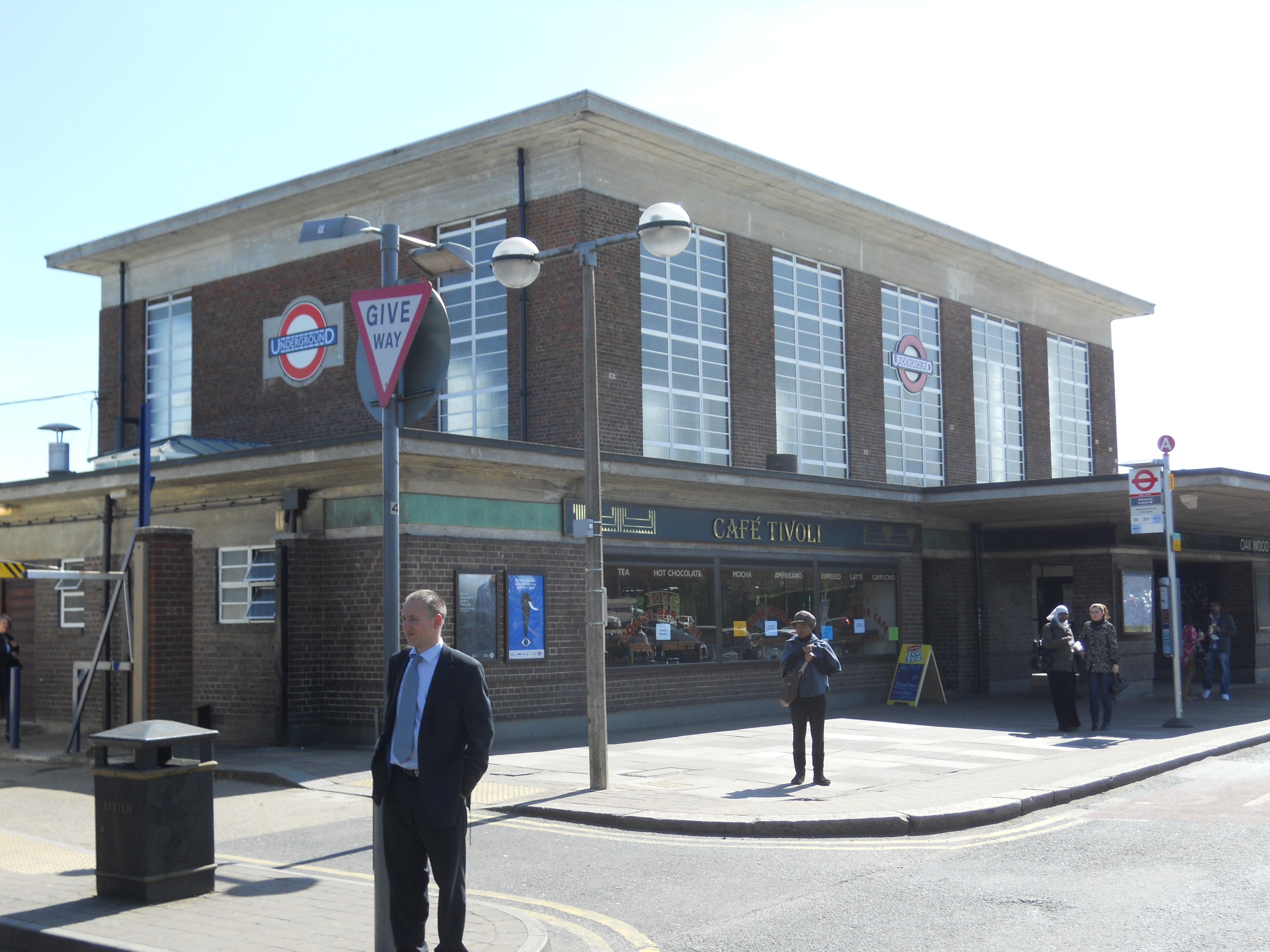
Note.
- The station is the second most Northerly on the line.
- It opened in 1933.
- It is a classic Charles Holden design.
- It is a Grade II* Listed building.
- The station is on top of a hill and has an elevation of 71 metres above sea level.
This Google Map shows a close-up of the roof.
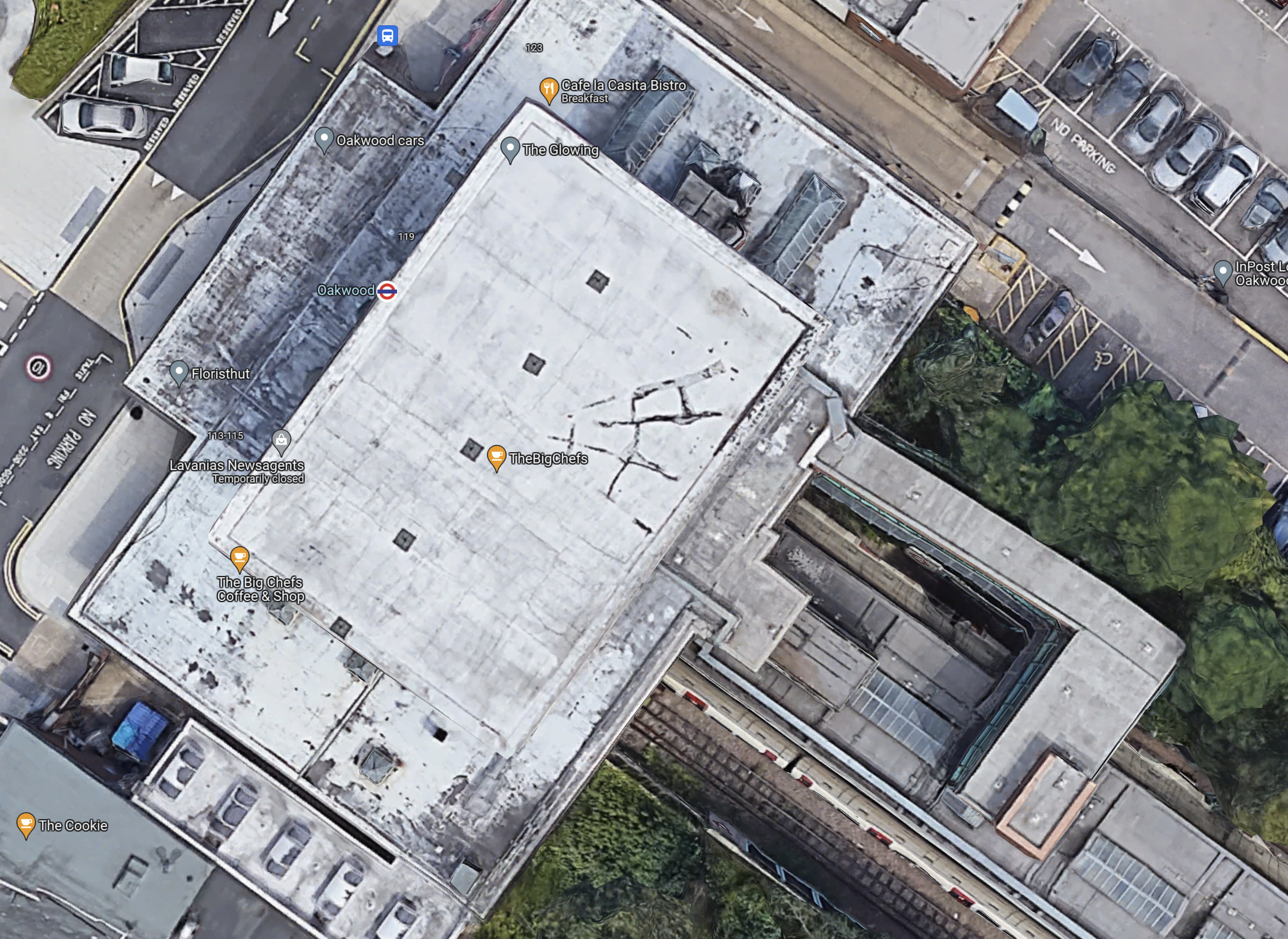
There might be a few aerials on the roof, but no solar panels.
Oakwood’s Location And Weather
I used to live near Oakwood station and it had its disadvantages.
- Cycling home was always up a steep hill.
- It could get very cold at times.
There even used to be a plaque at the station, which said that if you flew East, the first land you would hit would be the Urals.
Oakwood station could be an ideal renewable power station.
- The concrete and brick box of the station is probably exceedingly strong.
- Solar panels could cover the flat roof.
- SeaTwirls or other vertical turbines could be mounted around the solar panels.
- There could still be spaces for the aerials.
- I wonder what the reaction of English Heritage would be.
Should we call this mixed solar and wind power generation, hybrid renewable energy? Or do we overdo, the use of hybrid?
London Underground have other stations of a similar design including Sudbury Town and Acton Town.
The Wider Area To The West Of Oakwood Station
This Google Map shows the area to the West of Oakwood station.
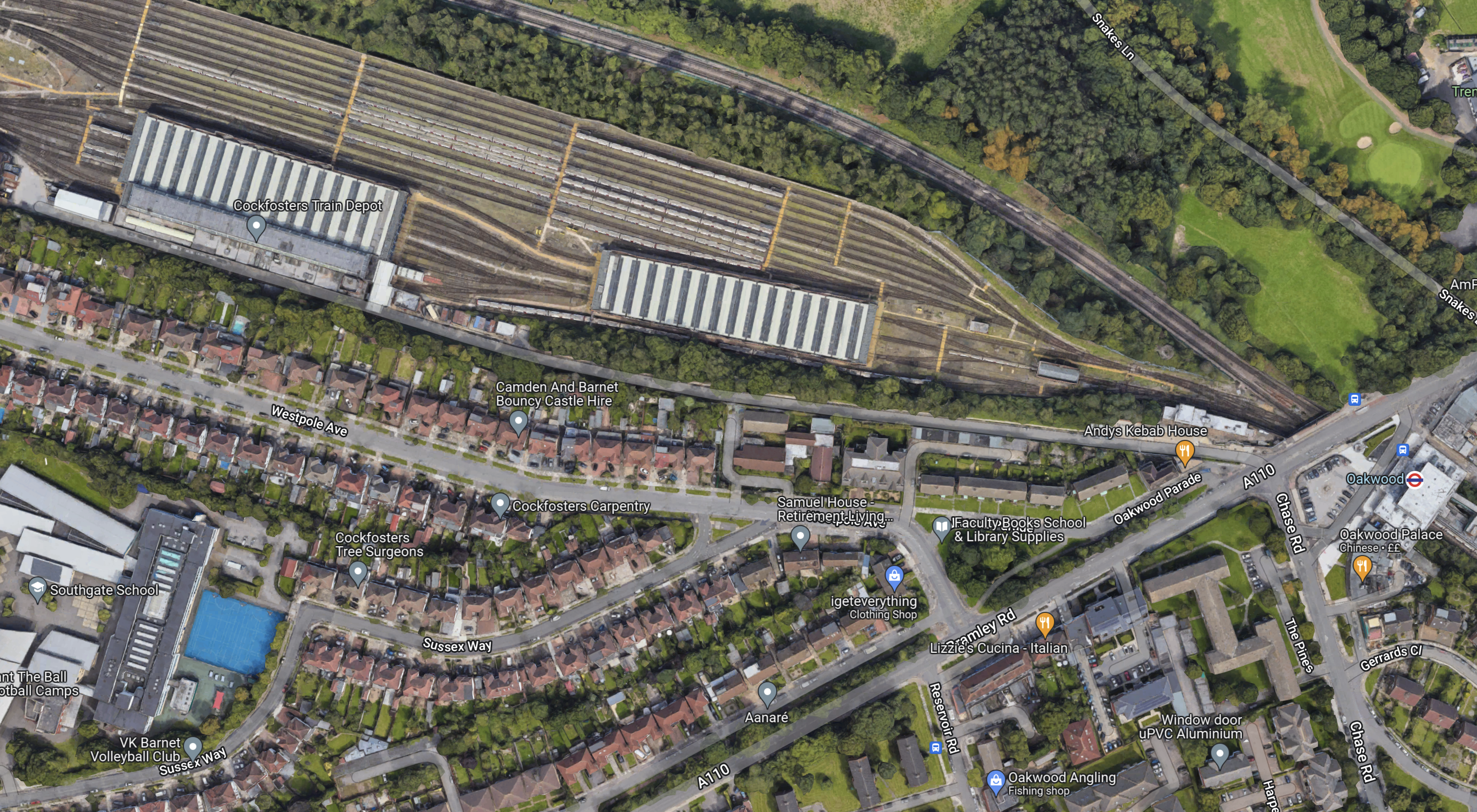
Note.
- The striped roofs at the top of the map, with sidings for trains to the North, is Cockfosters Train Depot for the Piccadilly Line..
- The large building in the South-West corner is Southgate School, which I watched being built in the early 1960s, from my bedroom window in our house opposite. It is a concrete frame building typical of the period.
- Oakwood station is at the East side of the map and indicated by a London Underground roundel.
I think the possibilities for hybrid power generation in this area are good.
Cockfosters Depot
Cockfosters Depot could be an interesting site to develop as a renewable power station.
- There’s no way the site could be developed for housing, as it’s in the Green Belt.
- Road access is bad, but access for trains is good.
- I estimate that the depot is an area of at least five square kilometres.
- It’s still windy in the depot.
But it could have a solar roof and a few vertical wind turbines over the whole depot as designs and panels improve.
Southgate School
Southgate School could have a similar setup to Oakwood station.
Opportunities At Cockfosters Station
This Google Map shows a 3D image of Cockfosters station and the buildings around it.

Note.
- Cockfosters station is indicated by the roundel.
- The station is a Grade II Listed building.
- The station has an elevation of 97 metres.
- Half of the station car park is going to be turned into housing.
- Trent Park lies to the North of the station.
- The road in front of the station is Cockfosters Road, which to the North joins the M25 at Junction 24.
- The building between Cockfosters Road and the railway used to be offices, but it is now being converted into housing.
That high roof of the housing development, must be an ideal candidate for solar panels and vertical wind turbines.
Conclusion
I have tried to show the potential of just one of the small hills that ring London.
 The Anonymous Widower