It’s T-time! All T-Pylons Now Erected On Hinkley Connection Project
The title of this post, is the same as that as this press release from National Grid.
These are the three bullet points.
- All 116 world-first T-structures now complete as part of the Hinkley Connection Project
- Last of 232 diamond ‘earrings’ lifted onto a T-pylon between Yatton and Kenn in North Somerset
- 36 of the new T-pylons between Woolavington and Loxton were energised in March
This is the first paragraph.
National Grid’s Hinkley Connection Project reached another milestone with the completion of all 116 of its iconic new T-pylons, which will connect six million homes and businesses in the South West to home grown, low-carbon energy.
There is a video in the press release, which is well worth a view.
New Wellington Railway Station Worth £15m Could Open By 2025
The title of this post is the same as that of this article on the BBC.
This is the sub-heading.
Efforts to build a new railway station could soon move a step closer – if plans for 220 new homes are approved.
These are the first two paragraphs.
Somerset West and Taunton Council and Mid Devon District Council put together plans to reopen Wellington and Cullompton railway stations
Both closed during the infamous Beeching cuts of the mid-1960s.
Reading the article, it looks like the Department for Transport are going to pay for the station.
Four weeks ago, I went to the opening of Reading Green Park station, which I wrote about in Reading Green Park Station – 27th May 2023.
When I was there, I met the guy, who works for Great Western Railway, who is responsible for new stations in the area, who when I asked him about Wellington and Cullompton, indicated that they might be treated together.
In Thoughts About Electrification Through Devon And Cornwall, I speculated that there might be some electrification in the area to charge battery-electric trains on their way to and from the Devon and Cornwall Peninsular. As the M5 motorway goes through the area close to the railway, who would complain about some well-designed overhead electrification.
Network Rail could even use a design like this.
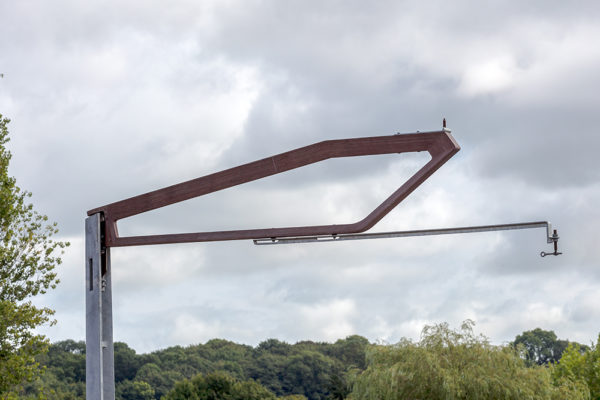
The structural rhomboid shape on top is made from laminated wood.
I describe it in detail in Prototype Overhead Line Structure Revealed.
According to Real Time Trains, Taunton and Exeter St. David’s are 30.7 miles apart and a typical train takes twenty-seven minutes, so I’m fairly sure that a long enough electrified section can be created to fully charge trains, even if they speed through at nearly 70 mph.
Services
The BBC article says this about services.
David Northey, a retired strategic planner with Network Rail, said at a public meeting held in May, that the station would initially be served by trains every two hours as part of the Great Western Railway service between Exeter St. David’s and Cardiff Central.
However, he said this likely increase to once per hour as demand grows.
There are currently four services that go through the site of the proposed stations at Wellington and Cullompton.
- London Paddington and Exeter St. David’s
- London Paddington and Plumouth
- London Paddington and Penzance
- Cardiff Central and Penzance
Note.
- All trains have a frequency of one train per two hours (tp2h).
- There is a train every thirty minutes.
- All trains stop at Taunton, Tiverton Parkway and Exeter St. Davids.
If at some time in the future all services are run by battery-electric Class 802 trains, I suspect GWR will have fun working out an efficient charging and stopping schedule, which increases the number of stops at Wellington and Cullompton stations.
Devizes Station Would Need To Be Part Of Wider Rail Plan
The title of this post, is the same as that of this article on Railway Gazette.
These two paragraphs outline the current status.
The construction of a Devizes Gateway station at Lydeway is unlikely to represent value for money as a standalone project, but it could be viable as part of a wider rail improvement programme, a study has concluded.
The feasibility study undertaken by Wiltshire Council, Devizes Development Partnership, GWR and Network Rail built on a strategic outline business case submitted to the Department for Transport under the Restoring Your Railway Fund programme in November 2021.
The Department for Transport will now decide what to do next.
I think there are other issues on the route between Reading and Taunton.
The Current Train Service
The only passenger services using the Reading and Taunton route are these three trains, which all have a frequency of one train per two hours (tp2h).
- London Paddington and Exeter St. Davids – Calling at Reading, Newbury, Hungerford, Pewsey, Westbury, Castle Cary, Taunton and Tiverton Parkway
- London Paddington and Plymouth – Calling at Reading, Taunton, Tiverton Parkway and Exeter St Davids
- London Paddington and Penzance – Calling at Reading, Taunton, Tiverton Parkway and Exeter St Davids
Note.
- London Paddington and Exeter St. Davids takes a few minutes over two hours.
- London Paddington and Plymouth takes a few minutes over three hours.
- London Paddington and Penzance takes a few minutes over five hours.
- The Reading and Taunton route is a double-track railway with a 110 mph operating speed.
- London Paddington and Newbury is electrified.
- The last two trains alternate to give Plymouth an hourly service.
- After Exeter St. Davids, trains have a sophisticated stopping pattern to give all stations served a good service.
From several trips along the line, I have the impression, that it’s a route, where drivers can get the best out of the trains.
Electrification
The line would benefit from electrification, in terms of journey times and decarbonisation.
But could this route be run by battery-electric trains?
- It is 89.7 miles between Newbury and Taunton.
- It is 120.4 miles between Newbury and Exeter St. Davids.
- It is 52.1 miles between Exeter St. Davids and Plymouth.
- It is 79.4 miles between Plymouth and Penzance.
- London Paddington and Newbury is electrified.
- Taunton, Exeter St. Davids, Plymouth and Penzance stations could have a charging system of some sort.
This Hitachi infographic shows the specification of the Hitachi Intercity Tri-Mode Battery Train.

Consider.
- Two trains go between Newbury and Taunton without stopping.
- The Exeter St. Davids service stops three times.
- Newbury and Taunton non-stop took 75 minutes at an average speed of 72 mph
- Newbury and Taunton with three stops took 78 minutes.
- All trains currently appear to be nine cars.
I suspect that Hitachi’s Intercity Tri-Mode Battery Train could go between Newbury and Taunton with a great deal of ease.
How many diesel engines and batteries would the train have?
Normally, nine-car Class 800/802 trains have five diesel engines.
So how many will be replaced by batteries?
The infographic says one engine will be replaced, so if that is a five-car train, it looks likely that a nine-car train could have two batteries.
But Hitachi could be playing a long game!
In Stadler FLIRT Akku Battery Train Demonstrates 185km Range, I wrote about how the FLIRT Akku has a range of 115 miles.
If Hitachi can squeeze 125 miles out of a nine-car Class 800 with two or three battery packs, they will outrange the FLIRT Akku and be able to run between London Paddington and Penzance on batteries, with some topping up on the way.
We mustn’t forget the engineers at Hyperdrive Innovation, who are designing and building Hitachi’s battery packs.
They will be ultracompetitive and know the range required to get battery-electric trains to Penzance.
I suspect that when the range of the nine-car battery-electric Class 800/802 is revealed, it will astonish everybody!
Bedwyn Station
Bedwyn station is served by an hourly shuttle train to and from Newbury, run by a diesel train.
The station used to have a direct service from London, but now passengers change at Newbury.
A Station For Marlborough
I investigated this in A Station For Marlborough, where this was my conclusion.
With the next generation of electric train with onboard energy storage or IPEMUs, a Marlborough station on a new Marlborough Branch Line can be used to create a two tph service to and from Paddington to replace the current one tph service from Bedwyn.
So a new Marlborough station would be a win for all those using stations on the Reading to Taunton Line to the East of Pewsey.
I also wonder how many other similar services can be developed by extending a service past a main line terminal to a new or reopened branch line, which is built without electrification and run using trains with onboard energy storage.
In answer to my posed question in the last paragraph, I suspect it is quite a few!
Devizes Gateway Station At Lydeway
I wrote about this proposed Devizes Gateway station in Reinstatement Of Rail Access To Devizes Via A New Station At Lydeway.
After writing Was Baldrick An Essex Man? about the building of an avoiding line at the new Beaulieu Park station North of Chelmsford, I do wonder, if it would be an idea to incorporate one in this proposed station, if there is a need to increase capacity.
This Google Map shows the station site, where the A342 crosses the railway.
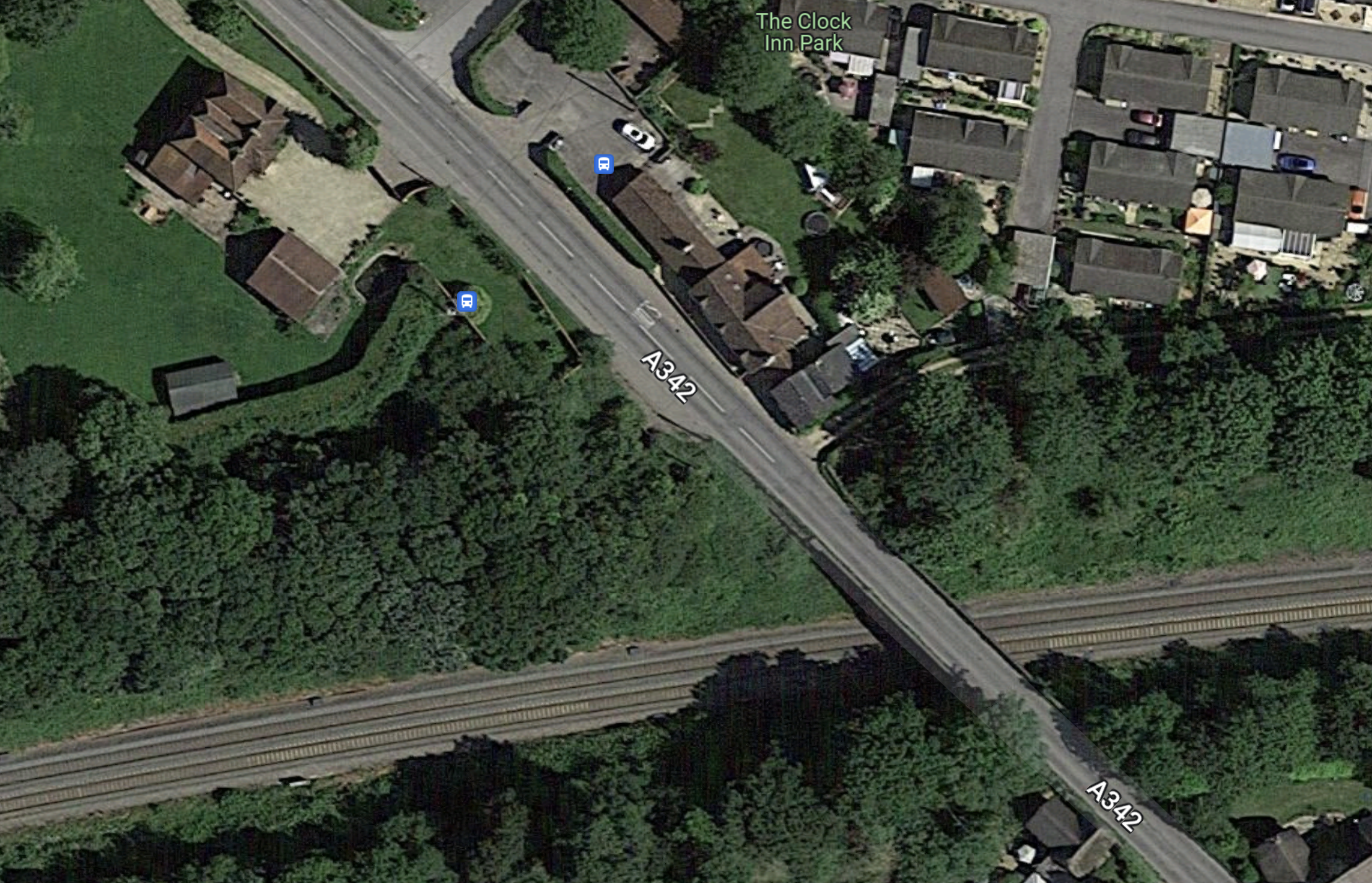
I suspect a third track can be squeezed in.
Westbury Station
Westbury station is a busy station, where the Reading and Taunton Line crosses the Wessex Main Line.
This map from OpenRailwayMap shows the lines in the station.
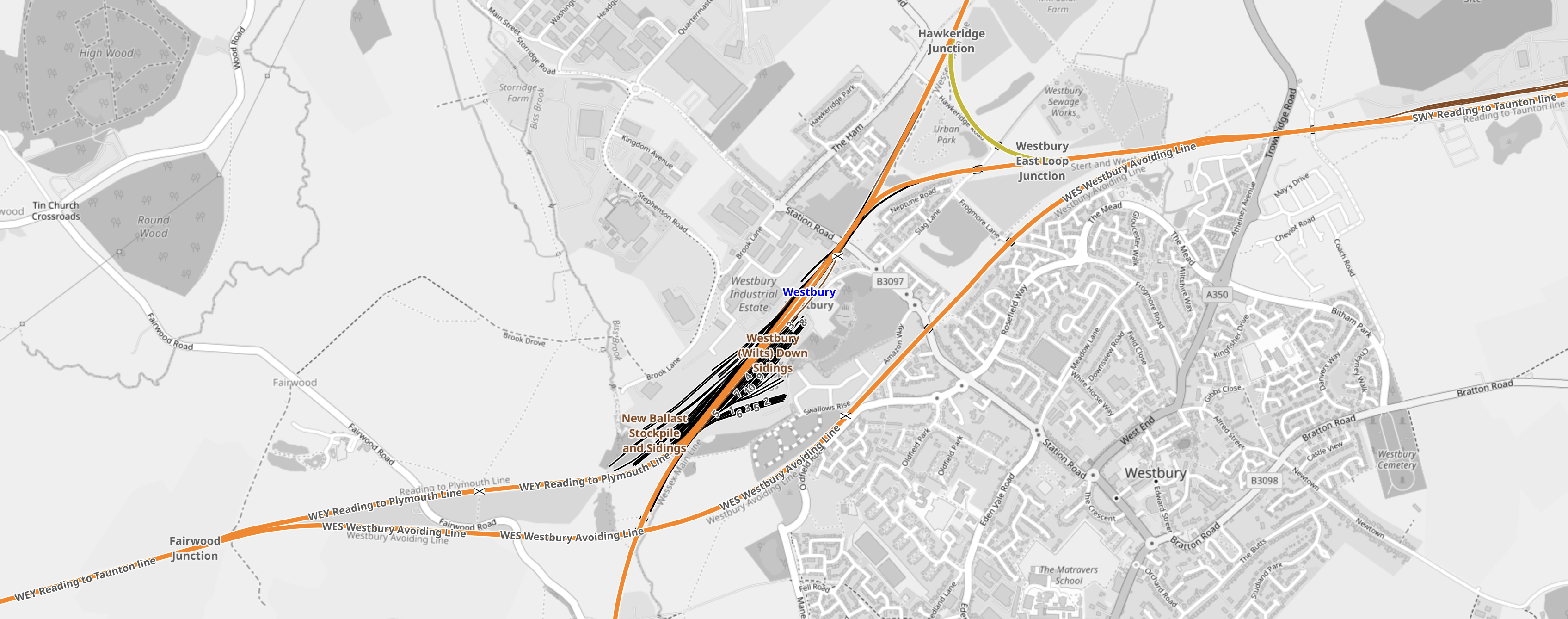
Note.
- The blue lettering indicates Westbury station.
- The two major rail routes are shown in orange.
- The Reading and Taunton Line goes East-West across the map.
- Note the avoiding line South of Westbury station.
- Reading is in the East and Taunton is in the West.
- The Wessex Main Line goes North-South across the map.
- Bristol is in the North.
- Salisbury and Southampton is in the South.
In Westbury Station – 30th July 2020, there are some pictures I took of Westbury station.
This section in Wikipedia says this about the Future of Westbury station.
The line to Westbury is not due to be electrified as part of the 21st-century modernisation of the Great Western Main Line. Although local councillors support it, the extension of electrification beyond Newbury to Westbury was assessed as having a benefit–cost ratio of only 0.31.
On the other hand this document on the Network Rail web site, which is entitled the Devizes Gateway Interim
Feasibility Study, suggests that another platform might be added at Westbury station.
Castle Cary Station
Castle Cary station doesn’t seem to have any well-publicised problems, so please tell me if you know of any.
Frome Station
Frome station is described in its Wikipedia entry as an unusual station and one that is Grade II Listed.
I suspect, it could do with some more services.
Somerton Station
I wrote about a new Somerton station in Somerset: Plans For New Railway Station On Levels.
Track Improvements
I suspect if Network Rail were improving the route between Reading and Taunton, they know of some places, where they could do some work.
Service Improvements
Consider.
- There is probably a need for a stopping train between Newbury and Taunton, which calls at all stations.
- It might terminate at the London end, at either London Paddington or Reading.
- It might be a battery-electric train.
- An hourly frequency would be ideal, if the track and signalling could handle it.
- Charging systems would be positioned as needed.
The train would interface with other Great Western services to Bristol, London Paddington, Gloucester, Salisbury, Southampton and Weymouth.
Oy could also interface with the Transwilts services.
Conclusion
This could be developed into a very useful network for Wessex.
Possible Regular Services Between West Somerset Railway And Taunton
The title of this post, is the same as that of this article on Rail Advent.
These are the introductory paragraphs.
Hopes are growing that regular scheduled train services will once more operate between the West Somerset Railway (WSR) and the national rail network.
There is an increasing interest in re-opening long-closed stations and lines on the network. To this end, a partnership working group has been set up to look at the prospects of running scheduled trains between WSR’s Bishops Lydeard station and Taunton, which would safeguard the WSR’s long-term future.
The working group comprises representatives of the Heart of South West Local Enterprise Partnership, Great Western Railway, Network Rail, Somerset County Council, and WSR Plc.
Given the success of the reopened Okehampton station, that I wrote about in Success For The Dartmoor Line, where 2,500 passengers a week have used the trains since last November, I wonder if Somerset is aiming to emulate Devon’s success, with the West Somerset Railway.
There are certainly similarities between the two routes.
Connection To The County Town
Both routes connect to the county town.
- The Dartmoor Line connects to Exeter, which is the county town of Devon.
- The West Somerset Railway connects to Taunton, which is the county town of Somerset.
As the county town usually contains important local services like the council offices and the Courts, this is often convenient.
Connection To The Great Western Railway
Both routes could have excellent connections to the Great Western Railway.
- Exeter St. David’s station is a major interchange.
- Taunton station could be a more important interchange.
Note.
- Both stations have connections to Bristol, London and Cornwall.
- The two stations are well-connected to each other.
- Both stations have six platforms, which include some bay platforms for branch line services.
This Google Map shows the less developed Taunton station.
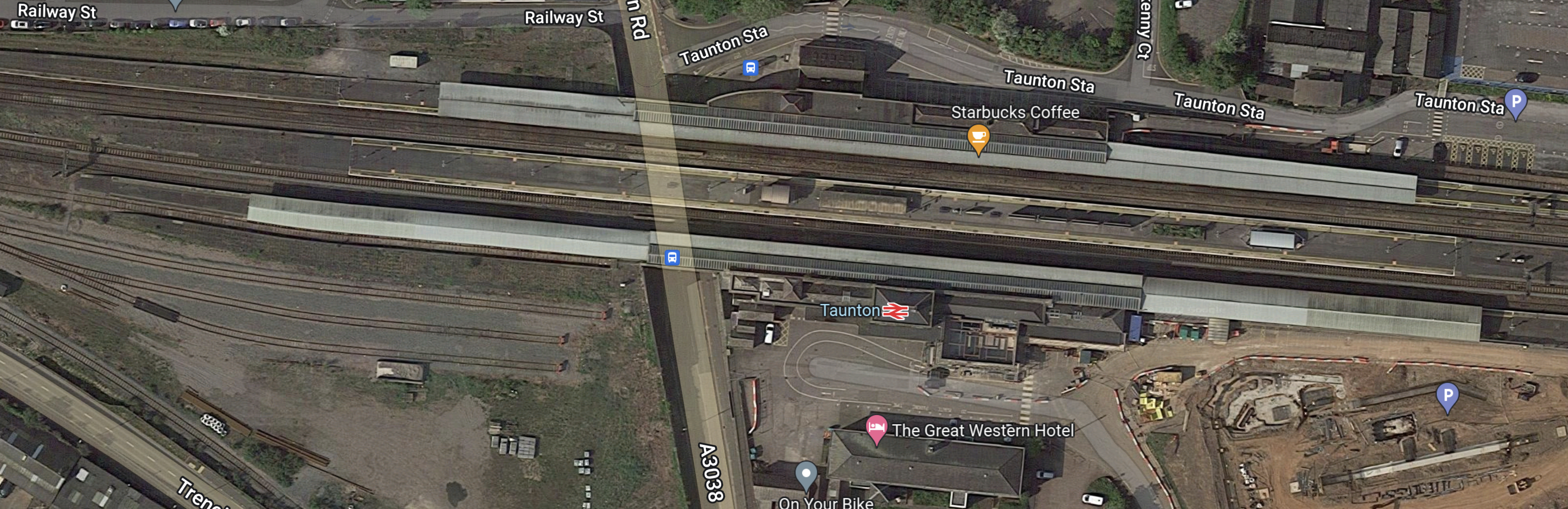
Note that there appears to be lots of space for development of rail and related development.
Both Branches Were/Are In Use Before Development
Before the Dartmoor Line was reopened, the route was in occasional use for both freight and passenger trains. Great Western Railway have in recent years run InterCity125 trains to Okehampton station.
With reopening the line to Okehampton, there was no major viaduct or bridges to rebuild, although Network Rail took the prudent decision to relay the track.
It would appear that the West Somerset Railway has similar use for both freight and passenger trains. How much work will be needed to bring it up to an acceptable standard.
Great Western Railway Are Providing Initial Weekend Services
On the Dartmoor Line services started between Exeter and Okehampton in 2019 and Wikipedia says this about initial services between Taunton and Bishops Lydeard station.
In 2019, the WSR entered into a partnership with the modern Great Western Railway (GWR) to operate Summer Saturday services to Bishops Lydeard from Taunton beginning on 27 July 2019. The introduction of these GWR services will mark the first time the station has been connected to the rest of the national rail network since its initial closure in 1971.
Is history going to repeat itself?
The First Step
This paragraph from the Rail Advent article, indicates the first step to reopening a service between Taunton and Minehead.
The first task will be to look at the simplest and most effective way in which the link between the WSR and the mainline can be improved, signalled, and operated. An outline business plan will then be developed to estimate how much it would cost.
This Google Map shows the link between the West Somerset Railway and the mainline.
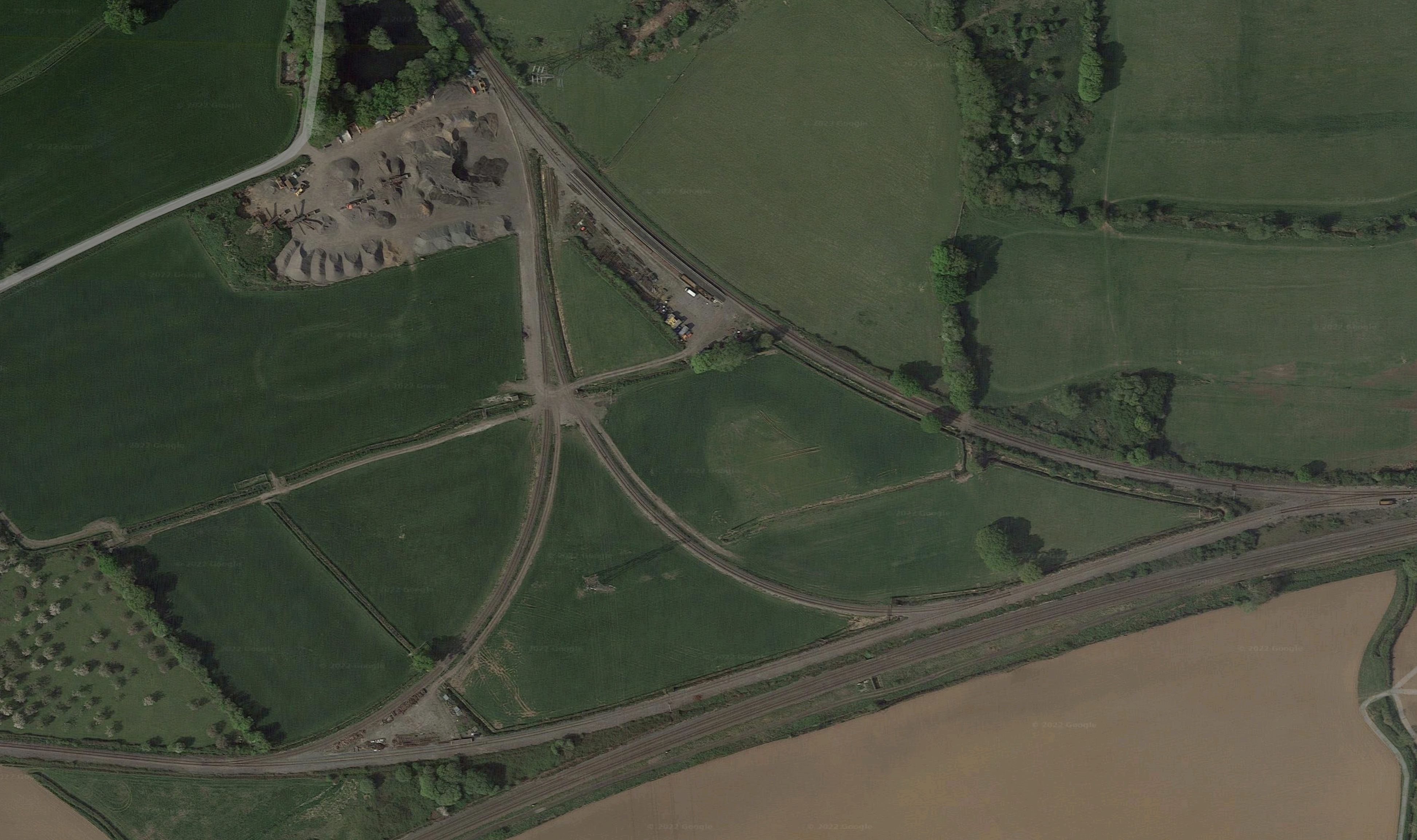
Note.
- The large triangular junction.
- The Bristol-Exeter railway runs East-West across the bottom of the map.
- Minehead is to the North.
- Taunton is to the East.
- A disused line to Barnstaple is to the West.
- The site to the West of the top of the triangular junction is a ballast cleaning site.
It does appear that there could be the space to create an efficient junction linking the two railways.
Initial Regular Services
This was one of the introductory paragraphs.
There is an increasing interest in re-opening long-closed stations and lines on the network. To this end, a partnership working group has been set up to look at the prospects of running scheduled trains between WSR’s Bishops Lydeard station and Taunton, which would safeguard the WSR’s long-term future.
This page on the Railway Touring Company web site is entitled The West Somerset Steam Express.
This paragraph describes the trip.
This series of trains from London Paddington to Minehead features haulage by two steam locomotives in one day.
One steam locomotive will haul our train from London Paddington to the West Somerset Railway at Bishops Lydeard.
The Heritage Railway will then provide a steam locomotive to haul our train to Minehead and back. This provides a truly fascinating day out travelling through beautiful scenery to the Bristol Channel coast.
So it looks like, the initial services on the between Taunton and Bishops Lydeard stations, will duplicate services that are already planned on a very much less frequent basis.
Bishops Lydeard Station
Bishops Lydeard station is the station, where mainline and West Somerset services meet.
This OpenRailwayMap shows the track layout at the station.
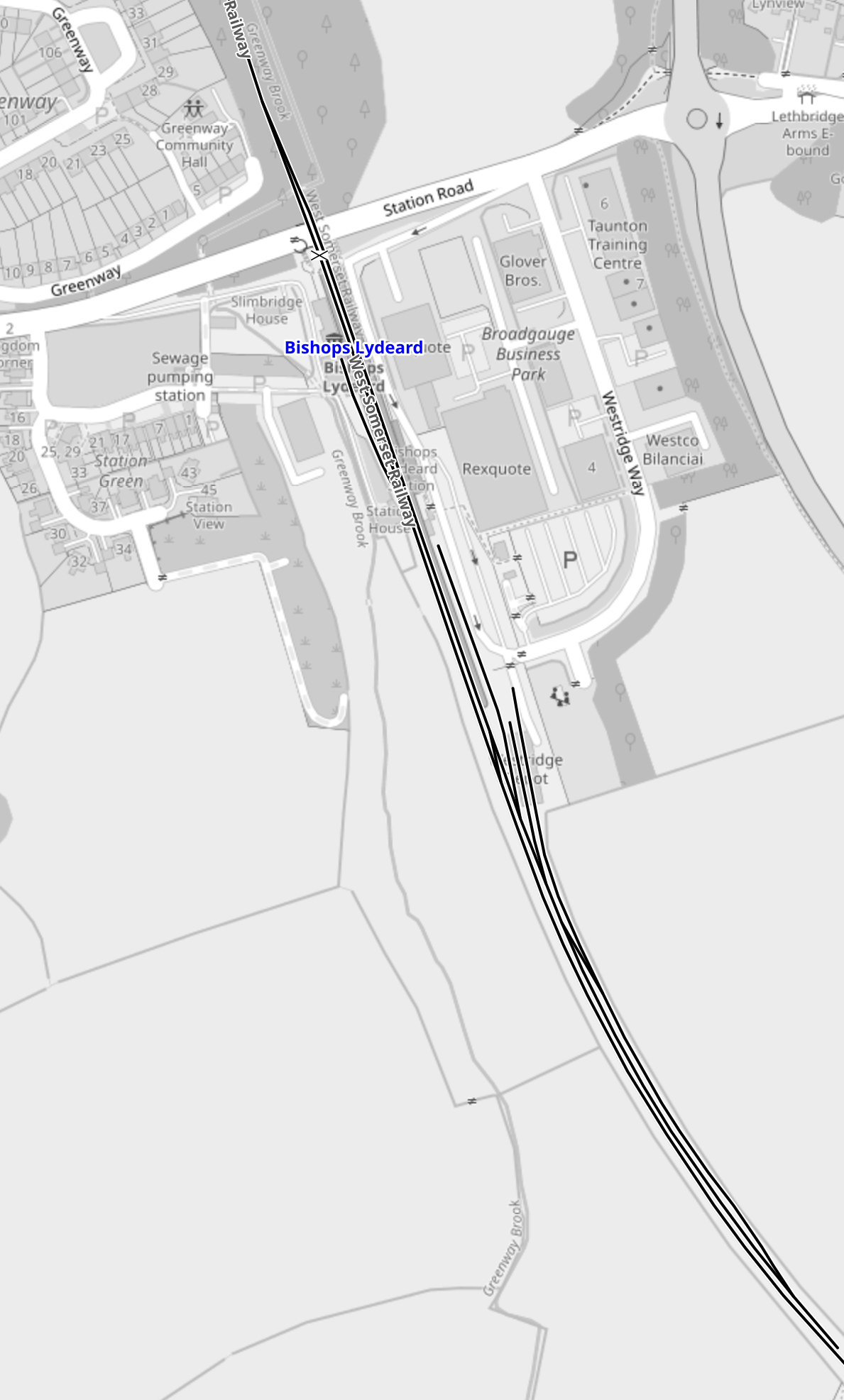
Note.
- The station is the Southern terminus of the West Somerset Railway.
- Track is single to the North and South of the station.
- Bishops Lydeard station has two platforms.
- There is a passing loop.
If the terminal station has a serious problem, it doesn’t appear to have much parking.
So it would appear, that a link to Taunton might improve the finances of the West Somerset Railway, by attracting more visitors.
Onward To Minehead
This OpenRailwayMap shows the last section of the West Somerset Railway to Minehead.
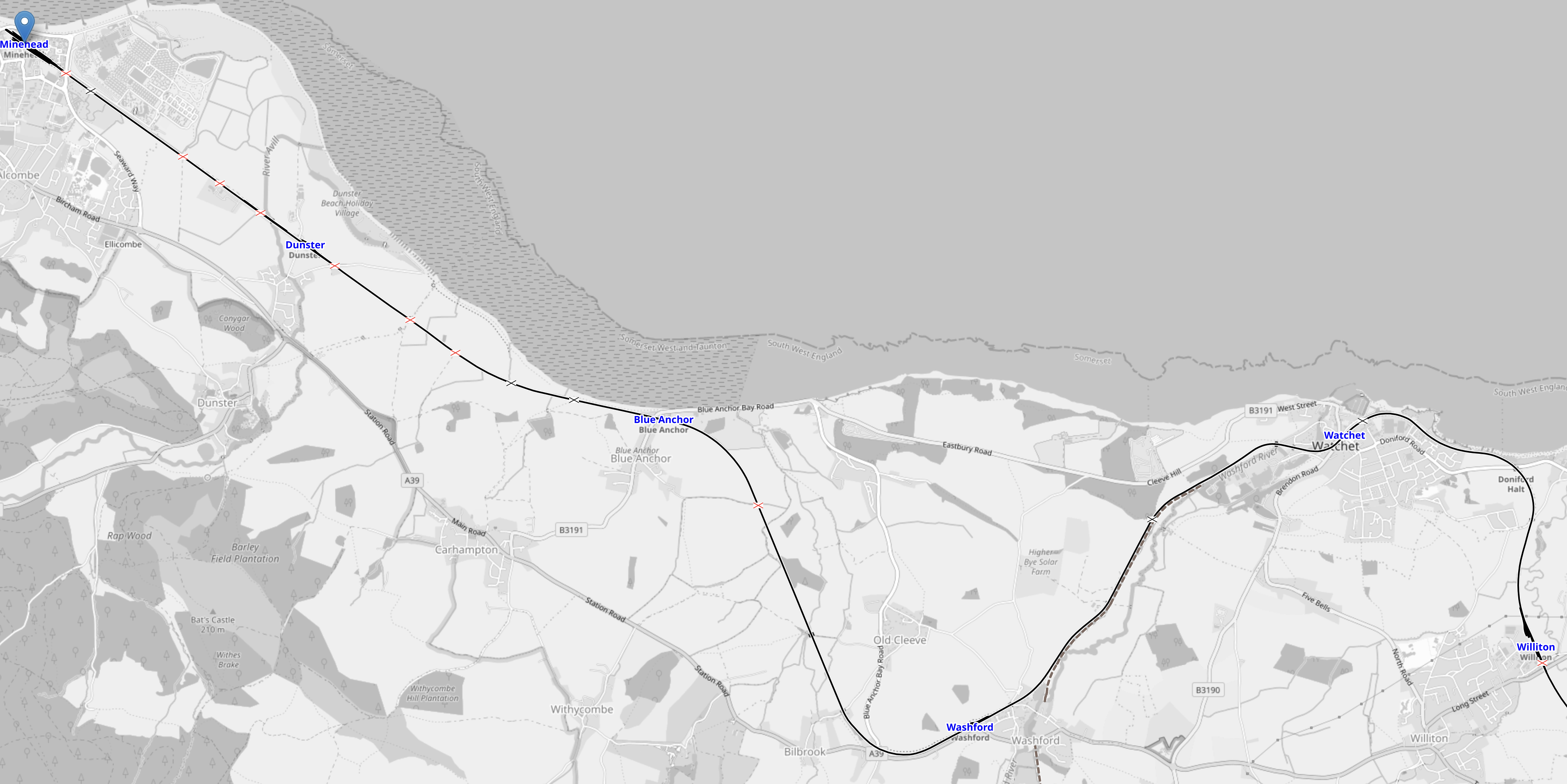
Note.
- Minehead station is in the North West corner of the map.
- Minehead station appears to be a well-equipped station, with two platforms.
- Minehead station even has a turntable for turning locomotives.
- There are four or five stations close to the coast.
The Wikipedia entry for Minehead, says this about the town.
The parish of Minehead has a population of approximately 11,981, making it the most populous town in the western part of the Somerset West and Taunton local government district, which in turn, is the worst area in the country for social mobility.
The West Somerset Railway could become both a useful and a real bucket-and-spade railway. Surely, that could generate revenue and level-up the area.
Financing
If you want something to work well, you must get the finances right.
I have lived in Dalston in London for twelve years now. When I moved here after my wife died and I had had a serious stroke, which left me unable to drive, I relied on an antiquated mainly bendy-bus-based public transport system.
Then along came the Overground and fleets of shiny new buses and Hackney and Dalston in particular was more than levelled up with London’s more salubrious boroughs.
Shopping improved with M & S returning after at least seventy years. There’s even a Pret, which boomed during the pandemic.
Transport for London got the financing for the Overground right and they created a success.
Conclusion
Can the initial working group find a financial model so that the West Somerset Railway can do for West Somerset, what the Overground has done for Dalston and the Dartmoor Line appears to be doing for Devon?
I thoroughly hope so!
Exeter City Council Builds Its First Solar And Battery Storage Project
The title of this post, is the same as that of this article on Energy Live News.
This paragraph describes the scheme.
The plant, which had its preparatory work finished recently, will be built on an inactive landfill site and will comprise of a 1.2MW array of 3,702 solar photovoltaic (PV) modules, two battery storage containers and an electrical switch room.
I do think, this is a superb use for a old landfill site.
As I believe that some landfill sites still give off methane for many years, if this is the case, this can surely continue.
The scheme will also include a 1 MW/2 MWh battery and will be geared to providing power to a council operation’s facility and in the future to supporting an electric fleet.
This is a superb example of how to turn an unwanted toxic liability into a green asset, with several benefits.
I have not heard of something like this before, but by searching the list of solar and energy-from-waste power sites in the UK, I found a cluster around the M5 to the North of the village of Puriton.
This Google Map shows the area.
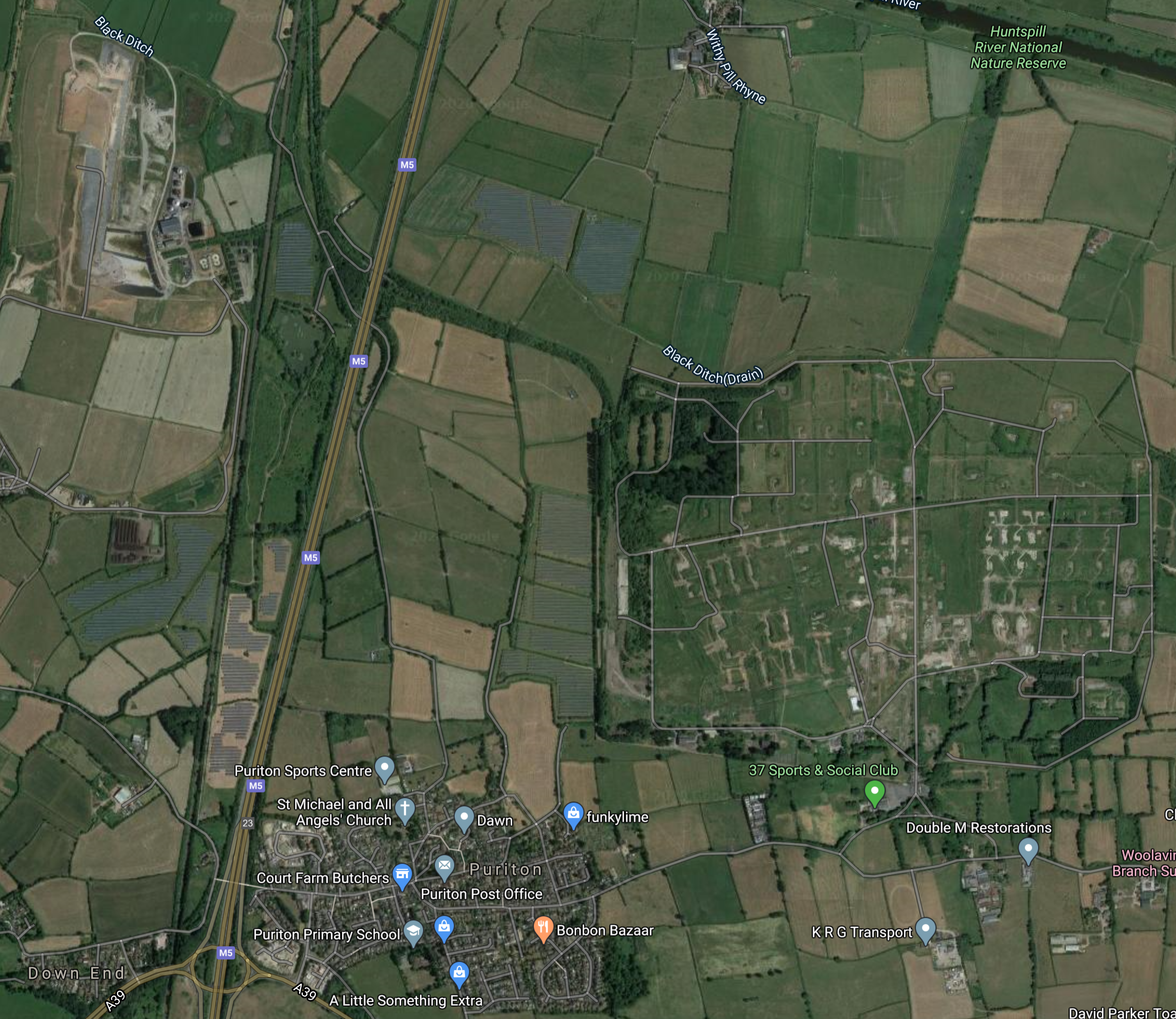
Note.
- The village of Puriton to the East of the Junction 23 of the M5, which is a forest of blue dots.
- The various solar farms showing as a blue-violet field. I can count fourteen separate fields.
In total, there are about half-a-dozen renewable energy producers in the area generating up to 25 MW of electricity.
The area to the North-East of the village with all the white dots, just above the green one, is the former Royal Ordinance Factory Bridgewater, which I’m sure solar farmers would like to get their hands on.
Would this become a modern version of swords into ploughshares?
Reopening Of Wellington and Cullompton Stations
This is one of the successful bids in the First Round of the Restoring Your Railway Fund.
Wellington and Collumpton stations were two stations on the Bristol-Exeter Line.
- Both stations were rebuilt in the 1930s with passing loops. Was this to increase the capacity of the route?
- Both were closed under Beeching in 1964.
- Little remains of either station.
Looking back with 20-20 hindsight, this does seem to have been a rather pointless closure of two stations serving towns of around ten thousand people, who might need to commute for work.
The South Devon Metro
Some years ago, Devon County Council put forward a plan to create a South Devon Metro based on the various lines centred on Exeter St. David’s station.
- The Avocet Line to Exmouth
- The Riviera Line to Paignton
- The Tarka Line to Barnstaple
Services were also planned to connect Newton Abbot, Okehampton, Plymouth, Taunton and intermediate stations into the system.
- Some new stations were also added.
- The trains were to be upgraded, which appears to be happening.
But the development seems to have somewhat stalled.
Collumpton Station
The Wikipedia entry for Collumpton station says this about reopening.
As part of the “Devon Metro” plans by Devon County Council there would be a station near the location of the old station and could form part of the route. The station is a ‘possible’ long term proposal.
I should declare an interest in Collumpton, in that my maternal grandmother was an Upcott, who was born in Dalston. Her father was not the first son of the Devon family from Collumpton, that are mentioned in the Wikipedia entry for the town, so he left for London to find fame and fortune. He set up as a wheelwright opposite Dalston Junction station. She was considered posh by my parents.
I would look forward to taking my Upcott genes back to their ancestral home, when the new station opens.
This Google Map shows Collumpton and its transport network.
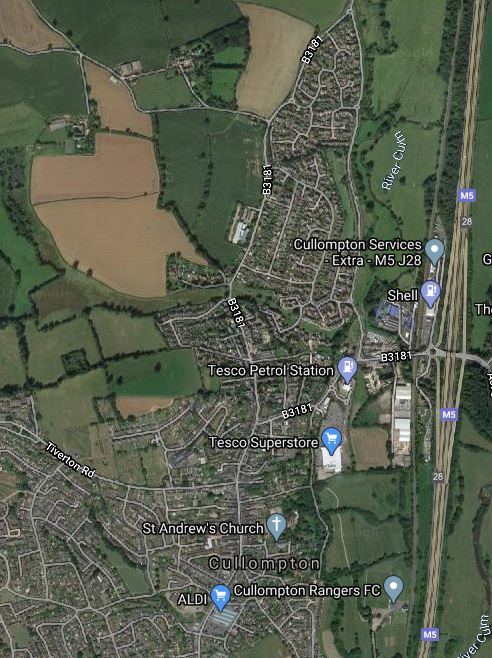
Note.
- The M5 going down the East side of the map.
- The Exeter-Bristol Line follows the M5 on the Western side.
- Collumpton Services were built on the site of the former station.
This Google Map shows the area to the South of Collumpton services at an enlarged scale.

There certainly seems to be space to the West of the roundabout.
- As Tiverton Parkway station is only a few miles to the North, it may be possible to avoid providing hundreds of parking spaces.
- It’s not a long walk to the Town Centre, which could be along the River Culm.
- Plenty of bicycle parking would probably be a good idea.
- Could the road bridge over the railway, be made step-free for travellers, who need to cross the tracks?
I certainly think there are possibilities to integrate the station into the town.
Wellington Station
The site for a new Wellington station is less obvious to locate.
This Google Map shows how the Exeter-Bristol skirts round the Northern side of the town.
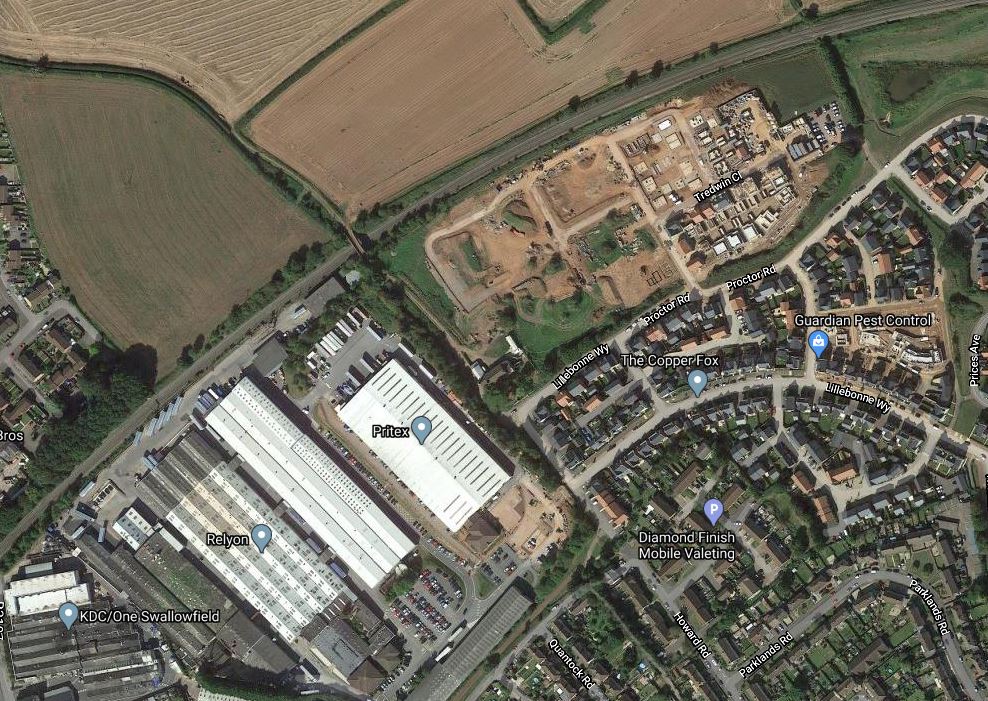
Note.
- The road that runs up the Western side of the block containing the three large buildings, is the B3187.
- It’s also called Station Road. So that must be a clue!
This Google Map shows where the B3187 crosses the railway.
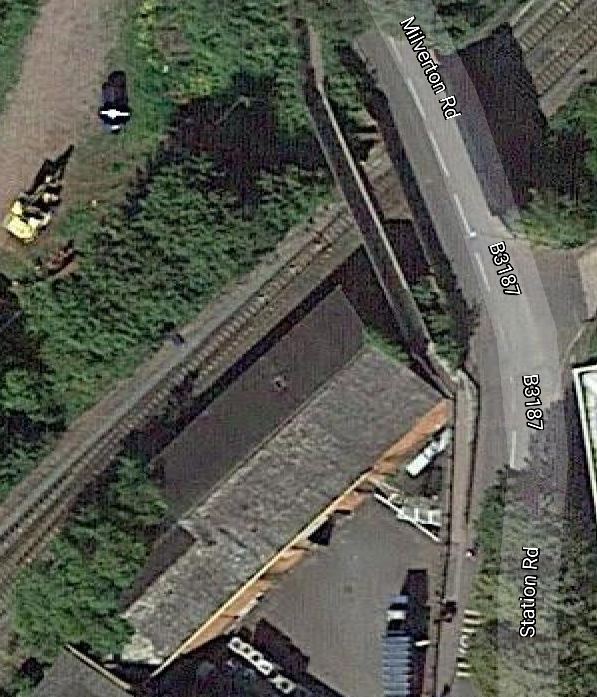
It matches the photo of the goods shed at Wellington station in Wikipedia.
The old station site, must be high on the list of possible sites for the new station.
The Trains
These are a few thoughts on the trains serving Collumpton and Wellington.
Could There Be A Taunton Route In The South Devon Metro?
Consider.
- When Collumpton and Wellington stations are completed, there will be three stations between Exeter and Taunton.
- The third station will be Tiverton Parkway station.
- So if the South Devon Metro were to be created on this route, surely it would be better to go all the way to Taunton station, which has six platforms.
- This extension would also give easy access to the heritage West Somerset Railway, which runs to the coast at Minehead station.
It would certainly seem likely that a local service from Exeter on this route would terminate at Taunton station.
Could Exeter And Taunton Be Run By Battery-Electric Trains?
As it’s only just over thirty miles, the answer must be in the affirmative!
But they would probably need to be charged at both ends of the route.
On the other hand, all routes on the South Devon Metro could probably be run using battery-electric trains.
Could Paddington And Exeter Be Run By Battery-Electric Trains?
It looks a tough ask, but I feel it is possible with discontinuous electrification.
- Paddington and Newbury is already electrified.
- Exeter and Taunton could be electrified.
With a short length of electrification or what I call an electrification island at Westbury, I am fairly sure, that a Hitachi AT-300 train fitted with batteries could handle the 170 miles.
Would A Fast-Slow Strategy Help?
Greater Anglia do their Norwich-in-Ninety services with two trains.
- On the hour, a fast train heads off to Norwich or London, only stopping at Ipswich.
- Ten minutes later, a slow train follows it calling at all stations.
Greater Anglia intends to aim for three trains per hour (tph) between London and Norwich in both directions; two fast and one slow.
Would a philosophy like this work between Paddington and Exeter?
Conclusion
Reopening Collumpton and Wellington stations is a simple and easy-to-implement scheme, that will improve public transport in this area of Devon and Somerset.
 The Anonymous Widower