Scotland’s 25 GWh Energy Storage Arriving By Stealth
In SSE Unveils Redevelopment Plans For Sloy Hydro-Electric Power Station, I introduced SSE Renewable’s plan to convert the UK’s largest hydro-electric power station into a pumped storage hydroelectric station, that can store 25 GWh of electricity and generate 152.5 MW of electricity.
After a public consultation in July, which unfortunately, I was unable to get to, SSE have now published a comprehensive document, which details their plans.
These are some points from the document.
- There will be no increase in the generating capacity of 152.5 MW, which is about half the size of a gas-fired power station.
- SSE designed a similar scheme for Sloy in 2009.
- Pumped storage systems need a lot of water. The Loch Sloy scheme has Loch Lomond.
- The development of pumped storage at Sloy would only require construction work to be carried out in the grounds of the existing power station.
- No permanent new works would be required at Sloy Dam or outside of the existing station boundary.
- A new above ground structure would be required which would contain a main hall with vehicular access, laydown areas, an overhead travelling crane, electrical switchgear and control systems.
- A new underground pump hall would be required to house two pumps. This would link to the intake structure and would be approximately 20m below the existing ground level.
- The existing tailrace to Loch Lomond, will be used to bring water to the pumps.
- Construction could start in 2025, with completion in 2027.
This redevelopment is a much less complex construction project, than building the original power station in the 1950s.
It also looks like the construction will not cause much disruption in the local area.
Hence my view, that this storage is arriving by stealth and won’t be noticed by those passing the power station.
After reading this SSE document, I wonder how many similar 1950s hydroelectric power stations have been upgraded to pumped storage stations in the last few years.
Also, if their Sloy scheme is successful, will SSE be looking for other hydroelectric power stations to convert to pumped storage?
This article on renews.biz is entitled Vattenfall Plans To Build 730MW Of Swedish Hydro Power, where this is a paragraph.
Vattenfall is also conducting a pilot study to investigate reinstating the Juktan power station on the Storjuktan lake adjacent to the Umeälven river in Västerbotten, to a pumped storage plant with a capacity of up to 380MW.
Note.
- Juktan power station was built as a pumped storage station and converted to a standard one.
- It has a web page.
- As the paragraph says it could be converted back!
So other companies and countries are thinking the same way!
Strathclyde University’s Prediction
This page on the Strathclyde University web site, gives these figures in GWh for the possible amounts of pumped storage that can be added to existing schemes.
- Errochty – 16
- Glasgarnock – 23
- Luichart – 38
- Clunie – 40
- Fannich – 70
- Rannoch – 41
- Fasnakyle – 78
- Tummel – 38
- Ben Lawers – 12
- Nant – 48
- Invermoriston – 22
- Invergarry – 41
- Quoich – 27
- Sloy – 20
That is a total of 514 GWh.
These figures must give SSE food for thought.
These new schemes are also being planned.
- Balliemeanoch – 1.5GW/45 GWh
- Coire Glas – 1.5 GW/30 GWh
- Corrievarkie – 600 MW/14.5 GWh
- Fearna – 1.8 GW/37 GWh
- Loch Earba – 900 MW/33 GWh
- Loch Kemp – 300 MW/9 GWh
- Loch Na Cathrach/Red John – 450 MW/2.8 GWh
These could bring the potential pumped storage in Scotland to 685.3 GWh.
Fourth Phase Could Bring 2 GW More To World’s Already Largest Offshore Wind Farm Under Construction
The title of this post, is the same as that of this article on offshoreWIND.biz.
This is the sub-heading.
Dogger Bank D, the potential fourth phase of the Dogger Bank Wind Farm, whose first three phases totalling 3.6 GW are currently being built, is planned to have a generation capacity of around 2 GW. If built, the fourth phase would bring the total installed capacity of the UK project – already the world’s largest offshore wind farm under construction – to over 5.5 GW.
This is the introductory paragraph.
SSE Renewables and Equinor, which own the Dogger Bank A, B and C offshore wind farms through a consortium that also comprises Vårgrønn, have now launched a public consultation period on the Dogger Bank D proposals that runs until 7 November.
As RWE are developing the 3 GW Dogger Bank South, the Dogger Bank wind farm will be up to 8.5 GW in a few years.
SSE And RWE Tweak North Falls Project Following Public Input, DCO Application Now Expected In 2024
The title of this post, is the same as that of this article on offshoreWIND.biz.
This is the sub-heading.
RWE and SSE Renewables have made a number of changes to the North Falls offshore wind project in the UK, a proposed extension to the existing 504 MW Greater Gabbard, whose implementation will likely move the planned date for filing a development consent order (DCO) application into 2024. The most significant changes to the project plans include removing the northern array area and reducing the number and height of wind turbines.
These two paragraphs introduce the article.
The developers are tweaking the project following a review of the feedback received from the North Falls statutory consultation held during the summer.
Initially, North Falls comprised two offshore array areas totalling 150 square kilometres and will now have a single array occupying 95 square kilometres. This also moves the wind farm farther offshore, with its closest point to shore now being 42 kilometres, 20 kilometres farther out at sea than proposed originally.
It looks like RWE and SSE Renewables have listened to the public and acted.
But then the developers are two of the most experienced in the UK.
How Britain’s Biggest Natural Battery Can Help Deliver Net Zero
The title of this post, is the same as that of this article in the New Statesman.
This is the sub-heading.
SSE wants to double the nation’s flexible electricity storage capacity.
These two paragraphs introduce the article.
After previous delays and false starts, governments and businesses across the world are pushing towards the common goal of net zero. The energy sector is arguably the area with the biggest responsibility to work towards this target, and there is no time for complacency.
Ensuring clean, renewable energy sources such as hydrogen, wind and solar power become a larger part of the grid will be critical for the sector in its push towards net zero. A key facet of the clean energy drive will be having sufficient storage for each renewable power source kept in reserve, to be used as and when required as a crucial back-up mechanism. In last spring’s energy security review the government outlined its commitment to support long duration storage projects.
It is certainly very comprehensive and a must read.
This sentence illustrates the financial problem with pumped storage.
SSE is calling on the UK government to help it commit to building the Coire Glas storage facility by providing one simple policy decision that will send a clear signal as to how government intends to support the deployment of long duration electricity storage. The project doesn’t need subsidising, SSE states, but it would benefit from revenue stabilisation, and clarity on such support sooner rather than later.
Hopefully, this article will help get the required support.
Coire Glas
Coire Glas will have an output of 1500 MW and a storage capability of 30 GWh.
There is more information at the Coire Glas web site.
The project could be up and running by the early 2030s.
Loch Sloy Pumped Storage
The article also mentions the Loch Sloy Pumped Storage scheme, that has been recently announced by SSE.
I wrote about this 25 GWh scheme in SSE Unveils Redevelopment Plans For Sloy Hydro-Electric Power Station.
SSE haven’t announced much more about this scheme and it is not mentioned on the Sloy/Awe web site.
SSE Renewables Calls For More Use Of Non-Price Criteria In Offshore Wind Auctions
The title of this post, is the same as that of this article on offshoreWIND.biz.
This is the sub-heading.
SSE Renewables is calling on European governments and regulators and internationally to make greater use of non-price criteria (NPC) in offshore wind energy auctions, whether for seabed or for contracts for difference (CfD).
This is the first paragraph.
The renewable energy company said that the use of non-price criteria in auctions for new offshore wind can help support a sustainable renewable energy sector that delivers long-term value for society.
This document on the SSE Renewables web site is entitled Non-Price Criteria In Renewables Auctions and these are the points from the Executive Summary from the document.
- Use of non-price criteria (NPC) in auctions is important to deliver renewables projects which are deliverable, on time and on budget, and provide long term value to society and the environment.
- NPC must be well-designed, carefully implemented, with transparent assessment and monitoring of commitments to avoid overcomplication and risk of legal challenges.
- Seabed leasing auctions for offshore wind are best suited for use of NPC, as it is early enough in the development stage for commitments to be delivered; and avoids having to rely on purely financial bidding which risks adding to the cost of offshore wind.
- The most appropriate NPC are track record and deliverability of projects. Beyond that, criteria related to sustainability (circularity; workforce and skills); ecological protection and enhancement; and supply chain development.
- NPC in new offshore wind markets should be focused on deliverability and track record, and included as a pre-requisite to participate, rather than a point of competition.
- More diverse non-price criteria are best suited to mature offshore wind markets where there will generally be more competition from developers to build a project.
- It is more complicated to apply non-price criteria into offtake (CfD) auctions, with re-ranking of bidders the best approach to properly incentivise the right behaviour.
- It is important that there is transparency of how successful bidders were scored against NPC; what commitments have been made and how they will be held accountable for delivery at different milestones.
Note.
- It is good to see phrases like “track record and deliverability of projects” being embedded in this list of points.
- As a designer of successful project management software, I know the importance of this.
- I believe, that SSE Renewables are right to desire wider criteria for offshore wind energy auctions.
I suspect too, that there are software ideas in my past, that would make the development of offshore wind easier and more predictable.
SSE Unveils Redevelopment Plans For Sloy Hydro-Electric Power Station
The title of this post, is the same as that of this news item from SSE Renewables.
These are the two bullet points of the news item.
- Scotland First Minister Humza Yousaf welcomes plans to convert conventional hydro plant to new, flexible pumped hydro storage facility
- If approved for delivery Sloy could provide firm, flexible renewable energy for up to 160 hours non-stop, enough to power 90,000 homes for one week
This is the introductory paragraph.
SSE Renewables, as part of SSE plc, has unveiled plans to convert its 152.5MW Sloy Power Station, Britain’s largest conventional hydro power plant, into a new pumped hydro storage facility to bolster energy security and help provide the large-scale and flexible renewable energy back-up needed in a future UK net zero power system.
And this describes the output and storage capacity.
Subject to final design, the converted Sloy scheme would be capable of delivering up to 25GWh of long-duration electricity storage capacity. At the flick of a switch, the converted Sloy scheme could provide firm, flexible renewable energy for up to 160 hours non-stop, enough to power around 90,000 homes for up to one week.
The Loch Sloy Scheme
In A Lower-Cost Pumped Hydro Storage System, I described the Loch Sloy scheme, as it currently exists.
Whilst writing some of the posts recently about pumped storage I came across the Loch Sloy Hydro-Electric Scheme.
This is the introductory sentence in Wikipedia.
The Sloy/Awe Hydro-Electric Scheme is a hydro-electric facility situated between Loch Sloy and Inveruglas on the west bank of Loch Lomond in Scotland.
This page on the Greenage web site gives comprehensive details of the power station and is well worth a read.
This Google Map shows the Lochs Sloy and Lomond.
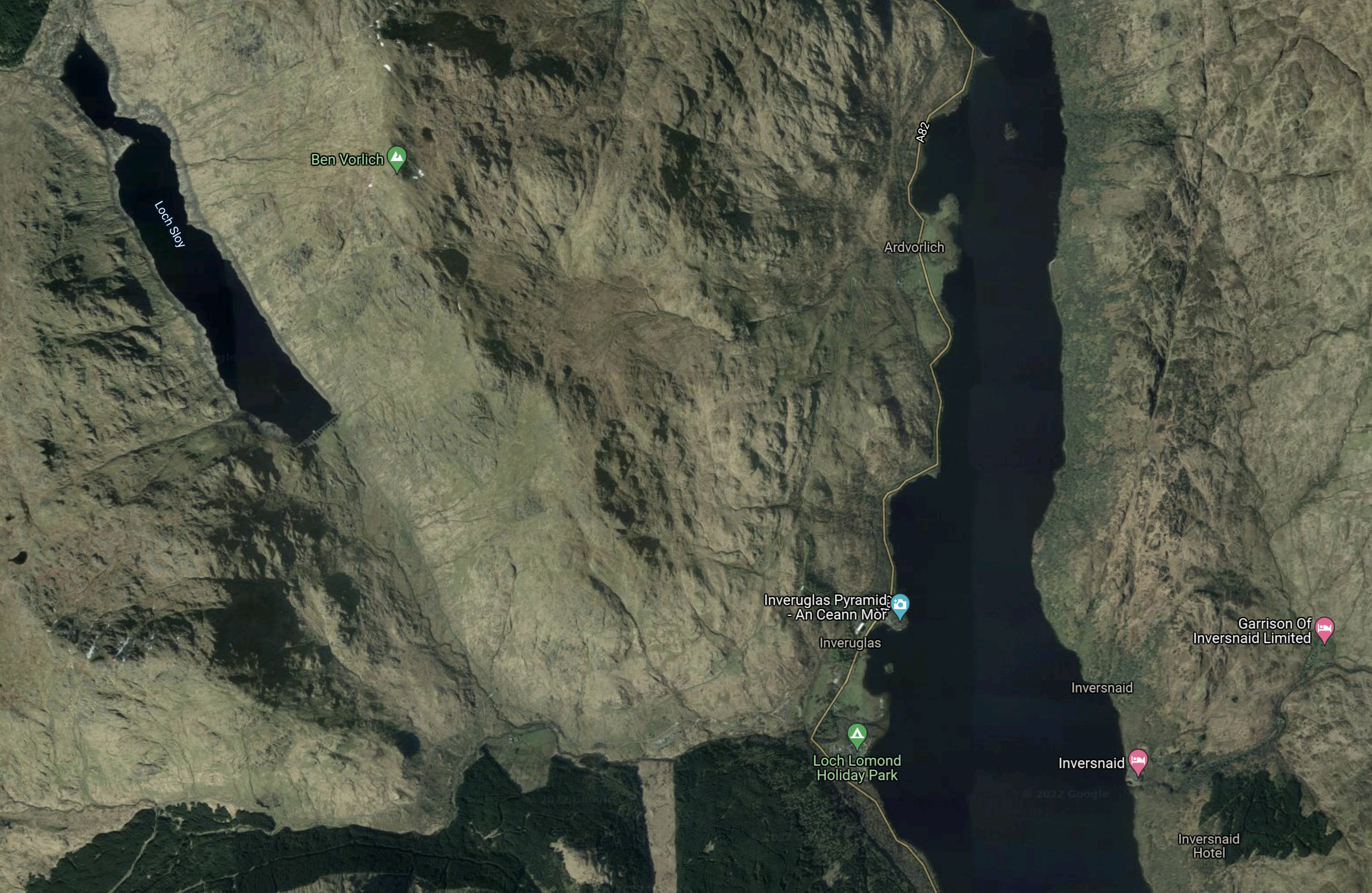
Note.
- Loch Sloy is in the North-West corner of the map.
- The page on Greenage says that Loch Sloy can store 14 GWh of electricity
- Loch Lomond is the body of water towards the Eastern side of the map.
- Inverglas is on the West bank of Loch Lomond to the North of the Loch Lomond Holiday Park, which is indicated by the green arrow with a tent.
This second Google Map shows the power station and Inverglas.
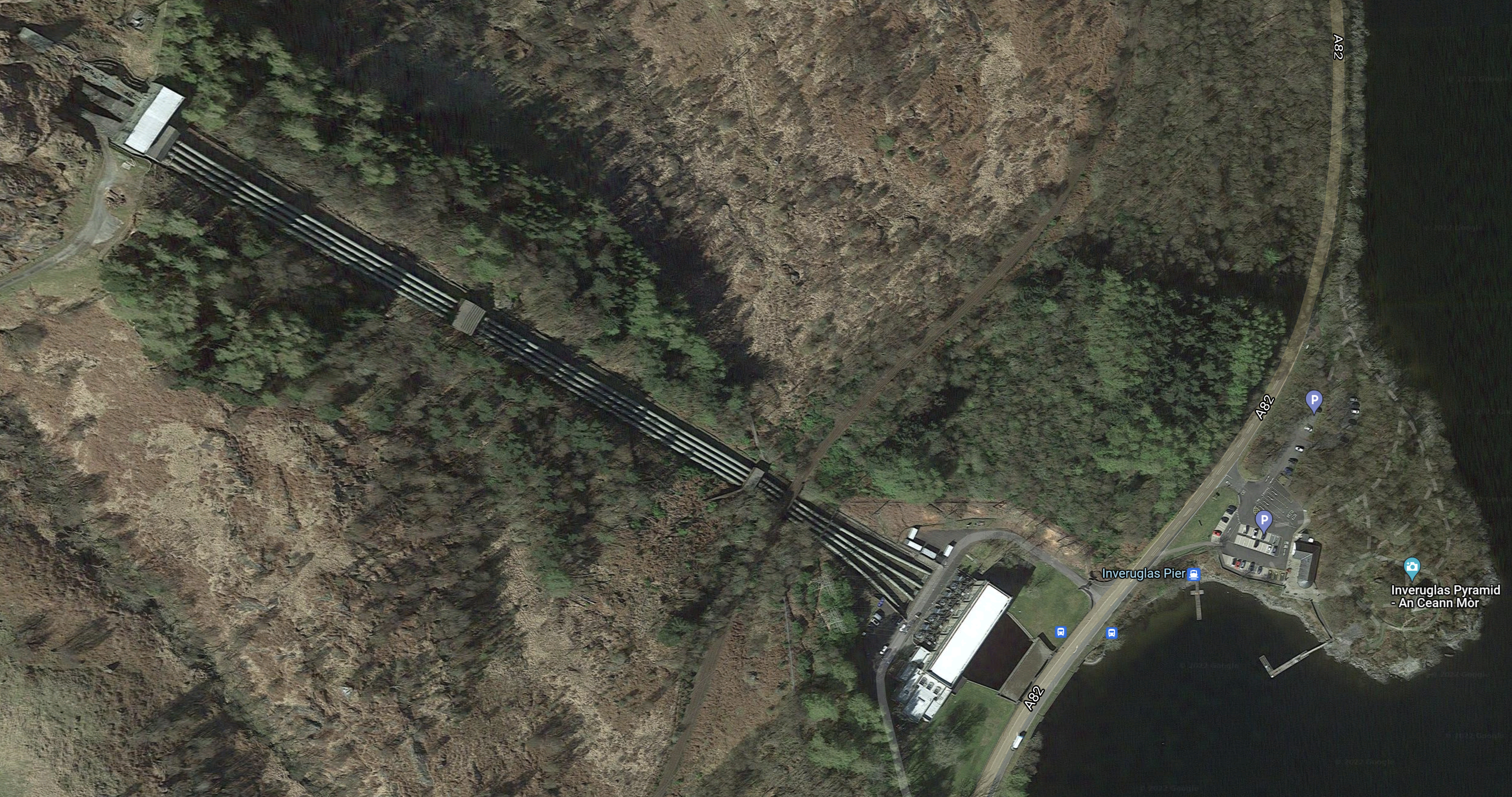
Note.
- It is a classic layout for a hydro-electric power station.
- In the North West corner of the map is the valve house, which is connected to Loch Sloy by a three kilometre tunnel.
- The valve house controls the water flows to the power station by Loch Lomond.
- There are four two-metre pipes running down the hill, one for each of the four turbines.
- According to the page on Greenage, the power station has three 40 MW turbines and one 32 MW turbine, which gives a total output of 152 MW.
- The water discharges into Loch Lomond after doing its work in the power station.
Loch Sloy is the largest conventional hydroelectric power plant in the UK.
The 2010 Plan To Add Pumped Storage To The Loch Sloy Hydro-Electric Scheme
This page on Hydro Review, which is dated the 10th of November 2010, is entitled SSE Gets Government Consent For Sloy Pumped-Storage Hydropower Project.
These are the first paragraph.
SSE Generation Ltd., the wholly owned generation business of Scottish and Southern Energy, has received consent from the Scottish Government to develop a 60-MW pumped-storage hydro project at its existing Sloy hydropower station at Loch Lomond, SSE reported.
Note.
- Two 30 MW pumps will be added to the power station to pump water up the hill from Loch Lomond to Loch Sloy.
- According to the page on Greenage, if the two pumps worked together for six hours, they would transfer 432,000 m3 of water. Note that a cubic metre of water weighs a tonne.
- Water would be transferred, when there was a surplus of energy being generated over the demand.
It would appear to be a simple scheme, as it is just adding two pumps to pump the water up the hill.
- As pumps rather than pump/turbines as at Foyers are used, there is no corresponding increase in generating capacity.
- Water also appears to be pumped up to the valve house in the existing pipes.
- Loch Sloy and Loch Lomond would not need major works to enable the scheme..
The page on Greenage gives the cost at just £40 million.
Originally, the project was supposed to have started in 2012, but as there are environmental problems with the fish, the work has not started.
These problems are detailed on the page on Greenage.
It looks like this scheme would have had an output of 152.5 MW and a storage capacity of 14 GWh.
Expanding Loch Sloy
Yesterday’s press release says this about the proposed capacity of the proposed Loch Sloy pumped storage scheme.
Subject to final design, the converted Sloy scheme would be capable of delivering up to 25GWh of long-duration electricity storage capacity.
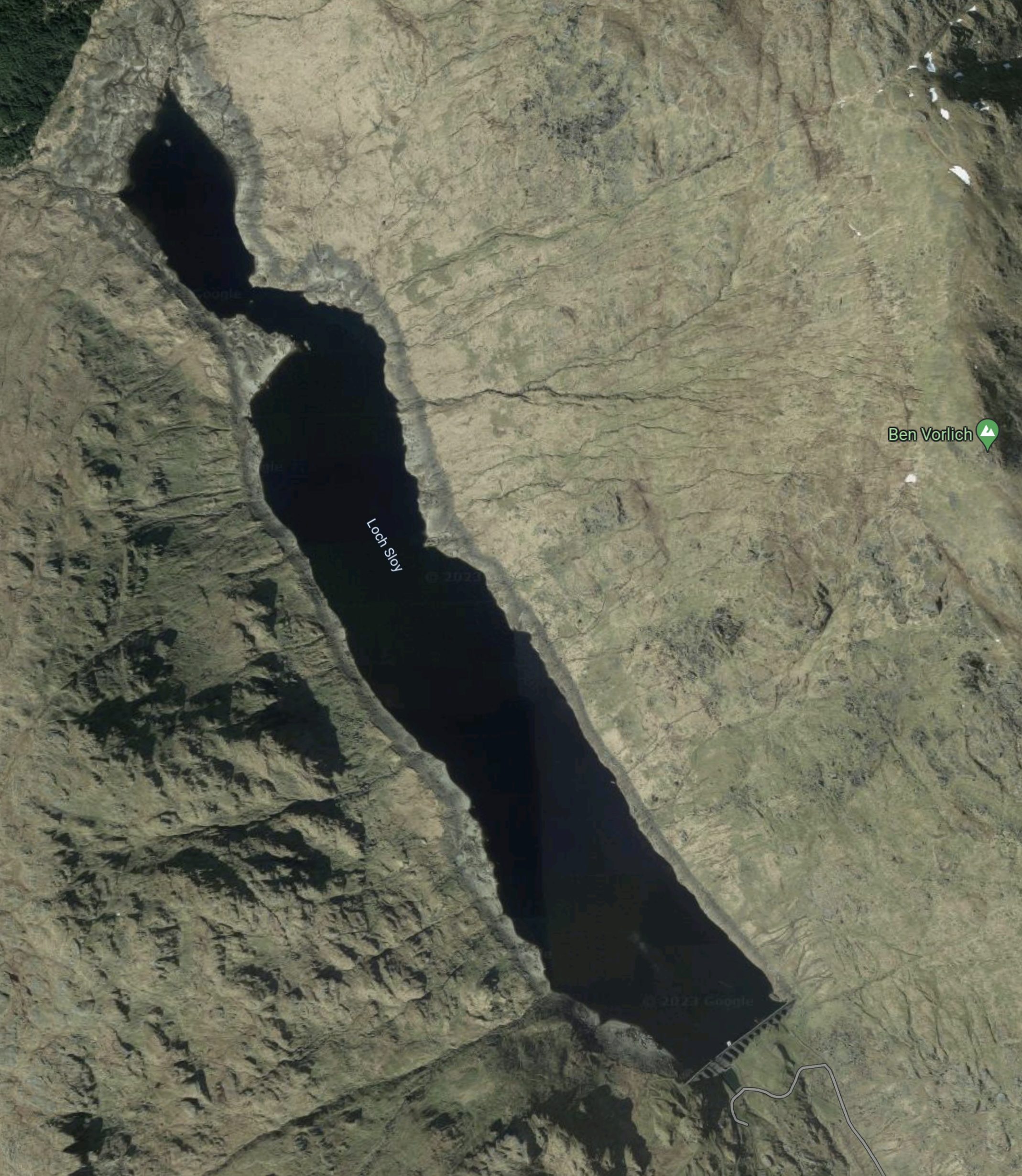
This Google Map shows Loch Sloy.
This second Google Map shows the dam at the Southern end.
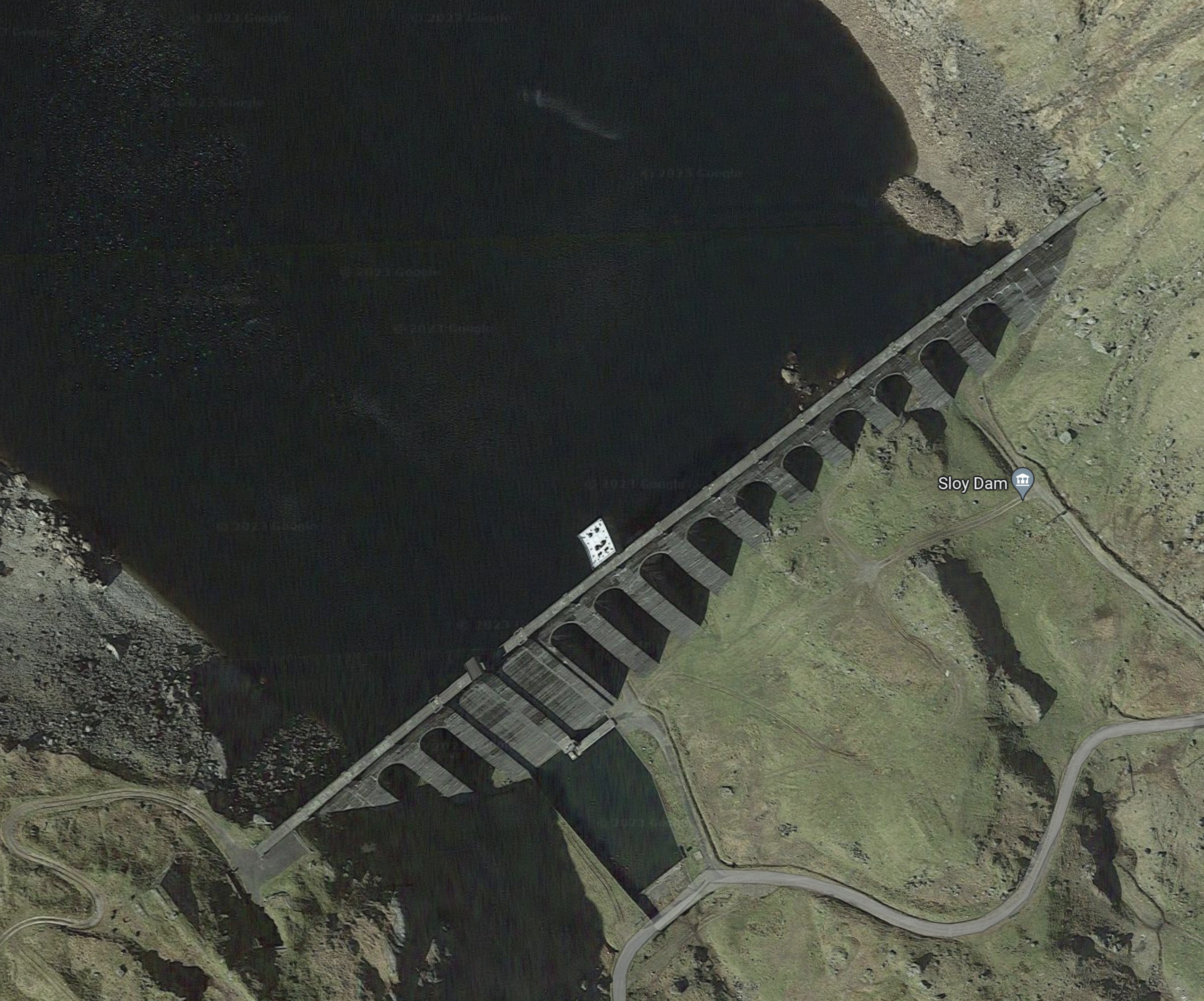
Note.
- Earlier, I said that Loch Sloy can store 14 GWh of electricity.
- To be able to store 25 GWh would need a 78 % increase in capacity.
This could be possible to be obtained by enlarging the dam and perhaps reprofiling the banks of the loch.
Expanding Loch Slow Power Station
This Google Map shows the Loch Sloy dam and the power station.
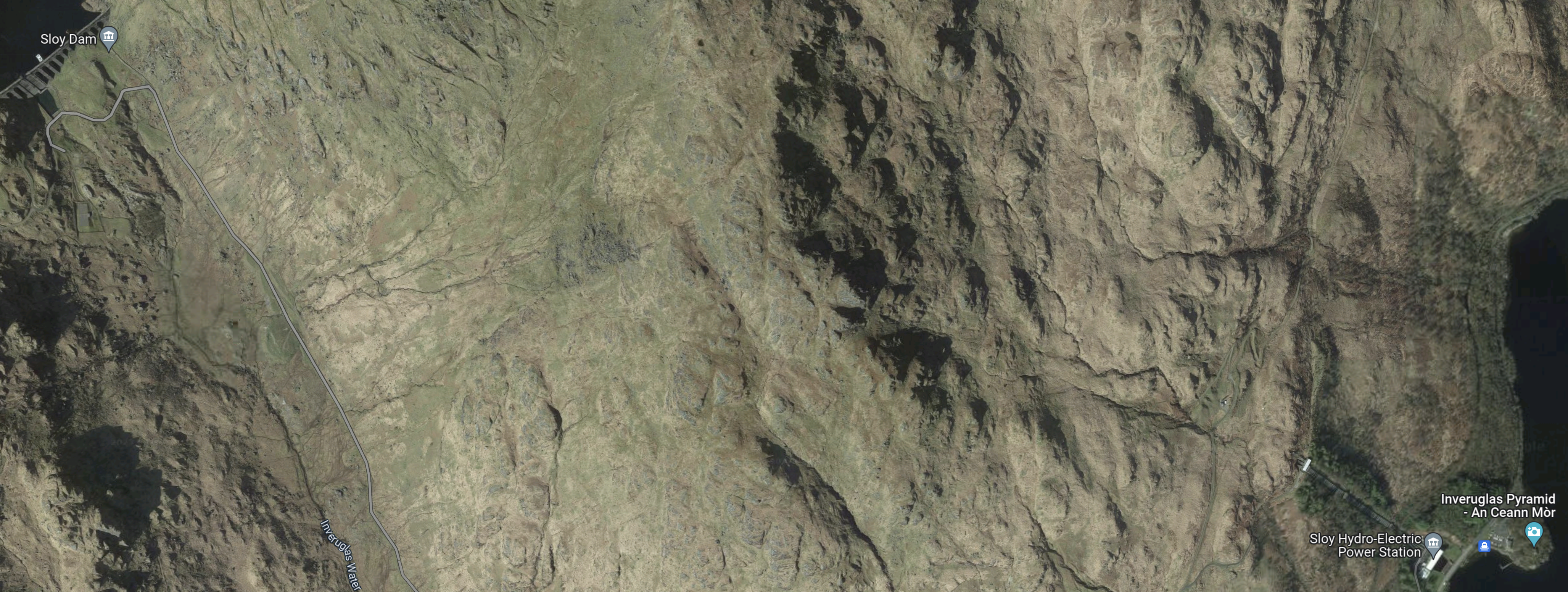
Note.
The dam is in the North-West corner of the map.
The power station is in the South-East corner of the map.
This repeat of the second Google Map shows the power station in more detail.
There appears to be plenty of space for more turbines, pumps and other electrical gubbins.
Building The Scheme
There may be enlarged buildings and extra pipes up the mountain, but hopefully the major problem of digging more tunnels through the rock may be avoided.
For these reasons, it could be a relatively easy construction project costing tens of millions.
The 14 GWh scheme from 2010 was costed at £40 million, so this 25 GWh scheme would probably cost no more than double or £80 million.
Conclusion
This is a sensible and affordable scheme, that provides a lot of energy storage
SSE Renewables Announces Construction Of Second Utility-Scale Battery Storage System
The title of this post, is the same as that of this news item from SSE Renewables.
These three paragraphs outline the project and its current status.
SSE Renewables has taken a Final Investment Decision to proceed with, and entered into contracts to deliver, its second battery energy storage system (BESS). The 150MW project is located at the site of SSE’s former Ferrybridge coal-fired power station in West Yorkshire, England.
The investment is part of SSE’s £12.5bn Net Zero Acceleration Programme and means construction will now commence later this month at the iconic site.
For decades the Ferrybridge coal-fired power station was a prominent feature of the West Yorkshire landscape, before being decommissioned by SSE in 2016. Now SSE Renewables’ plans to build a new 150MW battery storage project at Ferrybridge will provide flexible generation for Britain’s national grid and a new era for the site.
This Google Map shows the site.
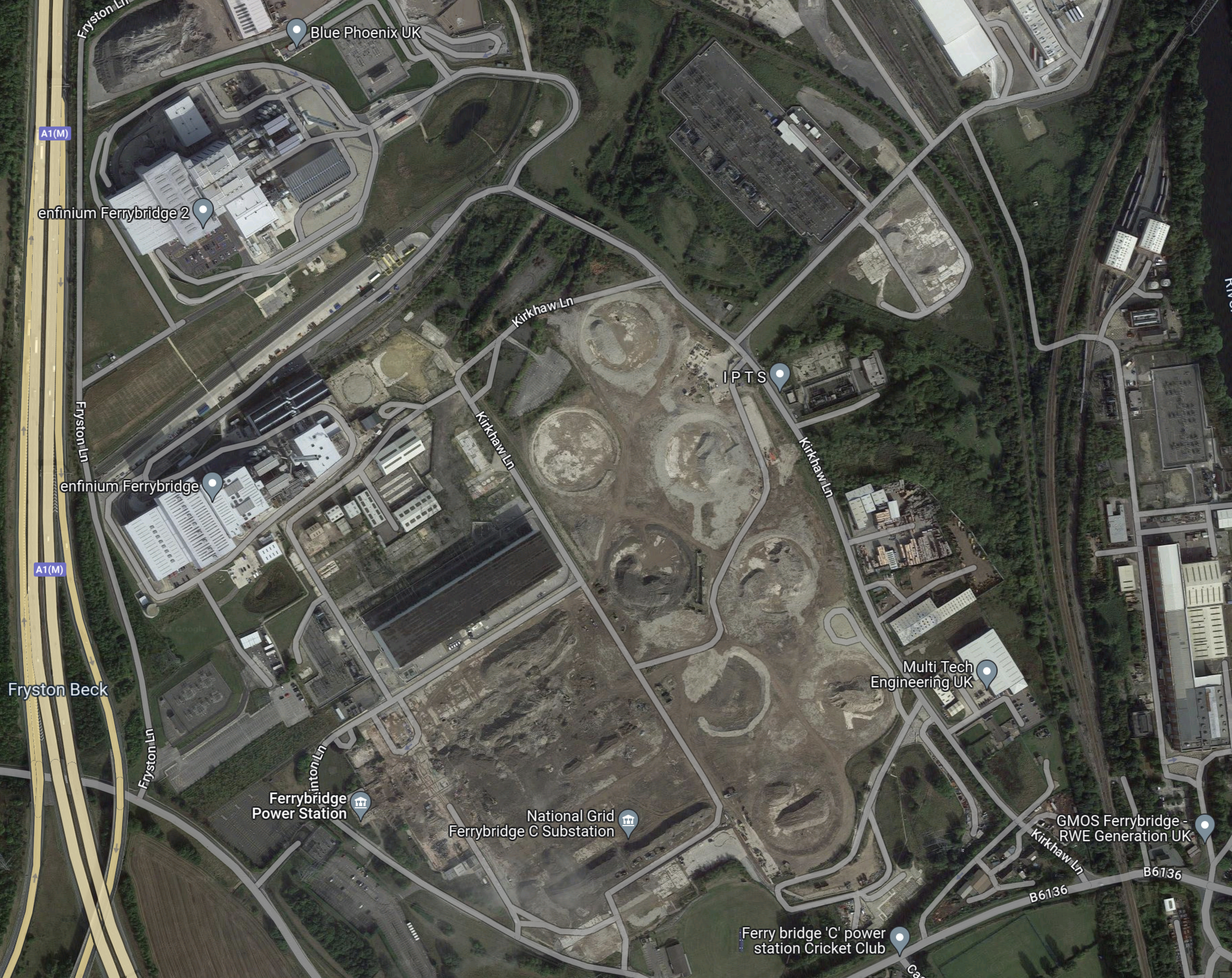
Note.
- The A1(M) runs up the West side of the map, with the East Coast Main Line going up the East.
- The circular structures in the middle of the map appear to be the bases and remains of the eight cooling towers.
- There are a lot of labels saying Ferrybridge power station.
- One existing and one demolished sub-stations can be located.
- The last Ferrybridge power station; C had a capacity of just over 2 GW.
The Wikipedia entry for Ferrybridge C, is worth a read, as it details the struggles of various owners and their engineers to generate electricity efficiently and with regard to the regulations.
The site’s use since 2016 seems to have been varied with two multi-fuel power stations, that were designed to burn mixed fuel including biomass, general waste and waste wood, a carbon capture experiment for Chris Huhne and now the 150 MW battery, which other sources give as having a storage capacity of 300 MWh.
It looks to me that SSE still own the large site and I wonder what their plans envisage for the site.
- A large electrolyser to produce hydrogen could be invaluable for decarbonising the heavy industry in the area.
- According to Wikipedia, there was a plan to build the gas-fired Ferrybridge D and a gas pipeline to connect it to the gas transmission system, but neither were built.
- So could the gas pipeline be built to distribute the hydrogen?
- Or could a large hydrogen store and a small hydrogen-powered power-station be built at Ferrybridge to back up the renewables
- Alternatively, more batteries could be added to the site.
The size of the site, gives lots of possibilities.
Ireland To Develop National Industrial Strategy For Offshore Wind
The title of this post, is the same as that of this article on offshoreWIND.biz.
This is the sub-heading.
Ireland’s Minister for Enterprise, Trade and Employment, Simon Coveney, has announced plans to develop a National Industrial Strategy for Offshore Wind which will set out how Ireland can maximise the economic opportunity arising from the production of offshore wind energy
Ireland’s current objectives for offshore wind are.
- To deliver 5 GW of offshore wind by 2030.
- A further 2 GW of floating wind to be in development by 2030.
- The target for offshore wind could rise to at least 37 GW by 2050.
- There is a target to provide 80 per cent of the country’s electricity to be from renewable sources by 2030.
The government appears to recognise collaborative approach between state and industry is needed.
Nothing is said about co-operation with Northern Ireland or the UK.
This is despite.
- UK and Irish companies like ESB, Flotation Energy, Simply Blue Group and SSE have projects in both countries.
- Irish company; ESB is developing the Malin Sea Wind wind farm in Scottish waters and landing the electricity near Derry City.
- Scottish company; SSE is building biomass power stations in Ireland.
- Some promising waters for wind power are shared between the two countries.
- There are three interconnectors between the two main islands.
I would expect that there could be some multi-purpose interconnectors across the Irish and Celtic Seas.
These would connect windfarms between the islands to both the UK and Ireland. National Grid and TenneT are building the LionLink between England and The Netherlands, which I wrote about in World’s Largest-Of-Its-Kind Power Line To Deliver Clean Power To 1.8m UK Homes And Boost Energy Security.
I very much feel, that there will be a lot of co-operation between the UK and Irish governments as if they work together, the development of Ireland’s offshore wind and that of the West Coast of the UK could be more efficient.
Angus Peter Campbell: I’m In Two Minds About The Renewable Energy Revolution
The title of the post, is the same as that of this article in the Aberdeen Press and Journal.
This is the sub-heading.
The debate (argument) between development and environmentalism is as old as the hills.
In the article, Campbell puts all sides of the arguments over the Coire Glas pumped storage hydro-electric scheme, and the article is very much a must read.
I feel that this 1500 MW/30 GWh scheme should be built, as like Hinckley Point C and Sizewell C, it takes a large bite out of the new energy storage capacity that is needed.
But if we do build this large project, we should think very hard about how we do it.
These are a few thoughts.
Low Carbon, Disturbance And Noise During Construction
High Speed Two are doing this and I wrote about it in HS2 Smashes Carbon Target.
I do subject though, that increasingly large construction projects can go this way.
Electric Trucks, Cranes And Other Equipment
High Speed Two and big mining companies are increasingly using electric mining trucks, cranes and other equipment.
As this sort of equipment, also provides a better environment for workers, I suspect we’ll see more electric equipment.
Hydrogen Trucks And Construction Equipment
Hydrogen could play a big part and rightly so.
It is ideal for heavier equipment and one of its biggest advocates and developers is JCB.
I wouldn’t be surprised to see a decision about an onsite electrolyser being made soon.
Low Carbon Concrete
There are various methods of making low- and zero-carbon concrete, some of which incorporate carbon dioxide into the material.
Use Of Loch Lochy And The Caledonian Canal
I wouldn’t be surprised if just as the Thames in London was used in the construction of Crossrail and the Northern Line extension, Loch Lochy and The Caledonian Canal will be used to take out construction spoil.
There’s certainly a lot of ways to be innovative in the movement of men and materials.
Conclusion
The construction of Coire Glas will make an epic documentary.
 The Anonymous Widower