West Hampstead Station – 7th July 2018
The new bridge at the West Hampstead station is now in use and it looks like the new station will be completed by the end of the year.
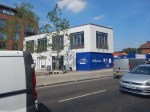
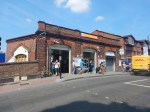
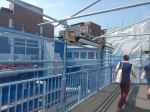
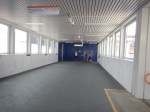
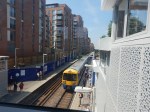
As the last picture shows this could be one of those station developments, where a deck could have been built over the North London Line to increase the number of flats built in the development on the South side of the railway.
This Google Map shows West Hampstead station on the North London Line and West Hampstead tube station on the Jubilee and Metropolitan Lines, although the latter don’t stop.
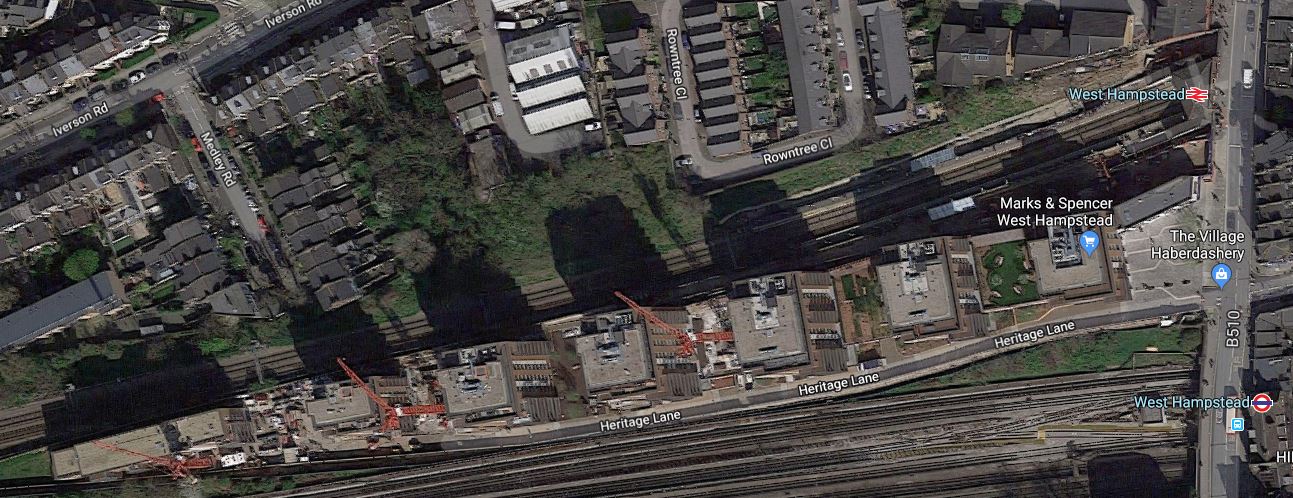
Note the development stretches a long way to the West between the North London Line and Underground Lines.
There have been plans to create a West Hampstead Interchange on West End Lane.
As these envisaged moving the Overground station to the East side of West End Lane and the new station is being built on the West side, It would appear there’s been a rethink.
Perhaps the Underground station is to be moved to the West side of West End Lane and will have an entrance on the small square in front of the M & S Simply Food and alongside the new Overground station.
This Google Map shows an enlargement of the area.
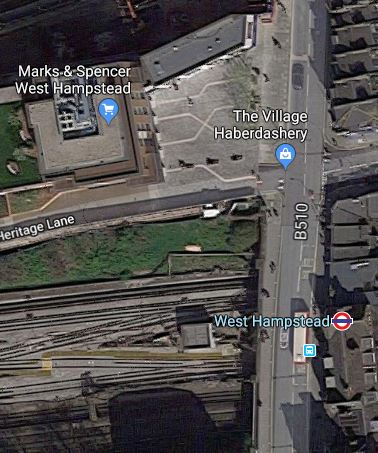
The new station could have platforms on the following lines.
- Jubilee Line
- Metropolitan Line
- Cjhiltern Railway
It would be a very worthwhile interchange. Especially, as passengers could do the following.
- Walk across the square for the Overground for East London.
- Walk perhaps another hundred metres to West Hampstead Thameslink station, which is also proposed as the terminus of the West London Orbital Railway.
There could also be a development on the top of the new station, which would hopefully contribute to the cost.
I have no idea, if anything will happen here, but Transport for London are looking to create new stations with over-site development. The Mayor also seems keen on the West London Orbital Railway, as it is based on under-used infrastructure and requires no new track or tunnels.
Financial Trouble At TfL: Can It Stay Afloat?
The title of this post, is the same as that of this article on Railway Technology.
This is the first paragraph.
London’s public transport provider, TfL, is under increasing pressure. Not only has its government operating grant been slashed but a funding freeze is also expected to cost £640m across the course of the current mayoralty. Can TfL create the commercial income needed to keep it afloat or are there serious causes for concern?
The government is cutting subsidy to TfL, but Sadiq Khan knew that when he stood for Mayor.
So what did he do? He offered a fare freeze until 2020.
It looks like more fantasy Socialist accounting to me, to ensure victory in an election.
The article also says this about the future.
Nevertheless, TfL’s hopes for the future are pinned on the completion of its upcoming Elizabeth Line project, scheduled for the end of the year. The £14.8bn project, which will create a brand new line running underground across London, is expected to be a big revenue raiser. TfL predicts that ridership will increase from the current 46 million passengers on TfL Rail, to nearly 270 million by 2022-2023.
If these predictions are wrong, TfL will be in trouble.
For myself, I suspect that Crossrail will suffer with its own version of London Overground Syndrome, with passenger numbers much higher than predicted. In The Scottish Borders Have Caught London Overground Syndrome, I talked about an outbreak in the Scottish Borders, after the opening of the Borders Railway, and said this.
This disease, which is probably a modern version of the Victorian railway mania, was first identified in East London in 2011, when it was found that the newly-refurbished East London Line and North London Line were inadequate due to high passenger satisfaction and much increased usage. It has now spread across other parts of the capital, despite various eradication programs.
But for the Mayor to rely on that, is clutching at straws.
London Mayor Sadiq Khan Plans TfL ‘Junk Food’ Advert Ban
The title of this post, is the same as that of this article on the BBC.
I don’t buy junk food, except for the odd bag of gluten-free chips from McDonalds, where there is nothing else I can find.
The move is to cut obesity in the capital.
I think a relately problem is the steadily-growing numbers of fast food shops in places like Kingsland High Street, near where I live?
- They offer unhealthy food.
- Few offer food for those like me, who have special needs.
- They contribute largely to litter all over the place.
- They are always dropping junk mail through my door.
Walk past these shops, just after school has finished and they are full of kids, stuffing themselves.
So what is Sadiq Khan doing to curb the numbers of the unhealthy places? Precisely, nothing!
In the BBC article, Karl Mercer the BBC corespondent says this.
It seems the mayor is trying to have his (low-calorie) cake and eat it.
Perhaps aware that high sugar, fat and salt ads bring in around £13m for TfL he says his new ban will not apply to companies – just to their less healthy products.
I think it is unworkable policy, that if it results in reduced advertising spend for TfL, could result in higher fares or Council Tax.
Will London Overground Procure Some Class 230 Trains?
Transport for London has a cash flow problem caused by various factors.
- The reduction in grant from Central Government.
- A fall in bus revenue caused by traffic congestion.
- The freeze of fares by the Mayor.
- The need to add services to stimulate much-needed housing.
This article in Rail Magazine is entitled Vivarail’s D-Trains Confirmed For Bedford-Bletchley.
As West Midlands Trains have now confirmed the order for the Class 230 trains, does this mean that buying Vivarail’s innovative refurbished London Underground D78 Stock, is now a less-risky train purchase?
Battery Or Diesel Class 230 Trains?
Would Transport for London buy a diesel or battery version of the Class 230 train?
Transport for London will have an exclusively electric fleet in a few months, when they have passed the Class 172 trains to West Midlands Trains.
I can’t believe they’d want to buy a small number of diesel trains, so I suspect they’ll go for battery versions.
Advantages Of Class 230 Trains For Transport for London
The trains must have advantages for Transport for London.
- They are simple trains, built for remote servicing.
- In some applications, their short length of just two cars must help, in that expensive platform extensions will not be needed.
- I would suspect that one two-car train is designed to rescue another.
- Capacity can be increased by adding a third-car.
- Transport for London must also have a lot of expertise on how to get the most out of these trains.
Possible Routes
There are a handful of possible routes.
Greenford Branch Line
The Greenford Branch Line must be a prime candidate for running with two-car battery version of a Class 230 train.
Consider.
- Using a four-car train, like a Class 710 train would require the platform at Greenford to be lengthened.
- A Class 230 train would only need some form of simple electrification at Greenford and/or West Ealing stations.
- Class 230 trains, would probably fit all platforms easily and give level access for wheelchairs and buggies.
- Could London Overground’s third-rail engineers add suitable electrification to charge the batteries at Greenford station?
- The branch is only four kilometres long.
- The branch only has the two tph passenger service and the occasional freight train.
- All trains use the new bay platform at West Ealing station.
One train could obviously work the current two trains per hour (tph) timetable, but could two trains and a possible spare run a four tph service on the branch?
The advantages of using Class 230 trains over a more conventional approach using perhaps Class 710 trains would include.
- No electrification of the branch.
- No platform lengthening and possibly little platform modification.
- Only a short length of third-rail electrification would be needed to charge the batteries.
- A four tph service might be possible.
The big advantage would be that it would be a low-cost project.
Romford To Upminster Line
The Romford To Upminster Line is currently run by a single four-car Class 315 train, which was to be replaced by a new Class 710 train.
In the March 2018 Edition of Modern Railways, whilst discussing nine more Class 71 trains for the London Overground, it is said, that a Class 315 train will be retained for the Romford To Upminster Line.
Why not procure another Class 230 train and use that to shuttle along the branch?
Consider.
- The electrification can be removed from the line, to save maintenance costs.
- A short length of third-rail electrification can be used to charge the batteries at Upminster station.
- The trains could be stabled at Upminster Depot.
The line used to have a short passing loop between Romford and Emerson Park station, that could be long enough for a two-car Class 230 train. If this loop were to be reinstated without electrification, if might allow a four tph service.
It would be another low-cost project.
Bromley North Line
The Bromley North Line is currently served by Southeastern.
Reading Wikipedia for the line, I get the impression, that the line isn’t a major problem, but there are little annoyances.
- Services are not frequent enough at some times of the day and week.
- Connection to services to and from London aren’t always convenient.
- It is not the easiest branch to provide with trains and drivers.
In addition, Southeastern would appear to be amenable to pass the line to Transport for London.
The track layout for the line has the following characteristics.
- Double-track throughout.
- There is a single platform at Grove Park station.
- There are two platforms at Bromley North station.
- The intermediate station; Sundridge Park has two platforms.
It looks like the line was designed so that two trains can operate simultaneously.
- Two Class 230 trains could run a four tph service.
- Stabling and servicing could be in Bromley North station.
- Trains could be third-rail or battery.
- A spare train could be held ready if it was felt needed.
It would be a self-contained low-cost solution.
Epping To Ongar
The Epping to Ongar service on the Central Line is no more, but would it be viable now with a Class 230 train?
Brentford Branch Line
The Brentford Branch Line has been proposed for reopening.
Class 230 trains powered by batteries would be ideal rolling stock.
The trains would be charged in Southall station.
West London Orbital
This article on Global Rail News is entitled Commitment To West London Orbital rail line.
This is said.
A press release distributed by the office of London Mayor Sadiq Khan said: “This new line, delivered through TfL, the West London Alliance, boroughs and Network Rail, could potentially support the delivery of an additional 20,000 homes, as well as employment growth in west London.”
In this article on Ian Visits, this is said about the service on the proposed West London Orbital line.
Phase 1: 4 trains per hour from West Hampstead to Hounslow, calling at West Hampstead, Cricklewood, Neasden, Harlesden, OOC, Acton Central, South Acton, Brentford, Syon Lane, Isleworth, Hounslow.
Phase 2: additional 4 trains per hour from Hendon to Kew Bridge, calling at Hendon, Brent Cross/Staples Corner, Neasden, Harlesden, OOC, Acton Central, South Acton, Kew Bridge.
The track is all in place and with a new bay platform at Hounslow, Class 230 trains could work Phase 1 on batteries with ease.
The key to the intermediate stations is property development. At Neasden, Harlesden and Old Oak Common, there is a lot of spare land around the Dudding Hill Line, where the trains will run. Developers will be told to build an appropriate amount of housing with a new station underneath.
The West London Orbital could be built to the following specification.
- No full electrification.
- Battery trains.
- Platforms long enough for four-car Class 710 trains.
- Bay platforms with possible charging at West Hampstead, Hendon, Hounslow and Key Bridge stations.
- Four tph on both routes.
It lends itself to a very efficient way of building the railway.
- Build a platform on the freight line through West Hampstead Thameslink station.
- Build a bay platform that will accept a four-car train at Hounslow station.
- Establish a four tph shuttle service between West Hampstead Thameslink and Hounslow stations calling at Acton Central, South Acton, Brentford, Syon Lane and Isleworth.
- Stations could be built at Neasden, Harlesden and Old Oak Common, where there is a generous amount of brownfield land, with lots of space for housing above the tracks and platforms.
Note.
- Batteries would be charged between Acton Central and Hounslow using the existing third-rail electrification.
- About five miles of the route would not be electrified.
- Housing developments on top of a station are a property developers dream.
The service could be started using Class 230 trains, with the option to switch to four-car Class 710 trains, powered by batteries, when more capacity is needed and Bombardier have fully developed the battery Aventra.
Phase two of the project would need development of platforms at Hendon and Kew Bridge stations.
The beauty of the West London Orbital, is that the only costs for Transport for London are four new platforms, some track-work and a fleet of new trains.
Hopefully, the development of the intermediate stations would be down to property developers, as they will make a fortune out of the housing!
Conclusion
I think the answer to my original question posed in the title of this post is Yes!
Tunnelling Complete On Northern Line Extension
The title of this post is the same as that of this article on Global Rail News.
This is said in the Wikipedia entry for the Northern Line Extension To Battersea.
The main tunnelling started in April 2017.
So as it’s now November 2017, the tunnellers have performed like a Jack Russell after a rabbit.
I do think that this excellent performance might give Transport for London ideas for some new passenger or train tunnels under London.
Specialist Trains Lead The Charge Against Leaf Fall on The Piccadilly Line
The title of this post is the same as the title of this press release on the Transport for London web site.
Last year, the Piccadilly Line suffered badly from leaves on the line as this article on the BBC, which is entitled Piccadilly Line delays: Wet leaves cause train shortage reported. This was the opening paragraph.
The Piccadilly Tube Line has been hit with major delays after half its trains were taken out of service as wet leaves on the track damaged their wheels.
Transport for London’s press release, talks about using RATs.
The two Rail Adhesion Trains (RATs) are part of a package of measures being introduced this Autumn to tackle wheel flats and prevent disruption.
A robust action plan to tackle leaf fall on the Piccadilly line is well underway for the Autumn months, TfL confirmed today.
It follows the publication of an independent report, commissioned by TfL, into leaf fall issues on the Piccadilly line that have led to delays and disruption on the line over the past two years.
Two 1973-stock trains have been converted into specialist engineering trains which will travel on the Piccadilly line treating rails to reduce the risk of poor adhesion. The adhesive material they dispense helps the train wheels grip the tracks during braking. When trains brake on slippery tracks it can cause the wheels to lock and subsequently wear down, an issue known as wheel flats.
Other measures TfL is taking to ensure that services on the Piccadilly line run as smoothly as possible this Autumn include:
- Aggressive vegetation clearance.
- Obtaining better weather prediction data.
- Better signage and information for drivers.
- Developing an Autumn leaf-fall timetable.
- Recruiting more maintenance staff and purchasing more spare wheels.
It’s certainly a comprehensive package of measures.
How Long Will It Take Bombardier To Fulfil Their Aventra Orders?
I was reading this article in The Guardian, which is entitled Full speed ahead for train builders as minister pulls plug on electrification, when I found this useful nugget of information, from the General Manager of Bombardier’s Derby plant.
Building trains in an “ergonomically correct” fashion, he says, means completing and testing the carriage’s constituent parts, then assembling them, rather than wiring them up afterwards – and also takes the risk away from a production line which boasts a rate of 25 carriages per week.
It sounds like Bombardier’s engineers have been drinking and swapping ideas, with Toyota’s production engineers a few miles down the road at Burnaston.
But even so 25 carriages a week is an impressive figure, as that is almost three Class 345 trains for Crossrail in a week.
Bombardier have not been producing at that rate until now, as if they had, there would be Aventras in sidings all over the place. In The Class 345 Trains Are More Numerous, I described how I saw four yesterday and Transport for London have said they will have they will have eleven in service by September.
But this is all consistent with not going into full production, until you are sure, that you’ve got everything right, as any prudent company would do!
The Trains On Order
Bombardier have the following orders for Aventras.
- Crossrail – Class 345 – 70 x nine-car – 630 cars – To be delivered in 2015-2018
- London Overground – Class 710 – 45 x four-car – 180 cars – To be delivered in 2017-2018
- Greater Anglia – Class 720 – 89 x five-car – 445 cars – To be delivered in 2018-2020
- Greater Anglia – Class 720 – 22 x ten-car – 220 cars – To be delivered in 2018-2020
- South Western Railways – Class xxx – 30 x five-car – 150 cars – To be delivered in 2019-2020
- South Western Railways – Class xxx – 60 x ten-car – 600 cars – – To be delivered in 2019-2020
- West Midlands Trains – Class xxx – 36 x three-car – 108 cars – To be delivered from 2020
- West Midlands Trains – Class xxx – 45 x five-car – 225 cars – To be delivered from 2021
- c2c – Class xxx – 10 x six-car – 60 cars – To be delivered from 2021
This gives a total of 2,618 cars to be built.
The Building Schedule
Orders 1 and 2 are both directly or indirectly for Transport for London, with Wikipedia stating that the Class 710 trains for the Lea Valley Lines are being stabled at Ilford TMD, where the current Class 345 trains are also stabled, whilst they are being tested between Liverpool Street and |Shenfield stations.
I suspect that this close relationship between the orders means that Bombardier and Transport for London have agreed a delivery schedule, that brings in trains as they are needed. There’s not much point in building Class 345 trains for Crossrail, when some won’t be needed until 2019, if there is a more urgent need for Class 710 trains for the Overground.
To improve matters for Bombardier, Orders 3 and 4 for Greater Anglia, will probably be stabled in part at Ilford TMD.
Bombardier have not only got four substantial initial orders, but because they can all be introduced into service from Ilford TMD, they must have a tremendous advantage in terms of testing, introduction into service, manpower and costs.
So it looks to me that the two London orders will be built first, followed by the Greater Anglia and then the South Western Railways.
The London orders total 810 cars, which would take 32 weeks using Bombardier’s figure of 25 cars per week in The Guardian.
But assuming they started full production on the 1st of August, that gives them seventy-two weeks until the end of 2018, which gives a equired production rate of under twelve cars a week.
Surely, given their past history of building around a couple of thousand Electrostar cars, that must be achievable. Especially, as the modular structure of the Aventra, which has been developed with suppliers, must make building quicker.
The Greater Anglia and South Western Railways orders, which total 1,415 cars, would need to be built in 2019-2020 or lets say a hundred weeks.
So the build rate would be 14 cars a week, which is well below Bombardier’s figure.
The Body Shells
It should also be stated that Bombardier make their body shells at Derby, whereas Hitachi make their’s in Japan and ship them to Newton Aycliffe. This must ease having a high production rate for Bombardier, as for this you must have timely and reliable deliveries.
The Class 345 and 710 trains seem to have different car lengths, so it would appear that their production of body shells is flexible.
Little can be discerned about the production process from the Internet, as articles like this one on Global Rail News, which is entitled Bombardier completes first Crossrail body shell, are short on production details.
If they have a capacity to produce twenty-five body shells a week, I don’t believe that this can be done without the use of sophisticated designs assisted by large amounts of automation, as used in most car and van body production.
I have found this picture of a number of Aventra car body sides on the Internet.
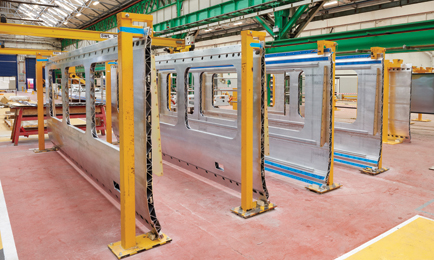
Note the double-skinned nature of the body sides, with reinforcing ribs inside, which must have great strength, light weight and a minimum number of components. I have read somewhere, that Bombardier are extruding aluminium for body components.
All of the holes could then be automatically cut by robots.
The joys of modern manufacturing!
Final Assembley
Modern manufacturing methods, as employed by car companies for years doesn’t mean you have to produce a sequence of identical vehicles on the line. Computer systems make sure all the components to build each car arrive at the right time.
A Class 345 train might have four or five different types of car, so similar methods would be used to speed production of the individual cars.
West Midlands Trains
Abellio, who own Greater Anglia, have decided they want to use Aventras on their new West Midlands Trains franchise.
According to Wikipedia, the new franchise is proposing to introduce the following trains
- 333 new Aventra carriages in three and five-car trains.
- 80 new CAF Civity carriages in two and four-car trains.
Some of the trains are direct replacements for other trains.
- The 36 x three-car Aventras will replace the 26 x three-car Class 323 trains.
- The CAF Civity trains will replace various diesel multiple units around Birmingham.
In some ways the puzzle is that there are 29 x five-car Aventras on order for electrified suburban lines.
Adding up the current and future number of electrified carriages on Birmingham suburban routes, shows that the number of carriages to be used will increase by three times.
New electrification is on the way.
- Chase Line to Rugeley Trent Valley.
- Cross-City Line to Bromsgrove.
But these short schemes won’t need all those trains, unless West Midlands Trains are going to run ten-car trains across Birmingham.
But possibilities exist.
- Electrification further towards places like Nuneaton and Worcester.
- Electrification of the Camp Hill Line across the City Centre.
- Aventras will be using batteries to reach places without electrification.
- Some Aventras could be bi-mode. I discuss the concept of a bi-mode Aventra in Is A Bi-Mode Aventra A Silly Idea?.
All will become clear in the next couple of years.
The West Midlands Trains orders for Aventras total 333 new carriages, which will all be pretty similar to previous orders, except in details like car length, number of cars, top speed and the interiors.
At Bombardier’s quoted production rate of 25 cars per week,l that means they would take jus fourteen weeks to build them, after the design was finalised.
That sounds unbelievable!
c2c
This order is for just sixty carriages, which will be delivered as six x ten-car trains.
This is an extract from c2c’s Press Release.
The Aventra is one of the fastest-selling trains in the UK rail industry, and these new trains will be manufactured at Bombardier’s factory in Derby. Each new train, which will operate in a fixed set of 10-carriages, will include over 900 seats, plus air-conditioning, wifi, plug sockets and three toilets onboard. Each new carriage is larger and contains more seats than on c2c’s current trains, so each 10-carriage new train provides capacity for 15% more passengers onboard compared to a current 12-carriage c2c train.
So three x four-car trains working as a twelve-car train are replaced by one ten-car train, which results in.
- A modern instead of a twenty-year-old train.
- 15% more capacity.
- Wi-fi and plug sockets.
- Better passenger experience.
- Two cabs instead of six.
- Fixed-formation trains don’t have end gangways.
- Twenty bogies instead of twenty-four.
Revenue per train will surely increase, but electricity and maintenance costs will also decrease.
So the accountants get a double dose of pleasure!
c2c also hint that more new trains are on thew way.
But as they are also reported to have extended the lease on their Class 387 trains, they have excellent cover whilst waiting for delivery of new Aventras.
Currently, they have the equivalent of 25 x twelve-car trains with a few spares.
So a complete train replacement if they like the Aventras, will probably be something like another twenty to thirty trains.
This would seem to be a very low-risk plan!
The New South Eastern Franchise
The needs of the current South Eastern and West Midlands franchises are surprisingly similar.
- High speed running on HS1 and the West Coast Main Line.
- Suburban services in city networks; London and Birmingham.
- A few short branch lines.
- Some lines without electrification.
- An ageing fleet without wi-fi.
So could we be seeing a mass fleet replacement with Aventras, as in West Midlands Trains.
Note that one of the bidders for this franchise is the same consortium of Abellio, East Japan Railway Company and Mitsui, who successfully bid for West Midlands Trains.
Abellio bought a large number of Aventras for Greater Anglia and helped develop battery power for the trains.
So could we be seeing a large number of Aventras added to the fleet for the South Eastern franchise?
Currently, the franchise runs 824 Electrostar and 674 Networker carriages.
To replace the Networkers would be 27 weeks of production at Bombardier’s rate of 25 carriages a day.
The South Eastern franchise also needs more high speed trains for HS1. I can’t believe that Bombardier couldn’t achieve a top speed of 140 mph with an Aventra. They probably will have a solution for covering the line between Ashford and Hastings. My money’s is on some form of energy storage.
Conclusion
Bombardier would not quote the capability of being able to make 25 trains per week to a newspaper like the Guardian, if they didn’t know it was possible.
But to meet the deliveries needed by the four initial customers, probably needs about half the quoted production rate, which is the sort of conservative thinking I like.
This gives Bombardier the float to sort out production problems or non-delivery of sub-assemblies outside of their control.
But it would also give them the capacity to fit in other orders. Suppose Crossrail decided to extend to Gravesend or Southend and needed another five Class 345 trains, then in theory, that is only two days production, provided the suppliers can deliver.
The UK’s railways are going to be full of Aventras.
Have Your Say On Our Plans For Kennington Park Head House And Landscaping
Transport for London have asked for comments on their plans for the Kennington Park Head House for the Northern Line Extension.
This picture is from their consultation.
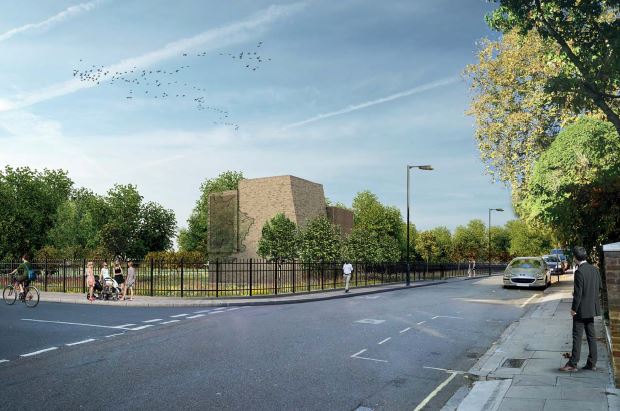
What surprises me is the scale. If you compare this head house for some of those of Crossrail, the Jubilee and the Voctoria Line , they seem larger and more intrusive.
This is a visualisation of Crossrail’s shaft in Mile End Park.
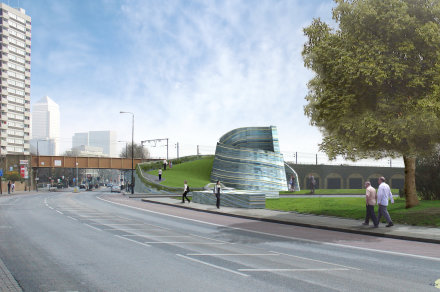
Mile End Park Ventilation Shaft
This is the actual Jubilee Line head house at Durant’s Wharf.
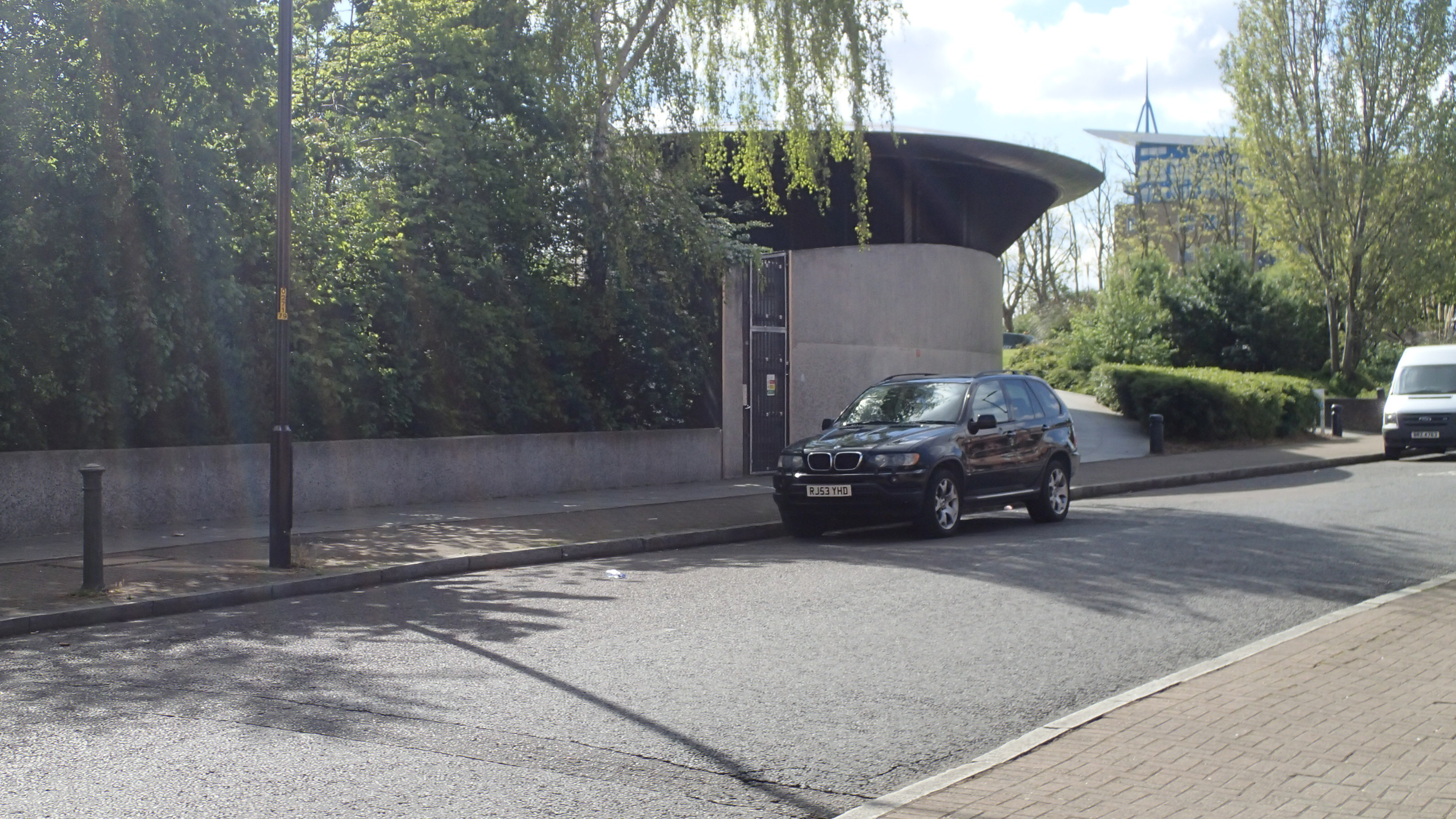
And this is the Victoria Line head house in Gibson Square.
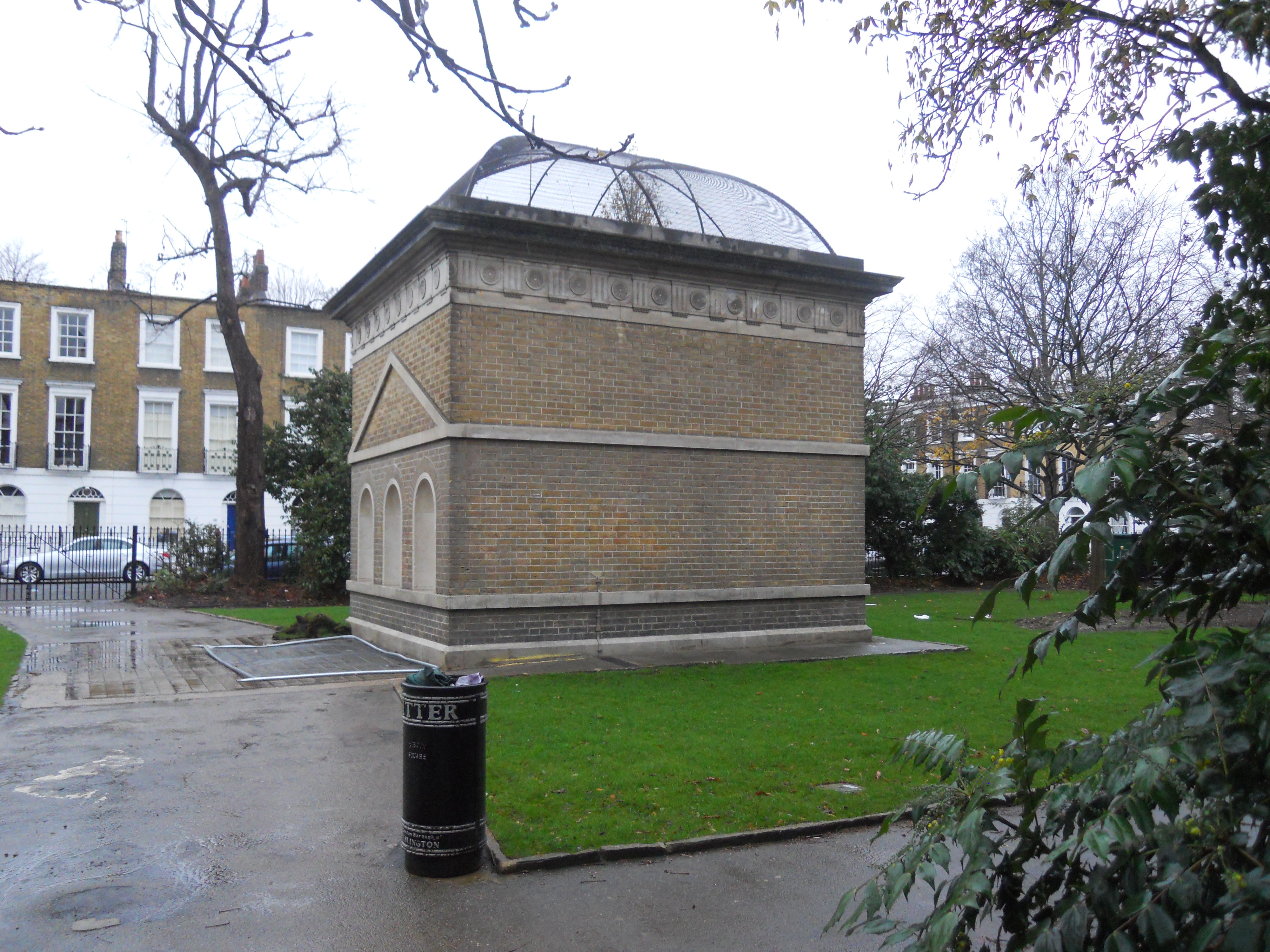
It should be noted that the Durant’s Wharf and Gibson Square structures are for ventilation only.
But even so, I think that a better design for the Kennington Park Head House can be created.
Where are the curves for a start?
Kent On The Cusp Of Change – Thameslink
The Kent On The Cusp Of Change article in the July 2017 Edition of Modern Railways talks about Kent and Thameslink.
This is said.
Under the Thameslink plans, due to come in next May, are two trains per hour (tph) Maidstone East to Cambridge and 2 tph Rainham to Luton, while the longstanding Sevenoaks via Bat & Ball to Blackfriars service will be extended to Welwyn Garden City in the peaks.
The Rainham to Luton service effectively creates a four tph service through the Medway towns to Abbey Wood, Greenwich, London Bridge and beyond.
The Maidstone East to Cambridge service, also creates four tph between London and Otford.
Onward From Maidstone East
I do wonder if the powers that be, looked at extending the service to Maidstone East station to the well-connected Ashford International station.
Consider.
- With the opening of the Ashford Spurs in Spring 2018, South East London and a lot more of Kent would have good access to Continental services.
- Thameslink would have a Southern access to Thanet to complement the Northern access at Rainham.
- Stations on the Maidstone Line could get four tph.
As Maidstone East to Ashford International takes thirty minutes, I suspect the extra time needed, makes scheduling trains difficult.
On the other hand, the Class 700 trains, probably execute stops faster than the current trains.
Could Thameslink Serve Ebbsfleet International Station?
If the Fawkham Junction Link is reinstated, this is a possibility.
Could A Catford Interchange Improve Thameslink?
The Maidstone East and Sevenoaks services both go through Catford station, which is close to Catford Bridge station.
Transport for London have said several times, that they would like to create a consolidated Catford Interchange station.
If one were to be created, could there be a bit of tidying up of services through the area, in much the same way as Gatwick Airport station acts as an important interchange on the Brighton Main Line?
Could Thameslink Capacity Be Increased?
I feel that Thameslink’s decision to serve Maidstone East and Rainham stations is a good one, but I suspect there are strips of paper on the Timetabling Room floor with other Kent and Sussex stations on them, like Ashford International, Canterbury, Dover, Hastings and Uckfield.
I also think too, that there may be stations, where additional trains could be desirable.
So could the current twenty-four trains through the central core of Thameslink be increased?
I think the answer is probably in the affirmative, as signalling, driver aids and the drivers themselves will get better, as the system develops.
In this article in Rail Engineer entitled Crossrail – approaching the final stages, this is said.
When the new Elizabeth line opens, 24 trains per hour will operate in each direction through the centre of London. The new signalling system will incorporate Automatic Train Operation to support this service, with the capacity for higher frequency of 30 trains per hour in the future. As a consequence, Siemens is installing the Communications-Based Train Control system (CBTC). It is similar to one already successfully installed in Copenhagen, so expectations are high.
So could similar techniques be used in Thameslink to create another six paths an hour.
That would still only be one train every two minutes.
I suspect too, capacity could be increased by lengthening some trains from eight to twelve cars.
Conclusion
Thameslink is very tied up with the Southeastern franchise.
See Also
These are related posts.
- Abbey Wood Station
- Ashford Spurs
- Crossrail
- Elimination Of Slow Trains
- Fawkham Junction Link
- Highspeed Routes
- High Speed To Hastings
- Historic Routes
- Longfield Station
- Maidstone
- Reading To Tonbridge
- Thanet Parkway Station
- Track Improvements
- Ultimate Class 395 Train
- Victoria As A Highspeed Terminal
To know more read Kent On The Cusp Of Change in the July 2017 Edition of Modern Railways.
 The Anonymous Widower