Are Motorists Set To Be Charged For Using The Rotherhithe Tunnel?
The title of this post, is the same as that of this article on Highway News.
These are the first two paragraphs of the article.
Despite TfL commissioner Andy Lord insisting there were “no plans” to start charging drivers to use the Rotherhithe tunnel, concerns are mounting that road tolls could be imposed on a third river crossing in east London,
According to the Evening Standard ‘critics’ suspect that many motorists will divert to the 116-year-old tunnel, which lies east of Tower Bridge and links Rotherhithe and Limehouse, when £4 rush-hour tolls are introduced next Spring at the Blackwall and new Silvertown tunnels.
As I understand it, to use the Blackwall and Silvertown tunnels, you will have to register with TfL AutoPay system, so tolling will be automatic.
It looks to me, that if journeys were to be charged for the Rotherhithe tunnel, then this would not be the most difficult of propositions.
The article also says this about the maintenance of the Rotherhithe tunnel.
But he suggested this could change if money had to be raised to repay the cost of a long-awaited upgrade. At present, the tunnel is closed every Monday night for maintenance.
I certainly, wouldn’t rule out a London Mayor in the future charging for traffic through the Rotherhithe tunnel.
Some London bridges, like Hammersmith, are also very much in need of repair. So perhaps, temporary tolls could be applied to raise money for the upgrades!
Conclusion
I suspect Spring 2025 will be an interesting time for motorists needing to cross the Thames, to the East of Tower Bridge.
Blackwall Tunnel Southbound Route To Close For Four More Weekends
The title of this post, is the same as that of this article on the BBC.
This is the sub-heading.
Part of the Blackwall Tunnel will close this weekend as work continues on the Silvertown Tunnel.
These three paragraphs detail the closures.
The southbound route will be closed from 00:01 BST Saturday until 05:00 Monday and on three further weekends.
The 57-year-old crossing is also due to shut on 1-3 June, 8-10 June and 29 June-1 July, as resurfacing and landscaping work is undertaken.
The Silvertown Tunnel is due to open in 2025, after which drivers using both tunnels will pay to cross the Thames.
At least the works to create the Silvertown Tunnel, seem to be progressing as planned.
But then London’s tunnels have generally been completed on time.
First Look Inside £2.2bn Silvertown Tunnel
The title of this post, is the same as that of this article on the BBC.
These are the first five paragraphs.
For the first time, Transport for London has invited journalists inside what is one of the most controversial infrastructure projects in the capital.
The Silvertown Tunnel is 1.4km (just under one mile) long and stretches from Silvertown in Newham to the Greenwich Peninsula.
Inside the tunnel, it is extremely wide. A lot bigger than other tunnels like the supersewer or Crossrail. Boring was finished a few weeks ago.
Transport for London (TfL) says the scheme will address queues at the Blackwall Tunnel and reduce pollution. But it has faced fierce opposition from those who think it will do the total opposite and increase pollution and congestion.
And the big question is – even with mitigation – can a road tunnel ever be green?
Note.
- There is a good picture, showing the width of the tunnel.
- It is very wide and can’t be much narrower than the four-lane Queensway Tunnel, which was opened under Mersey in 1934.
These are my thoughts.
I Am Against The Tunnel Being Built
My main reason I am against the Silvertown Tunnel is that Transport for London’s mathematical modelling of and rerouting of buses past my house has been some of the worst I’ve seen. I talk about the bus problems I now have in Is The Nightmare On The Buses Going To Get Worse?
So until the two tunnels; Blackwall and Silvertown are complete and open with tolling, I won’t trust any of Transport for London’s pronouncements.
I also feel that as the Silvertown Tunnel will allow trucks to pass though, there will be times, when they will cut through the East End to get to the Motorways going North.
But now, it’s more or less finished, we will probably need to use it.
How Is The Tunnel Being Paid For?
The Wikipedia entry for the Silvertown Tunnel has a section called Costs, where this is said.
In 2012, the cost was stated to be £600m. A consultation in 2015 stated that the cost of construction was estimated to be £1bn. In March 2020, the cost was increased again, to £1.2 billion. Operation, maintenance and financial costs of the tunnel over 25 years is expected to cost another £1bn.
The £2.2 billion will be repaid by tolls on both tunnels. Effectively, it’s a Private Finance Initiative or PFI.
Can A Road Tunnel Ever Be Green?
This is the question the BBC asked in the last paragraph of my extract.
Although, I am very much against this tunnel, I do believe this tunnel can be green.
- Suppose, the tunnels were made free for zero-carbon vehicles, that were powered by batteries, hydrogen or possibly ammonia.
- This might nudge vehicle owners and operations to go zero-carbon.
This extra number of zero-carbon vehicles would help to clean up London’s air.
I wonder which will be the preferred route for trucks associated with construction to go to and from sites in Central London?
- These trucks are major polluters in Central London.
- There are sensible moves to make construction sites zero-carbon.
If the Silvertown Tunnel didn’t have tolls for zero-carbon trucks, then surely this would nudge, this sizeable group of trucks to go zero-carbon to the benefit of everyone in Central London.
The only problem with making zero-carbon vehicles toll-free, is that it probably ruins the finances of the tunnels, from the point of view of the investors.
Conclusion
I can see lots of conflict starting over the operation of this tunnel.
Are Londoners The Tunnel Kings?
I was born in 1947 and it was in the early 1960s, that I started to develop an interest in engineering, which eventually led me to study Electrical Engineering and Electronics at Liverpool University.
Like most Londoners, I was a frequent user of the Underground and for six or seven years, I took the Piccadilly Line many days between Oakwood and Southgate to go to Minchenden Grammar School. Often, after school, I would go on to my father’s print works near Word Green tube station.
But not memories of London’s tunnels were so memorable at that time. One day, we were driving to see my Uncle Bert in Broadstairs and we were held in the Blackwall Tunnel for an hour or so because of an accident.
Perhaps, this is why I can remember a black-and-white video of digging the Western Tunnel of the Dartford Crossing so vividly. But as Raymond Baxter probably explained to BBC viewers at the time, it dug using a Greathead shield under pressure to keep the water out. It was probably the last tunnel dug under the Thames using methods, that would have been familiar to Victorian engineers.
This British Pathe video shows some of the construction of the Western tunnel.
This paragraph from the Wikipedia entry for the Eastern Tunnel describes its construction.
Construction was approved in April 1971, with an initial expected opening date in 1976. Work was delayed due to a lack of funds, which was resolved by EEC funding granted in 1974. The second tunnel opened in May 1980, allowing each tunnel to handle one direction of traffic, by which time the joint capacity of the two tunnels had increased to 65,000 vehicles per day. Connection of the crossing to the M25 was completed on the northerly Essex side in September 1982 (Junction 31), and to the southerly Kent side in September 1986 (Junction 1a)
The tunnels may be inadequate in terms of capacity, but they have certainly done a reliable job for sixty and forty-three years respectively.
There are other tunnels under the Thames, that have been built in my lifetime.
- Thames Cable Tunnel – 1970 – National Grid’s 400 kV cable.
- High Speed One – 2007
- Dartford Tunnel (East) – 1980
- Dartford Tunnel (West) – 1963
- Dartford Cable Tunnel – 2004
- Docklands Light Railway Tunnel – 2009
- Elizabeth Line Tunnel – 2014
- Millennium Dome Cable Tunnel – 1999
- Jubilee Line Tunnels – 1999 – Planned by Artemis
- Blackwall Runnel (East) – 1967
- Isle of Dogs Jubilee Line Tunnels – 1999 – Planned by Artemis
- Docklands Light Railway Tunnel – 1999 – Planned by Artemis
- Deptford Cable Tunnel –
- Jubilee Line Tunnels – 1999 – Planned by Artemis
- Victoria Line Tunnel – 1971
- New Cross to Finsbury Market Cable Tunnel – 2017
- Wimbledon to Pimlico Cable Tunnel – 1996
- London Power Tunnels – 2018, 2011
There are also these tunnels, which don’t go under the Thames
Bank Station Expansion And New Southbound Northern Line Tunnel – 2022
- Elstree to St. John’s Wood Cable Tunnel – 2005
- Heathrow Rail Tunnels – 1998
- Lee Tunnel – 2016
- Limehouse Link Tunnel – 1993
- Lower Lea Valley Cable Tunnels – 2008
- Northern Line Extension To Battersea – 2021
- Piccadilly Line Extension To Heathrow – 1975-2008
- Thames Tideway Tunnel – Estimated completion in 2025 – Tunnelling ended in 2022.
- Thames Water Ring Main – 2010
Note.
- The date is the opening date.
- I am pleased to see that at least some projects were planned, with the software, I wrote in a Suffolk attic.
In my lifetime, at least 27 substantial tunnels have been completed, a very large proportion of which have been on time and on budget, with the possible exception of the Heathrow Rail Tunnels, which collapsed.
So Why Has London Got A Good Record On Tunnelling?
In Millicent And Ursula Prepare To Go Tunnelling, I describe my visit to the Tideway Open Day today to see the tunnel boring machines; Millicent and Ursula before they went tunnelling.
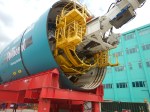
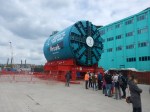
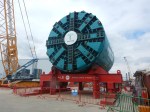
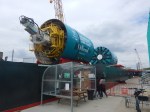
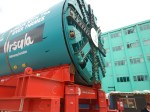
On that Sunday morning, I also chatted with the engineers and tunnelers.
- All had worked on at least one of London’s previous tunnels.
- One had worked on the Second Dartford Tunnel, the Channel Tunnel and Crossrail.
- A couple said, that after the Tideway finished, they would be off to High Speed Two.
Is London’s good record on delivering tunnels safely and on time and on budget, a case of lots of experience and practice makes perfect?
If it is, we should definitely think hard about how we handle large projects.
Wind Farms
Many have been constructed this way.
- The grid substation and connection to the grid is built.
- The foundations of the turbines are installed.
- The turbines are erected.
- All the turbines are commissioned.
This sequence or something like it can be applied to onshore and offshore wind farms.
- Most jobs are repeated many times by specialist teams using purpose-built cranes, ships and other equipment.
- Bigger wind farms, just need more repeated operations.
- All operations are generally in a small geographical area.
- I suspect specialist software has been built to project manage, the building of wind farms. If it hasn’t, I have my ideas.
Project management should be relatively easy.
Project To Improve Mobile Connectivity On East Coast Main Lone Reaches Key Milestone
The title of this post, is the same as that of this press release on LNER.
This is the sub-heading.
LNER, Network Rail and Mobile Network Operators (MNOs) are collaborating to improve mobile connectivity on the East Coast Main Line.
These three paragraphs outline the project.
The joint project, which is delivering new mobile phone infrastructure into tunnels outside London King’s Cross station, has reached an important milestone, with the installation of a bespoke antenna. The work inside Gasworks and Copenhagen tunnels will mean most customers can expect a more reliable and consistent mobile phone and on-train Wi-Fi connection and see the removal of ‘not-spots’ customers can experience when travelling through the tunnels.
The successful delivery of the project, funded by LNER working in collaboration with Network Rail and major mobile network operators, will mean the tunnels will be the first on the country’s operational railway to be fitted with the bespoke solution, with the system installed by rail connectivity and technology integration specialist Linbrooke. Rigorous testing has been carried out at Network Rail’s Innovation and Development Centre between Network Rail and the phone companies before introduction onto the network.
The technology will mean from later this year most customers will be able to maintain direct voice and data access to their mobile provider, keeping their calls connected and meetings online as they approach and leave the capital.
Anything that improves connectivity is to be welcomed.
HyperTunnel Wins Government Backing For Revolutionary Underpass Tech
The title of this post, is the same as that of this article on Rail Technology Magazine.
This is the sub-heading.
Pioneering tunnel builders hyperTunnel have scored a major coup, securing UK government funding to showcase their revolutionary swarm construction technique at the Global Centre of Rail Excellence (GCRE) in South Wales.
These four paragraphs outline hyperTunnel and its demonstration project at the GCRE.
Their underpass project is one of just 16 cutting-edge schemes set to be unveiled at the GCRE’s Dulais Valley site this year. hyperTunnel’s brainchild, the swarm construction technique, harnesses the power of AI, digital surveying, and robot swarms to essentially 3D print tunnels directly in the ground, eliminating the need for messy excavation.
This futuristic approach it hopes will transform underground construction, whilst slashing costs and timeframes. It can also help contribute to waste reduction, risk prevention and help reduce a projects carbon footprint compared to the traditional cut-and-cover methods which are frequently used.
Their GCRE project will see them build a 20-metre pedestrian underpass beneath a test track, cleverly designed to keep the track operational throughout construction.
hyperTunnel’s overarching vision is to offer a financially viable alternative to perilous level crossings which it anticipates will boost safety, and increase rail capacity.
Note.
- To learn more visit hyperTunnel’s web site.
- The mission statement on the home page is Transforming Underground Construction Through AI, Machine Learning And Swarm Robotics.
I like this technology and think it will go a long way. Hopefully, in the right direction.
National Grid’s London Power Tunnels Breakthrough Completes £1 Billion Project’s Tunnelling Activity
The title of this post, is the same as that of this press release from National Grid.
These bullet points sum up the press release.
- Landmark moment for London Power Tunnels project as 140-tonne boring machine emerges at Eltham site following final subterranean journey
- Breakthrough marks the completion of 32.5km of tunnelling at depths of up to 60m under seven South London boroughs
- Due for completion in 2026, the project is rewiring the capital’s electricity network to boost resilience and future-proof supplies as demand grows
This is the seventh major tunnel in London in recent years to be completed.
- Elstree and St. John’s Wood Cable Tunnel – Electricity – 12 miles – 2005
- Lower Lea Valley Cable Tunnels – Electricity – 3.7 miles – 2008
- Lee Tunnel – Sewage – 4.3 miles – 2016
- New Cross and Finsbury Market Cable Tunnel – Electricity – 3.5 miles – 2017
- Northern Line Extension To Battersea – Rail – 2 miles – 2021
- Elizabeth Line – Rail – 26 miles – 2022
- Silvertown Tunnel – Road – 1 mile – Under Construction
- Thames Tideway Tunnel – Sewage – 16 miles – Under Construction
- Euston Tunnel – Rail – 4.5 miles – Under Construction
Note.
- It is likely that there will be CrossRail 2 and an extension to the Bakerloo Line.
- It certainly seems to have been a prudent decision to create Tunneling and Underground Construction Academy or TUCA to train more tunnellers, before the Elizabeth Line was built.
But I don’t believe that will be all the large tunnels that will be built in the capital.
Could High Speed Two Have An Underground Station In London?
The Achievement Of The Bank Station Upgrade
This map from OpenRailwayMap shows the lines through Bank and Monument stations.
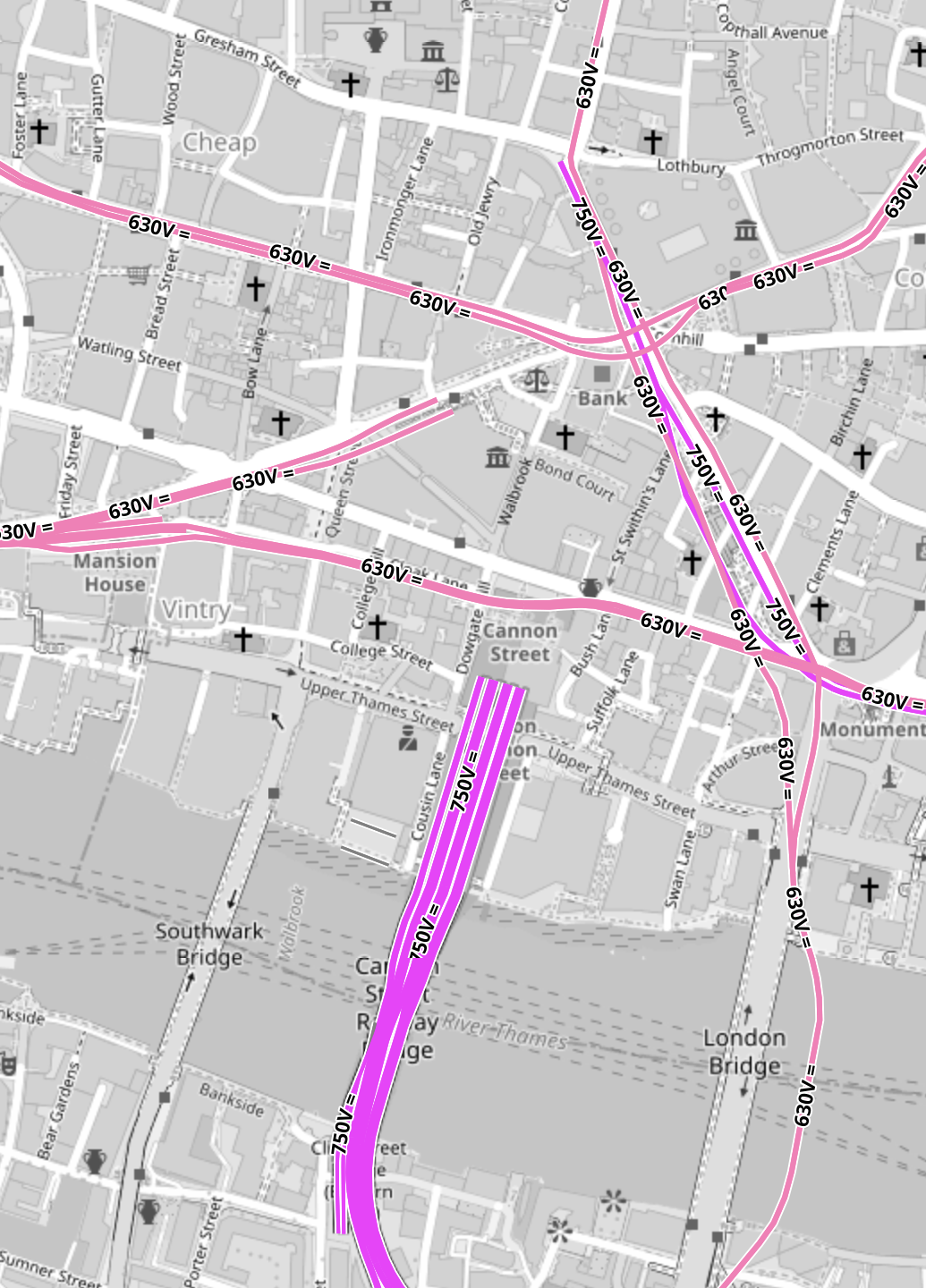
Note.
- All the pink lines are the lines of the London Underground.
- The line running alongside London Bridge is the Northern Line, which is deep under the Thames.
- The mauve lines are those with the slightly higher voltage of the UK National Rail network going into Cannon Street station.
In part of the Bank Station Upgrade, a new Southbound tunnel for the Northern Line was dug, so that the Northern Line platforms at Bank station could be farther apart.
This visualisation shows the station.
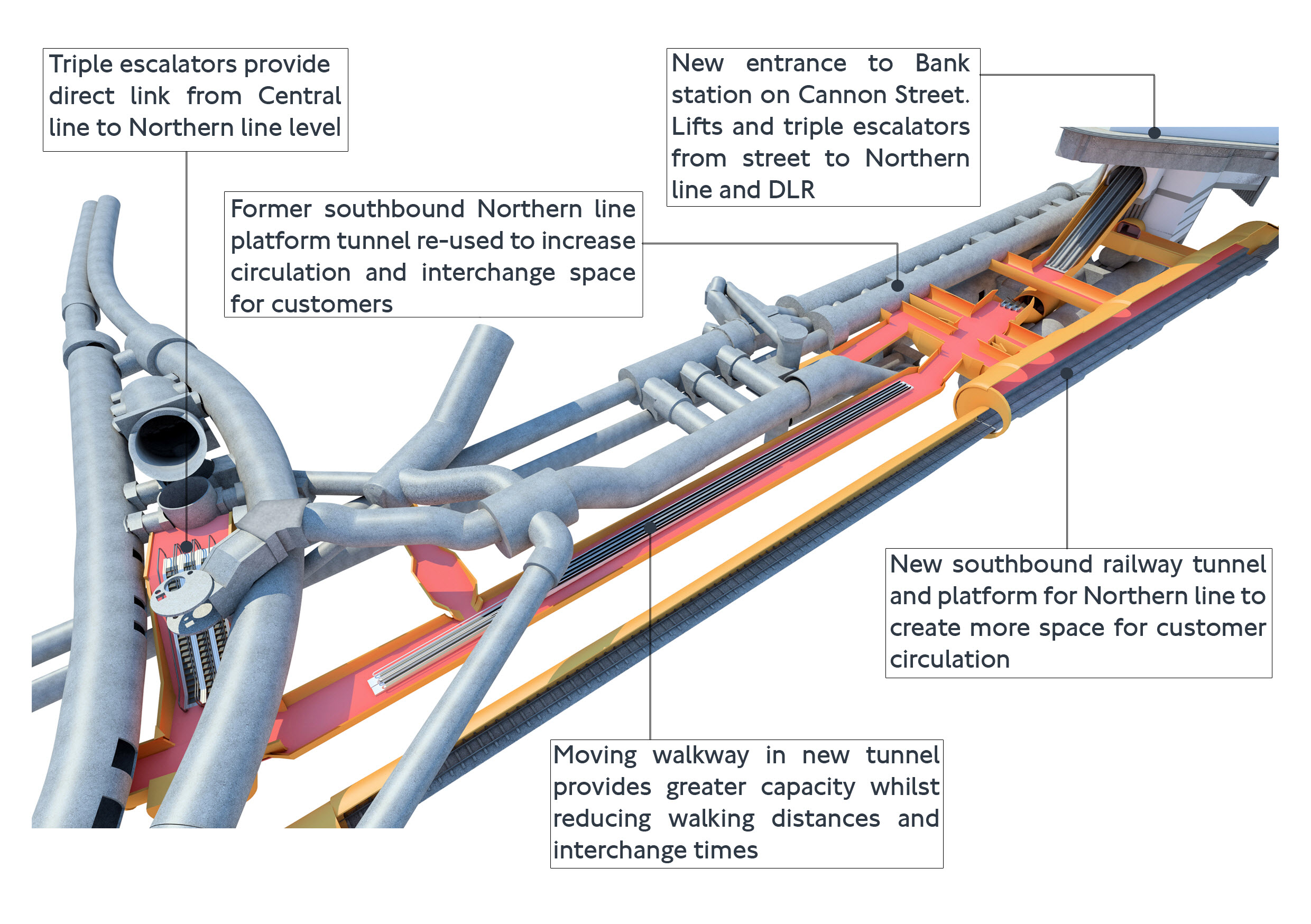
The project was an amazing demonstration of what is possible to be achieved in underground construction.
- There is a moving walkway to move passengers between the Central and Northern Lines.
- There are escalators and lifts everywhere.
It was also dug out from London’s helpful soils under scores of important buildings, many of which are listed.
These pictures give a flavour of the underground section of the completed upgrade.
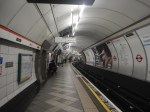



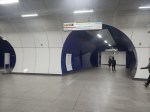
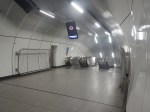
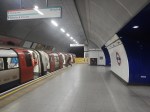
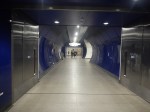

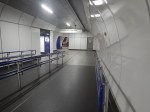


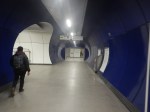



These pictures show the buildings on top of the complex.

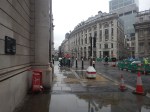














Note.
- There is no building of any great height above the station complex.
- There are a lot of quality buildings.
- During all the work underground, I didn’t see any reports of any problems with the buildings on top.
- In How Many Entrances And Exits Does A Station Need?, I counted that the complex now has twenty entries.
It is probably a project that could be repeated elsewhere.
Camden Town, Holborn and Bond Street/Oxford Circus are probably suitable cases for treatment.
Weston Williamson’s Plan For Manchester Piccadilly Station
In The Rival Plans For Piccadilly Station, That Architects Say Will ‘Save Millions’, I wrote about Weston Williamson’s plan for Manchester Piccadilly station.
This was their visualisation.

Note.
- In the visualisation, you are observing the station from the East.
- The existing railway lines into Piccadilly station are shown in red.
- Stockport and Manchester Airport are to the left, which is to the South.
- Note the dreaded Castlefield Corridor in red going off into the distance to Oxford Road and Deansgate stations.
- The new high speed lines are shown in blue.
- To the left they go to Manchester Airport and then on to London, Birmingham and the South, Warrington and Liverpool and Wigan, Preston, Blackpool, Barrow-in-Furness, the North and Scotland.
- To the right, they go to Huddersfield, Bradford, Leeds, Hull and the North East, and Sheffield, Doncaster and the East.
- Between it looks like a low-level High Speed station with at least four tracks and six platforms.
- The Manchester Metrolink is shown in yellow.
The potential for over-site development is immense. If the Station Square Tower was residential, the penthouses would be some of the most desirable places to live in the North.
Londoners Are The Tunnel Kings
Bring On The Robots
Could High Speed Two Have An Underground Station In London?
Look at this map from OpenRailwayMap.
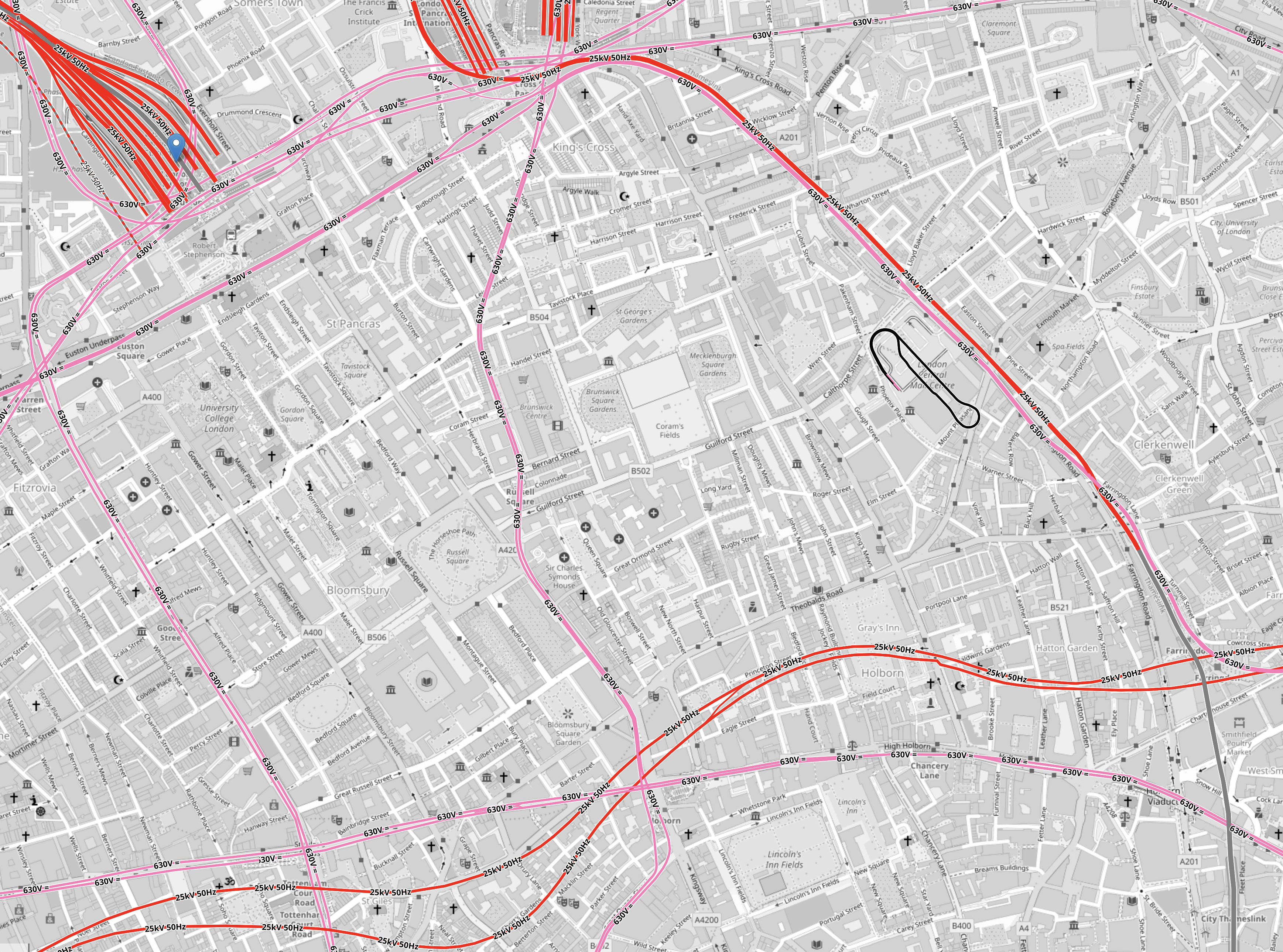
Note.
- Euston station is in the North-West corner of the map.
- St. Pancras and King’s Cross stations can just be seen at the top of the map.
- All lines shown in red have 25 KVAC overhead electrification.
- All lines shown in pink are the London Overground.
- The double track electrified railway meandering across the map from West to East is the Elizabeth Line.
- The pink line going down the middle of the map is the Piccadilly Line.
- The pink line going down the left of the map is the Charing Cross branch of the Northern Line.
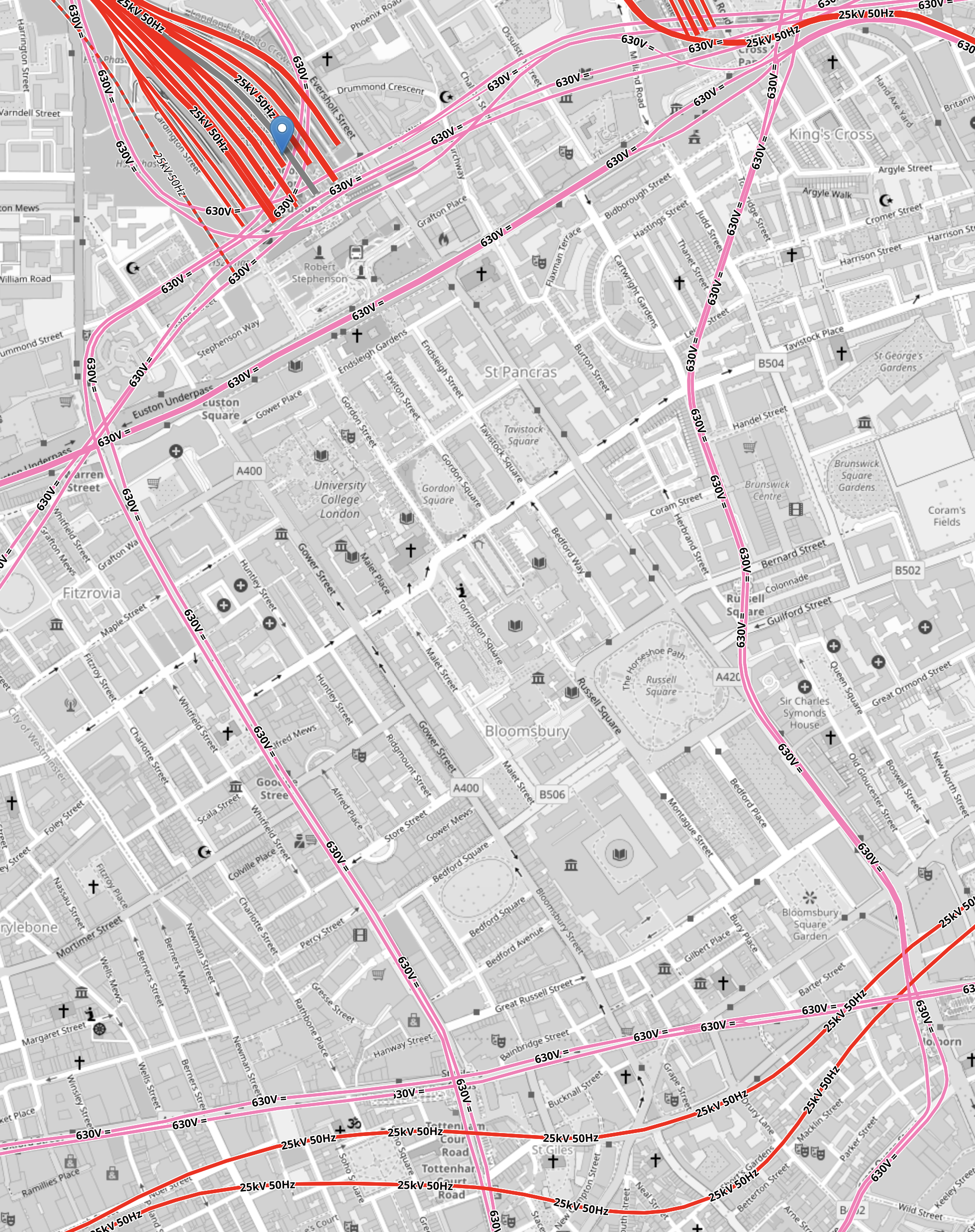
There is a large square area to the South of Euston that doesn’t have any railways crossing it.
It is shown in this map from OpenRailwayMap.
Note.
- As before, red lines have 25 KVAC overhead electrification and pink lines are the Underground.
- The Western boundary of the area is the Charing Cross branch of the Northern Line, which runs between Euston in the North and Tottenham Court Road in the South.
- The Eastern boundary of the area is the Piccadilly Line, which runs between King’s Cross in the North and Holborn in the South.
- The Northern boundary of the area is the sub-surface Circle, Hammersmith & City and Metropolitan Lines, which runs between Warren Street in the West and King’s Cross in the East.
- The Northern and Victoria Lines also run East-West to the North of the sub-surface lines.
- The Southern boundary of the area is the Central and Elizabeth Lines, which run between Tottenham Court Road in the West and Holborn in the East.
It is a substantial area.
So could it be hollowed out to create a below-ground London terminal for High Speed Two?
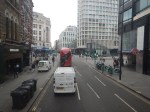
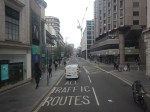
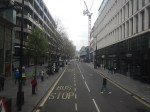
I got a bus from Tottenham Court Road to Euston station and then walked to Holborn, taking these pictures.
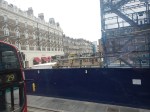
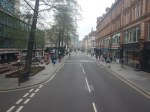
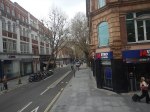





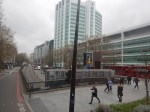




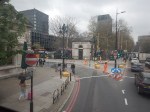


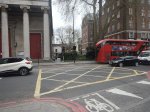
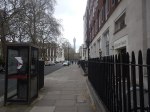



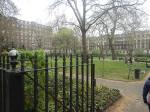









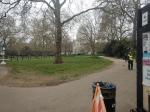






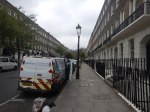


Note.
- There are only two buildings in the area with more than about six floors; University College Hospital and Senate House.
- There a lot of green spaces.
- Bloomsbury Square does have a car park beneath it.
I wonder if a terminal station could be build under the area?
- I suspect if you went fifty metres down there could be plenty of space, that could be excavated.
- Tunnels with moving walkway and escalators could link the station to the Central, Circle, Elizabeth, Hammersmith and City, Metropolitan, Northern and Piccadilly Lines.
- There would be space to have 400 metre long platforms.
- As all trains would be electric, there would be no fume problems.
- There could be lifts and escalators to the green spaces on the top.
I have a feeling that most of people living or working inside the North and South Circular Roads could get to the station by public transport with at most a single change.
HS2 Tackles Materials Shortfall By Opening A New On-Site Rebar Components Facility
The title of this post, is the same as that of this news item from High Speed Two.
These are the three bullet points.
- A new facility on HS2’s Copthall tunnel site addresses materials shortages by making rebar products on site
- A team of 14 will make 92,000 rebar couplers needed for the Copthall tunnel in Hillingdon
- The innovative solution has created jobs, saves time and money, reduces waste and cuts lorry movements
These three paragraphs outline what was done.
HS2 has set up a rebar threading facility to address materials shortages at its Copthall tunnel construction site in Hillingdon – creating jobs, cutting waste and reducing lorry movements. The new facility will make 92,000 rebar couplers, needed to construct the Copthall tunnel.
The Skanska Costain STRABAG joint venture (SCS JV) team constructing the tunnel were faced with delays due to a shortfall of available prefabricated fatigue rated rebar couplers, after suppliers had exited the market. To address this, the team has constructed a threading facility on site to produce the required quantities of the materials themselves.
As well as addressing supply shortfall, the threading facility has resulted in a significant financial saving on the project by reducing waste, costs and lorry movements, and overall creating a more efficient way of working.
This looks like the sort of solution that could be applied more often.
There’s also an excellent video.
I have definitely been impressed with the project management of High Speed Two.
Hydrogen-Powered Vehicles And Trains In Tunnels
In writing about the Silvertown Tunnel, I started to wonder, if hydrogen vehicles will be allowed in the tunnel.
Consider.
- I don’t think diesel-powered trains are allowed in the Channel Tunnel and the tunnels of the link to London.
- Some tunnels don’t seem to allow hydrogen-powered vehicles.
- In a few years, hydrogen-powered buses, cars, locomotives, trains, trucks and vans will be more common, than they are today.
But help is at hand, with a co-operation between UK and EU agencies called HyTunnel-CS.
It is over fifty years now, since I worked as an instrument engineer in an ICI hydrogen factory at Runcorn. Truckloads of hydrogen were filled and despatched all over the UK. I may be wrong, but in all those intervening years, I can’t remember a hydrogen emergency on the UK’s roads.
I am confident, that we will achieve a safety regime, that allows hydrogen-powered vehicles and trains to be certified to pass through tunnels.
 The Anonymous Widower