Elon Musk’s Starlink Lined Up To Solve Train Wi-Fi Rage
The title of this post, is the same as that, as this article on the Telegraph.
This is the sub-heading.
Using the billionaire’s network of satellites could help rail passengers make reliable phone calls
These two paragraphs give more details.
Elon Musk’s Starlink satellites are being looked at as a potential solution to solving the issue of patchy Wi-Fi on Britain’s trains.
Train operators in England and Wales are examining whether the satellite-based internet provider could be used to boost connectivity after a six-month trial of the technology began in Scotland last month.
I don’t see any obvious technical reason, why not the technology wouldn’t work.
This Wikipedia entry describes the 2024 Talerddig Train Collision, when two trains collided on the Cambrian Line.
Better communications might have helped in avoiding or sorting out the incident.
British Gas Partners With Strata And Daikin To Launch Eco-Tech Low Bill Homes
The title of this post, is the same as that of this press release from Centrica.
This is the sub-heading.
British Gas is set to supercharge sustainable living across the UK with the launch of Low Carbon Homes – a ground-breaking pilot in partnership with Strata and heat pump manufacturer, Daikin.
These are the first four paragraphs, which fill out a bit of detail.
In anticipation of The Future Homes Standard, customers will move into new build homes which have been fitted with a full range of the latest low-carbon technology at no extra cost to the housebuilder or owner. The homes will be equipped with a 6-8 kWh Daikin air source heat pump, 4 kWh solar panels, 5 kWh battery storage, Hive electric vehicle charger and thermostat. These items will be integrated into Hive’s award-winning app, providing customers with one-stop visibility and control of their energy usage.
The first trial phase will launch at a Strata’s “Breathe” development site in Kiveton, Rotherham. As a thank you for participating in the pilot, British Gas is giving homeowners access to a fixed rate tailored British Gas tariff. Participants in the trial will also have access to a dedicated British Gas energy manager to help them optimise the technology and keep bills as low as possible, while still meeting their desired comfort levels.
Each home will be fitted with a Hive hub, which connects to the WIFI network and acts as the home’s operating system, integrating all the sustainable technology. The customers energy and heat schedules and budget will be optimised by the Hive Hub for further savings.
When the customer connects to Hive’s app they will be able to control and maximise efficiency by setting schedules and spending budgets and allowing the Hub to help them reduce their bills.
Note.
- As a Control Engineer, this to me is a good start.
- I suspect that a 6-8 kWh Daikin air source heat pump, 4 kWh solar panels and 5 kWh battery storage will keep the average house warm.
- I would expect that the three companies have optimised the ratios between the sizes of the components to give the best performance.
It is amazing to think that it was in the early seventies, that in the two sections, where I worked at ICI, engineers had just started controlling and optimising flows, pressures and temperatures in complex chemical plants.
If you’d asked any of us, when our houses heating systems would be as fully controlled, we’d have given twenty years at most.
What kept the world so long?
I have a few thoughts.
Could The Housing Have Gas For Cooking??
Yes! Centrica owns a big share with Hyundai, Kia and others of a start-up company called HiiROC.
- This is the HiiROC web site.
- HiiROC can take any hydocarbon gas and split it into green hydrogen and carbon black.
- Green hydrogen is obviously useful and the carbon black can be used for making tyres for vehicles, anodes for lithium-ion batteries and in agriculture for soil improvement.
- Waste off-gas from a chemical plant can be split into green hydrogen and carbon black.
- Biomethane from a sewage plant can be split into hydrogen and carbon black. Could a sewage plant on an estate be used to create biomethane for cooking and feeding to the HiiROC plant? Yes!
- Could green hydrogen produced on the estate be used to drive vehicles like cars, vans and ride-on-mowers. Yes! If the manufacturer of the vehicle allows it!
- How convenient would it be to have Hydrogen-at-Home?
How Much Does A British Gas Hive Save On My Energy Bill?
I asked Google and I got this answer from Home Hive.
£119. A smaller carbon footprint and a smaller bill – our award-winning smart thermostat could cut your energy bills by up to £170 a year. Join Hive Plus to boost your thermostat’s savings – and get exclusive access to £60 bill credit with any fixed British Gas dual fuel tariff.
At present, I have no intention of changing my energy supplier, but come the summer or if my health or energy circumstances change, I might see what is available.
Will British Gas Develop A Hive For a Smaller Dwelling?
I suspect in ten years, if I’m still of this world, I shall be living in the following circumstances.
- Alone.
- In a two bedroom house, cottage or flat.
- Some form of probably electric central heating or perhaps even hydrogen.
- No car.
- A short walk to the bus stop and/or train station.
- Communal gardens to sit in.
- An Ocado style delivery for food, groceries and other essentials.
- A local gluten-free cafe.
- Full Wi-Fi
Perhaps, British Gas and others will develop a community for people like me?
Metro Operator Opts For Better Mobile Signal Instead Of Wi-Fi
The title of this post, is the same as that of this article on Railway Gazette.
This is the first paragraph.
Tyne & Wear Metro operator Nexus has chosen to eliminate mobile phone connectivity ‘not spots’ instead of deploying on-train wi-fi as previously planned.
I agree with this, as it is so much more convenient. Especially, if like me, your eyesight isn’t a hundred percent.
If Greater Anglia were able to offer it on their Mark 3 coaches, the technology must be easy to implement.
The Ultimate Bus Stop
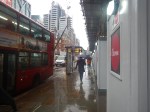
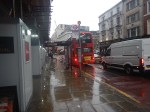
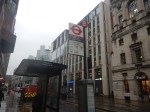
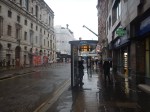
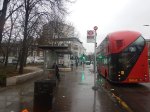
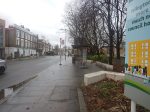
London has very comprehensive bus stops as these pictures show.


Note.
- Most bus stops have a pole mounted roundel, that can be seen from a reasonable distance. In many cases, anybody with reasonable sight can see the roundel for the next stop.
- Where space permits, bus stops have a shelter with seats, maps and instructions on ticketing.
- Some stops have been extended into the road, so that it is a level step into and out of the bus.
- As shown in the pictures, so bus stops have displays showing the next ten buses, that will be arriving.
But I do think, they could be improved, with extra features.
Internet Connectivity
I feel strongly, that all bus stops should have good internet connectivity.
This could be 4G, 5G or just wi-fi, but I believe this could help with the safety of people on the street.
Comprehensive Lighting
To contribute to safety, I also feel that all bus stops should be well lit.
CCTV Issues
I also feel that all bus stops should have provision for CCTV, so if there was a need, it could be quickly fitted. But if the bus stop had good internet connectivity, then this shouldn’t be a problem.
Phone Charging
New buses have this feature, so why not at the stops?
Power Supply Issues
If we add all these features, we could be needed an uprated power supply.
- So could we see bus stops, with solar panels on the roof.
- Perhaps even a mini wind turbine?
- I think a vertical wind turbine, which was similar to a SeaTwirl, but smaller, could be ideal!
- Could it be called a StreeTwirl?
- A self-powered bus could be created with the addition of a battery.
Self-powered bus stops might be easier to install.
Conclusion
Bus stops will have more features in the future.
Will The Elizabeth Line Have Wi-Fi And 4G?
This page on the TfL web site is entitled Everything You Need To Know About The Elizabeth Line, where this is said about Wi-Fi and 4G.
WiFi access within the tunnels will be introduced later in 2022. Customers on both trains and platforms will have access to 4G connectivity this year too.
Will passengers be more likely to take a route through London with Wi-Fi and 4G?
I very much feel they will and that this could draw more passengers to use the Elizabeth Line.
And once, they start to use it, they’ll keep with it, so long as they’re happy.
Elizabeth Line – Paddington Bakerloo Line Link – 24th May 2022
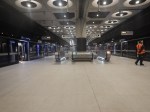
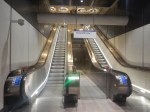
These pictures show the Elizabeth Line end of the Paddington Bakerloo Line Link.

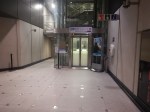
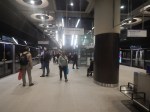
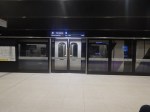


Note.
- This pedestrian tunnel connects the Elizabeth Line platforms and the Bakerloo Line platforms at Paddington station.
- The tunnel runs under the main pedestrian concourse of Paddington station from one side to the other.
- At the start of construction, I wrote about this tunnel in Paddington Bakerloo Line Link Project, London.
In Paddington Is Operational Again, I showed this image, that I found on the web.
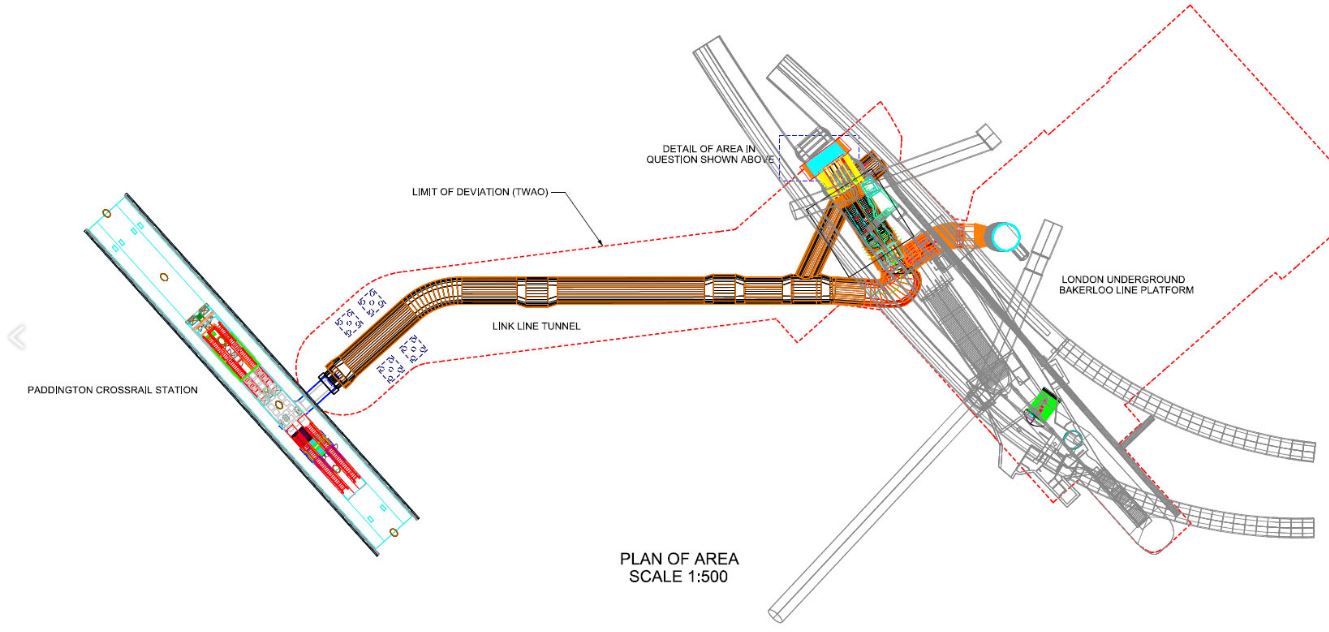
I also said this.
It looks to be a very well thought out link.
- It is connected to the Crossrail station by escalators and lifts in the middle of the island platform at that station.
- The connection at the Bakerloo Line end, would appear to have lifts, stairs and escalators.
- Wll the lifts go direct to the surface as well?
- All routes seem to be direct to the central landing in the Bakerloo Line platforms.
- It may be a hundred and sixty five metres, but the design probably means most passengers will do it fairly fast.But I’m only speculating.
It will certainly be a very powerful interchange, as it will give a much needed connection to London’s least-developed Underground Line.
Having seen one end today, I agree with my statement in the previous post.
Walking The Paddington Bakerloo Line Link
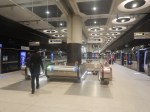
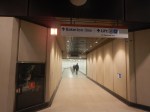
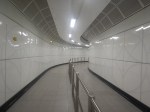
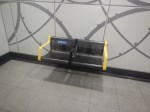
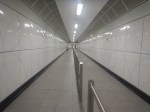
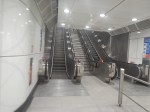
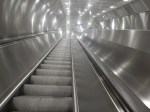
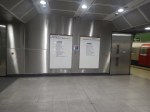
On the 26th May, I walked the Paddington Bakerloo Line Link from the Elizabeth Line to the Bakerloo Line platforms.


Note.
- There are two escalators and a lift at both ends.
- It appears to be a level walk. Walking the contours around a hill is always easier.
- There are two seats at one third and two thirds distance. Do the seats have a mobile phone hotspot?
- The seats make each section fifty-five metres, as the tunnel is 165 metres long.
- According to this page on the BRE Group web site, it cost just £40 million.
- There is a handrail all the way in the middle of the link.
- Each direction, is wide enough for the largest pram, wheelchair or stretcher.
The Paddington Bakerloo Line Link has set a high gold standard for below ground pedestrian links.
- Both ends have escalators and lifts to provide step-free access between platforms and the tunnel.
- The tunnel is level.
- There is a handrail.
- The tunnel is wide.
- The tunnel has seats for those who need a rest.
- There are help points.
- Most importantly, at only £40 million it was not expensive.
Several other long pedestrian links in London, the UK, Europe and the world could borrow ideas from this link, which I would rate as the best I’ve ever seen.
Does The Paddington Bakerloo Line Link Make The Bakerloo Line A North-South Cross-Branch Of The Elizabeth Line?
The Elizabeth Line has these major North-South cross-branches.
- Jubilee Line at Bond Street station.
- Charing Cross Branch of the Northern Line at Tottenham Court Road station.
- Thameslink at Farringdon station.
- Bank Branch of the Northern Line at Moorgate station.
- East London Line of the Overground at Whitechapel station.
With the opening of the Paddington Bakerloo Line Link, another North-South cross-branch of the Elizabeth Line been added.
It could be argued that London has a new NW-SE high frequency link between Harrow & Wealdstone and Abbey Wood stations.
- Bakerloo Line – Harrow & Wealdstone and Paddington
- Paddington Bakerloo Line Link – 165 metre level step-free walk
- Elizabeth Line – Paddington and Abbey Wood via Whitechapel and Canary Wharf
The journey would appear to take 73 minutes from the National Rail journey planner, which allows fifteen minutes for the change at Paddington.
Is The Bakerloo Line Extension Still Needed?
So how long would it take for journeys from Harrow & Wealdstone to selected stations, that could be served by the Bakerloo Line Extension.
- New Cross Gate – 82 minutes – Change at Paddington and Whitechapel
- Lewisham – 93 minutes – Change at Paddington and Canary Wharf
- Hayes – 98 minutes – Change at Paddington, Whitechapel and New Cross
Note.
- Going South the Hayes train arrives at New Cross, just after the train from Dalston Junction has arrived.
- I also feel with some Northbound improvements on the Overground service times could be shortened.
- Locations on the Old Kent Road might be better served by frequent buses between Elephant & Castle and New Cross stations.
Improving the Overground and the fast link between Whitechapel and Paddington may allow the Bakerloo Line Extension to be kicked into the long grass.
Wi-Fi And 4G
This page on the TfL web site is entitled Everything You Need To Know About The Elizabeth Line, where this is said about Wi-Fi and 4G.
WiFi access within the tunnels will be introduced later in 2022. Customers on both trains and platforms will have access to 4G connectivity this year too.
Will passengers be more likely to take a route through London with Wi-Fi and 4G?
I very much feel they will and that this will draw more passengers to use the Elizabeth Line.
And once, they start to use it, they’ll keep with it, so long as they’re happy.
Conclusion
The Bakerloo Line Extension can be kicked into the long grass.
Raw Material For Southern’s Battery Trains
Porterbrook and Southern are proposing to convert a number of Class 377/3 trains to battery operation for the Uckfield Branch and the Marshlink Line, as I wrote about in Electroflex Battery EMU Plan To End Southern Diesel Operation.
This morning I took a ride in a ten-car Class 377 train formed by two three-car Class 377/3 units and one Class 377/4.
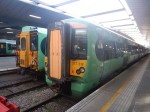
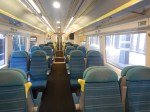
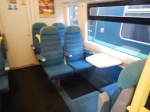
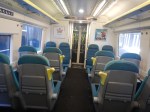
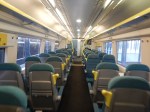
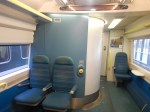
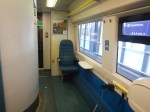
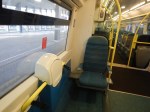
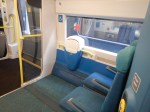
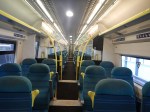
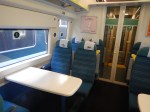
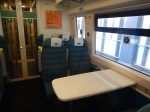
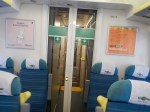
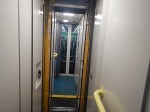
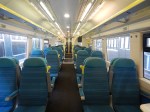
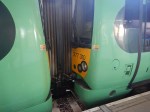
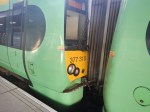
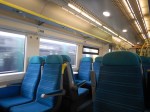
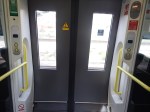
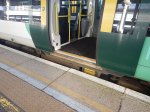
I will split my observations into various sections.
First Class
There is a small First Class section.
Is this really needed in a three-car train, considering that some franchises are going for one-class trains?
Gangways
On the Uckfield Branch and the Marshlink Line, I suspect that trains will work in multiple formations, so the gangway will be useful to allow passengers to pass between individual trains.
Interior
The interior is reasonably modern, as the trains were originally built in 2001-2002 and they meet all of the persons of reduced mobility legislation.
Multiple Working
The train I rode on consisted of three Class 377 Trains working together, so it would appear that six, nine and twelve car trains may be possible.
Tables And Cup-Holders
I would prefer full-size tables and perhaps these could be fitted, during the conversion, like they are in some Class 377 trains.
If not tables, then how about some cup-holders?
Universal Access Toilet
A universal-access toilet is fitted in the middle car.
Wi-Fi
Wi-fi appears to be fitted.
25 KVAC Operation
Although the trains are currently configured for operation on 750 VDC trird-rail electrification, these trains can be converted to run on 25 KVAC overhead electrification.
This would obviously mean that if the trains were no longer needed in Sussex, they could run anywhere else, where there is electrification.
Conclusion
They are a well-equipped train.
It would appear that very little will need to be done to the interior of the train in the conversion.
First may be downgraded to standard and I would fit full tables.
The operator would do what they wanted.
Wi-fi On A Train In A Deep Tunnel Under London
I’ve just been using wi-fi on a Class 717 train between Essex Road and Moorgate stations.
Is this the first railway line deep underneath the surface of London to have wi-fi installed?
I shall be interested to see, if I use the line more, as an alternative way to get to Moorgate from my house.
Wi-Fi And Power Sockets On A Class 717 Train
In A First Ride In A Class 717 Train, I didn’t take any pictures of the power sockets, as I didn’t see them.
This picture from a second trip, rectified the error.

There is one 13 amp socket under a pair of seats and you will need a plug.
It is my belief that a USB socket is better, as this armrest installation on a Class 230 train shows.
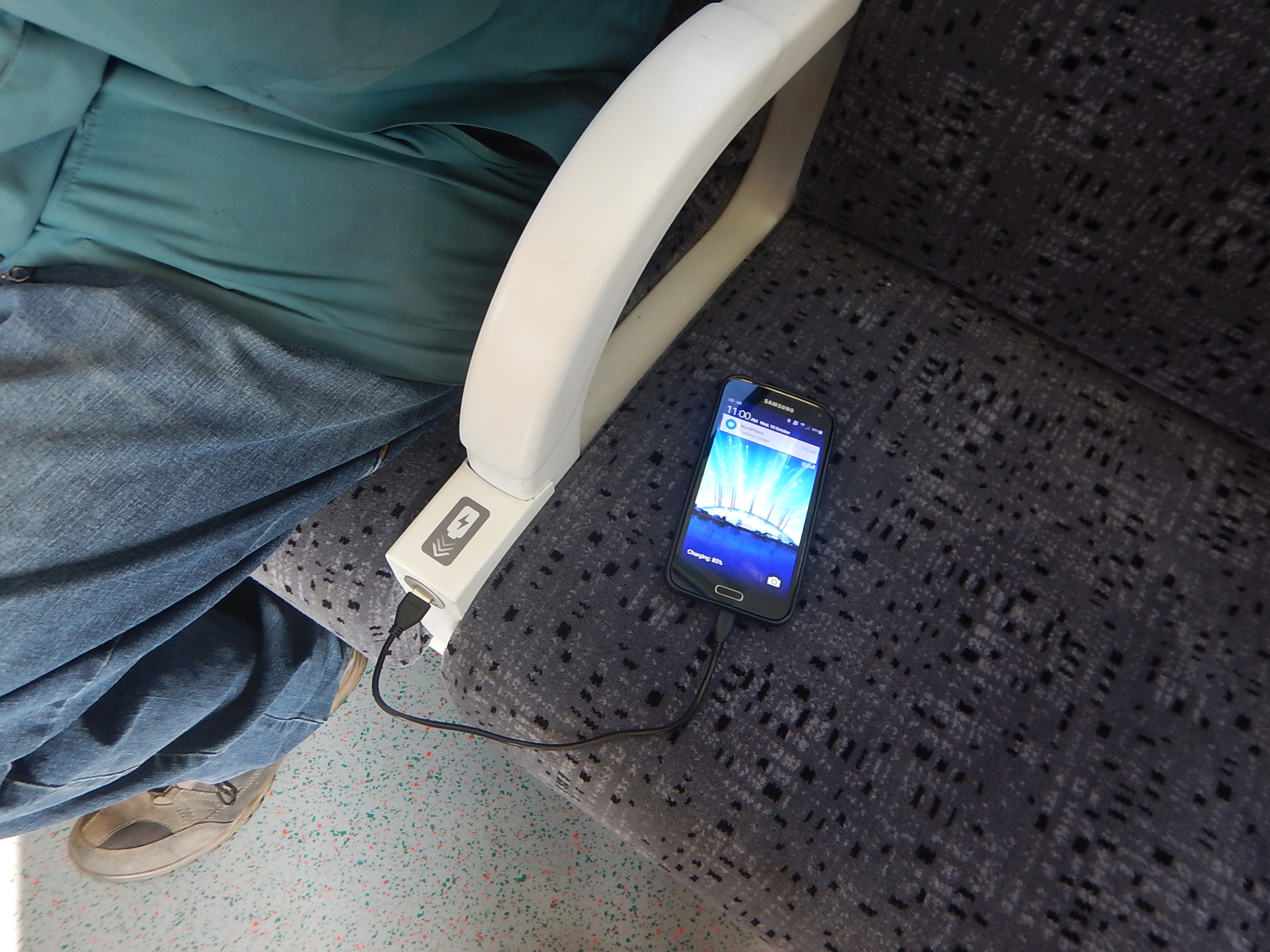
It is certainly a better place, as the wires can be short and can be kept out of the way.
The wi-fi performed well, but Great Northern seemed to want me to register. I never do, as it just gives them an excuse to send you junk mail.
Conclusion
The wi-fi installation can be improved.
It has to, as according to this article on Rail Magazine, Class 710 trains have USB sockets.
My ideal train would have.
- Free wi-fi with no registration.
- USB sockets in the armrests.
- 4G booster, so if the train has a signal, you do.
The current systems can be greatly improved.
Why Do UK Train Operating Companies Dislike Siemens Trains?
This post was suggested by this article on Global Rail News, which is entitled TransPennine Express Class 397 Fleet Taking Shape.
The following sections describe how the various train companies are replacing their trains built by Siemens.
TransPennine Express
TransPennine Express (TPE) currently have two fleets of Siemens trains; Class 350 and Class 185 trains.
Class 350 trains
TPE currently has a fleet of ten four-car Class 350 trains, which were built by Siemens and are used on electrified services between Manchester Airport and Scotland. They are being replaced by twelve five-car Class 397 trains.
The comparison between the two trains gives clues as to why the fleet is being replaced.
- The Class 397 trains are 125 mph capable, which means they can mix it with the Virgin’s Class 390 Pendelinos of a similar performance.
- The Class 350 trains are only capable of 110 mph.
- The fleet needed to be increased in number to handle services between Liverpool and Scotland.
- The five-car Class 397 trains fit the capacity needed for the Scottish routes better than the four-car Class 350 trains.
- The Class 350 trains don’t have wi-fi/4G and power-points to the current standard on some of the latest trains, like the Aventra.
I’ve not ridden in these trains, so I can’t comment on their quality.
I suspect it’s that the Class 397 trains have the 125 mph capability and adding another 110 mph train from Liverpool to Scotland would be too much for the West Coast Main Line to handle.
If you look at the current scheduled times of Virgin and TPE between Wigan North Western and Glasgow and Scotland, you get the following.
- Virgin – Wigan North Western to Glasgow – 2 hours 31 minutes
- TPE – Wigan North Western to Glasgow – 2 hours 46 minutes
- Virgin – Wigan North Western to Edinburgh – 2 hours 39 minutes
- TPE – Wigan North Western to Edinburgh – 2 hours 53 minutes
So it looks like the new 125 mph trains could save around fifteen minutes on a journey between North West England and Scotland. In addition to the quicker journey time for passengers, it might mean that TPE can use their trains more efficiently.
Nothing has been said, but I suspect that the new Class 397 trains can couple and uncouple automatically, as the Class 395 trains do regularly.
This would allow TPE to run a service like this.
- Two five-car trains start independently from Liverpool and Manchester Airport.
- The trains would couple together at Wigan North Western or Preston.
- They would then run to Carstairs at 125 mph.
- The trains would then split.
- One train would go to Glasgow and the other would go to Edinburgh.
The Southbound service would reverse the process.
In the 1960s, I travelled from Glasgow to Manchester on a service like this. T remember, that I was very late into Manchester, as we were delayed at Carstairs by the late arrival of the train from Edinburgh.
It looks to me, that TPE have decided to replace their Class 350 trains, with a faster and more flexible fleet, that can be run according to passenger demand.
Class 185 Trains
TPE also have a fleet of fifty-one three-car Class 185 trains, that were built by Siemens in 2005-2006.
These trains were in some ways very badly-specified for the route and have some deficiencies.
- There are not enough of them and they suffer badly from overcrowding.
- They are 100 mph trains, which means they are inadequate on the West Coast and East Coast Main Lines.
- They lack wi-fi and power sockets.
- They are diesel trains, that sometimes work on electrified lines, like Liverpool to Manchester and Leeds to Newxastle.
It is no surprise that TPE have decided to replace twenty-two of the Class 185 trains with Class 68 locomotive-hauled Mark 5 coaches and Class 802 trains.
- This gives a twenty-seven percent increase in the number of carriages.
- The Class 802 trains are 125 mph capable, so will be very handy for Liverpool to Newcastle and in a few years time to Edinburgh.
- The coaches are also built to be capable of 125 mph, but they would need faster locomotives to run at that speed.
- The new fleet will have the wi-fi and power sockets that passengers require.
This new fleet will certainly be better suited to TPE’s needs.
Greater Anglia
Greater Anglia are replacing all their trains, including their fleet of twenty-one four-car Class 360 trains, that were built by Siemens in 2002-2003.
However, in the August 30th Edition of Rail Magazine, there is an article entitled Trio Of Class 360 Desiros Reach Norwich For GA Timing Test.
It appears that, as the fastest trains in Greater Anglia’s fleet, they are being tested in case the new Class 745 trains are not ready before January 1st, 2020, when the Mark 3 coaches have to be retired.
South Western Railway
South Western Railway have a mixed fleet, which includes a lot of trains built by Siemens.
Class 707 Trains
South Western Railway (SWR) are still taking deliveries from Siemens of a fleet of thirty five-car Class 707 trains, that they inherited from South West Trains.
However, they have decided to replace the trains and their Class 455 trains with new Aventras.
I think that the main reason for having a fleet of 100 mph suburban trains, is that they get lots of advantages when it comes to creating passenger-friendly timetables.
But there are other reasons.
- SWR have said that all their trains will have toilets. The Class 707 trains don’t.
- The new fleet contains a lot of ten-car trains, whereas the Class 707 trains are all five cars.
- If all the trains are identical, this must give advantages with respect to management of trains and staff.
It looks to me, that South West Trains choice of fleet wasn’t in tune with SWR’s philosophy.
The Return Of The Class 442 Trains
Surprisingly, SWR are bringing back thirty-year-old Class 442 trains for the London to Portsmouth routes.
SWR probably need more trains to augment their forty-five Class 444 trains and a hundred plus Class 450 trains, which were all built by Siemens around the turn of the millennium.
Refurbishing the Class 442 trains is probably more affordable than ordering more trains from Siemens.
They can also be fitted with wi-fi, which the Class 444 and Class 450 trains lack.
West Midlands Trains
West Midlands Trains will takeover from London Midland in December 2017.
Currently, London Midland operate seventy-seven four-car Class 350 trains, built by Siemens in 2004-2014.
West Midlands Trains have promised to introduce 225 new carriages on Euston services.
As these trains work on the West Coast Main Line will they be 125 mph units like the Class 397 trains, so they can mix it with the Pendelinos?
Whatever happens, it does seem that the 100-110 mph Class 350 trains without wi-fi, may be living on borrowed time.
Thameslink
Thameslink is now a rail line run exclusively by Class 700 trains, built by Siemens in the last few years.
The trains were ordered without wi-fi and passengers are often critical of the trains.
In my opinion, the trains are inferior to Crossrail’s Class 345 trains, which have both wi-fi and 4G connectivity.
Conclusions
When I travel in a train that Siemens have built for the UK network, I often feel disappointed and think that they could have done better.
Perhaps the exceptions are South Western Railway’s Class 444 and Class 450 trains, but they lack wi-fi. These trains were built some years ago before it had been invented.
Wi-Fi
The Department for Transport now insists that passengers get free wi-fi and Crossrail is throwing in 4G connectivity as well.
I’m not sure, if there’s a Siemens train in the UK with wi-fi.
But then most trains in Germany have very poor wi-fi in my experience.
Could the design of Siemens trains make fitting of wi-fi and UK-sized power sockets difficult?
Contracts
Most trains these days are leased on long-term contracts, which includes maintenance. Could this cause problems with updating trains?
With the old BR-era trains, there are several depots and factories where trains can be updated and Bombardier seem to update their old tranis regularly at Derby. So is Siemens unprepared to update its older trains on the UK network?
The Aventras Are Coming
The first Class 345 trains are appearing with a quiet and smooth ride, excellent performance and wi-fi and 4G connectivity.
Siemens will have to raise their game to compete.
 The Anonymous Widower