Berwick Bank Wind Farm Could Provide Multi-Billion Pound Boost To Scottish Economy And Generate Thousands Of Jobs
The title of this post, is the same as that of this press release from SSE.
This press release is all about numbers.
- 307 turbines
- 4.1 GW nameplate capacity
- 5 million homes will be powered
- 8 million tonnes of carbon dioxide avoided
- Up to £8.3 billion to the UK economy
- 4650 potential jobs in Scotland
- 9300 potential jobs in the UK
These are all large figures.
This map from SSE shows the location of the wind farm.
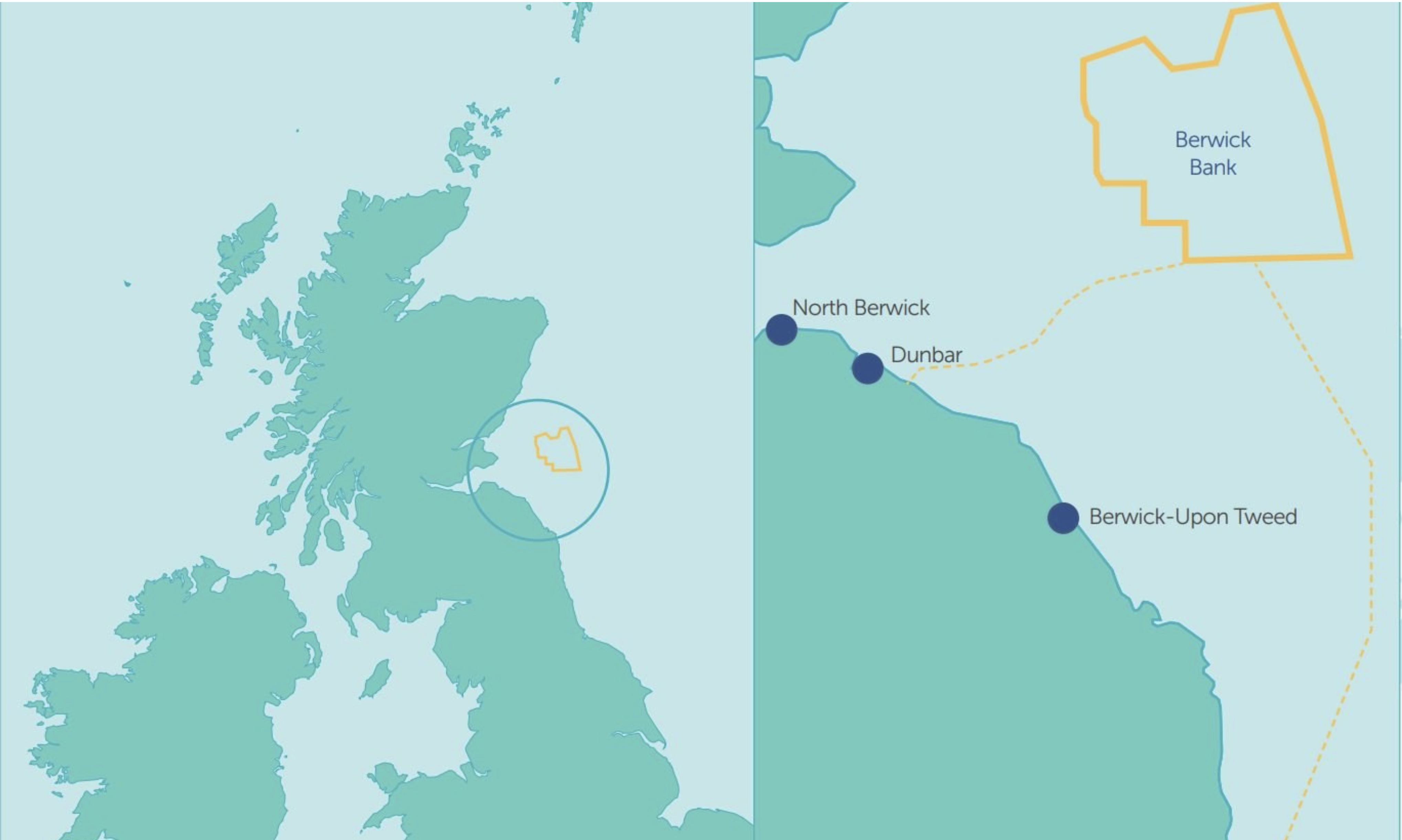
The press release says this about connections to the grid.
Berwick Bank has secured a grid connection at Branxton, near Torness, in East Lothian. A second grid connection will be required for the project, which has been determined as Blyth, Northumberland.
Note, that Torness is the site of Torness nuclear power station.
- It has a nameplate capacity of 1.29 GW.
- It is scheduled to be shutdown in 2028.
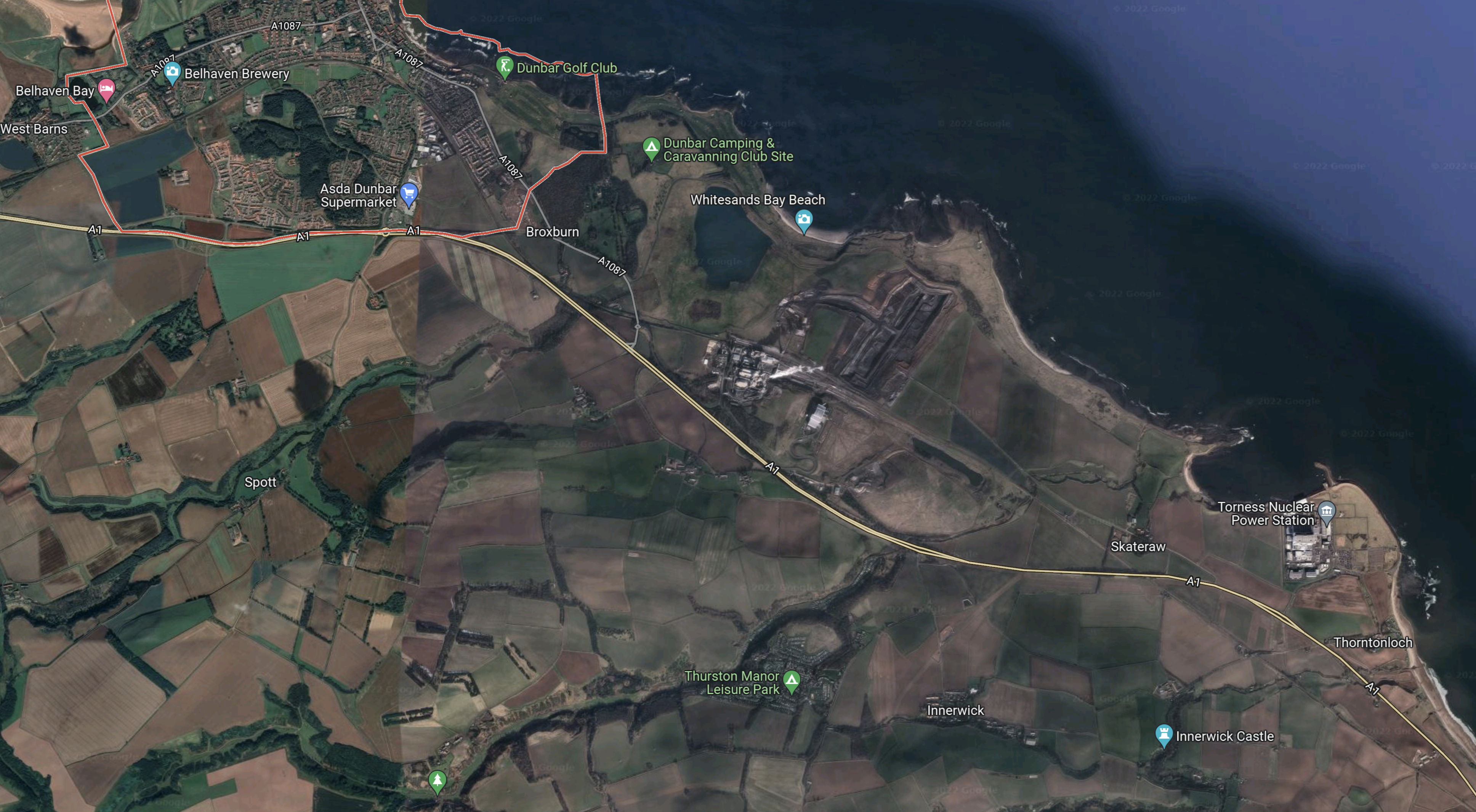
This Google Map shows the coast between Dunbar and Torness nuclear power station.
Note.
- The town of Dunbar is outlined in red.
- The yellow line running diagonally across the map is the A1 road.
- Torness nuclear power station is in the South-East corner of the map to the North of the A1.
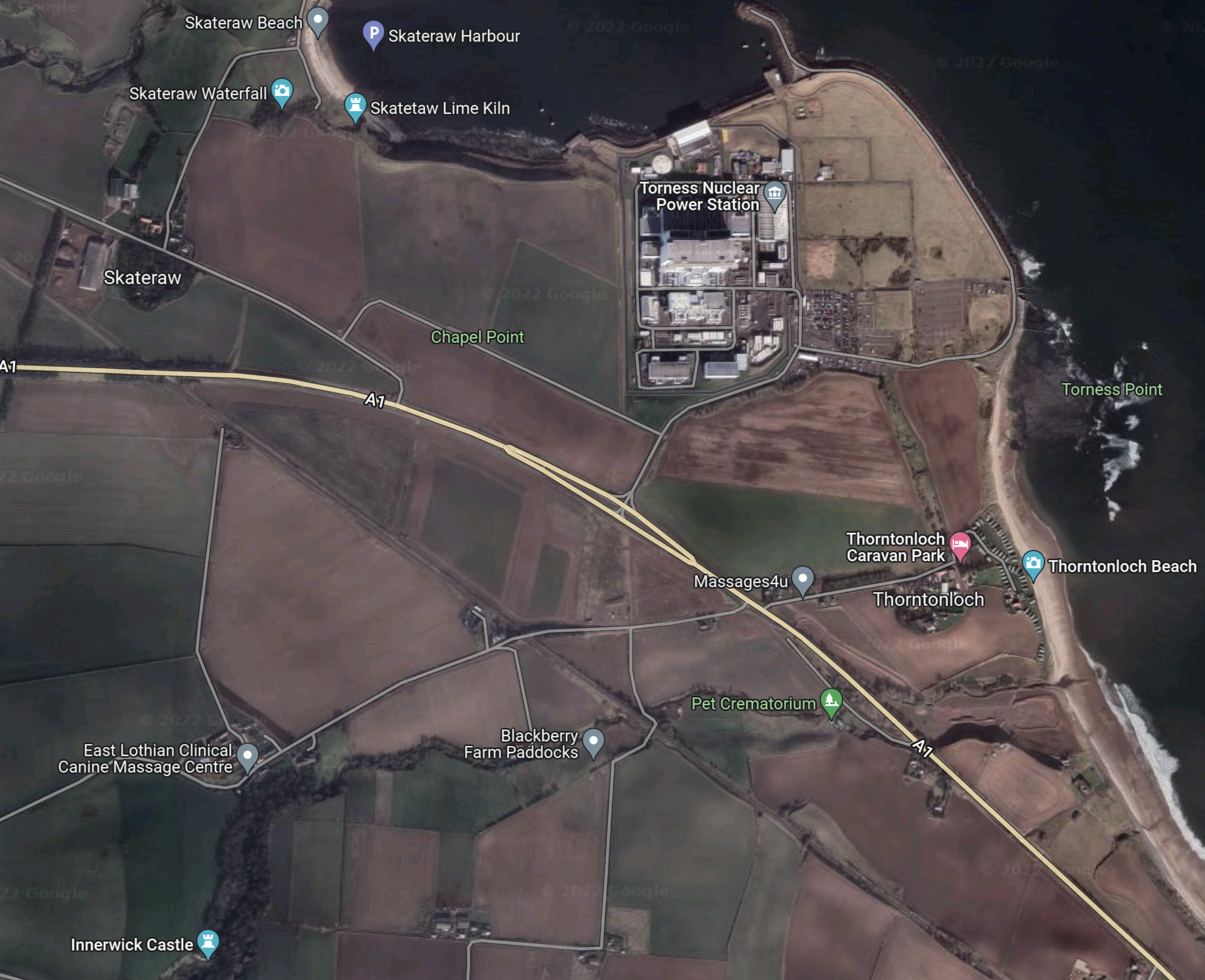
This second Google Map shoes an enlargement of the South-East corner of the map.
Note.
- Torness nuclear power station at the top of the map.
- The A1 road running across the map.
- The East Coast Main Line to the South of the A1.
- Innerwick Castle in the South-West corner of the map.
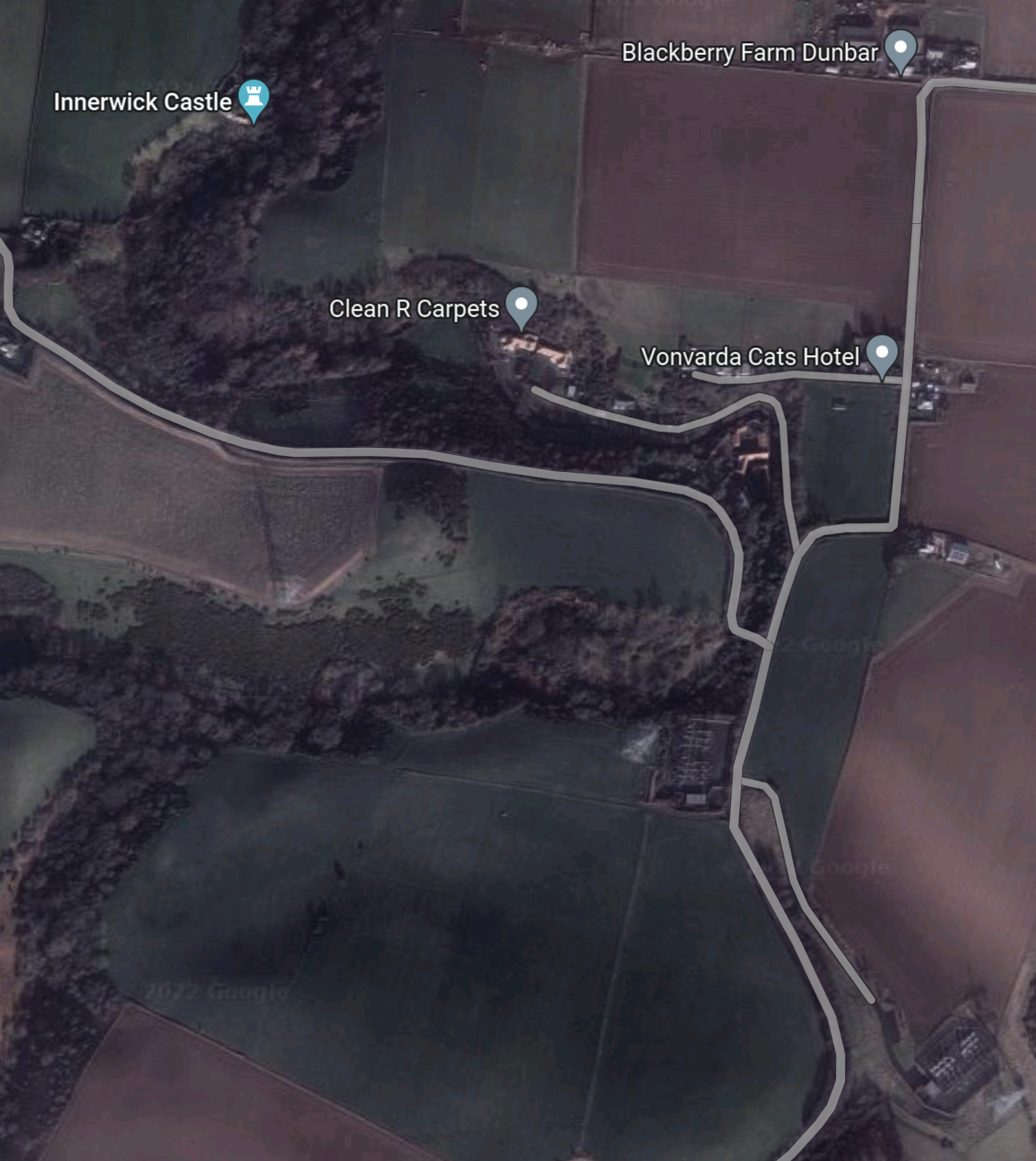
This Google Map shows the location of Branxton substation in relation to Innerwick Castle.
Note.
- Innerwick Castle is in the North-West corner of the map.
- Branxton substation is in the South-East corner of the map.
I estimate that the distance between Torness nuclear power station and Branxton substation is about five kilometres. The cable appears to be underground.
I have some thoughts.
Will The Connection Between Berwick Bank Wind Farm And Branxton Substation Be Underground?
If SSE follows the precedent of Torness nuclear power station, it will be underground.
Or will they use T-pylons?
This page on the National Grid web site is entitled What’s A T-Pylon And How Do We Build Them?.
From an engineering point of view, I suspect T-pylons could be used, but aesthetics and local preference may mean the cable is underground.
It should be noted that Torness nuclear power station will be shutdown in 2028. So will the current underground cable for the nuclear power station be repurposed after shutdown for the Berwick Bank wind farm?
This would mean, that the Southern connection cable to Blyth could be built first to support the first turbines erected in the wind farm.
When Will Berwick Bank Wind Farm Be Commissioned?
This page on the Berwick Bank wind farm web site is a briefing pack on the project.
The page gives construction and commission dates of 2026-2030.
Will There Be A Battery At Torness?
As we are talking about the latter half of the current decade for completion of the Berwick Bank wind farm, I believe that a substantial battery could be installed at Torness to smooth the output of the wind farm, when the wins isn’t blowing at full power.
One of Highview Power’s 2.5 GW/30 GWh CRYOBatteries could be about the right size if it has been successfully developed, but I am sure that other batteries will be of a suitable size.
If there is a case for a battery at Torness, there must surely be a case for a battery at Blyth.
Will Berwick Bank Wind Farm Be A Replacement For Torness Nuclear Power Station?
Consider.
- Torness nuclear power station is shutting down in 2028.
- Berwick Bank wind farm will be fully operational by 2030.
- Berwick Bank wind farm could use a repurposed connection to Branxton substation, if the nuclear power station no longer needs it.
- There is space on the Torness site for a large battery.
, it looks like Torness nuclear power station could be replaced by the larger wind farm.
Hornsea 2, The World’s Largest Windfarm, Enters Full Operation
The title of this post, is the same as that of this press release from Ørsted.
These are the first three paragraphs, which outline the project.
The 1.3GW project comprises 165 wind turbines, located 89km off the Yorkshire Coast, which will help power over 1.4 million UK homes with low-cost, clean and secure renewable energy. It is situated alongside its sister project Hornsea 1, which together can power 2.5 million homes and make a significant contribution to the UK Government’s ambition of having 50 GW offshore wind in operation by 2030.
The Hornsea Zone, an area of the North Sea covering more than 2,000 sq km, is also set to include Hornsea 3. The 2.8GW project is planned to follow Hornsea 2 having been awarded a contract for difference from the UK government earlier this year.
Hornsea 2 has played a key role in the ongoing development of a larger and sustainably competitive UK supply chain to support the next phase of the UK’s offshore wind success story. In the past five years alone, Ørsted has placed major contracts with nearly 200 UK suppliers with £4.5 billion invested to date and a further £8.6 billion expected to be invested over the next decade.
Note.
- Hornsea1 was the previous largest offshore wind farm.
- The first three Hornsea wind farms, could have a total output of over 5 GW.
- There is a possible Hornsea 4, that may be in the pipeline!
Will Hornsea 3 take the crown from Hornsea 2, when it is commissioned in 2027?
Prysmian Completes HVDC Submarine Cable Testing
The title of this post, is the same as that of this article on renews.biz.
The article has this sub-heading.
The ‘first’ 525kV extruded wire can increase maximum transmission capacity up to more than 2.5GW.
This paragraph gives the implications of this new maximum transmission capacity.
This will enable a massive increase of the maximum transmission capacity of bi-pole systems up to more than 2.5GW, which is more than double the value achieved with 320kV DC systems currently in service, Prysmian said.
As in the future we will have many more large offshore wind farms in the UK, this surely must mean that we will find connecting them up a lot easier.
Three Shetland ScotWind Projects Announced
The title of this post, is the same as that of this press release on Crown Estate Scotland.
These three paragraphs outline how the leases were allocated.
Three projects will be offered seabed agreements for offshore wind projects following Crown Estate Scotland’s ScotWind clearing process.
The announcement comes as an offshore wind supply chain summit is held in Aberdeen today (22 August) with Sir Ian Wood, chaired by Michael Matheson MSP, Cabinet Secretary for Energy, and including a keynote address by First Minister Nicola Sturgeon MSP.
Clearing saw the ‘NE1’ area east of Shetland made available for ScotWind applicants who met the required standards but who did not secure their chosen location earlier in the leasing process.
I think it was good idea to offer these leases to those bidders that failed to get a lease, the first time around, despite meeting the standards.
- Would it encourage bidders, if they knew that after the expense of setting up a bid, that if they failed, they could have another chance?
- It must also save the Scottish Government time and money checking out bidders.
- How many times have you interviewed several applicants for a job and then found jobs for some of those, that you didn’t choose for the original job?
Let’s hope the philosophy has generated some good extra contracts.
This map from Cross Estate Scotland shows all the contracts.

Note the three new leases numbered 18, 19 and 20 to the East of Shetland, in the North-East corner of the map.
Their details are as follows.
- 18 – Ocean Winds – 500 MW
- 19 – Mainstream Renewable Power – 1800 MW
- 20 – ESB Asset Development – 500 MW
Note.
All are floating wind farms.
- Ocean Winds is a Spanish renewable energy company that is developing the Moray West and Moray East wind farms.
- Mainstream Renewable Power appear to be a well-financed and ambitious company, 75 % owned by Aker.
- ESB Energy appear to be an experienced energy company owned by the Irish state, who operate several wind farms and Carrington gas-fired power station in the UK.
2.8 GW would appear to be a generous second helping.
Ocean Winds and Mainstream Renewable Power
This web page on the Ocean Winds web site, is entitled Ocean Winds Designated Preferred Bidder For Seabed Leases For 2.3 GW Of Floating Projects East Of Shetland, Scotland, contains several snippets of useful information.
- Crown Estate Scotland announced the result of ScotWind Leasing round clearing process, awarding Ocean Winds with two seabed leases for floating offshore wind projects: a 1.8 GW capacity site with partner Mainstream Renewable Power, and another 500 MW capacity site, east of the Shetland Islands.
- Ocean Winds’ international portfolio of projects now reaches 14.5 GW of gross capacity, including 6.1 GW in Scotland.
- Floating wind turbines for the two adjacent sites are confirmed, because of the water depth.
- The partners are committed to developing floating offshore wind on an industrial scale in Scotland, generating local jobs and opportunities in Scotland and the Shetland Islands.
- From the picture on the web page, it looks like WindFloat technology will be used.
- Ocean Winds developed the WindFloat Atlantic project.
Ocean Winds appear to want to go places.
The Shetland HVDC Connection
The Shetland HVDC Connection will connect Shetland to Scotland.
- It will be 160 miles long.
- It will have a capacity of 600 MW.
- It is estimated that it will cost more than £600 million.
- It will allow the 66MW Lerwick power station to close.
- It will be completed in 2024.
I have a feeling that all these numbers don’t add up to a sensible answer.
Consider.
- The three offshore wind farms can generate up to 2800 MW of green electricity.
- With a capacity factor of 50 %, an average of 1400 MW of electricity will be generated.
- The Viking onshore wind farm on Shetland could generate up to 450 MW.
- More wind farms are likely in and around Shetland.
- Lerwick power station can probably power most of the Shetland’s needs.
- Lerwick power station is likely to be closed soon.
- Sullum Voe Terminal has its own 100 MW gas-turbine power station.
- Load is balanced on Shetland by 3MWh of advanced lead-acid batteries.
- Lerwick has a district heating scheme.
If we assume that Shetland’s energy needs are of the order of a few hundred MW, it looks like at times the wind farms will be generating more electricity, than Shetland and the Shetland HVDC Connection can handle.
Various plans have suggested building electrolysers on Shetland to create hydrogen.
Conversion of excess electricity to hydrogen, would have the following advantages.
- The hydrogen could be used for local heavy transport and to replace diesel.
- Hydrogen could be used to fuel a gas turbine back-up power station, when needed.
- Hydrogen could be used for rocket fuel, if use of Shetland as a Spaceport for launching satellites takes off.
Any excess hydrogen could be exported to the rest of the UK or Europe.
First Power At Scotland’s Largest Offshore Wind Farm
The title of this post, is the same as that of this press release from Seagreen wind farm.
These two paragraphs summarize the project and its start-up.
TotalEnergies and its partner SSE Renewables, has announced first power generation from the Seagreen offshore wind farm, 27km off the coast of Angus in Scotland.
The first turbine of a total of 114, was commissioned in the early hours of Monday morning. The aim is for the 1075 MW farm to be fully operational in the first half of 2023. The £3bn Seagreen project will be Scotland’s largest offshore wind farm and the world’s deepest fixed bottom wind farm as it is being developed in up to water depths of 59 meters.
It looks like 1075 MW cost £3billion, so I suspect it’s reasonable to say that offshore fixed-foundation wind farms cost about £2.79billion per GW.
The press release also says this about yearly output.
When fully operational, the site will produce around 5 terawatt hours (TWh) of renewable electricity per year, enough to power the equivalent of 1.6 million households.
That looks like an expected capacity factor of 53.1 %.
Germany Has Potential For 82 GW Of Offshore Wind
The title of this post, is the same as that of this article on Renewables Now.
These are the two introductory paragraphs.
Germany has the potential to raise its offshore wind energy capacity to 81.6 GW which is above the federal government’s target of 70 GW by 2045, a study by research institute Fraunhofer IWES shows.
To exploit all the potential for wind energy in the North Sea and the Baltic Sea, Germany needs to devise a strategy for more efficient use of the available space and use new offshore wind power technologies in additional areas in a way that will not raise concerns and affect nature conservation.
This map shows the German parts of the North Sea and the Baltic Sea.
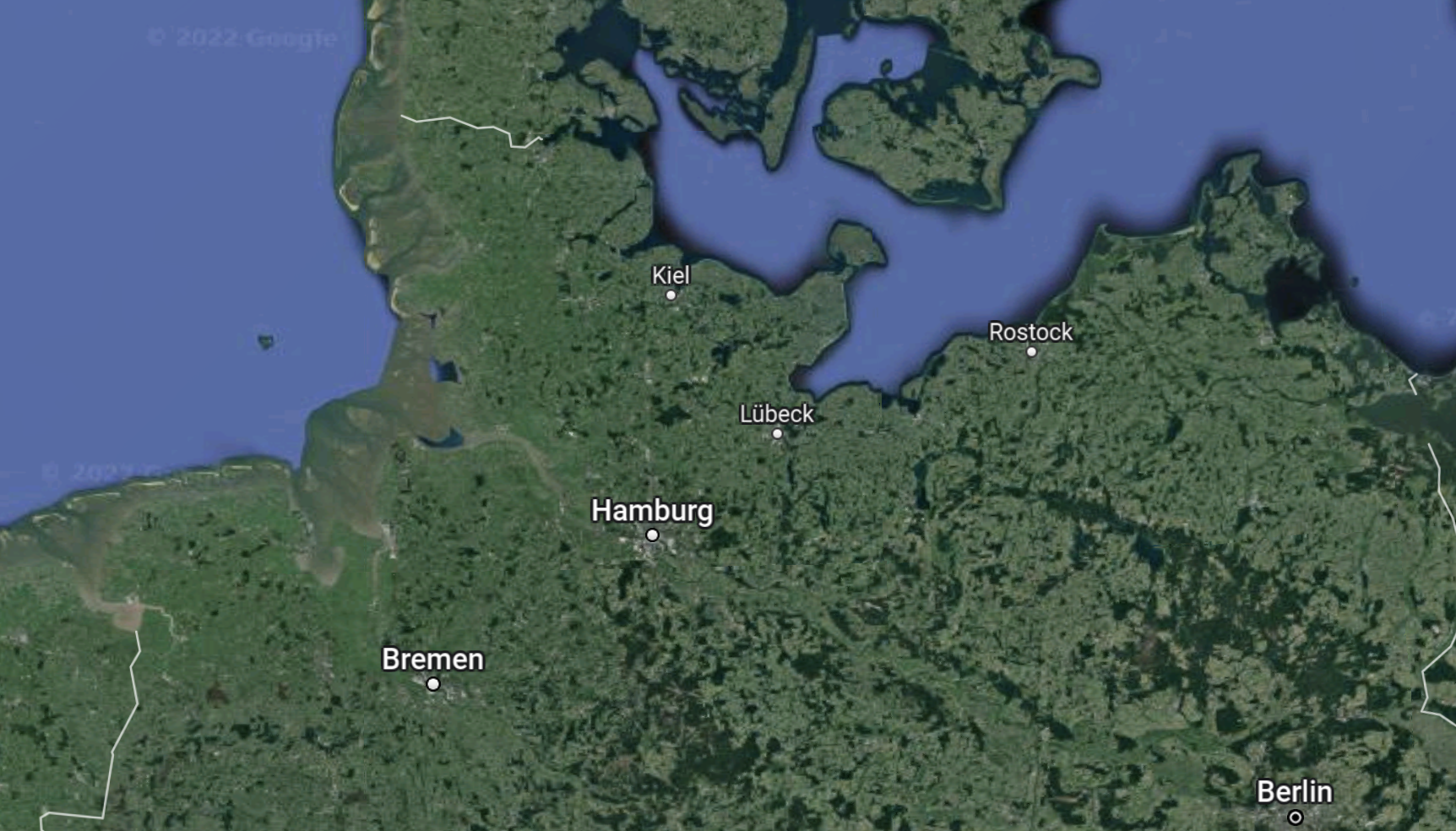
Note.
- White lines show the borders with The Netherlands, Denmark and Poland.
- Heligoland in the South-East corner of the North Sea. Could this island be used as a giant offshore substation?
- There are plenty of ports to service offshore developments.
- It looks like compared to the UK, a fair proportion of German offshore wind farms will be closer to the land.
Currently, Germany has 7.8 GW of offshore wind in operation, with around seventy percent of the turbines in the North Sea.
According to the Wikipedia entry called Wind Power In The UK, in 2019, the UK had installed 8.4 GW of offshore wind turbines, and there could be a potential to have a total of 120 GW in British waters.
With the Belgians, Danes, Dutch, Irish, Norwegians, Poles and Swedes joining this party, I can see the world’s largest wind power station being developed in the North and Baltic Seas.
Bord na Mona Planning Offaly Hydrogen Project As New Wind Farm Is Switched On
The title of this post, is the same as that of this article on OffalyLive.
The policy of the Bord na Mona is described in detail in the article.
This paragraph describes the green hydrogen development.
The development will be two megawatts and will comprise a hydrogen electrolysis plant containing an electrolyser, three high pressure hydrogen storage units, a generator, a substation and an underground cable connecting to a wind turbine 600 metres away.
Surely, this hydrogen will have the right to be marketed as genuine Irish green hydrogen!
For those of you, who are confused by the various colours of hydrogen, this page on the National Grid web site, which is entitled The Hydrogen Colour Spectrum gives a useful guide.
Note that there is no orange hydrogen defined as yet, but there is a yellow hydrogen defined like this.
Yellow hydrogen is a relatively new phrase for hydrogen made through electrolysis using solar power.
So it does look, that yellow hydrogen, which could be called orange hydrogen at a pinch, is as environmentally-friendly as green hydrogen.
Bombora Wraps Tank Trials Of Its Floating Hybrid Energy Platform
The title of this post, is the same as that of this article on offshoreWIND.biz.
This is the introductory paragraph.
Bombora Wave Power has completed tank testing of its floating foundation system suitable for the InSPIRE solution, which combines the mWave wave energy technology with a wind turbine onto a single floating offshore platform.
This second paragraph gives details of the power output of the hybrid energy platform.
The tank testing program at FloWave follows the pre-FEED phase of the InSPIRE project completed earlier in 2022, based on the integration of a 4MW mWave solution with a 10MW wind turbine on a single semi-submersible floating foundation system.
4 MW seems a worthwhile increase in power, that can probably be handled by the existing cables and substations.
UK CfD Round 4 Offshore Wind Projects Power Forward
The title of this post, is the same as that of this article on offshoreWIND.biz.
These are the first two paragraphs.
All 99 contracts offered through the fourth Allocation Round (AR4) of the UK government’s Contracts for Difference (CfD) scheme have now been signed and returned to Low Carbon Contracts Company (LCCC).
A total of 93 individual projects across Britain will now proceed to work with LCCC to meet the contractual milestones specified in the CfD, supporting projects’ development and the delivery of almost 11 GW of clean energy. The first AR4 projects are due to come online in 2023-24.
It does look like it’s a case of all systems go!
In Will We Run Out Of Power This Winter?, I estimated that these Round 4 projects would come onstream as follows.
- 2024 – Round 4 Solar – 125.7 MW
- 2025 – Round 4 Solar – 1958 MW
- 2025 – Round 4 Onshore Wind – 888 MW
- 2025 – Round 4 Energy from Waste – 30 MW
- 2026 – Round 4 Tidal Stream – 5.62 MW
- 2027 – Round 4 Tidal Stream – 35.2 MW
- 2027 – Round 4 Floating Offshore Wind – 32 MW
- 2027 – Round 4 Offshore Wind – 6994 MW
These are totals for the next four years from these contracts.
- 2024 – 125.7 MW
- 2025 – 2876 MW
- 2026 – 5.62 MW
- 2027 – 7061.2 MW
This is a total of over 10 GW.
Is The Morocco-UK Power Project Just A Taste Of The Future?
After writing WSP Lends Hand On Morocco-UK Power Link, about WSP’s involvement in the ambitious project to create a 3.6 GW interconnector to bring power from Morocco to the UK, I’m now certain, that this major project will come to fruition.
Out of curiosity, I created this Google Map of North-West Africa.
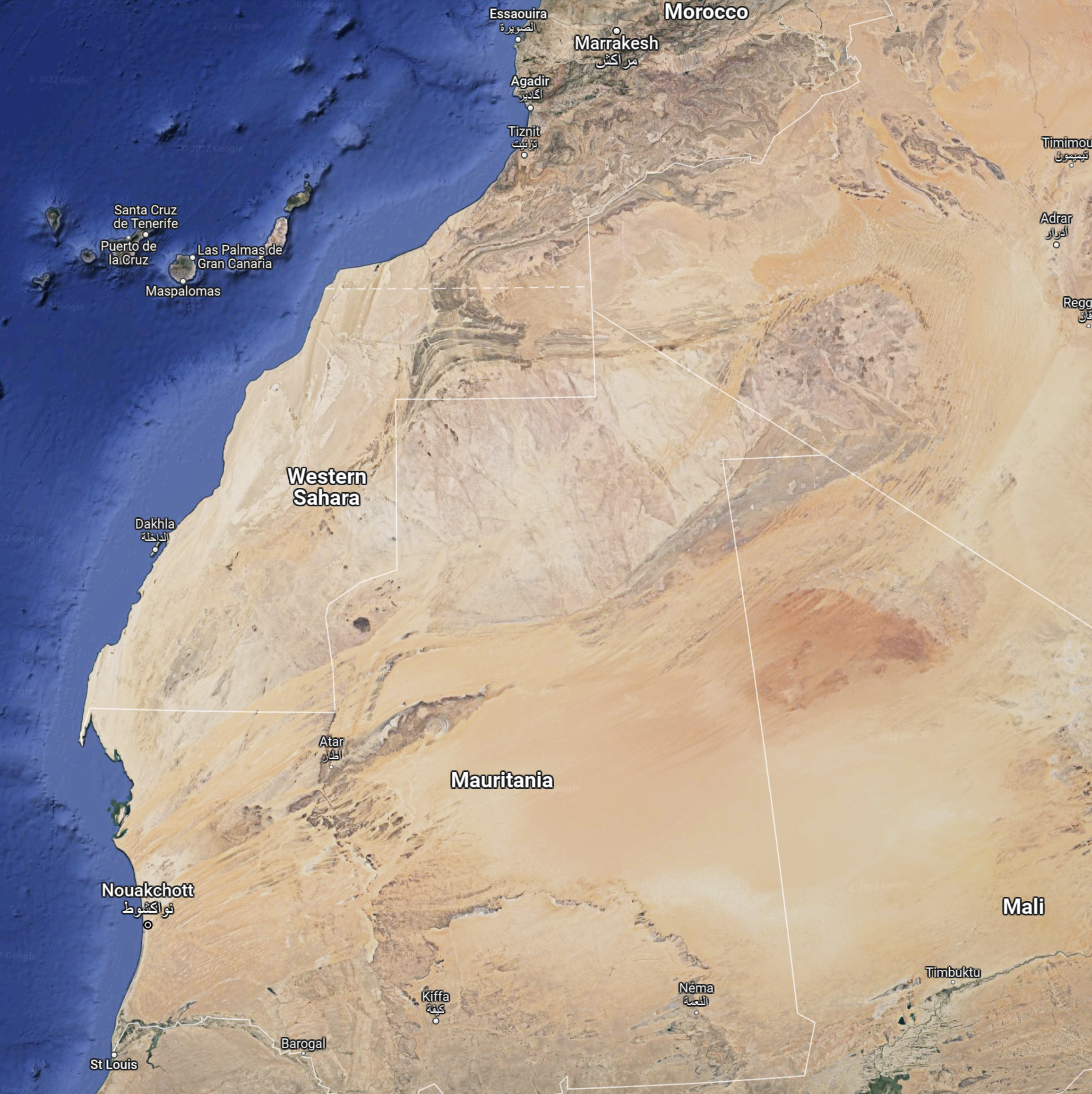
Note.
- Morocco is at the North edge of the map.
- The map is filled with the Sahara Desert.
- The Caqnary Islands are off the coast of Africa.
- Three of the least developed countries in the world; Western Sahara, Mauritania and Mali, circle the desert to the South-West and South.
I do wonder if the Morocco-UK Power Project is a success, if other developers and countries will decide to developer their renewable energy resources.
- France, Portugal and Spain may want to get involved.
- High-Temperature Electrolysis boosted by solar energy, could be used to generate hydrogen for shipment to Europe.
- The interconnectors to Europe will be upgraded.
Given the size of the desert, I’m sure that several GW of electricity could be delivered to Europe.
 The Anonymous Widower