Ørsted Completes 50% Stake Sale In Hornsea 2 To French Team
The title of this post, is the same as that of this article on Renewables Now.
This sale was outlined in this press release from Ørsted in March, where this is the first paragraph.
Ørsted has signed an agreement to divest a 50 % ownership stake in its 1.3 GW Hornsea 2 Offshore Wind Farm in the UK to a consortium comprising AXA IM Alts, acting on behalf of clients, and Crédit Agricole Assurances.
Insurance companies must like wind power, as Aviva backed Hornsea 1 wind farm. I wrote about this in World’s Largest Wind Farm Attracts Huge Backing From Insurance Giant.
It looks like the French feel the same way as Aviva about Ørsted’s Hornsea wind farms.
There is no safer mattress in which to stash your cash.
Accelerating The Delivery Of Offshore Wind Farms
It is one of Kwasi Kwarteng’s ambitions to accelerate the delivery of offshore wind farms.
In The Growth Plan 2022, these groups of wind farms are mentioned.
- Remaining Round 3 Projects
- Round 4 Projects
- Extension Projects
- Scotwind Projects
- INTOG Projects
- Floating Wind Commercialisation Projects
- Celtic Sea Projects
My thinking in this post, will probably apply to all of these groups.
These are my thoughts.
Accelerating Delivery Of A Wind Farm
This will have these positive effects.
- Electricity will be delivered earlier.
- Customers will have a more secure supply of electricity.
- The wind farm owner will start to be paid for their electricity.
- The Crown Estate will start to be paid for their leases. Although, these might start at signing.
- National Grid will be paid for the transmission of the electricity.
- An energy storage company could be paid for storing surplus electricity.
- Construction teams and engineers can move on to the next project.
- Expensive construction hardware like ship-mounted cranes will no longer be needed.
- I also suspect that the government will raise some taxes from the various companies involved.
It looks like it’ll be winners all round.
How Will Delivery Be Accelerated?
These are some thoughts.
Overall Project Time
In How Long Does It Take To Build An Offshore Wind Farm?, I came to these conclusions.
- It will take six years or less from planning consent to commissioning.
- It will take two years or less from the start of construction to commissioning.
I suspect that as we have been building offshore wind farms for some years, that it will be very difficult to reduce these times significantly.
But as some wind farms take quite a few years to progress from the initial proposal to planning consent, I suspect that improvements to the planning process may speed up the overall construction time of a wind farm.
Project And Resource Management
Good project and resource management will always help.
Better Design And Construction Methods
I always remember in the early days of North Sea Oil, being told by a very experienced project manager that construction of production platforms was accelerated by the availability of larger and more powerful cranes.
Are we approaching the design of the ultimate wind farm? I doubt it, as in the last few months, I’ve seen two very radical new designs.
In Hexicon Wins UK’s First Ever CfD Auction For Floating Offshore Wind, I show this image of one of their TwinHub turbine installations being towed into place.
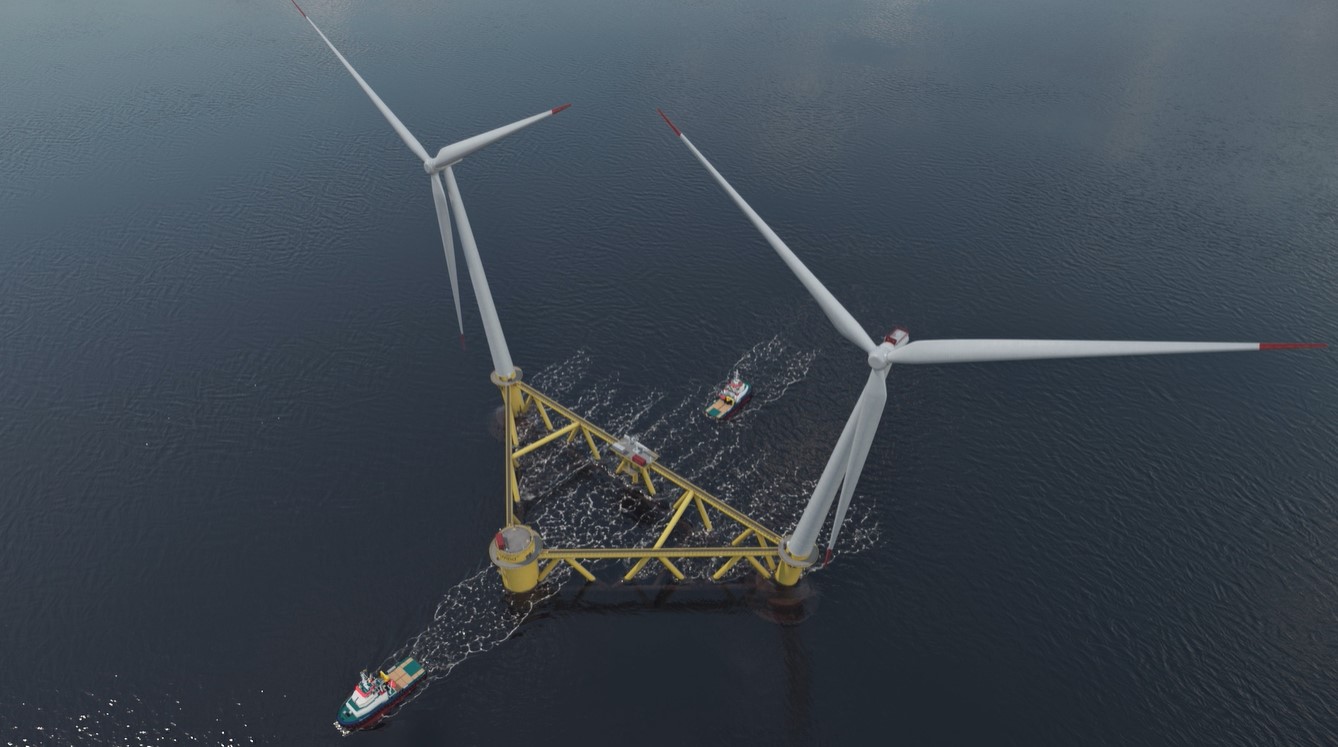
The TwinHub home page has a title of The First Floating Offshore Wind Project in The Celtic Sea.
This is the description on the page.
The TwinHub offshore wind demonstration project intends to prove how Hexicon’s innovative design with two turbines on one floating foundation can further reduce the Levelized Cost of Energy (also referred to as LCoE) before large scale commercialisation. The TwinHub project is a stepping stone to help kick-start floating wind in the Celtic Sea, an area identified as a hotspot for floating wind by the UK Government. It will pave the path for larger and larger projects to help support The Crown Estates’ ambitious target of 4GW of floating wind in the Celtic Sea.
Scroll the page down and there is a fascinating short video of a pair of wind turbines in operation.
- It appears that when there is no wind, it automatically goes into a safe parked mode.
- As the wind rises, one turbine starts up.
- The second turbine starts up and the float turns so they face the wind.
It appears to be a classic example of disruptive innovation.
I have a feeling that this type of installation might have generation, assembly and cost advantages over a single turbine mounted on a single float.
RCAM Technologies are also creating interesting designs for mounting turbines and energy storage using 3D-printed concrete.
What Ts The UK Government Doing To Accelerate Projects?
This article on offshoreWIND.biz, was published in late September 2022 and is entitled BREAKING: UK Puts Massive Amount Of New Offshore Wind Capacity On Fast Track and this is the first paragraph.
The UK will speed up planning and development consent processes for projects from the recently completed, currently ongoing, and upcoming (floating) offshore wind leasing rounds to bring new energy capacity online faster and facilitate economic growth and job creation.
The article is based on what Kwasi Kwateng said on the 23rd of September about speeding up projects in the 2022 Growth Plan.
A Quick Summary Of Our Wind Energy
The article has this paragraph, which summarises our wind energy.
For the UK, which currently has around 14 GW of offshore wind capacity in operation and 8 GW under construction, the projects from the listed auction rounds could bring well beyond the targeted capacity for 2030, which was recently raised to 50 GW.
I can see the target being raised again to at least 60 GW.
An Update To Will We Run Out Of Power This Winter?
My Methods
Project Timescales For Wind Farms
In How Long Does It Take To Build An Offshore Wind Farm?, I came to these conclusions.
- It will take six years or less from planning consent to commissioning.
- It will take two years or less from the start of construction to commissioning.
I shall use these timescales, as any accelerations by the government, will only reduce them.
Dates
If a date is something like 2024/25, I will use the latest date. i.e. 2025 in this example.
The Update
In Will We Run Out Of Power This Winter?, which I wrote in July this year, I did a calculation of how much renewable energy would come on stream in the next few years.
I summarised the amount of new renewable energy coming on stream like this.
- 2022 – 3200 MW
- 2023 – 1500 MW
- 3024 – 2400 MW
- 2025 – 6576 MW
- 2026 – 1705 MW
- 2027 – 7061 GW
This totals to 22442 MW.
But I had made two omissions.
- Hornsea 3 wind farm will add 2582 MW in 2026/27.
- Hinckley Point C nuclear power station will add 3260 MW in 2027.
Ørsted have also brought forward the completion date of the Sofia wind farm to 2023, which moves 1400 GW from 2024 to 2023.
The new renewables summary figures have now changed to.
- 2022 – 3200 MW
- 2023 – 2925 MW
- 3024 – 1326 MW
- 2025 – 6576 MW
- 2026 – 1705 MW
- 2027 – 13173 MW
This totals to 28554 MW.
Note.
- The early delivery of the Sofia wind farm has increased the amount of wind farms coming onstream next year, which will help the Winter of 2023/2024.
- It will also help the Liz Truss/Kwasi Kwarteng government at the next election, that should take place in early 2025.
- Hornsea 3 and Hinckley Point C make 2027 a big year for new renewable energy commissioning.
By 2027, we have more than doubled our renewable energy generation.
The Growth Plan 2022
In this document from the Treasury, the following groups of wind farms are listed for acceleration.
- Remaining Round 3 Projects
- Round 4 Projects
- Extension Projects
- Scotwind Projects
- INTOG Projects
- Floating Wind Commercialisation Projects
- Celtic Sea Projects
I will look at each in turn.
Remaining Round 3 Projects
In this group are the the 1200 MW Dogger Bank B and Dogger Bank C wind farms, which are due for commissioning in 2024/25.
Suppose that as with the Sofia wind farm in the same area, they were to be able to be brought forward by a year.
The new renewables summary figures would change to.
- 2022 – 3200 MW
- 2023 – 2925 MW
- 3024 – 3726 MW
- 2025 – 5076 MW
- 2026 – 1705 MW
- 2027 – 13173 MW
This totals to 28554 MW.
It looks like if Dogger Bank B and Dogger Bank C can be accelerated by a year, it has four effects.
- The renewables come onstream at a more constant rate.
- SSE and Equinor, who are developing the Dogger Bank wind farms start to get paid earlier.
- The UK gets more electricity earlier, which helps bridge the gap until Hornsea 3 and Hinckley Point C come onstream in 2027.
- The UK Government gets taxes and lease fees from the Dogger Bank wind farms at an earlier date.
Accelerating the remaining Round 3 projects would appear to be a good idea.
Round 4 Projects
According to Wikipedia’s list of proposed wind farms, there are six Round 4 wind farms, which total up to 7026 MW.
Accelerating these projects, is probably a matter of improved government regulations and pressure, and good project management.
But all time savings in delivering the wind farms benefits everybody all round.
This document from the Department of Business, Industry and Industrial Strategy lists all the Contracts for Difference Allocation Round 4 results for the supply of zero-carbon electricity.
Many of these projects are smaller projects and I suspect quite a few are shovel ready.
But as with the big wind farms, there are some projects that can be brought forward to everybody’s benefit.
Norfolk Boreas
Norfolk Boreas wind farm is one of the Round 4 projects.
The wind farm is shown as 1400 MW on Wikipedia.
On the web site, it now says construction will start in 2023, which could mean a completion by 2025, as these projects seem to take about two years from first construction to commissioning, as I showed in How Long Does It Take To Build An Offshore Wind Farm?.
The new renewables summary figures would change to.
- 2022 – 3200 MW
- 2023 – 2925 MW
- 3024 – 3726 MW
- 2025 – 6476 MW
- 2026 – 1705 MW
- 2027 – 11773 MW
This still totals to 28554 MW.
This acceleration of a large field would be beneficial, as the 2025 figure has increased substantially.
I would suspect that Vattenfall are looking hard to accelerate their Norfolk projects.
Extension Projects
I first talked about extension projects in Offshore Wind Extension Projects 2017.
The target was to add 2.85 GW of offshore wind and in the end seven projects were authorised.
- Sheringham Shoal offshore wind farm – 719 MW with Dudgeon
- Dudgeon offshore wind farm – 719 MW with Sheringham Shoal
- Greater Gabbard offshore wind farm
- Galloper offshore wind farm
- Rampion offshore wind farm – 1200 MW
- Gwynt y Môr offshore wind farm – 1100 MW
- Thanet offshore wind farm – 340 MW
These are the best figures I have and they add up to an interim total of 3359 MW.
I suspect that these projects could be easy to accelerate, as the developers have probably been designing these extensions since 2017.
I think it is reasonable to assume that these seven wind farms will add at least 3000 MW, that can be commissioned by 2027.
The new renewables summary figures would change to.
- 2022 – 3200 MW
- 2023 – 2925 MW
- 3024 – 3726 MW
- 2025 – 6476 MW
- 2026 – 1705 MW
- 2027 – 14773 MW
This now totals to 31554 MW.
Accelerating the extension projects would be a good idea, especially, as they were awarded some years ago, so are probably well into the design phase.
ScotWind Projects
I first talked about ScotWind in ScotWind Offshore Wind Leasing Delivers Major Boost To Scotland’s Net Zero Aspirations.
It was planned to do the following.
- Generate 9.7 GW from six wind farms with fixed foundations.
- Generate 14.6 GW from ten floating wind farms.
But since then three more floating wind farms with a total capacity of 2800 MW have been added, as I wrote about in Three Shetland ScotWind Projects Announced.
I suspect that some of these projects are ripe for acceleration and some may well be generating useful electricity by 2030 or even earlier.
INTOG Projects
I wrote about INTOG in What Is INTOG?.
I can see the INTOG Projects contributing significantly to our fleet of offshore wind turbines.
I have already found a 6 GW/£30 billion project to decarbonise oil and gas rigs around our shores, which is proposed by Cerulean Winds and described on this web page.
If the other large INTOG projects are as good as this one, then we’ll be seeing some sensational engineering.
Floating Wind Commercialisation Projects
This page on the Carbon Trust website is entitled Floating Wind Joint Industry Programme (JIP).
They appear to be very much involved in projects like these.
The page has this description.
The Floating Wind Joint Industry Programme is a world leading collaborative research and development (R&D) initiative dedicated to overcoming technological challenges and advancing commercialisation of floating offshore wind.
This graphic shows the partners and advisors.
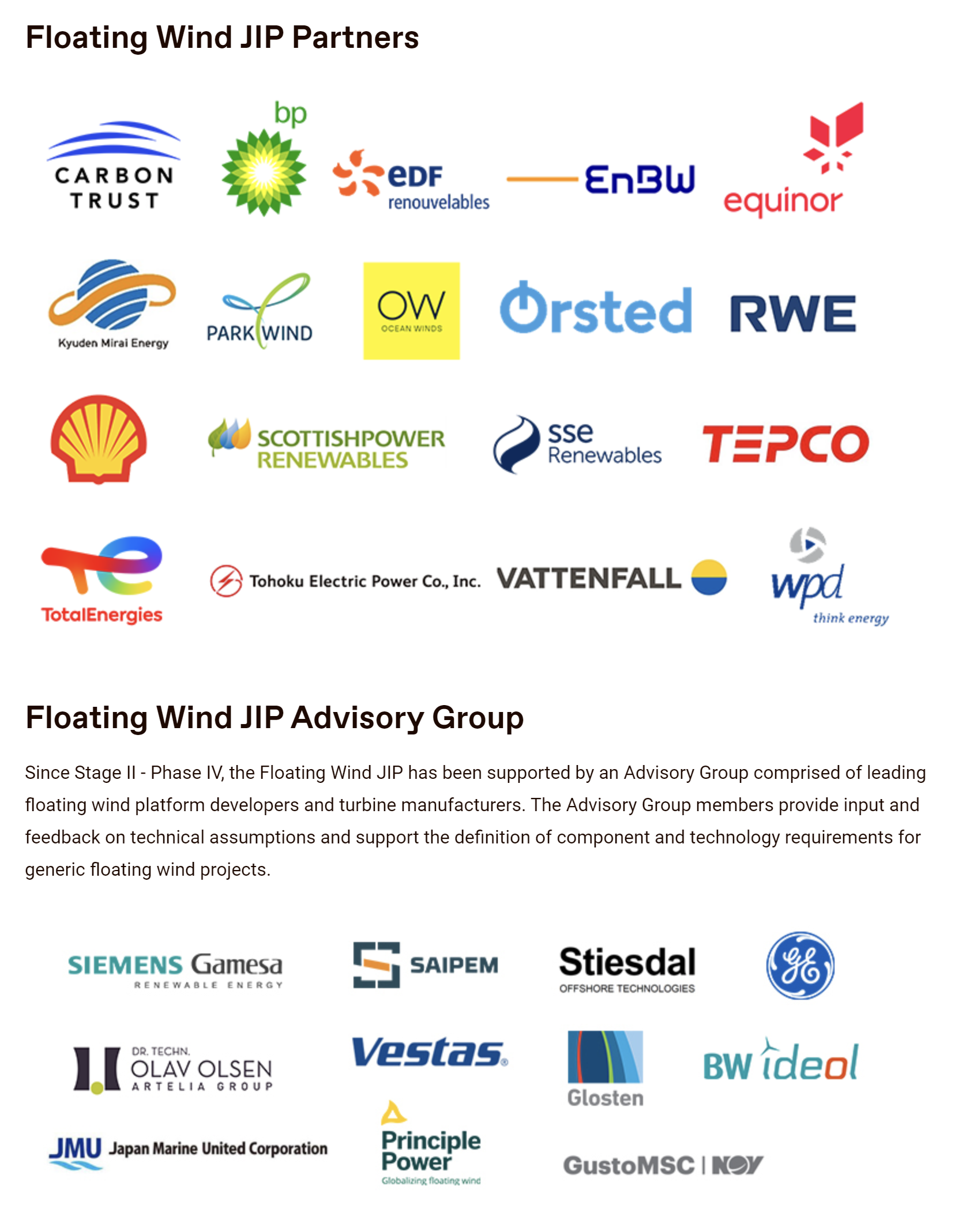
Most of the big wind farm builders and turbine and electrical gubbins manufacturers are represented.
Celtic Sea Projects
The Celtic Sea lies between South-East Ireland, Pembrokeshire and the Devon and Cornwall peninsular.
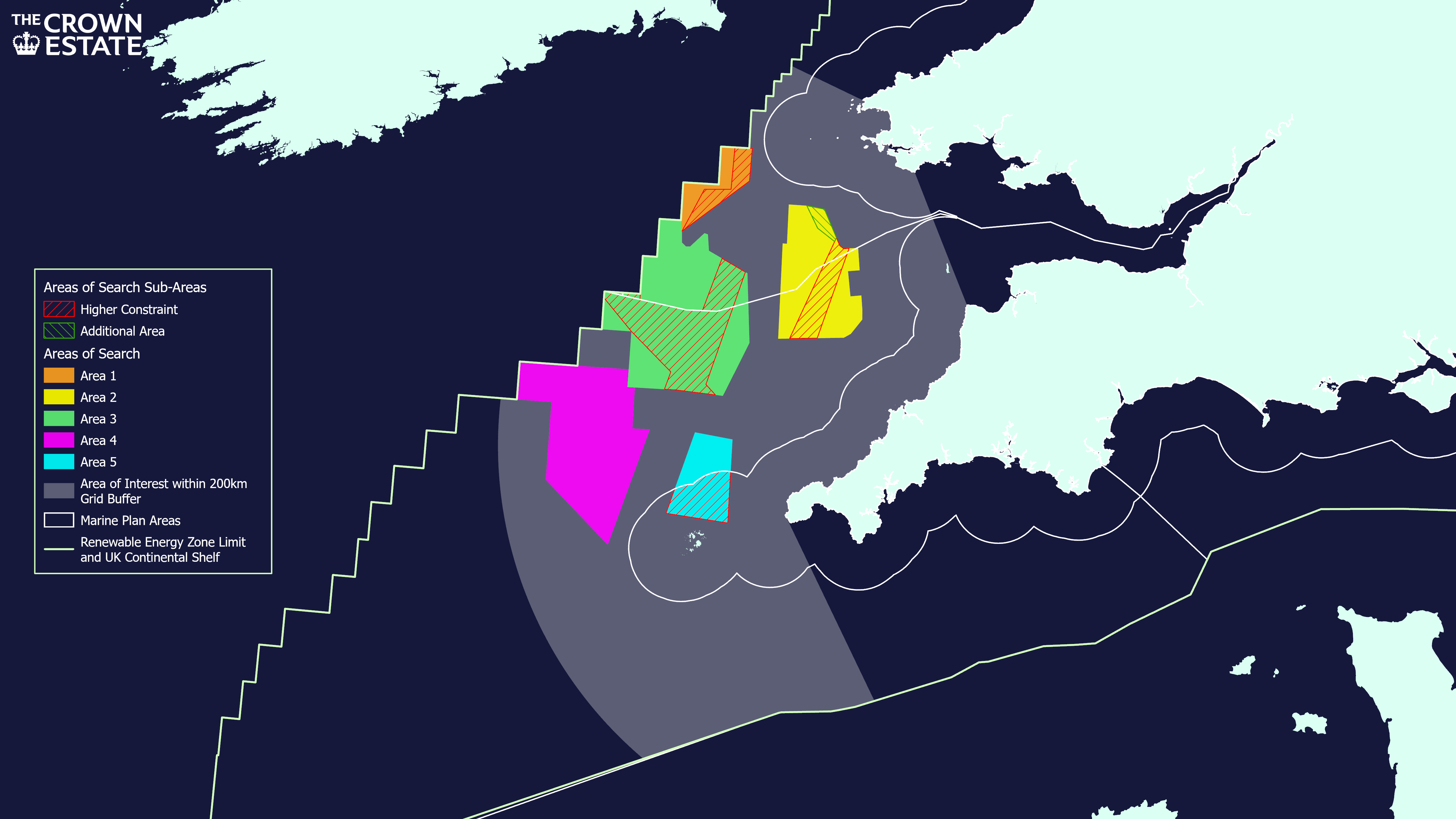
The Crown Estate kicked this off with press release in July 2022, that I wrote about in The Crown Estate Announces Areas Of Search To Support Growth Of Floating Wind In The Celtic Sea.
This map shows the five areas of search.
One Celtic Sea project has already been awarded a Contract for Difference in the Round 4 allocation, which I wrote about in Hexicon Wins UK’s First Ever CfD Auction For Floating Offshore Wind.
Other wind farms have already been proposed for the Celtic Sea.
In DP Energy And Offshore Wind Farms In Ireland, I said this.
They are also developing the Gwynt Glas offshore wind farm in the UK sector of the Celtic Sea.
- In January 2022, EDF Renewables and DP Energy announced a Joint Venture partnership to combine their knowledge and
expertise, in order to participate in the leasing round to secure seabed rights to develop up to 1GW of FLOW in the Celtic Sea. - The wind farm is located between Pembroke and Cornwall.
The addition of Gwynt Glas will increase the total of floating offshore wind in the UK section of the Celtic Sea.
- Blue Gem Wind – Erebus – 100 MW Demonstration project – 27 miles offshore
- Blue Gem Wind – Valorus – 300 MW Early-Commercial project – 31 miles offshore
- Falck Renewables and BlueFloat Energy – Petroc – 300 MW project – 37 miles offshore
- Falck Renewables and BlueFloat Energy – Llywelyn – 300 MW project – 40 miles offshore
- Llŷr Wind – 100 MW Project – 25 miles offshore
- Llŷr Wind – 100 MW Project – 25 miles offshore
- Gwynt Glas – 1000 MW Project – 50 miles offshore
This makes a total of 2.2 GW, with investors from several countries.
It does seem that the Celtic Sea is becoming the next area of offshore wind around the British Isles to be developed.
How do these wind farms fit in with the Crown Estate’s plans for the Celtic Sea?
I certainly, don’t think that the Crown Estate will be short of worthwhile proposals.
Conclusion
More and more wind farms keep rolling in.
Energy Dome To Partner With Ørsted For Energy Storage
The title of this post, is the same as that of this article on CleanTechnica.
This paragraph from the long article, gives details of the partnership.
I got a press release from Energy Dome this past week telling me that its technology has attracted interest from Ørsted, the Danish company that is a global leader in wind turbine technology. The two companies have signed a memorandum of understand that will allow them to explore the feasibility of deploying of a 20 MW/200 MWh Energy Dome facility at one or more Ørsted sites.
Is this the first deal between a major wind farm developer and a third-party non-lithium battery developer?
The article on CleanTechnica is very much a must-read and it goes into detail about the technology behind Energy Dome’s unique CO2 battery.
These are my thoughts.
Energy Dome Has A UK Office
Is this significant?
- The UK has a large need for energy storage than any other country in Europe, as we have lots of renewable energy generation, that could benefit.
- Most Italians speak good English.
- The UK government is prepared to develop innovative payment schemes for renewable energy.
- Their is a long history of Italians in the United Kingdom.
- Italians are distributed all over the UK.
- Some of the best Italian chefs are resident in the UK.
- The UK market is not biased against foreign customers.
I wouldn’t be surprised, if Energy Dome targeted the UK market.
Ørsted
Some facts about Ørsted.
- Ørsted are the largest energy company in Denmark.
- As of January 2022, the company is the world’s largest developer of offshore wind power by amount of built offshore wind farms.
- Ørsted own or have shares in fifteen offshore wind farms in the UK, which have a total capacity of 8731 MW.
- Ørsted have no interests in onshore wind in the UK.
- Ørsted divested itself of its last onshore wind farm in 2014.
The fact that Ørsted has partnered with Energy Dome is highly significant, as in my experience large powerful companies don’t partner with smaller start-ups without a lot of technical due diligence.
Use Of A 20 MW/200 MWh Energy Dome
I suspect that Ørsted will deploy their first 20 MW/200 MWh Energy Dome facility with onshore wind.
When you compare the 20 MW/200 MWh Energy Dome with the 1.5 GW/30 GWh Coire Glas pumped storage hydroelectric power station, it is only a fairly small storage system, in both terms of output and storage.
As an Electrical and Control Engineer, I suspect that will mainly be used with smaller offshore wind farms to smooth the output, rather than as serious stand-by power for a large GW-sized wind farm.
In the UK, Ørsted has three smaller wind farms, that could be suitable.
- Barrow – 90 MW
- Burbo Bank – 90 MW
- Gunfleet Sands 3 – 12W
Note.
- All are a few miles offshore.
- Gunfleet Sands 3 was built to test two l6 MW turbines.
- All the three wind farms are over twelve years old.
I think it is unlikely, that any of these three wind farms will be fitted with the Energy Dome.
I do believe though, that a 20 MW/200 MWh Energy Dome facility could work well with the Barrow wind farm, as it is a simple farm not connected to any others.
Offshore Wind Extension Projects 2017
Surely this is old news from five years ago.
This page on the Crown Estate web site, starts with this statement.
Extensions to operational wind farms have proven to be a successful way of efficiently developing more offshore generating capacity.
I can accept that as a sensible policy.
In Wikipedia’s list of UK offshore wind farms, there are three farms; Beatrice Extension, Burbo Bank Extension and Walney Extension with Extension in their name, producing 1.5 GW of electricity.
The page then explains what the Crown Estate did in 2017 and what has happened since.
In February 2017 The Crown Estate launched an opportunity for existing wind farms to apply for project extensions. This opportunity closed in May 2018, with eight project applications received, all of which met our specified application criteria.
Since then, The Crown Estate has undertaken a plan level Habitats Regulations Assessment (HRA), to assess the possible impact of the proposed windfarm extensions on relevant nature conservation sites of European importance. Throughout the assessment process, The Crown Estate was supported by expert independent advisors, and consulted with the statutory marine planning authorities, the statutory nature conservation bodies and a number of non-governmental stakeholders.
In August 2019, The Crown Estate announced the conclusion of the HRA, confirming that seven of the 2017 extension application projects, representing a total generating capacity of 2.85GW, would progress to the award of development rights.
Note.
- They did a lot of consulting.
- Seven projects, which total 2.85 GW or about 400 MW per extension have received development rights.
The projects are.
- Sheringham Shoal offshore wind farm – 719 MW with Dudgeon
- Dudgeon offshore wind farm – 719 MW with Sheringham Shoal
- Greater Gabbard offshore wind farm
- Galloper offshore wind farm
- Rampion offshore wind farm – 1200 MW
- Gwynt y Môr offshore wind farm – 1100 MW
- Thanet offshore wind farm – 340 MW
Note.
- Where I have a figure, it’s on the right.
- They already seem to have exceeded the Crown Estate’s figure.
- But then if they go large or accelerate the project, the developers will make more money. The upside of that is we get more electricity earlier.
These seven Extension projects are being accelerated by the Government in the 2022 Growth Plan.
Chancellor Confirms England Onshore Wind Planning Reform
The title of this post, is the same as that of this article on renews.biz.
These are the first two paragraphs.
UK Chancellor Kwasi Kwarteng has confirmed that onshore wind planning policy is to be brought in line with other infrastructure to allow it to be deployed more easily in England.
The announcement is the strongest sign yet that the Conservative Party could be poised to reverse its 2015 ban on new onshore wind farms being built in England.
I take a scientifically-correct view of onshore wind, in that I am sometimes against it, but on the other hand in certain locations, I would be very much in favour.
These pictures show Keadby Wind Farm in Lincolnshire.
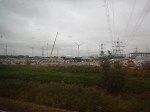
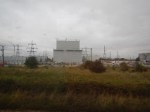
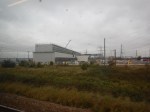
As the wind farm sits next to two gas-fired power stations and is surrounded by high voltage overhead electricity cables, this is probably a more acceptable location, than beside a picturesque village.
In this page on their web site, SSE says this about the construction of the 68 MW wind farm.
After receiving planning permission in 2008, construction began in 2012 and the first turbine foundation was complete in February 2013. The final turbine was assembled on 11 December 2013 and the project was completed in summer 2014.
If this is typical, and I think it is, it would take six years plus the time arguing about planning permission, to get a new onshore wind farm built.
But supposing, you are a farmer who wants to decarbonise. One way might be with a 10 MW wind turbine and a hydrogen electrolyser, so you had your own hydrogen source to power your tractors and other equipment.
On the other hand, solar panels on house, shed and barn roofs might be a more discrete alternative.
How Long Does It Take To Build An Offshore Wind Farm?
These are some timescales and costs for the construction of some wind farms.
East Anglia One
East Anglia One is a 714 MW offshore wind farm, which consists of 102 turbines on fixed foundations, in a maximum water depth of 53 metres.
- Planning consent – June 2014.
- Contracts – April 2016
- Offshore construction – June 2018
- Commissioned – July 2020
It is expected to cost £2.5 billion.
Hornsea One
Hornsea One is a 1200 MW offshore wind farm, which consists of 174 turbines on fixed foundations, in a maximum water depth of 30 metres.
- Planning consent – April 2014.
- Contracts – March/April 2016
- Offshore construction – January 2018
- Commissioned – March 2020
It is expected to cost £4.2 billion.
Hornsea Two
Hornsea Two is a 1400 MW offshore wind farm, which consists of 165 turbines on fixed foundations, in a maximum water depth of 30 metres.
- Planning consent – August 2016.
- Offshore construction – 2020
- Commissioned – August 2022
I can’t find any costs.
Moray East
Moray East is a 950 MW offshore wind farm, which consists of 100 turbines on fixed foundations, in a maximum water depth of 50 metres.
- Planning consent – 2014.
- Financial Close – December 2018
- Offshore construction – July 2020
- Commissioned – July 2022
It is expected to cost £2.6 billion.
Keadby Wind Farm
Keadby Wind Farm is a 68 MW onshore wind farm, which consists of 34 turbines.
SSE says this about its construction timescale.
After receiving planning permission in 2008, construction began in 2012 and the first turbine foundation was complete in February 2013. The final turbine was assembled on 11 December 2013 and the project was completed in summer 2014.
I can’t find any costs.
Can I Deduce Anything?
Two things are similar on the four fixed-foundation offshore wind farms.
Planning Consent To Commissioning Seems To Take About Six To Eight Years
Moray East took eight years and the other three took six.
In addition Keadby onshore wind farm took six years.
This indicates to me, that any improvements to the planning process for wind farms could shorten the planning process for many wind farms and allow offshore construction of these wind farms to start earlier.
The Start Of Offshore Construction To commissioning Seems To Take About Two Years
It surprised me that it takes twice as long to go from planning to the start of offshore construction, than to actually build and commission the offshore components of the project.
In addition Keadby onshore wind farm took two years.
How will these two observations affect floating wind farms, which could be more numerous in the future?
The home page of the Principle Power web site, shows a floating wind turbine being constructed and floated out.
- The turbine and its float are assembled in a deep water dock, using a large crane mounted on the dock.
- This dockside assembly must be less dependent on good weather, than doing assembly onto a fixed foundation forty miles or more out to sea.
I wouldn’t be surprised to find that floating wind farms may have substantial health and safety, and construction advantages, but I doubt they’d save much time on the current two years of offshore construction.
But I suspect, they would be one of these types of project that would only rarely be late.
Assembly And Project Management Issues
As with many types of construction, I suspect good project management will be key to building both fixed-foundation and floating offshore wind farms.
For fixed-foundation wind farms, a steady stream of turbines, foundations, substations and connecting cables would need to be delivered to a tight schedule to the assembly point offshore, where turbines, foundations, substations and connecting cables would be lifted into place by a crane mounted on a barge or ship.
For floating wind farms, a steady stream of turbines, floats and probably some connecting cables would need to be delivered to a tight schedule to the assembly dock in a convenient port, where turbines would be lifted onto floats by a crane mounted on the dock. Once complete, the floating wind turbines would be towed into position, anchored and connected to the offshore sub-station.
- No large offshore crane would be needed.
- The dockside crane could be sized for the largest turbines.
- Floating turbines would be brought back to the dockside for major serving and updating.
- One assembly dock could serve several wind farms during construction and operation.
Given that in the latest ScotWind leasing round, there was 17.4 GW of floating wind farms and 9.7 GW of fixed-foundation wind farms, which is 64/36 % split, I can see that the proportion of floating wind farms will increase.
Good project management, with particular attention to the rate of the production of critical components will be needed for both fixed-foundation and floating offshore wind farms.
Perhaps it would help, if we reduced the numbers of types of each components?
Would it be too far to imagine a British Standard float, that could handle any manufacturer’s turbine with a standard connecting cable? This is Plug-and-Play at the very heavy end.
Conclusion
Consider.
- As the floating wind technology matures, I can see the designs getting more affordable and the proportion of floating wind farms increasing dramatically.
- I also believe that in the future, it will take a shorter time to install, connect up and commission a wind farm.
This leads me to think, that in future, it is reasonable to make the following assumptions.
- It will take six years or less from planning consent to commissioning.
- It will take two years or less from the start of construction to commissioning.
Note.
- I’m assuming that better project management and improved government legislation, will tend to level down the times.
- Floating or fixed foundations doesn’t seem to make much difference.
The UK will become Europe’s zero-carbon power station.
Maximising Space In North Sea Essential To Tackling Energy Security And Net Zero Targets
The title of this post, is the same as that of this article on the Eastern Daily Press.
These two paragraphs introduce the article.
Reviving wells in the Southern North Sea, powering oil and gas platforms with wind turbines, capturing and storing CO2 and hydrogen systems, starting work on world-class offshore wind farms off the coast and consent for Sizewell C nuclear power station – the East of England is ripe with opportunity for companies ready for the challenge.
The industrialised North Sea is becoming supercharged in the name of UK energy security – so much so that a spatial planning exercise is under way to optimise the seabed for energy security and make everything fit for maximum efficiency.
This is an article, that must be read fully.
These are some topics that are discussed.
- Looking at old wells to see if more oil and gas can be extracted.
- Electrification of oil and gas facilities, where economic and possible.
- Powering oil and gas facilities with offshore wind.
This is also said about the Innovation and Targeted Oil and Gas (INTOG) leasing round.
The Innovation and Targeted Oil and Gas (INTOG) leasing round is open for developers to apply for the rights to build offshore wind farms specifically to provide low-carbon electricity to power oil and gas installations in Scotland. It offers the opportunity to enable small scale (less than 100MW) innovation projects, including alternative outputs such as hydrogen.
It looks like mopping up the oil and gas in the North Sea could be promoted as a possible alternative to fracking.
I shall be interested to see how INTOG progresses.
At worst, it will mean that oil and gas installations will be powered by zero-carbon electricity, but in addition it could recover worthwhile amounts of oil and gas.
Thoughts On The Mini-Budget
This article on the BBC is entitled At A Glance: What’s In The Mini-Budget?.
If nothing else KK has whipped up a storm, with the most tax-cutting budget in decades.
But!
According to my calculations in Will We Run Out Of Power This Winter?, the planned offshore wind that will be installed between 2022 and 2027 will be at least 19 GW. About 3 GW of this offshore wind is already producing electricity.
To this must be added 3.26 GW for Hinckley Point C, 2 GW for solar and 0.9 GW for onshore wind in Scotland, which will be developed by 2027.
So we have 25.2 GW for starters.
Following on from this is the 27.1 GW from ScotWind, about 4 GW from the Celtic Sea, 3 GW from Morecambe Bay and 10 GW from Aker’s Northern Horizons. All of these are firm projects and some are already being planned in detail.
These wind and solar farms are the collateral for KK’s borrowing.
The corporate tax changes will hopefully attract world class energy and manufacturing companies to set up UK-domiciled subsidiaries to develop more offshore wind farms and manufacture the turbines and the electrical gubbins close to where they will be installed.
As more wind farms are built, many GW of electricity and tonnes of hydrogen will be exported to Europe.
Note that 1 GW for a day costs around £ 960,000 and for a year costs £350.4 million.
A big benefit of all this electricity, will be that we won’t need to frack.
Technologies like green hydrogen, that will be created by electrolysis will reduce our need for gas.
We might develop a gas field like Jackdaw, to give us gas for a backup with a few gas-fired power stations, for when the wind doesn’t blow, but gas will only have a minor roll.
The force of the maths is with KK!
Have We Missed The Boat On Fracking?
I have just re-read my post from October 2019, which was entitled Fracking Hell…Is It The End?, where these were my conclusions.
- Fracking for hydrocarbons is a technique that could be past its sell-by date.
- The use of natural gas will decline.
- INEOS could see hydrogen as a way of reducing their carbon footprint.
- The heating on all new buildings should be zero carbon, which could include using hydrogen from a zero-carbon source.
- There are reasons to think, that electricity from wind-farms creating hydrogen by electrolysis could replace some of our natural gas usage.
So will the Government’s lifting on the ban on fracking make any difference?
The announcement is detailed in this article on the BBC, which is entitled Fracking Ban Lifted, Government Announces.
These are my thoughts.
Fracking Is Not A Quick Fix
My personal view is that to achieve any significant amounts of gas from fracking will take some years, so it is not something that will be available in the short term.
Opposition To Fracking Won’t Help
There are very few inhabitants of the UK, who are enthusiastic about fracking.
Opposition to fracking will make it less likely to be the feasible short term fix we need in the UK.
Suppose There Was An Earthquake Near To A Fracking Site
Fracking also has the problem, that if there were to be a small earthquake near to a site, even if it was very likely to have not been caused by fracking, it would result in massive public uproar, which would shut down all fracking in the UK.
This to me is a big risk!
Would The Jackdaw Oil And Gas Field Be A Medium Term Solution?
- In Shell’s Jackdaw Gas Field Given Go-Ahead By Regulators, I wrote about Shell’s Jackdaw field, which has been given the go-ahead.
- It could be able to provide 6 % of North Sea gas production.
- It should be fully operational by 2025.
I believe that with other gas field developments and imports, Jackdaw could keep us supplied with enough gas until the end of the decade.
Future Renewable Electricity Production
In Will We Run Out Of Power This Winter?, I summarised the likely yearly additions to our offshore wind power capacity in the next few years.
- 2022 – 3200 MW
- 2023 – 1500 MW
- 3024 – 2400 MW
- 2025 – 6576 MW
- 2026 – 1705 MW
- 2027 – 7061 GW
Note.
- Ignoring 2022 as it’s going, this totals to 19.2 GW.
- Hopefully, by the end of 2027, Hinckley Point C will add another 3.26 GW
- According to Wikipedia, there are currently 32 active gas fired combined cycle power plants operating in the United Kingdom, which have a total generating capacity of 28.0 GW.
I think it is not unreasonable to assume that some of the electricity will enable some of our gas-fired power stations to be stood down and/or mothballed.
Gas consumption would be reduced and some power stations would be held in reserve for when the wind was on strike!
Using Hydrogen To Eke Out Our Gas
Consider.
- In Lime Kiln Fuelled By Hydrogen Shown To Be Viable, I wrote about how hydrogen can be used instead of or with natural gas to fuel a lime kiln.
- There are other processes, where hydrogen can be used instead of or with natural gas.
- Using more hydrogen will reduce the amount of carbon dioxide emitted.
Perhaps we should strategically build a few huge hydrogen electrolysers, so that some large industrial users can cut back on their natural gas.
Will Energy Storage Help?
Energy storage’s main use is to mop up all the surplus electricity when demand is low at a low price and sell it back, when demand is high.
If we waste less energy, we will use less gas.
Will District Heating Schemes Help?
Consider.
- In Eden Project: Geothermal Heat Project ‘Promising’, I wrote about the Eden Project’s plan to extract heat from a borehole.
- In ‘World-First’ As Bunhill 2 Launches Using Tube Heat To Warm 1,350 Homes, I wrote about a district heating scheme in Islington, that uses heat from the London Underground.
- In Exciting Renewable Energy Project for Spennymoor, I wrote about a district heating scheme, that uses heat from abandoned coal mines.
More schemes like this should be developed, where there is a readily-available source of heat or electricity
Conclusion
As we add more renewables to our energy generation, it appears to me, that our gas usage will decline.
If we were to go fracking, we should have done it a lot earlier, so we can bridge the short term gap.

