Exploring Devon And Cornwall In Castles
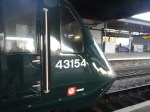
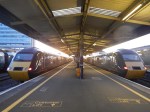
Castle is the name given by Great Western Railway to their four- and five-car InterCity 125 trains, with which they run services in the West Country.
These pictures show the trains, as I meandered up and down the Cornish Main Line.















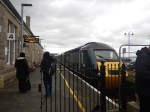
These are my observations.
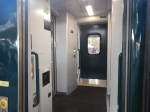
The Doors
These trains now have electrically-controlled sliding doors and it seems to be a conversion, that has been carried out to a high standard.
Certainly, all the doors appeared to be working, as they should.
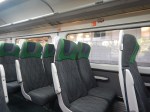
The Seats And Tables
The seats were comfortable, but not as comfortable as some seats I’ve used in Mark 3 coaches.
Could there be a few more tables?
The Ride
My pocket dynamometer was showing a speed of about 65 mph and the ride was as you’d expect from a well-maintained Mark 3 coach.
Access Between Platform And Train
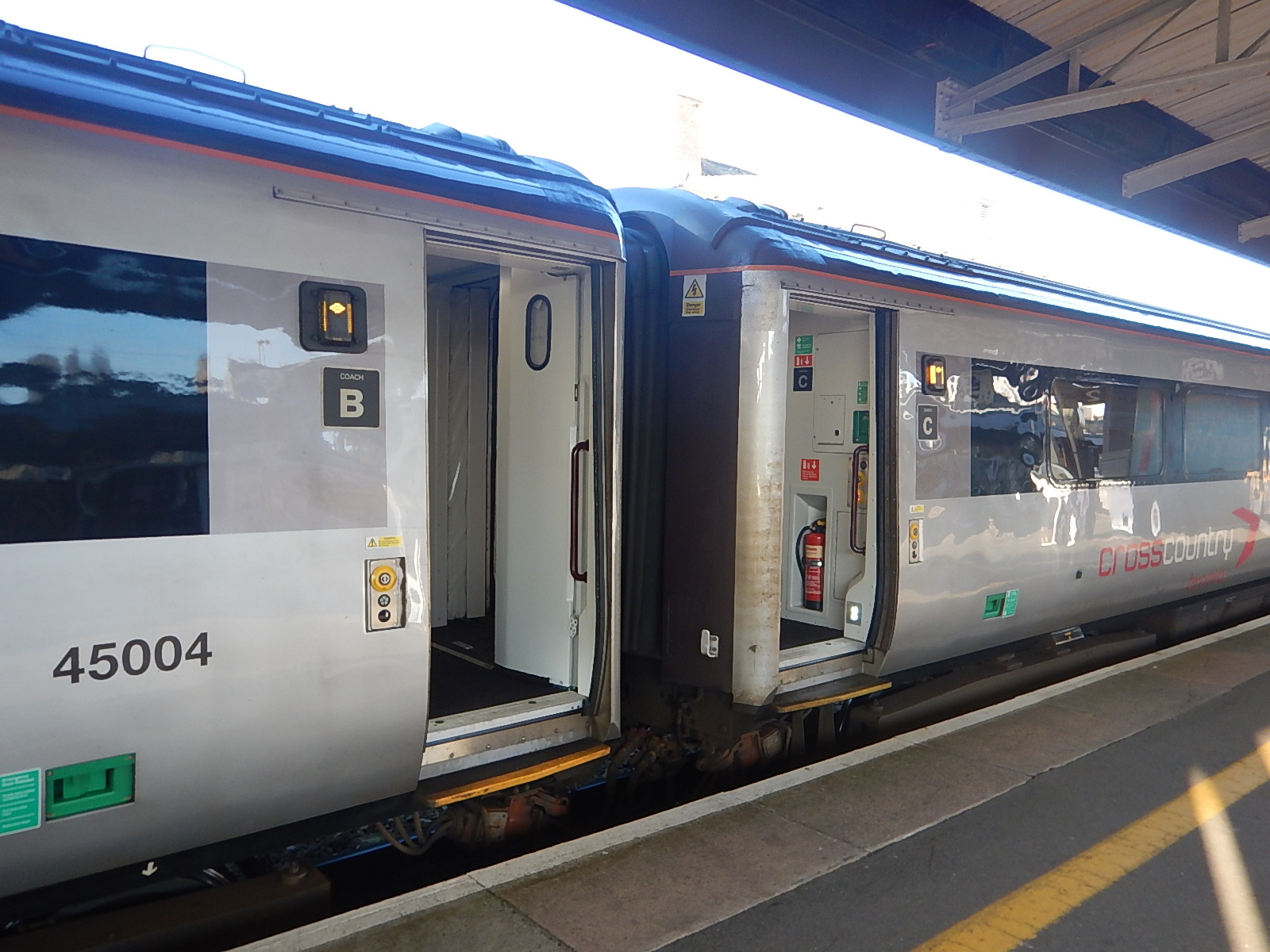
This is not good as the pictures show.
This is the step on a Castle.
And this is the step on a new Class 755 train
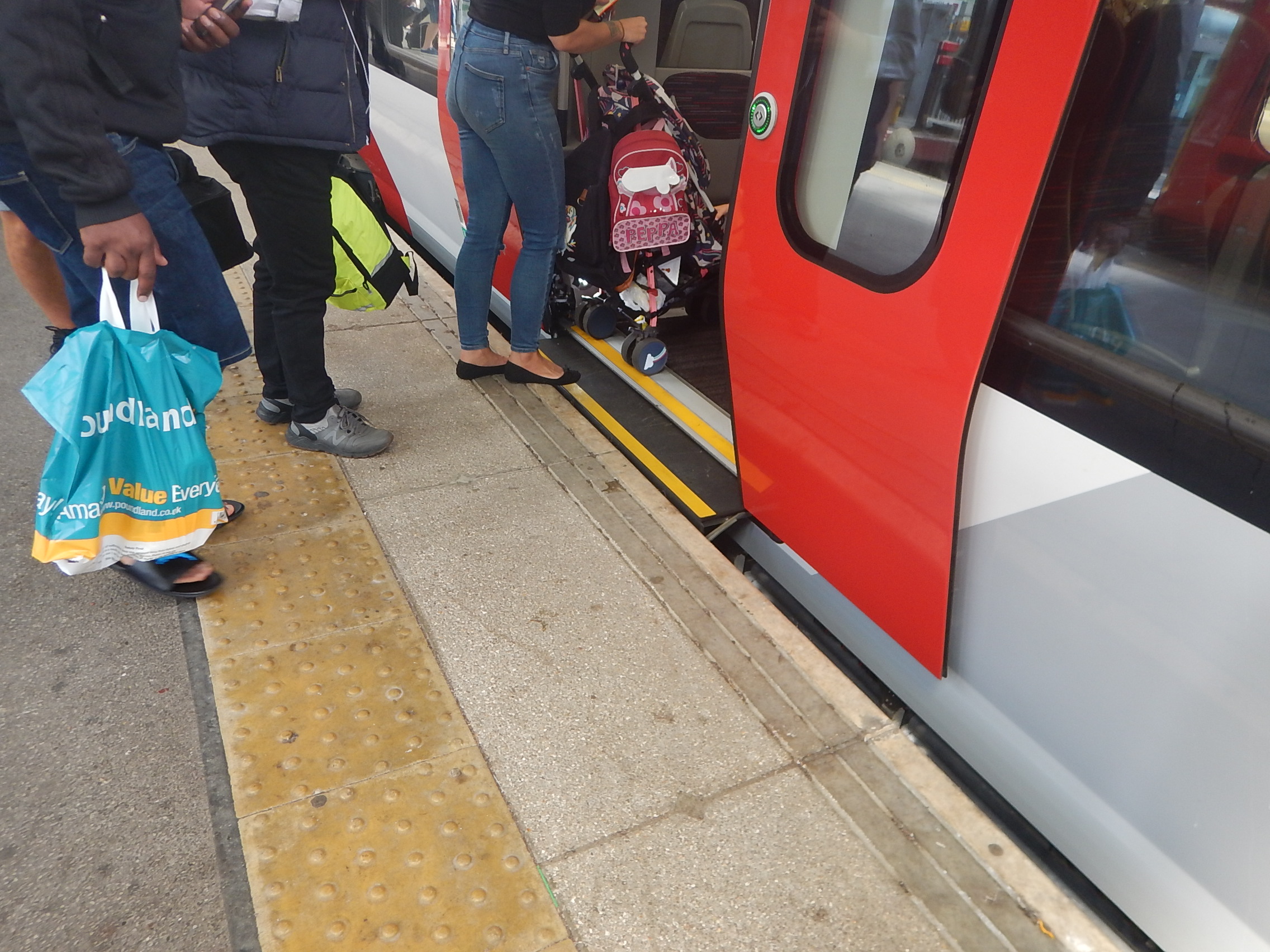
Think buggies, heavy cases and wheelchairs.
The Class 755 train, really is the Gold Standard of step-free access between platform and train.
Conclusion
These iconic trains will do a good job for Great Western Railway.
You could certainly find a good hotel in Devon or Cornwall and have a few enjoyable days riding between Penzance and Exeter, to explore the area
I do hope that they eventually put a catering trolley on the train.
Thoughts On A Tri-Mode AT-300 Between Waterloo And Exeter
Note that in this post, I’m using the Class 802 train as an example of Hitachi’s AT-300 train.
In writing my post called What Would Be The Range Of A Tri-Mode Class 802 Train?, I realised that an efficient tri-mode train with electric, battery and diesel power could have a range of over a hundred miles.
Suppose a Class 802 train was built with the following characteristics, were designed for service on the West Of England Line.
- Five cars, which would seat around 350 passengers.
- Two diesel engines replaced with batteries of the same seven tonne weight.
- At least 840 kWh or perhaps as much as 1,500 kWh of battery power could easily be installed.
- One 700 kW diesel engine would be retained for electrification failure and to boost battery power.
- All electrical equipment on the train will use the minimum amount of electricity.
- Regenerative braking to batteries.
- Aerodynamics would be improved, as I believe Hitachi are doing.
- I believe that the train could have an energy consumption to maintain 100 mph on the West Of England Line around two kWh per vehicle-mile.
So what would be the range of a five-car train on just 840 kWh of batteries?
- The train would consume 10 kWh per mile.
So this would give a range of 84 miles.
The diesel engine could be key.
- At 100 mph, the train does a mile in thirty-six seconds.
- In this time, the diesel engine can generate up to 7 kWh.
- The train would need just 3 kWh per mile from the batteries to maintain 100 mph.
This would give a range of 280 miles,
This is more than enough for the 125 miles between Basingstoke and Exeter St. Davids stations.
Other people read books in the evening, I do puzzles and mathematical exercises.
In How Much Power Is Needed To Run A Train At 125 mph?, I calculated that a forty-year-old InterCity 125 needs 2.83 kWh per vehicle mile to maintain 125 mph. Surely, modern trains can halve that figure.
Suppose Hitachi, improve the aerodynamics and the energy consumption of the train, such that it is 1.5 kWh per vehicle mile, which is a figure I don’t consider impossible.
This would give a range with 840 kWh batteries of 112 miles.
With selective use of the diesel engine and a charging station at Exeter, this train could easily run between Waterloo and Exeter.
Passenger Capacity
The passenger capacity of the current Class 159 trains is 392 in two three-car trains working as a pair.
A five-car Class 802 train would probably seat 350 passengers in comfort.
Train Length
These are the train lengths.
- A pair of three-car Class 159 trains are 156 metres long.
- A five-car Class 802 train is 130 metres long.
So it would appear, there would be no platform length problems.
Conclusion
A tri-mode Class 802 train or AT-300 would appear to be ideal for Waterloo and Exeter.
Details of the AT-300 trains, that have been ordered by East Midlands Railway and the West Coast Partnership are not very comprehensive, but do say, the following.
- Five-car trains will have four engines instead of three. Would they be smaller, with an added battery? Or will they use MTU Hybrid PowerPacks.
- They will have a new nose. For better aerodynamics?
, But I believe they will make extensive use of battery traction to reduce the use of diesel.
Do Sat-Navs Exploit Rat Runs
This afternoon my son brought me home in his car through North-East London.
- He was using a sat-nav and it was a mazy drive down a succession of narrow residential roads usually with cars parked on both sides.
- I’m sure we did two totally unnecessary loops.
- He also approached my house the wrong way, so he did two unnecessary right turns.
I’ve never used a sat-nav and doubt I ever will, as I don’t drive any more and when I’m walking, I prefer to use a proper map, like there are on most London bus stops or train stations.
I wonder how many acxcidents and traffic jams are caused by sat-navs.
What Would Be The Range Of A Tri-Mode Class 802 Train?
In Could Cirencester Be Reconnected To The Rail Network?, I speculated about the routes of a battery-electric version of a Class 800 train.
I said this.
As Hitachi have stated they will be using battery power to extend ranges of their trains, I wouldn’t be surprised to see some of the current trains modified to have batteries instead of some of their current diesel engines.
Such a train would would be ideal for the following routes.
- Paddington and Bedwyn – 13 miles
- Paddington and Cheltenham – 43 miles
- Paddington and Oxford – 10 miles
- Paddington and Weston-Super-Mare – 19 miles
The distance is the length that is not electrified.
I don’t think it improbable, that London Paddington and Swansea will be achieved by a battery-electric train based on the current Hitachi train designs.
So was it a serious idea or mad speculation?
Under Powertrain in the Wikipedia entry for theClass 800 train, this is said.
Despite being underfloor, the generator units (GU) have diesel engines of V12 formation. The Class 801 has one GU for a 5-9 car set. These provide emergency power for limited traction and auxiliaries if the power supply from the overhead line fails. The class 800/802 electro-diesel or Bi-Mode has 3 GU per five car set and 5 GU per nine car set. A 5 car set has a GU situated under vehicles 2/3/4 respectively and a 9 car set has a GU situated under vehicles 2/3/5/7/8 respectively.
This means that a five-car Class 800 or Class 802 train has three engines and an all -electric Class 801 train has a single engine.
If you were building a tri-mode Class 802 train, could two of the diesel engines be replaced by batteries.
- Hitachi have stated that trains can be changed from one class to another by adding or removing engines.
- Trains would always have at least one diesel engine for emergencies, just as the Class 801 trains do.
- Each MTU 1600 R80L diesel engine weighs just under seven tonnes.
Fourteen tonnes of batteries would probably store about 840 kWh of energy, if the most efficient batteries are used. That would not be a problem if Hitachi came calling.
In How Much Power Is Needed To Run A Train At 125 mph?, I calculated that a five-car Class 801 train needs 3.42 kWh per vehicle mile to cruise on electricity at 125 mph.
Dividing 840 by 5 cars and 3.42 kWh per vehicle file gives a range of forty-nine miles.
- The trains would need regenerative braking to the batteries.
- Battery energy density is increasing.
- Train aerodynamics could be improved, to reduce the power needed.
- Secondary routes like the Golden Valley Line are unlikely to have an operating speed higher than 110 mph, which would reduce the power needed.
I am coming round to the opinion, that Hitachi could design a battery-electric train based on the current Class 80X trains, that could reach Swansea from Paddington, without touching a drop of diesel.
- The batteries would need to be recharged before returning to London.
- I am assuming that the electrification is up and working between Paddington and Cardiff.
- Could the overhead rails in the Severn Tunnel be removed or replaced with engineering plastic or ceramic, as they corrode so much?
- Two five-car trains with batteries could work together as they do now.
Hitachi would need to get the software absolutely right.
Could The Diesel Engine Be Used To Increase Battery Range?
Lets assume that a tri-mode Class 802 train is running on a 125 mph main line.
It enters a section without electrification.
- It is cruising at 125 mph
- The batteries have a capacity of 840 kWh and have been charged on previous electrification.
- The train needs 3.42 kWh per vehicle mile to maintain speed.
- It’s a five-car train so it will need 17.1 kWh per mile.
- The train will take approximately thirty seconds to cover a mile and in that time the diesel engine will produce 5.83 kWh.
- So the net energy use of the train will be 11.27 kWh per mile.
This would give the train a range of 74.5 miles at 125 mph.
Obviously, a good driver, aided by a powerful Driver Assistance System could optimise the use of power to make sure the train arrived on time and possibly minimised carbon emissions.
What Would Be The Ultimate Range?
I think it would be possible to reduce the electricity consumption by means of the following.
- Slower operating speed.
- Better aerodynamics.
- More efficient train systems.
- Improved Driver Assistance Systems.
I think an energy consumption of 2.5 kWh per vehicle-mile could be possible, at perhaps a cruise of 100 mph
I can do the calculation without diesel assistance.
- It’s a five-car train so it will need 12.5 kWh per mile.
This would give the train a range of 67.2 miles at 100 mph on batteries alone.
I can also do the calculation again with diesel assistance.
- It’s a five-car train so it will need 12.5 kWh per mile.
- The train will take thirty-six seconds to cover a mile and in that time the diesel engine will produce 7 kWh.
- So the net energy use of the train will be 5.5 kWh per mile.
This would give the train a range of 153 miles at 100 mph on batteries with diesel assistance.
How Many Places Could Be Reached With A Fifty-Mile Range?
Setting a limit of fitly miles would allow running these routes on partial battery power, split down by companies who run the Hitachi trains.
Great Western Railway
These routes could certainly be run using a tri-mode Class 802 train.
- Paddington and Bedwyn – 13 miles
- Paddington and Cheltenham – 43 miles
- Paddington and Oxford – 10 miles
- Paddington and Swansea – 46 miles
- Paddington and Weston-Super-Mare – 19 miles
- Swindon and Bristol via Bath – 39 miles
Note.
- The distance gives the length of the longest section of the route without electrification.
- Certain routes like Bedwyn, Oxford and Weston-super-Mare probably wouldn’t need a charging station at the final destination.
- GWR could probably run a few other routes, without adding substantial new infrastructure.
- Tri-mode Class 802 trains, might be able to avoid electrification through Bath.
But surely the the biggest gain is that they would reduce GWR’s carbon footprint.
Hull Trains
I very much feel that with a charging station at Hull station, a tri-mode Class 802 train could bridge the forty-four mile gap between Beverley and the electrified East Coast Main Line at Temple Hirst Junction.
- The train could top up the battery every time it stops in Hull station.
- The 700 kW diesel engine could add 700 kWh in the hour long trip with no wires.
If a tri-mode Class 802 train could bridge this gap, then Hull Trains could go zero carbon.
LNER
These routes could certainly be run using a tri-mode Class 802 train.
- Kings Cross and Bradford – 14 miles
- Kings Cross and Harrogate – 18 miles
- Kings Cross and Huddersfield – 17 miles
- Kings Cross and Hull – 36 miles
- Kings Cross and Lincoln – 16 miles
- Kings Cross and Middlesbrough – 21 miles
Note.
- The distance gives the length of the longest section of the route without electrification.
- Certain routes like Bradford, Harrogate, Huddersfield, Lincoln and Middlesbrough probably wouldn’t need a charging station at the final destination.
- LNER could probably run a few other routes, without adding substantial new infrastructure.
- Using both battery and diesel power, the train would be able to make Cleethorpes and Grimsby after Lincoln.
But surely the the biggest gain is that they would reduce LNER’s carbon footprint.
TransPennine Express
These routes could certainly be run using a tri-mode Class 802 train.
- Leeds and Huddersfield – 17 miles
- Liverpool and Edinburgh – 34 miles
- Liverpool and Hull – 34 miles
- Liverpool and Scarborough – 34 miles
- Manchester Airport and Middlesbrough – 34 miles
- Manchester Airport and Newcastle- 34 miles
Note.
- The distance gives the length of the longest section of the route without electrification.
- TransPennine Express services all suffer because of the long gap across the Pennines.
- Network Rail are planning to partly electrify Dewsbury and Huddersfield, which would reduce the major gap to just eighteen miles.
As with GWR, Hull Trains and LNER, the carbon footprint would be reduced.
Conclusion
A tri-mode Class 802 train would be a good idea.
It should be noted that GWR, Hull Trains and TransPennine Express are all First Group companies.
TransPennine Express’s New Liverpool Lime Street And Glasgow Central Service
Transpennine Express are introducing a new service between Liverpool Lime Street and Glasgow Central stations at the December 2019 timetable change.
So I examined the service for the the 21st January, 2020.
- There are three Northbound trains at 08:12, 12:12 and 16:12.
- There are three Southbound trains at 07:45, 11:44 and 16:29
- Journey times vary between three hours and 17 minutes and three hours and 47 minutes.
- Trains appear to always stop at Wigan North Western, Preston, Penrith North Lakes and Carlisle.
- Selective services call at other stations including Lancaster and St. Helens Central.
As passengers can always travel the route with a change at Preston, it is a useful start. It should also be born in mind that there are currently, two trains per hour (tph) between Glasgow Central and Preston stations, so the route with a change at Preston can be quicker than waiting for a direct train.
If you look at the Transpennine service between Manchester Airport and Glasgow Central stations, it appears that there are gaps in the hourly service at 08:00, 12:00 and 16:00.
These gaps have now been filled with Liverpool services.
Current and Future Trains Between Liverpool or Manchester and Glssgow or Edinburgh
The current service is run by nine Class 350 trains, which includes the following.
- One tph between Between Manchester Airport and Glasgow Central, with three services missing.
- One train every two hours between Manchester Airport and Edinburgh.
The service from the December 2019 change will at some point be run by twelve Class 397 trains.
It will add three trains per day between Liverpool Lime Street and Glasgow Central, which will give an hourly TranPennine service between Glasgow Central and Preston.
I estimate that the new service will require two more trains, which is incorporated in the larger fleet size.
Timings Between Preston And Glasgow
If you look at the limitings between Preston and Glasgow, you find the following.
- Virgin’s Class 390 trains take between two hours 21 minutes and two hours 34 minutes.
- The new Liverpool service is timetabled to take two hours 53 minutes.
As the current Class 350 trains are only 110 mph trains, this is the explanation.
But the new Class 397 trains are 125 mph trains and can probably match the times set by Virgin.
So expect to see some timing reductions on TransPennine’s routes on the West Coast Main Line.
Will Services Between Liverpool And Manchester and Glasgow Split And Join At Preston?
TransPennine Express are meeting their franchise obligations, by providing three trains per day between Liverpool ad Glasgow, but could they do better by splitting and joining services at Preston.
- Going North, a service from Manchester Airport and one from Liverpool would join at Preston, before proceeding to Glasgow as a ten-car train.
- Coming South, a pair of trains from Glasgow, would split at Preston, with one train going to Liverpool and the other to Manchester Airport.
Obviously, the trains would need to be able to split and join in a minute or so, but it would open up the possibility of an hourly service from both Liverpool and Manchester to Glasgow.
Liverpool And Manchester To Edinburgh
After the December 2019 timetable change, TransPennine’s Liverpool and Newcastle service will be extend to Edinburgh, giving Liverpool a direct service to \Edinburgh and Manchester, a second service to Edinburgh.
Timings by the various routes will be.
- Liverpool and Edinburgh via Manchester, Leeds and York – Four hours 28 minutes – Hourly
- Manchester Piccadilly and Edinburgh via Preston and Carstairs – Three hours 10 minutes – Two hourly
- Manchester Victoria and Edinburgh via Leeds and York – Three hours 52 minutes – Hourly
These times compare well with the four hours drive predicted on the Internet.
Conclusion
Connections between Northern England and the Central Belt of Scotland will improve greatly after the December 2019 timetable change.
New trains on these routes will also mean faster services, where they run on the East and |West Coast Main Lines.
More trains will also increase frequency.
Will Business Trust Ultra-Marxist Labour?
This is a paragraph from an article in today’s copy of the Times, which is entitled Labour’s Big Call Has BT Hanging By A Wire.
Only two weeks ago Mr Jansen, 52, had dismissed the threat of Labour nationalisation, saying that BT was “not on the list” and taking comfort from comments from John McDonnell over the summer and made personally. Labour’s shadow chancellor had said in an interview in July that there were “no tricks up my sleeve” and that the “limit of our ambition” was taking the power networks, Royal Mail, rail and water companies into state ownership.
It appears John MacDonnell has either changed his mind, or was doing something rather devious.
Will business at any level from the smallest corner shop to the largest FTSE 500 company ever trust what this ultra-Marxist Labour party says?
Could Cirencester Be Reconnected To The Rail Network?
In Boris Johnson Vows New Life For High Streets And Axed Rail Lines, I laid out a list of rail lines that could be reopened by a future Conservative government.
Today, I’m going to Cirencester to have lunch with an old friend.
But, Cirencester does not have a rail connection, although there used to be a Cirencester branch line from Kemble station.
The Wikipedia entry says this under Future.
As of 2016, discussions have taken place regarding the potential of relaying 5km of track from Kemble station to the edge of Cirencester at Chesterton Halt.
In January 2019, the Campaign for Better Transport released a report identifying the line as Priority 2 for reopening. Priority 2 is for those lines which require further development or a change in circumstances (such as housing developments)
It looks to me, the sort of rail reopening that fits with Boris’s list.
These are a few of my thoughts on the rebuilding.
The Connection At Kemble Station
This Google Map shows the connection at Kemble station.
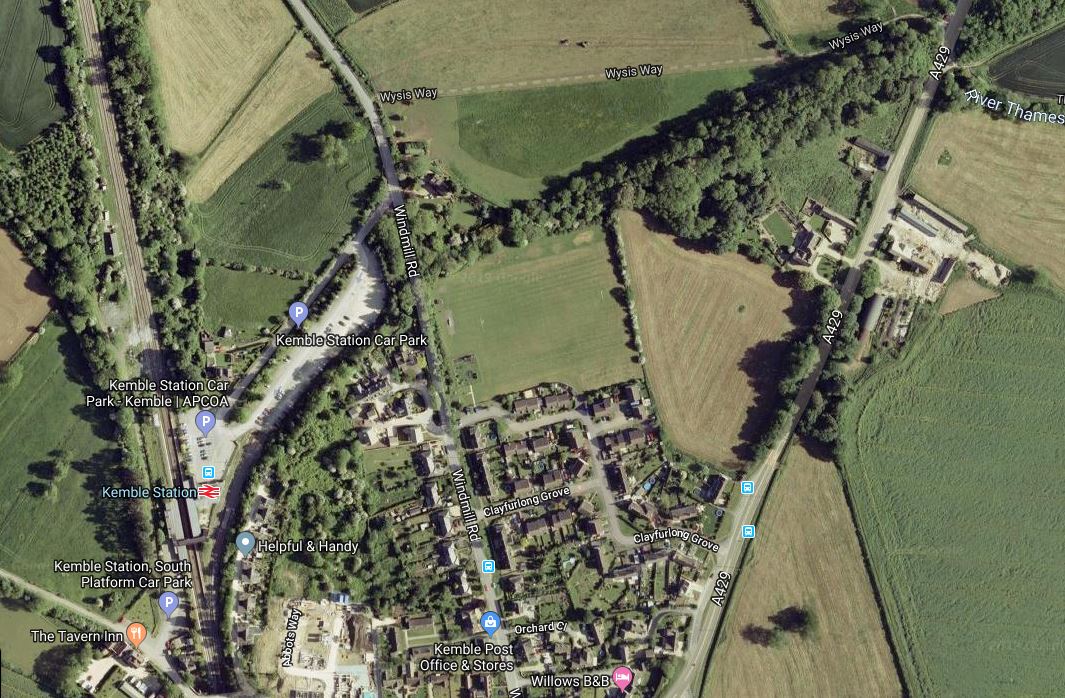
It appears that connecting a new single-track branch line could be possible.
Crossing The A 429
This Google Map shows, where the A 429 and the Cirecenter Branch cross.
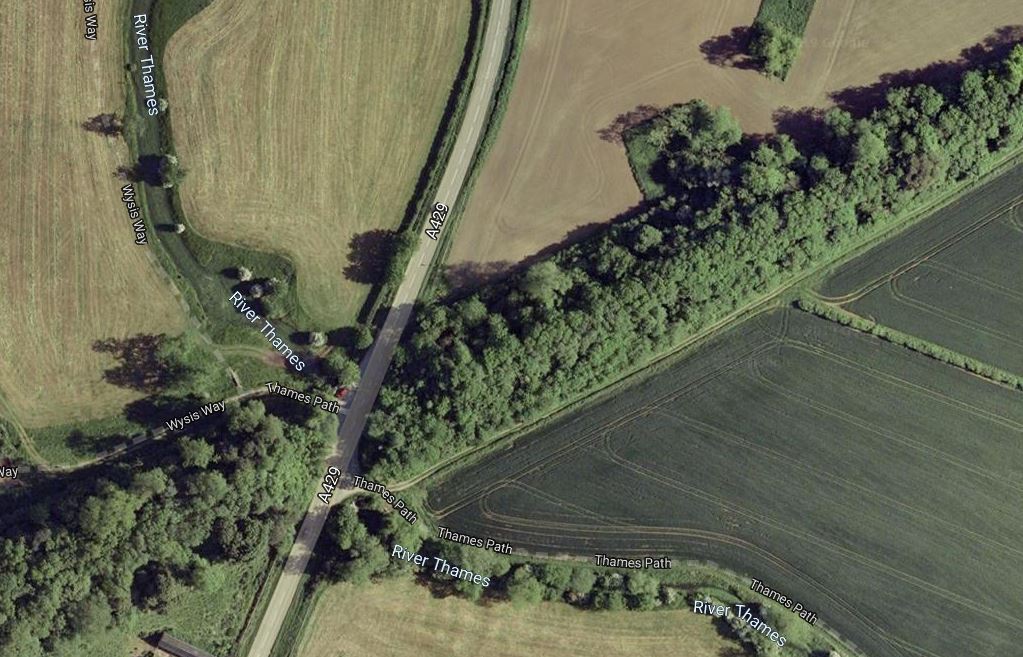
A bridge would be needed, as Network Rail doesn’t do level crossings on major roads.
Crossing Of Spratsgate Lane
This Google Map shows, where the Cirecester Branch crosses Spratsgate Lane as Cirencester is approached.
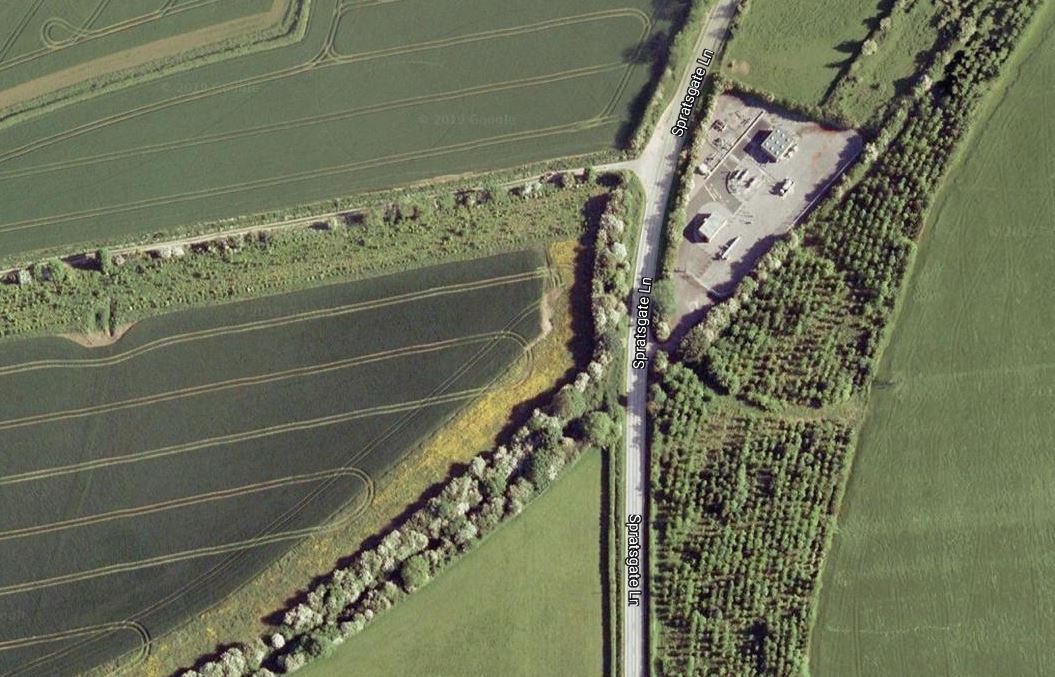
Would a bridge be needed?
Other Crossings
There are three other minor crossings on the route, between the two major ones I’ve mapped.
Approach To Cirencester
This Google Map shows the approach to Cirencester.

Could a rail track be squeezed in for a station?
Service Frequency
I would feel that, if the Cirencester Branch was reinstated as a single-track line, that a two tph service could be run between Swindon and Cirencester station with a stop at Kemble.
Extra Stations
The Golden Valley Line used to have two extra stations between Swindon and Kemble stations.
If housing developments were to be proposed near these two locations or perhaps in other locations in Swindon, it would improve the financial case for a shuttle between Swindon and Cirencester stations.
Could Battery Trains Be Used?
The nearest electrification is fourteen miles away at Swindon station. An out-and-back trip on battery power should be possible.
Could Tram-Trains Be Used?
I don’t see why not! They would also have advantages.
- Bridges would be lighter and less intrusive.
- The minor crossings could work under tramway rules.
- They might be able to reach Cirencester Town Centre
- The branch could be fitted with lightweight tramway electrification.
- Extra stations at Minety & Ashton Keynes and Purton could be simpler designs.
- Battery power could be used on sections of the route.
I very much feel that a tram-train solution would be possible, from my observations in Karlsruhe and Sheffield.
A Visit To Cirencester
I had an excellent lunch with my friend in Cirencester and I have some some observations.
Cirencester
I have seen towns like Cirencester so often and used to live near Bury St. Edmunds which is going in a similar direction.
- A town that is worth a visit, but is overrun with cars and people driving around looking for somewhere to park.
- It is a typical country town, that is unfit for the Twenty-First Century.
- It will strangle itself with traffic.
- At least through traffic can use a by-pass.
- Is it the sort of place, where teenagers, that are too young to drive, or don’t have a car, get exceedingly bored?
Residents will move away and the shopping centre will see lower footfall.
The Bay Platform At Swindon Station
This picture shows the Western end of the bay plstform 2 at Swindon station.

Shuttle trains from Cheltenham and Kemble, usually call in this platform, with through trains stopping in either Platforms 1 and 3.
All platforms are fully electrified, with the electrification continuing about a hundred metres up the Golden Valley Line.
Kemble Station
These pictures show Kemble station.
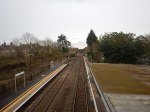
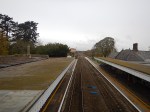
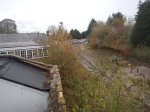
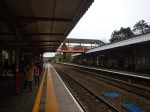
Note.
- There is a lot of car-parking for a small station.
- How many of the cars parked at the station are commuters Between Cirencester and London?
- It is not a step-free station.
- The station, water tank and limestone bridge are all Grade two Listed.
It also looks like the Cirencester branch had its own platform.
Traffic On The Golden Valley Line
It appears that except for the occasional freight train, it is not a busy line.
Although one of the reasons for making it a full double track, was so it can be used as a diversion route, when the Severn Tunnel is closed.
Electrification Of The Golden Valley Line
The distance between Swindon and Cheltenham stations is a short distance over forty-three miles, with four intermediate stations, Listed structures and two tunnels.
Electrification has been considered and under Electrification Proposal in the Wikipedia entry for the line, this is said.
As of 2016 there are no plans to electrify the line.
At present trains from London are Class 802 trains, which are electric trains with onboard diesel engines for routes like this.
As Hitachi have stated they will be using battery power to extend ranges of their trains, I wouldn’t be surprised to see some of the current trains modified to have batteries instead of some of their current diesel engines.
Such a train would would be ideal for the following routes.
- Paddington and Bedwyn – 13 miles
- Paddington and Cheltenham – 43 miles
- Paddington and Oxford – 10 miles
- Paddington and Weston-Super-Mare – 19 miles
The distance is the length that is not electrified.
I don’t think it improbable, that London Paddington and Swansea will be achieved by a battery-electric train based on the current Hitachi train designs.
Train Frequency Between Paddington And Kemble
Trains on the Paddington and Cheltenham route, run every two hours and I just missed the 09:36, so I had to change at Swindon.
- Cheltenham and Gloucester probably need at least an hourly service to and from London.
- The current timetable effectively gives an hourly service, with the second service provided by a change at Swindon.
- But it was a busy down-and-up interchange, and I wonder how many travellers miss the connection.
An hourly direct service from London would be so much more convenient.
Conclusion
With some clever and sympathetic engineering on the branch to handle the crossings, it could be a feasible reopening.
My Preference Would Be For A Tram-Train With Batteries
It would have the following characteristics.
- Single-track branch from Kemble.
- Kemble and Cirencester electrified with 750 VDC overhead.
- Tram rules on the branch.
- Trams as close to the centre of Cirencester as possible.
- Two trams per hour between Swindon and Cirencester.
- Trams would use batteries between Kemble and Swindon.
- Batteries would be charged at Swindon station using the existing 25 KVAC overhead electrification and on the branch.
- Extra stops where needed.
The route might even loop into Cirencester to provide a Park-and-Ride on the by-pass, that would serve the town and Kemble station.
The tram-trains ordered for the South Wales Metro would be able to run the service.
It would be an unobtrusive rural tram-train.
Boris Johnson Vows New Life For High Streets And Axed Rail Lines
The title of this post is the same as that of this article in The Times.
This is the introductory paragraph.
Boris Johnson is promising to revitalise “left behind” high streets through tax cuts for pubs and shops and reversing some of the Beeching rail cuts to branch lines.
The article gives a map of the lines and here is a list of them.
- Newcastle and Ashington/Blyth.
- Bristol and Portishead
- Camp Hill Line
- Willenhall and Darlaston
- Thornton-Cleveleys and Fleetwood
- Okehampton and Exeter
- March and Wisbech
- Uckfield and Lewes
- A new station he building of a station at Skelmersdale.
I will suggest other possibilities and add them here.
- West Hampstead and Hounslow – Part of the West London Orbital Railway
- Brent Cross and Kew – Part of the West London Orbital Railway
- Cirencester – See Could Cirencester Be Reconnected To The Rail Network?
There could be several!
The Technology Is With Us!
Anyone who follows railway technology, as I do, knows that technology coming on stream will ease the creation of these routes.
- Modern digital in-cab signalling, as already used on Thameslink.
- Battery-electric trains.
- Innovative charging for battery-electric trains.
- Hydrogen-powered trains.
- Tram-trains
- Automatic train control
- Remote services in simple depots.
- Better bridge-raising and other construction techniques.
Many of these new routes will be able to use a standard train.
Nationalised British Broadband
Labour’s plans to nationalise broadband and provide it free to homes and small business is a cracker!
Advantages For Labour
It would have one big advantage for Labour!
It’s a great way of listening in to all their political opponents. They only have to ask the Chinese how to do it!
How for instance, would another political party, with a radical agenda organise?
But!
Consider these points.
- Mobile phone traffic uses the same Internet backbone as broadband.
- Internet tech giants like Amazon, Facebook and Google wouldn’t pay up without a fight
- Everybody’s pension fund would suffer, as BT is often there and shares would be replaced by junk bonds.
- Virgin Media and other broadband suppliers would be nationalised as well or could become worthless.
- A lot of American Internet companies would go running to the US President and just as Trump has applied tariffs willy-nilly in his trade war with China, a future President wouldn’t take it lying down.
- The high-tech industry has already said they don’t like it.
The biggest problem is that Internet usage will grow exponentially with 5G broadband and all the connected devices, like
- Driverless cars.
- Automated warehouses and delivery systems.
- Connected smart household and other appliances.
- Connected massive screens, which every business, school or home will have.
- Every child watching content on mobile devices.
- Collectinbg operating data from cars, trucks and trains to make them more reliable.
- Automated care assistance for the ill, frail and elderly.
Can any government afford the cost of continual upgrading of capacity, which will not be like anything seen before?
It certainly, is a cracker!
And if it is implemented, it will blow up in the ultra-Marxists’ faces.
 The Anonymous Widower