Alstom’s Coradia iLint Successfully Travels 1,175 km Without Refueling Its Hydrogen Tank
The title of this post, is the same as that of this press release from Alstom.
This paragraph describes the trip.
Alstom, global leader in smart and sustainable mobility, has demonstrated the effectiveness of its hydrogen powered solutions for long distance transportation. During a long-distance journey, an unmodified serially-produced Coradia iLint train covered 1,175 kilometres without refuelling the hydrogen tank, only emitting water and operating with very low levels of noise. The vehicle used for this journey comes from the fleet belonging to LNVG (Landesnahverkehrsgesellschaft Niedersachsen), the transport authority of Lower Saxony, and has been in regular passenger operation on the network of evb (Eisenbahnen und Verkehrsbetriebe Elbe-Weser GmbH) since mid-August. For the project, Alstom also partnered with the gas and engineering company Linde.
The distance is around 730 miles.
This paragraph describes the detailed route.
Starting in Bremervörde, the route took the Coradia iLint across Germany. From Lower Saxony, where the hydrogen train was built and developed by Alstom, it travelled through Hesse to Bavaria, all the way to Burghausen near the German-Austrian border before coming to a stop in Munich. Following this remarkable journey, the train will now head for the German capital. Several trips through Berlin are on the agenda as part of InnoTrans 2022, the premier International Trade Fair for Transport Technology, to be held from 20 to 23 September.
It looks to be a good test of a hydrogen-powered train.
It looks like Alstom believe that hydrogen trains can replace diesel ones, providing there is a source of hydrogen.
Bermondsey To London Bridge – 17th September 2022
I took these pictures as I travelled from Bermondsey To London Bridge on the lower deck of a 381 bus.



















Note.
- It was busy in Bermondsey station.
- Dome of the bus information was poor.
- The queue for the lying-in state was going slowly.
It looks like the lying-in state may be called off. I’m not surprised.
Every Station Should Have One!
I took these pictures at London Bridge station, today.








How many other stations in the world, have a proper organ?
Heart Aerospace Unveils New Airplane Design, Confirms Air Canada And Saab As New Shareholders
The title of this post, is the same as that of this press release from Heart Aerospace.
These are the first two paragraphs of the press release.
Swedish electric airplane maker Heart Aerospace today unveiled significant design updates to its first electric aircraft and confirmed Air Canada, one of North America’s largest airlines and Saab, the Swedish aerospace and defense company, as new minority shareholders.
The new airplane design, called the ES-30, is a regional electric airplane with a capacity of 30 passengers and it replaces the company’s earlier 19-seat design, the ES-19. It is driven by electric motors powered by batteries, which allows the airplane to operate with zero emissions and low noise.
And this is a visualisation of the aircraft from Heart Aerospace..

It looks fairly normal, except that it has four electric engines instead of two turboprops.
This paragraph of the press release gives details of the engine configuration.
The airplane will also include a reserve-hybrid configuration, consisting of two turbo generators powered by sustainable aviation fuel. The reserve-hybrid system is installed to secure reserve energy requirements without cannibalizing battery range, and it can also be used during cruise on longer flights to complement the electrical power provided by the batteries.
Note.
- The slightly larger Dash 8-100 aircraft seats just under forty and has 2.7 MW of installed power.
- Rolls-Royce have a 2.5 MW hybrid turbo generator that runs on sustainable aviation fuel.
- Honeywell have a similar smaller hybrid turbo generator, based on the auxiliary power unit of an Airbus A 350.
I’m sure that Heart can find the hybrid turbo-generators they need for the ES-30.
This paragraph of the press release gives details of the performance.
This gives the airplane a fully electric range of 200 kilometers, an extended range of 400 kilometers with 30 passengers, and flexibility to fly up to 800 kilometers with 25 passengers, all-inclusive of typical airline reserves.
Eight hundred kilometres is sufficient range to serve Bordeaux, Frankfurt, Geneva, Hamburg, Inverness, Paris and Shannon airports from London City Airport.
The press release also discloses that the company has received 96 letters of intent for the aircraft and expects that the in-service date will be 2028.
I don’t think that the date is unreasonable.
Biden-Harris Administration Announces New Actions To Expand U.S. Offshore Wind Energy
The title of this post is the same as that of this fact sheet from the White House briefing room.
This is the sub-title.
Departments of Energy, Interior, Commerce, and Transportation Launch Initiatives on Floating Offshore Wind to Deploy 15 GW, Power 5 Million Homes, and Lower Costs 70% by 2035.
Some points from the fact sheet.
- The President set a bold goal of deploying 30 gigawatts (GW) of offshore wind by 2030, enough to power 10 million homes with clean energy, support 77,000 jobs, and spur private investment up and down the supply chain.
- Conventional offshore wind turbines can be secured directly to the sea floor in shallow waters near the East Coast and the Gulf of Mexico.
- However, deep-water areas that require floating platforms are home to two-thirds of America’s offshore wind energy potential, including along the West Coast and in the Gulf of Maine.
- Globally, only 0.1 GW of floating offshore wind has been deployed to date, compared with over 50 GW of fixed-bottom offshore wind.
- The Floating Offshore Wind Shot will aim to reduce the costs of floating technologies by more than 70% by 2035, to $45 per megawatt-hour.
- The Administration will advance lease areas in deep waters in order to deploy 15 GW of floating offshore wind capacity by 2035.
This all seems to be ambitious!
But!
- In ScotWind Offshore Wind Leasing Delivers Major Boost To Scotland’s Net Zero Aspirations, I looked at Scotland’s latest round of offshore wind leases.
- If the lessors carry out their proposals Scotland will add 9.7 GW of fixed-foundation offshore wind farms and 14.6 GW of floating offshore wind farms, which I estimate will be built by 2035.
- In Three Shetland ScotWind Projects Announced, I looked at three floating wind farms to the East of Shetland, which are a secondary deal after ScotWind, which could generate 2.8 GW by 2035.
- In Is This The World’s Most Ambitious Green Energy Solution?, I describe an ambitious plan called Northern Horizons, proposed by Norwegian company; Aker to build a 10 GW floating wind farm, which will be 120 km to the North-East of the Shetlands.
It could be possible that little Scotland installs more floating wind farms before 2035, than the United States.
And what about England, Wales and Northern Ireland?
- England hasn’t announced any floating wind farm projects, but has around 17 GW of fixed-foundation offshore wind farms under development in the shallower waters along the East and South coasts.
- In Two Celtic Sea Floating Wind Projects Could Be Delivered By 2028, I looked at prospects for the Celtic Sea between Wales, Ireland and Devon/Cornwall. It is possible that a GW of floating wind could be developed by 2028, out of an ultimate potential of around 50 GW.
- Northern Ireland is a few years behind England and Scotland and might eventually make a substantial contribution.
But Biden’s aims of a strong supply chain could be helped by Scotland, as several of the floating wind farms in Scotland are proposing to use WindFloat technology from Principle Power, who are a US company. The Principle Power website has an explanatory video on the home page.
Marble Arch To Lambeth Palace – 16th September 2022
I took these pictures as I travelled from Marble Arch to Lambeth Palace on the top deck of a 148 bus.







































































Note.
- This sequence starts at the London Hilton Park Lane Hotel, just to the North of Marble Arch.
- Constitution Hill was busy with visitors to Buckingham Palace
- The route goes past the long wall, that encircles the palace.
- The route meanders its way through Victoria to approach the river along Horseferry Road.
- The sequence ends after the bus has crossed Lambeth Bridge by Lambeth Palace.
To take these pictures, I had boarded the 148 bus at Lancaster Gate station and I got off at Lambeth North station.
Transport Enterprise Leasing To Integrate Cummins X15H Hydrogen Engine Into Heavy Duty Trucks
The title of this post, is the same as that of this article on Fleet Equipment.
This is the first paragraph.
Transport Enterprise Leasing and Cummins Inc. announced recently that TEL has signed a letter of intent planning to purchase Cummins’ 15-liter hydrogen internal combustion engines when available. TEL will integrate the Cummins’ X15H hydrogen engines into their fleet of heavy-duty trucks.
This second paragraph is very significant.
Hydrogen engines can use zero-carbon green hydrogen fuel, produced by Cummins-manufactured electrolyzers. The projected investment in renewable hydrogen production globally will provide a growing opportunity for the deployment of hydrogen-powered fleets utilizing either Cummins fuel cell or engine power.
Cummins would appear to be aiming to be a one-stop shop to decarbonise your fleet of heavy trucks or anything that is powered by a Cummins diesel engine.
I did a small amount of work for Cummins about twenty years ago and one of the companies objectives was to be able to provide a diesel engine to fit anybody’s application.
So if someone wanted a diesel engine with a particular power, that fitted in an unusually-shaped or confined space, they would rearrange the layout of the engine to make it fit.
I suspect that London’s New Routemaster buses have a special version of Cummins B Series engine, designed for its unusual location halfway up the back stairs.
Will Cummins produce a hydrogen internal combustion engine for the New Routemaster?
- The buses could become zero-carbon, at less cost than new buses.
- Passengers would notice no difference in ride comfort and experience.
- Drivers would just need to use the hydrogen systems.
- Maintenance staff would only need to be trained n handling the hydrogen system, as much of the buses would be unchanged.
- Cummins could sell an electrolyser to each garage.
- London would get some good publicity for tourism.
London’s iconic bus would look the same.
Paying My Respect To The Queen
Last night, I paid my respect to Queen Elizabeth.
At around 23:15, I took a 141 bus from near my house and walked to the end of the queue near Southwark Cathedral.
It was a two-and-a-half mile walk, but I managed it reasonably well.
But I did have problems, as it was a bit dark.
- I did have a problem with my boot laces, which I had difficulty tying up again.
- I did trip a couple of times, but didn’t really hurt myself.
- It didn’t help, that some of the pavements on the South Bank aren’t the best.
When I arrived into Victoria Gardens, prior to entry into Westminster Hall, the queue was meandered about twenty times for control purposes.
- It was on a heavily-textured rubber matting and some of the turns played havoc with my feet.
- I now have a large blister on the bottom of my right foot.
- After I left the lying-in state, I was asked by a Red Cross lady about my visit and she said others had suffered how I did.
I would suggest that if you go to the lying-in state, you choose your footwear with care.
I’ve been to Westminster Hall before and I wrote about it, in To a Reception at the House of Lords, which includes this picture.
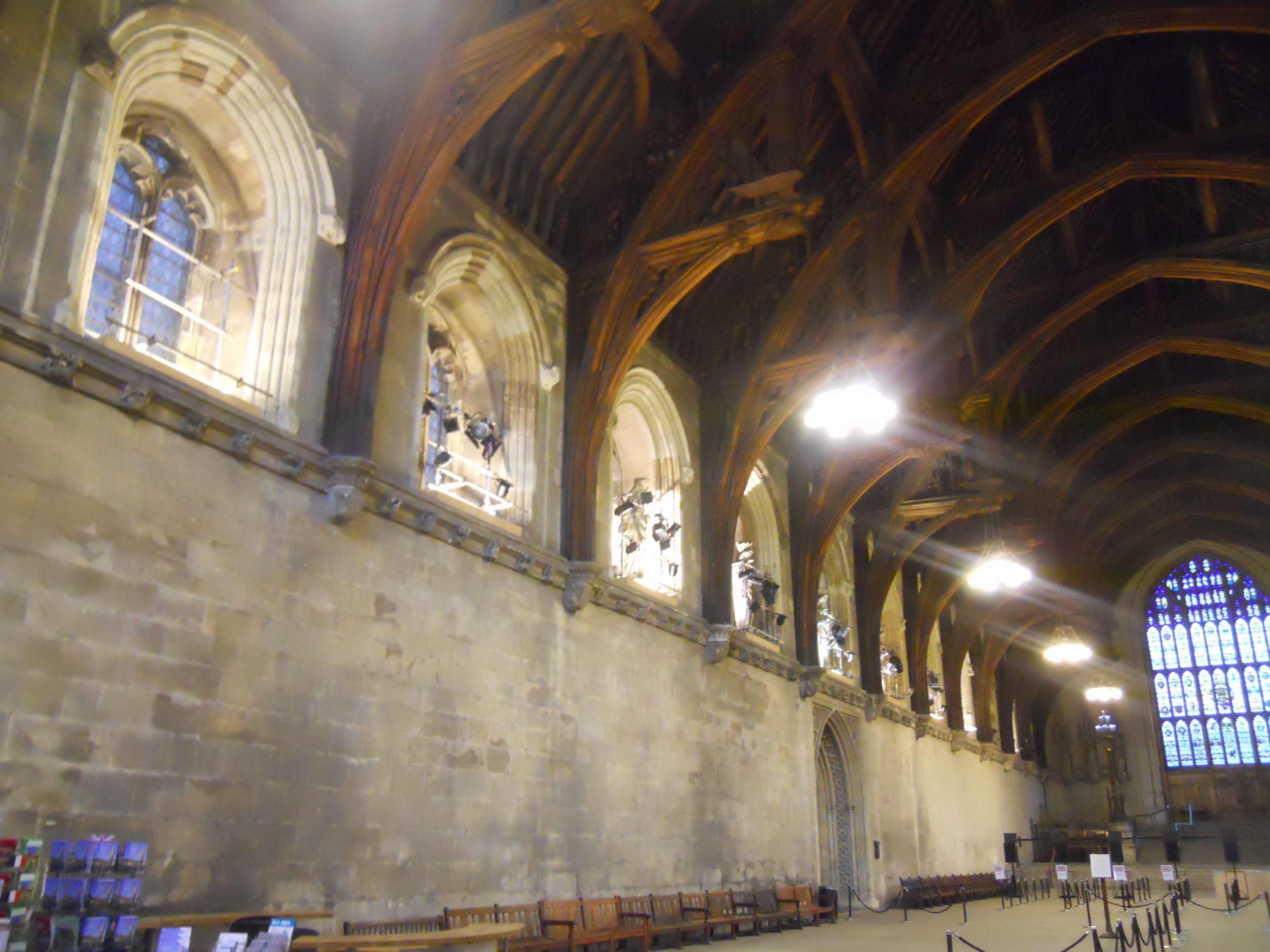
The hall did the Queen proud today.
If you get a chance to attend, do it! But be careful about your footwear!
Also note, that from the time I joined the queue until the time I left Westminster Hall was over eight hours.
North Seas Countries Commit To 260 GW Of Offshore Wind By 2050
The title of this post, is the same as that of this article on Renewables Now.
This is the first two paragraphs.
The nine member countries of the North Seas Energy Cooperation (NSEC) on Monday committed to at least 260 GW of offshore wind energy by 2050.
The NSEC aims to advance offshore renewables in the North Seas, including the Irish and Celtic Seas, and groups Belgium, Denmark, France, Germany, Ireland, Luxembourg, the Netherlands, Norway, Sweden and the European Commission.
Note.
Intermediate targets are 76 GW by 2030 and 193 GW by 2040.
The UK has a target of 50 GW by 2030, of which 5 GW will be floating offshore wind.
The UK is not mentioned, but has joint projects with the Danes, Germans, Irish, Norwegians, Spanish and Swedes.
There is nothing about energy storage or hydrogen!
On the figures given, I think we’re holding our own. But then we’ve got more sea than anybody else.
Werner Enterprises Signs Letter Of Intent Planning To Secure 500 X15H Engines From Cummins
The title of this post, is the same as that of this press release from Cummins.
This is the first paragraph.
Werner Enterprises, a premier transportation and logistics provider, and Cummins Inc., a global power solutions provider, announced today Werner signed a letter of intent to purchase 500 Cummins’ 15-liter hydrogen internal combustion engines upon availability. The two companies announced earlier this year, Werner Enterprises plans to validate and integrate Cummins’15-liter natural gas and Cummins’ X15H hydrogen engines, both part of Cummins’ fuel agnostic platform, into their fleet.
More details of the X15H engine are given in this earlier press release, which is entitled Cummins Inc. Debuts 15-Litre Hydrogen Engine At ACT Expo, which has this first paragraph.
Today, Cummins Inc. debuted its 15-liter hydrogen engine at ACT Expo in Long Beach, California. This engine is built on Cummins’ new fuel-agnostic platform, where below the head gasket each fuel type’s engine has largely similar components, and above the head gasket, each has different components for different fuel types. This version, with expected full production in 2027, pairs with clean, zero-carbon hydrogen fuel, a key enabler of Cummins’ strategy to go further faster to help customers reduce greenhouse gas (GHG) emissions.
I certainly like the concept of a fuel-agnostic platform, where below the head gasket, everything is similar, and above the head gasket, there are appropriate components.
I wouldn’t be surprised to find that Rolls-Royce mtu and JCB have used a similar concept for their hydrogen internal combustion engines.
Cummins have also developed a 6.7 litre engine.
This is a paragraph from the press release.
Hydrogen internal combustion engines use zero-carbon fuel at a lower initial price of a fuel cell or battery electric vehicle with little modification to today’s vehicles. Accelerated market adoption of hydrogen engine powered vehicles is driven by the technology’s high technology maturity, low initial cost, extended vehicle range, fast fueling, powertrain installation commonality, and end-user familiarity.
I certainly feel it is the way to go technically.
Take London’s New Routemaster buses.
- These buses are powered by a Cummins B-series engine, which has four cylinders and a capacity of 4.5 litres.
- This engine powers large numbers of trucks and pick-ups.
- For the UK, they are manufactured in Darlington.
- It appears that Cummins 6.7 litre engine is a six cylinder B-series engine.
It would certainly be more affordable to change the cylinder heads of these buses and power them by hydrogen, than purchase a new fleet.
Cummins have an excellent tutorial on hydrogen internal combustion engines on their web site.
 The Anonymous Widower