Is This Why Purists Say The Midland Main Line Must Be Electrified?
In How Far Will A Class 897 Train Travel Without Using The Electrification?, I showed that the Class 897 train, can go for 120 miles on its internal power sources.
I also showed that the Hitachi Class 80X trains with batteries can do the same.
But if you look at distance on the Midland Main Line, some are greater than 120 miles.
- St. Pancras and Chesterfield – 146.1 miles
- St. Pancras and Derby – 128.3 miles
- St. Pancras and Doncaster – 157.3 miles
- St. Pancras and Leeds – 187.2 miles
- St. Pancras and Nottingham – 126.4 miles
- St. Pancras and Sheffield – 160.0 miles
So to get all the way to Chesterfield, Derby, Doncaster, Leeds, Nottingham or Sheffield from St. Pancras, a train with a longer range is needed.
Conservative thinking means electrification, as we know it works.
You might also say, that the electrification on the Midland Main Line, just sort of peters out South of Leicester.
But thinking about it!
- The electrification on the East Coast Main Line doesn’t cross the Forth Bridge.
- The electrification on the West Coast Main Line finishes at Dunblane.
- The electrification on the South Wales Main Line finishes at Cardiff.
- Few branch lines in East Anglia are electrified.
- The East-West Line is not to be electrified.
Did the accountants prune too hard?
They may have done!
- But we do need a a zero-carbon train for routes longer than 120 miles.
- And so do many other routes across the world.
- The more you turn it round in your mind, the more you need a zero-carbon fuel with all the flexibility, range and ease of refuelling of diesel.
In my mind the only fuel that can do this is hydrogen.
Conclusion
If we want to run zero-carbon services over very long distances, we will need to use hydrogen power.
I also think, that my logic here, will apply to buses and coaches, so any needing a range over a certain size will need hydrogen.
As the purists won’t have hydrogen at any price, this means they won’t accept anything other than full electrification or battery-electric.
But bigger batteries are heavier and self-defeating, so electrification is the only way.
No Panic At The Pumps … South Koreans Just Stop Driving On Wednesdays
The title of this post, is the same as that of this article on The Times.
This is the sub-heading.
President Lee Jae-myung has urged the public to ‘save every drop of fuel’ and introduced a number-plate rotation to keep drivers off the road
These first three paragraphs deeply illustrate the differences between the energy situation in North and South Korea.
From the lookout point atop Mount Dora, in the heart of the demilitarised zone that has separated the peninsula since 1953, you can clearly see where South Korea ends and North Korea begins.
The trees that proliferate across Korea’s undulating topography come to an abrupt halt. On the land that sits beyond, a farmer can be seen guiding an ox pulling a plough.
Sealed off from the world economy for 73 years, communist North Korea has resorted to cutting down much of its vegetation to burn for fuel. Democratic South Korea, by contrast, has established deep global trading ties that allow the country to import vital natural resources it cannot produce domestically.
North Korean communism certainly can’t be considered green.
I find these two paragraphs extremely significant.
South Korea may have to import almost all of its crude oil, but the country plays a huge role in refining it into petrol, diesel and jet fuel before shipping it around the world. This means that demand from overseas for Korea’s refined products is greater than ever, which has forced the government to step in. The country’s Ministry of Trade, Industry and Energy has implemented mandatory caps on refined petroleum products.
Of all South Korea’s refined products, kerosene, or jet fuel, is the most in demand. The country is one of the biggest exporters of jet fuel in the world. The US, for instance, relies on it for 70 per cent of its total jet fuel imports.
They could also be problematical for the country, as they will surely need to replace these jet fuel exports with exports of sustainable aviation fuel (SAF).
Most viable processes, that I’ve seen need the following ingredients.
- Lots of hydrogen or masses of GWhs of electricity to make it.
- Some carbon atoms, which can even be captured from the air or a gas-fired power station.
- Some form of Fischer-Tropsch process to force the atoms to make sustainable aviation fuel.
There are several companies that can do this, with British ones seeming to often to be connected to Oxford University.
There is also this Anglo-Korean connection over hydrogen.
I asked Google AI, who are investors in innovative hydrogen production company; HiiROC, which is a spin-out of the University of Hull, and received this answer.
HiiROC, a UK-based developer of “turquoise” hydrogen technology, is backed by a consortium of major industrial and financial players, including Centrica, Melrose Industries, HydrogenOne Capital Growth, Hyundai, Kia, Wintershall Dea, VNG, and Cemex Ventures. The company has raised over £40 million to develop its thermal plasma electrolysis technology.
Note the presence of two of the biggest Korean companies ; Hyundai and Kia.
HiiROC is also five times more efficient than traditional electrolysis.
Google AI says this about South Korean offshore wind.
South Korea is aggressively developing its offshore wind sector, targeting 14.3 GW to 15 GW of installed capacity by 2030, with over 116 projects and 44 GW of capacity under development. The country aims for a 2030 renewable energy share of 20-30%, leveraging floating technology for massive projects like the 3.2 GW Jindo project.
It appears to me, that South Korea will replace their market share of the jet fuel market with sustainable aviation fuel (SAF).
I’m also sure, that if the Koreans need to produce more hydrogen to make more SAF to power the world’s aircraft, Centrica will help them to rent some of our empty seas.
I can see the Koreans, with a little help from their friends, including the UK, dominating the SAF market.
How Not To Resurface An Intersection
I took these pictures in the City of London at the North end of Moorgate this morning, where the road is crossed by Eldon Street and Ropemaker Street.

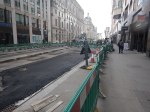
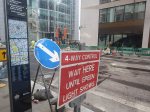
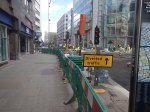




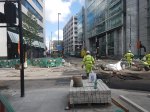
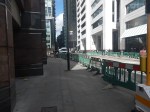



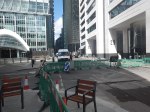
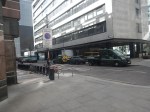
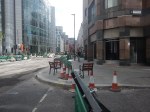
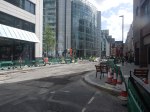






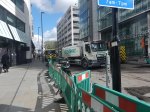
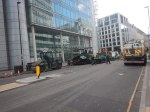
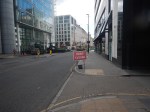
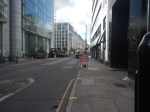

Note.
- I had only gone to the area to get a 141 bus to travel home and found that no buses were running on Moorgate.
- There was no information or signs displayed to help travellers.
- The Marks and Spencer’s store appeared to be completely cut off.
- I believe that this road is the responsibility of the London Borough of Islington, not the City of London.
- Luckily, Leon was unexpectedly open, so I popped inside to have a delicious Full English, gluten-free breakfast and a cup of tea, before my walk.
- Also, one of their staff was tall enough to see over the road works and ascertain, that the buses were running in Finsbury Square.
With difficulty, I was able to walk to the next bus stop on Finsbury Square and get safely home.
I have a few thoughts.
This Was Mushroom Management At Its Worst!
All it needed was a few signs on the bus stop by Moorgate station and dotted around the site to explain the situation, but no-one took the responsibility to provide the information.
Surely, This Is The Type Of Site, Where Hydrogen Powered Construction Equipment Should Be Used!
- It would provide better atmosphere for workers and passers-by.
- Some equipment would be quieter.
Full fleet Of 27 Hydrogen Trains On German Network Will Not Be Deployed Until 2026 — More Than Three Years Late
The title of this post, is the same as that of this article on Hydrogen Insight.
This is the sub-heading.
Full fleet of 27 hydrogen trains on German network will not be deployed until 2026 — more than three years late
The Alstom fuel-cell trains were ordered back in 2019 in a €500m contract and were supposed to be fully operational in December 2022… but problems have persisted.
To read the rest of the article, I need to register, but from this article, for my argument, I only only need the fact that the trains are three years late.
But the introduction of hydrogen buses into service hasn’t been without its problems in the UK and projects have been dropped.
So have Alstom decided to take a closer control of the technology to bring this flagship project on track? Hence the deal, I talked about in Alstom And Cummins Make A Deal On Hydrogen Rail Technology.
Will the del also breathe new life into the agreement I talked about in Alstom And Eversholt Rail Sign An Agreement For The UK’s First Ever Brand-New Hydrogen Train Fleet?
This is Alstom’s visualisation of the Hydrogen Aventra.
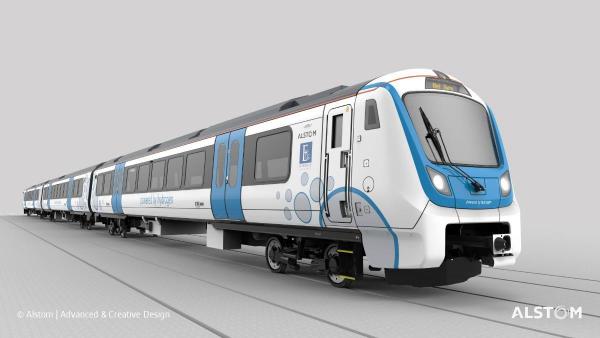
But I certainly think, that a multinational hydrogen-tri-mode train built in Derby by a French-owned company on a proven and reliable 125 mph platform, with German fuel cells, running on Cheshire hydrogen, through spectacular Welsh countryside could be an easy proposition to sell to Fat Controllers.
World Cup 2026: Fans To Pay $150 For Train Ticket To Stadium
The title of this post, is the same as that of this article on DW.com.
This is the sub-heading.
Transportation costs for World Cup fans traveling to US stadiums could be more than 10 times higher than regular fares. Local officials and FIFA bosses are trading blame for the increased prices while fans feel fleeced
These three paragraphs add some detail.
Football fans trying to get to MetLife Stadium from New York City for the World Cup matches this summer will have to pay $150 (€127) for a round-trip, according to local transportation officials.
The price is almost 12 times higher than the usual $12.90 fare for the 15-minute trip from Penn Station in Manhattan to the stadium in East Rutherford, New Jersey.
“We are going to charge $150 for our roundtrip ticket on our system. So from New York to MetLife, MetLife back to New York,” said Kris Kolluri, the president and CEO of NJ Transit.
For less than the equivalent of $150 dollars, I could get a ticket from my house to any of the Premier League grounds in England and some will take a lot longer than 15 minutes.
Welcome to Trumpland, where the World Cup is primarily to make money.

