The Lincolnshire Wind Powerhouse
In August 2022, reports started to appear about the Outer Dowsing Wind Farm, like this article on offshoreWIND.biz, which is entitled Corio, Total Submit Scoping Report For 1.5 GW Outer Dowsing Offshore Wind Project.
There is now a web site.
- Outer Dowsing Offshore Wind is a 1.5GW project located approximately 54km off the Lincolnshire coast.
- It is a joint project between TotalEnergies and Corio Generation.
This map from the Outer Dowsing Wind Farm web site, shows the location of the wind farm.
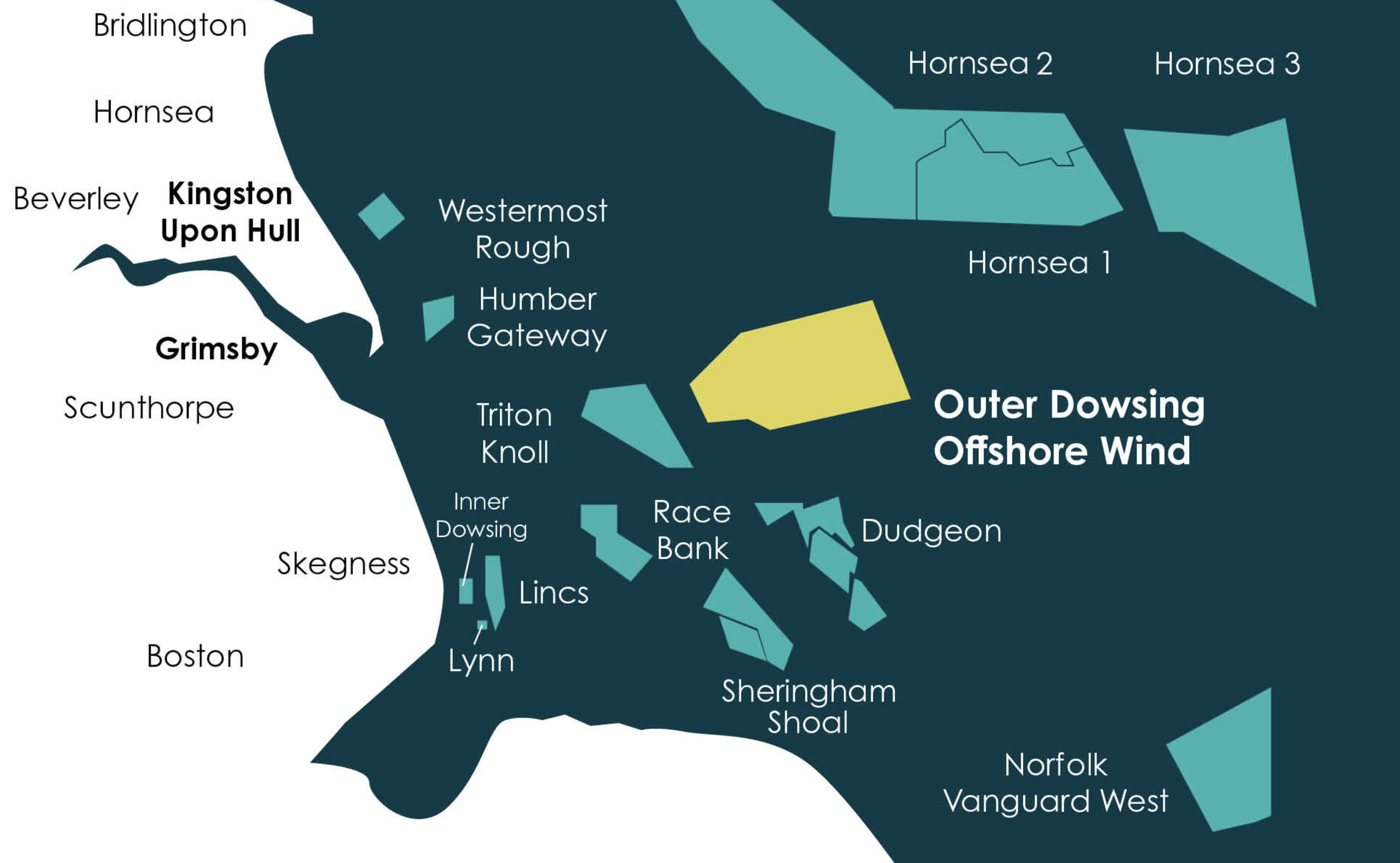
These are the sizes of the various windfarms, that are shown on the map.
- Dudgeon – 402 MW
- Hornsea 1 – 1218 MW
- Hornsea 2 – 1386 MW
- Hornsea 3 – 2852 MW
- Hornsea 4 – 1000 MW – Not shown on map.
- Humber Gateway – 219 MW
- Lincs – 270 MW
- Lynn and Inner Dowsing – 194 MW
- Norfolk Vanguard West – No information, but Norfolk Vanguard is 1800 MW
- Outer Dowsing – 1500 MW
- Race Bank – 580 MW
- Sheringham Shoal – 317 MW
- Sheringham Shoal and Dudgeon Extensions – 719 MW
- Triton Knoll – 857 MW
- Westernmost Rough – 210 MW
Note that these total up to 11724 MW, but with Norfolk Vanguard the total is 135224 MW.
Gas-Fired Power Stations
There are also several active gas-fired power stations.
- Immingham – 1240 MW
- Keadby – 734 MW
- Keadby 2 – 893 MW
- Keadby 3 – 910 MW – Planned to be fitted with carbon capture.
- Saltend – 1200 MW
- South Humber Bank – 1365 MW
- Spalding – 860 MW
- Sutton Bridge – 819 MW
Note that these total up to 8021 MW.
Viking Link
The Viking Link is a 1.4 GW interconnector, that links Bicker Fen in Lincolnshire and Denmark, that should be operational at the end of 2023.
Gas Storage
There are two major gas storage facilities in the rea.
- Aldbrough Gas Storage is formed of salt caverns to the North of the Humber.
- Rough Gas Storage is to the East of the Humber in a depleted gas field.
Both will eventually be converted to store hydrogen, which could be used by local industrial users or the proposed hydrogen power station at Keadby.
The Caledonia Wind Farm
Another of the ScotWind wind farms, that I described in ScotWind Offshore Wind Leasing Delivers Major Boost To Scotland’s Net Zero Aspirations, has been given a name and a web site.
This map shows the various ScotWind leases.

Note, that the numbers are Scotwind’s lease number in their documents.
9 is now Caledonia.
- It has grown from a 1,000 MW fixed foundation wind farm and is now 2,000 MW.
- A completion date of 2030 is now given.
The wind farm will be the fourth development in the area, after the 598 MW Beatrice, the 950 MW Moray East and the 882 MW Moray West wind farms. That is a total of nearly 4,500 MW.
Caledonia’s Unique Advantages
On the About Caledonia page on the Caledonia Wind Farm web site, there is a section called Caledonia’s Unique Advantages, which has four sections.
Water Depths
Caledonia’s water depths are 40 to 100 m. Three-quarters of the site is at depths that allow for fixed (rather than floating) foundations.
This means the majority of the site can be built using the same type of jacket foundations which Ocean Winds optimised at Moray East, seeing Caledonia implement a proven, low-risk, low-cost engineering solution.
Wind
The wind resource at Caledonia is proven through the experience of previous projects and is of a magnitude more usually associated with deeper waters, further from shore. This means Caledonia will benefit from an excellent wind resource, yielding a higher output at lower costs.
Distance from Shore
Caledonia is around 40km from shore and 70km from the nearest National Grid connection point. Beyond distances of approx 120km, DC technology becomes a necessity for subsea transmission. This means the additional costs associated with installing AC-DC convertors offshore and DC-AC convertors onshore can be avoided and the onshore substation will be smaller so will require less land and have a lesser impact on the surrounding environment.
Environment
The Moray Firth is the home of commercial-scale offshore wind generation in Scotland. Caledonia neighbours the Moray East, Moray West, and Beatrice sites, and Ocean Winds have had a presence here from the beginning of the area’s offshore wind development.
Conclusion
It does appear that if you do your planning well on projects like these, there are benefits to be reaped in terms of size, construction, capacity and financial returns.
MingYang Turbines to Spin on Hexicon’s Floating Offshore Wind Project
The title of this post, is the same as that of this article on offshoreWIND.biz.
This is the sub-heading.
Hexicon has selected China-headquartered Mingyang Smart Energy (Mingyang) as the preferred turbine supplier for its flagship 32 MW TwinHub floating offshore wind project in the UK.
These two paragraphs add a bit more detail.
Hexicon has also awarded Mingyang the wind turbine generator Front-End Engineering Design (FEED) contract for the project, which is located 16 kilometres off the coast of Cornwall, England.
TwinHub will use Hexicon’s TwinWind floating foundation technology which will allow two of Mingyang’s MySE 8.0-180 wind turbines to be placed on a single foundation, which could enable more energy to be generated in a given area while reducing the environmental impact compared with a single foundation.
Hexicon’s flagship project secured a Contract for Difference (CfD) in the UK Government’s most recent allocation round.
Harringay Station – 20th November 2022
This article on Rail Advent, is entitled Essential Improvements Programme For Harringay Station Gets Underway!
These two paragraphs outline the work to be done.
Harringay station will see major improvement work carried out including vital work to reinforce the footbridge which is located inside the station, making it fit for purpose into the future. The bridge is also the home of the old ticket office which will also be relocated in order to comply with building regulations.
Both platforms will see brand new waiting shelters and will allow passengers heading to destinations like Welwyn Garden City, Stevenage and Moorgate are able to keep dry in a sheltered location whilst waiting for their train leading to improved passenger experience.
It appears the work will not inconvenience passengers.
So earlier today, I went to have a look at Harringay station.

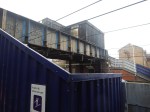
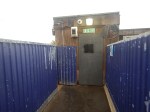
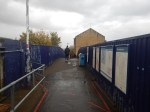

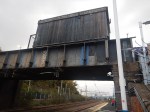



Note.
- All trains calling at the station are Class 717 trains.
- The old ticket office is on the bridge.
- The platforms are rather narrow.
- The train-platform access is not good.
The bridge has certainly seen better days, but then it does date from 1885.
I have some thoughts.
Digital Signalling
Digital signalling is being installed on the Great Northern route and the Hertford Loop Line and this could mean up to ten trains per hour (tph) into Moorgate.
The Current Service
At present there seems to be only two tph on these two routes.
- Moorgate and Stevenage via Hertford North
- Moorgate and Welwyn Garden City
This is an insult and both routes need at least four tph all day to attract passengers.
The Ultimate Service
It can certainly have a frequency of around eight tph between Moorgate and Alexandra Palace stations.
But no predictions have been made about what frequency will be used once the signalling is complete.
What A Depressing Opening Game For A World Cup!
I’m sure that the game would be more exciting if Hartlepool and Forfar had been asked to put on an exhibition match.
I think the score was three-nil to Ecuador, as like the BBC panel, I can’t see any fault with the goal that was disallowed by VAR. But then like the BBC panel, I haven’t accepted any brown envelopes!
German Startup EVIA AERO Commits To Hydrogen-Powered Britten-Norman Islanders
The title of this post, is the same as that of this article on Simple Flying.
These two paragraphs outline the deal.
EVIA AERO has signed a letter of intent with Cranfield Aerospace Solutions (CAeS) to increase its order for hydrogen modification kits and aircraft. As part of the agreement, the startup airline expects to receive five additional hydrogen modification kits and ten 19-seat aircraft.
The hydrogen modification kits are designed to power the nine-seat Britten-Norman Islander aircraft and come in addition to a previous order with CAeS for 10 kits.
I can remember seeing the Islander prototype at a Farnborough Air Show in the mid-1960s on the BBC with commentary from the iconic Raymond Baxter.
University Of Manchester And National Grid Team Up To Develop SF6-Free Retrofill Solution For Electricity Network
The title of this post, is the same as that of this press release from National Grid.
This is the introductory paragraph.
National Grid and the University of Manchester are to collaborate on a four-year project to develop a full-scale demonstrator at the Deeside Centre for Innovation, designed to test at scale how the UK can retrofill sulphur hexafluoride (SF6) across its network of high-voltage equipment.
Note.
- Sulphur hexafluoride (SF6) is a gas commonly used in the power industry to provide electrical insulation and arc interruption.
- Eighty percent of sulphur hexafluoride is used in the electricity industry.
- According to Wikipedia, sulphur hexafluoride has several important applications, including a medical one in eye surgery.
- But sulphur hexafluoride is a is a potent greenhouse gas with a global warming potential that is 25,200 times greater than CO2.
It certainly looks to be a good idea to see if the sulphur hexafluoride can be eliminated from electrical equipment and other uses, that may release the gas into the atmosphere.
These paragraphs from the press release outline the project.
The £1.9m project will see experts at Manchester help determine how National Grid can develop a retrofill solution to replace SF6 with an environmentally friendlier alternative without having to replace or otherwise modify the existing equipment.
This solution – to be demonstrated at National Grid’s test facility the Deeside Centre for Innovation – will mean National Grid can avoid the environmental impact and cost of replacing equipment otherwise fit for many more years’ service.
It is not the first time National Grid and the University of Manchester have teamed up on a project exploring SF6 alternatives – a previous initiative which concluded in 2020 is now up for an IET Engineering & Technology magazine innovation award for ‘Best Innovation in Net Zero and Sustainability’.
The press release also says this about the Deeside Centre for Innovation.
National Grid’s Deeside Centre for Innovation in North Wales is the first of its kind in Europe, where electricity network assets can be tested under real life conditions, 24 hours a day, seven days a week.
It certainly seems that National Grid and Manchester University are on top of the problem and have the resources to achieve success in the project.
The Russian Attack On Ukraine
You may wonder what this has got to do with improving transformers and switchgear in Manchester and Wales.
Recently, the Russians have been targeting the Ukrainian electricity network. Are Ukrainian transformers and switchgear insulated with sulphur hexafluoride and if they are how of this potent global warming gas has been released into the atmosphere?
ZERRCI – Zero Emissions Repowering Of Railway Construction Infrastructure
This project was one of the winners in the First Of A Kind 2022 competition run by Innovate UK.
In this document, this is said about the project.
Project No: 10037562
Project title: ZERRCI – Zero Emissions Repowering Of Railway Construction Infrastructure
Lead organisation: EMINOX LIMITED
Project grant: £59,852
Public description: Eminox, HS2 and SCS Railways propose a solution for the delivery of a low emissions, greener
railway. Our solution covers the development of an electric motor and battery system, which can be
retrofitted into existing construction equipment, replacing the traditional diesel engine with a quieter,
cleaner, zero emissions drivetrain. These pieces of plant and equipment will be used as direct
replacements for diesel machines in the constructing and maintaining railway infrastructure.
Eminox is leading this project with its experience in providing cost effective retrofit emissions
solutions and together with HS2 and SCS JV will be involved in demonstrating the first repowered
construction equipment in a real-world rail infrastructure environment.
This proposed venture has been instigated by HS2 in line with their ambition as set out in their Net
Zero Carbon plan for diesel free construction sites by 2029. As the solution will extend the life
expectancy of the machine, it will contribute to HS2’s vision of net-zero by 2035.
This solution will offer a more cost-effective route to zero emissions construction compared to
purchasing similar new electric powered equipment by extending the life expectancy of existing
plant and machinery. With a target of 50% the price of purchasing new excavators it is expected to
incentivise the broader uptake of demand in electric plant and equipment at scale across the
industry supply chain.
Phase 1 of this project aims to deliver a proposal for a prototype zero-emissions excavator. By
performing a feasibility study on the conversion principals, we intend to extract a broad
understanding of the challenges associated with integration and develop an optimised battery and
motor system specification.
Phase 2 will involve the conversion, commissioning and delivery of a repowered excavator, and
subsequent in-service validation. By using this converted machine to conduct initial trials, it will be
proven that no machine functionality or safety features have been compromised during conversion,
and we will establish power storage requirements to provide adequate duty cycle performance.
This will result in a fully proven demonstrator with real-world validation enabling further
development of optimised battery solutions.
My Thoughts And Conclusion
ECML Net Zero Traction Decarbonisation
This project was one of the winners in the First Of A Kind 2022 competition run by Innovate UK.
In this document, this is said about the project.
Project No: 10036245
Project title: ECML Net Zero Traction Decarbonisation
Lead organisation: SIEMENS MOBILITY LIMITED
Project grant: £59,983
Public description: Electrification is the foundation of all modern railways and fundamental to decarbonisation. Through
delivering faster, smoother, quieter and more reliable train services, rail electrification reduces
industry fuel cost by 45%, rolling stock costs by 33%, and track maintenance costs by 10-20%
(compared to diesel operation). Electric railways are the most efficient, lowest carbon form of
transportation in the UK.
Network Rail operates the largest power distribution network in the UK, and is the largest consumer
of electricity in the UK, consuming 4TWh electricity per year. Power is provided from the electricity
supply industry, a mix of gas, nuclear, coal and renewables, emitting approximately 944,000 tonnes
of carbon dioxide annually. Connecting new renewable generation directly to the railway reinforces
the railway power supply, while reducing coal and gas use in the UK and is a longstanding Network
Rail industry challenge statement. To date, engineering incompatibilities between renewable,
electricity supply systems and the railway single-phase electrical and other railway systems have
prevented local renewable connection in rail.
In a world first, Siemens Mobility, working with British Solar Renewables, DB Cargo UK, Network
Rail, ECML operators, and the University of York, will directly connect large-scale renewable
generation to the East Coast Mainline. The demonstrator phase will deliver up to 1GWh green
electricity direct to trains each year, reducing UK gas imports by 151,000 cubic metres and carbon
emissions by 236 tonnes annually. It will gather vital data creating a new green industry, creating a
precedent and setting standards to enable larger scale roll-out across the UK.
My Thoughts And Conclusion
This page on the Network Rail web site is entitled Power Supply Upgrade.
Since 2014, Network Rail and its partners have been upgrading the overhead electrification and the associated substations and electricity supply on the East Coast Main Line (ECML).
- It is not a small project which includes fifty new substations and 1,600 km. of new cabling between London and Edinburgh.
- When complete, fleets of electric trains on the route will be receiving high-quality electric power from the upgraded overhead electrification.
However, the East Coast Main Line is unique among British electrified main lines, in that it runs more or less close to a coast, that is populated by a large number of massive wind farms.
I believe the objective of this project, is to more directly connect the massive wind farms to the East Coast Main Line.
Lessons learned could then be applied to other electrified main lines.
We may even see onshore wind farms or small modular nuclear reactors built to power the railways.
State Of The Railway Compiler Data Solution (SORClite): Open Access Real-Time Signalling Data
This project was one of the winners in the First Of A Kind 2022 competition run by Innovate UK.
In this document, this is said about the project.
Project No: 10038973
Project title: State Of The Railway Compiler Data Solution (SORClite): Open Access Real-Time Signalling Data
Lead organisation: PARK SIGNALLING LIMITED
Project grant: £217,128
Public description: Our project seeks to support Network Rail in regaining understanding and ownership of key
signalling asset information so that this data can be used to adopt new performance measures,
identify bottlenecks within the rail network and target the 800,000 unexplained delay minutes that
occur annually. The project combines a number of existing technologies to deliver the hardware,
pipeline, analytics, and visualisation as a working demonstration. The data stores will also be
available for use by train operators and the wider data analytics supply chain, removing some of
the systemic blockers around access to data.
My Thoughts And Conclusion
 The Anonymous Widower