From October 24th 2022, It Looks Like Bond Street And Oxford Circus Stations In London Will Share An Out Of Station Interchange!
Consider.
- Bond Street station is served by the Jubilee and Central Lines.
- Oxford Circus station is served by the Victoria, Bakerloo and Central Lines.
- On this page on Oyster Fares Central, the distance between Bond Street And Oxford Circus stations, is given as 280 metres or yards.
- On the 24th of October 2022, Bond Street station on the Elizabeth Line will open with two new entrances in Davies Street and Hanover Square.
- Westminster City Council have refurbished Hanover Square to improve walking routes to and from the Hanover Square entrance to Bond Street Station.
- In Hanover Square – 9th May 2022, I show some of the wide pavements around the area.
- There is no direct interchange between the Victoria and Elizabeth Lines.
- There is no direct interchange between the Piccadilly and Elizabeth Lines.
I think it is likely, that some travellers will walk between Oxford Street station and the Hanover Street entrance at Bond Street station, to do journeys like these.
- Victoria Line stations and Elizabeth Line stations
- Piccadilly Line stations, that are North of Finsbury Park station and Elizabeth Line stations, with a cross-platform change between Piccadilly and Victoria Line trains at Finsbury Park station.
- Some travellers may prefer this interchange between Bakerloo Line stations and Elizabeth Line stations, than use the Bakerloo Line Link at Paddington.
- Some travellers arriving in Euston, King’s Cross and St. Pancras may use the Victoria Line to transfer to the Elizabeth Line.
I can see a substantial number of travellers walking between Oxford Street station and the Hanover Street entrance at Bond Street station.
I suspect Transport for London can too, as they have made Bond Street and Oxford Circus stations an out of station interchange, with a time limit of twenty minutes.
- It would be time enough to pick up a coffee on the way.
- As Tony Hancock once said, there would be time for a cough and a drag.
- There are several useful shops on the route.
It is not your normal interchange and I suspect shops will adjust their wares to the traffic.
I have a few thoughts.
Toilets
I think toilets are needed on the pedestrian route.
Interchange With The Central Line At Bond Street Station
Consider.
- From West to East the Elizabeth Line has interchanges with the Central Line at Ealing Broadway, Bond Street, Tottenham Court Road, Liverpool Street and Stratford.
- Passengers for stations like Notting Hill Gate, Marble Arch, Holborn, St. Paul’s and Bank will have a large choice of new routes.
I suspect many passengers will change at Bond Street and Stratford. Stratford is an easy interchange, but how good will Bond Street be?
This visualisation shows the knitting that connects the lines at Bond Street station.
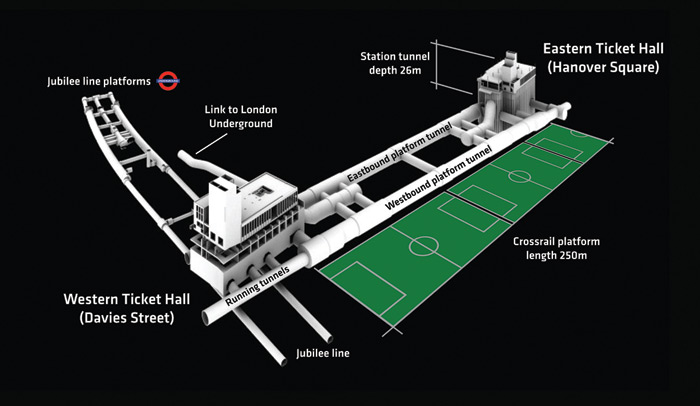
I think for a fast interchange, using the minimum amount of walking, you would need to travel in the Western end of an Elizabeth Line train if you want to change to the Central Line.
But some passengers might prefer to travel in the Eastern end of an Elizabeth Line train and use the out of station interchange to Oxford Circus station for the Central Line.
Interchange With The Jubilee Line At Bond Street Station
Consider.
- From West to East the Elizabeth Line has interchanges with the Jubilee Line at just Bond Street and Stratford.
- Passengers for stations like Green Park, Westminster, Waterloo, London Bridge and Greenwich will take the Jubilee Line.
Passengers will have to change at Bond Street or Stratford. Stratford is an easy interchange, but how good will Bond Street be?
Norwegians Developing Monopile Foundation For 100-Metre Depths
The title of this post, is the same as that of this article on offshoreWIND.biz.
Monopile foundations are a common fixed foundation for offshore wind farms.
The article starts with this paragraph.
Norway’s Entrion Wind and Techano AS have signed a Memorandum of Understanding (MoU) through which Techano AS will join the ongoing development and test project planned to take place in Kristiansand, Norway for the patent-pending fully restrained platform (FRP) offshore wind foundation technology said to extend the operating depth of the monopile technology to up to 100 metres.
It does seem that the Norwegians are intending to take this type of foundation to new heights. Or is it new depths?
A picture in the article shows a tall monopole held in position by three wires securely anchored in the sea-bed. It reminds me slightly of the sort of flag-poles, that we used to build in Scout camps in the 1960s, using Scout staves, ropes and tent pegs.
But seriously in the 1970s, I did the calculations for a company called Balaena Structures, who were trying to develop a reusable oil and gas platform.
- The company had been started by two Engineering professors from Cambridge University.
- The platforms were formed of a long steel cylinder, which would have been built horizontally in the sort of ship-yards, that were used to build supertankers.
- They were to be floated out horizontally and then turned upright.
- Weight and the gumboot principle would have kept them, in place.
The design also included a square platform on the top end. Originally, they were planning to put the platform on top after erection, but I showed that, it would be possible to erect cylinder and platform, by just allowing water to enter the cylinder.
The project had a somewhat unfulfilling end, in that they never sold the idea to an operator and the company closed.
But I still believe something similar has a future in the offshore energy industry.
It could be a foundation for a wind turbine or possibly as I indicated in The Balaena Lives, it could be used to clear up oil field accidents like Deepwater Horizon.
Could This Be A Design For A Hundred Metre Plus Monopole Foundation?
Construction and installation would be as follows.
- A long cylinder is built in a ship-yard, where supertankers are built.
- One end, which will be the sea-bed end after installation, is closed and has a skirt a couple of metres tall.
- The other end is profiled to take the transition piece that is used as a mount for the wind turbine.
- A float would be added to the top end for tow-out. This will help the cylinder to float and erect.
- Water would be added into the cylinder and, if the dimensions are correct, it will turn through ninety degrees and float vertically.
- It would be towed to a dock, where a large crane on the dock would remove the float and install the turbine.
- The turbine and its foundation would then be towed into place and by adding more water lowered to the sea-bed.
- The float would be reused for the next turbine.
Note.
- The float is needed to nudge the cylinder to turn vertically.
- If the Cambridge professors were right, the skirt and the weight of water would hold it in place.
- Traditional moorings could be added if required.
- No heavy lifts are performed at sea.
- The concept would surely work for a floating turbine as well.
But then what do I know?
I was just a twenty-five year old engineer, mathematician and computer programmer, who did a few calculations and a dynamic simulation fifty years ago.
Knightsbridge Station – 21st October 2022
I last visited Knightsbridge station in April, this year, when I wrote Knightsbridge Station – 25th April 2022.
Construction has moved on in the six months since I visited, as these pictures show.






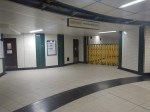

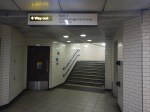
Note.
- After arrival at the station, I left using the exit at Harrods and then walked back along Brompton Road to Harvey Nicholls.
- The entrance for the lift is in an alley. According to this article on Ian Visits, two lifts are needed to get to the platforms.
- The ticket hall is under the Burberry store and has three entrances with steps.
- One unusual feature of the ticket hall, is that it has a micro-Starbucks. Is this idea going to be repeated?
In Ian’s article, he describes the step-free entrance like this.
By reusing some old tunnels, and a side alley around the corner, they will be making the station step-free for the first time. The station used to have lifts from the street down to a corridor that then linked to the platforms via a short set of stairs, but was taken out of use in the 1930s when escalators were added.
What’s being done is that a new entrance, with ticket barriers, has been created in Hooper’s Court, and there will be two lifts that will take people down to just above platform level where the old corridors are still available. There will then be a second small lift to link the corridor down to the platform level.
It looks like it was rather a tight squeeze to get everything in. But then in Knightsbridge, the space for a single toilet will cost at least a couple of millions.
EVIA AERO Orders 25 Eviation Alice Aircraft
The title of this post, is the same as that of this article on Aviation Source.
The Wikipedia entry for the nine passenger Eviation Alice lists these orders.
- Cape Air – 75
- Deutsche Post – 12
- GlobalX Airlines – 50
The EVIA AERO order brings the total to 162.
The larger thirty passenger Heart Aerospace ES-30 is reported in Wikipedia to have 230 orders and a hundred options, with more letters of intent.
Companies, who have proposed to buy the ES-30 include Air Canada and United Airlines.
These are substantial numbers of aircraft and they convince me that one or both of these aircraft will fly fare-paying passengers before the end of the current decade.
Floating Wind Farms At Sea To Create 29,000 Jobs – Crown Estate
The title of this post, is the same as that of this article on the BBC.
These three paragraphs introduce the article.
Plans to generate electricity through floating wind farms off the south Wales coast could create thousands of new jobs, according to the Crown Estate.
The property business owned by the monarch but run independently said the new industry could create about 29,000 jobs, including 10,000 in Wales.
It is leasing the space to generate enough power for four million homes.
Will Wales be the world’s next offshore wind powerhouse?
Wind power experts have said there is a potential for 50 GW of offshore wind power in the Celtic Sea and the BBC article talks of an investment of £43.6 billion by 2050.
The process has started, but will the engineers be able to tame the dragons?
RWE Looking for Innovators To Boost UK’s Offshore Wind Supply Chain
The title of this post, is the same as that of this article on offshoreWIND.biz.
RWE appear to be looking for innovators in three areas.
- Autonomous solutions and the best way to integrate them into wind farm site investigations, construction, and operations and maintenance (O&M) is the first challenge for which RWE is looking for responses.
- The second challenge is about solutions to measure and reduce the environmental impacts of offshore wind farm construction and operations on birds.
- The last challenge focuses on ideas and innovations in cable monitoring and protection, aiming to secure a reduction in offshore wind farm cable failures.
As sums of around £25,000 are talked about in the article, it could be worth applying, if you have a relevant idea.
Is it slightly flattering to the UK’s skills, that a German company is backing British innovation?
But then I was involved in a British invention, which was also backed by the Germans and made me a reasonable amount of money.
More Than Half Of London-Edinburgh Travellers Now Going By Train Instead Of Plane
The title of this post is the same as that of this article on The Independent.
As Lumo seem to be a success on London and Edinburgh, surely a similar service should run between London and Glasgow.
Grand Union are trying to run a London and Stirling service, but it doesn’t seem to be getting close to starting.
National Grid’s North Sea Link Strengthens Electricity Supply And Repays Its Carbon Cost In Just Six Months
The title of this post, is the same as that of this press release from National Grid.
These are three bullet points from the press release.
- World’s longest subsea electricity cable has been in operation since Oct 2021.
- 5.7 terawatt (TWh) hours of clean power have been shared between GB and Norway, strengthening security of supply for consumers in both countries.
- It has saved 800,000 tonnes of carbon in the first year, paying off its carbon cost after only six months of operation.
This must surely be considered a good start.
These two paragraphs describe the operation in the first year.
During its first year of operation, the link has imported 4.6 TWh of clean electricity – enough to power 1.5 million British homes for a year.
North Sea Link has also exported 1.1 TWh to Norway, demonstrating the vital role that interconnectors play in strengthening energy security and maximising the benefits of clean energy sources for consumers across the UK and Europe.
In The Monster In The Mountains That Could Save Europe’s Winter, I describe what makes the North Sea Link so important.
It gives the UK access to the Norwegian Bank Of Electricity or Ulla-Førre, which is a complex of five hydroelectric power stations and a massive lake in the Norwegian mountains to the East of Stavanger.
- The power stations have a total generating capacity of 2.1 GW.
- Lake Blåsjø is able to hold enough water to generate 7800 GWh of electricity.
- Ulla-Førre can also supply electricity to Germany, through the 1.4 GW NordLink.
If Ulla-Førre has a problem, it is that if Norwegian weather is dry, the filling of Lake Blåsjø could be difficult, which is where the interconnector comes into its own, as excess UK wind power or the 1,185 MW Hartlepool nuclear power station, can be used to send electricity to Norway for storage.
In An Update To Will We Run Out Of Power This Winter?, I predicted we will add the following capacity to our renewable generation in the next three years.
- 2023 – 2925 MW
- 3024 – 3726 MW
- 2025 – 6476 MW
This is a total of 13,127 MW.
As a Control Engineer, I can see the following happening.
- Several of the UK’s gas-fired power stations will be mothballed.
- Some of the UK’s gas-fired power stations will be fitted with advanced control systems so they can supply more precise amounts of electricity.
- Some UK electricity is stored in Ulla-Førre for onward sale to Germany.
- Some UK electricity is stored in Ulla-Førre for withdrawal back to the UK, when needed.
One of Ulla-Førre’s main tasks could be to ensure that no UK electricity is wasted.
Conclusion
With all these wind generated electricity and electricity transfers, the Crown Estate, National Grid and the Treasury should be coining it.
The Germans are already building the 1.4 GW NeuConnect between the Isle of Grain and Wilhelmshaven to import more electricity.
But I do believe that another interconnector will be needed.
National Grid Installs LineVision Sensors To Expand The Capacity Of Existing Power Lines
The title of this post, is the same as that of this press release from National Grid.
These are four bullet points from the press release.
- LineVision’s Dynamic Line Rating (DLR) technology trialled for first time in Great Britain following successful deployment on National Grid’s electricity networks in the US.
- The sensors and data analytics platform will highlight spare capacity on overhead power lines allowing for the integration of more renewable power.
- Technology has the potential to unlock 0.6GW of additional capacity, enough to power more than 500,000 homes and save £1.4 million in network operating costs per year based on the results from the US networks.
- Combined with the construction of new infrastructure, the innovative technology forms part of National Grid’s work to upgrade and adapt the electricity network to meet increased demand and help deliver a net zero grid.
In some ways this seems like the sort of story, that could be filed under Too-Good-To-Be-True.
But as a Graduate Control Engineer, I’m willing to give National Grid and LineVision the benefit of the doubt.
- It appears to be technology proven in the United States.
- That experience should feed over, once the manuals are translated into the dual English-American form of English.
- I suspect that applying this technology to interconnectors could increase their capacity.
- I also think that as we add more storage, power sources or interconnectors to our electricity network, this will open up more savings.
- As the UK power network gets more complicated, the system should come into its own.
This is an excellent decision by National Grid.
The Whitechapel Shortcut
Note that this post is unfinished.
When the East London Line of the London Overground opened just over a decade ago, the interchange with the District and Hammersmith and City Lines at Whitechapel station was not one of the best.
- There were no lifts.
- The stairs were too narrow and inadequate for the number of passengers using the interchange.
- Adding extra Overground trains to Clapham Junction station didn’t help.
If the Elizabeth Line had been added without extra work, the station’s passageways and stairs would have jammed solid.
- But improvements were added, when the station was expanded to handle the Elizabeth Line.
- A wide interchange plaza was created between the Eastern ends of the District and Hammersmith and City Line platforms.
- A double-width spiral staircase was installed between the Eastern end of the interchange plaza and the Southbound East London Line of the Overground.
- A convenient lift was installed alongside the spiral staircase.
- The original staircases to and from the Northbound East London Line of the Overground were updated and augmented by a lift.
- Passengers entering or leaving the station, were given alternative routes to avoid the interchange plaza.
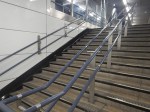
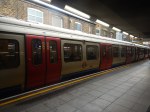
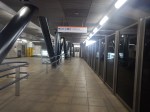
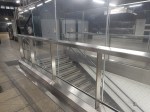
These pictures show the interchange plaza and the various lifts and staircases.
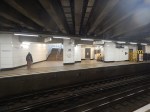

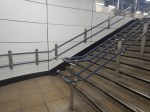









Note.
- The spiral stairs and the lift at the Eastern end of the plaza.
- The Eastern ends of the District and Hammersmith and City Line trains connect directly with the plaza.
It seems to be working well, since the opening of the Elizabeth Line.
Using The Whitechapel Shortcut
There are eight ways to change between the District and Hammersmith and City Lines and the Overground at Whitechapel station.
Southbound Overground To Westbound District And Hammersmith and City Lines
Today, I travelled between Haggerston and Moorgate stations, which I wrote about in From Haggerston To Moorgate.
I could have changed at Whitechapel station for the brand-new Elizabeth Line, but this would have meant a long walk to get to the Moorgate end of Liverpool Street station.
So I did this.
- I got in the front carriage of the Overground train at Haggerston station, which was conveniently by the lift at the station.
- This meant that on exiting the train, I was by the lift to the interchange plaza at Whitechapel station.
- The lift took me up a level to the District and Hammersmith and City Line platforms.
- I got in the rear carriage of a Hammersmith and City Line train to Moorgate station.
- This positioned me by the lift to the exit at Moorgate station.
I would be surprised if I walked much more than sixty metres between the two station entrances, as against the road distance of around two-and-a-half miles.
Southbound Overground To Eastbound District And Hammersmith and City Lines
This is very similar to the previous section except that you take the District And Hammersmith and City Line trains from the opposite platform.
Northbound Overground To Westbound District And Hammersmith and City Lines
There are two staircases and two lifts between the Northbound Overground and the interchange plaza.
Choose your stairs or lift and then take the Westbound District and Hammersmith and City Line.
Northbound Overground To Eastbound District And Hammersmith and City Lines
This is very similar to the previous section except that you take the District And Hammersmith and City Line trains from the opposite platform.
Westbound District And Hammersmith and City Lines To Southbound Overground
Eastbound District And Hammersmith and City Lines To Southbound Overground
Walk to the interchange plaza and choose the spiral stairs or lift.
Westbound District And Hammersmith and City Lines To Northbound Overground
Eastbound District And Hammersmith and City Lines To Northbound Overground
Walk to the interchange plaza and choose your stairs or lift.
Conclusion
It’s all very quick and painless.
 The Anonymous Widower