Greater Manchester’s First Low Carbon Hydrogen Hub To Be Developed As Part Of New Collaboration
The title of this post, is the same as that of this article from Manchester Metropolitan University.
This is the first two paragraphs.
A new partnership aims to support ambitions for Greater Manchester to become the first Net Zero region in the world by 2040, with the planned installation of the city’s first low-carbon hydrogen hub.
For the first time, sustainable hydrogen fuel will be produced at scale in the region, creating opportunities for businesses in the area to make Net Zero plans with hydrogen in mind.
It doesn’t say much about the hydrogen hub, but from other sources, I have found the following.
it appears it will have the capability of producing 200 MW of green hydrogen.
- Carlton Power is the main developer.
- It will be built on the Trafford Low Carbon Energy Park.
- Building will start next year with operation scheduled for 2023.
- It will be built near Highview Power’s 50MW/250 MWh CRYOBattery.
It sounds ambitious. Especially, as it appears Carlton Power are talking about developing another ten similar sites in the UK.
Grand Union Plans ‘93s’ To Stirling
The title of this post, is the same as an article in the August 2021 Edition of Modern Railways.
This is the first paragraph.
Grand Union Trains hopes to use tri-mode Class 93 locomotives ordered by Rail Operations (UK) Ltd on its proposed Stirling to London Euston open access service – if it is approved by the Office of Rail and Road.
The article also says that they will be using nine-car rakes of Mark 4 coaches and a driving van trailer.
- Full-length InterCity 225 trains have the same formation.
- A full-length InterCity 125 can carry 406 Standard Class and 129 First Class passengers.
- InterCity 225 trains are hauled by a Class 91 locomotive, which is rated at 4.8 MW.
- A Class 93 locomotive has a rating of 4 MW on electricity.
As the Class 93 locomotive has a maximum speed of 110 mph, as opposed to the 125 mph of the Class 91 locomotive, the reduced power is probably enough.
Th following sections give more information from the article.
Planned Route
This sentence from the article gives the route.
If approved, trains will call at Greenfaulds, Whifflet and Motherwell on their way south from Stirling, then Lockerbie, Carlisle, Preston, Crewe and Nuneaton before arrival in London.
The route appears to be fully-electrified.
Planned Timetable
More details of the planned service are also revealed.
- Trains will be approximately every three hours.
- There will be four trains per day in each direction.
- The first train South will leave Stirling at 05:15
- The first train North will leave Euston at 07:30.
That will be a total of around 3,500 seats per day or over a million seats per year.
Planned Start Date
A start date around the end of 2022 is suggested, but it does say that delivery of the Class 93 locomotives could make this tight.
But it does appear that gauge clearance for the service is in hand.
Conclusion
I like this service proposal and I think the Class 93 locomotive improves it.
I do think if Grand Union’s service is an operational success, that we will see these locomotives replacing Class 68 locomotives on passenger services, where there is a proportion of electrification.
Could the almost brand-new Class 68 locomotives be converted to run on hydrogen, as surely they are too young for the scrapyard?
Stadler are not stupid and I suspect they could be converted to something with a smaller carbon footprint. My choice would be hydrogen.
Dublin Energy Start-up Targets $2 trillion Offshore Wind Sector
The title of this post, is the same as that of this article on the Irish Times.
The article gives a few clues, as to what Gazelle Wind Power are about.
This is the sub-title.
Gazelle Wind Power raises $4m to develop its hybrid floating offshore wind platform
What is a hybrid floating offshore wind platform?
I have form in the subject of large floating structures, as I did the calculations for a Cambridge-based company called Balaena Structures, that was proposing floating oil production platforms.
The company failed and I got paid, but their ideas returned to obscurity.
However, from that brief interlude in my life, I believe that there are innovative floating designs that could benefit the wind power industry.
This paragraph sums up the platform.
Overall the company estimates its solution costs half the price of other platforms to manufacture and 60 per cent less in terms of installation fees, while providing savings well above €1 million per megawatt.
I’ll go along with that, as the Balaena was very affordable and very stable.
The company has also recruited some powerful advisors, as this paragraph shows.
Gazelle recently named an elite group of energy industry veterans to its board of directors that includes Dr Javier Cavada, chief executive of Highview Power, Pierpaolo Mazza, a former general sales manager at GE Power, and Connie Hedegaard, former minister of environment to Denmark.
I have a feeling Gazelle Wind Power could be on to something.
Does the presence of the chief executive of Highview Power mean they are developing a floating platform with energy storage?
I remember that Balaena’s platform was very stable and as it was for oil and gas production, it had plenty of processing equipment on top.
Certainly, a wind turbine in the megawatt range with power storage would be a useful system.
Will Whitechapel Station Have The Widest Platform On The Underground?
I took this picture across the island platform for the Sub Surface Lines at Whitechapel station, this morning.
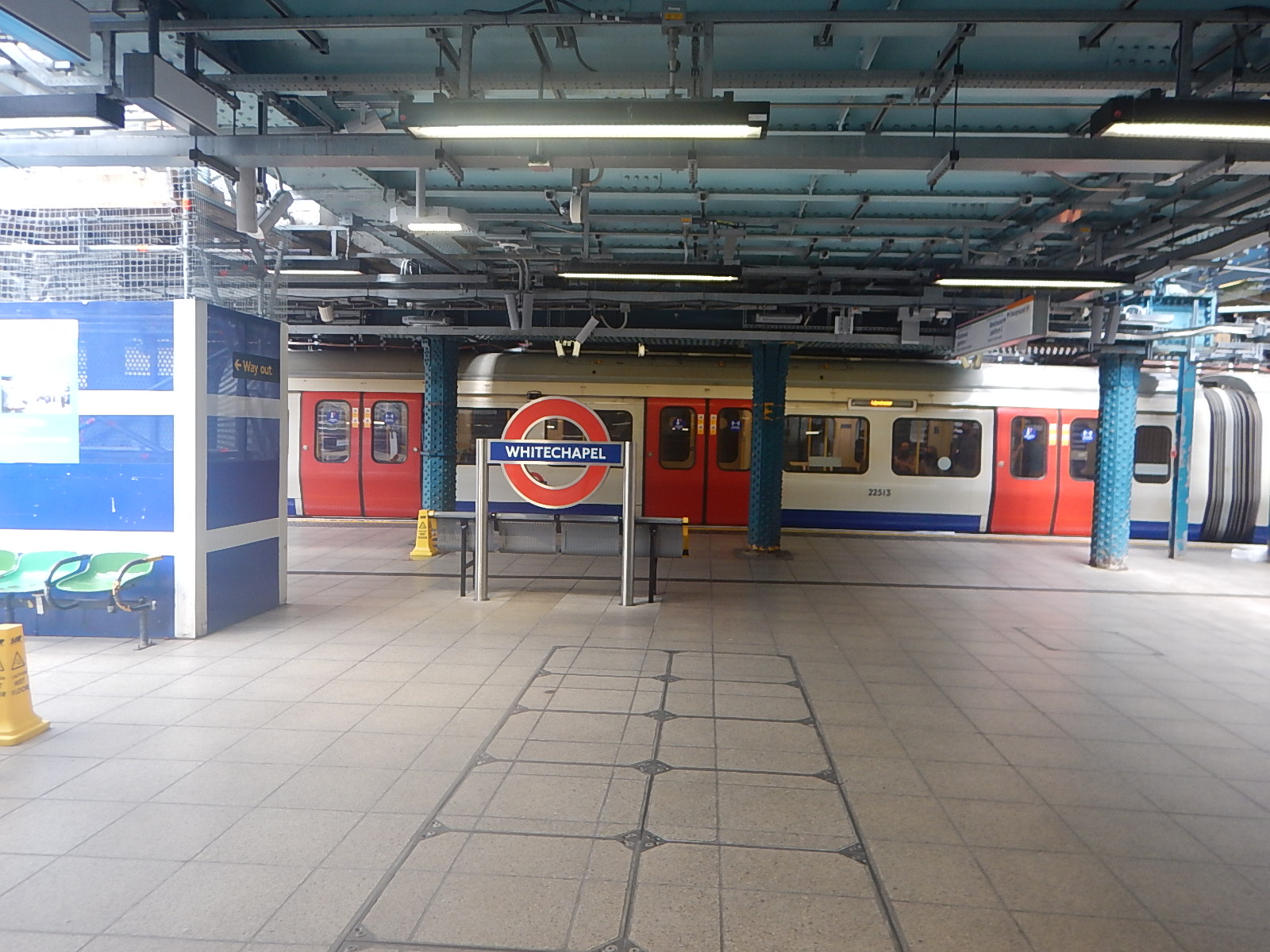
It will certainly be a wide platform, when the station is completed.
It is also shown on this map from carto metro of the lines through the station.
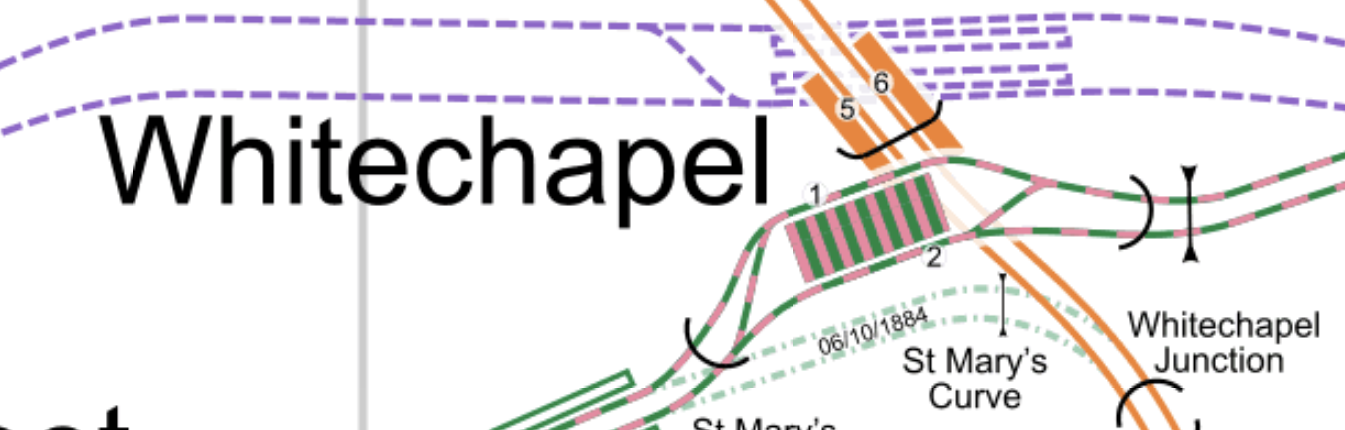
Note.
- Crossrail is shown in purple.
- The Overground is shown in orange.
- The Sub Surface Lines are shown in green and red.
Platforms 1 and 2 form a very wide island platform.
The station is unique in that three full-size high-capacity and high-frequency lines connect at the station.
- Crossrail – East-West – 24 tph – 1,500 passengers per train.
- Sub Surface Lines – East-West – 21 tph – 1209 passengers per train
- Overground – North-South – 16 tph – 170 passengers per train
A lot of passengers will change trains at Whitechapel station, so the spacious platform will be useful.
Will passengers also use the platform to reverse direction.
The quickest way between Liverpool Street and Blackfriars stations is to get a Circle Line train, but passengers could go two stops on a Hammersmith and City train to Whitechapel, walk across the platform and then take the District Line to Victoria.
Alternatively, you could take Crossrail to Whitechapel to get the District Line.
But the latter is in the advanced course on Ducking and Diving.
Whitechapel Station – 10th August 2021
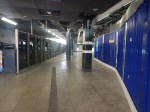
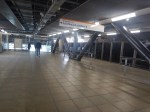
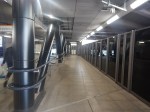
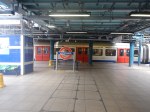
I took these pictures as I passed through Whitechapel station, this morning.






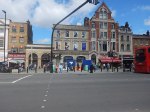


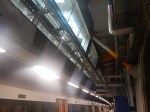
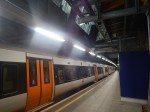
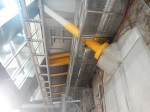

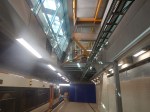


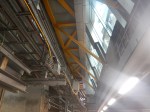
Note.
- Much of the platform lighting on the Sub Surface Lines platforms is now in place.
- The main entrance to the station on appears to be coming on.
- The walkway over the Overground trains appears to be fairly well fitted out.
- There are a lot less blue hoardings generally.
This picture from Crossrail is a visualisation of the Overground platforms, after completion.
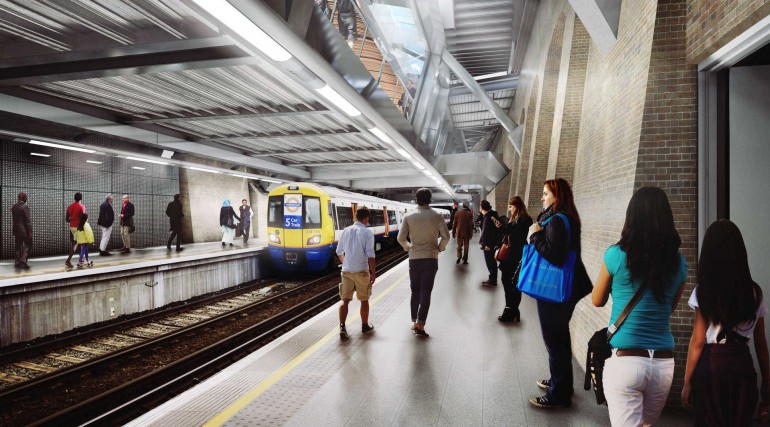
My last five pictures show the final design emerging.
When Will Whitechapel Station Be Finished?
This weekend, the station is closed on Saturday and Sunday. Could the builders be having a big push to get the station ready for opening?
- Your guess as to the finish date is as good as mine!
- The station is gradually coming out of its shell of hoardings and starting to look impressive.
But I did write a post called Is Whitechapel Station Going To Be A Jewel In The East?. I still have high hopes for the station being an architectural gem.
New Company Established To Help Transition Bus Fleets To Hydrogen
The title of this post, is the same as that of this article on H2 View.
These first two paragraphs describe the company.
A new asset financed company has been launched to help design, deliver, and finance the seamless transition to a zero-emissions bus fleet with hydrogen included.
Launched by Wrightbus owner Jo Bamford today (August 9), FUZE will support the energy transition to cleaner variants by offering packages that enable the transition to hydrogen or electric fleets of buses.
If Jo Bamford gets this right, it could certainly smooth the transition to hydrogen and electric buses, where bus companies will be introducing new technology.
The words asset-based make me think, that buses, fuelling systems and chargers could all be hired on a bus-by-the-hour basis in much the same way train manufacturing companies like Hitachi and Stadler supply trains to the train operating companies.
The manufacturers are contracted to supply so many trains each day and if there are reliability or availability problems, then they must compensate the operators. That model would surely work with buses.
- I also suspect the model would allow flexibility, as to the choice of either an electric or hydrogen bus.
- I also think, that the model would be able to provide short-term deals for large events and Rail Replacement services.
- Buses no longer needed could also be returned, repainted and hired by another operator.
- FUZE could also have a standby fleet, so any bus operator wanting to try hydrogen buses for a month, could enter into a short-term deal.
I also think that this new generation of buses can open up innovative ideas for bus use. In Three Hydrogen Double Decker Buses Set For Dublin, I describe how Dublin will use just three hydrogen buses to create a fast commuter route.
Conclusion
I like it!
Short Term Hire Of Buses
I have a feeling that if say you wanted to hire a small fleet of buses for say a festival like Glastonbury, that hydrogen buses could be the better bet.
Suppose you wanted to run a fleet of five buses to and from the car park at the nearest rail station.
- Feeding the chargers for five buses will need a substantial electricity feed.
- Hydrogen buses can be refuelled from a mobile fuelling station.
- Hydrogen buses can probably run all day on one refuelling.
The ease of refuelling would appear to favour the hydrogen bus.
The Crossrail Tracks To The West Of Paddington Station
This map from carto metro, shows the track layout to the West of the Crossrail platforms at Paddington station.
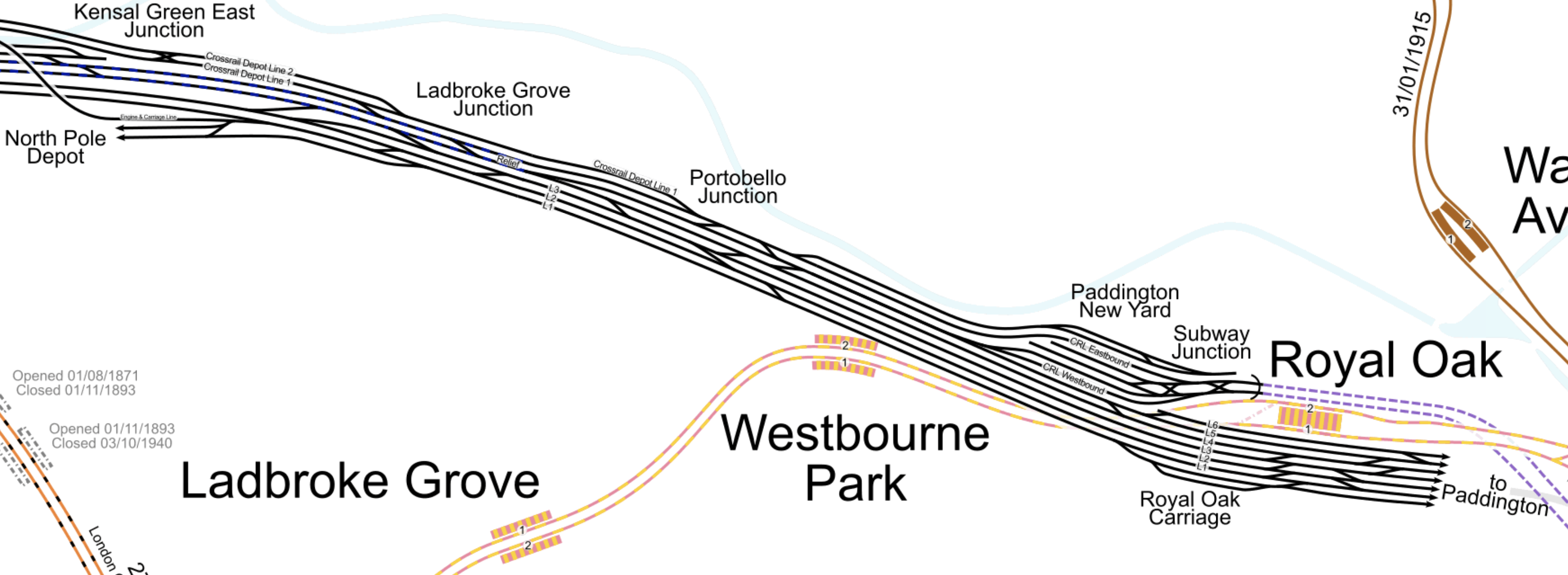
Note.
- The Crossrail tunnels are shown in dotted purple at the Eastern end of the map.
- The tracks change from purple to black at the Royal Oak tunnel portal.
- Two tracks named CRL Eastbound and CRL Westbound appear to pass either side of two turnback sidings.
- These tracks change to purple in colour and can be followed to the Western end of the map.
- Tracks break off from this route to the North and serve the depot at Old Oak Common.
It appears to be a very clean and simple layout.
Crossrail Formally Hands Paddington Station Over To TfL
The title of this post, is the same as that article on Ian Visits.
Ian says this about the current status of the stations.
This is the sixth of the Elizabeth line stations to be transferred over to TfL, following Custom House, Farringdon, Tottenham Court Road, Woolwich and Liverpool Street stations, which leaves only Canary Wharf, Whitechapel and the late running Bond Street to go.
Paddington station certainly looked very ready, when I visited yesterday and took the pictures in The Main Crossrail Entrance At Paddington Station.
The Main Crossrail Entrance At Paddington Station
These pictures show the entrance to Crossrail at Paddington station, which is by Platform 1.
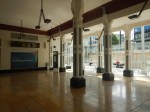

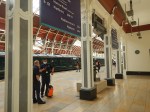




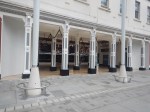
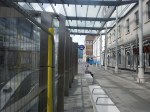

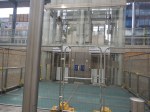




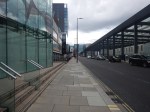

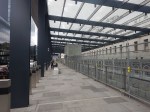

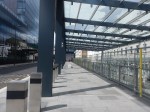
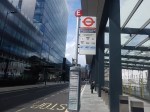
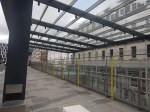
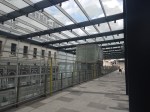
Note.
- The whole entrance is under a massive glass roof.
- Eastbourne Terrace is above the station and connected to it by stairs and a pair of lifts.
- There is a bus stop and short-term parking on Eastbourne Terrace.
- There are a large number of escalators between the main line station and the Crossrail level.
- There are plenty of seats everywhere.
- It is only a short walk between one set of escalators to Crossrail and the shops in the Lawn.
I think Brunel would have liked it, as it has a touch of the over-the-top.
This is a 3D Google Map of the new entrance.

Note.
- The cloud pattern on the roof is clearly visible.
- The lifts to the station are in the middle and the stairs are at the ends of the roof.
- The blue dot shows the position of the bus stop, where about five routes stop.
Will cars and taxis be able to drop people off in Eastbourne Terrace?
Conclusion
It’s an impressive new entrance to the station.
A New Timetable For The East Coast
The title of this post, is the same as that of an article in the August 2021 Edition of Modern Railways.
The Modern Railways article describes in detail the thinking behind the proposed timetable for the East Coast Main Line, that will be introduced in May 2022.
The new titletable would appear to be a compromise and judging by the number of complaints that have appeared in the media, the compromise doesn’t suit everyone.
A lot of my programming was concerned with the allocation of resources in large projects and that expertise convinces me, that the East Coast Main Line doesn’t have enough capacity to accommodate all the services that passengers need and train companies want to run.
These are my thoughts.
High Speed Two
When High Speed Two is completed to Leeds, it will add the following services to Leeds.
- Three trains per hour (tph) between London Euston and Leeds in a time of one hour and twenty-one minutes.
- Two tph between Birmingham Curzon Street and Leeds in a time of forty-nine minutes.
- One tph between Bedford and Leeds, run by Midlands Connect, in a time of one hour and thirty-six minutes.
Leeds will benefit from these services from the South on the new High Speed Two.
But the High Speed Two network has been designed to need to run three tph between York and Newcastle, which will have to share with other East Coast Main Line services.
Both High Speed Two and the aspiration of providing more services on the East Coast Main Line mean that more capacity must be provided between York and Newcastle.
High Speed Two is not mentioned in the Modern Railways article.
I know the Eastern Leg of High Speed Two is many years away, but surely, it should have an influence on the design of East Coast Main Line services.
For instance, destinations like Bradford, Cleethorpes, Doncaster, Harrogate, Huddersfield, Hull, Lincoln, Middlesbrough, Peterborough, Redcar, Scarborough, Skegness and Sunderland are unlikely to be served by High Speed Two services, so how does that determine our thinking, when planning train services to these destinations.
Perhaps, there should be lists of secondary destinations, that should be served by the various operators.
London And Leeds In Two Hours
This is mentioned in the Modern Railways article as being an aspiration of Virgin Trains East Coast, when they ran the franchise.
In Thoughts On Digital Signalling On The East Coast Main Line, I did a few rough calculations and said this.
Consider.
-
- The fastest current trains between London Kings Cross and Leeds take between two hours and twelve minutes and two hours and fifteen minutes.
- I suspect that the extra tracks into Kings Cross, that are currently being built will save a few minutes.
- There must be some savings to be made between Doncaster and Leeds
- There must be some savings to be made between London Kings Cross and Woolmer Green.
- There could be a rearrangement of stops.
I think it is highly likely that in the future, there will be at least one train per hour (tph) between London Kings Cross and Leeds, that does the trip in two hours.
It is my view, that any new East Coast Main Line timetable should include services between London Kings Cross and Leeds in a few minutes under two hours.
London And Edinburgh In Four Hours
This must be another objective of the train companies, as it is competitive with the airlines.
But it is not a simple process as cutting stops to save time, often annoys the locals.
So achieving the objective of a four-hour trip between London and Edinburgh probably needs some major upgrades to the East Coast Main Line.
Some of the improvements needed are detailed in Northern Powerhouse Rail – Significant Upgrades Of The East Coast Main Line From Leeds To Newcastle (Via York And Darlington) And Restoration Of The Leamside Line.
Projects in the related article include.
- Phase 2 Of The East Coast Main Line Power Supply Upgrade
- York to Church Fenton Improvement Scheme
- Darlington Station Remodelling
- The North Throat Of York Station Including Skelton Bridge Junction
- Use Of The Leamside Line
- Full Digital ERTMS signalling.
It would appear there’s a lot of work to do, but all of it, will be needed for High Speed Two.
The Modern Railways article does point out, that the new Hitachi trains have superior acceleration to the InterCity 225 trains, that they have replaced. So that will help!
Although it is a worthwhile objective, I think it will be some years before London and Edinburgh times of under four hours are obtained on the East Coast Main Line.
Hitachi’s Intercity Tri-Mode Battery Train
These trains are described in this Hitachi infographic.

Within a couple of years these trains will start to be seen on the East Coast Main Line serving destinations like Cleethorpes, Grimsby, Harrogate, Huddersfield, Hull, Lincoln, Middlesbrough and Sunderland.
Although, it says batteries will replace one engine in the infographic, I believe the standard five-car train for the East Coast Main Line will have two battery packs and an emergency diesel engine. Before the end of the decade, they will be fully-decarbonised with three battery packs.
Splitting And Joining
Although the Hitachi trains can accomplish splitting and joining with ease, it is only mentioned once in the Modern Railways article and that is concerned with a service to Huddersfield, which will split and join at Leeds.
I can see this being used to make sure that each train running into Kings Cross is either a nine-car or a pair of five-car trains, as this would maximise capacity on the route.
Currently, trains to York and Lincoln share a path into Kings Cross, with trains alternating to each destination, so each destination gets one train per two hours (1tp2h).
It would surely be possible for a pair of trains to leave Kings Cross, that split at Newark, with one train going to York and the other to Lincoln.
- The Modern Railways article says that the Middlesbrough service will be an extension of the 1tp2h York service.
- This means Kings Cross and Middlesbrough would call at Stevenage, Peterborough, Grantham, Newark North Gate, Retford, Doncaster and York.
- So at some time in the future could the Middlesbrough and Lincoln services share a path, with a split and join at Newark?
If the Lincoln and Middlesbrough services were to be run at a frequency of 1tp2h, the intervening paths could be used for other destinations.
Theoretically, by using pairs of five-car trains and splitting and joining, four destinations can be given a service of 1tp2h to and from London, that all use the same path.
I think the following splits and joins would be feasible.
- Lincoln/Middlesbrough splitting and joining at Newark North Gate.
- Lincoln/Scarborough splitting and joining at Newark North Gate.
- Nottingham/Sheffield splitting and joining at Newark North Gate.
- Harrogate/Huddersfield splitting and joining at Leeds.
- Bradford/Skipton splitting and joining at Leeds.
- Hull/Leeds splitting and joining at Doncaster.
Note.
- The two Lincoln splits and joins at Newark North Gate could possibly be arranged, so that Middlesbrough got roughly 1tp2h and Scarborough got perhaps two trains per day (tpd).
- Hull would be a very useful destination, as it is a large station to the East of the East Coast Main Line.
- Nottingham and Sheffield could be useful destinations during any disruption on the Midland Main Line, perhaps due to installation of full electrification.
The permutations and combinations are endless.
All Fast Trains Must Have Similar Performance
East Coast Trains, Hull Trains, LNER and TransPennine Express all use trains with similar performance.
But other operators like Great Northern use slower trains on the East Coast Main Line.
As the Hitachi trains will be running at up to 140 mph under the control of full digital signalling, it strikes me that for safe, fast and efficient operation, the other operators will need faster trains, where they run on the fast lines of the East Coast Main Line.
Grand Central
Grand Central‘s fleet of Class 180 trains will need to be replaced to decarbonise the operator and will surely be replaced with more 140 mph trains to take advantage of the digitally-signalled East Coast Main Line.
As their routes are not fully-electrified, I suspect they’ll be using similar Hitachi battery-electric trains.
The Cambridge Effect
Cambridge is becoming one of the most important cities in the world, let alone England and the UK.
It is generating new businesses at a tremendous rate and it needs an expanded rail network to give access to housing and industrial premises in the surrounding cities and towns.
- Peterborough is in the same county and is developing alongside Cambridge.
- Bury St. Edmunds, Norwich and other towns are being drawn into Cambridge.
- East West Rail to Bedford, Milton Keynes and Oxford is coming.
Cambridge is well-connected to London, but needs better connections to the North and Midlands.
King’s Cross And King’s Lynn
Currently, this route is run by 110 mph Class 387 trains.
These trains are just not fast enough for Network Rail’s 140 mph digitally signalled railway between King’s Cross and Hitchin.
In Call For ETCS On King’s Lynn Route, I examine how 125 mph trains and full digital signalling could be used to run between King’s Cross and King’s Lynn via Cambridge.
This would allow the trains to use the fast lines into King’s Cross.
I also feel, that to maximise the use of paths into King’s Cross, that the King’s Lynn service could be paired with a new Norwich service. The two trains would split and join at Cambridge.
Liverpool Lime Street And Norwich
This service is currently run by Class 156 trains and needs decarbonising. It also runs on 125 mph lines between.
- Peterborough and Grantham
- Nottingham and Sheffield
It certainly needs a thorough redesign and modern rolling stock to replace the current rolling road blocks.
East West Rail will certainly increase Cambridge and Norwich services to two tph, so why not terminate this Liverpool service at Cambridge rather than Norwich?
- Cambridge station has a lot of space to add extra platforms.
- The service would not need to reverse at Ely.
- It would add much-needed capacity to the Cambridge and Peterborough route.
- The service could even terminate at the new Cambridge South station.
- There have been plans for some time to split this service at Nottingham.
As between Peterborough and Grantham is a fully-electrified four-track line, I suspect that a Cambridge and Nottingham service could be handled by a 110 mph battery-electric train based on a Class 350 or Class 379 train.
Similar battery-electric trains could probably handle the Northern section between Nottingham and Liverpool Lime Street.
Stansted Airport And Birmingham Via Cambridge
After the work to the North of Peterborough at Werrington, this service has a clear route away from the East Coast Main Line, so it can be ignored.
The service does need decarbonisation and I suspect that it could be run by a 110 mph battery-electric train based on a Class 350 or Class 379 train.
CrossCountry And TransPennine Express Services
CrossCountry and TransPennine Express also run services on the Northern section of the East Coast Main Line.
- CrossCountry – 1 tph – Leeds and Edinburgh via York, Darlington, Durham, Newcastle, Alnmouth, Berwick-upon-Tweed and Dunbar (1tp2h)
- CrossCountry – 1 tph – Sheffield and Newcastle via Doncaster, York, Darlington and Durham.
- TransPennine Express – 1 tph – Liverpool Lime Street and Scarborough via Leeds, Garforth and York
- TransPennine Express – 1 tph – Manchester Airport and Redcar via Leeds, York, Thirsk, Northallerton, Yarm, Thornaby, and Middlesbrough.
- TransPennine Express – 1 tph – Liverpool Lime Street and Edinburgh via Leeds, York, Darlington, Durham, Newcastle and Morpeth.
- TransPennine Express – 1 tph – Manchester Airport and Newcastle via Leeds, York, Northallerton, Darlington, Durham and Chester-le-Street (1t2h)
In addition LNER and East Coast Trains also run these services on the same section.
- LNER – 1 tp2h – London Kings Cross and York
- LNER – 1 tph – London Kings Cross and Edinburgh via York, Darlington, Newcastle, Berwick-upon-Tweed
- LNER – 1 tph – London Kings Cross and Edinburgh via York, Northallerton (1tp2h), Darlington, Durham, Newcastle and Alnmouth (1tp2h)
- East Coast Trains – 5 tpd – London Kings Cross and Edinburgh via Newcastle and Morpeth.
Aggregating the stops gives the following.
- York – 8.5 tph
- Darlington – 6 tph
- Durham – 5 tph
- Chester-le-Street – 0.5 tph
- Newcastle – 6 tph and 5 tpd
- Morpeth – 1 tph and 5 tpd
- Almouth – 1.5 tph
- Berwick-on-Tweed – 2 tph
- Dunbar – 0.5 tph
Note.
- 1 tp2h = 0.5 tph
- Scotland is building two new stations at Reston and East Linton.
- Northern run trains between Newcastle and Morpeth.
It does appear from comments in the Modern Railways article, that the various train companies and passenger groups can’t agree on who calls where to the North of York.
Perhaps the Fat Controller should step in.
Between Newcastle and Berwick-on-Tweed
With the reopening of the Northumberland Line between Newcastle and Ashington, there may be an opportunity to reorganise services between Newcastle and Berwick-on-Tweed.
- Morpeth could be served via the Northumberland Line.
- Britishvolt are building a large gigafactory for batteries at Blyth.
- It would probably be a good idea to remove slow diesel services from the East Coast Main Line.
- Reston station will need a train service.
- Morpeth and Newcastle are under twenty miles apart on the East Coast Main Line and the route via Ashington is perhaps only ten miles longer.
It looks to me that local services on the Northumberland Line and between Newcastle and Reston on the East Coast Main Line could be run by a 110 mph battery-electric train.
Conclusion
There would appear to be a lot of scope to create a very much improved timetable for the East Coast Main Line.
I do think though that the following actions must be taken.
- Ensure, that all the long-distance train companies have trains capable of running at 140 mph under the control of digital signalling.
- Develop a 110 mph battery-electric train to work the local routes, that run on the East Coast Main Line.
- Get agreement between passengers and train companies about stopping patterns to the North of York.
- Use splitting and joining creatively to squeeze more trains into the available paths.
LNER would also need to increase their fleet.
 The Anonymous Widower