PC Sales On The Up!
It has just been said on BBC Radio 5’s Wakr Up To Money, that PC sales are on the up and this is boosting Microsoft’s revenues.
So I sent them this message.
The new all-in-one PCs are tempting me to replace my aging laptop.
It was read out.
My PC will have a 27 inch screen and a wireless keyboard and mouse. It will fit my oval dining rom table perfectly.
The only thing more I need, is a bigger screen.
In 2010, I wrote this post called The Communication Wall.
We’re getting there!
The Britons Who Played For The Moon
The title of this post, is the same as that of an article on page 15 of today’s copy of The Times.
This is two paragraphs – – .
The team was organised by John Hodge, who was born in Leigh-on-Sea, Essex and who had previously worked for Vickers Armstrong, which during the Second World War built the Supermarine Spitfire.
Mr. Hodge, now 90, would become a flight director at mission control – the one time that ‘Houston’ spoke with a British accent.
I’ve heard of John before.
Like me, John Hodge went to Minchenden Grammar School and one of our maths’ teachers; George Bullen,when I was doing Further Maths in the Sixth Form, told us the full story of one of his brightest students.
If John had a problem, it was that he couldn’t get a language O-level, which was needed to get to University in the late 1940s.
So he went to Northampton Engineering College, which is now the City University, where the qualification wasn’t needed.
I think George Bullen, with his John Arlott Hampshire accent, probably told us the story of John Hodge for motivation.
This is another paragraph in the article.
Peter Armitage, 90, who grew up in Hable-le-Rice, Hampshire, was also in the Avro group. In 1969 he oversaw the simulator that Neil Armstrong used to learn how to touch down on the moon.
As I remember it, the simulator was a hybrid digital-analogue computer using two PACE 231-R computers as the analogue half.

This picture shows the similar computer, that I worked on at ICI in Welwyn Garden City.
These machines could each solve up to a hundred simultaneous differential equations, in real time, so were ideal for calculating the dynamics of complex systems.
They were some beasts!
From what I read at the time, they were key in bringing the Apollo 13 astronauts home, as they could be quickly reprogrammed, if you were familiar with the dynamic model., as undoubtedly NASA’s engineers were.
Crossrail Rushes To Make Bond Street Ready For Testing
The title of this post is the same as that of this article on Rail Technology Magazine.
Mark Wild, who is Crossrail’s Chief Executive, is quoted as telling the London Assembly.
Our current focus is predominantly on key areas of risk such as ensuring that Bond Street station is at the required stage of completion to allow us to commence trial running early in 2020..
The more I read about this project, the more I believe, that the projects lateness is down to two things.
- Some very optimistic project management by contractors to get some of the enormous contracts on offer.
- A lack of resources in vital areas like some trades and the testing of trains.
But then what do I know about Project Management and computer software?
Could Bond Street also be the only really late station, as it is on a very cramped site in the centre of some of the most expensive real estate on the planet?
The 3D visualisation shows the area around the station.

Note .
- The new Western entrance to Bond Street Crossrail station, which is the cleared site with the russet-coloured building behind.
- The new Eastern entrance, which is just to the West of Hanover Square.
- Bond Street running down from Next on Oxford Street to Fenwicks.
Surface access is not good to say the least.
The same access problem probably applies at Paddington, Tottenham Court Road, Farringdon, Moorgate and Liverpool Street stations, but at these five stations, there were buildings that could be demolished to give access for construction.
It should also be notes, that some of these stations have only a few local residents.
I’ll take a quick look at these five stations.
Paddington
This Google Map shows Paddington station.

Note the Crossrail station, which has been squeezed into the old cab rank, alongside the station.
Tottenham Court Road
This Google Map shows Tottenham Court Road station.

Note the amount of cleared space around the station,
Farringdon
This Google Map shows Farringdon station.

The Crossrail station is to the West of the current station. It must have helped contractors, that the station had been redeveloped a couple of times for the construction and update of Thameslink.
Moorgate
This Google Map shows Moorgate station.
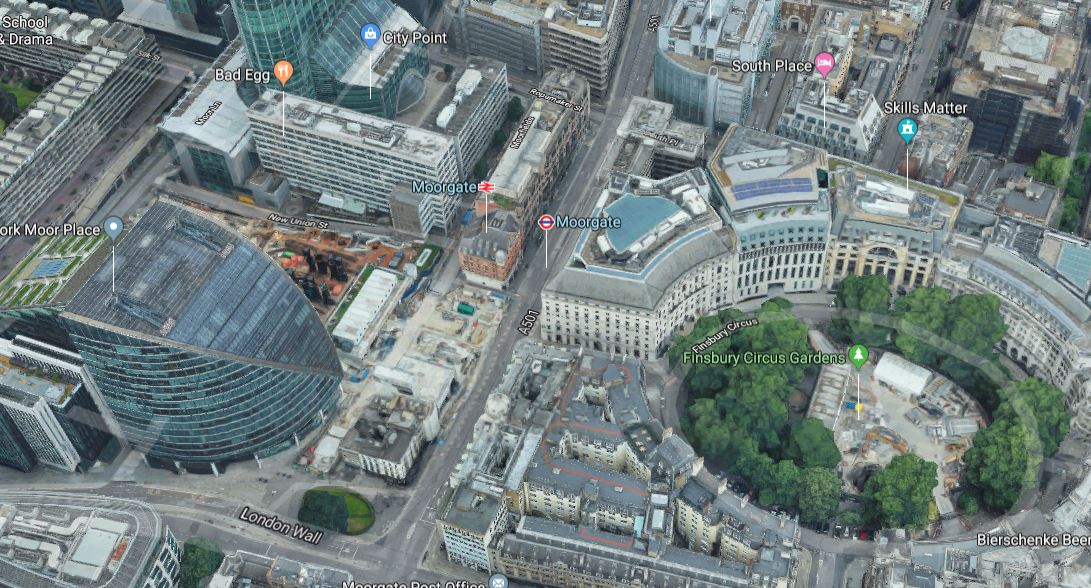
Moor House, which is the large office block behind Moorgate station, was built in 2004 and was designed to accept Crossrail in the basement.
Finsbury Circus, which is the green space in the East was used as a construction site.
Liverpool Street
This Google Map shows Liverpool Street station.
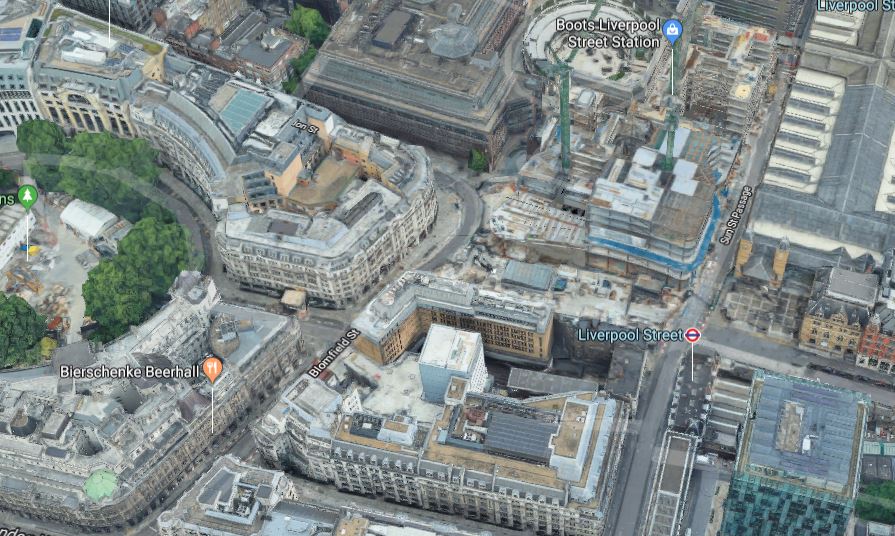
The main entrance to the Crossrail station will be in front of the Broadgate office complex, which is to the West of the station.
This section of Broadgate is also being redeveloped, which probably helps and hinders in equal measure.
Conclusion
I think lessons will be learned that can be applied to other cross-city rail projects.
- Future-planning as with Moor House should be increasingly used.
- Should stations be built in conjunction with other developments?
- Are stations in areas of high real-estate values a good idea?
- Could more innovative ways be used to bring in construction materials?
Will future projects be better?
The Importance Of Libraries For Research
I went to a fund-raising event for Book Aid at the British Library on Monday evening.
The main purpose was to raise funds for the library in Mosul, which has been wrecked by IS.
The event made me think, about the number of times in the 1960s and 1970s, I used libraries for research.
- My undergraduate thesis was about analogue computing and I used information about how Lord Kelvin and his elder brother; James, were developing and using mechanical analogue computers in the late 1800s, that I had found in the Liverpool University library.
- A few years later, whilst working for ICI, I found that by properly searching Chemical Abstracts in their library, I could find the solution to difficult problems. Nowadays, you’d use the Internet!
- When I developed Artemis, I needed methods to improve the performance of the software. Some I developed myself, but one particular algoithm used for linking datasets together was found in a paper, written in the 1960s in IBM’s library. In those days, getting the maximum performance from not very powerful computers was more difficult and the algorithm was important.
- These days, with everything on the Internet I use libraries less. Although, I regularly visit Hackney’s Records Office near to where I live, to browse old images, reference books and maps.
Do we all underestimate the part books, play in our lives?
Free Device Charging On The Overground
This picture, that I took at Shoreditch High Street station, says it all.
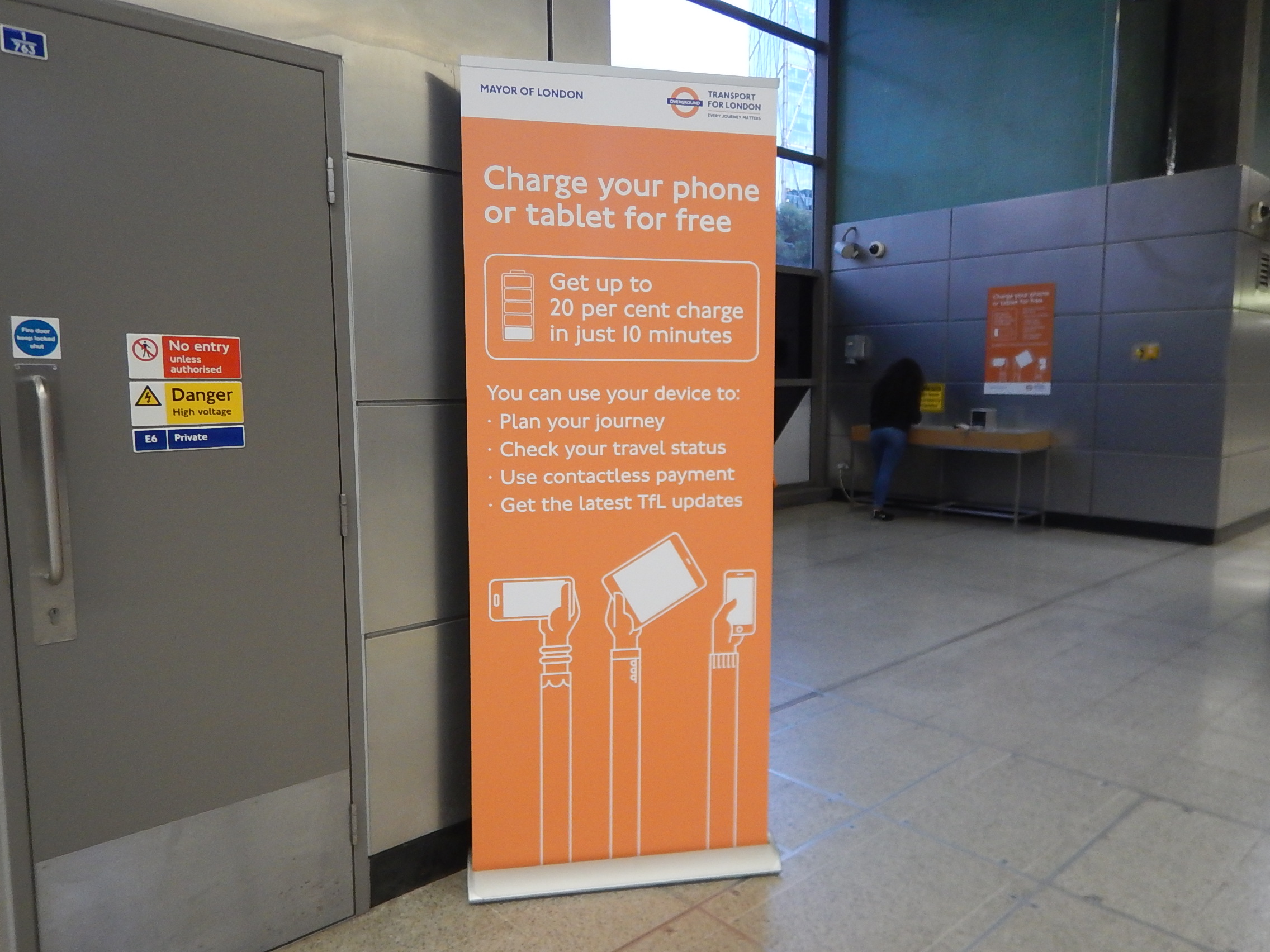
There were a selection of leads for all the different devices.
Struggling With GMail
Many years ago before GMail existed, I started using Chrome and opened a Google account, so that I could run Google Alerts on subjects in which I’m interested.
I’ve had my e-mail for getting on for thirty years and I can’t see any reason to change it.
On my mobile phone, I have created a new Google and GMail account, so that, when I travel I have access to e-mail, as well aw text.
Everything works fine on the phone, but how do I log in to my GMail on my laptop.
I’m always asked to create a new GMail address, when I try. But I already have one.
How do I sort this mess out?
Phone Call Cuts Hospital Readmissions
The title of this post is the same as that of an article on page 18 of today’s copy of The Times.
This is the first paragraph.
A single phone call to an older patient who has been discharged from hospital can almost halve the odds of readmission, research suggests.
I have mined health-care data in the past several times and often something simple drops out from a simple analysis.
Some analyses produce the obvious like you gets lots of leg injuries on Saturday afternoons, due to football being played.
I also believe that analysis of health data in an area could pick up more sinister links.
This could be picked up by artificial intelligence scanning the various databases, but until such systems are fully developed, a lot can be picked up by analysts using simple tools. Even Excel can find a lot of problems, if used properly.
Will 5G Be Another Way To Rip Off The Poor?
My late wife was a barrister, who specialised in family matters, like divorce, custody of children, adoption and money.
She had this career for about thirty years before she died in 2007.
As the years progressed, she’d talk about the latest expensive must-haves of her clients.
- First it was video recorders and then it was mobile phones.
- Various game consoles arrived! Whatever they are? I’ve never played a computer game in my life!
- Then came Sky Television and large screen televisions.
- Every child had to have the latest phone.
And now we have 5G, which promises to be the next unaffordable addiction, to go along with alcohol, drugs, pay-day loans, junk food, on-lne subscriptions and gambling!
It will drive the poor and low-paid even further into poverty.
On the train recently, I was talking to a guy with nine children.
As he was going to Court to get custody of one of the nine, and from other things he had said, I felt that the nine weren’t of the same mother.
He was living on benefits and caring for one disabled child.
How will he be able to afford nine 5G phones?
It’ll all end in tears!
 The Anonymous Widower