London Gatwick Implementing Time-Based Separation On Single Mixed-Mode Runway
The title of this post, is the same as that of this article on Flight Global.
These four paragraphs introduce the technique.
UK air navigation service NATS has applied its intelligent arrival separation system to a mixed-mode single runway for the first time, with implementation at London Gatwick.
The system uses dynamic time-based – rather than distance-based – approach spacing in order to maintain sufficient arrival rates in strong headwind conditions.
Headwinds reduce the groundspeed of inbound aircraft flying at a set airspeed. This means a longer interval between two arrivals spaced a fixed distance apart.
“Having to maintain set separation distances in those conditions reduces the landing rate and can have a significant knock-on effect to the airport operation,” says NATS.
I have flown light aircraft onto main runways at major airports several times, including Cardiff, Dublin, Edinburgh, Hamburg, Leeds, Liverpool, Manchester, Naples, Nice, Southend and Stansted.
In one approach I made to Dublin airport, this type of approach may well have been of assistance.
I was flying into Dublin in my Piper Arrow; G-JMTT.
- I had crossed over Anglesey to leave Wales and I was talking to RAF Valley, whilst I crossed the Irish Sea in more of a direct line for Dublin Airport.
- The RAF handed me over to Dublin Approach, who gave me a series of vectors to point me at the main runway at Dublin Airport.
- Dublin Tower, then gave me the instruction. “Tango-Tango Can you speed it up a bit! There’s a Jumbo on your tail!”
- I replied. “Affirmative! Tango-Tango!” I then lowered the nose and pointed it at the runway to speed things up a bit.
- Dublin Tower, then asked. “Tango-Tango On landing, can you expedite clearing the runway?”
- There was then a brief exchange, where I negotiated my route off the runway, by taking the first taxiway on the left and then stopping.
- After a safe landing and a stop on the taxiway, Dublin Tower called. “Tango-Tango! We’ll give you ten out of ten for that!”
- After which the Jumbo rushed past on the runway, with the pilot giving a quick laugh over the radio.
- Dublin Tower called. “Welcome to Dublin!”
The Irish have different ways of doing things!
But, seriously, NATS are probably just implimenting a computerised form of what good air traffic controllers have done for years.
In that arrival at Dublin, the controllers had stretched the time and distance between my small Piper and the Jumbo, so everything was safe.
There alternative would have been to delay one of the planes.
Conclusion
It looks to me that the application of a new algorithm by NATS, will squeeze a few more aircraft into Gatwick’s single runway.
I’ve Just Been Microsofted
Without my permission, my computer changed itself to Windows 11.
I should be in charge not some nameless idiot in Trumpland.
I now can’t preview my pictures on the SD cards my Nikon camera uses.
Why is it, they never do upwards compatibility right?
The bastards!
Sunset Studios Pivots From Plan To Develop Major Soundstage Complex Outside US
The title of this post, is the same as that of this article on the Hollywood Reporter.
This is the sub-heading.
Operator Hudson Pacific and investment giant Blackstone had envisioned a 91-acre site in North London to have 21 soundstages totaling 470,000 square feet.
These two paragraphs give more details.
Plans have been formally put on hold for a 91-acre film and TV soundstage complex outside of London that had been billed as a major foray for the Sunset Studios brand outside the United States.
Sunset Studios, owned by operator Hudson Pacific along with significant investor Blackstone, had announced the project in 2021 during what may have been the height of the streaming content spending boom on film and TV projects.
This Google Map shows the site today.
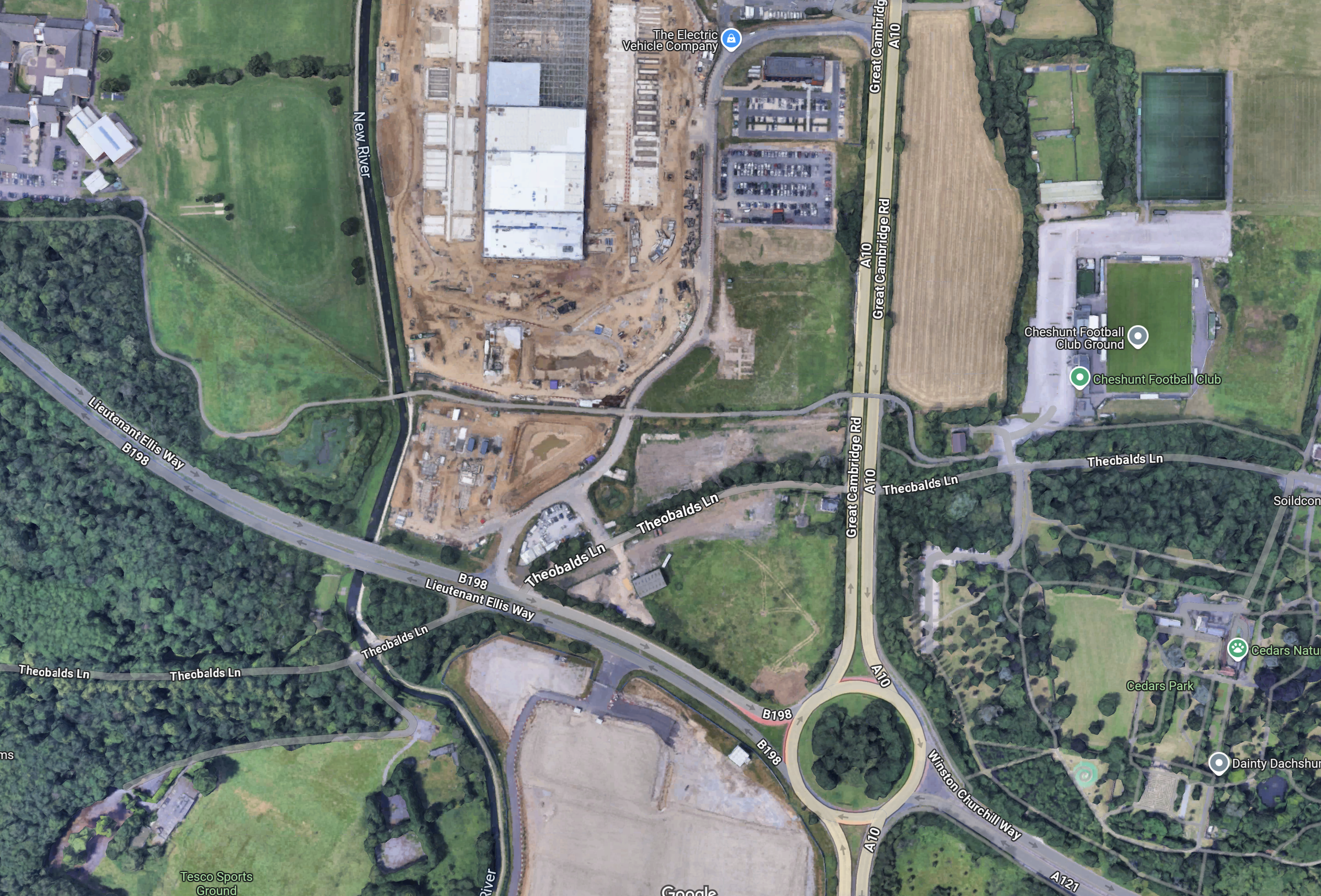
Note.
- The North-South road is the A10.
- The roundabout , is where Winston Churchill Way meets the A10.
- The dual-carriageway going West from the roundabout is Lieutenant Ellis Way.
- Construction of a data centre for Google seems to have started to the North-West of the roundabout.
- Lieutenant Ellis Way would have separated the data centre from the studios.
In Google Starts Building £790m Site In Hertfordshire, I say more about building the data centre.
This Google Map shows the area South of the roundabout, where Winston Churchill Way meets the A10.
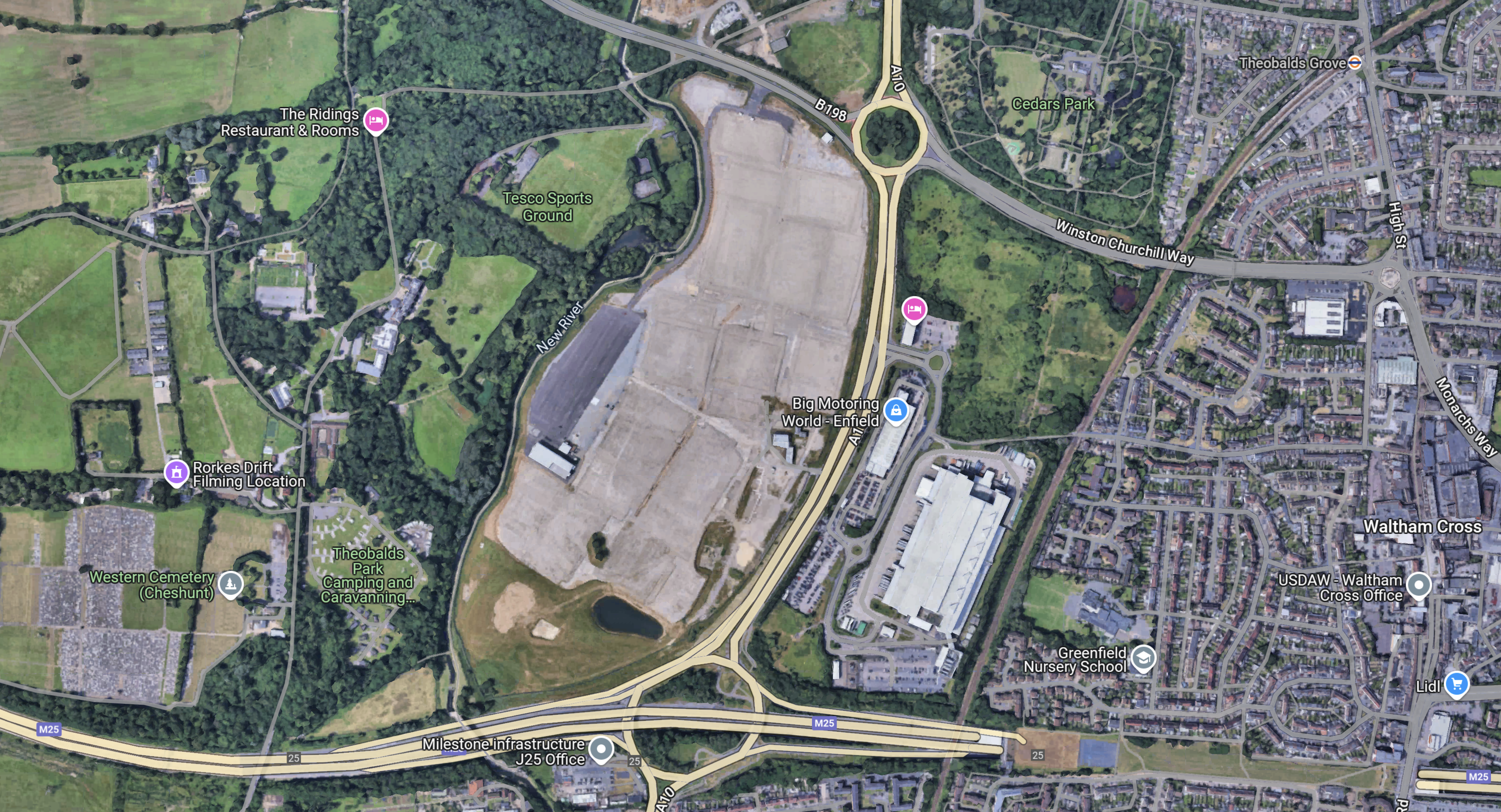
Note.
- The North-South road is the A10.
- The green patch of land to the South-East of the roundabout where Winston Churchill Way meets the A10 appears to be ripe for development.
- Looking at the green patch with a higher resolution, the land is little more than high class scrub beloved of newts.
- The London Overground line to Cheshunt runs down the East side of the site.
- To the North, the London Overground crosses Winston Churchill Way to get to Theobalds Grove station.
- To the South, the London Overground crosses the M25 to get to Turkey Street station.
- The M25 runs across the bottom of the map, through junction 25.
- The site to the West of the A10 between the two roundabouts, was the site reserved for Sunset Studios.
- The site appears to have been concreted.
What is going to happen to the Sunset Studios site now?
Blackstone Secures Approval For $13bn Hyperscale Data Centre In UK
The title of this post, is the same as that of this article in Private Equity Insights.
This is the sub-heading.
Blackstone has received approval from Northumberland County Council to move forward with its $13bn hyperscale data centre project in North East England.
These three paragraphs add detail.
The investment marks a major push by the private equity giant into the fast-expanding digital infrastructure sector, as demand for data storage and cloud computing surges.
The project, covering 540,000 square metres, represents one of the largest data centre developments in Europe. It is expected to bring significant economic benefits to the region, creating 1,200 long-term construction jobs, hundreds of permanent operational roles, and up to 2,700 indirect positions.As part of its commitment to the local economy, Blackstone has pledged £110m to support job creation and economic growth along the Northumberland Line, a newly launched railway corridor. Find out more and meet Blackstone at the Italy Private Equity Conference in Milan.
The Northumberland Line cost £300 million to build. Adding £110 million for job creation and economic growth looks to be a good return for the North-East.
Conclusion
As we have the power, perhaps we should add a few more hyperscale data centres around our coasts.
Appeasement 2.0
The low point of Russia’s war in Ukraine is that Trummkopf, has repeated Chamberlain’s mistake at Munich and presented Putin with Appeasement 2.0.
I wasn’t around in the days of Munich and Chamberlain, but my father was well-informed, as he was in Geneva doing something possibly at the League of Nations and heard a lot of the truth about what was going on in Czechoslovakia and Ukraine at first hand. He believed there was little to choose between Hitler and Stalin on the scale of evil.
In the 1970s, I worked with an Jewish Austrian engineer, who was called Samuels, at the GLC, who had escaped from Austria just before WW2 and then spent the war in the Royal Engineers in bomb disposal. After the war, he was an observer at Nuremberg.
He was one of the most amazing people, I’ve ever met and he taught me a lot about project management.
Aggregation In Artemis
One of the features of Artemis was aggregation, which enabled the project manager to total up the resources they’d need for a project.
I might have programmed the original aggregation for Mr. Samuels, but I can certainly remember discussing it with him. He needed it to check that particular sub-contractors weren’t overstreching themselves.
I lost contact with Mr. Samuels, when his wife died and he moved to CERN in Geneva. But he’s one of several people, who helped frame the design of Artemis.
Soviet War Crimes
This Wikipedia entry is entitled Soviet War Crimes.
This is the first paragraph.
From 1917 to 1991, a multitude of war crimes and crimes against humanity were carried out by the Soviet Union or any of its Soviet republics, including the Russian Soviet Federative Socialist Republic and its armed forces. They include acts which were committed by the Red Army (later called the Soviet Army) as well as acts which were committed by the country’s secret police, NKVD, including its Internal Troops. In many cases, these acts were committed upon the direct orders of Soviet leaders Vladimir Lenin and Joseph Stalin in pursuance of the early Soviet policy of Red Terror as a means to justify executions and political repression. In other instances they were committed without orders by Soviet troops against prisoners of war or civilians of countries that had been in armed conflict with the USSR, or they were committed during partisan warfare.
As a teenager, my father used to tell me stories of atrocities by the Soviet Union and told me, he believed Stalin was on a level with Hitler.
One of the worst atrocities was the Katyn massacre in 1940, which is described in this Wikipedia entry and starts with this paragraph.
The Katyn massacre was a series of mass executions of nearly 22,000 Polish military and police officers, border guards, and intelligentsia prisoners of war carried out by the Soviet Union, specifically the NKVD (the Soviet secret police), at Joseph Stalin’s order in April and May 1940. Though the killings also occurred in the Kalinin and Kharkiv NKVD prisons and elsewhere, the massacre is named after the Katyn forest, where some of the mass graves were first discovered by Nazi German forces in 1943.
I haven’t found out, what my father was doing in 1940, but I am fairly sure he knew of the Katyn and other massacres, as he occasionally commented.
Note.
- The involvement of the NKVD.
- The Katyn massacre is a sub-plot in the film Enigma, which has this Wikipedia entry.
I took this picture of a memorial to Katyn in the centre of Birmingham.
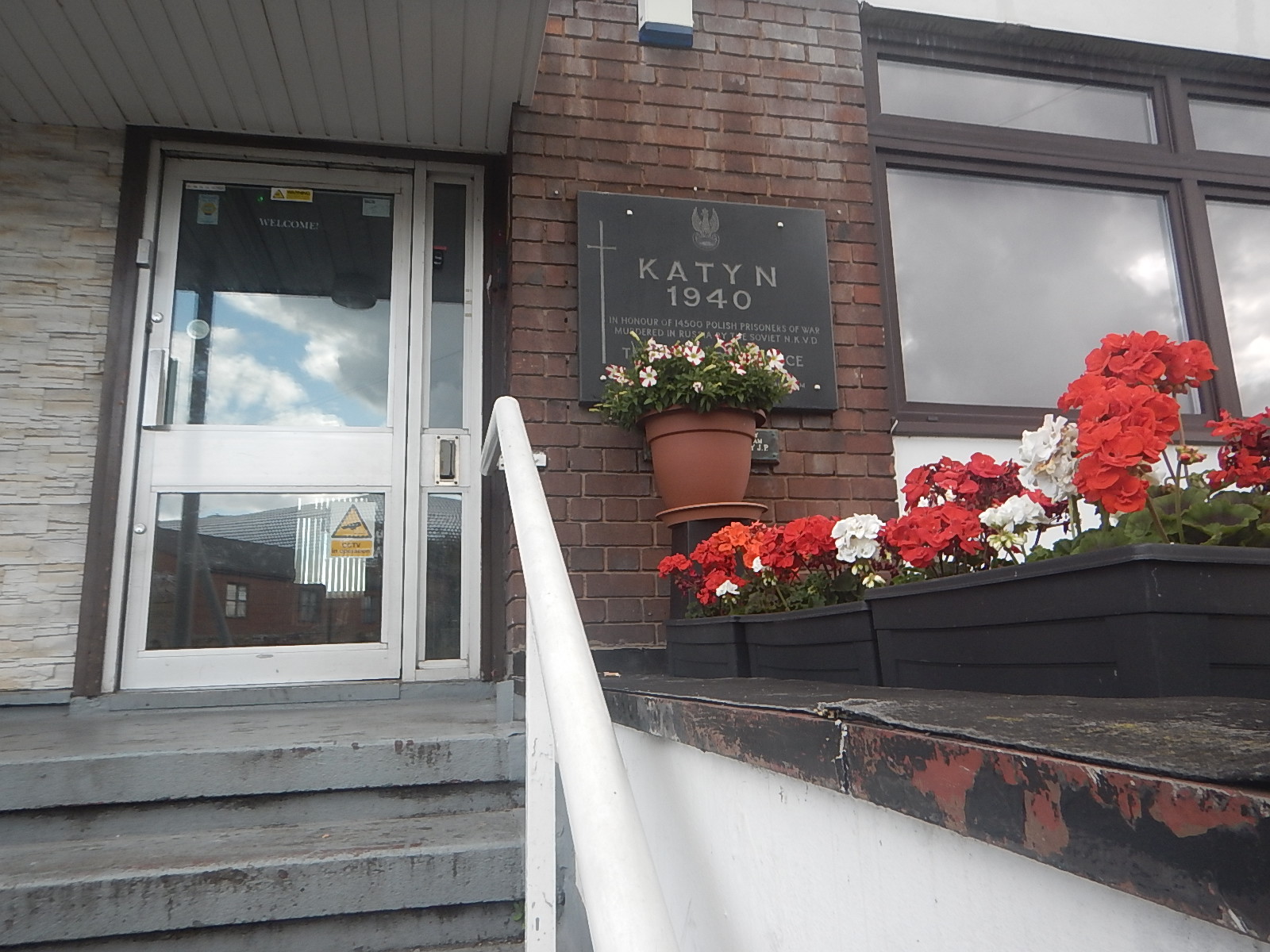
I believe that we ignore the lessons of Soviet behaviour at Katyn, at our peril.
In Vladimir Putin’s Wikipedia entry, there is this paragraph about his parents.
Putin’s mother was a factory worker, and his father was a conscript in the Soviet Navy, serving in the submarine fleet in the early 1930s. During the early stage of the Nazi invasion of the Soviet Union, his father served in the destruction battalion of the NKVD. Later, he was transferred to the regular army and was severely wounded in 1942. Putin’s maternal grandmother was killed by the German occupiers of Tver region in 1941, and his maternal uncles disappeared on the Eastern Front during World War II.
It appears that Putin Senior left the NKVD destruction battalion before 1942. Does that mean he could have been at Katyn?
I do suspect, that Putin Senior told some interesting stories to his son, about the correct ways to deal with your opponents and wage a war.
Conclusion
We are treading a very similar path over eighty years later.
AI Could Make New Runways Obsolete
The title of this post, is the same as that of this article on Jewish News.
This is the sub-heading.
As Heathrow’s controversial third runway gets the green light and Gatwick looks on track for a second one, an Israeli tech innovation could reduce the need for such costly expansions.
These paragraphs add some detail.
IntellAct is a cutting-edge AI company that helps airports maximise efficiency, cut delays and save billions of pounds. By optimising ground operations and reducing aircraft turnaround times, it could spare airports the need for new runways entirely.
“The aviation industry is bleeding from a thousand cuts,” says Udi Segall, IntellAct’s founder and CEO. “Constant delays – with an average of 15.5 minutes per flight — add up to billions in costs. We saw a financial opportunity in how airlines manage their activities, and that’s where IntellAct comes in.”
IntellAct leverages big data and machine learning to provide airlines, airports and ground handling teams with real-time visibility into service performance bottlenecks and the ability to address them in a way that can yield significant operational improvements and a dramatic reduction in flight delays.
It’s an interesting thought.
I am reminded of a story from the 1960s, from ICI.
They had a polypropylene plant, that was notoriously inefficient, so a guy called Humphrey Bowen (?) used a discrete simulation program called HOCUS to create a board game of the chemical plant. This game was then played one Sunday, with beer and sandwiches between the various teams of production workers. It became heated at one point, but they did learn a lot about the behaviour of the plant and improved its efficiency.
I think it is true to say, that in the early 1970s, I worked with a bunch of interesting people at ICI Plastics.
These days, use might be made of a digital twin.
Ocado’s Computing Has Been Spot On So Far
I first used Ocado for my weekly shop in June last year and have used them about 30 times since.
There have been no computing mistakes.
Only a couple of substitutions have been made and they have caused me no trouble.
All orders have been delivered within the delivery window and nothing seems to have been damaged in transit.
I shall continue to keep using them.
British Gas Partners With heata On Trial To Reuse Waste Heat From Data Processing
The title of this post, is the same as that of this news item from Centrica.
This is the sub-heading.
British Gas has partnered with sustainable cloud computing provider, heata, on an innovative trial to explore how harnessing waste heat generated by computer servers can save households money on their bills.
These two paragraphs describe heata’s system.
heata’s innovative model distributes cloud computing workloads to servers in homes. In a data centre, the heat generated during processing is a waste product, and energy-intensive cooling systems are required to stop the servers from overheating.
To overcome this, heata has created a ‘virtual data centre’ – a network of servers distributed in people’s homes. Each server is attached to the home’s hot water cylinder, and as they process data, the heat they generate is transferred into the water. This reduces the energy needed to heat water in the home, and as this is typically provided by gas boilers, it reduces the amount of gas used, lowering the carbon impact as a result. heata pays for the electricity the heata unit uses, which means the household pays less to heat their hot water.
Note.
- I would expect that future systems would also heat the house.
- I would be an ideal system for my house, as I have an unusual skin, that is better with a daily bath.
- I also wash my eyes most days with clean warm water, as they are often full of sleep.
- heata has a web site.
- heata has an about page, which describes the company and the technology.
- heata is supported by British Gas, Innovate UK and Sustainable Futures.
- Thermify is a similar system.
These three paragraphs describe the trial.
As part of a three-month trial, 10 heata units will be installed in the homes of British Gas employees, and the energy provider’s computing workloads will be processed on these units. As a result British Gas will be providing free hot water for its own employees as a byproduct of their own cloud compute.
The trial will provide feedback around performance and customer experience, as well as demonstrating the associated CO2 and energy cost savings to further co-develop customer propositions in 2025.
According to heata, the devices can provide up to 4kWh of hot water per day, with the technology expected to save households up to £340 per year when offsetting electrically heated hot water, and up to £120 when offsetting gas heated hot water.
I shall certainly think about fitting one.
Why Do Major Rail Projects Go Over Budget?
The title of this post, is the same as that of this article on Rail Technology Magazine.
This is the sub-heading.
Experts from the National Infrastructure Commission (NIC) will be questioned by the Transport Committee on their work advising the Government on planning major transport projects this week.
This is the introductory paragraph.
The cross-party Committee will ask witnesses, including NIC Chair Sir John Armitt, why infrastructure projects such as HS2 go over budget, how the Department for Transport can manage them more successfully, and the Government’s ability to learn from mistakes or from positive examples in other countries.
In my time, I have written a lot of project management software and it has generally sold well, especially in the fields of aerospace, construction, defence, oil & gas and vehicles. It has also sold well in Australia, France, Korea, Norway, The Netherlands and the United States.
In the UK, two major areas of Government ; rail and the NHS did not use any of my software, despite having large numbers of suitable projects, whereas nationalised companies like British Aerospace, British Leyland and Ferranti were big users. The Chevaline project, which was the refurbishment of the UK’s nuclear deterrent by the Callaghan Government also used my software.
I do find this split strange. A retired MP once told me, that it is traditional.
But Rail and the NHS always seem to get it wrong! Is it because, they are two government departments that deal a lot with the General Public?
On the other hand, the Inland Revenue seem to do better. But my planning software was used to plan the move to Telford!
Perhaps, there is a lot less traditional thinking in the Inland Revenue.
£10bn Investment In AI Data Centre Confirmed
The title of this post, is the same as that of this article on the BBC.
This was the sub-heading.
A £10bn investment in a new artificial intelligence data centre will create about 4,000 jobs, the government has said.
These two paragraphs add more details.
The site in Cambois, near Blyth, Northumberland, will become one of Europe’s biggest AI data centres.
The land was bought by private equity giant Blackstone earlier this year, after the collapse of Britishvolt which had planned to build an electric car battery factory on the site.
In My First Trip On The Northumberland Line – 18th December 2024, I said this after my first trip to the line.
The Blyth Valley Is Well Supplied With Electricity
Several high-capacity connections to wind farms and Norway are planned to come ashore at Blyth and it appears from the pictures that the area is well connected to the grid.
This must have nudged Britishvolt to put their battery plant at Blyth.
But no matter for those jobs, as with a rail service to Greater Geordieland and lots of electricity, there must be other energy-hungry businesses like datacentres or small modular reactor factories, who would want the site.
The Long Platforms
I am fairly sure that some of the platforms have been sized to take a five-car Hitachi Class 80x train, which are only 130 metres long and can carry around 400 passengers.
This must enable the ability to use the Northumberland Line as a diversion for the East Coast Main Line.
Some services could perhaps stop at Blyth for the large factories and/or Northumberland Park for the Metro.
It looks to me, that the Northumberland line was designed for large factories or businesses with lots of workers, that needed lots of electricity.
 The Anonymous Widower