The Secret Of The TwinHub
I was reading about the TwinHub, which is a pair of wind turbines, that are to be mounted on a single float.
There is an explanatory video on the TwinHub home page. Just scroll the page down and you’ll find a full page video, that is rather beautiful and slightly hypnotic.
But note how it stops and starts in the wind and turns itself into a position, so that it is generating the maximum amount of wind.
So how does it do that?
It is not by clever computers and a whole host of actuators, but by good old-fashioned aerodynamics.
Above the video, there is a picture of the sea, with these words underneath.
This demonstration project will be located at the Wave Hub site, and will consist of two floating platforms anchored to the seabed. Each floating platform will host two turbines with inclined towers. The total installed capacity will be between 30 to 40 MW.
Two words are the key to the design – inclined towers.
The wind will apply a force to each turbine and because the towers are inclined, this will apply a force, that will turn the turbines so they are facing the wind. This will maximise the power generated.
The design is elegant, efficient and enchanting.
I can see the TwinHub becoming an unusual tourist attraction in Cornwall.
Passengers Of Reduced Mobility And The Elizabeth Line
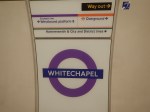
I took these pictures at Whitechapel station and they show the preferred wheelchair entry point to the Class 345 train and the central car of the train, which has four wheelchair spaces.










Note.
- The well-signed wheelchair entrance to the train.
- Thw four wheelchair spaces are in the middle car of the train.
- There is no step into the train.
- The roundels also have directions to other lines and the way out.
The car also has longitudinal seating and lots of vertical grab rails.
I do find it strange that London is very much alone in the UK in using this seating design.
Hyperion XP-1 Hydrogen Car Unveiled With 1,000-mile Range
The title of this post, is the same as that of this article on Hydrogen Fuel News.
This is the specification of the hydrogen-powered Hyperion XP-1.
- 1,000 mile range.
- No batteries as it uses supercapacitors.
- Five minute refuelling time
- All-wheel drive
- 221 mph top speed
- 0-to-60 mph in 2.2 seconds
- Weighs just over a tonne
- Carbon-titanium monocoque
- Outrageous styling
Unbelievable!
World’s First 16 MW Offshore Wind Turbine Rolls Off Production Line
The title of this post, is the same as that of this article on offshoreWIND.biz.
This is the subtitle and the first paragraph, that add some detail.
The first nacelle for a 16 MW offshore wind turbine jointly developed by China Three Gorges Corporation and Goldwind Technology has rolled off the production line at Fujian Three Gorges Offshore Wind Power International Industrial Park in China.
According to China Three Gorges, the unit has the largest single capacity, the largest rotor diameter, and the lightest weight per megawatt in the world.
The West, is going to push hard to make sure, we don’t give away another industry to the Chinese.
New Escalators And Moving Walkways Between The Central And Northern Lines At Bank Station – 29th October 2022
This important link in the Bank Station Upgrade opened yesterday.
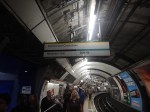
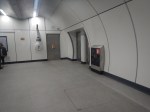
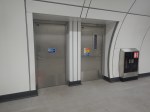
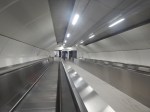
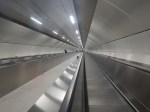
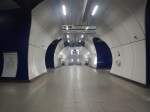
So this afternoon, I went and took these pictures, as I walked from the Central to the Northern Line interchange plaza at the Monument end of the station.



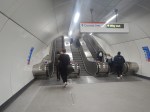
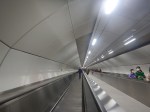
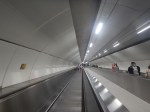
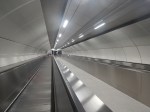



Note.
There is only a short bank of escalators between the Central Line and the moving walkways.
A good-sized landing for the escalators has been squeezed in at the top of the escalators between the two Central Line platforms.
At the bottom of the escalators, there is a generous space to accommodate the ninety-degree turn to and from the moving walkway.
The moving walkway appears wider than others on the Underground and is very well-lit.
At its Southern end, the moving walkway connects to the spacious interchange plaza, I wrote about in New Escalators At Bank Station Between The Northern Line And The DLR and showed in these pictures.
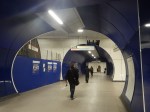
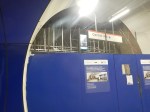

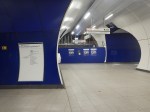
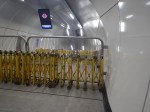
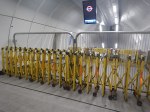
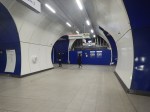
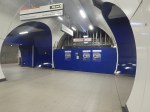
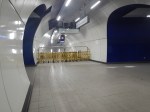
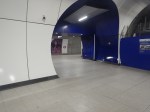

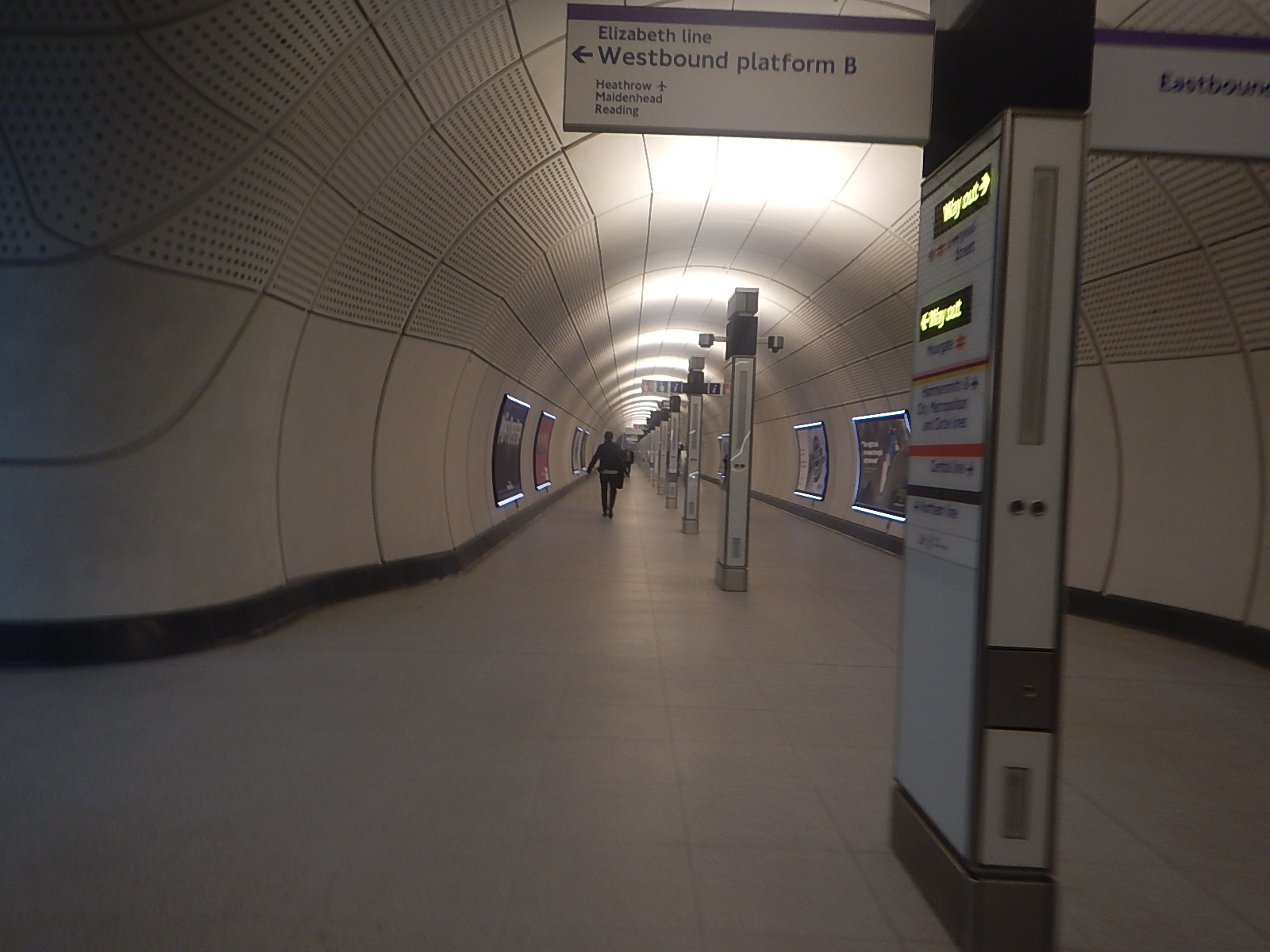
The interchange rule at the Bank/Monument station complex appears to be make for the interchange plaza and moving walkway and follow the signs.
- The Central Line is at the Northern end.
- The Northern Line is on either side.
- The DLR is underneath the plaza.
- The District/Circle Lines are at the Southern end.
I was surprised to see, that there were no staff in the interchange plaza.
Or would one of the Lizzie Line signposts be a good idea?
It could also have a clock.
Norwegians Developing Monopile Foundation For 100-Metre Depths
The title of this post, is the same as that of this article on offshoreWIND.biz.
Monopile foundations are a common fixed foundation for offshore wind farms.
The article starts with this paragraph.
Norway’s Entrion Wind and Techano AS have signed a Memorandum of Understanding (MoU) through which Techano AS will join the ongoing development and test project planned to take place in Kristiansand, Norway for the patent-pending fully restrained platform (FRP) offshore wind foundation technology said to extend the operating depth of the monopile technology to up to 100 metres.
It does seem that the Norwegians are intending to take this type of foundation to new heights. Or is it new depths?
A picture in the article shows a tall monopole held in position by three wires securely anchored in the sea-bed. It reminds me slightly of the sort of flag-poles, that we used to build in Scout camps in the 1960s, using Scout staves, ropes and tent pegs.
But seriously in the 1970s, I did the calculations for a company called Balaena Structures, who were trying to develop a reusable oil and gas platform.
- The company had been started by two Engineering professors from Cambridge University.
- The platforms were formed of a long steel cylinder, which would have been built horizontally in the sort of ship-yards, that were used to build supertankers.
- They were to be floated out horizontally and then turned upright.
- Weight and the gumboot principle would have kept them, in place.
The design also included a square platform on the top end. Originally, they were planning to put the platform on top after erection, but I showed that, it would be possible to erect cylinder and platform, by just allowing water to enter the cylinder.
The project had a somewhat unfulfilling end, in that they never sold the idea to an operator and the company closed.
But I still believe something similar has a future in the offshore energy industry.
It could be a foundation for a wind turbine or possibly as I indicated in The Balaena Lives, it could be used to clear up oil field accidents like Deepwater Horizon.
Could This Be A Design For A Hundred Metre Plus Monopole Foundation?
Construction and installation would be as follows.
- A long cylinder is built in a ship-yard, where supertankers are built.
- One end, which will be the sea-bed end after installation, is closed and has a skirt a couple of metres tall.
- The other end is profiled to take the transition piece that is used as a mount for the wind turbine.
- A float would be added to the top end for tow-out. This will help the cylinder to float and erect.
- Water would be added into the cylinder and, if the dimensions are correct, it will turn through ninety degrees and float vertically.
- It would be towed to a dock, where a large crane on the dock would remove the float and install the turbine.
- The turbine and its foundation would then be towed into place and by adding more water lowered to the sea-bed.
- The float would be reused for the next turbine.
Note.
- The float is needed to nudge the cylinder to turn vertically.
- If the Cambridge professors were right, the skirt and the weight of water would hold it in place.
- Traditional moorings could be added if required.
- No heavy lifts are performed at sea.
- The concept would surely work for a floating turbine as well.
But then what do I know?
I was just a twenty-five year old engineer, mathematician and computer programmer, who did a few calculations and a dynamic simulation fifty years ago.
Two Oases In The City
I came across these oases in Temple Avenue in the City of London.






What a good idea! The notice says it’s part of a Covid-19 Street Recovery Scheme
Seeing London Underground’s Bakerloo Line Trains In A New Light
The title of this post, is the same as that of this article on Railway Gazette.
This is the first paragraph.
A 50% energy saving and a substantial reduction in maintenance costs is being achieved by replacing fluorescent tubes on London Underground’s Bakerloo Line trains with custom designed LED lights from MARL International.
From the pictures in the article, they look to be a good design.
I took these pictures of a train with the new lighting on the 6th of November.
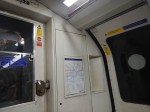

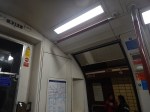


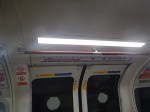
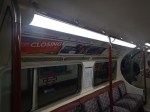
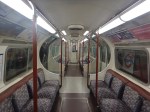
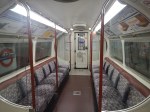
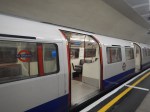
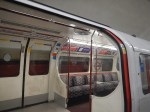
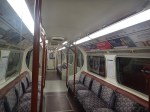
These pictures show a train with the old lighting.

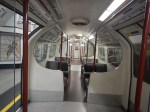
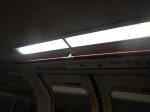
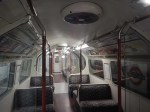
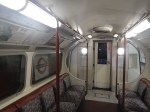
Note.
- The old lighting has round lights at the end of the cars.
- The hole for the round lights has been covered by a blanking plate. See the first picture of the new lights.
- Some of the old fluorescents have died.
- Four passengers, that I spoke to, thought the cars were brighter.
The shots through the empty cars were all taken in Elephant & Castle station, so they show a comparison between new and old lighting.
I also spoke to a driver, who said the headlights on the trains will be replaced. He’d driven the train with the prototype installation and said it was much better.
Do All Wind Turbines Have To Be Similar?
I feel this is a reasonable question to ask.
But do all wind turbines have to look like those in this picture?

Wikipedia lists three main types.
- Horizontal Axis – Those in the picture are of this type, as are all the large wind turbines I’ve seen in operation.
- Vertical Axis – Wikipedia shows several examples.
- Unconventional Types
Recently, I have come across some which would be placed in the last group.
Hybrid Offshore Wind And Wave Energy Systems
This article on the Journal of Physics is entitled Review of Hybrid Offshore Wind and Wave Energy Systems, is a study from serious academics.
This is the abstract.
Hybrid wind wave systems combine offshore wind turbines with wave energy on a shared platform. These systems optimize power production at a single location by harnessing both the wind and the waves. Wave energy is currently at an earlier development stage than offshore wind. Research in this area is focused in wave energy converters being used for platform motion suppression of floating offshore wind turbines. Wave energy converters can passively shelter offshore wind turbines from waves and can also be actively controlled to reduce the system loads. Additionally, a small amount of supplemental power may be generated, which can be used for offshore wind turbine local power needs. There may be future benefits to these hybrid systems, but at this stage wave energy may increase the project cost and risk of offshore wind turbines. Hybrid wind wave system research and development is discussed, with a focus on floating offshore wind turbines. Additionally, two ocean demonstration scale hybrid wind and wave systems are discussed as case studies: the Poseidon Wave and Wind system and the W2Power system. Hybrid wind wave systems show potential to be part of the future of offshore wind energy.
Note.
- Wave energy development is at an earlier stage than offshore wind.
- Wave energy converters can passively shelter offshore wind turbines from waves and can also be actively controlled to reduce the system loads.
- There is more about Poseidon on this page on the Tethys web site.
- There is more about W2Power on the Pelagic Power web site.
The last sentence of the abstract is significant and I believe that hybrid offshore wind and wave energy will play a significant part in the future of offshore energy.
Wind Turbines With Added Storage
Critics and cynics of wind power always ask, what happens, when the wind doesn’t blow.
It is generally accepted, that the best thing to do is to pair a wind farm with some form of energy storage.
Technologies and solar and/or wind farms with energy storage are starting to be proposed and/or installed.
- In Cleve Hill Solar Park, I wrote about a solar farm, a wind farm and a battery sharing a grid connection.
- In First Ever Gravity Green Energy Storage System Set For North Yorkshire Town, I wrote about a battery being installed where two massive wind farms connect to the grid.
- In How To Store Excess Wind Power Underwater, I describe a Dutch system called an Ocean Battery.
- In UK Cleantech Consortium Awarded Funding For Energy Storage Technology Integrated With Floating Wind, I wrote about adding Marine Pumped Hydro to offshore wind farms.
More energy storage will be added in the future in or near to wind and solar farms.
Twin Turbines
This document from the Department of Business, Industry and Industrial Strategy lists all the Contracts for Difference Allocation Round 4 results for the supply of zero-carbon electricity.
One of the projects allocated a Contract for Difference, was the 32 MW TwinHub wind turbine, which I wrote about in Hexicon Wins UK’s First Ever CfD Auction For Floating Offshore Wind.
A full scale twin turbine hasn’t been built yet, but it does seem promising and the visualisations are impressive.
Scroll down on the TwinHub home page to see a video.
World Wide Wind
I’ll let the images on the World Wide Wind web site do the talking.
But who would have thought, that contrarotating wind turbines, set at an angle in the sea would work?
This is so unusual, it might just work very well.
Conclusion
There will be other unusual concepts in the future.
Ørsted Signs Two ‘Industry First’ Monopile Contracts For Hornsea 3 Foundations
The title of this post, is the same as that of this press release from Ørsted.
This is the introductory paragraph.
Ørsted, the world’s most sustainable energy company, has signed two ‘industry first’ contracts for the fabrication of XXL monopile foundations for the Hornsea 3 offshore wind farm.
I have a few thoughts about the press release.
XXL Monopile Foundations
These four paragraphs describe Hornsea 3’s XXL monopile foundations.
Subject to Ørsted taking a Final Investment Decision on Hornsea 3, the contracts have been finalised with Haizea Wind Group, through its subsidiary Haizea Bilbao, and SeAH Wind Limited, a UK-based subsidiary of SeAH Steel Holdings (SeAH).
Ørsted will be the first major customer at SeAH Wind’s new monopile facility in Teesside, and the agreement with Haizea marks the company’s first XXL monopile contract with Ørsted.
The deal with SeAH represents the single largest offshore wind foundations contract secured by any UK company. Haizea’s agreement is the largest single contract ever secured by Haizea Wind Group.
Each of the huge foundation structures for Hornsea 3 will weigh between 1,300 and 2,400 tonnes and measure in at between 83 and 111 metres in length. Monopile production is expected to start in 2024.
Note
- These are huge steel structures.
- But then the water depth appears to be between 36 and 73 metres.
- It looks like the orders are shared between Spanish and Korean companies
This article on offshoreWIND.biz, is entitled Beyond XXL – Slim Monopiles For Deep-Water Wind Farms.
These are some points from the article.
- XXL-Monopiles have been successfully used for water depths of up to 40 metres. Now wind farm developers need monopiles “beyond XXL”.
- The extension of the range is needed, mainly to enable the use of larger turbines, deeper water, and harsher environmental situations.
- These monopiles will allow turbines of up to 15 megawatts with rotor diameters of up to 230 metres.
- This monopile design automatically induces the idea of design and fabrication optimisation to ensure that monopiles continue to lead the ranking of most economical foundation systems.
In the 1970s, I was involved with a Cambridge University spin-out company called Balaena Structures, who were using similar much larger structures to support oil and gas production platforms.
I was just doing calculations, but I do wonder if these XXL monopile foundations, owe things in their design to work done by structural engineers, like those I met at Cambridge fifty years ago.
 The Anonymous Widower