Recovering A Broken Down Battery-Electric Train
I was on a bus recently, where the brakes locked on and we had to all get off and wait to be rescued, by the next service.
To aid recovery on trains, it is usual for a broken-down train to be able to be rescued by another train of the same type.
But how do you rescue a battery electric train?
There will be two main groups of failures.
- Those where even the world’s most powerful locomotive will be unable to move the train.
- Those where a train with enough power can move the train to safety.
Let’s assume we have a four-car battery electric train.
- Trains can run for 40 miles, when starting with a full battery.
- Trains can run as pairs to provide higher capacity services or recover trains.
It is running on a ten-mile single-track branch line with a terminal station at the remote end.
It would be reasonable to assume, that the train could do two round trips before it needed a recharge.
The battery could also be said to have a capacity 160 car-miles.
Suppose a train broke down for some reason at the remote end, with a fault, that still allows the train to be moved, by towing.
- A second train can be used to remove the first train.
- It will use up 40 car-miles of energy to reach the first train.
- This leaves 120 car-miles of energy in the battery.
- When the two trains are connected, they are an eight-car train.
120 car-miles of energy in the battery, should be able to move the pair of trains fifteen miles.
I suspect that track layouts for battery-electric trains are designed with care, so that one train has enough battery capacity to rescue another.
A Trip Along The Central Line – 26th January 2023
Today, I took a trip on the Central Line from Leyton station in the East to Ealing Broadway station in the West.
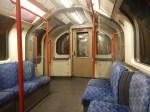
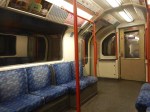
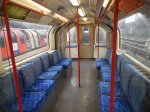

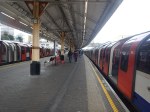
The trip was about eleven this morning and one aim was to assess how busy the line was.
For much of the journey between Leyton and Marble Arch, the train had about half the seats taken, but by the time we got to Ealing Broadway, there were only two of us in my carriage.
After arriving, I had a short chat with the cheery Scots lassie, who had driven us across London.
- She said, that passenger levels had held up on the Central Line, despite the competition from the Elizabeth Line.
- But she also said that large numbers of passengers transfer from the Elizabeth Line to the Central Line at Stratford in the Morning Peak.
- She didn’t say, but there is probably an opposite change in the Evening Peak.
With the exception of a couple of ladies with babies in buggies, most passengers were not travelling with any heavy luggage.
European Company To Make All Wind Turbine Blades 100 % Recyclable, Plans To Build Six Recycling Factories
The title of this post, is the same as that, of this article on offshoreWIND.biz.
This sub-heading outlines what the company plans to do.
A Denmark-based company Continuum plans to make all wind turbine blades fully recyclable and stop landfilling and their emissions-intensive processing into cement with six industrial-scale recycling factories across Europe, backed by investment from the Danish venture capital firm Climentum Capital and a grant from the UK’s Offshore Wind Growth Partnership (OWGP).
Other points in the article include.
- Continuum plan six factories.
- The first factory will open at Esbjerg in Denmark in 2024 and will be able to accept end-of-life blades this year.
- The second factory will be in the UK and it will be followed by others in France, Germany, Spain, and Turkey.
- Each factory will have the capacity to recycle a minimum of 36,000 tonnes of end-of-life turbine blades per year.
This paragraph describes, what will happen to the recycled turbine blades.
The company will recycle wind turbine blades into composite panels for the construction industry and the manufacture of day-to-day products such as facades, industrial doors, and kitchen countertops.
Looking at their description of their mechanical separation process, I suspect that they could recycle other products and manufacture lots of others.
Zero-Carbon Lighting Of Large Spaces
In Cockfosters Train Depot – 12th January 2023, I took a series of pictures of Cockfosters Train Depot, of which these are a selection.
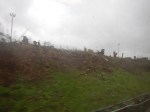
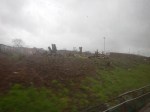

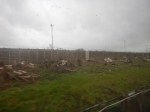
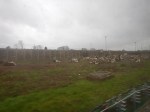
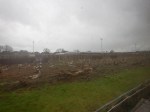
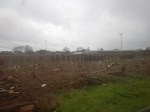
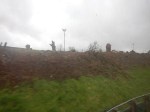
Note, the lamp clusters on top of tall poles to light the area.
You see lots of these lights to illuminate play areas, car parks, rail sidings and truck depots.
Could a SeaTwirl or another vertical wind turbine be placed as high as possible up the pole, that supports the lights?
- A battery would be needed for when the wind doesn’t blow.
- A control system would be used to use the lights, when they are needed.
- The poles would be able to be laid down, like many lights can be, for servicing from the ground.
Cockfosters would be an excellent location for a test, as the wind is always blowing and the site has an altitude of nearly a hundred metres.
Norwegian Companies To Explore Using Aluminium In Floating Offshore Wind Turbines
This is based on this press release from World Wide Wind, which is entitled WORLD WIDE WIND AS and HYDRO ASA Signs Letter Of Intent Aiming At Using Aluminium In Offshore Floating Wind Turbines.
This is the first paragraph.
Hydro, the world leading Norwegian aluminium and energy company and World Wide Wind AS, a Norwegian company developing a floating wind turbine, have signed a Letter of Intent (LoI) to explore the use of aluminium in the renewable wind industry. The two Norwegian companies are partnering up to develop floating wind turbines with a design specifically meant for offshore conditions. The goal is to use sustainable and recyclable materials in the construction, including aluminium.
In Do All Wind Turbines Have To Be Similar?, I said this about the radically different turbines of World Wide Wind.
I’ll let the images on the World Wide Wind web site do the talking.
But who would have thought, that contrarotating wind turbines, set at an angle in the sea would work?
This is so unusual, it might just work very well.
As aluminium is lighter, it might be a factor in the success of the design.
This is the last paragraph of the press release.
World Wide Wind’s integrated floating wind turbines are scalable up to 40MW – 2,5 times current wind turbines – and will use less materials and have a smaller CO2 footprint than conventional turbines. It is World Wide Wind’s ambition that these turbines will represent future design for floating wind turbine design.
40 MW is a very large turbine. This is definitely a case of handsome is as handsome does!
Passenger Tunnel Linings At Waterloo Underground Station
This pictures show the cast-iron pedestrian tunnel linings at Waterloo tube station.
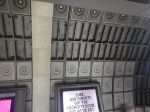
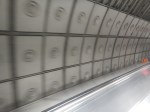

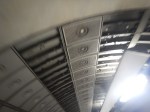


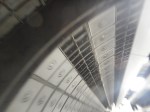

The Jubilee Line opened in 1999.
In the last few years, concrete has been able to be 3D-printed, so it can now be produced in different shapes.







All these wall and roof panels on the Elizabeth Line were made by 3D-printing of concrete.
Conclusion
Design has progressed in 25 years.
Concretene Cements Its Future With £8m Funding
The title of this post, is the same as that of this article in The Times.
This is a precis. which explains what Concretene have done.
Concretene combines graphene with concrete to form a “stronger, more sustainable and more cost-effective alternative” to the world’s most-used building material.
The eight million funding is mainly to be used for more tests.
Is Concrete The New Wonder Material?
I once lived in a concrete apartment and although it is now fifty years old, it still looks the same, as it did the day it was built.
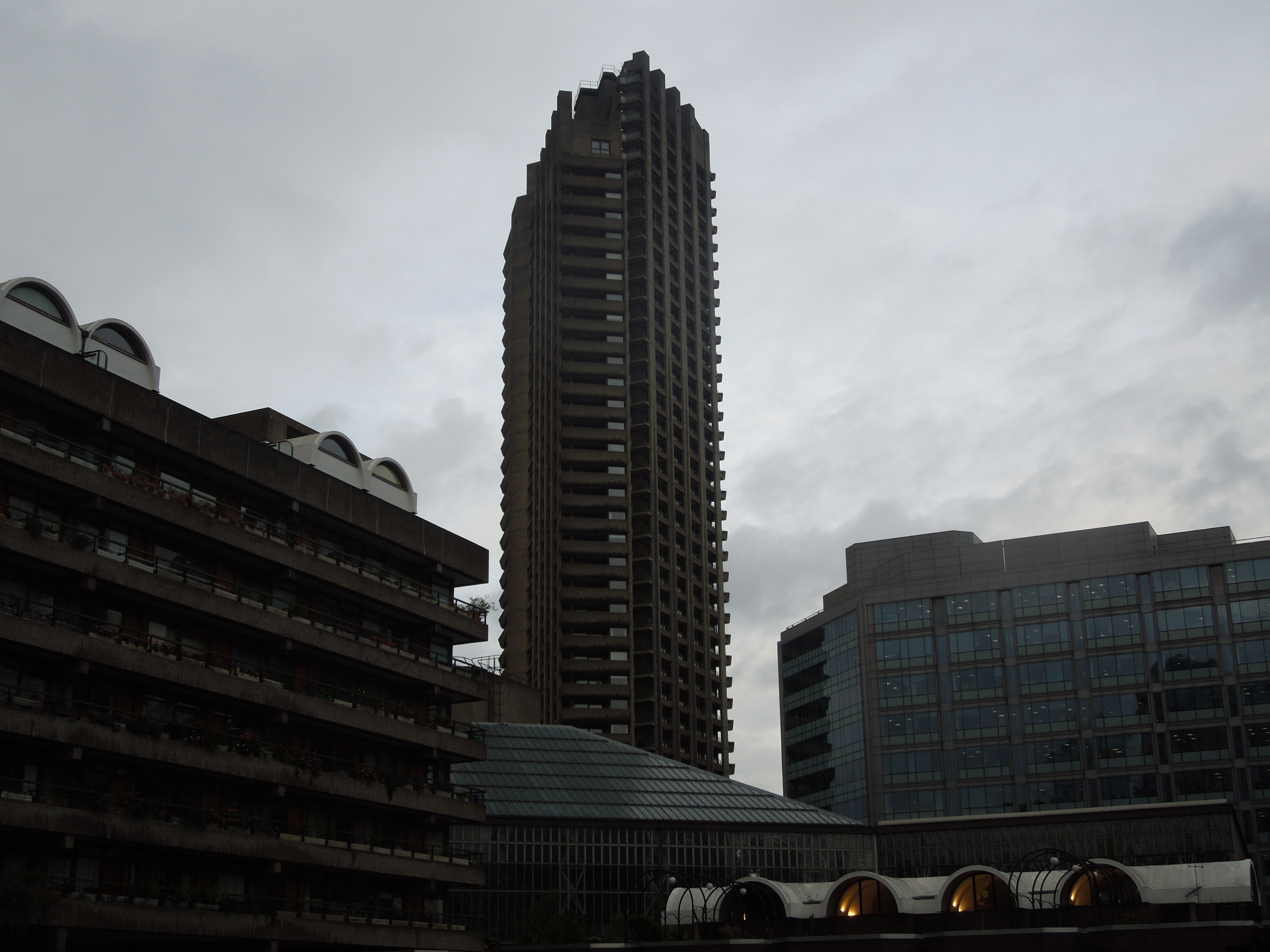
Cromwell Tower
Cromwell Tower in The Barbican may have been built to a high specification, but we don’t hear cancer, cladding, damp, fire or mould problems about the City of London’s flagship housing estate.
In the last few years, concrete has been able to be 3D-printed, so it can now be produced in different shapes.



All these wall and roof panels on the Elizabeth Line were made by 3D-printing of concrete.
The technique also seems to be being used on High Speed Two.
These innovative uses of concrete have led to research into the manufacture and use of concrete.
These posts are must-reads.
- Carbon-Neutral Concrete Prototype Wins €100k Architecture Prize For UK Scientists
- UK Cleantech Consortium Awarded Funding For Energy Storage Technology Integrated With Floating Wind
- New HS2 Pilot Project Swaps Steel For Retired Wind Turbine Blades To Reinforce Concrete
- Earth Friendly Concrete
- HS2 Utilising UK-First Pioneering 3D Concrete Printing On Project
- Carbon Capture From Cement Manufacturing Nears Market Readiness
- Mineral Carbonation International Win COP26 Clean Energy Pitch Battle
The number of these posts show how much research is going into cutting the massive amount of carbon dioxide emitted by the concrete industry.
I also feel that some could work together.
Earth Friendly Concrete is a replacement for normal concrete, so perhaps it could be enhanced with graphene, to create an Earth Friendly Concretene.
Vattenfall Boosts Capacity For Norfolk Offshore Wind Zone
The title of this post, is the same as that of this article on offshoreWIND.biz.
This is the sub-heading.
Vattenfall is increasing the capacity for the Norfolk Offshore Wind Zone off the UK from 3.6 GW to over 4.2 GW, meaning that an additional 700,000 homes will be powered by the zone, the energy company said.
This is a sixteen percent increase in capacity.
In this article in the Eastern Daily Press, this is said.
Rob Anderson, project director of Vattenfall’s Norfolk Zones, said that the increase is due to the project using “innovative” technology and being “able to maximise its design”.
Moving from 12 MW to 14 MW turbines would give the planned increase.
This article on offshoreWIND.biz, is entitled Siemens Gamesa Ships Out First Set Of 115-Metre Wind Turbine Blades.
This is said about the two Norfolk Zone wind farms.
The SG 14-236 DD model will be commercially available in 2024 and has so far been selected as a preferred option for the Norfolk Vanguard and Boreas wind farms offshore the UK, as well as for the MFW Bałtyk II and MFW Bałtyk III wind farms in the Polish Baltic Sea.
It looks to me that Siemens Gamesa have got a success in the making.
It should be noted that the offshore floating wind farm named Ossian could increase from 2.6 GW to 3.6 GW, which I wrote about in Ossian Floating Wind Farm Could Have Capacity Of 3.6 GW.
A similar effect of size increases happened in North Sea Oil and Gas in the 1970s, as the cranes got larger and the techniques got better.
Is history repeating itself?
Offshore Wind Turbines Need To Be Standardised, Energy Transition Industrialised To Reach Targets, Says Siemens Energy VP For Western Europe
The title of this post, is the same as that of this article on offshoreWIND.biz.
This is the sub-heading.
Governments need to move from talking about policies to implementation, the offshore wind industry needs to employ standardisation, and clear rules and regulations need to be set for green hydrogen in order to move faster with large-scale deployment and achieve meaningful progress in limiting global warming to 1.5 degrees Celsius.
The guy has a point, as mass production of anything is generally more efficient and creates more units in a given time.
But can a diverse group of politicians, agree on a standard for turbines, fixed foundations, floaters, cables and sub-stations and then make sure all are identical and clip together like Lego? I doubt it!
And how would you fit innovative designs like TwinHub into a standard.
This image shows one of their TwinHub turbine installations being towed into place.
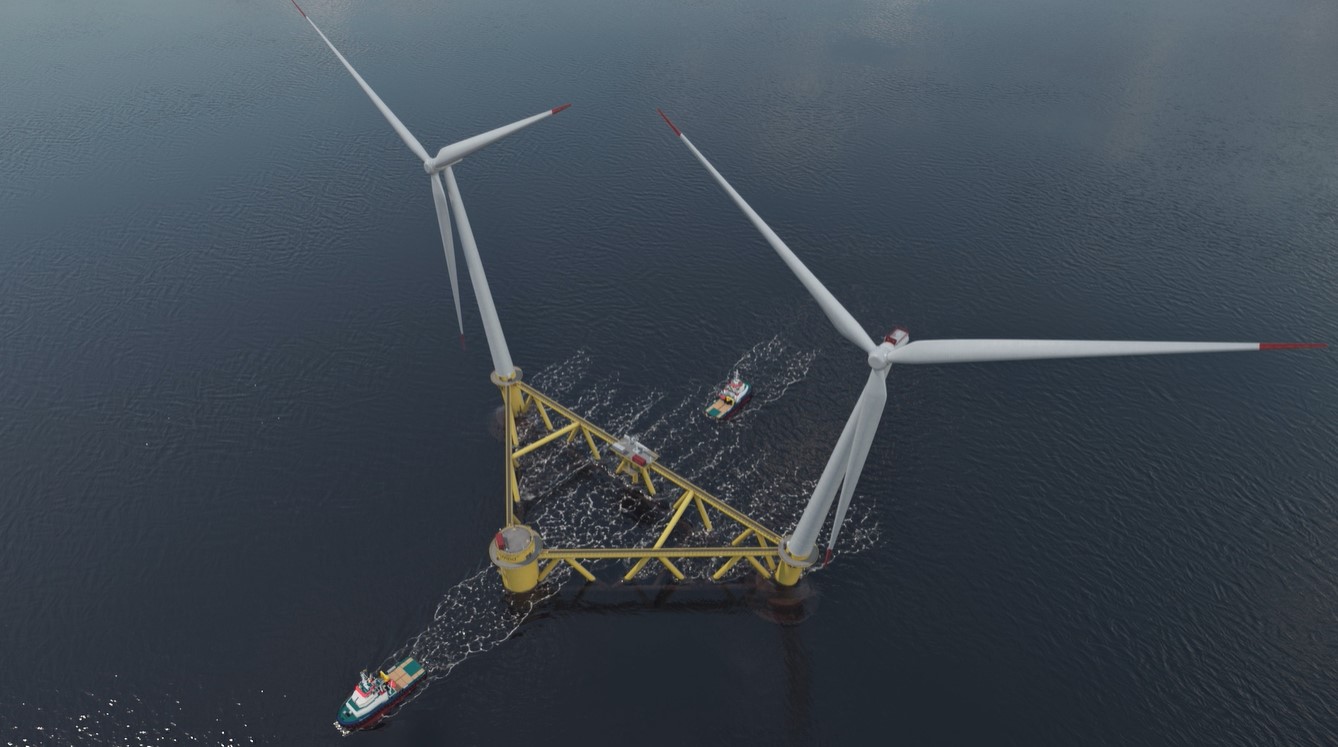
At least it could be built to hold two standard turbines.

