Glendoe Hydro Power Station
When I think of hydro-electric power stations in the UK, I generally, think that most of the hydro-electric power stations were built years ago by organisations like the North of Scotland Hydroelectric Board. These power stations were one of the staples of the Meccano Magazine, of which I was a long-term subscriber in the 1950s.
But Glendoe hydro-electric power station is relatively new having been opened in 2009. At only 100 MW, the power-station may not be large in comparison to others around the world, but it does show what can be built in the Highlands of Scotland.
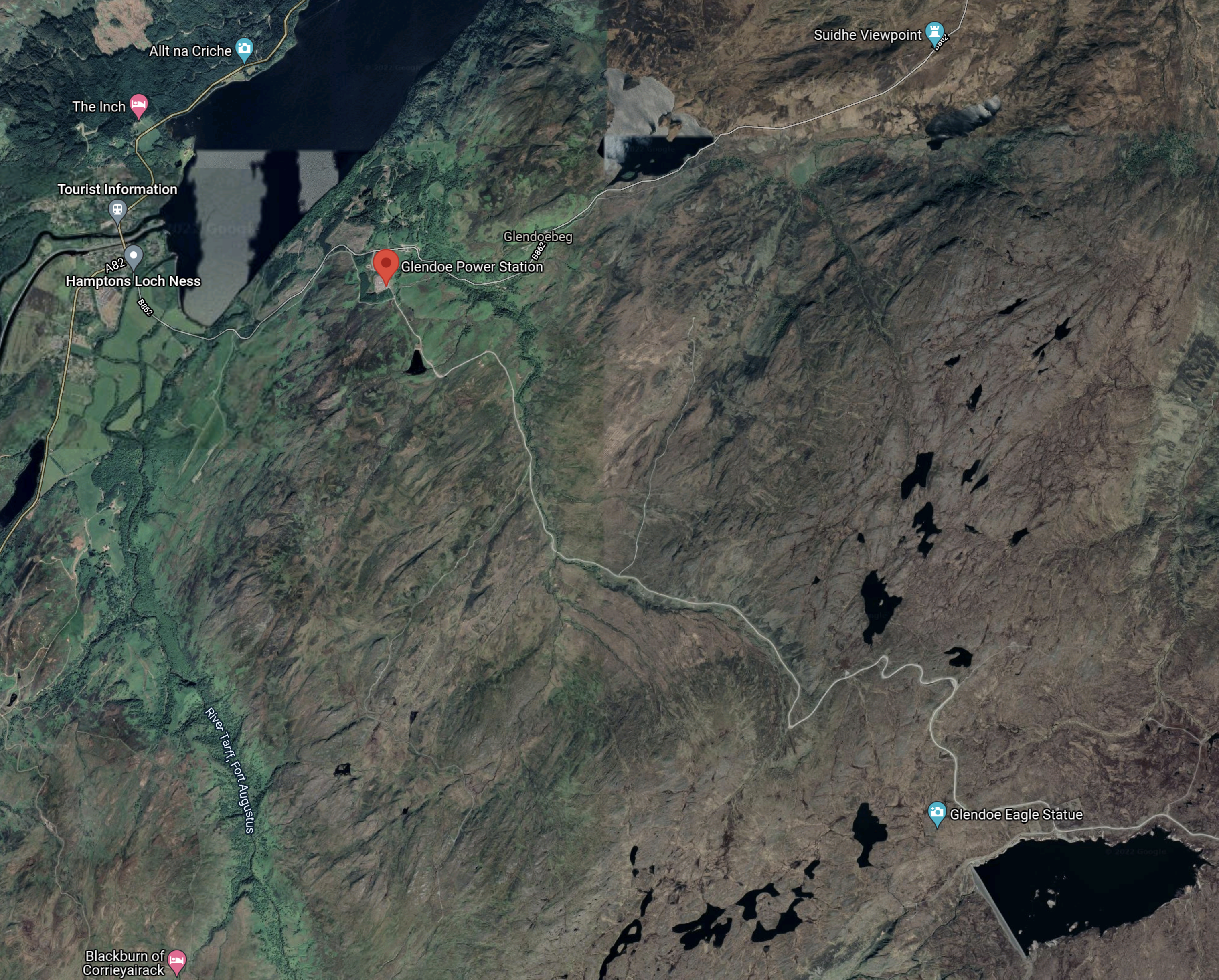
This Google Map shows the layout of the power station.
Note.
- The red arrow indicates the location of Glencoe power station, which is underground.
- To the North of the power station, is the Southern end of Loch Ness.
- In the South-Eastern corner of the map there is the lake from which the power station draws its water.
- The dam is at the Western end of the lake.
According to this article on Power Technology, the project cost £160 million.
This extract from a page on the SSE Renewables web site, describes the layout of the tunnels and the operation of the power station.
Engineers began planning the Glendoe project as far back as October 2001. Formal construction work at the site started over four years later, in January 2006. It involved constructing a 960 metre-wide dam on the River Tarff to create a new reservoir some 600 metres above the power station, giving it the greatest head of any hydro electric power station in the UK.
An 8.6 kilometre tunnel connects the reservoir to the power station that is built 250 metres below ground level, about two kilometres from the banks of Loch Ness. Although some of the tunnel was created using traditional drill and blast techniques that would have been familiar to the Tunnel Tigers of the last century, much of its length was bored out using a massive tunnelling machine named Eliza Jane by local schoolchildren.
The SSE page also describes the working and living conditions of those who built the scheme.
Most lived in specially constructed camps high in the hills above Loch Ness, braving brutal weather conditions in winter, and the fearsome Scottish midges in the summer.
The SSE page also gives the main use of the power station.
Today, the main operating feature of Glendoe is its ability to react quickly to changing demand for electricity, being able to reach full output in just 90 seconds.
So when there is an important football or rugby match on the television, it is ideal to supply the surge of electricity, when everybody puts on the kettle at half time.
Could This Power Station Have A Pumped Storage System Added?
Consider.
- There is a large lake six hundred metres above the power station.
- Loch Ness is a large source of water at the bottom of the mountain.
- Every tonne or cubic metre of water pumped into the upper lake would store 1.63 kWh of electricity.
- The world’s and the UK’s tunneling engineers are getting better and more ambitious.
- When this power station was built in the early years of this century, there wasn’t the large amount of wind turbines in Scotland, that there are now.
I suspect, it’s an idea that’s been looked at, but the costs or the distance to pump the water might kill it.
If a second project was the same size as the first, it would cost £210 million based on inflation.
But.
- It wouldn’t need another dam or a substation to connect to the National Grid.
- There would probably be a need for extra excavation at the power station to put in the pumps.
- I suspect it would need an extra tunnel to get the water uphill.
- One tunneling engineer told me, as with sex, digging a second tunnel is easier.
The main benefit, would be that it would be hidden infrastructure.
As to the energy storage capacity, I estimate from maps that the top reservoir at Glendoe is about half the size of Loch Mohr at Foyers power station, but the head is 600 metres as against 197 metres. As Foyers can store 10 GWh, it looks to me, that Glendoe could store around 15 GWh.
Also, as Glendoe power station was designed and built after the successful conversion of Foyers to a pumped storage station, I wouldn’t be surprised to find that Glendoe was designed, so that the station could be converted to pumped storage at a later date.
Conclusion
This scheme will be seriously looked at for extension with a pumped storage facility.
National Grid Bets On Surge Pricing And Electric Cars To Avoid Another Energy Crisis
The title of this post is the same as that of this article on the Telegraph.
These are the first few paragraphs.
With wind supplies forecast to be low and other energy sources offline, a power crunch was looming by teatime the next day.
A call for help went out on a Tuesday afternoon and at 4.30pm on the Wednesday, electric car drivers plugged in special chargers to export power from their car batteries back to the grid, as part of a trial run by Ovo Energy.
Their efforts in November 2020 may have amounted to only a tiny portion of the power needed on that day, but it was a taste of things to come.
Cars and other devices will be both a source of electricity demand and a helpful tool to keep the lights on as the UK tries to build a much greener energy system at the least expense.
It is as the article says the shape of things to come.
I also believe that long-term car parking at places like airports will become storage batteries in the future. You will tell your car, when you will be returning and it will be fully charged to drive home, when you arrive. If you are running late, you would probably use an app to tell your car the new arrival time.
These developments will all be part of the Internet of Power.
Corrievarkie Pumped Storage Hydro Project
When I wrote ILI Group To Develop 1.5GW Pumped Storage Hydro Project, I noticed that they were also developing a scheme called Corrievarkie at Loch Ericht.
This document on the Highland Council web site gives details of the planning application.
This is said.
Corrievarkie Pumped Storage Hydro Scheme – Construction and Operation of a Pumped Storage Hydro Scheme with generation capacity of approximately 600MW and storage capacity of 14.5 GWh comprising headpond reservoir, surge shaft, tailpond, headrace, tailrace, power cavern, temporary access tracks for construction, permanent access tracks, 12 construction compounds, temporary worked accommodation, switching station, loch based structures and ancillary infrastructure.
Note.
- With storage of 14.5 GWh, it is bigger than Electric Mountain, which has only 9.1 GWh of storage.
- But with a generation capacity of 600 MW, this is only a third of that of Electric Mountain.
This Google Map shows the area, where the scheme will be realised.
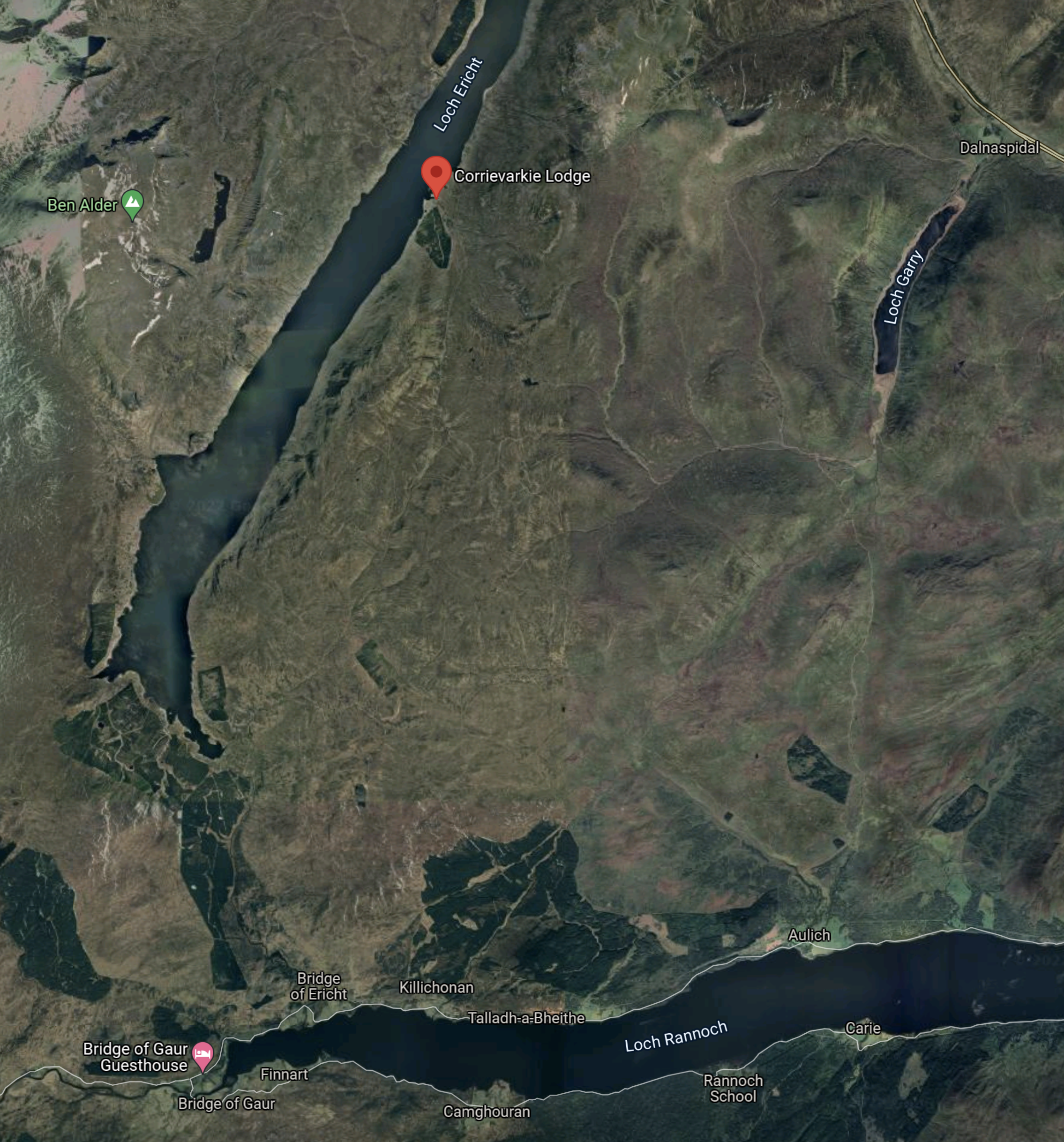
The red arrow indicates Corrievarkie Lodge.
I shall be interested to see the full details of this scheme.
Red John Pumped Storage Hydro Project
When I wrote ILI Group To Develop 1.5GW Pumped Storage Hydro Project, I noticed that they were also developing a scheme called Red John near Inverness.
The title of this post is the same as that of this article on Power Technology.
I have also found a web site for the project, which is part of the ILI Group web site.
- The scheme has an output of 450 MW.
- The storage capacity is 2,800 MWh or 2.8 GWh.
- The scheme has planning consent.
- The project is budgeted to cost £550 million.
- The construction program indicates that the scheme will be completed by the end of 2025.
This paragraph from this article on Water Power and Dam Construction, describes the head and tail ponds.
The Red John project will be located on the eastern shore of the north end of Loch Ness in the Highlands of Scotland. Loch Ness is to be the tail pond for the project, with the head pond to be newly constructed. It will use the natural topography between Loch Duntelchaig, Loch Ashie and Loch na Curra and Lochan an Eoin Ruadha, from where the development gets its Red John name.
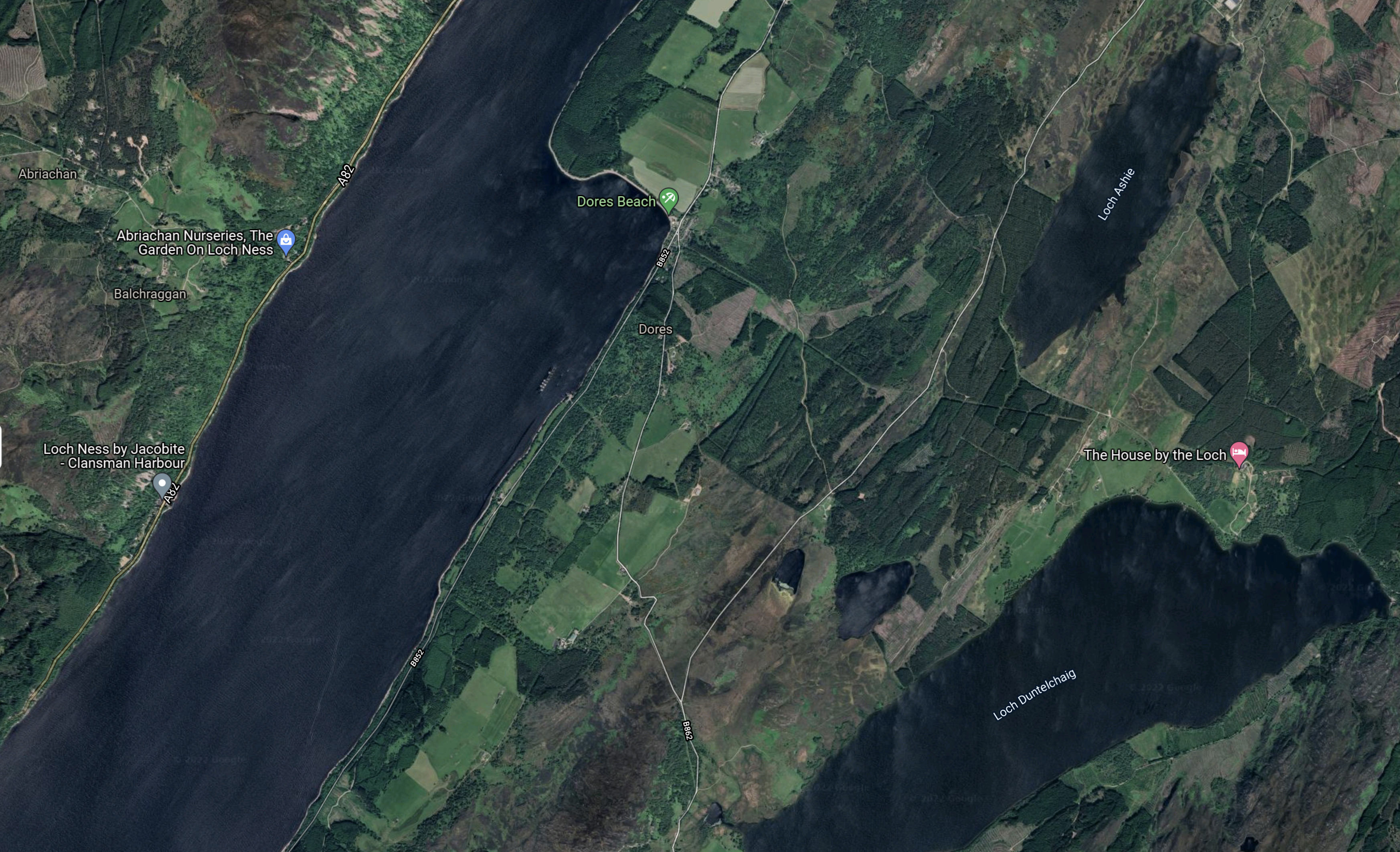
This Google Map shows the area.
Note.
- Loch Ness is in the West.
- Loch Ashie is in the North.
- Loch Duntelchaig is in the East.
This second Google Map shows the area between Lochs Ness, Duntelchaig and Ashie in more detail.
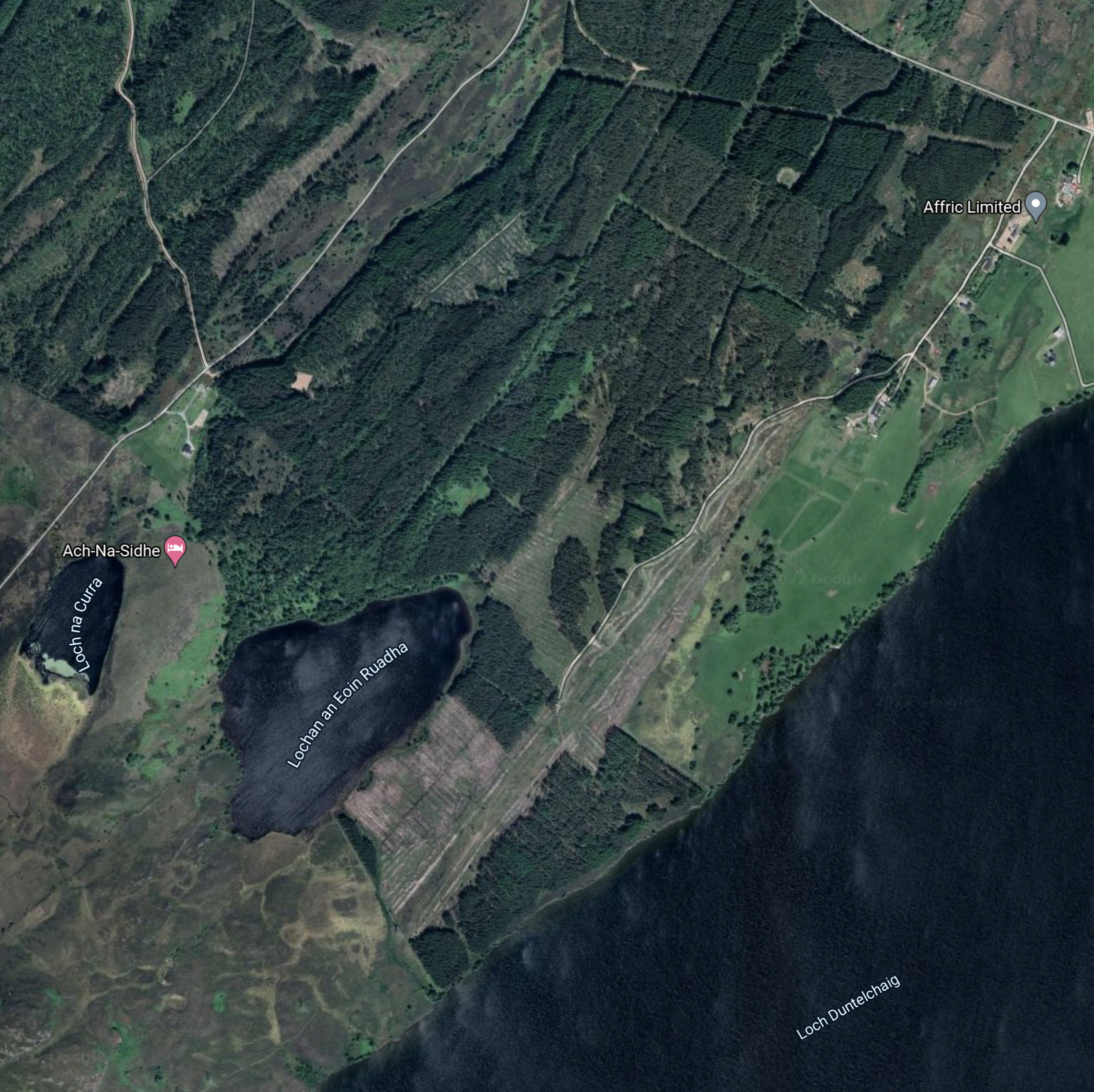
Loch na Curra and Lochan an Eoin Ruadha are now named and can be picked out in the previous map.
It looks like there will be a lot of heavy construction works to create the head pond.
Conclusion
This scheme has the output of a large gas-fired power station for just over six hours.
The finances must add up, as no-one would back a scheme like this if they didn’t get an adequate return on their money.
ILI Group To Develop 1.5GW Pumped Storage Hydro Project
The title of this post, is the same as that of this article on Solar Power Portal.
These are the first two paragraphs.
Clean energy developer ILI Group has begun the initial planning phase for a new pumped storage hydro project in Scotland.
The Balliemeanoch project at Loch Awe, Dalmally in Argyll and Bute will be able to supply 1.5GW of power for up to 30 hours. It is the third and largest of ILI’s pumped storage hydro projects, with the other two being Red John at Loch Ness and Corrievarkie at Loch Ericht.
It is a big scheme at 45 GWh.
The ILI Group has an extensive web site, that is worth a read.
- This page describes pumped storage.
- This long document from the company is part of their submission to the Government.
The company seems to be going in the right direction.
This Google Map shows the Loch Awe area.
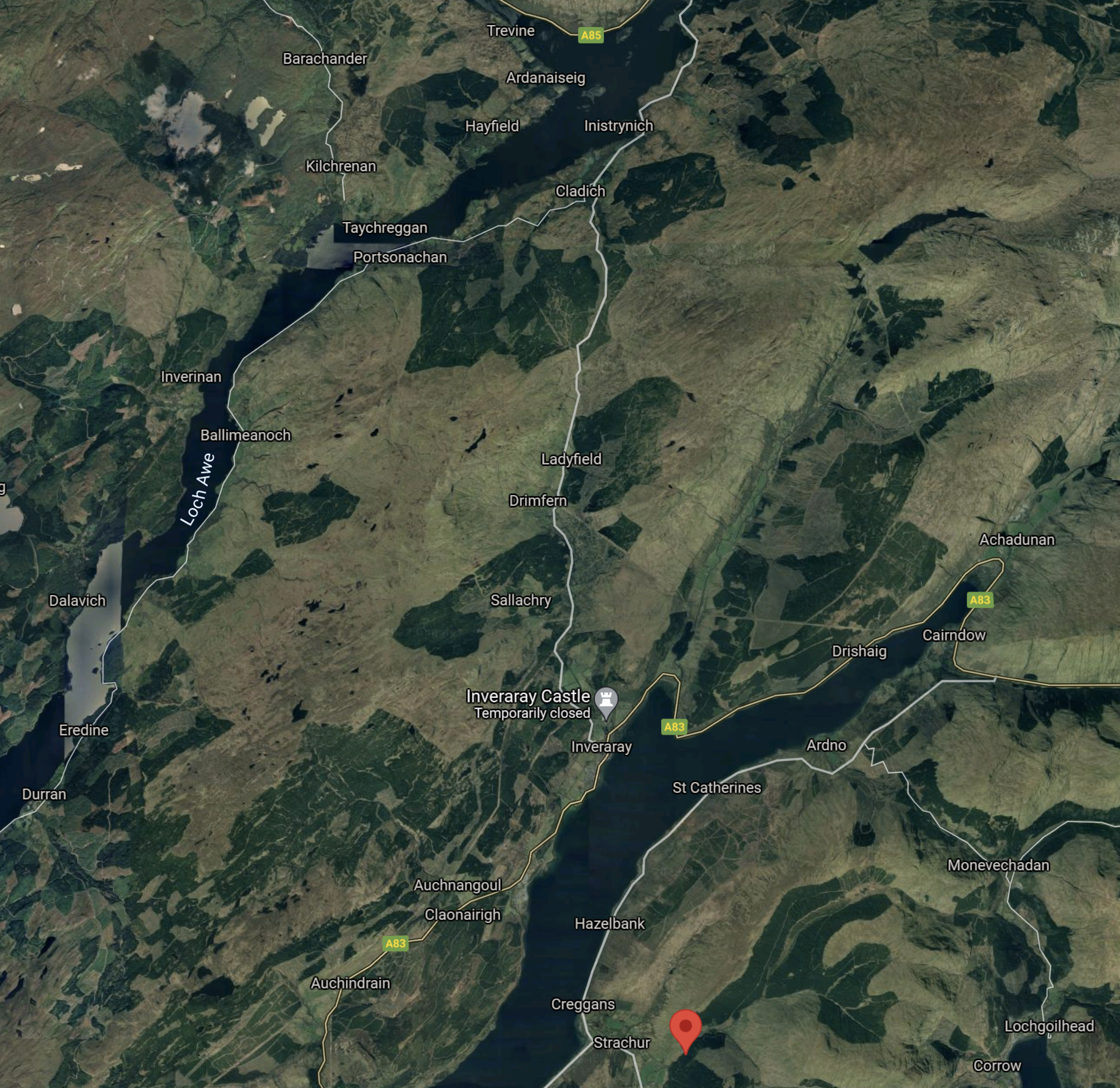
Note.
- Loch Awe is in the North West corner of the map.
- Loch Fyne is the large loch in the South East corner of the map.
- Balliemeanoch is marked by the red arrow.
I am a bit puzzled as to the layout of the scheme.
But I have now noticed a Ballimeanoch close by Loch Awe.
This is a map of its location.
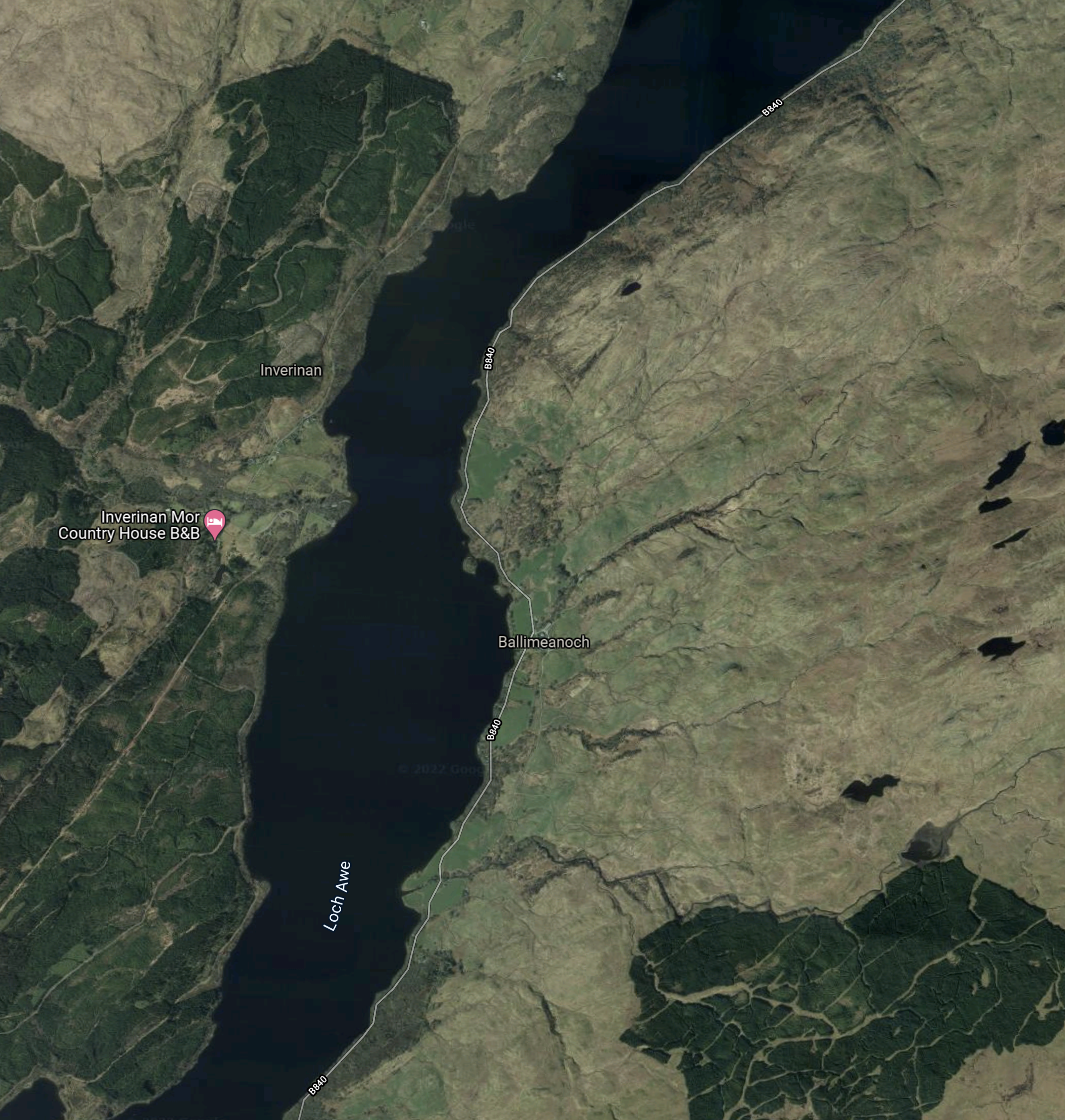
I suspect that is the correct location of the pumped storage scheme.
I shall be interested to see the layout of the full scheme.
Dogger Bank C In UK Offshore Wind First To Provide Reactive Power Capability
The title of this post, is the same as that of this press release from the Dogger Bank wind farm.
This paragraph gives an explanation.
Dogger Bank Wind Farm has secured a UK power first by becoming the first offshore wind farm project to win a tender from National Grid ESO to provide reactive power capability. The sector-first contract will help deliver a greener grid, maintain a stable voltage power supply, and help drive down UK consumer costs by millions of pounds.
Note that the three Dogger Bank wind farms; A, B and C will each have a capacity of 1.2 GW and that Hartlepool nuclear power station has a capacity of 1.32 GW. The latter is due to be decommissioned in 2024.
So the wind farms will effectively replace the nuclear power station.
This paragraph describes the contract.
Under new £22.5m Pennines Voltage Pathfinder contracts announced today, National Grid ESO has awarded a 10-year power contract to Dogger Bank C that will see its onshore converter station at Lazenby in the North-East of England provide 200 MVAr* of reactive power capability between 2024 and 2034. This marks the first time that an offshore wind transmission asset has been awarded a contract through a reactive power tender by National Grid ESO.
I suspect that there will need to be some form of energy storage added to the system somewhere, either at Lazenby or could we see a system like one of Highview Power’s CRYOBattery installed offshore?
It should be noted that CRYOBatteries are no more complicated, than some of the equipment installed on offshore gas and oil platforms.
The Lackenby Substation
It does seem that there has been a mix-up between the two nearby villages of Lazenby and Lackenby.
I can’t find a Lazenby substation, but I can find one at Lackenby.
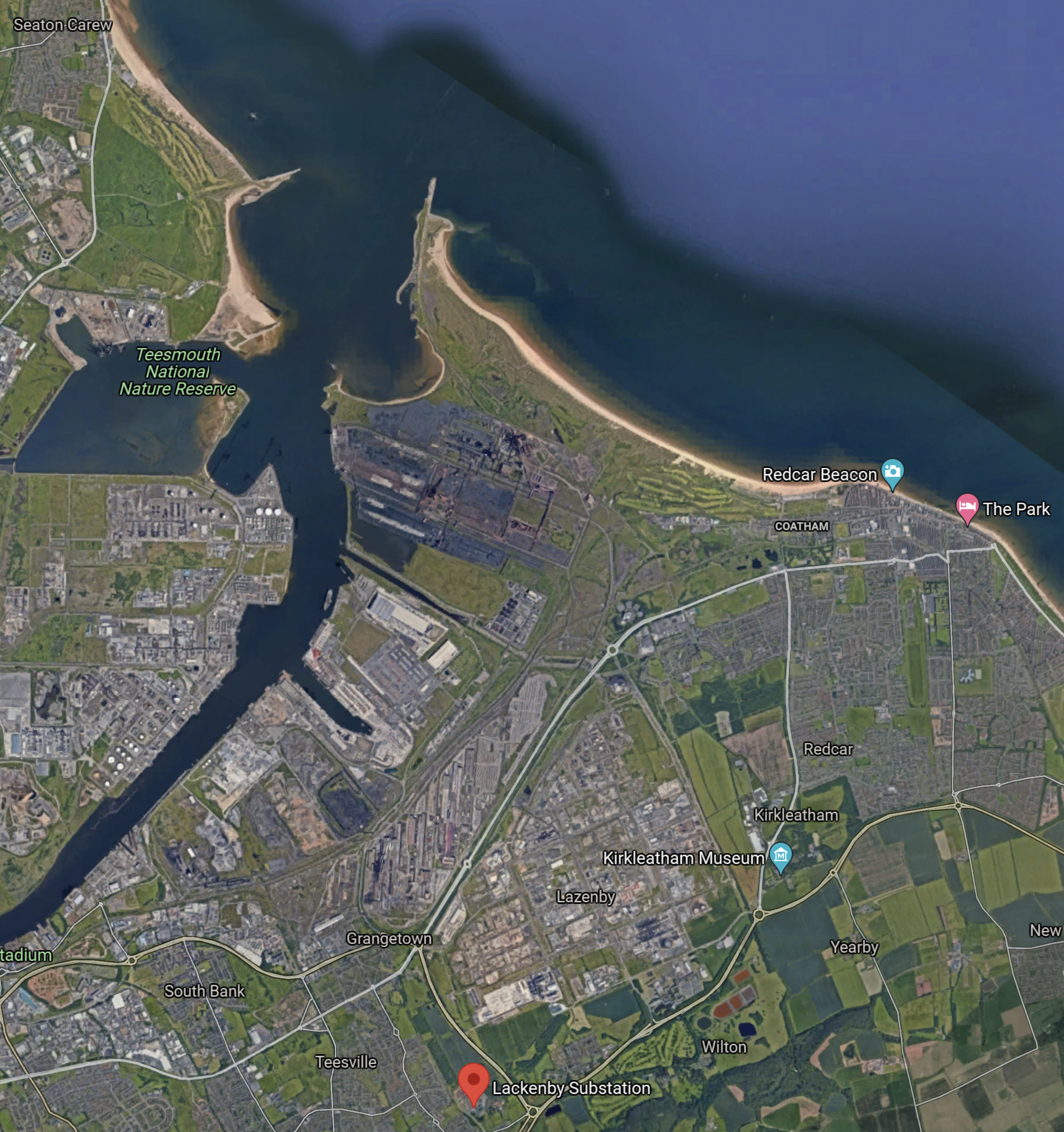
This Google Map shows that the location of the Lackenby substation.
This second map shows the substation in more detail.
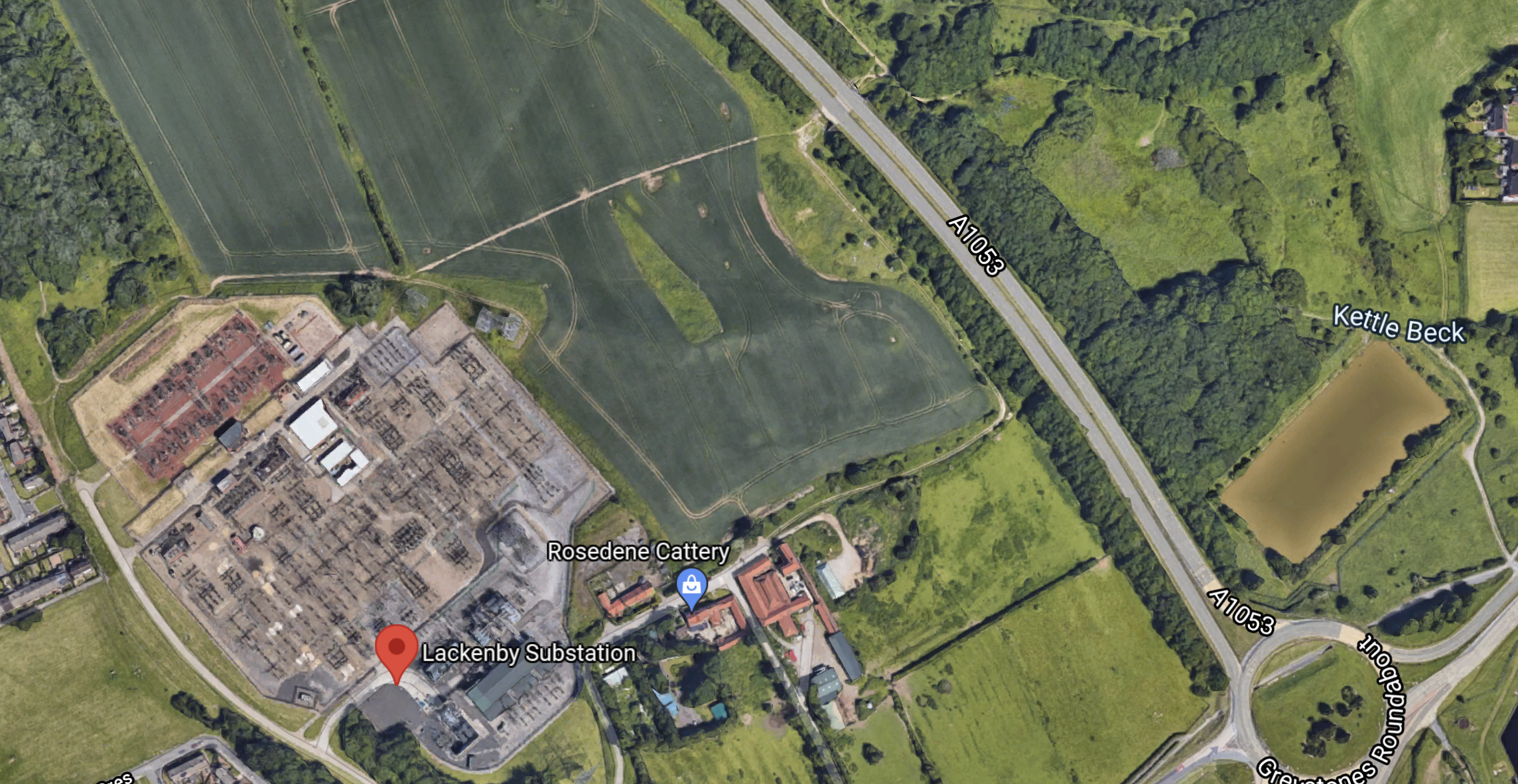
Note.
- There are a lot of large chemical works on both banks of the Tees.
- I can find nothing on the route of the cable from Dogger Bank C to Lackenby substation.
- Perhaps, it’s planned to go up the River Tees or it could come ashore South of the mouth of the River Tees.
Plans must be published soon, so that the substation can be updated before the wind farm is commissioned.
Glencore & Strategic Partner Britishvolt Strengthen Relationship And Agree To Build Battery Recycling Ecosystem In The UK
The title of this post is the same as that of this press release from Glencore.
These are the first two paragraphs.
Glencore is proud to have entered an industry-leading battery recycling joint venture with strategic partner and battery pioneer Britishvolt, the UK’s foremost investor in battery cell technologies and R&D.
The joint venture will develop a world-leading ecosystem for battery recycling in the UK. This ecosystem will be anchored at a new recycling plant located at the Britannia Refined Metals operation (BRM-located in Northfleet), a Glencore company. BRM will continue with its current production and trading operations.
These appear to be some of Glencore’s objectives for the project.
- They intend to recycle a minimum of 10,000 tonnes of lithium-ion batteries per year, including but not limited to valuable battery manufacturing scrap, portable electronics batteries and full EV packs.
- They intend to recycle Britishvolt’s scrap.
- They intend to be up and running by mid-2023.
- They intend to be 100 % powered by renewable energy in the longer term.
It all seems admirable.
These are my thoughts.
Britannia Refined Metals
This Google Map shows the Britannia Refined Metals site at Northfleet.
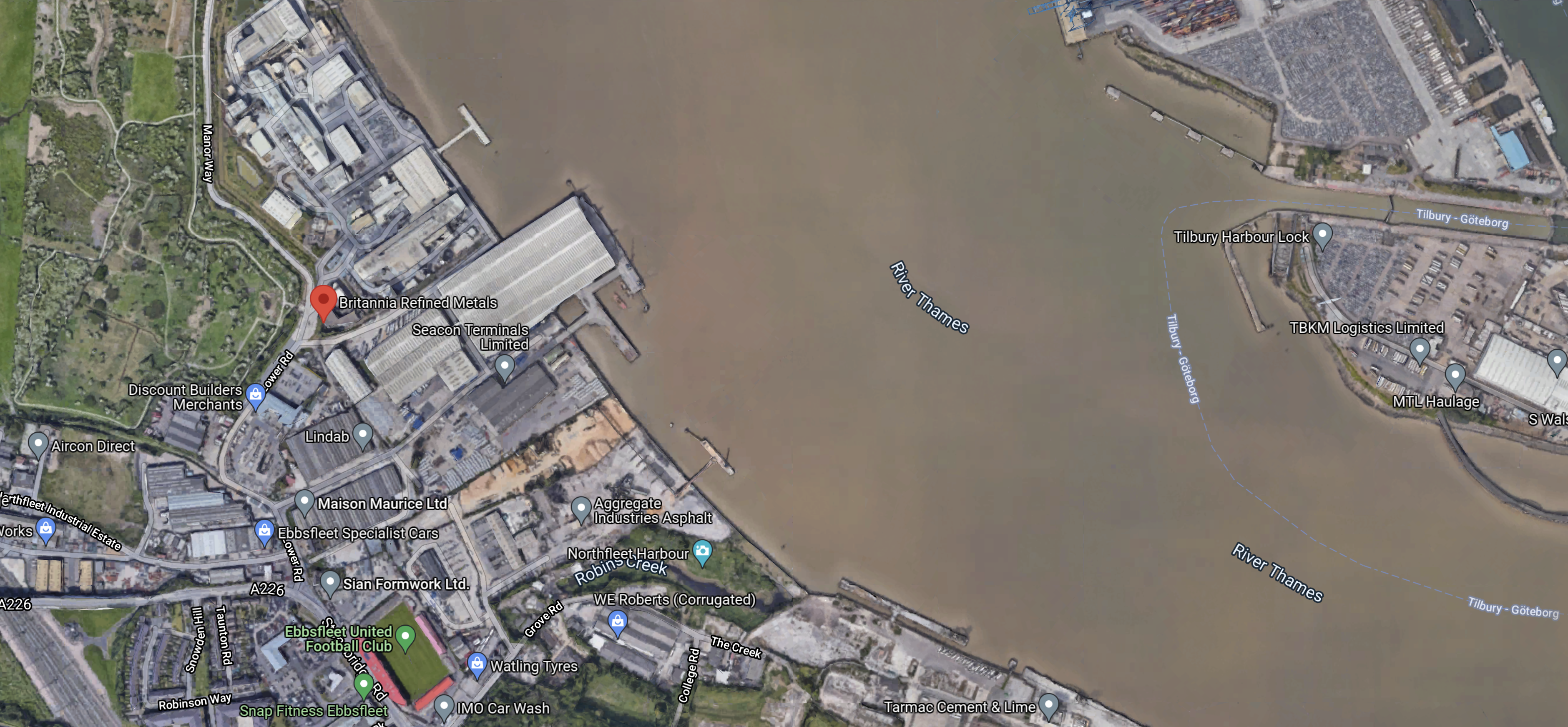
Note.
- Britannia Refined Metals is indicated by the red arrow.
- The Port of Tilbury is on the other side of the Thames.
This second Google Map shows the site in more detail.
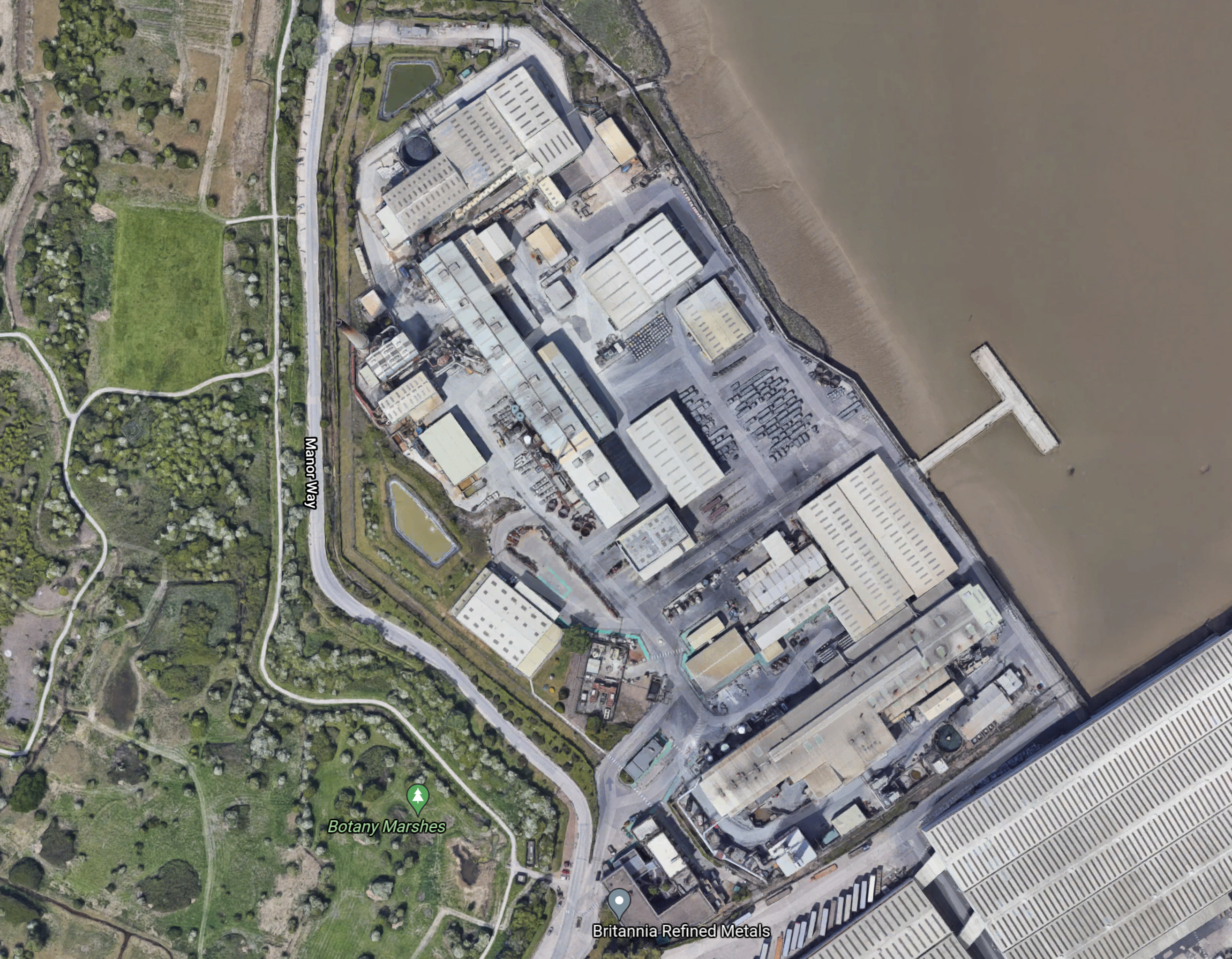
Note.
- It is not a very large site.
- There doesn’t appear to be much space for expansion.
- They appear to have a wharf on the river.
I’ve found this company video from the 1980s on the Internet.
They do seem to have developed a sophisticated process for recycling lead-acid batteries.
Renewable Energy
There are these offshore wind farms in the Thames Estuary.
- Gunfleet Sands – 172 MW
- Kentish Flats – 140 MW
- London Array – 630 MW
- Thanet – 300 MW
Two of these could be extended.
I am sure that there could be more space in the Thames Estuary for more wind power.
Recycling Batteries
I have found this article on the BBC, which is entitled As The World looks To Electrify Vehicles And Store Renewable Power, One Giant Challenge Looms: What Will Happen To All The Old Lithium Batteries?.
This is the third paragraph.
While this may sound like the ideal path to sustainable power and road travel, there’s one big problem. Currently, lithium (Li) ion batteries are those typically used in EVs and the megabatteries used to store energy from renewables, and Li batteries are hard to recycle.
The article talks about possible solutions.
- Don’t treat the batteries as disposable.
- Increasing the number of batteries recycled from the measly five percent.
- Automate the recycling process, which currently is labour intensive.
- Give the cathode, anode and other parts a second life in new batteries, by refurbishment.
- Batteries that degrade on command.
But the idea, I like is described in this paragraph from the article.
The next step for scientists pushing direct recycling of Li batteries forward is working with battery manufacturers and recycling plants to streamline the process from build to breakdown.
In context with the tie-up between Glencore and Britishvolt, you can imagine engineers from both companies, getting together to improve the design of the battery, so that manufacturing and recycling of batteries are two mutually efficient and complimentary processes.
I can also see some very sophisticated logistics systems being developed to return batteries to an approved recycler, who may be in another country.
But then we are dealing with something that could have a substantial value.
Deals Between Battery Manufacturers And Recyclers
I can see more deals like this between battery manufacturers and recyclers.
- It could reduce the cost of batteries.
- It could impress governments seeking to reduce the about of batteries going into landfill.
- It would reduce the amount of new metals to be mined.
It may even help, in the protection of intellectual property rights, that are concerned with battery manufacture and recycling.
A Second Similar Glencore Deal
There is also a second deal about battery recycling mentioned in a press release on the Glencore web site, which is entitled Glencore & Managem Set Up Partnership For Moroccan Production Of Cobalt From Recycled Battery Materials.
- The press release was issued only a few days before the one announcing the deal with Britishvolt.
- It is for 12,000 tonnes of recycling.
- The press release mentions renewable power.
I do wonder, if Glencore or one of their companies has developed a new process.
SSE Renewables Launches 1.5GW Coire Glas Construction Tender
The title of this post, is the same as that of this article on renews.biz.
These are the first two paragraphs.
Hydro construction companies have been invited to submit tenders for construction of SSE Renewables’ proposed 1500MW pumped hydro storage scheme at Coire Glas, in Scotland.
Coire Glas, on the shores of Loch Lochy near Invergarry, would be the first large-scale pumped hydro storage scheme to be built in the United Kingdom for more than 30 years.
There appears to be global interest and six shortlisted bidders.
- The ANDRITZ HYDRO and Voith Hydro partnership
- The Bechtel, Acciona Construcción and Webuild S.p.A consortium
- The BAM Nuttall, Eiffage Génie Civil and Marti Tunnel consortium
- The Dragados and BeMo Tunnelling UK consortium
- GE Hydro France
- STRABAG UK
Bidders like these probably wouldn’t bother to get involved unless they knew that funding of the project was in place and it was pretty certain that the project will be constructed.
In World’s Largest Wind Farm Attracts Huge Backing From Insurance Giant, I talk about how Aviva are funding the Hornsea wind farm.
I believe, that insurance and pension companies like abrdn, Aviva and L & G could find a way of financing a scheme like Coire Glas.
Conclusion
It looks to me, that it’s almost certain that Scotland will get a 1.5GW/30 GWh pumped-storage system at Coire Glas.
Coire Glas could supply slightly more power than Sizewell B nuclear power station for twenty hours.
Now that’s what I call backup!
Power Storage Is The Next Big Net Zero Challenge
The title of this post, is the same as that of this Opinion from Bloomberg.
This is the sub-heading.
Britain’s pioneering plans for renewable energy show the global need could be massive. The means don’t yet exist.
The opinion is very much a well-written must-read.
One new project the article mentions is a 30 GWh pumped storage project at Coire Glas in the Scottish Highlands, that is planned by SSE.
I discuss this scheme in The Coire Glas Pumped Storage Scheme.
Bloomberg didn’t say it, but this pumped storage scheme could give the UK energy security.
Disused Coal Mine Could Host Gravity Energy Storage Project
The title of this post, is the same as that of this article on Power Engineering International.
It does seem that Gravitricity has made a breakthrough, with the announcement of a full-size demonstration project in the Czech Republic.
- The project is based at the mothballed Staříč coal-mine in the Moravian Silesian region.
- They have backing from the European Investment Bank.
- This project will be delivered through the European Commission’s Project Development Assistance scheme.
- The Czech Republic seem to have carried out checks, with their own consultants.
It looks to me, that Gravitricity have passed the due diligence procedures of some high-powered agencies.
But this paragraph from the article must be important.
Gravitricity estimates there are around 14,000 mines worldwide which could be suitable for gravity energy storage.
If they can successfully store energy in one mine in the Czech Republic, how many of the 14,000 will be suitable for use?
I doubt it will be a small number, as mining engineers tend to be a conservative bunch and most of those mines will have been built to similar rules by similar machines and techniques.
A search of the Internet indicates that Staříč coal-mine has a depth of over a kilometre.
Using Omni’s Potential energy calculator, 12,000 tonnes and a kilometre give a figure of 32.69 MWh.
32 MWh may seem a small amount, but it would power one of these 4 MW Class 90 locomotives for eight hours.
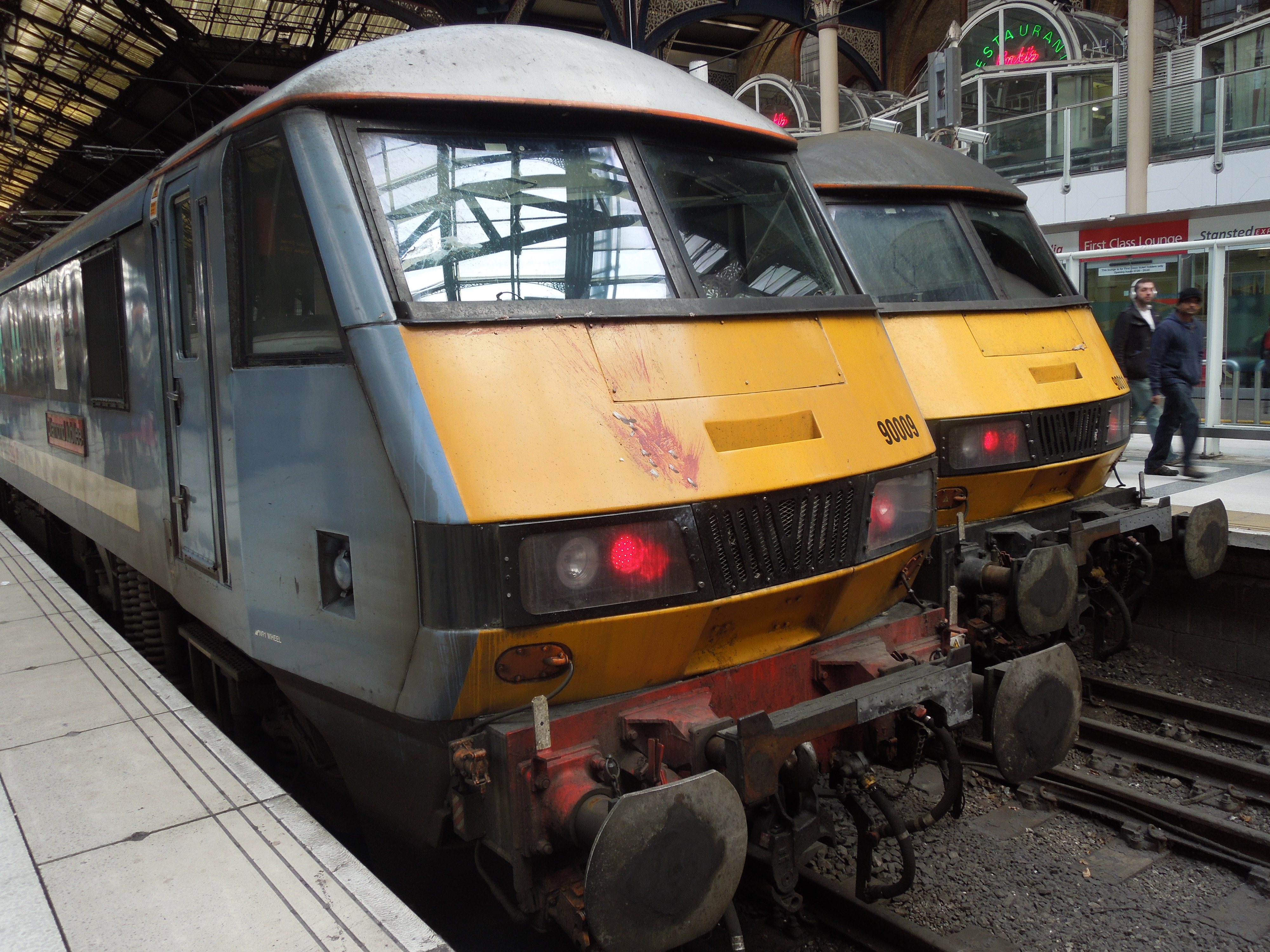
At their typical operating speed of 100 mph, whilst hauling eight coaches, they’d travel a distance of eight hundred miles or from London to Edinburgh and back!
 The Anonymous Widower