First Power At Scotland’s Largest Offshore Wind Farm
The title of this post, is the same as that of this press release from Seagreen wind farm.
These two paragraphs summarize the project and its start-up.
TotalEnergies and its partner SSE Renewables, has announced first power generation from the Seagreen offshore wind farm, 27km off the coast of Angus in Scotland.
The first turbine of a total of 114, was commissioned in the early hours of Monday morning. The aim is for the 1075 MW farm to be fully operational in the first half of 2023. The £3bn Seagreen project will be Scotland’s largest offshore wind farm and the world’s deepest fixed bottom wind farm as it is being developed in up to water depths of 59 meters.
It looks like 1075 MW cost £3billion, so I suspect it’s reasonable to say that offshore fixed-foundation wind farms cost about £2.79billion per GW.
The press release also says this about yearly output.
When fully operational, the site will produce around 5 terawatt hours (TWh) of renewable electricity per year, enough to power the equivalent of 1.6 million households.
That looks like an expected capacity factor of 53.1 %.
Rolls-Royce And AVK Provide Over 3.5 Gigawatts Of Emergency Power Capacity In The UK
The title of this post, is the same as that of this press release from Rolls-Royce.
The press release starts with these two bullet points.
- UK’s largest technology companies rely on emergency power solutions from AVK and Rolls-Royce
- Focus on Net Zero solutions with sustainable fuels and fuel cells
And then this summary of the business in the UK.
Rolls-Royce has delivered 200 mtu emergency generators to AVK, UK’s leading provider of critical power solutions, in just three years. AVK has already installed and commissioned the majority across Europe, and in total has already provided more than 3.5 gigawatts of power to data centers, the financial, telecommunications and healthcare industries in the UK and Ireland.
AVK is now the largest supplier of emergency power solutions to data centers and the financial sector in the UK, and since signing the exclusive agreement with the Rolls-Royce business unit Power Systems, has been using only mtu brand emergency gensets.
The next two paragraphs describe the business in more detail.
These are some points from these paragraphs.
- Data is now the ‘fourth utility’ required by all.
- The European colocation data center market is expected to grow at a compound annual growth rate of 13.1 percent from 2021 to 2028.
- The most important European markets for data centers are Frankfurt, London, Amsterdam, and Paris, where demand is highest.
- AVK provides, installs and maintains systems over their entire service life.
- Emergency power systems based on mtu diesel systems ranging from 825 to 4,000 KVA are tailored to customer needs.
- AVK has been using mtu engines for emergency power systems for over 20 years.
Rolls-Royce And AVK seem to have developed a nice little earner.
Net Zero Emergency Power Solutions
The last section talks about net-zero solutions for generators and emergency power.
This is set about sustainable fuels.
Sustainability already plays a major role for data center operators. As a result, interest in alternative fuels has grown and AVK is increasingly providing support and guidance on switching from using diesel to HVO (Hydrotreated Vegetable Oil). mtu Powergen engines from Rolls-Royce can be used unchanged for sustainable EN15940 fuels, such as HVO; no engine hardware or software modifications are required with the same performance. Using HVO can significantly reduce CO2, nitrogen oxide and particulate emissions.
And this is said about the use of hydrogen.
Rolls-Royce is also currently developing its mtu gas engine portfolio for power generation so that the engines can run on hydrogen fuel in future, enabling a Net Zero energy supply. The company is also launching complete mtu hydrogen fuel cell solutions, that emit nothing but water vapor from 2025. This will enable CO2-free generation of emergency power for data centers and many other critical applications.
I certainly think, that they are going in the right direction.
- Data center operators are said to want sustainability.
- Other users of emergency power will probably want the same.
- A full range of solutions is offered.
Hopefully, it will bring more sales, as the market size increases.
First Ever Gravity Green Energy Storage System Set For North Yorkshire Town
The title of this post, is the same as that of this article on the Yorkshire Post.
These paragraphs give an outline of the project.
Plans to create the UK’s first below ground gravity energy storage system have been unveiled in North Yorkshire.
Scottish energy storage firm Gravitricity is to apply to Ryedale District Council with its plan for a facility at East Knapton in Ryedale on the site of the former Knapton gas generator.
If completed, it could store up to four megawatt hours (4MWhs) of electricity – sufficient to power more than 9,000 homes for an hour.
It looks like the system will have an output of 4 MW.
This Google Map shows the two villages of West and East Knapton.
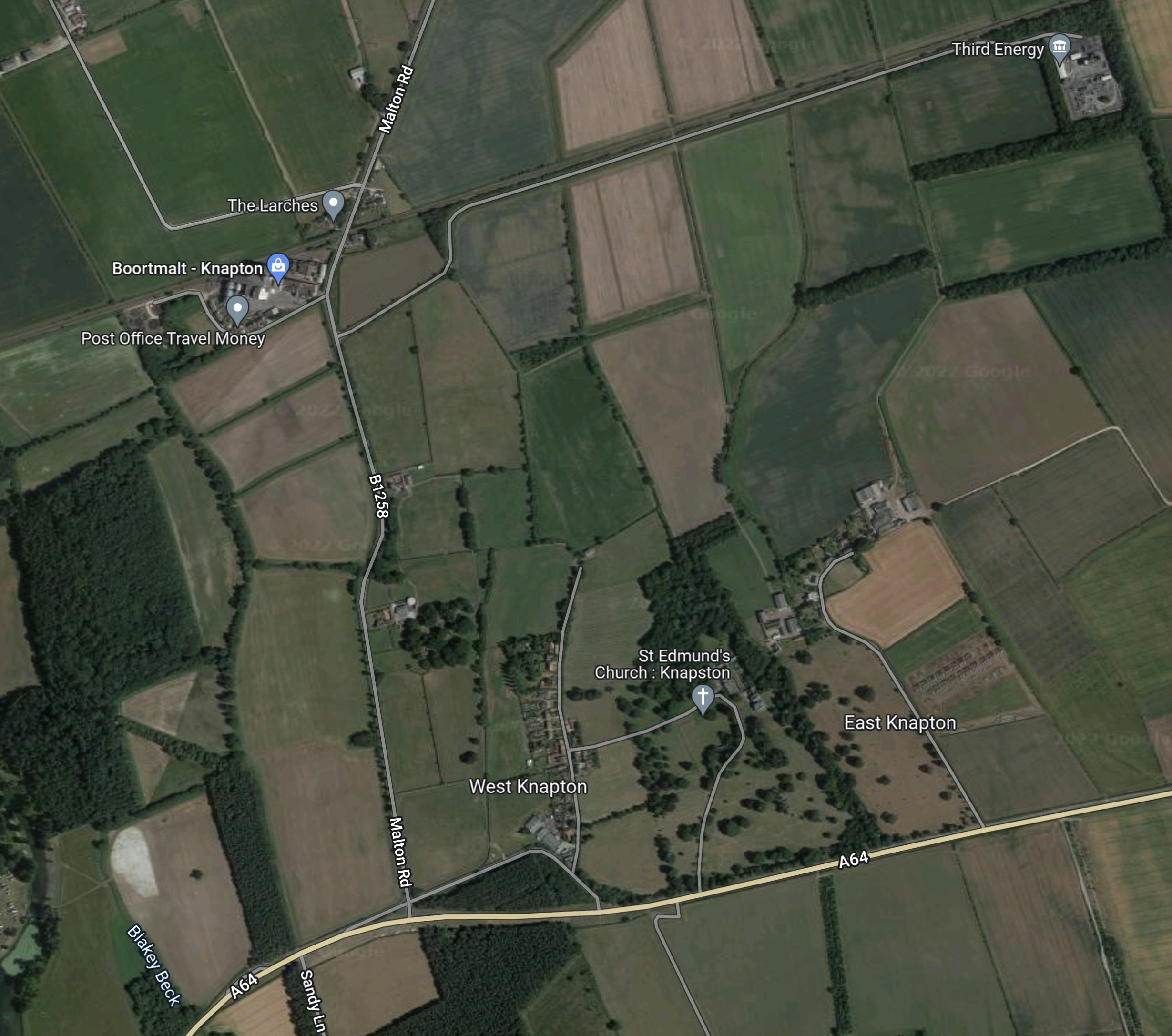
Note.
- The A64 road between Malton and Scarborough going across the map.
- Scarborough and the coast is about fifteen miles to the East.
- The Third Energy site in the North-East corner of the map.
This second Google Map shows the Third Energy site in more detail.
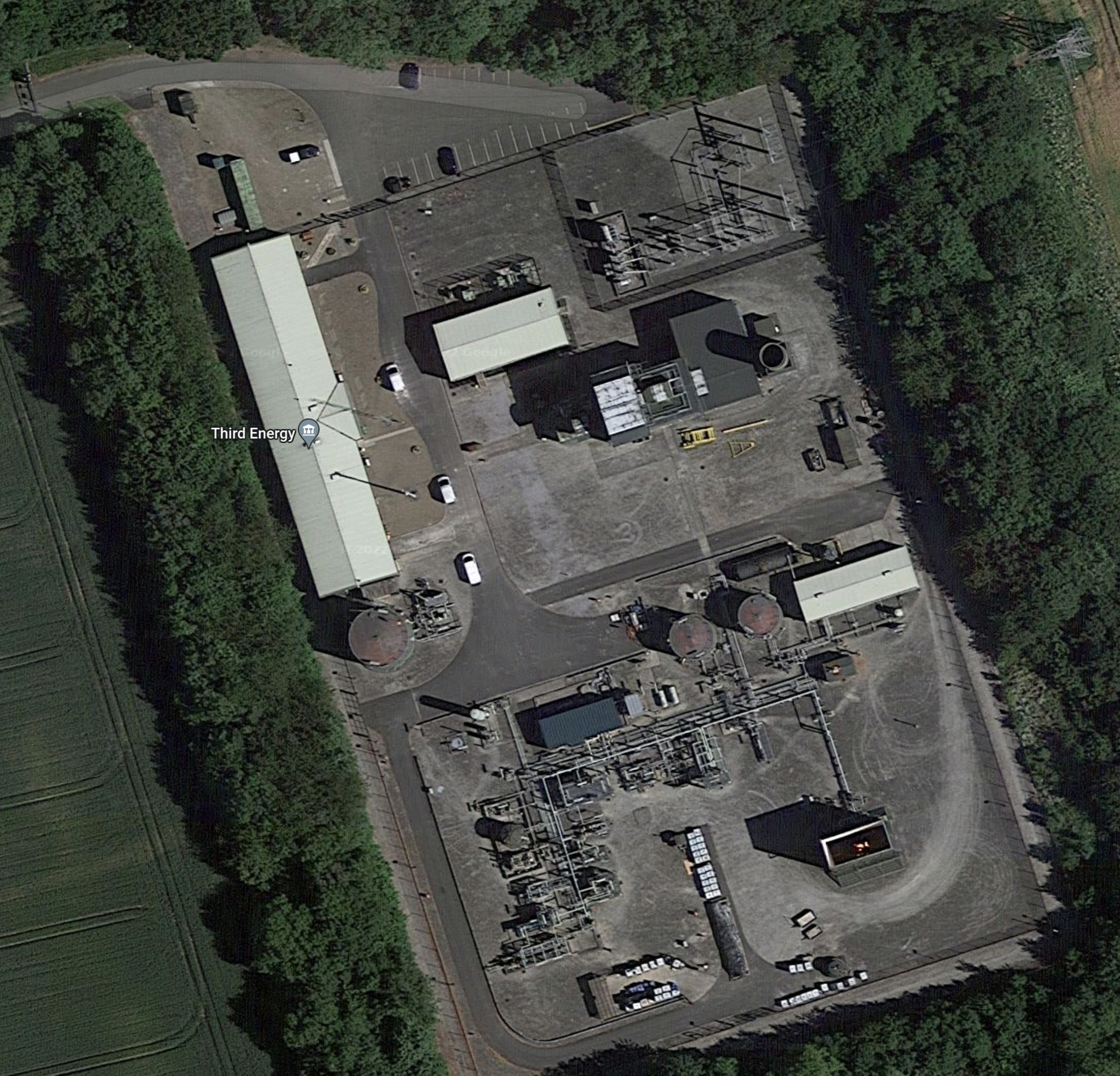
Note.
- The substation and a power line in the North-East corner of the map.
- The 42 MW Knapton Generating Station used to be on this site and it was powered by local gas wells.
Third Energy have now called the site Knapton Energy Park and it now has a web page, which has this mission statement.
Third Energy is developing the former Knapton Generating Station into the Knapton Energy Park. The energy park will house multiple sources of power generation and energy storage. The aim of the project is to pay a part in the development and generation of renewable energy systems in North Yorkshire, and contribute to making the UK Net Zero by 2050.
This paragraph talks about weights.
One of our technology partners has also received government funding to conduct feasibility studies for a pilot project at Knapton which would utilise suspended weights to store energy as an alternative to the traditional battery storage technologies. This project will be developed through 2022 onwards.
It looks like Gravitricity has planted an acorn in Yorkshire.
The Third Energy web site is worth an explore. This is the mission statement on the home page.
At Third Energy our aim is to be at the forefront of North Yorkshire’s transition from fossil fuels to sustainable energy. Our team are proactively playing a part in innovative energy solutions and energy development; transforming our facilities into a multi-purpose energy park and research centre.
I particularly like this page, which is entitled Plug & Abandon.
This is the outline of their P % A philosophy on the page.
As wells near the end of their life cycle they must be decommissioned and the land returned to its original state. Unfortunately, the current P&A practices of the oil and gas industry are cost prohibitive, resulting in delays to abandonment (as companies attempt to avoid the high cost), and poor abandonment practices that may be harmful to the environment.
Fortunately, there are solutions to this problem. Our ambition is to use new and innovative technologies to P&A the wells in a more effective and sustainable manner, and first to extend the period our wells may service the community by re-purposing them for geothermal energy.
Can they really convert abandoned gas wells into geothermal energy sources?
ILI Group Secures Planning Consent For 50MW Energy Storage Project
The title of this post, is the same as that of this article on Solar Power Portal.
ILI Group or Intelligent Land Investments Group to give them their full name, are a Scottish-based company, that I follow as I like their energy storage developments.
The home page of their web site, lists three main areas of activity.
The home page also has a scrolling mission statement of
- UK Energy Security
- 4GW of Energy Storage Projects
- Aligned with government policy
- Saving over 200million tonnes of CO2e
- Over £4 billion of Investment
It is very much worth reading the section of the ILI Group web site, which talks about pumped-storage hydroelectricity.
It starts with a overview of the Pump Storage Sector.
Between 2007 and 2015, the total installed capacity of renewables electricity in Scotland has more than doubled. Due to its intermittent nature, the rise in renewable generation has resulted in increased demand for flexible capacity to help meet energy balancing requirements for the national grid system.
Pumped storage hydro is considered by the Directors to be the most developed and largest capacity form of grid energy storage that currently exists. This can help reduce renewable energy curtailment and therefore promote grid stability.
It then gives an overview of how pumped-storage hydroelectricity works and the benefits of the technology.
The section finishes by noting that the company has secured planning permission for the Red John pumped-storage hydroelectric power station.
The article on the Solar Power Portal, also has this paragraph on ILI Group’s ambitions for pumped-storage hydroelectricity.
ILI Group is also responsible for the development of a 1.5GW pumped storage hydro project at Loch Awe. The Balliemeanoch project based at Dalmally in Argyll and Bute will be able to supply 1.5GW of power for up to 30 hours. It is the third and largest of ILI’s pumped storage hydro projects, with the other two being Red John at Loch Ness and Corrievarkie at Loch Ericht.
Note these points about the Balliemeanoch project.
- It has a storage capacity of 45 GWh, which is around the total amount of electricity, the whole of the UK would use in two hours.
- It couldn’t power the UK, as it has an output of only 1.5 GW and the UK needs at least 23 GW.
- The largest pumped storage hydroelectric power station in the UK is Dinorwig power station, which has an output of 1.8 GW and a storage capacity of 9.1 GWh.
In terms of storage capacity, the Balliemeanoch project will probably be the largest in the UK.
The section of the ILI Group web site, that talks about battery storage, opens with an overview of battery storage opportunities, where this is said.
Battery storage projects provide an enticing new opportunity for landowners and investors alike. As a market that will see significant growth over the coming years (National Grid predict up to 40GW of storage could be required by 2050) we see exciting new opportunities in a sector that will be critical to meeting our climate change needs.
Whereas our pumped storage hydro projects will provide long-term storage capacity, our batteries will provide short-term services (less than 4 hours) to the electricity system. As the system decarbonises, becoming steadily more reliant on intermittent green renewable generation, storage will play a role of increasing importance in balancing the grid and ensuring security of supply.
Note.
- This is a sales pitch to landowners and investors.
- National Grid’s prediction of 40GW of storage by 2050, could be able to store as much as 1200 GWh of electricity.
- I agree with their statement that there will be a need for both pumped storage hydro and batteries.
The section finishes with a status summary of 21 battery projects that they are developing.
Conclusion
I feel that ILI Group is a company that means business and knows where it’s going.
The UK probably needs several more companies like the ILI Group.
Hydrogen Fuel Pioneer Wins £247k Funding For Carbon Capture Tech
The title of this post, is the same as that of this article on gasworld.
This is the introductory paragraph.
UK-based waste-to-hydrogen specialist Compact Syngas Solutions (CSS) has won £246,568 from the Hydrogen BECCS (bioenergy with carbon capture and storage) Innovation Programme.
I first wrote about Compact Syngas Solutions, in Welsh Firm Wins £300K BEIS Grant To Advance Hydrogen Fuel Tech.
Compact Syngas Solutions appear to be developing a process to turn waste, that would otherwise go to landfill, into green hydrogen.
- The first stage turns the waste into syngas using gasification.
- This process produces carbon dioxide, which must be captured.
- Compact Syngas Solutions seem to have found a chemical mechanism, that uses water to capture this carbon dioxide instead of ammonia-derived amines.
The last two paragraphs of the article state Compact Syngas Solutions’s plans.
Intended to be portable, CSS plans to develop ten Micro H2 hubs complete with four gasifiers.
Capable of producing 60kg of hydrogen and capturing 3.1kg of CO2 per day, the technology could contribute to full-scale Waste-to-Syngas-Liquid-Fuel facilities, leading to a 50,100 tonne CO2 capture capacity in the UK.
I feel, that if this technology can be made to work at scale, then Compact Syngas Solutions will have a viable way to make green hydrogen.
Germany Has Potential For 82 GW Of Offshore Wind
The title of this post, is the same as that of this article on Renewables Now.
These are the two introductory paragraphs.
Germany has the potential to raise its offshore wind energy capacity to 81.6 GW which is above the federal government’s target of 70 GW by 2045, a study by research institute Fraunhofer IWES shows.
To exploit all the potential for wind energy in the North Sea and the Baltic Sea, Germany needs to devise a strategy for more efficient use of the available space and use new offshore wind power technologies in additional areas in a way that will not raise concerns and affect nature conservation.
This map shows the German parts of the North Sea and the Baltic Sea.
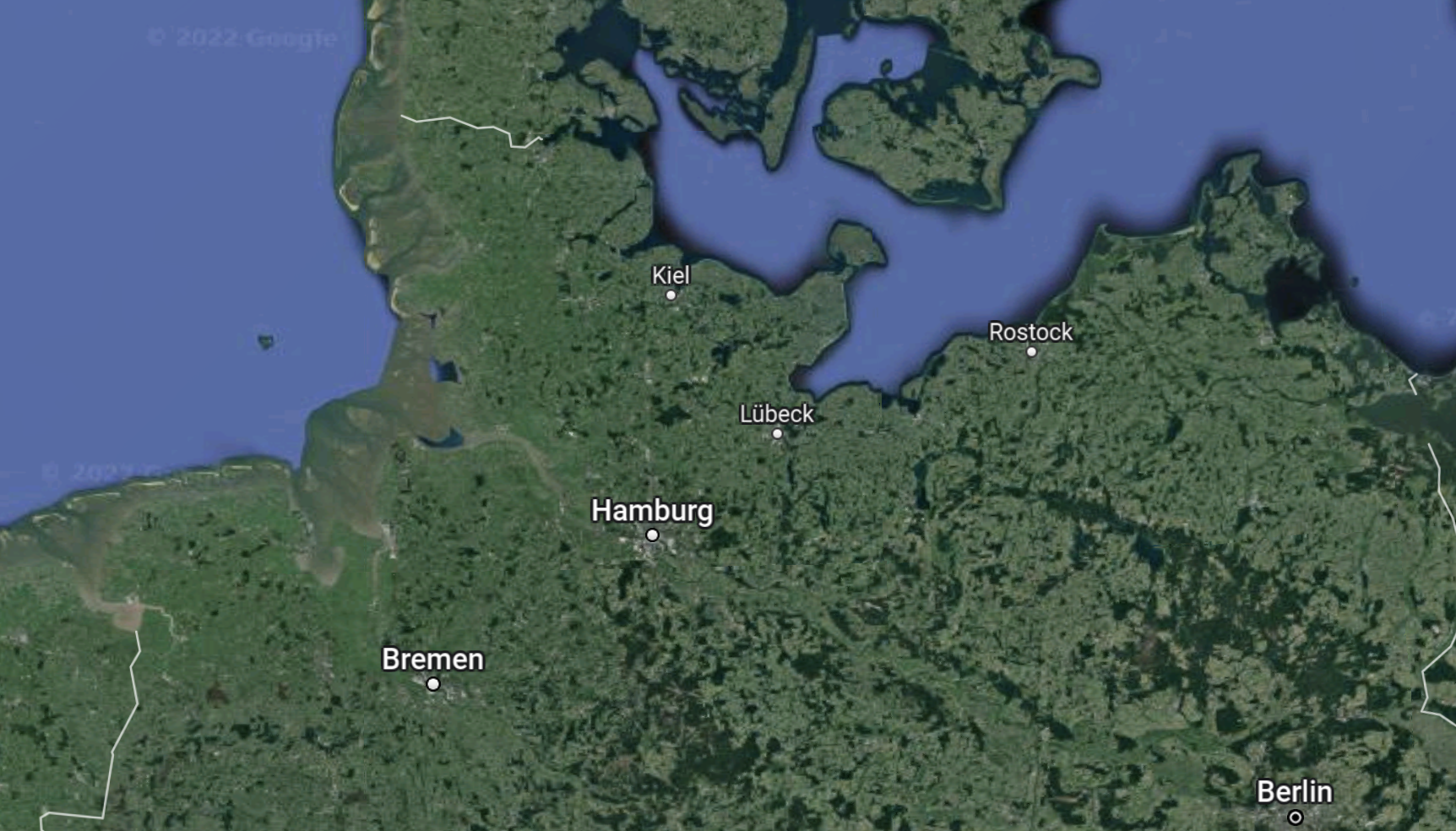
Note.
- White lines show the borders with The Netherlands, Denmark and Poland.
- Heligoland in the South-East corner of the North Sea. Could this island be used as a giant offshore substation?
- There are plenty of ports to service offshore developments.
- It looks like compared to the UK, a fair proportion of German offshore wind farms will be closer to the land.
Currently, Germany has 7.8 GW of offshore wind in operation, with around seventy percent of the turbines in the North Sea.
According to the Wikipedia entry called Wind Power In The UK, in 2019, the UK had installed 8.4 GW of offshore wind turbines, and there could be a potential to have a total of 120 GW in British waters.
With the Belgians, Danes, Dutch, Irish, Norwegians, Poles and Swedes joining this party, I can see the world’s largest wind power station being developed in the North and Baltic Seas.
Bord na Mona Planning Offaly Hydrogen Project As New Wind Farm Is Switched On
The title of this post, is the same as that of this article on OffalyLive.
The policy of the Bord na Mona is described in detail in the article.
This paragraph describes the green hydrogen development.
The development will be two megawatts and will comprise a hydrogen electrolysis plant containing an electrolyser, three high pressure hydrogen storage units, a generator, a substation and an underground cable connecting to a wind turbine 600 metres away.
Surely, this hydrogen will have the right to be marketed as genuine Irish green hydrogen!
For those of you, who are confused by the various colours of hydrogen, this page on the National Grid web site, which is entitled The Hydrogen Colour Spectrum gives a useful guide.
Note that there is no orange hydrogen defined as yet, but there is a yellow hydrogen defined like this.
Yellow hydrogen is a relatively new phrase for hydrogen made through electrolysis using solar power.
So it does look, that yellow hydrogen, which could be called orange hydrogen at a pinch, is as environmentally-friendly as green hydrogen.
Another Aussie Green Hydrogen Hub In The Works As Total Eren Eyes 1GW Darwin Project
The title of this post, is the same as that of this article on Recharge.
These two paragraphs introduce the project.
Developer Total Eren is sizing up the potential for a 1GW green hydrogen project in Australia’s Northern Territory (NT), taking the total capacity of green H2 projects under development in the state to 13.8GW.
A Memorandum of Understanding (MoU), signed between Total Eren and the NT state government on Monday, will see the two work together to progress the project, dubbed the Darwin H2 Hub.
This paragraph gives a few numbers.
Plans for the scheme comprise more than 2GW of solar PV generation, which will power a 1GW electrolyser. The project aims to produce 80,000 tonnes of hydrogen a year, equivalent to around 4% of the 1.96 million tonnes of green H2 South Korea expects to import from overseas by 2030.
Note.
- Australia seems to be the place to develop large hydrogen and energy projects.
- South Korea will beat a path to your door, if you have the capacity to create millions of tonnes of green hydrogen.
The article finishes with a good summary of the future prospects of Australia’s green hydrogen industry.
I believe that Australia could become a world superpower, as it will certainly provide zero-carbon power to a good proportion of South East Asia.
Bombora Wraps Tank Trials Of Its Floating Hybrid Energy Platform
The title of this post, is the same as that of this article on offshoreWIND.biz.
This is the introductory paragraph.
Bombora Wave Power has completed tank testing of its floating foundation system suitable for the InSPIRE solution, which combines the mWave wave energy technology with a wind turbine onto a single floating offshore platform.
This second paragraph gives details of the power output of the hybrid energy platform.
The tank testing program at FloWave follows the pre-FEED phase of the InSPIRE project completed earlier in 2022, based on the integration of a 4MW mWave solution with a 10MW wind turbine on a single semi-submersible floating foundation system.
4 MW seems a worthwhile increase in power, that can probably be handled by the existing cables and substations.
The Rolls-Royce SMR Web Site
Rolls-Royce now have a web site for their proposed small modular reactor (SMR) design.
This page is entitled Why Rolls-Royce SMR?, has this outline of the reactor program.
Rolls-Royce SMR offers a radically different approach to delivering nuclear power, we have drastically reduced the amount of construction activities and transformed the delivery environment, from a large complex infrastructure programme into a factory built commoditised product.
Our design has evolved in response to a definitive set of market driven outcomes, this is not technology for technology’s sake, but innovation, to create a transformational clean energy solution that will deliver clean affordable energy for all.
This would appear to be an approach driven by proven engineering principles and excellence, good low-risk design, backed up by the best project management.
These are all traditions inherent in the Rolls-Royce DNA.
But I also believe that Rolls-Royce have looked at the world market for nuclear reactors and designed a product to fit that market.
This paragraph is in a long section entitled Global & Scalable.
The compact footprint increases site flexibility and maximises potential plant locations, including replacement for existing coal or gas-fired plants.
Many things said on the Rolls-Royce SMR Web Site, appear to be very much market led.
In my view, this is the web site of a product designed to dominate the world market for nuclear energy.

