Better Fuel Technology
Better Fuel Technology is a Canadian company and has this web site.
They appear to use hydrogen to improve the fuel economy of vehicles in an unusual way.
This page on their web site is entitled Facts About HHO.
Under a heading of How Hydrogen Generators For Vehicles Work, this is said.
The greatest misconception about hydrogen is that we are making fuel from water. This is entirely incorrect and if it were true, would violate several laws of physics.
It is NOT possible to generate hydrogen at a rate fast enough to be used as the primary fuel.
Hydrogen powered cars do exist. They are designed to use Hydrogen as primary fuel. The hydrogen is created in advance. Just as every ordinary car requires a tank for gasoline, hydrogen is stored within cylinders on board the vehicle.
Our equipment is an inexpensive retrofit, compatible with any vehicle type and size.
Hydrogen assists the combustion process of the existing fuel. Although you will enjoy substantial fuel savings, you will still have to use the primary fuel.
Hydrogen generators use electricity from the battery of the vehicle to split the water (H2O) into its basic elements of oxygen and hydrogen. The generated hydrogen is then injected into the air stream of the vehicle to improve combustion efficiency and fuel economy.
In a standard engine, the combustion cycle is very fast: 0.007 seconds. Most of the fuel molecules are too large to burn completely in this extremely limited time.
The situation is made worse by the fact that the spark plug only ignites a small percentage of the fuel. The fire generated must cascade from one fuel molecule to the next as it propagates through the combustion chamber of the engine. This wastes precious time.
Hydrogen burns and travels through the combustion chamber 10X faster than a gasoline flame. Hydrogen fills the space between fuel molecules and has the effect of making them closer together. The flame travels faster and the fuel is exposed to flame sooner and for a longer period of time. The result is a cleaner, more complete burn.
You can think of hydrogen as a giant spark plug in your engine; igniting all the fuel instead of leaving much of it unburned.The science behind hydrogen injection has been well documented and understood. It has been known for over thirty years that the addition of hydrogen to fossil fuels, burned in internal combustion engines, will increase the efficiency of the engine.
This concept has been validated by a multitude of papers published by the Society of Automotive Engineers (SAE).
This is all very interesting.
Reading To Heathrow On The Lizzie Line
Last week, I took the Lizzie Line to Reading and came back with a diversion to Heathrow.
I took the train from Reading as far as Hayes and Harlington, where I crossed over the tracks on the footbridge to get the train to Heathrow.
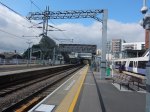
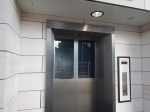
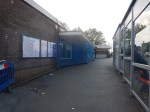
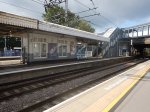
There are two bridges at Hayes & Harlington station, as these pictures show.








Note.
- Only the Western bridge has lifts.
- The Western bridge will be at the very back of the train from Reading.
- It is a long walk from the front of the train to the lifts.
This map from Cartometro shows the tracks through Hayes and Harlington station.

Note.
- The Great Western fast lines, which are shown in black on the South side going through platforms 1 & 2.
- The Elizabeth Line and the Great Western slow lines, which are shown in black and purple on the North side going through platforms 3 & 4.
- The Reading and Heathrow branches are to the West.
- London Paddington is to the East.
- Elizabeth Line Trains from the Reading or Heathrow branches to Paddington use Platform 4.
- Elizabeth Line Trains from Paddington to the Reading or Heathrow branches use Platform 3.
It should also be noted that if you are travelling between Heathrow Airport and any of the Elizabeth Line stations between Hayes and Harlington and Reading stations, you have to cross from Platform 4 to Platform 3 at Hayes and Harlington station.
All passengers will be travelling in the same direction at Hayes and Harlington station.
I feel it is absolutely essential, if you are travelling between Reading and Heathrow Airport using the Elizabeth Line, that you travel in the last carriage of the train from both Heathrow Airport or Reading.
When travelling to Heathrow in Where Should You Travel On An Elizabeth Line Train?, I said these were the positions to travel on the train.
- Heathrow Central – Eastern end
- Heathrow Terminal 4 – Western end
- Heathrow Terminal 5 – Eastern end
It looks like there could be some walking to do if you’re travelling between Reading and Heathrow Central or Heathrow Terminal 5.
I feel that Hayes and Harlington station could possibly have been better designed.
Would it have been better if Platforms 3 and 4 had been designed as an island platform, so that passengers going between the Reading and Heathrow branches would just walk across to the other side of the platform?
- The tracks would have had to be realigned.
- There would have been less lifts needed.
- The Eastern bridge might not have been needed.
I suspect, it would have been the more expensive option.
Toyota To Build Hydrogen Fuel Cell Trucks In UK
The title of this post, is the same as that of this article on The Times.
These are the first two paragraphs.
The UK’s first mainstream commercial vehicle to be powered by hydrogen fuel cells will be built at the Toyota plant in Derbyshire, holding out the prospect that the Japanese group will choose Britain as its European manufacturing centre for the next-generation zero-emission technology.
Toyota will announce today that it has chosen Burnaston to produce six prototype hydrogen versions of its popular Hilux pick-up trucks.
It may be only a few vehicles initially, but if Toyota choose Burnaston, as their European manufacturing centre for the next-generation zero-emission technology, this could be large.
Honda’s NSX Factory Is Shifting To Plug-In Hydrogen CR-V Production
The title of this post, is the same as that, of this article on Road and Track.
Passengers Of Reduced Mobility And The Elizabeth Line
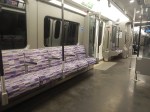
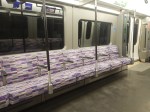
I took these pictures at Whitechapel station and they show the preferred wheelchair entry point to the Class 345 train and the central car of the train, which has four wheelchair spaces.









Note.
- The well-signed wheelchair entrance to the train.
- Thw four wheelchair spaces are in the middle car of the train.
- There is no step into the train.
- The roundels also have directions to other lines and the way out.
The car also has longitudinal seating and lots of vertical grab rails.
I do find it strange that London is very much alone in the UK in using this seating design.
Is This Normal Behaviour Of Lizzie Line Passengers?
Suppose I’m using the Lizzie Line to go between Moorgate and Brentwood, I might get on the first train, if the one I need is not the first.
I will then change to the train I need at an intermediate station.
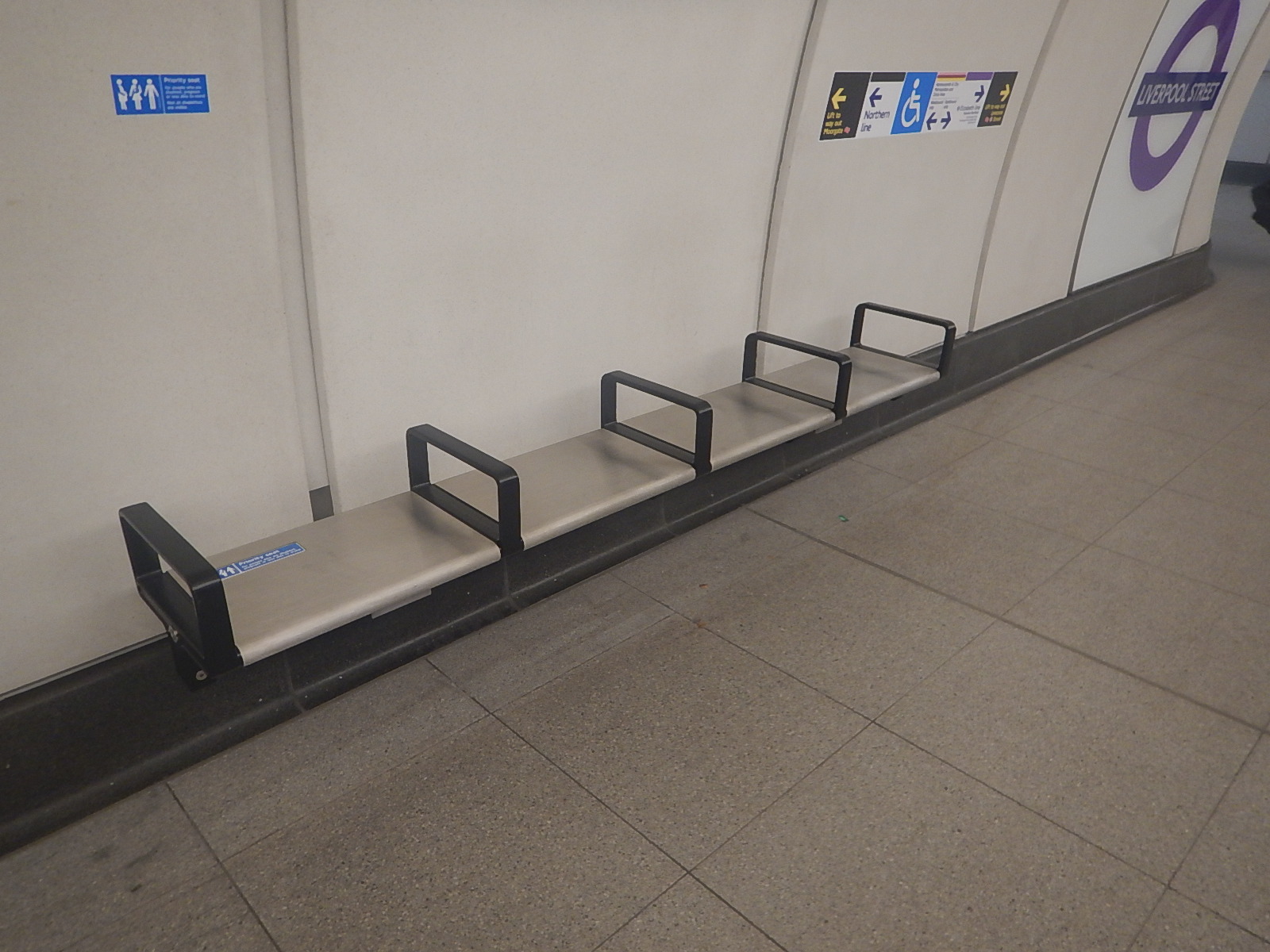
It’s just that the seats in the trains are more comfortable than those on the stations. My journey time will be the same, but my bottom will be pleased!
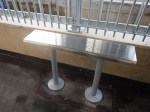
These are typical hard steel station seats.
And these are upholstered ones on a train.

In today’s weather the trains were also a bit warmer!
Do other passengers do this?
Hyperion XP-1 Hydrogen Car Unveiled With 1,000-mile Range
The title of this post, is the same as that of this article on Hydrogen Fuel News.
This is the specification of the hydrogen-powered Hyperion XP-1.
- 1,000 mile range.
- No batteries as it uses supercapacitors.
- Five minute refuelling time
- All-wheel drive
- 221 mph top speed
- 0-to-60 mph in 2.2 seconds
- Weighs just over a tonne
- Carbon-titanium monocoque
- Outrageous styling
Unbelievable!
Wrightbus Hydrogen Fleet Cover 1,5 Million Miles
The title of this post, is the same as that of this article on Hydrogen Central.
These are the first two paragraphs.
Leading bus manufacturer Wrightbus’s fleet of hydrogen fuel-cell buses have travelled a staggering 1.5 million miles since first entering service.
This latest milestone from the Ballymena-based firm means the hydrogen fuel-cell fleet has prevented 2,366 tonnes of harmful carbon dioxide (CO2) emissions entering the atmosphere compared to journeys made by an equivalent diesel bus.
It does appear that the company is on the road to a much needed recovery.
Dartmoor Line Passes 250,000 Journeys On Its First Anniversary, As Rail Minister Visits To Mark Official Opening Of The Station Building
The title of this post, is the same as that of this press release from Network Rail.
These three paragraphs talk about the Dartmoor Line’s reopening.
Just over a year after the Dartmoor Line reopened to regular passenger trains, journey numbers on the line have passed 250,000 this Monday morning [28 November], with the arrival of an extra special visitor, Rail Minister, Huw Merriman MP, to officially open the renovated station building.
The line reopened on 20 November 2021, restoring a regular, year-round service for the first time in almost 50 years following more than £40m of Government investment.
The previously mothballed rail line, which runs between Okehampton and Exeter, was restored in just nine months and delivered £10m under budget, becoming the first former line to reopen under the Government’s £500m Restoring Your Railway programme.
I have a few thoughts.
A Well-Managed Project
It does appear that Network Rail upped a gear or two to fulfil this project. The press release puts it like this.
Reinstatement of the Dartmoor Line was made possible by Network Rail’s team of engineers who worked tirelessly to deliver a huge programme of work including laying 11 miles of new track and installing 24,000 concrete sleepers and 29,000 tonnes of ballast in a record-breaking 20-day period.
But it does appear that over recent months Network Rail seems to do things a lot better and quicker.
I do wonder, if on the construction side, Network Rail have been able to bring in new working practices, that they are still trying to get lots of their other workers to accept.
A Quarter Of A Million Journeys
The press release says this about passenger numbers.
In the same week as it celebrated its one-year anniversary, the Dartmoor Line also saw its 250,000th journey, showing an incredible patronage on the line and more than double the demand originally forecast.
But they still can’t get the forecasts right.
Passenger Numbers Are Still Rising
The press release says this about rising passenger numbers
Since Great Western Railway (GWR) increased services to hourly in May 2022, passenger use has continued to rise, with over 500 journeys starting at Okehampton every day and a further 300 travelling into the town from across the rail network.
Is There Still Growth To Come?
There are several zero-carbon trains under development, so why not have a civilised shoot out, with each manufacturer given say four weeks in which to show off their products in passenger service.
This would hopefully indicate, if there was more growth to come and what would be the best trains to use.
Conclusion
The Dartmoor Line has been shown to be a success so lets repeat the dose.
 The Anonymous Widower