East Kilbride Electrification Underway
The title of this post, is the same as that of this article on Modern Railways.
These are the last two paragraphs.
As well as electrification, improvements on the line will include an upgrade of East Kilbride station, relocation of Hairmyres station 600 metres to the west, platform extensions and accessibility upgrades. The aim is to provide a four trains per hour eight-car electric service at peak periods. A parallel project will cover electrification between Busby Junction and Barrhead.
The Scottish Government’s plan is to decarbonise its passenger rail services by 2035, chiefly through electrification. It has recently been confirmed that partial electrification of the Borders and Fife Circle routes will follow after the East Kilbride and Barrhead lines, with battery EMUs deployed on these lines.
Because partial electrification is mentioned, it looks like Scotland is getting serious about using battery-electric trains.
This map clipped from Wikipedia, shows the section of the Glasgow South Western Line, that includes Kilmarnock station and the branch to East Kilbride station.
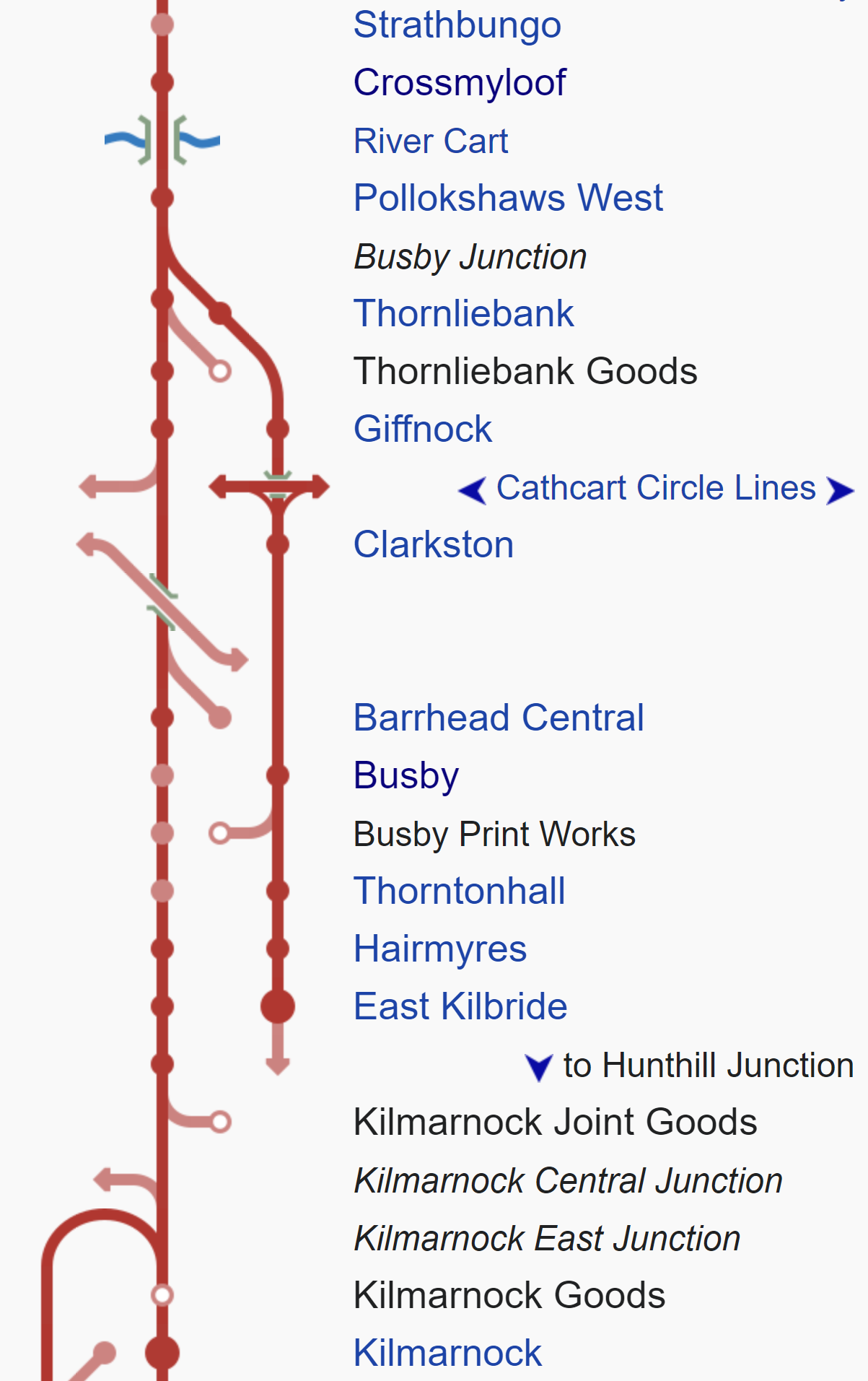
The route North of Strathbungo continues to Glasgow Central station.
Which Sections Will Be Electrified?
I will take each of the sections in turn starting at the North.
Between Muirhouse South And Busby Junctions
This sentence is from the Modern Railways article.
Contractor SPL will commence on-site activities between Muirhouse South Junction and Busby Junction, including piling and construction steelwork foundations to support overhead masts.
On the map, Muirhouse South Junction is to the North of Stratbumgo and Busby junction is clearly marked and is where the East Kilbride branch joins the main line.
This section of new electrification is only around two miles long.
This article on Rail Technology Magazine is entitled Network Rail: Strathbungo Locals Vote For New Footbridge.
There have been many bridge replacements for electrification, but this surely must be one of the first, where local people have voted for their preferred design.
The only other bridges on this section appear to be two substantial road bridges, where with any luck, it should be possible to squeeze the wires underneath.
Between Busby Junction And Barrhead Station
The other section listed for electrification is between Busby junction and Barrhead station.
This second section is only around 3.7 miles long and there are only two overbridges, both of which look modern.
Taking the two sections of electrification together they total under twelve track-miles and they are in a continuous straight line
I doubt, that together, they are the one of the world’s most challenging railway electrification projects.
Busby Junction and East Kilbride Station
There is no specific information about electrification between Busby junction and East Kilbride station.
- The branch is 7.8 miles long.
- There are fifteen overbridges on the branch.
In Plans To Introduce Battery Powered Trains In Scotland, Hitachi are quoted as saying that their trains will do sixty miles on batteries.
This should be more than enough range to run services to East Kilbride on battery power.
Barrhead and Kilmarnock Stations
There is no specific information about electrification between Barrhead and Kilmarnock stations.
- The distance is 16.8 miles.
- There are eleven overbridges between the two stations.
It would appear that Hitachi’s quoted sixty mile range, would be sufficient to enable battery-electric trains to run between the electrification at Barrhead and Kilmarnock station.
Operation
The various services between Glasgow Central and East Kilbride and Kilmarnock stations will probably operate as follows.
- Glasgow Central To East Kilbride – Electrification for traction and battery charging to Crossmyloof station and then battery power.
- East Kilbride To Glasgow Central – Battery power and gravity to Crossmyloof station and then electrification.
- Glasgow Central To Barrhead – Electrification for traction all the way.
- Barrhead to Glasgow Central – Electrification for traction all the way.
- Glasgow Central To Kilmarnock – Electrification for traction and battery charging to Barrhead station and then battery power.
- East Kilbride To Glasgow Central – Battery power to Barrhead station and then electrification.
Note.
- All power changeovers could be arranged to take place in stations.
- Gravity can be used to assist trains from East Kilbride to Glasgow Central.
- Glasgow Central and Barrhead services don’t need trains with batteries.
- The return trip between Crossmyloof and Glasgow central stations, should be more than enough to charge the batteries.
The project would appear to have been very well-designed for a fleet of battery-electric trains, with respect to reliability and electrical efficiency.
Onward To Carlisle And Stranraer
Hitachi’s system for discontinuous electrification, that I discussed in Solving The Electrification Conundrum, would appear to be ideal to extend electric trains to Carlisle and Stranraer.
Barrhead and Carlisle are 108 miles apart and Barrhead and Stranraer are 90 miles apart.
By adding two or three intermediate sections of 25 KVAC overhead electrification, it should be possible for electric trains to reliably travel between Glasgow Central and Carlisle or Stranraer.
Project Management
This electrification project could be a Project Manager’s dream.
Electrification projects in the UK can turn out to be nightmares, as if it can go wrong, it inevitably will.
But with this project, it appears that it is planned to get the often-troublesome job of erecting the gantries out of the way early.
The electrification between Muirhouse South junction and Barrhead station can even be completed first, so that passengers can see the benefit of electric trains and the electrification can be fully tested.
There are then a series of independent projects, that can be performed in the most convenient order.
- Track upgrades.
- Rebuild East Kilbride station.
- Move Hairmyres station to its new position.
- Platform extensions.
- Improve accessibility.
- Deliver the new battery-electric trains.
Note.
- It looks to me, that all of these smaller projects can be performed, whilst maintaining a full rail service on the railway. Doing that with conventional electrification usually results in some disruption.
- Late delivery of the battery-electric trains will not delay the overall project, if there are enough diesel multiple units to fill in.
- Passengers will see benefits and new facilities delivered in a stream, rather than all at once.
Similar processes can be used to extend the network to Carlisle and Stranraer.
Conclusion
This is a well-designed project.
Plans To Introduce Battery Powered Trains In Scotland
The title of this post, is the same as that of this article in the Scotsman.
This is said about the routes.
Hitachi said the trains could run up to 60 miles on batteries.
It said recharging would take ten to 15 minutes.
That would mean the trains could run beyond Dunblane – the northern extent of ScotRail’s electrified network – as far as Perth and Dundee.
Hitachi has suggested other routes they could be used on including from Glasgow to East Kilbride and Kilmarnock, and on a Glasgow northern suburban line to Anniesland via Maryhill.
The train described in the article sounds very much like the Hitachi Regional Battery Train, which is described in this Hitachi infographic.

My only reservation is that the article is from 2019.
Since then, Scotland has decided to run battery-electric trains to Leven, as I wrote about in Trains On The Levenmouth Rail Link.
HS2 Utilising UK-First Pioneering 3D Concrete Printing On Project
The title of this post, is the same as that of this article on Rail Technology Magazine.
3D-Printing of concrete has been around for some time and it has been used extensively on Crossrail.
But High Speed Two are printing the heavy components on site, to avoid the problems of transport.
Powered By HVO
I took these pictures yesterday at Peterborough.
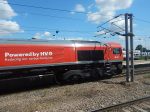
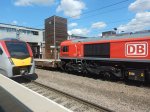
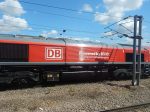
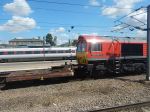
Note the locomotive is named Benjamin Gimbert GC.
DB Cargo have issued a press release on these trials of HVO.
Wikipedia also give more details of HVO.
March Station – 4th August 2021
March station is to be rebuilt. So I went yesterday and took these pictures.
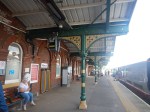
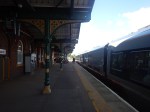
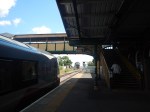
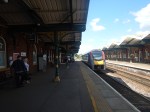
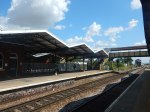


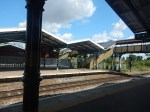
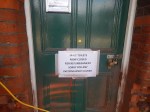
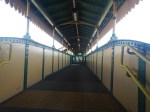
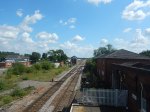


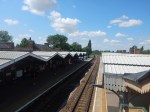


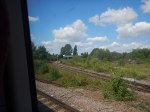
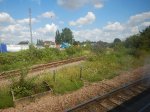
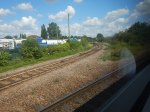
Note that the last two pictures show the triangular junction, that leads to Whitemoor Yard and Wisbech
From what I saw, when it is finished it will be a delightful station.
Does March Station Need More Services?
It appears to me, that at present the station gets around two trains per hour (tph)
These trains run through the station.
- Greater Anglia – Ipswich and Peterborough – two-hourly – Will go hourly in the future
- CrossCountry – Birmingham and Cambridge/Stansted Airport – hourly
- East Midlands Railway – Norwich and Liverpool Lime Street – hourly, stops occasionally
The service certainly needs improvement.
I would do the following as soon as possible.
- Introduce the promised hourly Greater Anglia service.
- Arrange that all East Midland Railway services stopped at March station.
- Introduce the Cambridge and Wisbech service, when the work at Ely is complete.
This would mean that March had the following local services.
- Cambridge – 2 tph
- Ely – 4 tph
- Ipswich – 1 tph
- Peterborough – 3 tph
- Wisbech – 1 tph
Other services would be available with a change at Ely.
Manea Station
Manea station, is one of least-used stations in the UK.




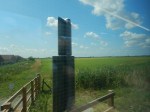
But it does have a rather nice new shelter.
Perhaps, Greater Anglia are expecting more passengers.
Comings And Goings At Ely Station
On my meander around the Fens yesterday, I spent twenty minutes or so at Ely station, as the variety of trains came through the station, whilst I waited for a train to March.



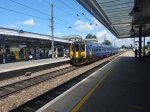
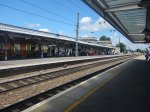
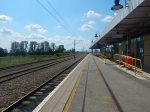
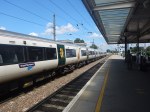
Ely and the surrounding lines are to be remodelled, so that more trains can pass through the complicated junctions.
I had hoped to see a freight train pass through, which would have used the avoiding lines to pass the station.
In some ways, Ely sums up the problems of some of our major railway junctions.
- Several important passenger services needing to pass through.
- Several long freight trains a day.
- Level crossings everywhere.
- More passenger services are needed.
And on top of it all, there is a need to decarbonise.
British Rail and Network Rail have been trying to sort Ely for decades and it should be noted that the Fen Line to King’s Lynn station was electrified in 1992, which was probably an early phase of their master-plan.
Ely And Battery-Electric Trains
These are the distances without electrification on the various routes from Ely.
- Ipswich – 39 miles
- Norwich – 52 miles
- Peterborough – 30.5 miles
- Wisbech – 25 miles
Routes to King’s Cross, King’s Lynn, Liverpool Street, Stansted Airport and Stevenage are all fully electrified.
It does appear to me, that the new generation of battery-electric should be able to handle services from Ely on battery power.
For many of these services, which are or will be run by Greater Anglia, the required battery range can be achieved by swapping some of the diesel engines in the Class 755 trains for batteries.
Freight And Hydrogen Power
In Was This The Most Significant Statement On Freight Locomotives Last Week?, I referred to this press release from Freightliner, which is entitled Freightliner Secures Government Funding For Dual-Fuel Project.
This sixth paragraph from the press release is very significant.
This sustainable solution will support a programme to decarbonise freight operating companies’ diesel fleets in a cost-efficient manner that does not require significant short-term investment and facilitates operational learning in support of a longer-term fleet replacement programme, potentially using 100% hydrogen fuel.
I believe the paragraph indicates, that Freightliner and possibly the other companies involved in the building and operation of heavy freight locomotives have concluded, that the technology is now such, that a zero-carbon rail locomotive powered by 100 % hydrogen is now possible.
Hydrogen offers several advantages.
- Large amounts of power.
- Range comparable with diesel locomotives.
- Depots and freight terminals can be without electrification.
- As hydrogen-powered locomotive will most likely have an electric transmission, this opens the possibilities of using electrification where it exists and regenerative braking to an onboard battery.
My unreliable crystal ball says that we’ll see hydrogen-powered locomotives by 2026.
Cambridge Station To Get Another Platform Lengthening
Of all the stations I use regularly, Cambridge seems to have more expansion programs than any other station I know.
When I first used it regularly it had the following platforms.
- One long through platform split into two numbered 1 and 4 to handle most traffic.
- Two bay platforms pointing North for services to Ipswich and Norwich.
- Two bay platforms pointing South to London.
These have since been joined by a pair of through platforms to the East of the main lines through the station.
Wikipedia says this about Platforms 1 and 4.
- Platform 1 is a 12-car bi-directional through platform generally used for southbound services to London King’s Cross and northbound services to King’s Lynn. It is also used for some early morning northbound services to Ely and for some late evening terminating services.
- Platform 4 is a bi-directional 10-car through platform generally used for northbound services to Ely, King’s Lynn and Birmingham New Street. It is also used for some early morning southbound services to London King’s Cross and London Liverpool Street and for some terminating late evening services.
I was told today, that Platform 4 is going to be lengthened by forty metres at its Northern end.
- This will make Platforms 1 and 4 the same length.
- It will probably allow twelve-car trains to be run from London to both Cambridge North and Kings Lynn stations.
As both Greater Anglia and Great Northern already have twelve-car trains, adding forty metres of new platform is probably an affordable way to increase capacity between Cambridge and London.
A West Anglia High Speed Service
I like the concept of a high speed service Between King’s Cross and Cambridge.
Cambridge is sucking in the best scientific, engineering and financial talent in the UK and a high speed service to and from London would be ideal for reverse commuters.
Trains would be as I described in Will Hitachi Announce A High Speed Metro Train?.
- The trains would run non-stop between King’s Cross and Cambridge.
- The trains would run every thirty minutes.
- Between London and Hitchen, the trains would run at up to 140 mph under digital signalling on the East Coast Main Line.
- Between Hitchin and Cambridge, the trains would run at up to 100 mph on the Cambridge Line.
- When Cambridge South station opens, the trains would stop at the station.
- I would run a pair of trains to Cambridge station, where they would split with one train going to King’s Lynn and the other to Norwich.
- Trains could split in the lengthened Platform 4 in Cambridge station.
- Returning to London, they would join in Platform 1 at Cambridge station.
- The King’s Lynn portion would stop at all stations to King’s Lynn.
- The Norwich portion would stop at Cambridge North and then all stations to Norwich.
- The 54 miles between Ely and Norwich would be on battery power.
- All stations to the North of Ely would get a service every thirty minutes.
I can see other services like this starting all over the country.
- London Euston and Milton Keynes, Rugby and Coventry.
- London Kings Cross and Leeds
- London Kings Cross and Lincoln, Grimsby and Cleethorpes
- London Paddington and Bristol
- London Paddington and Cardiff
- London Paddington and Oxford
- London St. Pancras and Leicester, Derby and Nottingham.
- London Waterloo and Portsmouth, Southampton and Bournemouth.
Note.
- The enabling factor would be trains running at 140 mph under full digital control.
- Existing 140 mph trains like Class 390 and Class 395 trains could also be used.
The services would generally handle shorter distances than High Speed Two and fill in the gaps left by that network.
Tidying Up At Cheshunt Station – 4th August 2021
As I approached Cheshunt station, it looked like there had been some tidying up on the Western side of the line.
Unfortunately, I didn’t have my camera handy, so I was unable to take any pictures.
But I did take these pictures later from the station.
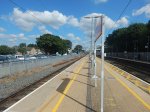
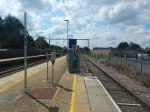
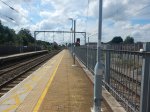

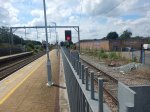
It does seem that Network Rail are tidying up the inside of the bend.
The Internet offers no clue, as to what is happening, but it could be anything from improving the car park entrance, to installing a second bay platform at the station, so that more trains can be run to and from Liverpool Street.
But there is a clue here in West Anglia Route Improvement – Cheshunt Station – 26th February 2017, which from the date is four years old.
The Google Map in this post, shows the Southern end of Platform 2 to be a different shape, to the pictures I took today.
It looks like the platforms have been lengthened.
- Originally, they could handle an eight-car Class 317 train, which are 160 metres long.
- It looks like now, they can handle a pair of five-car Class 720 trains, which are 244 metres long.
This will allow pairs of five-car Class 720 trains to work Cambridge services.
Pairs of four-car Class 710 trains are only 166 metres long, so they don’t need any platform lengthening.
The Sunset Studios Effect
If I was right in The Location Of Sunset Studios In Broxbourne, that a station will be built on the London Overground between Turkey Street and Theobalds Grove to serve the studio complex, then this may require modifications at Cheshunt, if traffic increases substantially.
- Cheshunt station will need to be step-free.
- Cheshunt station will need better passenger facilities, like more ticket machines.
- Cheshunt station may need more car parking.
- The bay platform at Cheshunt station will need to be handle upwards of four trains per hour (tph), all of which will be pairs of four-car trains.
A large housing development is planned for just to the North of Cheshunt station and hopefully, the developer will sort a lot of these issues.
The Hybrid-Electric Plane That Will Switch From Passenger To Cargo In 15 Minutes
The title of this post, is the same as that of this article on Simple Flying.
If you are sceptical about the concept of zero-carbon flying, then read this article, which takes the form of an interview with the Managing Director of Faradair.
 The Anonymous Widower