Trimode Class 93 Locomotives Ordered By Rail Operations (UK)
The title of this post, is the same as that of this article on Railway Gazette.
This is the introductory paragraph.
Stadler and Rail Operations (UK) Ltd have signed a framework agreement for the supply of 30 Class 93 trimode locomotives, with an initial batch of 10 scheduled for delivery in early 2023.
Note that the order may have been a long time coming, but it is now for thirty locomotives. In this article on Rail Magazine from December 2018, which is entitled Rail Operations Fuels its Ambitions With Tri-Mode Class 93s, only ten locomotives were to be ordered.
A Few More Details
This article on Rail Engineer, which is entitled, Re-Engineering Rail Freight, gives a few more details about the operation of the Class 93 locomotives.
It says this about operation in electric mode.
In electric mode, the batteries are charged when braking or from the transformer. As the batteries use the space occupied by the braking resistors in the Class 88, when the batteries are fully charged, the locomotive has only its friction brake.
This about operation in diesel-hybrid mode.
In diesel/battery hybrid mode, the batteries are charged both as the train brakes and by the diesel engine when it is not operating under full load. When the train accelerates, the batteries give it the extra power needed to get up to speed. This is a significant benefit as accelerating a freight train of over 1,000 tonnes up to its operating speed can take several minutes.
This is said about the batteries and their effect on performance.
It has two Lithium Titanate Oxide liquid-cooled battery packs, which have a rapid charge and discharge rate. These each have a 40kWh capacity with a peak power of 200kW. Thus, whilst the train is accelerating, the Class 93 will have a peak power of 1,300kW for up to ten minutes, which is almost twice that of a Class 88 in diesel mode.
The batteries would appear to be quite small when you consider, that Vivarail are talking about 424 KWh in one of their Class 230 trains.
This is said about performance.
As a result, the 86-tonne Class 93 is capable of hauling 1,500 tonnes on non-electrified routes and 2,500 tonnes on electrified routes. With a route availability (RA) of seven, it can be used on most of the rail network.
It may not be the largest of locomotives, but it could have a very high performance.
I have a few thoughts.
Regenerative Braking Performance
The Rail Engineer article says this about the Class 93 locomotive.
- The train has a total of 80 kWh of battery storage to store braking energy.
- The locomotive weighs 86 tonnes
- It can haul 1,500 tonnes on non-electrified lines.
Using a train weight of 1586 tonnes and Omni’s Kinetic Energy Calculator, gives a kinetic energy of 8 kWh at 42.6 mph.
Does this mean that the locomotive is designed to trundle around the countryside at around forty mph?
These are timings from Real Time Trains.
- Haughley Junction and Ely – 40 miles – 60 minutes – 40 mph
- Werrington Junction and Doncaster – 86 miles – 130 minutes – 40 mph
- Werrington Junction and Nuneaton – 67 miles – 123 minutes – 32.7 mph
- Southampton and Oxford – 74 miles – 120 minutes – 37 mph
There will be savings compared to the current diesel timings, with a Class 93 locomotive.
- Either side of these sections, the locomotive can use electric power to cut pollution, noise and carbon emissions.
- Stops and starts on sections without electrification will save diesel and cut carbon emissions.
- The train will be faster on electrified sections.
I also feel that with its smaller diesel engine, it will be able to maintain similar timings to current trains hauled by Class 66, Class 68 and Class 70 locomotives.
It can haul 2,500 tonnes on non-electrified lines.
Assuming a train weight of 2586 tonnes, the train energy at various speeds is as follows.
- 40 mph – 114 kWh
- 60 mph – 258 kWh
- 80 mph – 459 kWh
- 100 mph – 718 kWh
- 110 mph – 868 kWh
Am I right to assume that once the batteries are full, the regenerative braking energy can be returned through the catenary to power other trains?
Operation With 750 VDC Third Rail Electrification
Will some locomotives be fitted with third-rail shoes to work into and out of Southampton?
They would not need to use diesel between and Basingstoke.
Access To Ports And Rail Freight Terminals
I recently wrote Rail Access To The Port Of Felixstowe.
Looking in detail at Felixstowe and how trains will serve the port, this was my conclusion.
I very much feel, that the specification of the Class 93 locomotive with its trimode capability is ideal for working to and from ports and freight terminals.
Looking at the specification, I am certain, that these locomotives can haul a heavy freight train out of Felixstowe on diesel, with help from the batteries.
- The distance without electrification is around fifteen miles.
- It takes around thirty minutes.
- It is fairly flat Suffolk countryside with the possible exception of the climb over Spring Road Viaduct.
The batteries would need to be charged and surely in Felixstowe’s case the best way would be to electrify the two single track access routes between Trimley station and the Port.
- On leaving, the trains would pass Trimley with full batteries.
- They could also be at line speed after accelerating using the two miles or so of electrification.
- They could also enter the Port with full batteries, after charging the batteries on the short length of electrification.
The batteries may be large and powerful enough, to enable diesel free operations in the Port.
Does this partially explain the increase in the order for Class 93 locomotives? There’s not really been a genuine Last-Mile locomotive in the UK before.
Enabling Carbon-Free Ports And Rail Freight Terminals
Regularly, I read reports of ports wanting to do carbon-free.
- Port vehicles and cranes can go electric or hydrogen, as appropriate.
- Tugs, work and pilot boats can go hydrogen and developments are under way like one I wrote about in Scotland To Trial World’s First Hydrogen-Powered Ferry In Orkney.
Class 93 locomotives can help the process, by not using their diesel engines in ports and rail freight terminals.
It might just need a short length of electrification between the port or terminal and the main line, to make sure batteries are fully-charged.
But not at London Gateway!
This Google Map shows the couple of kilometres of track without electrification, that connects London Gateway to the electrified route through East Tilbury station.
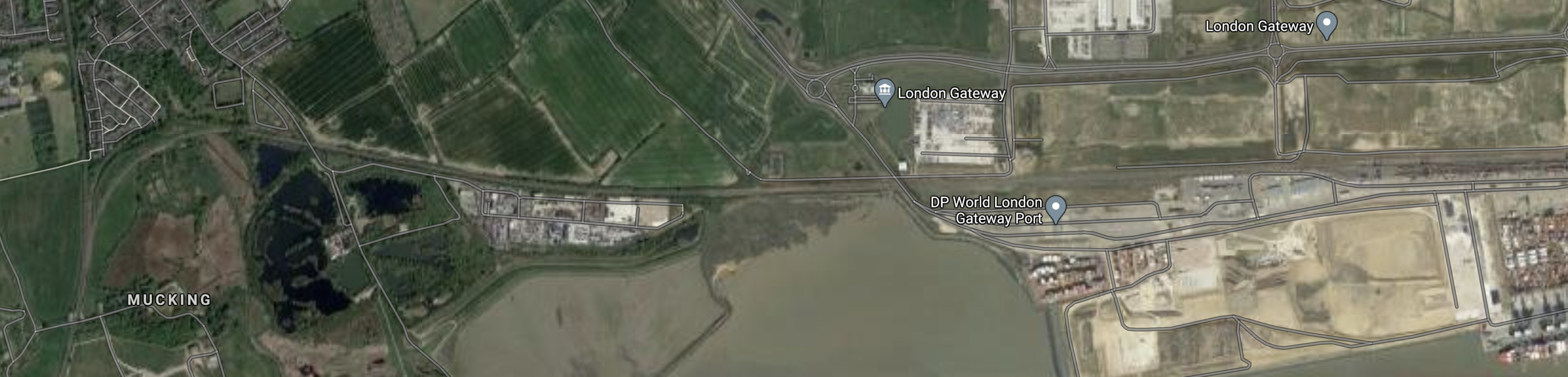
London Gateway would appear to be ready for low or possibly zero-carbon access, using Class 93 locomotives.
High Speed Freight Trains
Consider.
- These Class 93 locomotives will have an operating speed of 110 mph, when running on electrified lines.
- Currently, many multimode freight trains run at speeds of under 90 mph, as Class 66 locomotives don’t have the power to go faster and the wagons carrying the containers have a lower speed limit.
So with new or refurbished wagons capable of travelling at 110 mph, there will be speed improvements in some containerised freight.
As an example of what happens on the UK rail network, at the present time, I have found a freight train that goes between Felixstowe and Coatbridge near Glasgow,
- The route is via Ipswich, London, The North London Line and the West Coast Main Line.
- It can weigh 1600 tonnes.
- The distance is 483 miles.
- The service takes around 16 hours.
- With the exception of between Felixstowe and Ipswich, the route is fully electrified.
I estimate that if this service could run at up to 100 mph on the Great Eastern Main Line and up to 110 mph on the West Coast Main Line, that several hours could be saved.
Electrification Gap Bridging
As I indicated earlier, I believe these Class 93 locomotives will be able to haul a freight train out of Felixstowe to the electrified Great Eastern Main Line.
In Thoughts On A Battery/Electric Replacement For A Class 66 Locomotive, I gave a list of typical gaps in the electrification in the UK.
- Didcot and Birmingham – Around two-and-a-half hours
- Didcot and Coventry – Just under two hours
- Felixstowe and Ipswich – Around an hour
- Haughley Junction and Peterborough – Around two hours
- Southampton and Reading – Around one-and-a-half hours
- Werrington Junction and Doncaster via Lincoln – Around two hours
- Werrington Junction and Nuneaton – Just under two hours
How many of these gaps could be bridged by a Class 93 locomotive working in a diesel hybrid mode?
Stadler have not confirmed the size of the battery, but have said that it can provide 400 kW of power, which gives a maximum of 1.3 MW, when the batteries are working as afterburners for the diesel engine!
If the article in Rail Engineer is correct, I feel there is a high chance, that a Class 93 locomotive can bridge these gaps, with a load of 1500 tonnes in tow.
It is worth looking at current timings between Haughley Junction and Ely, when hauled by a Class 66 locomotive.
- The distance is around 40 mph
- The time taken is around an hour.
- A Class 66 locomotive would put 2.2 MW at the rail.
This locomotive could need up to 2.2 MWh to bridge the gap.
But I don’t believe that a forty mile gap will be impossible for a Class 93 locomotive.
- Stadler will have all the performance data of the bi-mode Class 88 locomotive to draw on.
- The Class 93 locomotive has regenerative braking to help charge the batteries at any stops.
- Several of the large electrification gaps on the UK rail network are in the flat lands of East Anglia and Lincolnshire.
- Modern control systems would be able to eke out the power of the batteries.
I wouldn’t be surprised to find that Stadler have had an objective to design a locomotive that can perform like a Class 66 locomotive for two hours.
Conclusion
If Stadler get the specification, performance and reliability of this locomotive right, they will sell a lot of locomotives for operations like these! And not just in the UK!
Rail Access To The Port Of Felixstowe
This Google Map shows the Port of Felixstowe.
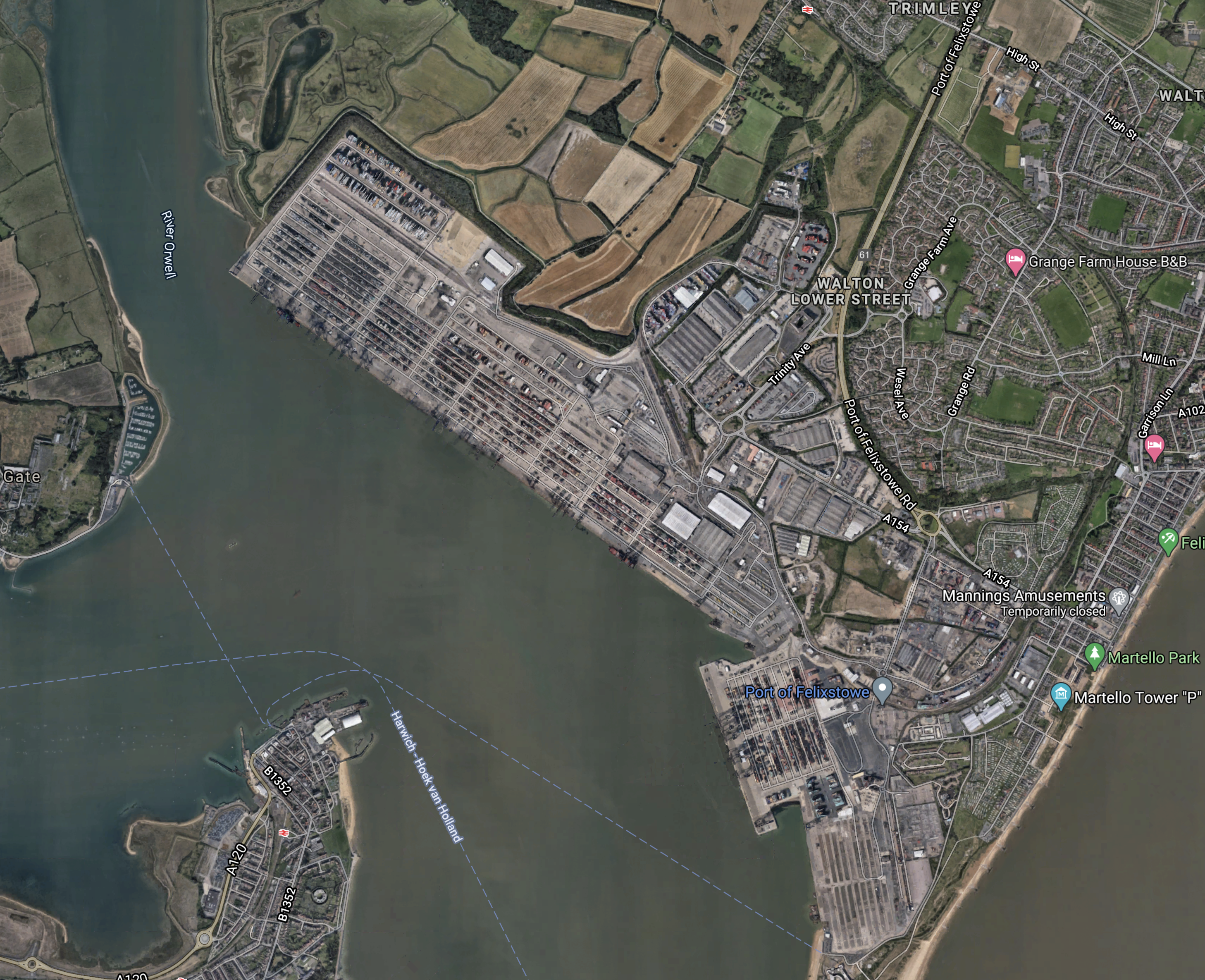
Note.
- Trimley station is at the top edge of the map.
- One rail line curves down from Trimley to the Southern side of the Port.
- Another rail line connects Trimley to the Northern side of the Port.
- A few miles of the route between Trimley and Ipswich, has recently been double-tracked and improved.
I will now describe the important parts of the rail network to and from the Port.
Trimley Station
This Google Map shows Trimley station.
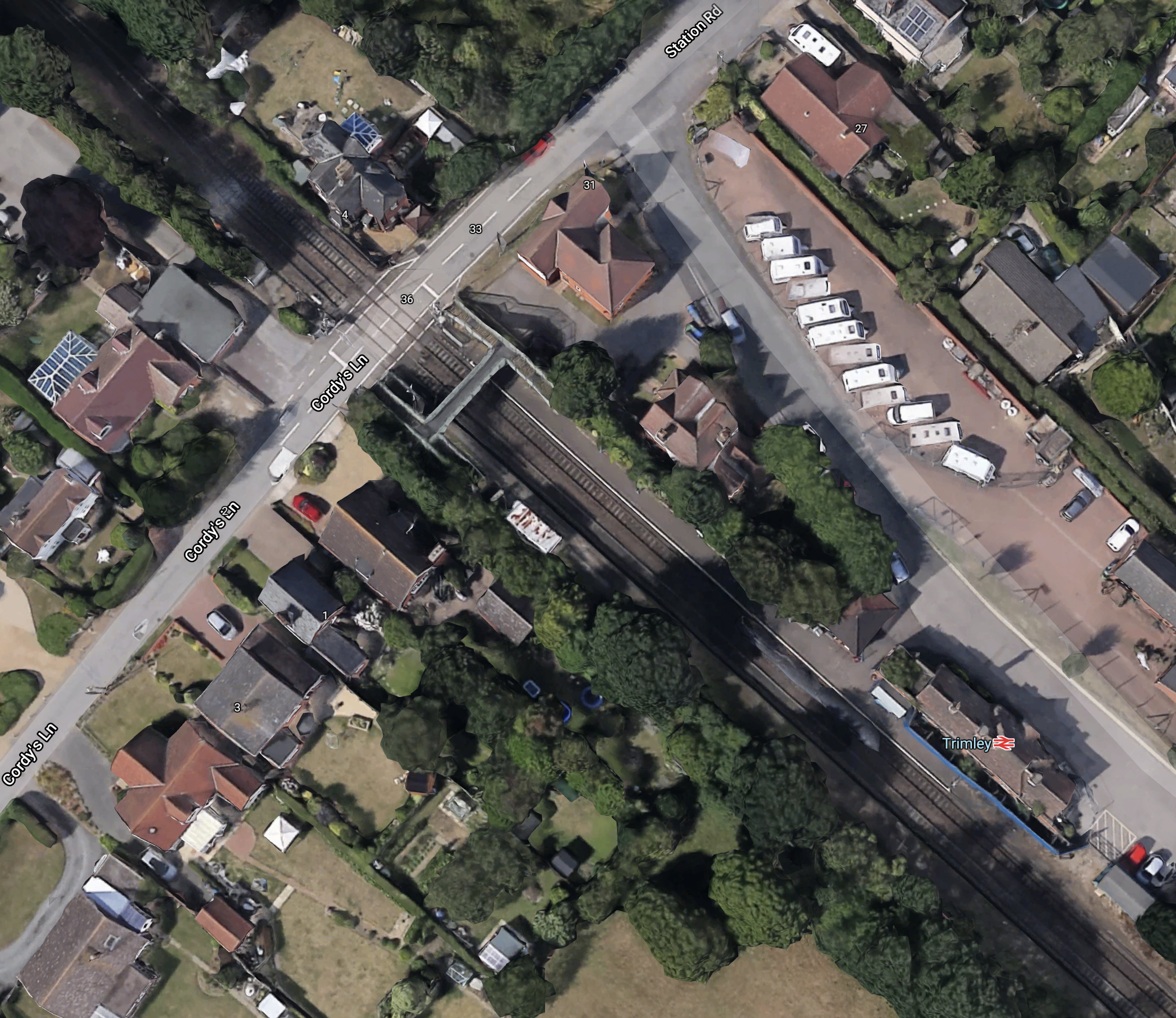
Note.
- Trimley station has two platforms. although only the Northern one, which is numbered 1 is in use.
- There are two tracks through the station.
- There is a footbridge over the tracks.
- Most people cross the lines on the level crossing.
The track through Trimley station has been improved and the improved is described in the Wikipedia entry for the Felixstowe Branch Line, where this is said.
In October 2017 final approval was given for a £60.4m project which includes doubling between Trimley station and Grimston Lane foot crossing. Work started on 7 April 2018 and was predicted to end in Autumn 2019.[29] However, the work was completed by May 2019 and saw changes to the infrastructure at Trimley station where trains from the Felixstowe direction could now access the disused platform road and the establishment of a double track as far as a new junction called Gun Lane Junction just over a mile west of Trimley station. Both lines can be worked bi-directionally and with the increase in freight traffic that resulted from the additional capacity a number of level crossings were either abolished or upgraded to improve safety.
This Google Map shows the section of line, that has now been dualed.
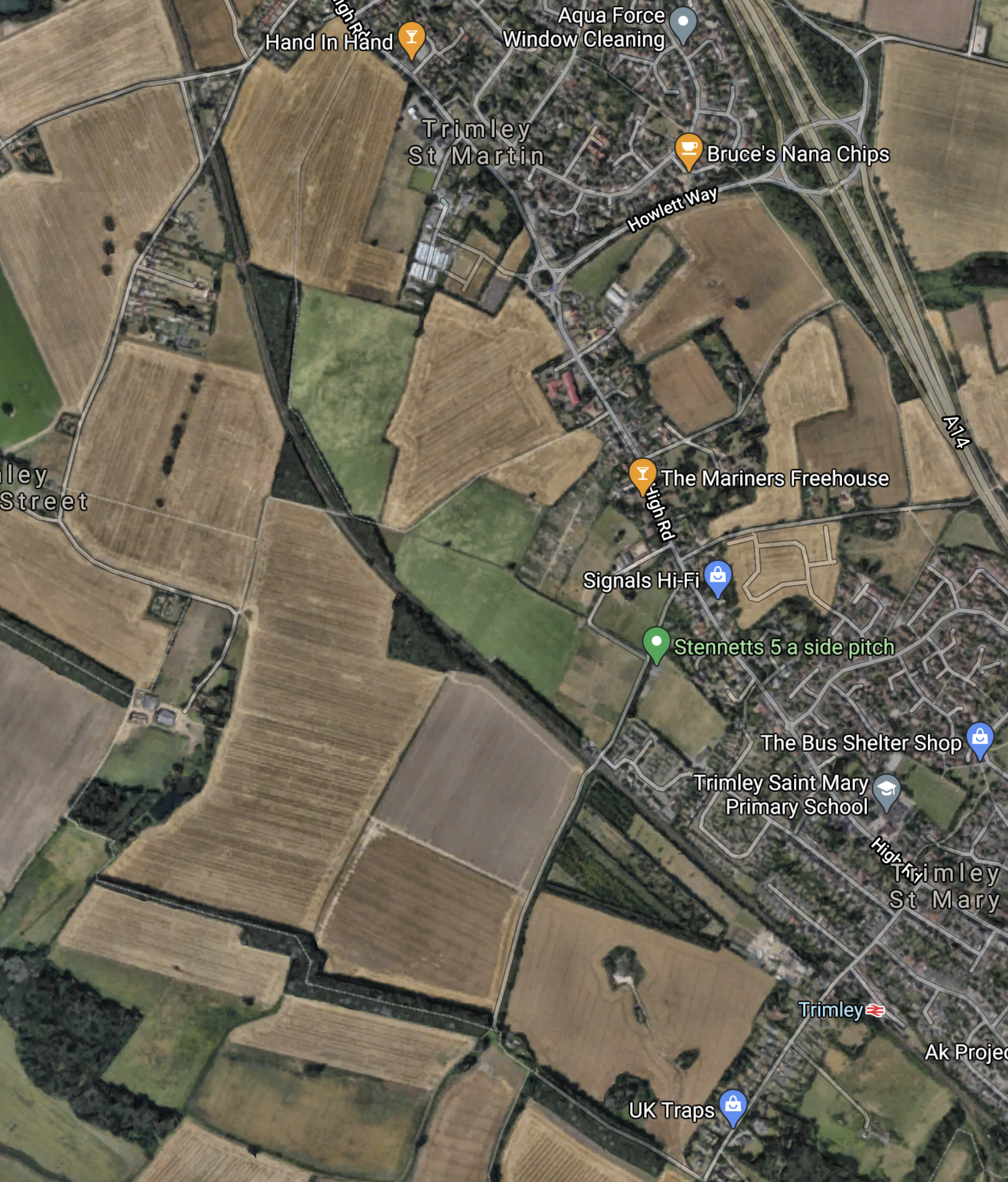
Note.
- Grimston Lane is the triangle of roads in the North-West corner of the map.
- Trimley station is in the South-East corner of the map.
This Google Map shows the track layout East of Trimley station.
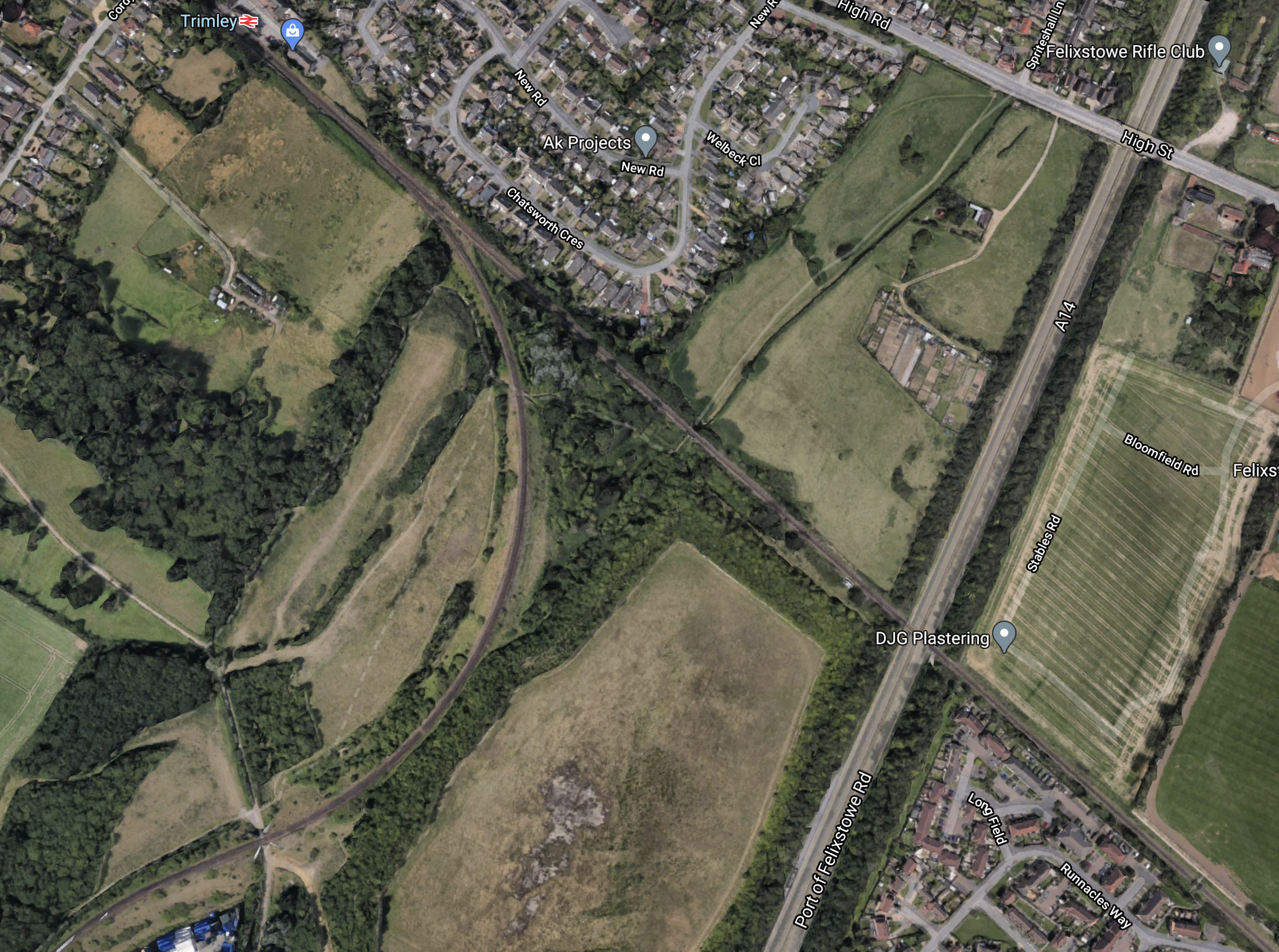
Note.
- Trimley station is at the top of the map.
- There is a junction to the South-East of Trimley station.
- The Northern track goes straight on to Felixstowe station and the Southern Terminal at the Port of Felixstowe.
- The Southern track curves South to the North Terminal at the Port of Felixstowe.
- Both branches are single track.
It would appear that all trains going to and from the South Terminal at the Port, take the Northern track through Trimley station and those going to and from the North Terminal at the Port, take the Southern track.
Southern Access To The Port
This Google Map shows how the trains go between Trimley station and the Southern entry to the Port.
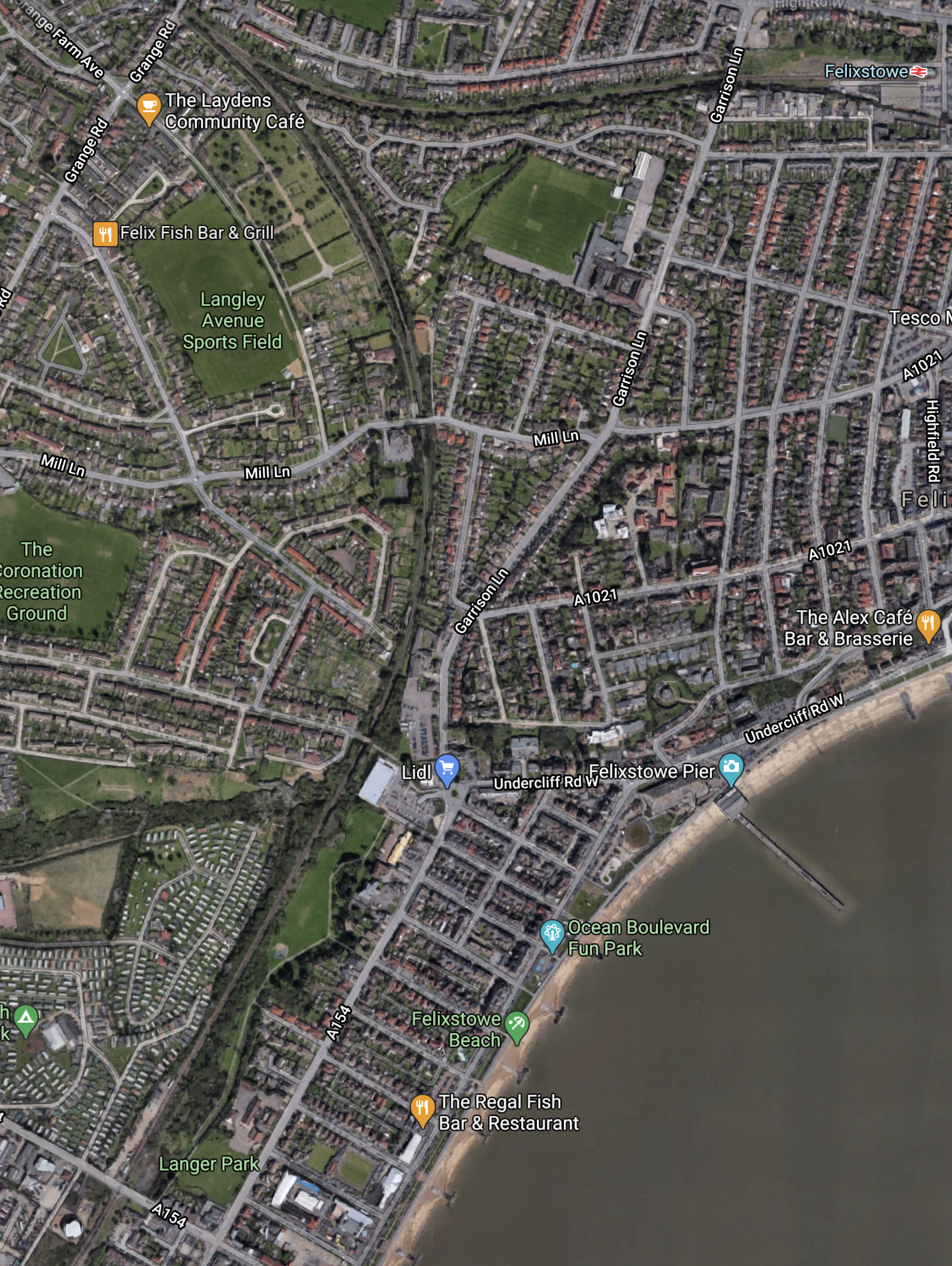
Note.
- Felixstowe station is in the North-East corner of the map.
- The single track from Trimley station splits into two in the North West corner of the map.
- One branch allows an hourly service between Ipswich and Felixstowe stations.
- The second branch goes South to the Port.
- The junction used to be a full triangular junction to allow trains to go between the two Felixstowe stations.
Do the residents of some houses in Felixstowe, get plagued by noise, pollution, smell and the diesel smoke of Class 66 locomotives going to and from the Southern access to the Port?
Felixstowe Beach Station
There used to be a Felixstowe Beach station on the railway to the Port.
This Google Map shows the location.
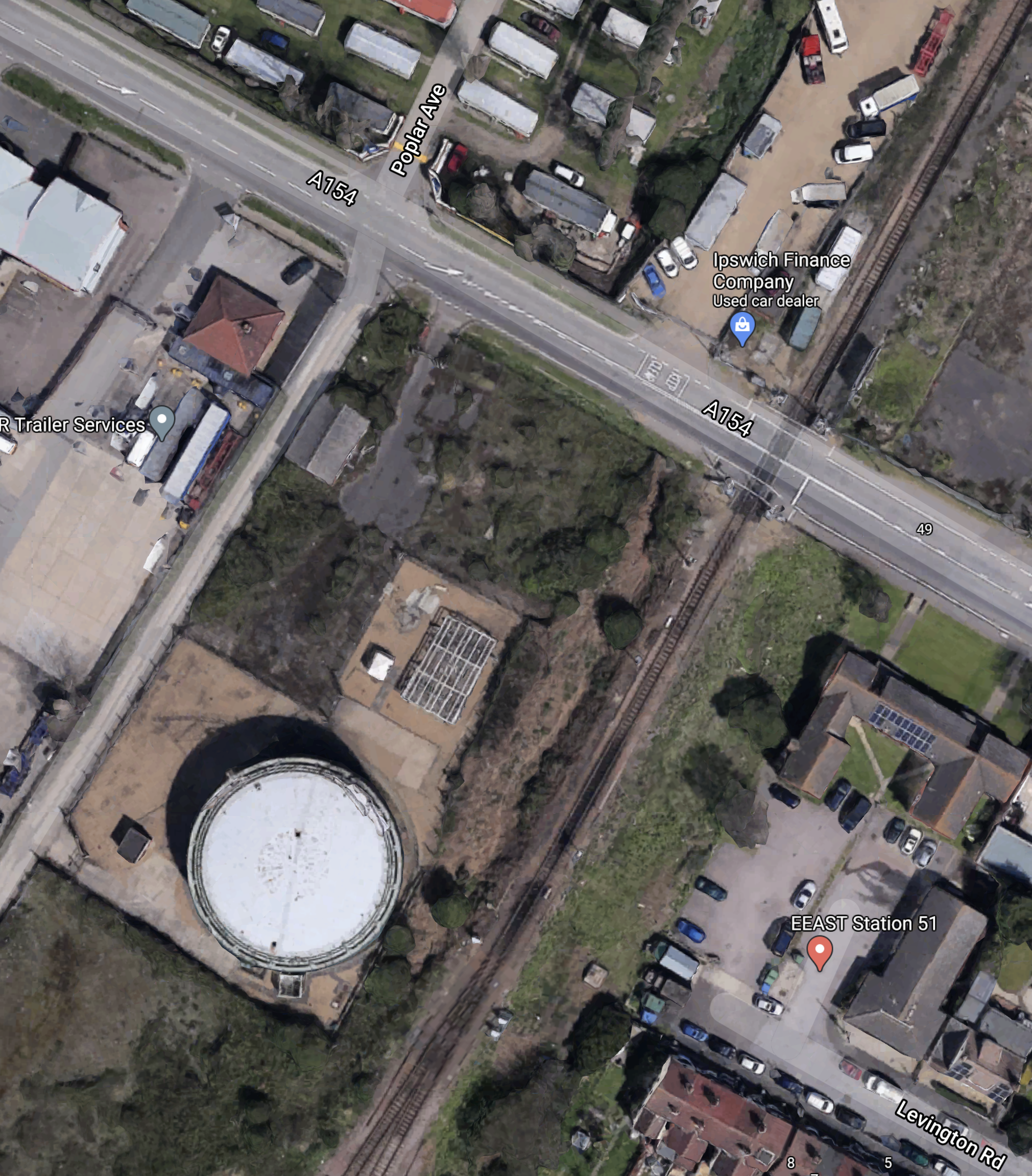
The station was to the North-East of the level crossing.
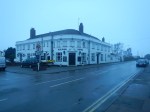
These pictures show the area as it was a year or so ago.
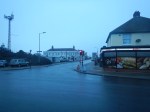
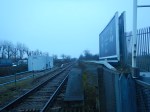
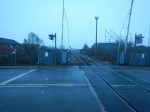
Is there a need for a new Felixstowe Beach station to allow workers and visitors to the Port to avoid the crowded roads?
Future Passenger Services Between Ipswich and Felixstowe
The passenger service between Ipswich and Felixstowe has for many years been a bine of contention between the Port of Felixstowe and passenger train operators.
The Port would like to see the passenger service discontinued, so that they could run more freight trains.
However, to increase both freight and passenger capacity, the East-West Rail consortium has proposed running a tram-train between Felixstowe and Ipswich.
- It would run through the streets of Ipswich to the forecourt of Ipswich station.
- It would serve important points in Ipswich, like the Hospital, Town Centre and Portman Road.
- It would have a frequency of four trains per hour (tph).
I wrote about the proposal in Could There Be A Tram-Train Between Ipswich And Felixstowe?
The Southern area of Felixstowe, along the beach is run down and needs improvement.
So why not run the tram-train all the way along the sea-front to Landguard Point?
This Google Map shows Landguard Point.
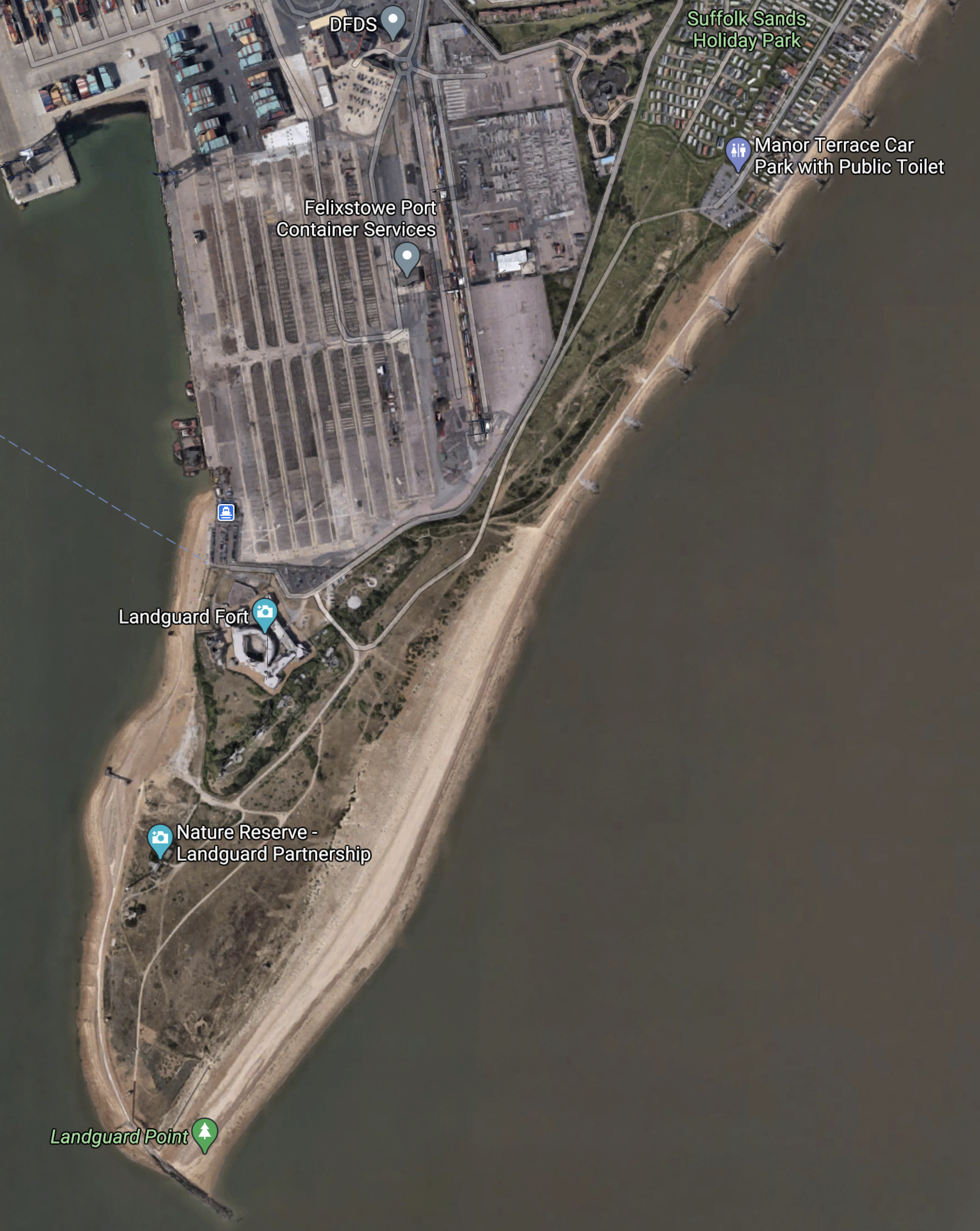
A tram-train going to Landguard Point would do the following.
- Provide a direct passenger rail service between the Port and Ipswich.
- Provide access to the Harwich ferry.
- Improve the economic prospects of the Southern part of Felixstowe.
- Bring visitors to the beach without using their cars.
But the main thing it would do is create decent access to the historic Landguard Fort.




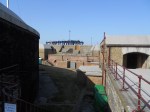



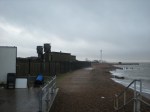

Landguard Fort was the site of the last invasion of the UK, when the Dutch were repelled on the 2nd of July 1667, at the Battle of Landguard Fort.
The Southern Terminal At The Port Of Felixstowe
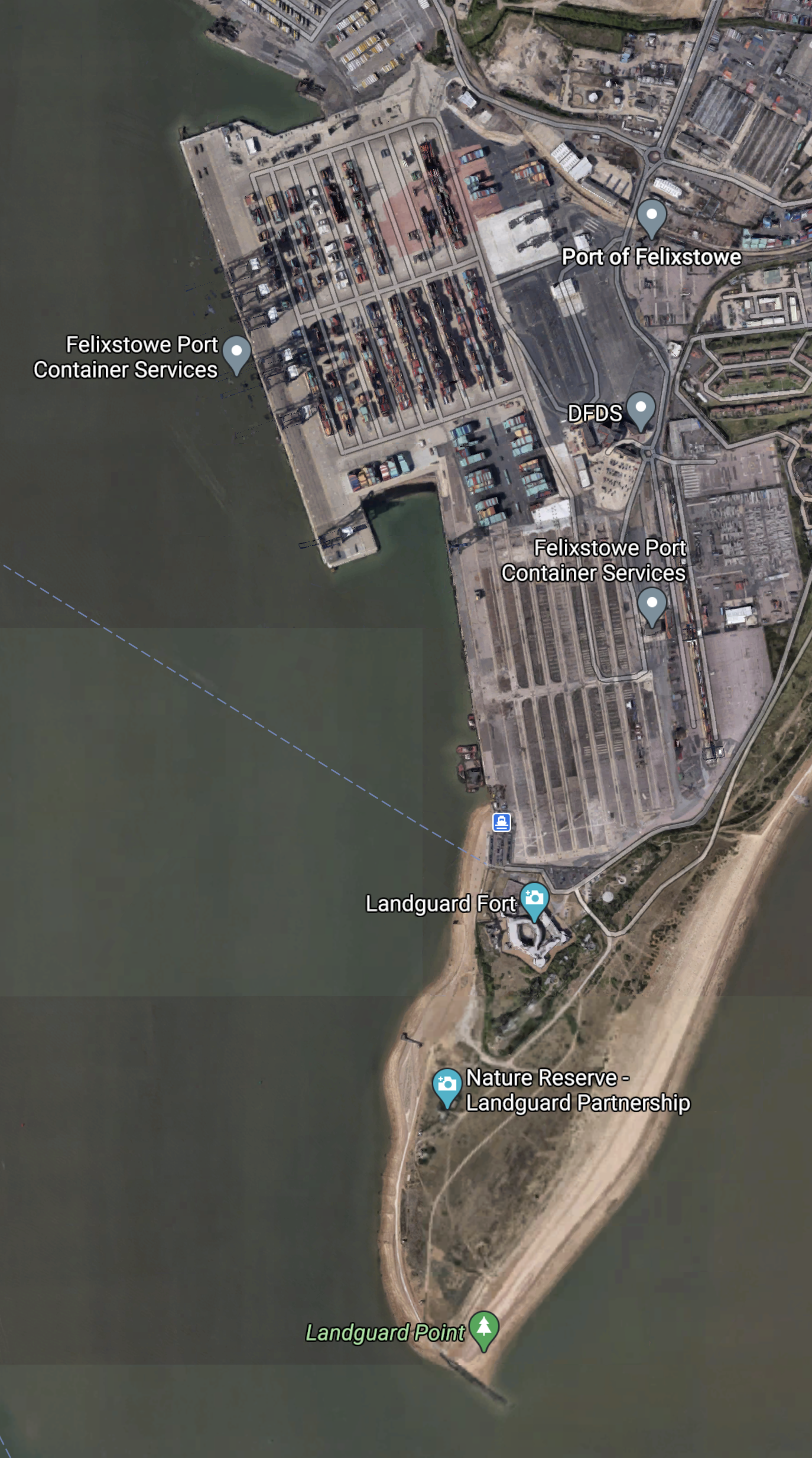
This Google Map shows the Southern terminal of the Port.
This second Google Map shows where the rail line enters the Southern terminal.
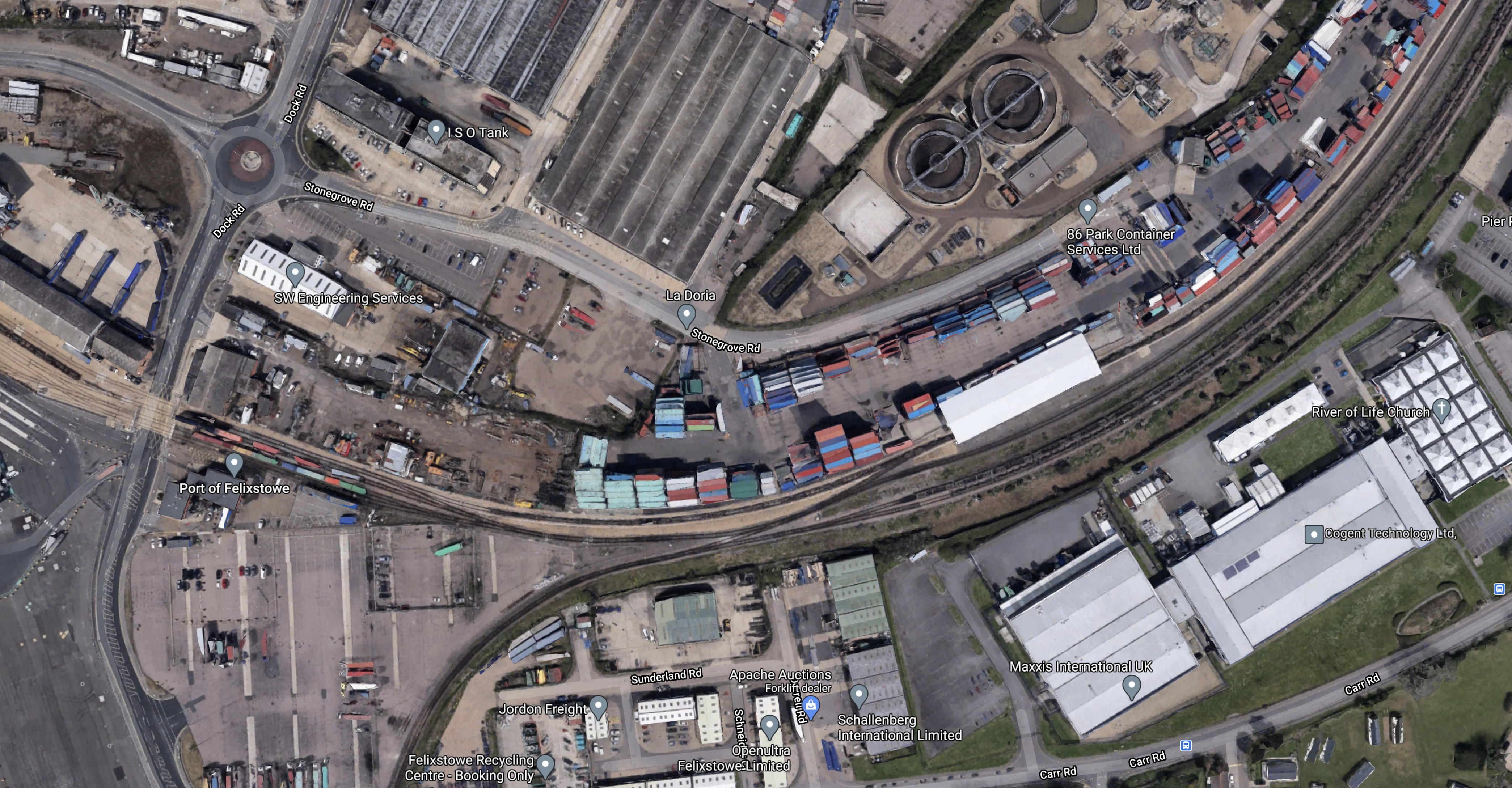
Note how the rail link enters in the North-East corner of the and curves towards the quays before it splits into two.
One branch goes straight on, past some sidings and gives a connection to the Trinity Terminal.
The second branch turns South to several sidings.
This Google Map shows these sidings.
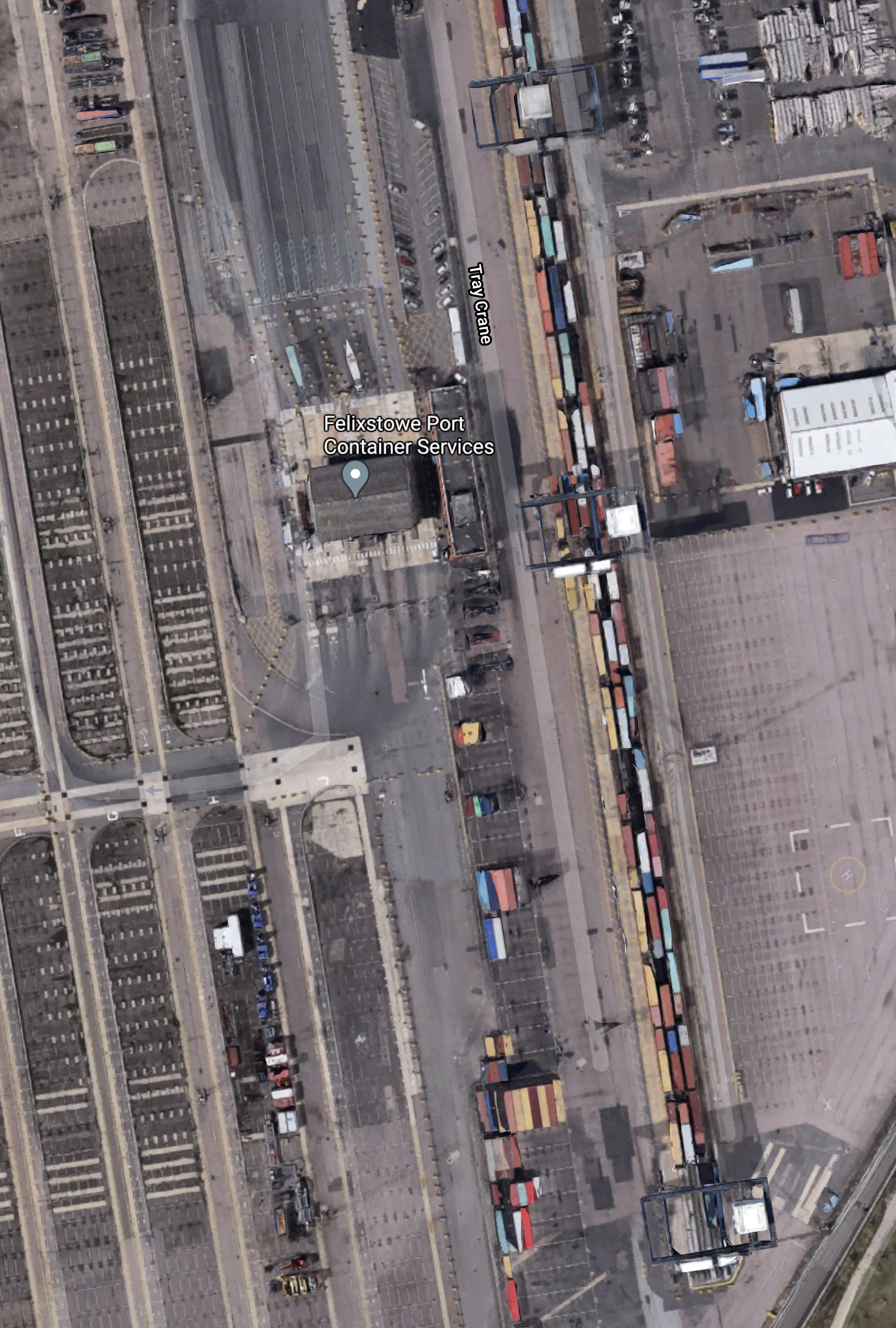
Note that the sidings are towards the right of the image and run North-South.
Northern Access To The Port
This Google Map shows the route taken by the rail access to the Trinity Terminal.
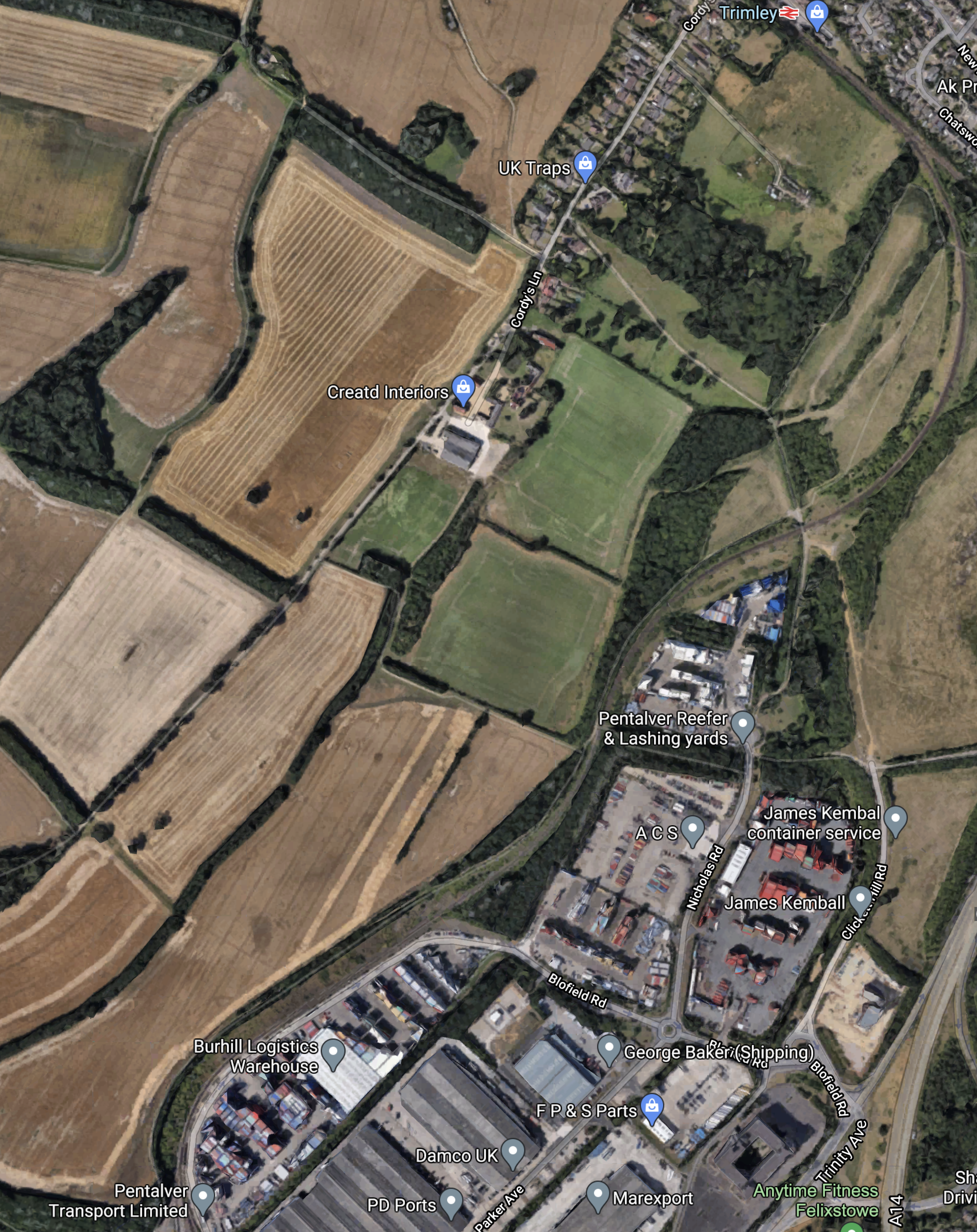
Note.
- The route branches off South just to the East of Trimley station.
- It curves its way South to the South-West corner of the map, where it enters the Port.
- It is single track.
This second Google Map shows where it enters the Port.
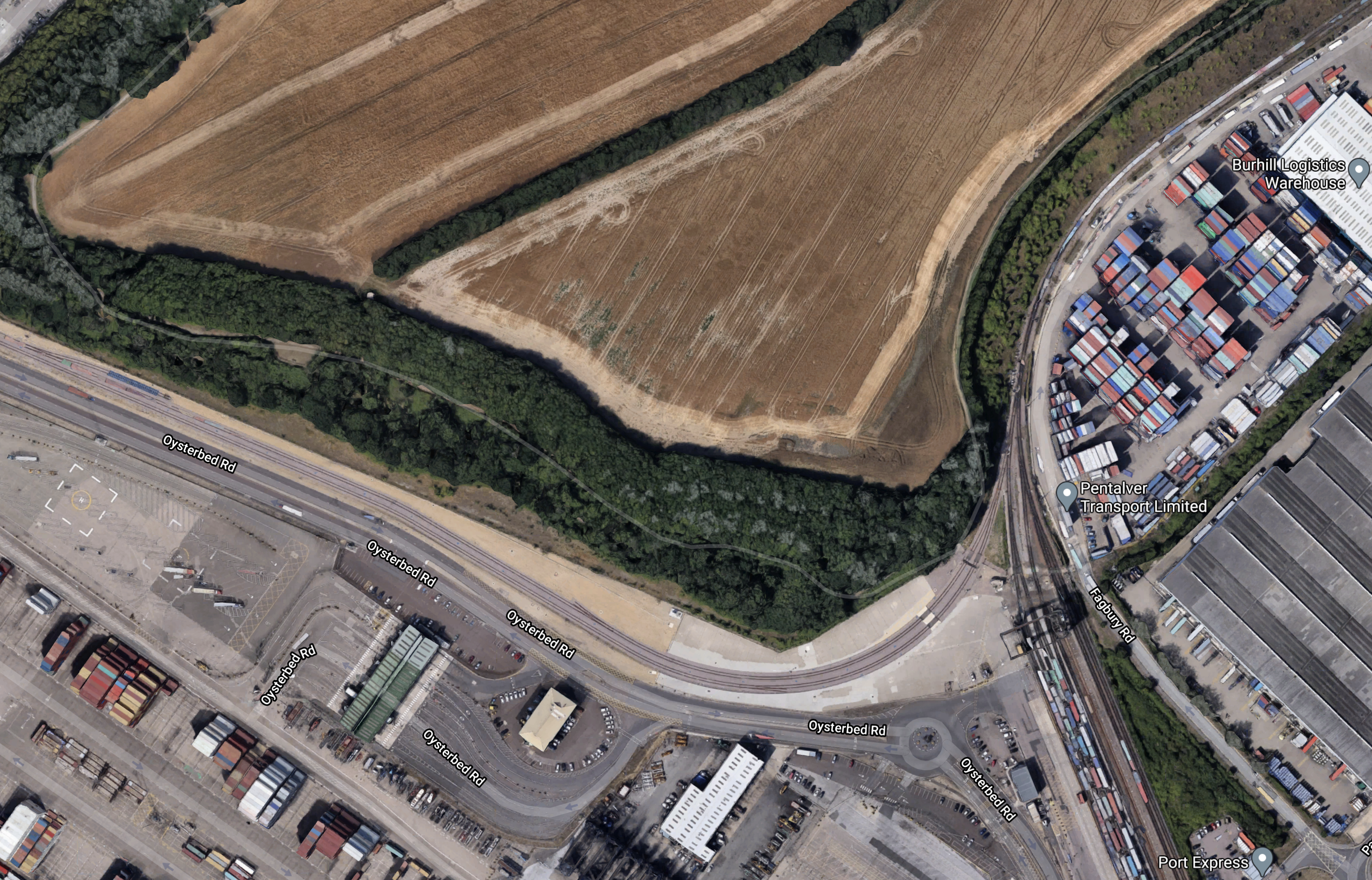
Note.
- The track enters from the North-West corner of the map.
- It then splits into two branches.
- One branch goes West to the Trinity Terminal.
- The second branch goes South into a set of sidings.
It looks to be a well-designed access, to the Felixstowe Branch Line at Trimley station.
The Trinity Terminal At The Port Of Felixstowe
This Google Map shows the Trinity terminal.
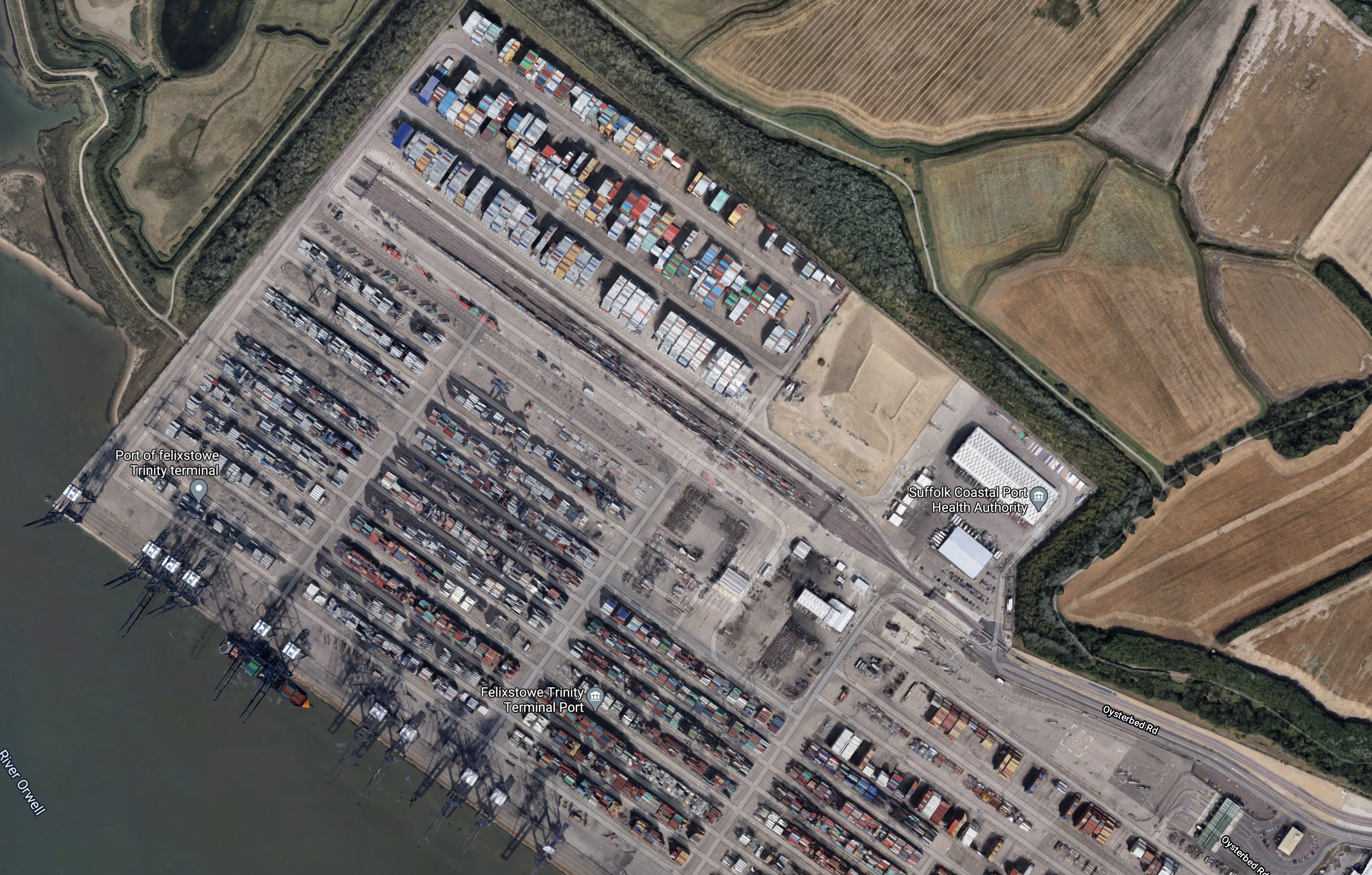
Note the rail sidings and the link to the East, which links to the previous map.
This Google Map shows the rail sidings in detail.
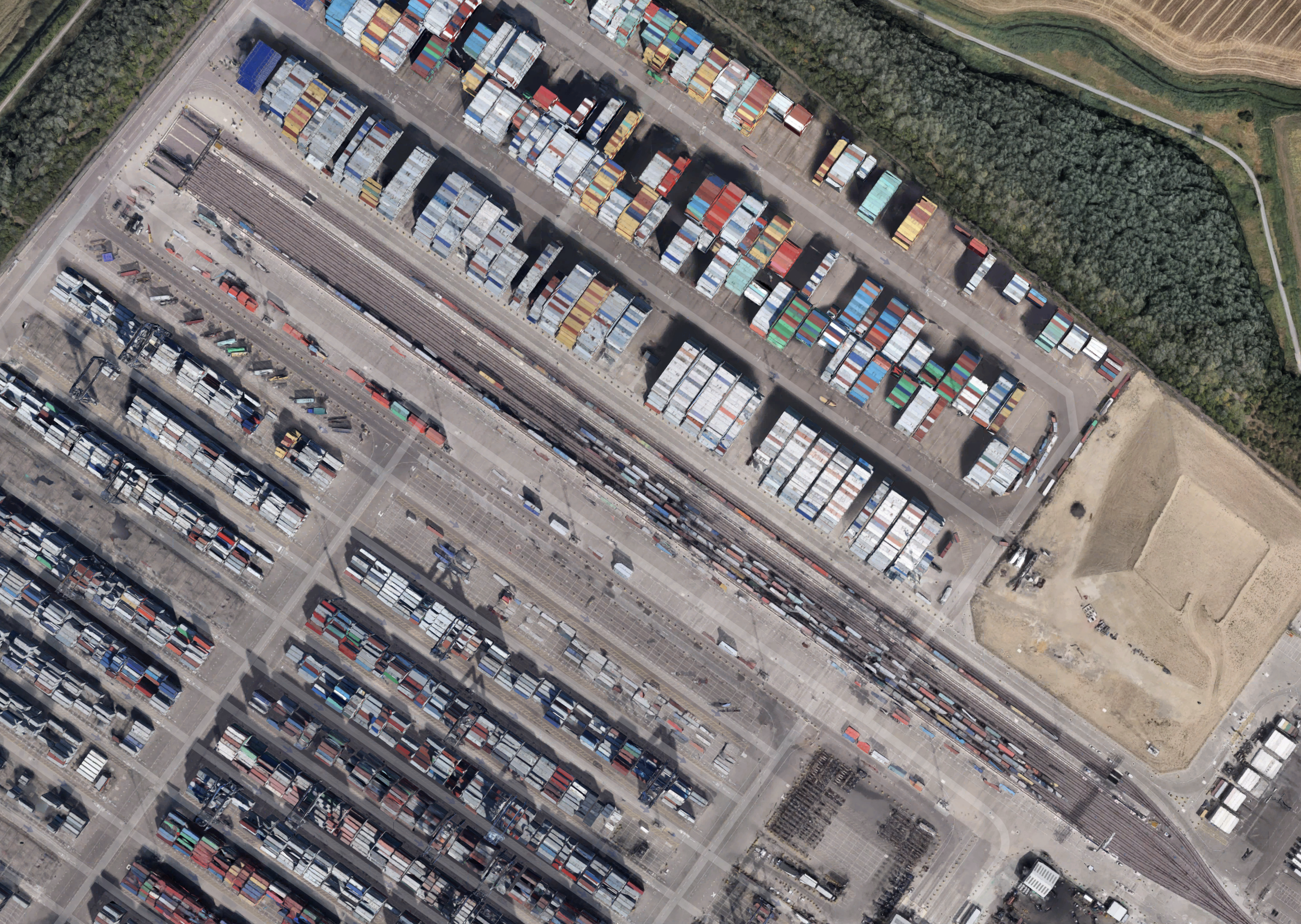
I hope the pictures give a clear impression of the size of the port, which in the next few years will probably need more trains to the rest of the country.
There is also a yard that appears to be connected to both the North and South train entrances to the Port.
This yard is shown in this Google Map.
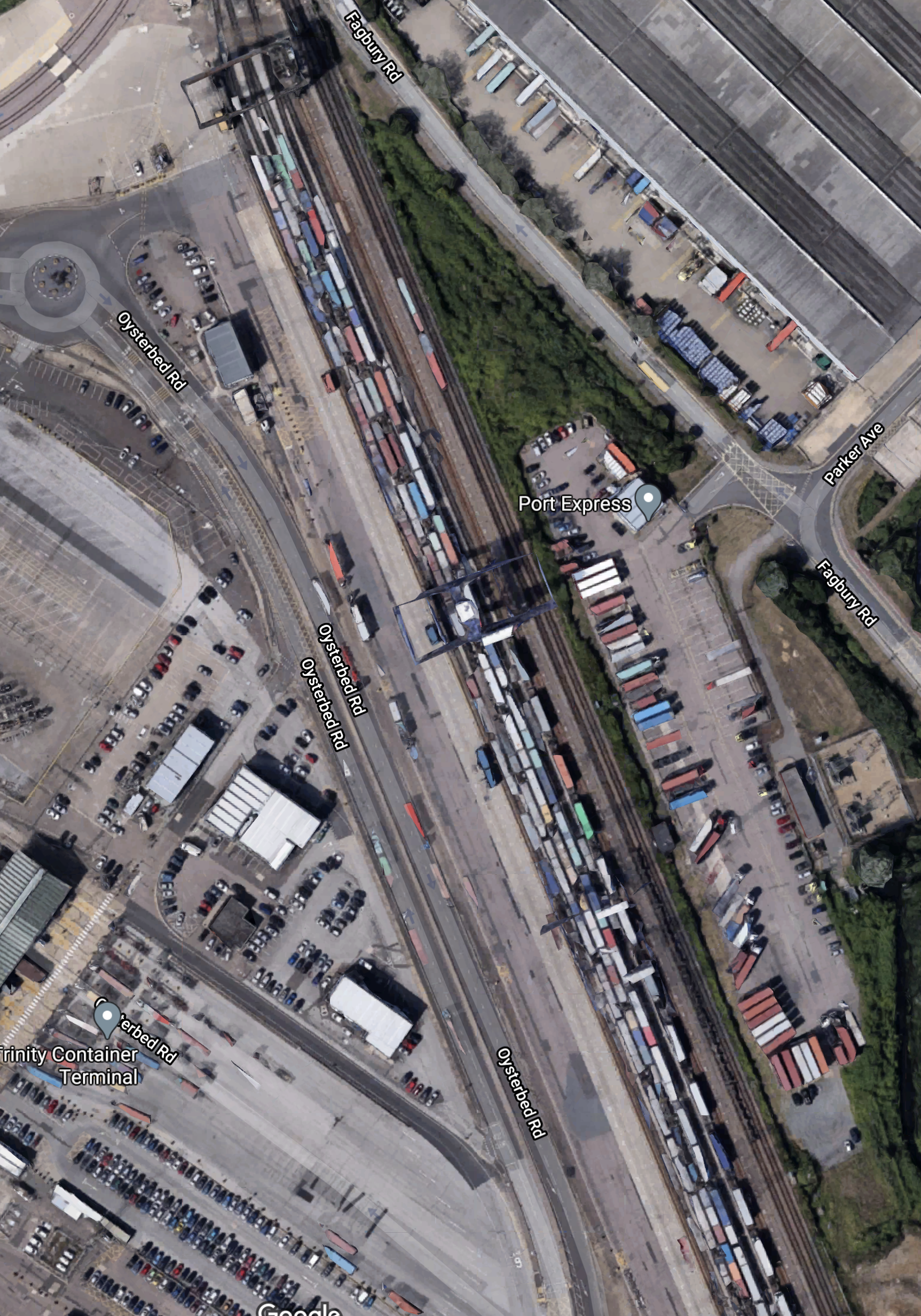
Note, the cranes to lift containers on and off.
Electrification In The Port
Note that there is no electrification in the Port or on the access links from Trimley station.
I once spent half-an-hour with a fellow Ipswich supporter before an away match. He turned out to be a crane driver at the Port of Felixstowe and we got to talking about why the trains weren’t electrified.
He told me that accidents to happen and that you you don’t want high voltage wires about, when you’re swinging containers on and off trains.
Especially, when the trains are close together, as they are in the previous image.
Class 73 Locomotives And The Port Of Felixstowe
The first Class 73 locomotives have now been ordered by Rail Operations Group (UK), and I wrote about the order in Trimode Class 93 Locomotives Ordered By Rail Operations (UK).
What surprised me about the order was that it was for thirty locomotives, whereas only ten were talked about two years ago. I know, that Rail Operations (UK) have received a big capital injection, as was reported in this article on Rail Advent, which is entitled Rail Operations Group Acquired By STAR Capital Partnership. but they must have ambitious plans for thirty locomotives.
Could it be that the specification of these locomotives is geared to operating out of ports like Felixstowe?
Consider.
- A locomotive probably needs a self-powdered capability to take a heavy train in or out of the Port of Felixstowe.
- Would a Class 73 locomotive have sufficient range and power to take the average train out of the port using bi-mode diesel and battery power until it arrived at the electrification of the Great Eastern Main Line?
- How would these locomotives handle a gap like Haughley Junction and Ely?
- A Class 73 locomotive could probably handle these container trains at 100 mph to and from London on the Great Eastern Main Line, which would keep them out of the way of Greater Anglia’s express trains.
- What speed would these locomotives be able to achieve under electric power on the West Coast and East Coast Main Lines?
- The two single-track access links between Trimley station and the Port could be electrified to charge the batteries both ways and to accelerate the train fast out of the Port.
I also feel that other ports would benefit.
Conclusion
I very much feel, that the specification of the Class 93 locomotive with its trimode capability is ideal for working to and from ports and freight terminals.
Alstom Calls For Hydrogen Rail Fleets In The UK
The title of this post, is the same as that of this article on H2View.
These are the first three paragraphs.
Alstom has called for a £10bn investment programme in UK rail and mass transit systems, through which it would like fleets of clean, zero emission hydrogen trains to replace pouting diesel alternatives.
Titled: The UK’s New Green Age; A Step Change in Transport Decarbonisation, the report states that 300-400 hydrogen trains could be launched simply with a like for like replacement of diesels and would deliver huge environmental benefits.
The report was released after recent research revealed that the UK is lagging behind surrounding countries in comparable infrastructure. For example, France has over double the number of mass transit systems as the UK, whilst Germany has four.
There is a rapidly developing argument between the proposers of hydrogen and battery trains.
Consider.
- Both types of train can ve a straight replacement for diesel trains, often with very little modification to stations.
- As both hydrogen and battery trains have electric traction, they could have improved performance, so tracks and signalling might need upgrades to make full use of that performance to provide a better service for passengers.
- Hydrogen trains will need a refuelling strategy.
- Hydrogen trains need to carry a large tank of hydrogen.
- Battery trains may well need charging systems or extra lengths of electrification for charging.
- The UK will have plenty of green hydrogen and zero carbon electricity.
I also believe that hydrogen and battery trains designed from scratch will be much better than conversions of existing stock.
Conclusion
I think the environment will win this argument.
I can see cost and local circumstances deciding, whether to use battery or hydrogen trains.
For instance, Ipswich and Norwich, where there are an electrified main lines, might become battery train hubs, whereas Middlesbrough, where there is a plentiful supply of hydrogen, might use hydrogen trains for local services.
BNSF and Wabtec Commence Battery-Electric Locomotive Pilot Test In California
The title of this post, is the same as that of this press release from BNSF.
This is the introductory paragraph.
BNSF Railway Company (BNSF) and Wabtec’s (NYSE: WAB) exploration of the future potential of battery-electric locomotives crosses another significant milestone this week as they begin testing the technology in revenue service between Barstow and Stockton, California. As BNSF seeks ways to further reduce its environmental impact, the advancement of battery technology offers some possible solutions.
“We’ve got everything in place and we’re ready to see how this next-generation locomotive performs in revenue service,” said John Lovenburg, BNSF vice president, Environmental. “BNSF is focused on continuing to reduce our environmental impact, and we’re committed to doing our part to test and assess the commercial viability of emerging technologies that reduce emissions.”
They have also released this video.
It certainly seems to work.
Construction Of Europe’s Largest Rail Intermodal Terminal Starts On Hungary-Ukraine Border
The title of this post, is the same as that of this article on MENAFN.
This is the introductory paragraph.
The construction of Europe’s largest railway intermodal combi terminal East-West Gate (EWG) has begun near the Hungarian-Ukrainian border.
This paragraph sums up the benefits of the new terminal.
‘Equipped with state-of-the-art technology, the EWG intermodal terminal, as the western gateway to the New Silk Road, offers a faster alternative route to Austria, Switzerland, Italy, Slovenia, Croatia and Germany for freight traffic from Asia than the current land and maritime routes, reads the article.
It is planned to be completed in 2022.
Vlad The Poisoner won’t like it!
Parallel Trains At Finsbury Park
I was travelling from Finsbury Park to Kings Cross, so I got on a Grand Northern service.
Like I’ve seen several times, there was a good cross-platform connection, between services going to Kings Cross and Moorgate, which leave from opposite sides of the same platform.


Note.
- The wide platform at Finsbury Park station between the two services.
- At the current time, the Kings Cross trains are every thirty minutes and the Moorgate trains every five minutes.
- Going say from Stevenage to the City would mean a wait of no more than five minutes.
- But going North, you might wait at Finsbury Park for up to half-an-hour.
Finsbury Park could be a very handy interchange as it has Thameslink, Victoria and Piccadilly Line services, in addition to the Kings Cross and Cambridge and Moorgate services.
Approaching Kings Cross – 6th January 2021
I took these pictures approaching Kings Cross.

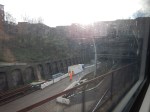
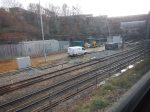
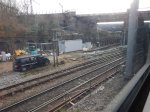

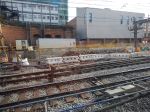
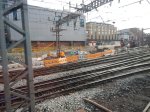

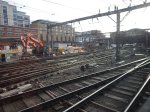
Note.
- There is still track to be laid.
- The electrification is still to be erected.
But everything seems to be getting there.
This Google Map shows the section between the two tunnels.
- Copenhagen Tunnel is North of this map.
- Gasworks Tunnel lies between this map and Kings Cross station.
Both tunnels have three double-track bores, where in this massive project, the Eastern bores are being brought back into use to add capacity to Kings Cross station.

Note.
- The East Coast Main Line runs North-South across the map.
- The quadruple track crossing East-West at the top of the map is the North London Line.
- Below it, is the Channel Tunnel Rail Link into |St. Pancras.
- The link to the Canal Tunnels take Thameslink trains to the deep level platforms in St. Pancras.
- The two new tracks will be on the Eastern side of the East Coast Main Line.
This second Google Map shows the track and platform layout at Kings Cross station.
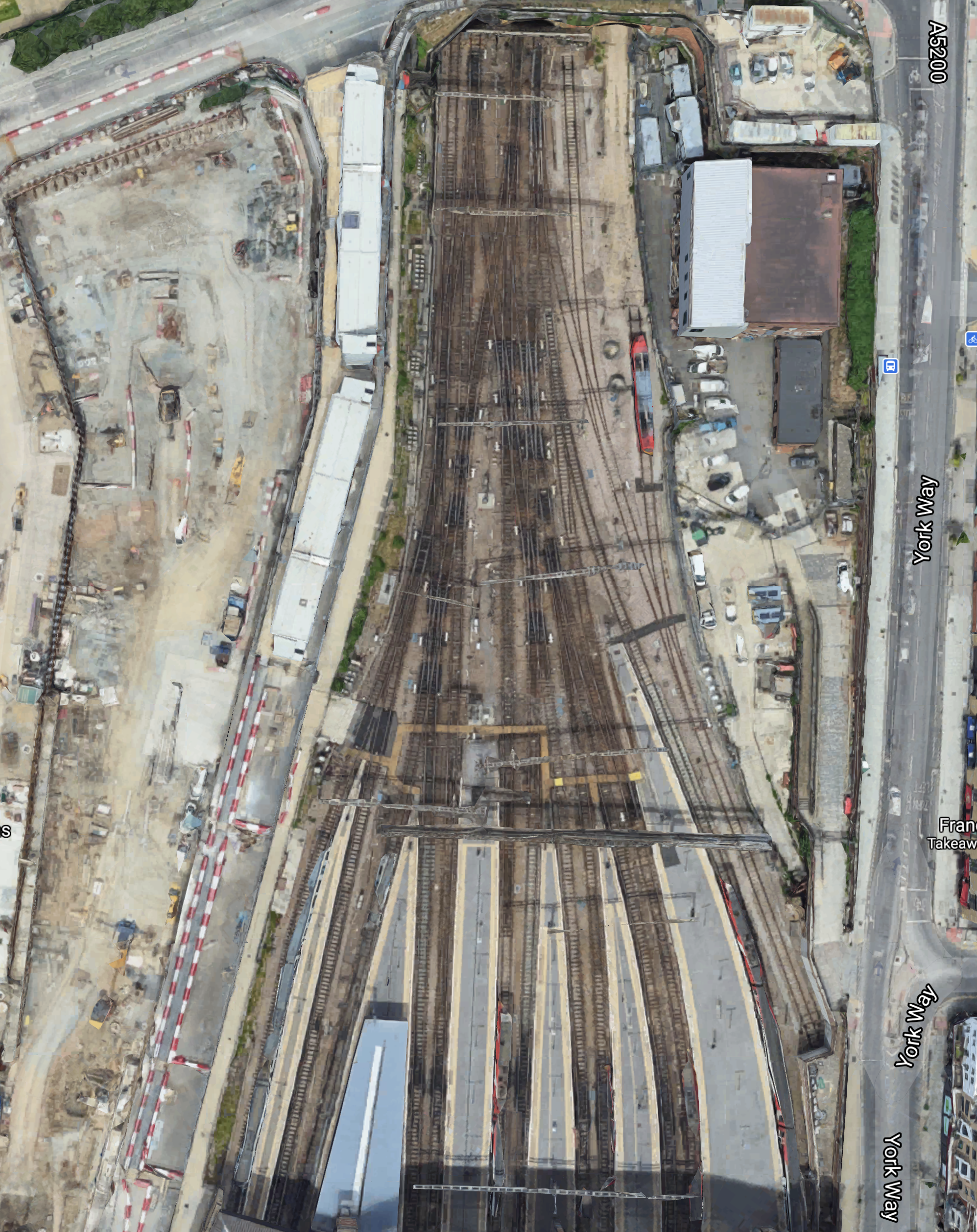
Note.
- There are twelve platforms, which are numbered from 0 to 11, with Platform 0 in the East.
- The various islands are numbered as follows from East to West; 0/1, 2/3, 4/5, 6/7, 8/9 and 10/11.
- The six tracks through the tunnels may be bi-directional, so will each track be linked to a pair of platforms?
- Platforms 0 to 4 are in the Eastern half of the station
- Platforms 5 to 0 are in the Western half of the station
- Platforms 9, 10 and 11 are short platforms in the old suburban station, which is mainly used by suburban services to Cambridge and Kings Lynn.
When I arrived there was a five-car Azuma in Platform 9, as these pictures show.

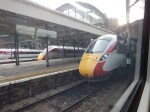
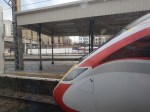
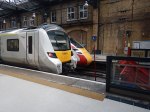
I’ve seen Grand Central’s Class 180 trains in these short platforms before, so is this going to be a regular occurrence.
Services Into Kings Cross
When the remodelling at Kings Cross is complete, current plans say the following trains will be running into Kings Cross station.
- LNER – Two tph – Edinburgh – Long train
- LNER – Two tph – Leeds – Long train
- LNER – One tph – Lincoln or York – Long or short train
- Great Northern – Two tph – Cambridge (stopping) – Short train
- Great Northern – Two tph – Cambridge (fast) – Short train
- Hull trains – Seven tpd – Hull and Beverley – Short train
- East Coast Trains – Five tpd – Edinburgh – Short train
- Grand Central – Four tpd – Bradford Interchange – Long or short train
- Grand Central – Five tpd – Sunderland – Long or short train
Note,
- tph is trains per hour and tpd is trains per day.
- There is a mixture of short and long trains.
- Short trains can fit all platforms, but long trains can only use platforms 0-8.
- There are nine tph and a total of 21 tpd in various less-frequent services.
My scheduling experience in other fields, says that ten platforms will be needed for a full service, with each of the ten platforms handling just one tph.
Conclusion
Wjen all the work is completed, Kings Cross station will have room for a few extra trains.
Trump And The Open
This BBC story today, which was entitled Trump National Stripped Of 2022 US PGA Championship.
The Times also has an article today, saying that Trump has been lobbying hard to get The Open allocated to his course at Turnberry.
I have a feeling that the access and the fact that in 2024, the Open will go to Troon will scupper Trump’s ambitions.
Good crowds will need good transport access and preferably by rail to a large population centre with lots of hotels.
- 2021 – Royal St. Georges – The nearby Sandwich station is being lengthened to take high speed trains from London, especially for the tournament.
- 2022 – St. Andrews – Perhaps too short a time to put in the long-promised rail link to Leuchars, but the train service to Aberdeen, Edinburgh and Glasgow from Leuchars is good.
- 2023 – Royal Liverpool – The course has a nearby station at Hoylake and Merseyrail are getting new fleets of classy Swiss trains. Enthusiasts could always take the ferries part of the way from Liverpool.
- 2024 – Troon – The rail line to Glasgow goes past the course and there’s time to build a temporary station if needed.
The other courses on the active rota for the Open are.
- Carnoustie – The nearby Golf Street station is used during major golf tournaments.
- Muirfield – This course has had other problems. But the rail links are not good.
- Royal Birkdale – Like Royal Liverpool, it has a nearby Merseyrail station.
- Royal Lytham and St. Annes – This course has a station and it looks like the rail link will be upgraded soon.
- Royal Portrush – The nearby railway station was rebuilt for the 2019 Open
There is no rail line anywhere near Turnberry.
I feel that the R & A have enough excuses to avoid giving the Open to Turnberry.
It looks to me that Trump bought the wrong golf course.
Network Rail’s Big Push
The title of this press release on the Network Rail web site is 11,000 Tonne Tunnel To Be Installed On The Railway In First For UK Engineering.
They have also released this aerial photograph of the tunnel, before it is pushed into place.
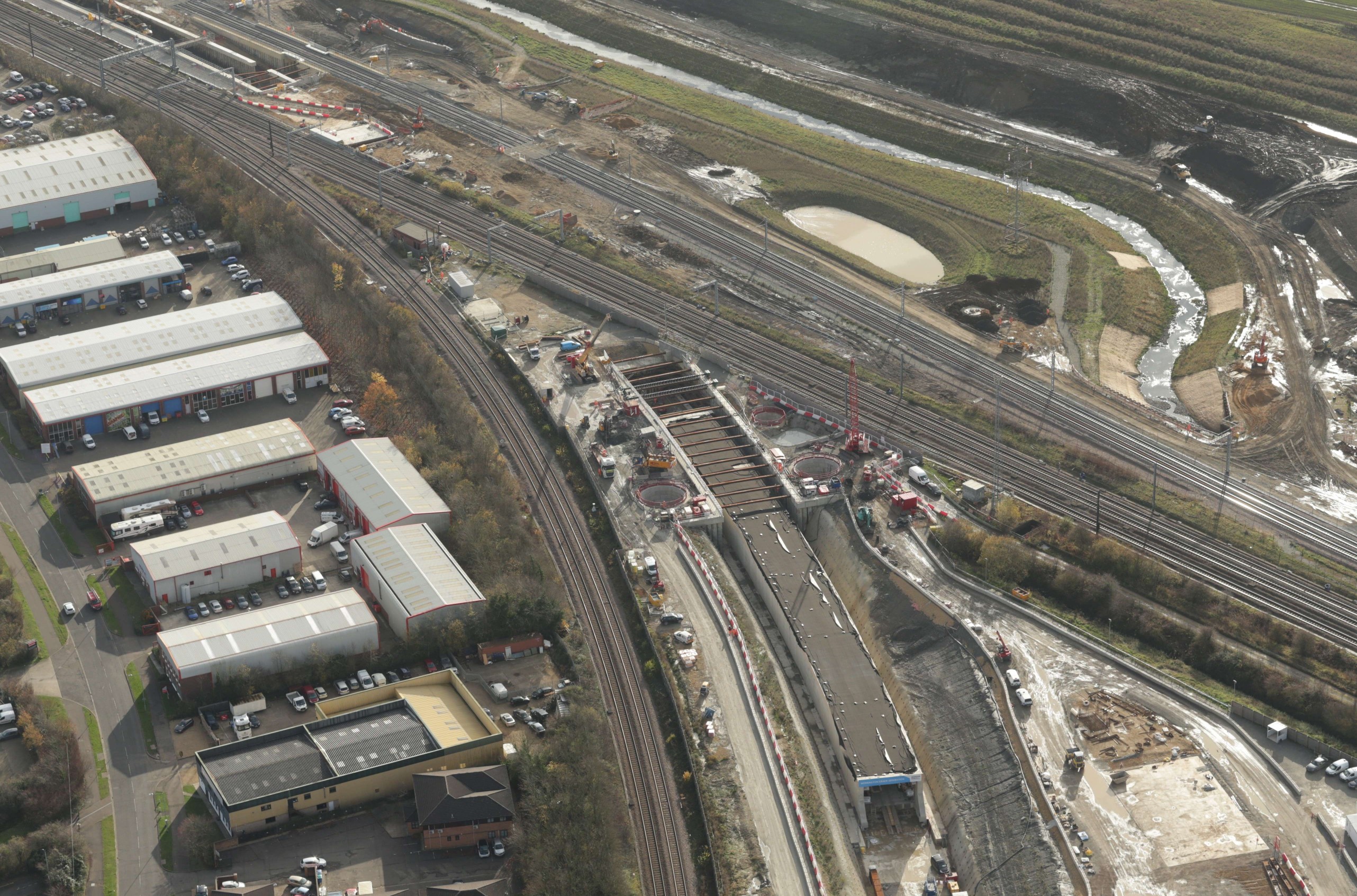
Note.
- The tunnel, which is just a curved concrete box is in the middle of the picture.
- To its left is the double-track Peterborough-Lincoln Line.
- Running across the far end of the tunnel are the multiple tracks of the East Coast Main Line.
- Peterborough is a few miles to the left, with the North to the right.
This Google Map shows the same area from directly above.

Note.
- The double-tracks of the Stamford Lines closest to the South-West corner of the map. These link the Peterborough-Birmingham Line to Peterborough.
- Next to them are the triple tracks of the East Coast Main Line.
- The third rail line is the double-track of the Peterborough and Lincoln Line.
- The new tunnel can be seen at the top of the map.
This map from Network Rail, shows the new track layout.
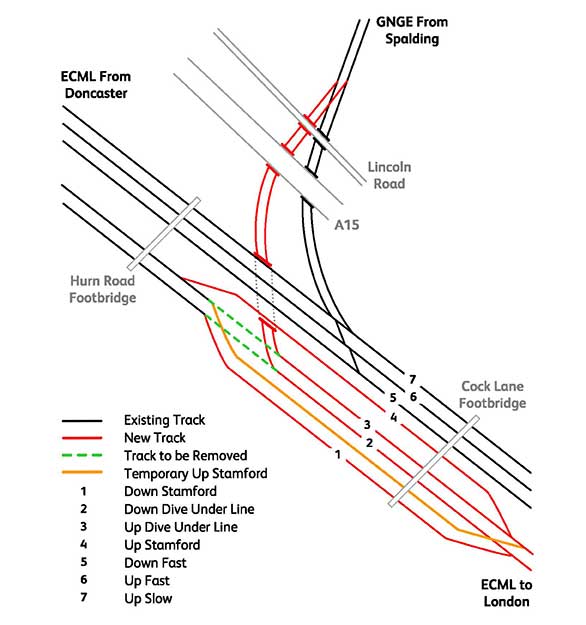
The map shows that the Stamford Line will divide with two tracks (1 and 4) going North to Stamford as now. Two new tracks (2 and 3) will dive-under the East Coast Main Line to join the existing Peterborough and Lincoln Line.
The tracks will run through the tunnel in the pictures, after it has been pushed under the East Coast Main Line.
- This will mean that the many freight trains between Peterborough and Lincoln will not have to cross the East Coast Main Line on the flat.
- This in turn could allow faster running of trains on the East Coast Main Line, that are not stopping at Peterborough.
This second Google Map shows the area to the North of the first map.
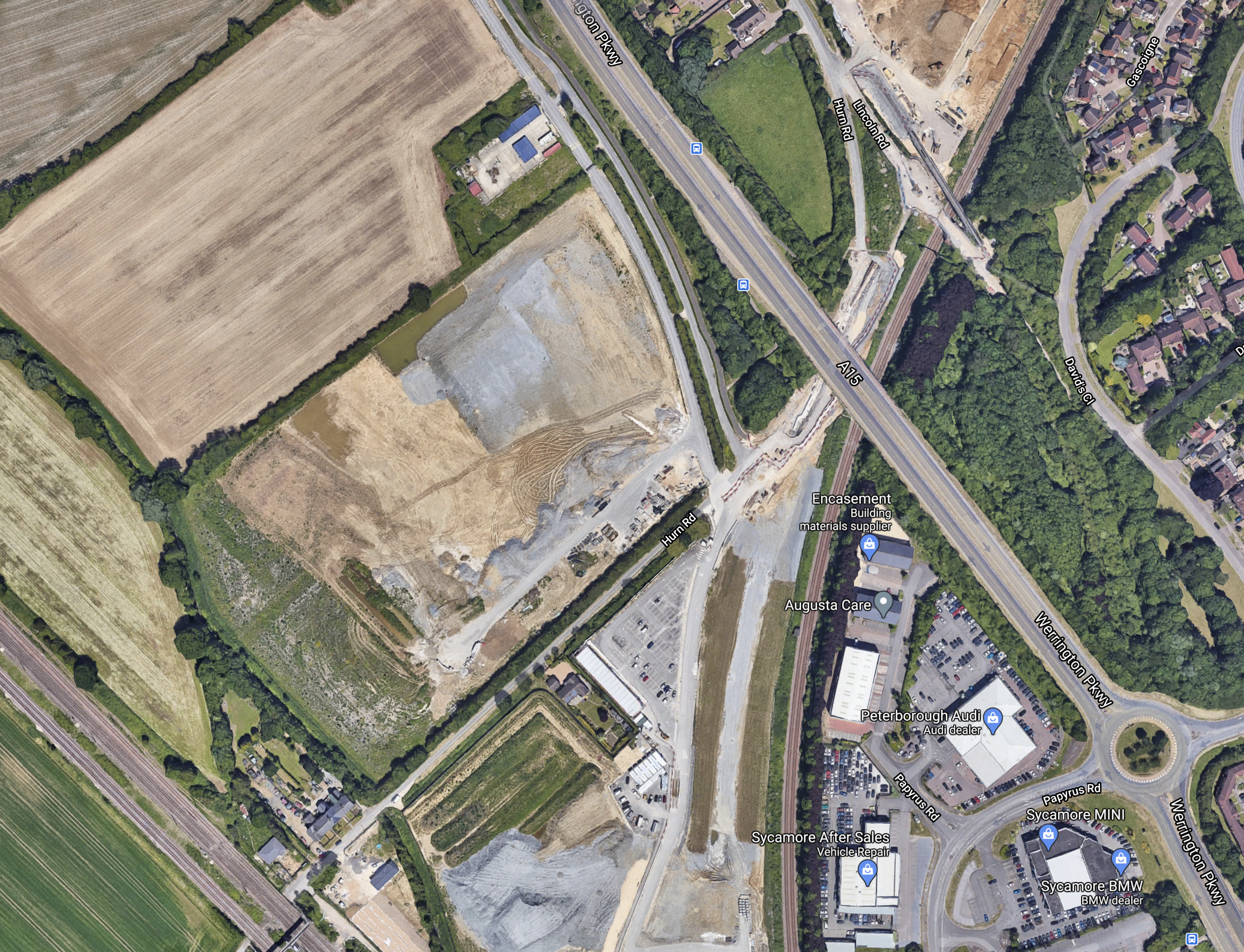
Note.
- The East Coast Main Line in the South-West corner of the map.
- The Peterborough and Lincoln Line curving from North-South across the map.
- A bridge would appear to be being constructed to take the A15 road over the new tracks, that will go through the tunnel.
- Another bridge will be constructed to take Lincoln Road over the new tracks.
It is certainly not a small project.
That is emphasised by this third Google Map, which is to the North of the previous map.
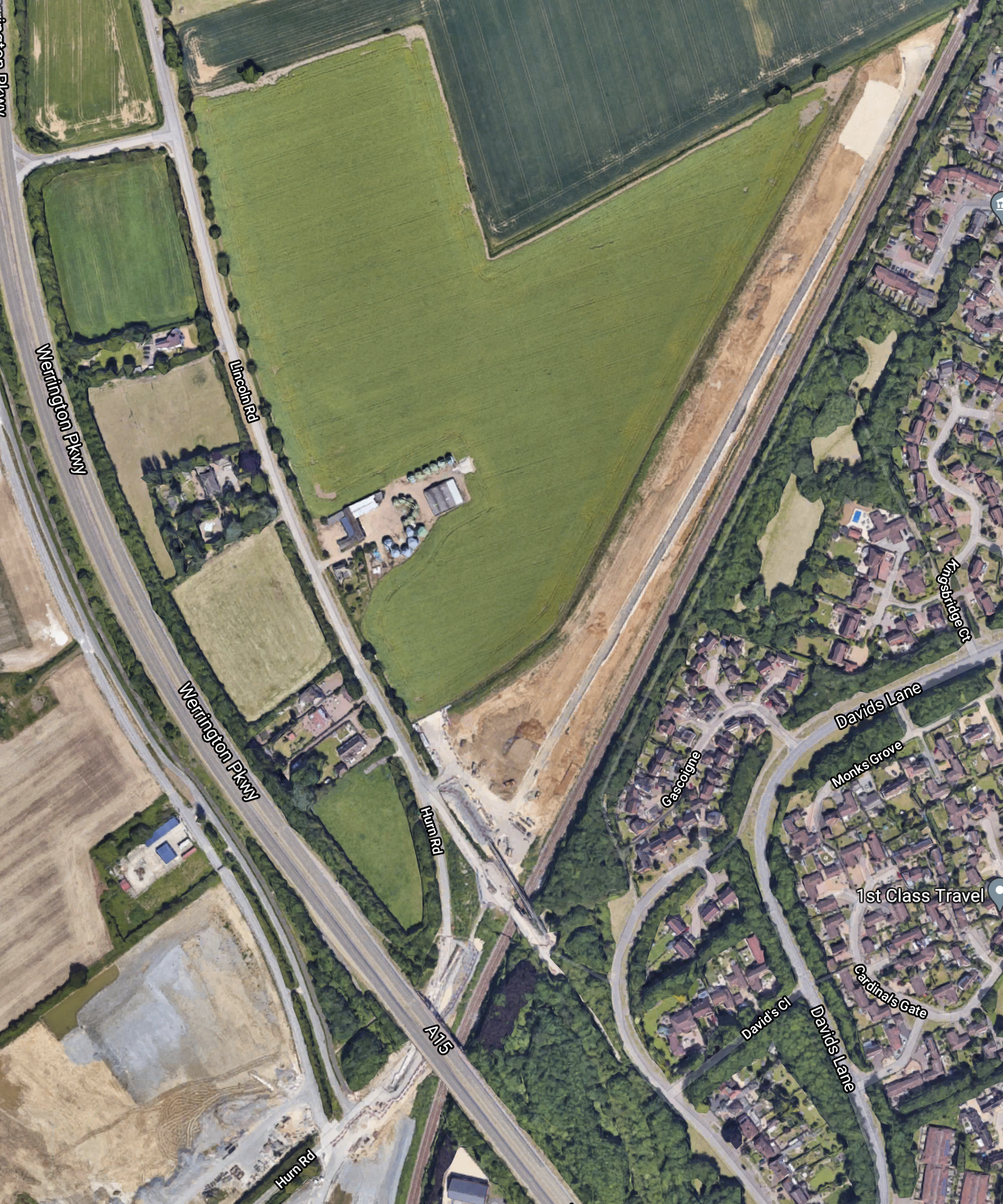
This map would appear to show space for more than a pair of tracks.
It looks to me, that space is being left for future rail-related development.
- Could it be for a small freight yard, where trains could wait before proceeding?
- If it were electrified, it could be where freight trains to and from London, switched between electric and diesel power.
- Could it be passing loops, so that freight trains can keep out of the way of faster passenger trains?
- Would it be a place for a possible new station?
If it is to be a full rail freight interchange, I can’t find any mention of it on the Internet.
The Big Push
Summarising, what is said in the press release, I can say.
- Major works to occur over nine days between 16 and 24 January
- It will be pushed at 150cm per hour.
- A reduced level of service will operate.
- It will take several weekends.
I hope it’s being filmed for later broadcasting.
Thoughts On Services
I have a few thoughts on passenger services.
London And Lincoln Via Spalding And Sleaford
Consider.
- Peterborough and Lincoln is 57 miles.
- The route has lots of level crossings.
- Much of the route between Peterborough and Lincoln has an operating speed of 75 mph
- There is a 50 mph limit through Spalding. Is this to cut down noise?
- Trains between Peterborough and Lincoln take a shortest time of one hour and twenty-three minutes, with four stops.
- Peterborough and Lincoln is 57 miles.
- This is an average speed of 41 mph.
I wonder what time a five-car Class 800 train would take to do the journey.
- At an average speed of 50 mph, the train would take 68 minutes and save 15 minutes.
- At an average speed of 60 mph, the train would take 57 minutes and save 26 minutes.
- At an average speed of 70 mph, the train would take 49 minutes and save 18 minutes.
As the fastest London Kings Cross and Peterborough time is 46 minutes, this would mean that with an average speed of 60 mph, a time between London Kings Cross of one hour and forty-three minutes could be possible.
- There could be additional time savings by only stopping at Peterborough, Spalding and Sleaford.
- The Werrington Dive Under looks to be built for speed and could save time.
- If the 50 mph limit through Spalding is down to noise, battery electric trains like a Hitachi Intercity Tri-Mode Battery Train might be able to go through Spalding faster.
- Could some track improvements save time between Peterborough and Lincoln?
As the fastest journeys via Newark to Lincoln take one hour and fifty-six minutes, it looks to me, that LNER might be able to save time by going via Spalding and Sleaford after the Werrington Dive Under opens.
London And Skegness
If there were a fast London train from Sleaford, it will take under an hour and thirty minutes between London Kings Cross and Sleaford.
- Currently, the connecting train between Skegness and Sleaford takes an hour for the forty miles.
- The service is currently run by Class 158 trains.
- With some 100 mph trains on the Skegness and Sleaford service, it might be possible to travel between London and Skegness in two hours and fifteen minutes with a change at Sleaford.
There would appear to be possibilities to improve the service between London and Skegness.
Lincoln And Cambridge
I used to play real tennis at Cambridge with a guy, who was a Cambridge expansionist.
He believed that Cambridge needed more space and that it should strongly rcpand high-tech research, development and manufacturing all the way across the fens to Peterborough and beyond.
I listened to his vision with interest and one thing it needed is a four trains per hour express metro between Cambridge and Peterborough.
- Ely and Peterborough should be electrified for both passenger and freight trains.
- March and Spalding should be reopened.
- Cambridge has the space for new services from the North.
Extending the Lincoln and Peterborough service to Cambridge could be a good start.
Conclusion
The Werrington Dive Under will certainly improve services on the East Coast Main Line.
I also feel, that it could considerably improve rail services between London and South Lincolnshire.
It certainly looks, like Network Rail have designed the Werrington Dive Under to handle more traffic than currently uses the route.
Towns like Boston, Skegness, Sleaford and Spalding aren’t going to complain.
All Platforms Should Be Wide Like This
It is my view, that all platforms, like this one at Angel station should be wide.

Consider,
- It must be less likely, that passengers get knocked onto the tracks.
- Wide platforms must be easier for all passengers to navigate.
- Blind people with of without guide dogs must find it easier.
Let’s see a few more. And with step-free access between platform and train!
 The Anonymous Widower