Crossrail Parts Company With Costain Skanska At Bond Street
The title of this post, is the same as that on this article on Construction Enquirer.
This is the introductory paragraph.
Costain/Skanska joint venture’s troubled Crossrail contract at Bond Street Station has been ended early.
It appears to be a mutual decision and in my opinion such a decision is very rare, especially as Costain/Skanska’s other project at Paddington station seems to be progressing as expected.
Could it be that the architects designed a project that was unbuildable? Or one where the architects didn’t think about the project management needed to build it?
High Speed Two To The North West Of England
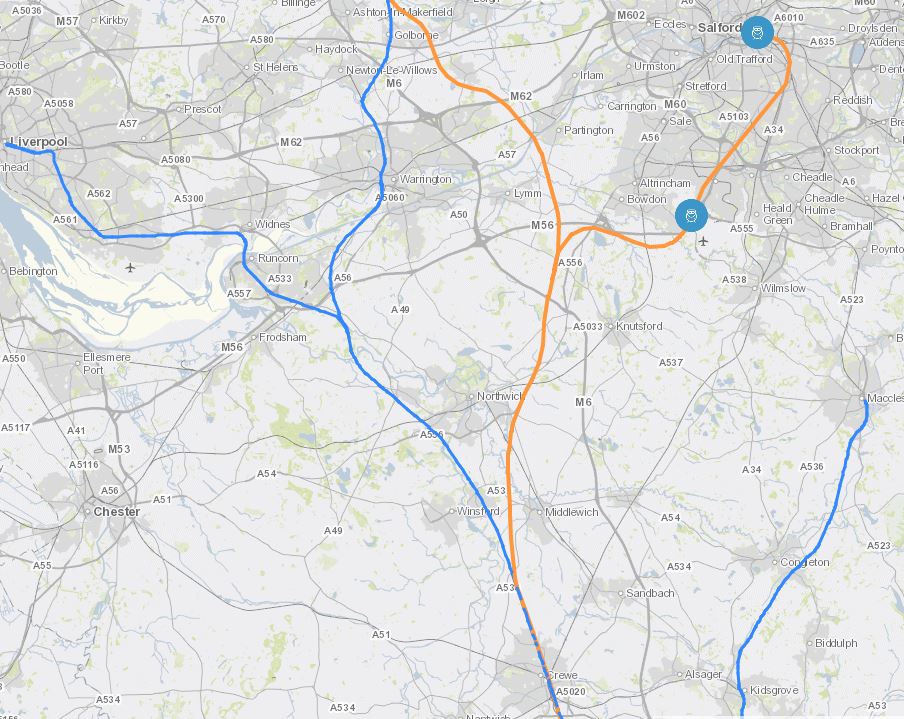
This map clipped from the High Speed Two web site, shows High Speed Two routes in the North West of England.
Note.
- When shown in orange, High Speed Two will use new tracks.
- When shown in blue, High Speed Two will use existing tracks.
- New stations are shown as large blue dots.
- High Speed Two and the West Coast Main Line appear to share a corridor through Crewe, before dividing near Walley’s Green.
- High Speed Two loops to the East of the West Coast Main Line and rejoins it South of Wigan between Bryn Gates and Abram Brow.
The route will or might serve the following stations in North West England.
Blackpool North
Blackpool North station is not planned to be served by High Speed Two.
But the station has been recently rebuilt.
- It has a number of platforms, that are capable of handling 200 metre long classic-compatible High Speed Two trains.
- The route to High Speed Two at Preston is fully electrified.
- In a couple of years, it will be connected to Blackpool’s expanding tramway.
- Blackpool would welcome High Speed Two with open arms.
Blackpool North would be an ideal extra destination, if more trains were to be split and joined at Crewe.
But whatever happens, I believe that high speed commuter trains will run from Blackpool North.
- Blackpool and Manchester Piccadilly via Preston, Wigan North Western, Warrington Bank Quay and Manchester Airport.
- Blackpool and Derby via Preston, Wigan North Western, Warrington Bank Quay, Crewe and Stoke-on-Trent.
Blackpool North has the platforms and electrification and it will be used.
Carlisle
Carlisle station is a through station on the current Glasgow service and can handle a nine-car Class 390 train which is over 210 metres long, which means they can handle a 200 metre long, classic-compatible High Speed Two train.
But two tph will be 400 metre London Euston and Edinburgh/Glasgow trains, so platform lengthening will probably be required.
There will be the following trains.
- Birmingham Curzon Street and Carlisle – I tph – 118 minutes
- London Euston and Carlisle – 2 tph – 154 minutes.
After any necessary platform lengthening, Carlisle will be ready and waiting for High Speed Two and will be reached in Phase 1 of the project.
The High Speed Two web site, says Carlisle will be reached in Phase 2b, but as Edinburgh and Glasgow are part of Phase 1, this must be a mistake.
Crewe
Crewe station is at the bottom of the map, just to the right of centre.
The station gets this introduction on this page of the High Speed Two web site.
HS2 services will call at Crewe, where passengers will be able to access the high speed network heading south. Journey times to London will be cut to under an hour. Macclesfield, Stafford and Stoke-on-Trent will also receive HS2 services, spreading the benefits of better connectivity.
The page also says that between five and seven trains per hour (tph) will call at Crewe.
Lancaster
Lancaster station is a through station on the current Glasgow service and can handle a nine-car Class 390 train which is over 210 metres long, which means they can handle a 200 metre long, classic-compatible High Speed Two train.
Lancaster will also be a terminus of 200 metre long classic-compatible High peed Two train from London Euston, so there may need to be refurbishment to handle the larger, if not longer train.
The use of Lancaster as a terminus, would appear to have the following advantages.
- The platform is already there.
- Using Lancaster as a terminal, may reduce the scope of works at Carlisle and Preston.
- The one tph service from London Euston is effectively a High Speed Northern stopper between Lancaster and Crewe, with calls at Warrington Bank Quay, Wigan North Western and Preston stations.
- Lancaster has connections to Barrow-in-Furness, Heysham Port and Morecambe and the scenic Cumbrian Coast and Settle-Carlisle Lines.
- Paces like Barrow-in-Furness. Morecambe and a host of other stations, should save forty-three minutes on journeys to and from London.
I think that Lancaster, is a good place to terminate a service in the North-West of England.
There will be the following trains.
- Birmingham Curzon Street and Lancaster – I tph – 65 minutes
- London Euston and Lancaster – 1 tph – 101 minutes.
After the necessary refurbishment, Lancaster will be ready and waiting for High Speed Two and will be reached in Phase 2b of the project.
But I do feel that Lancaster could be reached in Phase 1 of the project, if necessary works North of Preston and at Lancaster station were planned as an independent project.
Liverpool Lime Street
Liverpool Lime Street station is at the Western edge of the map, at the end of the Liverpool Branch of the West Coast Main Line.
Liverpool gets this headline and brief description on this page of the High Speed Two web site.
The City Region Wants To Deliver a World Class Transport Network
Its ambitious plans would integrate the existing HS2 route and builds on the Northern Powerhouse Rail proposals for high speed, east-west links directly into Liverpool City Centre.
Liverpool has made a good start to prepare for High Speed Two.
- The Grade II Listed; Lime Street station now has lengthened platforms and an improved layout so that it can handle two 200 metre long High Speed Two trains per hour.
- Merseyrail is taking delivery of a fleet of new Class 777 trains to update their suburban network.
- By the time High Speed Two arrives in the city, the suburban network will be larger.
Liverpool is ready and waiting for High Speed Two and will be reached in Phase 1 of the project.
Macclesfield
Macclesfield station is at the Eastern edge of the map, at the end of its own leg of High Speed Two.
The station was the surprise destination added, during the last iteration of High Speed Two.
- The late, great Brian Redhead, who lived in the town would be very pleased.
- The station was rebuilt in 1960 and has three platforms.
- It is planned to have one tph to London Euston via Stoke-on-Trent, Stafford and Old Oak Common.
- The visualisation on this page of the High Speed Two web site, also shows three platforms, but I wouldn’t be surprised to see a fourth added, as the extra platform would add flexibility.
The second surprise for Macclesfield, is that like Liverpool, it will be reached in Phase 1 of the project.
Manchester Airport
Manchester Airport station is the Southern large blue dot at the top of the map.
This page on the High Speed Two web site is rather sparse on information about Manchester Airport station.
I have combined train times given on the web page, with frequencies from an article in the June 2020 Edition of Modern Railways to create this table, which should be valid after the completion of High Speed Two.
- Birmingham Curzon Street and Manchester Airport – 2 tph – 32 minutes
- Birmingham Interchange and Manchester Airport – 1 tph – 29 minutes
- London Euston and Manchester Airport – 3 tph – 63 minutes
- London Old Oak Common and Manchester Airport – 3 tph – 56 minutes
- Manchester Piccadilly and Manchester Airport – 5 tph – 6 minutes
In Changes Signalled For HS2 Route In North, I stated that Northern Powerhouse Rail were proposing the following Liverpool and Manchester service.
Manchester Airport station will be reached in Phase 2b of the project.
- Six tph
- Stops at Manchester Airport and Warrington.
- An end-to-end journey time of 26 minutes.
This would do the following.
- Add a Liverpool and Manchester Airport service with a frequency of 6 tph, that will take 20 minutes.
- Add a Warrington Parkway and Manchester Airport service with a frequency of 6 tph that will take around 10 minutes.
- Increase the frequency between Manchester Piccadilly and Manchester Airport to 11 tph. Or more likely 12 tph.
How many cities have an airport connection running every five minutes using trains running at 125 mph?
As these Liverpool and Manchester services would probably start in places like Hull and Newcastle and come via varied routes that included a selection of Bradford, Doncaster Huddersfield, Leeds and Sheffield, all of the North, that lies to the East of the Pennines will be connected to Manchester Piccadilly, Manchester Airport and Liverpool by high speed trains.
Manchester Piccadilly
Manchester Piccadilly station is the Northern large blue dot at the top of the map.
This page on the High Speed Two web site is rather sparse on information about Manchester Piccadilly station.
Using the same data as before I can create a table of services from Manchester Piccadilly station, where I have included Liverpool and Manchester services, that will be run by Northern Powerhouse Rail.
- Birmingham Curzon Street – 2 tph – 40 minutes
- Birmingham Interchange – 1 tph – 37 minutes
- London Euston – 3 tph – 67 minutes
- London Old Oak Common – 3 tph – 60 minutes
- Manchester Airport – 12 tph – 6 minutes
- Liverpool – 6 tph – 26 minutes
Manchester Piccadilly station will be reached in Phase 2b of the project.
Oxenholme Lake District
Oxenholme Lake District station is a through station on the current Glasgow service and can handle a nine-car Class 390 train which is over 210 metres long, which means they can handle a 200 metre long, classic-compatible High Speed Two train.
There will be the following trains.
- Birmingham Curzon Street and Oxenholm Lake District – I tph – 79 minutes
- London Euston and Oxenholme Lake District – 115 minutes – Change at Preston
Oxenholme Lake District is ready and waiting for High Speed Two and will be reached in Phase 2b of the project.
But I do feel that Oxenholme Lake Districtcould be reached in Phase 1 of the project, if necessary works North of Preston and at Lancaster station were planned as an independent project
Penrith North Lakes
Penrith North Lakes station is a through station on the current Glasgow service and can handle a nine-car Class 390 train which is over 210 metres long, which means they can handle a 200 metre long, classic-compatible High Speed Two train.
There will be the following trains.
- Birmingham Curzon Street and Penrith North Lakes – I tph – 102 minutes
- London Euston and Penrith North Lakes – 138 minutes – Change at Preston
Penrith North Lakes is ready and waiting for High Speed Two and will be reached in Phase 2b of the project.
But I do feel that Penrith North Lakes could be reached in Phase 1 of the project, if necessary works North of Preston and at Lancaster station were planned as an independent project
Preston
Preston station is a through station on the current Glasgow service and can handle a nine-car Class 390 train which is over 210 metres long, which means they can handle a 200 metre long, classic-compatible High Speed Two train.
But two tph will be 400 metre London Euston and Edinburgh/Glasgow trains, so platform lengthening will probably be required.
There will be the following trains.
- Birmingham Curzon Street and Preston – I tph – 50 minutes
- London Euston and Preston – 3 tph – 78 minutes.
After any necessary platform lengthening, Preston will be ready and waiting for High Speed Two and will be reached in Phase 1 of the project.
Runcorn
Runcorn station is a through station on the Liverpool service and can handle a nine-car Class 390 train which is over 210 metres long, which means they can handle a 200 metre long, classic-compatible High Speed Two train.
There will be two tph between London Euston and Runcorn and trains will take 74 minutes.
Runcorn is ready and waiting for High Speed Two and will be reached in Phase 1 of the project.
Stafford
Stafford station is a through station on the Macclesfield service and can handle a nine-car Class 390 train which is over 210 metres long, which means they can handle a 200 metre long, classic-compatible High Speed Two train.
There will be one tph between London Euston and Stafford and trains will take 54 minutes.
Sfafford is ready and waiting for High Speed Two and will be reached in Phase 1 of the project.
Stoke
Stoke station is a through station on the Macclesfield service and can handle a nine-car Class 390 train which is over 210 metres long, which means they can handle a 200 metre long, classic-compatible High Speed Two train.
There will be one tph between London Euston and Stoke and trains will take 71 minutes.
Stoke is ready and waiting for High Speed Two and will be reached in Phase 1 of the project.
Warrington
Warrington Bank Quay station is a through station on the current Glasgow service and can handle a nine-car Class 390 train which is over 210 metres long, which means they can handle a 200 metre long, classic-compatible High Speed Two train.
There will be the following trains.
- Birmingham Curzon Street and Warrington Bank Quay – I tph – 25 minutes
- London Euston and Warrington Bank Quay – 1 tph – 73 minutes.
Warrington Bank Quay is ready and waiting for High Speed Two and will be reached in Phase 1 of the project.
Wigan
Wigan North Western station is a through station on the current Glasgow service and can handle a nine-car Class 390 train which is over 210 metres long, which means they can handle a 200 metre long, classic-compatible High Speed Two train.
There will be the following trains.
- Birmingham Curzon Street and Wigan North Western – I tph – 36 minutes
- London Euston and Wigan North Western – 1 tph – 84 minutes.
Wigan North Western is ready and waiting for High Speed Two and will be reached in Phase 1 of the project.
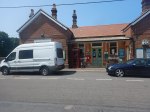
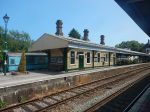
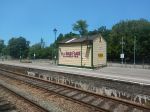
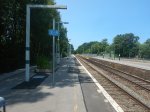
Eridge Station – 23rd June 2020
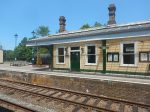
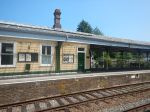
Eridge station is going to have a makeover, which starts this weekend.
So I went to have a look and took these pictures.


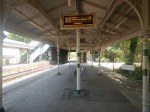
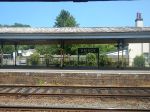
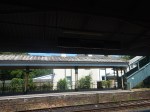
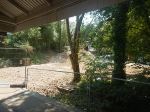

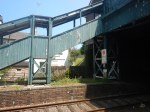
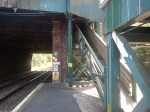

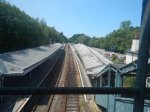
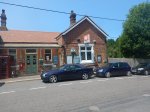
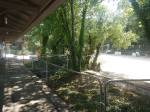

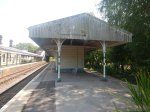
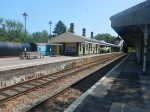


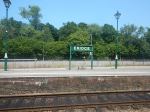

Note.
- The station certainly needs a new footbridge.
- The builders were clearing a work site to get access to the station.
- The station will be kept open throughout the work according to this article on Crowborough Life.
The station could end up as a good mix of ancient and modern.
Some Pictures Of Platform Edges On The Uckfield Branch
I took these pictures on my visit to Eridge station yesterday.
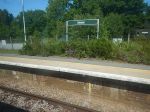

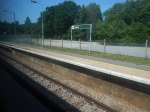

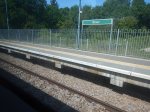


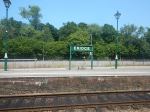
The platform edges are a very mixed bunch.
- Some are only a couple of years old and were built, as part of new platform extensions.
- Some were built using pre-fabricated components.
- Some are of fairly indeterminate age.
- The ones at Eridge station probably date from when the station was opened in 1868.
I would suspect that your patio is in better condition than some of these important interfaces between train and platform.
So why did I photograph them?
In First Of A Kind Funding Awarded For 25 Rail Innovation Projects, Project Number Number 4 from Sheffield Hallam University was entitled Illumin Heated Concrete Platform Coper Slabs and was described like this.
Illuminated and heated low-energy concrete slabs for station platforms, which automatically switch on in freezing conditions to help prevent passengers from slipping on ice.
Some more information was given in Heated Railway Platforms Tested To Avoid Ice Accidents.
Could these platforms be fitted to a set of platform edges like these?
I would hope so.
If so, new smoother platforms and not just the edges, would also hope to cut small falls.
MP Campaigns To Extend Train Services For Melton Borough
The title of this post, is the same as that of this article on the Melton Times.
This is the introductory sub-title.
A campaign has been launched by the Melton’s MP to improve services passing and operating from the town station and the one at Bottesford.
Alicia Kearns has submitted two bids to the Restoring Your Railway Fund.
- More regular services on the Poacher Line to Bottesford station.
- Increased services to Nottingham and Leicester via Syston and Loughborough from Melton Mowbray station.
I’ll now look at the two proposals in more detail.
More Regular Services To Bottesford
Wikipedia says this about services at Bottesford station.
- The service is generally every two hours to Nottingham in the West and Skegness in the East.
- Some trains call at Grantham and give connection to the East Coast Main Line.
- LNER services at Grantham connect to Doncaster, King’s Cross, Leeds, Lincoln, Peterborough, Stevenage, Wakefield and York.
- Bottesford is in the Borough of Melton and their is no direct rail service between Bottesford and Melton. A typical journey takes over two-and-a-half hours with two changes, that can include a wait of an hour at Leicester station.
- Bottesford is in the County of Leicester. There is no direct rail service between Bottesford and Leicester.
I think the MP has a point and an improved and more frequent service at Bottesford could be very beneficial.
- Many routes like this in the UK have an hourly service and I suspect many communities along the Poacher Line would benefit from this frequency.
- All services calling at Grantham for East Coast Main Line services would be useful.
- Do services have a good interchange at Nottingham for Midland Main Line services?
It looks like improvements at Bottesford wouldn’t require any new expensive infrastructure, but they would need more trains.
More Services Through Melton
Wikipedia says this about services at Melton station.
- There is an hourly off-peak service in both directions between Stansted Airport and Birmingham, that calls at Cambridge, Peterborough, Oakham and Leicester.
- East Midlands Railway and their predescessor have added services to London via Corby and to Derby and East Midlands Parkway.
When you consider, that both Bottesford and Melton Mowbray are the same Council and Parliamentary constituency, it does seem that a more direct train service is needed between Bottesford and Melton stations.
It does seem to me that some innovative thinking is needed.
If the current plans to fulfil British Rail’s ambition of an Ivanhoe Line running from Lincoln to Burton-on-Trent via Nottingham, East Midlands Parkway, Loughborough and Leicester, are carried out, that will give important towns to the West of Leicester much better rail connections.
Given that High Speed Two is coming to East Midlands Hub station at Toton and there will be a Bedford and Leeds service run by Midlands Connect using High Speed Two classic-compatible trains, that I wrote about in Classic-Compatible High Speed Two Trains At East Midlands Hub Station, I wonder if in the interim, there should be more trains between Derby and Melton.
- Intermediate stations would be Syston, Sileby, Barrow-upon-Soar, Loughborough, East Midlands Parkway Long Eaton and Spondon.
- An hourly frequency would double the service frquency at smaller stations like Sileby and Barrow-upon-Soar.
- The Southern terminal could be Melton station, but I feel Corby or Peterborough stations would be better, as this would improve services at Oakham station. We should not forget Rutland.
- As Corby will be an electrified two-platform station with a two trains per hour (tph) service to London, this could work quite well as a Southern terminus.
- Peterborough would have advantages and give a good connection to Cambridge, London and Scotland, but improvements to the current Birmingham and Stansted Airport service would have similar effects.
This route would be just as valuable after High Speed Two opens through the East Midlands Hub station, as it will give fast ongoing connections to Birmingham, Leeds, Newcastle and York.
Electrification Of The Midland Main Line
I feel strongly, that full electrification of the Midland Main Line could be a step to far.
- Electrification, through Leicester station will mean a complete closure of the station for a couple of years.
- Electrification of the route North of Derby, through the Derwent Valley Mills, which is a World Heritage Site, will be opposed by the Heritage Taliban with all their might.
But.
- Electrification of the route between Clay Cross North Junction and Sheffield via Chesterfield will take place in conjunction with High Speed Two
- Electrification to Market Harborough, which is sixteen miles South of Leicester will happen.
- East Midlands Railway’s new Class 810 trains could be fitted with a battery option giving a range of between 55 and 65 miles.
- Pantographs on this trains can go up and down with all the alacrity of a whore’s drawers.
If the easier section of electrification between Leicester and Derby stations, were to be erected, this would enable the following routes to be run using battery=equipped Class 810 trains.
- London and Derby, where battery power would be used through Leicester.
- London and Nottingham, where battery power would be used through Leicester and between East Midlands Parkway and Nottingham.
- London and Sheffield, where battery power would be used through Leicester and between Derby and Clay Cross North Junction.
- Lincoln and Burton-on-Trent, where battery power would be used South of Leicester and North of East Midlands Parkway.
- Derby and Corby, where battery power would be used between Syston and Corby.
There would also be the service between Derby and Norwich, which might be able to be run by a similar train.
Conclusion
The MP’s plan is worth pursuing.
Restoring Your Railway Fund Could Provide A Toolkit For Town Transformation
The title of this post, is the same as that of this article on Rail Business.
The article talks a lot of sense and is a must-read for improving a town, that is on its uppers.
It uses the Northumberland Line between Newcastle and Ashington in the North East as an example and describes how the fund can be used with the Towns Fund.
This paragraph gives a few examples of rail lines that could be improved using the fund!
Potential priorities for future rounds of funding could include the South Yorkshire Joint Line, a freight line serving 50 000 people between Doncaster and Worksop; the Leamside Line, a disused line which would serve 70 000 in Washington; March to Wisbech, a disused line which would connect 35 000 people in Wisbech to the network; and the line from Yate to Thornbury, another freight line which would connect 15 000 people in Thornbury to Bristol and beyond.
In the early sixties, I lived in the crap town of Felixstowe, with a sparse rail service to civilisation (London). Now the town has an hourly rail service to Ipswich in a smart new train and the town is more successful.
There’s a lot of chicken-and-egg syndrome at work here, but sorting the rail routes could be a good start.
In some cases, it’s not necessarily rebuilding infrastructure, as that is there for freight or an inadequate passenger service using a scrapyard special. But why not use refurbished trains powered by battery or hydrogen, on these routes to provide an hourly service. The curiosity value of the unusual propulsion, might even be a selling point to those reluctant to give up their PPVs, (Personal Protective Vehicles)!
An Untidy Railway
I took these pictures as I returned from Eridge.
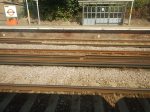


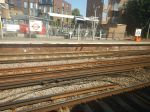
You see it all over the railways and not just in the UK; general untidiness!
When I joined ICI in 1968, I went on a thorough and excellent induction course.
One very experienced engineer, gave a Health and Safety Lecture and one thing he said, was that a neat and tidy chemical plant was less likely to have silly accidents.
Some years later, I went to the United States to see some of Metier’s clients, of whom some were nuclear power stations. This must have been just after the Three Mile Island accident, which is described like this in Wikipedia.
The Three Mile Island accident was a partial meltdown of reactor number 2 of Three Mile Island Nuclear Generating Station (TMI-2) in Dauphin County, Pennsylvania, near Harrisburg, and subsequent radiation leak that occurred on March 28, 1979. It is the most significant accident in U.S. commercial nuclear power plant history.
Artemis was involved in maintenance at the nuclear stations I visited. I can remember at AEP Donald C Cook nuclear station being shown a database of work to do and many of the actions were referred to as TMIs and checking them had been mandated by the US regulatory authorities.
I should say, the site on the shores of Lake Michigan impressed me, but another I visited later didn’t. I won’t name it, as it is now closed and it was the most untidy industrial plant of any type I have visited.
As we left, I gave my opinion to our support engineer and he told me they had a very large number of TMIs to process. I wasn’t surprised!
So why are railways generally so untidy?
Potential Site For New Cambridge South Station Named
The title of this post, is the same as that of this article on Rail News.
The article says this about the site of the proposed Cambridge South station.
There had been three options for the station site and the preferred choice, which is the furthest north and nearest the guided busway, will offer improved connections with other railway routes as well as the busway. Although the detailed plans for East West Rail between Bedford and Cambridge have not yet been confirmed, it is possible that EWR trains will call at Cambridge South.
This Google Map shows the area.
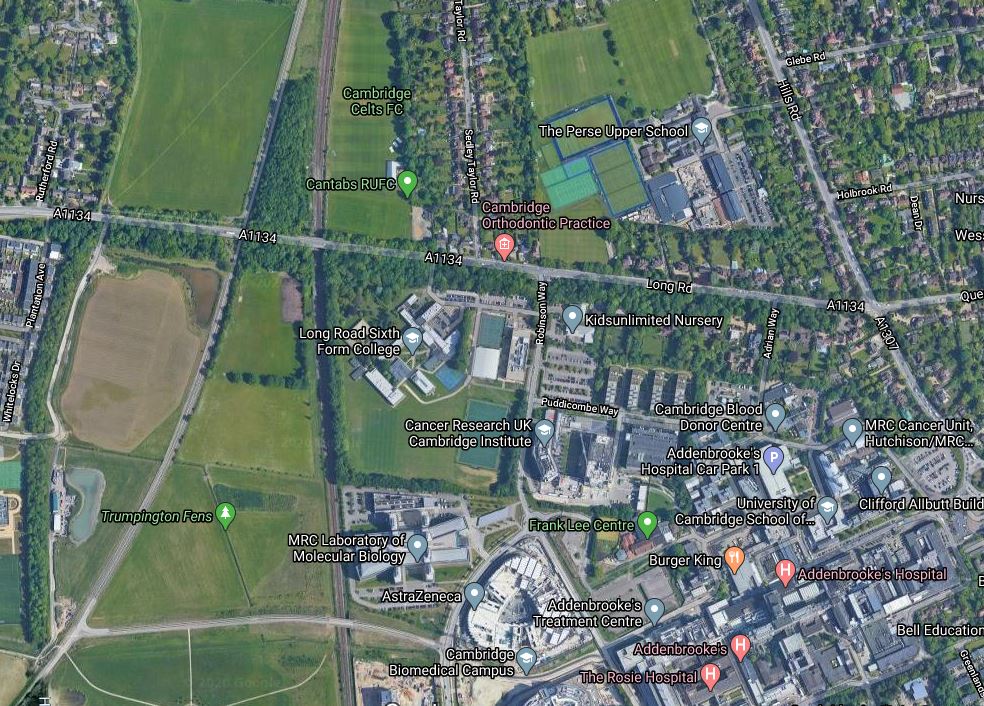
Note.
- Addenbrooke’s and Papworth Hospitals and the Cambridge Biomedical Campus in the South-East corner of the map.
- Long Road going East-West across the map.
- The West Anglia Main Line going North-South, at the Western edge of the Cambridge Biomedical Campus. Cambridge station is to the North and Shelford station is to the South.
- Running diagonally away from the railway towards the South-West corner of the map, is the Cambridge Busway. which connects the Trumpington Park and Ride to Cambridge station and the City Centre.
It would appear there would be plenty of space to put a station with enough capacity for this important medical complex.
Train Services
Trains passing through that area include in trains per hour (tph)
- CrossCountry – 1 tph – Birmingham New Street and Stansted Airport via Cambridge
- Freater Anglia – 2 tph – London Liverpool Street and Cambridge North via Cambridge
- Greater Anglia – 1 tph – Norwich and Stansted Airport via Cambridge and Cambridge North
- Great Northern – 1 tph – London King’s Cross and Ely via Cambridge and Cambridge North
- Great Northern – 1 tph – London King’s Cross and Kings Lynn via Cambridge and Cambridge North
- Thameslink – 2 tph – Brighton and Cambridge
- Thameslink – 2 tph – London King’s Cross and Cambridge
That all adds up to 10 tph to Cambridge and 5 to Cambridge North.
When you add in future services on East West Rail, and do a bit of reorganisation, there could be twelve tph through the three Cambridge stations.
High Speed Rail Link To Lift Baltic Economies By Up To 0.6 Per Cent
The title of this post, is the same as that of this article on Emerging Europe.
This is the first two paragraphs.
A major new report from Swedbank, a Nordic-Baltic banking group based in Stockholm, Sweden, claims that the construction of a high speed rail link between the Estonian capital Tallinn and Lithuania’s border with Poland could lift GDP in each of the three Baltic states by between 0.2 and 0.6 per cent.
In addition to the direct economic impact in terms of public investment and jobs, the ambitious project will also help the region meet its environmental goals and bring in new technology and know-how.
The article is a must-read and has left me thinking, what will High Speed Two do for the UK?
 The Anonymous Widower