A Chaotic Morning Peak Across The Pennines
I had intended to ride in one of TransPennine Express’s new trains that are formed of a rake of Mark 5A coaches hauled by a Class 68 locomotive.
As they run between Liverpool Lime Street and Scarbough, I thought it best to buy a return ticket between Manchester Victoria and Leeds.
Problem Number 1 – Northern’s Ticket Machine
Northern’s new ticket machines are fine when they work, but for some reason they wouldn’t respond to my fingers.
I find this with some touch screens, which are mainly in Sweden or IKEA in the UK.
So I bought a ticket from the ticket office intending to catch the next Scarborough train.
This had also happened the day before at Leeds.
Problem Number 2 – The Scarborough Train Didn’t Arrive
As the Scarborough train didn’t arrive, I gave up and took the Newcastle train towards Leeds.
Problem Number 3 – Overcrowding At Huddersfield
I took this picture of the crowds at Huddersfield.
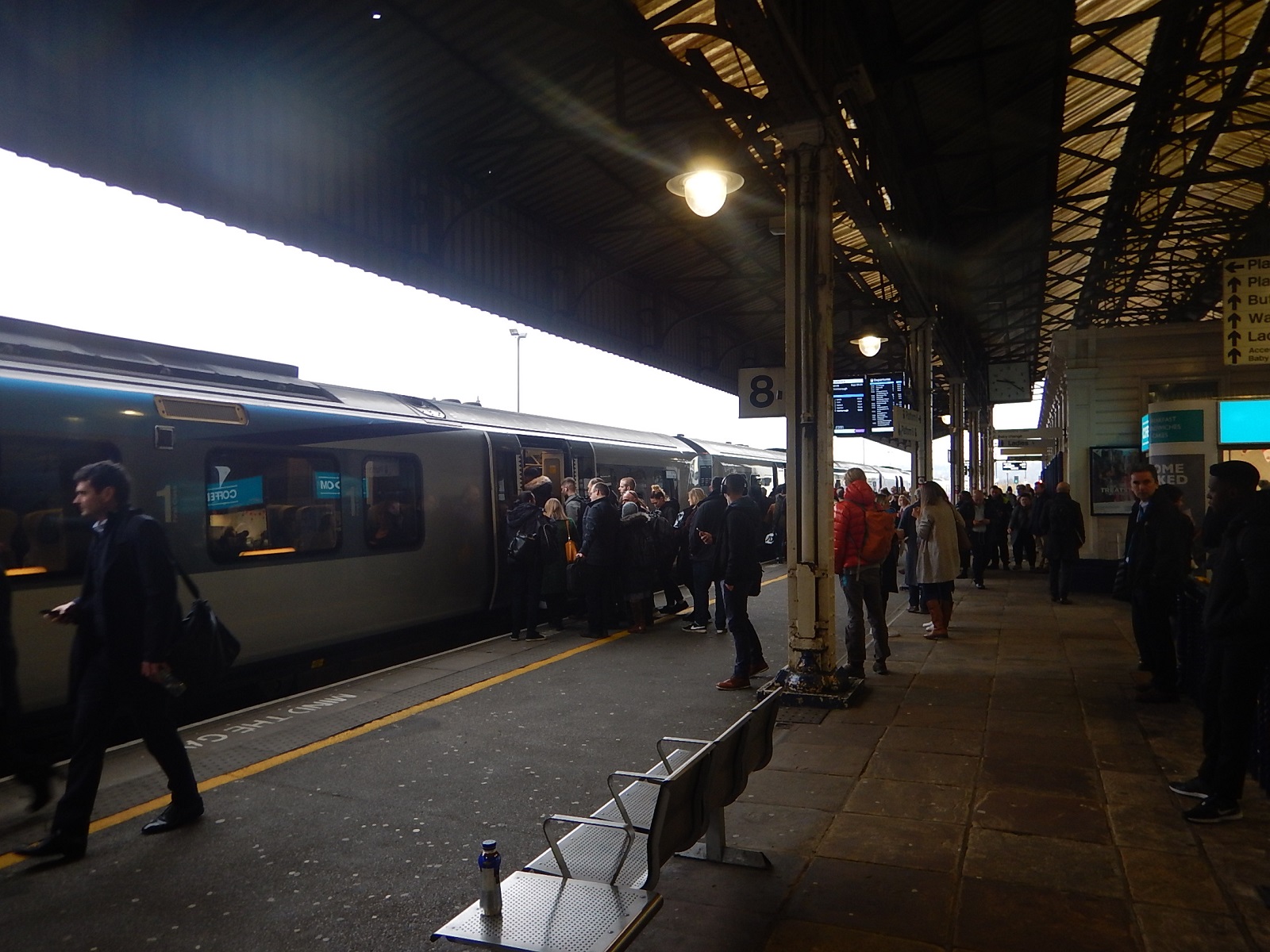
My phone was telling me that the Scarborough train was behind my Newcastle train, so I decided to change at Huddersfield.
But I made a mistake and got on a very crowded train, that was going to Hull via Leeds.
I had to stand to Leeds, but at least I got a roomy and safe standing space.
Problem Number 4 – Class 185 Trains
.The Class 185 trains are just three-cars and totally inadequate for the route.
The trains were ordered in 2003 and were delivered in 2006-2007.
If you read the section entitled Overcrowding And Passenger Feedback, in the Wikipedia entry for the trains., you’ll see from the early days, these trains did not have enough capacity for the route.
I blame the Treasury under Gordon Brown, who specified the trains and as with Class 700 trains, which were also specified by the Treasury, there are serious shortcomings.
Considering that among other routes at this time, the London and Norwich route was being run by eight car trains, what in heaven were they thinking about.
But it was only the North of England! And not London or Scotland!
Problem Number 5 – Crowded Leeds Station
Leeds station was crowded as ever, but it wasn’t helped by an escalator being broken down.
I had hoped, that I would have enough time to go to Harrogate, but I felt as it was all so slow, that it was best to go back to Manchester Victoria station, grab something to eat and then go on to Liverpool Lime Street station, which was my intended destination.
Problem Number 6 – Ticket Machine At Leeds Station
I needed a Single from Leeds to Liverpool Lime Street and try as I might, I couldn’t find it on the machine, so I resorted to the Ticket Office again.
Problem Number 7 – Train Failure At Manchester Victoria Station
The train from Leeds to Manchester Victoria was another Class 185 train and I did get a seat.
But where was the new five-car rake of Mark 5A coaches and a Class 68 locomotive?
I did successfully split my journey at Manchester Victoria station, but there seemed to be problems, so I thought I’d go on immediately to Liverpool and arrive in the city with an hour to spare for my meeting.
As if things could be so simple!
A Class 185 train had failed in the platform and it was nearly an hour, before I got away to Liverpool in a train, that arrived in the bay platform 2, which to get to the West, had to come out of the station and reverse. I suspect TransPennine Express were using a driver in both cabs or driving it from the Liverpool-facing cab at all time.
Problem Number 8 – Late Arrival Into Liverpool Lime Street
I arrived in Liverpool about fifteen minutes late for my meeting, with the rain chucking it down, after it being dry in Manchester.
The weather in itself must be unusual!
My Observations
I was having a text conversation with a friend in London and these were my observations to him, with a few other points added by hindsight.
1. Northern’s Ticket Machines
These need reeducation and the dry-finger problem that I suffer with the screens must be fixed.
2. Northern’s Ticket Offices
Northern needs to open more ticket office windows.
3. Where Is The London-Style Contactless Ticketing?
London has proven, that contactless ticketing based on bank cards increases passenger numbers and revenue and has a high level of passenger satisfaction.
\The area of the North between Liverpool and Blackpool in the West and Leeds and Sheffield in the East is in terms of passenger numbers smaller than London’s contactless ticketing area.
I think there are two reasons, why it doesn’t exist now or in the near future.
- The trains are not big enough to cope with the increased traffic.
- It will result in a reduction of ticket offices and their staff and those in charge are frightened of the RMT.
So visitors like me have to suffer an inadequate ticketing system because of timid management.
4. Buying Tickets In The North In The Future
In future, when I go to the North, I’ll plan my journey in detail and buy my tickets from the intelligent and extremely customer-friendly ticket machines in Dalston Junction station.
It’s strange that both Northern and the London Overground are run by Arriva. How can one get it so right and the other so wrong?
Perhaps it’s because the London Overground only deals with one organisation; Transport for London and Northern deals with a myriad rabble of councillors, MPs, pressure groups, all fighting their own corners.
5. All Trains Must Be At Least Six Cars
More capacity is needed and as there is a lack of train paths across the Pennines, because of lack of investment in the tracks for decades, starting with that enemy of the train; Harold Wilson.The simplest way to increase to increase capacity is to make all trains at least six cars.
But I would go father than that.
- Trains running across the Pennines should all be identical.
- Capable of at least 100 mph.
- Capable of 125 mph, when the route includes the West or East Coast Main Lines.
- Fast acceleration away from stops.
- Identical door configuration with wide double doors on all trains.
- Level access between train and platform.
- Short dwell times in stopping stations.
Identical trains improve timekeeping and give a better service to passengers.
If you look at the Paddington and Oxford service it is now run virtually exclusively using Class 800 or 802 trains. I feel as an occasional passenger that it has improved dramatically, in terms of capacity, comfort and reliability for passengers.
6. What Idiot Decided To Buy Three Different Fleets For TransPennine Express?
The sister company of TransPennine Express is Great Western Railway.
Great Western Railway’s main line services are run by two fleets of trains.
- Hitachi Class 800 and Class 802 trains for long distance services.
- Class 387 trains for electric commuter services.
As some of the Class 387 trains are being converted for Heathrow Express and Crossrail are taking over London and Reading services, I can see a time, when all fast services that go to and from Paddington through Reading will be run by the Hitachi trains.
Consider.
- West of Heathrow, the fast lines are reserved for the 125 mph Hitachi trains.
- The 110 mph Class 387 trains to and from Heathrow, don’t get in the way of the faster Hitachi trains.
- Applying digital signalling to increase paths on the fast lines is easier with identical trains.
- Driver training and rostering must be simpler.
It’s not perfect, but it’s an arrangement that can be made to work well.
If a unified fleet is so good, why did TransPennine Express buy three separate fleets?
Class 802 Trains
Nineteen Class 802 trains will be used for these services.
- Liverpool Lime Street to Edinburgh Waverley via Newcastle (from December 2019)
- Liverpool Lime Street to Newcastle (until December 2019)
- Manchester Airport to Newcastle
This seems to be a sensible and obvious choice.
- A five-car Class 802 train has eighty percent more seats than a three-car Class 185 train.
- A five-car Class 802 train is shorter than a pair of Class 185 trains.
- The trains are 125 mph trains, that can be upgraded to 140 mph with digital in-cab signalling.
- FirstGroup must have a large amount of experience of running Class 802 trains.
- Class 802 trains have an automatic split and join facility.
- East Coast Trains, Hull Trains and LNER will be running similar Hitachi trains on the East Coast Main Line.
In addition the fleet is future-proofed in two important ways.
- If the TransPennine route is ever electrified, their diesel engines can be removed.
- Extra cars can be added to Class 802 trains to increase capacity
Using Class 802 trains is an excellent choice.
Class 68 Locomotive And Mark 5A Coaches
Twelve rakes of four Mark 5A coaches between a Class 68 locomotive and a driving van trailer, will run these routes.
- Liverpool Lime Street to Scarborough via Manchester Victoria.
- Manchester Airport to Redcar Central (In 2019).
I wonder why these services aren’t going to be run by another twelve Class 802 trains.
Consider.
- Pollution would be reduced and the air improved in the electrified Liverpool Lime Street, Manchester Airport and Manchester Airport stations, if TransPennine used Class 802 trains on all services from the station.
- Drivers on the routes across the Pennines would more often be driving the same trains.
- The Class 802 trains are in service on the East Coast Main Line, which must make timekeeping better.
- The Class 802 trains can be upgraded to work at 140 mph on the East Coast Main Line.
It’s rather strange!
Class 397 Trains
Twelve Class 397 trains will be replacing ten Class 350 trains.
- The extra two trains are to provide a Liverpool and Glasgow service.
- The Class 397 trains have an extra car over the Class 350 trains.
- The seating capacity of both trains is 296.
- The Class 397 trains are 125 mph trains, which can mix it with Virgin’s Pendelinos.
- The Class 350 trains are only 110 mph trains, which must get in the way of the Pendelionos.
- I suspect that the Class 397 trains can be upgraded to 140 mph in the future.
The Class 350 trains needed to be increased and replaced with a 125 mph train.
But why aren’t they being replaced with more Class 802 trains?
- The Class 802 train is already in service.
- The Class 802 train has 326 seats as against the 296 of the Class 397 train.
- TransPennineExpress are already buying nineteen Class 802 trains.
- If required, an all-electric version could be ordered.
- West Coast Rail plan to run Hitachi trains on the West Coast Main Line.
It’s rather a puzzle, why TransPennine Express has ordered Class 397 trains, as everything suggests that Class 802 trains could run West Coast services.
All Three Fleets Use The Castlefield Corridor
Believe it or not, but TransPennine Express plan to run these services through the Castlefield Corridor.
- Manchester Airport and Glasgow/Edinburgh – Class 397 trains.
- Manchester Airport and Newcastle – Class 802 trains
- Manchester Airport to Redcar Central – Mark 5A coaches.
Three routes and three different trains!
Was this timetable chosen to confuse staff and passengers?
Possible Reasons For Three Fleets
The only valid reason is that the Hitachi trains can’t work in Scotland.
But it is more likely to do with production schedules at Hitachi or that the fleets were bought by accountants, with very little brain!
I did notice this statement in the Wikipedia entry for the Class 397 trains.
An option for up to 22 extra units was available to TransPennine Express, but it was not exercised.
As 22 trains is close to the nineteen Class 802 trains that were ordered, were TransPennine Express trying to buy a totally-CAF fleet?
7. Track Speed Should Be Improved
Track speeds are slow compared to say the the Great Eastern Main Line,
Improving the track to allow faster speeds may be one of the best decisions to take.
8. There Should Be Better Platform Access At Manchester Victoria And Leeds Stations
These two stations don’t have the best access to the platforms..
They should be improved with more escalators, so that passengers changing trains don’t miss their connections.
Conclusion
Money needs to be spent to remove some of the chaos and constipation in the North.
I
Max Delays Force Job Cuts At Ryanair
The title of this post is the same as that5 of this article on The Times.
This is the introductory paragraph.
Ryanair is to close bases and cut jobs because of the continuing delay in delivering the grounded Boeing 737 Max.
It obviously was going to happen, as if you haven’t got the planes, you’ll have to cut routes and that needs less staff and fewer bases.
Chaos Between London And Leeds
On Tuesday, I had booked myself between Kings Cross and Leeds on the 11:03 LNER train. My idea was to do a short round trip to Harrogate from Leeds before going across the Pennines to Manchester and sign in to my hotel, before going to see Ipswich play at Rochdale in the evening.
But it all went wrong, as someone decided to commit suicide and was hit by a train at Grantham.
Finally, I got to Leeds at around two, which was too late to carry out my plan.
- I just missed a Harrogate train and it was getting too dark for photographs.
- I eventually got a very crowded TrainsPennine Express to Manchester Victoria.
- My supper was just a gluten-free egg and waterfresh sandwich from Marks and Spencer.
At least, I’d only paid just under thirty pounds for my First Class ticket to Leeds, which was only six pounds more than I paid to cross the Pennines.
Conclusion
This is the second time recently, after Did Someone Try To Steal The Electrification?, when I’ve been seriously delayed by problems on the railways, which are nothing to do with the trains or train companies.
Staff at LNER told me that suicides are common in November, as Christmas approaches.
Short of putting a security guard every hundred metres along the railway, I don’t think there’s a certain way of stopping these incyursions.
Electric Cars Can Beat Petrol For Value After Less Than Two Years
The title of this post, is the same as that of this article on The Times.
The article is based on work by the consultant; PWC.
This is an example of what was found.
The electric Zoe cost from £21,920 compared with £19,795 for the petrol Clio. The £2,125 difference was made up in less than two years, three months for a motorist with an average annual mileage of 8,351 miles. A higher-mileage driver clocking up 13,355 miles a year could make it up in 18 months.
The day when electric cars will be good value is approaching.
Football At Rochdale
My trip to the North was partly to see Ipswich play at Rochdale, which is a ground, that at which I’d not seen a match before.
I had been to the ground before, as when I went to all the ninety-two clubs in the Premier and Football Leagues in alphabetical order by public transport, I visited on a very hectic day 31, which is described in 92 Clubs – Day 31 – Rochdale, Rotherham, Scunthorpe, Sheffield United, Sheffield Wednesday.
On this visit, I took the Metrolink to Rochdale from outside the Arndale Centre and then it was a walk of thirty minutes, with the last section up a steep hill.
I did have a guide in a friendly Rochdale supporter.
This Google Map shows the route.
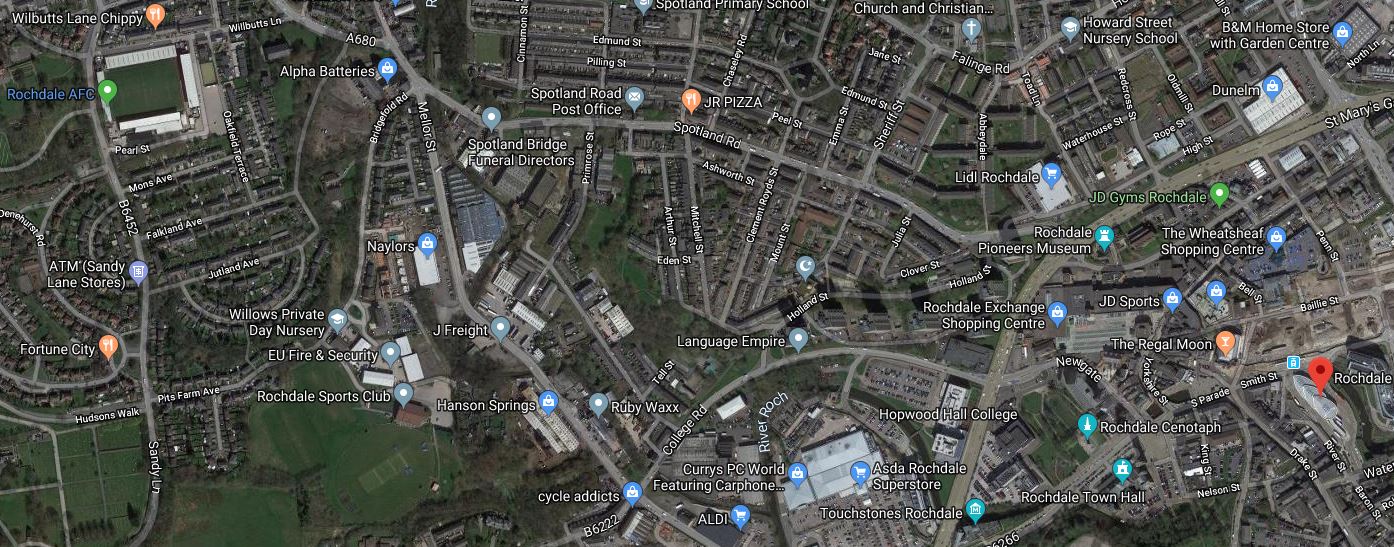
The football ground is in the North-East corner and the red the red arrow indicates Rochdale Interchange, where the tram terminates.
- My companion said there used to be a special football bus, but now there is just an occasional regular service.
- I estimate the distance was about a kilometre and a half.
Going back, a very kind Ipswich supporter and his brother gave me a lift to the tram, which was much more a personal taxi, than mass transit.
It was a good night for the six hundred or so Ipswich fans, as Ipswich won by the ony goal and went back to the top of the League.
Conclusion
Most people seem to have driven to the ground and parked in the surrounding streets. As did my lift!
In London, supporters would be more likely to go to any sporting event on public transport, as it is more frequent and parking doesn’t exist.
As population gets more dense in Leeds, Liverpool and Manchester, public transport will have to get more comprehensive to serve new housing, as the roads will not be able to cope.
I should say, except for getting there, it was a good stadium to visit and the Away seats were some of the best, I’d used in a smaller ground.
Tesla Has A Rival In New Hyundai Hydrogen-Powered Semi-Truck Concept
The title of this post, is the same as that of this article on designboom.
This is the introductory paragraph.
hyundai has revealed two new hydrogen-powered concepts – a fuel cell electric semi-truck and refrigerated trailer. both vehicles are part of the automaker’s fuel cell electric vehicle 2030 vision, which includes the widespread use of hydrogen-powered fuel cell technology in vehicles.
The concept looks to be aimed at large countries like Australia, Canda and the United States, but surely one scaled to the United Kingdom market, would be a very useful truck.
- It would be a very efficient motorway cruiser, with those aerodynamics..
- It would be zero-emission with no pollution, so could operate in cities.
- The cab could be designed to meet all present and future driver visibility regulations.
- It might not be liable for extra charges in cities like London.
- Would battery trucks have enough range?
These trucks will be seen on UK roads in the next few years, as I believe that there is no other way to decarbonise heavy road transport.
Eight-Wheeler Trucks
If I walk two hundred metres from my house to the Balls Pond Road or the Kingsland High Road, the most common truck, that I see is an eight-wheeler heavy truck, that is transporting building materials, cement and spoil to and from the myriad building sites around where I live.
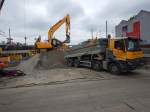
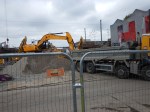
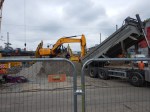
The pictures show typical eight-wheeler trucks working during the installation of the subway at Hackney Wick station.
Note the space under the truck between the front and rear axles. Surely, those clever Koreans can fit all the hydrogen gubbins under and in the truck.
- Many of these trucks are in large fleets, which return to a depot, that is close to the city centre on a regular basis, so refuelling should be easy to arrange.
- These trucks would probably need less fuel per day, than a large artic.
- I doubt they would pay any access charges.
- As they would be pollution-free, zero-carbon and probably a lot quieter, would they be able to work near sensitive sites like hispitals, schools and transport hubs?
They could be a very good economic proposition in a large city of urban conurbation.
Other Trucks
I also believe that hydrogen would be a sensible fuel for several classes of other trucks.
- Four-wheel box vans.
- Refuse trucks
- Skip lorries
- Larger vans
Hydrogen buses already seem to be running successfully in several cities.
The Missing Hydrogen Vehicle
I have chatted with black cab drivers in London, about the use of hydrogen as a fuel for taxis. Black cabs are getting larger and I believe that hydrogen could be their ideal fuel.
Conclusion
I believe that hydrogen will play a big part in decarbonising transport in the next few years and especially in urban areas.
Thoughts On The Design Of A High Speed Freight Shuttle
I am enthusiastic about the concept proposed by Rail Operations Group, that will see Class 769 trains running freight shuttles between London Gateway and Liverpool Street station, which I wrote about in A Freight Shuttle For Liverpool Street Station Planned.
But if you were starting from scratch, how would you design the ultimate freight shuttle train?
Consider these objectives.
The Amazon Objective
Amazon and their suppliers would like next day delivery for all of their customers.
Probably within a country the size of the UK, next day delivery can be achieved.
But I suspect that Amazon and their competitors would like anybody in the world to get as near as next day delivery as possible from anywhere in the world.
Giving worldwide next day delivery is obviously impossible, but giving it to as much of the world as is currently practical is clearly an Amazon objective.
We live in a I-Want-It-Now world!
Destinations To Be Served
I feel that places to be served by high speed light freight shuttles fall into various groups.
Major Cities
The proposed shuttle into Liverpool Street station will be the first of many.
Liverpool Street station is also an easy station at which to run such a service.
- There is level access from the street for vehicles like electric vans and cargo bikes at Platform 10, using the old taxi cab road.
- The station and the approaches are fully electrified.
- Crossrail will release platform space at the station.
Three trains per day can probably be accommodated in the Off Peak hours, with more services during the night.
It would not be possible to fit a light freight facility into all city-centre stations, as easily as it appears to be at Liverpool Street.
But I do think light freight facilities of this type at the following stations could be possible..
- Brighton
- Bristol Temple Meads
- Glasgow Central
- Liverpool Lime Street
- London Euston
- London Paddington
- Manchester Piccadilly
- Nottingham
Some recently rebuilt stations like Birmingham New Street, would be very difficult, so I would recommend that all station developments, should take possible light freight facilities into account.
Logistics Parks, Ports And Airports
London Gateway is a large port and logistics facility, to the East of London.
This Google Map shows London Gateway.
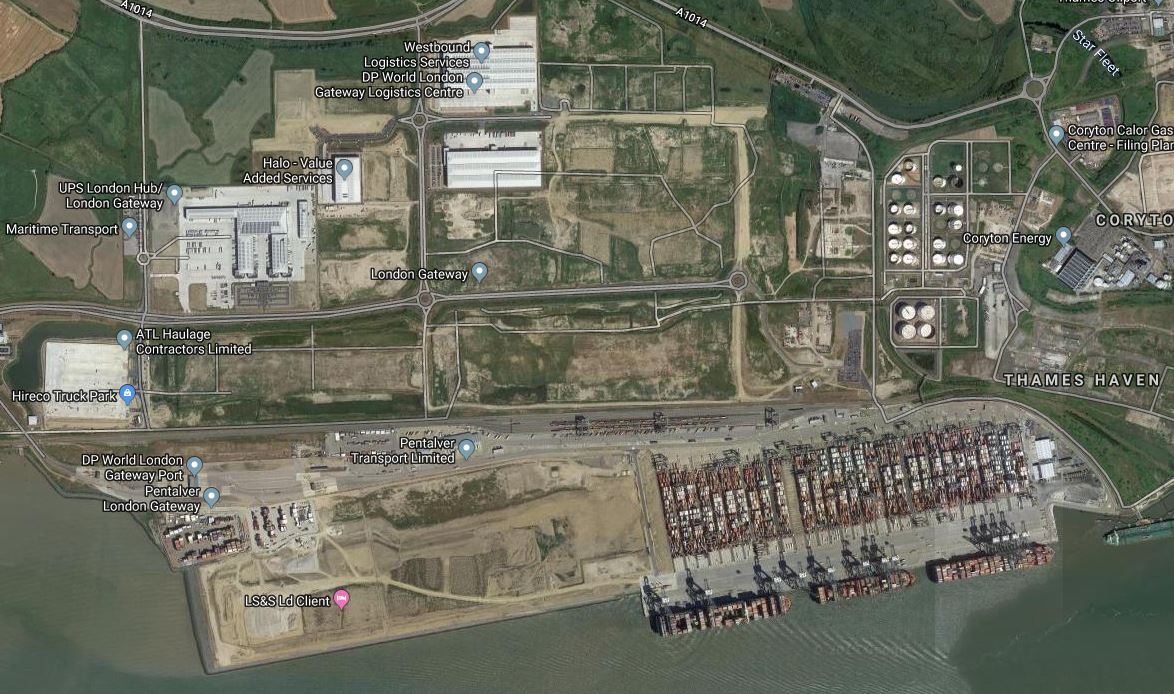
The logistics park is still being developed to the North of the port, with the rail lines in between the two.
- I have searched the rail lines and I can’t see anything like a loading bay for a freight shuttle, which surely will be something like a platform for passengers.
- It is early days yet and this map could be a couple of years old.
- There would also be space to the North of the rail lines for someone like Hermes, UPS or Yodel to build a large secure shed with a siding alongside, served by a platform, so that goods could be rolled into the trains.
- It should be possible to electrify the siding, in a similar way to Platform 10 at Liverpool Street station.
It’ll all come clear, when the service starts.
Other ports like Felixstowe, Immingham, Liverpool and Southampton might also want to develop high speed light freight services as will the various logistics parks and freight terminals dotted around the country.
Most are served by rail connections, although in many cases like Felixstowe, London Gateway, Liverpool and Southampton, the last few miles need to use some form of independent power.
Could these light freight services connect to airports like Heathrow, Manchester and Stansted?
Retail Parks And Out-Of-Town Shopping Centres
Large retail groups, like Marks and Spencer, Sainsburys and Tesco have set up large distribution centres often in the centre of England, some of which have rail access.
Could major retail centres like Lakeside in Essex, Sheffield Meadowhill, Gateshead Metro Centre and others receive goods by rail.
Specialist Terminals
If you go to Montrose station, you can see the remains of sidings, where Scottish fish was loaded to be taken by rail to ports for export to places like New York.
But it is likely that specialist terminals will be setup to handle goods, such as seafood, flowers and Scotch whisky.
Some seasonal products like Cornish flowers would only need a part-time facility, but these would only be rudimentary.
Long Rural Routes
I can see the requirement for light freight deliveries increasing in all parts of the UK.
Some destinations are probably expensive for delivery companies.
But could an integrated delivery system be setup using the long rural rail routes.
- Inverness and Wick
- Inverness and Aberdeen
- Glasow and Oban
- Chester and Holyhead
- Settle and Carlisle
Services might automatically roll pallets off and on at stations, which would then be handled locally by a purpose-built van or light truck.
- Some services would start in London and the South-East, but others could start in the East Midlands or the Scotland’s Central Belt
- Some services would connect with ferries to serve islands, like the Hebrides and the Orkneys.
- A daily service might do wonders for business in rural areas.
London and Wick takes thirteen hours by passenger train. This would enable, somebody in Wick wanting an urgent part for a machine that has broken, to order it from London and certainly receive it within forty-eight hours.
Great Britain And Ireland Services
Services between Great Britain and Ireland will be a problem, as trains will have to unload on one side of the Irish sea onto trucks for delivery after the sea crossing.
Unless politicians do what I suggest in A Solution To The Northern Irish Problem!, which is to build a high speed rail system connecting Scotland and Northern Ireland.
- The main crossing would be a bridge or a tunnel, where my preference would be for a bridge.
- The main route would be Glasgow and Dublin via Stranraer and Belfast.
- There would be a 125 mph connection between Carlisle and Stranraer
- The Irish section of the route would be an electrified standard-gauge railway capable of running trains at 125 mph.
- The route would handle passengers and freight.
- There could a branch to Shannon, where some proposals have been made to create a deep water port.
I estimated that London and Belfast would take four hours, with an hour longer for Dublin.
But as this fixed link would probably not be built this century, as Ulster always says no, unloading on to trucks would probably be necessary for a long time.
Continental Services
Why not? Unlike Ireland, there’s a rail connection and it’s standard gauge!
Eurostar has shown that the same trains can run successfully on British, French, Belgian and Dutch railways and trains can now be fitted with systems to access the various electrification voltages.
I wouldn’t be surprised to see a Europe-wide high-speed light freight service for appropriate cargoes.
Summing Up Destinations
I can sum up the destinations as follows.
- They will not be large grand affairs, in many cases.
- There must be easy access for local transport, which will include a proportion of electric vehicles.
- Destinations are generally within a few miles of an electrified main line.
- Some services like Cornish flowers or Scottish seafood will need an independently-powered train, with a moderate range.
You can see why Rail Operations Group have chosen to use bi-mode Class 769 trains, as they will be ideal to connect to places perhaps a hundred miles from electrification.
New Or Refurbished Trains?
The proposed service is to be run with a Class 769 train, which is a bi-mode rebuild of a 1980s Class 319 train.
But would it be better to use a brand new train, rather than an old conversion?
In the future, if the experiment is a success, a new train will probably be designed, that will be based on the experience of the trials.
But at the moment modifying an old train, is probably a more affordable approach and one that carries less risk.
Operating Speed
The Class 769 train can operate at 100 mph on electrified lines and at around 90 mph, when relying on the diesel generators.
In High Speed Urban Freight Logistics By Rail, I talked about Rail Operations Group’s plans for running high speed freight services between Thames Gateway and the Central Belt in Scotland.
Surely, a faster train would be desirable for services along high speed lines.
Train Capacity And Interior
This will depend on the application and I suspect Rail Operation Group’s trial will show the optimum design.
But I wouldn’t be surprised to see trains based on British Rail’s standard length of eighty metres, as this would mean, they will easily fit so many existing stations without expensive modification.
If longer trains are needed for busy routes, then the trains could work in twos or threes, as many British Rail electric multiple units have done for decades.
Are Freight Shuttles Ideal Trains For Battery Power?
The train will not need the full air-conditioning and toilet services of a passenger train, which could mean.
- Electrical power needed for services other than traction would be lower.
- Underneath the train could be relatively free of equipment.
In addition, it should be noted.
- Most routes will be run for the major part on electrified lines.
- Charging technology for batteries at remote destinations could be easily provided.
- Battery-electric trains have operational, environmental and marketing advantages over trains with diesel engines.
So why not efficiently fill space under the train with batteries?
For their initial service between London Gateway and Liverpool Street station, Rail Operations Group would probably only need to use diesel for less than a dozen miles.
Could Modified InterCity 125 Trains Be Used?
The fact that they are diesel is a major drawback, but there are other problems too!
- Major structural work would be needed to create cargo doors.
- I suspect that they may be too long.
- They may not be very operator friendly.
Other companies have proposed them for high speed freight, but nothing has materialised so far.
Conclusion
Rail Operation Group’s thinking is spot on!
The New Light Freight Terminal At Liverpool Street Station
These pictures show the old cab road at Liverpool Street station, where the proposed light freight terminal will be developed.

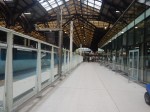


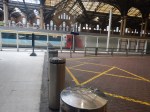


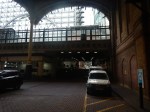
The spacious cab road shut a few years ago and was moved to its current position in front of the station. Nowadays it is used mainly for deliveries to the station and the retail units, by Network Rail maintenance vehicles and sometimes by Rail Replacement Buses.
This second set of pictures show the exit of the cab road in Primrose Street, behind the station.


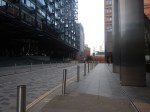

Note these points about the old cab road.
- There is some nice ironwork and a vaulted ceiling, but nothing that would be damaged if electric vans and cargo bikes used the cab road to serve freight shuttles.
- The road surface and the brickwork all appear to be in good condition.
- By removing the barrier between the cab road and platform 10, there would be no problem loading and unloading trains.
- There is also a good wide passage leading from the old cab road to the main concourse of the station.
I suspect that the only functional building in the area, which is the Left Luggage Office, will have to be moved. But it might be better placed on the main concourse.
Platform 10 Looks Very Convenient For The Freight Shuttle
The closeness of Platform 10 and the old cab road makes the platform look very convenient for the terminus of freight shuttles from London Gateway
How Will The Freight Shuttles Travel Between London Gateway And Liverpool Street Station?
The route from London Gateway to Liverpool Street station will be as follows.
- From London Gateway, the train will join the London, Tilbury and Southend Railway between Stanford-le-Hope and East Tilbury stations.
- The train will only run using diesel on the spur to London Gateway.
- The train will continue to Barking, where it will take the Gospel Oak to Barking Line.
This map from carto.metro.free.fr shows the tracks, where the Gospel Oak to Barking Line crosses over the Great Eastern Main Line.
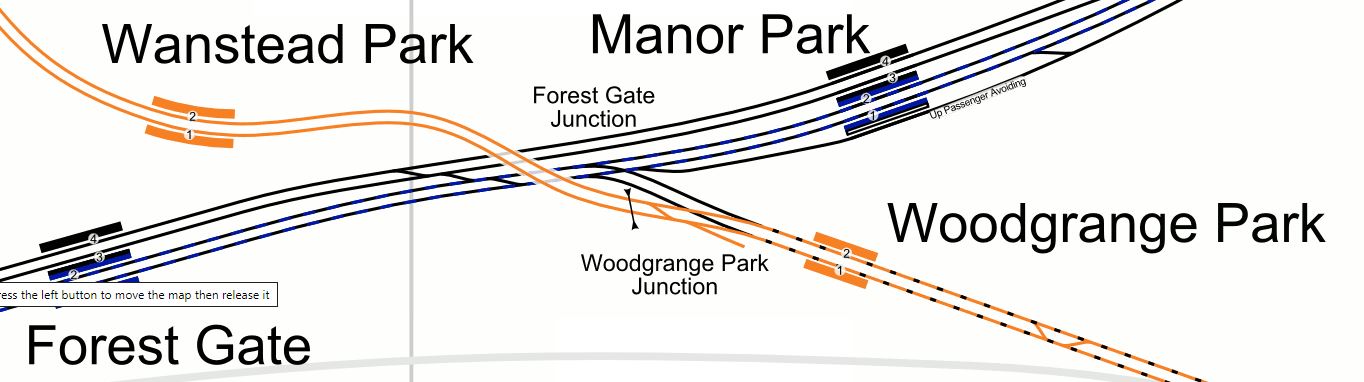
The train will join the Great Eastern Main Line here for a fast run into Liverpool Street station.
- I suspect the train will switch to the fast lines using the crossovers shown in the map.
- Note that the performance of a Class 769 train on electrified track, will be only slightly less than the expresses.
At Liverpool Street station, the train will run into Platform 10.
Will Liverpool Street Station Lose A Platform?
Currently, Platforms 9 and 10 are generally used for the London and Norwich services.
- These trains run at a frequency of two trains per hour (tph).
- They are formed of a rake of Mark 3 coaches topped sand tailed by a Class 90 locomotive and a driving van trailer.
- They call at various stations en route including Chelmsford, Colchester and Ipswich and are very heavily used at peak times.
- Entry to and exit from the trains is not of a modern standard and I suspect turnround times can sometimes must be very slow.
From next year, these trains will be replaced by modern twelve-car Class 745 trains.
- These trains have 757 seats, which I have read somewhere is more than the current trains.
- The trains will have level access between train and platform at all stations.
- I suspect turnround times will be shorter, due to the modern design.
Frequency between London and Norwich will also be increased yp three tph, by extending a service between London and Ipswich, which will be run by a Class 720 train.
Will it be possible to fit three tph into Platforms 9 and 10?
I suspect that it might be tight, as over the last few months, Norwich trains have sometimes been using higher numbered platforms like 14.
So will the proposed three tph to Colchester, Ipswich and Norwich be moved to two higher numbered platforms.
This would enable platform 10 to be used by freight shuttle trains, but will the station be able to run all the services, with one platform less?
Current Services Into Liverpool Street Station
Current services from Liverpool Street station are as follows.
- Six tph – GEML – TfL Rail – Shenfield
- Three tph – GEML – Greater Anglia – Southend
- Two tph – GEML – Greater Anglia – Norwich
- One tph – GEML – Greater Anglia – Ipswich
- One tph – GEML – Greater Anglia – Clacton
- One tph – GEML – Greater Anglia – Colchester Town
- One tph – GEML – Greater Anglia – Braintree
- Four tph – WAML- London Overground – Chingford
- Two tph – WAML- London Overground – Cheshunt
- Two tph – WAML- London Overground – Enfield Town
- Four tph – WAML- Greater Anglia – Stansted Airport
- Two tph – WAML- Greater Anglia – Hertford East
- Two tph – WAML- Greater Anglia -Cambridge
Totalling these up means the following.
- 16 tph use the double-track West Anglia Main Line (WAML)
- 15 tph use the four-track Great Eastern Main Line (GEML) as far as Shenfield.
- 6 tph use the double-track GEML to the North of Shenfield.
It looks neatly balanced.
Would moving Norwich services to a pair of the higher-numbered platforms improve operation?
All WAML services would be in platforms 1 to 9, as against platforms 1 to 8 now!
All GEML services would be in platforms 10 to 18, as against platforms 9 to 18 now!
If platform 10 is used by the freight shuttles, this would make operational sense, as the shuttle will approach Liverpool Street along the GEML after joining at Manor Park station.
Future Services Into Liverpool Street Station
From 2021 or so, these could be the from Liverpool Street station.
- Three tph – GEML – Greater Anglia – Southend
- Three tph – GEML – Greater Anglia – Norwich
- One tph – GEML – Greater Anglia – Clacton
- One tph – GEML – Greater Anglia – Colchester Town
- One tph – GEML – Greater Anglia – Braintree
- Four tph – WAML- London Overground – Chingford
- Two tph – WAML- London Overground – Cheshunt
- Two tph – WAML- London Overground – Enfield Town
- Four tph – WAML- Greater Anglia – Stansted Airport
- Two tph – WAML- Greater Anglia – Hertford East
- Two tph – WAML- Greater Anglia -Cambridge
Totalling these up means the following.
- 16 tph use the double-track West Anglia Main Line (WAML)
- 9 tph use the four-track Great Eastern Main Line (GEML) as far as Shenfield.
- 12 tph from Crossrail will use the slow lines as far as Shenfield.
- 3 tph use the double-track GEML to the North of Shenfield.
Crossrail has opened up capacity on the Great Eastern Main Line.
- Currently, there are 15 tph on the GEML using platforms 9 to 15.
- In 2021, there will be just 9 tph on the GEML using platforms 10 to 17.
There will be extra services to Lowestoft and Crossrail’s Peak Hour service to Gidea Park station.
But even so, I suspect there will be space for more services.
 The Anonymous Widower