Road Toll Proposal To Plug Electric Car Tax Shortfall
The title of this post is the same as an article in today’s copy of The Times.
Last year, tax on petrol and diesel raised £27.9 billion. As the Committee on Climate Change (CCC) is saying that all new cars and vans should be electric by 2030 or 2035 at the latest, it seems very likely that there will be a tax shortfall, as electric cars don’t pay fuel tax.
So the CCC is suggesting that road pricing be introduced
I predict that whichever government introduces it, they will lose the next election.
Fresh Calls For ‘Missing Link’ Buxton To Matlock Railway Line To Be Reopened
The title of this post is the same as that of an article in the Buxton Advertiser.
I wrote in full about this route in Connecting The Powerhouses, after an article was published in the June 2017 Edition of Modern Railways.
This was my conclusion.
It’s very difficult to find a reason not to reopen the Peak Main Line.
I think in the last two years the case for reopening the Peak Main Line between Buxton and Matlock may have become even stronger.
MEMRAP
A group called the Manchester and East Midlands Rail Action Partnership or MEMRAP has been setup to promote the case for reopening.
A web site has been created.
New Lower-Carbon And Quieter Passenger Trains
Rolling stock has improved and trains like tri-mode Class 755 trains and possible battery electric trains, should be able to handle the route in a more environmentally-friendly way.
Transport Of Building Materials
This is a paragraph from the Buxton Advertiser article.
Funding for the project, according to Mr Greenwood, would come from working in partnership with local quarries which are supplying materials for the new Heathrow Airport runway and are involved with the HS2 project.
Network Rail has already have spent a lot of money to improve freight access to the quarries, as I reported in £14m Peak District Rail Freight Extension Unveiled. So the demand for building materials must be there and going via Matlock would remove some heavy freight trains from the Hope Valley Line.
Heavy freight trains might not be welcomed by all stakeholders.
Possible High Speed Two Cutbacks
As I wrote in Rumours Grow Over Future Of HS2, The Eastern leg of High Speed Two might be axed.
This may or may not change the case for reopening the Peak Main Line.
There Will Be Opposition
This is two paragraphs from the Buxton Advertiser article.
Peak Rail has long campaigned to re-open the line for heritage trains to run between Buxton and Matlock. However, director Paul Tomlinson said he was not in favour of the new plans.
He said: “I’m all in favour raising the profile of the line to get it re-opened but we can’t support this new idea.
Others will also object.
Conclusion
There will be various opposing pressures on both sides of reopening the Peak MNain Line.
In favour will be.
- The quarries.
- Cities like Derby and Nottingham and passengers wanting better links to and from Manchester and its Airport.
- Transport for the North, as opening could increase capacity on the Hope Valley Line between Manchester and Sheffield.
Local interests will want to maintain the status quo.
‘Flying Taxi’ Made In Britain Takes Off On Maiden Flight
The title of this post, is the same as that of this article on The Times.
There is a video of the plane, which can carry a 250 Kg payload.
I don’t think we’ll see practical aircraft of this type in large numbers for some years yet, but the technology is getting there with scores of projects starting up all over the world.
This project is funded by Stephen Fitzpatrict, who founded OVO Energy.
What Will Happen To Great Western Railway’s Class 387 Trains?
I have been looking at the services that Great Western Railway run using Class 387 trains.
Current services run by these trains are.
London Paddington And Didcot Parkway
This service has the following characteristics.
- The frequency is two trains per hour (tph)
- Services are run by two trains working as a pair.
- Intermediate stops are Ealing Broadway, Southall, Hayes and Harlington, West Drayton, Iver, Langley, Slough, Maidenhead, Twyford, Reading, Tilehurst, Pangbourne, Goring and Streatley and Cholsey.
- Journey time is one hour twenty-three minutes, giving a three hour round trip.
I estimate that twelve trains are needed to run this service.
From the 15th December 2019, this service appears to run to a similar timetable.
London Paddington And Reading
This service has the following characteristics.
- The frequency is two tph.
- Services are run by two trains working as a pair.
- Intermediate stops are Ealing Broadway, Southall, Hayes and Harlington, West Drayton, Slough, Burnham, Maidenhead and Twyford
- Journey time is fifty-seven minutes, giving a two and a half hour round trip.
I estimate that ten trains are needed to run this service.
From the 15th December 2019, this service will be run by TfL Rail using Class 345 trains.
Reading And Newbury
This service has the following characteristics.
- The frequency is one tph.
- Services are run by two trains working as a pair.
- Intermediate stops are Reading West, Theale, Aldermaston, Midgham, Thatcham and Newbury Racecourse.
- Journey time is twenty-nine minutes, giving an hour round trip.
I estimate that two trains are needed to run this service.
From the 15th December 2019, this service appears to run to a similar timetable.
Current Trains Needed
Summarising the trains needed gives the following.
- London Paddington and Didcot Parkway – twelve trains
- London Paddington and Reading – ten trains
- Reading and Newbury – two trains.
This gives a total of twenty-four trains.
Trains Needed After 15th December 2019
Summarising the trains needed gives the following.
- London Paddington and Didcot Parkway – twelve trains
- London Paddington and Reading – no trains
- Reading and Newbury – two trains.
This gives a total of fourteen trains.
Heathrow Express
Heathrow Express will use twelve Class 387 trains in the near future.
Great Western Railway’s Future Need For Class 387 Trains
Summarising the trains needed gives the following.
- London Paddington and Didcot Parkway – twelve trains
- Reading and Newbury – two trains.
- Heathrow Express – twelve trains.
This gives a total of twenty-six trains.
Great Western Railway have a total of forty-five Class 387 trains. Wikipedia is a bit confusing on this point, but I’m fairly certain this is a correct figure.
This means that Great Western Railway have nineteen trains available for expansion of services.
Great Western Railway’s Class 769 Trains
Great Western Railway have also ordered nineteen dual-voltage bi-mode Class 769 trains.
These are for the following routes.
- Reading – Redhill or Gatwick Airport
- London Paddington – Reading and Oxford
As the spare number of Class 387 trains is the same as that of the bi-mode trains, was it originally intended, that these routes could be run by the Class 387 trains, after Network Rail had joined the electrification together.
But the extra electrification never happened.
So Great Western Railway ordered the bi-modes trains.
Great Western Railway’s Dilemma
The Class 769 trains appear to be running late, so Great Western Railway are running the Gatwick and Oxford services with diesel multiple units, that they’d like to send to the West Country.
Bombardier appear to have moved on with their battery technology, that was successfully trialled using a similar Class 379 train in 2015. I wrote about the possibility of battery Electrostars on the Uckfield Branch last month in Battery Electrostars And The Uckfield Branch.
I believe that both routes would be within range of a battery-electric Class 387 train.
Reading – Redhill or Gatwick Airport
The various sections of the route are as follows.
Reading and Wokingham – Electrified with 750 VDC third-rail.
Wokingham and Aldershot South Junction – Not electrified – 12 miles
Aldershot South Junction and Shalford Junction – Electrified with 750 VDC third-rail.
Shalford Junction and Reigate – Not electrified – 17 miles
Reigate and Redhill/Gatwick – Electrified with 750 VDC third-rail.
To my mind, this is a classic route for a battery-electric train, as it is mainly electrified and both gaps are less than twenty miles long.
Some or all of the Class 387 trains are dual-voltage.
London Paddington – Reading and Oxford
The distance between Didcot Parkway and Oxford is under twelve miles, so a return trip should be well within range of a battery-electric Class 387 train.
There are also plans at Oxford station to put a new bay platform on the London-bould side of the station. This could be fitted with a charging station to avoid any range anxiety.
A Gatwick And Oxford Service
Could the Oxford and Gatwick services be joined together to make a direct Oxford and Gatwick service via Reading?
- I estimate that the service would take around two hours.
- Assuming a fifteen minute turnround at both ends, a round trip would be four and a half hours.
Running a half-hourly service would need just nine trains.
Or eighteen, if they were to run as eight-car trains!
Could this explain the order for nineteen trains, as it’s always a good idea to have a spare?
Conclusion
Great Western Railway can dig themselves elegantly out of a hole of Network Rail’s making by converting the spare Class 387 trains to battery-electric trains.
I’m sure Bombardier have the design available and would be happy to oblige after they have finished conversion of the Heathrow Express units.
There might also be an argument for fitting all Class 387 trains with batteries.
- A more unified fleet.
- Train recovery in the event of electrification failure.
- Better safety in depots.
- Direct services between Paddington and Henley and Bourne End.
- Would it allow Class 387 trains to run between Paddington and Bedwyn?
- Reduced electricity consumption.
It’ll be a decision for the accountants.
One collateral benefit of a successful conversion program for the Great Western Railway, is that it would enable Great Northern’s twenty-eight trains and c2c’s six trains to be easily converted to battery-electric versions.
- Great Northern’s coulde be used by sister company; Southern on the Uckfield Branch and the Marshlink Line.
- c2c trains are soon to be replaced by new trains.
I’m sure that quality four-car battery-electric trains won’t wait long for an operator.
A Stray TransPennine Express Class 802 Train In London
I took these pictures of a TransPennine Express Class 802 train running around London.
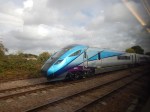
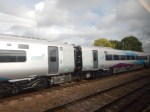
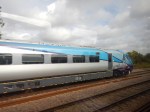
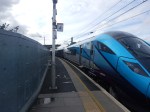
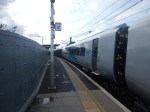

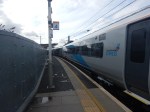
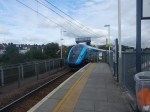
In the first three pictures, it was parked in the sidings to the East of Southall station.
The rest were taken at Willesden Junction station.
Looking at Real Time Trains it appeared to be going between the Hitachi depots at North Pole and Doncaster.
Is This The Longest Bus Stop Repair in London’s History?
This picture shows the bus stop outside Dalston Junction station.
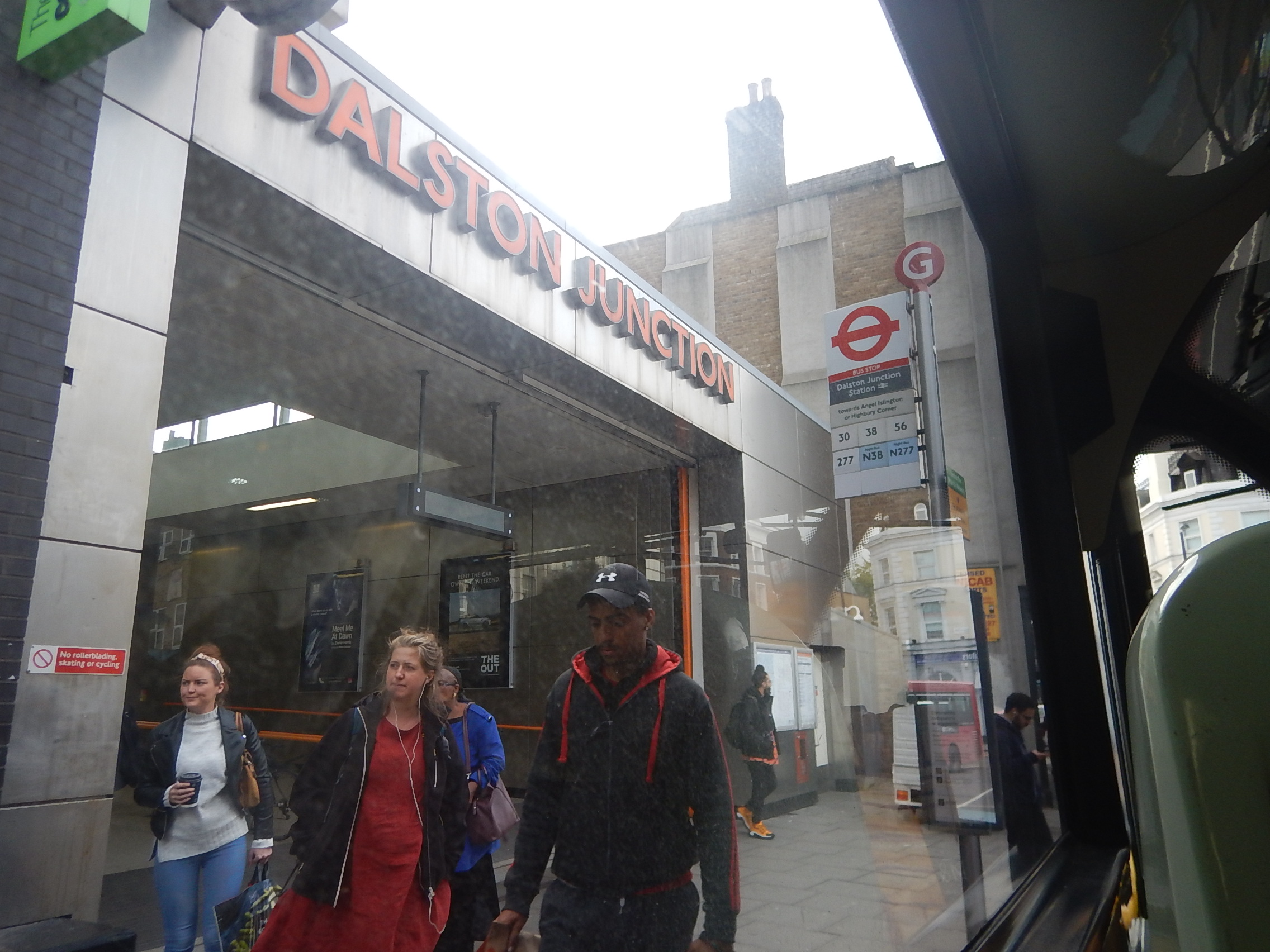
I use this bus stop regularly and since about 2012, the top bit above the information has been missing.
But not any more!
Crossrail’s Paddington Service Plans Revealed
The title of this post is the same as that of this article on Rail Magazine.
This is the first paragraph.
Trains from London Paddington Crossrail station to Shenfield will begin six months after trains start serving the low-level station from other destinations.
In Crossrail Ltd Outlines Plan To Complete The Elizabeth Line,, which I wrote in April 2019, I quoted these points from a statement on the Crossrail web site.
- Crossrail Ltd has identified a six-month delivery window with a midpoint at the end of 2020.
- Bond Street station will open later.
- Service will be initially twelve trains per hour (tph) between Paddington and Abbey Wood stations.
- Services between Paddington and Reading will commence in December 2019 with a frequency of 4 tph in the peak.
None of these promises from six months ago appear to have been changed.
So my comment at the time still stands.
Twelve trains per hour (tph) gives a capacity of 18,000 passengers per hour, which compares with the 36 tph and 31,500 passengers per hour of the Victoria Line.
Practically, this means that a twelve tph Crossrail could be carrying sixty percent of the number of passengers of the Victoria Line. It’s better than a kick in the teeth!
But then Dear Old Vicky is the Platinum Standard with lots of encrusted diamonds!
There is also other information in the Rail Magazine article.
- Paddington to Shenfield services will start six months after the start of Paddington to Abbey Wood services.
- Services will initially use the two-platform Crossrail station under Paddington as a terminus.
- Through services are expected to start a year later.
It looks like Crossraill should be fully open by the May 2022 timetable change.
This map from carto.metro.free.fr shows the layout of the lines at Paddington station.

Note that if you go pass the Crossrail tunnel portal on a train, there are generally several of Crossrail’s Class 345 trains to be seen, lined up in front of Westbourne Park bus garage.
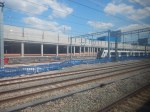
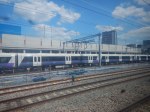
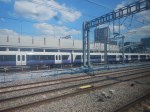

These pictures were taken in July 2019.
A Selection Of Train Noses
I have put together a selection of pictures of train noses.
They are in order of introduction into service.
Class 43 Locomotive
The nose of a Class 43 locomotive was designed by Sir Kenneth Grange.


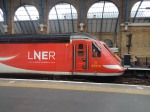
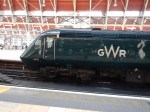
Various articles on the Internet, say that he thought British Rail’s original design was ugly and that he used the wind tunnel at Imperial College to produce one of the world’s most recognised train noses.
- He tipped the lab technician a fiver for help in using the tunnel
- Pilkington came had developed large armoured glass windows, which allowed the locomotives window for two crew.
- He suggested that British Rail removed the buffers. Did that improve the aerodynamics, with the chisel nose shown in the pictures?
The fiver must be one of the best spent, in the history of train design.
In How Much Power Is Needed To Run A Train At 125 mph?, I did a simple calculation using these assumptions.
- To cruise at 125 mph needs both engines running flat out producing 3,400 kW.
- Two locomotives and eight Mark 3 carriages are a ten-car InterCity 125 train.
This means that the train needs 2.83 kWh per vehicle mile.
Class 91 Locomotive
These pictures show the nose of a Class 91 locomotive.
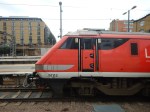

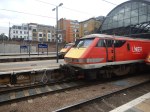
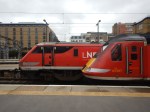

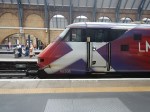
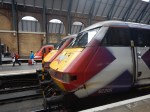
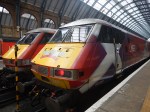
Note, the Class 43 locomotive for comparison and that the Driving Van Trailers have an identical body shell.
It does seem to me, that looking closely at both locomotives and the driving van trailers, that the Class 43s look to have a smoother and more aerodynamic shape.
Class 800/801/802 Train
These pictures show the nose of a Class 800 train.
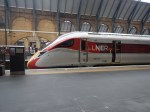
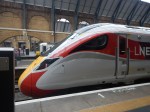
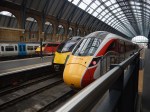
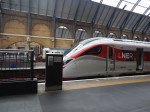
In How Much Power Is Needed To Run A Train At 125 mph?, I did a simple calculation to find out the energy consumption of a Class 801 train.
I have found this on this page on the RailUKForums web site.
A 130m Electric IEP Unit on a journey from Kings Cross to Newcastle under the conditions defined in Annex B shall consume no more than 4600kWh.
This is a Class 801 train.
- It has five cars.
- Kings Cross to Newcastle is 268.6 miles.
- Most of this journey will be at 125 mph.
- The trains have regenerative braking.
- I don’t know how many stops are included
This gives a usage figure of 3.42 kWh per vehicle mile.
It is a surprising answer, as it could be a higher energy consumption, than that of the InterCity 125.
I should say that I don’t fully trust my calculations, but I’m fairly sure that the energy use of both an Intercity 125 and a Class 801 train are in the region of 3 kWh per vehicle mile.
Class 717 Train
Aerodynamically, the Class 700, 707 and 717 trains have the same front.
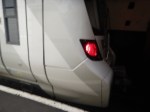


But they do seem to be rather upright!
Class 710 Train
This group of pictures show a Class 710 train.

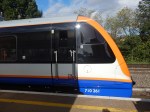
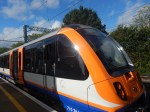
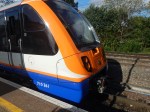
Could these Aventra trains have been designed around improved aerodynamics?
- They certainly have a more-raked windscreen than the Class 717 train.
- The cab may be narrower than the major part of the train.
- The headlights and windscreen seem to be fared into the cab, just as Colin Chapman and other car designers would have done.
- There seems to be sculpting of the side of the nose, to promote better laminar flow around the cab. Does this cut turbulence and the energy needed to power the train?
- Bombardier make aircraft and must have some good aerodynamicists and access to wind tunnels big enough for a large scale model of an Aventra cab.
If you get up close to the cab, as I did at Gospel Oak station, it seems to me that Bombardier have taken great care to create a cab, that is a compromise between efficient aerodynamics and good visibility for the driver.
Class 345 Train
These pictures shows the cab of a Class 345 train.
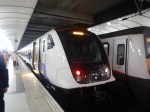
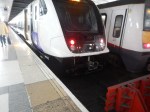
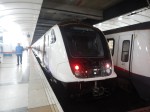
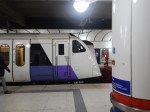
The two Aventras seem to be very similar.
Class 195 And Class 331 Trains
CAF’s Class 195 and Class 331 trains appear to have identical noses.
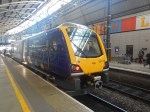

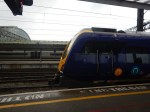
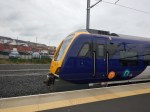
They seem to be more upright than the Aventras.
Class 755 Train
Class 755 trains are Stadler’s 100 mph bi-mode trains.
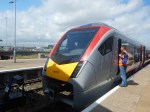
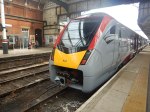
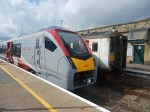

It is surprising how they seem to follow similar designs to Bombardier’s Aventras.
- The recessed windscreen.
- The large air intake at the front.
I can’t wait to get a picture of a Class 755 train alongside one of Greater Anglia’s new Class 720 trains, which are Aventras.
Travel Industry Confirms Rail ‘Renaissance’ In Europe
The title of this post is the same as that of this article on Railway Gazette.
This is the introductory paragraph.
Assertions that long-distance rail services in Europe are rapidly becoming more popular as passengers eschew flying for environmental reasons were amply confirmed at the Rail Innovation Forum organised by Amadeus at its head office near Nice on October 9-10.
The article also gives these points.
- Swiss Federal Railways are reporting a 26 % year-on-year increase in passengers for the first quarter of 2019 for night trains.
- Sweden is reporting a 12 % increase in rail traffic and a 4 % drop in air traffic.
- Flight bookings across Scandinavia are down by 10 %.
- German long-distance rail travel is rising.
This all seems good news for carbon emissions.
Rumours Grow Over Future Of HS2
The title of this post is the same as that of this article on Railnews.
This is the first paragraph.
The future of HS2 appears to be increasingly in doubt, as reports suggest that the forthcoming Oakervee Review will axe Phase 2b between the West Midlands and Yorkshire and possibly cancel the project entirely.
The article also says this about the first phase of the project.
Another possibility is that Phase 1 between London and Birmingham could be built more cheaply by lowering the maximum speed from the presently-planned 250km/h. Such a reduction would reduce the new line’s capacity and lengthen journey times but still ease the pressure on the West Coast Main Line, where paths are in short supply.
There are three suggestions in these two paragraphs and before I discuss them, I’ll detail the various phases of the project as they are current proposed.
The Phases Of High Speed Two
High Speed Two will be two phases with the second phase split into two.
- Phase 1 – London and the West Midlands
- Phase 2a – West Midlands and Crewe
- Phase 2b – Crewe and Manchester and West Midlands and Leeds
The plan improves links between London and several major cities in the Midlands and North.
Northern Powerhouse Rail
I am a great believer in holistic design and in the economies of doing several similar projects together or in a well-defined sequence, that delivers benefits in a stream.
For that reason, I believe that the equally-important Northern Powerhouse Rail should be designed in conjunction with High Speed Two, to achieve the following objectives.
- A better railway, that connects more towns and cities.
- A phased delivery of benefits.
- Possible cost savings.
This report on the Transport for the North web site which is entitled At A Glance – Northern Powerhouse Rail, advocates a much better approach.
- High Speed Two would go from Crewe to Hull via Warrington, Manchester Airport, Manchester Piccadilly, Huddersfield, Bradford and Leeds.
- Northern Powerhouse Rail would go from Liverpool to Hull via Warrington, Manchester Airport, Manchester Piccadilly, Huddersfield, Bradford and Leeds.
- There would be a double junction at High Legh between Liverpool and Manchester, that connects the two routes.
- London and Liverpool services would use the Western end of Northern Powerhouse Rail from High Legh.
- There would be improvements East of Leeds to connect to Sheffield and the East Coast Main Line.
This map shows the high speed railways between Crewe, Liverpool, Manchester and Warrington.

I discussed, what has been proposed by Transport of the North in Changes Signalled For HS2 Route In North.
Cutting High Speed Two To An Affordable Budget
I’ll take the three suggestions in the Rail News article.
Suggestion One – Cancel The Project
This is actually the second suggestion, but I think the article kills it in the second paragraph, that I quoted, when it says that High Speed Two is needed to ease pressure on the West Coast Main Line.
Cancellation would probably be a vote loser and a big stick with which to beat Boris, if he brought forward any environmental proposals.
I doubt cancellation will happen, unless we get someone like Nigel Farage as Prime Minister.
Suggestion Two – Cancel Phase 2b Between The West Midlands And Yorkshire
This clip of a map from the Transport for the North report shows a schematic of the rail links to the East of Manchester.
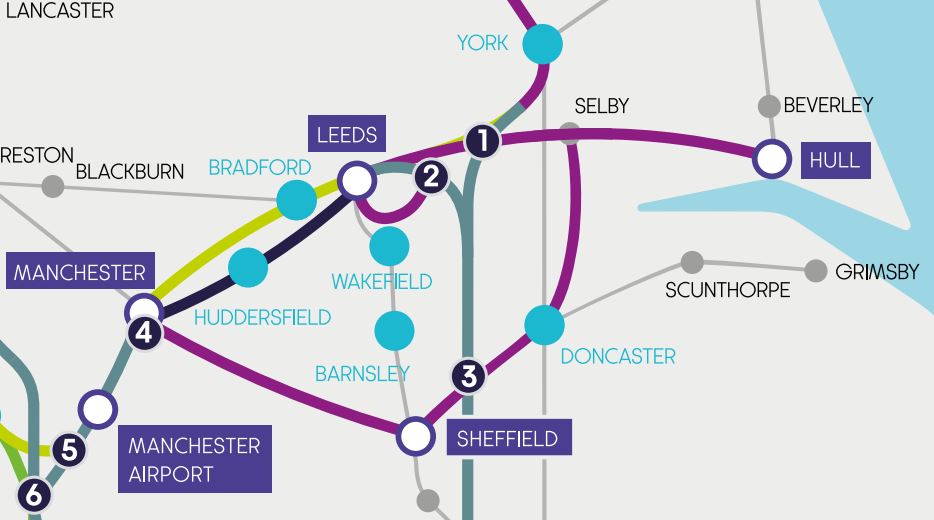
Northern Powerhouse Rail would offer a lot of improvements, which are shown in purple.
There are also these projects that will improve trains to and from Yorkshire.
- Northern Powerhouse Rail between Liverpool and Hull via Manchester Airport, Manchester Piccadilly, Huddersfield, Bradford and Leeds.
- A possible connection between Northern Powerhouse Rail and High Speed Two at High Legh.
- Midland Main Line upgrade with 125 mph bi-mode trains between London and Sheffield.
- 140 mph running on the East Coast Main Line between London and Doncaster and onward to Bradford, Hull, Leeds and York.
I’ll add a few more flesh to the points.
High Speed Two To Hull
If High Speed Two connects to Northern Powerhouse Rail at High Legh it will join everything together.
- High Speed Two trains would run between London and Hull via Birmingham, Crewe, Manchester Airport, Manchester Piccadilly, Huddersfield, Bradford and Leeds.
- Very expensive infrastructure would be shared between High Speed Two and Northern Powerhouse Rail.
- Leeds and Manchester would be just twenty minutes apart, with trains from both lines on the same tracks.
- Hull station has the space to handle the trains.
Combining the two routes should save billions.
Midland Main Line To Sheffield, Rotherham, Barnsley, Wakefield And Leeds
This is already ptoposed for the Midland Main Line.
- New stations will be built at Rotherham and Barnsley.
- Four fast trains per hour between Sheffield and Leeds can be delivered.
- 125 mph bi-mode trains to Yorkshire via the East Midlands.
But what about the following?
- Could the Erewash Valley Line be used instead of a new High Speed Two line between the East Midlands and Sheffield?
- Could the Midland Main Line be electrified and upgraded to 140 mph running like the East Coast Main Line?
Similar connectivity to that of High Speed Two can be created at a lower cost.
Cancellation of the Eastern Leg of Phase 2b would mean there would be no improved link between the West and East Midlands.
Perhaps, the Eastern leg of High Speed Two, would run only to the proposed East Midlands Hub station at Toton.
Increasing Capacity On The East Coast Main Line
In Thoughts On A 140 mph East Coast Main Line Between London And Doncaster, I did a crude calculation to see how many extra trains could be run between London and Doncaster on a digitally signalled 140 mph East Coast Main Line.
This was my conclusion.
If something similar to what I have proposed is possible, it looks like as many as an extra seven tph can be accommodated between Kings Cross and the North.
That is certainly worth having.
Extra trains could be run between Kings Cross and Bradford, Hull, Leeds, Nottingham and Sheffield.
Estimated timings would be eighty minutes to Doncaster and under two hours to Leeds.
Suggestion Three – Reduce Speed In Phase 1
There is always a tendency for project promoters to make sure their project is the biggest and the best.
There will be an optimum speed for a London and Birmingham high speed line, which balances benefits, costs, noise and disturbance. One politician’s optimum will also be very different to another’s.
Such parameters like operating speed and capacity must be chosen with care.
Conclusion
I believe, that we need the capacity of both High Speed Two and Northern Powerhouse Rail to move passengers and freight.
So we should design them together and with other improvements like the Midland Main Line and the East Coast Main Line.
 The Anonymous Widower