Heathrow Plans Runway Over M25 In 30-Year Expansion
The title of this post, is the same as that of an article in Saturday’s copy of The Times.
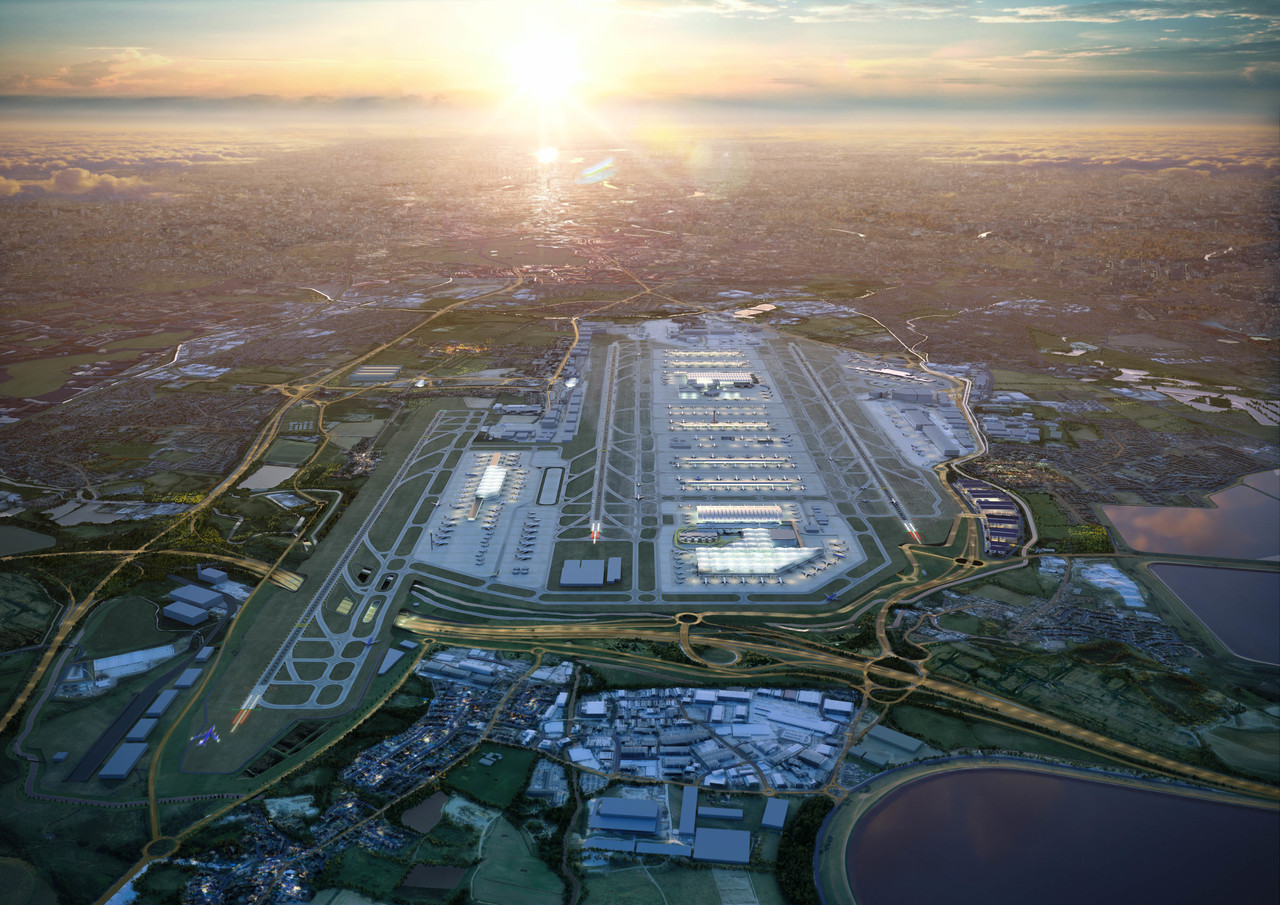
This picture, which I downloaded from this page on the Heathrow web site, shows the proposed expansion.
For comparison this Google Map shows the Airport recently.

These are some of my thoughts.
The Position Of The Third Runway
As can be seen, the new third runway is to the North-West of the North Runway.
- It will extend all the way to the M25.
- The M25 will be lowered and the new runway and two parallel taxiways will cross the road on a series of bridges.
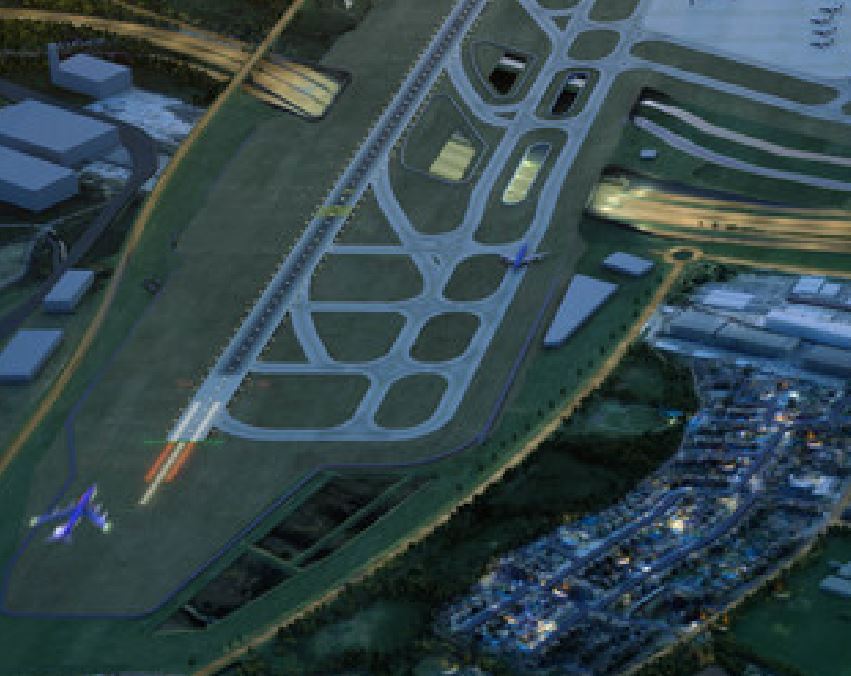
This enlargement from the first image shows the crossing of the M25 and two other roads.
Note.
- The runway is on the left, which increases the spacing with the North Runway
- How openings between the runway and the taxiways will allow natural light onto the motorway.
- In the picture you can see five angled taxiways joining the runway from the two taxiways. Does this design mean that aircraft spend a minimum of time queuing for take-off? Similar but not so extreme layouts can also be seen on the two existing runways.
What intrigues me, is what looks to be a hole in front of the ends of the taxiways.
Could it be rail or road access to the airport?
This map from Network Rail shows the route of the proposed Western Rail Approach To Heathrow.
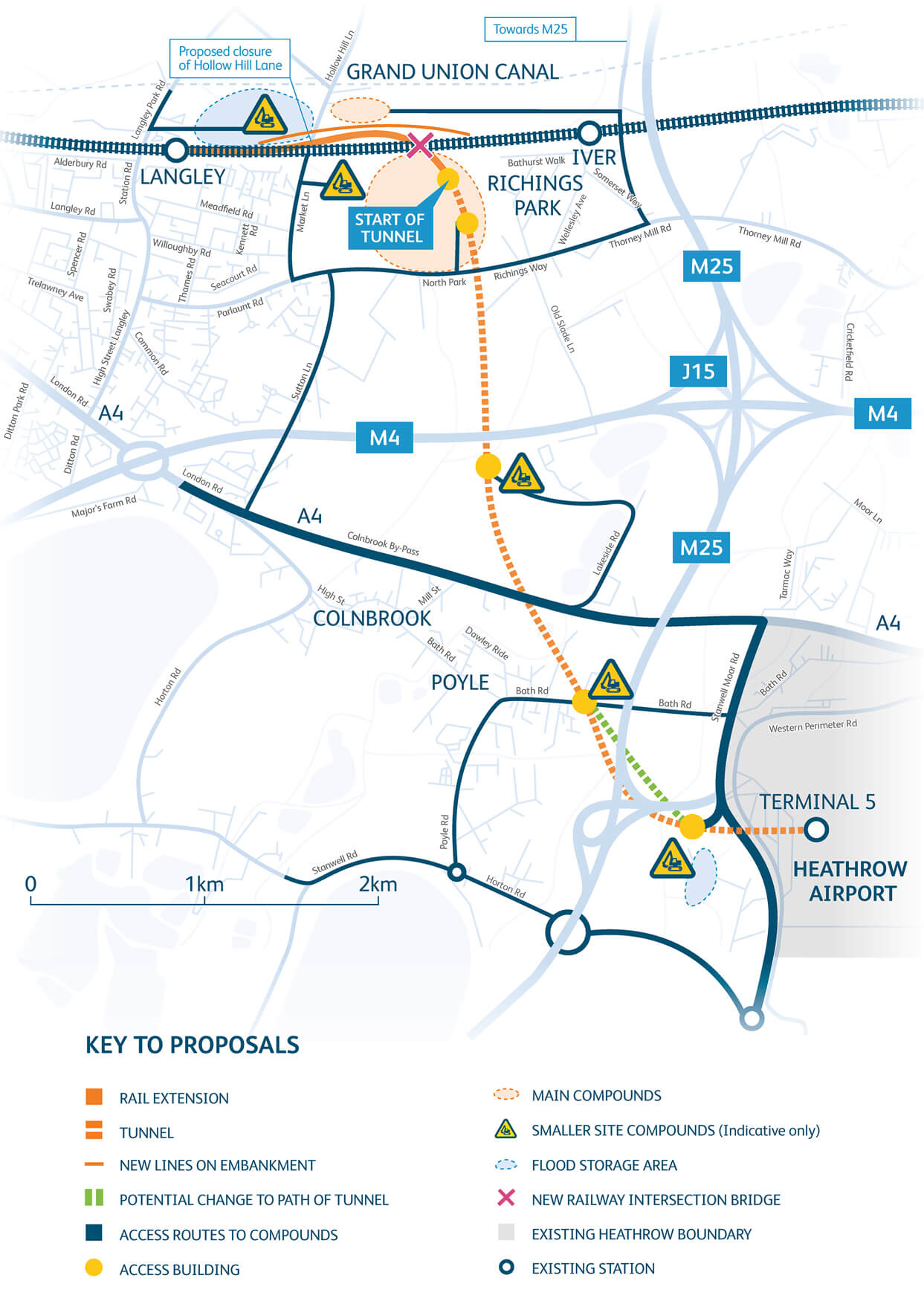
It looks like the dark holes could be the railway, between Langley and Terminal 5.
This section of the rail link is supposed to be in tunnel, but I wonder if costs could be saved if it is in a buttressed cutting, designed in cooperation between Heathrow and Network Rail.
Obviously, it will need to be in tunnel to cross under the M25.
I think that rather cleverly, the runway has been slotted in with the best use of the limited land available.
A Phased Construction Program
The Times says this about the construction program.
Only the runway would be built by the opening date of early 2026.
Other facilities such as new terminals, car parks, hotels and transit systems would open from 2030, with an expansion of Terminal 5 the priority
This means that the extra runway capacity can be used initially to better accommodate the same number of flights.
If Heathrow get it right passengers. should see the following.
- They would suffer less from construction.
- Fewer taxi delays on the ground.
- Less long fuel-burning taxiing between gate and runway.
- More flights leaving on time.
It might also enable air traffic controllers to allocate aircraft noise in a fairer manner.
Car Psrking
Two huge new car parks are to be built North and South of the Airport, which in conjunction with new hotels would be connected to the terminals by an underground transit system.
This article on International Airport Review is entitled Heathrow To Launch First Airport Ultra Low Emission Zone.
So doesn’t the building of large car parks contradict this policy.
It would unless, the car parks are designed for the future.
- Electric cars only.
- Intelligent chargers for every parking space.
- Whilst the cars are parked and connected, they would be a massive energy storage battery for the National Grid.
When you arrived back to your car after a week in Greece, there would be enough power in the battery for your next journey.
By 2030, there will be a substantial need for parking for electric cars at railway stations and airports. Parking solutions like this will help reduce the carbon footprint of airports.
Conclusion
2030 is ten years away and Heathrow will have to work hard to build an airport fit for those times.
Why Are Replacement Buses Being Used To Syon Lane Station On July 20-21?
If you look at the on-line rail time timetable from Waterloo to Syon Lane station for Saturday, the 20th and Sunday, the 21st of July, there are no trains and a bus replacement service operates.
I have checked as far as I can in the future and there are no other weekend closures on the route.
In Nothing Seems To Be Happening At Syon Lane Station, I speculated that either the project to erect a step-free bridge at the station, was to be delayed or something very different will be happening.
The two day weekend closure leads me to think that Network Rail are going to install a bridge in two days.
In Winner Announced In The Network Rail Footbridge Design Ideas Competition, I wrote how the competition was won by this bridge.
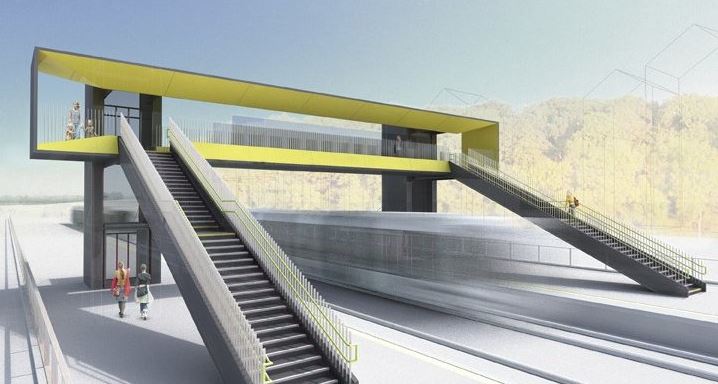
I believe that if the components were brought in by train, that this sort of bridge could be erected in two days.
This is real engineering, which is not normally seen except in war or times of great emergency like earthquake, fire or floods.
Conclusion
My speculation must be all wrong!
What sane company would attempt to build a footbridge in two days, without the assistance of Anneka Rice or that guy from DIY SOS?
Will Sadiq Khan Be A One-Term Mayor?
This article on the BBC is entitled Donald Trump Hits Out Again At Sadiq Khan Over London Violence.
I don’t like Trump or many of his policies one bit and if in the unlikely chance, I was invited to meet him, I would decline.
But I’ve met many people, who think we need someone like Trump to stand-up for the man on the Clapham Omnibus.
I have two personal criticisms of Sadiq.
The Unaffordable Fare Freeze
The fare freeze he proposed, that must have impressed a large number of voters, has not been something that London can afford.
Now important projects like the rebuilding of Camden Town and Holborn station have been delayed.
He’s A South London Mayor
To my mind, Sadiq seems to favour his home territory over the North.
- In the North, we seem to have suffered more from cuts in bus frequencies.
- He was very slow to act on the problems with the Gospel Oak to Barking Line.
- Knife crime and violence seems to be worse in the North, so is it Mayoral neglect?
It is probably understandable, as his mates in the South have more chances to bend his ears and you don’t annoy your friends.
I wonder if Ken favoured the North!
I do think though that various effects are working against his reelection.
The ULEZ Effect
The London ULEZ currently only applies to the Congestion one, but from 2021, it will apply to all areas inside the North and South Circular Roads.
How many voters, who will be affected by the ULEZ extension, will vote for Sadiq?
The Brexit Effect
Sadiq has nailed his colours to Remain and is regularly interviewed about Brexit.
Most right-of-centre Brexiteers wouldn’t probably vote for him, but some traditional Labour boroughs voted to Leave, so could his support for Remain cost votes.
On the other hand, if Brexit has happened and going badly, will Sadiq gain votes?
The Next Prime Minister Effect
If Boris becomes Prime Minister, this would be an imponderable. It might help or hinder Sadiq’s reelection.
The Crossrail Effect
The late delivery of Crossrail, is not Sadiq’s fault, but it will have four effects.
- The late delivery will ffect London’s transport budget and give the Mayor less money for projects.
- Some people will view his oversight of the project as incompetent.
- He won’t be able to bathe in the glow of a successful Crossrail.
- It is a ready-made millstone to hang around his neck.
There will also be many Londoners, for whom, the late delivery of Crossrail caused a financial loss and they will vote accordingly.
The Trump Effect
I would expect, Trump to keep up his criticism of Sadiq.
Who’s to say, whether it will affect Sadiq’s vote, but there are quite a few people, who would support Trump.
Conclusion
There are a lot of questions to answer, but I feel given the state of British politics, that we could be in for a surprise.
Could we see a Brexit, Green or Lib Dem Mayor?
Puzzled By New Fleets For TransPennine Express
TransPennine Express (TPE) are replacing all their trains, but their choice of three different new fleets puzzles me.
The new fleets and their routes are as follows.
Nova1
This is a fleet of nineteen five-car bi-mode Class 802 trains.
According to Wikipedia, they will work the following routes, with probably a frequency of one tph
Liverpool Lime Street and Edinburgh via Newcastle, which I estimate will take 4:15 hours
Manchester Airport and Newcastle, which takes around 2:45 hours
These two services would probably need nine for the Edinburgh service and six for the Manchester Airport service.
This means that there are four extra trains.
If there is a spare or one in maintenance, that means that two trains are available to boost capacity on busy services if needed, by running a ten-car train.
I doubt that ten-car services to Manchester Airport could be run through the Castlefield Corridor due to the inadequate stations, but Liverpool and Edinburgh might be a route for longer trains.
I have some observations on Nova1.
- The trains are 125 mph trains, that can be upgraded to 140 mph with in-cab signalling.
- The trains will share the East Coast Main Line with LNER’s Azumas, which are other members of te same family of Hitachi trains.
The trains have been authorised to start running services.
Nova2
This is a fleet of twelve electric Class 397 trains.
According to Wikipedia, they will work the following routes,
- Manchester Airport and Glasgow Central, which takes around 3:30 hours.
- Manchester Airport and Edinburgh, which takes around 3:15 hours.
- New route – Liverpool Lime Street and Glasgow Central, which could take around 3:30 hours.
Currently, the two existing routes run at a frequency of one train per two hours, which would probably need at least seven trains.
This probably means that there will be four trains left for the service between Liverpool and Glasgow, if it assumed there is one train spare or in maintenance.
As a round trip between the two cities, would probably take eight hours, it looks like the frequency will be one train per two hours.
This would give the following services, all with a frequency of one train per two hours.
- Manchester Airport and Glasgow Central via Manchester Piccadilly
- Manchester Airport and Edinburgh via Manchester Piccadilly
- Liverpool Lime Street and Glasgow Central
Passengers wanting to go between Liverpool Lime Street and Edinburgh should keep reading.
I have some observations on Nova2.
- They are 125 mph trains that are replacing the 110 mph Class 350 trains.
- In the next few years, these 125 mph trains will be sharing the West Coast Main Line with faster trains like Class 390 trains and the trains of High Speed Two, both of which should be capable of 140 mph, when running using in-cab signalling.
- I would assume that the trains can be similarly upgraded, otherwise they will have to be replaced.
- There was an option for more trains, but I suspect the success of Class 802 trains on the Great Western Railway led to it not being taken up.,
The trains should come into service later this year.
Nova3
This is a fleet of five-car rakes of Mark 5A coaches, hauled by a Class 68 diesel locomotive.
There are fourteen locomotives and driving van trailers, with enough coaches for thirteen rakes.
I would suspect that TPE are aiming to have twelve trains available for service.
According to Wikipedia, they will work the following routes, which both have a frequency of one train per hour (tph)
- Liverpool Lime Street and Scarborough via Manchester Victoria, which takes around 2:45 hours.
- Manchester Airport and Middlesbrough, which takes around 2:45 hours.
So with turnround at both ends, I suspect that a six hour round trip is possible. So to provide the two hourly services across the Pennines, TPE will need six trains for each route.
This explains a fleet size of twelve operational trains.
I have two observations on Nova3.
- They are diesel-powered and will be running at times on electrified lines. But I suspect the diesel Class 68 locomotive could be replaced in the future with an electro-diesel Class 88 locomotive.
- Questions have been raised about the speed of exit and entry from the coaches through single end doors of the coaches.
- They have an operating speed of only 100 mph, but opportunities for higher speeds on the routes are limited to perhaps thirty to forty miles on the East Coast Main Line.
At least they should be in service within a couple of months.
Why Didn’t TPE Order A Unified Fleet?
To summarise TPE have ordered the following trains.
- Nova1 – Nineteen Class 802 trains
- Nova2 – Twelve Class 397 trains.
- Nova3 – Thirteen trains consisting of four coaches topped and tailed by a a Class 68 locomotive and driving van trailer.
All forty-four trains are five cars.
Surely, it would have been easier for TPE to have a fleet, where all the trains were the same.
I suspect that all routes can be run using Class 802 trains, so it as not as if there are any special requirements for the trains.
So why didn’t TPE order a fleet of Class 802 trains?
I can only think of these reasons.
- Hitachi couldn’t supply the required number of trains in the appropriate time-scale.
- ,CAF made an offer that TPE couldn’t refuse.
It should also be born in mind that Great Western Railway and Hull Trains, which like TPE are First Group companies, went down the Class 802 route.
The Future
There are various issues, that will arise in the future.
Nova2 And West Coast Main Line Operating Speed
The new Nova trains are running on TPE’s Northern and Scottish routes and as I indicated earlier, the Nova2 trains might not be fast enough in a few years time for the West Coast Main Line, which will have Class 390 trains running at 140 mph using in-cab signalling.
High Speed Two will surely make this incompatibility worse, unless CAF can upgrade the Nova2 trains for 140 mph running.
Replacing the Nova2 trains with Class 802 trains, which are being built for 140 mph running, would solve the problem.
Nova3 And Class 68 Locomotives
There are powerful reasons to replace diesel locomotives on the UK’s railways, with noise, pollution and carbon emissions at the top of the list.
As Northern Powerhouse Rail is created, there will be more electrification between Manchester and York, adding to the pressure to change the traction.
- There could be a change of locomotives to Class 88 or Class 93 locomotives, which would run using the overhead electrification, where it exists.
- The trains could be changed to Class 802 trains.
The Class 68 locomotive is increasingly looking like an interim solution. At least, it’s a less polluting locomotive, than the dreaded and ubiquitous Class 66 locomotive.
Class 185 Replacement
TPE will still have a fleet of diesel three-car Class 185 trains.
- They are running on routes between Manchester and Hull and Cleethorpes via Huddersfield, Leeds and Sheffield.
- These are best described as just-about-adequate trains and are one of The Treasury’s boob-buys.
- As Northern Powerhouse Rail is created, they will be increasingly running under wires.
- Could it be likely that more capacity will be needed on routes run by these trains?
- The capacity of a Class 185 train is 169 seats, as opposed to the 342 seats of a five-car Class 802 train.
I think it could be very likely that instead of running pairs of Class 185 trains, TPE will replace them with five-car Class 802 trains.
Conclusion
I very much feel, that over the next few years, TPE’s fleet will change further in the direction of a one-unified fleet!
Damned If They Did: A Defence Of Crossrail
The title of this post, is the same as that of this article on Global Co9nstruction Review.
It is a must-read!
Leaves On The line? AI Signals End To Commuters’ Train Pain
The title of this article is the same as that of an article, that was on the front page of yesterday’s copy of The Times.
It talks about a system being developed by Hack Partners, that uses a camera to record lineside trees and then a computer using AI directs tree cutting gangs to the right places.
This is one of several systems that are to be funded by the Government. This paragraph summarised the grants.
The DfT and Innovate UK, the government’s technology agency, will announce today that up to £7.8 million is being invested in 24 trials of projects to boost performance on the railway. Each will receive between £250,000 and £350,000.
I particularly like a system from a Dutch company called 4Silence, which is designed to cut the noise of trains, which is described like this.
other schemes being funded include a noise barrier only 1m high topped by a steel grid, developed by the Dutch company 4Silence, which can deflect the sound of passing trains, improving the quality of life for residents near by.
I wonder what percentage of these trials will be winners.
I hope those who judge the success of these schemes, except that not all innovation succeeds.
Turn Off Engine Or Face Parking Ban, Coach Drivers Told
The title of this post is the same as that of an article on page 12 of today’s copy of The Times.
This is the first paragraph.
Tourist coaches face being banned from parking in central London because of concerns that they pumping out toxic fumes as drivers leave engines idling.
Apparently, Westminster Council are thinking of reducing parking for coaches, if the practice continues.
Interestingly, this evening, I walked past two coaches parked close to Kings Cross station with their engines running.
M4: Alternative Solutions To Motorway Travel
The title of this post is the same as that of this article on the BBC.
It is a good read giving both sides of the problems of commuting.
This is an important section from an expert.
Prof Mark Barry, a transport expert at Cardiff University, said the M4 has been important in attracting manufacturing, but there have been negatives.
“The downside is we’ve built a lot more housing, retail and other business parks around the M4, that’s then made us over-dependent on the car,” he said.
I think Professor Barry is highlighting a problem, that is seen all over the UK. Like the United States, housing, office, medical and leisure developments are being built, where the only way to get there is by car.
I don’t drive because my eyesight has been damaged by a stroke, but I still have a full life, with more travel than the average man of 71.
 The Anonymous Widower