Network Rail Awards Final West London Station Upgrade Contracts For Crossrail Project
The title of this post is the same as that of this article on Rail Professional.
The stations are Acton Main Line, Ealing Broadway, West Ealing, Southall, Hayes & Harlington and West Drayton.
New buildings and step-free access is planned to be completed by December 2020.
Conclusion
About time!
Vivarail And Arcola Announce Partnership To Bring Emission-Free Trains To The UK
The title of this post is the same as this press release from Vivarail.
These are the first two paragraphs
Vivarail, designers and manufacturers of the Class 230 trains, and hydrogen fuel cell specialists Arcola Energy today announced a long-term collaboration.
The companies share a determination to help de-carbonise the UK’s transport system. Vivarail has already designed and run an emission-free battery train whilst Arcola lead the market in supplying power systems for efficient fuel cell electric vehicles, primarily buses, to the UK. Working together the companies will develop a hydrogen/battery hybrid train.
It strikes me that this could be a good fit.
Powering A Bus
In New Facility To Power Liverpool’s Buses With Hydrogen, I described Arcola Energy’s involvement in a project to create and fuel hydrogen-powered buses in conjunction with Alexander Dennis.
- A typical hybrid double-decker bus like a New Routemaster has a battery capacity of 55 kWh.
- If these Liverpool hydrogen-powered double-decker buses have serial hybrid transmission like the New Routemaster, I could envisage them having a battery of up to 100 kWh, as let’s face it, the New Routemaster design is now eight years old and battery technology has moved on.
So the Arcola Energy-sourced fuel cell must be able to continuously top-up, the battery, in the same manner as the diesel engine on a hybrid bus.
Sit in the back of a New Routemaster and you can hear the engine cutting in and out. It doesn’t seem to work very hard, even on routes like the 73, which operate at high loadings.
Powering A Class 230 Train
Vivarail’s battery-powered Class 230 train, has a battery capacity of 106 kWh.
This size of battery could certainly be changed by a hydrogen fuel cell.
But could a hydrogen fuel cell provide enough power to keep the train running?
- Vivarail are clamming a range of fifty miles, which means that their two-car battery trains are consuming around 2 kWh for every mile.
- I will assume the train is travelling at its operating speed of sixty mph, which is a mile every minute.
- To keep the battery topped up would need 2 kWh to be produced every minute.
A hydrogen fuel cell with a rating of 120 kW would be needed to power the train continuously. But as the fuel cell would only be topping up the battery, I suspect that a smaller fuel cell would be sufficient.
The Ballard fuel cell is a HD variant of their FCveloCity family.
This page on the Ballard web site is the data sheet of an HD fuel cell of their FCveloCity family.
- The fuel cells come in three sizes 60, 85 and 100 kW
- The largest fuel cell would appear to be around 1.2 m x 1 m x 0.5 m and weigh around 400 Kg.
- The fuel cell has an associated cooling subsystem, that can provide heat for the train.
This Ballard fuel cell would appear to be capable of mounting under the floor of a train.
There are probably several other fuel cells that will fit the Class 230 train.
Arcola should know the best hydrogen fuel cell for the application, in terms of size, power and cost.
The Concept Train
Vivarail’s press release describes a concept train.
The concept train will be used to demonstrate the system capability and test performance. Vivarail’s production hydrogen trains will consist of 4-cars, with 2 battery driving motor cars and 2 intermediate cars housing the fuel cell and tanks.
Vivarail seem very certain of the formation of production trains.
I am not surprised at this certaincy.
- The mathematics of battery-powered and hydrogen-powered trains is well known.
- Vivarail have experience of running their battery-powered prototype.
- Arcola have experience of the capabilities of hydrogen-power.
I also wouldn’t be surprised to see some commonality between the Alexander Dennis and Vivarail installations.
Range Of A Hydrogen-Powered Class 230 Train
Nothing is said in Vivarail’s press release about the range on hydrogen.
In Hydrogen Trains Ready To Steam Ahead, I examined Alstom’s Class 321 Breeze hydrogen train, based on an article in The Times.
I said this about range.
The Times gives the range of the train as in excess of 625 miles
The Class 321 Breeze looks to be designed for longer routes than the Class 230 train.
I would suspect that a hydrogen-powered Class 230 train would have the range to do a typical day’s work without refuelling.
Refuelling A Hydrogen-Powered Class 230 Train
I don’t think this will be a problem as Arcola appear to have the expertise to provide a complete solution.
Conclusion
This is a co-operation, where both parties are bringing strengths to the venture.
Stoneleigh Station To Go Step-Free
This document on the Government web site is entitled Access for All: 73 Stations Set To Benefit From Additional Funding.
Stoneleigh station is on the list.
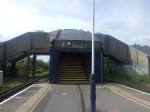
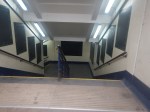
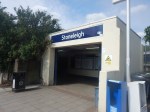
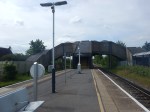
These pictures show the station and the current bridge,




By coincidence, I met the son of an old friend at the station, who lived nearby. He was able to give me a few extra details. Thanks Billy!
Abysmal Step-Free Access
I only exited the station on the Stoneleigh Broadway side and from the platform it was a two staircases up of about fifteen steps and then three similar staircases down.
- In this day and age that is totally unacceptable.
- As the station was only built in 1932, it shows the attitude of Southern Railway to passengers of reduced mobility! They are certainly not welcome!
- Billy told me, that the railway divides Stoneleigh in two and using the bridge to get across is difficult for a lot of people.
There must be very few worse step-free stations than Stoneleigh.
The Station Is Bad For Health, Environment And The Community
How many people, who live on one side of the railway and need to go to the other to see the doctor, visit the library, go to church, have a coffee with a friend or just go to a shop, are now forced to get into a car to make the trip.
Demolition Is The Only Answer
It may be a wonderful example of 1930s creative concrete construction, but for the modern age, it is complete crap!
Te station needs to be demolished and either confined to the landfill of history or turned into building blocks or other useful product.
Replacement With A Modern Bridge
The objective would be to provide a bridge, that gave step-free access to
- Station Approach on the Western side.
- The island platform.
- Stoneleigh Broadway on the Eastern side.
This Google Map shows an aerial view of the station.
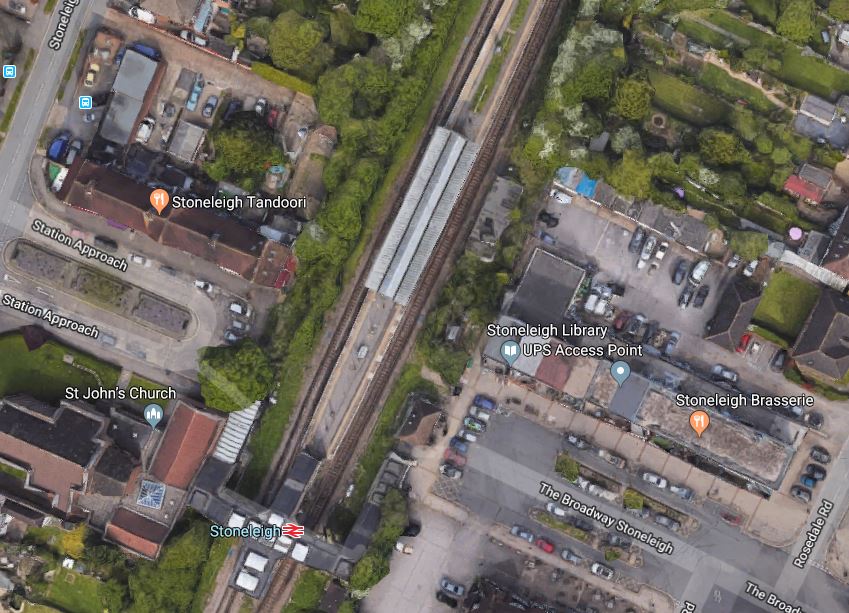
Note the number of useful places on either side of the railway.
There is also a lot of space on either side of the railway.
In Winner Announced In The Network Rail Footbridge Design Ideas Competition, I wrote how the competition was won by this bridge.
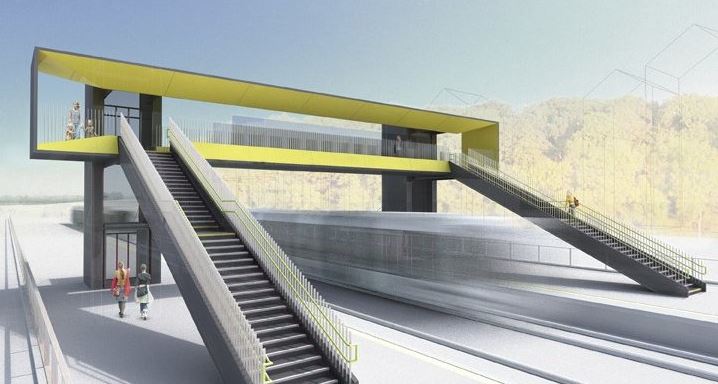
So could a factory-built bridge like this be installed be installed at Stoneleigh station?
Consider.
- The bridge has been designed so it can built as a double span, so ir could serve both sides of the railway and the platform.
- The steps at the end can even be turned through ninety degrees, so that they lead into the Broadway and Approach.
- To create space, the life expired wooden buildings on the platform, that seem to be only held up, by courtesy of the woodworm holding hands, would need to be demolished.
This would allow, the new bridge to be built before closing the current monstrosity.
The station would be completed by providing a modern building on the platform, with staff and passenger facilities, that were appropriate to the million-plus passengers, who use the station every year.
Once the station is fully working, the 1930s station would be demolished.
Conclusion
Using Network Rail’s new footbridge design, a modern station could be created without closing the station to passengers and/or trains.
Stoneleigh could get a step-free modernstation i a matter of months, after planning permission was obtained.
In Syon Lane Station To Go Step-Free, I describe how Syon Lane station is getting a step-free bridge in five months.
Leatherhead Station To Go Step-Free
This document on the Government web site is entitled Access for All: 73 Stations Set To Benefit From Additional Funding.
Leatherhead station is on the list.
These pictures show the station and the current subway,

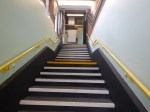
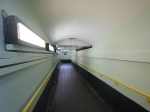
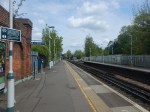
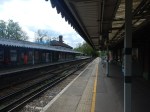
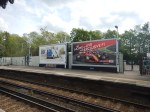
This is one of those stations, where lifts could probably be put into the subway.
But this would probably mean closing the subway, which is the main access between the platforms.
Look at this Google Map of the Northern end of the station.
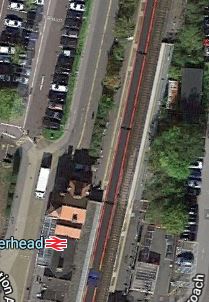
The map illustrates another problem. There is car parking by the London-bound platform and commuters will need to cross the tracks.
But the map does show there is a lot of space and a step-free bridge might be possible at this end of the station.
In Winner Announced In The Network Rail Footbridge Design Ideas Competition, I wrote how the competition was won by this bridge.
So could a factory-built bridge like this be installed be installed at Leatherhead station?
Queens Park Station To Go Step-Free
This document on the Government web site is entitled Access for All: 73 Stations Set To Benefit From Additional Funding.
Queens Park station is on the list.
These pictures show the station and the current access.


This is one station, where the Bakerloo Line and Watford DC Lines have fairly good step-free access between train and platform.
The following needs to be done.
- Provide lifts from both platforms to the booking hall and the gateline.
- Extra services to Blackpool may terminate at the station and this would mean adding step-free access to the main line platforms.
I feel the most difficult part of the project will be adding the step-free access, whilst keeping the station fully open.
Now It’s Thieves On The Line As Crooks Target Railway Cables
The title of this post is the same as that of an article in The Times on Tuesday.
I was involved in a similar project with British Rail, where they were looking at patterns in signalling cable faults on the East Coast Main Line. My software Daisy was used to display the patterns.
I know in this case British Rail got a solution.
I even have their internal report somewhere!
Greater Anglia’s Class 720 Trains
Greater Anglia have ordered a new fleet of Class 720 trains for their suburban routes.
- 22 x 10-car trains.
- 89 x 5-car trains.
What do we know about the formation of Aventra trains?
The Formation Of Class 345 Trains
In A Detailed Layout Drawing For A Class 345 Train, I detailed the formation of a Class 345 train as follows.
DMS+PMS+MS1+MS3+TS(W)+MS3+MS2+PMS+DMS
Several things can be said about the formation.
Lots Of Cars With Motors
The Class 345 train has a high-proportion of cars with motors.
This may seem to be the wrong way to go, as motors cost money and lots of them, may make a more complicated and unreliable train.
But think of a tug-of-war team, which applies the force over a large patch of ground!
Having lots of motors may have advantages.
- Force to move and accelerate the train is applied along the train.
- It may make regenerative braking smoother and more controlled.
- There is a greater contact area with the rail, so it may make train performance better with leaves on the line and other poor rail conditions.
- The redundancy may mean greater reliability.
A clever control system on the train, may be able to distribute power to extract the best performance from a train, for various rail conditions, passenger loading and perhaps with one motor out of action.
Two-Half Trains
The Class 345 train formation clearly shows two half-trains with this formation.
DMS+PMS
Are these like mini-locomotives with seats for passengers at each end of the train?
With respect to a Class 345 train, I have observed the following.
- The trains have two pantographs.
- In a seven-car train, there is just a TS(|W) car in the middle. This is a trailer car with four wheelchair spaces.
- A nine-car train has two extra motor cars inserted.
So are all seven-car and more trains, built as two half-trains with an appropriate number of cars in the middle to get the required length?
The concept surely means that in many scenarios of partial train failure, the remaining half-train can take passengers to a safe evacuation point, dragging the other half-train with it. This is obviously important in Crossrail’s long tunnel.
A Pair Of Power-Cars
In this article in Global Rail News from 2011, which is entitled Bombardier’s AVENTRA – A new era in train performance, gives some details of the Aventra’s electrical systems. This is said.
AVENTRA can run on both 25kV AC and 750V DC power – the high-efficiency transformers being another area where a heavier component was chosen because, in the long term, it’s cheaper to run. Pairs of cars will run off a common power bus with a converter on one car powering both. The other car can be fitted with power storage devices such as super-capacitors or Lithium-ion batteries if required. The intention is that every car will be powered although trailer cars will be available.
Unlike today’s commuter trains, AVENTRA will also shut down fully at night. It will be ‘woken up’ by remote control before the driver arrives for the first shift
This was published over eight years ago, so I suspect Bombardier have refined the concept.
But the concept of splitting the power components between two cars must be a good one, as there is twice the space underneath the cars, compared to a traditional single car with all the power components.
In the Class 345 train, it looks like the pair of cars are the DMS and PMS cars.
- So a nine-car Class 345 train has five cars between the two pairs of power-cars.
- Motored or trailer cars can be added to lengthen the train.
Shorter trains would only have one pair of power-cars and could be as short as three cars.
Greater Anglia’s Train Needs
Ten- and five-car trains may be OK for many of Greater Anglia’s routes, but there could be a few problems.
Hertford East Branch
These pictures show an eight-car Class 317 train at Hertford East station.
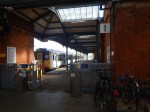
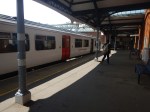
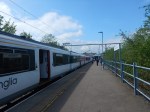
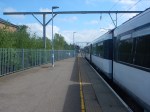
Note how both platforms are not much longer than the 160 metres of a pair of four-car Class 317 trains. Would the capacity of a five-car train be enough for the route?
Braintree Freeport Station
The pictures show Braintree Feeport station, which also seems to be sized to fit an pair of four-car Class 317 or Class 321 trains..
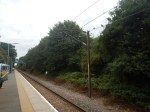
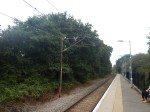
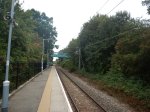
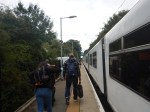
The same questions as with Hertford East station arise!
Wickford Station Bay Platform
This picture shows a Class 321 train parked in the bay platform at Wickford station, that is used for the Crouch Valley Line.
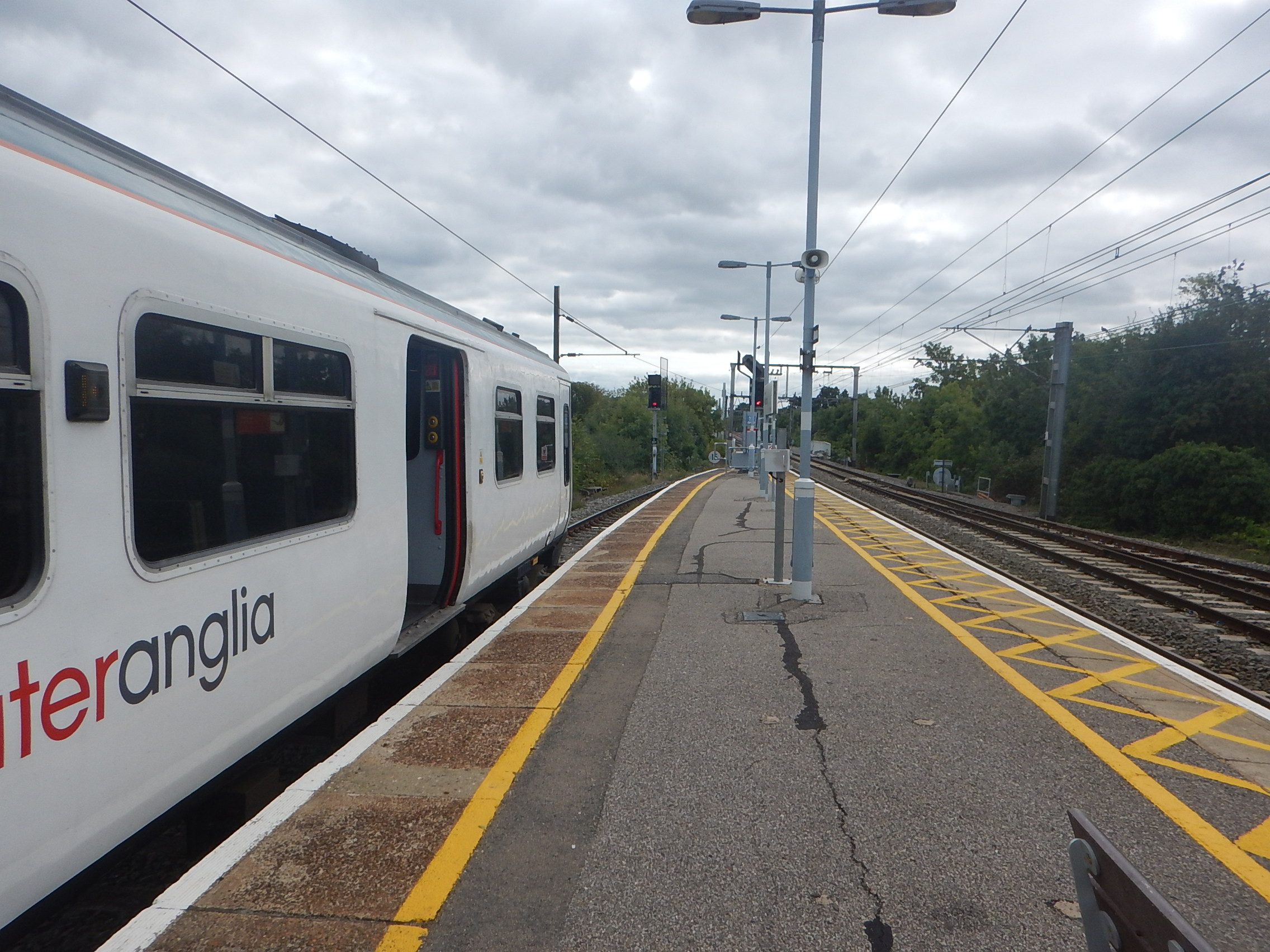
I would estimate that there is perhaps another twenty metres of space in the platform.
As a five-car Class 720 train is 122 metres long, as opposed to the eighty metres of the four-car Class 321 train in the picture, it will be a tight squeeze to get the new train in the platform.
But a four-car Class 720 train would probably fit.
Manningtree Station Bay Platform
Are there similar problems at Manningtree station, that a four-car Class 720 train would solve?
The Length And Capacity Of Different Trains
This table shows the length and capacity of different trains.
- Four-car Class 317 train – 80 metres – Standard – 267/234 – First – 22/24 – Total 289/258
- Eight-car Class 317 train – 160 metres – Standard 534/468 – First -44/48 – Total 578/516
- Four-car Class 321 train – 80 metres – Total 309
- Eight-car Class 321 train -160 metres – Total 618
- Twelve-car Class 321 train -240 metres – Total 927
- Four-car Class 360 train – 80 metres – Total 280
- Eight-car Class 360 train – 160 metres – Total 560
- Twelve-car Class 360 train – 240 metres – Total 840
- Five-car Class 720 train – 122 metres – Total 540 – Standing – 145
- Ten-car Class 720 train – 243 metres – Total 1100 – Standing – 290
Note that two five-car Class 720 trains, working as a ten-car formation have virtually identical length and capacity to a ten-car Class 720 train.
Ten-Car Services
We already know, that the ten-car Class 720 trains have been designed to replace twelve-car formations of Class 321 and Class 360 trains to places like Clacton, Ipswich and Southend.
- They are similar lengths within a few metres.
- The ten-car Class 720 trains give an 19% increase in seats over twelve-car Class 321 trains.
- The ten-car Class 720 trains give an 31% increase in seats over twelve-car Class 360 trains.
An advantage must surely be that with two fewer cars, the trains will need less maintenance.
Five-Car Services
But how does a five-car Class 720 train compare with an eight-car formation of Class 317 or Class 321 trains?
- Seat numbers are similar depending on the layout of the older train.
- Standees will probably have more handholds.
- The walk-through trains allow passengers to circulate around the train to find spare seats.
- The new trains will fit any platform that can be served by an existing eight-car service.
- With their better performance will the Class 720 trains be running faster services?
- There are three cars less to maintain.
I feel that Greater Anglia have done their sums and feel that more train capacity and extra services might be a better way to increase total capacity than run longer trains, which will need expensive platform lengthening.
I’ll take the Braintree Branch services as an example, where extra services could be better than longer trains.
Currently, service is hourly, but a combination of some of the following might allow a doubling of frequency.
- A passing loop.
- Faster modern trains with shorter dwell times.
- An improved timetable.
Two five-car Class 720 trains per hour as opposed to an hourly eight-car Class 321 train, would be around a doubling of capacity.
Four-Car Services
A four-car class 720 train would be ninety-six metres long and probably around 450 seats.
Bombardier and London Overground have shown recently, shortening a Class 378 train is a simple operation.
I think it is reasonable to expect that creating a four-car Class 720 train will be just as easy.
So if Greater Anglia need to run four-car Class 720 trains on certain routes, they can just take a car out of the required number of trains.
First Class
It should be noted that none of the services operated using Class 720 trains will have First Class after this year.
This article on the BBC, which is entitled Greater Anglia: First Class seats scrapped on most trains, gives details and an explanation of Greater Anglia’s thinking.
I have searched the Internet and can’t find any complaints.
But Greater Anglia are only putting themselves in line with c2c, who offer no First Class seats on any service.
Conclusion
I can’t wait to ride these trains, later in the year.
Global Centre Of Rail Excellence Takes A Step Forward With Formal Partnership Arrangements
The title of this post is the same as that of this article on Wales Online.
This is the first two paragraphs.
The planned £100m Global Centre of Rail Excellence on the border of Neath Port Talbot and Powys will take a step closer to reality when councillors meet to formalise partnership arrangements next week.
Plans for the centre which were announced by the Welsh Government last summer involve a new facility to test trains in the UK.
In my view this centre is much needed, so that trains manufactured and modified in the UK, can be adequately tested in as short a time as possible.
Sending trains to be tested half-way across Europe, as currently sometimes happens, is not an efficient method of getting trains into service.
 The Anonymous Widower