Did Plans For Crossrail Ever Include A Station At Holborn?
I have only one North-South bus route, where I live.
The 141 bus connects Palmers Green and London Bridge station.
- The 141 bus was the replacement for the 641 trolley bus, which was the main link between Wood Green, Turnpike Lane and Harringay, and the City of London, when I was a child.
- The vehicles are up to ten years old Wrightbus diesel hybrids.
- The route suffers badly from overcrowding as it connects, Bank and Moorgate stations in the City of London, with the outer reaches of the Piccadilly Line.
The overcrowding on the 141 bus route has got worse in the last couple of years because of the following.
- The rebuilding of London Bridge station brought more passengers to the 141 bus route.
- The opening of the new London Bridge bus station at London Bridge station has improved access to the buses at London Bridge station.
- The improvement of the connection of the buses to the Docklands Light Railway, Central Line and Northern Line at Bank station.
- The opening of the Battersea branch of the Northern Line, which brings more passengers to Bank station.
- The opening of the new Cannon Street entrance to Bank Underground station.
- The opening of the Elizabeth Line through Moorgate station.
- Recently, a new walking route between Moorgate and Liverpool Street was opened, which will bring more passengers to the buses on Moorgate.
- The rebuilding of Old Street station brought more passengers to the 141 bus route.
So what was the response of the Mayor and Transport for London, to all this increase of passenger numbers?
The 21 bus, which shadowed the 141 route, and doubled the number of buses through where I live, was moved to serve Holloway.
It was a big crime against mathematics and the wishes of our long-serving Labour MP; Meg Hillier.
So to handle many more passengers between London Bridge station and Newington Green through the City of London, the number of buses was halved.
I believe that the overcrowding will get worse because of the improvements, that Transport for London have planned.
- The Piccadilly Line will be getting new air-conditioned trains within a couple of years and these will inevitably attract more passengers to the line.
- On the other hand the air-conditioning may persuade passengers to use the Piccadilly Line more than they do now. Instead of changing to the 141 bus at Manor House station, passengers could change at Finsbury Park, King’s Cross St. Pancras or Holborn stations for other routes to the City of London.
- The third line to receive the new air-conditioned trains will probably be the Central Line, which would create another East-West air-conditioned line and bring more passengers to Bank station.
- The Central Line could give some relief for the buses through Bank, if an extra station was built on the Central Line to interchange with Shoreditch High Street station on the East London Line of the London Overground.
- The fourth line to receive the new air-conditioned trains will probably be the Waterloo and City Line, which would create another air-conditioned line and bring more passengers to Bank station.
- It is likely, that more services will be added to the Elizabeth Line, which will bring more passengers to Moorgate station.
- It is likely, that more services will be added to the Northern City Line, which will bring more passengers to Moorgate station.
- The Mayor is also planning to pedestrianise Oxford Street, which may fill up the Central Line with extra passengers.
It looks to me, that there will be a need for a large increase of bus capacity through the City of London on a North-South axis.
On the other hand, the City of London have stated that they will pedestrianise many of their streets.
So what can be done to avoid gridlock in the City of London?
Develop The Northern City Line At Moorgate
I use this route regularly to and from Moorgate station.
- It already has new Class 717 air-conditioned trains.
- The route is already digitally signalled in conjunction with the East Coast Digital Programme.
- It has two platforms at Moorgate station.
- Highbury & Islington station has interchanges with the Victoria Line and the North and East London Lines of the London Overground.
- Finsbury Park station has interchanges with the Victoria Line and National Rail services.
- Bowes Park station has an out of station interchange with Bounds Green station on the Piccadilly Line.
- Step-free access needs improving.
- The Victorians had plans to extend the line to Lothbury near Bank station.
If the Northern City Line could handle more passengers, would passengers get to all parts of the City of London by changing at Finsbury Park and walking from Moorgate or Old Street stations?
I regularly go between my house and Moorgate, by taking a bus to Essex Road station and using the Northern City Line.
I believe that with improvements on the Northern City Line, the line could be turned into a very valuable part of London’s rail infrastructure.
Connect The Central Line And The East London Line At Shoreditch High Street Station
I wrote about this proposal in Will Shoreditch High Street Be Connected To The Central Line?
The Elizabeth Line needed to be completed before this could be started.
Build The Western Extension Of The Docklands Light Railway
I wrote about this proposal in The Bank Station Upgrade And The Western Extension Of The DLR.
Rebuild Holborn Station
The interchange between Piccadilly and Central Line at Holborn station is difficult to say the least.
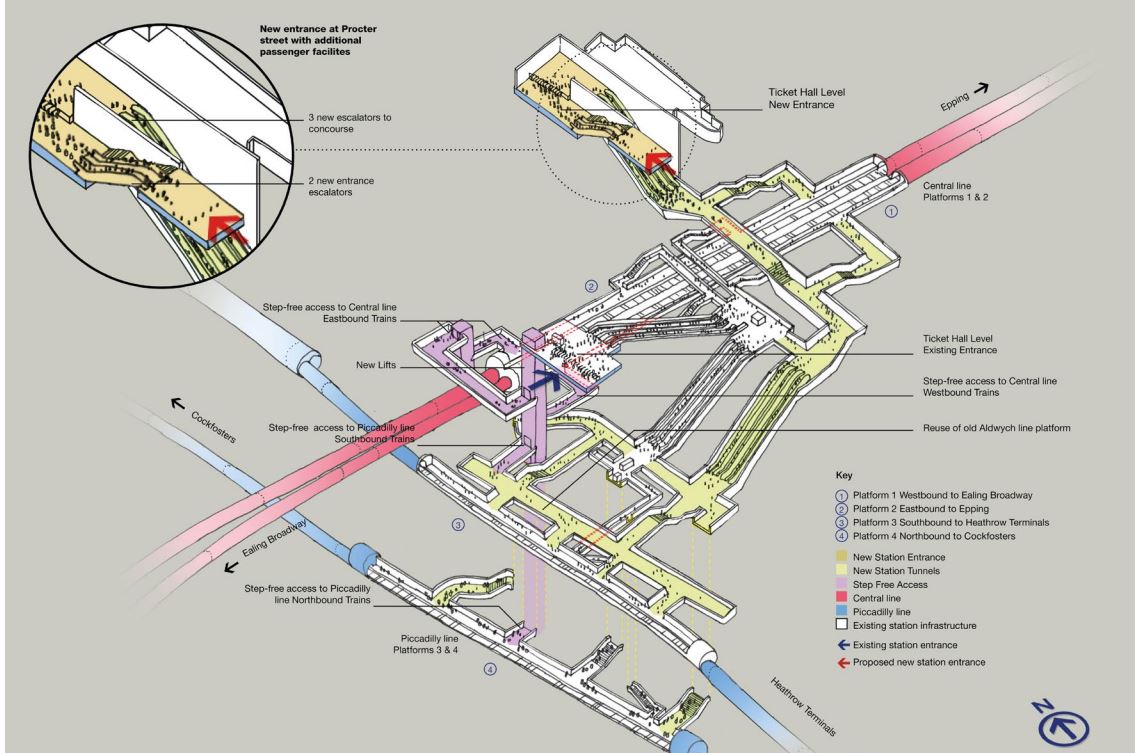
Holborn station is being extended with a new entrance. As with Euston, I suspect it has been designed with a feasible place for DLR platforms to be added.
This document on the TfL web site, gives more details of what is proposed at Holborn station.
I extracted this visualisation of the proposed station.
This map from carto.metro.free.fr shows the lines in the through and around the station.
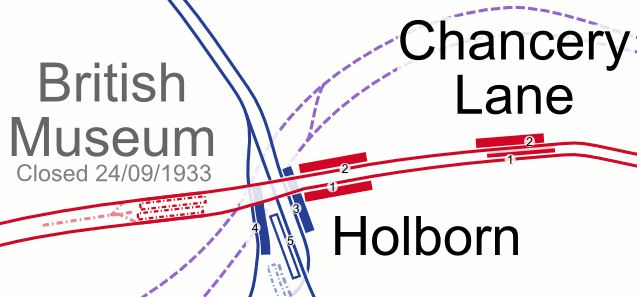
.Note, the Elizabeth Line, which is shown by dotted lines passes to the North of the station.
Conclusion
Not all these improvements need to be done, but each would improve transport in the City of London.
Silvertown Tunnel Easing Congestion, TfL Says
The title of this post, is the same as that of this article on the BBC.
This is the sub-heading.
Transport for London (TfL) has shared the first insights about the impact on traffic of the new Silvertown Tunnel, as part of commissioner Andy Lord’s latest report to the TfL Board.
These two initial paragraphs gives a summary of about three weeks traffic.
Analysis of data between 21 April and 11 May shows the Silvertown and Blackwall tunnels are being used by an average of about 88,000 vehicles on a typical weekday. Of these, about 20,000 are using the Silvertown Tunnel.
Before the tunnel opened on 7 April, about 100,000 vehicles used the Blackwall Tunnel on weekdays.
TfL are claiming that this 12,000 drop in traffic is helping to ease congestion.
Logically, a drop in traffic will ease congestion, but the BBC article also says this.
However, it said it was aware of some increased traffic volumes at other river crossings, including the Woolwich Ferry.
The only other river crossings in the area are the Rotherhithe Tunnel and the Woolwich Ferry, both of which are free to all users.
So is the drop in traffic through the Blackwall and Silvertown Tunnels, due to drivers objecting to paying a toll and taking a free route instead?
On The Buses
The BBC article says this about bus passengers.
Mr Lord’s report also provided ridership data about the three bus services that operate through both tunnels: the new Superloop SL4, the extended route 129 and the 108, which already ran through the Blackwall Tunnel before 7 April.
Across the routes there is a daily average of more than 20,000 passengers making use of these services, of which typically about 7,000 are crossing the river using one of the two tunnels. In March 2025, there were about 2,700 crossings a day made using route 108.
The increase in bus passengers is not surprising.
Before the opening of the Silvertown Tunnel, there was just this bus service through the Blackwall Tunnel.
- London Bus 108 – Stratford and Lewisham via North Greenwich.
This has now been joined by, these bus services through the Silvertown Tunnel.
- London Bus 129 – Great Eastern Quay and Lewisham via City Airport and North Greenwich.
- London Bus SL4 – Canary Wharf and Grove Park via East India, Blackheath and Lee.
Note how the buses call at rail stations, an airport and other important traffic interchanges.
In Could The Silvertown Tunnel Handle More Buses?, I asked if buses through the Silvertown Tunnel should be increased?
Given that traffic through the combined Silvertown/Blackwall complex has dropped by 12,000 vehicles per day, that must leave space for a few buses or coaches.
- Assuming, that one bus or coach takes up the space of four cars, that would be space for 3,000 buses/coaches per day.
- Also assuming the bus and coach services are run on a twenty-four hour basis, that would be 125 buses/coaches per hour.
If the bus and coach services ran every ten minutes, that would say, there is space in the tunnel for up to a dozen new bus or coach routes.
There could develop a virtuous circle and feedback loop, which drives the tunnel to a state of equilibrium, where traffic grows through the tunnels, until it is maximised.
Consider.
- Research shows a bus route from A to B through the tunnel would attract passengers.
- Drivers and their passengers decide that on balance a bus ride is more convenient, no slower and more affordable than driving.
- Congestion charges and other charges for non-electric vehicles will play their part.
- Green issues will also will play their part.
- Fewer cars will use the tunnels.
- Increasing tunnel charges will only drive more car users to the buses.
- More free space in the tunnel, will allow more bus and coach routes.
- More bus and coach routes will attract drivers from their cars.
Eventually, equilibrium will be reached.
A similar effect happens, when a new bypass is opened and as if by magic it fills up.
When it happens with train services I call it, London Overground Syndrome.
On Your Bike
The BBC article says this about cyclists.
There is also a cycle shuttle service, enabling cyclists to take their bikes free of charge on a bus through the Silvertown Tunnel. TfL said some 100-150 people were using it on a typical day.
While this is below its capacity, TfL believes usage will grow as cyclists adapt their routes to benefit from this safer crossing option.
When I used to cycle around London in the 1970s, I never cycled under the Thames, but I did generally cycle as fast as I could across the city. I wouldn’t have put my bicycle on a free bus.
So, is this why the cycle shuttle service is below capacity?
The BBC article says this.
TfL believes usage will grow as cyclists adapt their routes to benefit from this safer crossing option.
I believe, that if TfL should ever charge for the cycle shuttle service, they’d kill it.
In my opinion, they’d be better off providing secure bike parking, but even some of that seems lightly used.
Tunnel Performance
The BBC article says this about tunnel charging and performance.
TfL said it intended to publish quarterly factsheets on the operational performance of the tunnels’ toll scheme.
This will include information about how many people pay the charge, the compliance rates for vehicles using the tunnels and the number of Penalty Charge Notices that are issued.
The first of these factsheets will be published later this year, but initial data shows that compliance has steadily increased, with about 90% of motorists either paying a charge or benefiting from an exemption.
Surprisingly, so far, I haven’t met anybody who has driven through the Silvertown Tunnel, except for a couple of bus drivers.
Lumo To Expand Scotland’s Rail Network With New London-Stirling Rail Route From Spring 2026
The title of this post is the same as this news item from Lumo.
These three bullet points act as sub-headings.
- Lumo has secured a new route connecting Stirling with London Euston, launching as early as Spring 2026, offering passengers five daily affordable services.
- The announcement comes as Lumo hosted a special event at Holyrood attended by MSPs and Scotland’s MPs, spotlighting Lumo’s contribution to enhancing rail connectivity for previously underserved communities in Scotland.
- The route will provide first-ever direct services to London for Whifflet, Greenfaulds, and Larbert, further boosting economic opportunities and travel options in Scotland.
This first paragraph adds some more details.
Lumo, the UK’s leading Open Access rail operator, today announced it has secured five Class 222 six-car trains for its forthcoming route between London Euston and Stirling, beginning as early as Spring 2026. This expansion aims to enhance travel choice and connectivity for passengers along the central belt of Scotland both to England and to Stirling, offering five daily services with the operator renowned for affordability and efficiency.
I have some thoughts.
What Is The Complete Route?
This is the complete route.
Lumo’s new route will link London Euston directly to Stirling, also calling at Milton Keynes, Nuneaton, Crewe, Preston, Carlisle, Lockerbie, Motherwell, Whifflet (serving Coatbridge), Greenfaulds (serving Cumbernauld) and Larbert.
It is fully-electrified and can support 125 mph running most, if not all, of the way.
There Are No Six-Car Class 222 Trains
Consider.
- Currently, five-car Class 222 trains seat 192 in Standard Class and 50 in First Class.
- Currently, seven-car Class 222 trains seat 236 in Standard Class and 106 in First Class.
- Lumo’s five-car Class 803 trains set 402 in Standard Class.
- Lumo’s trains have no First Class.
I estimate that a six-car Class 222 train, with all Standard Class seating would accommodate not far off the 402 seats of one of Lumo’s bog-standard Class 803 trains.
Having identical numbers of passengers on the two fleets, must surely bring operational advantages.
- A six-car Class 222 train could replace a five-car Class 803 train or vice-versa, if Lumo were short of trains.
- Class 222 trains are able to take the Great Northern and Great Eastern Joint Line and other diversions during times of engineering works.
- The Class 222 trains would be able to run between Euston and Rochdale.
- The Class 222 trains might be useful for developing services on routes without electrification.
In the future, a six-car Class 222 train could be directly replaced in Lumo’s fleet by a five-car battery-electric Class 803 train.
The Class 222 Trains Are Diesel-Powered
All the noise and vibration could be a problem, but if I am right about the interchangeability of the two fleets, then this gives some advantages too.
- Earlier delivery of Class 222 trains, than new Class 803 trains, may enable Lumo to start services between Euston and Stirling at an earlier date.
- Earlier delivery of Class 222 trains, may allow selective withdrawal of Class 803 trains for updating.
- A mixed fleet of diesel and electric trains may be able to run more services during engineering works, by using diversion routes without electrification.
- Short route extensions to Dundee or Perth could be tried to assess demand.
There could be some good reasons to get the Class 222 trains into service sooner rather than later.
Will The Diesel Class 222 Trains Be Replaced By Battery-Electric Class 803 Trains?
Although London And Edinburgh By Lumo Using the Joint Line Diversion, was also about Lumo’s proposed Euston and Rochdale service, it was mainly about using battery power to use the Great Northern and Great Eastern Joint Line to avoid engineering works or wiring problems.
Both train types have the following abilities.
- Ability to go between Stirling and Euston via the West Coast Main Line.
- Ability to go between Rochdale and Euston via the West Coast Main Line.
- Ability to go between Stirling and King’s Cross via the East Coast Main Line.
- Ability to go between Edinburgh and King’s Cross via the East Coast Main Line.
- Ability to handle the Great Northern and Great Eastern Joint Line on their own power.
- Ability to handle diversions of up to around a hundred miles on their own power.
As Lumo’s new battery-electric Class 803 trains are delivered, Lumo’s two Anglo-Scottish routes and the one to Rochdale can go all-electric.
Can Lumo Trains Run As Pairs?
I’ve not seen or heard if Lumo have done this, but as I wrote in Ten-Car Hull Trains, I’ve seen Lumo’s sister company Hull Trains run ten-car trains.
As Wikipedia says that both Class 222 and Class 803 trains can run in multiple formations with other trains from the same class, I have to assume it is possible, providing the Fat Controller agrees to the practice.
Has Heidi Alexander Really Said Yes?
After the launch at Holyrood, in front of MSPs and Scottish MPs, it would now be difficult to say No!
But then there’s a by-election to the Scottish Parliament in Hamilton, Larkhall and Stonehouse on Thursday.
Is Lumo’s new route an easy drive from the constituency? A Scot, who has worked in the area said Yes!
Conclusion
I like FirstGroup’s plan to create a diesel fleet to introduce new services and back up their current ones, until the new battery-electric Class 803 trains are delivered.
Elon Musk’s Starlink Lined Up To Solve Train Wi-Fi Rage
The title of this post, is the same as that, as this article on the Telegraph.
This is the sub-heading.
Using the billionaire’s network of satellites could help rail passengers make reliable phone calls
These two paragraphs give more details.
Elon Musk’s Starlink satellites are being looked at as a potential solution to solving the issue of patchy Wi-Fi on Britain’s trains.
Train operators in England and Wales are examining whether the satellite-based internet provider could be used to boost connectivity after a six-month trial of the technology began in Scotland last month.
I don’t see any obvious technical reason, why not the technology wouldn’t work.
This Wikipedia entry describes the 2024 Talerddig Train Collision, when two trains collided on the Cambrian Line.
Better communications might have helped in avoiding or sorting out the incident.
Mind The Step At Warren Street Station
This warning message is at Warren Street station.
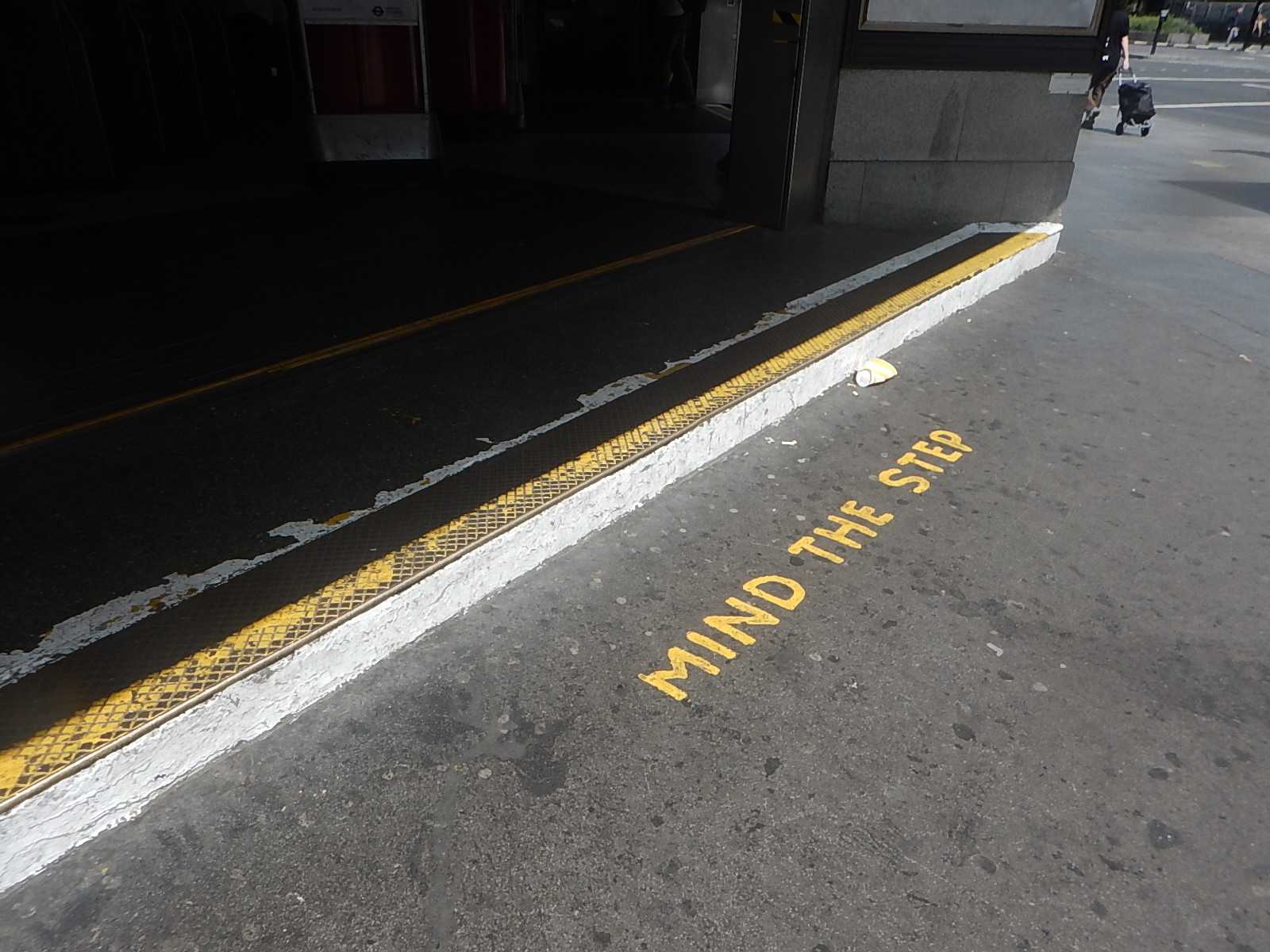
I sometimes miss these single steps due to my poor eyesight from my stroke, but the message alerted me, as I was coming out of the station.
I find it funny, that I will more usually trip going down stairs, rather than up.
But then rabbits and hares are more likely to take a tumble going downhill.
They also tend to run uphill, when they sense danger.
Keely Hodgkinson On The Underground
These pictures of Keely Hodkinson are on a Northern Line platform at Moorgate station on the Underground.




Keely obviously did well out of the deal, but will Nike get a return on the money, they spent?
I’ve seen a lot of top-class athletes in my time, both on television and in the stadium, and Keely is certainly one of the best.
/.
Bicester Village Station – 28th May 2025
I went to Bicester Village station today and took these pictures.
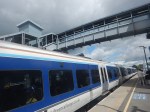
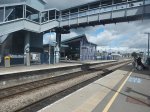
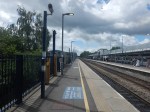
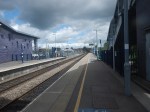

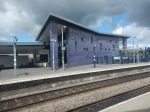
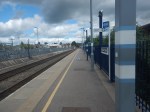
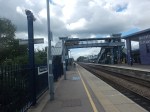
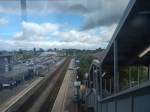
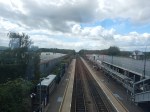
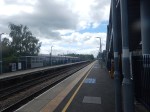
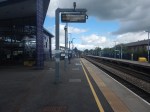
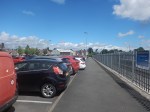
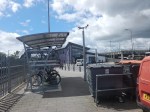

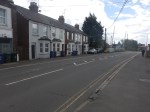
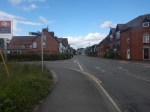
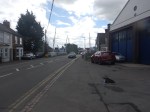
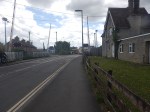
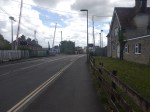
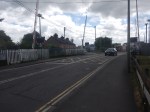
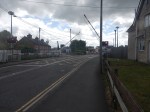
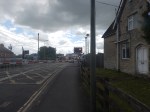
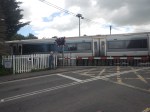



Note.
- The station is fully step-free, with lifts.
- There is a reasonable coffee-shop.
- There is a very large car-park.
There are two trains per hour (tph) in both directions between Marylebone and Oxford stations.
This Google Map shows the station.
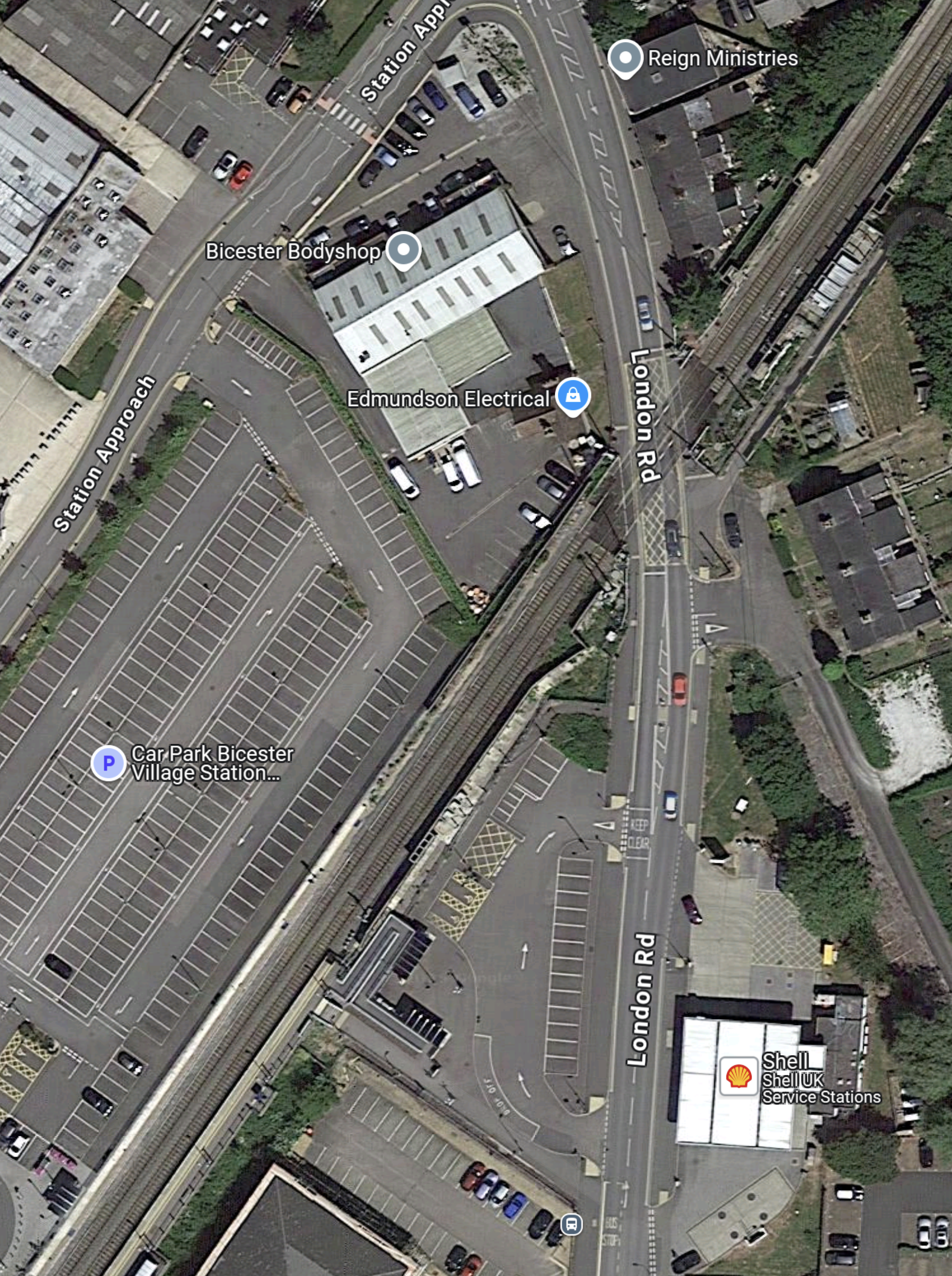
Note.
- London is to the North.
- Oxford is to the South.
- The footbridge dates from October 2021 and is not shown on the map.
- The London Road level crossing is in the North-East corner of the map.
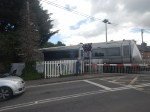
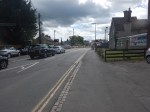
- The London Road level crossing is a problem, as I indicated in Bicester MP Calls On Chancellor To Fund London Road Crossing.
- To take the pictures of the level crossing, I crossed the footbridge to the North-West side of the station and walked through the car park to the station entrance on Station Approach. I then walked past the Bicester Bodyshop and Edmundson Electrical to the level crossing.
- The Shell garage can be clearly seen behind the level crossing.
During my walk of about thirty-five minutes three trains passed over the level crossing.
These are my thoughts.
The Long Platforms
The platforms are long.
- The Oxford-bound platform, which is Platform 1, is 240 metres long.
- The London-bound platform, which is Platform 2, is 230 metres long.
Both platforms will take a pair of five-car Hitachi Express Trains.
It looks to me, that East-West Rail are expecting a large number of passengers.
East-West Rail Plans For Powering Trains
I detailed these in Plans For Powering Trains And Details Of Our Upcoming Consultation.This post was based on an East-West Rail news item with the same title.
Distances include.
- London Marylebone and Oxford – 66.8 miles.
- Bletchley and Oxford – 47.2 miles.
Both distances are within range of five-car Hitachi Express Trains, that have been fitted with batteries.
I also suspect other manufacturers could supply suitable trains.
Thoughts On The London Road Level Crossing
This article on the BBC is entitled Level Crossing Petition Supported By Thousands.
This is the sub-heading.
A petition calling for a fully accessible underpass at a town’s level crossing has received more than 3,000 signatures.
These three paragraphs add more detail.
Launched by MP for Bicester and Woodstock Calum Miller, the petition calls on the government to ensure any replacement of the level crossing at London Road in Bicester includes access for cars, not just cyclists and pedestrians.
It is set to be closed on safety grounds when the East West Rail (EWR) line becomes fully operational, which many fear would cut off crucial access to thousands of residents.
Mr Miller will present the petition, which can only be signed in person, in Parliament on 3 June.
The argument is certainly hotting up.
But I believe, that a bridge that meets everybody’s requirements might be possible to be built.
- Suppose that all trains and locomotives passing through the level crossing had to be self-powered. Passenger trains could be battery-electric and freight locomotives could be either hydrogen or battery powered through the location of the level crossing.
- The track could also be lowered through the crossing.
- These actions would reduce the height of any bridge taking the road over the railway.
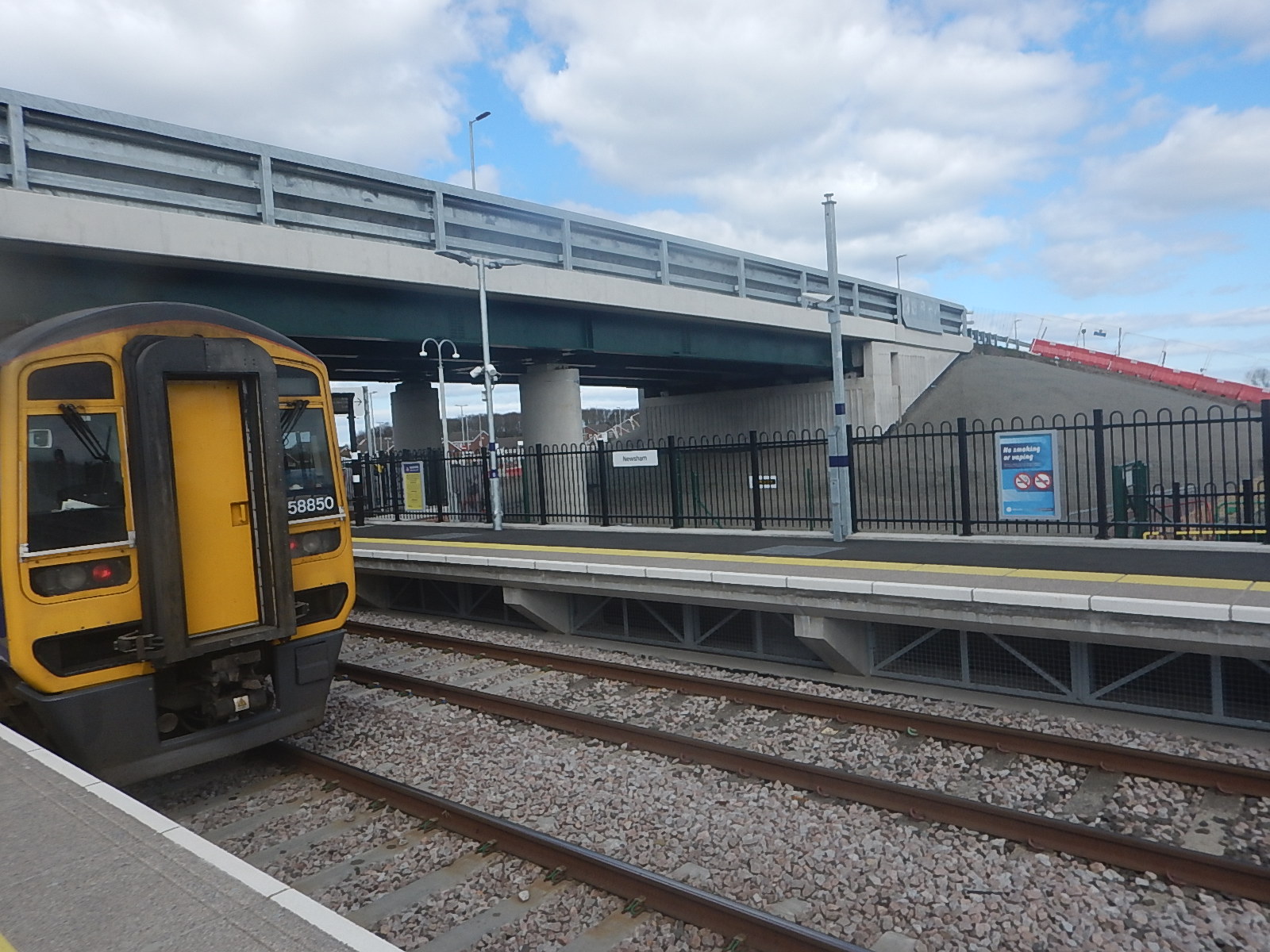
It looks to me that on the Northumberland Railway, which has recently opened, they had a similar problem, but they were able to squeeze a bridge into the space, as this 3D Google Map shows.
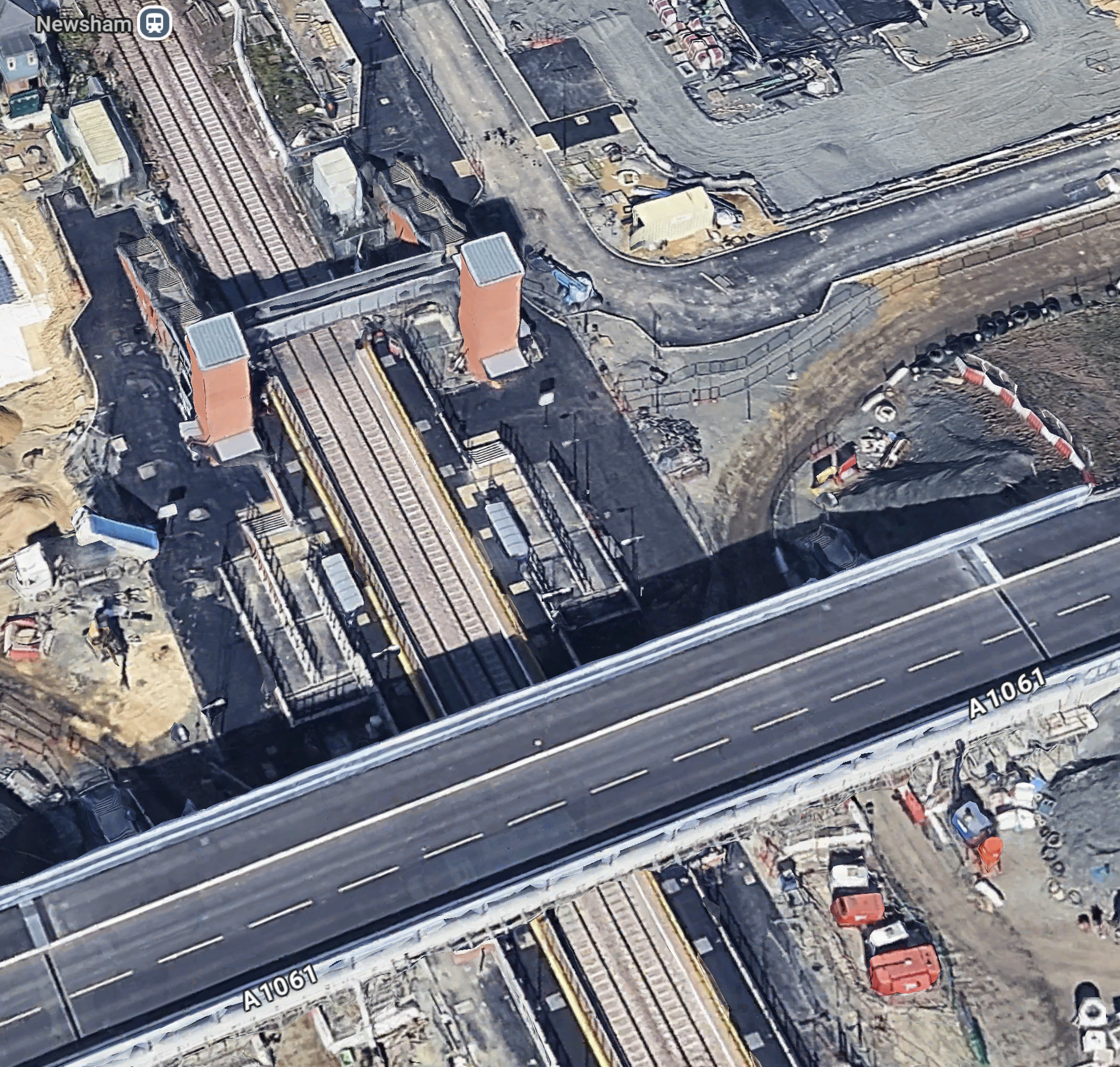
Note.
- The bridge looks like it carries a two-lane road and a pedestrian/cycle way.
- There is no electrification.
- I believe that the Northumberland Line could be run by battery-electric trains.
- The road bridge has been built to accept all traffic using the railway.
In Newsham Station – 30th March 2025, there are several pictures of the bridge. This one shows the bridge with a train.
In Trains: £34m For Revival Of 50-Year-Old North-East Railway Line, I said this about battery-electric trains for the Northumberland Line.
I’m drawn inextricably to the conclusion, that the trains should be 100 mph battery-electric trains.
Hitachi, who have a factory in the North-East, have announced their Regional Battery Train in July 2020, which is described in this Hitachi infographic.

These trains can be based on Class 385 trains.
- They are 100 mph trains.
- They come in three- and four-cars lengths.
- The three-car trains have 206 seats.
- They can work in pairs.
- They can use 25 KVAC overhead electrification.
- They have a range of 90 kilometres or 56 miles on battery power.
- The batteries would be charged on the ECML between Benton North junction and Newcastle station.
- The battery packs will be designed and manufactured by Hyperdrive Innovation in Sunderland.
- They have big windows for the views.
I’m sure Hitachi and Hyperdrive would like a fleet in service, just up the road from their factories.
Could a similar or even thinner bridge be squeezed in at Bicester Village station to take London Road over the railway?
I think it can, if they use some of the latest 3D modelling.
Congestion Charge Set To Rise By 20% To £18
The title of this post, is the same as that of this article on the BBC.
This is the sub-heading.
The Congestion Charge should rise by a fifth to £18, Transport for London (TfL) has proposed.
These three introductory paragraphs add more details.
On 2 January, the daily £15 fee for drivers of vehicles in central London will increase, the first such rise since June 2020 when the charge jumped 30% from £11.50.
If the charge is not paid within 48 hours, drivers face a penalty of £180, reduced to £90 if paid within 14 days. It operates between 07:00 and 18:00 on weekdays and 12:00 and 18:00 on weekends.
Drivers of electric cars, who currently travel free in the zone, were expecting to start paying the full charge from December but will now receive a 25% discount provided they are registered for auto pay. HGVs and vans will get a 50% discount.
I won’t be surprised to find, that there are a lot of quality cars going cheap.
This though is surely the most odious part of the new plans in the last paragraph.
Applications for new residents’ discounts from petrol and diesel car owners are set to be abolished altogether in March 2027. A public consultation, external will run until 4 August.
As I read that, it means if you had to move into London because of your job, you will have to buy an electric car.
It doesn’t bother me, as I don’t drive or own a car.
A New Era For Train Travel – FlixTrain Has Ordered 65 New European High-Speed Trains
The title of this post, is the same as that of this press release from Flix.
These four bullet points act as sub-headings.
- FlixTrain has ordered 65 new European high-speed trains, produced by Spanish train manufacturer Talgo, with locomotives supplied by Siemens
- The contract volume amounts up to EUR 2.4 bn, including certain maintenance services
- Flix sees enormous market potential for FlixTrain in Germany and Europe
- CEO André Schwämmlein: “We will start a new era of train travel”
These three paragraphs add more details.
FlixTrain, a subsidiary of the global travel–tech company Flix SE, today announced that it has ordered 65 new European high-speed trains. Talgo will provide the respective trainsets and certain maintenance services, while Siemens will provide the locomotives. The contract volume amounts up to EUR 2.4 bn, of which more than EUR 1 bn is already firmly committed.
With this strategic move, FlixTrain is responding to the growing demand for fast and affordable rail travel. The company intends to use the new high-speed trains to leverage the enormous market potential in Germany and Europe. The high-speed rail market in Germany is expected to grow by 45% by 2030, compared to 2021 volume. Across Europe, the market potential is even greater – around EUR 27 bn in 2023 with an expected annual growth of 4 – 5%.¹ In 2024 alone, FlixTrain expanded its offering by 40%, and recorded significant passenger growth, building on the strong results of 2023.
“We are pursuing a long-term strategy with FlixTrain and we will significantly expand our services in the coming years,” says André Schwämmlein, CEO and co-founder of Flix. “With the tremendous expansion of our train fleet, we will start a new era of train travel in Germany and Europe.” FlixTrain’s overall goal is to bring more people to sustainable travel by train: “We plan not only to increase our market share, but also to significantly grow the market itself”.
It looks like they’re creating a Lumo in Germany.
I have some thoughts.
The Politics
The press release says this about the German government’s view.
On the political side, the newly formed German government has acknowledged the immense potential of long-distance rail by committing to long-term investments in rail infrastructure and a reform of the track access system in Germany. These plans could unlock more private investment in Germany’s rail sector, fostering innovation for a broader range of services. Ultimately, this would lead to more competition and a better offer for customers.
I don’t think, they would be allowed to set up in the UK, as they take revenue from Great British Railways.
I can also see FlixTrain appealing to a future Reform UK government.
Passenger Service
The press release says this.
At the same time, FlixTrain works closely with the European Commission to foster European train travel and to provide a better overall offer for passengers.
I can see FlixTrain providing a better value service in Europe, than that provided in the UK by Great British Railways.
FlixTrain Is A European Product
The press release says this.
Currently, thanks to a comprehensive cooperation with regional transport, around 650 destinations are bookable via FlixTrain; 50 cities are directly connected to the vast FlixTrain network. Together with around 300 FlixBus stops in Germany alone, Flix provides a unique intermodal long-distance travel offer of international bus services and high-speed train connections. The new trains are intended to drive expansion in Germany and other European countries. “We see FlixTrain as a European product. Starting from our home market, we also want to make the service available in other countries” adds Schwämmlein.
I regularly see Flixbuses in London on their way to where?
Conclusion
If FlixTrain is allowed to setup in the UK, Great British Railways is finished for long distance services.
So of course, it won’t be allowed to setup in the UK or even come through the Channel Tunnel.
Liverpool Lime Street Station – 23rd May 2025
I took these pictures as I passed through Liverpool Lime Street station on Friday.











Note.
- The neo-classical building opposite the station is St. George’s Hall, which is Grade I Listed.
- Nikolaus Pevsner expressed his opinion that St. George’s Hall is one of the finest neo-Grecian buildings in the world.
- Lime Street station is Grade II Listed.
- The building with the two towers on the front of the station is the four-star Radisson RED Liverpool hotel.
- The statue in the last picture is of Ken Dodd and Bessie Braddock.
The large plaza between Liverpool Lime Street station and St. George’s Hall gives a big welcome to visitors to Liverpool.

