Can East Midlands Railway Reach Nottingham Without More Electrification?
I went to Nottingham for the day yesterday.
- My Super Off-Peak Return ticket cost me £55.30 with a Senior Railcard.
- The Class 810 train is without doubt the best Hitachi Intercity Express Train of a good bunch.
- St. Pancras and Nottingham is 126.4 miles.
- There is no electrification between South Wigston Junction and Nottingham, which is 31.1 miles, although the change seems to be said to take place at Kilby Bridge junction.
- It would appear that, when the Class 810 trains are fitted with batteries, they will need a range of at least 62.2 miles, to do a return trip to Nottingham.
- In The Data Sheet For Hitachi Battery Electric Trains, I state that the maximum range of a three-battery five-car train is 117 miles. This figure has been seen by Hitachi and they didn’t say it was too high.
- I look forward to doing the same trip in a few months, using batteries to the North of the section between Kilby Bridge and South Wigston junctions.
It could be the first battery-electric 125 mph express train.
Now that is what I call affordable electrification.
I have some further thoughts.
Kilby Bridge And Wigston Junctions
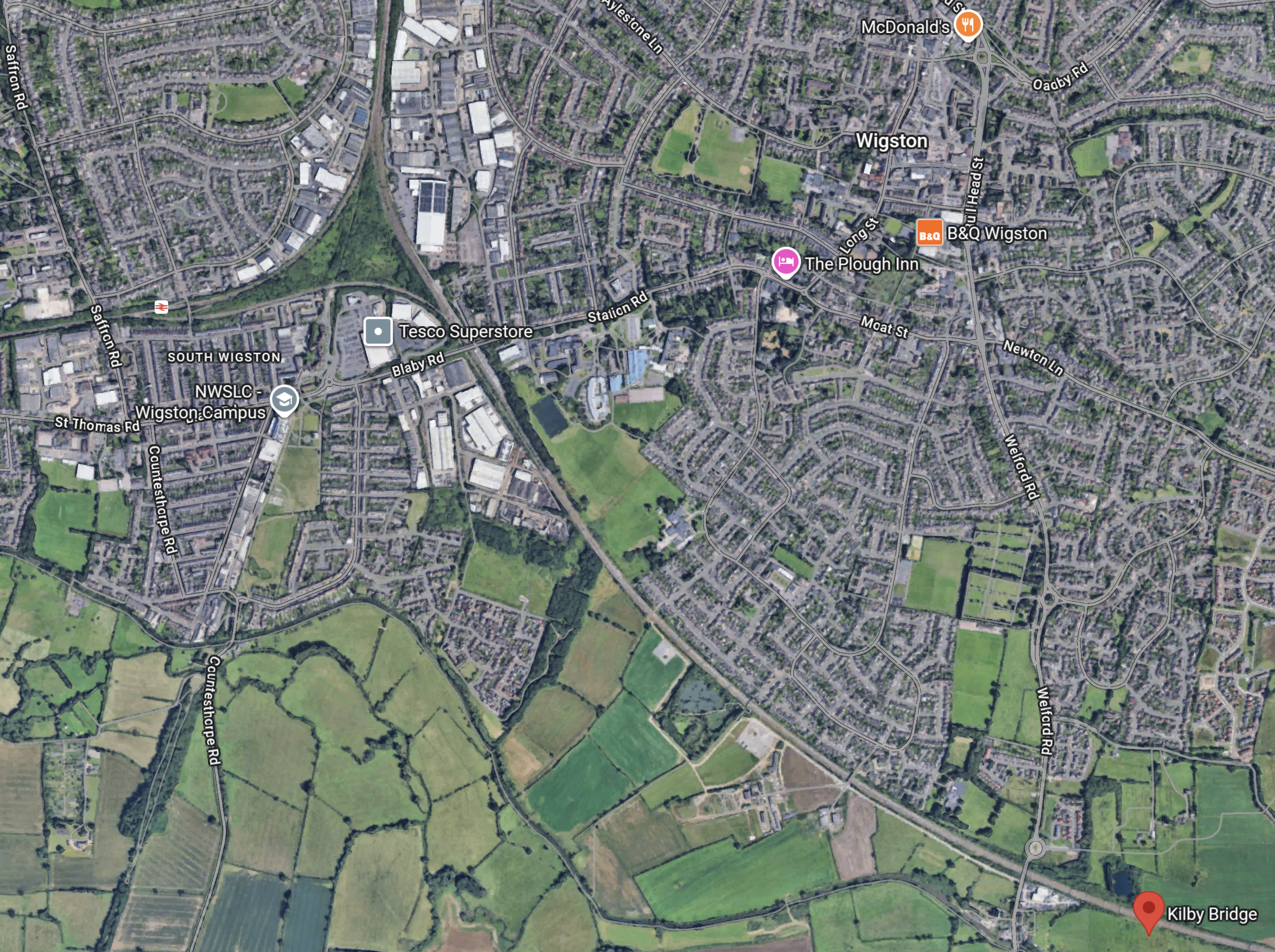
This Google Map shows the Midland Main Line between Kilby Bridge and Wigston junctions.
Note.
- Kilby Bridge junction is marked by the red arrow in the South-East corner.
- The Midland Main Line runs through Kilby Bridge junction.
- South-East it goes to London.
- North-West is leads to the large triangular Wigston junction, with South Wigston station at its Western point.
- The Northern point of Wigston junction leads to Leicester.
- There are three tracks between Wigston and Kilby Bridge junctions.
- All tracks to the South of South Wigston junction are electrified.
- The distance between Wigston and Kilby Bridge junctions is two miles.
- The maximum speed between Wigston and Kilby Bridge junctions appears to be at least 100 mph.
It looks to me, that this section of track has been designed, so that trains can reliably raise and lower pantographs at the highest speed possible.
The Electrification Problem At Leicester
Some years ago I came back to London from Leicester with a group of drivers. At one point, the conversation turned to electrification and they said that they had met a Network Rail engineer, who had told them, that the bridge over Leicester station was rather low for electrification and the track couldn’t be lowered because Leicester’s main sewer was underneath the railway.
In Leicester Station – 4th Jan 2022, I show a selection of pictures of Leicester station’s Grade II Listed frontage.
I doubt it would be possible to seriously alter Leicester station to electrify it, as the Heritage Taliban would have a field day.
But if I’m right that all services will be run North of Wigston on batteries, there will be no need to electrify through Leicester station.
Not only would using battery-electric trains probably be more affordable than electrification, but also because of the Leicester electrification problem, it would be less inconvenient for passengers.
Changing From Electric Going North
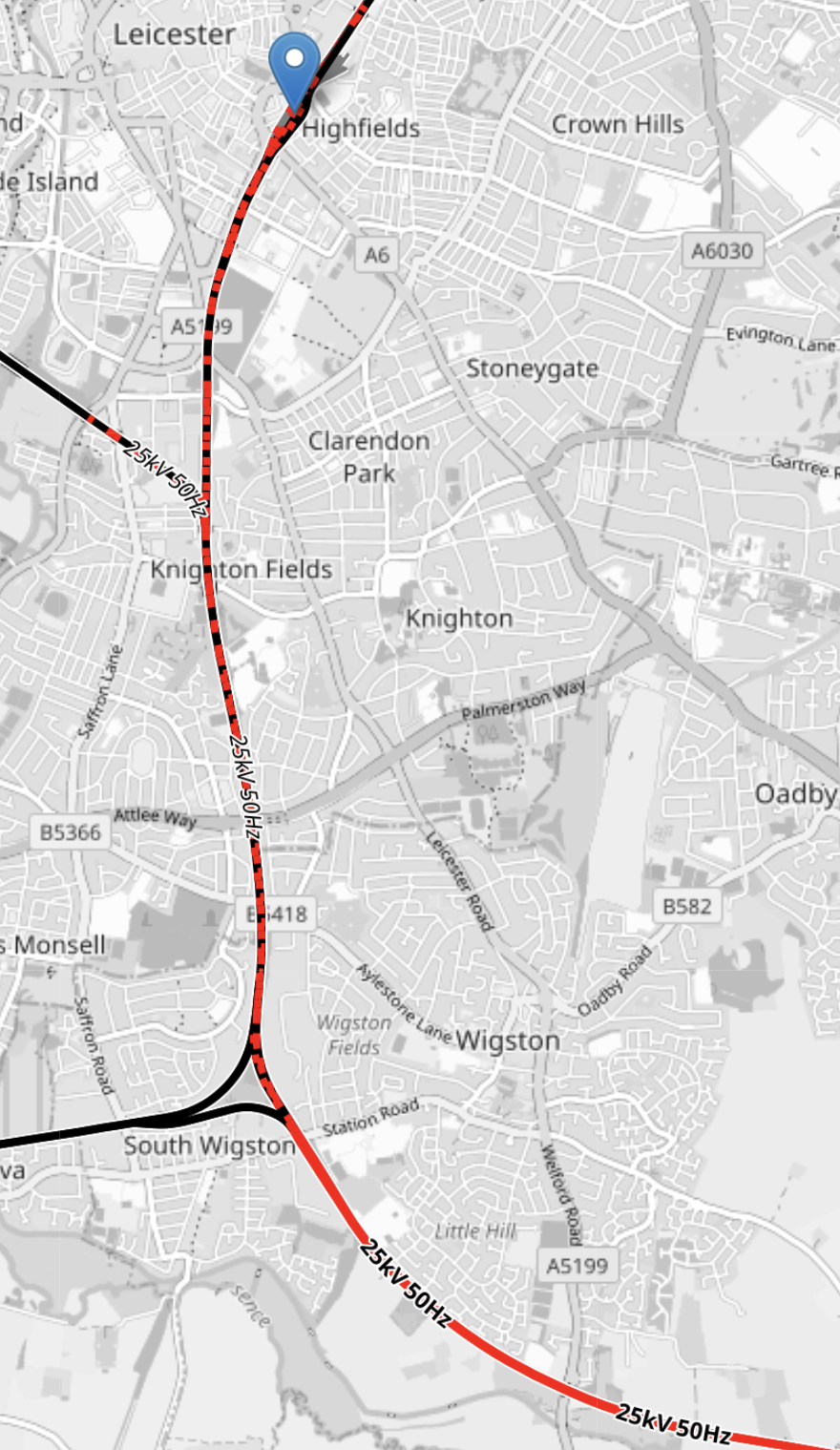
This OpenRailwayMap shows the electrification between Wigston Junction and Leicester station.
Note.
- Leicester station is marked by the blue arrow.
- The triangular Wigston junction is clearly visible.
- Kilby Bridge junction is South-East of Wigston junction.
- Leicester station and South Wigston junction is 3.6 miles and the tracks are shown as dashed black and red, which means future electrification.
I wonder, if in the future, if the battery-electric don’t have enough range, this is a simple section of electrification, that could be installed. Every extra mile of electrification between Leicester station and South Wigston junction would mean two miles could be chopped from the distance the trains had to travel on batteries.
But in the interim, going North, the driver would just make sure there was enough electricity in the batteries and momentum in the train, when passing South Wigston.
As trains arriving at South Wigston junction will typically have been running for over an hour, they should have full batteries to start theur explore of the North.
Changing To Electric Going South
The trains from the North, must have enough juice in the battery to reach South Wigston, so they can connect to the electrification for the run to London.
Could A Four-Battery Class 810 Train Reach Sheffield?
Consider.
- St. Pancras and Sheffield is 164.7 miles.
- There is no electrification between South Wigston Junction and Sheffield, which is 89.4 miles, although the change seems to be said to take place at Kilby Bridge junction.
- It would appear that, when the Class 810 trains are fitted with batteries, they will need a range of at least 178.8 miles to do a return trip to Sheffield.
- If a three-battery five-car Class 810 train has a battery range of 117 miles, on a pro-rata basis a four-battery five-car will only have a range of 156 miles.
That would be a big ask.
Could A Three-Battery Class 810 Train Reach Sheffield?
What would happen if one diesel engine was still installed?
These are my thoughts.
- As a Graduate Control Engineer, I wouldn’t be surprised that Hitachi have a strategy to do this with a tri-mode version of the Class 810 train.
- Hitachi have already announced the Class 820 train for Grand Central Trains and this is a tri-mode version of their InterCity Express, which is described in this Wikipedia entry.
- As Grand Central have said that the Class 820 trains, will be replacing the Class 180 trains, that run to Bradford Interchange and Sunderland, a tri-mode Class 810 would surely be able to run to Sheffield.
Could East Midlands Parkway Station Be Used For Opportunity Charging?
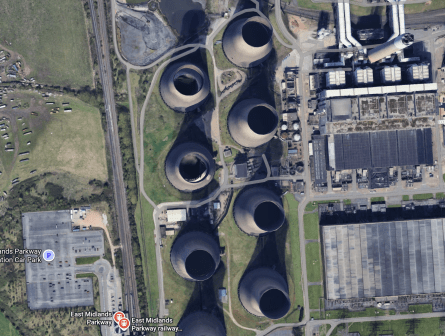
This Google Map shows East Midlands Parkway station with the massive derelict Radcliffe-on-Soar coal-powered power station alongside.
Note.
- The Midland Main Line running North-South across the map.
- East Midlands Parkway station on its Western side.
- The derelict Radcliffe-on-Soar coal-powered power station on its Eastern side.
A vast site like this must have uses.
I asked Google AI,”What Are The Plans For Radcliffe-on-Soar Power Station?” and received this reply.
The former Ratcliffe-on-Soar power station site is undergoing a multi-year decommissioning and demolition process, lasting until at least 2030 or 2031, to be transformed into a zero-carbon technology, energy, and advanced manufacturing hub.
Key details of the redevelopment include:
Site Vision: The 273-acre brownfield site has been earmarked to become a major business hub focused on advanced manufacturing (e.g., electric car batteries), low-carbon energy production, energy storage, and AI-driven data centres.
Economic Status: The site is a core component of the East Midlands Freeport, which offers significant financial incentives to attract business investment and create an estimated 7,000 to 8,000 jobs.
Demolition Timeline: The first demolition works are expected to begin in 2026, with the iconic cooling towers and main chimneys scheduled for controlled demolition between 2029 and 2030.
Planning Framework: A Local Development Order (LDO) granted by Rushcliffe Borough Council is in place to fast-track the planning process for these modern, green-focused industrial uses.
As the site will need to be supplied with a reliable energy supply for some of the proposed uses, I suspect power could be supplied to electrify the lines through East Midlands Parkway station, so that trains going to the North could take the opportunity to have a Formula One-style “Splash-and-Dash!”
Would Opportunity Charging At East Midlands Parkway Station Allow Extra Destinations?
Holders of the East Midlands Franchise have in the past, served other destinations in the past, either with regular services or engineering or seasonal diversions.
Possible destinations could be.
Cleethorpes
Distance to South Wigston – 112.4 miles
Doncaster
Distance to South Wigston – 108.1 miles – But could top up at Doncaster.
Rotherham Central
Distance to South Wigston – 102.2 miles
Scunthorpe
Distance to South Wigston – 112.4 miles
Bicester Village Station – 28th May 2025
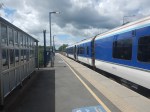
I went to Bicester Village station today and took these pictures.
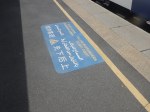
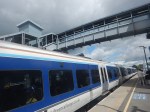
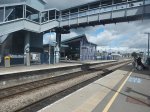
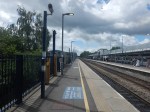
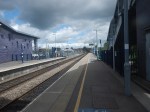

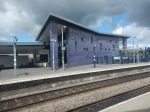
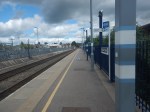
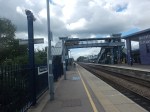
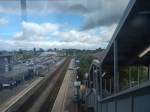
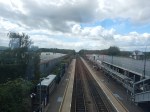
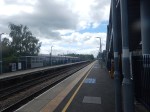
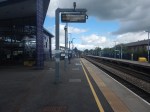
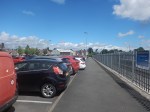
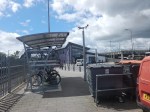
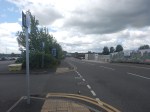
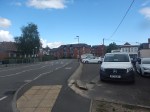
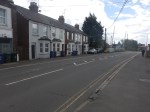
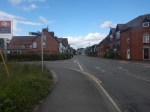
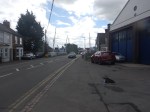
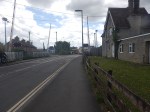
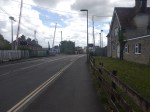
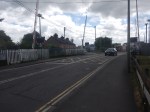
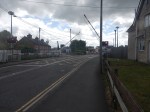
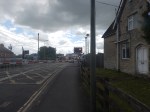
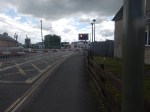
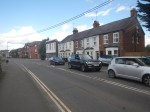
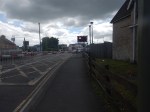
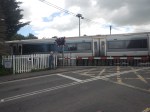
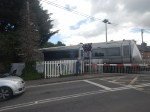
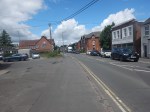

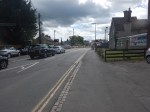

Note.
- The station is fully step-free, with lifts.
- There is a reasonable coffee-shop.
- There is a very large car-park.
There are two trains per hour (tph) in both directions between Marylebone and Oxford stations.
This Google Map shows the station.
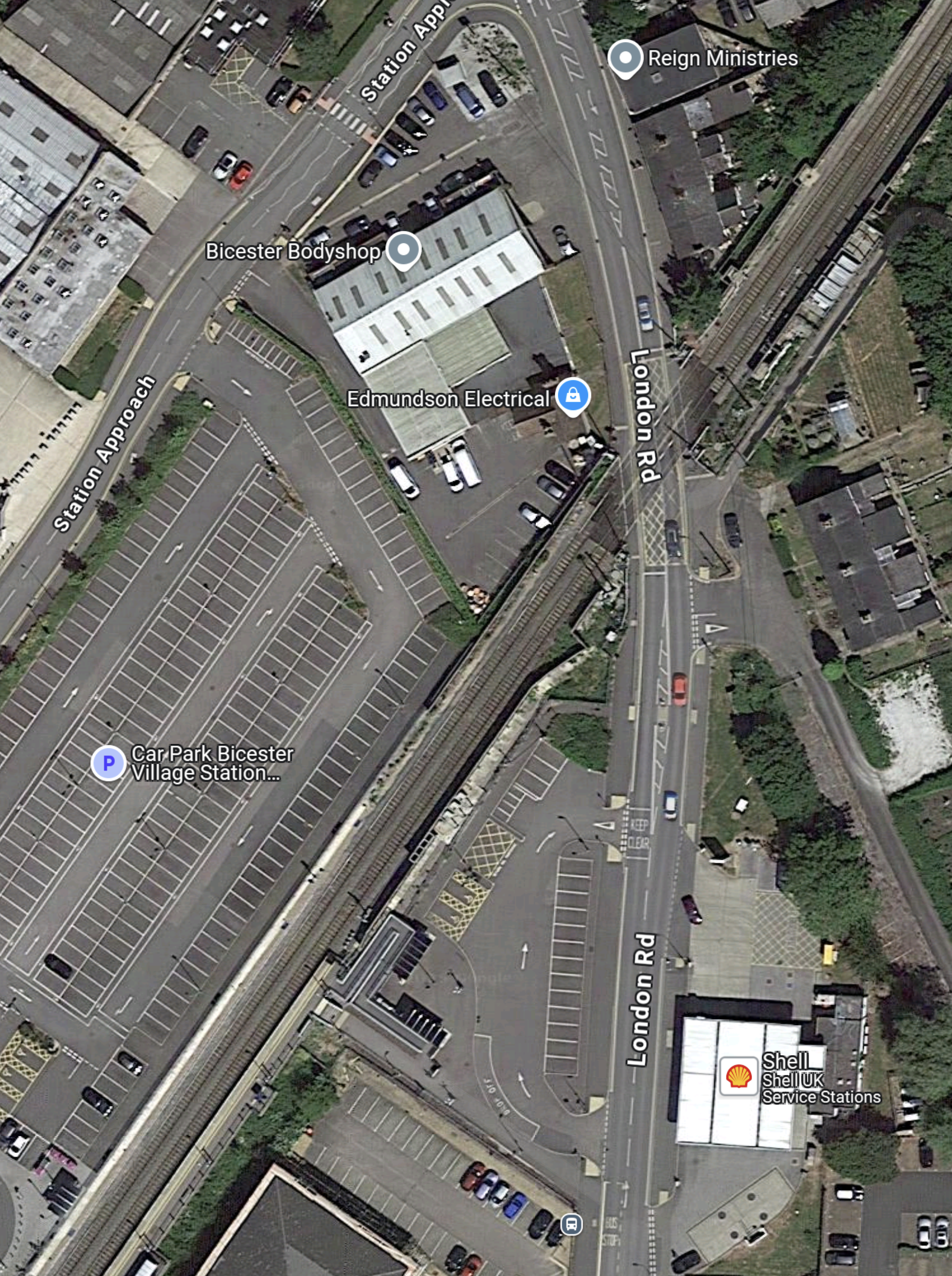
Note.
- London is to the North.
- Oxford is to the South.
- The footbridge dates from October 2021 and is not shown on the map.
- The London Road level crossing is in the North-East corner of the map.
- The London Road level crossing is a problem, as I indicated in Bicester MP Calls On Chancellor To Fund London Road Crossing.
- To take the pictures of the level crossing, I crossed the footbridge to the North-West side of the station and walked through the car park to the station entrance on Station Approach. I then walked past the Bicester Bodyshop and Edmundson Electrical to the level crossing.
- The Shell garage can be clearly seen behind the level crossing.
During my walk of about thirty-five minutes three trains passed over the level crossing.
These are my thoughts.
The Long Platforms
The platforms are long.
- The Oxford-bound platform, which is Platform 1, is 240 metres long.
- The London-bound platform, which is Platform 2, is 230 metres long.
Both platforms will take a pair of five-car Hitachi Express Trains.
It looks to me, that East-West Rail are expecting a large number of passengers.
East-West Rail Plans For Powering Trains
I detailed these in Plans For Powering Trains And Details Of Our Upcoming Consultation.This post was based on an East-West Rail news item with the same title.
Distances include.
- London Marylebone and Oxford – 66.8 miles.
- Bletchley and Oxford – 47.2 miles.
Both distances are within range of five-car Hitachi Express Trains, that have been fitted with batteries.
I also suspect other manufacturers could supply suitable trains.
Thoughts On The London Road Level Crossing
This article on the BBC is entitled Level Crossing Petition Supported By Thousands.
This is the sub-heading.
A petition calling for a fully accessible underpass at a town’s level crossing has received more than 3,000 signatures.
These three paragraphs add more detail.
Launched by MP for Bicester and Woodstock Calum Miller, the petition calls on the government to ensure any replacement of the level crossing at London Road in Bicester includes access for cars, not just cyclists and pedestrians.
It is set to be closed on safety grounds when the East West Rail (EWR) line becomes fully operational, which many fear would cut off crucial access to thousands of residents.
Mr Miller will present the petition, which can only be signed in person, in Parliament on 3 June.
The argument is certainly hotting up.
But I believe, that a bridge that meets everybody’s requirements might be possible to be built.
- Suppose that all trains and locomotives passing through the level crossing had to be self-powered. Passenger trains could be battery-electric and freight locomotives could be either hydrogen or battery powered through the location of the level crossing.
- The track could also be lowered through the crossing.
- These actions would reduce the height of any bridge taking the road over the railway.
It looks to me that on the Northumberland Railway, which has recently opened, they had a similar problem, but they were able to squeeze a bridge into the space, as this 3D Google Map shows.
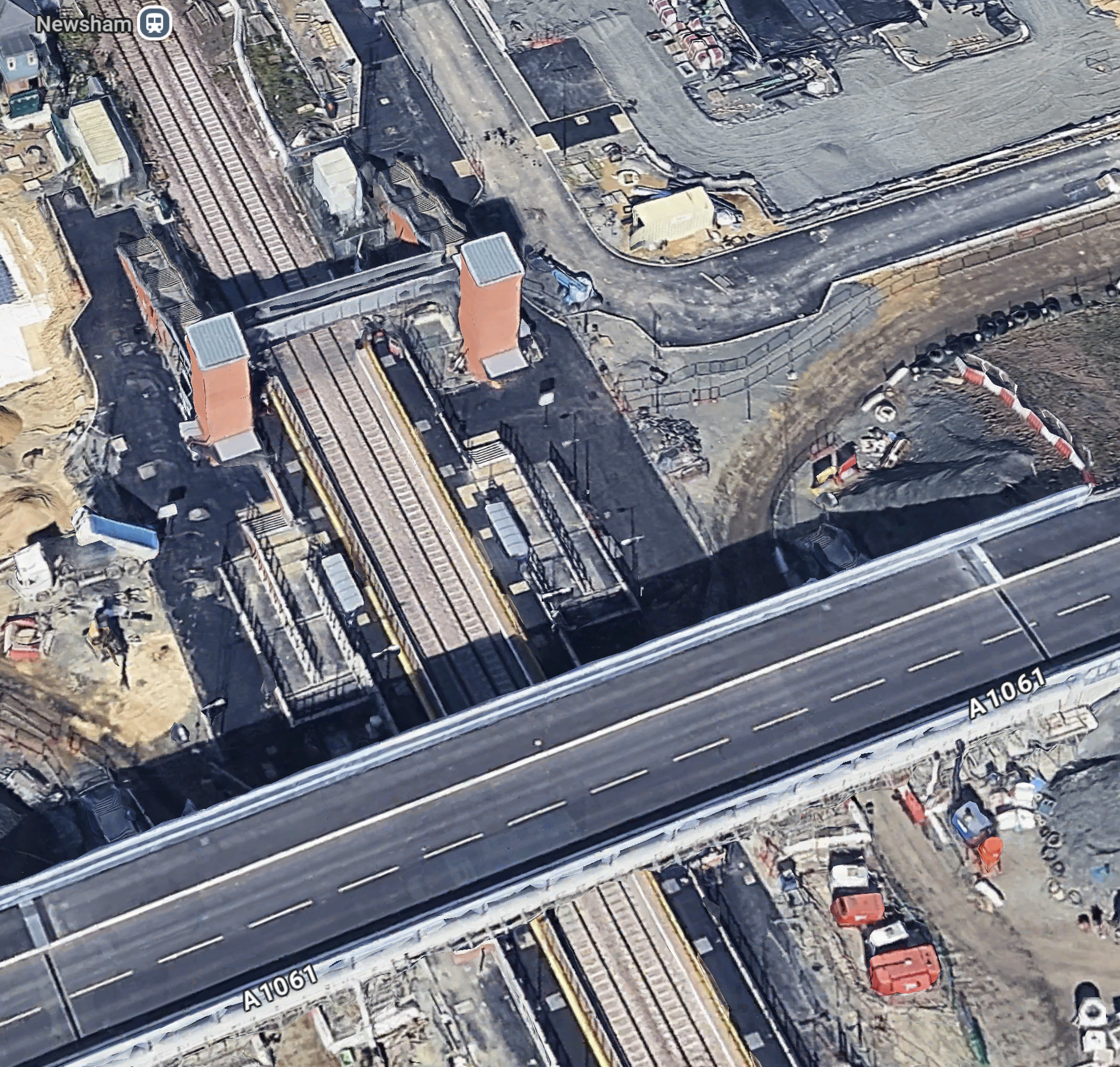
Note.
- The bridge looks like it carries a two-lane road and a pedestrian/cycle way.
- There is no electrification.
- I believe that the Northumberland Line could be run by battery-electric trains.
- The road bridge has been built to accept all traffic using the railway.
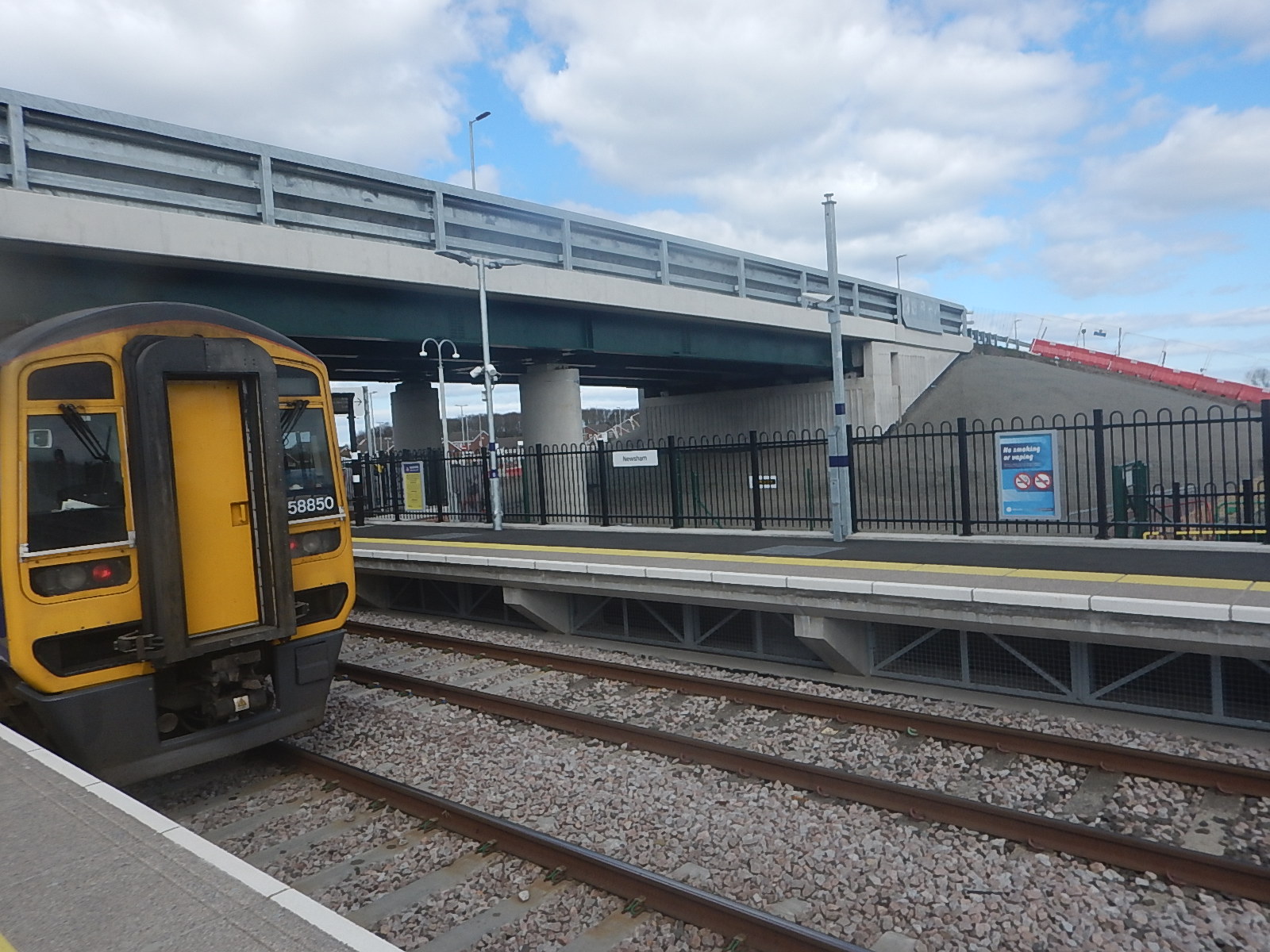
In Newsham Station – 30th March 2025, there are several pictures of the bridge. This one shows the bridge with a train.
In Trains: £34m For Revival Of 50-Year-Old North-East Railway Line, I said this about battery-electric trains for the Northumberland Line.
I’m drawn inextricably to the conclusion, that the trains should be 100 mph battery-electric trains.
Hitachi, who have a factory in the North-East, have announced their Regional Battery Train in July 2020, which is described in this Hitachi infographic.

These trains can be based on Class 385 trains.
- They are 100 mph trains.
- They come in three- and four-cars lengths.
- The three-car trains have 206 seats.
- They can work in pairs.
- They can use 25 KVAC overhead electrification.
- They have a range of 90 kilometres or 56 miles on battery power.
- The batteries would be charged on the ECML between Benton North junction and Newcastle station.
- The battery packs will be designed and manufactured by Hyperdrive Innovation in Sunderland.
- They have big windows for the views.
I’m sure Hitachi and Hyperdrive would like a fleet in service, just up the road from their factories.
Could a similar or even thinner bridge be squeezed in at Bicester Village station to take London Road over the railway?
I think it can, if they use some of the latest 3D modelling.

