Irish Rail And Porterbrook Order MTU Hybrid PowerPacks
The title of this post is the same as that of this this article on the International Rail Jotnal..
This is the first paragraph.
Irish Rail (IE) and British rolling stock leasing company Porterbrook have signed contracts with Rolls-Royce for the supply of 13 MTU Hybrid PowerPacks, the first firm orders for the hybrid rail drives.
Other points are made in the article.
- IE has ordered nine PowerPacks for Class 22000 trains. If the technology works they intend to convert all 63 trainsets, which will need 234 PowerPacks, as each car has a diesel engine.
- Porterbrook has ordered four for Class 168 and Class 170 trains.
- The PowerPacks will be delivered between mid-2020 and 2021.
- The MTU engines are built to EU Stage 5 emission regulations.
- The PowerPacks can switch to battery power in stations and sensitive areas.
- Under battery power, noise is reduced by 75 % and CO2 emissions by up to 25 %
- Operating costs are significantly reduced.
- The PowerPacks have regenerative braking, thus they reduce brake pad wear.
- Due to electric power, the trains have been acceleration, which may reduce journey times.
It seems that passengers, train operating companies, train leasing companies and those that live by the railway are all winners.
If the concept works reliably and meets its objectives, I can see MTU selling a lot of Hybrid PowerPacks.
Which Operators Will Be Used For Trials?
This is a valid question to ask and I’ll put my thoughts together.
Irish Rail Class 22000 Train
These trains only run in Ireland with one operator;Irish Rail, so they will be used for trials.
As each car has one MTU diesel engine and Irish rail are stated in Wikipedia as wanting to run three-car and six-car sets, could they be converting one train of each length?
British Rail Class 168 Train
All the nineteen Class 168 trains of various lengths are in Chiltern Railway’s fleet, they will be the trial operator.
Chiltern also have nine two-car trains, which could be ideal for trial purposes as they will need two Hybrid PowerPacks.
British Rail Class 170 Train
Porterbrook own upwards of thirty two-Car Class 170 trains with CrossCountry, Greater Anglia and West Midlands Trains.
As Greater Anglia and West Midlands Trains are replacing their Class 170 trains, this means that CrossCountry will soon be the only user of two-car units.
The four two-car trains from Greater Anglia, will be going to Trains for Wales (TfW).
TfW currently has thirty two-car Pacers in its fleet, which must be replaced by the end of 2019.
TfW is bringing in the following trains.
- Nine four-car Class 769 trains from Porterbrook.
- Eight three-car Class 17 trains from Greater Anglia
- Four two-car Class 17 trains from Greater Anglia
This is a total of sixty-eight cars.
So TfW are replacing a load of scrapyard specials with quality, more powerful trains, with approximately 13 % more capacity.
TfW are proposing to use the Class 170 trains on the following routes.
- Heart of Wales line (from 2022)
- Regional services between South and West Wales
- South Wales metro lines – Ebbw Vale/Maesteg (until 2022)
- Crewe-Shrewsbury local services (from 2022)
There is a mixture of routes here and it would be a good trial,
Other Trains
If the MTU PowerPack proves successful and leads to widespread conversion of the Class 168 and Class 170 fleets, will we see the twenty Class 171 trains and thirty-nine Class 172 trains converted to hybrid power?
Conclusion
It looks like a good solid project to me!
Crossrail’s Class 345 Trains Are Not Suburban Trumdlers
Over the last couple of days, I’ve had several trips on Class 345 trains, running to Hayes & Harlington station.
- I found that I was able to time the trains at almost 80 mph in places.
- They don’t seem to go this fast to Shenfield.
- Wikipedia says the maximum speed of the trains are 90 mph.
I would not be surprised to see 90 mph cruising on some of the longer stretches between stations towards Reading.
This will surely mean that when Crossrail opens to Reading, the Crossrail service with all its stops might not be the slowest way to travel between Reading and London.
Consider.
- Some Class 800 trains do the trip in as fast as 26 minutes.
- Class 387 trains do the trip with eight stops in 56 minutes.
- Most Crossrail Class 345 trains from Reading To Paddington will have fourteen stops.
- In the Peak, two Class 345 trains in each hour, will take just five stops.
Although the Class 387 are modern trains, they probably don’t have the performance and certainly don’t have the digital signalling of the Class 345 trains.
I suspect that even with fourteen stops, the Class 345 trains will still do the journey in under an hour, when Crossrail is completed.
I suspect that many travellers between Reading and London will be changing their routes.
Crossrail To Reading In December 2019
It is rumoured that Crossrail will open to Reading in December 2019, with all services terminating at Paddington in Brunel’s station.
I believe that the Class 345 trains will be able to provide a high-capacity service between Paddington and Reading, which will complement the faster and mostly non-stop Great Western Railway services.
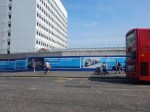
Hayes & Harlington Station – 19th April 2019
These pictures show Hayes & Harlington station.
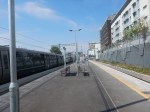


It will be an important station.
- There is still a lot of work to do for the station to look like the picture on the hoarding.
- There are a lot of residential development in the area, including the conversion of an old office block, where I once worked to flats.
- It will be a step-free interchange for local passengers from the West to Heathrow.
The station and the new bay platform are already fully operational.
Crossrail To Reading In December 2019
As current rumours are that Crossrail will open in December to Reading, it looks like the station will be usable.
It is planned that Hayes & Harlington station will have a train every six minutes.
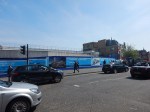
Southall Station – 19th April 2019
These pictures show Southall station.


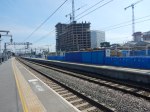

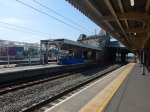


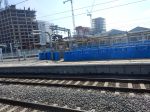

The station still needs the new footbridge to be installed and lifts from the station buildings to the platforms.
It appears that there will be a Crossrail train every six minutes all day in both directions.
The Missing Footbridge
This picture was taken on July 4th, 2016.

Note the footbridge across the station, that doesn’t appear in the pictures I took today.
This picture, that I took today, clearly shows blue barriers around places where the footbridge might be installed on the two island platforms.

Is it a replacement bridge over the station being installed, or is it just a footbridge connecting the platforms?
Or could it be for both purposes?
Preparing For The Brentford Branch
This map from carto.metro.free.fr shows the layout of lines at Southall station.
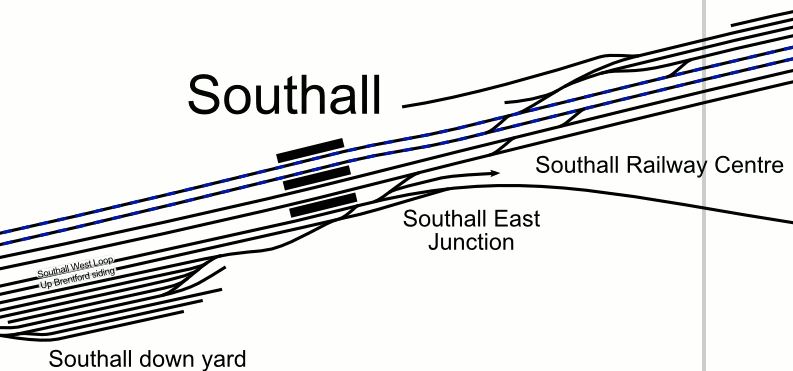
Note.
- The pair of lines at the top in blue are Crossrail
- The pair of lines in the middle are the fast lines.
- The single line going off to the East is the Brentford Branch Line, which has been proposed for reopening.
It would appear that the layout of the footbridge and the lifts would give good access to the Southernmost platform, which is connected to the Brentford Branch line.
So it looks like, that after the station has been refurbished and made step-free, connecting the Brentford Branch line would not be difficult.
As the Brentford Branch is only four miles long, a modern train like a Class 230, Class 710 or a Class 321 Hydrogen train, could do two round trips per hour between Southall and Brentford stations.
Crossrail To Reading In December 2019
As current rumours are that Crossrail will open in December to Reading, it looks like the station will be usable.
It is planned that Southall station will have a train every six minutes.
Hanwell Station – 19th April 2019
These pictures show Hanwell station.

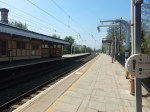

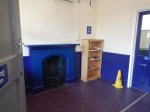
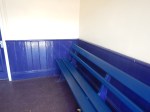

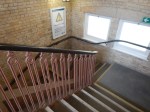
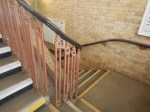

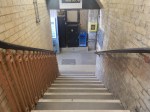


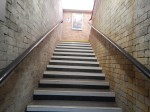



Hanwell station will be unlike any other station on Crossrail.
- It is Grade II Listed.
- It doesn’t have a high passenger usage.
- Platforms will be too short for the Class 345 trains and selected door opening will be used.
- The stairs up to the platforms must be some of the most Victorian in any station.
- To complete the station, two lifts are to be installed on the Crossrail platforms.
I do wonder if it could become a tourist attraction for those interests in modern metros and Victorian architecture.
Crossrail To Reading In December 2019
As current rumours are that Crossrail will open in December to Reading, it looks like the station will be ready in all its Victorian splendour..
It is planned that Hanwell station will have a train every ten minutes.
Ealing Broadway Station – 19th April 2019
These pictures show Ealing Broadway station.


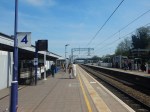
There’s still a lot of work to be done, to make the station, look like Crossrail’s image on the hoarding.
These are the proposed train frequencies at the station in the Off Peak, when Crossrail opens.
- Four trains per hour – Great Western Railway.
- Ten trains per hour – Crossrail.
- Six trains per hour – District Line
- Nine trains per hour – Central Line
There will be extra services in the Peak.
Crossrail To Reading In December 2019
As current rumours are that Crossrail will open in December to Reading, it looks like the station will be usable, if the architects have got the design right.
It is planned that Ealing Broadway station will have a Crossrail train every six minutes.
Network Rail Footbridge Design Ideas Competition Display At Waterloo Station
As I passed through Waterloo station, yesterday, I happened upon, this display of the designs for the Network Rail Footbridge Design Ideas Competition.

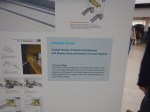

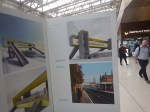
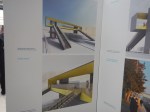
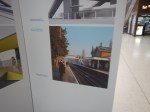


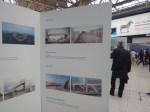


If you are interested in design or have movement difficulties at times on the UK rail network, and regularly pass through the station, it is worth taking a look.
Mayor Drops Plans To Close London Overground Ticket Offices
The title of this post is the same as that of this article on the BBC.
This is the first two paragraphs.
The Mayor of London has dropped plans to close ticket offices at 51 London Overground stations.
Busy stations will continue to operate as usual, though many will have opening hours reduced to just two-and-a-half hours per day, City Hall said.
Although the Unions objected to the Mayor’s original plans and this has probably prompted the Mayor’s U-turn, I think that staff in ticket offices will disappear within perhaps five years.
The only time, I see anyone use the Ticket Office at Dalston Junction station, is probably to sort out a ticketing issue with the machines, which are becoming increasingly rare, as Transport for London are increasing their numbers and replacing older machines with better designs.
Also as Dalston Junction is a busy station, there is usually someone manning the gate-line, who can help.
But over the next few years, the following will happen.
- More and more passengers will use contactless ticketing with bank cards.
- Contactless ticketing will expand widely, so that for most journeys in the UK, you would just touch-in and touch-out.
- Oyster will cease to be used and be withdrawn.
- Gateline technology will get better.
- Staff working on the gateline and platforms, will be better equipped with mobile technology to sort out problems.
- Ticket machines will develop into sophisticated multi-language help points.
- Cash will disappear from daily life and stations.
- Train companies will continue to be short of drivers and will look for other staff that can be retrained.
On a related note, increasingly, London Underground and Overground are being targeted by organised gangs of beggars. This means they need more staff on the gateline to control the problem.
I can see a time, when working in a ticket office will be a very lonely and boring job, that no-one will want to do.
So like the dinosaurs, they will just die out!
Balloons On The Line Blamed For £1m Worth Of Train Delays
The title of this post, is the same as this article in The Times
This is the first two paragraphs.
Families have been told to stop bringing helium-filled balloons into railway stations after they were blamed for delays that cost the network £1 million a year.
In the latest version of “leaves on the line”, Network Rail said there were 619 “balloon-related incidents” across Britain in the past 12 months.
Liverstock farmers don’t like them either, as they fall into fields and get eaten.
I don’t like banning things, but surely some regulation and sensible rules are needed.
Scotrail Boss Pledges More Seats And Stops On Borders Railway
The title of this post is the same as that of this article on the Southern Reporter.
If you live near or use the Borders Railway, I suggest you read the article.
Alex Hynes, who is Managing Director of ScotRail has promised.
- Three-car Class 170 trains will replace the current two-car trains.
- More drivers will be trained.
- Extra stops including at Stow will be added to services.
- In 2015, in the Peak, there were 850 seats out of Edinburgh. After the new trains are introduced, there will be 1,400.
He also said that things would happen in months not years.
This is a paragraph from the article, as spoken by Alex Hynes.
The three-carriage Class 170 trains accelerate and brake more quickly that the current two-carriage trains. That means we can put a stop at Stow in all the time without it affecting our performance, but to do that we need Class 170 trains on the route all the time and to be able to make sure that stop doesn’t affect our service performance.
It’s a good explanation of why you need fast trains on stopping services.
There is also something that is worth noting about the Class 170 trains.
Currently, they are diesel trains with a hydraulic transmission. But Porterbrook, who are the leasing company, who actually own the trains, are planning to test a new diesel-electric hybrid system in 2020, that will increase the performance of the trains, in terms of speed, acceleration, noise and emission.
I wrote about this important upgrade in Rolls-Royce And Porterbrook Launch First Hybrid Rail Project In The UK With MTU Hybrid PowerPacks.
I will be watching this development with interest, as if it is successful, passengers, residents, train companies and staff will benefit.
 The Anonymous Widower