KeolisAmey’s Plans For The Rhymney Line
This document on the KeolisAmey web site details their plans for the new Wales and Borders Franchise.
The Rhymney Line has the following characteristics.
- It runs between Cardiff Queen Street and Rhymney stations.
- Most of the line is double-track, with a short length of single-track from Tir-Phil station.
- There is the Coryton branch line to Coryton station.
- From Cardiff to Bargoed station, there are four trains per hour (tph)
- North of Bargoed, an hourly service generally operates.
- \from Cardiff to Coryton station, there are two tph.
- Some services, run through Cardiff to Penarth or Barry Island stations.
- Services take sixty-one minutes between Rhymney and Cardiff.
- Services take eighteen minutes between Coryton and Cardiff.
What improvements will be made to the Rhymney Line?
New Trains
From 2019, cascaded Class 170 trains will run services on the line.
In 2023, these trains will replaced by new Tri-Mode Stadler Flirts.
Current plans, don’t envisage any of the Stadler Citylink Metro Vehicles working the line. But I don’t see any reason why they can’t, if say Transport for Wales wanted to run a service from Cardiff Bay to Coryton or any other station.
It could be that their batteries don’t have enough capacity for the Caerphilly Tunnel.
New Stations
The KeolisAmey document, states that a new station will be built at Crwys Road.
I’ve also read somewhere that there may be a station on the Coryton Line to serve a major new hospital.
Improved Services
In 2023, the following services will be in place.
- From Cardiff to Rhymney station, there will be four tph.
- From Cardiff to Coryton station, there will be two tph.
- Services will take forty-eight minutes between Rhymney and Cardiff.
- Services will take twenty minutes between Coryton and Cardiff.
The Coryton service is slower because of the proposed new station.
Electrification
The line will be electrified using 25 KVAC.
- There is a short tunnel at Bargoed station.
- There is a mile-long tunnel at Caerphilly.
- There were quite a few footbridges across the tracks.
- The margins on either side of the track seem adequate on much of the route.
It looks to me, that electrification of the Rhymney Line cshuld be possible, provided the design is good.
The Tri-Mode Stadler Flirts will have batteries, which will have these purposes.
- Provide traction power for the trains, where there is no electrification.
- Capture the energy generated by the traction motors under braking.
- Ensure that power is always available for the train’s control, driver and passenger systems.
On the Rhymney Line, battery power will also be used to provide traction power in the mile-long Caerphilly Tunnel.
I have been told that although the tunnel will not be electrified, there will be an overhead rail for the pantograph in the tunnel, which will not be electrified.
This means that the pantograph doesn’t have to be raised and lowered, as the train goes up and down the hill, as there is a continuous overhead rail and line for the pantograph to use all the way.
I believe that when the train is coming down the hill, that gravity and the onboard battery will give sufficient power to bring the train safely down the hill.
So is there any point in electrifying the downhill path?
- The two terminals on the line; Rhymney and Coryton stations, are single platform stations on single-track lines, which will surely be electrified.
- If necessary batteries could be topped up before on the single track sections, before joining the double-rack line to Cardiff.
- There is very little if any freight or engineering trains on the line. But these will be diesel-hauled.
- After the modernisation, all the passenger trains will be the new electric trains with batteries and/or diesel engines.
- Diesel trains and locomotives could continue to work the lines as required.
I don’t think there is any operational reason for the downhill path to be electrified.
It would reduce costs in both construction and maintenance.
What Is It With The Welsh And Batteries?
If ordering two fleets of rail vehicles with batteries, that I wrote about in The Greening Of The Valleys, KeolisAmey Wales have now gone and ordered a third fleet for North Wales.
This article in the Railway Gazette is entitled Vivarail D-Trains For Wales & Borders.
This is the first paragraph.
Incoming Wales & Borders franchisee KeolisAmey is to take delivery of five three-car Class 230 D-Train diesel-battery multiple-units from Vivarail, which is to produce them using the bogies and aluminium bodyshells of withdrawn London Underground D78 metro trains.
Note that they are described as diesel-battery trains.
The article says the Class 230 trains will be used on these lines.
- The Borderlands Line between Wrexham and Bidston.
- The Conwy Valley Line.
- Between Chester and Crewe stations.
Five trains have been ordered, but I suspect it will eventually be more.
I believe that this picture shows a property of the Class 230 train, that would be ideal for Welsh routes or any other scenic lines.
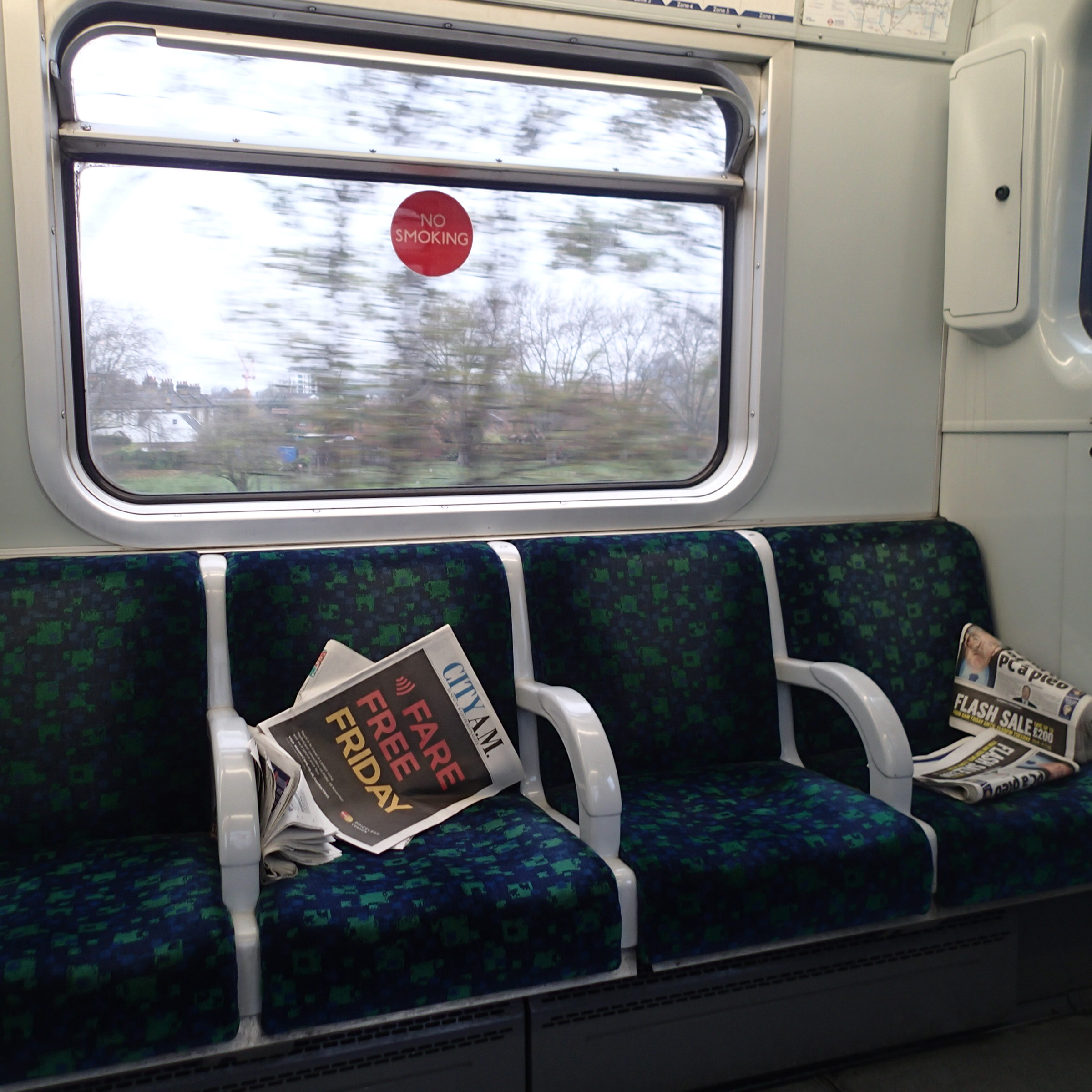
They have large windows and get the interior design right and they could become an iconic way to fill a difficult niche market.
- A reliable hourly or half-hourly service on a remote line.
- A quality interior with everything customers expect like a fully-accessible toilet, wi-fi and power sockets.
- Space for bikes, buggies, babies and wheel-chairs.
- Step-free entry between train and platform was possible at some stations on the District Line and I suspect that many stations could be made, so that wheelchairs and buggies could just roll across.
- The ability to be serviced remotely.
Note that the train is fitted with toilets from Cwmbran in South Wales.
Did Transport for Wales say, that if you fitted Welsh toilets, we’ll buy a few trains?
I suspect though, that they are much better toilets, than those I saw as a child in castles like Caernarfon, Conway and Harlech, where the inhabitants in the Middle Ages must have been quick on the job to avoid the getting shot with arrows, where it would hurt!
I suspect constipation was rare in those days!
Seriously though, here’s a video of the Class 230 trains for Wales.
This video comes from this article in this article on Wrexham.com.
How Do The Trains Work?
I obviously don’t know exactly, but I suspect the method of operation is very similar to that of some of the advanced hybrid buses, like a new Routemaster.
Each of the diesel engines have a generator, which produces electricity. This can either be fed directly to the traction motors to power the train or stored in the onboard battery.
The train’s control system manages the power and chooses, whether traction power comes from the diesel engine or the battery.
This means that the diesel engines don’t have to work all the time.
Stadler Citylink Metro Vehicles
This document on the KeolisAmey web site details their plans for the new Wales and Borders Franchise.
The Stadler Citylink Metro Vehicles in the KeolisAmey document. look very similar to Sheffield Supertram‘s Class 399 tram-trains, that are providing a tram service in Sheffield and will soon be running on the heavy rail network to Rotherham.
- The Citylink vehicles seat 88 with 150 standees.
- They can run using 750 VDC or 25 KVAC overhead electrification.
- The tram-trains are built by Stadler in Spain.
- According to a driver, that I spoke to in Sheffield, the tram-trains have a good hill climbing capability.
These pictures were taken of one of the Class 399 tram-trains operating in Sheffield.
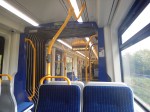
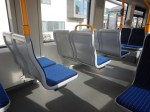
The Keolis/Amey document gives more details on the tram-trains.
- Main power source 25kV overhead line but also operates from battery.
- Capacity of 257 with seats for 129.
- Capable of on-street line-of-sight ‘tramway’ operation.
- They can work in pairs.
I’ve known for some time, that Class 399 tram/trains had a battery.
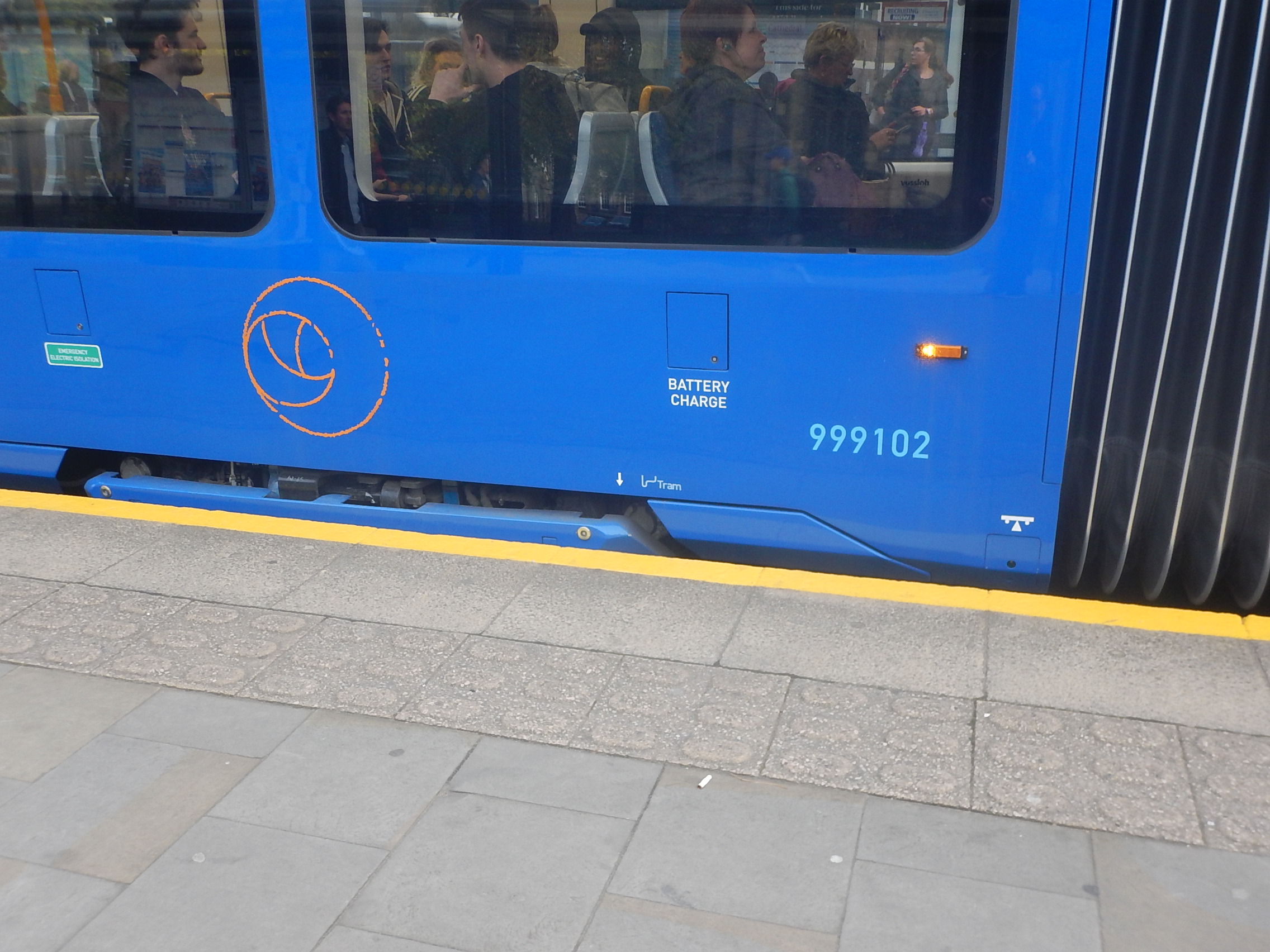
but I thought it was probably for secondary purposes, like making sure the vehicle crossed the boundary, where the two voltages change.
So it looks like in Cardiff, battery power will be used for traction.
How Big Will The Batteries Need To Be?
Consider a Class 399 tram/train, working to and from Merthyr Tydfil.
- Wikipedia gives the weight of the vehicle as 66 tonnes.
- Rhymney has an altitude of 178 metres.
- I will assume 200 passengers at 90 Kg. each, which gives a weight of 12 tonnes.
This means that the train has a potential energy of 41 kWh at Merthyr Tydfil station.
On the way down the hill from Merthyr Tydfil the regenerative braking will convert this potential energy into electricity, which will be stored in the battery.
I would reckon that a battery of about 50 kWh would be an ideal size, but would it be big enough to take the Stadler Citylink Metro Vehicles from Cardiff Queen Street station to The Flourish and back?
That journey is probably about 1.5 miles each way.
How Far Would A Full 50 kWh Battery Take A Stadler Citylink Metro Vehicle?
In an article in the October 2017 Edition of Modern Railways, which is entitled Celling England By The Pound, Ian Walmsley says this in relation to trains running on the Uckfield Branch, which probably has a terrain not much different to the lines to the South and West of Cardiff.
A modern EMU needs between 3 and 5 kWh per vehicle mile for this sort of service.
This would mean that a 50 kWh battery would take a three-car Stadler Citylink Metro Vehicle up to five miles, if the usage of the lighter-weight tram-train was at the lower end of the quoted range.
The battery would certainly take a Stadler Citylink Metro Vehicle from Cardiff Queen Street station to The Flourish and back.
Conclusion
As with the Tri-Mode Stadler Flirts, the Stadler Citylink Metro Vehicle with a battery, looks a very interesting concept.
- Most of the energy is provided by the 25 KVAC electrification, which would power the tram-train up the hill.
- Coming down the hill, the battery would be recharged using the regenerative braking.
- Battery power would used to take the tram-train on routes without electrification to The Flourish station.
Energy efficiency would be high.
Tri-Mode Stadler Flirts
I would expect that these trains are very similar to the bi-mode Stadler Flirt DEMUs, but that the power-pack would also contain a battery.
As an Electrical and Control Engineer, I wouldn’t be surprised that the power-pack, which accepts up to four Deutz diesel engines, can replace one or two of these with battery modules. This could make conversion between the two types of Flirt, just a matter of swapping a diesel module for a battery one or vice-versa.
Note that the three-car Class 755 trains for Greater Anglia have two diesel engines and the four-car trains have four engines.
This document on the KeolisAmey web site details their plans for the new Wales and Borders Franchise.
It gives a few extra details about the Tri-Mode Stadler Flirts
The KeolisAmey document gives extra a few extra details.
- The tri-mode trains are instended for Rhymney/Coryton <> Penarth/Barry Island/Bridgend via the Vale of Glamorgan Line.
- Main power source 25 KVAC overhead line with battery and diesel engine.
- 100% electric operation on transferred metro network.
I assume the following.
- That 100% electric operation includes battery operation.
- Batteries will certainly be used in the mile-long Caerphilly tunnel.
- Batteries will be charged when running on electrified lines or by capturing regenerative breaking energy whilst descending to Cardiff.
- The diesel engine will be used for primary power on the Vale of Glamorgan Line, which is without electrification and nearly twenty miles long?
There will be a lot of commonality between the two types of Flirts and I suspect driver and other staff training for the two variant will be the same.
How Big Will The Batteries Need To Be?
Consider a three-car Tri-Mode Stadler Flirt
- I reckon, that the weight of the train will be around 130 tonnes.
- Rhymney has an altitude of 287 metres.
- I will assume 150 passengers at 80 Kg. each, which gives a weight of 12 tonnes.
This means that the train has a potential energy of 111 kWh at Rhymney station.
On the way down the hill from Rhymney the regenerative braking will convert this potential energy into electricity, which will be stored in the battery.
But also consider.
- There will be losses in energy conversion in the regenerative braking process.
- Energy will be used running the train’s systems.
- Energy will be used stopping and starting the train at each station.
- Energy will be used bringing the train through some sections without electrification.
- Energy will be used keeping the crew and passengers comfortable.
- Energy can be burned off using braking resistors on the roof of the train.
When you consider that the battery on a London New Routemaster bus, has a capacity of 75 kWh, I think it is highly likely, that Stadler can design a battery module to fit one of the two spare engine positions in the power-pack.
Now, consider a four-car Tri-Mode Stadler Flirt
- I reckon, that the weight of the train will be around 150 tonnes.
- Rhymney has an altitude of 287 metres.
- I will assume 200 passengers at 80 Kg. each, which gives a weight of 16 tonnes.
This means that the train has a potential energy of 130 kWh at Rhymney station.
Looking at the weight of Bombardier’s 50 kWh batteries, I suspect that it would be possible to design a battery module with the following characeristics.
- 100 kWh capacity
- A weight less than that of the Deutz engine, which is around 1.3 tonnes.
- Plug compatibility with the diesel engine.
Doing this calculation with real data, is the sort of mathematics that I relished doing in my twenties.
How Far Would A Full 100 kWh Battery Take A Three-Car Flirt?
In an article in the October 2017 Edition of Modern Railways, which is entitled Celling England By The Pound, Ian Walmsley says this in relation to trains running on the Uckfield Branch, which probably has a terrain not much different to the lines to the South and West of Cardiff.
A modern EMU needs between 3 and 5 kWh per vehicle mile for this sort of service.
This would mean that a 100 kWh battery would take a three-car train between six and ten miles. It might even take the train from Cardiff to Barry Island or Penarth and back..
Conclusion
It looks a very interesting concept.
- Most of the energy is provided by the electrification, which would power the train up the hill.
- Coming down the hill, the batteries would be recharged using the regenerative braking.
- Battery power would used to take the train on routes without electrification to the West and South of Cardiff.
- When the battery power was low, the diesel engines would cut in.
Energy efficiency would be high.
Stadler Flirt DEMUs
Over a thousand Stadler Flirts have been sold to operators around the world. Most have been or will be built in Switzerland.
Greater Anglia
The first fleet in the UK, comprise fourteen three-car and twenty-four four-car Class 755 trains for Greater Anglia.
This visualisation shows a Class 755 train in Greater Anglia livery, running through the typical flat lands of East Anglia.
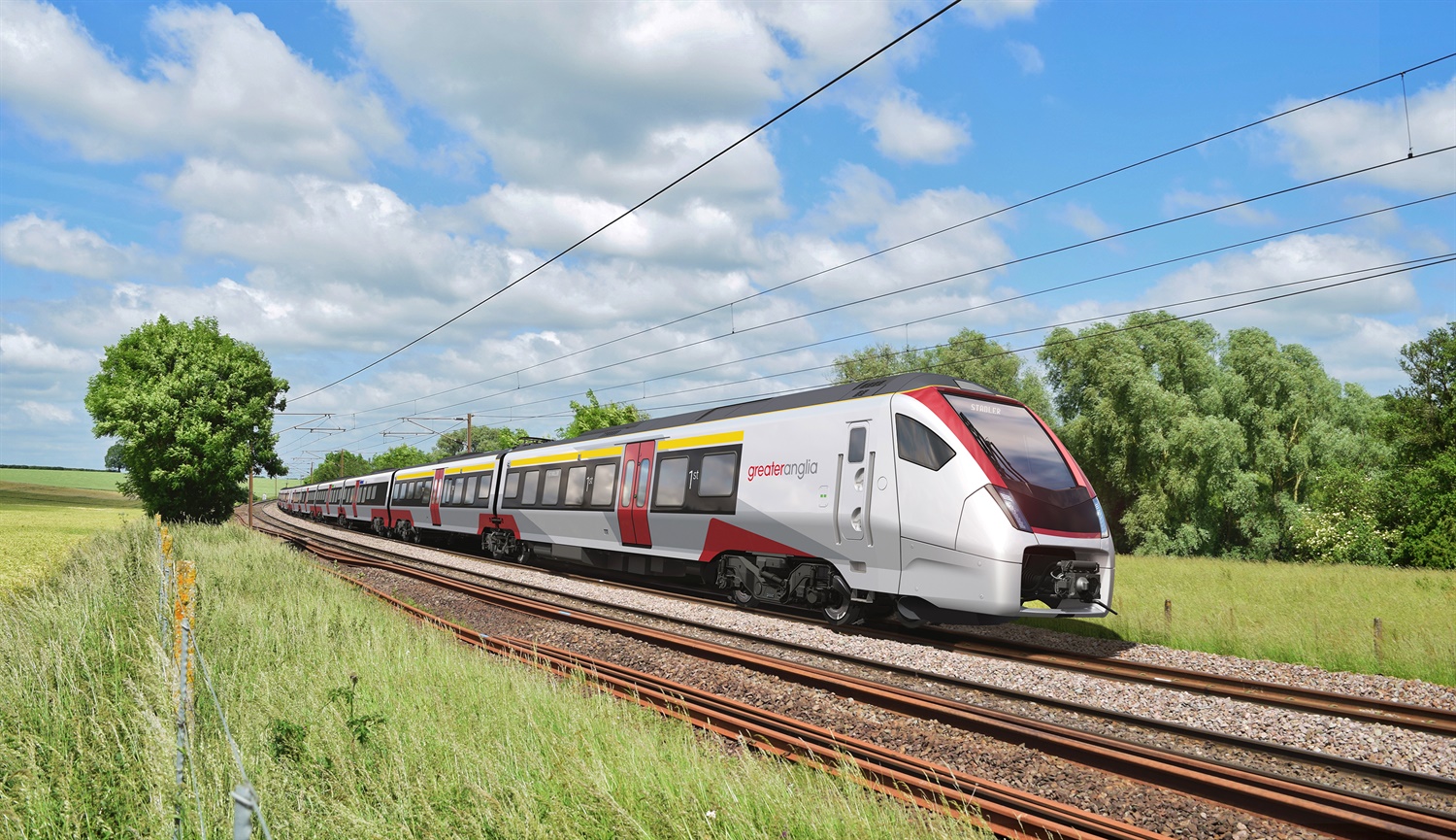
These trains will enter service next year.
- They are 100 mph trains.
- They can run on 25 KVAC overhead electrification.
- They have a diesel power-pack, which can have up to four Deutz diesel engines, for running on lines without electrification.
- The three-car trains have two diesel engines and the four-car trains have four engines.
- They can change power source at line speed.
- Length is easily changed, by adding or removing cars.
- Three-car Flirts have 166 seats and four-car Flirts have 224 seats.
- They are designed to handle two-hour plus journeys, like Lowestoft to London for Greater Anglia.
I suspect they are fairly powerful trains and I wrote about this in Greater Anglia’s Class 755 Trains Seem To Have Bags Of Grunt.
Comparing the trains with a Class 170 train, I said this.
But the four-car Class 755/4 trains have fifty percent more power per car, than the Class 170 train, so these will be no sedate rural trundlers.
I’m certain, that their performance, will allow them to mix it on the Great Eastern Main Line with the London-Ipswich-Norwich expresses.
KeolisAmey Wales
From the pictures, the trains, that will be delivered to KeolisAmey Wales, look very much like the trains, that have been ordered by Greater Anglia.
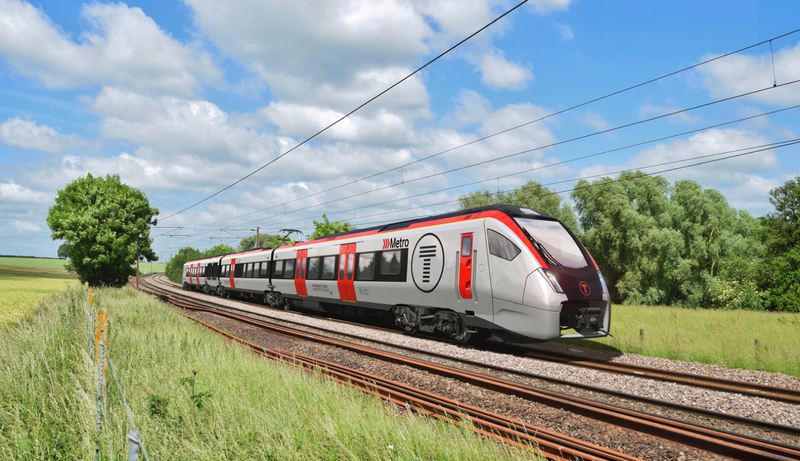
The trains will operate services between Cardiff and Ebbw Vale, Maesteg and extending to Severn Tunnel Junction and beyond.
I would assume that the trains will use diesel, where there is no electrification. One current service goes between Maesteg and Cheltenham Spa stations. On the South Wales Main Line between Cardiff and Seven Tunnel Junction, the trains would use the 25 KVAC overhead wires, but at both ends of the route, they would use diesel.
One great advantage of bi-mode trains like these Flirts, is that as more electrification is added, they can take advantage.
I’m certain, that their performance, will allow them to mix it on the South Wales Main Line with the London-Newport-Cardiff-Swansea expresses.
Aosta Valley
A European version of the train will start to operate soon in the Aosta Valley in Italy, so when the trains for Wales are delivered, there will be lots of operational experience. Especially with climbing steep hills!
Norway
This article on the Railway Gazette is entitled Bi-Modes In Norway’s Next Flirt Order.
The bi-modes will be used around Trondheim, on routes without elewctrification.
What does Norway have a lot of? Mountains!
How Can Discontinuous Electrification Be Handled?
On the proposed South Wales Metro, it is proposed to use discontinuous electrification to avoid rebuilding a lot of bridges and other structures.
This document on the KeolisAmey web site details their plans for the new Wales and Borders Franchise.
The document states this about the electrification.
Discontinuous overhead line electrification to 25 KVAC with permanently earthed sections around restricted structures, saving 55 interventions e.g. rebuilding bridges/no need for wire in Caerphilly tunnel.
So how are these interventions avoided?
The Karlsruhe Solution
On the Karlsruhe Stadbahn, similar Citylink vehicles to those proposed for Cardiff need to work on both the main line 15 KVAC used in Germany and the 750 VDC used by Karlsruhe trams.
To isolate the two voltages, a ceramic rod is placed in the catenary. The vehicle’s pantograph just rides across the voltage boundary and the vehicle’s electrical system uses whatever voltage is present.
Bridges On The South Wales Metro
These pictures show some of the types of bridges on the Cardiff Valleys Lines.

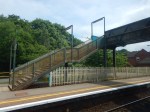
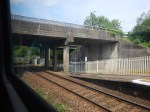


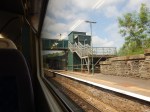
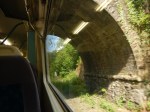
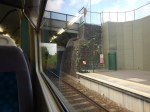

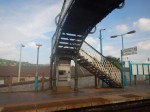


They are a real assortment.
- Some station footbridges from the Victorian era with nice castings and decoration, but no much-needed step-free access.
- Some quality brick and stone arch bridges.
- British Rail-era steel bridges, with no architectural merit
- Some modern road bridges in steel and concrete.
I also saw sizeable pipelines over the railway, which would need to be raised.
The greatest number were simple steel bridges like the one at Caerphilly station, designed to get pedestrians and cyclists, who were not using the railway, from one side of the tracks to the other.
I suspect the simplest way would be to erect two standard gantries at a safe distance of a few metres either side of the structure.
Between the two gantries would be an conductor, like this one. that I photographed in the Berlin Hauphtbahnhof.

It would be earthed, so that it offered no danger to life. There could even be extra supports under the bridge.
At each end, it would be connected to the 25 KVAC using a ceramic rod or other insulating device.
The vehicle’s pantograph would then ride from one side of the bridge to the other on its own track without being lowered.
Anything electrified at 25 KVAC would be kept at a very safe distance from the bridge.
In the earthed section, when the vehicle would be receiving no power, the vehicle would automatically switch to battery power. There would be no driver action required, except to monitor it was all working as it should.
As on the South Wales Metro, it appears that all vehicles using the lines proposed to be electrified will have their own onboard batteries, there shouldn’t be any problem.
In some ways, this discontinuous operation is a bit like using your laptop connected to the mains. When say the cleaner pulls out the plug to put in the vacuum cleaner, your laptop switches automatically to the battery.
The Caerphilly Tunnel
The Caerphilly tunnel is over a mile long. This picture shows the tunnel entrance.

It would probably be possible to electrify using a rail in the roof, but why bother if the trains running through the tunnel could go from one end to the other on their own battery power?
Trains could lower the pantograph before entry and then raise it again, when under the electrification at the other end.
This could be performed automatically using a GPS-based system.
I have also had an e-mail, which said this.
As I understand Caerphilly will have a natural bar in it but be much closer to the train roof than would be allowed with a live one.
Now there’s an idea!
A composite or earthed metal rail would be fixed to the roof of the tunnel, so that the pantograph could run smoothly from one electrified section on one side of the tunnel to the electrification on the other side, using battery power all the way.
Cost Savings
In Novel Solution Cuts Cardiff Bridge Wiring Cost, I talked about another method applied in South Wales to avoid rebuilding a bridge.
At this bridge, traditional electrification methods were used, but the need to demolish the bridge was avoided by using advanced insulation and protection measures.
This was my final statement.
Network Rail reckon that the solution will save about £10 million on this bridge alone, as it avoids the need for an expensive rebuild of the bridge.
The savings on this bridge will be higher as it is a large bridge over several tracks, but even saving a million on each bridge in the South Wales Metro is £55 million, which will probably be enough to build much of the infrastructure to extend to The Flourish, which would appear to not need expensive viaducts or electrification.
Should Downhill Tracks Be Left Without Electrification?
I think this may be possible on the South Wales Metro, as vehicles coming down the hills could use gravity and small amounts of battery power.
Regenerative braking would also be continuously charging the batteries.
It would certainly be simpler, than having to constantly swap between overhead and battery power on the descent, where the electrification was discontinuous.
As the lines are going to have a more intensive service, there will be additions of a second track in places to allow trains to pass.
Any electrification that could be removed from the project would be beneficial in terms of building and operational costs.
Other Routes
This post has used the South Wales Metro as an example, but I don’t see any reason, why the discontinous method and that used on the Cardiff Bridge can’t be applied to other bridges and structures over the lines on other routes in the country.
I suspect, that if they’d been used on the Gospel Oak to Barking Line, electric trains would have been running months ago!
Conclusion
Look what you get with thinking, when you have a Bonfire of the Boxes!
The Greening Of The Valleys
This document on the KeolisAmey web site details their plans for the new Wales and Borders Franchise.
The documents gives these two definitions.
- South Wales Metro – Includes the full set of local services around South East Wales. This includes what is currently known as the ‘Valley Lines’, plus services between Cardiff and Ebbw Vale, Maesteg and extending to Severn Tunnel Junction and beyond.
- Central Metro -Refers to the sub-set of the South Wales Metro train services which run from Treherbert, Aberdare, Merthyr Tydfil, Radyr, Rhymney and Coryton, through Queen Street to Cardiff Bay, Cardiff Central, Penarth, Barry Island and Bridgend.
For these services around Cardiff and on the Cardiff Valley Lines, KeolisAmey Wales intend to acquire the following fleet.
- 11 x four-car Stadler Flirt DEMU
- 7 x three-car Stadler Flirt Tri-mode MU
- 17 x four-car Stadler Flirt Tri-mode MU
- 36 x three-car Stadler Citylink Metro Vehicles
This diagram from the document shows the routes and the frequencies.

They also say the following surrounding the map in the document.
- Maintains all existing connections to Cardiff Queen Street and Cardiff Central stations.
- Service pattern easy to understand
- Most frequencies even in the hour ‘clockface’ (e.g. 00-15-30-45 past)
- Vale of Glamorgan, Barry, Penarth and City Lines integrated into Central Metro solution.
- 2tph from Pontypridd station ‘divert’ via City Line but don’t terminate at Central i.e. Aberdare – City Line – Central – Merthyr
Note that Aberdare, Merthyr Tydfil, Rhymney and Treherbert stations all get a total of four trains per hour (tph)
The Trains In More Detail
Stadler Rail are building the three fleets of rail vehicles.
Stadler Flirt DEMUs
Over a thousand Stadler Flirts have been sold to operators around the world. Most have been or will be built in Switzerland.
From the pictures, the trains, that will be delivered to Wales, look very much like the Class 755 trains, that have been ordered by Greater Anglia. These trains will enter service next year.
Stadler Flirt DEMUs gives more details of these trains and the closely-related fleets.
The trains will operate services between Cardiff and Ebbw Vale, Maesteg and extending to Severn Tunnel Junction and beyond.
Tri-Mode Stadler Flirts
I would expect that these trains are very similar to the bi-mode Flirt DEMUs, but that the power-pack would also contain a battery.
Tri-Mode Stadler Flirts gives more details of these trains and how I think they will operate.
The Tri-Mode Stadler Flirts are intended for Rhymney/Coryton <> Penarth/Barry Island/Bridgend via the Vale of Glamorgan Line.
There will be a lot of commonality between the two types of Flirts and I suspect driver and other staff training for the two variants will be the same.
Stadler Citylink Metro Vehicles
The Stadler Citylink Metro Vehicles in the KeolisAmey document. look very similar to Sheffield Supertram‘s Class 399 tram-trains, that are providing a tram service in Sheffield and will soon be running on the heavy rail network to Rotherham.
Stadler Citylink Metro Vehicles gives more details of these trains and how I think they will operate.
From Cardiff Queen Street To The Flourish
It looks like the Metro vehicles will use the batteries for power on the extension to the new terminal station at The Flourish.
I describe the proposal for the extension to the Flourish in The Flourish Station Is The Focus Of The South Wales Metro.
Electrically-Efficient Operation Of The Metro
I have a feeling that Stadler are bringing some of their mountaineering experience from Switzerland to the valleys of South Wales.
It is interesting that both the Tri-mode Stadler Flirts and the Stadler Citylink Metro Vehicles will have batteries.
Climbing The Hills
The main purpose of the batteries is to make the climb and descent to the terminals at the heads of the valleys as energy efficient as possible.
Efficient climbing of the hills will need all uphill tracks to be electrified.
The KeolisAmey document states this about the electrification.
Discontinuous overhead line electrification to 25 KVAC with permanently earthed sections around restricted structures, saving 55 interventions e.g. rebuilding bridges/no need for wire in Caerphilly tunnel.
Battery power would be invaluable for jumping the gaps in the electrification.
Coming down, I believe that the trains and tram-trains will use the batteries to handle the energy generated by regenerative braking.
This means.
- The electrification can be simpler.
- There might be no need to electrify the downhill track in double-track sections.
- Trains can use the battery power to cross sections without wires or restarting from stations, when going downhill.
- Tram-trains going to The Flourish will arrive at Cardiff Queen Street station with enough energy in the batteries for the return trip to The Flourish.
- The Cardiff Bay Line doesn’t need to be electrified, which saves money and possibly increases safety and reduces visual intrusion.
It is not only energy efficient, but it saves construction costs and time.
Why Aren’t Citylink Metro Vehicles Used On The Rhymney Line?
There are several possible reasons.
- Calculations have shown, that the battery capacity of the smaller Citylink vehicle might not be enough to go uphill through the Caerrphilly tunnel.
- The route may need more powerful vehicles.
- More capacity may be needed on this line, so the larger Tri-mode Stadler Flirts will be used.
- The Flirts could use their diesel engines to rescue a train stuck in the tunnel.
But whatever the reason, I’m sure it’s a good one!
Could Downhill Tracks Not Be Electrified?
I think this may be possible, as vehicles coming down the hills could use gravity and small amounts of battery power.
Regenerative braking would also be continuously charging the batteries.
It would certainly be simpler, than having to constantly swap between overhead and battery power on the descent, where the electrification was discontinuous.
As the lines are going to have a more intensive service, there will be additions of a second track in places to allow trains to pass.
Any electrification that could be removed from the project would be beneficial in terms of building and operational costs.
How Would Discountinuous Electrification Be Handled?
I discus this in How Can Discontinuous Electrification Be Handled?
The Lines In More Detail
Click these links to find out more about the individual lines.
Conclusion
The two types of compatible vehicles, allows the plans for the South Wales Metro to be a cost-effective and very green solution for Cardiff’s transport needs.
It is a model, that can be used elsewhere.
Will railway engineers in future talk of the Cardiff Model, just as they talk of the Karlsruhe Model?
A Reason Why The UK Is Fertile Territory For Tram Trains
The UK has several modern tram systems. If you look at the cross section of trams you get the following figures.
- Blackpool Tramway – Width 2.65 metres – Height 3.42 metres
- Edinburgh Trams – Width 2.65 metres – Height 3.4 metres
- Manchester Metrolink – Width 2.65 metres – Height 3.67 metres
- Midland Metro – Width 2.65 metres – Height 3.4 metres
- Nottingham Express Transit – Width 2.40 metres – Height N/A
- Sheffield Supertram – Width 2.65 metres – Height 3.65 metres
- Tramlink – Width 2.65 metres – Height 3.67 metres
I wonder why Nottingham is twenty-five centimetres narrower!
If you look at the Class 399 tram-train, it has a width of 2.65 metres and a height of 3.67 metres.
So no wonder, there has been no problems with Class 399 tram-trains running on the Sheffield Supertram as trams!
Various trains that run local rail networks include.
- Class 142 – Width 2..8 metres – Height 3.86 metres
- Class 150 – Width 2.8 metres – Height 3.8 metres
- Class 222 – Width 2.73 metres
- Class 319 – Width 2.82 metres – Height – 3.58 metres
- Class 345 – Width 2.78 metres – Height N/A
- Class 378 – Width 2.80 metres – Height 3.78 metres
- Class 700 – Width 2.80 metres – Height N/A
- Class 769 – Width 2.82 metres – Height 3.58 metres
- Mark 4 Coach – Width 2.73 metres – Height 2.79 metres
These are some figures from German trains.
- DBAG 641 – Width 2.90 metres – Height 3.7 metres
- BD Class 420 – With 3.08 metres
- ICE 3 – Width 2.95 metres – Height 3.89 metres
I’ll look at various issues.
Tram And Train Height
I think this is not a big issue.
If a tram or electric train can run on a particular track, then there should be no height problems running a tram-train over the route, providing overhead wires can be erected.
UK Tram And Train Width
It would appear that the maximum width of UK trains is 2.82 metres. In some stations, where there is only one class of train, level access is possible.
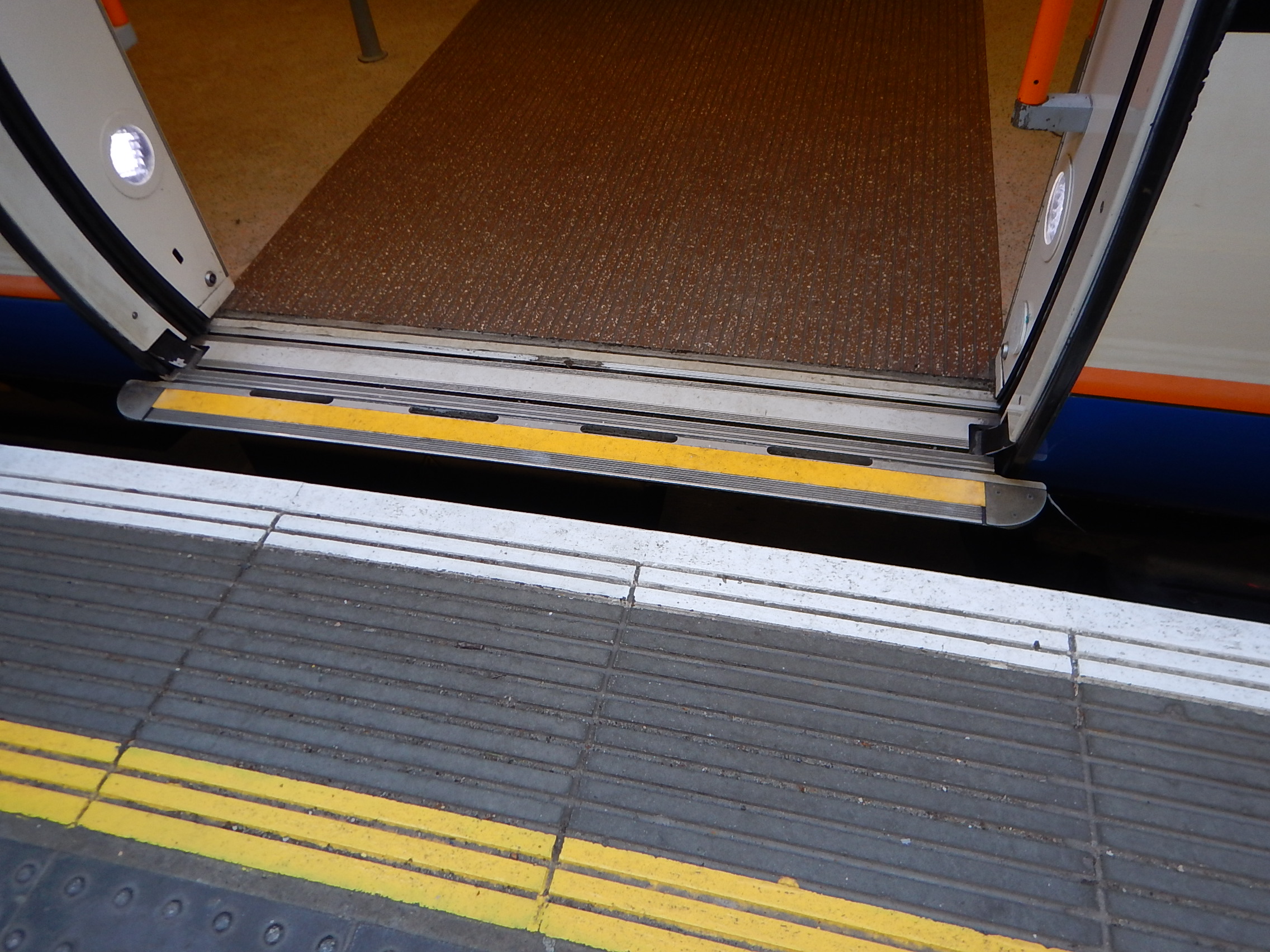
The picture shows a Class 378 train on the London Overground.
This is not one of the best I’ve seen, but there is no reason, why someone in a wheelchair shouldn’t be able to wheel themselves into every train at every station.
This is in the train operating company’s interest, as one of the things that delays trains, is getting someone in a wheelchair on and off the train with a portable ramp.
If we take the UK train width of 2.82 metres and compare that to the width of a Class 399 tram-train, which is 2.65 metres, that means that there is seventeen centimetres difference or eight and a half centimetres on each side of the train.
If the platform can be arranged to be level, that is not a large gap. It’s probably about the same size as this gap in this picture.
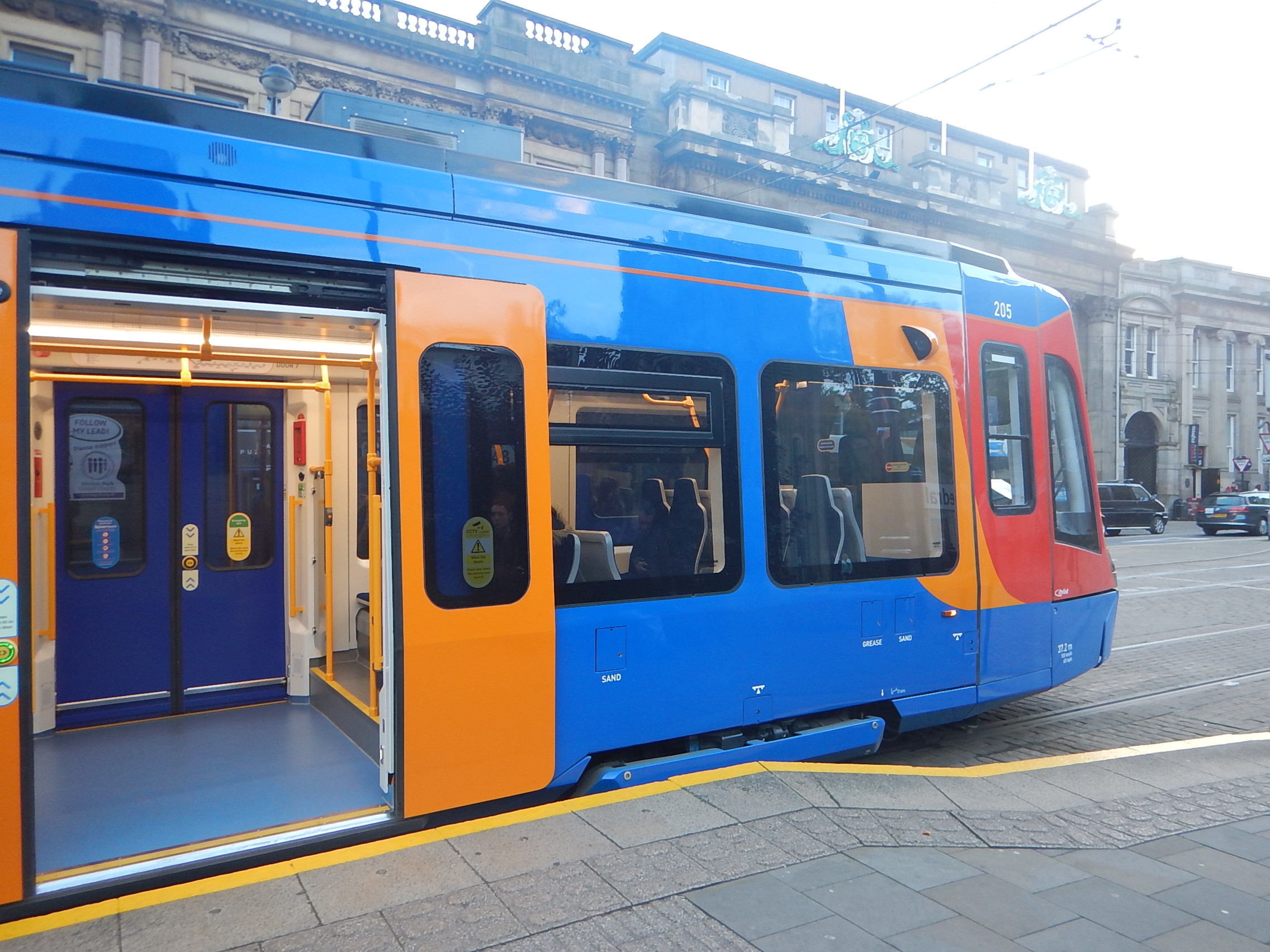
Shown is a Class 399 tram-train at a tram stop on the Sheffield Supertram.
Continental Tram And Train Width
But on the Continent, where the trains are wider and the loading gauge is bigger, the gap will be larger.
Trains on the Continent also often have a significant step up as this picture shows.
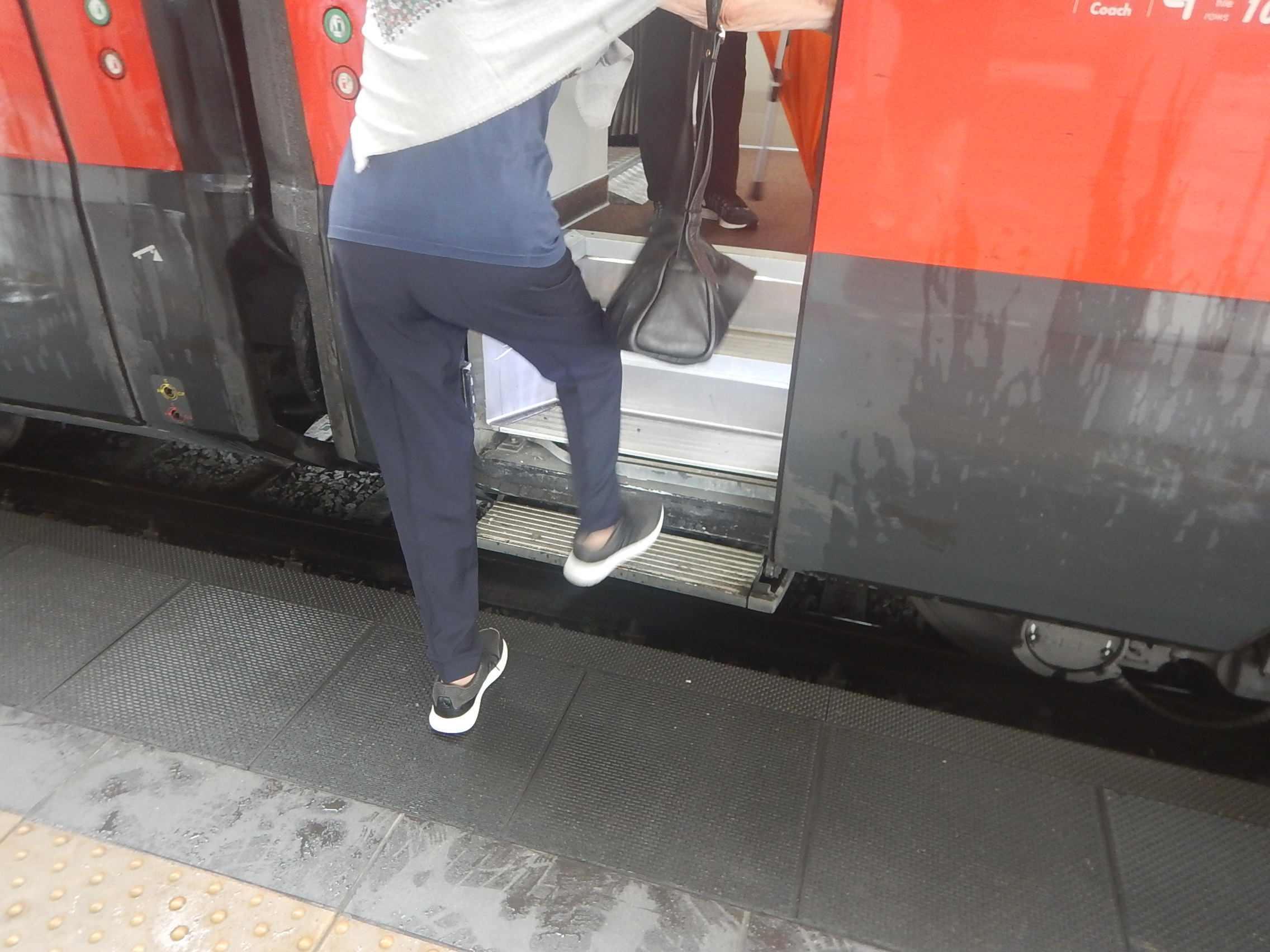
Shown is an Italian High Speed train.
If the EU wanted to improve train travel for the disabled, those in wheelchairs, those with buggies and the elderly, they should make it compulsory for all trains to have level access from the platform.
It’s very rare to find level access on the Continent and not that easy in parts of the UK.
Gap Fillers
But things are getting better, as this picture shows.
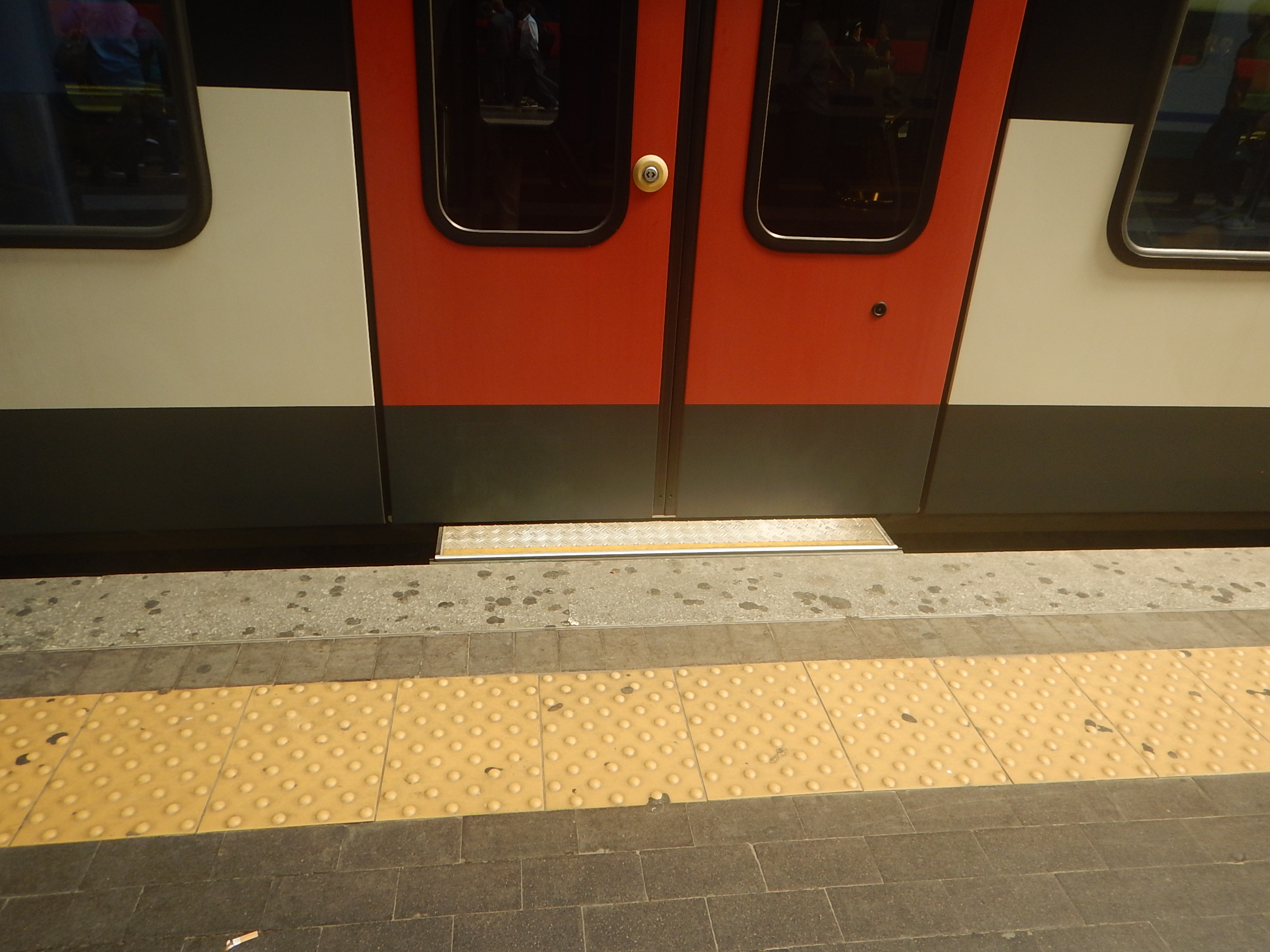
Shown is a Stadler Flirt with a rather nifty automatic gap filler.
Merseyrail’s New Class 777 Trains
Gap fillers will be fitted to Merseyrail‘s new Class 777 trains, which are being built by Stadler.
The Class 777 trains and the current Class 507 trains have the same width of 2.82 metres, but the new Stadler trains have an eighteen centimetre lower floor.
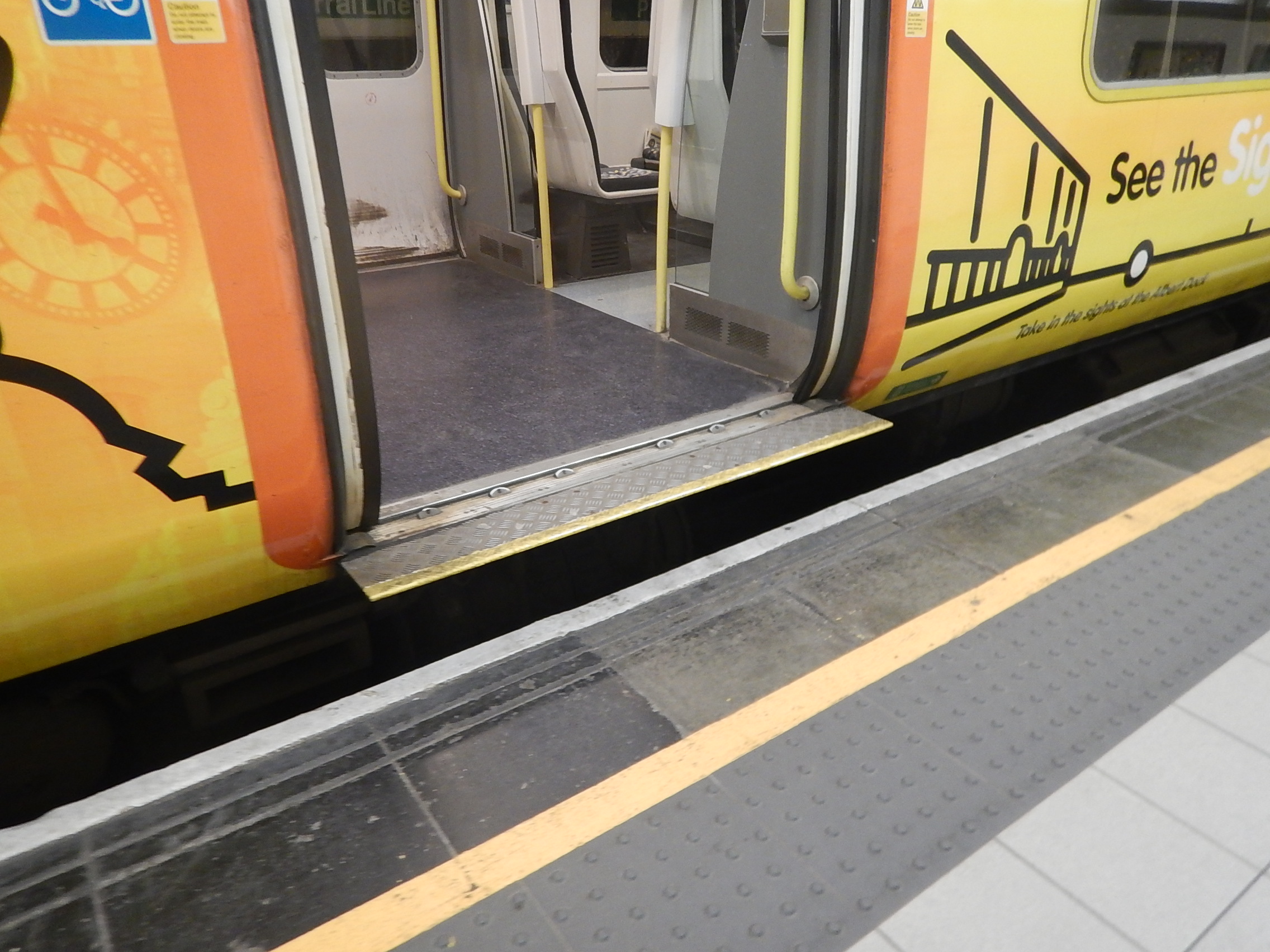
The picture shows a Class 507 train at one of Liverpool’s underground stations.
Eighteen centimetres wouldn’t be far away from the height of the step in the picture.
The design must also allow both classes of trains to be in service at the same time, to ease introduction of the new Class 777 trains.
Talk about Swiss precision!
South Wales Metro
This document on the KeolisAmey web site details their plans for the new Wales and Borders Franchise.
For services around Cardiff and on the Cardiff Valley Lines, KeolisAmey Wales intend to acquire the following fleet.
- 11 – four-car Stadler Flirt DEMU
- 7 – three-car Stadler Flirt Tri-mode MU
- 17 – four-car Stadler Flirt Tri-mode MU
- 36 – three-car Stadler Citylink Metro Vehicles
Note.
- The Stadler Flirts look very similar to Greater Anglia‘s Class 755 trains, that by the time of delivery of these trains for Wales, will have proven themselves on the mountains of East Anglia.
- The tri-mode multiple units will be able to run on electric, diesel or battery power.
- The Stadler Citylink Metro Vehicles look very similar to Sheffield Supertram‘s Class 399 tram-trains, that are providing a tram service in Sheffield and will soon be running on the rail network to Rotherham.
- It is an all-Stadler fleet.
This is a clip from the KeolisAmey document.

This looks like a visualisation of one of the Flirts, as the Citylink tram-trains have flat sides.
I will be very surprised if Stadler don’t provide the Cardiff area, with one of the best step-free networks in the world.
Conclusion
The UK’s standard tram width of 2.65 metres and our small loading gauge must make it easier to design tram-train systems for the UK.
.
More Information From The International Railway Journal About The New Wales And Borders Franchise
In Every Pair Of Pictures Tell A Story, I said I needed more information on what was happening with the new Wales and Borders franchise.
This article on the International Railway Journal is entitled £800m fleet renewal plan for new Welsh franchise, gives a lot more serious information.
These two paragraphs outline the plans.
According to the Welsh government, around £800m will be invested in rolling stock to ensure that by 2023, 95% of journeys will be made on a new fleet of 148 trains. The average age of the fleet will drop from 25 years to seven years by 2024.
More than half of the new trains will be assembled in Wales, indicating a major order will be placed with CAF, which is currently building a new assembly plant near Newport.
The article then goes on to make specific points.
Class 769 Trains
Class 769 trains will be used as a stop-gap measure until the arrival of new bi-mode trains.
Five of these trains are on order for delivery in the next eighteen months.
Class 230 Trains
Class 230 trains will join the fleet.
Perhaps they will be used on the Conwy Valley Line.
The line is rather isolated from depots at Cardiff, Chester and Machynlleth, which would find the Class 230 trains remote servicing capabilities useful.
The Wikipedia entry for KeolisAmey Wales states that the Class 230 trains will work the Borderlands Line, which will have a two trains per hour (tph) frequency.
As the journey takes an hour each way with a round trip possible in two hours, I suspect that a two tph frequency will need four trains, with perhaps a fifth one ready to step into service.
Again the remote servicing capability of the Class 230 train will come into play, as will the train’s affordability.
Class 170 Trains
Several Class 170 trains will join the fleet.
These could be coming from Greater Anglia, who currently have twelve of the trains, that will be replaced by Class 755 trains.
This page on the Welsh Government web site, contains this sentence.
On the Heart of Wales line, introduce refurbished Class 170 two-car units by 2022.
If you want to find out more about train services in Mid and South-West Wales, the page is well-worth a read.
Mark 4 Carriages
Mark 4 Carriages released from the East Coast Main Line will replace the current Mark 3 Carriages.
Phasing Out Of Diesel Multiple Units
The article makes these two points.
- Pacers will be withdrawn by the end of 2019.
- Class 150, Class 153, Class 158 and Class 175 trains will be completely replaced by 2023.
The only ones worth keeping could be the Class 158 trains, most of which if fitted with wi-fi would be acceptable on many routes.
New Diesel Multiple Units For Long Distance Services
The article says that new diesel multiple units will be introduced on these routes.
- North Wales Coast and Cambrian lines in 2022
- Milford Haven – Manchester route by 2023
This page on the Welsh Government web site, also says a new Swansea to Manchester service will be introduced from 2024.
In Every Pair Of Pictures Tell A Story, I suggested that Class 755 trains could be used on these routes.
- They have similar performance to the Class 175 trains.
- Length and power can be tailored for each route. Greater Anglia have ordered two sizes.
- As they are bi-modes, they could take advantage of the electrification East of Cardiff and around Birmingham and Manchester.
But the biggest thing in favour of Class 755 trains, is that the thirty-eight units for Greater Anglia are scheduled to be completed by the end of 2019. So if the Welsh trains are virtually identical to those for Greater Anglia, there would not be any serious certification problems.
The Wikipedia entry for KeolisAmey Wales indicates that these trains could be diesel versions of the CAF Civity.
The South Wales Metro
The IRJ article says that £738 million will be invested in this project.
The Wikipedia entry for KeolisAmey Wales gives a few more details of train frequencies.
- A new 1 train per hour (tph) Ebbw Vale to Newport service by May 2021.
- 2 tph between Cardiff and Bridgend via the Vale of Glamorgan Line from December 2023
- 4 tph throughout on the Rhymney line from December 2023
- 4 tph to Treherbert from December 2022
- 6tph to Cardiff Bay from December 2022
- 4 tph between Merthyr Tydfil, Aberdare and Cardiff from December 2022
This is an increase in frequency.
It appears there will be two distinct sections of this network, which I’ll discuss in the next two sub-sections.
An Electric Network On The Cardiff Valley Lines
The IRJ article says this.
A new fleet of low-floor vehicles offering level boarding will be introduced on the network by December 2022.
I think we can assume this about the vehicles.
- They will be tram-trains.
- They will have batteries.
- They will be able to use 750 VDC and 25 KVAC electrification.
- There will be a proportion of street running in Cardiff.
It would also be highly likely, that these vehicles will be built by CAF, in their new Newport factory. Wikipedia mentions a tram-train version of their Urbos trams, which are used in Edinburgh and the Midlands, which is called an Urbos TT.
A Complimentary Tri-Mode Network
The article says this.
A new fleet of Stadler “tri-mode” (electric/diesel/battery) multiple units will maintain links from Penarth, Barry and Bridgend to stations north of Cardiff Central. These trains will enter service from December 2023.
It looks from the pictures that these will be a version of the Class 755 trains.
In From Novara To Aosta, I described the route, where similar Stadler trains will be used on the Chivasso-Ivrea-Aosta railway to reach the town of Aosta. I would suspect that the Italian route could be more challenging, than anything South Wales has to offer.
The Heads Of The Valleys Stations Will Be Served By CAF’s Tram-Trains And Stadler Tri-Modes
It would appear from Wikipedia, that the stations at the heads of the valleys will have the following frequencies.
- 4 tph – Aberdare
- 2 tph – Ebbw Vale
- 4 tph – Merthyr Tydfil
- 4 tph – Rhymney
- 4 tph – Treherbert
These frequencies and some single-platform terminal stations, will mean that careful design must be applied, so that all vehicles have level access from platform to vehicle.
This picture shows the access to a Stadler Flirt in Italy.
Note the gap filler, which automatically moves into place.
I’m sure engineers and designers working for KeolisAmey, CAF and Stadler can come up with a very good solution.
Will The Valley Lines Be Electrified With 25 KVAC?
I think it is highly likely that CAF’s vehicles for the tram section of the South Wales Metro will be tram-trains with a dual 750 VDC/25 KVAC capability and batteries.
Imagine one of these vehicles climbing to say Aberdare using the Merthyr Line, which is a mixture of single and double-track to Cardiff.
Going up to Aberdare, due to the gradients, the vehicles will need access to electrical power, so electrification is necessary, unless each vehicle has a massive diesel generator or ultra-large battery, which are respectively not very environmentally friendly or practical.
But I doubt it will matter if the electrification is 750 VDC or 25 KVAC.
Going down the valley to Cardiff, I believe that CAF’s vehicles will use Newtons friend; gravity and regenerative braking to control the speed. The energy generated by the braking would be stored in an onboard battery.
CAF have all the technology and it would be extremely energy efficient.
The Stadler tri-modes would have to use diesel on the way up, but given they have batteries, I suspect they’d come down in a similar way to the CAF tram-trains.
So what voltage should be used?
- The CAF tram-trains will probably be able to use either voltage.
- If batteries are used to handle regenerative braking, this works with all voltages.
- The Stadler tri-modes will probably need 25 KVAC.
- Electrifying with 25 KVAC would allow the Stadler tri-modes to avoid a lot of running on diesel.
- Any electric locomotives hauling freight would need 25 KVAC.
I wouldn’t be surprised to see the valley lines electrified with 25 KVAC.
Will Only The Uphill Tracks Be Electrified?
I believe that if trains coming down the valleys use batteries for regenerative braking and restarting at stations, it may be possible to only electrify a single-track, that is always used for uphill trains.
But only the tracks for uphill trains were electrified, this would make the works easier and reduce costs and disruption to passengers.
Conclusion
It looks like KeolisAmey have got a well thought-out plan!
Every Pair Of Pictures Tell A Story
This picture on the Rail Technology Magazine website shows a Greater Anglia Class 755 train.
And this picture on the Global Rail News website shows one of the new trains for Transport for Wales.
It is captioned “A Tri-mode unit on the Rhymney Line”.
On another report it is captioned “How a KeolisAmey tram-train will look”.
All trains look very similar and I’m pretty certain that Wales will be getting some Class 755 trains.
Class 755 Trains
Class 755 trains will have the following characteristics.
- 100 mph operating speed.
- Able to work on 25 KVAC overhead electrification
- Able to work using an onboard diesel power-pack.
- Three or more passenger cars.
- Ability to be lengthened by adding extra cars as required.
- Lots of power.
They would be ideal replacements for the current Class 175 trains, as the performance would appear to be similar.
They would also be ideal for services on the following routes.
When running around Birmingham, Cardiff, Crewe, Liverpool and Manchester, they would be able to use the electrification.
So are Keolis/Amey going for a predominantly uniform fleet of perhaps three-car and four-car Class 755 trains outside of the Cardiff Valley Lines, just as Greater Anglia used these trains on their routes without electrification North of Cambridge and Ipswich?
The Borderlands Line
The interesting route is the Borderlands Line between Wrexham Central and Bidston stations.
Currently, to get to and from Liverpool, there is a need to change trains at Bidston.
Merseyrail‘s new Class 777 trains are being built by Stadler.
- They will link Bidston station to Liverpool, where they will call at several stations in a single-track loop tunnel.
- The trains have been designed to work under battery power.
- Both classes of train are likely to be very similar under the skin.
So to eliminate the time-wasting change of train at Bidston station, I wonder if Stadler have designed the Class 755 and Class 777 trains, so that they can both run in the loop tunnel.
The additions needed to the Welsh Class 755 trains, over the Greater Anglian versions would be.
- Ability to use Merseyrail’s third rail electrification.
- Clearance to run in the tunnel with diesel onboard.
- Ability to evacuate passengers in the tunnel, in an emergency.
As Merseyrail have recently rebuilt the tunnel for the new Class 777 trains, I suspect that Stadler can design a Class 755 train, that would be able to avoid the change of train at Bidston.
I’ll Wait For More Information
It would seem prudent to wait for more information.
 The Anonymous Widower