Observations On A Trip To Doncaster And Sheffield
My objectives were.
- Buy a walk-up ticket from a machine at King’s Cross for Doncaster station and then use it.
- Use local trains, tram-trains and trams to get to as quick as possible to Sheffield station.
- Buy a walk-up ticket from a machine at Sheffield station for St. Pancras and then use it.
This is the story of my day.
A Ticket From King’s Cross for Doncaster
This happened at King’s Cross
- I got charged £38.65, but I didn’t get any tickets.
- So I complained in the Booking Office.
- But they didn’t believe me.
- Then I showed them the debit on my credit card account.
- Then a lady came and checked the machine, but couldn’t find any tickets.
- They then issued me with a new ticket for Doncaster.
- But they were these design crimes of flimsy tickets.
- I now have two debits on my credit card account.
They said one will be refunded.
King’s Cross To Doncaster
I took these pictures of the trucks along the nearby A1 to the North of Newark.














This map shows how the A1 curves round the town.
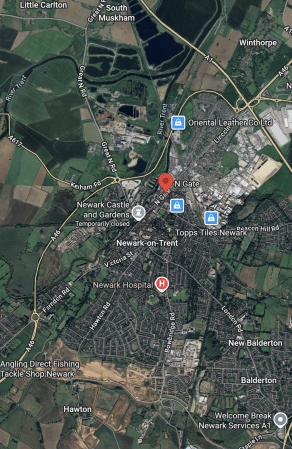
Note.
- The A1 Road curving around the right of the town.
- The red arrow marking Newark Northgate station.
- There is a notorious flat crossing, that needs to be replaced to the North of the station.
I believe as a Control Engineer, that digital signalling might solve the problem of the crossing and I wrote about it in Could ERTMS And ETCS Solve The Newark Crossing Problem?.
But there was no problems on the journey
- The train was ten coaches.
- It was going to Edinburgh.
- It left on time.
- It didn’t appear to be very full.
- It was four minutes late at Doncaster and arrived at 14:47.
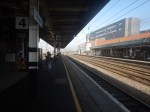
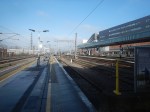
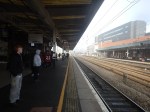
These pictures show Doncaster station.
Note.
There are nine platforms and eleven tracks.
The nine platforms are arranged in three island platforms.
Trump May Have Alzheimer’s, Says Niece
The title of this post, is the same as that of this article in The Times.
This is the sub-heading.
Mary Trump said the president appeared to have developed a ‘deer-in-the-headlights look’ that reminded her of his late father, Fred Trump.
These three paragraphs add detail to the story.
President Trump’s niece has suggested her uncle could be suffering from Alzheimer’s based on a “deer-in-the-headlights” expression that reminds her of the president’s father.
Mary Trump, a longtime critic of her uncle, said she saw flashes in him of Fred Trump, her grandfather, who she witnessed struggle with the degenerative disease before his death aged 93 in 1999.
“Sometimes it does not seem like he’s oriented to time and place,” Mary Trump, 60, told New York Magazine of her uncle. “And on occasion, I do see that deer-in-the-headlights look.”
Fifteen years ago, my consultant at Addenbrooke’s said I should go on Warfarin (rat poison) to thin my blood. But my GP said I should stick to a small aspirin every day.
The result was that I had a serious stroke on holiday in Hong Kong.
Luckily, I made a remarkable recovery and I am now testing a Warfarin replacement drug, which is two pills a day and no testing, except by the doctors every three months.
My current cardiologist has even used the GP’s actions in a lecture to students on how not to behave.
Trump is playing with fire!
Surely he should at least be taking Warfarin and being tested frequently.
If any cardiologists are reading this, they should note, that I am coeliac and for the last twenty-eight years, I have been having regular B12 injections.
As B12 injections are used in Trumpland to help stroke patients recover, but not in the UK, from observations of my own recovery, by several doctors, I am tempted to believe that B12 injections may help stroke recovery.
Any sensible offer to help in research will be considered.
From my own experience, an affordable drug, like B12 injections could have a place in stroke recovery.
To get a second opinion, I asked Google AI, this question. – “Do Vitamin B12 Injections Help With Stroke Recovery?”
I received this answer.
Vitamin B12 injections may aid stroke recovery, particularly for individuals with a deficiency, by supporting nerve function, reducing homocysteine levels, and enhancing neurological rehabilitation. Research indicates that adequate B12 levels are crucial for protecting the brain after an ischemic stroke.Key findings regarding Vitamin B12 and stroke recovery:
- Neuroprotection: Vitamin B12 aids in maintaining myelin sheaths, which are essential for nerve repair and protecting the central nervous system after a stroke.
- Reduced Damage: Studies suggest that B12 can help reduce cerebral injury and improve long-term neurobehavioral function.
- Correcting Deficiency: People with B12 deficiencies often have worse stroke outcomes, making correction via injections crucial.
- Homocysteine Control: B12 helps lower homocysteine, a risk factor for vascular damage and recurrent stroke.
- Efficiency of Injection: For those with absorption issues (e.g., older adults or those with GI issues), injections bypass the digestive system to ensure maximum absorption.
The NHS will face a lot of resistance, if they want to take away my B12 injections.
Does Miserable Weather Deplete Your B12?
Consider.
I have been feeling down this winter and especially in the last few weeks.
- My three-monthly B12 injection is now due.
- But I can’t get one until the second of February.
- But on miserable days like this, I do feel bad.
- So I have asked for the injection to be moved forward?
In answer to my question in the title of this post, Google AI gave this answer.
Yes, cold, dark, and “miserable” winter weather can contribute to lower Vitamin B12 levels, or at least worsen an existing deficiency.
While miserable weather does not directly “burn” B12 out of your body, the associated lifestyle changes and reduced sunlight can cause levels to drop.
Here is how winter weather affects B12:
Reduced Sun Exposure:
While Vitamin D is directly linked to sunlight, the general reduction in sunlight during winter can affect energy levels and mood.
Low Vitamin B12 can also cause similar symptoms, making it harder to distinguish between a vitamin deficiency and “winter blues”.
Dietary Changes:
In winter, people may consume less of the fresh, nutrient-dense foods (like animal products) that are high in B12, or they may feel less motivated to maintain a balanced diet, leading to lower intake.
Increased Stress and Fatigue:
Cold, dark weather can induce stress.
Chronic stress and fatigue are known to deplete B vitamin reserves, including B12.
Increased Sensitivity to Cold: Ironically, if you are already slightly deficient in B12, you may feel much colder, more tired, and more lethargic than others, exacerbating the feeling of “miserable” weather.
Key Takeaways:
Check Levels: If you experience extreme fatigue, low mood, or numbness in your hands and feet during winter, it might be worth checking your B12 levels.
Supplementation: In many cases, people, especially vegetarians or vegans, find that B12 supplements or injections help manage symptoms of low energy and poor mood during colder months.
Diet: Ensure you are getting enough B12-rich foods like meat, fish, dairy, and fortified foods.
If you are feeling significantly lower energy or mood during winter, it is always best to consult a healthcare professional.Conclusion:
‘Mobilising EUR 1 Trillion in Investments’ | North Sea Countries, Industry, TSOs to Ink Offshore Wind Pact
The title of this post, is the same as that of this article on offshoreWIND.biz.
This is the sub-heading.
Government officials from Belgium, Denmark, France, Germany, Ireland, Luxembourg, the Netherlands, Norway and the UK are set to sign a declaration confirming the ambition to build 300 GW of offshore wind in the North Seas by 2050, and an investment pact with the offshore wind industry and transmission system operators (TSOs) that is said to mobilise EUR 1 trillion in economic activity.
These three paragraphs add a lot of powerful detail.
Under the Offshore Wind Investment Pact for the North Seas, to be signed today (26 January) at the North Sea Summit in Hamburg, governments of the nine North Sea countries will commit to building 15 GW of offshore wind per year from 2031 to 2040.
The heads of state and energy ministers will also vow to de-risk offshore wind investments through a commitment to provide two-sided Contracts for Difference (CfDs) as the standard for offshore wind auction design. The pact also commits governments to remove any regulatory obstacles to power purchase agreements (PPAs), according to WindEurope, which will sign the pact on behalf of the industry.
On the industry’s side, the commitment is to drive down the costs of offshore wind by 30 per cent towards 2040, mobilise EUR 1 trillion of economic activity for Europe, create 91,000 additional jobs and invest EUR 9.5 billion in manufacturing, port infrastructure and vessels.
These two paragraphs say something about cost reductions.
The cost reduction of offshore wind is planned to be achieved through scale effects, lower costs of capital and further industrialisation supported by clarity and visibility on the project pipeline.
The transmission system operators (TSOs) will identify cost-effective cooperation projects in the North Sea, including 20 GW of promising cross-border projects by 2027 for deployment in the 2030s.
I hope there is a project management system, that can step into this frenzy, just as Artemis did in the 1970s with North Sea Oil and Gas.
The BBC has reported the story under a title of UK To Join Major Wind Farm Project With Nine European Countries.
this is the sub-title.
The UK is set to back a vast new fleet of offshore wind projects in the North Sea alongside nine other European countries including Norway, Germany and the Netherlands.
These six paragraphs add more detail.
The government says the deal will strengthen energy security by offering an escape from what it calls the “fossil fuel rollercoaster”.
For the first time, some of the new wind farms will be linked to multiple countries through undersea cables known as interconnectors, which supporters say should lower prices across the region.
But it could prove controversial as wind farm operators would be able to shop around between countries to sell power to the highest bidder – potentially driving up electricity prices when supply is tight.
Energy Secretary Ed Miliband will sign a declaration on Monday at a meeting on the future of the North Sea in the German city of Hamburg, committing to complete the scheme by 2050.
Jane Cooper, deputy CEO of industry body RenewableUK, said the deal would “drive down costs for billpayers” as well as increasing “the energy security of the UK and the whole of the North Sea region significantly”.
But Claire Countinho, shadow energy secretary, warned “we cannot escape the fact that the rush to build wind farms at breakneck speed is pushing up everybody’s energy bills.”
Claire Coutinho, as an outsider at present and a member of a party out of Government had to say something negative, but her negotiations when she was UK Energy Minister with her German opposite number, which I wrote about in UK And Germany Boost Offshore Renewables Ties, seem very much a precursor to today’s agreement.
‘Drone Boats Will Be The New Normal’
The title of this post is the same as this article on the BBC.
This is the sub-heading.
A remotely operated boat will survey an area hundreds of miles offshore – while being controlled from an inland airport.
These two paragraphs add more details to the story.
The Orsted Examiner is being launched this week from Grimsby by the renewable energy company, which is currently building the Hornsea 3 windfarm in the North Sea.
The vessel contains enough fuel to be at sea for several months, and an internet connection means it can be remotely controlled from anywhere.
Note.
- This would appear to be an elegant way to improve both productivity and safety.
- In RWE Opens ‘Grimsby Hub’ For Offshore Wind Operations And Maintenance, I indicated that RWE will have a Grimsby hub.
- Will the two companies have similar drone boats?
I certainly agree with the title of the post.
Rail Agreement Signed ‘Subject To Value For Money’
The title of this post, is the same as that of this article on the BBC.
This is the sub heading.
An agreement to reopen a regional rail line has been signed by the transport secretary, subject to the assurance that it delivers good value for money.
These three paragraphs add detail to the story.
Further development work on the Leamside Line, which runs from Pelaw in Gateshead to Tursdale in County Durham, is set to progress as part of the Northern Powerhouse Rail (NPR) initiative.
Regional politicians said the line could provide train links for 100,000 people in the north-east of England, after it closed to passengers in the 1960s.
The document stated the government would ensure resources were available for the Leamside Line reopening “subject to agreement of that business case and assurance that this delivers good value for money”.
Note.
- There is an excellent map in the BBC article.
- It looks like there will be at least five new or refurbished stations at Ferryhill, Sincliffe, Belmont, West Rainton and Penshaw.
- Belmont appears to have an alternative name of Durham Parkway, so will it be a Park-and-Ride for the area?
- There will be an alternative path for freight trains between Newcastle and York.
- In New Direct Rail Link To Seaham: How This Picturesque Seaside Town Will Connect To London Starting December 2025, I described Seaham’s new link to London, courtesy of Grand Central Trains.
- In Arriva Group Invests In New Battery Hybrid Train Fleet In Boost To UK Rail Industry, I talked about Grand Central’s new trains, which should be in service by 2028 to Seaham and Sunderland.
- It was in June 2020, that I wrote about Boris Johnson making a speech about the Leamside Line in Boris Johnson Backs Station Opening Which Could See Metro Link To County Durham.
This important link has been a long time coming.
Will The Rail Improvements Between London and The North East Create More Tourism?
Consider.
- The digital signalling will create more paths for trains between London and the North East.
- Journey times will come down to generally below three hours.
- There is a lot of excellent walking in the area.
- The North-East doesn’t just host top-class football and athletics.
- A trip could be combined with a day-trip to Edinburgh, Glasgow or the Scottish Borders.
- I have met Americans, who’ve started their holiday in Europe, in Edinburgh and worked their way down via York and London to Paris by train, and then flown back non-stop to the United States.
As I’ve spent a couple of enjoyable weekends in Newcastle and Sunderland, I don’t see why the area can’t attract tourists.
Should The East Coast Main Line Be Renamed?
Consider.
- It is one of the oldest long-distance main lines in the world.
- It links two of the UK’s capitals.
- It is 331 miles long, which is covered in four and a half hours.
- There are some of the world’s best hotels at either end.
- There is good shopping at either end.
- There is no Trump hotel in London or Edinburgh.
Perhaps, it should be called High Speed East Coast?
Do B12 Injections Help Stroke Recovery?
A friend, who thinks I’ve made a good recovery from a stroke, asked me if there is anything I could recommend, for another of his friends, who has just had a stroke.
As a coeliac, am I in a group with a higher risk of a stroke?
So, I asked Google AI, the question, if this were true and received this answer.
- Initial Higher Risk: Some studies suggest a slightly increased risk of stroke (roughly a 10-15% increased likelihood). This risk is highest in the first year after diagnosis.
- Effect of Gluten-Free Diet: After 5 years on a strict, gluten-free diet, the risk of stroke for people with coeliac disease is virtually the same as that of the general population.
- Overall Risk: While some studies have suggested a link, others, including a 2023 UK Biobank study, found no clear evidence of an association between coeliac disease and stroke, although they did find an overall increased risk of cardiovascular disease (27% higher).
- Mechanism: The potential for a higher risk is likely due to the chronic inflammation associated with untreated coeliac disease, rather than traditional risk factors like high blood pressure or smoking.
- Children: A 2023 study found that coeliac disease plays a minimal role in the risk of stroke in children, but recommended that doctors consider it a potential factor in cases of stroke with unknown causes.
Conclusion:
While untreated coeliac disease may slightly increase the risk of stroke due to chronic inflammation, adhering to a gluten-free diet helps manage this risk.
This study by coeliacUK and Oxford University, was the source of the findings by Google AI.
Do B12 Injections Help Stroke Recovery?
For nearly thirty years, ever since I was diagnosed as coeliac, I have had regular three-monthly B12 injections. So ever since my stroke in 2011, I have had B12 injections.
So now AI is available, I felt I should ask Google AI to see if it says anything useful.
This is the answer I received.
- Nerve Repair & Axonal Growth: B12 aids in repairing damaged nerve fibers (axons) and regenerating nerve cells, vital for restoring lost function after a stroke.
- Reduces Inflammation: It helps calm the harmful inflammatory response (neuroinflammation) in the brain after an ischemic stroke, notes this ScienceDirect article.
- Improves Brain Communication: B12 supports neurotransmitter production, allowing brain cells to communicate more effectively and speeding up healing, according to this Flint Rehab article.
- Lowers Stroke Risk: By reducing homocysteine levels, an amino acid linked to stroke, B12 can help prevent recurrent strokes, reports this Flint Rehab article and this NIH article.
- Supports Microglia Function: It helps functionalize microglia (brain immune cells) to reduce injury and promote recovery, states this ScienceDirect article.
- To Boost Recovery: For those with moderate deficiencies, injections or supplementation can improve neurological function, notes this NIH article.
Conclusion
B12 injections seem to have done me no harm.
I also have them on the NHS, at no cost to myself.
If the NHS said I couldn’t have them, I’d pay for them.
Trump Administration’s Legal Setbacks Are Good News For Offshore Wind — And The Grid
The title of this post is the same as that of this article on Tech Crunch.
These two paragraphs give more details.
The Trump administration suffered a series of legal setbacks this week after judges allowed work to restart on several offshore wind farms under construction on the East Coast.
The Department of the Interior had ordered a stop to five projects totaling 6 gigawatts of generating capacity in December, citing national security concerns. The judicial orders will allow three projects to resume construction: Revolution Wind off Rhode Island, Empire Wind off New York, and Coastal Virginia Offshore Wind off — you guessed it — Virginia.
The developers each filed lawsuits shortly after the Trump administration issued the stop work order, which had been effective for 90 days.
Trump is now learning you don’t win them all.
I would suggest that you read the full article, as there is a lot of good stuff there.
This is the concluding paragraph.
he potential is even bigger when viewed on a national scale. Offshore wind could generate 13,500 terawatt-hours of electricity per year, which is three times more than the U.S. currently consumes.
If the US, were to use all the fossil fuels, that Trump would like, there would be no point in buying Greenland as the Trump proportion of the resulting Global Warming would probably melt the country.
How Did South East Water Become Such A Disaster?
The title of this post, is the same as that of this article in The Times.
This is the sub-heading.
As tens of thousands of homes in Kent and Sussex lose supply the company and its well-remunerated boss, David Hinton, face a torrent of anger
These two paragraphs add some detail.
Perhaps the worst moment for South East Water was when it opened a bottled water station in the wrong town. Staff set up in Tonbridge, Kent, and not Tunbridge Wells five miles away, where the company had left some 24,000 properties without drinking water for two weeks.
Or maybe it was when David Hinton, the chief executive, repeatedly called the local MP one evening not to apologise but to berate him about the crisis — not, Hinton later admitted, “my finest moment”. Or it could have been when more properties lost their supply only hours after Hinton had told MPs his company’s response to the incident should score eight out of ten.
It wasn’t exactly the water industry’s finest moment.
I played a small and hopefully professional and a hundred-percent scientifically correct manner in the formation of the modern water industry in the UK.
In the 1970s, I wrote the software, that WS Atkins rented from their time-sharing computer to the Water Resources Board at Reading to model water supply in all or part of the UK.
My differential equation solving software had been designed to handle up to around a million equations and the contact at the WRB was a Dr. David Dimeloe.
I was never given details of their model and the conclusions, but I assume they must have done a good job, as there haven’t been too many problems with actual water supply, but mainly with management, ownership and failure of ancient infrastructure.
In my 79 years in the UK, I’ve never had a problem with water supply.
Searching for the WRB on the Internet finds one in Sri Lanka.
It would be good to get a copy of that report or even talk to one of the engineers on the project.
 The Anonymous Widower