Developing A Rural Hydrogen Network
On my last stud farm, we had three regular fuel deliveries.
- Propane to heat the house and offices.
- Red diesel to power the tractor and farm machinery.
- Road diesel to power the horse box and a couple of diesel cars, that went on the roads.
Note.
- Like most farms in the UK, we didn’t have mains gas.
- The local low-life of whom you never speak their name, used to regularly steal the diesel.
- Stealing of diesel in rural areas of the UK is a big industry.
- The police did nothing to stop the thefts as the culprits are untouchable.
- We had two boilers, that both ran on the propane.
- Modern boilers can be converted from propane to use hydrogen.
- All cars, trucks, farm vehicles and machinery on the stud farm could in the future use hydrogen.
Propane and diesel would be replaced by clean hydrogen.
Delivering The Fuel
Consider.
- Propane and diesel are currently delivered in rural areas by truck.
- Hydrogen will be delivered the same way and stored in a tank designed for hydrogen, which could be similar in appearance to current propane tanks.
- Boilers would be directly piped to the hydrogen tank.
- The technology exists to fill hydrogen-powered vehicles and equipment from hydrogen tanks.
- I believe that a thief-proof hydrogen tank would be possible.
- The hydrogen will be delivered as needed in a hydrogen-powered truck.
I believe companies like Centrica, will develop the technology so that farms and businesses could have their own hydrogen system.
Supplying The Hydrogen
Electrolysers would be needed around the country.
Some could be based on nuclear sites, where others could be powered by offshore wind.
Hydrogen Safety
Hydrogen safety has its own Wikipedia entry.
The entry starts with a description of the Hindenberg Disaster, which has a detailed Wikipedia entry of its own.
I’ve spoken to someone, who was there; Dory Previn, who later wrote a song about it.
The Hydrogen safety Wikipedia entry has this paragraph.
There are many codes and standards regarding hydrogen safety in storage, transport, and use. These range from federal regulations, ANSI/AIAA, NFPA, and ISO standards. The Canadian Hydrogen Safety Program concluded that hydrogen fueling is as safe as, or safer than, compressed natural gas (CNG) fueling,
I’ve also talked to German schoolchildren about their hydrogen trains and as you are educated about hydrogen, the fear decreases and the safety increases.
Hydrogen-Powered Lawnmowers And Garden Tractors
Everybody likes a lush, green lawn.
Surely, yours is better, if your lawnmower emits no carbon dioxide!
Electric will work, but if you have a hydrogen-powered lawnmower, that can be filled from your central heating tank, that is better.
Collateral Benefits
These would be collateral benefits.
- One set of tankers would be replaced by a single zero-carbon hydrogen tanker, thus reducing road traffic.
- I believe there would be less fuel theft.
- Rural businesses, that needed gas like blacksmiths could be supplied.
- A lot of buildings with a propane-fuelled boiler could be converted to hydrogen.
It would be a path to decarbonisation of the rural economy.
How Big Is The Off-Grid Energy Market?
A document on the House of Commons web site says this.
An estimated 4.4 million households across Great Britain were not connected to the gas grid in 2021. This was 15.1% of domestic properties.
If the average gas bill is £100/month, then that is £1200/year, which works out at £5,280,000,000.
When you add in off-grid businesses, that would need fuel and hydrogen fuel for vehicles and agricultural equipment, the market can’t be much short of £10 billion.
Conclusion
As it is a multi-billion pound marketplace. someone will develop it.
Sizewell C And Hydrogen
The Sizewell C web site has a page with a title of Hydrogen and SZC.
The page asks this question.
Why Does Sizewell C Want To Produce Hydrogen?
It gives this answer.
Nuclear is a great way of producing hydrogen as it generates huge amounts of reliable, low-carbon energy. Nuclear and hydrogen are also two clean technologies that can help us make big reductions in carbon emissions. While both technologies are vital on their own, at Sizewell C we have an exciting vision to bring them together.
The page is worth a read about how they will use the hydrogen, which will include.
- Providing Wrightbus hydrogen-powered buses to link the main construction site with Park-and-Ride sites on the A 12 at Darsham and Wickham Market.
- Powering vehicles and machinery on the main construction site.
- Supplying hydrogen to Freeport East.
- Refuelling hydrogen vehicles.
I have a few thoughts.
Supplying Hydrogen To Users
On my last stud farm, we had three fuel deliveries.
- Propane to heat the house.
- Red diesel to power the farm machinery.
- Road diesel to power the horse box and a couple of diesel cars, that went on the roads.
Note.
- Like most farms in East Anglia, we didn’t have mains gas.
- The local low-life of whom you never speak their name, used to regularly steal the diesel.
- We had two boilers, that ran on the propane.
- All farm vehicles and machinery will in the future use hydrogen.
- Propane and diesel would be replaced by clean hydrogen.
I believe companies like Centrica, will develop the technology so that farms and businesses could have their own hydrogen system, that would be topped-up accordingly, by road tankers, which themselves would be fuelled by hydrogen.
One set of tankers would be replaced by another zero-carbon set.
Sizewell sits on the Suffolk Coast and it appears, there will be a new road link to the A 12, which connects to Suffolk’s main road system.
This map shows Sizewell C and East Suffolk.

Note.
- The Sizewell site is outlined in pink on the coast, about halfway up the map.
- The A 12 road and the East Suffolk Line run almost parallel to the coast between Ipswich in the South and Lowestoft and Yarmouth in the North.
Energy use in East Suffolk would be transformed and all because there will be a plentiful supply of zero-carbon hydrogen.
Hydrogen And The Arts
Suffolk has been an artistic county for hundreds of years and some works of art, like casting bronzes, firing pottery or working with glass or wrought iron need a lot of energy. Local hydrogen networks supplied by tanker, as propane is now could help to decarbonise one of the most difficult of professions.
Pink Hydrogen
This page on the National Grid web site explains the various hydrogen colours.
It describes pink hydrogen like this.
Pink hydrogen is generated through electrolysis powered by nuclear energy. Nuclear-produced hydrogen can also be referred to as purple hydrogen or red hydrogen.
In addition, the very high temperatures from nuclear reactors could be used in other hydrogen productions by producing steam for more efficient electrolysis or fossil gas-based steam methane reforming.
I also call it Barbie hydrogen.
Sizewell C would be an ideal place to create pink hydrogen.
Before Sizewell C is up and running, the electrolyser at Sizewell could be powered by Sizewell B or even offshore wind.
Canadian Pension Fund To Consolidate Its Offshore Wind Holdings Into UK-Based Reventus Power
The title of this post, is the same as that of this article on offshoreWIND.biz.
This is the sub-heading.
Canada Pension Plan Investment Board (CPP Investments) will consolidate its existing direct and indirect offshore wind holdings into Reventus Power, its UK-based portfolio company, which will become its dedicated global offshore wind platform.
This first paragraph gives more details.
Subject to customary approvals, the move will see Reventus Power growing its teams in the UK, Germany, Poland and Portugal to form a team of approximately 50 offshore wind specialists, according to CPP Investments, whose current exposure to offshore wind is more than CAD 1 billion (approximately EUR 678 million; USD 737 million).
According to their web site, the Reventus HQ is in London.
There is nothing on the web to indicate a special reason, so it must have been one of the following.
- Canadians like investing in the UK.
- The UK is good for tax reasons.
- London has all the lawyers, accountants and other services they will need.
- I suspect several wind farms, that they will develop will be in UK waters.
- Many of the extra staff, they have said they will recruit will be UK-based or UK-educated.
But overall, it must be a feather in its cap for London.
MAN Expands Its Zero-Emission Portfolio
The title of this post, is the same as that of this press release from MAN.
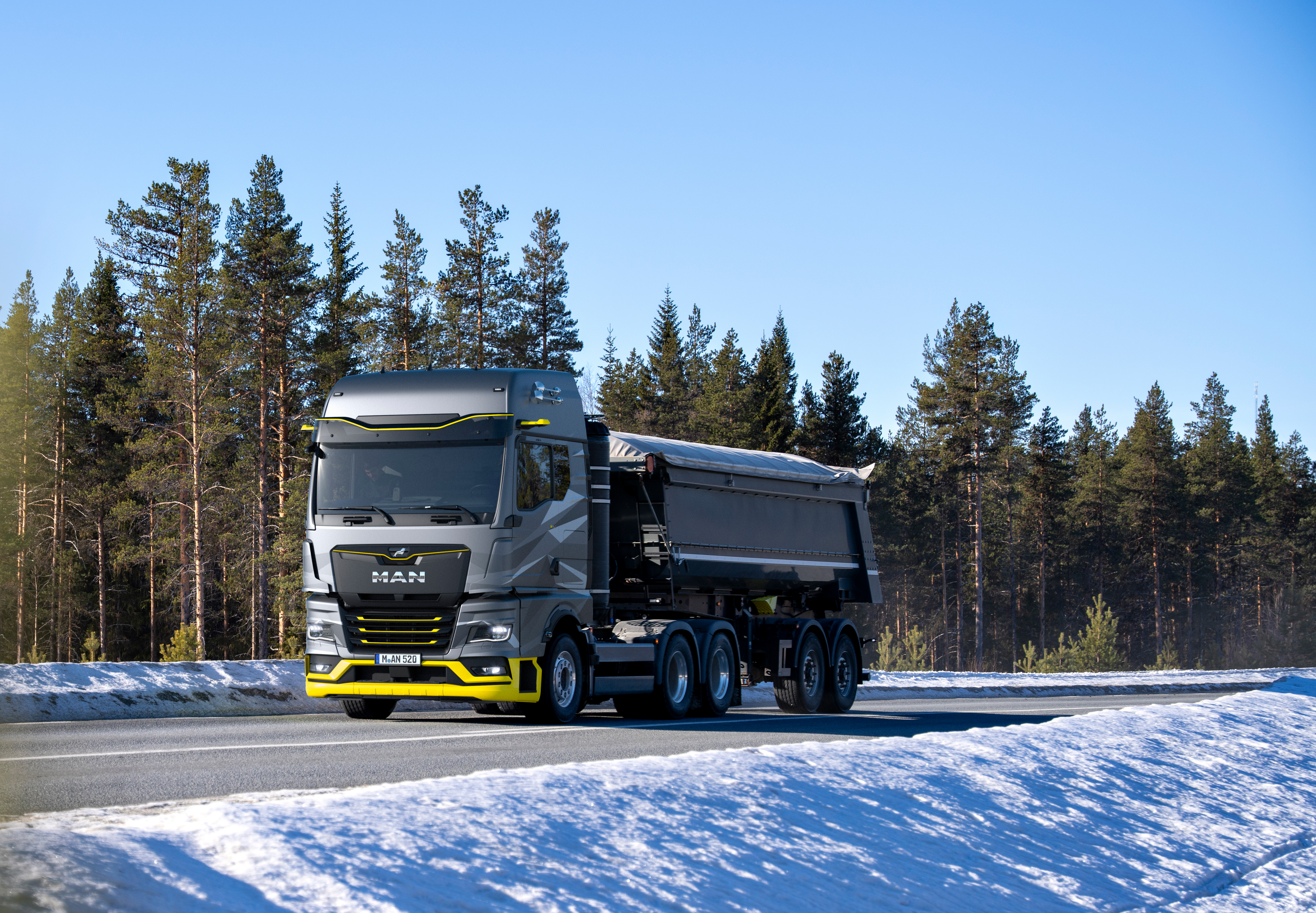
This is the first paragraph.
Commercial vehicle manufacturer MAN Truck & Bus will be the first European truck producer to launch a small series with a hydrogen combustion engine. The initially planned small series of around 200 units is to be delivered to customers in Germany, the Netherlands, Norway, Iceland and selected non-European countries as early as 2025. The “MAN hTGX”, as the vehicle will be called, offers an alternative zero-emission drive variant for special applications, for example for transporting heavy goods – such as construction work, tank transport or timber transport. The hTGX can also be an environmentally friendly alternative to battery-electric trucks for use in areas without sufficient charging infrastructure or for markets where sufficient hydrogen is already available. MAN will hand over its battery-electric truck to customers for the first time in 2024 and scale it up from 2025. MAN has been the market leader for electric city buses in Europe since 2023.
Note.
- The hydrogen truck is based on the proven TG vehicles.
- The engine is a hydrogen version of one of their current diesel engines.
- The vehicle will satisfy the forthcoming EU regulations on carbon dioxide emissions.
- The maximum range is up to 600 kilometres, which would allow London and Edinburgh, provided there was a hydrogen supply at both ends.
- With hydrogen compressed to 700 bar (CG H2) and a tank capacity of 56 kg, the vehicle can be refuelled in less than 15 minutes.
This could be a very useful truck for the UK.
Hydrogen And Electric Propulsion Compared
Stadler have given us an interesting way of comparing the range and other properties of hydrogen-powered and battery-electric trains, as their Flirt H2 and Akku trains have both set Guinness World Records for distance travelled.
The Hydrogen-Powered Flirt-H2
In Stadler’s FLIRT H2 Sets World Record For Hydrogen Powered Train, I write about how a Stadler Flirt-H2 had set a record of 2803 kilometres, without refilling.
This page on the Stadler web site gives details of the Flirt-H2.
- Hydrogen Range – 460 km.
- Operating Speed – 127 kph
- Refuelling Time – < 30 minutes
- Seats – 116
This graphic clipped from the Stadler web site shows the Flirt-H2.

Like Greater Anglia’s Class 755 train, it has a PowerPack in the middle, which contains a fuel cell and the hydrogen tank, instead of the Class 755 train’s diesel engines.
The Battery-Electric Akku
In Flirt Akku And Class 755 Train Compared, I compare a Flirt Akku and Greater Anglia’s Class 755 train, after the battery-electric Akku had set a record of 224 kilometres, with recharging.
This page on the Stadler web site gives details of the Flirt Akku.
- Battery Range – 150 km
- Operating Speed – 160 kph
- Chrging Time – 15 minutes
- Seats – 120-180
This graphic clipped from the Stadler web site shows the Flirt Akku.
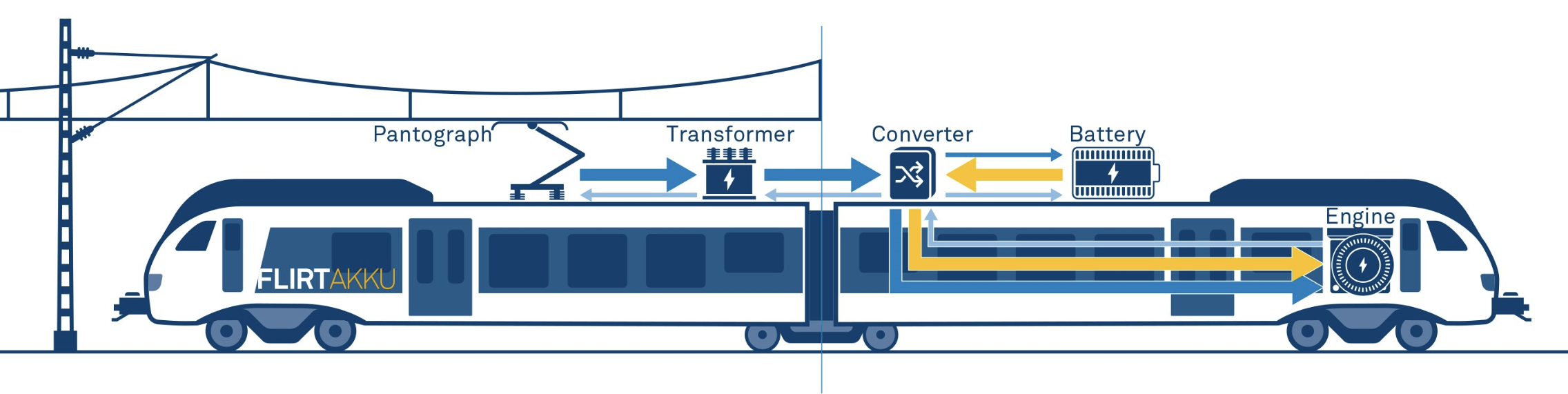
At a quick glance, the trains seem to be fairly similar, with the exception of the PowerPack.
- Both have regenerative braking.
- Both have the battery and the power converter on the roof.
- I would expect that the Flirt-H2 could be fitted with a pantograph and a transformer.
- Both trains have two passenger carriages.
I also suspect, both trains can be lengthened by adding extra coaches.
These are my thoughts.
Thoughts On The PowerPack In A Flirt-H2
This picture shows the PowerPark car of a Class 755 train.

Note.
- These PowerPacks have slots for up to four 480 Kw diesel engines.
- PowerPacks on a Class 788/4 train with four diesel engines weighs 27.9 tonnes.
- PowerPacks on a Class 788/3 train has two diesel engines.
- In the UK, trains with PowerPacks have up to four passenger cars.
- The PowerPack has a walkway from one end of the car to the other.
As customers, might like to replace their diesel PowerPacks, with something that was zero-carbon, I would expect, that the hydrogen PowerPack would have the following properties.
- Hydrogen and diesel PowerPacks would be interchangeable.
- The hydrogen PowerPack would come in two handy sizes of hydrogen fuel cell; 0ne and two MW.
- The weight of both hydrogen and diesel PowerPacks would be similar, as if power and weight were similar, then this could help certification.
- The Flirt-H2 for California, which would only have two passenger cars, would have the smaller hydrogen fuel cell.
I would expect that a conservative designer would use any spare space for hydrogen storage.
- Perhaps, there would be one tank either side of the walkway.
- The quoted range of 450 kilometres for the Flirt-H2 is just under 300 miles, so it would probably cover most regional round trips in Europe without refuelling.
- On many routes refuelling would only need to be done once-per-day.
- Refuelling can be some distance from operation.
- Large tanks would explain the thirty minutes refuelling time.
Obviously, large tanks have the collateral benefit of setting distance records.
The Kinetic Energy Of A Flirt-H2 Train
In My First Rides In A Class 755 Train, I calculated the kinetic energy of a Class 755/4 train.
I said this.
I will use my standard calculation.
The basic train weight is 114.3 tonnes.
If each of the 229 passengers weighs 90 kg with Baggage, bikes and buggies, this gives a passenger weight of 20.34 tonnes.
This gives a total weight of 134.64 tonnes.
Using Omni’s Kinetic Energy Calculator gives these figures for the Kinetic energy.
- 60 mph – 13.5 kWh
- 100 mph – 37.4 kWh
- 125 mph – 58.4 kWh
If we are talking about the Greater Anglia Class 755 train, which will be limited to 100 mph, this leads me to believe, that by replacing one diesel engine with a plug compatible battery of sufficient size, the following is possible.
- On all routes, regenerative braking will be available under both diesel and electric power.
- Some shorter routes could be run on battery power, with charging using existing electrification.
- Depot and other short movements could be performed under battery power.
The South Wales Metro has already ordered tri-mode Flirts, that look like Class 755 trains.
The calculation for a Flirt-H2 train is as follows.
Train Weight – 82.3 tonnes
Passenger Weight – 10.4 tonnes
Total Weight – 92.7 tonnes
This gives these kinetic energies
- 60 mph – 9.3 kWh
- 79 mph – 16.0 kWh
- 100 mph – 25.7 kWh
It looks like the 79 mph; Flirt-H2 would only need a 16 KWh battery.
It seems when a battery is not for traction and only handles the regenerative braking, it can be surprisingly small.
Mathematical Advantages Of Hydrogen
I do wonder that on balance, there may be mathematical advantages to hydrogen; long range, less frequent refuelling and small batteries.
But as I indicated in Zillertalbahn Hydrogen Plan Dropped In Favour Of Battery Traction, the decision doesn’t always go hydrogen’s way!
Conclusion
I feel Stadler have the right approach of a modular concept that incorporates both hydrogen-powered and battery-electric trains.
I also think, if you have a route, you want to decarbonise, Stadler have the train for you.
Zillertalbahn Hydrogen Plan Dropped In Favour Of Battery Traction
The title of this post, is the same as that of this article on Railway Gazette.
I wrote about this order in Zillertalbahn Orders Stadler Hydrogen-Powered Trains.
I didn’t blog about it but I remembered an article a few years ago about Stadler getting an order from the Zillertalbahn.
It appears the change is down to improvements in battery technology.
Narrow-gauge battery-electric multiple units must be right up Stadler’s street, as they built the new trains for the narrow gauge Glasgow Subway.
Waterbeach Station To Be Relocated
The title of this post, is the same as that of this article on Railway Gazette.
These three paragraphs, outline the project.
Cambridgeshire County Council has called tenders for an estimated £35m design and build contract for the relocation of Waterbeach station to a new site further to the north.
This would support the Waterbeach New Town development of 4 500 homes. Opening is now envisaged for 2026.
The replacement station would have two platforms, an accessible footbridge, a 200-space car park, taxi and bus drop-off, cycle storage and a new access road from Cody Road. The 24-month scheme would include the demolition of the existing station.
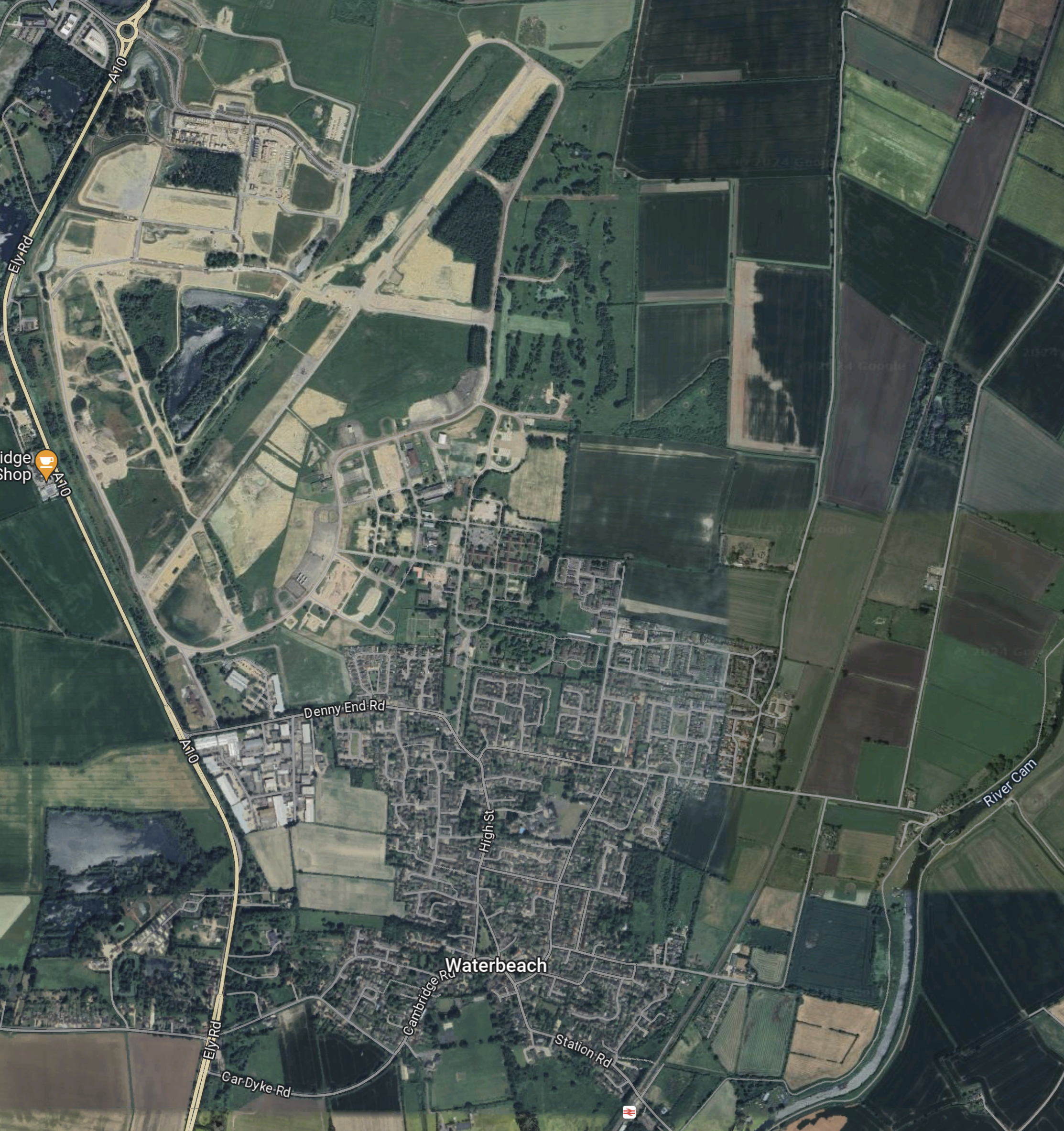
This Google Map shows the current station and the location of Waterbeach New Town.
Note.
Waterbeach station is at the bottom of the map, just to the right of centre.
- The station is on the Breckland Line between Cambridge and Norwich via Ely.
- The Breckland Line continues North-East to the North-East corner of the map.
- The village of Waterbeach is to the North of the station.
- North of Waterbeach is the old Waterbeach Airfield, which will be covered in the housing of the New Town.
Moving the station nearer the New Town would seem to be a sensible action.
I have some further thoughts.
The Remodelling Of Ely
Ely station is a railway bottleneck and in Are The Trains In Ely Finally To Be Sorted?, I discussed what needed to be done.
Would it help, if Waterbeach station were to be rebuilt first?
A Cambridge Metro
Once Waterbeach station has been rebuilt and Cambridge South station has been built, there will be a run of stations through Cambridge.
- Ely
- Waterbeach
- Cambridge North
- Cambridge
- Cambridge South
Perhaps, extra trains could be added to create a frequent rail route across Cambridge.
East West Railway
Will the trains of the East West Railway stop at Waterbeach station?
Conclusion
Waterbeach could be a very useful and busy station.
I Was Kathleened At The Weekend
Saturday
At 0200 on Saturday morning, I couldn’t sleep.
So in the end, I got up, made myself a mug of tea and did Saturday’s puzzles in The Times.
I had no trouble doing them, so my brain function was normal.
But my left hand wasn’t working that well.
I had breakfast in Leon and had a bit of trouble with their sauce containers, but otherwise I was fine.
I did a bit of shopping in M & S on Moorgate and came home.
I wasn’t having any problems.
For the rest of the day, I watched television and listened to the radio.
Sunday
I got up late, as I was probably catching up the sleep from the night before.
I had lunch in Gordon Ramsey’s Street Burger about one.
My left hand wasn’t working that well and I was making a bit of a mess.
After, I got home, I watched television and listened to the radio.
Monday
I slept in late, but as my left hand wasn’t being very co-operative, I had a small bit of trouble dressing, due to an uncooperative left hand.
My INR was 2.0, so I took 5 mg. of Warfarin.
I had breakfast in Leon, where I made a mess with the sauce container.
I then went looking for a book, which I couldn’t find.
Tuesday
Everything seems better today.
My INR was 2.1, so I took 5 mg. of Warfarin.
I did my usual Monday morning trip, of visit to Marks & Spencer for about three days of food and then had breakfast in Leon.
Conclusion
This seems to be a pattern.
- A storm goes through, I can’t sleep and after some drinks of tea or zero alcohol beer, I feel a bit better.
- My left hand often stops co-operating and won’t do simple things.
- But it does seem to clear up, when the storm passes.
This is probably the third time, that it’s happened.
Note.
- My left humerus was broken by the school bully.
- I had a stroke in 2011, which affected my left arm.
- If I carry shopping in my left hand, the pulling action on my humerus seems to help.
Any ideas will be gratefully received.
Fortescue Officially Opens Gladstone Electrolyser Facility
The title of this post, is the same as that of this press release from Fortescue.
This is the sub-heading.
Fortescue has today officially opened its world-leading electrolyser manufacturing facility in Gladstone, Queensland, Australia – one of the first globally to house an automated assembly line.
The first two paragraphs add more detail.
Fortescue has today officially opened its world-leading electrolyser manufacturing facility in Gladstone, Queensland, Australia – one of the first globally to house an automated assembly line.
The 15,000sqm advanced manufacturing facility, constructed and fully commissioned in just over 2 years, will have capacity to produce over 2GW of Proton Exchange Membrane (PEM) electrolyser stacks annually.
This is a very large increase in electrolyser production.
With Wind Turbines Is It Bigger Are Better?
The offshoreWIND.biz web site has two stories today, with a similar theme.
- Scots Greenlight Slimmed-Down Turbine Plan For 100 MW Pentland Floating Offshore Wind Farm, which described how the Pentland wind farm is reducing the number of turbines from ten to seven, but increasing their size from 10 to 14 MW, to produce the same power output.
- Fred. Olsen Seawind, EDF Slash Turbine Count For Codling Wind Park, described how in the Irish wind farm; Codling wind farm, the number of turbines are being reduced from hundred to seventy-five.
There are also some wind farms, where capacity has the potential to be increased.
- Ossian Floating Wind Farm Could Have Capacity Of 3.6 GW
- Crown Estate Mulls Adding 4 GW Of Capacity From Existing Offshore Wind Projects
Note.
- With the exception of the floating Pentland wind farm, all wind farms have fixed foundations.
- It certainly does look, that larger turbines may have reasons to be used.
- Perhaps installing a large turbine is very much the same as a small turbine.
It looks like a victory for the accountants.

