A Thought On Trump v The BBC
Nearly twenty years ago, I shared a train journey between Cambridge and London, with a delightful black lady, who was probably in her seventies. It turned out she was a New York State Supreme Court Judge, who was doing a bit of week-end sight-seeing, whilst at a legal conference at Cambridge University.
One of the big regrets in my life, is that I didn’t exchange cards with this wonderful lady, as it would be so revealing to ask her opinion of Trump v. The BBC.
But, I also feel it is too late, as my research indicates, that she might be now giving judgments in a higher court.
But if that lady is typical of the quality of US Supreme Court justices, at both Federal and State level, then I am fairly sure, that anybody who appeals to their court will get a fair hearing according to the law.
Could that be a difficulty for someone with Trump’s personality?
Why The East Of England Can Be An Offshore Hydrogen Leader
The title of this post, is the same as that of this article on the Eastern Daily Press.
This is the sub-heading.
The East of England’s connected energy system puts it in prime position to be a key player in the offshore hydrogen economy, says Anne Haase, chair of the Hydrogen East Industry Advisory Group.
These two paragraphs add a level of detail.
The East of England’s energy story is increasingly being written onshore. The region is re-writing the playbook for how a sustainable, connected energy system could take shape and deliver. The region isn’t just about tourism – we have a whole industrial ecosystem dwarfing that sector.
We are a net energy exporter to the rest of the UK. We transmit more than 30% of gas, and our infrastructure offers supply security and sustainable energy to not just our region, but to London and the South East.
This is very much a must-read article.
UK, French, And Irish Ports Join Hands In Global Floating Wind Collaboration
The title of this post, is the same as that of this article on offshoreWIND.biz.
This is the sub-heading.
The UK’s Associated British Ports (ABP) has teamed up with France’s BrestPort and Ireland’s Shannon Foynes Port to establish the Global Floating Offshore Wind Ports Alliance (FLOW Ports Alliance) to help bring together major floating offshore wind ports across the world and unlock the technology’s full potential.
These first two paragraphs add more detail.
The FLOW Ports Alliance aims to recruit ports in Europe to collaborate on FLOW port design, standardisation, and best operational practices.
It plans to strengthen and accelerate compliant knowledge and experience exchange between ports, share best practices as they emerge through demonstration projects, and share innovations to the benefit of the global FLOW network.
Surely, a global network of ports that can handle construction, operation and maintenance of a range of floating wind platforms, is an excellent idea.
Why Is The Highway Code Only A Code And Not A Law?
If you ask Google AI, the question in the title of this post, you receive this answer.
The Highway Code is not a law in itself, but a collection of rules and guidance for all road users. While it contains some legally enforceable rules (marked with “MUST” or “MUST NOT”), and breaking them is a criminal offence, it also includes non-binding advice. The “code” serves as an authoritative source of information, making it easier for people to understand the law and helping courts to establish liability by using the advisory rules as evidence of a standard of expected behaviour.
So why is it just a collection of rules and guidance?
Coming home yesterday on a bus, a smartly-dressed elderly lady sat next to me and we got talking.
Something must have triggered it, as she told me why the Highway Code was just a code and not a law.
Apparently, her father had written it and he had insisted that it should not be made into law and the government of the day in 1931 had agreed he should have his way.
I asked Google AI, who actually wrote it and received this answer.
The Highway Code was written by the UK government, with the first edition published in 1931 under the authority of the then Minister of Transport, Herbert Morrison. The code was created as a result of the Road Traffic Act 1930, which required the Minister of Transport to issue the guide for all road users.
It looks like as Herbert Morrison’s daughter has passed on, he didn’t write the Code himself.
Expensive Bikes To Be Banned From Cycle To Work Scheme
The title of this post, is the same as that of this article in The Times.
This is the sub-heading.
Rachel Reeves is said to be targeting rich commuters by limiting the amount you can claim for bike gear through salary sacrifice
These two paragraphs add some detail.
Workers could be banned from buying ultra-expensive bikes through salary sacrifice schemes amid government concerns that they are being exploited by “high earners in the Surrey Hills”.
The Treasury is understood to be considering limiting the generosity of the government’s Cycle to Work scheme, which allows employees to buy bikes and accessories through an interest-free loan from their employer.
Over the years, I’ve worked with many, who have cycled to work and in the early 1970s, I regularly cycled to my clients in London.
Rachel from Accounts seems to have a death wish for the electoral chances of the Labour Party.
EV Owners To Pay London Congestion Charge From January 2026
The title of this post, is the same as that of this article in The Times.
I asked, Google AI, who will pay the Congestion Charge and received this answer.
Most drivers of petrol or diesel vehicles must pay the London Congestion Charge when driving within the central zone during charging hours. Exemptions apply to those with specific vehicles, such as motorcycles, emergency vehicles, and breakdown service vehicles, as well as individuals with disabilities who have a Blue Badge and are in the “disabled” tax class. Some groups, like residents who applied before August 2020, also receive a significant discount.
Note that the Congestion Charge will increase from £15 a day to £18 a day on January 2.
I can’t see the Labour Party winning the next London elections.
Does Ginger Make You Feel Good?
I ask this question, as yesterday, I ran out of the Marks & Spencer’s gluten-free stem ginger snap biscuits.
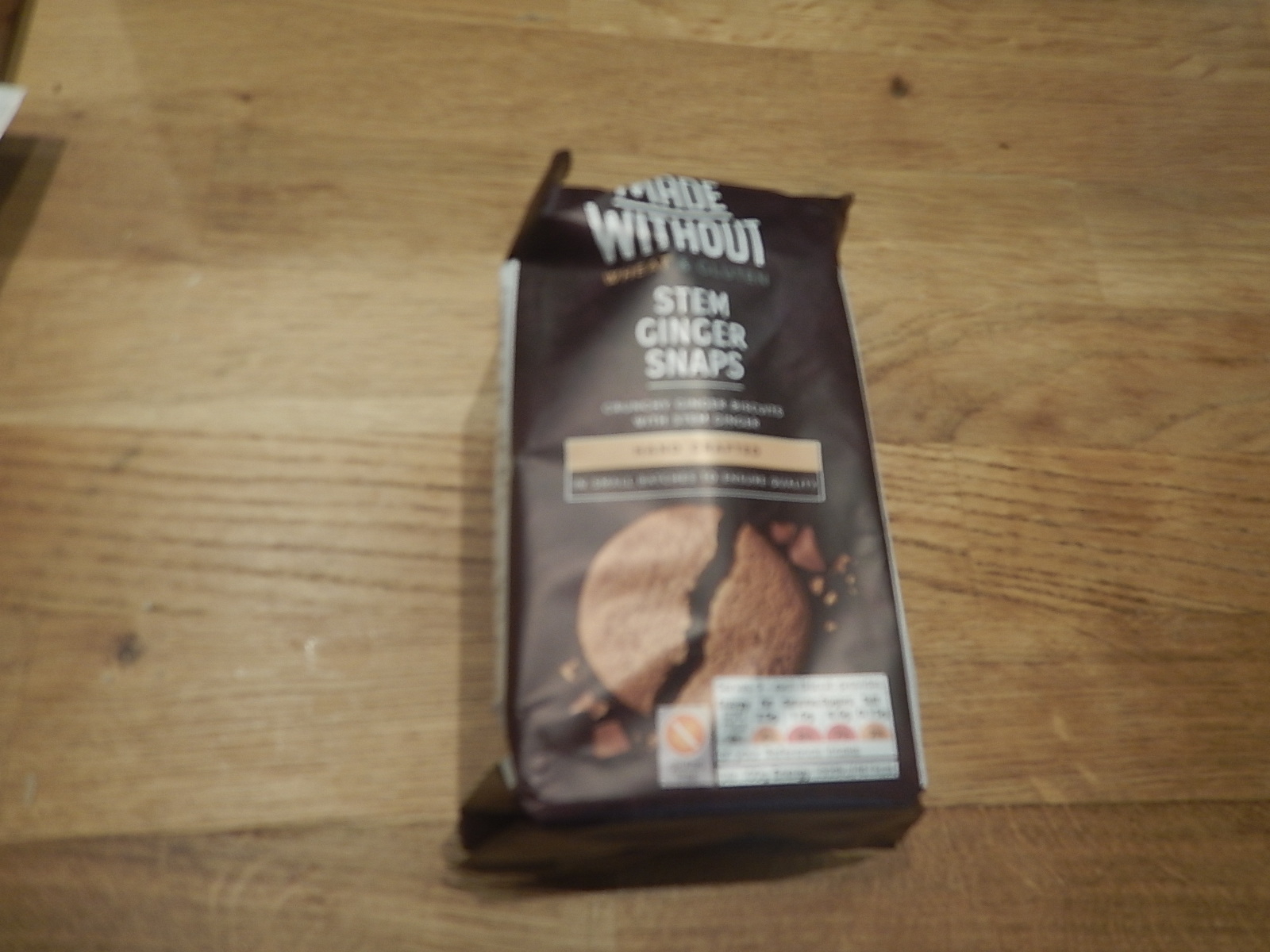
So after buying some this morning, I have just had three biscuits dunked in tea for my lunch.
I sometimes eat as many as four packets a week, so out of curiosity I asked Google AI, the question in the title of this post and received this reply.
Yes, ginger can make you feel good due to its many benefits, including easing nausea and indigestion, reducing inflammation, and improving circulation. It may also help relieve pain, boost energy levels, and promote relaxation, although it’s always best to consult a healthcare professional before taking supplements.
Google seems to be using this web page from Johns Hopkins Medicine, which is entitled Ginger Benefits, as a source.
I have a few extra thoughts about ginger.
Several Of The Posts On This Blog Have Mentioned Ginger
This link displays them all.
Ryanair Refuses To Refund Hero Passenger Injured During Cambridgeshire Train Stabbing
The title of this post, is the same as that of this article on Simple Flying.
These two paragraphs add details to the story.
Ryanair has doubled down on its decision not to issue a refund for a passenger injured while risking his life to stop a mass stabbing assailant. Stephen Crean, 61, suffered stab wounds as he fought a knife-wielding man attacking passengers on a train, leaving his unable to catch his Ryanair flight to Austria.
The Irish ultra-low-cost carrier has responded to the public outrage, insisting that all of its fares are non-refundable and advising customers to pay for travel insurance. However, many are calling on the airline to make an exceptional case for Crean.
I feel Ryanair have been very mean.
In fact, I feel Ryanair could have used the story for a bit of free advertising.
Because of the fact, that my ongoing medical condition; uncomplicated pancolonic diverticular disease could flare up at any time and I might need the toilet urgently, I wouldn’t fly Ryanair, as they might put restrictions on access to the facilities, between my booking and the flight.
All Recyclable Blades Installed At RWE’s 1.4 GW UK Offshore Wind Farm
The title of this post, is the same as that of this article on offshoreWIND.biz.
This is the sub-heading.
All 150 recyclable blades have been installed at the 1.4 GW Sofia offshore wind farm, with more than half of the wind turbines now in place at the UK construction site.
These three paragraphs add more details.
All 150 recyclable blades are now installed, with each turbine utilising 50 sets of three blades, marking the UK’s first large-scale use of this technology at an offshore wind farm, RWE, the developer, said.
The recyclable rotor blades used at Sofia are manufactured by Siemens Gamesa at its Hull factory and use a unique resin that enables easy separation of component materials at the end of each blade’s operational life cycle.
In addition, 62 out of 100 Siemens Gamesa 14 MW turbines have now been installed at the site located 195 kilometres off the UK’s east coast. Each turbine features 108-metre blades and a 222-metre rotor diameter. Cadeler is responsible for the installation of the wind turbines.
Note.
- The Sofia wind farm has a hundred turbines, each with the customary three blades.
- Currently the 13 MW Siemens Gamesa turbines in Dogger Bank A and Dogger Bank B are the largest turbines in British waters.
- Sofia’s at 14 MW will be larger.
- But 15 MW monsters are on their way, with RWE’s Norfolk zone appearing to favour 15 MW Vesta turbines.
At the present time, turbine size seems to be creeping up. I would expect this to happen, as turbines become more affordable.
CO2 to SAF: A One-Step Solution
The title of this post is the same as that of this article on the Chemical Engineer.
This is the sub-heading,
Oxford spinout OXCCU has launched a demonstration plant at London Oxford Airport to trial its one-step process of turning CO2 into sustainable aviation fuel (SAF). Aniqah Majid visited the plant to investigate the benefits of its “novel” catalyst
One word in this sub-heading caught my eye.
When I was a young engineer in the Computer Techniques section in the Engineering Department at ICI Plastics Division, I did a small mathematical modelling project for this chemical engineer, using the section’s PACE 231-R analogue computer.

He was impressed and gave the 23-year-old self some advice. “You should apply that beast to catalysts.”
I have never had the chance to do any mathematically modelling of catalysts either at ICI Plastics or since, but I have invested small amounts of my own money in companies working with advanced catalysts.
So when OXCCU was picked up by one of my Google Alerts, I investigated.
I like what I found.
The three raw ingredients are.
- Green Hydrogen
- Carbon dioxide perhaps captured from a large gas-fired powerstation like those in the cluster at Keadby.
- OXCCU’s ‘novel’ catalyst, which appears to be an iron-based catalyst containing manganese, potassium, and organic fuel compounds.
I also suspect, that the process needs a fair bit of energy. These processes always seem to, in my experience.
This paragraph outlines how sustainable aviation fuel or (SAF) is created directly.
This catalyst reduces CO2 and H2 into CO and H2 via a reverse water gas shift (RWGS) process, and then subsequently turns it into jet fuel and water via Fischer-Tropsch (FT).
The Wikipedia entry for Fischer-Tropsch process has this first paragraph.
The Fischer–Tropsch process (FT) is a collection of chemical reactions that converts a mixture of carbon monoxide and hydrogen, known as syngas, into liquid hydrocarbons. These reactions occur in the presence of metal catalysts, typically at temperatures of 150–300 °C (302–572 °F) and pressures of one to several tens of atmospheres. The Fischer–Tropsch process is an important reaction in both coal liquefaction and gas to liquids technology for producing liquid hydrocarbons.
Note.
- I wouldn’t be surprised that to obtain the carbon monoxide and hydrogen or syngas for the Fischer-Tropsch process, excess hydrogen is used, so the OXCCU process may need a lot of affordable hydrogen, some of which will be converted to water in the RWGS process.
- The high temperatures and pressures for the Fischer-Tropsch process will need a lot of energy, as I predicted earlier.
But I don’t see why it won’t work with the right catalyst.
The Wikipedia entry for the Fischer-Tropsch process also says this.
Fischer–Tropsch process is discussed as a step of producing carbon-neutral liquid hydrocarbon fuels from CO2 and hydrogen.
Three references are given, but none seem to relate to OXCCU.
OXCCU have a web site, with this title.
Jet Fuel From Waste Carbon
And this mission statement underneath.
OXCCU’s mission is to develop the world’s lowest cost, lowest emission pathways to make SAF from waste carbon, enabling people to continue to fly and use hydrocarbon products but with a reduced climate impact.
It looks like they intend to boldly go.
Conclusion
My 23-year-old self may have been given some good advice.
 The Anonymous Widower