Thoughts On The Eastern Leg Of High Speed Two
These are a few thoughts on the Eastern Leg of High Speed Two.
Serving The North-East Quarter Of England From London
In Anxiety Over HS2 Eastern Leg Future, I gave a table of timings from London to towns and cities in the North-East quarter of England from Lincoln and Nottingham Northwards.
I’ll repeat it here.
- Bradford – Will not be served by High Speed Two – One hour and fifty-four minutes
- Cleethorpes – Will not be served by High Speed Two – Two hours and fifty-one minutes
- Darlington – One hour and forty-nine minutes – One hour and forty-nine minutes
- Doncaster – Will not be served by High Speed Two – One hour
- Edinburgh – Three hours and forty minutes via Western Leg – Three hours and thirty minutes.
- Grimsby – Will not be served by High Speed Two – Two hours and thirty-six minutes
- Harrogate – Will not be served by High Speed Two – One hour and fifty-two minutes
- Huddersfield – Will not served by High Speed Two – Two hours and eight minutes
- Hull – Will not be served by High Speed Two – One hour and fifty minutes
- Leeds – One hour and twenty-one minutes – One hour and thirty minutes
- Lincoln – Will not be served by High Speed Two – One hour and fifty-one minutes
- Middlesbrough – Will not be served by High Speed Two – Two hours and twenty minutes
- Newcastle – Two hours and seventeen minutes – Two hours and sixteen minutes
- Nottingham – One hour and seven minutes – One hour and fifty minutes
- Scarborough – Will not be served by High Speed Two – Two hours and fifty-seven minutes
- Sheffield – One hour and twenty-seven minutes – One hour and twenty-seven minutes
- Skipton – Will not be served by High Speed Two – Two hours and seven minutes
- Sunderland – Will not be served by High Speed Two – Two hours and thirty minutes
- York – One hour and twenty-four minutes – One hour and twenty-four minutes
Note.
- I have included all destinations served by Grand Central, Hull Trains and LNER.
- I have included Nottingham and Sheffield for completeness and in case whilst electrification is installed on the Midland Main Line, LNER run services to the two cities.
- I suspect LNER services to Bradford, Harrogate, Huddersfield and Skipton will split and join at Leeds.
There are a total of nineteen destination in this table.
- Twelve are not served by High Speed Two.
- Six are not more than fifteen minutes slower by the East Coast Main Line.
Only Nottingham is substantially quicker by High Speed Two.
Serving The North-East Quarter Of England From Birmingham
Fenland Scouser felt the above table might be interesting to and from Birmingham with or without the Eastern Leg of High Speed Two.
I think, I can give more information than that and it should be possible to give for each destination the following.
- Whether of not the route exists on High Speed Two.
- Time on High Speed Two from Birmingham.
- Time on High Speed Two and Northern Powerhouse Rail from Birmingham via Manchester
- Time by current trains from Birmingham
In the following table, the fields are in the order of the previous table.
- Bradford – No direct route – No time – One hour and three minutes – Two hours and twenty-seven minutes
- Cleethorpes – No direct route – No time – Three hours and eight minutes – Three hours and eighteen minutes
- Darlington – Route Exists – One hour and twenty-three minutes – One hour and forty minutes – Two hours and fifty-five minutes
- Doncaster – No direct route – No time – One hour and thirty-six minutes – Two hours and nineteen minutes
- Edinburgh- Route Exists – Three hours and fourteen minutes – Four hours – Four hours and thirteen minutes
- Grimsby – No direct route – No time – Two hours and fifty-three minutes – Three hours and three minutes
- Harrogate – No direct route – No time – One hour and twenty-eight minutes – Three hours
- Huddersfield – No direct route – No time – Fifty-six minutes – Two hours and eleven minutes
- Hull – No direct route – No time – One hour and forty-four minutes – Three hours and two minutes
- Leeds – Route Exists – Forty-nine minutes – One hour and six minutes – One hour and fifty-nine minutes
- Lincoln – No direct route – No time – Two hours and fifty-three minutes – Two hours and thirteen minutes
- Middlesbrough – No direct route – No time – Two hours and twenty-nine minutes – Three hours and thirty-two minutes
- Newcastle – No direct route – No time – Two hours and four minutes – Three hours and twenty-six minutes
- Nottingham – Route Exists – Fifty-seven minutes – Two hours and fifty-five minutes – One hour and ten minutes
- Sheffield – Route Exists – Thirty-five minutes – One hour and thirty-four minutes – One hour and fifteen minutes
- Skipton – No direct route – No time – One hour and forty-three minutes – Two hours and fifty-two minutes
- Sunderland – No direct route – No time – Two hours and fifty-nine minutes – Three hours and fifty-eight minutes
- York – Route Exists – Fifty-seven minutes – One hour and twenty-eight minutes – Two hours and twenty-seven minutes
Note.
- No time means just that!
- One of the crucial times is that Birmingham Curzon Street and Leeds is just an hour and six minutes via High Speed Two and Northern Powerhouse Rail. This time gives good times to all destinations served from Leeds.
- Nottingham and Sheffield are both around an hour and fifteen minutes from Birmingham New Street, by the current trains.
I’ll now look at some routes in detail.
Birmingham And Leeds
The time of one hour and six minutes is derived from the following.
- Birmingham Curzon Street and Manchester Piccadilly by High Speed Two – Forty-one minutes
- Manchester Piccadilly and Leeds by Northern Powerhouse Rail – Twenty-five minutes
It would be seventeen minutes slower than the direct time of forty-nine minutes.
But it is quicker than the current time of one hour and fifty-nine minutes
Note.
- As Manchester Piccadilly will have a time to and from London of one hour and eleven minutes, Leeds will have a time of one hour and twenty-six minutes to London via Northern Powerhouse Rail and Manchester.
- If the Eastern Leg is built, The London and Leeds time will be one hour and twenty-one minutes.
- The Eastern Leg would therefore save just five minutes.
The Northern Powerhouse route could probably mean that Huddersfield, Bradford and Hull would be served by High Speed Two from London.
Manchester Airport, Manchester Piccadilly and Leeds would be connected by a tunnel deep under the Pennines.
- Manchester Piccadilly, Huddersfield and Bradford could be underground platforms added to existing stations.
- Piccadilly and Leeds would have a journey time of under 25 minutes and six trains per hour (tph).
- The tunnel would also carry freight.
- It would be modelled on the Gotthard Base Tunnel in Switzerland.
I wrote full details in Will HS2 And Northern Powerhouse Rail Go For The Big Bore?
Birmingham And Nottingham
The time of two hours and fifty-five minutes is derived from the following.
- Birmingham Curzon Street and Manchester Piccadilly by High Speed Two – Forty-one minutes
- Manchester Piccadilly and Leeds by Northern Powerhouse Rail – Twenty-five minutes
- Leeds and Nottingham – One hour and forty-nine minutes
It would be one hour and fifty-eight minutes slower than the direct time of fifty-nine minutes.
The current time of one hour and ten minutes is much quicker.
Birmingham And Sheffield
The time of two hours and thirty-four minutes is derived from the following.
- Birmingham Curzon Street and Manchester Piccadilly by High Speed Two – Forty-one minutes
- Manchester Piccadilly and Leeds by Northern Powerhouse Rail – Twenty-five minutes
- Leeds and Sheffield – One hour and twenty-eight minutes
It would be one hour and fifty-nine minutes slower than the direct time of thirty-five minutes.
The current time of one hour and fifteen minutes is much quicker.
Conclusions On The Timings
I am led to the following conclusions on the timings.
The building of the Eastern Leg of High Speed Two gives the fastest times between Birmingham and Leeds, Nottingham and Sheffield.
But if the Eastern Leg of High Speed Two is not built, then the following is true, if Northern Powerhouse Rail is created between Manchester and Leeds.
The time of an hour and six minutes between Birmingham Curzon Street and Leeds is probably an acceptable time.
This time probably enables acceptable times between Birmingham Curzon Street and destinations North of Leeds.
But with Nottingham and Sheffield the current CrossCountry service is faster than the route via Manchester.
The speed of the CrossCountry services surprised me, but then there is a section of 125 mph running between Derby and Birmingham, which is used by CrossCountry services between Birmingham New Street and Leeds, Nottingham and Sheffield.
This table gives details of these services.
- Birmingham New Street and Leeds – 116,4 miles – One hour and 58 minutes – 59.3 mph
- Birmingham New Street and Nottingham – 57.2 miles – One hour and 14 minutes – 46.4 mph
- Birmingham New Street and Sheffield – 77.6 miles – One hour and 18 minutes – 59.7 mph
Note.
- The Leeds and Sheffield services are run by 125 mph Class 220 trains.
- The Notting service is run by 100 mph Class 170 trains.
- All trains are diesel-powered.
As there is 125 mph running between Derby and Birmingham, the train performance probably accounts for the slower average speed of the Nottingham service.
CrossCountry And Decarbonisation
Consider.
- CrossCountry has an all-diesel fleet.
- All train companies in the UK are planning on decarbonising.
- Some of CrossCountry’s routes are partially electrified and have sections where 125 mph running is possible.
The only standard train that is built in the UK that would fit CrossCountry’s requirements, would appear to be one of Hitachi’s 125 mph trains like a bi-mode Class 802 train.
- These trains are available in various lengths
- Hitachi will be testing battery packs in the trains in the next year, with the aim of entering service in 2023.
- Hitachi have formed a company with ABB, which is called Hitachi ABB Power Grids to develop and install discontinuous electrification.
When CrossCountry do replace their fleet and run 125 mph trains on these services several stations will be connected to Birmingham for High Speed Two.
The route between Leeds and Birmingham via Sheffield is part of the Cross Country Route, for which electrification appears to have planned in the 1960s according to a section in Wikipedia called Abortive British Rail Proposals For Complete Electrification,
I suspect that the following times could be achieved with a frequency of two tph
- Birmingham New Street and Leeds – 90 minutes
- Birmingham New Street and Nottingham – 60 minutes
- Birmingham New Street and Sheffield – 60 minutes
It is not the Eastern Leg of High Speed Two, but it could do in the interim.
Electrification Of The Midland Main Line
I don’t believe that the Midland Main Line needs full electrification to speed up services to Derby, Nottingham and Sheffield, but I believe that by fitting batteries to Hitachi’s Class 810 trains, that will soon be running on the line and using the Hitachi ABB Power Grids system of discontinuous electrification, that the route can be decarbonised.
I would also apply full digital in-cab signalling to the Midland Main Line.
Conclusion
We will need the Eastern Leg of High Speed Two at some time in the future, but if we do the following we can do more than cope.
- Create Northern Powerhouse Rail between Manchester and Leeds, so that High Speed Two can serve Leeds and Hull via Manchester.
- Decarbonise CrossCountry with some 125 mph battery-electric trains.
- Electrify the Midland Main Line.
I would also deliver as much as possible before Phase 1 and 2a of High Speed Two opens.
Installation Of OLE Begins In The Valleys
The title of this post, is the same as that of a short article in the September 2021 Edition of Modern Railways.
This is the first paragraph.
Construction of Core Valley Lines (CVL) overhead electrification equipment commenced on 26 July, when the first piles for masts were installed on the Aberdare branch.
The article appears has several small stories buried in the text.
Was This Good Project Management?
This is a paragraph.
The work, between Penrhiwceiber and Mountain Ash took place a year later than Transport for Wales had aimed for prior to the Covid-19 pandemic. However, TfW does not expect significant delays to completion, because the CVL transformation has been rescheduled and revised.
It certainly sounds like it to me that good Project Management has brought the electrification back on track.
I have seen this happen many times over past decades.
Yesterday, at Whitechapel station, I asked one of Crossrail’s Senior Managers, who in the past had used Artemis, if good project management was bringing Crossrail under control. He gave a knowing smile and said that there’s still a lot to do with the trains and gave me the official First Half Of Next Year answer.
But I do wonder, if we’ll get a surprise!
Battery Power To The Rescue
This is a paragraph.
Less overhead line electrification will be needed than was expected when the plans were announced in 2018. Improvements in battery technology enable the battery/electric dock to run further without OLE than had been assumed.
There must be an optimal point, where the extra expense of battery/electric trains are paid for by the savings and disruption of not installing overhead line equipment.
Using The Pandemic To Advantage
This is a paragraph.
TfW also accelerated preparatory works between Radyr and Pontypridd with a three-week blockade last winter taking advantage of low passenger numbers during the second Covid-19 lockdown.
It sounds like another case of good Project Management.
Dealing With A Level Crossing
This is a paragraph.
A crossing on the Rhondda Line will be permanently closed as a result of TfW purchasing the only building accessed by it! Deputy Climate Change Minister Lee Waters said it was more cost-effective for TfW to acquire the former army barracks at Pentre than spend an estimated £450,000 to bring the nearby crossing up to the requisite safety standards.
This Google Map shows the site.

It strikes me, that Transport for Wales will have to be very innovative to find a sensible use for a site hemmed in by the railway on one side and the River Rhondda on the other.
Conclusion
As we do more electrification in the UK, hopefully we’ll get better at it.
Could Services To The North On High Speed Two Reverse At Birmingham Curzon Street?
When I first went to Nice by TGV, which I wrote about in Cambridge to Nice by Train, the train reversed in Marseille. They still do!
So would it be possible to run services between London and the North of England and Scotland via Birmingham Curzon Street?
- Birmingham Curzon Street can handle trains to and from London Euston, Leeds, Liverpool, Manchester and Scotland.
- It could offer timetabling advantages.
- It might be possible to use London Euston station more efficiently.
- There will be plenty of capacity between Birmingham Curzon Street and Manchester and Leeds, if the Eastern Leg is built.
Drivers would probably step-up to perform a fast stop at Birmingham Curzon Street.
I could envisage a service, that went between London Euston and Hull.
- It would call at Birmingham Curzon Street, Manchester, Huddersfield, Bradford and Leeds.
- There might be a stop at Crewe for interchange to other services on the West Coast Main Line.
- The train would reverse in Birmingham Curzon Street.
- The service could be an extension of the core London and Birmingham Curzon Street service.
- It could have a frequency of two trains per hour (tph)
Note.
- If Northern Powerhouse Rail were to be upgraded to handle High Speed Two’s Full-Size trains, these could be used on the route.
- The service would make better use of the underused section of High Speed Two between Birmingham and Manchester.
- This service would reduce the urgency to build the Eastern Leg of High Speed Two.
- Hull gets a High Speed Two service from London Euston and Birmingham Curzon Street.
Scottish and other services could also reverse at Birmingham Curzon Street.
How Long Would A Reverse At Birmingham Curzon Street Take?
Consider
- CrossCountry services take about ten minutes to reverse at Reading.
- Typical stops of Southeastern Highspeed services at Ebbsfleet take less than two minutes.
- Most stops with Hitachi 80x trains appear to take about a minute.
- Better operating procedures and automation could make the reverse faster.
- It looks like High Speed Two trains are designed for speedy boarding.
I suspect that the reverse can be achieved in perhaps two or three minutes.
Update – In Dwell Time On High Speed Two Trains, I found out the dwell time is two minutes.
London Euston and Manchester Piccadilly With A Reverse At Birmingham Curzon Street
If I look at London Euston and Manchester Piccadilly, I get the following times.
- London Euston and Birmingham Curzon Street – Forty-five minutes
- Reverse at Birmingham Curzon Street – two minutes,
- Birmingham Curzon Street Could See Six tph – Forty-one minutes
That would be eighty-eight minutes, which compares with seventy-one minutes by going direct.
Current proposals give the following frequencies between the three stations.
- London Euston and Birmingham Curzon Street – 3 tph
- Birmingham Curzon Street and Manchester Piccadilly – 2 tph
- London Euston and Manchester Piccadilly – 3 tph
There would be six tph running to and from London Euston.
But the pattern could be.
- London Euston and Birmingham Curzon Street – 2 tph
- London Euston and Manchester Piccadilly – 2 tph
- London Euston and Manchester Piccadilly via Birmingham Curzon Street – 2 tph
in addition one of each pair of services would call at Birmingham Interchange.
Note.
- There would still be six tph running to and from London Euston.
- Birmingham Curzon Street, Manchester Airport and Manchester Piccadilly get four tph to and from London Euston.
- Birmingham Interchange still has two tph to and from Birmingham Curzon Street.
- Birmingham Interchange now has two tph to and from Manchester.Airport and Manchester Piccadilly.
It could be a worthwhile improvement for passengers and train operators.
Reversing in Birmingham Curzon Street Could Increase Frequency To And From London Euston
I showed in the previous section, that with a reverse in Birmingham Curzon Street, it is possible to increase services between London Euston and Birmingham Curzon Street, Manchester Airport and Manchester Piccadilly from three to four tph.
Suppose, one of each of the two Liverpool and Glasgow/Edinburgh services were to reverse in Birmingham Curzon Street, this would increase the frequency of trains between London Euston and Birmingham Curzon Street to six tph or a train every ten minutes.
Now that would be a Turn-Up-And-Go service. Especially, if customer-friendly contactless ticketing were to be used.
Conclusion
Reversing services at Birmingham Curzon Street has possibilities.
ScotRail Offers 1st Class For £3 As Luxury Travel Reintroduced
The title of this post, is the same as that of this article on Rail Advent.
To encourage passengers back after the pandemic, Scotrail have introduced a three pound onboard upgrade to First Class on services on Inter7City and Class 385 train services.
This sounds like a good idea!
Anxiety Over HS2 Eastern Leg Future
I did think about giving this post a title of Here We Go Again, as it yet another story about delaying or cancelling the Eastern Leg of High Speed Two.
But in the end I decided to use the title of the article in the September 2021 Edition of Modern Railways.
I wrote about this subject in Is The Eastern Leg Of High Speed Two Under Threat? in December 2020.
In that post, this was my major conclusion.
To achieve the required timings for High Speed Two, major improvements must be made to existing track on the East Coast Main Line and these improvements will mean that existing services will be competitive with High Speed Two on time.
It is backed up by the timings in the following table., which show the direct time by High Speed Two and my best estimate of time on an improved East Coast Main Line.
- Bradford – Will not served by High Speed Two – One hour and fifty-four minutes
- Cleethorpes – Will not served by High Speed Two – Two hours and fifty-one minutes
- Darlington – One hour and forty-nine minutes – One hour and forty-nine minutes
- Doncaster – Will not served by High Speed Two – One hour
- Edinburgh – Three hours and forty minutes via Western Leg – Three hours and thirty minutes.
- Grimsby – Will not served by High Speed Two – Two hours and thirty-six minutes
- Harrogate – Will not served by High Speed Two – One hour and fifty-two minutes
- Huddersfield – Will not served by High Speed Two – Two hours and eight minutes
- Hull – Will not served by High Speed Two – One hour and fifty minutes
- Leeds – One hour and twenty-one minutes – One hour and thirty minutes
- Lincoln – Will not served by High Speed Two – One hour and fifty-one minutes
- Middlesbrough – Will not served by High Speed Two – Two hours and twenty minutes
- Newcastle – Two hours and seventeen minutes – Two hours and sixteen minutes
- Nottingham – One hour and seven minutes – One hour and fifty minutes
- Scarborough – Will not served by High Speed Two – Two hours and fifty-seven minutes
- Sheffield – One hour and twenty-seven minutes – One hour and twenty-seven minutes
- Skipton – Will not served by High Speed Two – Two hours and seven minutes
- Sunderland – Will not served by High Speed Two – Two hours and thirty minutes
- York – One hour and twenty-four minutes – One hour and twenty-four minutes
Note.
- I have included all destinations served by Grand Central, Hull Trains and LNER.
- I have included Nottingham and Sheffield for completeness and in case whilst electrification is installed on the Midland Main Line, LNER run services to the two cities.
- I suspect LNER services to Bradford, Harrogate, Huddersfield and Skipton will split and join at Leeds.
There are a total of nineteen destination in this table.
- Twelve are not served by High Speed Two.
- Six are not more than fifteen minutes slower by the East Coast Main Line.
Only Nottingham is substantially quicker by High Speed Two.
In Is The Eastern Leg Of High Speed Two Under Threat?, I said that if Nottingham services ran at the sort of speed on the East Coast Main Line, that a time of one hour and twenty-one minutes between London St. Pancras and Nottingham could be possible. That would be just fourteen minutes slower than the time on High Speed Two with a change at East Midlands Hub.
Conclusion
I am getting more convinced that we don’t need the Eastern Leg of High Speed Two to East Midlands Hub and Leeds for a few years yet, as by uprating the East Coast and Midland Main Lines we can handle the traffic that we currently are generating with ease.
Whitechapel Station – 23rd August 2021
Whitechapel station reopened this morning, so I went to have a look.
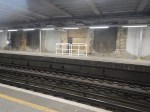
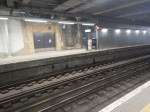
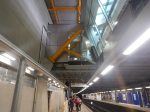
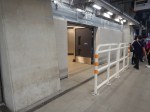

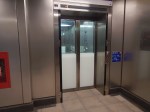
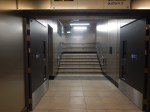
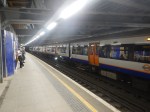
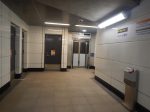
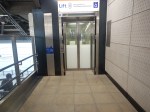
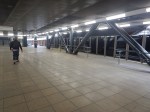
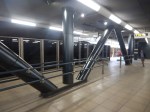

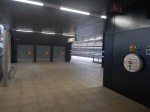
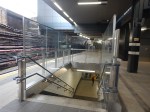


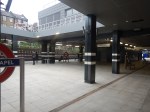
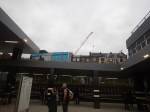



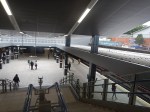




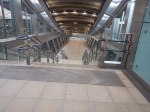
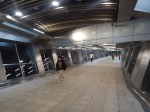
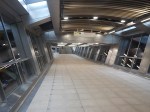
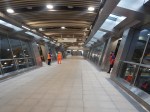


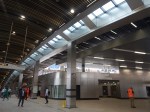
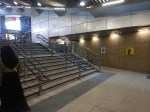



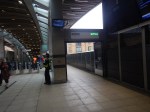
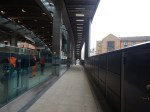
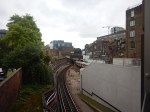
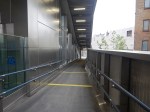
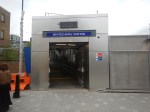

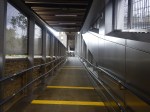
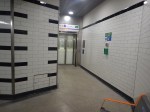

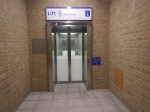
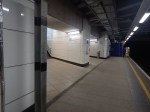

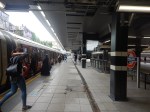
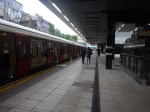
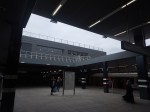
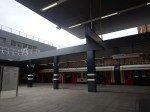

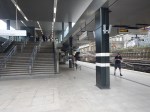
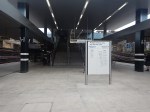
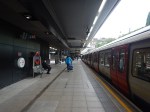
Note.
- There are more lifts than any program on Strictly.
- All the main stairs are wide with lots of handrails.
- There is a passageway alongside the Ticket Hall to access Durward Street at the back of the station.
- There is still some work to do on the Overground platforms.
It certainly could be The Jewel In The East.
High Speed Two Trains Will Have A Moveable Step At Every Passenger Door
This document on the Government web site is the Train Technical Specification for High Speed Two trains.
There is a Section 7.15.2, which is entitled Moveable Step, which is labelled Mandatory.
This is said.
The Unit shall have a Moveable Step at every Exterior Door, which shall be automatically
deployed (unless inhibited) when the door is released, and fully retracted whenever the
Unit is in motion.
The rationale is also given.
A Moveable Step is considered necessary to provide an improvement in the PTI compared
with existing rolling stock and to meet HS2 goals for accessibility.
About time too!
If Stadler can do it, so can everybody else.
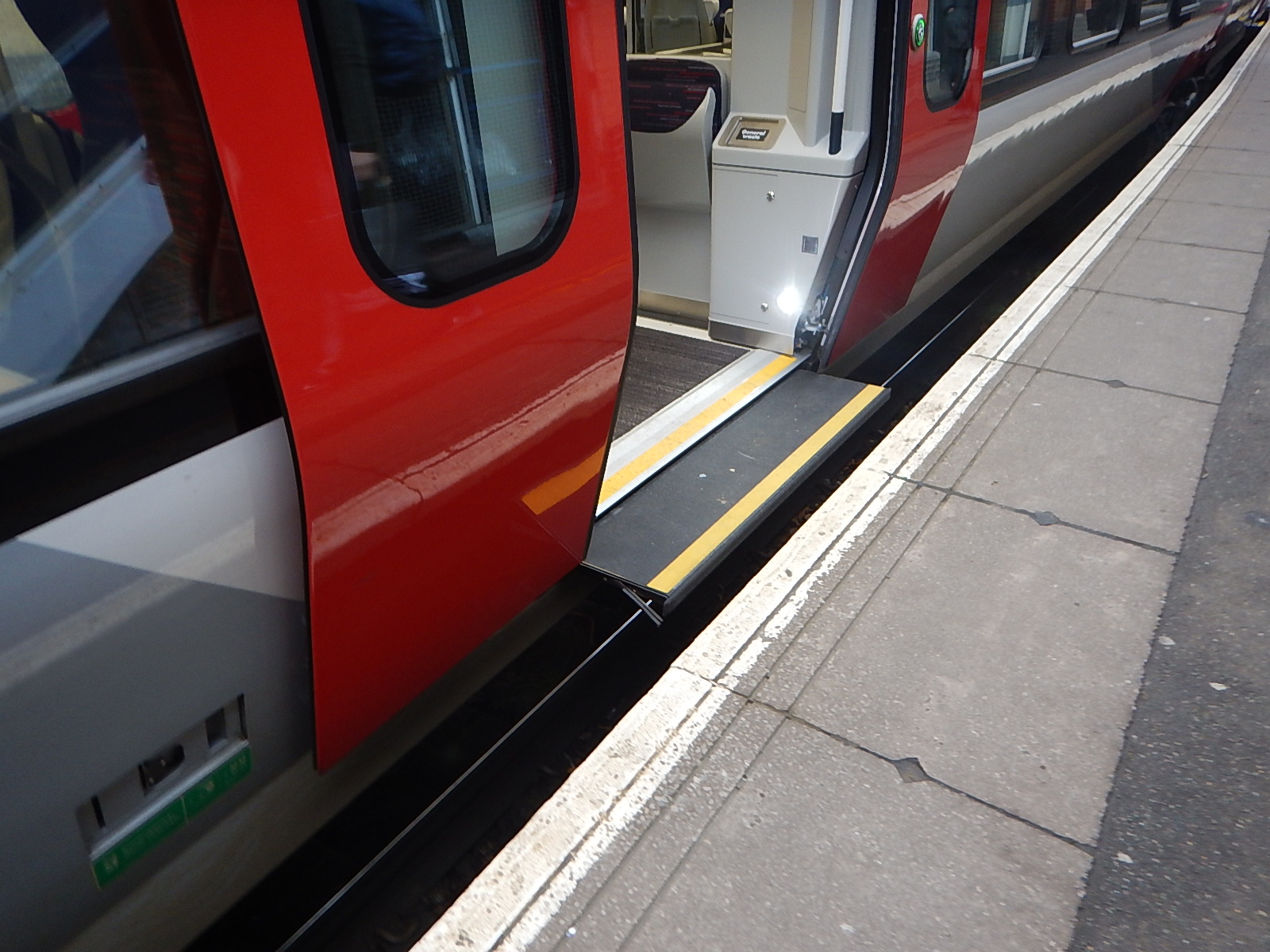
The picture shows a Class 755 train.
I think this step-free feature applies to all High Speed Two trains.
What Does High Speed Two Mean By Classic Compatible Trains?
The Classic-Compatible trains are described in this section in Wikipedia, by this sentence.
The classic-compatible trains, capable of high speed but built to a British loading gauge, permitting them to leave the high speed track to join conventional routes such as the West Coast Main Line, Midland Main Line and East Coast Main Line. Such trains would allow running of HS2 services to the north of England and Scotland, although these non-tilting trains would run slower than existing tilting trains on conventional track. HS2 Ltd has stated that, because these trains must be specifically designed for the British network and cannot be bought “off-the-shelf”, these conventional trains were expected to be around 50% more expensive, costing around £40 million per train rather than £27 million for the captive stock.
The Classic-Compatible trains will share these characteristics with the Full-Size trains.
- Maximum speed of 225 mph.
- Cruising speed of 205 mph on High Speed Two.
- Length of 200 metres.
- Ability to work in pairs.
- A passenger capacity around 500-600 passengers.
But what characteristics will the Classic-Compatible trains share with other trains on the UK network?
The Classic-Compatible trains will share some tracks with other trains, according to High Speed Two’s latest plans.
- On the East Coast Main Line, the trains will run between York and Newcastle.
- On the Liverpool Branch between Weaver junction and Liverpool Lime Street station.
- On the Midland Main Line between Clay Cross North junction and Sheffield.
- On the Midland main Line between East Midlands Hub and Bedford.
- On the West Coast Main Line, the trains will run between Crewe and Glasgow.
- On the West Coast Main Line, the trains will run between Stafford and Macclesfield.
As High Speed Two develops, the Classic-Compatible trains could venture off the main routes to places like Aberdeen, Barrow-in-Furness, Blackburn, Blackpool, Cleethorpes, Holyhead, Huddersfield, Inverness, Middlesbrough, Redcar, Scarborough, Stirling and Sunderland.
They will need to be able to go anywhere, which is worthwhile to connect to High Speed Two.
The main restriction is the size of the train and so a Classic-Compatible train probably can’t be larger than the largest train on the UK network, with respect to width, height and to a certain extend length.
Widths of typical trains are as follows.
- Class 319 train – 2.82 metres
- Class 321 train – 2.82 metres
- Class 387 train – 2.80 metres
- Class 700 train – 2.80 metres
- Class 710 train – 2.77 metres
- Class 745 train – 2.72 metres
- Class 800 train – 2.70 metres
- Mark 4 coach – 2.73 metres
Heights of typical trains are as follows.
- Class 319 train – 3.58 metres
- Class 321 train – 3.78 metres
- Class 387 train – 3.77 metres
- Class 710 train – 3.76 metres
- Class 745 train – 3.95 metres
- Mark 4 coach – 3.79 metres
Note.
- I find it odd, that the smallest width is one of the newest trains; Hitachi’s Class 800.
- Length is fairly irrelevant as many trains in the UK are almost 240 metres long.
I suspect that Classic-Compatible trains will have width of between 2.70 and 2.80 metres and a height of around 3.80 metres.
Could A High Speed Two Classic-Compatible Train Go Through The Thameslink Tunnel?
I ask this question, as surely in a post-pandemic world, where we are all flying there may be a case to be made for a train service between the North of England and Gatwick Airport.
But when East Midlands Railway has their new Class 810 trains, it might be possible, if they didn’t use the diesel engines.
Signalling would not be a problem, as in a few years time, all trains will be equipped with the latest digital signalling systems.
If running a Class 810 train, through the tunnel is possible, given that a Classic-Compatible train will not be larger than a Class 810 train, will High Speed Two’s trains be able to cross London in the Thameslink Tunnel?
As Midlands Connect are planning to run a Leeds and Bedford service using High Speed Two Classic-Compatible trains, could this service be extended through the Thameslink Tunnel to Gatwick Airport and Brighton?
I have a feeling that this will be physically possible.
- It would be under the control of the signalling.
- There’s no reason, why a high speed train can’t have a precise low speed performance.
- It would stop at all stations.
- It would use one of the Bedford and Brighton paths on Thameslink
Passengers would like catching a train at a station in Central London and like being whisked all the way to East Midlands Hub and Leeds.
Could A High Speed Two Classic-Compatible Train Go Through The Crossrail Tunnel?
Consider.
- It would surely be possible to arrange tracks at Old Oak Common to allow High Speed Two Classic-Compatible trains to go between High Speed Two and Crossrail.
- Crossrail is considering running to Ebbsfleet.
- It might even be possible to connect in East London.
- The High Speed Two Classic-Compatible trains would be digitally-signalled and controlled through Crossrail without stopping.
- Platform edge doors would ensure safety, but also prevent the trains from stopping at the existing stations.
I have just looked at the London railway map on carto metro, there are stretches of Crossrail under London, where there is space for a station with 200 metre, if not a 400 metre platforms, to the West or East of current Crossrail stations.
- To the West of Bond Street
- To the East of Tottenham Court Road
- To the West of Farringdon
- To the East of Liverpool Street
- To the West of Canary Wharf
- To the East of Canary Wharf
Would all appear to have the required space and be possibilities for extra High Speed Two platforms.
Effectively, some stations would have two sets of platforms on the tracks beside each other.
- One pair of platforms would be the existing station, with platform edge doors compatible with Crossrail’s Class 345 trains.
- The other pair of platforms would be the High Speed Two station, with platform edge doors compatible with High Speed Two Classic-Compatible trains.
- The signalling and train control systems would automatically stop trains in the appropriate platform.
- Extra passageways would link the new platforms to the existing station.
I suspect when Crossrail was designed, the possibility of adding extra stations to the underground section was considered and there is a method of adding extra platforms in Crossrail’s book of cunning engineering ideas.
Conclusion
I don’t rule out a High Speed service between Birmingham and stations in the North of Great Britain and major cities on the Continent.
- Crossrail would be used to link High Speed One and High Speed Two.
- High Speed Two Classic-Compatible trains would be used.
- Stops in London could be Old Oak Common, Bond Street, Liverpool Street, Canary Wharf and Ebbsfleet
It may sound to be a fanciful idea, but I believe it is possible.
Thoughts On Phase 2a Of High Speed Two
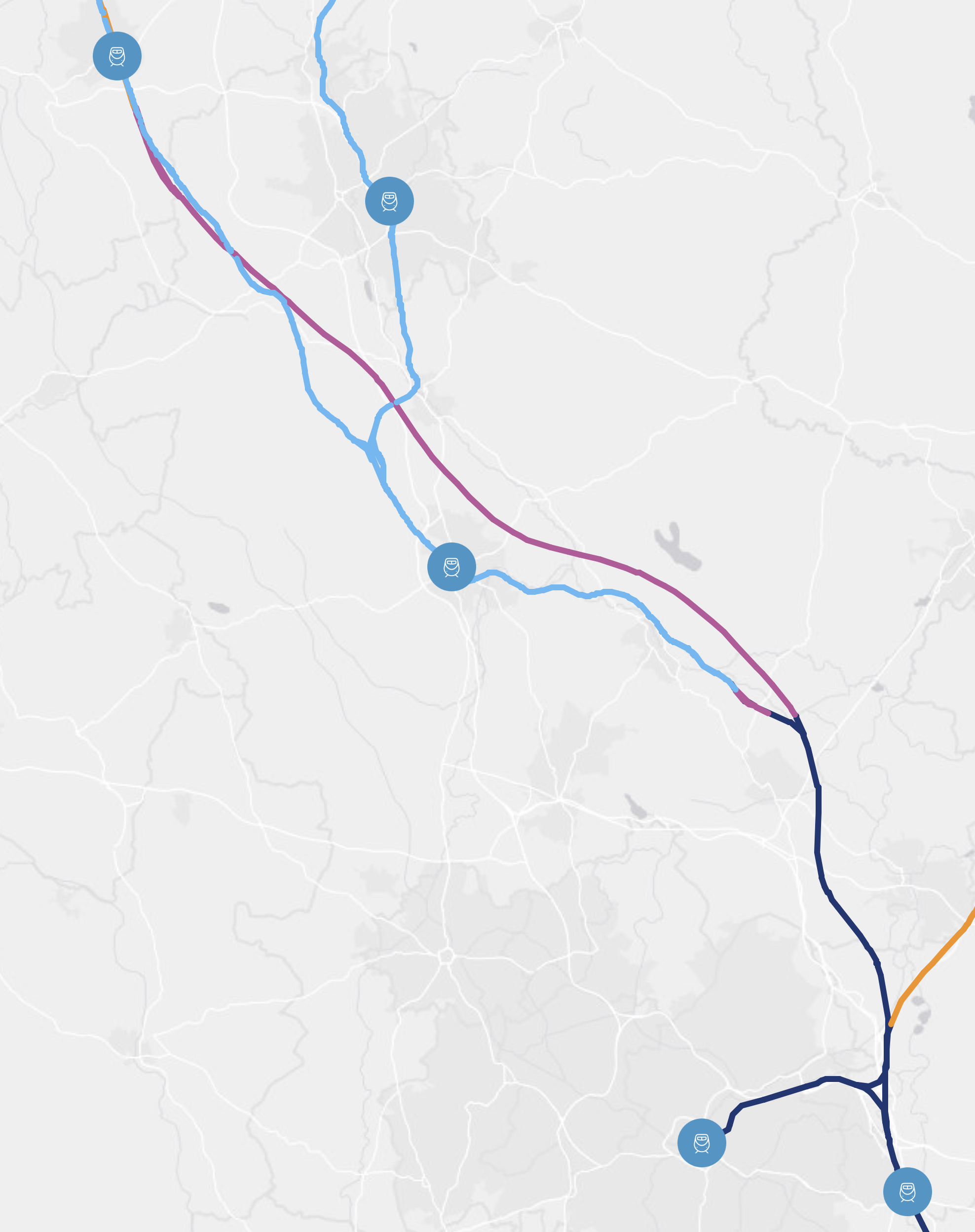
This map shows the route of Phase 2a of High Speed Two.
Note.
- The blue circles are stations.
- From the top, the stations are Crewe, Stoke-on-Trent, Stafford, Birmingham Curzon Street and Birmingham Interchange.
- The lighter blue track is sections of the West Coast Main Line, that will be used by High Speed Two services.
- The darker blue track is Phase 1 of High Speed Two.
- The orange track is Phase 2b of High Speed Two to East Midlands Hub, Leeds and Sheffield.
- The mauve track is Phase 2a of High Speed Two.
This page on the High Speed Two web site, which is entitled Phase 2a: West Midlands To Crewe, says this about the building and opening of Phase 2a.
It will be built at the same time as the line between London and the West Midlands. High speed services will begin operating between London, Birmingham and Crewe between 2029 and 2033.
It is my opinion, to build Phase 1 and Phase 2a together is a good move.
- Crewe is a very well-connected station.
- It will reduce times between Crewe and London Euston by 34 minutes.
But most importantly, it completes a second separate route for the West Coast Main Line between Crewe and London Euston.
Just think what new bypasses and motorways have done for your driving.
These are some thoughts and observations.
West Coast Main Line Benefits
The High Speed Two web page, which is entitled Phase 2a: West Midlands To Crewe, has a section called West Coast Main Line Benefits, where this is said.
Phase 2a unlocks more rail capacity on the West Coast mainline. It will carry six long distance high speed services per hour, freeing up the West Coast Mainline between Lichfield and Crewe. This could see services rise from hourly to half-hourly or better between Crewe and Stoke-on-Trent to Nuneaton, Tamworth, Lichfield and Rugeley, as well as more services from Crewe to Runcorn and Liverpool, as well as via Crewe between North Wales, Chester and London.
It would appear the six long-distance services could be.
- Train 1 – London Euston and Lancaster – Splits and joins with Train 2 at Crewe.
- Train 2 – London Euston and Liverpool – Splits and joins with Train 1 at Crewe.
- Train 3 – London Euston and Liverpool – Single train
- Train 4 – London Euston and Edinburgh/Glasgow – Splits and joins at Carlisle for Edinburgh and Glasgow
- Train 5 – London Euston and Edinburgh/Glasgow – Splits and joins at Carlisle for Edinburgh and Glasgow
- Train 6 – Birmingham Curzon Street and Edinburgh/Glasgow – Serves Edinburgh and Glasgow alternately.
Note that all services use a single or a pair of High Speed Two Classic Compatible trains.
A High Speed Test Route Can Be Created
Consider.
- At the Northern end of the Phase 2a track is Crewe station.
- At the Southern end of the Phase 2a track is Birmingham Interchange station.
- The track between the two end stations will be newly-laid modern high speed track capable of 225 mph running.
- There will be no intermediate stations or Victorian throwbacks like level crossings.
- The only junctions are at the end of the route.
- If the High Speed Two trains are built in this country, there will be a need for somewhere to check them out.
The Phase 2a track will surely make an ideal test track for testing trains and systems and training drivers.
HS2 Moves Stafford Ahead At High-Speed
The title of this post, is the same as that of this article on StokeonTrentLive.
It seems a positive headline in comparison to some you usually see about High Speed Two.
The subtitle doesn’t have any negative words either.
Construction has begun on the first section and there will be a community and business roadshow this August to find out more.
Perhaps people from Staffordshire have a positive outlook on life.
After all, with respect to High Speed Two, Stoke will be one of the first two cities in the country outside London to receive a high speed service.
Stoke might even be first!
 The Anonymous Widower