Arcola Energy Introduces A-Drive Fuel Cell Powertrain Platform
The title of this post, is the same as that of this article on NGTNews.
This is the introductory paragraph.
Arcola Energy, a company that specializes in hydrogen and fuel cell systems, has developed a proprietary hydrogen fuel cell (HFC) powertrain platform – designed for vehicle applications requiring high-duty cycle capabilities and fast refueling.
\we will see more hydrogen powertrains produced by big companies; like Cummins and Daimler and small companies like Arcola.
Many of the smaller ones, will perish. just like many smaller car companies did in the first seventy years of the twentieth century. Who remembers names like Allard, Borgward, Humber, Panhard and Riley?
I suspect, that in the near future, wherever you live and you come up with an idea, that needs zero-carbon motive power, there will be a convenient company to provide you with that power, using hydrogen.
One of my clients with Daisy used to be Cummins Engines. They told me most firmly, that if I ever needed a diesel engine to provide power for an application, they would customise one of their engines to fit my application.
Now that Cummins have gone into hydrogen in a big way with the purchase of Hydrogenics, will we see a similar philosophy?
Full Steam Ahead For Second Entrance At Hackney Central Overground Station
The title of this post is the same as that of this article on the Hackney Gazette.
The first paragraph says it all.
A second entrance at Hackney Central Overground station could be up and running by the end of 2021, after receiving planning approval yesterday.
I’m pleased and this was my comment to the article.
I am 73 and live between Dalston Junction and Highbury Corner, so if I’ve been to the Eastfield Shopping Centre and am coming home with a heavy parcel, I sometimes find it heavy going, as I either have to cross the footbridge at Hackney Central and get a 38 bus or do a bit of shuttling about to get one of the buses from Dalston Junction.
This entrance will mean I can get out at Hackney Central and get the bus in Graham Road.
Provided of course, the pedestrian crossings are arranged with the new entrance and the buses.
I don’t think we can ever have too many station entrances.
Thoughts On Mass Vaccination
We should steal an idea from the French.
In the first wave of the virus, they had to move seriously ill patients all over the country and to Germany, where there was bed space.
So they converted a TGV to a hospital train.
This page on the SNCF web site, is entitled Covid-10: Behind the Scenes Of Our High-Speed Hospital Train.
Could we not create a Vaccination Train using one of the recently withdrawn InterCity 125s?
They are easily shortened to any convenient length and the carriages have a very smooth ride.
The French converted their hospital train in 48 hours, so surely we can do as well!
The trains have the advantage, that they are certified go to over ninety percent of UK main line railway stations.
Network Rail have a track inspection train, called the New Measurement Train, that works a pattern all over the UK. It is based on an InterCity 125 and is full of delicate instruments, designed to keep the railways of the UK safe.

The picture shows Network Rail’s New Measurement Train at Westbury station.
The Vaccination Train or Trains could be based at a convenient central location, where the vaccine would be safely stored.
- Trains would be loaded overnight with the vaccine and other stores and locate early to their site for the day.
- Sites would typically be stations, where a platform existed that was long enough for the train.
- Staff to both process the vaccine and treat patients could either go on the train or be drawn from local medical staff, or be a mixture of the two.
- Specialists handling the vaccine would probably come from the centre, as this would ensure totally correct handling of the vaccine.
- They would set up at a suitable site and handle the patients booked for the day.
- Injections could even take place on the train, in specially fitted out carriages.
I would think, that the train would be self contained and generate all its own electricity.
Go-ahead For £900m London Bishopsgate Goodsyard
The title of this post, is the same as that, of this article on Construction Enquirer.
It seems a good scheme.
- Mixed-use urban quarter.
- 500 homes, half affordable.
- 1.4m sq ft of workspace
- Public park sitting on top of restored historic railway arches
- Six acres of public realm.
There is only one major problem, as far as I can see. – If Crossrail is still running late, this project could further delay it, by stealing the resources needed to finish the job.
Yet again, the Mayor has given planning permission to a project that could delay Crossrail, by stealing its resources.
Planning permission, should be conditional on Crossrail being finished.
A Central Line Connection To The East London Line At Shoreditch High Street Station
Shoreditch High Street station will be very close to the development.



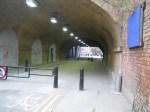
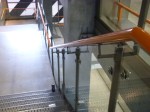


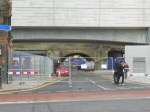
There will be twenty trains per hour (tph) on London Overground’s East London Line.
Under Future Proposals in the Wikipedia entry for the station, this is said.
There have also been discussions of creating an interchange with the Central line between Liverpool Street and Bethnal Green which runs almost underneath the station. However, this would not be able to happen until after the Crossrail 1 project is complete, due to extreme crowding on the Central line during peak hours.
I think it will be a good idea, to create the connection.
Is This A Simple And Affordable Solution To Providing Step-Free Access At Essex Road Station?
The access to and from the platforms at Essex Road station, is not the best.
There is a set of tunnels beneath the two platforms.
- The tunnels are connected to the surface, by a pair of large lifts and an emergency spiral staircase.
- The tunnels are connected to the platforms by two wide sets of stairs.
- One set of stairs is for passengers leaving the station and the others are for those arriving.
This set of pictures shows some of stations underground features.
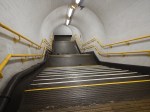
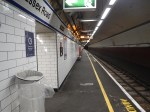

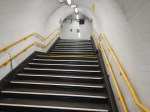



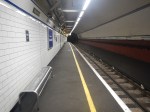
It looks to be a difficult station to make step-free.
- The platforms are narrow.
- There is very little space in the station building to add more lifts direct to the platform.
- I’m not sure,but the rail tunnels might be under the Canonbury Road, which runs outside the station.
Unless its possible to use the Greenford solution.
This picture shows the inclined lift/stairs and escalator installation at Greenford station.
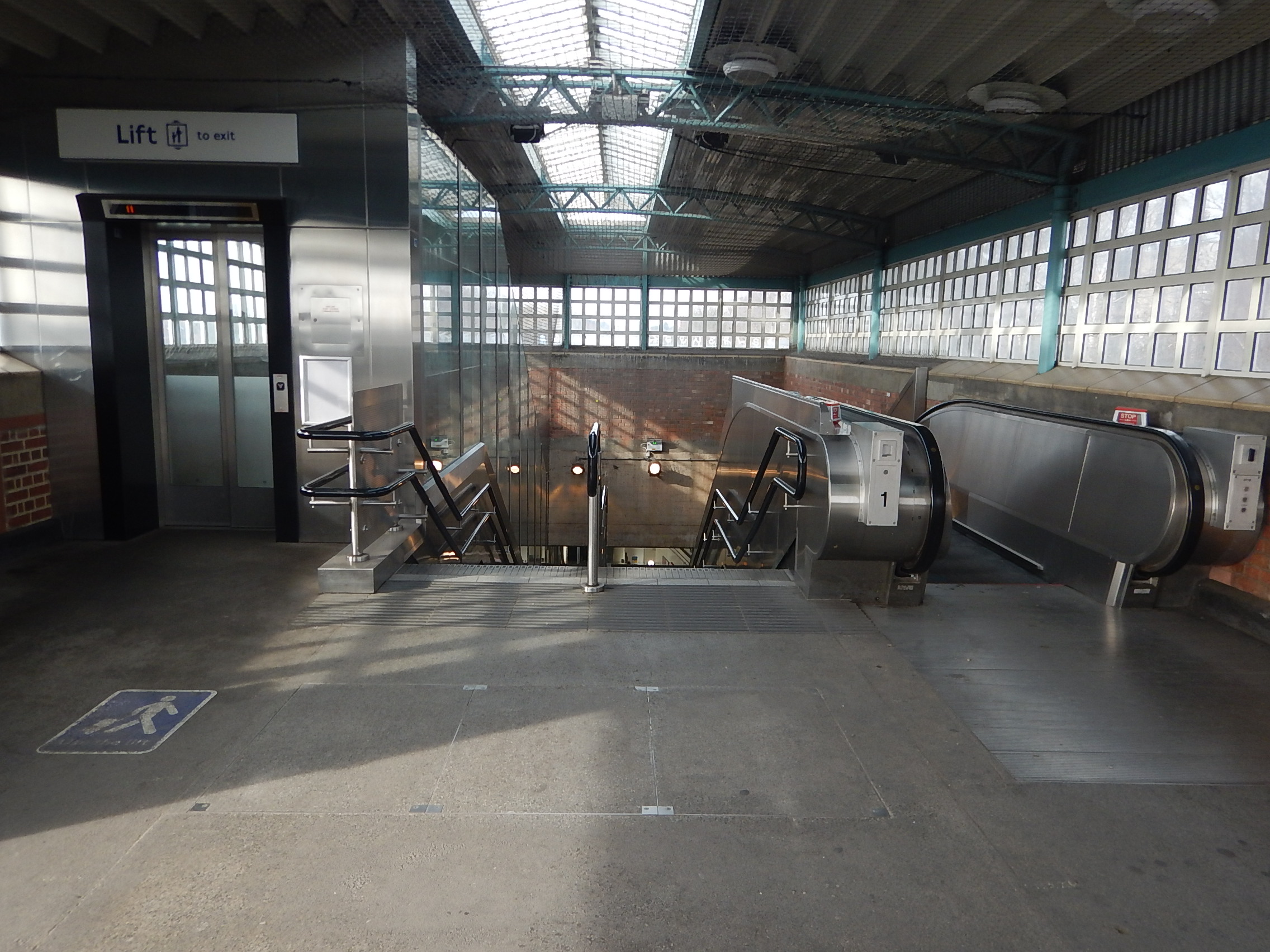
Note.
- The inclined lift has a capacity of about 4-6 people in normal times.
- The staircase is double, with a handrail up the middle.
- The escalator is permanently set to up.
It should be noted that Greenford station has two Central Line platforms and one National Rail platforms.
Could this type of installation be used at Essex Road station?
I will look at a few points and issues.
Station Usage
It should be said, that despite the different natures of the station, we are not comparing apples with oranges, as to get between the street and platforms at both stations, passengers have to use the stairs at Essex Road station or the multi-mode installation at Greenford station.
Entries and exits to Essex Road station over the last four years are as follows.
- 2016-17 – 811,000
- 2017-18 – 861,000
- 2018-19 – 857,000
- 2019-20 – 768,000
The average is 824,000
National Rail entries and exits to Greenford station over the last four years are as follows.
- 2016-17 – 230,000
- 2017-18 – 151,000
- 2018-19 – 153,000
- 2019-20 – 170,000
The average is 176,000
Central Line entries and exits to Greenford station over the last four years are as follows.
- 2015 – 4,720,000
- 2016 – 4,810,000
- 2017 – 4,680,000
- 2018 – 4,250,000
The average is 4,615,000
The total for Greenford station is 4,791,000 or nearly six times as much as Essex Road station.
In fact, the difference is bigger than that as Essex Road station could have a pair of installations, so the capacity of each of the Essex Road installations, would only need to be a twelfth of that of the Greenford installation.
The Simplest Installation
The simplest installation would surely be to fit an inclined lift at the side of one of the existing staircases.
The staircase would probably be halved in width, but quite frankly they are not safe for anybody encumbered with a pushchair or a heavy suitcase.
There would also need to improvements to the routes between the main lifts and the inclined lift.
London’s Single Escalators
London has several single escalators.


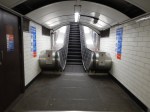
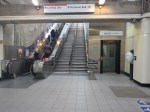
Three pictures are from Moorgate and the other one is at Greenford.
Could Pairs Of An Inclined Lift And An Escalator Be Fitted In At Essex Road Station?
It would be tight to fit a pair in one staircase, but I’m sure it would be possible. Especially, if the shaft could be widened a bit.
If they could be made to fit, then a simple program of works could be applied.
- Close one staircase and use the other staircase for both entry and exit. As there is a cross-tunnel, passengers would be able to walk between the lifts and the platforms, by walking about an extra thirty metres or so.
- The closed tunnel would then be gutted and an inclined lift and escalator would be fitted and tested.
- Once complete and tested, it would be opened to passengers.
- The station would now be entrance-only or exit-only, whilst the second lift and escalator were fitted and tested.
Being entrance-only or exit-only would not be the greatest problem, as the 271 bus parallels the rail route between Highbury & Islington and Moorgate stations.
Could An Inclined Lift And A Pair Of Escalators Be Fitted?
In this installation, one shaft would be fitted with a pair of escalators and the other with an inclined lift.
A similar program of works to that I laid out previously would be applied.
Conclusion
Essex Road station could be made step-free.
Because of the bus routes in the area and the 271 in particular, it wouldn’t cause the greatest of inconveniences to close the station for some time.
Why I’ll Delay Having The Coronavirus Vaccine
The vaccines are coming for the covids, but I won’t be having a jab, if one is offered to me, in the first round. I may not be offered one, as I am only 73 and in good health.
But there are many out there, who need the vaccine more than I do, who will be given lower priority than myself.
So I’ll wait!
I am also a diagnosed coeliac on a gluten-free diet and my statistical researches and news reports, show that communities and groups with high levels of undiagnosed coeliacs have suffered badly from the covids.
These communities and groups include.
- Anybody born before 1960, as there was no test for coeliac disease in children before then.
- Ashkenazi Jews. My coeliac genes come from an ancestor in this group.
- Irish
- Caribbean. West Africans have a tendency to coeliac disease and what better way to bring it out, than starve them on slave ships and feed them on only bread and water.
I have also found a research paper, that shows, that India could now experience a coeliac disease epidemic, caused by modern strains of wheat. See Coeliac Disease: Can We Avert The Impending Epidemic In India?
Coeliacs on a gluten-free diet, are an interesting group, in that according to peer-reviewed research by Joe West of Nottingham University, they are 25 % less likely to suffer from cancer.
How can one disease protect you from another?
My coeliac disease was indicated by low-levels of B12, as gluten was damaging my gut and stopping it absorbing vital vitamins. By removing the gluten from my diet, my B12 levels returned to normal.
So it’s the diet that protects my health.
If you think, you are coeliac, don’t be put off by horror stores of multiple endoscopies and the difficulty of sticking to a gluten-free diet. I may have been one of the first individuals tested, by the current genetic method, which is now used by most GPs. A blood sample is sent off for a test and that is generally all that is done in most cases. I heard in 48 hours.
So why is it beneficial in the case of cancer?
It can only be, that with all those vitamins, coeliacs on a gluten-free diet have a very healthy immune system.
So does, this immune system, help protect coeliacs from the covids?
Until proven otherwise, my statistical research, thinks it does!
So I believe, that I can afford to wait.
Has Good Project Management Helped The UK Get The Vaccine Early?
Professor Van-Tam, this morning on BBC Breakfast, praised the planning of the drug companies and the various health bodies in charge of certification of the vaccines.
As someone, who was at the heart of the Project Management Revolution in the 1970s and 1980s, this cheers me.
Looking back, my biggest contribution to project management, was to prove that you didn’t need to use a large mainframe computer and software would work on a small desk-sized machine and ultimately on a personal computer, thus bringing project management to everyone.
Work Begins On New Substation For World’s Longest Electricity Cable Between Denmark and Lincolnshire
The title of this post, is the same as that, of this article on Lincolnshire Live.
This is the sub-title.
Britain and Denmark will be able to share enough clean energy to power 1.5 million homes.
The Viking Link is a 1400 MW at 525 KV electricity interconnector between Bicker Fen in Lincolnshire and Revsing in Jutland, Denmark.
This Google Map, shows the location of Bicker Fen, about halfway between Boston and Sleaford.

This second map shows an enlarged view of the Bicker Fen area.
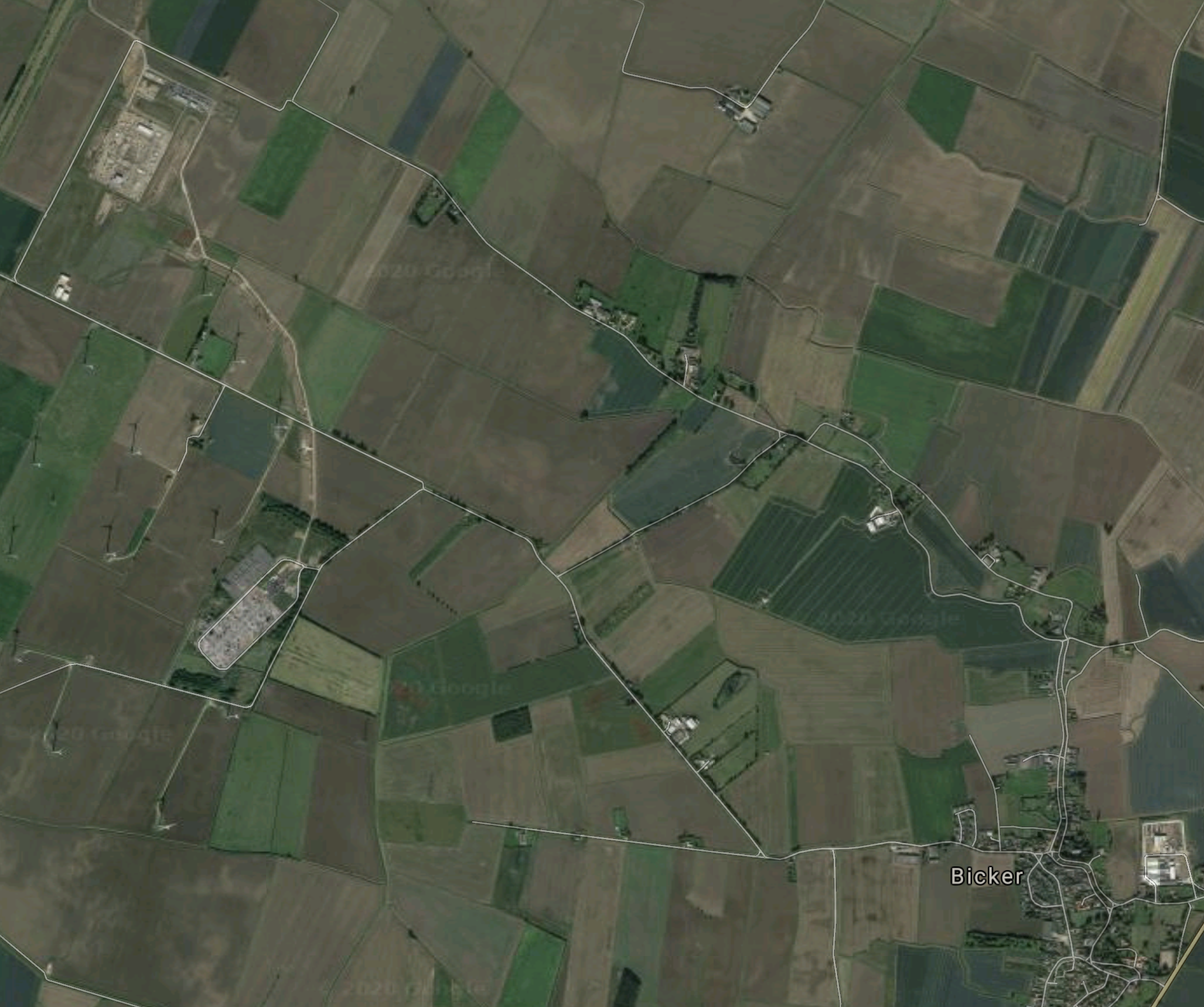
Note.
- The village of Bicker in the South-East corner of the map.
- In the North-West corner of the map is Bicker Fen Wind Farm.
This third map shows the wind farm.
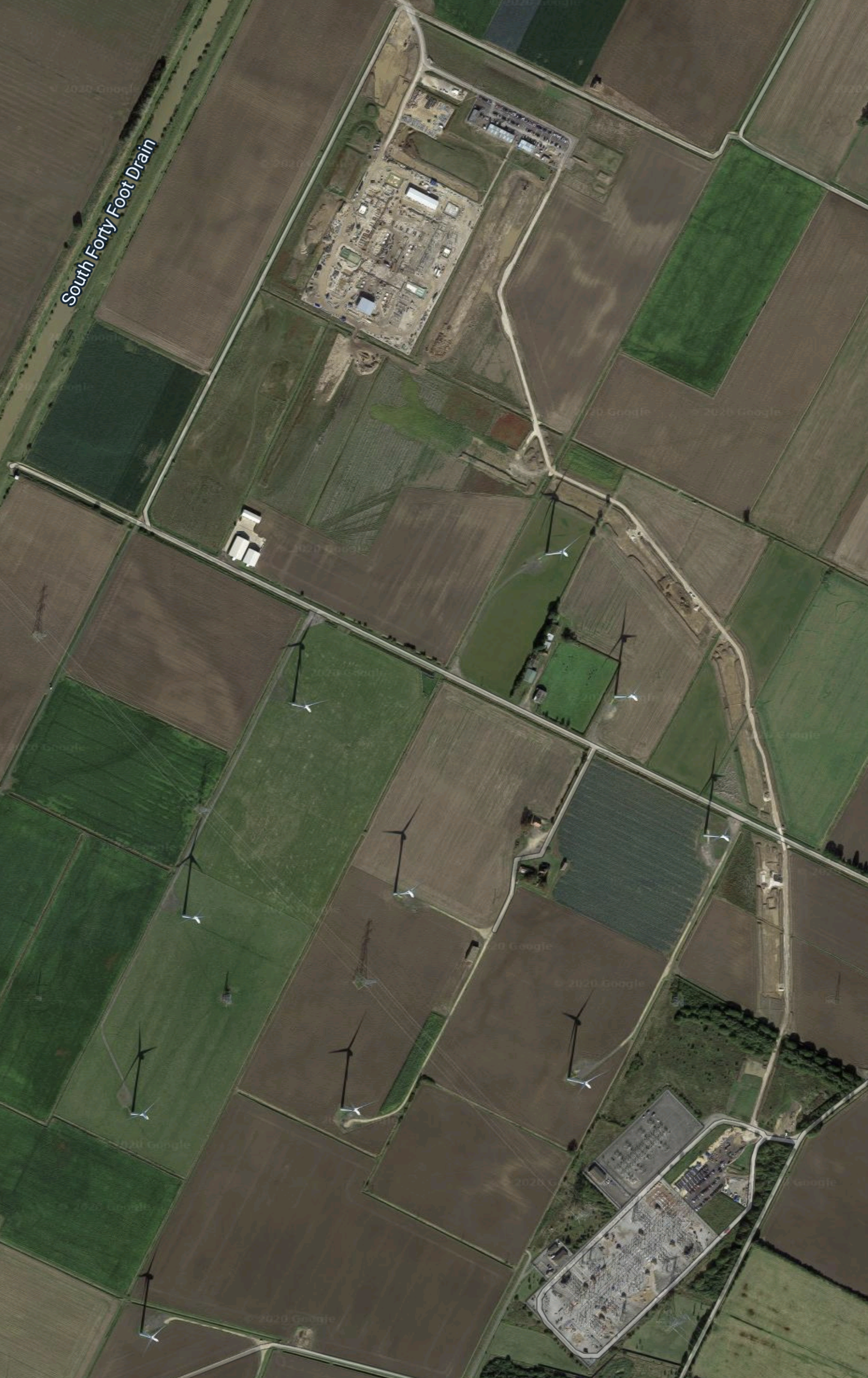
Note the thirteen wind turbines between the two sub-stations full of wo electrical gubbins.
This sentence from the Wikipedia entry for Bicker, gives more details of the wind farm and the future plans for the area.
North of the main line of 400 kV pylons is the Bicker Fen windfarm consisting of 13 turbines producing 26 MW (2 MW each), enough for 14,000 homes. The construction of the windfarm met some local objection. The windmills sit north from Poplartree Farm and were built in June 2008 by Wind Prospect for EdF. They are of the type REpower MM82, made in Hamburg. Bicker Fen substation is also the proposed landing site for a 1,400 MW power cable from Denmark called Viking Link, as well as the proposed offshore wind farm Triton Knoll.
Triton Knoll is a big wind farm, with a planned capacity of 857 MW and should start producing electricity in the next couple of years.
Conclusion
The Viking Link and Triton Knoll are obviously a good fit, as the UK will be able to exchange energy as required.
But it would appear that there’s one thing missing from this setup – energy storage.
I wouldn’t be surprised to see a large battery built at Bicker Fen. Something, like one of Highview Power‘s CRYOBatteries might be ideal.
Hydrogen Is A Trillion Dollar Bet On The Future
The title says it all on this article on Bloomberg.
Read it!
Strangely, it doesn’t mention the Shell Blue Hydrogen Process, that I wrote about in Shell Process To Make Blue Hydrogen Production Affordable.
Talgo Unveils Plan To Have Vittal-One Hydrogen Train Operational By 2023
The title of this post, is the same as that of this article on Hydrogen Fuel News.
This is the most important paragraph of the report.
The company explained that the fuel cell technology it designed for its train is modular. In this way, the tech can be installed on any type of existing train. In this way, the transition away from diesel and into hydrogen fuel. That said, Talgo did underscore that its Vittal platform was the primary reason for which the H2 solution was designed. The company is hoping to win several Spanish tenders, as well as those in other countries, for this regional and commuter train.
Talgo hopes to start testing their train next year.
They certainly seem to have got their skates on, or whatever the Spanish say!
A Hydrogen Train For Scotland
Consider.
- Scotland has a major need for a large number of zero-carbon trains to decarbonise routes outside the Central Belt, which is extensively electrified.
- Talgo are building a factory at Longannet in Scotland.
- Talgo’s Vittal-One train has a modular hydrogen traction system, but the train is designed for European standards.
- This page on the Talgo web site, describes the design philosophy behind the Talgo Vittal. After reading that page, I feel Talgo could build a version of the train for the UK. There are already standard gauge versions in Germany and they’d just need to make a different body, that was about a 100 mm. narrower.
- The Talgo Vittal is a 100 mph train, which is what Scotland needs.
So I feel that Talgo have the technology to build a hydrogen-powered regional train for the UK. And the island of Ireland, which uses a 1600 mm track gauge, which is not far from the Iberian gauge of 1668 mm gauge!
The question has to be asked about, when Talgo chose the location for the factory, were there any nods and winks with the Scottish Government about the country’s future train needs?
It certainly appears that Scotland has the need and the hydrogen, and Talgo has the technology, to decarbonise the railways North and South of the Central Belt in Scotland.
Diesel-Battery Hybrid TER Train To Be Tested Next Year
The title of this post, is the same as that of this article on Railway Gazette International.
These are the two introductory paragraphs.
Testing of a Coradia Polyvalent electro-diesel regional trainset fitted with a battery hybrid traction system is to begin early next year and passenger services are planned for 2022, Alstom has announced.
Two of the trainset’s four diesel engines are to be replaced by lithium-ion batteries, which will be used to recover and store braking energy for reuse. It is hoped that this will reduce energy consumption and greenhouse gas emissions by 20%, as well as reducing operating and maintenance costs.
Other points from the article.
- Testing is planned for 2021, with service entry, the year after.
- There are 300 of these Polyvalent trains in service.
- TER trains will stop using diesel by 2030.
- France intends to run its last diesel train in 2035.
It looks like Alstom are using a similar approach to that of Hitachi in the UK.
It looks like the French are ahead of us in the decarbonisation timetable for rail.
 The Anonymous Widower