How Will Abellio East Midlands Railway Maximise Capacity On The Midland Main Line?
In this post, I will try and get a feel to how Abellio East Midlands Railway, will maximise capacity on the Midland Main Line.
The Current Service
There are currently two trains per hour (tph) to both Nottingham and Sheffield and one tph to Corby from London.
Ignoring the Corby service, which will be using electric trains, intermediate calls have these frequencies, from South to North.
- Bedford – One tph
- Wellingborough – One tph
- Kettering – One tph
- Market Harborough – Two tph
- Leicester – Four tph
- Loughborough – Two tph
- East Midlands Parkway – Two tph
- Long Eaton – One tph
- Beeston – One tph
- Derby – Two tph
- Chesterfield – Two tph
As the new bi-mode trains will be more modern, with probably shorter dwell times at each station, I suspect that when Abellio East Midlands Railway implement their ultimate timetable, there will be more stops, without degrading journey times.
These are fastest times.
- London and Nottingham is one hour forty minutes
- London and Sheffield is two hours
I feel that round trips to both destinations will be four hours with some speed increases and shorter station dwell times.
- The current two tph to Nottingham and Sheffield needs eight trains to each destination.
- This is a total of sixteen trains.
As each train could be two five-car trains working as a ten-car train, train numbers for the current service could be as high as thirty-two trains.
A first look seems to indicate that there .will be no overall increase in train frequency, although, as I said earlier, the performance of the new trains should allow extra station stops.
It also indicates to me, that any increases in frequency between London and Nottingham/Sheffield will need extra trains.
The Electrified High Speed Line South Of Kettering
Midland Main Line services South of Kettering are as follows.
- Two tph to London and Nottingham
- Two tph between London and Sheffield
- One tph between London and Corby.
From December 2021, there will be two tph between London and Corby.
The maximum number of services between London and Kettering on the electrified section currently envisaged is only six tph or one train every ten minutes.
As the Class 700 trains on Thameslink are capable of using digital signalling and all the new trains will also be similarly equipped, I wouldn’t be surprised that the theoretical capacity of the electrified fast lines could be higher than the proposed six tph. |Especially, when digital signalling is installed.
The number of trains in the fleet, is much more of a limit on services, than the capacity of the Midland Main Line.
If all trains were ten cars, the following numbers of trains would be needed.
- Current two tph – 32 trains
- Increase to three tph – 48 trains
- Increase to three tph – 64 trains
Are there enough passengers to fill all these trains?
Does St. Pancras Have Enough Capacity?
St. Pancras station has four platforms for Midland Main Line services.
- The platforms are long enough to take two five-car Class 222 trains,.
- They would surely accommodate a ten-car formation of the new Hitachi trains.
- Each platform can probably handle three or four tph, giving a total capacity of 12-16 tph.
As four tph to Nottingham and Sheffield and two tph to Corby is only a total of ten tph, there is enough platform capacity for several years to come.
If there is a problem, it is that the large numbers of passengers would overwhelm the stairs and escalators between the ground level of the station and the platforms.
I am certain, that just like the Eurostar platforms at St. Pancras, the Midland Main Line platforms will need better passenger access and facilities.
Will it even be enough, when up to six tph, all of which could be 240 metres long, start to arrive in December 2021?
What could be done to help solve the capacity problem at St. Pancras station in the future?
Better Access To The Midland Main Line Platforms
Consider.
- Space is limited to add extra escalators, lifts and places to wait
- St. Pancras is a Grade I Listed Building.
- As I don’t travel through the station in the Peak, the escalators seem to always be going the wrong way.
Improving the current access will be very difficult.
This Google Map shows the Northern End of the station.
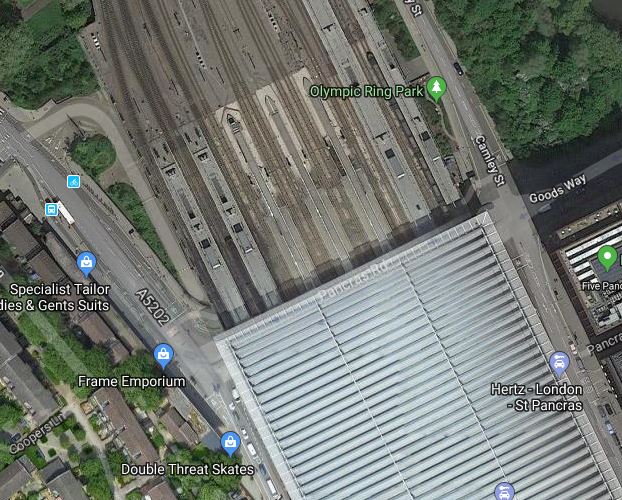
Note.
- The Midland Main Line platforms are the two island platforms on the left.
- The Southeastern HighSpeed platforms are the two island platforms on the right.
- The Eurostar platforms are the three island platforms in the middle.
Could a second entrance to some of the platforms be built here?
It would be very difficult, unless the extension was future-proofed when it was built.
Underground Improvements
Getting between the Midland Main Line platforms and the Underground is an obstable course.
As a Londoner, who’s had the operation to have the Underground Map implanted in my brain, I generally go to the Midland Main Line platforms at St. Pancras by taking one of the following.
A bus from close to my house to outside the station.
- A Metropolitan Line train from Moorgate
- A Northern Line train from Angel.
- A Piccadilly Line train from Manor House
- A Victoria Line train from Highbury & Islington
The last four need a bus to get to the Underground.
I usually come back home, by spending just over a tenner on a black cab!
Crossrail 2
Crossrail 2 should improve matters, but will it ever be built?
Will The New Brent Cross Thameslink Station Allow Cross Platform Interchange Between Midland Main Line and Thameslink Services?
Consider.
- The proposed Brent Cross Thameslink will be just North of Cricklewood station.
- Midland Main Line services through the station would be six tph.
- Thameslink services through the station would be fourteen tph
- The West London Orbital Railway could be built to connect the station to High Speed Two and Heathrow
Would it take the pressure off St. Pancras?
It might do, if a cross-platform interchange could be arranged.
Could Some Midland Main Line Services Use Thameslink?
Consider.
- The obvious service to go through Thameslink would be the two tph service between Corby and St. Pancras.
- Thameslink is currently setup to handle 24 tph, but it has been designed for 30 tph.
- The Corby service will stop at Kettering, Luton and Luton Airport Parkway, to the North of London.
- It could perhaps terminate at the soon-to-be-rebuilt Gatwick Airport station in the South.
It might work!
Especially, if Kettering station were to be rebuilt to have cross-platform interchange between Corby sewrvices and the bi-mode ones going further North.
Splitting And Joining Trains
In Rock Rail Wins Again!, I gave this simple example of how the splitting and joining capability of Hitachi AT-300 trains can be used.
A ten-car train might leave St. Pancras as two five-car units running as a pair. It could split at East Midlands Parkway station and one train could go to Nottingham and the other to Derby. Coming South the two trains would join at East Midlands Parkway.
I feel that Derby, East Midlands Parkway and Leicester are ideal stations on the Midland Main Line, where services could be split and joined.
- They have at least four platforms.
- The platforms are long and straight.
The two terminals at Nottingham and Sheffield could also probably be used to enable services to serve more destinations.
Shorter trains must have advantages on some routes.
- Capacity is better matched to demand.
- Platforms may not need to be extended.
- Services can be run by a driver and a conductor.
Will Abellio East Midlands Railway use splitting and joining to increase the coverage of their services?
Great Western Railway’s Class 800, 801 and 802 trains have the capability to split and join and the operator doesn’t seem to use it. Although, they do split and join Class 387 trains.
Extended Services To And From The North And East
The ability to split and join, that could be used to extend services to the North And East.
Serving Barnsley, South Yorkshire And Leeds
Consider.
- In Sheffield Region Transport Plan 2019 – A New Station At Barnsley Dearne Valley, I talked about a proposed new station at Barnsley Dearne Valley on the route between Sheffield and Leeds.
- The Sheffield Region Transport Plan 2019, also envisages a new Midland Main Line station at Rotherham.
- This report on the Transport for the North web site, is entitled At A Glance – Northern Powerhouse Rail.
- The report states that there will be a fast Sheffield and Leeds service at a frequency of four tph, that taqkes twenty-eight minutes.
- Currently, East Midlands services on this route take just over half-an-hour with only a stop at Wakefield Westgate.
I wonder if there are paths and need for a London and Sheffield service to split at Sheffield with, the two five-car trains going to different destinations.
- Leeds via Rotherham, Barnsley Dearne Valley and Wakefield Westgate, is one possibility.
- Could a service go to Huddersfield?
- Hull is probably too far.
One tph could terminate at Sheffield and one splitting and one tph could split and serve other destinations.
Advantages could include.
- Barnsley and Rotherham get a direct hourly service to London.
- South Yorkshire and Leeds have a direct hourly service to the East Midlands.
- Sheffield and Leeds have an hourly fast service.
I’m sure Abellio have a very workable plan to improve services North of Sheffield.
Serving Lincolnshire And Nottinghamshire
Consider.
- Splitting and joining at Nottingham may allow an increase in direct services to and from Lincoln.
- Perhaps parts of North Lincolnshire could be well-served by a fast train from Nottingham.
- Would Mansfield and Worksop benefit from a direct service from London on the Robin Hood Line, after a reverse at Nottingham.
The five-car trains give the flexibility to do the previously unthinkable.
Conclusion
There is a lot of developments that can or will happen with Midland Main Line services.
An Early Bird Catches A Train!
I needed to go to Norwich today, so I caught the 06:00 out of Liverpool Street.
It cost me just £6.60 and arrives a few minutes early!
I also bought the ticket yesterday afternoon!
Rock Rail Wins Again!
This article on the Railway Gazette, is entitled Abellio Orders East Midlands Inter-City Fleet.
The order can be summarised as follows.
- The trains will be Hitachi AT-300 trains
- There will be thirty-three bi-mode trains of five cars.
- The trains will be 125 mph capable.
- Unlike the similar Class 802 trains, the trains will have 24 metre long cars, instead of 26 metres.
- They will have a slightly modified nose profile.
- The new trains will have an extra diesel engine.
- The new trains will cost a total of £400 million.
A few of my thoughts.
I shall constantly refer to an earlier post called Vere Promises East Midlands Bi-Modes In 2022.
Cost Of The Trains
In the earlier post, I calculated that the five five-car AT-300 all-electric trains, ordered by First Group for London and Edinburgh services cost four million pounds per car.
Thirty-three trains at this four million pounds per car, works out at £660 million, which is sixty-five percent higher than the price Abellio is quoted as paying.
Abellio are actually paying just £2.42 million per car or forty percent less than First Group.
So are Abellio buying a cut price special?
As Abellio East Midlands Railway will be competing up against LNER’s Azumas on some journeys, I can’t see that running a second class train would be a sound commercial decision.
I am left to the conclusion, that Abellio have got a very good deal from Hitachi.
What Diesel Power Is Used?
In a five-car Class 802 train, there are three MTU 12V 1600 R80L diesel engines, each of 700 kW , which gives a total power of 2,100 kW.
If the Abellio train needs this power, with four diesel engines, each must have 525 kW.
Not sure yet, but this could save a couple of tonnes in weight.
I doubt that Hitachi are dissatisfied with the performance of the MTU diesel engines in the current Class 800, 801 and 802 trains, as there are no media reports of any ongoing problems. So I feel that they could go with the same supplier for the trains for Abellio East Midlands Railway.
If you type “Class 800 regenerative braking” into Google, you will find this document on the Hitachi Rail web site, which is entitled Development of Class 800/801 High-speed Rolling Stock for UK Intercity Express Programme.
The only mention of the R-word is in this paragraph.
An RGS-compliant integrated on-train data recorder (OTDR) and juridical recording unit (JRU), and an EN-compliant energy
meter to record energy consumption and regeneration are fitted to the train.
If you search for brake in the document, you find this paragraph.
In addition to the GU, other components installed under the floor of drive cars include the traction converter, fuel tank, fire protection system, and brake system.
Note that GU stands for generator unit.
The document provides this schematic of the traction system.

Note BC which is described as battery charger.
Braking energy doesn’t appear to be re-used to power the train, but to provide hotel power for the train.
I talk about this in more detail in Do Class 800/801/802 Trains Use Batteries For Regenerative Braking?.
In my view, it is an outdated design compared to some of those seen in the latest road vehicles and trains from other manufacturers.
This is a sentence from the Railway Gazette article.
According to Hitachi, the EMR units will be an ‘evolution’ of the AT300 design supplied to other UK operators, with 24 m long vehicles rather than 26 m, and a slightly modified nose profile.
So does that evolution include regenerative braking to batteries on the train?
This could have advantages.
- improved acceleration and smoother braking
- Less electricity and diesel consumption.
- No running of diesel engines in stations.
I’m only speculating, but could the batteries or supercapacitors be under the car without a diesel engine? A balanced design might make this the middle car of the train
There must also be the possibility, that instead of using MTU diesel engines, the trains use MTU Hybrid PowerPacks.
Why shouldn’t Hitachi get their respected supplier to do as much of the hard work as possible?
Train Length
A five-car Class 222 train, which work the Midland Main Line now, consists of two 23.85 metre and three 22.82 metre cars. So it is 116.16 metres long.
The article says the cars in the new trains will be 24 metres long,, so a new train will be 120.0 metres long or 3.84 metres longer.
This will probably mean that there will be no need for costly and disruptive platform lengthening at a couple of stations.
Capacity
Abellio have stated that passengers like having a table and that they will be offering a catering service
So will we see most seats having a table?
Chiltern have proved it’s a philosophy that works for all stakeholders!
This means that capacity comparisons with the current trains will be difficult, as you’re comparing apples with oranges.
Hopefully, we’ll get more details soon!
Splitting And Joining
I would assume the new trains will have the ability to split and join an route like the other Hitachi trains.
This could be very useful in organising trains in the limited number of paths South of Kettering.
A ten-car train might leave St. Pancras as two five-car units running as a pair. It could split at East Midlands Parkway station and one train could go to Nottingham and the other to Derby. Coming South the two trains would join at East Midlands Parkway.
A Nose Job
I’m intrigued by the phrase “slightly different nose profile” in the extract I quoted earlier.
Have Hitachi’s champion origamists found a way of designing a train which can split and join with both an aerodynamic nose and a corridor connection?
After their experience with the Class 385 train and its curved windows, I suspect Hitachi have learned a lot. Could for instance one end of the five-car train have a Class 800-style nose and the other an improved Class 385-style front end?
Trains would mate blunt-to-blunt, so the Southern train would always point towards London and the Northern train would always point towards Sheffield.
I used to have a friend, who learned origami skills at Hiroshima in the 1950s, whilst doing National Service in the Army.
I don’t think my proposal is impossible, but I’ll admit it’s unusual!
- The blunt end might have a pair of doors, each with a flat window, thus giving the driver an uninterrupted view, when driving from that end.
- When the trains connected the doors would open and swing forward. The gang way would unfold probably from under the cab The driver’s desk would probably fold away, as the two cabs wouldn’t be needed in a ten-car train.
- Connect and disconnect would be totally automatic.
Effectively, two five-car trains would convert into a ten-car train.
The Number Of Trains
In my earlier post, I estimated that Abellio East Midlands Railway would buy 140 bi-mode carriages.
This works out as 35 trains, as against the thirty-three actually ordered.
This is close enough to say, that these new trains are only for main line services and will not be used on the electric services to Corby, which I estimate will be another seven 240 metre-long electric trains
A Complete Fleet Renewal
This is a paragraph from the Railway Gazette article.
Abellio UK Managing Director Dominic Booth said the new trains would ‘form the centrepiece of our ambitious plans for a complete replacement of all the trains on the East Midlands Railway’, representing ‘a more than £600m investment to really improve the region’s railway’.
When Abellio say renewal, they mean renewal.
So will Bombardier or another manufacturer receive a consolation prize of the seven high-capacity 240 metre long electric trains for the St. Pancras and Corby service?
A version of the Abellio part-owned, West Midlands Trains‘s, Class 730 train, would surely do just fine.
The Role Of Rock Rail
The trains will be leased from Rock Rail.
The Rock Rail web site gives this insight.
Rock Rail’s game changing approach to rolling stock funding has:
- Enabled long term institutional investors to invest directly into a new sector.
- Driven better value for government, operators and passengers.
- Extended the market for infrastructure finance.
Rock Rail works closely with the franchise train operators and manufactures to ensure a collaborative approach to design, manufacture and acceptance of the new state of the art trains on time and to budget as well as to manage the long-term residual value and releasing risks.
It’s obviously an approach that has worked, as they have been behind three rolling stock deals at they have funded trains for Moorgate services, Greater Anglia and South Western Railway in recent months.
The Abellio East Midlands Railway makes that a fourth major fleet.
Take a few minutes to explore their web site.
Rock Rail say their backers are institutional investors. So who are these faceless institutions with deep pockets.
I have seen Standard Life Aberdeen mentioned in connection with Rock Rail. This Scottish company has £670 billion of funds under management and it is the second largest such company in Europe.
Companies like these need secure long term investments, that last thirty to forty years, so that pension and insurance funds can be invested safely to perhaps see us through retirement. I know that some of my pension is invested in a product from Standard Life Aberdeen, so perhaps I might ultimately own a couple of threads in a seat cover on a train!
As the Government now insists everybody has a pension, there is more money looking for a safe mattress!
Rock Rail allows this money to be used to purchase new trains.
Rock Rail seem to be bringing together train operators, train manufacturers and money to give train operators, their staff and passengers what they want. I seem to remember that Abellio did a lot of research in East Anglia about the train service that is needed.
Conclusion
Abellio have made a very conservative decision to buy trains from Hitachi, but after my experiences of riding in Class 800, 801 and 802 trains in the last few months, it is a decision, that will satisfy everyone’s needs.
Unless of course, Hitachi make a horrendous mess of the new trains!
But the four fleets, they have introduced into the UK, have only suffered initial teething troubles and don’t seem to have any long term problems.
There are some small design faults, which hopefully will be sorted in the new trains.
- Step-free access between train and platform.
- The carriage of bicycles and other large luggage.
The second will be more difficult to solve as passengers seem to bring more and more with them every year.
A Design Crime At West Hampstead Thameslink Station
I almost laughed, when I saw this extension.



It’s the sort of building put up on industrial sites, where planning rules don’t apply.
Eurostar Is Overflowing
I took this picture on Sunday night at around seven in the evening.
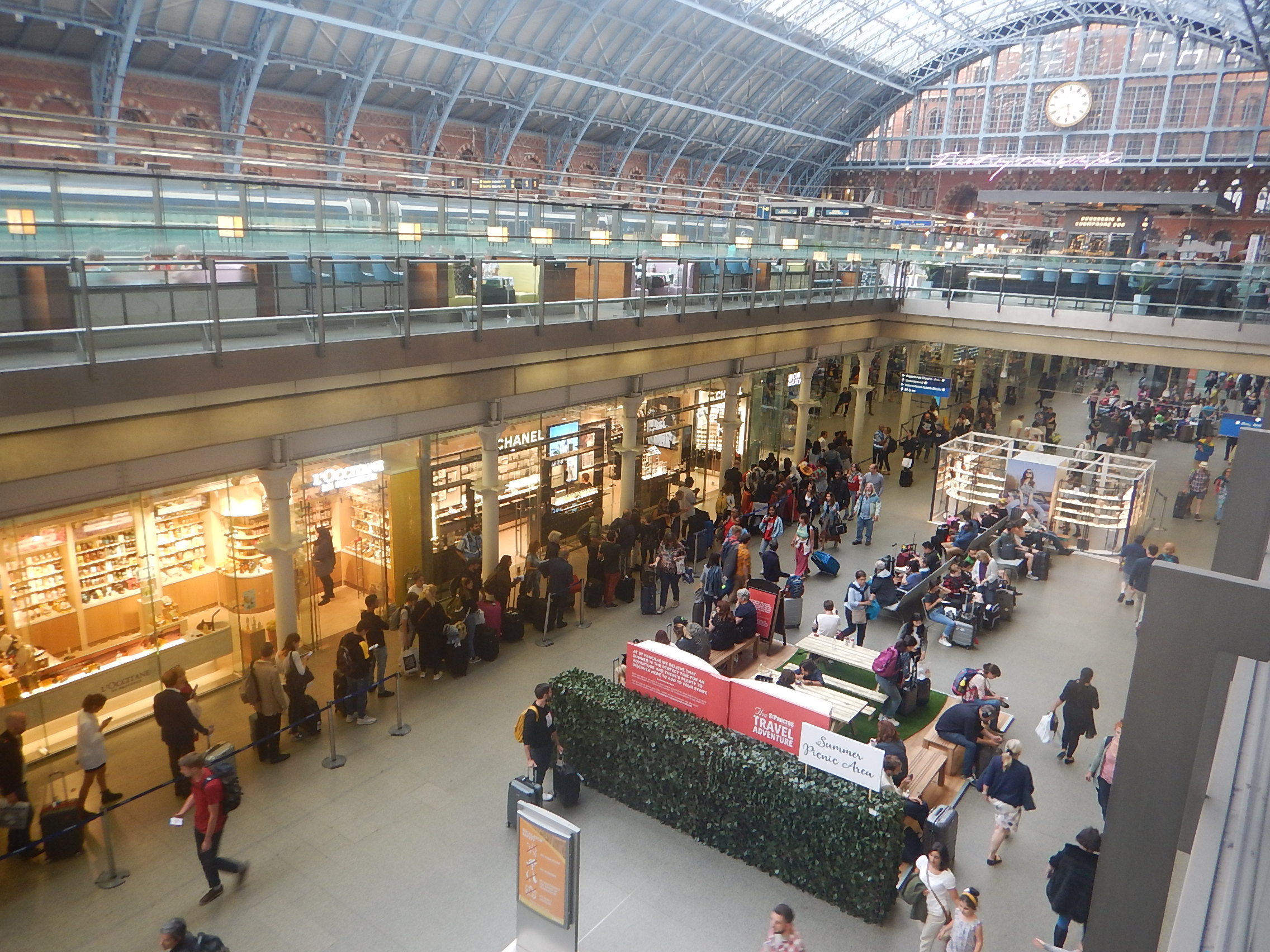
I’d just walked through the entrance and the queues were long and overflowing round the corner.
I do think there’ll come a time in a few years, when Eurostar will have to rebuild substantially to handle the increasing numbers of passengers.
West Hampstead Station – 29th July 2019
West Hampstead station opened almost fully to the public yesterday.
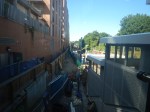

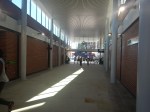
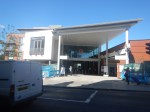
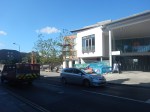

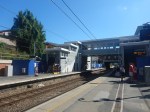
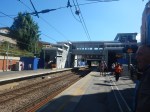
The only things, that need finishing are the lifts and some small works.
The new station building has an almost 1930s feel about it as if it is inspired by some of the classic stations like Oakwood.
I do like the ziggurat-style steps to the overbridge. This has allowed a wide staircase, that is frilly-shielded from heavy weather, at a busy interchange station
Manchester’s Contactless Ticketing
In Manchester yesterday, I used their new contactless ticketing.

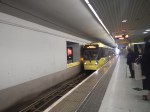

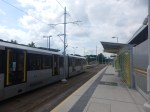
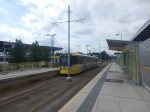
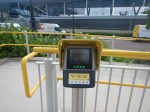
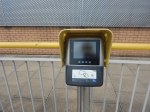
The system appeared to be working well, but I do have reservations.
Use On The Trains
I went up to Glossop on the train. As both Glossop and Manchester Piccadilly stations have tiket barriers, why can’t I use contactless ticketing on that type of journey?
Consider.
All of the barriers I saw, were the same as London’s, so they can also read contactless bank cards.
Not all stations in London have ticket barriers. You’re just expected to touch in and touch out, as you do with Manchester’s system.
Surely, the software can and will be extended!
Damage To The Terminal
Two of the four terminals I looked at were damaged; possibly by a sledgehammer or a Size 10-boot.
Are they robust enough.
Instructions For Users
I didn’t see any posters, describing how to use the system in English.
Surely, as Manchester, is receiving a lot more visitors, comprehensive instructions in several languages.
Terminal Design
I came across a couple of first time users, who were both locals and they weren’t sure, where to put their card.
I’d be interested to know, why they didn’t use London’s design of terminal.

I’ve only ever seen a technician fixing one broken terminal in London.
No Staff
I didn’t see any staff! The stop under Piccadilly had no staff there to help visitors.
What About Those With Poor Vision?
I have a friend, who is registered blind and has a guide dog. But he can see a bit and has no trouble using contactless in London, especially as the dog leads him to wide gates.
Would my friend cope in Manchester?
Conclusion
It’s a good start, but some details haven’t been properly thought through!
At least, I won’t need to buy a ticket in Manchester again, unless I’m using a train.
They Don’t Make Very Good Boats
This was a tweet from Greater Manchester Police Traffic, during the recent floods.
The driver of this Lamorghini lost control on standing water and took out a section of before making off on foot prior to police arrival.
A very expensve mistake. They don’t make very good boats!!
Nearly 400 people are talking about it.
Manchester Metrolink To Gorton And Glossop
The Wikipedia entry for the Manchester Metrolink doesn’t say much about Glossop, except that one of the original lines would have taken over the Glossop Line to Gorton, Glossop and Hadfield stations.
In Manchester Metrolink Extensions In A Sentence, I quoted this sentence from the Manchester Evening News.
It includes tram extensions to Port Salford, Middleton and Stalybridge, plus ‘tram trains’ to Hale, Warrington, Gorton and Glossop.
How would tram-trains from Gorton and Glossop join the current Metrolink network at Piccadilly station?
Consider.
- Glossop Line trains use the low-numbered platforms on the Northern side of Manchester Piccadilly station.
- Some plans have shown High Speed Two platforms on the save side of Piccadilly station.
Look at this Google Map of the Northern side of the station.
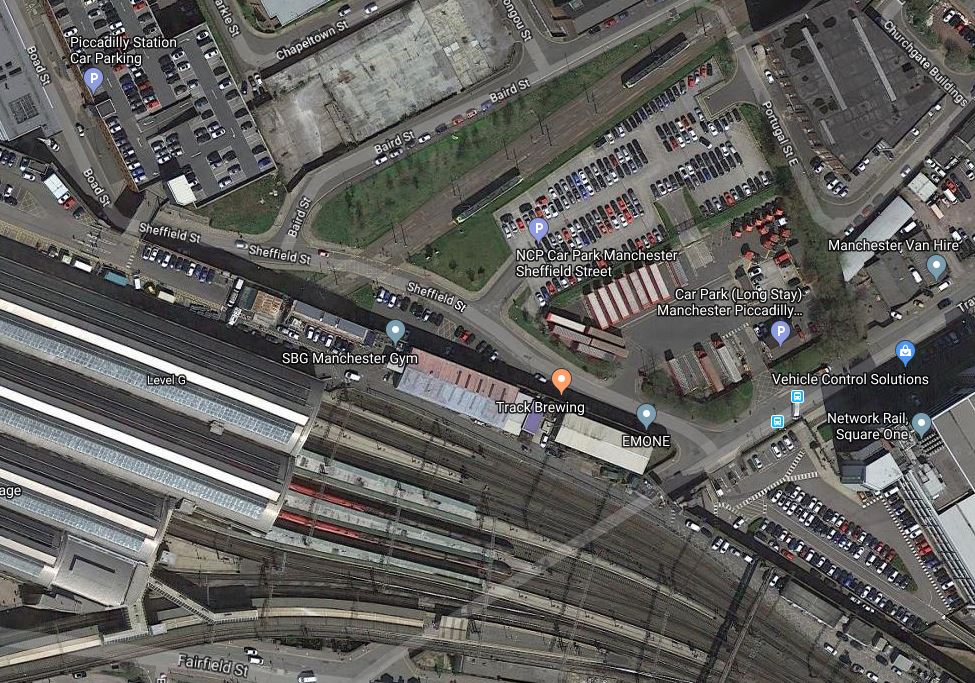
Note.
- Two trams crossing the green space to the North of the station.
- The area between the tram lines and the tracks going into Piccadilly station, appears to be mainly car parking and low-grade buildings.
- The tracks leading to Gorton and Glossop are on the Northern side of Piccadilly station.
These are a few pictures of the area.to the North of the station.


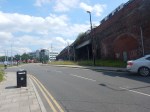


I feel it would be very feasible for tram-trains to connect the Glossop Line and the tram station underneath the main station.
In fact there would be no reason, why tram-trains shouldn’t continue to serve Manchester Piccadilly train station.
High Speed Two
High Speed Two’s terminals in Manchester is in a state of foux at the moment, so it might be preferable to just replace all Glossop Line services with tram-trains and use Manchester Piccadilly tram station.
Updating The Glossop Line
The Glossop Line is electrified with 25 KVAC overhead wires, which looks to be one of the systems in worst condition in the UK along with the Crouch Valley Line in Essex.
It would probably need replacing, as the rust weevils holding it up, must be getting very tired.
To say that some stations look like they’ve seen better times, is an understatement.
Class 399 Tram-Trains For Manchester
Transport for Greater Manchester are serious about tram-trains and I believe that their usefullness to the City could be explored by running the existing service between Manchester Piccadilly and Glossop using a small fleet.
Conclusion
Extending the Manchester Metrolink to Gorton and Glossop using tram-trains appears to be very feasible.
In my view, it would have made a good trial route to prove the concept of tram-trains in the UK.
Manchester Metrolink Extensions In A Sentence
This article on the Manchester Evening News, sums up the extensions to the Manchester Metrolink like this.
It includes tram extensions to Port Salford, Middleton and Stalybridge, plus ‘tram trains’ to Hale, Warrington, Gorton and Glossop.
We all need more pithy sentences like this. Me included!
 The Anonymous Widower