Dialysis-At-Home Developer Quanta Raises £38m
The title of this post is the same as that of this article in today’s Sunday Times
Strangely, in my almost seventy-two years, I’ve never met anybody, who is undergoing dialysis, although one of my friends did give one of his kidneys to his brother.
But reading this article in The Sunday Times, I feel that for those undergoing dialysis, things may be improving.
- The £38m will launch Quanta’s machine with the NHS.
- More people will be able to have dialysis-at-home.
- The company hopes the machine will be launched in the US this year.
It is very much a good news article.
To me though, it shows how technology is increasingly being developed to improve healthcare.
Surprisingly, the machine uses the same technology as that used to mix soft drinks in bars.
Could A Battery- Or Hydrogen-Powered Freight Locomotive Borrow A Feature Of A Steam Locomotive?
Look at these pictures of the steam locomotive; Oliver Cromwell at Kings Cross station.
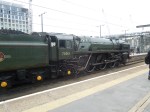
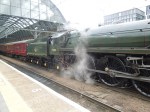
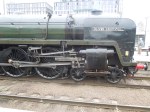

Unlike a diesel or electric locomotive, most powerful steam locomotives have a tender behind, to carry all the coal and water.
The Hydrogen Tank Problem
One of the problems with hydrogen trains for the UK’s small loading gauge is that it is difficult to find a place for the hydrogen tank.
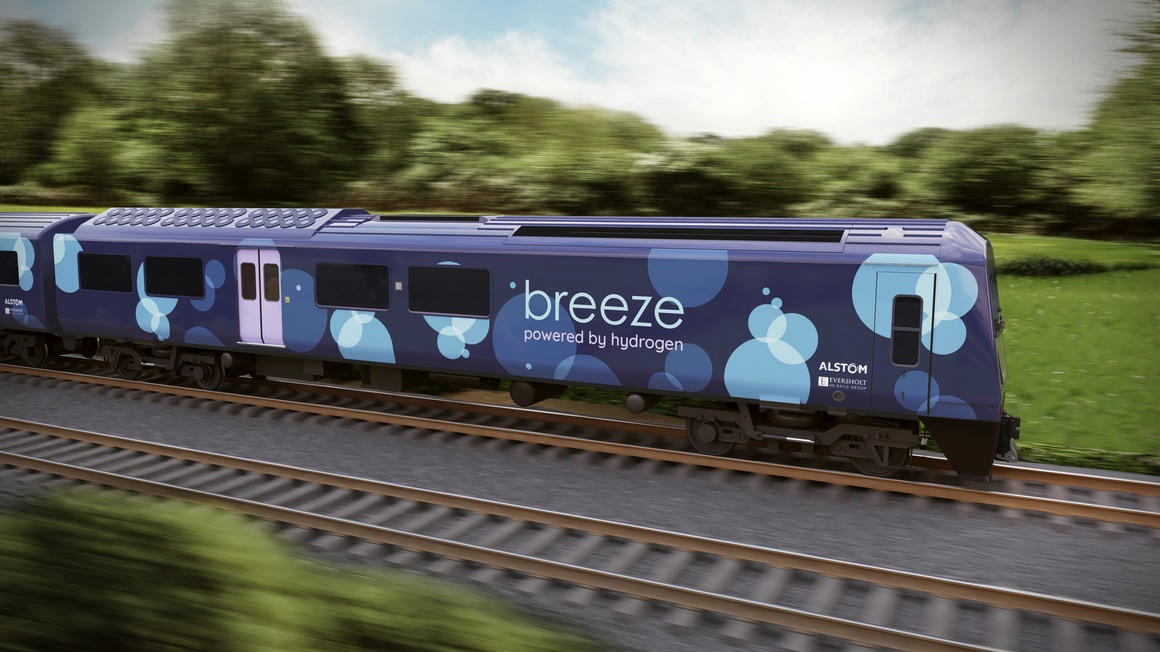
The picture is a visualisation of the proposed Alstom Breeze conversion of a Class 321 train.
- There is a large hydrogen tank between the driving compartment and the passengers.
- The passenger capacity has been substantially reduced.
- The train will have a range of several hundred miles on a full load of hydrogen.
The Alstom Breeze may or may not be a success, but it does illustrate the problem of where to put the large hydrogen tank needed.
In fact the problem is worse than the location and size of the hydrogen tank, as the hydrogen fuel cells and the batteries are also sizeable components.
An Ideal Freight Locomotive
The Class 88 locomotive, which has recently been introduced into the UK, is a successful modern locomotive with these power sources.
- 4 MW using overhead 25 KVAC overhead electrication.
- 0.7 MW using an onboard diesel engine.
Stadler are now developing the Class 93 locomotive, which adds batteries to the power mix.
The ubiquitous Class 66 locomotive has a power of nearly 2.5 MW.
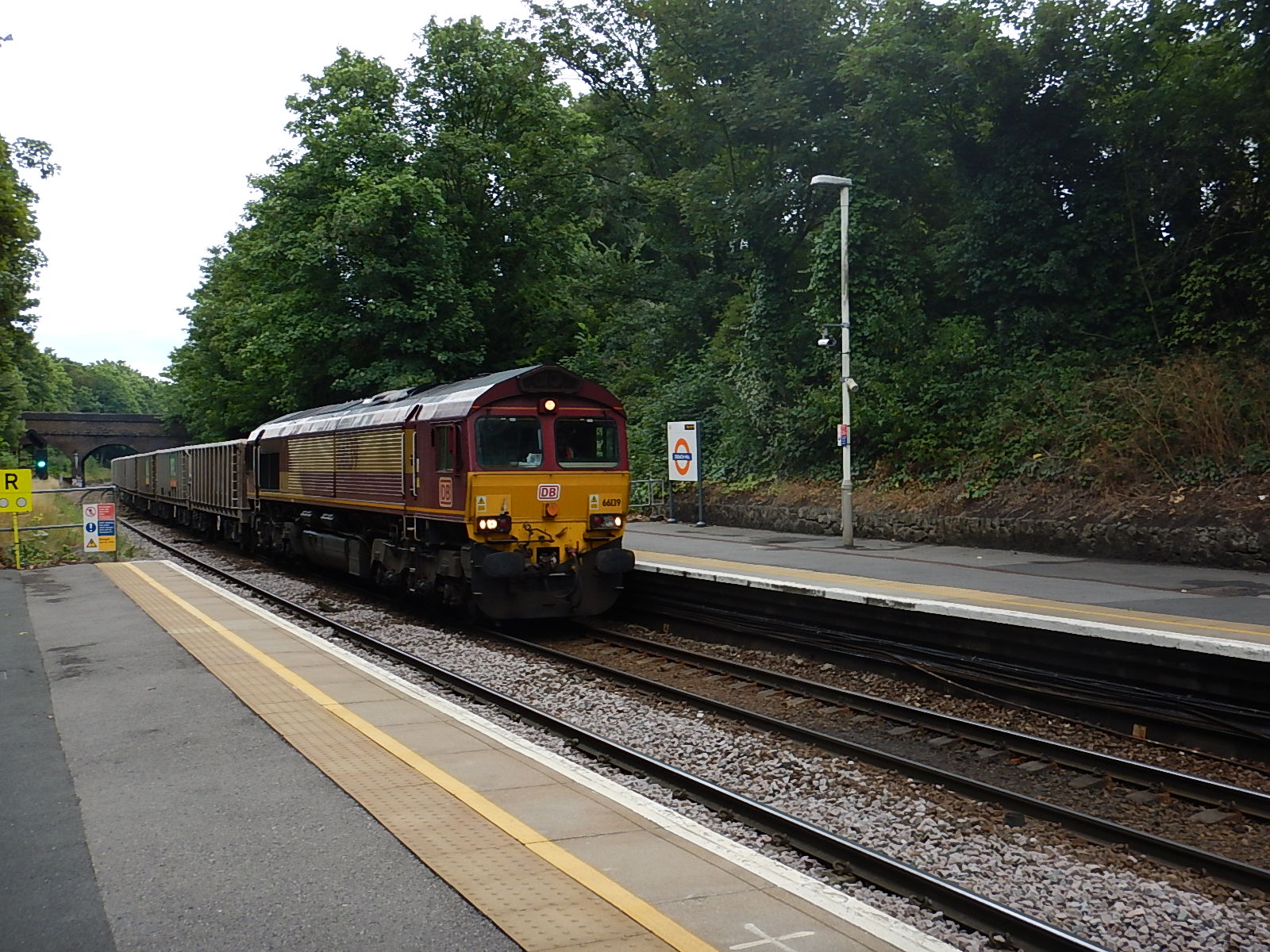
But as everybody knows, Class 66 locomotives come with a lot of noise, pollution, smell and a substantial carbon footprint.
To my mind, an ideal locomotive must be able to handle these freight tasks.
- An intermodal freight train between Felixstowe and Manchester.
- An intermodal freight train between Southampton and Leeds.
- A work train for Network Rail
- A stone train between the Mendips and London.
The latter is probably the most challenging, as West of Newbury, there is no electrification.
I also think, that locomotives must be able to run for two hours or perhaps three, on an independent power source.
- Independent power sources could be battery, diesel, hydrogen, or a hybrid design
- This would enable bridging the many significant electrification gaps on major freight routes.
I feel that an ideal locomotive would need to meet the following.
- 4 MW when running on a line electrified with either 25 KVAC overhead or 750 VDC third-rail.
- 4 MW for two hours, when running on an independent power source.
- Ability to change from electric to independent power source at speed.
- 110 mph operating speed.
This would preferably be without diesel.
Electric-Only Version
Even running without the independent power source, this locomotive should be able to haul a heavy intermodal freight train between London and Glasgow on the fully-electrified West Coast Main Line.
I regularly see freight trains pass along the North London Line, that could be electric-hauled, but there is a polluting Class 66 on the front.
Is this because there is a shortage of quality electric locomotives? Or electric locomotives with a Last Mile capability, that can handle the routes that need it?
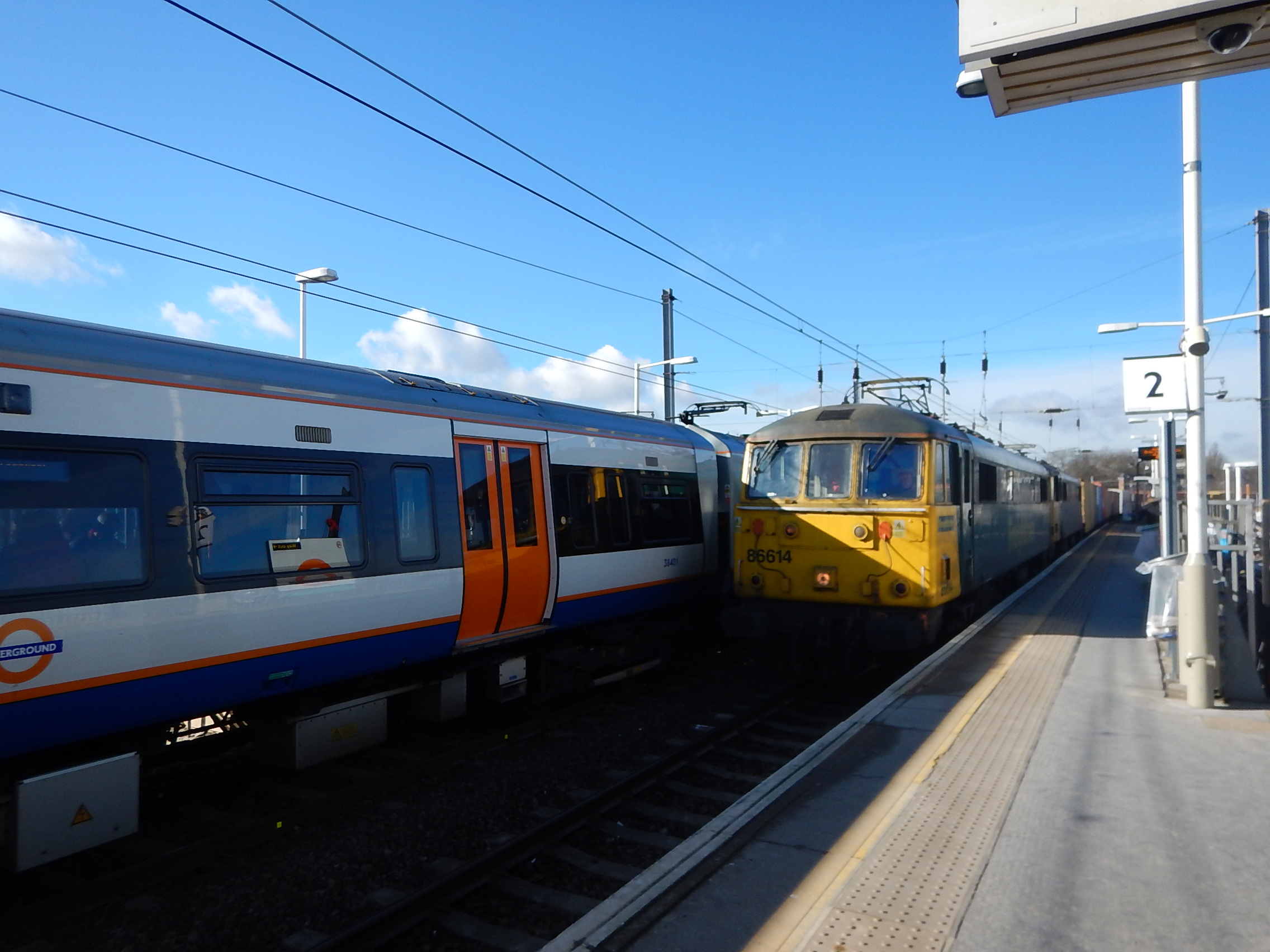
If we have to use pairs of fifty-year-old Class 86 locomotives, then I suspect there are not enough electric freight locomotives.
Batteries For Last Mile Operation
Stadler have shown, in the design of the Class 88 locomotive, that in a 4 MW electric locomotive, there is still space to fit a heavy diesel engine.
I wonder how much battery capacity could be installed in a UK-sized 4 MW electric locomotive, based on Stadler’s UK Light design.
Would it be enough to give the locomotive a useful Last Mile capability?
In Thoughts On A Battery Electric Class 88 Locomotive On TransPennine Routes, I estimated that a Class 88 locomotive could replace the diesel engine with a battery with a battery capacity of between 700 kWh and 1 MWh.
This would give about fifteen minutes at full power.
Would this be a useful range?
Probably not for heavy freight services, if you consider that a freight train leaving the Port of Felixstowe takes half-an-hour to reach the electrification at Ipswich.
But it would certainly be enough power to bring the heaviest freight train out of Felixstowe Port to Trimley.
If the Felixstowe Branch Line were to be at least partially electrified, then I’m sure a Class 88 locomotive with a battery instead of the diesel engine could bring the heaviest train to the Great Eastern Main Line.
- Electrifying between Trimley and the Great Eastern Main Line should be reasonably easy, as much of the route has recently been rebuilt.
- Electrifying Felixstowe Port would be very disruptive to the operation of the port.
- Cranes and overhead wires don’t mix!
I wonder how many services to and from Felixstowe could be handled by an electric locomotive with a Last Five Miles-capability, if the Great Eastern Main Line electrification was extended a few miles along the Felixstowe Branch Line.
As an aside here, how many of the ports and freight interchanges are accessible to within perhaps five miles by electric haulage?
I believe that if we are going to decarbonise UK railways by 2040, then we should create electrified routes to within a few miles of all ports and freight interchanges.
Batteries For Traction
If batteries are to provide 4 MW power for two hours, they will need to have a capacity of 8 MWh.
In Thoughts On A Battery Electric Class 88 Locomotive On TransPennine Routes, I said this.
Traction batteries seem to have an energy/weight ratio of about 0.1kWh/Kg, which is increasing with time, as battery technology improves.
This means that a one tonne battery holds about 100 kWh.
So to hold 8 MWh or 8,000 kWh, there would be a need to be an 80 tonne battery using today’s technology.
A Stadler Class 88 locomotive weighs 86 tonnes and has a 21.5 tonne axle load, so the battery would almost double the weight of the locomotive.
So to carry this amount of battery power, the batteries must be carried in a second vehicle, just like some steam locomotives have a tender.
But suppose Stadler developed another version of their UK Light locomotive, which was a four-axle locomotive that held the largest battery possible in the standard body.
- It would effectively be a large battery locomotive.
- It would share a lot of components with the Class 88 locomotive or preferably the faster Class 93 locomotive, which is capable of 110 mph.
- It would have cabs on both ends.
- It might have a traction power of perhaps 2-2.5 MW on the battery.
- It would have a pantograph for charging the battery if required and running under electrification.
- It might be fitted with third rail equipment.
It could work independently or electrically-connected to the proposed 4 MW electric locomotive.
I obviously don’t know all the practicalities and economics of designing such a pair of locomotives, but I do believe that the mathematics say that a 4 MW electric locomotive can be paired with a locomotive that has a large battery.
- It would have 4 MW, when running on electrified lines.
- It would have up to 4 MW, when running on battery power for at least an hour.
- ,It could use battery-power to bridge the gaps in the UK’s electrification network and for Last Mile operation.
A very formidable zero-carbon locomotive-pair could be possible.
The battery locomotive could also work independently as a 2 MW battery-electric locomotive.
Hydrogen Power
I don’t see why a 4 MW electric locomotive , probably with up to 1,000 kWh of batteries couldn’t be paired with a second vehicle, that contained a hydrogen tank, a hydrogen fuel-cell.and some more batteries.
It’s all a question of design and mathematics.
It should also be noted, that over time the following will happen.
- Hydrogen tanks will be able to store hydrogen at a greater pressure.
- Fuel cells will have a higher power to weight ratio.
- Batteries will have a higher power storage density.
These improvements will all help to make a viable hydrogen-powered generator or locomotive possible.
I also feel that the same hydrogen technology could be used to create a hydrogen-powered locomotive with this specfication.
- Ability to use 25 KVAC overhead or 750 VDC third-rail electrification.
- 2 MW on electrification.
- 1.5 MW on hydrogen/battery power.
- 100 mph capability.
- Regenerative braking to batteries.
- Ability to pull a rake of five or six coaches.
This could be a very useful lower-powered locomotive.
What About The Extra Length?
A Class 66 locomotive is 21.4 metres long and a Class 68 locomotive is 20.3 metres long. Network Rail is moving towards a maximum freight train length of 775 metres, so it would appear that another twenty metre long vehicle wouldn’t be large in the grand scheme of things.
Conclusion
My instinct says to be that it would be possible to design a family of locomotives or an electric locomotive with a second vehicle containing batteries or a hydrogen-powered electricity generator, that could haul freight trains on some of the partially-electrified routes in the UK.
Stanmore Tube Station To Convert Car Park Into Flats
The title of this post is the same as this article on Ian Visits.
Solar Panel Pilot For Aldershot
The title of this post is the same as that of an article in the August 2019 Edition of Modern Railways.
This is the two paragraphs.
Solar panels are to be installed on derelict land near Aldershot station as part of an experiment into whether renewable energy can be used to power trains.
A total of 135 discrete solar panels are being installed and are expected to go live in August. The Riding Subnbeams ‘First Light’ demonstrator project is a collaboration between climate change charity 10:10, Community Energy South and Network Rail, alongside a consortium of specialist consultants and university departments.
I wrote about the company and its ideas in Solar Power Could Make Up “Significant Share” Of Railway’s Energy Demand, which I posted in December 2017.
I won’t repeat myself, but I will say that since I wrote the original article, a compatible development has happened.
In Vivarail Unveils Fast Charging System For Class 230 Battery Trains, I wrote about Vivarail’s charging system for battery trains, which uses battery-to-battery power transfer to charge batteries on trains, through standard third-rail technology.
I do feel that the 10:10 and Vivarail ought to be talking, as I feel that between them, they could come up with some good joint ideas.
The London Overground Is Still Running Four-Car Class 378 Trains
This picture shows the three spare cars, that were taken from three five-car Class 378 trains to make them short enough to work the Gospel Oak to Barking Line.

I would have thought that the trains would have returned to their full length, but they have been put into service on the Watford DC Line.
Perhaps, London Overground want to keep them at four-cars, as a precaution against a serious bug in the Class 710 train’s computer system.
Only when the Class 710 trains are behaving impeccably will the full length be restored.
Trains On The Watford DC Line
As it is, the services on the Watford DC Line are being changed from three x five-car trains per hour to four x four-car trains per hour.
This is roughly the same number of cars per hour, but at a higher frequency.
According to Wikipedia seven Class 710 trains are needed for the full service.
West Hampstead Station Is A Wide Station
I took these pictures at the rebuilt West Hampstead station today.



Everything seems to have been built as wide as possible, which must be good for passenger safety.
STRABAG Commences Expanded € 1 bn Contract for UK Mine
The title of this post is the same as that of this article on Tunnel Business Magazine.
The article gives a good description of the scope of Sirius Minerals’s York Potash project and their massive mine under the Yorkshire Moors.
- The tiunnel to bring the polyhalite to Wilton is nearly forty kilometres long.
- Three tunnel boring machines will be used.
- It is the largest polyhalite deposit in the world.
- The conveyor in the tunnel will handle twenty million tonnes of product a year.
The Wikipedia entry for Sirius Minerals, says this about the project.
This will deliver a £2.3 billion annual contribution to the UK’s GDP, £2.5 billion of annual exports which represents a 7% decrease in the UK’s trade deficit and 2,500 direct and indirect production jobs as well as over 2,000 jobs during construction.
I doubt, there will be few projects in the UK in the next twenty years, which wil contribute so much!
Vere Promises East Midlands Bi-Modes In 2022
The title of this post is the saqme as that of this article on Rail Magazine.
This is the first paragraph.
East Midlands Railway will have its entire bi-mode fleet in traffic by December 2022, according to Baroness Vere, the Government’s transport spokesman in the House of Lords.
This statement means that whoever manufactures the trains has just over three years from today to design, build and test the trains.
This paragraph from the article talks about how Bombardier and Hitachi would design the trains.
It’s known that Bombardier and Hitachi are interested in the contract, but both will be supplying new designs, with the former offering a bi-mode Aventra while the latter will offer an AT300 (the Intercity Express Programme platform) but with shorter vehicles.
What do we know about these two trains?
Bombardier Bi-Mode Aventra
In the July 2018 Edition of Modern Railways, there is an article entitled Bi-Mode Aventra Details Revealed.
As is typical with Bombardier interviews, they give their objectives, rather than how they aim to achieve them.
In Bombardier Bi-Mode Aventra To Feature Battery Power, I said this.
The title of this post is the same as this article in Rail Magazine.
A few points from the article.
- Development has already started.
- Battery power could be used for Last-Mile applications.
- The bi-mode would have a maximum speed of 125 mph under both electric and diesel power.
- The trains will be built at Derby.
- Bombardier’s spokesman said that the ambience will be better, than other bi-modes.
- Export of trains is a possibility.
Bombardier’s spokesman also said, that they have offered the train to three new franchises. East Midlands, West Coast Partnership and CrossCountry.
Very little more can be gleaned from the later Modern Railways article.
Consider.
- Aventras are designed to a modular concept.
- Bombardier have finally got the software for the train working to a high standard.
- The trains are designed for ease of manufacture, at a high rate.
- Development of the bi-mode train must have started before June 2018.
- Christian Wolmar disclosed the objective of a 125 mph Aventra in February 2017.
- I have seem references to Aventras, being tested at 110 mph.
On the balance of probabilities, I think it is very possible that Bombardier can deliver a full fleet of 125 mph bi-mode trains with batteries before the end of 2022.
Hitachi AT-300
Consider.
- Class 802 trains are a version of the AT-300 train, which in turn are a member of Hitachi’s A-Train family.
- Class 802 trains are successfully in service on the Great Western Railway.
- Class 385, 395, 800 and 801 are all members of the A-train family and are closely related to the Class 802 train.
- The A-Train is a modular family.and different numbers of cars and car length, shouldn’t be a problem.
- Hull Trains ordered their fleet of five Class 802 trains in November 2016 and they will enter service around December 2019 or early in 2020.
- First Group ordered five AT-300 trains in March 2019 and they will enter service in Autumn 2021.
If the order has been placed in the last few months, there is every chance that Hitachi could deliver a fleet of new bi-mode trains for service in December 2022.
Stadler Flirt
These aren’t mentioned in the Rail Magazine article, but they were mentioned as a possibility for the order in an article by Roger Ford, which was entitled East Midlands IC125 Dilemma, in the June 2019 Edition of Modern Railways.
This is an extract from Roger’s article.
In theory, Stadler should be in pole position. Itis also supplying Abellio’s Greater Anglia franchise, where Flirt bi-modes are running on test.
As they haven’t had any serious problems yet, and they are Swiss, everyone thinks they are amazingly efficient and wonderful. Whjich may turn out to be the case.
In the end, Roger rates their chances as slim.
But Stadler certainly has the technical capability to produce a 125 mph bi-mode train.
Electric Trains To Corby
When the electrified St. Pancras and Corby service opens in December 2020, a round trip will take three hours.
This means that as few as three trains would be needed to provide the service.
The specification would be.
- Electric traction
- Twelve cars and 240 metres long.
- 125 mph capability.
- Three trains and a spare would probably be needed by December 2020, with a further three trains by December 2021.
Abellio would also probably like the trains to be very similar for drivers and staff.
Currently, it appears that the electric services to Corby, will be run initially by cascaded Class 360 trains.
- But with a bit of juggling of production, Bombardier, Hitachi and Stadler might be able to manufacture, the four trains needed to start the service in December 2020.
- Abellio also have Class 360 and Class 379 trains working on Greater Anglia, that are likely to be replaced before December 2020.
So they have a sensible back-stop.
How Many Trains Will Abellio Need?
The current service is two trains per hour to both Nottingham and Sheffield.
These are fastest times.
- London and Nottingham is one hour forty minutes
- London and Sheffield is two hours
Even if there is a bit of a speed increase, it looks like at least eight trains will be needed for both services.
As to train length, I doubt five cars will be enough on all trains.
- Some services are currently run by six and eight-car HSTs.
- Have Abellio promised more seats?
- Abellio will be extending some Sheffield services to Rotherham, Barnsley and Leeds.
- It has already been stated that the Corby trains will be 240 metres long
- So will we see a uniform fleet of longer trains?
There are some short platforms, so I suspect Abellio will buy a mixture of full-length 240 metre-long trains and half-length 120 metre-long trains, as several train companies have done.
I feel we could see something like eight full length trains and perhaps twelve half-length trains.
I have calculated that seven full-length trains are needed for Corby.
Adding this up gives the following.
- Eight full-length bi-mode trains of ten-cars.
- Seven full-length electric trains of ten-cars.
- Twelve half-length bi-mode trains of five-cars
This gives a total of 27 trains of a total of 210 cars, of which 140 are bi-mode and 70 are electric.
All of this is based on running the current service with new trains.
abellio Greater Anglia have not not just done this in East Anglia, but have purchsed extra trains to add new services and increase frequencies.
So I would feel, that these trains are a minimum order, if Abellio are not doing any expansion.
Daily Telegraph Report – 19th July 2019
A report in the Daily Telegraph on the 19th July 2019, which is entitled Blow For Bombardier’s Derby Plant As £600m Train Contract Goes To Hitachi, says the order has gone to Hitachi.
- Value is quoted at £600million.
- A formal announcement is expected next week.
Has next week already passed without an announcement from Abellio?
I do find it strange, that there has been no reference to the Telegraph report in local sources around Derby.
This article on Railway Gazette is entitled Trains Ordered For 2021 Launch Of ‘High-Quality, Low Fare’ London – Edinburgh Service.
FirstGroup have ordered AT-300 trains.
- All-electric.
- Five trains of five-cars.
- A total order value of £100 million.
- Order placed in March 2019
- Service starting in Autumn 2021
This works out at four million pounds per car.
Earlier, I calculated that Abellio needed to buy 140 bi-mode cars and seventy electric ones.
Assuming that Abellio run the Corby services with refurbished Class 360 trains, then 140 carriages will cost £560 million.
But this would mean the following.
- Abellio would be running two separate fleets on the Midland Main Line.
- The Corby services would run below the operating speed of the route.
- Expansion would mean the purchase of more trains.
This is very different to their philosophy in Abellio Greater Anglia.
- Class 745 and Class 755 trains are very similar to drivers and other staff.
- Both trains can operate at 100 mph on the Great Eastern Main Line.
- Abellio Greater Anglia have significantly increased the size of their train fleet.
I believe that Bombardier, Hitachi and Stadler can all met this schedule.
- Deliver four 125 mph electric trains by a date early enough for a December 2020 start for Corby services.
- Deliver another three 125 mph electric trains by December 2021 for two trains per hour to Corby.
- Deliver the fleet of 125 mph bi-mode electric trains by December 2022 for Derby,Nottingham, Sheffield and beyond.
At four million pounds for a car for a Hitachi train, this works out at £840 million.
So could it be, that Hitachi have thrown in a good discount to make sure of the order.
It will be very interesting, when Abellio announce their order.
Interim Trains
Baroness Vere also discussed the other trains on the Midland Main Line.
This was the final two paragraph from the article.
As it stands, the 12 High Speed Trains cannot operate in passenger traffic beyond December 31 2019 this year, as they will not meet new accessibility regulations.
When announcing the Abellio contract win in April, Government confirmed that four Class 180s would transfer from Hull Trains to EMR. There was also the possibility that the LNER HSTs could also transfer to the MML, although these do not meet the disability requirements either.
So what is going to happen?
It appears that the four Class 180 trains and the twenty-seven Class 222 trains of various lengths will have to manage.
But I do think, that Baroness Vere’s statement.
East Midlands Railway will have its entire bi-mode fleet in traffic by December 2022.
Is very welcome, as the HSTs will retire on the 31st December 2019 and there will be less than three years of a reduced fleet.
These points should also be noted.
- In December 2020, when the electrification goes live and new electric trains start running between London and Corby, there will be a few more Class 222 trains available.
- The Corby electric trains, will also add capacity between London and Kettering.
- I don’t think it unlikely, that some other trains are rustled up to fill the gaps using perhaps Mark 4 coaches and Class 43 locomotives.
I hope for Abellio’s and their passengers sake, that what Baroness Vere said, comes true!
Could Abellio Go For A Safety-First Solution?
Consider.
- Abellio Greater Anglia’s new Class 745, Class 755 and Class 720 trains are all running, if not years, but a few months late.
- There has been nothing serious and Greater Anglia only has one fleet that is not PRM-compliant; the London and Norwich expresses.
- Providing all goes reasonably well with the introduction of the new Class 745 trains, Greater Anglia’s fleet will be fully PRM-compliant, by the end of the year.
But if they had opted for off-the-shelf Hitachi Class 801 trains for London and Norwich, there might have been less worry. On the other hand, Hitachi way of making trains, by shipping the bodies from Japan probably doesn’t lead itself to high productio rates.
But for Midland Main Line services, Abellio East Midlands Railway aren’t looking at a large fleet of trains.
I estimate they could need.
- Eight full-length bi-mode trains of ten-cars.
- Seven full-length electric trains of ten-cars.
- Twelve half-length bi-mode trains of five-cars
Now that Hitachi’s big orders are coming to an end, Abellio can probably be sure, they will get the main line trains on time and with the minimum of fuss.
Going the safety-first route of buying a fleet of Hitachi trains could deliver the trains that are needed urgently.
- Four 125 mph electric trains by a date early enough for a December 2020 start for Corby services.
- Another three 125 mph electric trains by December 2021 for two trains per hour to Corby.
- A fleet of 125 mph bi-mode electric trains by December 2022 for Derby,Nottingham, Sheffield and beyond.
It might be a bit tight for the Corby electrics, but other trains that could work the route in the interim are available.
Abellio could do a lot worse than give Hitahi the order, if they could deliver early!
Conclusion
If any of the three train manufacturers can supply new trains for the St. Pancras and Corby service to the tight timetable, Abellio would surely be very pleased, as they would only have one train type to introduce on the route.
But I do think, that there is a possibility, that a good discount has won it for Hitachi!
£82m, 30m High Aerial Tramway Vision Would Link Eden Project North To Lancaster University And M6
The title of this post, is the same as that of this article on the Lancaster Guardian.
This is the first two paragraphs.
Proposals for an £82m aerial tramway project linking Lancaster, Morecambe and the university have been drawn up by the man behind the initial plans for Eden Project North.
Standing at more than 30m high, the Aerial Tramway System would link the proposed Eden Project North, the Bay Gateway, Lancaster Railway Station, the University of Cumbria’s Lancaster campus, Lancaster University and junction 33 of the M6 motorway.
Iy is an interesting suggestion.
But I do question the cost.
The Emirates Air Line in London has the following characteristics.
- I kilometre in length
- 2 stations
- 34 gondolas in use at one time.
- ten-seat gondolas
- 90 metres maximum height.
The proposed Lancaster and Morecambe aerial tramway has the following characteristics.
- I0 kilometres in length
- 5 stations
- 30 gondolas in use at one time.
- thirty-five-seat gondolas
- 30 metres maximum height.
As the cost of the Emirate Air Line is reported at £60million, I’m afraid that £82million for the Lancaster and Morecambe aerial tramway are slightly ambitious.
In Getting To The Proposed Morecambe Eden Project By Train, I laid out how a large zero-carbon rail system could develop around Morecambe.
I also concluded that journeys to and from Birmingham, Edinburgh, Glasgow, Liverpool, London and Manchester, could be made zero-carbon.
Conclusion
There could be better ways to acgieve the same local objectives.
Getting To The Proposed Morecambe Eden Project By Train
I originally wrote this post as part of Thoughts On The Morecambe Bay Eden Project, in August 2018, but I now feel it is better as a standalone post!
Current Train SAervices To Morecambe
Morecambe is served by the Morecambe Branch Line, This diagram from Wikipedia, shows how Morecambe is well-connected to Lancaster and the West Coast Main Line.

Note.
- The line has two stations in the town at Bare Lane and Morecambe and another at the nearby Heysham Port.
- Service between Morecambe and Lancaster seems to have a frequency of two trains per hour (tph) and a journey time of around ten minutes.
- There are also upwards of three services a day to and from Skipton and Leeds, which reverse at Lancaster.
I don’t think that a train every half-hour, is sufficient to serve a major attraction.
Possible Expansion Of The Train Service
As both Bare Lane and Morecambe stations have two platforms and there used to be extra tracks along the route, I think it would be possible to create a railway system to Morecambe that could include.
- Two tph to and from Lancaster.
- Trains to and from Leeds via Lancaster, Carnforth, Hellifield for the Settle & Carlisle Railway and Skipton
- Trains to and from Windermere via Lancaster, Carnforth and Oxenholme Lake District.
- Trains to and from Carlisle via Lancaster, Carnforth, Barrow and the Cumbrian Coast Line.
There is tremendous scope to expand rail services in an area of scenic beauty, that includes the Lake District and the Pennines.
Creating an iconic attraction at Morecambe could be a catalyst to develop the rail services in the wider area.
A decent rail service with good provision for bicycles and wheelchairs, might also encourage more tourism without the need for cars.
The West Coast Main Line And High Speed Two
The West Coast Main Line, which will also be used by High Speed Two trains in the future goes between Lancaster and Carlisle.
- Trains to and from Morecambe, Windermere and Barrow will have to share with the 125 mph trains on the West Coast Main Line.
For this reason, I feel that the specification for local trains must be written with care.
Battery Trains Between Morecambe And Lancaster
In my view, the short Morecambe and Windermere Branch Lines are ideal for services that use battery trains, which would charge the batteries on the electrified West Coast Main Line.
- All trains between Lancaster and Morecambe could use battery power.
- Morecambe to Windermere could even be a 125 mph electric train on the West Coast Main Line, that used batteries on the short branch lines at either end.
Consider
- Bombardier are talking about a 125 mph bi-mode Aventra with batteries. Diesel power would not be needed, so add more batteries.
- Battery trains are talking about ranges of thirty miles, in a few years.
- Batteries would be charged on the West Coast Main Line.
- The trains would not be slow enough to interfere with the expresses on the West Coast Main Line.
How cool is that?
The battery-powered trains would surely fit in well with the message of the Eden Project.
Hydrogen-Powered Trains Between Morecambe And Leeds
In my view these routes would be ideal for environmentally-friendly hydrogen-powered trains.
- Morecambe and Leeds
- Lancaster and Carlisle via Barrow and Workington
- Carlisle and Newcastle
- Carlisle and Leeds via the Settle and Carlisle Line.
All passenger trains in Cumbria would be zero-carbon.
Conclusion
Morecambe and the Eden Project could be at the centre of an extensive zero-carbon rail network.
These major cities would have direct electric trains to Lancaster, which would be a short local train ride away.
- Birmingham
- Edinburgh
- Glasgow
- Liverpool
- London
- Manchester
All journeys could be zero-carbon.
 The Anonymous Widower