New Safety Issue Emerges: LNER Azumas Put On Hold
The title of this post, is the same as that of an article in Edition 863 of Rail Magazine.
One reason is that when running North of York, there is electro-magnetic interference with the signalling in electric mode.
But the other is that the inter-vehicle connectors could be used to climb on the roof. Apparently a man.of very little brain was killed, when he climbed on the roof of a Class 390 train at Manchester Piccadilly using that trains similar connectors.
Perhaps everybody who goes within fifty metres of a railway should have to see a psychiatrist first and be given a certificate. And that would be necessary for driving across a level crossing!
Travelling Light
I’m off to Hamburg today and I’m tavelling Ultra Light, unlike some people, who seem to travel with most of their wardrobe and half of their library.
Travellers should follow the advice of the famous BBC reporter; the late great James Cameron, who recommended arranging everything you thought you would need in two piles, with half of everything in each. Then you packed them in two cases and only take one. He also suggested adding up all the money you are likely to need and then double it. I always travel with enough spare credit on my cards for all eventualities.
I even saw one guy this morning with four four-wheel cases struggling to keep them in check. He should have brought a bright collie to round them up!
Still, I had a good laugh at security, as I was through in a couple of minutes.
As you are obviously tracked through security, the airport or train station could give a bonus to all fast travellers. That would certainly speed things up.
The Silent Transport Revolution
Today, I rode in two battery-powered modes of transport.
Returning from Kings Cross, I was a passenger in one of London’s new black cabs; the LEVC TX.
Earlier in the day, I’d ridden in a battery-powered version of the Class 230 train.
Both vehicles are quieter than diesel-powered versions, as is to be expected.
But what surprised me about the Class 230 train today, is that you can have a normal conversation in the train without raising your voice. The D78 trains from which the Class 230 train has been developed, weren’t that quiet.
The Class 379 BEMU, that I rode in three years ago, was also quiet.
I came back from Scotland in a Standard Class Mark 4 Coach, which was also quiet, but it is a trailer without motors and probably plenty of sound-proofing.
Does the design of a battery-electric vehicle with regenerative braking reduce the noise and vibration emitted?
The Class 230 train has an electrical system based on DC batteries and AC traction motors. So there must be aone very clever heavy electronics to manage the power. So there is orobably little in the electrical system to make the clatter one typically hears on a train. The train obviously has a mechanical brake for emergencies and to bring the train to a funal halt, but that was not used in anger on our short trip.
Battery Class 230 Train Demonstration At Bo’ness And Kinneil Railway
I went to Vivarail‘s demonstration of battery version of the Class 230 train, which was given at the Bo’ness and Kinneil Railway.
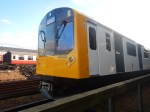

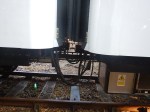
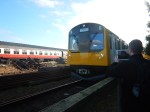
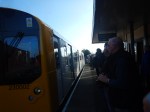
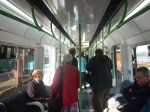

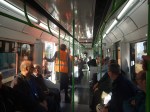


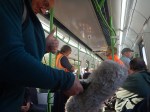
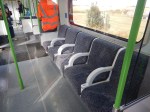
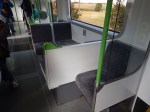
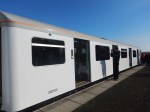

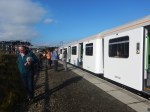
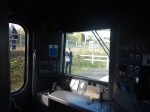

For some pictures of the original D78 Stock see Raw Material For A New Train.
So what did I think of the train?
Build Quality
From what I saw, the build quality was certainly better than that of a Pacer, which these trains could replace on some routes.
Doors
The single-leaf doors are unusual, as most London Underground stock, only has these at the ends of the cars.
But they worked successfully for nearly forty years of heavy service on the District Line, so they are probably up to the lesser rigours of service outside the Capital.
London Underground Legacy
I talked with one of the Vivarail engineers and he said, that the trains had been retired with a lot of new parts and he pointed out the quality f the floors, some of which go back decades.
It certainly seemed, that the trains could be described as having One Careful Owner.
Noise Levels
Noise levels were low, but then they were in the Class 379 BEMU, that I rode in January 2015.
Intriguingly, both trains have the same batteries, but that has nothing to do with it.
Ride
The quality of the ride was good and very much up to the standard of the S Stock that replaced the D78 Stock on the District Line.
Seats
As the pictures show, the seats of the Class 230 train are based on those of those in the D78 Stock.
The seats in the new train weren’t hard and seemed to my memory to be about the same standard as those in the older train.
So perhaps they were!
Vivarail are offering the train with different interiors, so I suspect those that pay, will get what they want.
Toilets
This train was not fitted with a toilet, but Vivarail will be fitting them to some trains.
USB Ports
There is a USB port between the seats and I was able to charge my phone, as one picture shows.
Conclusion
I think it is true to say, that this battery Class 230 train was a good start.
With more new components like seats, tables and toilets they could be impressive.
I’m At The Vivarail Demonstration
Vivarail are demonstrating the battery version of their Ckass 230 train on the Bo’ness and Kinneil Railway at 11:00, 13:00 and 15:00 today.
Will The East London Line Ever Get Six-Car Trains?
On the East London Line yesterday, I was in the front car and it was noticeable how passengers moved backwards and forwards along the train so they could find a seat and also get in and out easily at the stations with short platforms.
It got me thinking, about whether six-car trains could be run on the East London Line.
Before I discuss this, I’ll give a few facts. Some are history and some are future plans.
The Original Line
I can remember taking the London Underground era line between New Cross Gate and Whitechapel stations, to get between Haywards Heath and Mile End stations. I had a client at the former and my youngest son, used to live by the latter.
The trains were four-car A60/62 Stock with a length of just 65 metres!
There were five intermediate stations, which coming North were as follows.
- Surray Quays
- Canada Water
- Rotherhithe
- Wapping
- Shadwell
The platforms and those at Whitechapel, were probably not much longer than the original trains.
The platforms have been improved in recent years.
- When the Jubilee Line was built, Canada Water station was rebuilt, but the platforms on the East London Line were not substantially lengthened.
- When the Overground was created in the early part of this century, the platforms ended up at their current length of around eighty metres.
- Recently, to create a better interchange for Crossrail, the platforms at Whitechapel station have been lengthened to around a hundred metres.
So there is now four short platforms on the East London Line.
The Class 378 Trains
The Class 378 trains were originally ordered as three-car trains, which were about sixty metres long.
Was this short length to fit the short platforms or was it because it was felt that these trains would be adequate for the route?
By the time, the trains entered service in 2010, the trains had all been extended to four-cars.
But this was still inadequate and in 2013 an order was placed to lengthen all trains to five cars, which was completed in January 2016.
Fitting Five-Car Trains Into Four-Car Platforms
Travel in the last coach of a train between Shadwell and Canada Water stations and when a station stop is made, you are left in the tunnel.
Some or all the doors don’t open and a announcement tells you, that if you want to get out, you should move forward in the train. This picture shows the last carriages of a train at Canada Water station.
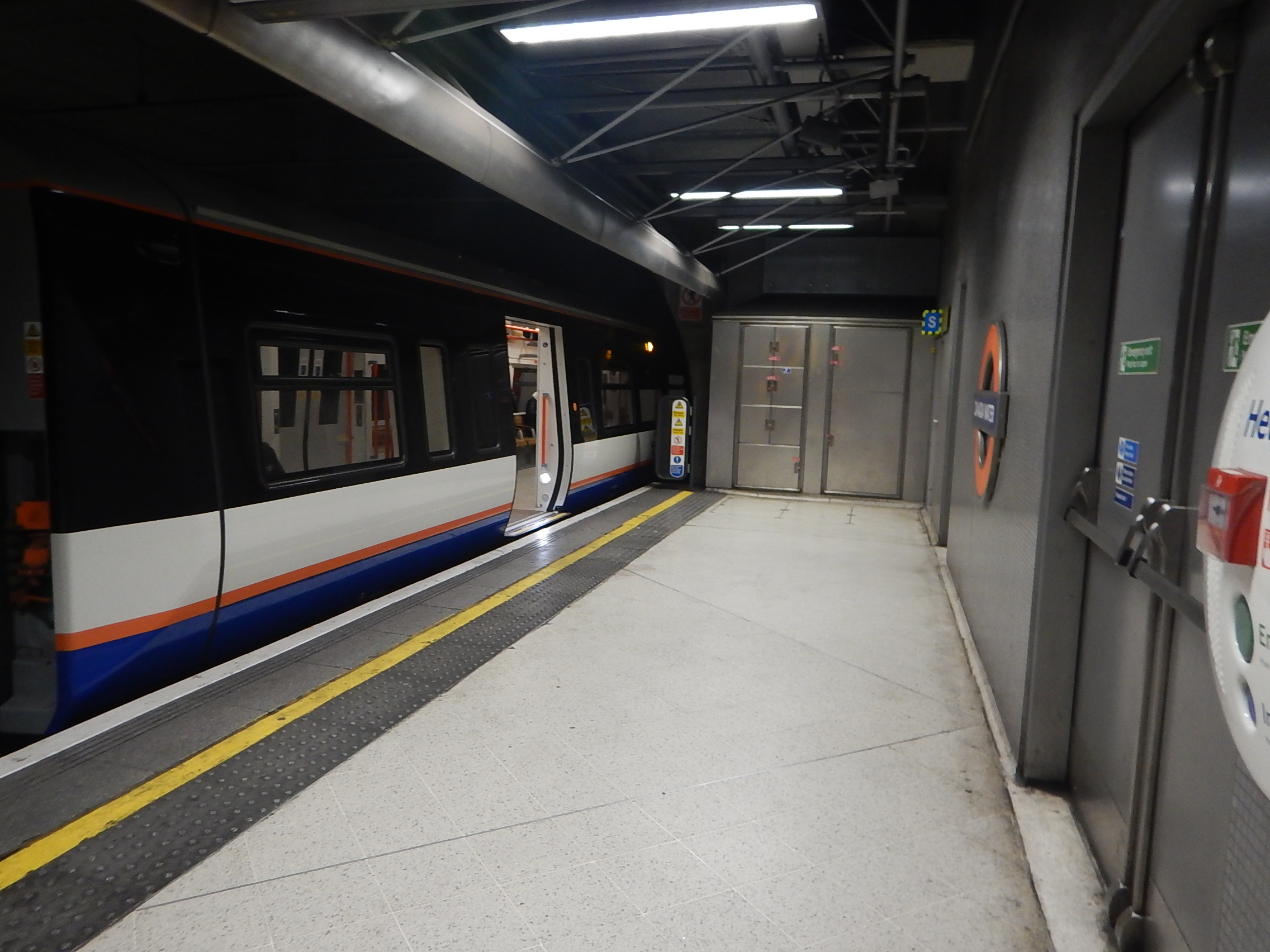
The less-than-perfect arrangement works very well.
- The walk-through nature of the trains means passengers can easily walk forward if required.
- The announcements are numerous and clear.
- Only Canada Water station, with its interchange to the Jubilee Line is a busy station.
But what probably makes the system work so well, is the fact that East Londoners are the World Champions at ducking and diving and they adjust their behaviour to the less-than-perfect arrangement.
The Length Of The Northern Platforms
Travelling home to Dalston Junction station in the last carriage, I got the impression, that all platforms are built to comfortably accept five-car trains.
It also appears that the two central bay platforms at Dalston Junction station were built for five-car trains.
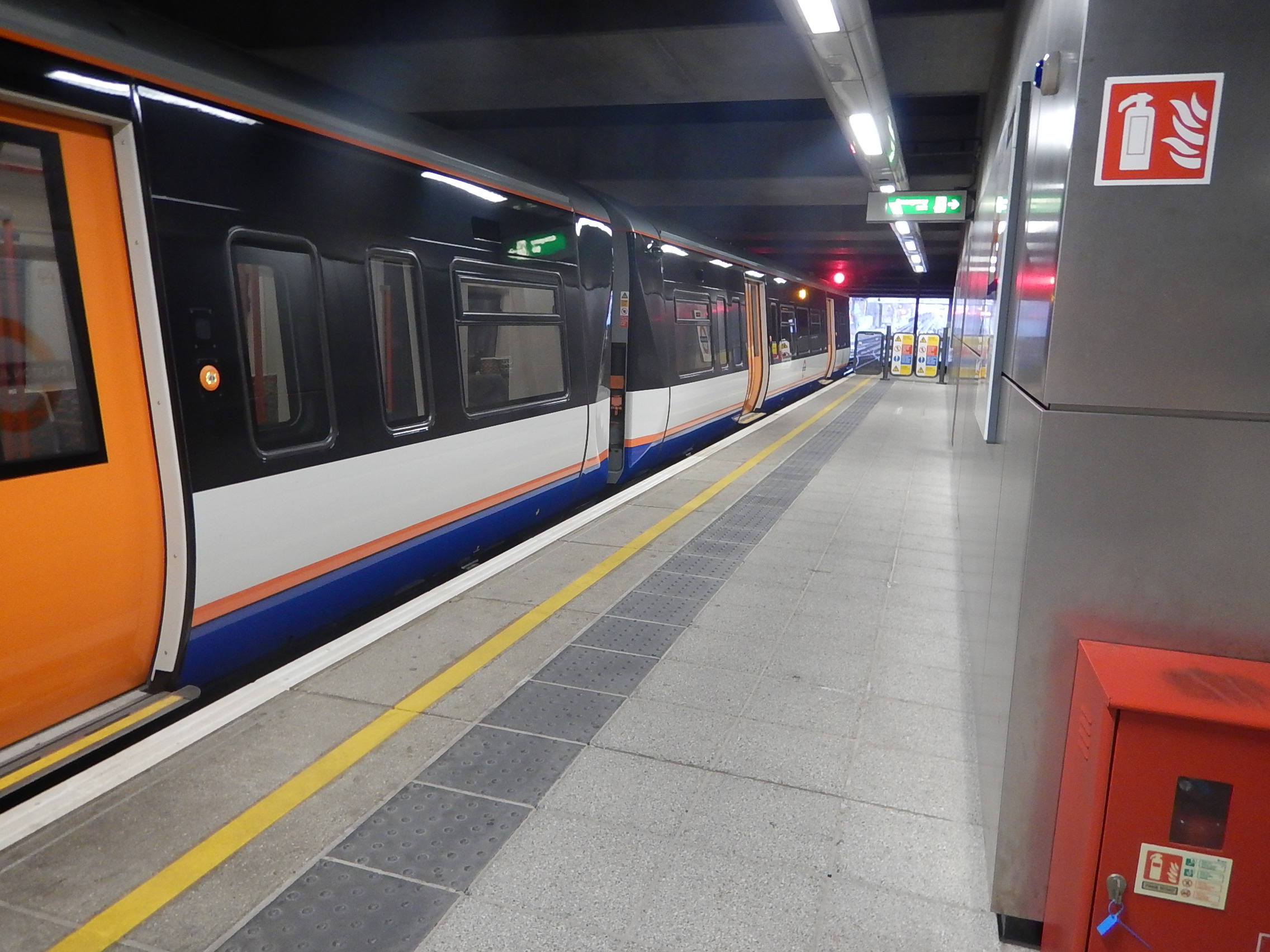
This picture shows Platform 2 at Dalston Junction station.
The Length Of The Southern Platforms
I have looked at nearly all the Southern platforms on all four Southern branches and there seems to be few if any platforms, that couldn’t take a six-car train. It should be noted that most platforms are shared with Southern services which are run by longer trains.
These pictures show Sydenham station.
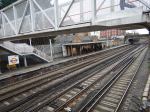
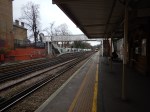
Platform lengths like these are typical of many stations.
Work would be needed at Platform 2 at Clapham Junction station.
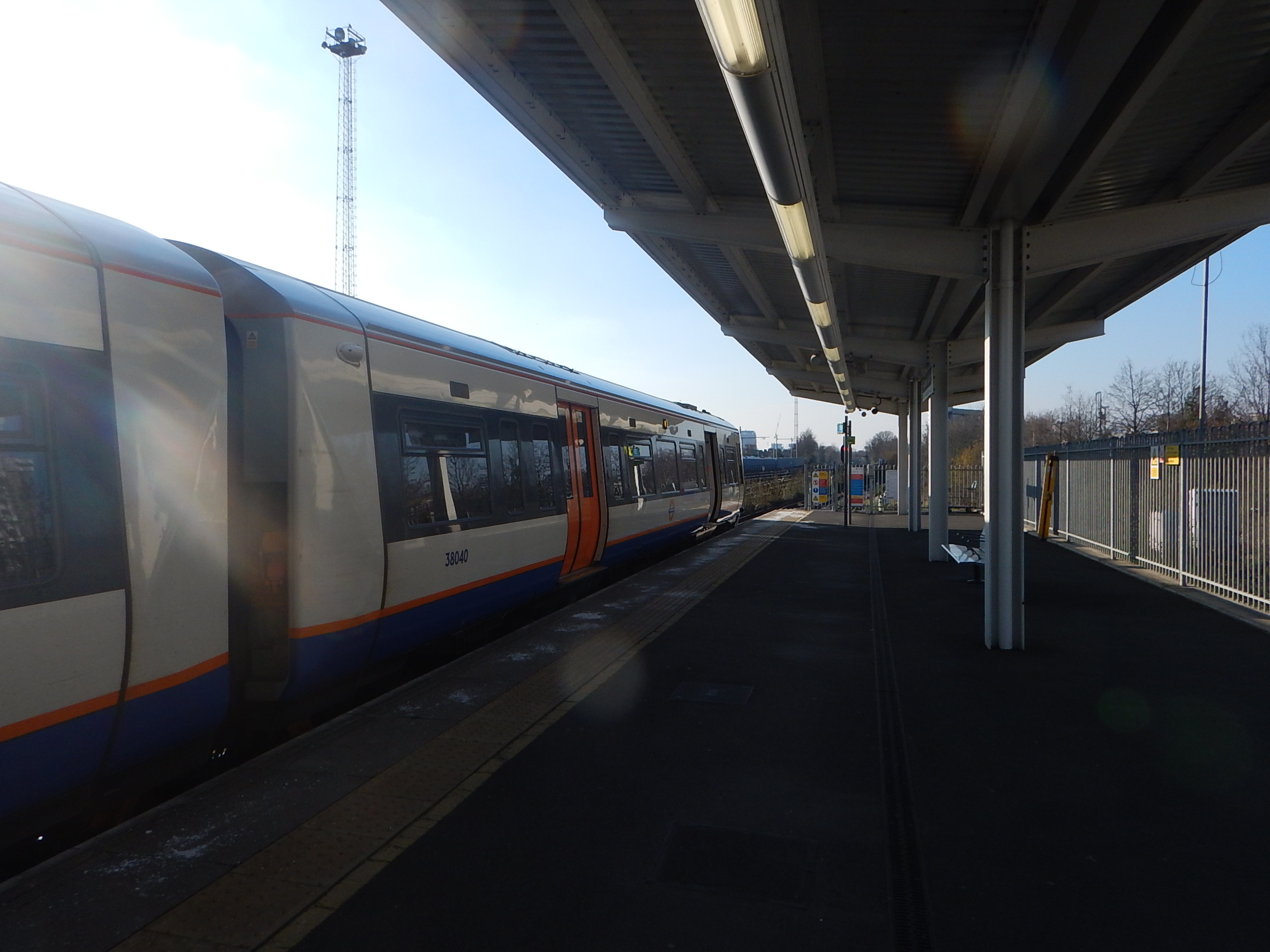
But there is space to extend the platform.
There are no problems at West Croydon station, where it seems all trains now use the bay Platform 1.

There appear to be no plans to increase services to West Croydon station from four tph, but turning the trains in the bay platform might make scheduling easier.
The Rebuilding Of Whitechapel Station
Whitechapel station is being rebuilt to provide an interchange between Crossrail, the District and Hammersmith & City Lines and the East London Line.
- The rebuilt East London Line platforms appear to be long enough for six-car trains.
- There will be two footbridges over the East London Line.
- There will be lifts and possibly escalators.
It will be a major high-capacity interchange.
The connection to Crossrail at Whitechapel station may actually take pressure from the Canada Water station.
Will passengers from the Northern section of the East London Line change at Whitechapel for Crossrail, if they are going to the West End or Canary Wharf, rather than using the Jubilee Line from Canada Water station.
As Crossrail will open up a large number of new routes, I believe, Whitechapel station will become one of the most important interchanges in East London.
East London Line Frequency Will Be Increased
This table shows Transport for London’s plas for the London Overground.
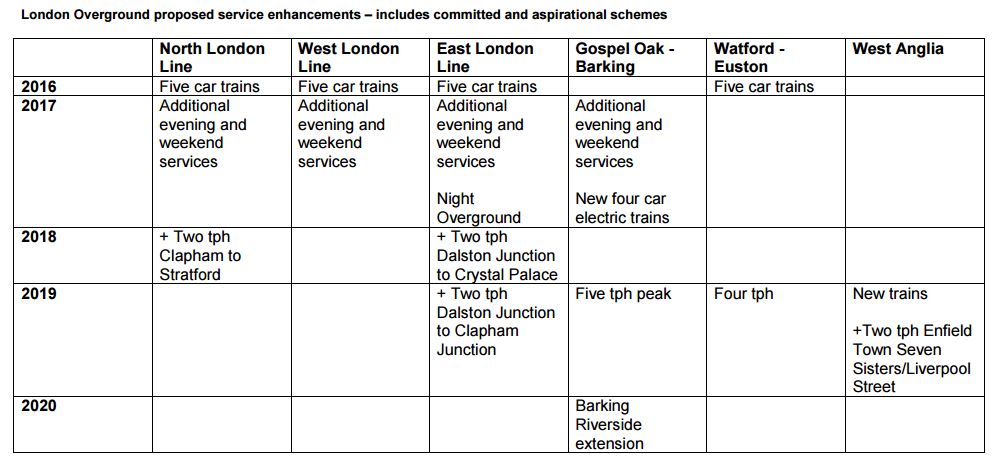
Note.
- In 2018, two extra trains per hour (tph) are planned to be run between Dalston Junction and Crystal Palace.
- In 2019, two extra tph are planned to be run between Dalston Junction and Clapham Junction.
This will mean that the frequency through the core of the East London Line will rise from 16 tph to 20 tph. This will be a train every three minutes.
It also means that the London Overground will be running ten tph between Whitechapel and Sydenham stations, with a call at New Cross Gate, which could become an important interchange.
Platforms Would Need To Be Lengthened
I think that, unless someone can come up with an innovative solution, that there will need to be some platform l;lengthening to accommodate six car trains on the East Londoin Line.
The tricky problem would be extending the platforms at Shadwell, Wapping, Rotherhithe and Canada Water stations.
Could Frequencies Be Increased?
After the increase of frequencies to Crystal Palace and Clapham Junction to four tph, there will be twenty tph, through the core of the East London Line.
With five-car trains, this would be a hundred cars per hour and with six-car trains, it would be 120 cars per hour.
Suppose another four tph, were to be squeezed through the core, then this would be 24 tph. With five-car trains, this would be 120 cars per hour.
There would be two main alternatives to increase the frequency.
- Run six tph on all the four routes.
- Add a new route, with a frequency of four tph.
Note.
- Twenty-four tph, is a frequency that is proposed for Crossrail and Thameslink using digital signalling.
- There will be one train every two and a half minutes.
- No major engineering work would be required at the stations with short platforms.
I very much feel, that increasing the frequency of trains, will be more affordable than using six-car trains.
The Problem Of Creating Six-Car Trains
Note these points about running trains through the core of the East London Line.
- Class 378 trains have an end door, so that passengers can be evacuated in the Thames Tunnel.
- Aventras don’t have end doors and would need to be updated.
- Five-car Class 378 trains can be replaced by Aventras on the North London Line and the Watford DC Line, to release more trains for the East London Line.
But the biggest problem, is probably that Bombardier don’t make Electrostars any more, and the factory ihas been turned over to Aventra production.
Conclusion
I will be very surprised if Network Rail’s original plan on six-car trains on the East London Line happens in the next few years.
A Delicious Meal For A Coeliac In A Fast-Food Restaurant
When I was diagnosed as a coeliactwenty years ago, fast-food restaurants were all gluten-full and alcohol, especially beer that I prefer was absent.
But look at these pictures of my lunch.

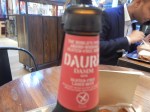
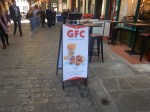
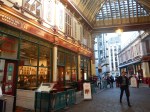
I ate in Leon in Leadenhall Market.
Gluten-free food has certainly changed for the better.
Is This The Most Important Door In My Life?
In some ways this is the most important door in my life.
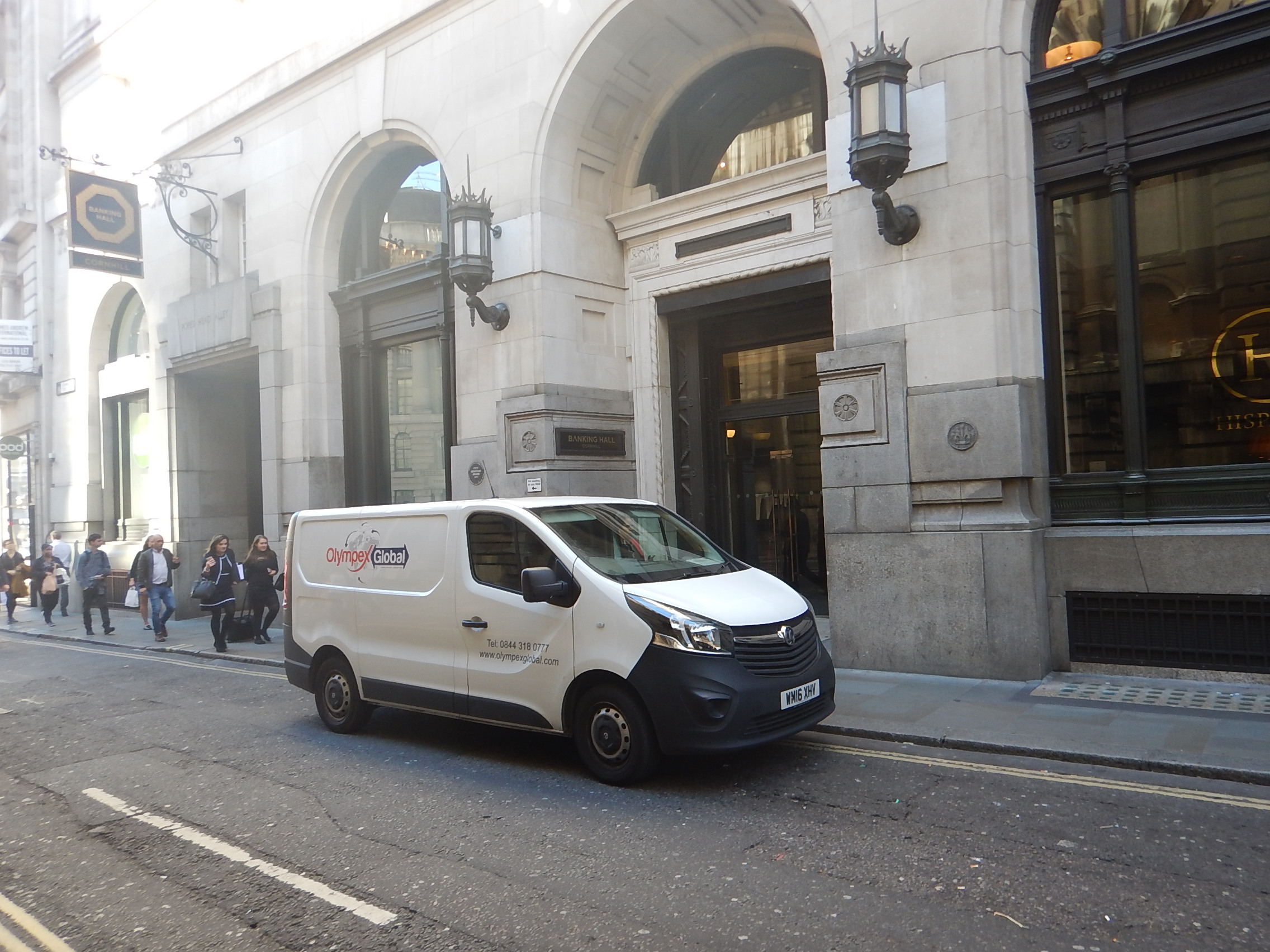
It used to lead through into the superb banking hall of Lloyds Bank.
In the early 1970s, I was doing some programming for the bank as a consultant to a company called Time Sharing Ltd.
The purpose of the software was to take the banks costs and expenses and calculate how much each of the various actions cost the Bank, by branch,area and region.
I was working for one of the Managers; Mike Spicer, who worked under the Chief Management Accountant; C. R. C. Wesson, who I later knew as Bob.
I’d never met Bob and as Mike was away, Bob phoned me up one morning and asked me to run the software, as they’d just uploaded a new batch of data.
I duly did this from home, and checked that it had run successfully after cycling to Time Sharing at Great Portland Street. They then asked, if I could take the results to the Bank on my way home to the Barbican.
I was worried that I was not dressed for visiting the Head Office of one of the UK’s big banks. I was painting our flat and wearing a pair of ice blue jeans and a short-sleeved shirt. . Luckily, I had a carrier on my bike, for the couple of inches of fan-folded green-striped print-out.
I had been told to ring the bell by the side of the door in the photograph and despite the banking hall being closed, I would be let in.
I arrived safely about six and rang the bell.
Perhaps a minute or two later, the ornate and extremely heavy door slid aside and a footman appeared, immaculately dressed in the Lloyds uniform of green tail-coat and top hat. He said. “You must be Mr. Miller!”
When I affirmed, he ushered me through and I offered him the printout. He then said, that Mr. Wesson would like to see me. I protested about my clothes, but he firmly showed me to the lift and pressed the appropriate floor. He added that Mr. Wesson would meet me at the lift.
It was the start of a very firm friendship.
Together we developed the software and produced loads of copious tables and graphs.
I learned a tremendous amount from dealing with the only innovative accountant I have ever met.
A lot of his philosophy found its way into Artemis.
One thing he told is that bankers when given a table of figures, always add them up to make sure there are no mistakes.
So I developed a technique in the Lloyds Bank software, where if money was allocated between various rows in a table, the total was always correct. If you round each row, this isn’t always the case.
I used this technique in the aggregation of resources and costs in Artemis.
Sadly, Bob died of I think cancer, a few years later!
I owe him a great debt!
Connecting The Bakerloo Line Extension At Lewisham To The North Kent And Bexleyheath Line
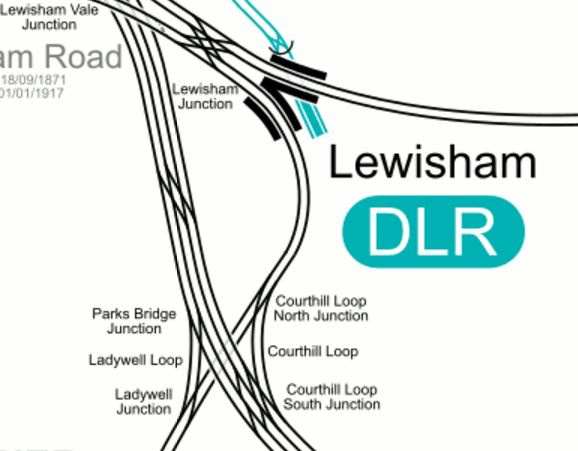
This map from carto.metro.free.fr shows the lines in the area of Lewisham station.
Note.
- The multi-track line going North-West to South-East is the South Eastern Main Line .
- The double-track line going South-West to North-East is the Hayes Line.
- The double-track going East are the North Kent & Bexleyheath Lines
- I think it is quite likely that the overrun tunnels for the Bakerloo Line Extension will be under the Hayes Line.
The North Kent & Bexleyheath platforms are as follows.
- Platform 3 is the Up platform
- Platform 4 is the Down platform
Services running on the lines include.
- Dartford to London via Platform 3
- Slade Green to London via Platform 3
- London to Dartford via Platform 4
- London to Slade Green via Platform 4
In Connecting The Bakerloo Line Extension At Lewisham To The Hayes Line, I showed that it would be reasonably easy to connect the overrun tunnels for the Bakerloo Line to the Hayes Line.
So could the Bakerloo Line Extension be connected to the North Kent and Bexleyheath Lines?
If the Lewisham Underground station was deep under the current station, it might be possible to create a junction, which would enable the Underground trains to go in the direction of both the Hayes and Bexleyheath Lines.
But having been on a train between Lewisham and Bexleyheath stations, it would appear that there is little space for the Bakerloo Line to emerge from the ground and join the surface railway.
These pictures show the viaduct and other structures that support Platforms 1 and 2 at Lewisham station.
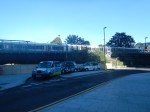
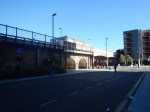
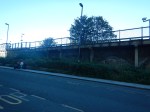
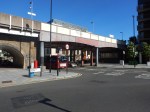
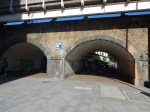
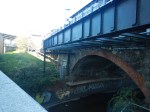
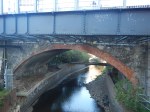
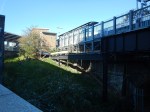
The pictures seem to confirm that linking to a line under Lewisham station would be extremely difficult and very expensive, and would require a long closure of the North Kent and Bexleyheath Lines through Lewsiham.
If this is the case, this must mean that the Hayes Line is the only place, where the Bakerloo Line can go.
A Fast Food Restaurant With Gluten-Free Beer In An Iconic Location
Leadenhall Market is one of the City of London’s iconic locations.
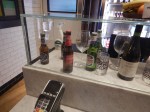
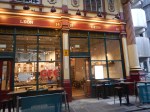
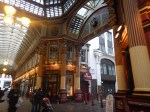
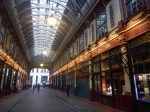
Leon have an outlet and I was surprised to find that it sells Estrella Damm Daura, a very reasonable Spanish gluten-free beer.
I’ll experiment one day, to see how a beer goes with Lean’s excellent gluten-free chicken nuggets.
The restoration of the market was done in 1990 by students, as I posted in No Budget; Employ Students.
I actually walked through at eleven o’clock on a Sunday morning, and it was good to see the City more open at that time.
In a couple of years, the City will become one of the must-see places to go in London and the best time will be the weekend.
 The Anonymous Widower