Grayling Confirms Electrification Will Form Part Of £3bn TransPennine Upgrade
The title of this post is the same as that of this article on Rail Technology Magazine.
his is a key section of the article.
But now, in a letter to the Railway Industry Association (RIA), Grayling has finally confirmed that the TransPennine upgrade will be a “rolling programme of enhancements,” including both major civil engineering projects and electrification.
He wrote: “The key to delivering improved journey times on what is a very circuitous route through the Pennines involves rebuilding and relaying most of the track bed from Manchester to York.
“We are awaiting Network Rail’s final project plan, but we have instructed them to prioritise those elements which bring the quickest passenger benefits. This will include things like straightening lengths of track to improve line speed.”
If nothing else Chris Grayling’s comments appear to have been measured ones and not a quick response to ht out to shout down the various groups for whom nothing short of full electrification is an acceptable solution.
The Routes Across The Pennines
There are three main routes across the Southern section of the Pennines. From North to South they are.
The Calder Valley Line from Manchester Victoria and Preston in the West to Leeds, Selby and York in the East via Hebden Bridge, Halifax and Bradford.
The Huddersfield Line from Manchester Airport, Piccadilly and Victoria in the West to Leeds, Hull and York in the East via Stalybridge, Huddersfield and Dewsbury.
The Hope Valley Line from Manchester Piccadilly in the West to Sheffield in the East.
Note.
- The three routes are much of a muchness with operating speeds in the region of 70-90 mph.
- There are good connections in the West with Blackpool, Chester, Liverpool and the West Coast Main Line.
- There are good connections in the East with Hull, Newcastle, York and the East Coast Main Line.
- Some connecting routes like the East and West Coast Main Lines are electrified 125 mph routes, but others like the connections to Chester, Hull and Scarborough are slower diesel routes.
- Some electrified routes like Liverpool to Manchester via Chat Moss, although they are electrified need speed improvements.
- The four major cities served by the three cross-Pennine routes; Leeds, Liverpool, Manchester and Sheffield all Have sizeable local tram or rail services.
If all these routes could be improved, they would create a core network of cross-Pennine routes.
There is also two other secondary routes that could be improved or created as diversion routes, whilst work is carried out on the main routes.
- A conductor pointed out to me, that passenger trains can go between Blackburn and Leeds via the Ribble Valley Line and Skipton with a reverse at Hellifield station.
- And then there’s the reopening of the route between Sklipton and Colne, which appears to be top of a lot of politicians and train companies lists.
Surely, these could be used to provide extra capacity if one of the Calder Valley or Huddersfield Lines was closed for improvement.
Some suggestions, I’ve seen about the Skipton to Colne Line, even say it could be used for freight.
I believe that with some measure of careful planning, the number of train paths across the Pennines can be increased, to an extend that would ease the improvement of the three main routes.
The Project Has A High Degree Of Difficulty and Complexity
The biggest upgrades of a UK railway in my time has been the electrification of these three main lines from London.
- West Coast Main Line, which was modernised and electrified by British Rail in the 1960s and 1970s.
- East Coast Main Line, which was electrified by British Rail in the 1980s.
- Great Western Main Line, which has been undergoing a tortuous and expensive upgrade and electrification for several years.
So how did Network Rail mess up on the Great Western, when British Rail completed the other lines without massive amounts of trouble?
Various reasons have been put forward, but I believe it has a lot ot do with the change of attitudes on the public’s behalf and new regulations in the intervening forty years.
As an example consider the electrification of the Grade II* Listed Digswell Viaduct in the 1970s. British Rail just did it and I don’t even know, if there were any objections.
Today, the Heritage lobby and various other pressure groups, would have had a field day. In the 1970s, most people accepted that the Government and Bitish Rail knew best.
Forty years ago, passengers accepted the disruption caused by works on the railways. Now they don’t and there are millions more regular travellers to complain.
Upgrading the main routes across the North have a lot of problems that will rear their ugly heads as the routes are upgraded.
- Many of the routes are double-track lines hemmed in by cuttings, villages and towns.
- There are large numbers of bridges, viaducts and level crossings on the routes.
- Many of the routes have speed limits around 80 mph.
- How good is the documentation of the routes?
- Sitting in the middle of the routes is the Grade I Listed Huddersfield station and the Grade II Listed Hebden Bridge station.
To see the problem of these lines take the following trains.
- Blackburn to Hebden Bridge
- Hebden Bridge to Leeds
- Leeds to Huddersfield
- Huddersfield to Manchester Airport.
Take a break at the three intermediate stations.
- Hebden Bridge station is a gem of a Victorian station.
- Leeds is a modern station overflowing with passengers.
- Huddersfield station is one of the North’s great buildings.
In addition, note the number of arched stone bridges, that are probably not high enough for electrification.
To upgrade and electrify these lines is not the simpler project of say electrifying the Midland Main Line, where much of the route is in flat open country.
Throw Every Possible Proven Technique At The TransPennine Improvement
If ever there was a project, where one method doesn’t fit all, then this is that project.
Every sub-project of the work must be done in the best way for that sub-project.
Decisions must also be taken early, about factors that will influence the overall project.
I believe that Crossrail and the new South Wales Metro were designed using an holistic approach.
- New trains have been designed in conjunction with the route.
- Electrification has been simplified by innovations, like batteries on the trains.
- Trains and platforms will fit each other.
- Station design has evolved for efficient train operation.
- Signalling will be digital to allow higher frequencies.
Because of the complexity and importance of the overall TransPennine project, only the best solutions will do!
Some will definitely not be invented here!
A few of my thoughts follow!
A Rolling Programme Of Improvements
This would be a good idea, as improvements can be done in what is the best order for all the stakeholders.
For instance there might be a bridge that will need to be replaced because it is too low and/or structurally, it is approaching the end of its life.
- But it will cause massive disruption to replace.
- On the other hand once replaced it might cut perhaps ten minutes from journeys passing through, as the track can be straightened.
Perhaps it will be better to bite the bullet and get this project done early? In the past, I feel Network Rail has often delayed tackling difficult projects. But if they did a good on-time job, it might help to convince people, that they mean what they say in future.
Improving The Tracks
I said earlier, that Chris Grayling wrote this.
The key to delivering improved journey times on what is a very circuitous route through the Pennines involves rebuilding and relaying most of the track bed from Manchester to York.
No building, no matter how humble or grand can be built without sound foundations.
What Chris Grayling said would be a good way to start the project.
It would give the following benefits.
- Operating speeds might be raised in places.
- Important loops and crossovers, that have been needed for decades could be added.
- Structures like bridges, past their useful life could be replaced.
- Some level crossings could be removed.
If it were done thoroughly, passengers would see reduced journey times.
The new rolling stock that is already on order for the route would be able to work the various TransPennine routes when they are delivered.
At the end of the work, Network Rail would also have a fully-surveyed railway in tip-top condition.
Electrification
It is my belief that to electrify a new or well-surveyed rebuilt existing railway, is much easier than electrifying an existing route.
If parts of the improved route are to be electrified, it would be like electrifying a new railway.
These points should be noted.
- Old mine workings and other Victorian horrors were found, when trying to electrify through Bolton.
- On the Gospel Oak to Barking Line in North London, they found an undocumented sewer.
- To sort out the electrification between Preston and Blackpool, Network Rail shut the route and rebuilt the railway before electrifying it.
A similar approach to Preston and Blackpool might help on sections of the main TransPennine routes.
It may be a more expensive process with all the surveying and rebuilding, but it would appear to a more safety-first approach.
The Stone Bridges And Discontinuous Electrification
I’d be very interested to know how many of those bridges could be handled using discontinuous electrification.
The wires go through the bridge in the normal way, but the section under the bridge that possibly could be a safety hazard, is earthed so that there is a dead section of wire.
The section is insulated from the 25 KVAC wires on either side by something like a ceramic rod, so that the trains’ pantographs can ride through easily under the bridge.
The disadvantage is the trains need batteries for power, where there is none coming from the overhead wire.
The technique has already been earmarked for the electrification of the South Wales Metro.
Tunnel Electrification
Crossrail and the Severn Tunnel do not use conventional electrification. A rail is fixed in the roof and the pantograph runs on the rail.
The TransPennine routes have numerous tunnels and I believe that many could be electrified in this way.
It might even be possible to automate the process, as it was in the Crossrail tunnels. But they were modern concrete tunnels, not Victorian ones with uneven surfaces.
On the other hand there are a lot of old tunnels in the UK, that need to be electrified.
Viaduct Electrification
This picture shows Bank Top Viaduct in Burnley
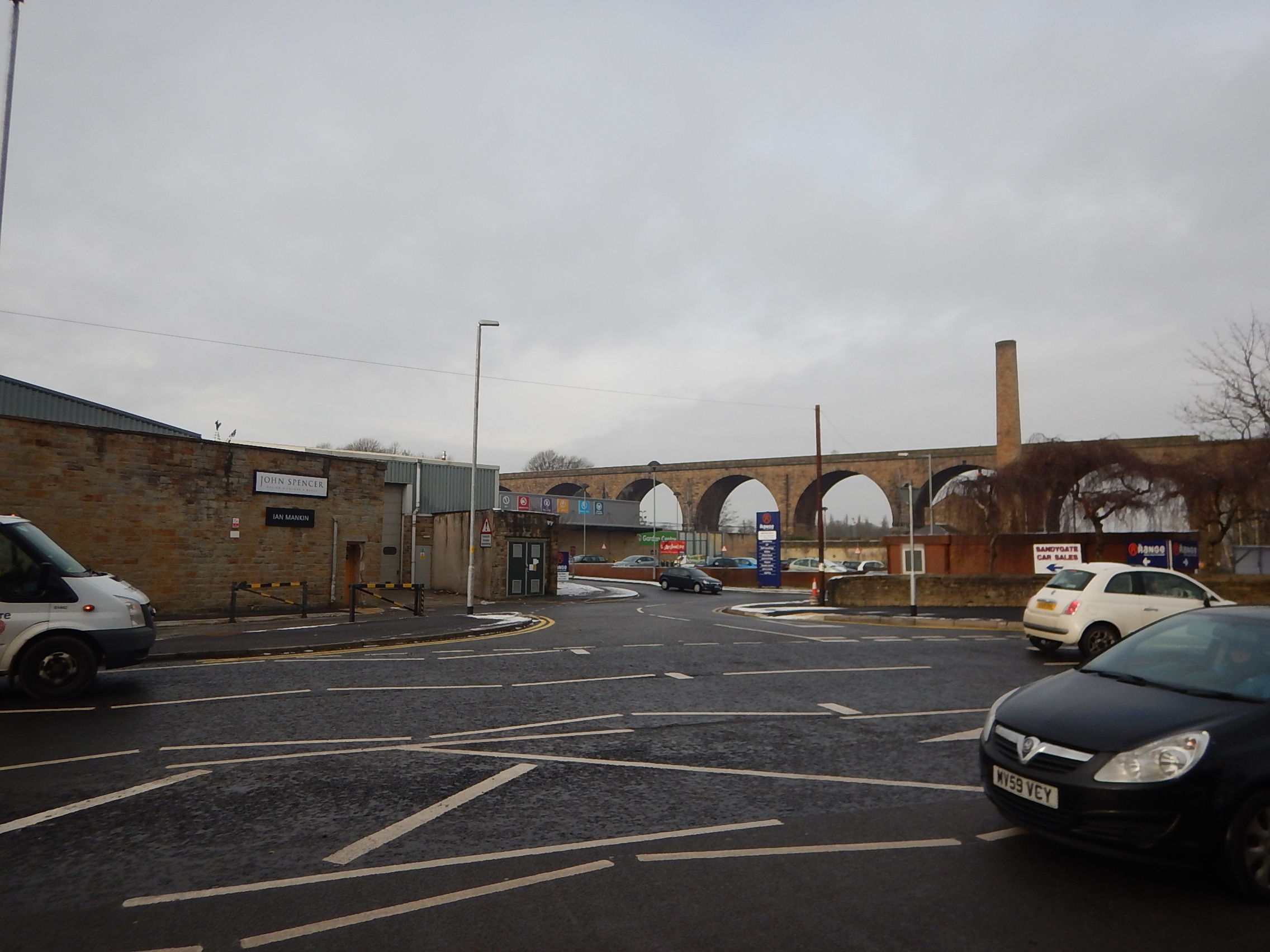
I can’t understand why, viaducts like these aren’t electrified using a third-rail.
- Third rail electrification works for most applications as well as overhead.
- Working on overhead electrification on a viaduct, is not a job for some.
- There is no visual intrusion with third rail.
- The power could only be switched on, when a train is connected.
On the other hand dual-voltage trains, that could switch quickly between systems at line speed would be needed.
Station Electrification
I also think that third-rail electrification can be used in stations where overhead electrification would be difficult or intrusive.
Battery,Bi-Mode And Hydrogen Trains
Train manufacturers are not stupid and want to increase their profits.
- Alstom are developing fleets of hydrogen trains.
- Bombardier are developing 125 mph bi-mode trains with batteries.
- CAF are developing battery and bi-mode trains.
- Stadler are developing trains with batteries and/or diesel power.
I suspect all these companies and others, see more trains can be sold, if innovative trains can run without the necessity of full electrification.
I also suspect many rail operators would prefer to spend money on shiny new trains, than on disruptive and ugly electrification.
Remember too, that batteries will improve.
Conclusion
I can see several techniques that could be applied to make electrification of some parts of the TransPennine routes.
Plans Revealed For £10bn High-Speed Railway To Connect Britain’s Busiest Airports, HS1 and HS2
The title of this post is the same as this article on Global Rail News.
This is the first two paragraphs.
Developers are submitting plans for a new high-speed line to the UK’s Department for Transport (DfT) in response to a call for market-led proposals.
Named ‘HS4Air’, the proposed £10 billion railway will connect HS1 at Ashford to HS2 North West of London with stops at Heathrow and Gatwick airports and a spur connection to the Great Western main line.
This map from Expedition Engineering shows the route.

To minimise environmental disruption, the following should be noted.
- There is a North-South tunnel under Heathrow Airport.
- HS4Air follows the M25 to the South-West of London.
- Several miles of the route between Heathrow and Gatwick is in tunnel to the West of Horsham.
- There is a West-East tunnel under Gatwick Airport.
- The Ashford to Tonbridge Line would become part of HS4Air.
There will also be stations at Ashford, Tonbridge, Gatwick and Heathrow.
This further diagram from Expedition Engineering shows the various possible routes.
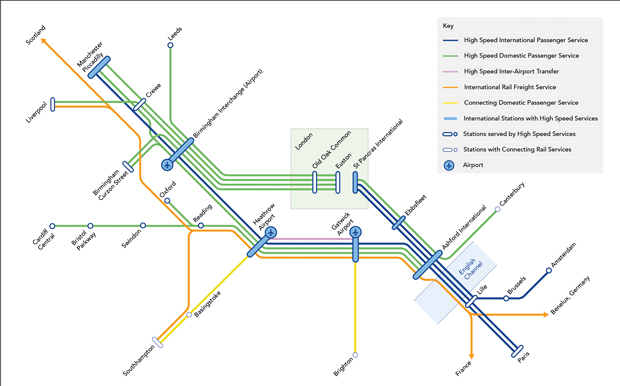
Note the following about HS4Air.
- Four major airports; Gatwick, Heathrow, Birmingham and Manchester, will be connected to the Channel Tunnel.
- Wikipedia suggests, that the line could be extended to a reopened Manston Airport.
- A Paris to Manchester passenger service via Gatwick, Heathrow and Birmingham, is proposed.
- High-speed connecting services from Cardiff, Oxford and Manchester to Ashford are proposed.
- HS2’s major interchanges of Birmingham International and Crewe, are served.
- Freight routes from Liverpool and Southampton to the Channel Tunnel will be enabled.
It looks a good basis to connect the rest of the UK to the services through the Channel Tunnel.
The article also gives some sample journey times.
- Ashford-Gatwick: 25 minutes
- Manchester-Heathrow: 1 hour 10 mins
- Heathrow-Gatwick: 15 minutes;
- Cardiff-Heathrow: 1 hour 40 mins
- Birmingham-Paris: 3 hours
- Manchester-Paris: 3 hours 40 minutes (My Estimate)
Intriguingly, the Manchester-Paris time, is the same as Eurostar’s current time between London and Amsterdam.
Conclusion
The plan seems to be well-thought out and it gives a good increase in connectivity from Wales, the West Country and the Midlands and North of England to Heathrow, Gatwick and the Channel Tunnel.
But I can see a few problems.
- Will the residents of the North Downs accept a high-speed railway through their area?
- If freight routes from Liverpool and Southampton to the Channel Tunnel are established, will residents object to masses of noisy freight trains?
- Will there be pressure for more tunnels?
On the other hand Expedition Engineering are saying that needed extensions to the UK’s electricity grid can be laid underground along the same route.
ERTMS Rollout Between London-Paris-Brussels Agreed
The title of this post, is the same as that of this article on Global Rail News.
This is the first paragraph.
An agreement has been reached by the infrastructure managers of the high-speed railway between London, Paris and Brussels – one of Europe’s busiest routes – to coordinate the rollout of European Rail Traffic Management System (ERTMS).
Rollout of ERTMS on these important routes must surely be a good idea, if it can enable extra and faster services on these busy routes.
Class 230 Trains On The Conwy Valley Line
I suspect to some people, the use of Class 230 trains, which are rebuilt London Underground D78 Stock on the Conwy Valley Line is a challenge to far.
Class 230 Trains
I wrote about these trains in First D-Train With Transport for Wales In March 2019, where I stated that the train formation will be.
- DM – Driving Motor with battery
- T – Trailer with four generators
- DM – Driving Motor with battery
As the trains will have regenerative braking, this will be used to help charge the batteries.
Note that batteries and traction motors are only in the Driving Motor cars.
The Conwy Valley Line
The route of the single-track Conwy Valley Line can be summsarised as follows.
- From Llandudno to Llanrwst it is a fairly level route alongside the River Conwy.
- From Llanwrst the line climbs to a 240 metre summit in the Ffestiniog tunnel, with gradients as steep as 1-in-47.
- From the summit, the train descends into Blaenau Ffestiniog with gradients as steep as 1-in-43.
It has some of the characteristics of a roller-coaster.
Class 230 Trains On The Conwy Valley Line
Provided the trains can handle the gradients either side of the summit, they can just roll down the other side. During the descent, the regenerative braking will charge the batteries.
This will have the following effects.
- Trains on the downhill sections will not need to use their diesel engines.
- Trains waiting in Blaenau Ffestiniog station, won’t need to use their diesel engines until they start back to Llandudno.
- I suspect some Northbound services, trains would be able to reach Llandudno without using their diesel engines.
Gravity is being used as an energy store to create an efficient railway!
Energy Of A Class 230 Train On The Conwy Valley Line
I am curious to know how much energy is needed to get a fully-loaded train up the hill from Llandudno to Blaenau Ffestiniog.
Consider the following.
- A D78 Driving Motor car weighs 27.5 tonnes
- A D78 Trailer car weighs 19 tonnes
- Wikipedia says “For the Country layout, each D-train unit is to be a three-car formation, which would accommodate 163 seats along with a total capacity of 291.”
- I assume each passenger weighs 90 Kg with baggage, buggies and bicycles.
- I think it is fair to say that each generator and battery weighs about a tonne.
- The summit of the line in the Ffestiniog Tunnel is 240 metres above sea level.
- I will assume that the coastal end of the route is at sea level.
This means that the empty train weighs eighty tonnes and a full load of passengers weighs twenty-six tonnes.
Using Omni’s Potential Energy Calculator, this gives a potential energy for the train of seventy kWh, at the summit with a full load of passengers.
This figure means that if two 55 kWh batteries from a New Routemaster bus were used on the train and they were fully-charged, then they could power the train to the summit and on to Blaenau Ffestiniog.
It should be noted that Vivarail talk about using 106 kWh battery rafts on the Class 230 train.
A Few Questions
I have these questions.
Are These Class 230 Trains Serial Hybrids?
I ask this question, as it could be key to making the operation of the trains more efficient on this line.
The train would always be powered directly from the batteries.
- The diesel engines would cut in to charge the batteries, when the battery charge level got to a certain low level.
- The diesel engines would cut out, when the battery charge level, got to a certain high level.
As the train has four generator sets, an appropriate number could be used as required.
A well-trained driver or an intelligent control system could make these trains very efficient.
In this article on RAIL Magazine, this is stated.
Shooter told RAIL that the trains will save around 20% on fuel consumption.
Adrian Shooter is Chairman of Vivarail, who are creating the Class 230 trains.
Possible Electrification Of The Ffestiniog Tunnel
The Class 230 trains are created from London Underground D78 Stock and I suspect it would be possible for the Class 230 trains to be powered by third-rail electrification.
The Ffestiniog Tunnel is the summit of the Conwy Valley Line.
- It is a single-track.
- It is 3.5 kilometres long.
- One end of the tunnel is close to Blaenau Ffestiniog.
Would it be a sensible idea to electrify the tunnel either fully or partially, to top up the batteries?
Consider.
- The third-rail electrification would be no intrusion in the landscape.
- The electrification could only be switched on when a train is present.
- I don’t think supplying power would be difficult.
- There could be less need to run on diesel.
The electrification could even be extended to wards Blaenau Ffestiniog station, so that trains leaving the station could have electrical power to climb to the summit.
Will The Class 230 Trains Attract Passengers?
I think that the Class 230 trains have several passenger-friendly features.
- All new interiors.
- Ten percent more seats and almost twice the capacity.
- Lots of space for bicycles
- Large windows
- Wi-fi and power sockets
- Accessible toilet
Hopefully, there will also be step-free access between train and platform.
This package of improvements should encourage more to travel.
I also suspect, that having a decent train with a novelty appeal that connects to the Ffestiniog Railway will tap a new market of travellers.
Conclusion
I have no doubt, that Class 230 trains will be able to provide a successful service on the Conwy Valley Line.
Between Liverpool Lime Street And Chester Stations
Currently, using Merseyrail‘s Wirral Line, a journey between Liverpool Lime Street and Chester stations takes around forty-five minutes.
This time will improve by several minutes, when the new Class 777 trains come into service in a couple of years.
In Slow Trains Outside The South-East, I calculated that this time could be as low as 35 minutes.
Using The Halton Curve
But how fast could a train go between Liverpool Lime Street and Chester stations, using the Halton Curve, when that comes into use in December 2018?
Consider.
- West Midlands Trains take nineteen minutes to go between Liverpool Lime Street and Runcorn stations with a stop at Liverpool South Parkway station.
- The current parliamentary train takes twenty-one minutes between Chester and Runcorn stations using the Halton Curve.
- Transport for Wales will run the route with their new 100 mph CAF trains.
It should be possible for the direct trains to do the trip between Liverpool Lime Street and Chester in under forty minutes, with stops at Liverpool South Parkway, Runcorn, Frodsham and Helsby stations.
As to the frequency of the service between Liverpool Lime Street and Chester stations via the Halton Curve, under Improvements in the Wikipedia entry for KeolisAmey Wales, these services are listed.
- Introduction of a new hourly Liverpool to Chester service from December 2018
- Introduction of a new hourly Liverpool to Llandudno and Shrewsbury service from December 2022
- Introduction of a new two-hourly Liverpool to Cardiff service from December 2022
So it looks like there will be at least a train every half-hour between Liverpool Lime Street and Chester.
Liverpool Airport
One advantage of using the Halton Curve, is that as trains can call at Liverpool South Parkway station, it would be possible to provide a direct link to Liverpool Airport.
Merseyrail are looking into the possibility of using tram-trains on this route.
Direct Services Between Liverpool Lime Street And North Wales
Consider.
- Virgin Trains take forty-eight minutes between Chester and Llandudno Junction stations.
- Virgin Trains take ninety-nine minutes between Chester and Holyhead stations.
- Currently, Liverpool to Llandudno takes between 110-120 minutes with a change at Chester station.
I wouldn’t be surprised to see timings of direct trains between Llandudno and Liverpool Lime Street stations in the order of an hour-and-a half.
Electrification
Electrification is the big question, hanging over railways in this area.
Merseyrail already runs electrified services to Chester on the Wirral Line and the following routes have been earmarked for electrification.
- Chester to Crewe
- Chester to Manchester
If the latter were to be electrified, then only the relatively short Halton Curve would need to be electrified to create another all-electric route between Liverpool and Chester.
Bi-Mode Trains For KeolisAmey Wales
If Chester station, were to be electrified, this will have possible consequences for KeolisAmey Wales, as all their services Eastwards from Chester to Birmingham, Liverpool and Manchester would be running on fully-electrified routes.
So will KeolisAmey Wales order some of new CAF trains with a bi-mode capability.
This capability could also be useful in South Wales.
A Day Out From Liverpool
I was staying at the Premier Inn close to Moorfields station in Liverpool and decided to go to Blaenau Ffestiniog for the day, with hopefully, a ride from there on the Ffestiniog Railway to Porthmadog on the coast.
The following sections describe the route I took.
Moorfields To Chester
After buying a Day Return from Liverpool Stations to Blaunau Ffestiniog with my Senior Railcard for £20.40, I took one of Merseyrail‘s four trains per hour (tph) from Moorfields station, that goes direct to Chester station.

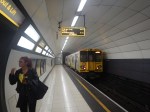
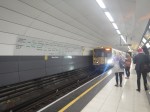
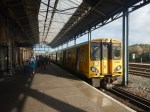
The train was one of Merseyrail’s Class 508 trains, which are nearly forty years old. Although, they were refurbished a few years ago and get much better TLC. I’ve yet to see a Merseyrail train, that has suffered from spray painters!
It always surprises me, how many people I’ve met, who’ve been for a weekend to Liverpool and haven’t used the Merseyrail system, that has four stations in the City Centre and connects to attractions in the North, South and on the Wirral.
Over the next few years, it will be getting larger and better.
- New Class 777 trains will replace the current ones.
- The new trains will have a battery capability to extend routes.
- The network will be expanded to Skelmerdale and possibly Preston and Wrexham.
- A connection to Liverpool Airport is a possibility.
- New stations will be added.
It should also be noted, that after the extensive works at the main Liverpool Lime Street station, that extra direct main line services will be introduced.
- Chester, Lladudno and Shrewsbury via the Halton Curve.
- Edinburgh and Glasgow via the West Coast Main Line.
If I was going between Liverpool and Llandudno from next year, I will have two routes.
Chester Station
I think it is truthful to say that Chester station needs improvement.
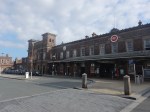

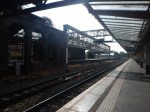
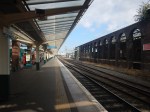
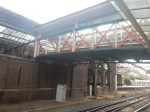
According to Transport for Wales, improvement is coming by 2028.
It certainly needs it!
- Chester is one of England’s historic cities.
- Many residents of Chester commute to Liverpool and Manchester.
- Chester station is a main railway interchange between North Wales and Birmingham, Liverpool, London and Manchester.
- The station doesn’t have enough staff or a decent passenger information system.
As the station is managed from Cardiff, does it suffer from being out of sight and out of mind?
Chester To Llandudno Junction
From Chester to Llandudno Junction station took about an hour in a Class 175 train, along the North Wales Coast Line.
The scenery is mixed as these pictures show.

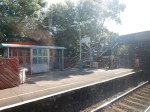
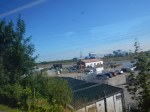
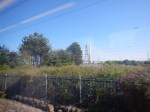



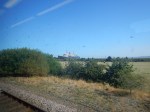
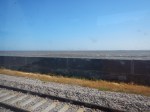


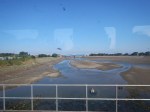


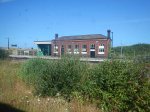
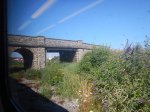
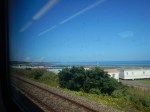
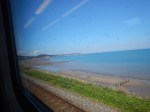
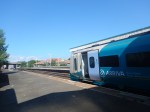
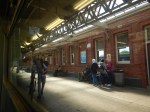
The line has an operating speed of ninety mph, but the train didn’t seem to travel at much over seventy.
The signalling is being improved and it strikes me, that the section of the line to the East of Llandudno could become a route, where Virgin’s Class 221 trains and the new Welsh diesel multiple units to be built in Newport, could really crack on and improve timings.
Up The Conwy Valley Line
Blaenau Ffestiniog has an altitude of 215 metres, and Llandudno Junction has an altitude of perhaps less than ten metres.
The Class 150 train was fairly well loaded, but it managed the climb on the Conwy Valley Line easily.



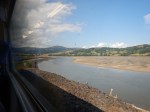
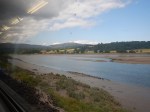

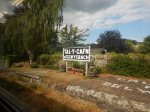

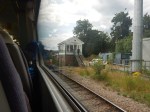
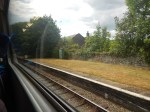
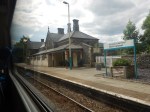
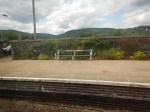

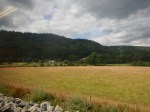
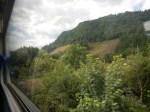
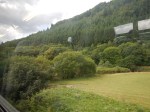

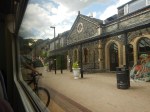
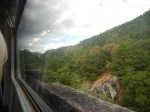

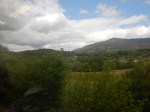
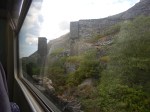

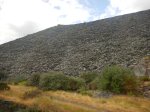
.As you can see the single-track route starts alongside the estuary of the River Conwy, then continues up to the summit in the 3.5 km long Ffestiniog Tunnel. The summit is 240 metres, so the line descends into Blaenau Ffestiniog station.
Transport for Wales intend to run Class 230 trains on this line.
I wrote about this in Class 230 Trains On The Conwy Valley Line.
Conclusion
The trip with its three changes took around three hours, but this time will get a bit shorter, once direct trains between Liverpool and Llandudno Junction stations via the Halton Curve will be faster and there will be no need to change trains at Chester station.
I looked at the effects of the Halton Curve in Between Liverpool Lime Street And Chester Stations.
I came to this conclusion on timings.
I wouldn’t be surprised to see timings of direct trains between Llandudno and Liverpool Lime Street stations in the order of an hour-and-a half.
I suspect the direct train and the improved journey time will attract more passengers to the route.
I
Blaenau Ffestiniog Station
Blaenau Ffestiniog station is the interchange between the Conwy Valley Line and the Ffestiniog Railway.
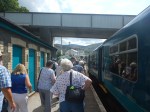
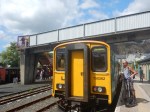
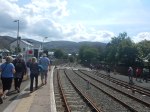
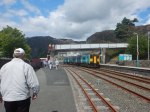
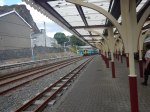
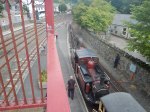
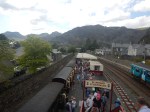
Note that as my train arrived from Llandudno, there was a Ffestiniog Railway train to take travellers to Porthmadog.
This is said in the Wikipedia entry for KeolisAmey Wales under Improvements.
Invest to co-fund new station buildings at Blaenau Ffestiniog
Consider.
- The Conwy Valley Line is scheduled to be run by new Class 230 trains from mid-2019.
- According to Wikipedia, there have been steam workings up the Conwy Valley Line.
- Blaenau Ffestiniog station has a run-around loop to put a locomotive on the other end of a train.
- The Halton Curve will open in December 2018, allowing direct and faster trains between Liverpool and Llandudno.
It would appear Transport for Wales are pulling out all the stops to bring tourists and employment to Blaenau Ffestiniog.
Now That’s What I Call A Footbridge!
This article on Global Rail News is entitled Network Rail Launches Footbridge Design Competition.
This is the first two paragraphs.
A competition for new footbridge design ideas has been launched by Network Rail and the Royal Institute of British Architects (RIBA).
Entrants are asked to design fully accessible footbridges that can be used across Britain’s rail network and that further improve the legacy of rail pioneers.
Hopefully, something better than some of those on Britain’s rail network will be designed.
I was in Wales last week on the Ffestiniog Railway and saw this bridge.
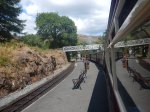
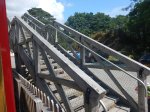


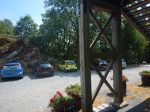
Surely, someone can come up with something like this, that meets all the regulations and looks a lot better, than Network Rail’s standard offering in green-painted steel.
My father used to build structures like this with timber and bolts to create extra floors and storage in his print works in Wood Green. From about the age of seven, I was his little helper.
Perhaps, thirty years later, I had a barn built at a house I owned. The architect had the building designed in a similar manner.
Someone, ought to enter Network Rail’s competition with a similar design.
Will Greater Anglia Fit Batteries To Their Class 755 Trains?
Greater Anglia have ordered the following Class 755 trains.
- 14 x three-car trains with two diesel engines in the power-pack
- 24 x four-car trains with four diesel engines in the power-pack
The power-pack would appear to have four slots, each of which could take.
- A V8 16-litre Deutz diesel that can produce 478 kW and weighs 1.3 tonnes.
- A battery of about 120 kWh, which would probably weigh about 1.2 tonnes.
I estimated the battery size , by using typical battery energy densities for a battery of similar weight to the diesel engine.
The KeolisAmey Wales Tri-Mode Flirts
The Tri-Mode Flirts ordered by KeolisAmey Wales can use either electric, diesel or battery power.
From the pictures it appears that these trains have the same basic structure as the Class 755 trains.
In the July 2018 Edition of Modern Railways, there is an article entitled KeolisAmey Wins Welsh Franchise.
This is said about the Stadler Tri-Mode Flirts on the South Wales Metro.
The units will be able to run for 40 miles between charging, thanks to their three large batteries.
So does this mean that these Flirts have just one Deutz diesel engine of 478 kW and three batteries in the four slots of the power-pack?
These trains will run between Penarth and Rhymney stations.
- I estimate about half the route will be electrified.
- Penarth to the electrification at Cardiff is under ten miles.
- The trains will work on battery power from Ystrad Mynach to Rhymney, which is ten miles up the hill.
- Coming down from Rhymney, Newton’s friend will give assistance.
This seems a challenging task, but it must be possible, even after an important rugby match in Cardiff.
I think it is true to say, that these Tri-Mode Flirts are no wimps.
Greater Anglia’s Flirts And Batteries
Four-Car Flirts
The four-car Class 755 trains don’t have a spare slot, as they have four engines.
I also suspect the four-car trains will tend to serve the longer routes or those with more passengers.
- Colchester and Peterborough
- Stansted Airport and Norwich
- Ipswich and Cambridge
- Lowestoft and London via Ipswich
- Norwich and Lowestoft
- Norwich and Great Yarmouth
Consider.
- These routes are partially-electrified.
- These routes don’t have challenging terrain.
- Except for Lowestoft and Great Yarmouth, all end stations are electrified.
- A short length of electrification could be installed at Lowestoft and Great Yarmouth stations.
I wonder if one of the diesel engines were to be replaced with a battery, by capturing and reusing the regenerative braking energy, this could improve the economics of running the services.
In Tri-Mode Stadler Flirts, I estimated the following.
- A four-car Tri-Mode Flirt will weigh around 150 tonnes.
- I will assume 250 passengers at 90 Kg. each with all their baggage, which gives a weight of 22.5 tonnes.
- This gives a total rain weight of 172.5 tonnes.
- The train is running at 100 mph.
This gives a kinetic energy of 48 kWh.
This would mean that a single 120 kWh battery could easily handle the regenerative braking and use the energy for the following purposes.
- Hotel power, which includes the power to run passenger and train systems.
- Traction power on sections, where low noise is important.
- Traction power, if there is overhead electrification failure.
- Short movements in depots and sidings.
I think that once Stadler have got their Tri-Mode Flirts working, that replacing one diesel with a battery in four-car Class 755 trains may be a sensible decision.
Lowestoft And London Via Ipswich
When the Class 755 trains are running services, there will be four direct trains per day from Lowestoft to London via Ipswich.
I will assume the following.
- There will also be four trains in both directions.
- An hourly service operates between Lowestoft and Ipswich
- Lowestoft to Ipswich will take the current 90 minutes.
- Greater Anglia will meet their promise of Ipswich to London in 60 minutes.
- The first train currently leaves Lowestoft just after five in the morning.
- The last train currently arrives at Lowestoft just before midnight.
For one train to do four round trips between five in the morning and midnight would need a round trip of around four hours and thirty minutes, which would mean that a time of around seventy minutes is needed between Ipswich and Lowestoft.
That is extraordinarily challenging.
But I think that could be Greater Anglia’s ultimate aim.
- There must be savings of a minute or two at each of the nine stations between Ipswich and Lowestoft.
- Some trains could be limited stop.
- The current maximum speed on the East Suffolk Line is just 55 mph and could probably be increased in places.
- The 100 mph Class 755 trains are quicker and probably accelerate and stop faster, than the current 75 mph Class 150 trains.
- Trains turn at Liverpool Street in under five minutes.
If it can be done, then the four trains per day between Lowestoft and London can be run with just one train.
Would batteries help the achievement of this aim?
They might do! But they would certainly improve the electrical efficiency and cut the amount of running of the diesel engines.
Three-Car Flirts
The three-car Class 755 trains have two spare slots, as they have two engines.
I would expect that the three-car trains would be used on the shorter routes and those with less passengers.
- Colchester Town and Sudbury
- Ipswich and Felixstowe
- Norwich and Sheringham via Cromer
To my mind the first two routes stand out for battery operation.
Ipswich and Felixstowe
Consider the following about the service between Ipswich and Felixstowe stations.
- The Felixstowe Branch is just over twelve miles long.
- There is one train per hour (tph) each way.
- It takes the current trains abut 26-29 minutes to do the journey.
- Currently, one train can provide the service.
In The New Trimley Freight Loop And Trimley Station, I talk about how a 1.4 km loop is being built to allow more freight trains to use the branch.
I also feel that there could be a second path in each hour for passenger trains, which would help reliability
But it also might make it possible to run a two tph service with two trains.
I also think, that if it was felt worthwhile, that this route could be run on battery power, charging at Ipswich and possibly with a short length of electrification in Felixstowe.
The advantages would be
- Diesel-free running.
- Less noise.
- The environmentally friendly trains may attract new passengers.
As with the trains on the South Wales Metro, they’d probably have one diesel engine and three large batteries.
Knowing the bicycle-friendly contours of the centre of Ipswich and Felixstowe as I do, the trains would probably need adequate capacity for bikes.
Colchester Town And Sudbury
I am sure that this new route between Colchester Town and Sudbury stations has been designed for a battery train.
Consider.
- A direct run between Colchester Town and Sudbury would probably take 45 minutes.
- Over half the route would be electrified.
- The Gainsborough Line is just eleven miles long.
- A silent battery train would be ideal for the rural route.
A Class 755 train could leave the Great Eastern Main Line at Marks Tey with full batteries, go both ways on the branch and then return to Colchester Town using the electrification.
Norwich And Sheringham Via Cromer
At thirty miles, the Bittern Line is probably too long for running totally on batteries.
But one battery handling regenerative braking would make the train more environmentally friendly.
Conclusion
Batteries would make the Class 755 trains more economical and environmentally-friendly to run, but with the exception of the Felixstowe and Sudbury branches, I suspect that the routes are too long for pure battery power.
I do believe that Greater Anglia knew about Stadler’s concept for fitting batteries on Class 755 trains before they ordered the trains.
As this opens up possibilities for the future and the ability to be more environmentally-friendly and fiscally efficient, I suspect it was a factor in their decision to buy the trains.
.
Gareth Southgate Station
I just had to visit Southgate station and take a few pictures.


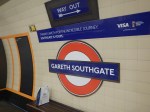

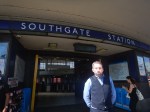
Although the signage will come down tonight, I do think there should be perhaps a picture display at the station.
It would appear that the signage has been funded by Visa, who are a World Cup sponsor.
Transport for London seem willing to change the roundels on stations for various events.
So will we see others in future?
 The Anonymous Widower