Thoughts On Alstom At Derby
In the 1970s, I worked at ICI Plastics in Welwyn Garden City in a section called Computer Techniques.
We had a unique mandate from the Divisional Board, that allowed us to stick our nose into anybody’s business.
We certainly weren’t short of computing power, as in addition to the Division’s IBM 360 and dial-up services to GEISco, we had one of the handful of PACE 231R analogue computers in the UK.

Note.
- These machines didn’t use many semiconductors.
- These beasts could solve up to a hundred simultaneous differential equations and display the answers as graphs on the printers.
- Other UK companies and institutions with a PACE 231 R, included BMC, British Rail Research and Cambridge University.
- Two were linked together and these did the calculations for the Apollo flights.
- Their finest hour would surely have been to use their flexibility and power to bring home the stricken Apollo 13.
I got an interesting introduction to the industrial world in my three years at Welwyn.
One of our problems, was recruiting enough specialist engineers and programming staff.
So in the end, at one of our Monday morning meetings, we wrote our own advert for the Sunday Times.
We got all the staff we needed, but they weren’t the sort of recruits, you’d normally expect in the 1970s. Two were Indian and two were American, but all were recent immigrants. But they were certainly good enough to solve our problems.
I don’t think the Personnel Department were amused at our independent recruitment exercise.
I sometimes wonder if Bombardier (now Alstom) in Derby has a similar recruitment problem.
I am a Control Engineer and all these hybrid systems, that will power the transport of the future, be they trains, planes or automobiles, need lots of engineers with similar skills to myself and those of computer programmers. So do local companies; Rolls-Royce, JCB and Toyota, who probably have their own skill shortages in these areas, nick the best from Alstom.
It should be noted that in the railway press, it has been said that the Aventras from Derby were late because of software problems.
Is Alstom’s Proposal For A Service Between London Euston And Wrexham Part Of A Cunning Plan?
Alstom have built and introduced into service between Buxtehude and Cuxhaven in Germany, the Coradia iLint hydrogen-powered train. The prototype has performed demonstrations in Austria, Canada, The Netherlands and Saudi Arabia.
This picture shows a Coradia iLint in Germany.

In the UK, Alstom had a plan to convert redundant Class 321 trains into a fleet of hydrogen-powered trains called Breeze, which I wrote about in Hydrogen Trains Ready To Steam Ahead, in January 2019.
This visualisation is from Alstom.
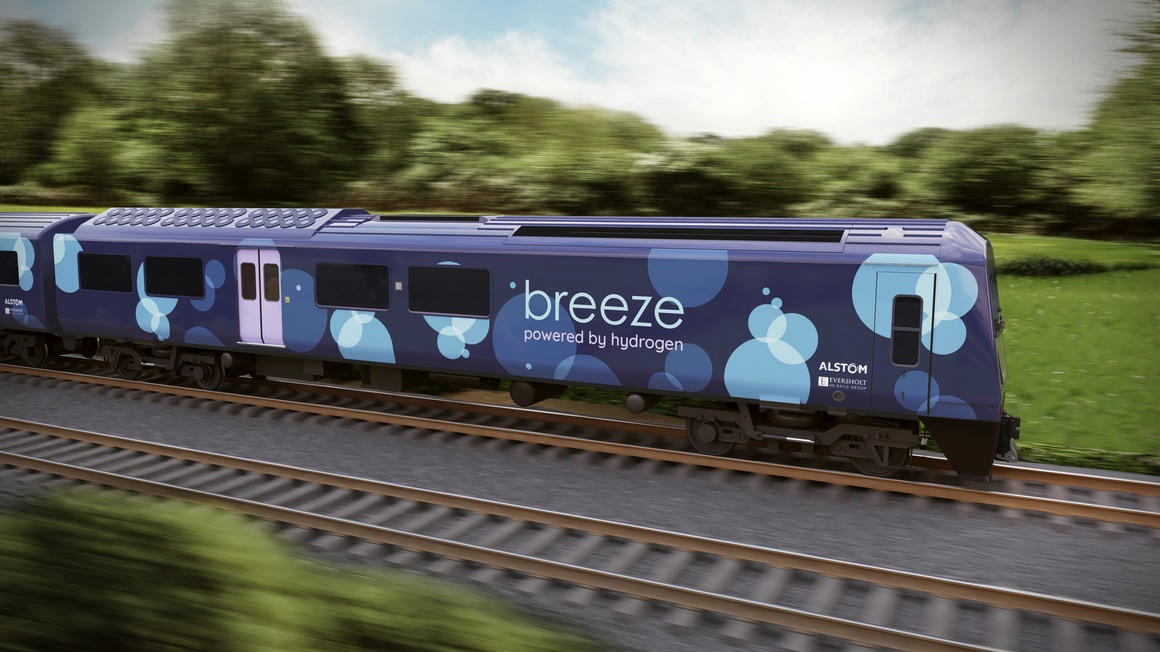
I suspect it didn’t appeal to train companies, as no orders appear to have been received.
But you can’t criticise Alstom for not trying, as in November 2021, they signed an agreement with Eversholt Rail Group to develop a hydrogen-powered Aventra, which I wrote about in Alstom And Eversholt Rail Sign An Agreement For The UK’s First Ever Brand-New Hydrogen Train Fleet.
This visualisation is from Alstom.
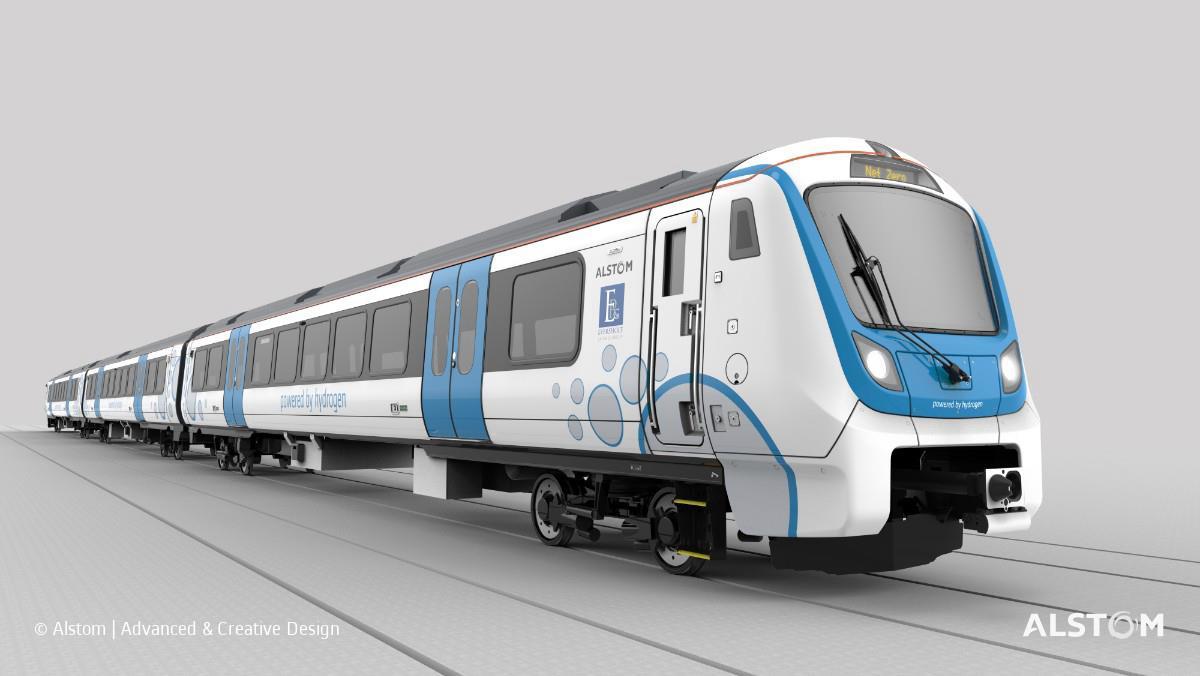
Visually, it looks just like any other Aventra and much better than the previous Breeze design.
In March 2018, I wrote Bombardier Bi-Mode Aventra To Feature Battery Power, which was based on this article in Rail Magazine.
These are a few points from the article.
- Development has already started.
- Battery power could be used for Last-Mile applications.
- The bi-mode would have a maximum speed of 125 mph under both electric and diesel power.
- The trains will be built at Derby.
- Bombardier’s spokesman said that the ambience will be better, than other bi-modes.
- Export of trains is a possibility.
- Bombardier’s spokesman also said, that they have offered the train to three new franchises. East Midlands, West Coast Partnership and CrossCountry.
Have Alstom looked at what they bought from Bombardier and decided the following train is possible, if they add some of their technology?
- A train the size needed by the customer, up to a length of at least ten cars.
- 125 mph under 25 KVAC overhead electrification.
- 100 mph with 750 VDC third rail electrification.
- Running on hydrogen away from electrification.
- 100 mph maximum speed running on hydrogen.
- A range of perhaps 500 miles, if it can emulate the hydrogen-powered Coradia iLint.
A train with this specification would have several applications in the UK.
- Fully-electric routes.
- Electric routes with perhaps a hundred miles of unelectrified track.
- Scenic routes, where the Nimbies wouldn’t like electrification.
These points should also be born in mind.
- There are now 110 mph Aventras in service with West Midland Trains on the West Coast Main Line.
- I recently came back from Cardiff to London in a twelve-car Class 387 train and there wasn’t too many unhappy passengers. It was certainly better than a rail replacement bus. I wrote about the trip in Cardiff To Reading In A Class 387 Train.
- Alstom believe you can certainly fit their hydrogen gubbins in an Aventra.
- The hydrogen gubbins appear to be from Cummins, who have a worldwide support network.
- Cummins can also supply complete hydrogen support systems. A truck can refuel the train, at one end of the route?
- Alstom have been doing the market research with the hydrogen-powered Coradia iLint, so I suppose they know what the market needs.
Could Alstom, with help from Cummins, have a zero-carbon 200 kph train and support systems, which has a hydrogen range of up to a thousand kms for export markets like the United States, Africa, Australia, India and South America?
Two big world-leading companies are surely better than one!
But Alstom has one big problem!
How do you fully test a 125 mph hydrogen-powered train?
- I know with aircraft, if you change the engine type on an existing aircraft, you only have to certify the engine and this is done on a Supplementary Type Certificate.
- Is it the same with trains, so a 110 mph Class 730 train, which is in service with West Midlands Trains, could be the basis of certifying a hydrogen-powered Aventra?
- The Coradia iLint was only a change from diesel to a hybrid hydrogen-electric engine, so was it certified this way?
- With the Coradia iLint, it seemed to go into service quite quickly, so did it do much of the testing in service?
I looks to me, that London Euston and Wrexham is an ideal route for a hydrogen bi-mode 125 mph train.
- The route has electrified sections, some of which have high operating speeds.
- The route has a convenient hydrogen supply from INEOS at Runcorn at the Northern end.
- Change between hydrogen and electric power would always take place in a station.
- A round trip needs less than 200 miles of running on hydrogen.
- South of Nuneaton, no hydrogen is used, so the train will be like a Class 730 train, that already uses the route.
- There are depots that can service Aventras on the route.
It is certainly a possibility, that the London Euston and Wrexham service will be used to test and showcase Alstom’s new Hydrogen Aventra.
Aurizon Secures Funding To Develop Next-Generation Freight Trains Using Renewable Energy
The title of this post, is the same as that of this press release from Aurizon.
These five paragraphs outline the project.
Australia’s largest rail freight company Aurizon, today received a major boost to its program to develop the next generation of Australian freight trains, aiming to replace diesel fuel with renewable energy sources on its locomotive fleet.
Aurizon has secured a $9.4 million grant from the Australian Renewable Energy Agency (ARENA) to develop, test and trial a battery electric tender (BET) to be used in conjunction with a modified locomotive. (refer graphic below).
The tender – essentially a big battery-pack on wheels – will couple with the modified locomotive to operate as a hybrid unit using both diesel and battery-electric power sources. The tender’s battery will also harness re-generative energy captured as the train travels down grades and brakes as part of normal operation.
The ARENA grant represents half of the required funding for the ‘Battery Powered Tender for Heavy Haul Fleet Decarbonisation’ project, with the balance of the investment to be funded by Aurizon. The battery-electric tender and modified locomotive project will be built by Aurizon and technology project partner, Alta Battery Technology (Alta) at a facility in Australia, with design and technology inputs from Alta.
Aurizon appreciates the Federal Government making funding available to support the development of a range of new zero emissions technologies in the transport sector, including technologies that can be developed for application in rail-based freight supply chains that are integral to Australia’s export and domestic industries that rely on transport services.
At a first glance it appears to be suited to Aurizon and its long routes with heavy freight trains across Australia.
These are some more specific thoughts.
Alstom Have Built A Train With a Hydrogen Tender
In From 2025, Nestlé Waters France Will Use The First Hydrogen-Powered Freight Train Through An Innovative Solution Developed by Alstom and ENGIE, I describe a train powered by an electric locomotive with an attached hydrogen power unit.
The Future Of The Class 68 Locomotives
Could these be given a reduced-carbon second life, by developing a specialised tender?
I wrote about this in The Future Of The Class 68 Locomotives.
I suspect Stadler, who seem to be excellent innovators will be watching.
There Seems To Be A Lot Going On In Australia
I have written several posts about decarbonisation of freight trains in Australia.
- BHP To Trial Battery Locos On Pilbara Iron Ore Network
- Battery-Electric Power Rides The Rails
- Wabtec And Roy Hill Unveil The First FLXdrive Battery Locomotive
- Fortescue Unveils World-First Electric Train Using Gravity To Recharge
- BHP Joins The Party On Electric Rail
- Rio Tinto Orders Wabtec FLXdrive Battery Locomotives To Reduce Emissions
The big mining companies certainly seem keen to decarbonise.
Evolyn To Launch Paris To London Route In Competition With Eurostar
The title of this post, is the same as that as this article on Rail Technology Magazine.
These first two paragraphs outline the plan.
A company aiming to operate services through the Channel Tunnel in competition with Eurostar has agreed to purchase 12 trains, it said.
Evolyn has stated that it is ready to invest £1 billion in its bid to start cross-Channel rail services in 2025.
It looks like the order will go to Alstom.
It will be interesting to see what sort of product is offered.
Saudi Arabia Railways (SAR) Partners With Alstom To Showcase The World’s First Passenger Hydrogen Train In The Kingdom Of Saudi Arabia
The title of this post, is the same as that as this press release from Alstom.
These are the three bullet points.
-
World’s first hydrogen-powered train demo in the Middle East and Africa
-
Alstom’s Coradia iLint train will be used for the demo in the Kingdom
-
Saudi Arabia Railways (SAR) and Alstom highlight their commitment to sustainable mobility and carbon emission reduction in the Kingdom
These are the first two paragraphs.
Saudi Arabia Railways (SAR), in partnership with Alstom, a global leader in smart and sustainable mobility, will operate and demonstrate the world’s first passenger hydrogen-powered train, the Coradia iLint in Riyadh in the month of October. This ground-breaking demonstration marks the first-ever introduction of a hydrogen-powered train in the Middle East and Africa. The collaboration between SAR and Alstom signifies a strong focus by the Kingdom to identify and test innovative sustainable mobility solutions to reduce carbon emissions from transport and meet Vision 2030 targets set by the Kingdom’s leadership.
The planned demonstration follows the memorandum of understanding signed by SAR and Alstom in September 2022 to develop or adapt hydrogen solutions for the needs of the Kingdom. Alstom’s Coradia iLint, a hydrogen-powered passenger train will embark on a first-of-its-kind journey in the Kingdom, travelling 10 to 20 kilometres on Riyadh’s East Network’s Line 1 or Line 2.
Note.
- Hopefully, this is not just green-washing?
- Will the train be powered by green hydrogen?
At least, Alstom will get their trains tested in an atmosphere full of sand.
Derby Alstom Train Factory Jobs Fear As Orders Dry Up
The title of this post, is the same as that of this article on the BBC.
This is the sub-heading.
Derby City Council is seeking talks with train builder Alstom over reports it could be about to lay off workers.
These two paragraphs introduce the story.
The firm’s Litchurch Lane site is the only UK train factory able to design, build, engineer and test trains for domestic and export markets.
About 2,000 people work at the factory but the firm says its current order book only runs until early 2024.
This could be another serious problem for High Speed Two.
Could LNER Use High Speed Two Classic-Compatible Trains?
In LNER Seeks 10 More Bi-Modes, I discuss how LNER are needing ten more bi-mode trains to expand their services.
Consider.
- One of LNER’s predecessors used to run Eurostar trains between Kings Cross and Leeds
- A High Speed Two Classic-Compatible trains are 200 metres long, as against the 233.7 metres of a nine-car Class 801 train.
- High Speed Two Classic-Compatible trains will run on the East Coast Main Line, when High Speed Two fully opens.
- London to Doncaster, Edinburgh, Leeds, Newcastle and York are all fully electrified routes.
So if all these fully-electric routes, were to be run using High Speed Two Classic-Compatible trains, this would release a number of Class 800 and Class 801 trains, which could be converted to bi-modes or battery-electric variants.
London and Edinburgh In Three-And-A-Half Hours
This is a paragraph from the Wikipedia entry for the InterCity 225 train.
The InterCity 225 was designed to achieve a peak service speed of 140 mph (225 km/h); during a test run in 1989 on Stoke Bank between Peterborough and Grantham, an InterCity 225 was recorded at a speed of 162 mph (260.7 km/h). Its high speed capabilities were again demonstrated via a 3hr 29mins non-stop run between London and Edinburgh on 26 September 1991. British regulations have since required in-cab signalling on any train running at speeds above 125 mph (201 km/h) preventing such speeds from being legally attained in regular service. Thus, except on High Speed 1, which is equipped with cab signalling, British signalling does not allow any train, including the InterCity 225, to exceed 125 mph (201 km/h) in regular service, due to the impracticality of correctly observing lineside signals at high speed.
If in-cab digital signalling were to be installed between London and Edinburgh, I believe that the three-and-a-half hour timing can be regularly achieved by a High Speed Two Classic-Compatible train.
I also believe that at least one train per hour (tph) between London and Edinburgh could achieve the three-and-a-half hour timing.
High Speed Two are promising a 3:48 time between London and Edinburgh.
It could be a Lumo-squasher!
A one tph service would need eight trains, but would release eight nine-car Class 801 trains.
Euston and Glasgow
This might be another route, where High Speed Two Classic-Compatible trains could be used.
Conclusion
LNER gets some more trains and Derby gets more work.
But the biggest benefits would be that, the trains would get a thorough testing before High Speed Two opens and passengers would get a view of the shape of things to come.
Alstom And VMS Present New Battery-Powered Train
The title of this post, is the same as that of this article on Rail Technology Magazine.
This is the sub-heading.
Alstom and the Central Saxony transport authority, Verkehrsverbund Mittelsachsen (VMS) in Germany have unveiled a new battery-powered train developed by Alstom.
These first four paragraphs are very information rich.
A total of eleven Coradia Continental battery-electric trains have been ordered by VMS. These trains will enter service in 2024 on the Chemnitz-Leipzig line.
The Coradia Continental battery-electric train has a range of up to 120 kilometres and can be operated under catenary as well as on non-electrified sections of line. The three-car trains are 56 metres long and can seat up to 150.
The new train can also reach maximum speeds of 160 km/h in battery mode. The capacity of the high-performance lithium-ion batteries is calculated to guarantee catenary-free operation on the Chemnitz-Leipzig line without sacrificing performance.
Müslüm Yakisan, president of Alstom Region DACH, said: “Alstom’s ambition is to be the global leader in sustainable mobility, reducing emissions and pollution in catenary-free operation. The presentation of the first battery-powered train developed by Alstom is an important step in this direction.
These seem to be a very useful battery-electric train.
- Battery or catenary operation
- Three-cars of 19 metres
- Fifty seats per car
- 100 miles per hour
A three-car Class 730 train has the following characteristics.
- three cars of 20 metres
- 199 seats.
- 90 miles per hour
Can we have a battery version soon? Please!
Northern Trains Plans Framework Contract For 450 Multiple-Units
The title of this post, is the same as that of this article on Railway Gazette.
This is the first paragraph.
Northern Trains has invited expressions of interest in a framework contract covering the supply of up to 450 multiple-units to replace ‘significant quantities of its ageing fleet’.
These are other details.
- Firm orders would be placed in phases.
- The initial order would be for ‘multi-mode’ multiple-units.
- Battery-electric or electric-only trains would be included in subsequent orders.
- Trains would have a minimum design life of 35 years from acceptance.
- The ability for the multi-mode units to be converted to electric or battery-electric power as part of an ‘in-life decarbonisation’ programme.
These four paragraphs outline the framework agreement between Northern Trains, the train manufacturer and the owners, who will finance the trains.
The framework agreement would run for eight years, with Northern able to order rolling stock in multiple phases.
Each phase would include a train manufacturing and supply agreement and a technical support and spares supply agreement.
The supplier would provide tools and spare parts, and there would be options for the supply of mock-ups and a cab simulator. Northern is to run a separate procurement for an owning party which would purchase each fleet and lease it to the operator.
The owner would be party to each manufacturing and supply agreement, and there may be different owning parties for each order phase.
This is a well-thought out proposal, that would be worth around a billion pounds to the train manufacturer.
It would probably be based around a family of trains like Alstom’s Aventra, CAF’s Civity or Stadler’s FLIRT.
For a series of orders of such a value, I think we will see some excellent proposals.
The deal will transform rail travel in the North.
I have some thoughts.
Which Trains Will Be Replaced?
Northern Trains fleet includes these ageing trains.
- Class 150/0 diesel trains – 6 x three-car – 18 cars
- Class 150/1 diesel trains – 46 x two-car – 92 cars
- Class 150/2 diesel trains – 26 x two-car – 52 cars
- Class 155 diesel trains – 7 x two-car – 14 cars
- Class 156 diesel trains – 65 x two-car – 130 cars
- Class 158/0 diesel trains – 45 x two-car – 90 cars
- Class 158/9 diesel trains – 8 x three-car – 24 cars
- Class 319 electric trains – 12 x four-car – 48 cars
- Class 323 electric trains – 34 x three-car – 102 cars
- Class 333 electric trains – 16 x four-car – 64 cars
- Class 769 bi-mode trains – 8 x four-car – 32 cars
Note.
- These total to 273 trains and 661 cars.
- If the 16 Class 170 trains, which are of three-cars, were also to be replaced. that would bring the total trains to be replaced to 289 trains and 709 cars.
I would expect the difference between 273-289 current trains and 450 trains in the article, is explained by new services and increased services on certain routes.
Which Trains Could Be Retained?
Northern Trains fleet includes these new trains.
- Class 195 diesel trains – 25 x two-cars – 50 cars
- Class 195 diesel trains – 33 x three-cars – 99 cars
- Class 331 electric trains – 31 x three-cars – 93 cars
- Class 331 electric trains – 12 x four-cars – 48 cars
Note.
- These trains were all built by CAF in the last five years.
- These total to 101 trains and 290 cars.
But if they have an expected life of 35 years, the diesels will have to be converted to zero-carbon trains.
Will The CAF Trains Be Retained?
Consider.
- If all the ageing trains and those not built by CAF were to be replaced then that would be 289 trains and 709 cars.
- If the nearly-new CAF trains were also to be replaced that would be 390 trains and 999 cars.
- Add in a few more trains for expanded services and you’re got the figure of 450 trains given in this article.
- If the CAF trains were to be replaced, then Northern Trains would have an homogenous fleet of new trains from one manufacturer, with all the advantages in operation and maintenance.
On the other hand, I haven’t read any bad criticism of these CAF trains, so I will assume that there is no pressing reason to replace them.
And of course Northern Trains could have an homogenous fleet of new CAF trains.
This is said in the article.
The supplier would provide tools and spare parts, and there would be options for the supply of mock-ups and a cab simulator.
As this is specifically mentioned, do Northern lack a simulator for driver training?
What About The Manchester Bee Network And Other Local Networks?
Will these networks want to take control of their local trains?
If there is an homogenous fleet of new trains from one manufacturer, then surely, it would be easier to give control of some routes to the local transport interests.
Training and driver rostering could be retained in what was left of Northern Trains.
Tram-Trains
Tram trains would be an added complication, but as the South Wales Metro is showing, tram-trains are an interesting way of expanding a network.
National Express Owner Plans To Launch Eurostar Rival
The title of this post, is the same as that of this article on the Financial Times.
I have documented a few attempts to start a competitor to Eurostar.
- Express London-Amsterdam Eurostar Service Being Explored
- Getlink Pushes Budget Train Service Between London And Paris To Rival Eurostar
- RENFE Aims To Compete With Eurostar On Paris – London Route
- Transmanche Metro
- The Wikipedia entry for Eurostar details German and Italian attempts to start a service.
Note.
- None of the proposals seem to have got past being announced.
- The only useful fact given in the article, is that the service will be called Evolyn.
Searches of the Internet reveal virtually no more facts, rehashes of the FT article and a lot of waffle.
These are my thoughts.
Would Eurostar Give Up And Slots At St. Pancras International?
I use slots deliberately, as British Airways don’t seem keen to ever give up slots at Heathrow or Gatwick.
And I suspect Eurostar would be the same!
St. Pancras International Doesn’t Have Enough Space
This article on Kent & Surrey Bylines, which is entitled Why Are There Such Queues At St Pancras For Eurostar?, is typical of many you can find on the Internet.
This is the sub-heading.
Eurostar no longer stops at Ebbsfleet or Ashford International, and the queues at St Pancras are becoming intolerable
This is the first paragraph.
Passengers are complaining. The queues at St Pancras are now intolerable. The lines stretch back into the main hall. It is like an airport with the slow shuffle towards the security kiosks. Then, once you are through that, you go to the departure lounge. However, there is not enough seating for the waiting passengers (see picture above taken this month). Because you have to check in 90 minutes before the train starts, one can be stuck standing in this waiting room for an hour. Unless, that is, one is white-haired and venerable, in which case one is usually offered a seat by someone younger and fitter.
It was written on the 9th of last month. But the problems have been bad for some years, as St. Pancras station is too small.
Could Ashford International Station Be Used As A Terminal?
The station has platforms on High Speed One, but the Financial Times says the service will be run between London and Paris.
I doubt even Ryanair would stretch it to say that Ashford was in London.
Could Ebbsfleet International Station Be Used As A Terminal?
It might be possible to say that Ebbsfleet was in London, but then it is not well-connected to Central London.
Does That leave Just Stratford International?
In Platforms 1 And 4 At Stratford International Station, I came to this conclusion.
I have come to these conclusions about Platforms 1 And 4 at Stratford International station.
- The platforms are designed to take the longest Eurostar trains.
- The access to Platforms 1 And 4, doesn’t appear to be designed for continuous heavy use.
- The diamond crossover at the Eastern end of the station would allow Stratford International station to be used as an emergency terminus.
The track layout at the London end of High Speed One appears to have been designed for all eventualities.
But I suspect that Stratford International station will need a lot of money spent to provide Customs and Immigration facilities.
Could Victoria Station Be Used As A Terminal?
National Express is primarily a coach company, so could they be planning a service to connect the long distance coach networks of London and Paris?
This OpenRailwayMap shows the link between High Speed One and the Chatham Main Line.
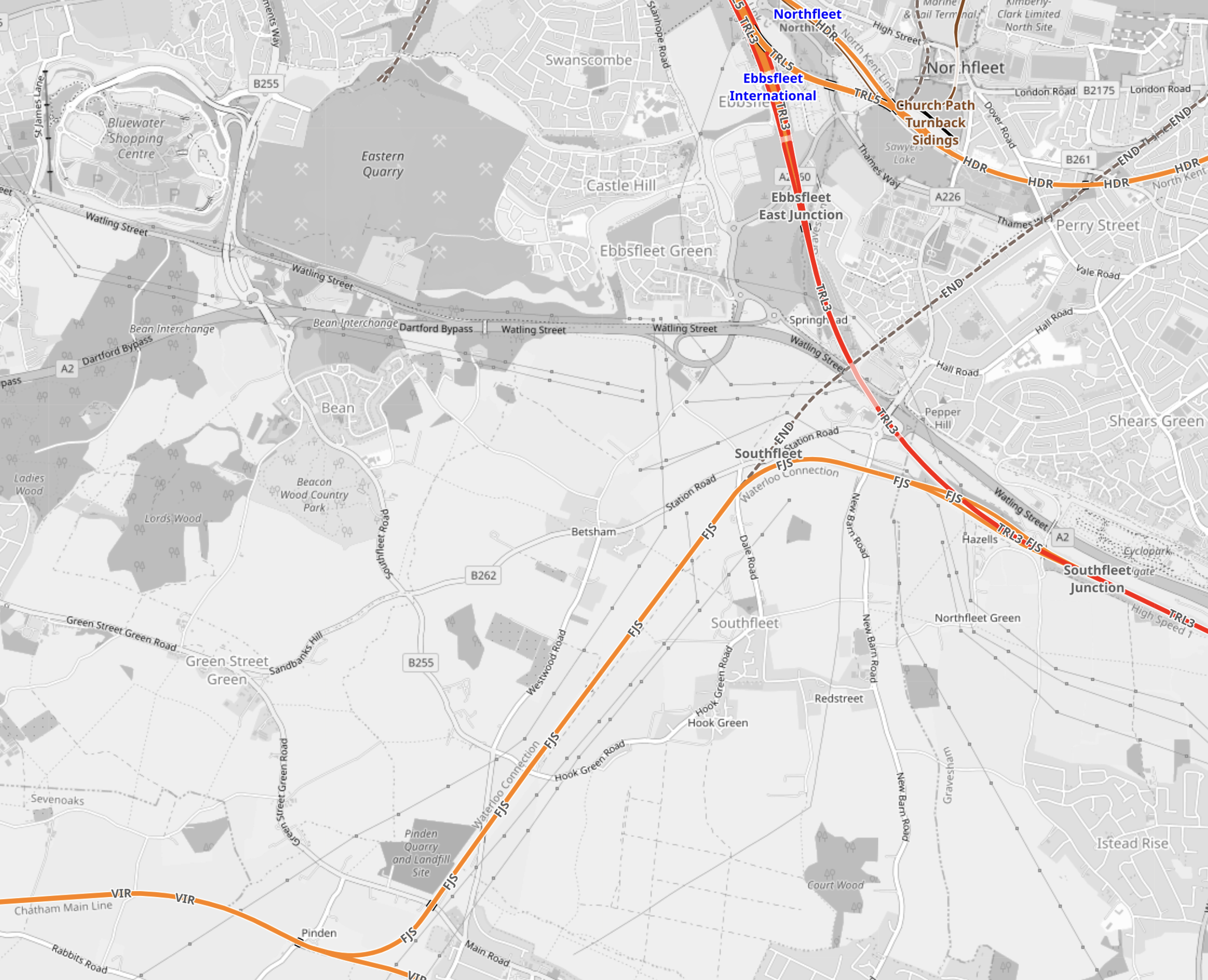
Note.
- Ebbsfleet International and Northfleet stations are at the top of the map.
- High Speed One is the red line going through Ebbsfleet International station.
- The orange line going across the South-West corner of the map is the Chatham Main Line between Victoria station and Chatham.
- The Chatham Main Line is connected to High Speed One, by the Waterloo Connection or the Fawkham Junction Link.
This route was the original route for Eurostar to Waterloo.
But it could just as easily go into Victoria.
- Southeastern’s Victoria and Dover service takes this route.
- The distance between Victoria and Fawkham junction is 22.6 miles.
- Trains take 28 minutes with a stop at Bromley.
- I wrote some more about the Fawkham Junction Link in Kent On The Cusp Of Change – Fawkham Junction Link.
- I also wrote some more about Victoria as a High Speed terminal in Kent On The Cusp Of Change – Victoria As A Highspeed Terminal.
Note that the two Kent On The Cusp Of Change posts were based on an article in the July 2017 Edition of Modern Railways.
I am convinced that Victoria could be used as a terminal for Continental trains.
Where Would The Service Terminate In France?
Everything I said about congestion also applies to Gare Du Nord, so would it be better to use Marne-la-Vallée–Chessy station that serves Disneyland Paris and Charles de Gaulle Airport, which used to be used by Eurostar.
There are certainly possibilities to do something different.
What Trains Would Be Needed?
The FT article says that the consortium have talked to Alstom, who build the Class 373 trains.
The trains would probably need a specification like this.
- Maximum speed of at least 200 mph, like Eurostar’s Class 374 trains.
- Ability to run on tracks with a UK loading gauge.
- Ability to use both 750 VDC third rail and 25 KVAC overhead electrification.
- Less than 240 metres long, which are the platform lengths at Victoria.
Would a High Speed Two Classic-Compatible Train be suitable?
- The trains will have a maximum speed of 224 mph.
- It has been designed for a UK loading gauge.
- The two partners in these trains; Alstom and Hitachi, have both built high speed trains capable of running at slower speeds using third rail electrification.
- The standard length of the trains are 200 metres.
I suspect they would do nicely.
Conclusion
I suspect that the National Express service could use High Speed Two Classic-Compatible Trains between Victoria and Marne-la-Vallée–Chessy stations.
- The trains would be standard with the ability to use third rail electrification
- They would use a single International platform at Victoria and Marne-la-Vallée–Chessy.
- Victoria station is well-connected to the Underground.
- Marne-la-Vallée–Chessy station is connected to Charles de Gaulle airport and Disneyland Paris.
I feel that there is a feasible service that can be designed.
Are The Elizabeth Line Trains Ready To Be Lengthened?
When Transport for London updated the North and East London Lines of the London Overground in the early years of this century, they felt that four-car Class 378 trains would have enough capacity for the lines. But the lines proved more popular than, they had expected and the trains were very overcrowded. So it was decided to lengthen the trains to the five cars they are today.
This wasn’t as easy as it seems, as platforms at several stations had to be lengthened, which was disruptive and expensive.
One day last week, I was in Farringdon station and took these pictures of the platform edge doors at the back end of a Class 345 train.


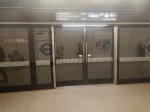




Note how, that when a train is in the station, it doesn’t reach to the end.
But this is not always the case, as this picture from Paddington station shows.
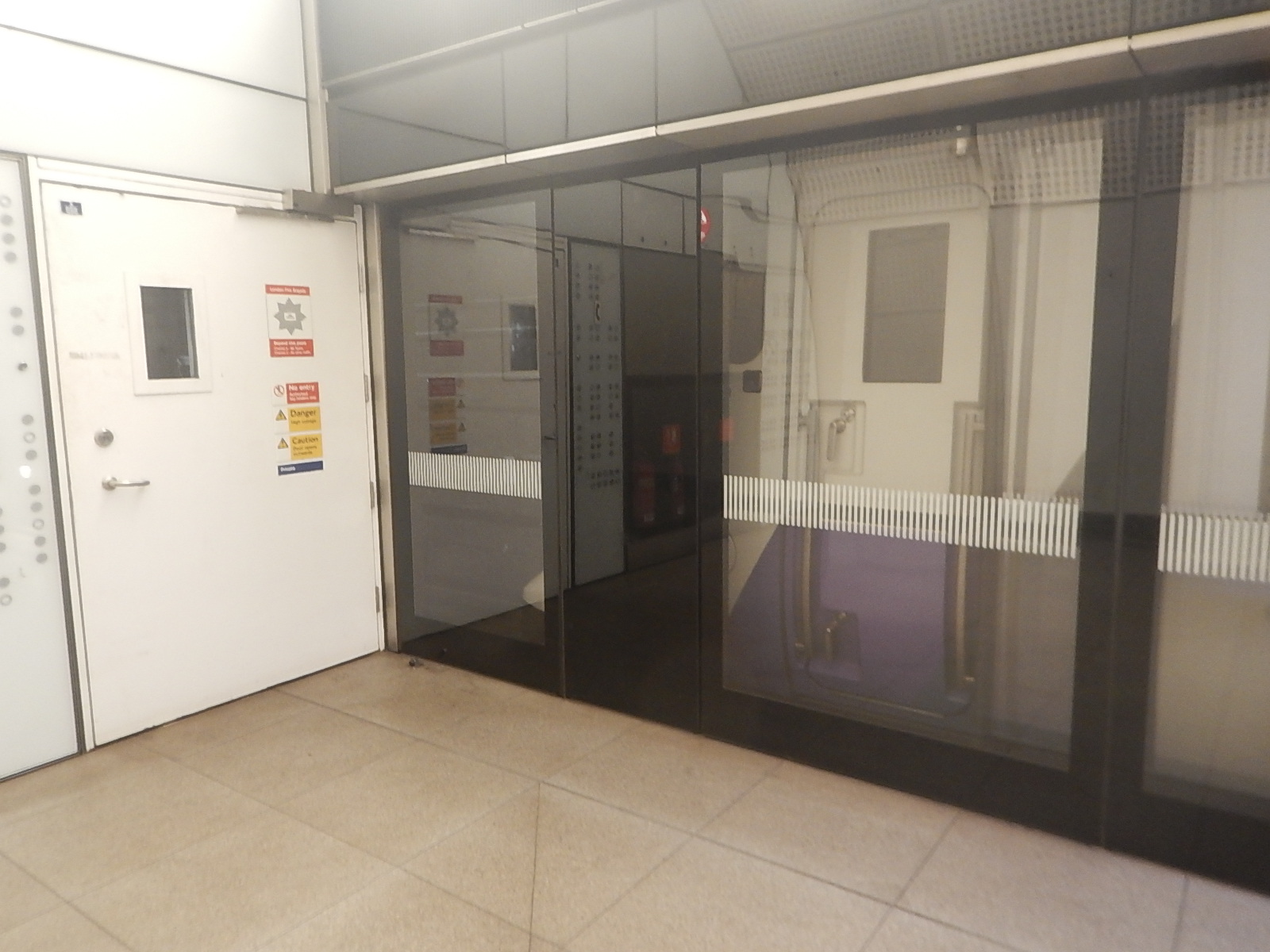
Does this mean that some underground Elizabeth Line platforms are longer than others?
In Bombardier’s Plug-and-Play Train, I discuss the plug-and-play design of Aventras.
- This plug-and-play design allows trains to be lengthened or shortened by adding or removing carriages.
- Class 345 trains are actually two half-trains, with a trailer car in between them.
So is this why Class 345 trains have run services as both seven-car and nine-car trains?
The former have three-car half-trains and the latter have four-car half-trains, with an extra MS car.
Talk Of Eleven-Car Trains
If you search the Internet, you’ll find forums and web pages speculating about. whether the trains will be lengthened to ten-cars or even eleven-cars.
Consider.
- The current trains are 204.73 metres long.
- Extra intermediate cars are all 22.5 metres long.
- The trains also are probably fitted with selective door opening or can be as most modern trains have it.
This would mean, that a ten-car train would be 227.23 metres long and an eleven-car train will be 249.73 metres.
The eleven-car figure is just 27 centimetres short of 250 metres.
I wouldn’t me surprised if the maximum train length was given to Bombardier as 250 metres.
I certainly feel, that if it should be decided to lengthen the trains by adding another carriage or two, that this will not be a problem.
The Elizabeth Line’s Two Problems
These posts talk about the two problems.
In TfL Needs More Elizabeth Line Trains Because Of HS2 Delays At Euston, I talked about what happens, if High Speed Two doesn’t link initially to Euston.
In Elizabeth Line: Commuters Say Service ‘Not What Was Promised’, I talked about problems of overcrowding at the Western end of the line.
The solutions to both problems are either more trains or adding more carriages to existing trains.
In this article on Ian Visits, which has the same title as the first post, Ian says this about ordering more trains.
Although HS2 isn’t expected to open until some point between 2029-33, TfL is warning that it will need to place the orders for the new trains soon, as the cost of doing so later will be significantly more expensive. That’s because the factory lines to build Elizabeth line trains at Alstom’s factory in Derbyshire are still in place, but will be demobilised soon. If the trains aren’t ordered before that happens, then the cost of reactivating the factory lines has to be included in the bill.
I suspect, it probably applies to an order for extra carriages as well.
Problems For Alstom
But will a substantial order for more Class 345 trains or carriages cause problems for Alstom at Derby?
This extract from the Wikipedia entry for High Speed Two rolling stock, describes how the Hitachi-Alstom joint venture will build the Classic-Compatible trains for High Speed Two.
Vehicle body assembly and initial fitting out of the trains will take place at the Hitachi Newton Aycliffe factory, the bogies will be manufactured at the Alstom factory in Crewe, and final assembly and fit-out, including the interiors, electronics and bogies, will take place at Alstom’s factory in Derby.
If more Class 345 trains are to be built at Derby, does it mean a rethink by the joint venture?
In Battery EMUs Envisaged In Southeastern Fleet Procurement, I talked about how Southeastern were looking for new trains. Given that Aventras from Alstom could be in the frame for these new trrains for Southeastern, does that give Alstom more complications?

