Luton Station To Go Step-Free
This document on the Government web site is entitled Access for All: 73 Stations Set To Benefit From Additional Funding.
Luton station is on the list.
These pictures show the station.

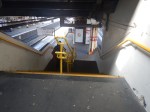


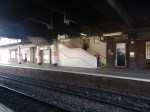



Without doubt, this is the worst station, I’ve found so far in an important town, that is to be made step-free.
There is nothing of any architectural merit at all in this station.
Will Abellio East Midlands Railway Improve Their Service To Luton?
Currently, Luton station has the following.
- Full electrification, which is being upgraded to a high standard for 125 mph running.
- Platforms long enough to accommodate Thameslink’s 242 metre long twelve-car Class 700 trains.
- The Class 700 trains are already fitted for working with digital signalling and this will be added to all trains.
It certainly treats trains better than it does passengers.
From December 2020, the following trains will run through Luton station.
- Two trains per hour (tph) to/from Corby, which will be 240 metre long twelve-car electric trains in the Peak. Why not in the Off Peak?
- Two tph to/from Leicester and Nottingham
- Two tph to/from Leicester, Derby, Chesterfield and Sheffield
At the present time, only the single Corby service stops at Luton.
From 2022, East Midlands Railway will be running new bi-mode trains through the station.
- For compatibility with the electric trains to Corby and to make full use of long platforms, I suspect that these trains could be up to 240 metres long.
- They will have a larger capacity, than the current Class 222 trains.
- They will effectively be electric trains between London and Market Harborough, where the electrification ends.
- They will have fast acceleration and smooth regenerative braking, because of the electric power.
- They could have step-across access between train and platform.
As Luton station is electrified and has long platforms, these trains will be able to stop at Luton (and Luton Airport Parkway) in minutes.
Network Rail intend to make Luton station step-free by 2024.
The improved access will give easier connections between the expresses and Thameslink, and entry/exit to the station.
I can see several trains per hour stopping at Luton.
Conclusion
If money was no object, this station should be totally rebuilt.
But money is an object, so the architects will be struggling.
But by 2024 at the latest and possibly a couple of years earlier Luton station could be sorted for passengers and handling well upwards of a dozen 240 metre long high capacity trains in every hour.
Battersea Park Station To Go Step-Free
This document on the Government web site is entitled Access for All: 73 Stations Set To Benefit From Additional Funding.
Battersea Park station is on the list.
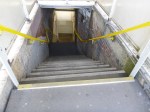
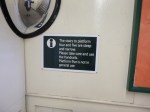
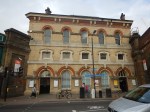
These pictures show the station.


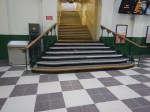


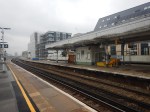


This 3D Google Map shows the station.
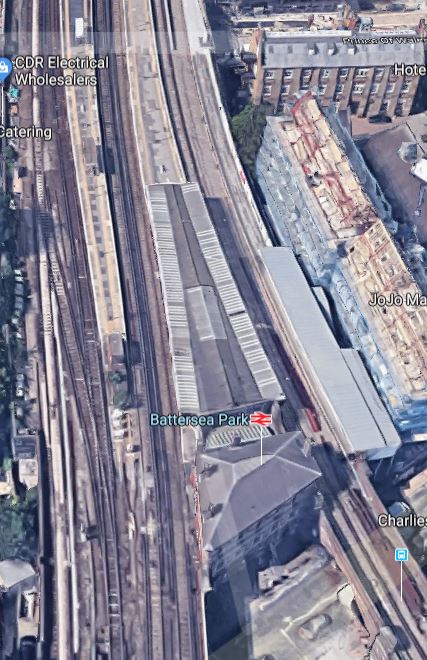
It’s a bit different to the average commuter station.
Installing Step-Free Access
This will be a challenging station to install step-free access.
- The station is Grade II Listed.
- There are four platforms
- Platform 2/3 is reasonably wide, but Platform 4/5 is narrow.
- The station handles ten trains per hour (tph) in both directions.
- In 2017-18, the station handled nearly two million passengers.
- The station will have an out-of-station interchange with the new Battersea Power Station station, when that station opens.
As the pictures show, the entrance hall has been tastefully restored in the last few years.
Surely, only a masochist would work on installing lifts in this station.
Hackney Downs Station To Go Step-Free
This document on the Government web site is entitled Access for All: 73 Stations Set To Benefit From Additional Funding.
Hackney Downs station, which I use regularly is on the list.
In Is Hackney Downs Station A Suitable Case For Treatment?, I mused at the possibilities for the station, after a chance meeting with an architect, surveyor or planner from Transport for London at the station, who had just had a look behind the locked doors at the station.
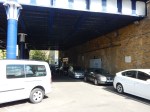
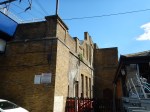

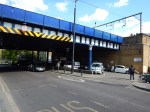
Let’s hope that if there is something worth preserving behind those forbidding brick walls!
Other than the obvious step-free access, my ideas for the station would include.
- Better use of the rooms on the platforms.
- A couple of enclosed waiting rooms.
- Improved bus stop locations.
- A light-controlled crossing outside the station.
But the biggest opportunities would surely be opened up, if London Overground’s services were reorganised.
At present, the station has the following services in trains per hour (tph)
- Liverpool Street and Chesthunt – two tph
- Liverpool Street and Chingford – four tph
- Liverpool Street and Enfield Town – two tph
Plans also exist to increase the Enfield Town services to four tph.
These are not overly high frequency services compared to some services in London.
In Could London Overground Extend To Hertford East Station?, I speculated on a rumour that Hertford East services would be given to the London Overground.
If this does happen, I believe that some local services would have to terminate in the High Meads Loop under the Eastfield shopping centre at Stratford.
In the other post I say this.
If as I proposed the following trains run through Seven Sisters station.
- Two tph between Liverpool Street and Cheshunt/Broxbourne or Hertford East.
- Two tph between Stratford and Cheshunt/Broxbourne or Hertford East.
- Two tph between Liverpool Street and Enfield Town.
- Two tph between Stratford and Enfield Town.
This means that Hackney Downs would have the following services.
- Two tph between Liverpool Street and Cheshunt/Broxbourne or Hertford East.
- Two tph between Liverpool Street and Enfield Town.
- Four tph between Liverpool Street and Chingford.
Would it not be more efficient, if all of these services used the slow tracks into Liverpool Street?
This would give the expresses exclusive use of the fast lines into Liverpool Street.
It’s probably a naive analysis, but I believe services at Hackney Downs station could well include regular services between Liverpool Street and Broxbourne/Hertford East.
Conclusion
Step-free access at Hackney Downs station could be part of a package, that sees extra services and destinations added to the station.
Changing Trains At Zwolle Station
Zwolle is a place that has stuck in my mind since I was about ten and had my first decent atlas. The gazetteer at the end of the atlas had Zwolle was the last entry. In my current larger atlas, it is still in the last ten entries.
I don’t think, I ever looked it up on a map and I certainly had never visited or even driven past. The nearest I ever got, was refuelling an aircraft at Groningen Airport, about twenty miles to the North.
I didn’t have time to explore the town, as the thirty minutes I had to wait was really only long enough for a hot chocolate. But, if my train had been on time, I wouldn’t have even had time for that.
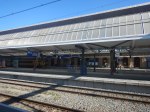
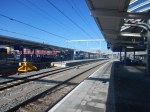
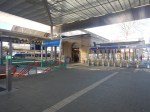
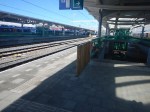
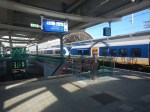
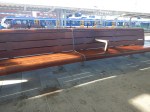
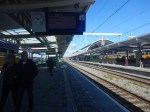
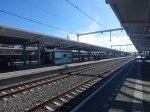
It is just a functional station, mainly built out of concrete and without any soul.
- The wooden seating was less cold, than the usual steel seats you get in Europe.
- The staff were not visible, but there was someone in a tunnel underneath.
- There was no enclosed shelter.
- There was only a little displayed information.
- I should think it could be a bleak station in the wrong sort of weather.
We need to think how we make stations more friendly to passing travellers.
The New White Hart Lane Stadium Is Open For Business
I took these pictures today of the new White Hart Lane Stadium.


Does it look so impressive inside?
The Orchestra Pit At Waterloo Station – 14th March 2019
These pictures show the area nicknamed the orchestra pit at Waterloo station.

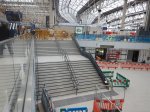
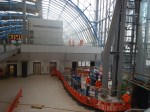
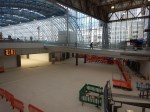

It looks like it could be open soon!
Although Network Rail and their pandering to the terrible tastes of the average rail traveller, this are will probably filled with gluten-rich junk food.
I’d like to see a Leon added to Waterloo, as they already have two Marks and Spencers and a Carluccio’s.
The Design Of Barking Riverside Station
The information is coming together about the new Barking Riverside station.
Wikipedia
The Wikipedia entry at the moment is not very information, but it does say that the station has two platforms.
Location
This map from Transport for London, shows the location of the station.
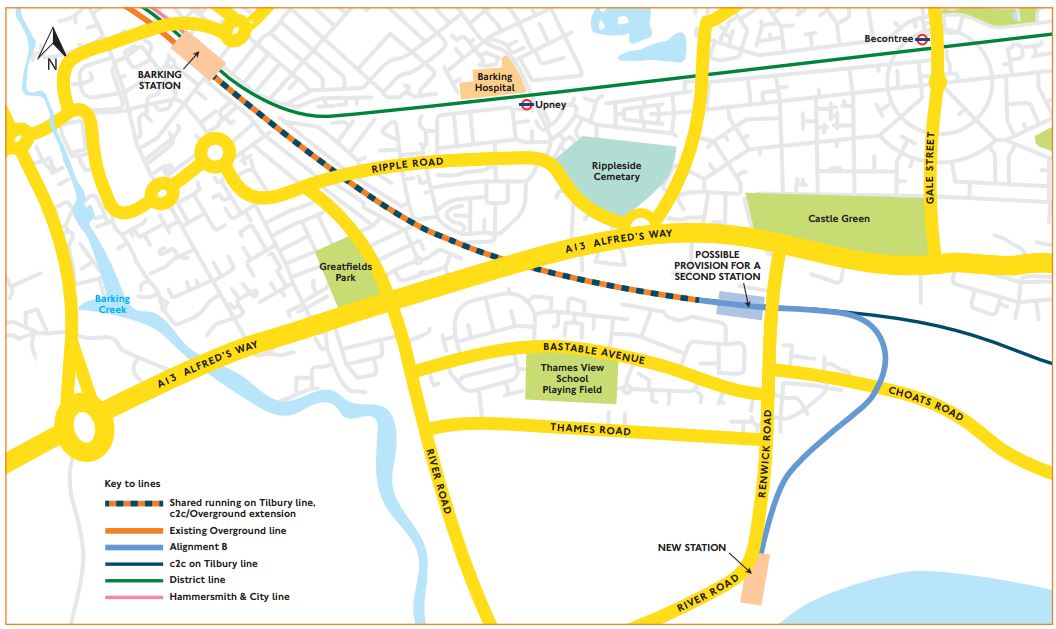
The location of Barking Riverside station is at the end of the branch line that comes South from the Barking to Tilbury Line.
As it is a long term ambition of Transport for London to extend the railway under the River to Abbey Wood station, the North-South orientation of the station is probably important.
carto.metro.free.fr
This map from carto.metro.free.fr gives the layout of Barking Riverside station and the tracks leading to it.
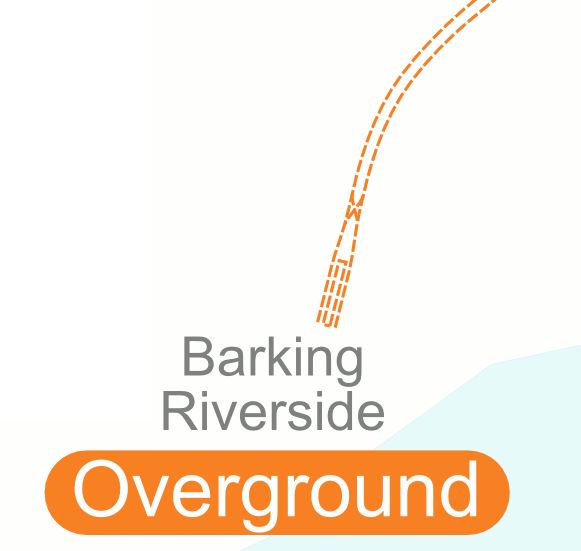
It shows two tracks leading to a two-platform station, with a crossover to allow both platforms to be used.
The Architect’s Visualisations
These are available on this page on the Moxon Architect’s web site.
This is the first visualisation on the site.
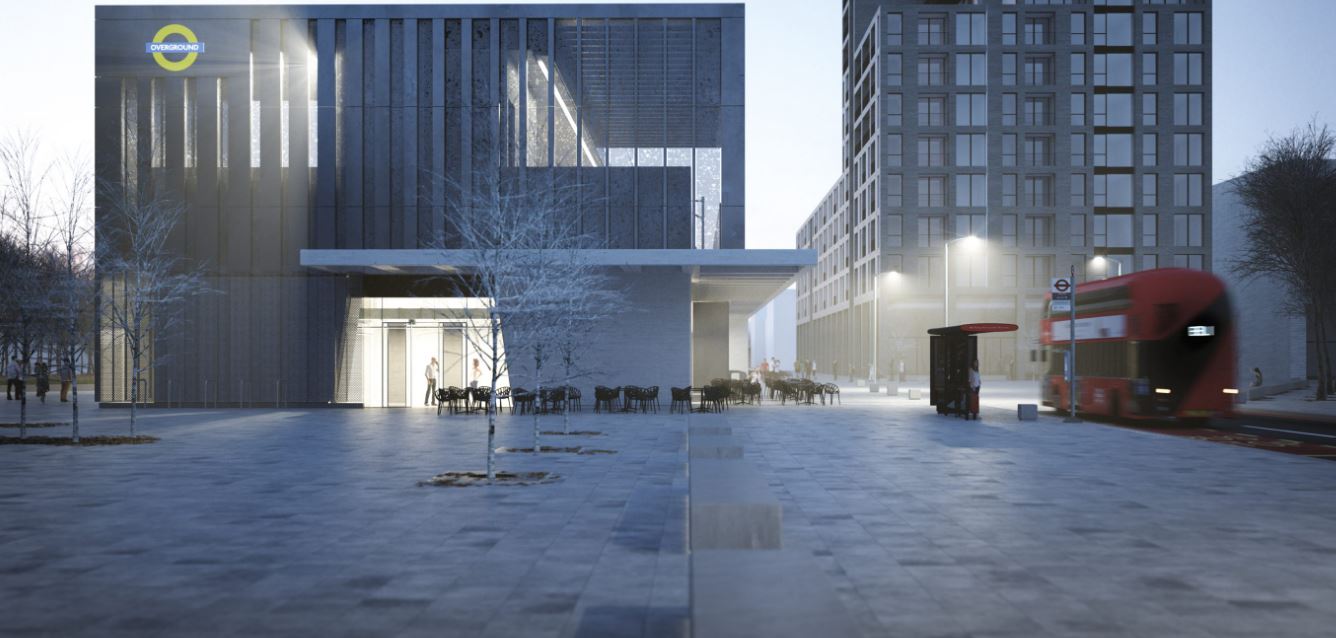
It shows the end view of the station and as no railway lines are visible, I assume that it is looking North, so the River Thames is behind the viewer and Renwick Road is on the left.
This is the second visualisation.
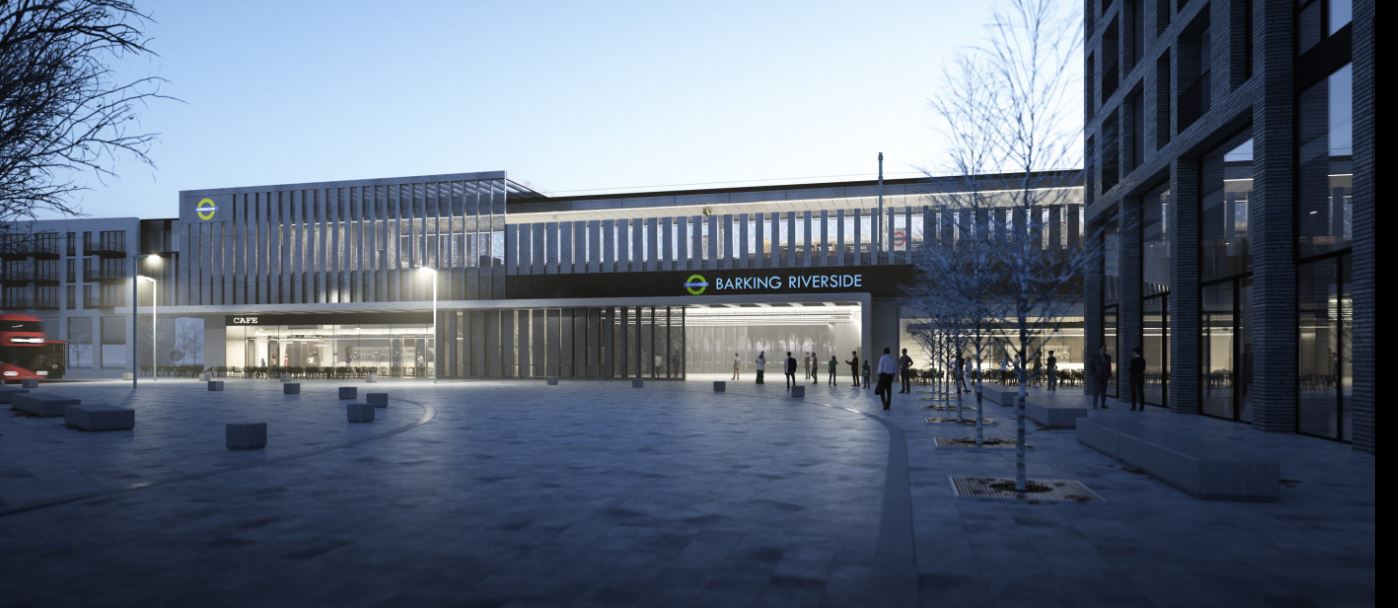
It shows the station looking from the East towards Renwick Road. Note the bus in both images.
As at Hackney Wick station, there is an underpass, so the station is not a barrier to pedestrians.
The seventh visualisation shows the station from above.
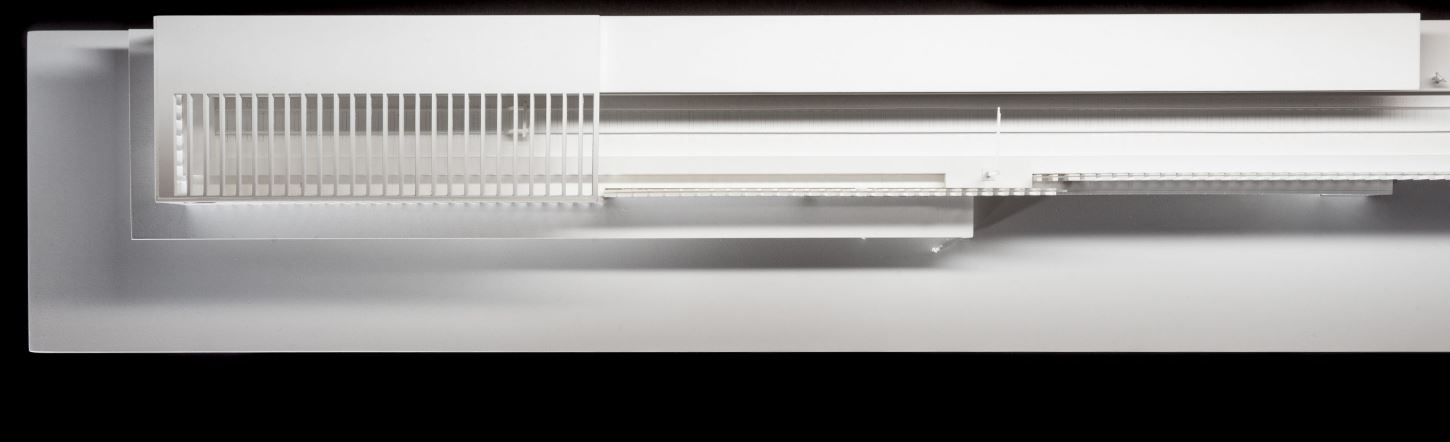
It only shows one platform in the image, as do other visualisations.
Is It A Single Platform Station?
Is this the way the station will be built or is it just to make the visualisation simpler?
A single platform station should be able to handle six trains per hour (tph).
- This year, this frequency will be implemented between single platforms at Highbury & Islington and Crystal Palace stations on the Overground.
- The Gospel Oak to Barking Line will have a maximum frequency of five tph in the Peak.
- The infrastructure and the trains will all be brand new and use the best technology.
So it looks like a single platform station should be able to handle the planned number of trains for the simple extension to Barking Riverside station.
Will There Be Electrification?
This is the fifth visualisation.
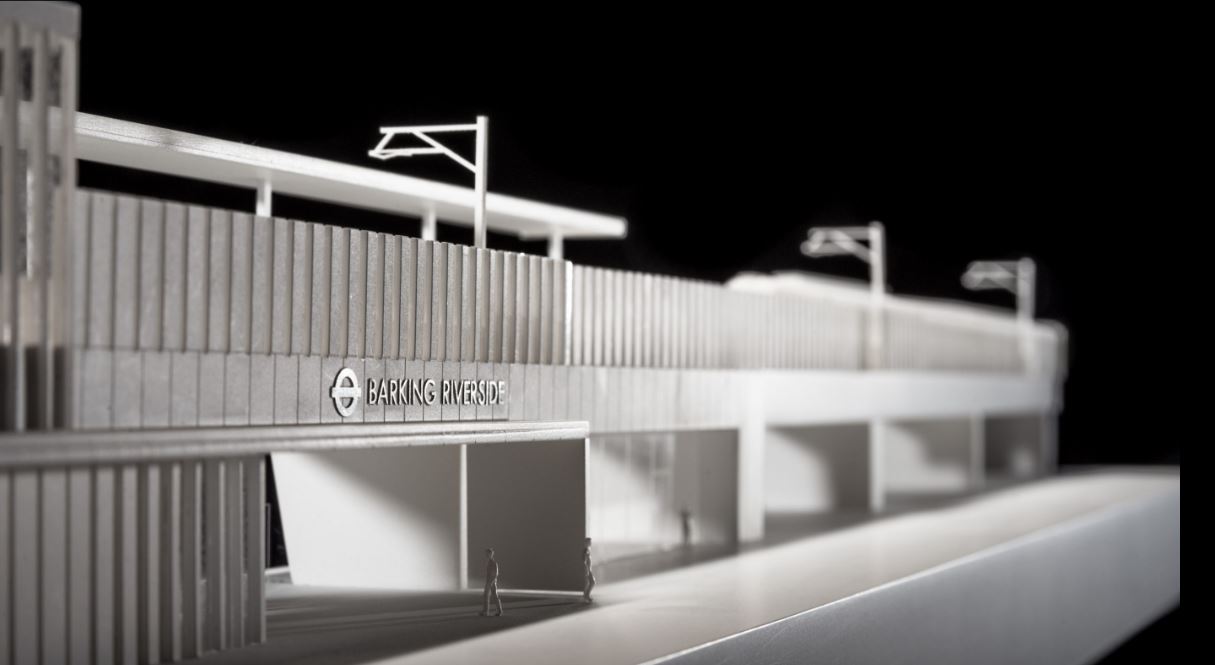
It clearly shows gantries for overhead wires.
But it appears that only one platform is there.
I have thought for some time, that the Barking Riverside Extension could be built without electrification and battery/electric trains could be used.
I laid out my views in Don’t Mention Electrification!.
- All Aventras are wired for on-board electrical storage.
- The Barking Riverside Extension is only 1.5 km long.
- The area of the extension has some very large electricity pylons, that the extension has to dodge through.
- If the line is extended under the Thames, it would be cheaper to build a tunnel for third rail, as it will connect to third-rail lines on the South Bank.
- There must be substantial savings by not putting up overhead wires.
- A safer and more reliable railway in extreme weather.
I also repeated my views in an article in Rail Magazine, which I described in I’ve Been Published In Rail Magazine.
No-one has told me that they disagree with my views.
So why are electrification gantries shown?
- Transport for London or Network Rail don’t believe that battery/electric trains are possible. This is unlikely, as battery/electric trains have been successfully demonstrated in the UK and elsewhere, and ordered for Wales and Liverpool.
- Obviously, there has to be a backstop if conventional electric trains have to be used. So, provision is being made to electrify the extension.
- The single platform is electrified, so that a battery/electric train can be fully-charged before it returns towards Barking and Gospel Oak.
If before the station is built, it is decided that electrification is not needed, the overhead wires can be omitted from the construction phase.
I do feel though, we will know more about the performance and reliability of battery/electric trains in a few years, and we will alter the designs of overhead electrification accordingly.
Extending Across The River
The station has been built to enable extension to Abbey Wood station on the other side of the Thames.
There are probably several designs that would fit with the current station.
The simplest is probably to install a second platform and connect both to a tunnel under the river or a bridge over the river.
This would have several disadvantages.
- A lot of the station would need to be demolished.
- The train service to Barking Riverside station might have to be stopped for several months, during construction.
- All services would have to cross the river.
A better option is probably to install the second platform on a track, that goes under the river in a tunnel.
- The single tunnel portal would require less land take, as it could be very close to Barking Riverside station.
- The tunnel under the river could be a mix of single or double track, to create the most affordable tunnel.
- The current single platform would become a bay platform.
- During construction, the service to Barking Riverside station would be able to continue as normal.
- The bay platform could be used for service recovery in times of disruption.
I particular like the idea of a loop railway on the South Bank of the Thames with perhaps four or five stations. Alternatively, it could be a tram-train on the surface.
Conclusion
It looks like the design of Barking Riverside station, is one that will cater for all eventualities.
I am looking forward to taking the first train to the station.
Climate Change: The Massive CO2 Emitter You May Not Know About
The title of this post is the same as that of this article on the BBC.
This is the first three paragraphs..
Concrete is the most widely used man-made material in existence. It is second only to water as the most-consumed resource on the planet.
But, while cement – the key ingredient in concrete – has shaped much of our built environment, it also has a massive carbon footprint.
Cement is the source of about 8% of the world’s carbon dioxide (CO2) emissions, according to think tank Chatham House.
Read the whole article.
The Problem With Britain’s And Probably Other Older Railways
This post on IanVisits is entitled West Hampstead Overground Station’s New Footbridge.
Ian had intended to report on the finish of a station rebuilding project at West Hampstead station.
But like many other projects it is running several months late.
Ian says this.
It’s reported that the delay stems from an unexpected massive slab of concrete that was added to the bridge that runs over the railway tracks, and supports the old station entrance.
Plans to pull the old building back and release more space on the pavement may now need to be revised as that would require the pavement to be reinforced to the same level as the road, in case a heavy lorry were to swerve onto the pavement by accident.
The old Edwardian era station building was due to be turned into a “retail opportunity”, although that may now be in doubt if the pavement issue proves intractable.
How many of us have renovated old buildings to find that what is actually there, has little relation to what the surveyors/architects believed was there?
Years ago, I was rebuilding a Listed house and the Listed Building Inspector from English Heritage was very practical. When she asked the Council Planner, if he thought that the house should be like it was built in the 1840s, he said yes!
To which she replied, “So you think there should be outside toilets?”
Everybody except one laughed!
A couple of months later, she came back to see the work and told me of a very rich man, who was rebuilding a Grade II Listed Building, that was several times over budget. Her advice at the time had been knock it down or move, as she felt preservation was impossible. But the neighbours and the wider area, felt that the building should be saved.
I suspect that, if Transport for London had known what they know now, they would have demolished the inadequate station. I don’t think the station is Listed!
Conclusion
We have a preserve all buildings regardless of the cost attitude in this country and it exists in other countries as well.
Look at my post Stuttgart Hauptbahnhof, which outlines the problems there.
Imagine Crossrail with lots of tunnel construction problems and angry protestors!
Rail Engineer On New Platforms At London Waterloo
Reopening the Waterloo International station platforms for local services may seem to be some people to be a very easy project.
This article on Rail Engineer, which is entitled New Platforms At London Waterloo, is a detailed article about the conversion.
Some points from the article and a couple of my deductions.
- The platforms were far to long for suburban services and had to be shortened for twelve-car trains.
- Eurostar only ran five trains per hour (tph) into the station and Network Rail and South Western Railway have planned for four times this frequency.
- Each Eurostar train has only 750 passengers, whereas a commuter train can handle twice as many.
- This means a theoretical eight times more passengers need to be handled.
- The platforms were designed for stationary trains, not for trains continually moving in and out.
- The roof is a Listed structure.
- Direct access to the Underground needed to be added.
The article concludes that with all the work, that needs to be done, the conversion is good value.
I suggest if you are sceptical about the costs, that you read the Rail Engineer article. As ever the magazine gives a good honest engineeringly-correct assessment.
Will The Passengers Like The Extension?
According to the article the number of passengers, that can be handled by Waterloo station will rise from 96 million to 120 million or an increase of twenty-five percent.
The link to the Underground will include three new escalators and there will be lifts and escalators everywhere to cope with the higher level of the tracks in the five new platforms.
Nothing is said in the article about the areas, that the increased services will serve, but in An Analysis Of Waterloo Suburban Services Proposed To Move To Crossrail 2, I showed that it would be possible to run a service with Crossrail 2’s characteristics terminating in Waterloo.
As Crossrail 2, is very unlikely to be built in the next ten years, will Network Rail and South Western Railway give passengers the same service levels a lot earlier?
Conclusion
It looks to me, that this reopening project, is doing a good job to turn the Waterloo White Elephant, into something that will benefit passengers and train operators.
Can anybody explain to me, why we spent £120 million (£237 million in today’s money!) in the 1990s to create such a grand station to accommodate Eurostar trains, when something less grand could have been built?
 The Anonymous Widower