Israeli All-Electric Plane Maker Readies For 1st Flight, New ‘Age Of Aviation’
The title of this post, is the same as that of this article on the Times of Israel.
It is a comprehensive progress report on the Eviation Alice.
The big news is that the first flight is expected before the end of the year.
The London And Edinburgh Travel Market
This paragraph comes from of this article on Railway Gazette.
Lumo is aiming to carry more than 1 million passengers per year. It is particularly targeting people who currently fly between Edinburgh and London; in June it says there were 74 764 air journeys on the route, compared to 82 002 by rail.
Lumo’s million passengers per year, will equate to around 83,300 passengers per month.
What these figures don’t show is the number of rail journeys made to intermediate stations like Newcastle, York, Doncaster and Peterborough.
These are a few thoughts.
Rail Capacity Between London And Edinburgh
Consider.
- LNER is currently the only rail carrier offering a daytime service between London and Edinburgh.
- LNER run approximately 26 trains per day (tpd) in both directions between London and Edinburgh.
- A nine-car Class 801 train can carry 510 Standard Class passengers and 101 First Class passengers.
That means that LNER had a capacity of just over 950,000 seats in June.
It might seem poor to have only sold 82,002 seats in June between London and Edinburgh, which is just 8.6 % of the available seats.
On the other hand, LNER’s two trains per hour (tph) are a lot more than London and Edinburgh trains, as they connect towns and cities all the way up the East Coast Main Line between London and Aberdeen.
Lumo’s capacity of a million seats per year, works out at 83,300 seats per month, which is another 8.7 % of capacity.
- Lumo will sell seats on price initially and I suspect they’ll end up running about 85-95 % full.
- It has been stated that they need to run 80% full to break even.
- I also think, that they would like to have a few seats for late bookers.
But even so, they will surely affect LNER’s bookings.
What Will LNER Do?
Several of the things, that Lumo are doing can be easily copied by LNER.
- Early booking.
- Improve onboard service.
- Better seating.
They could even reduce prices.
I think it is very likely we could end up with a price and service war between LNER and Lumo.
Would The Airlines Be The Losers?
This could be an outcome of competition between LNER and Lumo.
We are now talking about times of around four hours and twenty-five minutes between London and Edinburgh, but there are improvements underway on the East Coast Main Line.
- The remodelling of the approach to Kings Cross station has not been reflected in the timetables.
- The Werrington Dive Under has not been completed yet.
- Digital signalling is being installed South of Doncaster.
- The power supply is being upgraded North of Newcastle.
When these and other improvements are complete, I can see journey times reduced below four hours.
But would that only be for starters?great b
If a 1970s-technology Intercity 225 train, admittedly running as a shortened train formation, could achieve a time of just under three-and-a-half hours for the 393.2 miles between Kings Cross and Edinburgh stations in September 1991, what could a modern Hitachi train do, if all of the improvements had been completed and perhaps half of the route could be run at 140 mph under the watchful eyes of full digital signalling and an experienced driver.
Consider.
- London and York is nearly two hundred miles of fairly straight railway, that is ideal for high speed.
- Current trains run the 393.2 miles in four hours 25 minutes, which is an average speed of 89 mph.
- A train running at 89 mph would take two hours and fifteen minutes to cover 200 miles.
- A train running at 125 mph would take one hour and thirty-six minutes to cover 200 miles.
- A train running at 140 mph would take one hour and twenty-six minutes to cover 200 miles.
When Network Rail, Great British Railways or the Prime Minister renames the East Coast Main Line as High Speed East Coast, I think we can be sure that trains between London and Edinburgh will be able to achieve three-and-a-half hours between the two capitals.
High Speed Two is only promising three hours and forty-eight minutes.
What About LNER’s New Trains?
LNER Seeks 10 More Bi-Modes, was written to explore the possibilities suggested by a short article in the December 2020 Edition of Modern Railways.
There has been no sign of any order being placed, but Hitachi have moved on.
- They are building the prototype of the Hitachi Intercity Tri-Mode Battery for testing on the Great Western Railway.
- They have completed some of the Class 803 trains for East Coast Trains, which has now been renamed Lumo. These trains have a battery for hotel power in case of catenary failure, but no diesel engines.
- They are building the Class 807 trains for Avanti West Coast, which appear to be designed for high speed and have no batteries or diesel engines.
- The latest versions of the trains will have a reshaped nose. Is it more aerodynamic at high speeds?
It does seem that there is an emphasis on speed, better acceleration and efficiency.
- Could the lessons learned be used to improve the performance of the existing trains?
- Could a small high performance sub-fleet be created to run LNER’s Scottish services?
There are certainly possibilities, that would cut journey times between London and Edinburgh.
Conclusion
I can see the airlines flying between London and Edinburgh suffering a lot of collateral damage, as the two train companies slug it out.
Ryanair Backs Away From Boeing Jet Order
The title of this post, is the same as that of this article on The Times.
These are the first two paragraphs.
Ryanair has ended talks to purchase tens of billions of dollars of Boeing jets amid a stand-off over the price.
The Irish budget airline had been in talks to buy as many as 250 planes of the 737 Max 10 model but said yesterday that the talks had collapsed.
But have Michael O’Leary and Boeing fallen out over hydrogen?
Consider.
- Many countries in Ryanair’s largest markets are aiming to go net carbon-free by 2050 or even earlier. Scotland is aiming for 2045.
- An airliner delivered today will still be flying twenty or even thirty years later.
- I believe that by 2030, small airliners up to thirty passengers will be zero-carbon.
In Could An A320 neo Be Rebuilt As A ZEROe Turbofan?, I came to this conclusion.
I very much feel that there will be a route to convert some or all of the A 320 neo aircraft to hydrogen power.
If Airbus can offer an airliner, that can be rebuilt as a hydrogen-powered plane that must change the economics of purchasing a fleet of airliners, which could be made worthless by worldwide carbon emission legislation.
Because the Boeing aircraft is a 1960s design with an aluminium airframe, I would doubt it is designed to be converted to hydrogen power.
Velocys’ Fischer–Tropsch Tech Picked For E-fuels Project In Japan
The title of this post is the same as that of this article on Renewables Now.
Fischer–Tropsch technology has a chequered history, as it has been used by regimes like Nazi Germany and South Africa under apartheid to create the fuel they need.
But now Oxford University spin-out company; Velocys have improved the process, so that it can turn rubbish destined for landfill into sustainable aviation fuel.
This is the last paragraph from the article.
The developer says its FT reactor can enable the production of SAF from household waste and woody biomass. The end product is a high-quality version of existing fuels, requiring no changes to engines or infrastructure, Velocys says on its website.
This is surely a viable alternative to keep airlines flying, until hydrogen-powered planes are developed.
The Hybrid-Electric Plane That Will Switch From Passenger To Cargo In 15 Minutes
The title of this post, is the same as that of this article on Simple Flying.
If you are sceptical about the concept of zero-carbon flying, then read this article, which takes the form of an interview with the Managing Director of Faradair.
DHL Express Shapes Future For Sustainable Aviation With First Order Of All-Electric Cargo Planes From Eviation
The title of this post, is the same as that of this press release from DHL Express.
They have ordered twelve cargo versions of the Eviation Alice.
- Planes will be flown by a single pilot.
- Each plane will be able to carry 1,200 Kg of cargo.
- Maximum range is up to 815 km.
- Each flight hour will require thirty minutes of charging.
When you consider Stansted and Charles de Gaulle Airports are 260 kilometres apart, these planes would be able to handle a lot of routes.
What Does 2.5 MW Look Like?
This press release on the Rolls-Royce web site is entitled Rolls-Royce Generator Delivered For Most Powerful Hybrid-Electric Propulsion System In Aerospace.
This Rolls-Royce picture shows the generator installed on a test bed.
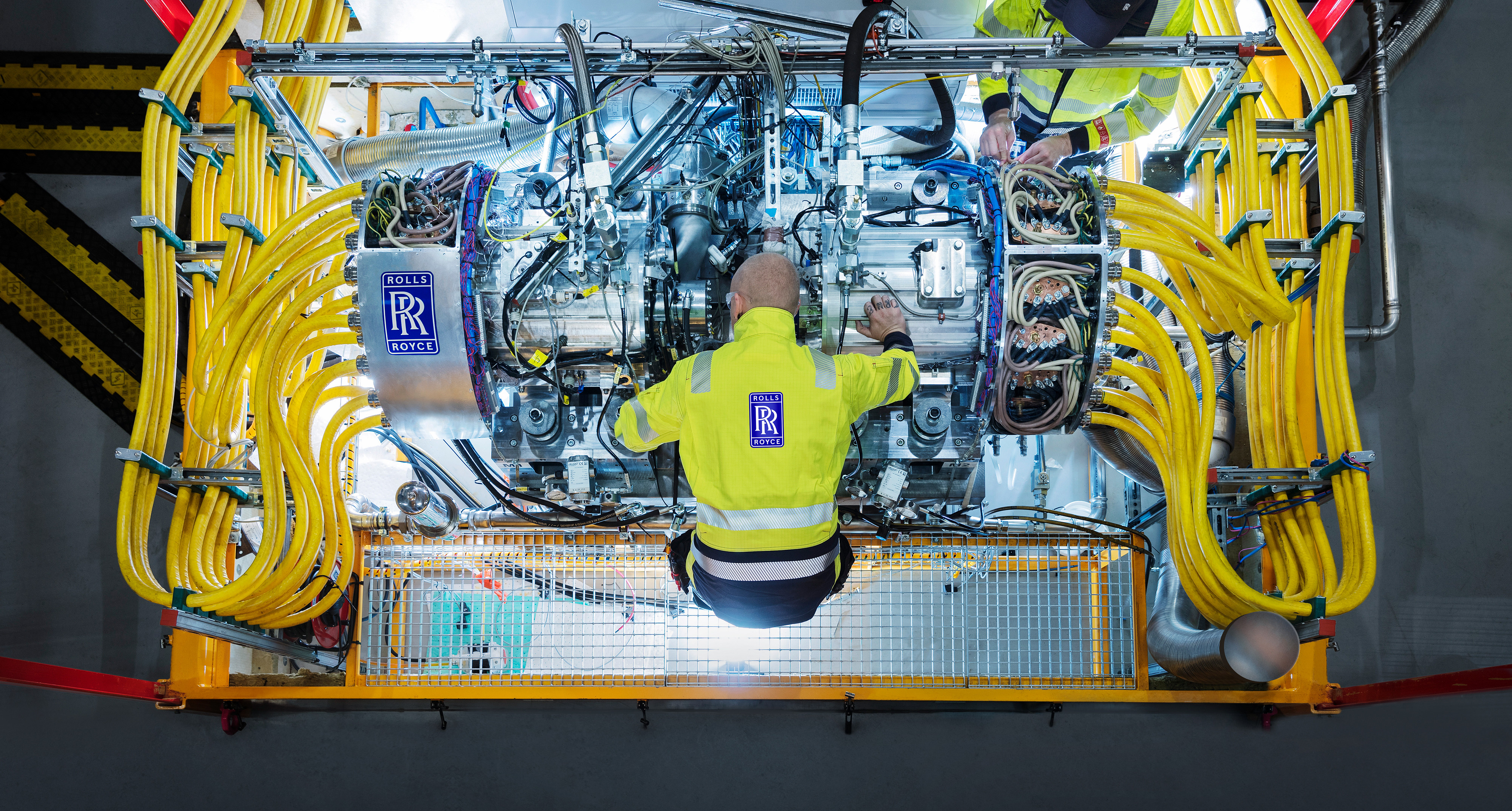
These are the first three paragraphs of the press release.
The generator that will be at the heart of the most powerful hybrid-electric aero power and propulsion system in aerospace has arrived for installation at our specialist testbed.
The generator, and related power electronics, was delivered to the newly-renovated Testbed 108 in Bristol, UK, from the Rolls-Royce facility in Trondheim, Norway, having completed an extensive development test programme. It will form part of the 2.5 megawatt (MW) Power Generation System 1 (PGS1) demonstrator programme, for future regional aircraft. In addition to hybrid-electric propulsion, the generator could also be used as part of a “more-electric” system for larger aircraft or within future ground or marine applications.
PGS1 forms an important element of our sustainability strategy, which includes developing innovative electrical power and propulsion systems.
I must say that as an engineer this 2.5 MW generator really excites me, as I see so many possibilities.
- I am fairly certain, that the generator can be powered by hydrogen, to create a true zero-carbon power generator.
- Rolls-Royce mention aerospace, ground and marine applications.
- The physical size must be an advantage, when it comes to some applications.
- The gas-turbine technology at the heart of the generator has been well-proven in the Lockheed Super Hercules.
But I do note in the press release that there is no mention of hydrogen or rail for which the generator must be eminently suitable.
- Rolls-Royce subsidiary; mtu are one of the leading companies, who power large rail locomotives.
- 2.5 MW is ideal for many rail locomotives.
- The small size must help integration into a rail locomotive.
- My calculations show that the generator and a hydrogen tank could be fitted into a typical modern rail locomotive.
- As electric transmissions can be used, the locomotive could also use electrification.
A lot of these arguments would also apply to the very large trucks used in the mining industries and ships of various sizes.
Conclusion
This Rolls-Royce 2.5 MW Generator will have lots of applications.
Is This One Of The Most Significant Pages On The Internet?
The page is Rolls-Royce’s List Of Press Releases.
On July 8th, 2021, the company issued this press release, which is entitled Rolls-Royce Welcomes All-Electric Ground Support From Jaguar Land Rover For All-Electric Flight Speed World Record Attempt.
This is the opening paragraph.
Rolls-Royce’s all-electric aircraft the ‘Spirit of Innovation’ will take to the skies for the first time in the coming weeks as we work towards a world-record attempt with a target speed of 300+ MPH (480+ KMH). This exciting project will be carbon neutral and to support this ground-breaking innovation Jaguar Land Rover is loaning all-electric zero emission Jaguar I-PACE cars as towing and support vehicles.
This picture shows Spirit of Innovation and one the Jaguar I-PACE cars together in this Rolls-Royce picture
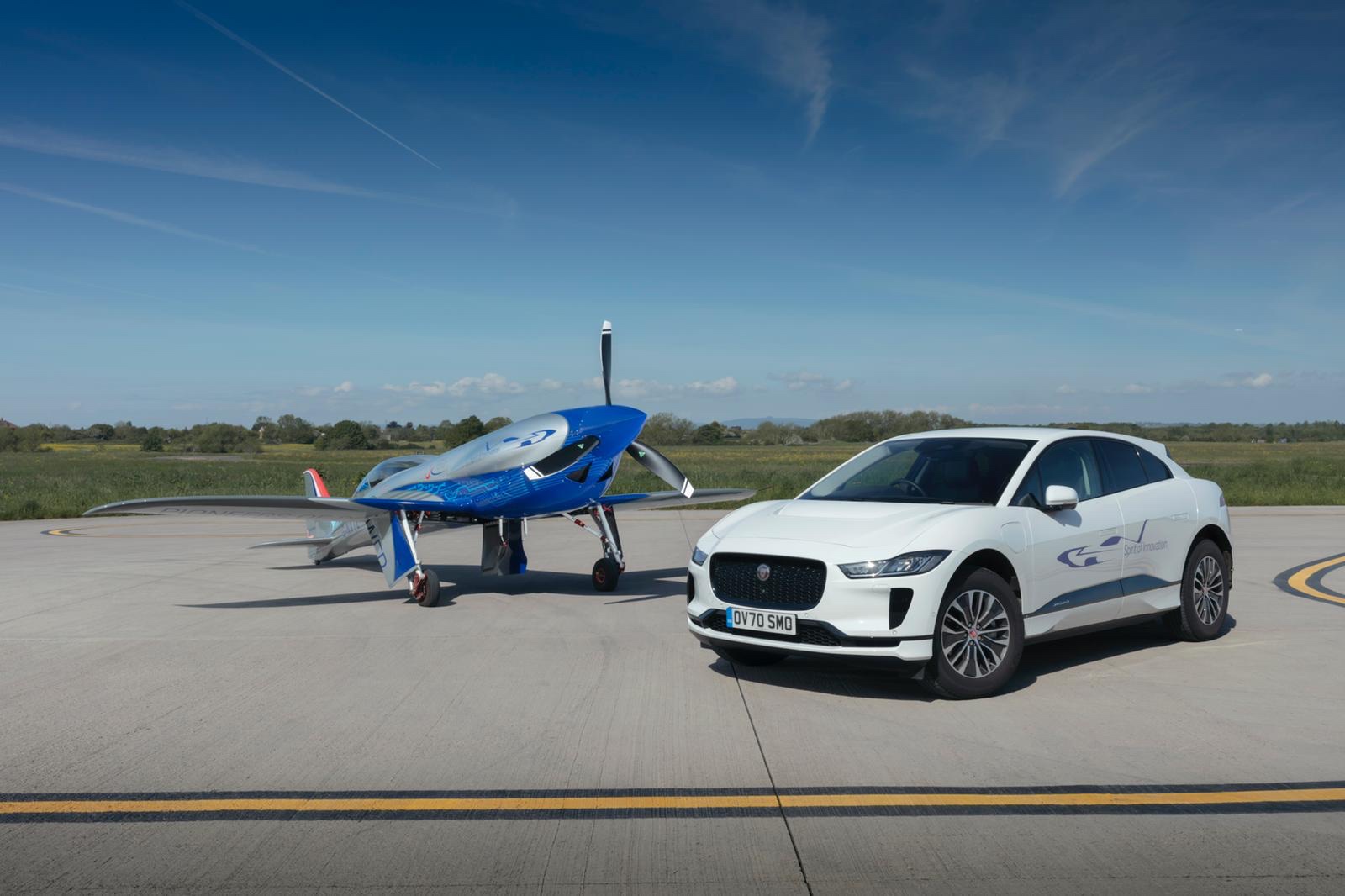
They make an interesting pair.
There is a full analysis of the plane in this article on CleanTechnica, which is entitled Rolls-Royce Attempting 100% Electric Aircraft Speed Record, Jaguar I-PACE Offering Ground Support.
The Jaguar can even tow the plane.
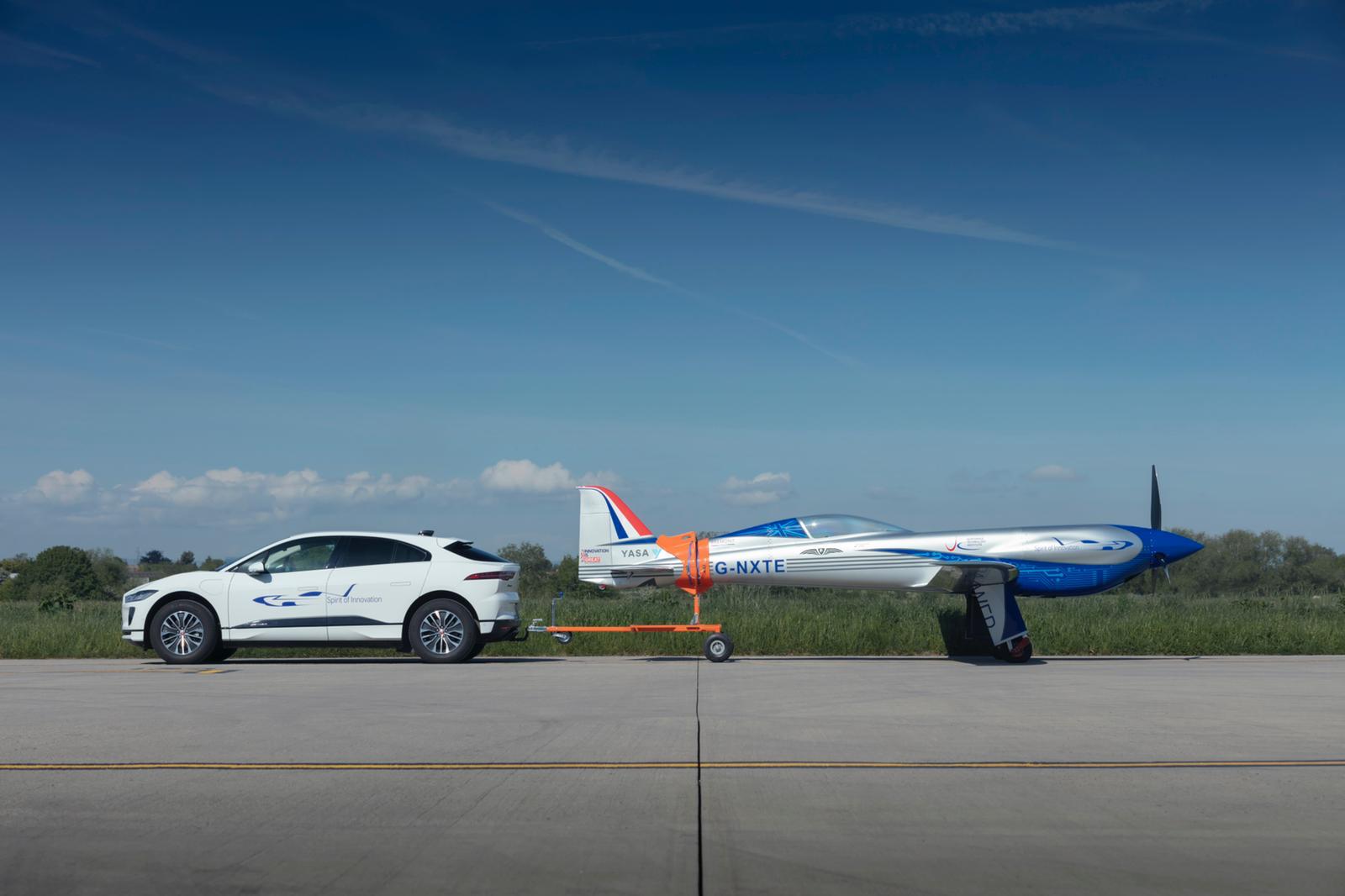
Unusual.
Also on On July 8th, 2021, the company issued this press release, which is entitled Rolls-Royce And Cavendish Nuclear Sign Delivery And Manufacturing Partnership Agreement For SMR Programme.
Another world-class company has joined the small modular nuclear reactor programme.
I have feelings, that this could be the start of something small and incredibly powerful!
Conclusion
I suspect Rolls-Royce have lots of useful research sitting in their archives. We should all follow, what they doing.
United Airlines To Buy 100, 19-seat Electric Planes from Heart Aerospace
The title of this post, is the same as that of this article on Reuters.
This is the first paragraph.
United Airlines said on Tuesday it would buy 100 19-seat ES-19 electric planes from Swedish start-up Heart Aerospace, as the U.S. carrier eyes battery-powered aircraft for regional routes.
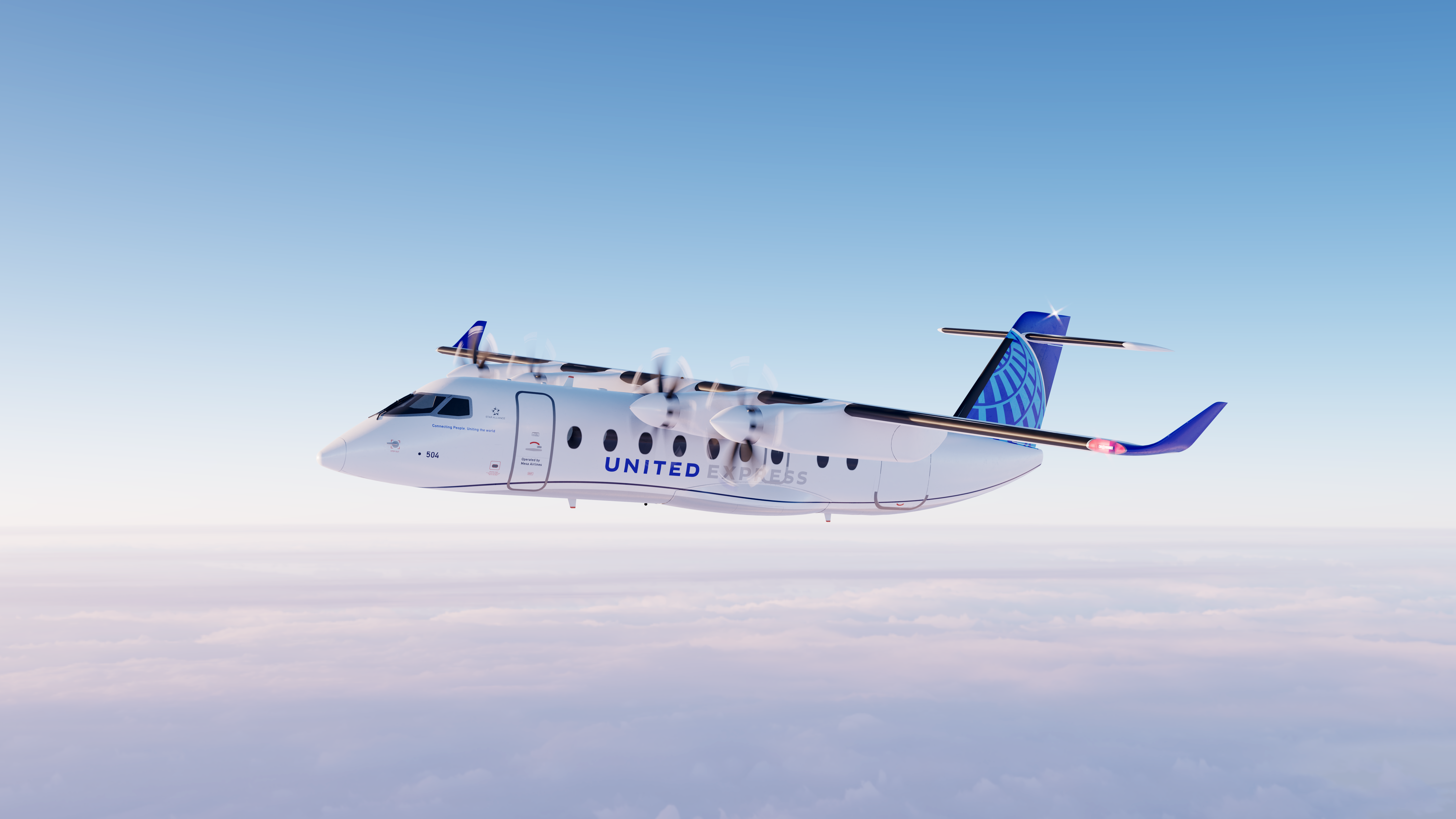
It looks fairly conventional, except that you don’t find many four-engined propeller driven aircraft these days.
This page on the Heart Aerospace web site, gives more details of the company and its plane.
I suggest you read the FAQ, as the last five sections give details on the use of the planes, as short-haul airliners and island hoppers.
What’s A Typical Route That The ES-19 Will Fly In 2026?
In answer to this question, the FAQ says this.
Our early adopter market will be very short flights where there is high demand. This will include island-hopping and flying over mountainous terrain, where the flight distance is significantly less than the road routes available.
I can certainly see these planes and other 19-seaters island hopping and on cross-country routes all over the British Isles.
Other 19-seater Aircraft You May Have Flown
I have only flow in one and that was an Embraer Bandeirante from Norwich to Stavanger.
Others will have flown in a De Havilland Canada Twin Otter or the Britten-Norman Trilander.
Conclusion
This well-backed Swedish design could be a very widely-used airliner, if it meets the ambitious in-service date of 2026.
There are other designs being developed including the more unusual Faradair Aerospace BEHA.
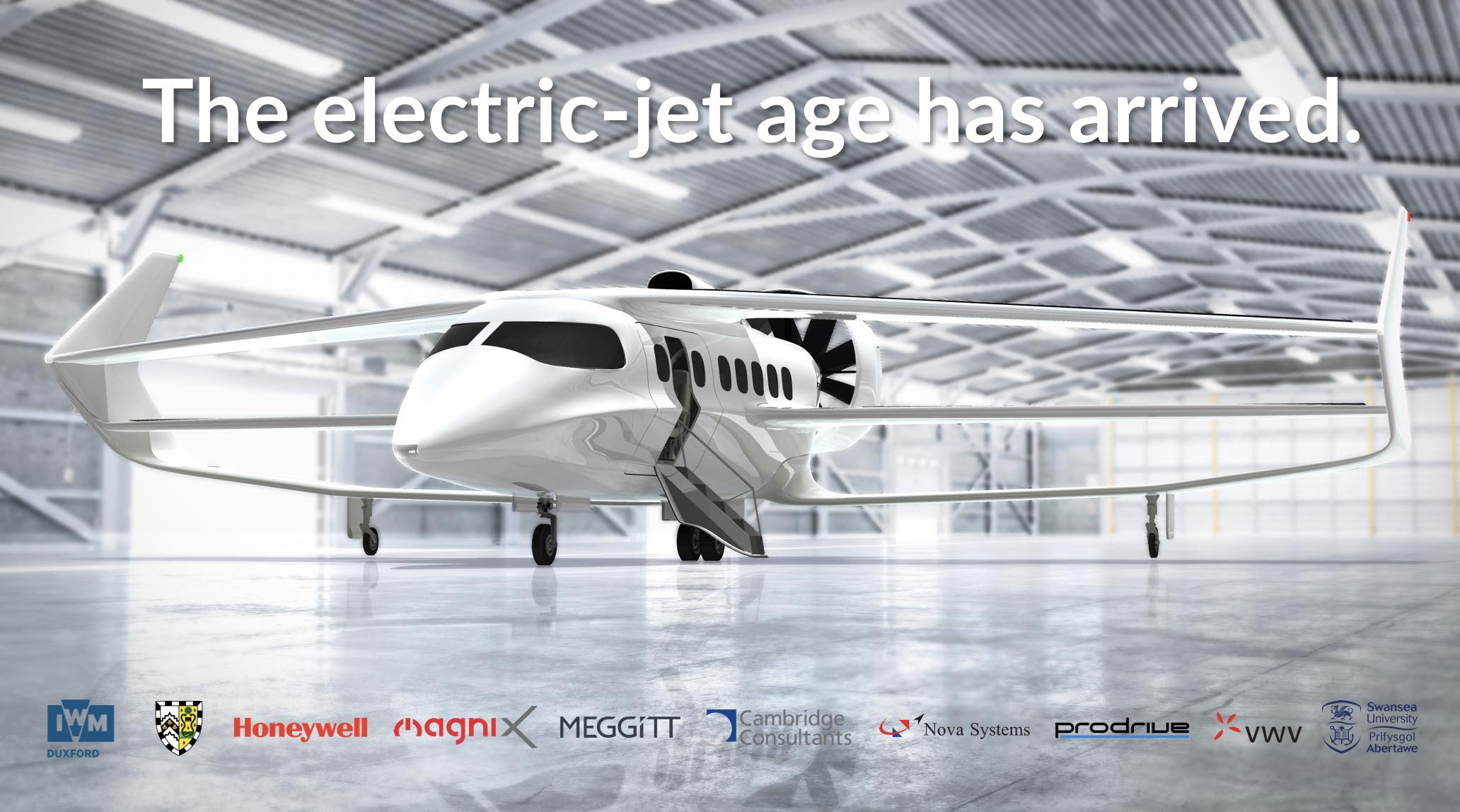
Unlike the ES-19 it is not fully electric, but is powered by a small Honeywell gas turbine running on sustainable aviation fuel.
But the ES-19 looks the best yet!
N
Eviation Alice Has Changed Shape
This article on Flying Magazine gives the latest status of the Eviation Alice.
If you look at the picture in the Flying Magazine article and an earlier one taken at the 2019 Paris Air Show in this article in The Times, you are looking at two different aircraft.
- The earlier aircraft has three engines; two in the wingtips and one in the tail, a V-tail and a taildragger undercarriage.
- The latest aircraft has two engines in pods alongside the rear fuselage, a T-tail and a tricycle undercarriage.
The latest aircraft is much more conventional. This quote from the Flying Magazine article talks about the design.
The production configuration was optimized from real-world lessons learned and customer feedback.
My feedback, as a private pilot with many hours in command of a big piston twin, would have questioned the use of a taildragger configuration with three engines and I certainly prefer the new more-conventional configuration.
Every pilot’s nightmare in a twin-engined aircraft, is an engine-failure on take-off, as it sets up forces that are difficult to control. So you make sure you can cope in that situation. With three engines, there are more difficult situations to handle.
I suspect any pilot, who did their twin training on an aircraft like a Piper Seneca, could be easily and quickly converted to the later version of the Eviation Alice. But few pilots these days learn how to fly taildraggers and this configuration with three engines in the earlier aircraft, could require a longer and more demanding conversion process.
I haven’t piloted an aircraft for twenty years, but even so, in an emergency, I would feel I could take over the current Alice, but the original configuration would have been beyond my experience.
The new more conventional configuration will probably be easier to certify.
Conclusion
I very much agree with the change of configuration.
I hope I get a chance to fly in this aircraft soon after its planned entry into service in 2024.
Alice and other similar electric aircraft will change short-haul aviation very much for the better.

