Centrica To Build Largest Battery Storage Project To Date
The title of this post, is the same as that of this news item from Centrica.
These three paragraphs outline the news.
Centrica Business Solutions has secured the development rights to a 65MW two-hour battery storage plant in Perthshire, Scotland, its largest battery storage acquisition to date.
The site in Abernethy is located near a connection for North Sea offshore wind farms and will help manage grid capacity by charging when demand for power is low, and discharging when demand is at its highest.
Once connected to the grid in 2028, the 65MW two-hour battery will be able to store enough electricity to power 130,000 homes for an hour – the equivalent to a town the size of Aberdeen. The discharge could happen up to four times a day.
This map shows the site of the substation at Abernethy.
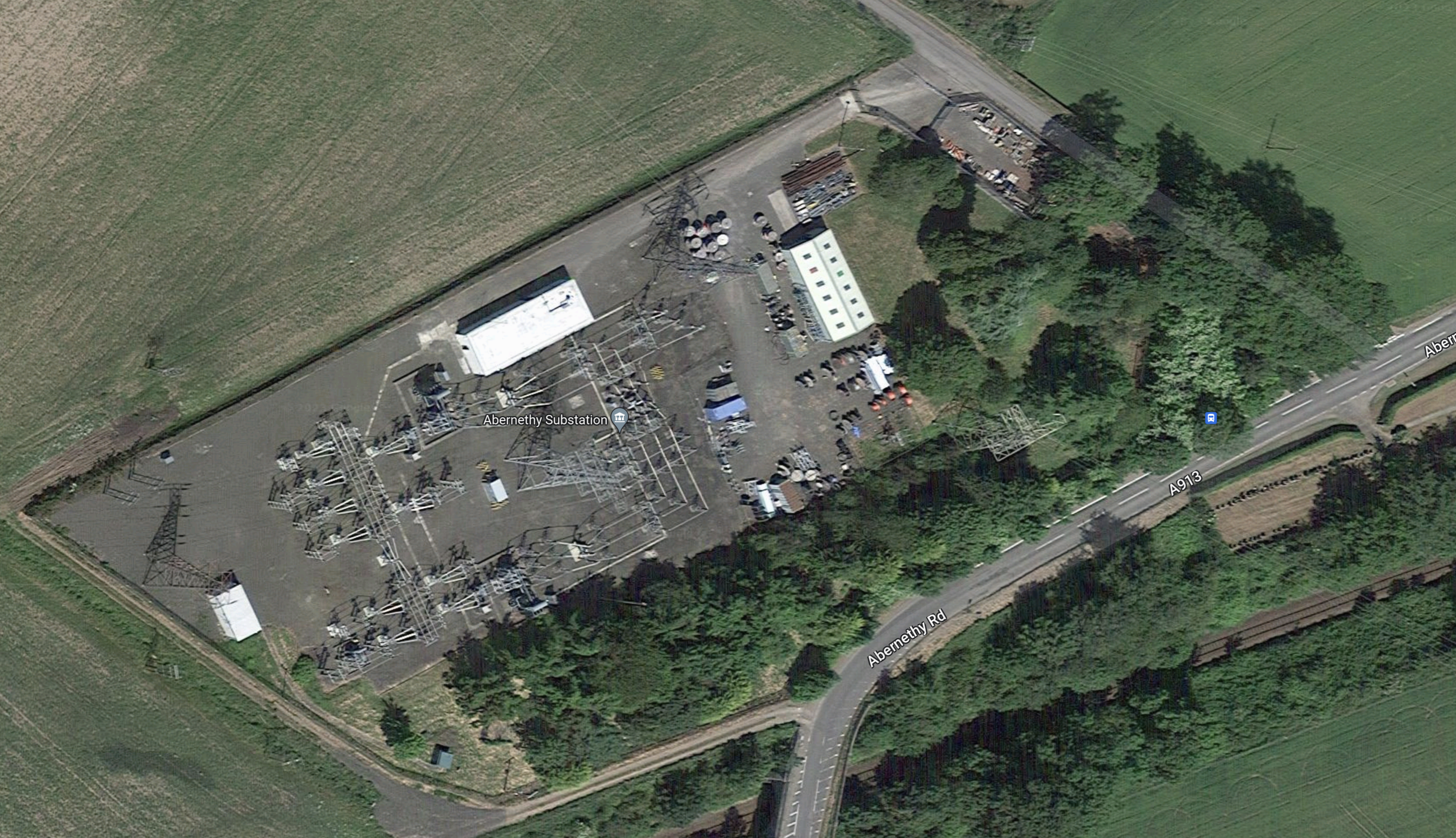
It seems a site with enough space for a 65 MW/130 MWh battery.
But is that a railway running past the site in the South-East corner of the map?
Yes! It is the single-track unelectrified railway that is used by trains to go between Edinburgh and Perth.
- There are stations at both ends of the single-track section at Ladybank and Perth.
- Abernethy substation looks like it is about halfway between the two end stations.
This page on Scotland’s Railway is entitled Fife Electrification and lists these four phases.
- Haymarket and Dalmeny
- Kinghorn and Thornton North
- Thornton and Lochgelly
- Thorton and Ladybank
The page also says that the electrification will support BEMUs (Battery Electric Multiple Units)
I feel that the electrification to Ladybank and Centrica’s battery could be linked.
- If the electrification was extended a few miles to Abernethy substation, this would surely be a reliable way to power the electrification.
- It would also be ideally placed, if Perth and Ladybank were to be electrified.
- The new battery would surely smooth out any deviations in the power supply.
I certainly don’t expect that Centrica will object to a new customer.
Electrification Between Edinburgh And Ladybank
Consider.
- Edinburgh and Ladybank is 39 miles and takes a couple of minutes over an hour.
- Once, the four phases of the electrification are complete, only the 13.6 miles between Dalmeny and Kinghorn, will be without electrification.
- I doubt that Dalmeny and Kinghorn will ever be electrified, as it includes the Forth Rail Bridge.
- Dalmeny and Kinghorn is 13.6 miles and takes around twenty-four minutes.
It looks like the BEMUs will be under wires for 25.4 miles and nearly forty minutes, which will be more than enough to charge the trains.
Edinburgh And Aberdeen
In Thoughts On Batteries On A Hitachi Intercity Tri-Mode Battery Train, I said this about services between Edinburgh and Aberdeen.
Consider.
-
- The gap in the electrification is 130 miles between Edinburgh Haymarket and Aberdeen.
- There could be an intermediate charging station at Dundee.
- Charging would be needed at Aberdeen.
I think Hitachi could design a train for this route.
The 25.4 miles of new Fife electrification between Haymarket and Ladybank will reduce gap in the electrification to 105 miles and ensure trains leaving Ladybank for Aberdeen had a full battery.
Centrica Bolsters UK’s Energy Security By Doubling Rough Storage Capacity
The title of this post, is the same as that of this news item from Centrica.
These are the first three paragraphs.
Following further engineering work and investment, Centrica has announced increased gas storage capacity at Rough, the UK’s largest gas storage facility.
The facility, which is 18 miles off the coast of East Yorkshire, stopped storing gas in 2017 but was re-opened for gas storage in October 2022. Rough now provides half of the UK’s total gas storage.
At the time of reopening Rough for gas storage it was able to store approximately 30 billion cubic feet (bcf) of gas for UK homes and businesses. Further investment in the facility means Rough will now be able to store up to 54 bcf of gas, boosting the UK’s energy resilience for the coming winter – this would provide the equivalent volume of gas to heat 2.4 million homes over winter.
This work and investment has increased the storage capacity by a massive eighty percent.
The news item finishes with this quote from Centrica Group Chief Executive, Chris O’Shea.
We stand ready to invest £2 billion to repurpose the Rough field into the world’s biggest methane and hydrogen storage facility, bolstering the UK’s energy security, delivering a net zero electricity system by 2035, creating 5,000 skilled jobs and decarbonising the UK’s industrial clusters by 2040. But to do this we need the right regulatory support framework. This world class North Sea asset has the potential to help the UK economy return to a position of being a net exporter of energy once again.
As East Yorkshire also boasts the Aldbrough Gas Storage in the salt formations under Hull, the area will have plenty of gas to keep them warm in the winter.
World’s First Offshore Hydrogen Production Project Yields First Kilograms Of Green Hydrogen
The title of this post, is the same as that of this article on offshoreWIND.biz.
This is the sub-heading.
The offshore hydrogen production platform that Lhyfe is testing in France, named Sealhyfe, began producing its first kilograms of hydrogen on 20 June after it was towed last month to the SEM-REV offshore test site which is connected to BW Ideol’s floating wind turbine Floatgen.
These two paragraphs introduce the article.
Sealhyfe is capable of producing up to 400 kilograms of hydrogen per day.
With the start-of-production milestone now reached, the platform has entered the second phase of testing, which focuses on producing hydrogen in offshore conditions, after eight months of being tested at a quay in the Port of Saint-Nazaire, starting in September 2022.
The setup features a 1 MW electrolyser.
This may only be a small start, but I do feel that we’ll see more offshore hydrogen production.
According to Lhyfe And Centrica To Develop Offshore Renewable Green Hydrogen In The UK, Centrica and Lhyfe seem to be co-operating.
It should be noted that this year, I’ve written seven posts involving Offshore Hydrogen Production.
Shine On – Centrica Opens Its First UK Solar Farm
The title of this post is the same as that of this press release from Centrica.
These are the bullet points.
- 18MW Codford Solar Farm in Wiltshire is Centrica’s first major solar asset
- Part of plans to build a material portfolio of low carbon assets
- Vodafone supports development with long term Power Purchase Agreement for 50% of the output over 10 years
- Additional renewable power supports the UK government’s ‘green grid’ ambitions
I have some thoughts.
Centrica’s First Major Solar Asset
These two paragraphs from the press release outline the project and indicate where it fits in Centrica’s overall philosophy.
Construction began at the site in Wiltshire in April 2022, after the consent was acquired by Centrica Business Solutions in 2021. Made up of 33,000 panels, the project has a total capacity of 18MW and should produce 19GWh of green electricity every year, enough to power some 4,850 homes.
The deal not only brings additional renewable power provision to the UK grid but supports the UK government’s ambition to focus on home-grown renewable energy to boost long-term energy independence and security.
My only reservation is at 18 MW it isn’t that large and the sun doesn’t always shine in the UK.
Centrica’s Portfolio Of Low Carbon Assets
This paragraph from the press release talks about the portfolio.
In late 2021, Centrica announced ambitions to deliver 900MW of low carbon assets by 2026. The company is currently building battery storage projects at former gas peaking plants at Brigg, Lincolnshire, Knapton, North Yorkshire, and Ostend in Belgium, and has developed a multi GW pipeline of projects.
Note that former gas power plants, usually have a very handy connection to the electricity grid.
900 MW would also rate at around the output of two typical gas-fired power stations.
Vodafone’s Power Purchase Agreement
Big companies like Vodafone seem to be increasingly signing Power Purchase Agreements for their renewable electricity. These must give advantages all round.
- The developer can take the purchaser’s deal to a bank and use it to raise capital for the project.
- The purchaser, in this case Vodafone can say that they use at least some zero-carbon electricity, which must help marketing.
- The bank knows that so long as the sun shines, there will be money flowing to the developer.
- The developer doesn’t have to deal with thousands of customers.
These three paragraphs from the press release outline Vodafone’s deal.
Vodafone will purchase half of the electricity output from the solar farm, helping to support its development and bringing additional renewable power provision to the UK Grid. Combined with agreements already in place, around 47% of the company’s annual energy requirement will come from UK-based renewable power sources by 2025.
The long-term Power Purchase Agreement (PPA) will see approximately 9GWh of green electricity dedicated to Vodafone UK. The remainder will be sold into the national grid through Centrica’s Energy Marketing & Trading business.
The deal is the third PPA signed by Vodafone and Centrica Energy Marketing & Trading over the last year. In May 2022, Vodafone and Centrica announced a long-term PPA with MYTILINEOS S.A for the output from three solar farms in the UK. And, in February 2023, Vodafone committed to take a significant proportion of the output from a further five solar farms in one of the largest corporate solar PPAs to date.
It looks like, when Vodafone’s other solar farms are connected, they will be able to advertise as a zero-carbon company running on renewable electricity.
That sort of green advertising hasn’t hurt Lumo’s trains between London and Edinburgh.
Connecting Codford Solar Farm To The National Grid
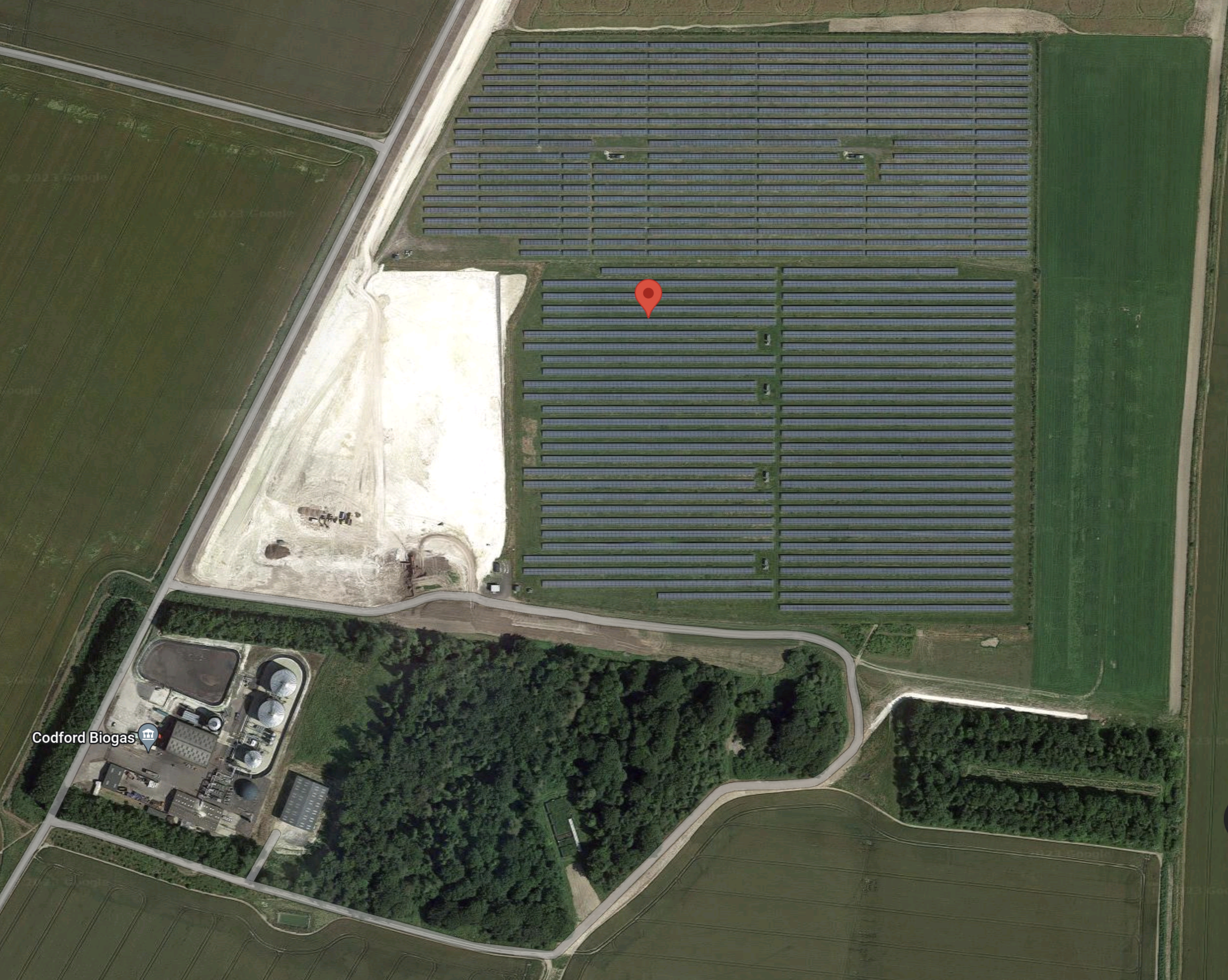
This Google Map shows the location of the Codford Solar Farm.
Note.
- The solar panels marked with the red arrow.
- Codford Biogas in the South-West corner of the map.
- The site is surrounded with the fields of a large arable farm, that grows wheat, barley and oilseed rape.
- The site is also shielded by trees.
This second Google Map shows Codford Biogas.
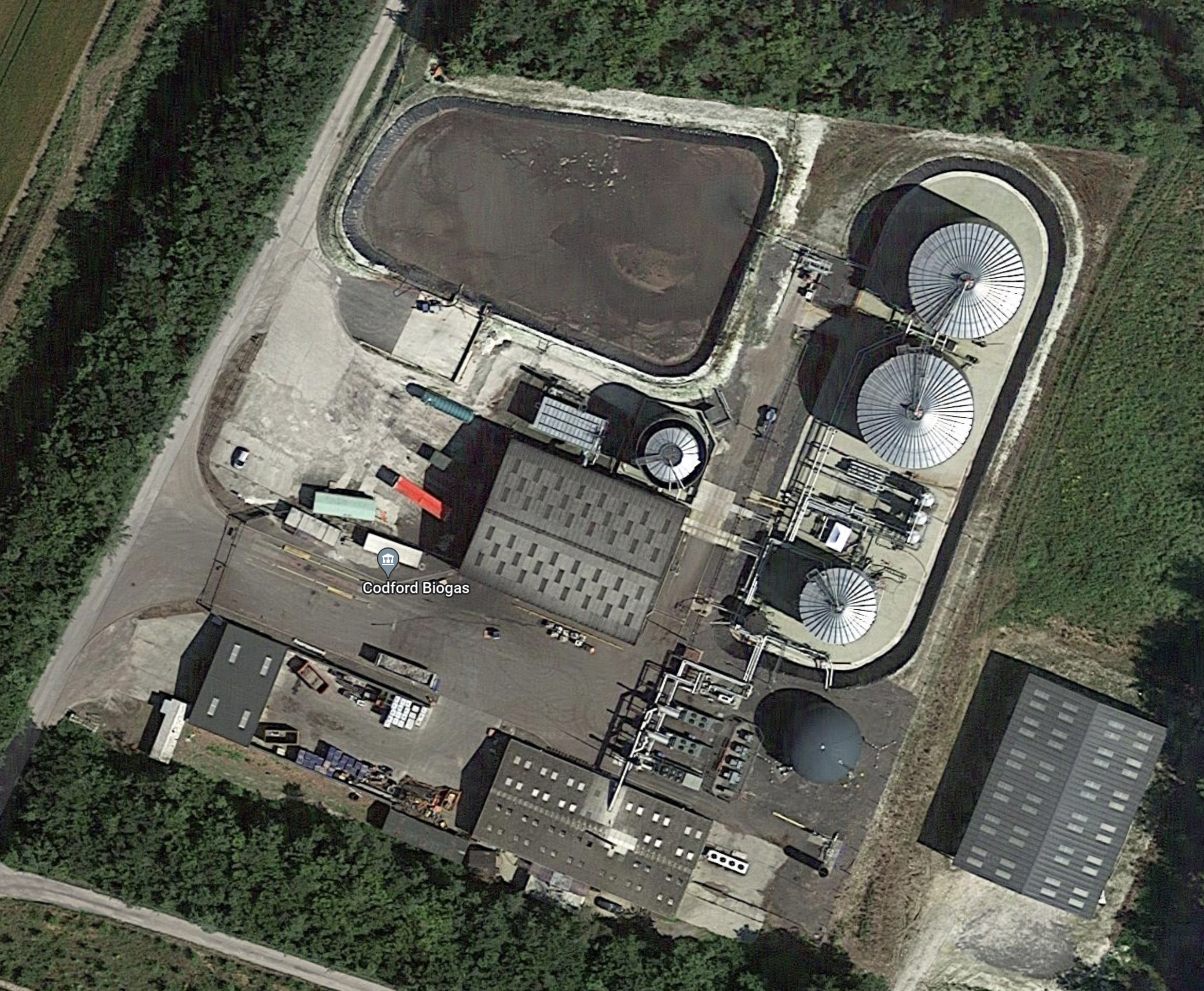
According to their web site, Codford Biogas accept the widest range of food waste in southern England.
The home page describes waste collection, secure disposal and carbon reduction.
Their method of disposal uses anaerobic digestion, which is a complex biological process involving the breakdown of organic matter in the absence of air in large, sealed and insulated vessels with controlled heating and mixing.
The Wikipedia entry for anaerobic digestion describes the process in detail.
On their web site, there is a page, which is entitled What Is AD?, which has an interactive graphic describing the process at Codford.
Main products from the site include.
- 3.6 MW of electricity, which can be fed to the grid.
- Fertiliser, which can be spread directly on the surrounding arable land.
- Waste heat, which will be developed for businesses that need it.
Obviously, the electricity export will need a grid connection, which I suspect will also be used by the new solar farm.
Conclusion
It looks like Centrica have piggy-backed their solar farm on to an existing grid connection.
But it does look like connecting your solar farm to the grid through a power station that can operate continuously, helps to give a more continuous output.
I think we’ll see more of this!
Plans Submitted For Hydrogen Pilot Plant At Humber Power Station
The title of this post, is the same as that of this article on Business Live.
This is the sub-heading.
HiiRoc and Centrica partnership at Brigg moves forward as consent sought.
These two paragraphs complete the original article.
Plans for a hydrogen pilot plant to sit alongside Centrica’s Brigg Power Station have been submitted to North Lincolnshire Council.
The low carbon fuel is set to be blended with gas at the peaking plant, in a tie-up between the energy giant and green-tech start up HiiRoc, in which it has invested. The well-backed Hull-based firm is pioneering a new production method, and was named as KPMG’s Global Tech Innovator for 2022.
I have very high hopes for HiiROC, who in addition to Centrica, have Hyundai and Kia as investors.
Endorsement from KPMG is surely positive.
Spirit Energy Welcomes Licence Award For World-Leading Carbon Storage Facility
The title of this post, is the same as that of this news item from Centrica.
This is the sub-heading.
Spirit Energy and its shareholders, Centrica Plc and Stadtwerke München GmbH (SWM), welcome licence award for world-leading carbon storage facility
These are the first two paragraphs.
Spirit Energy – with the support of majority shareholder Centrica Plc, and Stadtwerke München GmbH (SWM) – has today (18 May) been granted a carbon storage licence by the North Sea Transition Authority (NSTA). This represents a further step towards their net zero vision of repurposing the North and South Morecambe gas fields for carbon capture and storage.
Today’s announcement places the companies at the forefront of the decarbonisation efforts in the UK, with the MNZ (Morecambe Net Zero) Cluster having the potential to be one of the UK’s biggest carbon storage hubs. It will be able to store up to a gigaton of carbon dioxide – the equivalent of three years’ worth of current UK CO₂ emissions. It could initially store above 5MTPA of CO₂, scaling in time to 25MTPA. The MNZ Cluster will be able to accept CO₂ transported by pipeline, ship and rail.
Note.
- I would assume MTPA is megaton per annum.
- In the long-term, I believe we’ll find productive uses for a substantial amount of the CO₂ we create, in agriculture, manufacturing construction materials, animal foods and textiles and in other uses.
- The MNZ Cluster is very large and will be a superb partner for Carbon Capture and Use.
- The partners will invest over £1 billion in this project pending the outcome of the Track 2 process.
Neil McCulloch, CEO of Spirit Energy, finished the news item like this.
Spirit Energy has ambitions for the two gas fields to form the core of a green super-hub. This would explore opportunities like direct air capture, the manufacture of blue hydrogen, the production of green hydrogen, the integration of other renewable power generation facilities, and energy storage – all of which would put Barrow and the North West on the map as a centre for low-carbon innovation.
It is a good vision.
Businesses Back Hydrogen Trials To Accelerate Net Zero Ambitions
The title of this post, is the same as that of this news item on Centrica.
These are the three main findings of a business survey, to ascertain attitudes to hydrogen.
- Three quarters (77%) of businesses back hydrogen as part of their energy improvement strategy with a quarter (27%) intending to trial or implement it in the next two years.
- Almost one in ten (8%) respondents say they have already installed hydrogen-ready combined heat and power (CHP) units.
- A third (33%) of firms say energy costs are motivating them to adopt hydrogen.
This paragraph details who were surveyed.
We surveyed 500 executives in December 2022 and January 2023 across food and beverage manufacturing, healthcare, hospitality and travel, pharmaceutical manufacturing, heavy industry, horticulture and light industry. 24% of respondents were from the UK, 16% Ireland, 20% Netherlands, 20% Italy, 20% Hungary.
It certainly looks to be a well-constructed survey, with a wide range of respondents.
I have some thoughts.
Centrica And Combined Heat And Power
I was initially surprised that eight percent of respondents had already installed hydrogen-ready combined heat and power units.
But according to Centrica Announces Hydrogen Ready Combined Heat And Power Partnership With 2G, Centrica are preparing themselves for selling systems in this area.
Businesses Are Certainly Looking At Hydrogen
A figure of 77 % of businesses are looking at hydrogen and 27 % are investing in hydrogen.
But I don’t think the average man on the Clapham Omnibus would be so enthusiastic.
Costs Are Motivating Firms To Adopt Hydrogen
I would be surprised if costs didn’t have an effect.
But if costs are driving them towards hydrogen, then hydrogen must be more affordable.
Which is one in eye for hydrogen deniers, who always tell me it is more expensive.
Are Centrica Working To Drop Their Costs?
These posts would suggest they are.
- Centrica And Ryze Agree To Develop Hydrogen Pathway
- Centrica Announces Hydrogen Ready Combined Heat And Power Partnership With 2G
- Centrica Partners With Hull-Based HiiRoc For Hydrogen Fuel Switch Trial At Humber Power Plant
- Centrica Plan Green Energy Hub At Former Gas Power Plant
- Centrica Re-Opens Rough Storage Facility
- Lhyfe And Centrica To Develop Offshore Renewable Green Hydrogen In The UK
They are doing deals with start-ups and repurposing old plants and pipelines.
Conclusion
Centrica seem to be leading the charge to hydrogen in the UK.
Centrica Plan Green Energy Hub At Former Gas Power Plant
The title of this post, is the same as that of this news item from Centrica.
These three paragraphs outline the project.
A former gas fired power plant in North Yorkshire is to be turned in to a green energy hub under ambitious plans by Centrica.
The energy company has acquired the four-acre former Knapton Generating Station from Third Energy and plans to develop a 28MW battery on the site.
In addition, Centrica is exploring how Knapton could be used for off-grid hydrogen production, as well as the possibility for solar energy in the surrounding area.
Over the last few months, I’ve written about other small projects from Centrica.
- Centrica Business Solutions Begins Work On 20MW Hydrogen-Ready Peaker In Redditch
- Centrica And HiiROC To Inject Hydrogen At Brigg Gas-Fired Power Station In UK First Project
The company has also announced links with other companies.
- Centrica Announces Hydrogen Ready Combined Heat And Power Partnership With 2G
- Lhyfe And Centrica To Develop Offshore Renewable Green Hydrogen In The UK
- Centrica And Ryze Agree To Develop Hydrogen Pathway
Note, that the first concerns generators and the others concern hydrogen.
The Centrica news item about the Knapton generating station has this fourth paragraph.
The multi-million pound deal is part of Centrica Business Solutions strategic plan to create a 900MW portfolio of solar and battery assets by 2026.
It seems obvious to me that the Brigg, Knapton and Redditch projects fit this Centrica Business Solutions strategic plan, with sizes as follows.
- Brigg – 49 MW
- Knapton – 41.5 MW
- Redditch – 20 MW
I would expect to see Centrica behind several more of these smaller energy projects.
For that reason I have tagged all articles dealing with these projects as Centrica Small Energy Projects.
These are my thoughts about the Knapton generating station.
Third Energy
Third energy’s web site defines Third Energy as an unusual fossil energy company.
- The History page says that Knapton Generating Station was producing electricity using gas from the Vale of Pickering for over 25 years.
- The Net Zero Rise page describes their involvement in the Net Zero RISE consortium with Durham, Leicester and Oxford Universities.
- The Plug & Abandon and Geothermal pages are very much worth a read.
According to the Centrica news item, Third Energy will retain the ownership of the 12 well-sites and associated gas pipeline network.
I shall be watching this company and their developing relationship with Centrica.
The Net Zero RISE Consortium
The Net Zero RISE Consortium has a home page on the Newcastle University web site.
The page has this sub-heading.
Research Infrastructure for Subsurface Energy: an academic-industry partnership to deliver the UK’s first deep test sites.
This is said under a heading of Our Ambition.
This is the most cost-effective way of developing the UK’s first deep test site onshore.
Repurposing wells leverages previous capital investment. Using an onshore site with existing wells and geophysical data:
- eliminates the major cost of drilling and engineering
- reduces uncertainty by drawing on knowledge of the well and surrounding geological conditions
- is safer and easier access than offshore locations
We propose developing three test sites: CO2 storage; H2 storage and geothermal.
This seems to be a very sensible research collaboration and I wouldn’t be surprised to see more companies and universities join.
The Battery
The Centrica news item says this about the battery.
The first project at the site near Malton will be a 56MWh battery which will utilise some of the 41.5MW export capability of the existing grid connection. It’s anticipated the battery would be able to power around 14,000 homes for two hours.
This paragraph would indicate that the battery is supplying just 2 kWh per hour.
A common figure on the Internet is that the average house uses 8 kWh per day, which is 0.33 kWh per hour.
I have a feeling that the figures need correcting somewhere.
Solar Power
The third paragraph of the Centrica news item mentions solar energy.
In addition, Centrica is exploring how Knapton could be used for off-grid hydrogen production, as well as the possibility for solar energy in the surrounding area.
This Google Map shows the site.
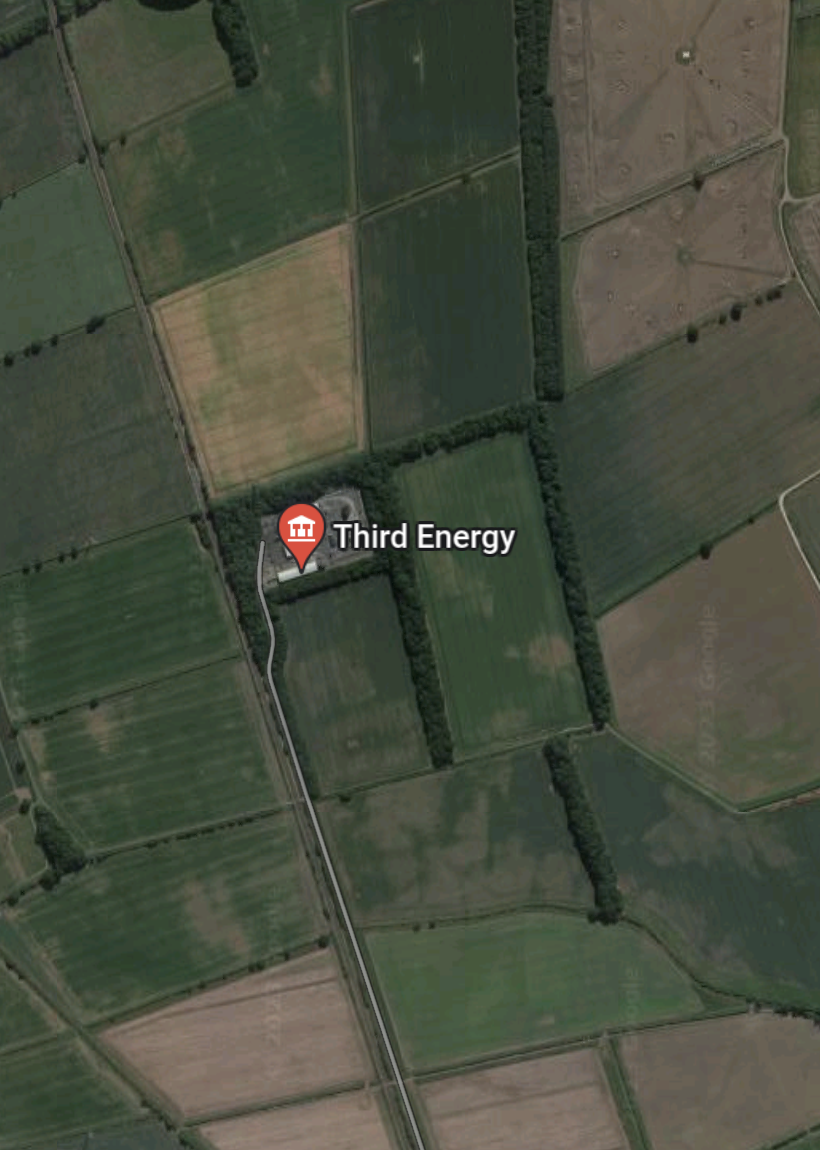
It appears to be several hundred metres to the nearest house.
I have read a very simple rule, that says a hectare, which is about the size of a full-size football pitch can accommodate a MW of panels. Obviously Centrica will have accurate calculations.
Off-Grid Hydrogen Production
The third paragraph of the Centrica news item mentions off-grid hydrogen production.
In addition, Centrica is exploring how Knapton could be used for off-grid hydrogen production, as well as the possibility for solar energy in the surrounding area.
Consider these points about the Knapton site.
- It has been handling gas for at least twenty-five years.
- It is connected to the electricity and gas grids.
- It has connections to a dozen gas wells.
- There would be space for a smaller electrolyser.
- Hydrogen could be exported from the site, by blending into the natural gas grid.
If Third Energy and the Net Zero RISE Consortium develop Knapton as a site for their H2 Storage test well, Centrica and an off-grid hydrogen production facility would be ideal partners.
Centrica could even use the site to try out new ideas.
This appears to be one of those engineering projects, that has been thought through whilst drinking several pints of real ale in a welcoming hostelry nearby.
Geothermal Engineering
This site could be used for experiments with geothermal engineering, but there doesn’t seem many places nearby, that would need a good supply of hot water.
Conclusion
There’s more to this deal, than meets the eye.
Centrica Business Solutions Begins Work On 20MW Hydrogen-Ready Peaker In Redditch
The title of this post, is the same as that as this news item from Centrica Business Systems.
This is the sub-heading.
Centrica Business Solutions has started work on a 20MW hydrogen-ready gas-fired peaking plant in Worcestershire, as it continues to expand its portfolio of energy assets.
These three paragraphs outline the project.
Centrica has purchased a previously decommissioned power plant in Redditch, and is set to install eight UK assembled containerised engines to burn natural gas.
Expected to be fully operational later this year, the peaking power plant will run only when there is high or peak demand for electricity, or when generation from renewables is low. The Redditch project will have the capacity to power the equivalent of 2,000 homes for a full day when required, helping to maintain stability and reliability on the grid.
The engines will also be capable of burning a blend of natural gas and hydrogen, futureproofing the site and helping the UK transition towards a decarbonised energy system.
- The original power station had Rolls-Royce generators.
- Cummins and Rolls-Royce mtu and possibly other companies can probably supply the dual fuel generators.
- Cummins have received UK Government funding to develop hydrogen-powered internal combustion engines.
- This press release from Cummins, which is entitled Dawn Of A New Chapter From Darlington, gives more details on Cummins’ plans for the Darlington factory and hydrogen.
Given that Cummins manufactured sixty-six thousand engines in Darlington in 2021 and it is stated that these containerised engines will be assembled in the UK, I feel, that these engines may be from Cummins.
Centrica’s Plans
This paragraph in the Centrica Business Systems news item, outlines their plans.
The Redditch peaking plant is part of Centrica’s plans to deliver around 1GW of flexible energy assets, that includes the redevelopment of several legacy-owned power stations, including the transformation of the former Brigg Power Station in Lincolnshire into a battery storage asset and the first plant in the UK to be part fuelled by hydrogen.
As Redditch power station is only 20 MW, Centrica could be thinking of around fifty assets of a similar size.
Brigg Power Station
The Wikipedia entry for Brigg Power station gives these details of the station.
- The station was built in 1993.
- It is a combined cycle gas turbine power station.
- The primary fuel is natural gas, but it can also run on diesel.
- It has a nameplate capacity of 240 MW.
Brigg power station is also to be used as a test site for hydrogen firing.
This news item from Centrica is entitled Centrica And HiiROC To Inject Hydrogen At Brigg Gas-Fired Power Station In UK First Project.
These paragraphs from the news item explains the process.
The 49MW gas fired plant at Brigg is designed to meet demand during peak times or when generation from renewables is low, typically operating for less than three hours a day. Mixing hydrogen in with natural gas reduces the overall carbon intensity.
It’s anticipated that during the trial, getting underway in Q3 2023, no more than three per cent of the gas mix could be hydrogen, increasing to 20% incrementally after the project. Longer term, the vision is to move towards 100% hydrogen and to deploy similar technology across all gas-fired peaking plant.
HiiROC’s proprietary technology converts biomethane, flare gas or natural gas into clean hydrogen and carbon black, through an innovative Thermal Plasma Electrolysis process. This results in a low carbon, or potentially negative carbon, ‘emerald hydrogen’.
Because the byproduct comes in the form of a valuable, solid, pure carbon it can be easily captured and used in applications ranging from tyres, rubbers and toners, and in new use cases like building materials and even as a soil enhancer.
It looks to me, that HiiROC are using an updated version of a process called pyrolysis, which is fully and well-described in this Wikipedia entry. This is the first paragraph.
The pyrolysis (or devolatilization) process is the thermal decomposition of materials at elevated temperatures, often in an inert atmosphere. It involves a change of chemical composition. The word is coined from the Greek-derived elements pyro “fire”, “heat”, “fever” and lysis “separating”.
Pyrolysis is more common than you think and is even used in cooking to do things like caramelise onions. This is a video of a chef giving a demonstration of caramelising onions.
On an industrial scale, pyrolysis is used to make coke and charcoal.
I came across pyrolysis in my first job after graduating, when I worked at ICI Runcorn.
ICI were trying to make acetylene in a process plant they had bought from BASF. Ethylene was burned in an atmosphere, that didn’t have much oxygen and then quenched in naphtha. This should have produced acetylene , but all it produced was tonnes of black soot, that it spread all over Runcorn.
I shared an office with a guy, who was using a purpose-built instrument to measure acetylene in the off-gas from the burners.
When he discovered that the gas could be in explosive limits, ICI shut the plant down. The Germans didn’t believe this and said, that anyway it was impossible to do the measurement.
ICI gave up on the process and demolished their plant, but sadly the German plant blew up.
It does look like HiiROC have tamed the process to be able to put hydrocarbons in one end and get hydrogen and carbon black out the other.
I wonder how many old and possibly dangerous chemical processes can be reimagined using modern technology.
It certainly appears that Centrica are not holding back on innovation.
Conclusion
I’ve never run a large electricity network. Not even a simulated one.
But I’m fairly sure that having a large number of assets of different sizes, that can be optimised to the load and the fuel available, creates a more reliable and efficient network.
Heavy energy users may even have their own small efficient power station, that is powered by gases piped from the local landfill.
Centrica And UK Infrastructure Bank Announce Significant Investment Into Sustainable Electricity Funds
The title of this post is the same as that of this press release from Centrica.
This is the sub-heading.
Funds set to help supercharge UK’s transition to cleaner, greener energy
These four paragraphs outline the investment.
Centrica and UK Infrastructure Bank have today announced they are investing up to £265 million in sustainable energy storage to help drive the country’s transition to a cleaner, greener and more resilient electricity network.
The proposed investment will support the development of new energy storage, following the Bank’s expression of interest to find innovative ways to fund and increase the nation’s storage capacity.
The Bank will invest £75 million on a match funding basis into the Gresham House Secure Income Renewable Energy & Storage LP (SIRES) alongside a £65 million investment from Centrica.
UK infrastructure Bank has committed to invest £125 million on a match-funding basis into Equitix UK Electricity Storage Fund.
Note.
- Centrica describes itself on its web site, as an energy services and solutions company.
- The Wikipedia entry for the UK Infrastructure Bank, says it is a British state-owned development bank.
- The Equitix web site has a mission statement sating it is a responsible investor, investing in, developing and managing global infrastructure assets, which materially contribute to the lives of the communities they serve.
By supporting two energy storage funds, it is to be hoped that more electricity storage is added to the UK electricity network.
This is a paragraph in the press release.
Currently National Grid forecasts show that up to 29 GW of total storage could be needed by 2030 and up to 51 GW by 2050. This is a huge increase on the 5 GW currently available and means there is a clear need to accelerate deployment of capital and investment in new storage projects.
I doubt there will be any problems deploying new energy storage.
The press release then has a paragraph on what each fund will do with the money.
Gresham House Secure Income Renewable Energy & Storage LP (SIRES)
I will pick these important points from the paragraph.
- Centrica and the UK Investment Bank will invest on a matched funding basis.
- Centrica will be a cornerstone investor, and this marks the first time the business has invested in such a fund.
- Collocation of renewable generation and short duration electricity storage facilities to help maximise grid connections.
- The seed asset will be a collocated solar and battery energy storage project in Hartlepool, County Durham, with 50 MWp solar capacity and 75 MWh of battery energy storage.
- Centrica will seek to provide a route-to-market for the assets in the fund once they become operational.
You could almost consider this a When the wind doesn’t blow and the sun doesn’t shine fund.
Equitix UK Electricity Storage Fund
I will pick these important points from the paragraph.
- The Bank will support the launch of the fund by committing to invest up to £125million on a match-funding basis.
- The fund will focus on a combination of innovative business models across both short and long duration storage. Short duration strategies may include installation in households and at underutilised commercial premises, as well as co-location.
- The fund will also aim to deploy a range of long duration storage technologies, such as pumped-hydro.
Does a range of technologies mean that they will support new storage technologies?
Hulam Farm, Hartlepool
This page on the Lightsource-BP web site is entitled Proposed Solar Installation At Hulam Farm.
This is the first paragraph.
The proposal involves Lightsource bp funding the development of a solar installation that will connect into the local electricity network, with an output power capacity of 49.9MW (Megawatts).
Could this be the solar part of the Hartlepool project mentioned in the press release?
- Lightsource BP are experienced funders of solar farms.
- Gresham House have built many batteries of the size needed.
- I don’t think technically, there will be too many problems.
I shall watch this development with interest.
What’s In It For Centrica?
I have to ask this question.
Consider.
- Centrica is part-owner of the 270 MW Lincs offshore wind farm, which was commissioned in September 2013.
- Centrica is half-owner of the 194 MW Lynn and Inner Dowsing wind farm, which was commissioned in March 2009.
- Both these wind farms have separate substations in Lincolnshire.
- Centrica also have interests in two onshore wind farms in Scotland, that have a combined capacity of 98 MW.
I wonder how many times these wind farms have been shut down because of too much electricity?
Will Gresham House pit batteries on these sites?
 The Anonymous Widower