Could Anglia Railways’ London Crosslink Be Recreated As Part Of The London Overground?
This is the first paragraph of the Wikipedia entry for the original London Crosslink.
London Crosslink was a passenger train service operated by Anglia Railways between Norwich and Basingstoke, using the North London Line to bypass central London. Class 170 Turbostar diesel multiple units were used, and the service operated between 22 May 2000 and 28 September 2002, supported by funding from the Strategic Rail Authority through its Rail Passenger Partnership fund.
Note.
- The service called at Diss, Stowmarket, Ipswich, Colchester, Whitham, Chelmsford, Ingatestone, Romford, Stratford, Highbury & Islington, Camden Road, Willesden Junction, West Hampstead Thameslink, Brentford, Feltham, Staines, Woking, and Farnborough (Main)
- It ran six times on Monday to Friday and five times on Sunday.
- Feltham and Woking stations have a coach link to Heathrow.
- Journeys took around 3 hours and 44 minutes.
Over the years, attractions and other rail lines and stations served by the route have changed. improved and been added.
- In 2006, the Arsenal’s Emirates Stadium opened within walking distance of Highbury & Islington station.
- In 2012, the Olympic Stadium opened at Stratford and is now used by West Ham United.
- In 2020, Brentford Stadium opened within walking distance of Brentford station.
- There are long-term plans for a station at Brentford stadium.
- In 2022, Romford and Stratford stations were connected to the Elizabeth Line.
- In 2025, Beaulieu Park station was added to the Greater Anglia Main Line.
- In 2026, both ends of the route came under the control of Great British Railways.
At some point in the future, Old Oak Common Lane station will open to link the route to High Speed Two, the Great Western Main Line and the Elizabeth Line.
In Can The Signalling Of The London Overground Be Improved?, I looked in detail at the signalling of the London Overground and if it could handle more trains.
My conclusion was that on the East and North London Lines, another three trains per hour (tph) could probably be accommodated, which over an average day was probably around sixty trains.
As a restored London Crosslink would need just six paths per day, I would suspect the service could be restored, if it were thought to be a good idea.
I certainly feel that capacity would not be a problem.
These are a few other thoughts.
Will There Be Political Problems?
Providing the London Mayor approves, I can’s see any problem with Labour and I can’t see other parties objecting if passengers like it.
Would It Be Sensible To Use Lumo Branding And Trains?
Consider.
- Lumo is trusted branding.
- A five-car Lumo Class 803 train is 132 metres long and a pair of four-car London Overground Class 710 trains is 166 metres long, so I suspect platform length problems will be minimal.
- I doubt there will be problems on the Greater Anglia network.
- Stratford and Norwich is mainly a 100 mph network.
- Not all parts of the route have 25 KVAC overhead electrification, but batteries can be fitted to the Class 803 trains, that will cover any gaps.
- My calculations show that the modern trains will be twenty-two minutes quicker, than Anglia Railways Class 170 diesel trains.
- At one point Anglia Railways was owned by First Group, so FirstGroup may have knowledge of the problems of the route.
I believe it would be sensible to use Lumo branding and trains.
Could The Route Be Extended?
Consider.
- It could probably be extended to Winchester, Southampton and Bournemouth in the South.
- If offshore hydrogen takes off at Great Yarmouth, it might be worth extending with a reverse to Yarmouth in the North.
- Yarmouth has had a direct service from London in the past.
The service could also develop days out by the sea.
Five-Car Class 710 Train On The North London Line
I had my first ride on a five-car Class 710 train on the North London Line, this week.
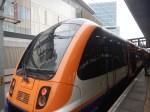
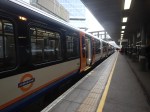
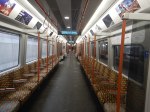
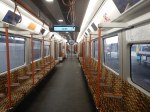
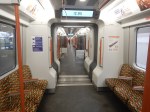
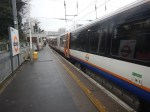
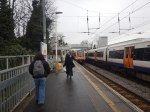
I just took the train from Stratford to Hackney Central stations, so I could get the 38 bus home.
Jobs, Homes And The Economy: Bakerloo Line Upgrade And Extension To Be Transformational For London
The title of this post, is the same as that of this article on Rail Technology Magazine.
This is the sub-heading.
The government has been urged to use the upcoming spring budget to commit to upgrading and extending the Bakerloo line after a new impact assessment found its effects could be transformational.
These three paragraphs introduce the article.
The impact assessment – commissioned by Central London Forward, a partnership of 12 central London boroughs – finds that such a move would boost the economy, unlock new homes, create new jobs, and more.
The upgrade would centre around new trains and signalling, while the extension would take the terminus to Lewisham in the first phase, and eventually to Hayes – adding 14 new stations.
The impact assessment concludes that the extension and upgrade of the Bakerloo line would create 9,700 jobs, 190,000 square metres of commercial floorspace, as well as generate £1.5bn of GVA.
The article is a must-read and eloquently puts the case for the Bakerloo Line Extension.
I have a few thoughts.
A Loop At Brixton For The Victoria Line
This has been proposed and the Wikipedia entry for the Victoria Line has this paragraph.
Proposals have been made to extend the line one stop southwards from Brixton to Herne Hill, a significant interchange in south London providing access to Kent, Blackfriars, London Bridge and Sutton. The latter station would be on a large reversing loop with a single platform removing a critical capacity restriction eliminating the need for trains to reverse at Brixton and provide a more obvious route for passengers who look for the nearest tube station before any other transport options.
I like this idea.
- It will make it easier to run the full frequency of 33 trains per hour (tph) between Brixton and Walthamstow Central stations.
- Loops at Heathrow and Liverpool seem to work very well.
- A single-platform with platform-edge doors has a high level of safety.
- Only one tunnel boring machine (TBM) would be needed.
- Large lifts could be used between the surface and the platform.
- It is a more affordable option.
But perhaps most importantly, I am sure, the loop could be built whilst other services at Brixton and Herne Hill were running almost without disruption, as services did at Kennington, whilst the Battersea Extension of the Northern Line was built.
A Loop At Elephant And Castle For The Bakerloo Line
I have spent forty years involved in project management, writing software for project managers and generally listening to some of the thoughts and experiences of some of the best engineers from all over the world.
One common thread, which is best illustrated by how the size of lift possible increased in the North Sea in the 1970s, is that as time has progressed machines have got bigger and more capable, and the techniques of using them has improved immeasurably.
The Crossrail tunnel boring machines (TBM) make those used on the Jubilee Line extension or the Channel Tunnel look like toys. But not only are the TBMs bigger and faster, they have all the precision and control to go through the eye of the smallest needle.
If we look at the proposals for the Bakerloo Line Extension, there have been several differing ideas. Some envisage going under Camberwell and in others the trains terminate on the Hayes line.
Transport for London (TfL), obviously know the traffic patterns, but do we really want to take the chance of say connecting the Hayes line to the Bakerloo and then finding that it’s not the best solution?
What we should do is augment the services in the area, by providing a good alternative transport route, that links to some of the traditional rail lines to give even more flexibility. We certainly shouldn’t repeat the grave mistake that was made at Brixton in the 1960s by not connecting the Victoria line to the surface rail lines.
This is Transport for London’s indicative map of the extension.

I have reason to believe that the Northern Line Extension may be being built as an extension to the Kennington Loop.
So could we design the Bakerloo Line Extension as a loop starting and finishing at Elephant and Castle calling at important stations?
A possible route could be.
- Elephant and Castle – Interchange with Northern Line and National Rail including Thameslink
- Old Kent Road 1 – Proposed on Map
- Old Kent Road 2 – Proposed on Map
- New Cross Gate – Interchange with London Overground and National Rail
- Lewisham – Interchange with Docklands Light Railway and National Rail including Hayes Line
- Catford Bridge – Interchange with Catford station and National Rail including Hayes Line and Thameslink
- Peckham Rye – Interchange with London Overground and National Rail
- Camberwell – Interchange with National Rail including Thameslink
- Elephant and Castle
The advantages of this simple design are.
- The tunnel would be excavated in one pass by a single TBM.
- The line could be deep under any existing infrastructure.
- Most stations would be simple one-platform affairs, with perhaps only large lifts and emergency stairs, to give unrivalled step-free access for all from the street to the train. Surely lifts exist, that are large and fast enough to dispense with escalators.
- For safety, passenger convenience and flows, and other reasons, the stations could have two entrances, at opposite ends of the platform.
- The simple station entrances would be much easier to position on the surface, as they wouldn’t need to be much bigger than the area demanded by the lifts.
- A single loop would only need half the number of platform edge doors.
- At stations like New Cross Gate, Lewisham, Catford and Peckham Rye the lifts would surface within the confines of the existing surface stations.
- The route has interchanges with the Brighton Main Line, East London Line, Hayes Link, Thameslink and other services, so this would give lots of travel possibilities.
- Trains do not need a terminal platform, as they just keep going on back to Elephant and Castle.
- The loop would be operationally very simple, with no points to go wrong. TfL have aspirations to run twenty-seven trains per hour on the Bakerloo and a simple reversing loop , which would mean the driver didn’t have to change ends, must certainly help this. It would probably be a lot more difficult to get this capacity at the northern end of the line,where Harrow and Wealdstone doesn’t have the required capacity and the only possibility for a reversing loop would be north of Stonebridge Park.
- Elephant and Castle would need little or no modification. Although it would be nice to have lifts to the Bakerloo Line.
- Somewhere over two billion pounds has been quoted for the extension. A single loop with simple stations must be more affordable.
The main disadvantage is that the loop is only one-way.
But making even part of the loop two-way would create all the operational difficulties of scheduling the trains. It would probably be better, less costly and easier to make the trains go round the loop faster and more frequently.
But if a passenger went round the loop the wrong way and changed direction at Elephant and Castle that would probably only take a dozen minutes or so.
Alternatively, I’m sure some New Routemasters would step up to the plate and provide service in the other direction between the stations.
Future Rolling Stock For The Bakerloo Line
This has a section in the Wikipedia entry for the Bakerloo Line, where this is said.
In the mid 2010s, TfL began a process of ordering new rolling stock to replace trains on the Piccadilly, Central, Bakerloo and Waterloo & City lines. A feasibility study into the new trains showed that new generation trains and re-signalling could increase capacity on the Bakerloo line by 25%, with 27 trains per hour.
In June 2018, the Siemens Mobility Inspiro design was selected.[ These trains would have an open gangway design, wider doorways, air conditioning and the ability to run automatically with a new signalling system.[35] TfL could only afford to order Piccadilly line trains at a cost of £1.5bn. However, the contract with Siemens includes an option for 40 trains for the Bakerloo line in the future. This would take place after the delivery of the Piccadilly line trains in the late 2020s.
A loop from Elephant and Castle with a train every 2¼ minutes, is not going to be short of passengers.
The Catford Interchange
Catford and Catford Bridge stations are not far apart.
In An Opportunity At Catford, I talked about what could be done to create a full step-free interchange, which could be connected to the Bakerloo Line loop underneath.
Would It Be Possible For The Bakerloo And Watford DC Lines To Use The Same Trains?
I answered this question in a post with the same name and this was my conclusion.
A common fleet used by the Bakerloo and Watford DC Line would appear to give advantages and it has been done successfully before.
But what the Bakerloo Line, the Watford DC Line, the Abbey Line and the Bakerloo Line Extension need is a good dose of holistic design.
The current trains on the Watford DC Line would be moved to the London Overground. They could be ideal for the future West London Orbital Railway.
Would There Be Advantages In Creating The West London Orbital Railway And Extending The Bakerloo Line As One Project?
Consider.
- The two lines will have an interchange station at Harlesden, which will need to be rebuilt.
- The current trains on the Watford DC Line could be cascaded to the West London Orbital Railway.
- As new trains are delivered to the Piccadilly Line, some of the current trains could be cascaded to the Bakerloo Line.
- Major work for the Bakerloo Link Extension includes a new tunnel, updated signalling and at least seven underground stations.
- Major work for the West London Orbital probably includes track refurbishment, new signalling and updated stations.
I believe that with good project management, that if these two lines were to be created together, this would be advantageous.
Conclusion
I have only outlined how the two projects might be done together.
But I am absolutely certain, that someone with full knowledge of both projects could build the two at a very affordable cost.
West London Orbital: Line Could Be Reused For Passengers
The title of this post is the same as that of this article on the BBC.
This is the sub-heading.
A railway line that stopped serving passengers in 1902 could be brought back into use as a route called the West London Orbital.
These are the first three paragraphs.
The Dudding Hill loop runs from Acton to Cricklewood and currently only takes freight trains.
Transport for London (TfL) published a strategic document in 2021 saying it would be “a catalyst for relieving road congestion in west London”.
It is estimated by TfL more than 11 million people a year would use it.
This is also said.
Sharma Tatler, the deputy leader of Brent Council, called the plan “a no-brainer”.
I agree with that.
These are my thoughts.
Finding The Money
Money will be needed for the following.
- To build and update the stations on the route.
- To acquire the new trains needed.
- To bring the track and signalling up to the required standard.
Note.
- It appears that around a dozen freight trains use the route on a typical day.
- Hopefully, Network Rail can come up with an affordable plan for the track and signalling, as the route is used by freight trains at the present time.
- I would envisage that the trains used would be a version of the current Class 710 trains used on the Overground. These could probably be leased.
I wouldn’t be surprised that the cost of the stations, will be the major part of the building of the line.
Building the stations is probably, the easiest place to bring in private finance. Especially, if stations incorporated housing or other developments.
On a train going to the North a few years ago, I met two infrastructure funders from L & G (in Standard Class), who were going to lend a company 50 billion to develop a large residential housing site. We got talking and I asked them if they would develop a mythical branch line with a good station site at the end. (Think Felixstowe!) I asked if they’d fund housing and possibly the trains. They said yes!
So I suspect that the West London Orbital could also be funded in the same way, as there are a few stations to build and upgrade. Much needed housing could be built on top or nearby.
I would also deck-over Neasden Depot and build housing in town blocks on top.
I believe that the West London Orbital could be funded.
Electrification
The Wikipedia entry for the West London Orbital describes the route like this.
The route would run for approximately 11 miles (17 km) from West Hampstead and Hendon at the northern end to Hounslow at the western end via Brent Cross West, Neasden, Harlesden, Old Oak Common, South Acton and Brentford.
Note.
- There is 25 KVAC overhead electrification at the Northern end of the route between West Hampstead Thameslink and Hendon stations.
- The Dudding Hill Line between the Midland Main Line and Acton Wells Junction is not electrified.
- The North London Line between Acton Wells Junction and Acton Central station is electrified with 25 KVAC overhead wires.
South of Acton Central station, the electrification gets complicated as this OpenRailwayMap shows.
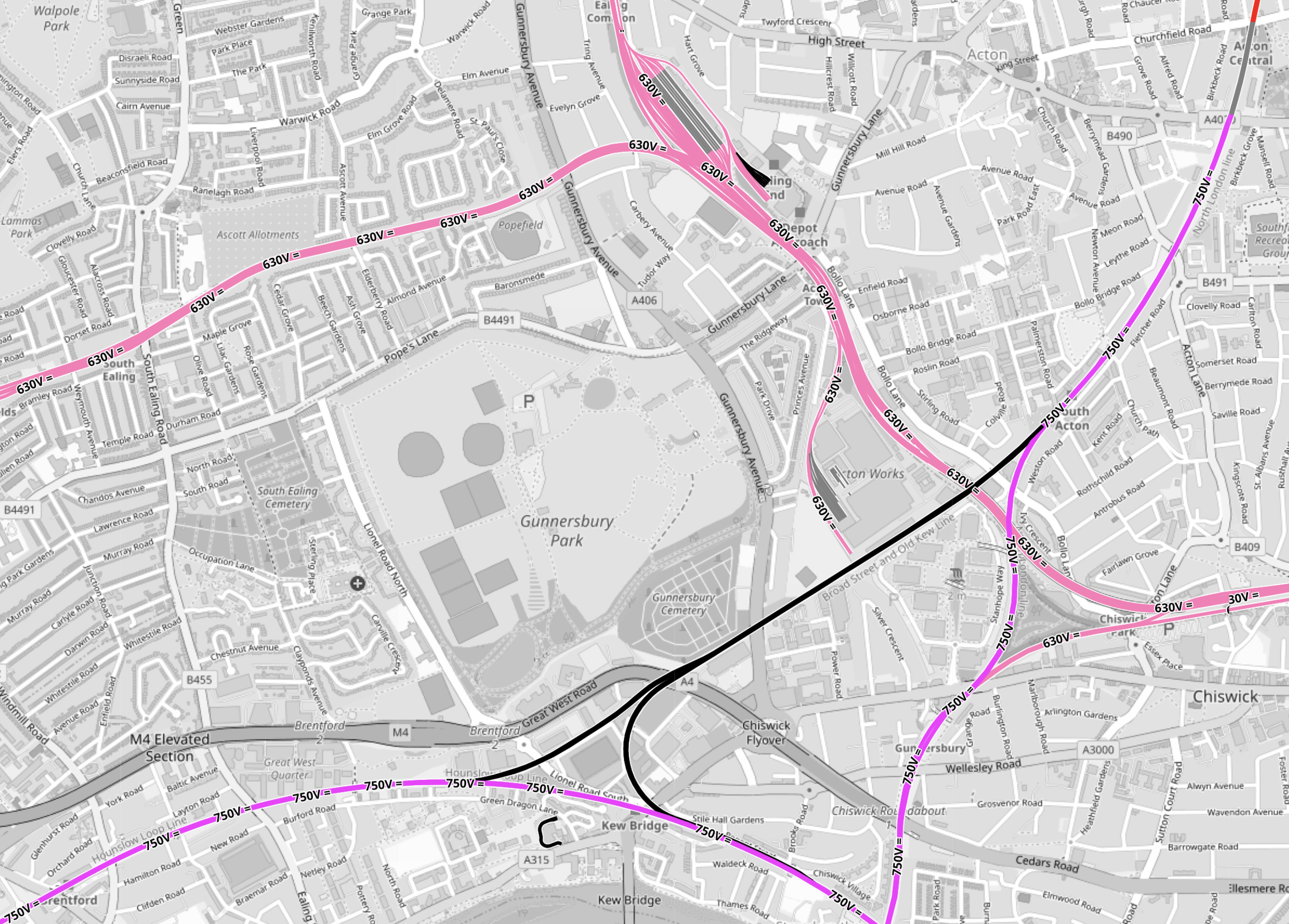
Note.
- Acton Central station is in the North-East corner of the map.
- Brentford station is in the South-West corner of the map.
- The red track is electrified with 25 KVAC overhead and it is used North of Acton Central station.
- Mauve track is electrified with British Rail third rail.
- Ptnk track is electrified with London Underground third rail.
- Black track is not electrified.
- West London Orbital trains between West Hampstead Thameslink and Hounslow will use the direct route between Acton Central and Brentford.
- West London Orbital trains between Hendon and Kew Bridge terminate at the South-Eastern point of the triangular junction.
It seems that trains will be needed that can use both types of electrification and none.
New Trains
Because of the requirement of the trains to be able to use both types of electrification and be self-powered, the trains will either have hydrogen or battery power to augment electric traction.
Hendon and Hounslow is 11.3 miles and this will be longer than any service distances, so I suspect that a battery-electric train could handle the route.
In this article in Global Rail News from 2011, which is entitled Bombardier’s AVENTRA – A new era in train performance, gives some details of the Aventra’s electrical systems. This is said.
AVENTRA can run on both 25kV AC and 750V DC power – the high-efficiency transformers being another area where a heavier component was chosen because, in the long term, it’s cheaper to run. Pairs of cars will run off a common power bus with a converter on one car powering both. The other car can be fitted with power storage devices such as super-capacitors or Lithium-ion batteries if required. The intention is that every car will be powered although trailer cars will be available.
Unlike today’s commuter trains, AVENTRA will also shut down fully at night. It will be ‘woken up’ by remote control before the driver arrives for the first shift
This was published over ten years ago, so I suspect Bombardier (or now Alstom) have refined the concept.
Bombardier have not announced that any of their trains have energy storage, but I have my suspicions, that both the Class 345 and Class 710 Aventra trains use super-capacitors or lithium-ion batteries, as part of their traction system design.
- I was told by a Bombardier driver-trainer that the Class 345 trains have an emergency power supply. When I said “Batteries?”, He gave a knowing smile.
- From the feel of riding on Class 710 trains, as a Control Engineer, I suspect there is a battery or supercapacitor in the drive system to give a smoother ride.
I also feel that the Aventra has been designed, so that it can accept power from a large variety of sources, which charge the battery, that ultimately drives the train.
Overground To London Bridge Under Consideration
The title of this post, is the same as that of a short article in the December 2023 Edition of Modern Railways.
This is the text of the article.
Transport for London is considering introducing London Overground services between Crystal Palace and London Bridge to help relieve overcrowding on the Sydenham corridor during the morning peak.
The move is one of two options outlined in a response to Lewisham’s Public Transport Liason Committee meeting on 4 October. The other is operating additional services on the existing route via the East London Line to Dalston Junction/Highbury & Islington. TfL acknowledges the London Bridge service would ‘represent a new routing for London Overground services that would necessitate significant changes to operational arrangements and driver testing’ and therefore further work is required ‘to establish the feasibility and business case for this change.’ There are no timescales for the implementation of either option.
The overcrowding follows the reduction by Govia Thameslink Railway of its Southern service to two trains per hour last September, when it replaced its East Croydon to London Bridge via Forest Hill stopping service with a Victoria to London Bridge via Forest Hill stopping service. In its response to the committee, GTR says the context to these changes is ‘the continued need to respond to the gap between our costs and revenues’, which it says is in the region of £15 million a year, with both demand and revenue having stabilised at around 80 % of pre-pandemic levels. It says its aim is to make ‘the most efficient use of the resources available to us,’ with the Victoria to London Bridge service designed to provide capacity for journeys to both stations’.
GTR says the current service has sufficient capacity and is lightly loaded outside peak times, and that while it will continue to keep passenger and feedback under review an increase from two to four trains per hour would require an increase in funding.
These are my thoughts.
Transport for London’s Long Term Plans
Plans exist to increase the frequency on various London Overground services and this graphic sums up what was planned a few years ago.
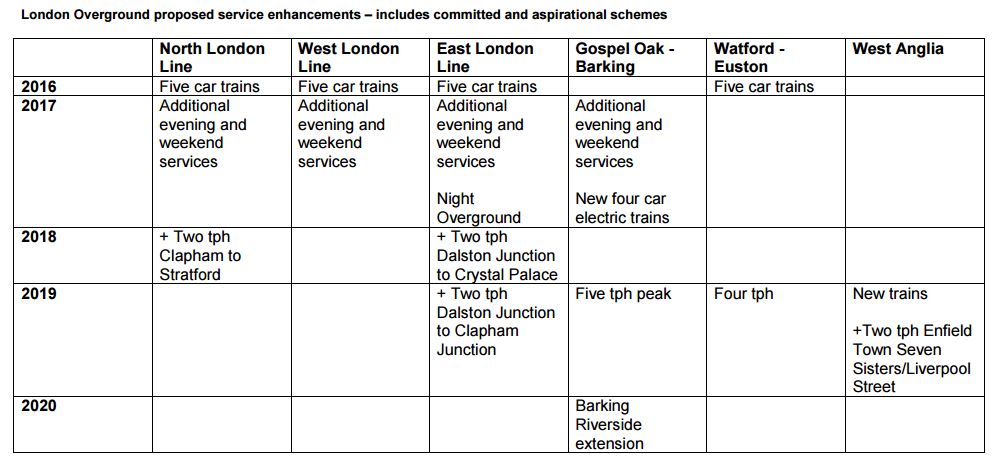
Note the extra two trains per hour (tph) between the following stations.
- Clapham Junction and Stratford
- Dalston Junction and Crystal Palace
- Dalston Junction and Clapham Junction
- Enfield Town and Liverpool St. via Seven Sisters
I think only Route 1 services have been increased.
I know signalling updates are holding up the extra trains on the East London Line, but are more trains needed to fully implement the extra services?
- Routes 2 and 3 services will need Class 378 trains because of the tunnel and these would be transferred from the North London Line.
- Route 4 would need Class 710 trains, as the service already uses them.
So there may be a need for more Class 710 trains.
This plan sees another two trains per hour (tph) running between Dalston Junction and Crystal Palace, which would help to reduce Lewisham’s overcrowding.
Would A London Bridge And Crystal Palace Service Be Easier To Implement?
It looks like the extra Dalston Junction and Crystal Palace services have been held up by two possible reasons.
- The required signalling update on the East London Line, that is needed to increase Crystal Palace and Clapham Junction services has not been performed.
- There are not a sufficient number of Class 378 trains to run the service through the Thames Tunnel. These will be released by running more Class 710 trains on the North London Line.
If two tph were to be run between London Bridge and Crystal Palace, this service would have these advantages.
- The train paths are available.
- The service would not be going through the Thames Tunnel, so the signalling upgrade would not be needed and the trains would not need to be able to evacuate passengers in the tunnel.
- The service could be run by any suitable third-rail trains.
- The service could be run by any length of train, that would fit all the platforms.
I believe the service could be run by eight-car trains to really get a hold on the current overcrowding.
How Many Trains Would Be Needed?
Looking at other services between London Bridge and Crystal Palace, I believe that the journey time would be about 24 minutes.
If the service were run efficiently, I suspect two trains would be needed to provide the required service of two tph.
An eight-car service would required four x four-car trains.
What Trains Could Be Used?
If the numbers are available, then third-rail versions of both London Overground’s Class 378 and Class 710 trains would be suitable.
But this would probably mean a number of Class 710 trains to be manufactured by Alstom. This would not be a short-term solution.
In Liverpool last week, I rode in a Class 319 train and these could be an interesting stop-gap.
- Several will soon be available as West Midlands Trains renews its fleet.
- They are already fitted with third-rail gear.
- They are 100 mph trains.
- Drivers seem to like them.
I believe they could fill in until more Class 710 trains were available.
Crystal Palace Station
This Open RailwayMap shows the platform layout at Crystal Palace station.
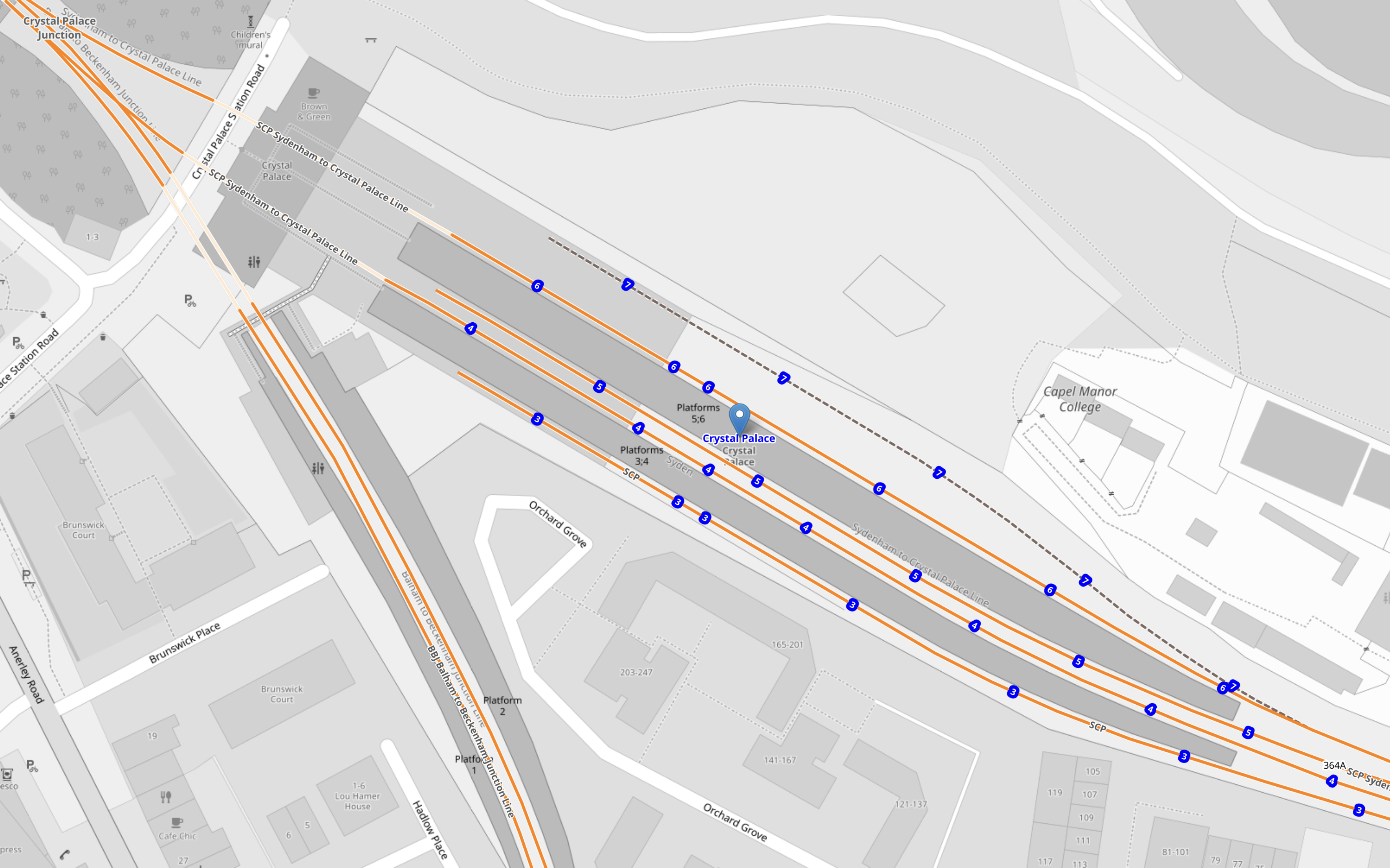
Note.
- Platforms 1 and 2 cross the South-West corner of the map and handle services like London Bridge and Beckenham Junction, London Bridge and London Victoria, and West Croydon services.
- Platform 3 is a little used bay platform, that can terminate trains from the East London Line or London Bridge.
- Platform 4 handles services between London Bridge and London Victoria.
- Platform 5 is a bay platform, that can terminate trains from the East London Line.
- Platform 6 handles services between London Victoria and London Bridge.
- Platform 7 is a disused bay platform.
These pictures show Crystal Palace station.
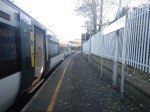
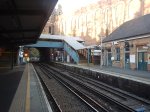
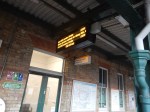
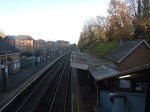
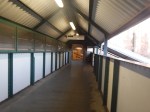
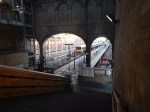
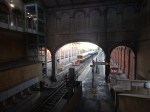
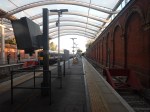
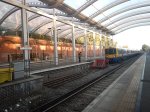
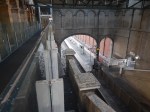
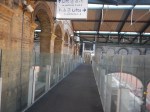
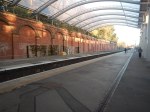
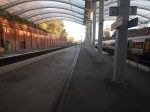

Crystal Palace station has an adequate number of platforms.
Conclusion
A service between London Bridge and Crystal Palace looks to be a sound plan.
London Overground: Design Work For West London Orbital Route Begins
The title of this post, is the same as that as this article on the BBC.
This is the sub-heading.
Plans for a new London Overground link in west London are progressing, London’s mayor Sadiq Khan has said.
These paragraphs outline what will happen.
Engineering consultants who worked on the Elizabeth line have been chosen for the West London Orbital service.
“This engineering design will help determine the cost of delivering the scheme, which is currently unfunded,” Transport for London (TfL) said.
It hopes the scheme, which would connect Hounslow with Hendon and West Hampstead, could start next decade.
My feeling, is that they should get on with it.
- There would be no major construction like tunnels.
- Four stations would need to be built.
- I doubt there will be any demolition.
- It wouldn’t need more electrification, as the route is electrified at both ends and battery-electric trains could be used.
- It would create more connections to Old Oak Common for High Speed Two.
But if it does for North West London, what the Overground has done for North and East London, it will be very much worth it.
These are a few thoughts and observations.
The Route
This is a schematic of the route from the BBC article.
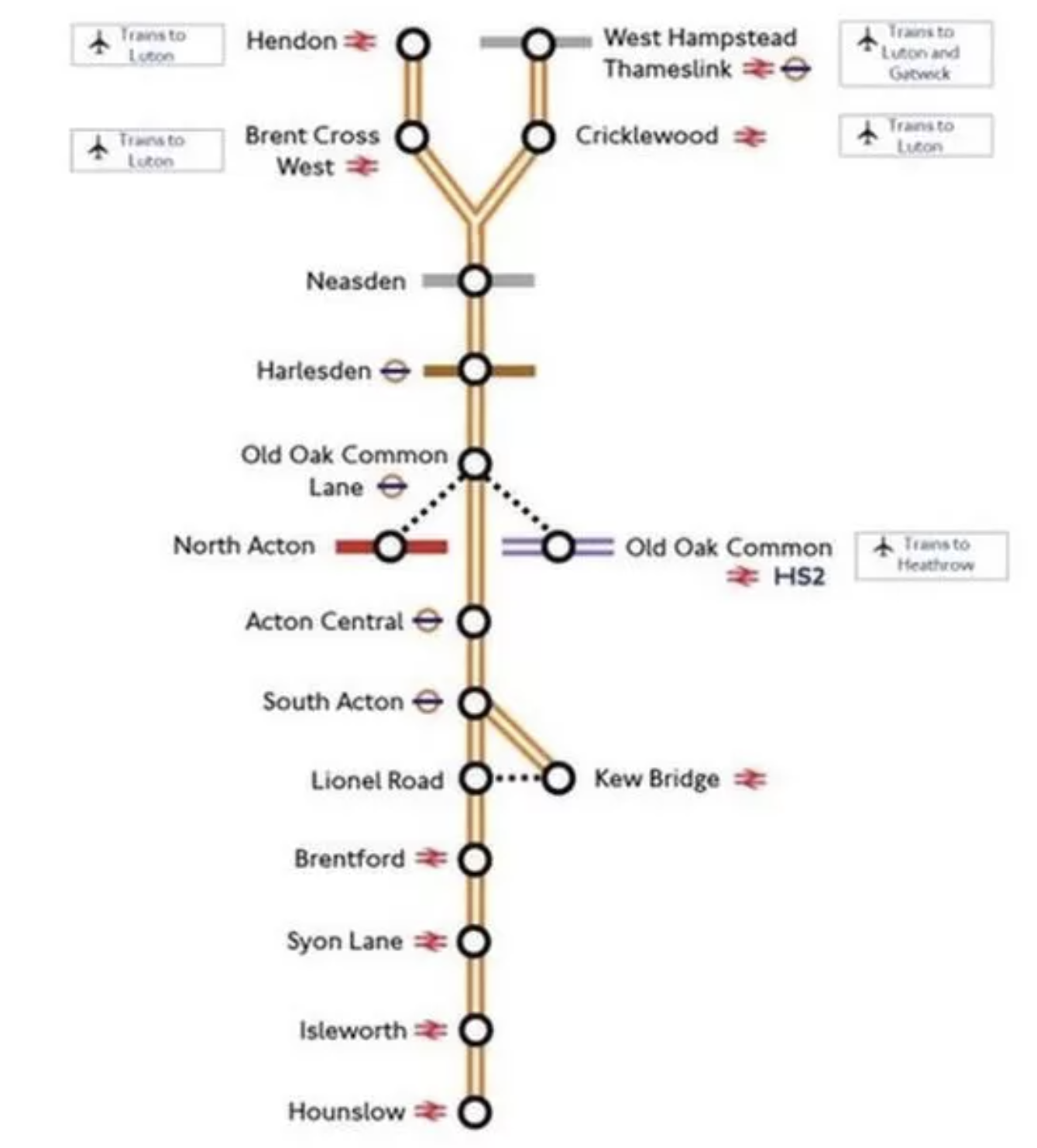
Note.
- Services will be between West Hampstead Thameslink and Hounslow stations and between Hendon and Kew Bridge stations.
- If services follow the London Overground frequency, they will be four trains per hour (tph).
- The new stations are Neasden, Harlesden, Old Oak Common Lane and Lionel Road.
- Acton Central, Brentford, South Acton, Syon Lane and West Hampstead Thameslink are step-free and Isleworth is on the way.
- The fully step-free Brent Cross West station will open soon.
- Lionel Road station will serve the new Brentford stadium.
- Old Oak Common Lane will serve High Speed Two, the Elizabeth Line and the North London Line.
They look to be a useful set of stations.
Kew Bridge Station
There’s been a lot of development at Kew Bridge station, since I was last there.

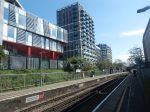
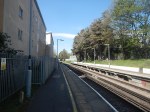
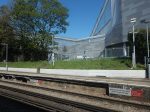
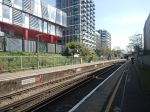
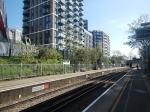
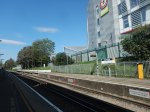
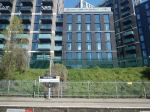
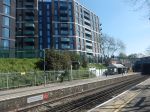
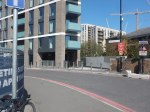

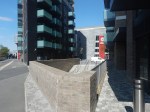
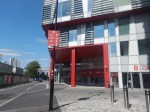
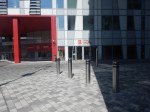
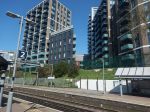
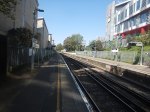
There are lots of flats and Brentford’s new stadium.
I suspect all the stations between Kew Bridge and Hounslow will see similar levels of development.
Electrification Issues On The Dudding Hill Line
The Dudding Hill Line forms the Northern section of the route between the Midland Main Line and the North London Line at Acton Wells Junction.
This map from OpenRailwayMap shows the junction between the Dudding Hill and Midland Main Lines.
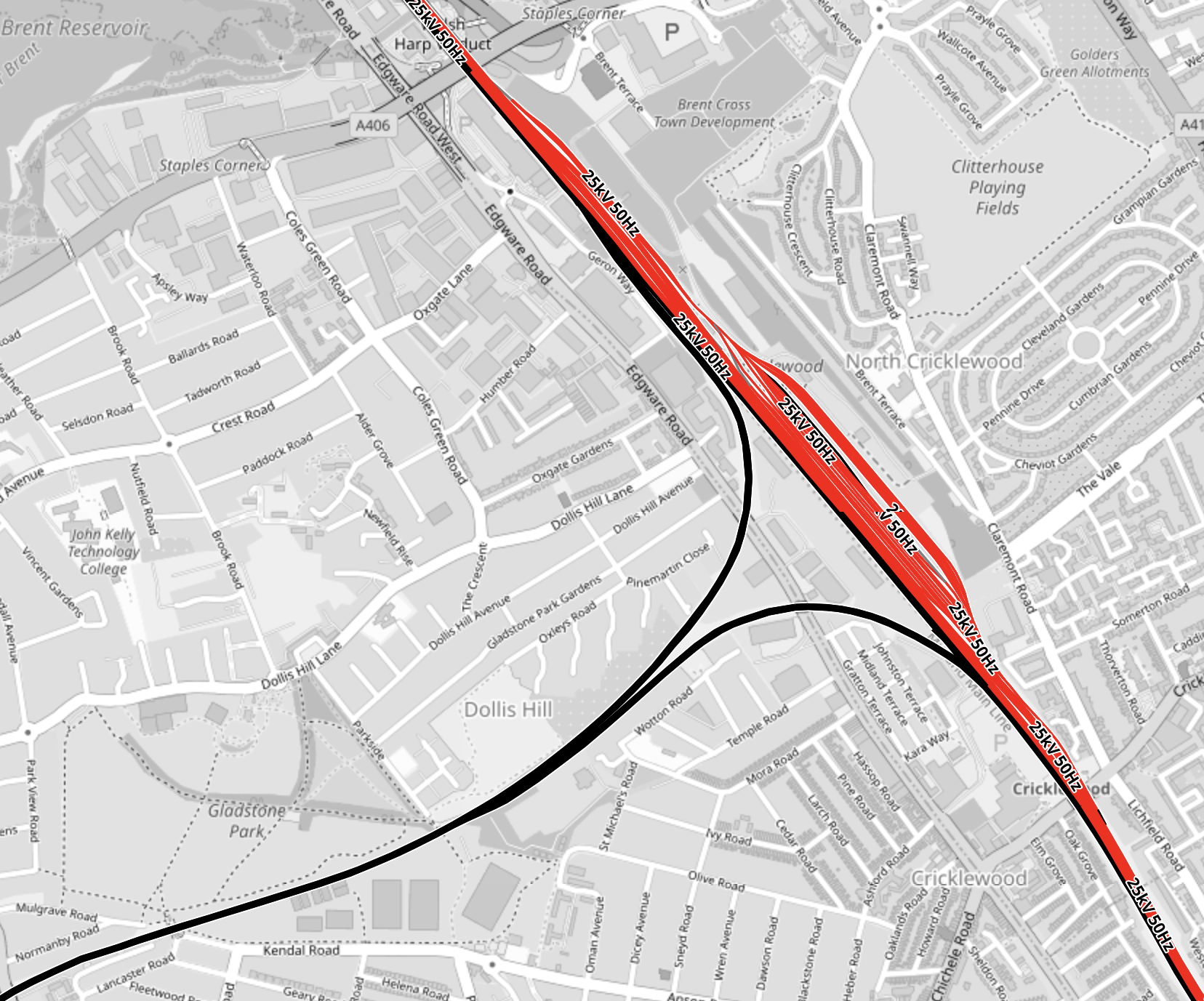
Note.
- The Midland Main Line is shown in red as it is electrified with 25 KVAC overhead wires.
- The Dudding Hill Line is shown in black, as it isn’t electrified.
This second map from OpenRailwayMap shows the junction between the Dudding Hill and North London Lines at Acton Wells junction.
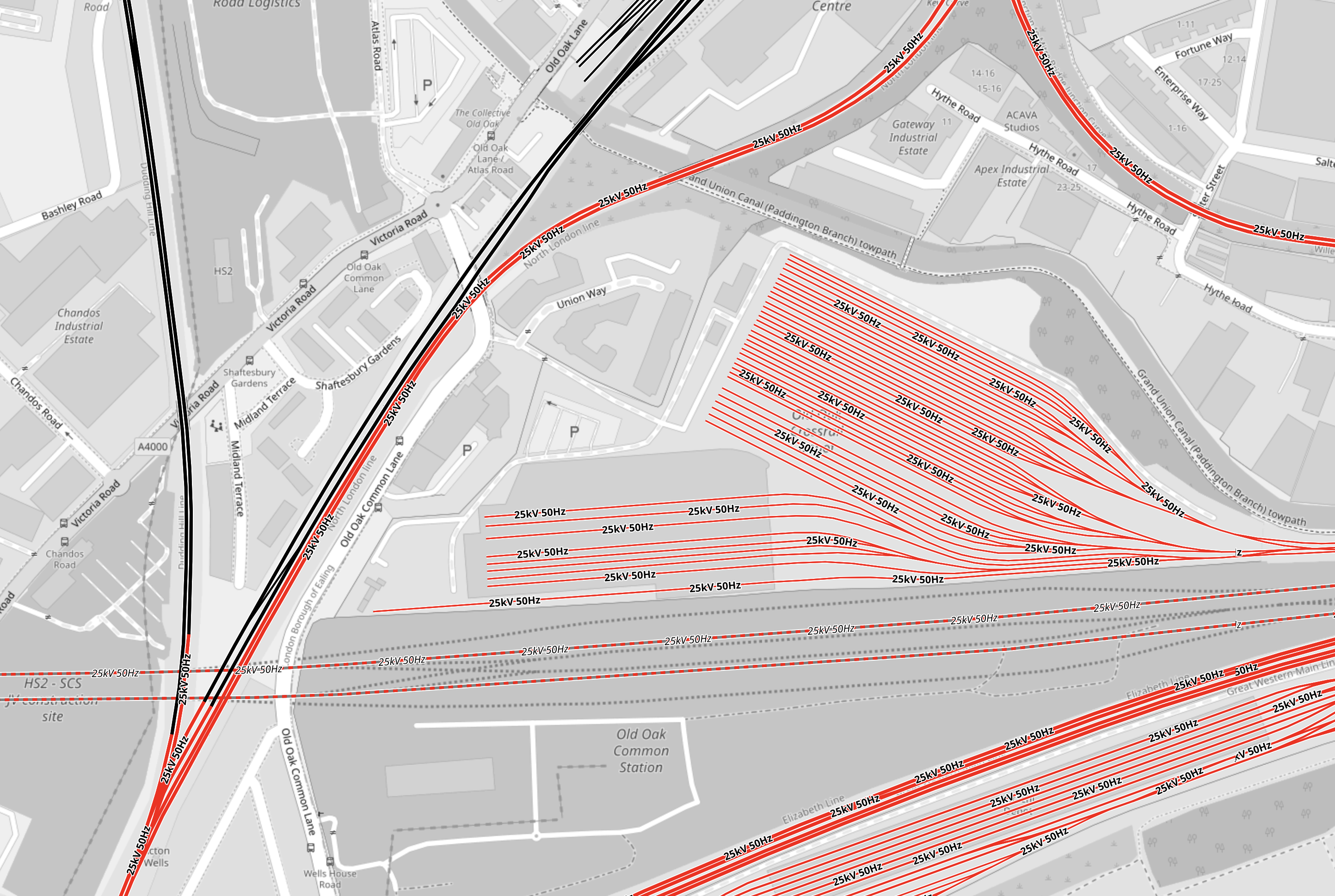
Note.
- As before red tracks are electrified with 25 KVAC overhead wires and black tracks have no electrification.
- The Dudding Hill Line is the black track running North-South at the West of the map.
- Acton Wells junction, where the Dudding Hill and North London Lines join is in the South-West corner of the map.
- The North London Line is shown in red running across the North-West corner of the map.
- The Great Western Main Line is shown in red running across the South-East corner of the map.
- High Speed Two will run East-West across the map and is shown dotted in red.
- The red lines in the middle of the map is the Elizabeth Line depot.
With all the 25 KVAC overhead electrification at both ends of the Dudding Hill Line, it would appear, that if this section is ever electrified, it will be electrified with this form of electrification.
There may be a problem, in that there are three or four bridges over the line.
Electrification Issues At Kew
This map from OpenRailwayMap shows the triangular junction by Kew Bridge station.
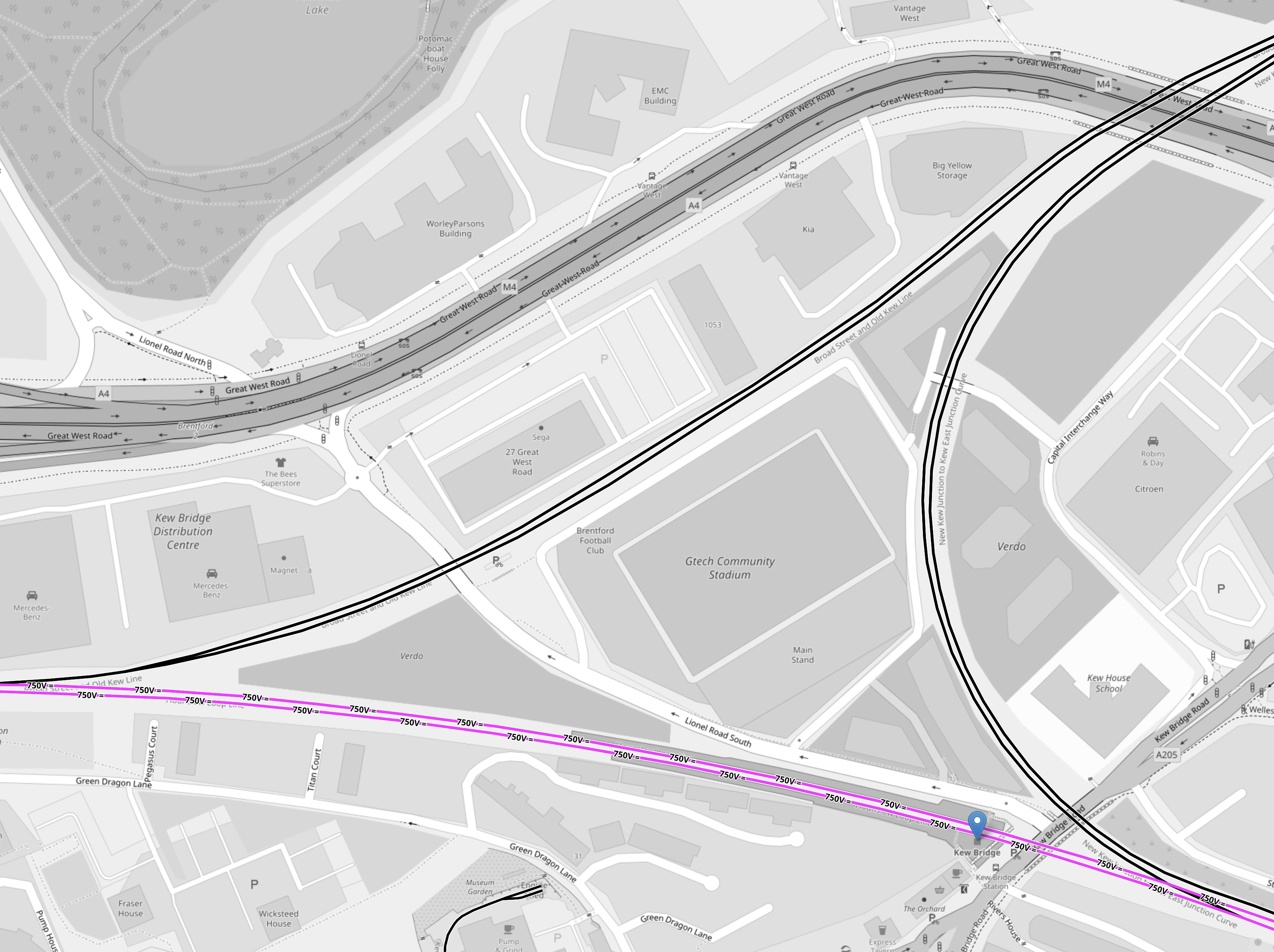
Note.
- As before black tracks have no electrification.
- Mauve tracks are electrified with 750 VDC third-rail electrification.
- Kew Bridge station is indicated by the blue arrow at the Eastern point of the junction.
- Trains to Hounslow will arrive in the North-East corner of the map and go diagonally across the map to leave in the South-West point of the junction.
- Trains to Kew Bridge will arrive in the North-East corner of the map and take the Eastern chord of the junction to a new platform in Kew Bridge station.
Brentford’s new stadium and a lot of housing are in the middle of the junction.
It would seem to be obvious to electrify the triangular junction using 750 VDC third-rail electrification.
But not to the ORR it isn’t, as they won’t allow any new third-rail electrification to be installed on Health and Safety grounds.
Charging Trains At Kew Bridge Station
Consider.
- It looks like trains from Hendon will terminate in a new platform on the chord without electrification to the North of the current Kew Bridge station.
- A short length of 25 KVAC overhead electrification could be used to charge trains.
It may be sensible to build two platforms on the chord, as this could allow more flexible operation of the London Overground during engineering works.
Charging Trains At Hounslow Station
A short length of 25 KVAC overhead electrification could be used to charge trains.
Project Management Issues
I believe this could be one of those projects, where by careful selection of the order of the sub-projects, time and money can be saved and passengers will see benefits earlier.
For example.
- Early delivery of Old Oak Common Lane station would also connect the North London Line to High Speed Two and the Elizabeth Line.
- Early delivery of step-free access at Kew Bridge station would help passengers going to the new Brentford stadium.
There may be other projects, that need an early delivery.
The Feltham And Wokingham Resignalling Programme
The Feltham And Wokingham Resignalling Programme is currently underway and there are pairs of new and old signals everywhere between Kew Bridge and Feltham and also between Feltham and Richmond.
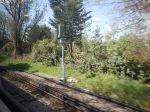
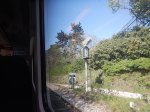
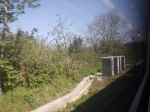
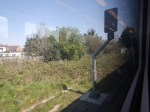
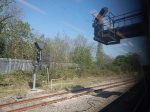
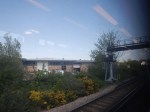
These are digital signals and according to Network Rail, they will increase the capacity, which must surely allow the extra trains between Kew Bridge and Hounslow stations.
This signalling project finishes in mid-2024, so I suspect by then the Southern part of the West London Orbital Railway will not have any problems with interaction with other services.
The Feltham And Wokingham Resignalling Programme could be considered an important enabling sub-project of the West London Orbital Railway, that is being performed early.
Richmond Station
As I came through Richmond station, there was an Overground train in Platform 3 and I noticed that Platforms 3 to 5 were allocated to the Overground.
Has the new signalling given Network Rail and train operators more flexibility and extra capacity at Richmond?
Currently, the London Overground runs four trains per hour (tph) between Stratford and Richmond.
The increased flexibility may allow the following.
- An increase in frequency of trains to Stratford.
- An increase in frequency of District Line trains, if Ealing Broadway station swaps from being a District to a Piccadilly Line terminus, as I wrote about in Extending The Elizabeth Line – Piccadilly Line To Ealing Broadway.
- Could Richmond also act as a terminal of the West London Orbital Railway during construction and engineering works?
Another benefit that could be arranged is to run the current four tph London Overground services into Platform 3.
These pictures show a Waterloo-bound South Western Railway train in Platform 2 and a Stratford-bound London Overground train in Platform 3.
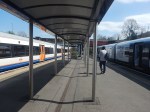
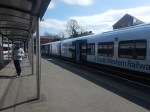
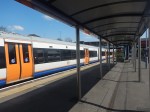
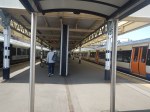
As there are 8 tph between Richmond and Waterloo via Clapham Junction, this could be quite a useful cross-platform interchange for passengers going from say Staines or Windsor to Hampstead.
Trains
Consider.
- The three most likely Northern termini are Brent Cross West, Hendon and West Hampstead Thameslink.
- There could be other terminals on the North London Line or the Gospel Oak and Barking Line.
- All possible Northern terminals have 25 KVAC overhead electrification.
- The two most likely Southern terminals are Hounslow and Kew Bridge.
- There may be other possible Southern terminals like Twickenham or Richmond.
- All possible Southern terminals have 750 VDC third-rail electrification.
- The sections without electrification of the route are less than twelve miles.
- The ORR won’t allow any new third-rail electrification.
It looks like the trains will need to be dual-voltage with a battery capability.
In this article in Global Rail News from 2011, which is entitled Bombardier’s AVENTRA – A new era in train performance, gives some details of the Aventra’s electrical systems. This is said.
AVENTRA can run on both 25kV AC and 750V DC power – the high-efficiency transformers being another area where a heavier component was chosen because, in the long term, it’s cheaper to run. Pairs of cars will run off a common power bus with a converter on one car powering both. The other car can be fitted with power storage devices such as super-capacitors or Lithium-ion batteries if required. The intention is that every car will be powered although trailer cars will be available.
Unlike today’s commuter trains, AVENTRA will also shut down fully at night. It will be ‘woken up’ by remote control before the driver arrives for the first shift
This was published over twelve years ago, so I suspect Bombardier or Alstom have refined the concept.
In an article in the October 2017 Edition of Modern Railways, which is entitled Celling England By The Pound, Ian Walmsley says this in relation to trains running on the Uckfield Branch, which is not very challenging.
A modern EMU needs between 3 and 5 kWh per vehicle mile for this sort of service.
So for a four-car running for twelve miles, the train would need a battery capacity of between 144 and 240 kWh.
These are not large batteries.
I suspect that the best trains for the route, will be dual-voltage Class 710 trains.
- The Class 710/2 variant used on the Gospel Oak and Barking Line is dual-voltage.
- London Overground has 54 Class 710 trains.
- I am certain, that the batteries needed can be fitted to the trains.
- Aventras are still in production in Derby.
A test battery-electric version could probably be created and tested on the short Romford and Upminster Line.
There may be other places in London and the rest of the UK, where a four-car battery-electric Aventra would be the ideal train.
Would It Be Possible For The Bakerloo And Watford DC Lines To Use The Same Trains? – 6th March 2023 Update
These two lines are very different.
- The Bakerloo Line is a classic London Underground Line with 25 stations and services run by 1972 Stock trains.
- The Watford DC Line is part of the London Overground with 19 stations and services run by Class 710 trains.
Ten stations are shared between the lines, of which only one; Queen’s Park offers level boarding.
The Shared Stations
The nine shared stations often have considerable steps up and down, as at Willesden Junction station, which is shown in Train-Platform Interface On Platform 1 At Willesden Junction.
I am rather pleased and pleasantly surprised, that there are not more accidents at the shared stations, but using the line must be a nightmare for wheelchair users, buggy pushes and large case draggers.
If Transport for London proposed building a line like this, they would have to launch it at the Hammersmith Apollo, where comedians perform.
The One Train Type Solution
To my mind, there is only one solution. The two services must use the same type of trains.
These are a few thoughts on the trains.
Trains Would Be Underground-Sized
As the trains will have to work through the existing tunnels to Elephant & Castle station, the trains would have to be compatible with the tunnels and therefore sized for the Underground.
I suspect they would be a version of the New Tube for London, that are currently being built by Siemens for the Piccadilly Line.
New Tube For London And Class 710 Train Compared
This Siemens infographic summarises the New Tube For London.
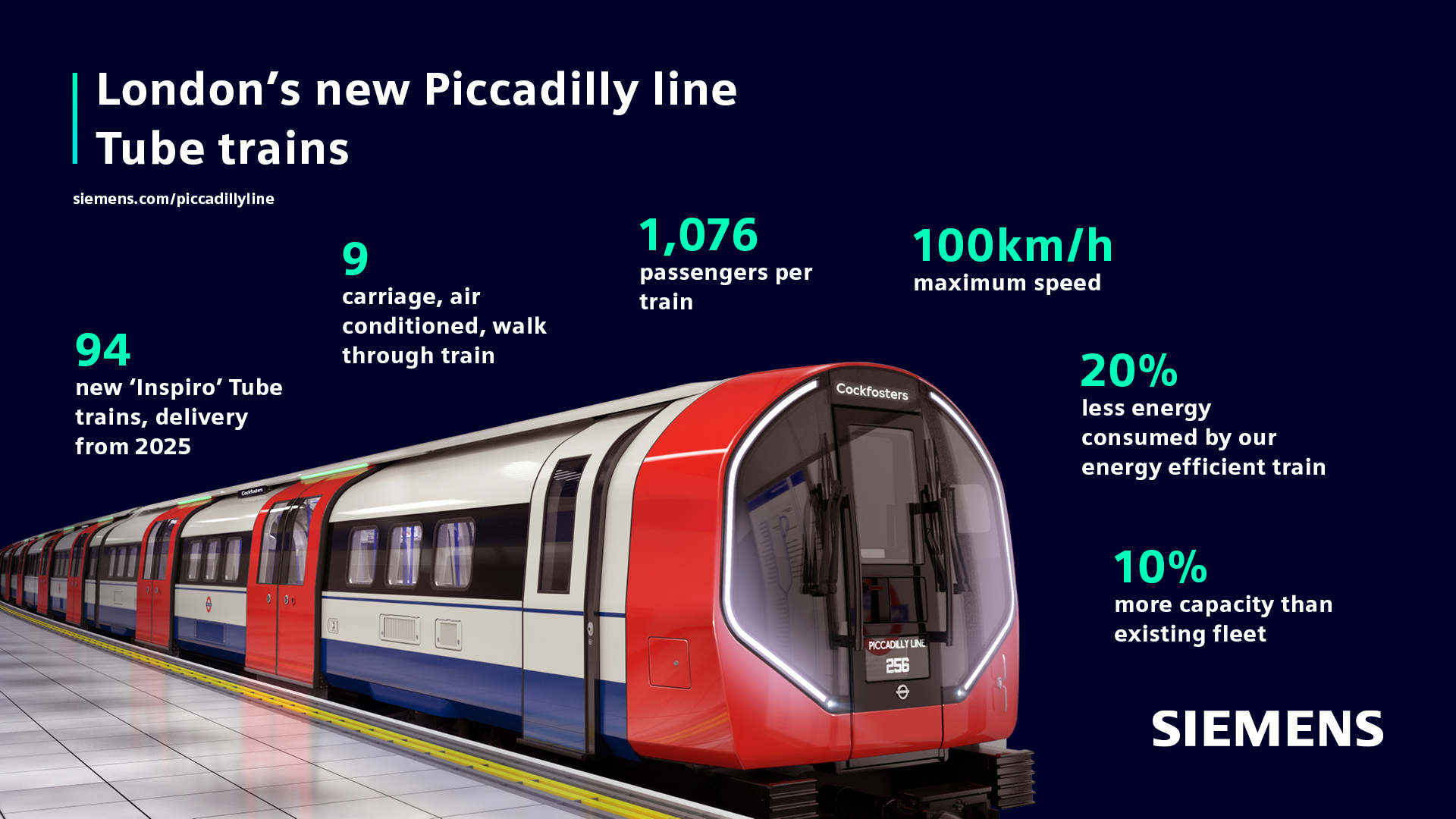
These figures are from Wikipedia.
- Cars – NTFL – 9 – 710 – 4
- Car Length – NTFL – 12.6 metres – 710 – 20 metres
- Train Length – NTFL – 113.4 metres – 710 – 80 metres
- Seated Passengers – NTFL – 268 – 710 – 189
- Total Passengers – NTFL – 1076 – 710 – 678
- Passenger Density – NTFL – 9.5 per metre – 710 – 8.2 per metre
- Speed – NTFL – 62 mph – 710 – 75 mph
Note.
- The figures for the Class 710 train are for a four-car train.
- The passenger density and speed are closer than I thought they’d be.
- I’m sure Siemens can design a longer and/or faster train if required for the Euston service.
I feel that the New Tube for London design could be adjusted , so that it could work the Watford DC service.
Platform Modifications
I suspect that the New Tube for London will be lower than the Class 710 train and all platforms would need to be lowered to fit the new trains.
I would also suspect that it would be easier to lower platforms, than modify them, so that they had dual-height sections to satisfy two classes of train.
It should be noted that the New Tube for London has shorter cars than the sixteen metre 1972 Stock trains currently used on the line, so there will be smaller gaps at stations with curved platforms like Waterloo.
I believe that with one class of train, all of the stations on the Bakerloo and Watford DC Lines could be made step-free between train and platform.
Platform Height On Platform 9 At Euston
I took these pictures on Platform 9 at Euston station.
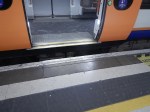
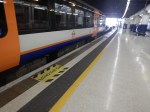
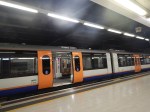
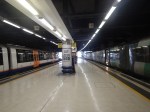
Note that it is rather a high step into the train and there is a large gap.
But if say, a modern London Underground train from say the Victoria Line pulled into the platform would it be a better fit?
Platform Height At Kilburn High Road Station
These pictures show Kilburn High Road station.
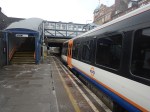
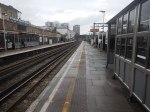
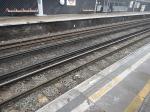
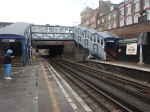
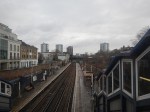
I should have taken more pictures, but the step between the platform and train is similar to Platform 9 at Euston.
Platform Height At South Hampstead Station
These pictures show South Hampstead station.
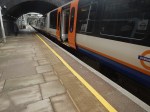
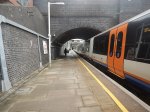
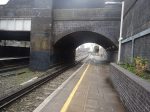
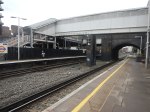
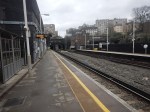
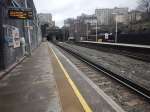
I should have taken more pictures, but again the step between the platform and train is similar to Platform 9 at Euston.
Were The Platforms At Euston, South Hampstead And Kilburn High Road Built For Another Class Of Train?
This Wikipedia entry is for the London Underground Watford Joint Stock train, where this is said.
The Watford Joint Tube Stock was built for the service to Watford along both the Bakerloo tube and the London North Western Railway. As a result, the cars were owned by both the Underground and the London North Western Railway. To be able to operate on both lines, the car floors were 4+1⁄2 inches (110 mm) higher than other tube cars. This was a compromise height between the platform heights on the two lines.
The cars were ordered in 1914, but construction was delayed by The First World War. As a result, the first cars were not delivered until early 1920.
Note.
- The Wikipedia entry has links to some images of which this is one.
- They must have been rather cramped trains if they were built for deep tunnels and had a floor that was 110 mm higher, than other tube trains.
It certainly appears to be possible to design a train, that would fit both lines.
But would it fit modern regulations and give full step-free access?
Queen’s Park And Euston
This map from cartometro.com, shows the route between Queen’s Park and Euston stations.
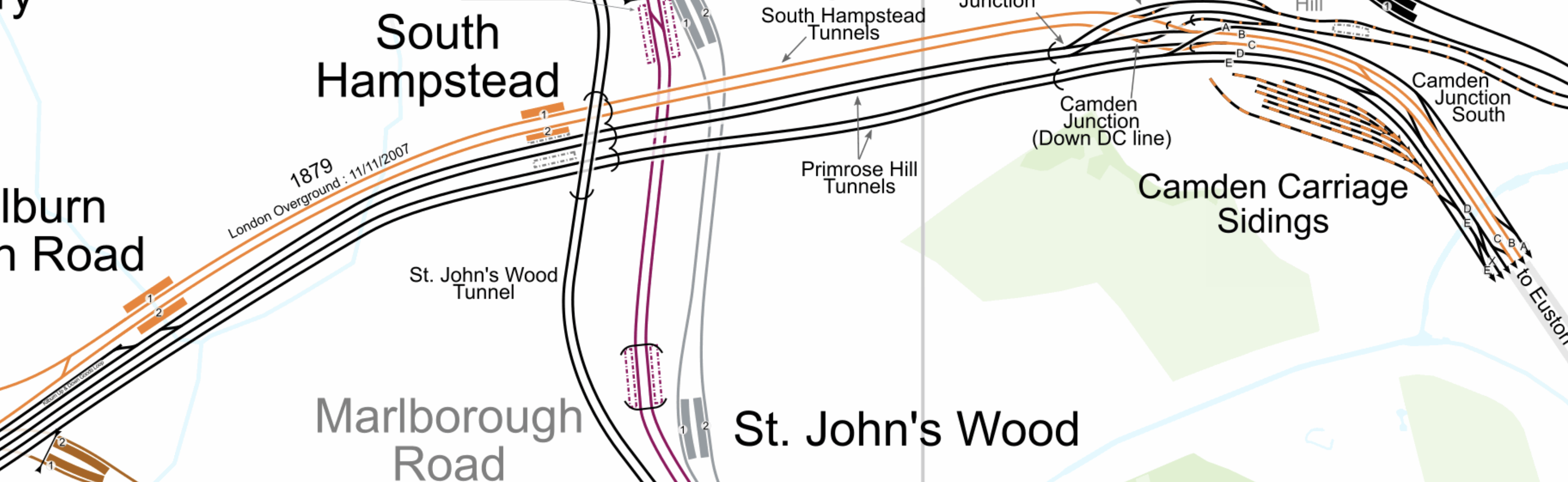
Note.
- The Watford DC Line is shown in orange.
- Queen’s Park station is to the West of Kilburn High Road station.
- It appears that Watford DC Line trains always use Platform 9 at Euston station.
The route seems to be a self-contained third-rail electrified line into Euston station.
On the subject of electrification between Queen’s Park and Euston stations, there would appear to be a choice between the third-rail system and London Underground’s four-rail system.
But it is rumoured that the New Tube for London will have a battery capability.
As Euston and Queen’s Park stations are only 3.7 miles apart, perhaps the choice would be to use battery power into Euston station, which would remove electrified rails from Euston?
How Many Trains Could Run Into Euston?
Currently, four trains per hour (tph) run into Euston.
It is generally accepted that six tph can use a single platform. But would this be enough?
I suppose there is the possibility of tunnelling under Euston station to a pair of terminal platforms.
In that case the current platform could be used by other services.
Southern’s Milton Keynes And Clapham Junction Service
This service wouldn’t be affected as it uses the fast lines between Willesden and Watford Junction.
Advantages Of One Train Type On The Bakerloo And Watford DC Lines
I can think of these advantages.
- Step-free access between train and platform, should be achieved.
- A unified fleet.
- A higher frequency between Euston and Willesden Junction stations.
- Higher frequency where needed.
- If trains had a battery capability, Euston could be free of third-rail electrification.
As only one type of train will be using the Watford DC line between Euston and Watford Junction, this could result in operational efficiencies.
Linking Of The Bakerloo And Abbey Lines
This could be the biggest advantage of all.
This map from cartometro shows the lines at Watford Junction station.
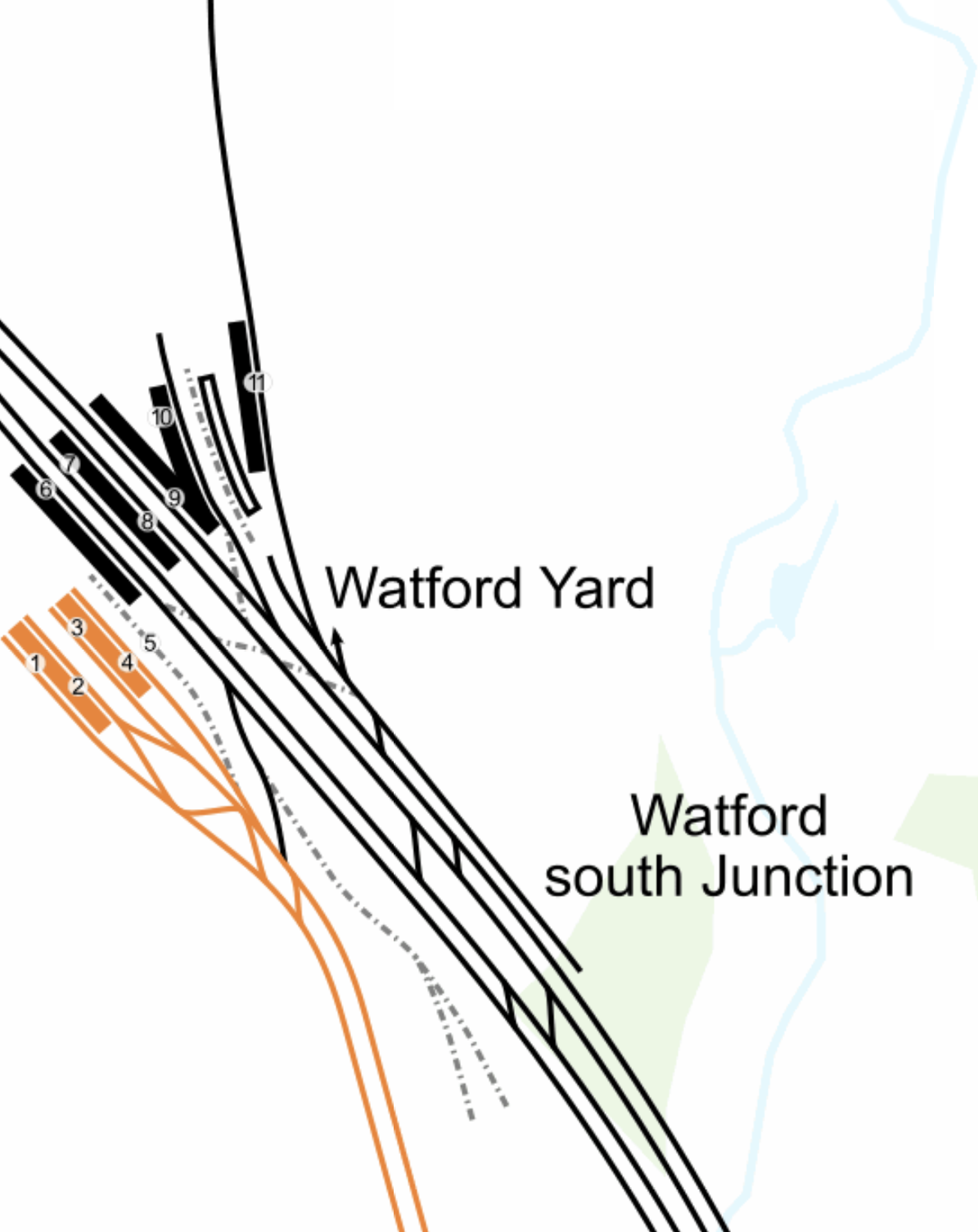
Note.
- The orange lines are the current Watford DC Line services of the London Overground, terminating in platforms 1 to 4 of Watford Junction station.
- These lines would be taken over by the unified Bakerloo/Watford DC Line services, running nine-car New Tubes For London.
- The next station to the South is Watford High Street.
- The West Coast Main Line goes through the station and uses platforms 5 to 10.
- At the North of the station is Platform 11 on the Abbey Line which leads roughly North East to St. Albans.
Look at how the Abbey Line is more or less in line with the twin-tracks of the Watford DC Line.
Recently, during the Bank Station Upgrade, a 488 metre long single track tunnel was built to divert the Southbound Northern Line.
This tunnel was not dug with a tunnel boring machine, but traditionally by hand, using men, picks, shovels and I suspect a few small machines.
I believe, that a similar technique could be used to dig a tunnel, to connect the Abbey Line and the Watford DC Line.
- It would only be single-track
- It would probably be less than 500 metres long.
- It would connect to the Abbey Line to the South of Platform 11.
- It would be deep-level tube-sized.
- It might be dug by hyperTunnel.
- Geography wouldn’t allow the tunnel to terminate in the Watford DC Line platforms at Watford Junction station.
But where would the terminal be on the Southern side of the West Coast Main Line?
This map from OpenRailwayMap, shows the two routes between Watford Junction and Bushey stations.

Note.
- Watford Junction station is at the top of the map.
- The orange line is the West Coast Main Line.
- The yellow line looping to the West of the West Coast Main Line is the double-track Watford DC Line.
- Bushey station is at the bottom of the map, where the two rail lines meet.
- Watford High Street station is in the middle of the map on the Watford DC Line.
The new service could certainly take the Watford DC Line as far as Watford High Street station.
- The station is close to the centre of Watford, the hospital and Vicarage Road stadium.
- But there is no space for a terminal platform.
This second OpenRailwayMap shows the disused railways to the West of Watford High Street station.
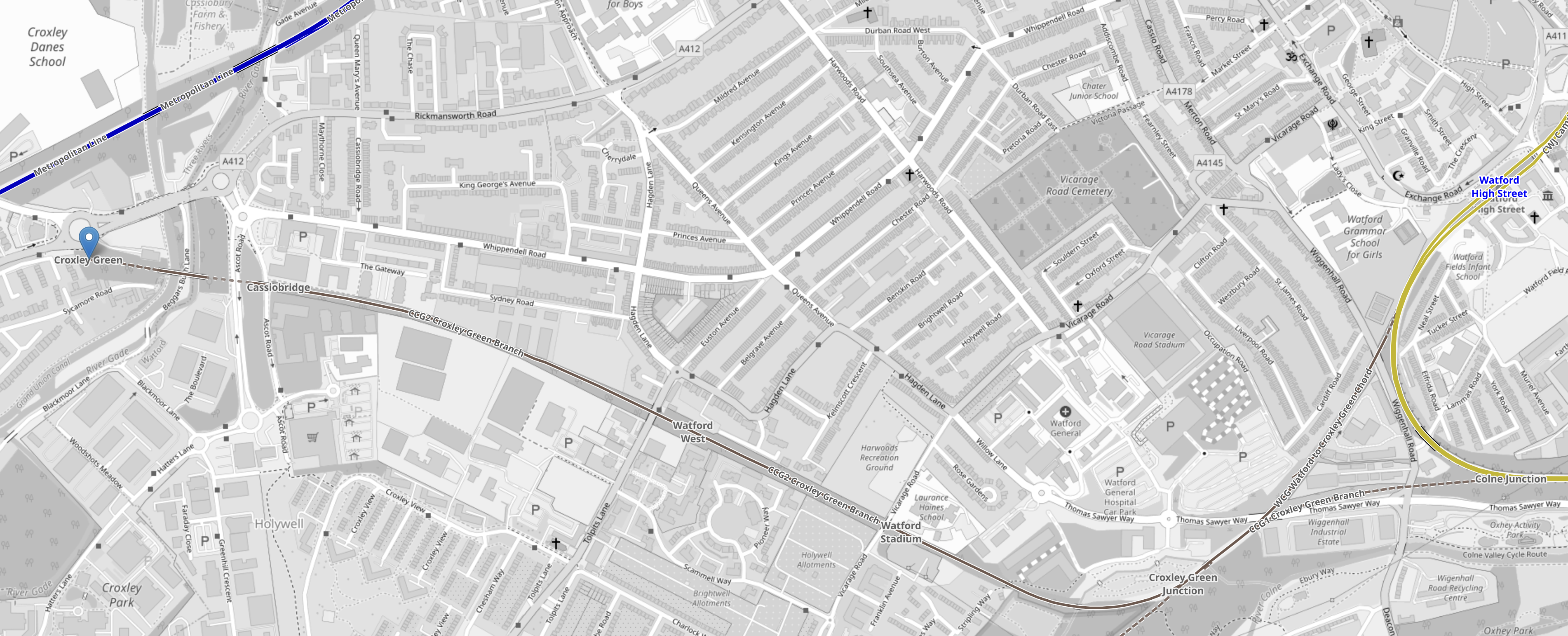
Note.
- The yellow loop at the East of the map is the Watford DC Line.
- Watford High Street station is on this loop.
- There is a triangular junction, that connects the former Croxley Green branch to the Watford DC Line.
- The terminus at Croxley Green station is marked by a blue arrow.
- There used to be intermediate stations at Cassiobridge, Watford West and Watford Stadium.
- This route was used for the failed attempt to build the Croxley Rail Link.
But could a Western extension of the Abbey Line be built?
- It would terminate at either Croxley Green or Cassiobridge.
- There would be intermediate stations at Watford West, Watford Stadium and Watford High Street.
- There would be two tph.
- Trains would be nine-car New Tubes For London.
- The current Abbey Line is 6.4 miles and would be run using battery power, with possible charging at St. Albans Abbey station.
- The tunnel under the West Coast Main Line would be run on battery power.
- The Western extension from Watford High Street station would be run using battery power, with possible charging at the Western end.
I believe, an extended Abbey Line could be a viable alternative to the ill-fated Croxley Rail Link.
- I have used battery power, as I doubt Health and Safety would allow any new third-rail electrification.
- I have used nine-car New Tubes For London for the extended Abbey Line, as their small cross-section would allow a smaller tunnel and they would be certified for running in tunnels.
- Some platforms on the Abbey Line would need to be lengthened, but these would be the only modifications, other than the possible installation of the charging system.
- The extended Abbey Line would serve Watford Hospital and Vicarage Road.
The capacity of the extended Abbey Line would be substantially more than the current line.
Conclusion
A common fleet used by the Bakerloo and Watford DC Line would appear to give advantages and it has been done successfully before.
But what the Bakerloo Line, the Watford DC Line, the Abbey Line and the Bakerloo Line Extension need is a good dose of holistic design.
TfL Considers Replacing Over Half Of London Overground Trains Within The Next 4 Years
The title of this post, is the same as that of this article on MyLondon.
This is the sub-heading.
The trains were specially built for the dimensions of the Overground network
This paragraph outlines, why the trains may be replaced.
The 57 Class 378 ‘Capitalstar’ trains which provide the majority of services on London Overground could disappear as soon as June 2027, as Transport for London (TfL) officials decide what to do with them as their leases expire. The five carriage walkthrough trains have helped revolutionise the Overground network, being built to special dimensions to fit the unique profile of the suburban routes they run on – notably the East London line, where trains use the narrow single-bore Thames Tunnels.
Note.
- The Class 378 trains, which I use regularly, still seem to be performing well!
- They could do with a lick of paint and a tidying up in places.
- Would it be too much to ask for power sockets and wi-fi?
- The other London Overground trains, the Class 710 trains can’t run through the Thames Tunnel on the East London Line, as they have no means to evacuate passengers in the tunnel in an emergency.
- More Class 378 trains are needed for the East London Line to increase services, but these can be obtained by transferring trains from the North London Line and replacing those with new Class 710 trains.
I live near the two Dalston stations on the London Overground and the thing we need most is more capacity.
I have some thoughts on London Overground’s future trains.
Increased Services On The Current Network
Plans exist to increase the frequency on various London Overground services and this graphic sums up what was planned a few years ago.
Note the extra two trains per hour (tph) between the following stations.
- Clapham Junction and Stratford
- Dalston Junction and Crystal Palace
- Dalston Junction and Clapham Junction
- Enfield Town and Liverpool St. via Seven Sisters
I think only Route 1 services have been increased.
I know signalling updates are holding up the extra trains on the East London Line, but are more trains needed to fully implement the extra services?
- Routes 2 and 3 services will need Class 378 trains because of the tunnel and these would be transferred from the North London Line.
- Route 4 would need Class 710 trains, as the service already uses them.
So there may be a need for more Class 710 trains.
West London Orbital Railway
The graphic doesn’t mention the West London Orbital Railway.
- There would be two routes between West Hampstead and Hounslow and Hendon and Kew Bridge using the Dudding Hill Line.
- The tracks already exist.
- Some new platforms and stations would be needed.
- The route would probably need improved signalling.
- Four tph on both routes would probably be possible.
- The West London Orbital Railway would connect to the Great Western Railway, the North London and Elizabeth Lines and High Speed Two at Old Oak Common station.
I believe it could be run by battery-electric versions of either the Class 378 or Class 710 trains. This would avoid electrification.
As some commentators have suggested that the West London Orbital Railway and the Gospel Oak and Barking Line would be connected, I would expect that new battery-electric Class 710 trains would be used.
Adding On-board Energy Storage To The Class 378 Trains
In Will London Overground Fit On-board Energy Storage To Class 378 Trains?, I asked whether it would be worthwhile.
I finished with these two sentences.
I have no idea how much electricity would be saved by regenerative braking on the London Overground, but various applications of regenerative braking technology talk of electricity savings of between ten and twenty percent.
I think it is only a matter of time before the technology is proven to be sufficiently reliable and the numbers add up correctly for the Class 378 trains to be fitted with on-board energy storage.
What would be the advantages from fitting on-board energy storage?
- There would be the savings of electricity by the use of regenerative braking to the batteries.
- Trains could be rescued from the Thames Tunnel, if there was a power failure.
- Hotel power would be maintained, if there was a power failure.
- Trains can be moved in depots and sidings without power.
- Trains would be able to move in the event of cable theft.
- Short route extensions might be possible.
- Could battery power be used to serve Euston during the rebuilding process for High Speed Two?
- Do Network Rail want to remove third-rail electrification from Euston station for safety or cost reasons?
There could be a saving in train operating costs.
We know the trains are coming up for a new lease.
Suppose the leasing company fitted them with new batteries and some other customer-friendly improvements like new seat covers, better displays, litter bins, power sockets and wi-fi.
- The leasing company would be able to charge more, as they have added value to the trains.
- TfL would be saving money due to less of an electricity bill.
- The passenger numbers might increase due to the extra customer-friendly features.
- Electrification might be removed from places where theft is a problem.
- Third-rail electrification could be removed from Euston station. It’s only 2.8 miles to South Hampstead station, where third-rail electrification already exists.
Get it right and passengers, TfL, Network Rail and the leasing company would all be winners.
A First Ride In A Five-Car Class 710 Train – 30th January 2023
These pictures are from a few weeks back, when I had a first ride in one of the new five-car Class 710 trains.
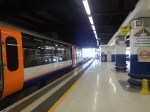
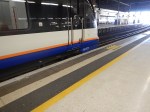
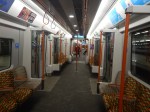
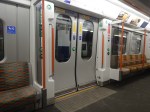
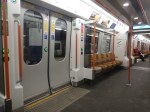
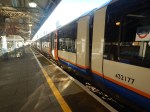
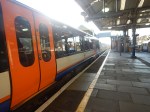
I only went between Euston and Queen’s Park stations.
 The Anonymous Widower
