Comparing Ride And Perceived Performance In Class 170 And Class 755 trains
I had intended to go to Norwich and Sheringham today, to take some pictures of Class 755 trains at Sheringham station.
Unfortunately, when I got to Norwich, the Sheringham train was a Class 170 train, so as I was running late, I came back.
But as I had travelled to Norwich in a twenty-year-old Class 170 train and returned in a brand-new Class 755 train, I was able to compare their ride and passenger performance on the well-maintained and straight Breckland Line.
The Class 170 train has a good ride and I’ve never felt to complain, even when travelling at 100 mph on some CrossCountry and Greater Anglia routes.
But I did feel that the Class 755 train had a smoother ride.
I did time the 755 at 90 mph on parts of the route, but at most times it was doing a motr sedate 75 mph.
Could it be that twenty years has enabled train dynamics to have been improved using computer simulation?
Intriguingly, the three-car Class 170 train is twenty percent heavier and has half the power of the four-car Class 755 train, which probably results in more sprightly acceleration for the new train.
Could this acceleration mean that the trains will be faster on a route with lots of stops?
National Trust Looks At Car Ban In Lake District
The title of this post is the same as that as that of this article in yesterday’s Sunday Times.
The secondary headline sums up the article.
Nearly 20m visitors a year are ‘loving the national park to death’, and officials are looking at excluding drivers.
So what is to be done?
Can The Railways Help?
In 2015, I spent Three Days in Preston and explored the area by train.
These problems were apparent on the trains and at the stations.
- The capacity, quality and frequency of the trains to Windermere is pitiful.
- The capacity, quality and frequency of the trains along the Cumbrian Coast Line is inadequate.
- Bus information and interchanges could be better.
- Getting a train to Penrith North Lakes station was difficult.
The only line with an acceptable train service is the West Coast Main Line.
Everything else needs major improvements.
These are some random thoughts.
Could Carlisle Become The Rail Tourism Centre For The Borderlands And The Lakes?
These rail lines and services are already or will be connected to Carlisle Citadel station, within the next few years.
- Virgin services on the West Coast Main Line between London and the South and Glasgow and Edinburgh in Central Scotland.
- TransPennine Express services on the West Coast Main Line between Liverpool and Manchester in the South and Glasgow.
- Possible Grand Union services on the West Coast Main Line between London and Stirling for the North of Scotland.
- High Speed Two services between London and the South and Glasgow and Edinburgh in Central Scotland.
- ScotRail services on the Glasgow South Western Line between Carlisle and Glasgow via Dumfries and Kilmarnock.
- ScotRail services on an extended Borders Railway between Carlisle and Edinburgh via Hawick and Galashiels.
- Northern services on the Tyne Valley Line between Carlisle and Newcastle via Hexham and the Metro Centre.
- Northern services on the Settle and Carlisle Line between Carlisle and Leeds.
- Northern services on the Cumbrian Coast Line between Carlisle and Carnforth via Workington, Whitehaven and Barrow.
Carlisle sits at the centre of a network of some of the most scenic rail lines, anywhere in the world.
Rail services in the area with the exception of the through services, provided by Virgin and TransPennine Express are probably considered by their operators to be a pain.
- They are generally not used by commuters.
- There are regular operational problems like floods and landslips.
- They are overcrowded at some times of the year and need expensive new rolling stock.
- Rail tourists from aboard probably complain like mad.
But above all the services probably lose money hand over fist.
What Is The Ideal Train For Scenic Routes?
Two possible trains for scenic routes are now in service in the UK.
The Scottish Solution – Inter7City
ScotRail are now introducing four- and five-car InterCity 125 trains on routes between the seven cities in Scotland.

They will probably do a good job and they have the following.
- Large windows to enjoy the views.
- Many seats have tables.
- An on-board buffet and trolley service.
- Wi-fi and power sockets for phones and laptops.
- The trains should be reliable, as there is a vast knowledge base about running these trains.
- The trains can be easily lengthened, by adding extra cars.
- The trains were 125 mph trains and are probably slower in this application.
But the trains are forty years old and have two enormous diesel engines on each end.
The Swiss Solution – Class 755 train
Greater Anglia are introducing three- and four-car Class 755 trains on rural routes in East Anglia.
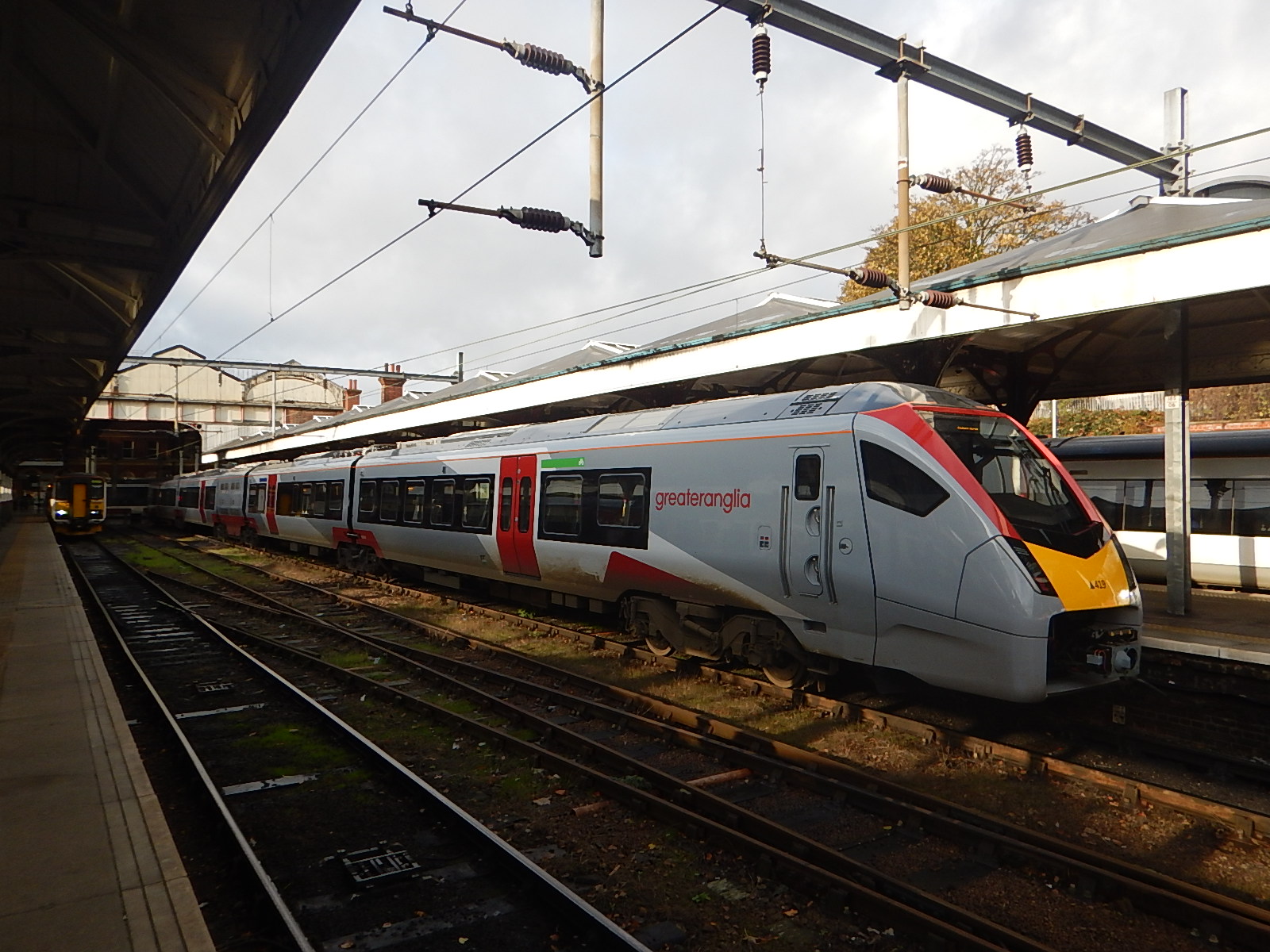
They appear to be doing a good job with high passenger satisfaction and they have the following.
- Large windows to enjoy the views.
- A number of seats have tables.
- Space for bicycles.
- Wi-fi and power sockets for phones and laptops.
- The trains have level access between train and platform.
- Hopefully, the trains will be reliable, as they are brand new and Stadler has been making similar trains for over ten years.
- The trains can use 25 KVAC overhead electrification, where it is available.
- The trains can work in multiple formations.
- The trains can be easily lengthened, by adding extra cars.
- The trains are 100 mph trains.
But the trains still have a diesel power-pack in the middle for operation independently.
In future, these trains will be used to run new services between London and Lowestoft, which is a distance of 118 miles of which 59 miles is electrified.
Similar trains will be fitted with batteries for the South Wales Metro.
Could a train be built with the best of all the features?
I believe the Class 755 train is a pretty good start, but it would have the following extra features.
- Ability to run at up to 125 mph on 25 KVAC overhead or 750 VDC third rail, where the track allows.
- A well-designed buffet.
- 50 mile battery range.
- A stand-by generator.
- The ability to fast-charge the battery at a station stop.
I also think that Hitachi could make a five-car AT-300 train and Bombardier could make an Aventra, that met this specification.
What would a fleet of battery-electric trains do for the rail lines around Carlisle?
- Hopefully, they would become a tourist attraction in their own right and encourage visitors to corm by train.
- Frequencies would be at least two trains per hour on all routes.
This could be a starting point for making the area easier to access.
Should Stations Around The Lakes Be Developed With Bus Interchanges?
I’ve seen the bus interchange at Windermere station, but are other stations around the Lakes as well provided with comprehensive bus routes?
The objective surely should be that if a family wanted to have a day out in the Lakes from their home in Liverpool or Manchester, they should be able to get a train to a convenient station and a bus to their final destination.
Surely, if there is a sensible alternative, then visitors might use it.
Could The Cockermouth, Keswick and Penrith Railway Be Reopened?
The Cockermouth, Keswick and Penrith Railway was finally closed in the 1970s and according to Wikipedia, the track-bed has been used for roads and other developments.
I doubt that the railway could be reopened, but a modern light rail route would probably be a very valuable tourist asset.
But Would Good Train And Bus Routes Cut The Traffic In The Lakes?
I doubt it!
If someone has spent £40,000 or more on an expensive car, they feel they have bought the right to drive it anywhere they want!
The Dutch once talked about road pricing for every vehicle and that government lost the next election.
Conclusion
Traffic congestion in the Lakes, is a problem that threatens other areas, where tourists want to go.
So will as the National Trust are suggesting have to ban cars to restore some sanity?
I suspect so!
But it won’t be popular!
Norwich To Sheringham Line Sees New Greater Anglia Trains Enter Service
The title of this post is the same as that of this article on Rail Advent.
This is the introductory paragraph.
Yesterday (6th November) saw the first of the brand new Greater Anglia trains travel on the Bittern Line, between Norwich and Sheringham.
The article also says the new trains will be phased in before the end of the year.
Fuel Cell Train To Be Tested In The Netherlands
The title of this post, is the same as that of this article on Railway Gazette.
This is the introductory paragraph.
A Coradia iLint hydrogen fuel-cell multiple-unit is to be tested on the Groningen – Leeuwarden line after an agreement was signed at the Klimaattop Noord NL climate summit by manufacturer Alstom, the province of Groningen, local operator Arriva, infrastructure manager ProRail and energy company Engie.
You can get a flavour of some of the Dutch railways in the area from The Train Station At The Northern End Of The Netherlands.
Hydrogen powered trains are also part of the future plans for the use of hydrogen, which I wrote about in The Dutch Plan For Hydrogen.
The Railway Gazette article gives more details on how they will be introducing low carbon trains in the network around Groningen and the wider Netherlands.
These general points are made.
- The Netherlands has nearly a thousand kilometres of lines without electrification.
- Alstom has forty-one orders for their hydrogen-powered Coradia iLints.
They will also be refurbishing the 51 Stadler GTW trains in the area.
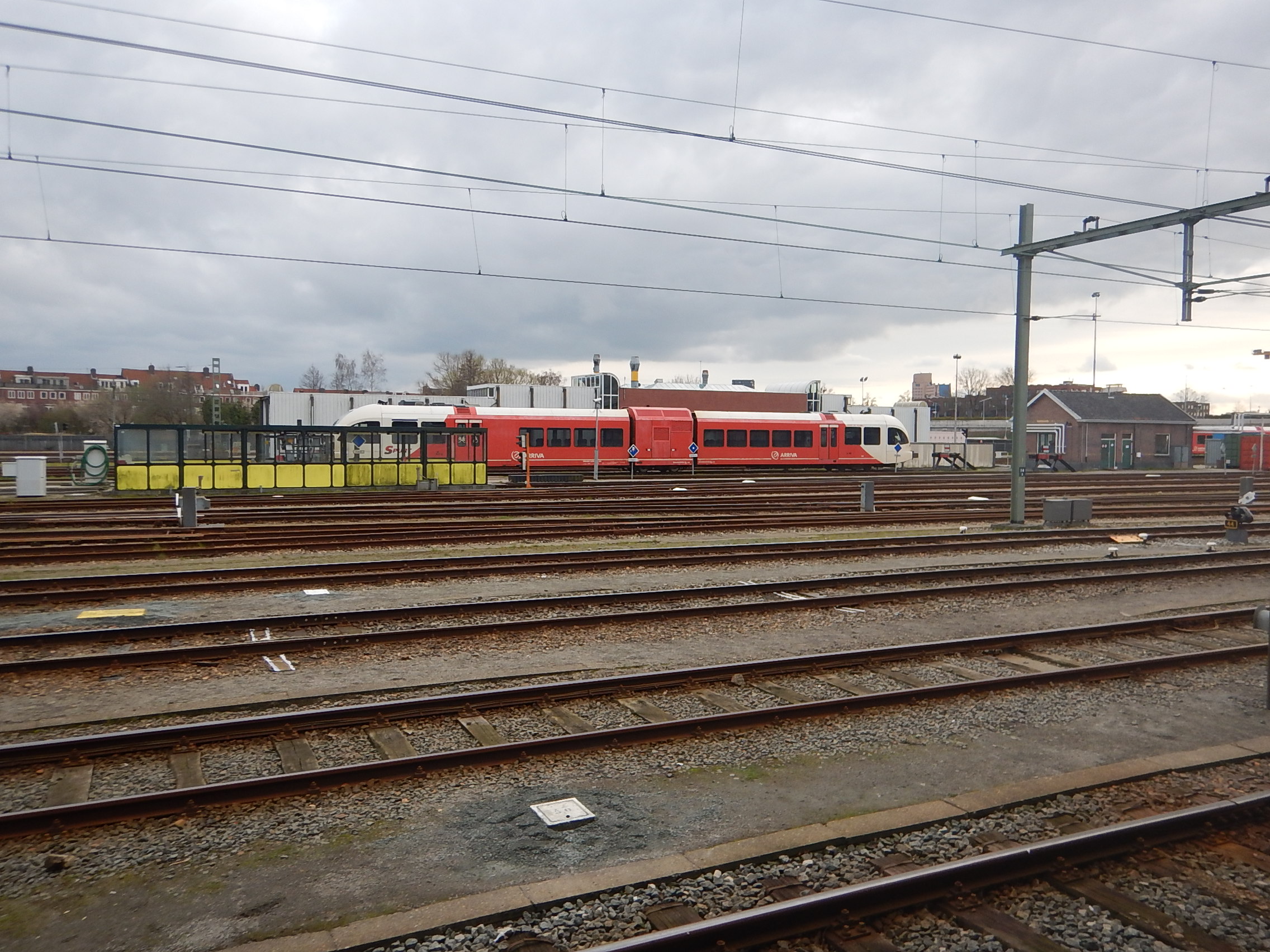
The main improvement, is that they will be fitted with batteries to handle regenerative braking and cut their carbon footprint.
The Railway Gazette article also says this.
A further 18 new Stadler Wink trainsets have been ordered which will be able use overhead electrification or hydrotreated vegetable oil fuel, with batteries for regenerated braking energy. These will be designed so that their engines can be replaced with larger batteries when the planned 1·5 kV DC discontinuous electrification of the routes is completed.
The Stadler Wink appears to be the another train from the Flirt family, which is the successor to the GTW.
The Dutch seem to be moving very firmly towards a zero-carbon railway in the North.
Collateral Benefits For The UK
What areas of the UK would be ideal places to adopt a similar philosophy to that which the Dutch are using in the North of the Netherlands?
I think they will be areas, where there are lots of zero carbon electricity, railways without electrification and terrain that’s not to challenging.
These areas come to mind.
- East Anglia
- Lincolnshire
- East Yorkshire
- Far North and North East Scotland.
Note.
-
- The only electrification in these areas is the main lines to Norwich and Cambridge in East Anglia.
- All areas have Gigawatts of offshore wind farms either operating or under development.
- Vivarail are proposing to run battery-electric trains between Wick and Turso, as I wrote about in Is This The Most Unusual Idea For A New Railway Service in The UK?
- With the exception of East Yorkshire, the train operating company is Abellio, who are Dutch railways, by another name.
- East Anglia is already using Stadler Flirt Class 755 trains, that can be fitted with batteries.
I also believe that Hitachi will soon be providing battery-electric versions of their AT300 trains. I wrote about this in Thoughts On The Next Generation Of Hitachi High Speed Trains.
Battery electric AT300 trains could provide long distance services to the areas I listed.
Conclusion
What is happening in the North of the Netherlands, will be watched with interest in the UK.
Did Someone Try To Steal The Electrification?
I arrived at Ipswich station to come back to London at 09:30 this morning and finally arrived home at 15:00. The journey had taken at least four times longer than it should.
This article on Railnews, which has a subtitle of Overhead Line Damage Disrupts Great Eastern, explains the problem.
The wires between Colchester and Marks Tey stations were damaged at around four in the morning and trains didn’t run again until about 1700.
This is a paragraph that adds more details.
overhead line damage was discovered between Colchester and Marks Tey. Network Rail workers reported shortly before 04.45 that overhead line equipment was tripping, and a train driver reported ‘visible damage’ to the power lines.
I eventually came home by this route.
- I took a train to Class 153 train to Cambridge.
- Another electric train took me to to Tottenham Hale,.
- It was then two buses home.
It was a completely wasted day.
What puzzles me is that the damage to the wires appears to have happened, when no trains were running. So that seems to indicate they either just fell down for no apparent reason or someone was up to no good.
Years ago, I did some work for British Rail and they talked about all sorts of groups getting up to all sorts f tricks to steal copper. signalling cable.
The crooks would even repeatedly cut fibre optic signalling cables, in the hope it would be replaced by copper, so they could nick that!
I shall await the report of what happened yesterday with interest!
Greater Anglia Were Short Of Trains
I took this picture, when I arrived at Ipswich.

It shows the Ipswich to Cambridge service that gives a good connection to the train from London. For several years, it has been a smart three-car Class 170 train. This is a rwo-car Class 156 train.
- Greater Anglia were also apologising for the connecting Lowestoft service being just a one car; Class 153 train.
- It appeared to me, that Greater Anglia has sent nearly all of their Class 170 trains to Wales.
- And yet again, Greater Anglia are looking after their Norwich customers and heaping all the inadequate rolling stock on Ipswich.
- Are the new Class 755 trains and their drivers ready?
It looks to me, to be a management cock-up.
Train For Cambridge Anybody?
This was my train to Cambridge.

As I said, it was normally a three-car Class 170 train, but this is an inadequate Class 153 train, which went they ran between Ipswich and Cambridge generally ran in pairs.

Gerald Fiennes and Delia Smith at Dullingham
At least I only had to wait ten minutes at Cambridge for my Tottenham Hale train.
Greater Anglia’s Response
The staff at Ipswich did their best, but there did seem to be a biit of bad leadership from somewhere as at one point, it was announced that a London train would be running and I don’t think it did.
To make matters worse, as we ran into Cambridge, we passed two brand new Class 755 trains in the sidings. Are they parked their ready to start the service?
This article on the East Anglian Daily Times is entitled We’re Completely Stuck – it’s A Joke’ – Rail Passengers’ Anger At Train Chaos.
It shows a large degree of management failure.
Planning For The Future
The electrification on the Great Eastern Main Line appears to be notoriously unreliable.
Network Rail must get it better! But they don’t seem to be doing a good job, as I have had pain getting to Ipswich for six years, whilst they are updating the wires!
I believe that the best insurance for the train services would be to do the following, as soon as possible.
- Increase services on the Ipswich and Cambridge route to two trains per hour (tph) using four-car Class 755 trains. One would be direct and the other would have a change at Ely.
- Increase services on the Norwich and Cambridge route to two tph using four-car Class 755 trains. One would be direct and the other would have a change at Ely.
- Start running the London and Lowestoft service using four-car Class 755 trains.
- Make sure that, it is possible to run routes with pairs of Class 755 trains.
- Ensure, that Class 755 trains can run London and Norwich via Cambridge.
As an example yesterday, a six-car Class 755 formation formed of two three-car trains shuttling between Ipswich and Cambridge, would probably have solved the problem.
But I do think that East Anglia’s rail problems might be best served by running a new direct service between London Kings Cross and Norwich.
As I have said several times, the Kings Cross and Cambridge and/or Kings Lynn service needs to be upgraded to 140 mph trains to make the most of the 140 mph running on the Southern section of the East Coast Main Line.
So why not run the following services?
- Hourly between Kings Cross and Kings Lynn via Cambridge.
- Hourly between Kings Cross and Norwich via Cambridge.
The trains could be Hitachi AT-300 trains with a battery capability sufficient to take the train North of Ely.
Conclusion
Did someone try to steal the electrification?
I will await the answer as to what happened with interest.
Haughley Junction Improvements
This article in the East Anglian Daily Times is entitled New Tracks. New Platforms At Ipswich Station. And Faster Trains. Will East Anglia’s Rail Bosses Be Able To Deliver?.
This is said about Haughley Junction.
Mr Bradley said improving Haughley junction, making it a full double-track junction, would mainly benefit cross-country services but it would reduce a potential main-line bottleneck.
This Google Map shows the junction.
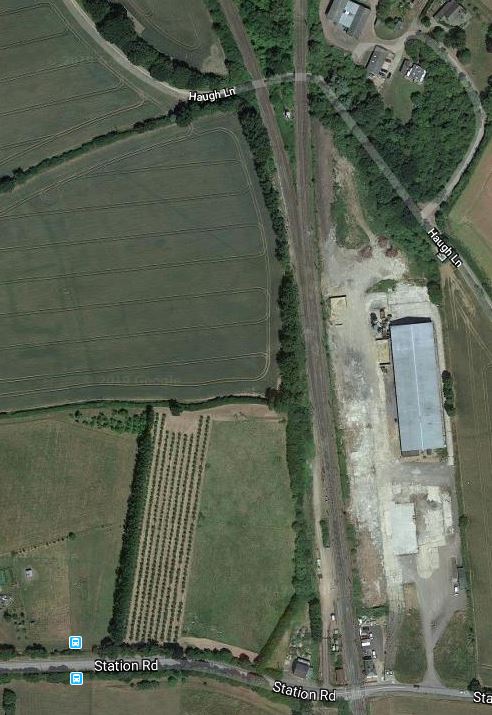
Haughley Junction is towards the top of the map.
- The track going vaguely to the North-West goes towards Bury St. Edmunds, Newmarket and Cambridge.
- The track going North goes to Diss and Norwich.
- Ipswich is to the South.
Work is eased by having a large space on the Eastern side of the junction, but where the railway crosses Station Road, there is a level crossing, which is to be removed.
It looks to me, that this is one of those projects, that can grow to be very complicated.
Consider.
- Will a flyover be built or will it be a flat junction?
- Will the main Ipswich-Norwich line be moved to the East.
- How will engineers deal with the level crossing closure?
- Will any electrification be added towards Cambridge?
With regards to the last question, it should be noted that Cambridge and Haughley Junction are forty-two miles apart.
Greater Anglia’s Class 755 trains can replace each diesel engine with a battery pack. This will be done on the South Wales Metro.
In .Battery Power Lined Up For ‘755s’, I investigate what Stadler have said about Class 755 trains running on batteries.
- Ranges of up to forty miles are quoted.
- Batteries could be fitted to Greater Anglia’s bi-mode Flirts at an overhaul.
I would expect that the electrification would be extended towards Cambridge by as much as is needed to make sure that battery operation between Ipswich and Cambridge is possible.
I have just flown my helicopter along the line, as far as Chippenham Junction.
- The line splits at Chippenham Junction, with one branch going through Newmarket to Cambridge and the other to Ely.
- Chippenham Junction is seventeen miles from Cambridge.
- The route betwen Chippenham Junction and Haughley Junction appears to have been cleared for el;ectrification.
- Electrification through Newmarket would be expensive, as there is a tunnel, a section of single track and possibly a station rebuild.
- Chippenham Junction and Haughley Junction are about twenty-five miles apart.
- Chippenham Junction and Ely are about fourteen miles apart.
If I was in charge of this project, I would certainly investigate the possibility of electrification between Haughley and Chippenham Junctions
- Class 755 trains with batteries would be able to run between Chippenham Junction and Cambridge or Ely on battery power.
- The East West Rail Consortium is proposing a Park-And Ride station, which could be called A14 Parkway.
- How much money would train operators save, if this section was el;ectrified?
- Power for the electrification would be picked up at Haughley Junction.
Would it allow tri-mode Class 93 locomotives to be able to go between Felixstowe and Ely only using a relatively small amount of diesel compared to a Class 66 locomotive?
I also think that electrifying between Chippenham and Haughley Junctions is low risk electrification.
- The route has been gauge-cleared.
- Thee new Class 755 trains can run without it.
- On the other hand they will run more efficiently when it has been installed.
- It would enable Class 93 locomotives to run on electricity.
Too many electrification projects need new trains. These are already in service.
Conclusion
There is more to this project than meets the eye.
Shapps Wants ‘Earlier Extinction Of Diesel Trains’
The title of this post, is the same as that of this article on the East London and West Essex Guardian.
This is the first two paragraphs of the article.
The phasing out of diesel trains from Britain’s railways could be intensified as part of the Government’s bid to cut carbon emissions.
Transport Secretary Grant Shapps told MPs he is “hugely concerned” that the current policy means diesel trains will continue to operate until 2040.
In some ways the positioning of the article in a newspaper serving East London and West Essex is a bit strange.
- The only diesel trains in the area are freight trains, after the electrification of the Gospel Oak and Barking Line.
- Grant Schapps constituency is Welwyn and Hatfield, which is twenty or so miles North of London.
It looks to me to be a syndicated story picked up by the paper.
But as it reports what he said to the Transport Select Committee, there is a strong chance that it is not fake news.
How Feasible Would It Be To Bring Forward The 2040 Diesel Extinction Date?
Government policy of an extinction date of 2040 was first mentioned by Jo Johnson, when he was Rail Minister in February 2018.
This article on Politics Home is entitled Rail Minister Announces Diesel Trains To Be Phased Out By 2040, gives more details about what Jo said.
Since then several developments have happened in the intervening nearly two years.
Scores Of Class 800 Trains Are In Service
Class 800 trains and their similar siblings can honestly be said to have arrived.
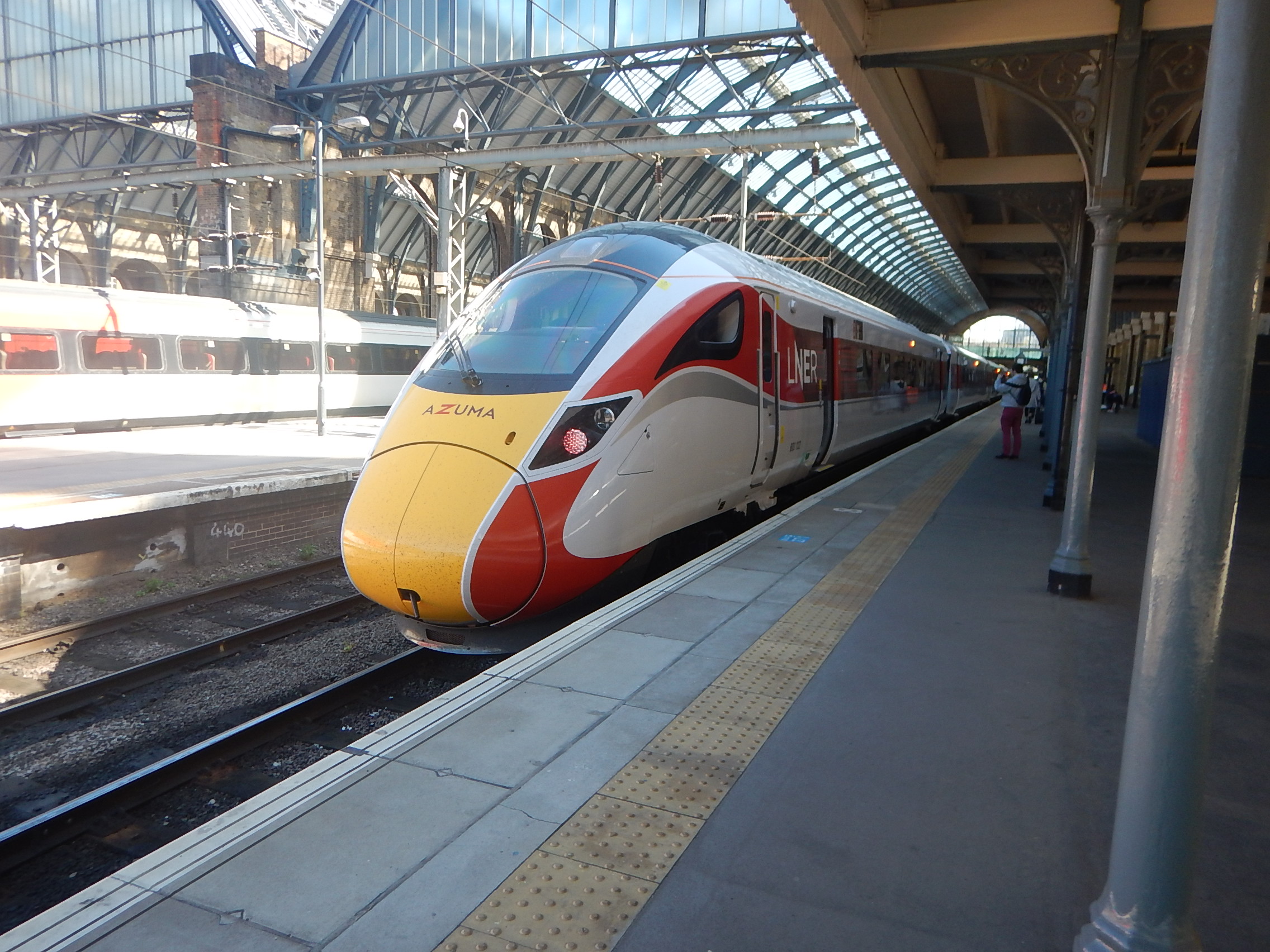
Currently, there appear to be over two hundred of these trains either delivered or on order.
Many have replaced diesel trains on Great Western Railway and LNER and stations like Kings Cross, Paddington and Reading are becoming over ninety percent diesel-free.
It should be noted that over half of these trains have diesel engines, so they can run on lines without electrification.
But the diesel engines are designed to be removed, to convert the trains into pure electric trains, when more electrification is installed.
Midland Main Line Upgrade
This line will be the next to be treated to the Hitachi effect, with thirsty-three of the second generation of Hitachi’s 125 mph trains.
- The Hitachi trains will use electrification South of Melton Mowbray and diesel power to the North.
- The trains will have a redesigned nose and I am sure, this is to make the trains more aerodynamically efficient.
- The introduction of the trains will mean, that, all passenger trains on the Midland Main Line will be electric South of Melton Mowbray.
- St. Pancras will become a diesel-free station.
Whether High Speed Two is built as planned or in a reduced form, I can see electrification creeping up the Midland Main Line to Derby, Nottingham and Sheffield and eventually on to Leeds.
Other Main Line Routes
The Midland Main Line will have joined a group of routes, that are run partly by diesel and partly by electricity.
- London and Aberdeen
- London and Bradford
- London and Cheltenham
- London and Harrogate
- London and Hull
- London and Inverness
- London and Lincoln
- London and Middlesbrough
- London and Penzance via Exeter and Plymouth.
- London and Sunderland
- London and Swansea
- London and Worcester and Hereford
Once the Midland Main Line is upgraded, these main routes will only be these routes that use pure diesel for passenger routes.
- TransPennine Routes
- Chiltern Route
- London and Exeter via Basingstoke
- London and Holyhead
Plans already exist from West Coast Rail to use bi-mode on the Holyhead route and the Basingstoke route could also be a bi-mode route.
TransPennine and Chiltern will need bespoke solutions.
Some Electrification Has Happened
Electrification has continued at a slow pace and these schemes have been completed or progressed.
- Chase Line
- Between Birmingham and Bromsgrove
- North West England
- Between Edinbugh, Glasgow, Alloa, Dunblane and Stirling.
- Gospel Oak to Barking Line
- Between St. Pancras and Corby.
- Crossrail
In addition London and Cardiff will soon be electrified and a lot of electrification designed by the Treasury in the past fifty years has been updated to a modern standard.
Battery Trains Have Been Developed And Orders Have Been Received Or Promised
Stadler bi-mode Class 755 trains have been delivered to Greater Anglia and these will be delivered as electric-diesel-battery trains to South Wales.
Stadler also have orders for battery-electric trains for Germany, which are a version of the Flirt called an Akku.
In the Wikipedia entry for the Stadler Flirt, this is a paragraph.
In July 2019, Schleswig-Holstein rail authority NAH.SH awarded Stadler a €600m order for 55 battery-powered Flirt Akku multiple unit trains along with maintenance for 30 years. The trains will start entering service in 2022 and replace DMUs on non-electrified routes.
55 trains at €600 million is not a small order.
Alstom, Bombardier, CAF, Hitacxhi and Siemens all seem to be involved in the development of battery-electric trains.
I think, if a train operator wanted to buy a fleet of battery trains for delivery in 2023, they wouldn’t have too much difficulty finding a manmufacturer.
Quite A Few Recently-Built Electric Trains Are Being Replaced And Could Be Converted To Battery-Electric Trains
In 2015 Bombardier converted a Class 379 train, into a battery-electric demonstrator.
The project showed a lot more than battery-electric trains were possible.
- Range could be up to fifty miles.
- The trains could be reliable.
- Passengers liked the concept.
Judging by the elapsed time, that Bombardier spent on the demonstrator, I would be very surprised to be told that adding batteries to a reasonably modern electric train, is the most difficult of projects.
The Class 379 trains are being replaced by by brand-new Class 745 trains and at the time of writing, no-one wants the currents fleet of thirty trains, that were only built in 2010-2011.
In addition to the Class 379 trains, the following electric trains are being replaced and could be suitable for conversion to battery-electric trains.
- Thirty Class 707 trains from South Western Railway.
- Thirty-seven Class 350/2 trains from West Miidlands Railway.
- Perhaps twenty Class 387 trains from various sources.
There also may be other trains frm Heathrow Express and Heathrow Connect.
All of these trains are too good for the scrapyard and the leasing companies that own them, will want to find profitable uses for them.
Porterbrook are already looking at converting some Class 350 trains to Battery-electric operation.
Vivarail And Others Are Developing Fast Charging Systems For Trains
Battery trains are not much use, unless they can be reliably charged in a short time.
Vivarail and others are developing various systems to charge trains.
Hydrogen-Powered Trains Have Entered Service In Germany
Hydrogen-powered Alstom Coradia Lint trains are now operating in Germany.
Alstom are developing a Class 321 train powered by hydrogen for the UK.
Stadler’s Bi-Mode Class 755 Train
The Class 755 train is the other successful bi-mode train in service on UK railways.
I would be very surprised if Grant Schapps hasn’t had good reports about these trains.
They may be diesel-electric trains, but Stadler have made no secret of the fact that these trains can be battery electric.
Like the Class 800 train, the Class 755 train must now be an off-the-shelf solution to use on UK railways to avoid the need for full electrification.
Class 93 Locomotives
Stadler’s new Class 93 locomotive is a tri-mode locomotive, that is capable of running on electric, diesel or battery power.
This locomotive could be the best option for hauling freight, with a lighter carbon footprint.
As an example of the usability of this locomotive, London Gateway has around fifty freights trains per day, that use the port.
- That is an average of two tph in and two tph out all day.
- All trains thread their way through London using either the North London or Gospel Oak to Barking Lines.
- Most trains run run substantially on electrified tracks.
- All services seem to go to freight terminals.
With perhaps a few of miles of electrification, at some freight terminals could most, if not all services to and from London Gateway be handled by Class 93 locomotives or similar? Diesel and/or battery power would only be used to move the train into, out of and around the freight terminals.
And then there’s Felixstowe!
How much electrification would be needed on the Felixstowe Branch to enable a Class 93 locomotive to take trains into and out of Felixstowe Port?
I have a feeling that we’ll be seeing a lot of these tri-mode freight locomotives.
Heavy Freight Locomotives
One of the major uses of diesel heavy freight locomotives,, like Class 59 and Class 70 locomotives is to move cargoes like coal, biomass, stone and aggregate. Coal traffic is declining, but the others are increasing.
Other countries also use these heavy freight locomotives and like the UK, would like to see a zero-carbon replacement.
I also believe that the current diesel locomotives will become targets of politicians and environmentalists, which will increase the need for a replacement.
There could be a sizeable world-wide market, if say a company could develop a powerful low-carbon locomotive.
A Class 93 locomotive has the following power outputs.
- 1,300 kW on hybrid power
- 4,055 kW on electric
It also has a very useful operating speed on 110 mph on electric power.
Compare these figures with the power output of a Class 70 locomotive at 2,750 kW on diesel.
I wonder if Stadler have ideas for a locomotive design, that can give 4,000 kW on electric and 3,000 kW on diesel/battery hybrid power.
A few thoughts.
- It might be a two-section locomotive.
- Features and components could be borrowed from UKLight locomotives.
- It would have a similar axle loading to the current UKLight locomotives.
- There are 54 UKLight locomotives in service or on order for the UK.
- Stadler will have details of all routes run by Class 59, Class 66 and Class 70 locomotives, in the UK.
- Stadler will have the experience of certifying locomotives for the UK.
Stadler also have a reputation for innovation and being a bit different.
Conclusion
All pf the developments I have listed mean that a large selection of efficient zero carbon passenger trains are easier to procure,than they were when Jo Johnson set 2040 as the diesel extinction date.
The one area, where zero carbon operation is difficult is the heavy freight sector.
For freight to be zero-carbon, we probably need a lot more electrification and more electric locomotives.
A Selection Of Train Noses
I have put together a selection of pictures of train noses.
They are in order of introduction into service.
Class 43 Locomotive
The nose of a Class 43 locomotive was designed by Sir Kenneth Grange.


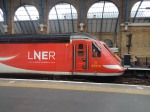
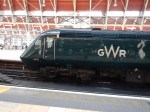
Various articles on the Internet, say that he thought British Rail’s original design was ugly and that he used the wind tunnel at Imperial College to produce one of the world’s most recognised train noses.
- He tipped the lab technician a fiver for help in using the tunnel
- Pilkington came had developed large armoured glass windows, which allowed the locomotives window for two crew.
- He suggested that British Rail removed the buffers. Did that improve the aerodynamics, with the chisel nose shown in the pictures?
The fiver must be one of the best spent, in the history of train design.
In How Much Power Is Needed To Run A Train At 125 mph?, I did a simple calculation using these assumptions.
- To cruise at 125 mph needs both engines running flat out producing 3,400 kW.
- Two locomotives and eight Mark 3 carriages are a ten-car InterCity 125 train.
This means that the train needs 2.83 kWh per vehicle mile.
Class 91 Locomotive
These pictures show the nose of a Class 91 locomotive.
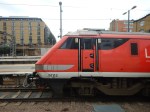

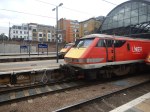
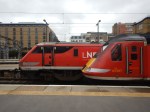

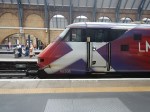
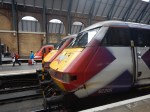
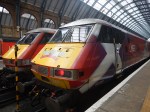
Note, the Class 43 locomotive for comparison and that the Driving Van Trailers have an identical body shell.
It does seem to me, that looking closely at both locomotives and the driving van trailers, that the Class 43s look to have a smoother and more aerodynamic shape.
Class 800/801/802 Train
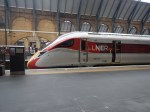
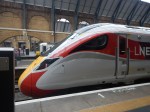
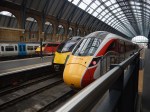
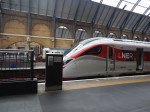
These pictures show the nose of a Class 800 train.
In How Much Power Is Needed To Run A Train At 125 mph?, I did a simple calculation to find out the energy consumption of a Class 801 train.
I have found this on this page on the RailUKForums web site.
A 130m Electric IEP Unit on a journey from Kings Cross to Newcastle under the conditions defined in Annex B shall consume no more than 4600kWh.
This is a Class 801 train.
- It has five cars.
- Kings Cross to Newcastle is 268.6 miles.
- Most of this journey will be at 125 mph.
- The trains have regenerative braking.
- I don’t know how many stops are included
This gives a usage figure of 3.42 kWh per vehicle mile.
It is a surprising answer, as it could be a higher energy consumption, than that of the InterCity 125.
I should say that I don’t fully trust my calculations, but I’m fairly sure that the energy use of both an Intercity 125 and a Class 801 train are in the region of 3 kWh per vehicle mile.
Class 717 Train
Aerodynamically, the Class 700, 707 and 717 trains have the same front.


But they do seem to be rather upright!
Class 710 Train
This group of pictures show a Class 710 train.

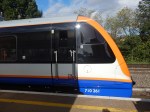
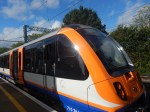
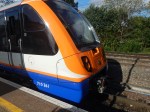
Could these Aventra trains have been designed around improved aerodynamics?
- They certainly have a more-raked windscreen than the Class 717 train.
- The cab may be narrower than the major part of the train.
- The headlights and windscreen seem to be fared into the cab, just as Colin Chapman and other car designers would have done.
- There seems to be sculpting of the side of the nose, to promote better laminar flow around the cab. Does this cut turbulence and the energy needed to power the train?
- Bombardier make aircraft and must have some good aerodynamicists and access to wind tunnels big enough for a large scale model of an Aventra cab.
If you get up close to the cab, as I did at Gospel Oak station, it seems to me that Bombardier have taken great care to create a cab, that is a compromise between efficient aerodynamics and good visibility for the driver.
Class 345 Train
These pictures shows the cab of a Class 345 train.
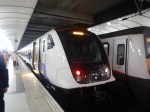
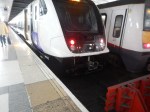
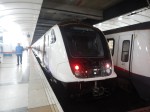
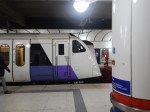
The two Aventras seem to be very similar.
Class 195 And Class 331 Trains
CAF’s Class 195 and Class 331 trains appear to have identical noses.
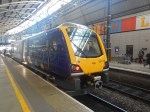

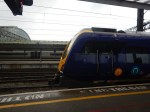
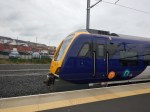
They seem to be more upright than the Aventras.
Class 755 Train
Class 755 trains are Stadler’s 100 mph bi-mode trains.
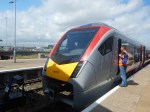
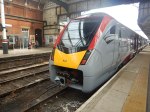
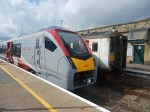

It is surprising how they seem to follow similar designs to Bombardier’s Aventras.
- The recessed windscreen.
- The large air intake at the front.
I can’t wait to get a picture of a Class 755 train alongside one of Greater Anglia’s new Class 720 trains, which are Aventras.
Greater Anglia’s Norwich And Stansted Airport Service Starts On December 15th 2019
The annual December timetable change on December 15th 2019, will see Greater Anglia bringing in their new service between Norwich and Stansted Airport stations start as an hourly service.
The Route
Between Norwich and Ely stations, the route is on the Breckland Line.
- It is not electrified, except for a short section at the Norwich end.
- It is a full double-track, except for the single-track Trowse Bridge, that it shares with the Great Eastern Main Line on the approach to Norwich.
- The operating speed is between 75-90 mph.
- There are intermediate stations at Shippea Hill, Lakenheath, Brandon, Thetford, Attleborough, Spooner Row and Wymondham.
There is potential to increase the line speed, perhaps add some extra stations and remove the antiquated Trowse Bridge.
South from Ely through Cambridge to Stansted Airport, the route is a busy, fully-electrified double-track line.
The New Timetable
The Sunday journeys are as follows
- Journey time appears to be a couple of minutes over two hours both ways.
- Most services seem to leave Stansted at XX:09
- First Northbound train is 08:18
- Last Northbound train is 21:11
- Most services seem to leave Norwich at XX:03
- First Southbound train is 09:03
- Last Southbound train is 20:03
- Calling points appear to be Audley End, Wittlesford Parkway, Cambridge, Cambridge North, Ely, Brandon, Thetford, Attleborough and Wymondham.
Weekday services appear to be more-or-less similar.
- Northbound services take around 6-9 minutes less than two hours.
- Most services seem to leave Stansted at XX:48
- First Northbound train is 05:27
- Last Northbound train is 21:11
- Southbound services take around 3-9 minutes less than two hours.
- Most services seem to leave Norwich at XX:27 or XX:33
- First Southbound train is 08:33
- Last Southbound train is 19:27
- Calling points are the same.
My Observations follow.
Convenience And Capacity
It is currently actually quicker by a few minutes to use the following services.
- East Midland Railway’s service between Norwich and Ely
- CrossCountry’s service between Ely and Stansted Airport.
These two trains can be very overcrowded at times and the new four-car Class 755 trains are much better and have more capacity, than the other services, which are often just two-car Class 158 or Class 170 trains.
Two Trains Per Hour Between Norwich And Stansted Airport
It also appears that the service with the single change at Ely will still be possible after the timetable change.
Thjis means that Norwich and Stansted Airport will have a two trains per hour (tph) service.
Train Timings
It would appear that the times between Cambridge and Norwich are very similar before and after the timetable change.
So it doesn’t appear that Greater Anglia are taking advantage of the superior performance of the new Class 755 trains.
How Many Trains Will Greater Anglia Need For The Norwich And Stansted Airport Service?
The current service between Norwich and Cambridge stations has a three hour round trip, so three trains are needed to provide the hourly service.
It looks like the Norwich and Stansted Airport service has a four hour round trip, so four trains will be needed to provide the hourly service.
Extending the Norwich and Cambridge service to Stansted Airport needs just one extra train.
How many extra passengers will Greater Anglia attract?
Whittlesford Parkway Gets An Extra Hourly Service To And From Cambridge
The extended hourly service between Norwich and Stansted Airport will call at Whittlesford Parkway station, which will increase the frequency on the busy commuter route between the Parkway station and Cambridge City Centre.
When we lived near Newmarket and C was practising as a barrister, she would sometimes go to Norwich up to tyree times a week. I wouldn’t be surprised to find that travellers between Whittlesford Parkway and Norwich stations are rather more numerous than the forecast.
- The train will take about ninety minutes and driving about seventy-five.
- The Class 755 trains have wi-fi.
- There is a lot of parking at Whittlesford Parkway station.
- Will Greater Anglia put a snack trolley on the train?
C would have certainly used the service, as Whittleford Parkway station was around fifteen minutes from where we lived.
What Will Greater Anglia Do With Lakenheath And Shippea Hill Stations?
These two stations are By Request and only get a few services a week.
Consider.
- The modern Class 755 trains with their high performance and short dwell times could probably selectively stop at these stations without degrading the train timings.
- Cambridge needs satellite development to provide housing and commercial development.
- The future of RAF Mildenhall is uncertain and it could be sold for housing.
- It could be argued that Cambridge needs a new Park-and-Ride station to the North to take the pressure off Ely station.
This Google Map shows RAF Lakenheath and the Breckland Line running Easy-West between Ely and Norwich.
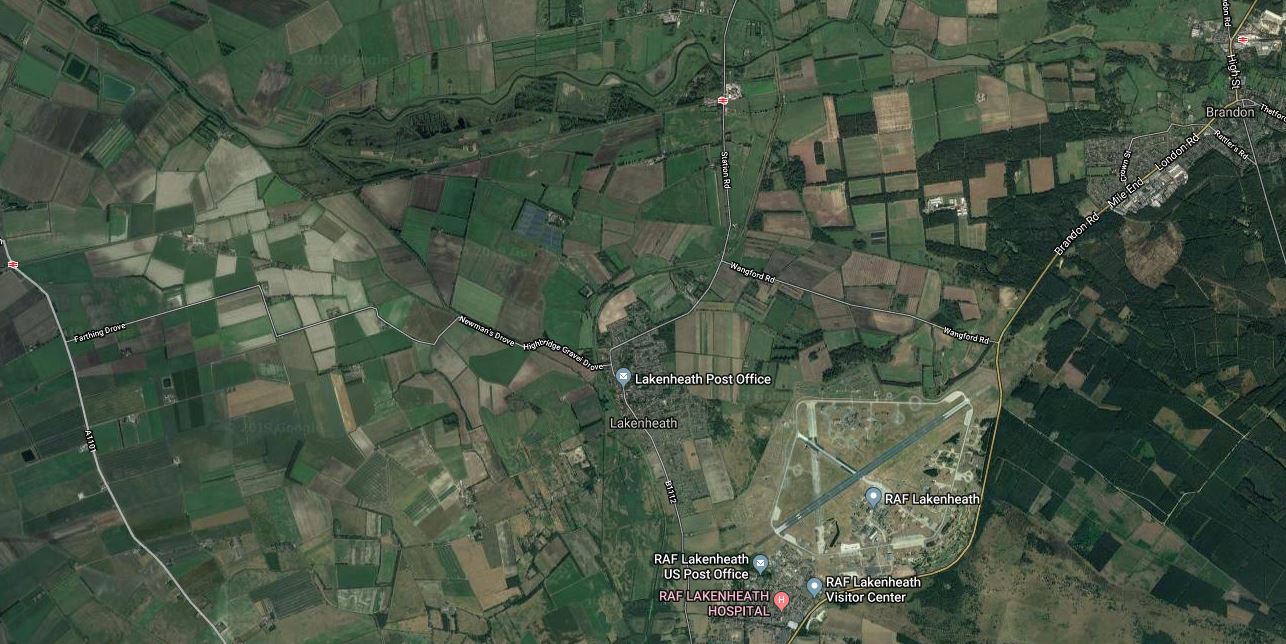
Note.
- RAF Mildenhall is to the South-West of RAF Lakenheath.
- The railway going across the North side of the map through Shippea Hill, Lakenheath and Brandon stations.
- Most of the land is aricultural and very flat.
I wouldn’t be surprised to see substantial development of the railway through the area in the next ten or twenty years.
What Will Greater Anglia Do With Spooner Row Station?
Spooner Row station is another By Request station on the Breckland Line bertween Attleborough and Wymondham stations..
Spooner Row is not a busy station, although as this Google Map shows it is just off the main A11 road.
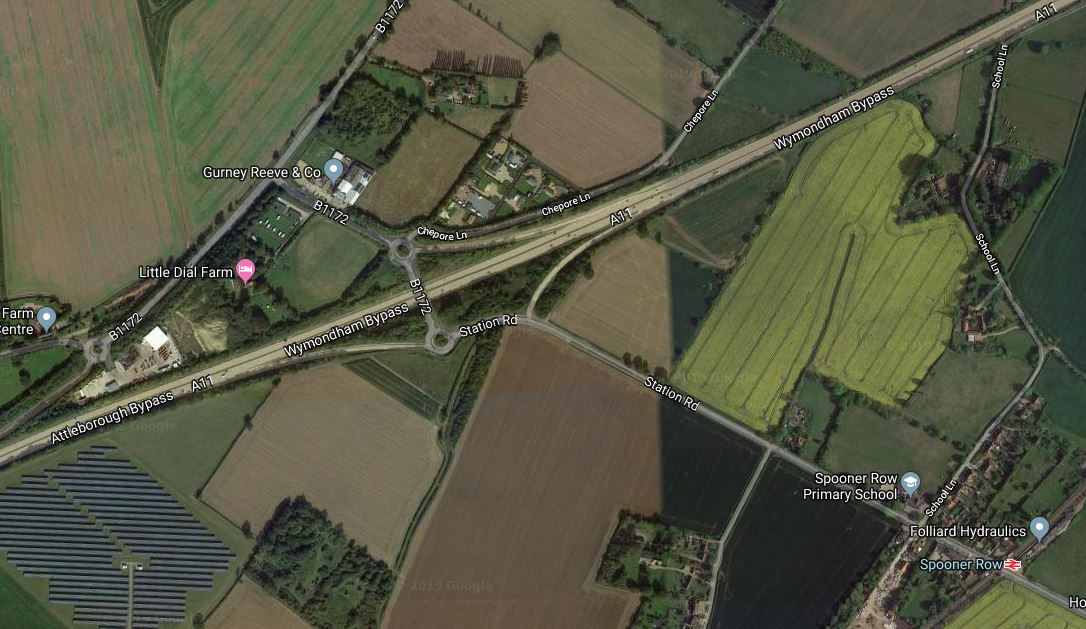
Noyr that Spooner Row station is in the South-East corner of the map.
Perhaps with more services and some increased car parking, it might pick up commuters and shoppers for Cambridge and Norwich it might become a convenient station for local residents travelling to and from Stansted Airport.
Could There Be A Norwich And Dereham Service?
Greater Anglia seems to be working closely with the Mid Norfolk Railway, which runs between Wymondham station on the Breckland Line to the town of Dereham.
- In Aerial Pictures Show New Trains Housed In Mid-Norfolk, I showed how the heritage railway was storing trains for Greater Anglia.
- According to Wikipedia, it would appear that several million pounds were spent to i8mprove the railway and its signalling, so that Greater Anglia’s new trains could be safely stored.
- The line is mainly single track and signalled for an hourly service.
- The yard at Dereham station seems to be regularly used for freight purposes, including loading damaged rolling stock on to road vehicles. It is also used by Network Rail for storage of track plant.
- Train operating companies and heritage railways are increasingly working together for their mutual benefit.
As an InterCity 125 trains has recently been beyond Dereham, I wouldn’t rule out Greater Anglia running a new service between Norwich and Dereham, with a future aim of extension to Fakenham.
Because of the limitations of the track, it could probably only be a limited service.
Can Capacity Be Increased If Needed?
Having lived near Cambridge for nearly thirty years of my life, I believe that there will come a time, when one four-car train between Norwich and Stansted Airport will not be enough.
- Two tph could be run on the route, which is relatively lightly used by other services.
- Longer trains could be created or two three-car trains could be run as a six-car train.
- The current speed limit of 75-90 mph of the Breckland Line, can probably be increased closer to the 100 mph of the Great Eastern Main Line.
Higher speeds would shorten journey times and increase capacity.
Could We See 125 mph Trains From Kings Cross To Kings Lynn And Norwich?
In Call For ETCS On King’s Lynn Route, I talked about putting digital signalling on the Kings Cross and Kings Lynn route and running 125 mph trains via Cambridge.
If the Kings Cross and Kings Lynn route were to be upgraded for faster running, this would also upgrade the proposed Kings Cross and Norwich route as far as Ely.
This would make it very feasible to run the following serrvices using 125 mph trains like Class 800 trains.
- Kings Cross and Kings Lynn
- Kings Cross and Norwich
Because of their speed these trains would help to open up capacity between Hitchin and Kings Cross.
I feel that these 125 mph bi-mode trains could do the trip between Kings Cross and Norwich in ninety minutes, which would match the time via Ipswich.
Do I Have Any Criticism?
My main criticism is that the service between Norwich and Stansted Airport, doesn’t have trains that run early and late enough.
Wil lthe service be timed to better fit the services out of the Airport?
Further Development Of The Breckland Line
This report in the Ely Standard from 2015, is entitled Could Railway Revolution See New Station Built at Ely North?.
These improvements are listed.
- A new four-platform station North of Ely would improve connectivity.
- A service between Kings Cross and Norwich via Cambridge is suggested.
- Improvements in services across East Anglia.
A cost of a billion pounds is mentioned.
125 mph Trains From Kings Cross To Kings Lynn And Norwich
In Call For ETCS On King’s Lynn Route, I talked about putting digital signalling on the Kings Cross and Kings Lynn route and running 125 mph trains via Cambridge.
If the Kings Cross and Kings Lynn route were to be upgraded for faster running, this would also upgrade the proposed Kings Cross and Norwich route as far as Ely.
This would make it very feasible to run the following serrvices using 125 mph trains like five-car Class 800 trains.
- Kings Cross and Kings Lynn
- Kings Cross and Norwich
The two services could even split and join at the proposed Ely North station to make full use of the paths into Kings Cross.
The 125 mph or more operating speed of these trains on the East Coast Main line would help to increase capacity between Hitchin and Kings Cross.
I estimate that these 125 mph bi-mode trains could do the trip between Kings Cross and Norwich in ninety minutes, which would match the time via Ipswich.
Norwich could have the following services.
- Three tph to and from London via Ipswich
- Two tph to and from London via Cambridge
- Two tph to and from Stansted Airport via Cambridge.
It sounds fantastic, but if we are to get travellers out of their cars, they must be given a high quality train service.
Conclusion
The improved Norwich and Stansted Airport service will be the first major improvement brought in by Greater Anglia.
Battery Power Lined Up For ‘755s’
In Issue 888 of Rail Magazine, there is a short article, which is entitled Battery Power Lined Up For ‘755s.‘
This is said.
Class 755s could be fitted with battery power when they undergo their first overhaul.
Stadler built the trains with diesel and electric power.
The Swiss manufacturer believes batteries to be the alternative power source for rail of the future, and is to build tri-mode trains for Transport for Wales, with these entering traffic in 2023.
Rock Rail owns the Greater Anglia fleet. Chief Operating Office Mike Kean told RAIL on September 4 it was possible that when a four-car ‘755/4’ requires an overhaul, one of its four diesel engines will be removed and replaced by a battery.
These are some thoughts.
What Is The Capacity Of A Single Battery?
This picture shows the PowerPack of a Class 755 train.

Note the two ventilated doors on the side. Currently, a diesel engine is behind each!
The PowerPack has four slots,; two on either side of the central corridor.
Each of the slots could take.
- A V8 16-litre Deutz diesel that can produce 478 kW and weighs 1.3 tonnes.
- A battery of a similar physical size.
- Possibly a hydrogen fuel-cell!
I would assume that the battery module is plug-compatible, the same physical size and similar weight to the diesel engine module, as this would make the design and dynamics of the train easier.
A 1.2 tonnes battery would hold around 120 kWh.
Kinetic Energy Of The Train
I will use my standard calculation.
- The basic train weight is 114.3 tonnes.
- If each of the 229 passengers weighs 90 kg with Baggage, bikes and buggies, this gives a passenger weight of 20.34 tonnes.
- This gives a total weight of 134.64 tonnes.
Using Omni’s Kinetic Energy Calculator gives these figures for the Kinetic energy.
- 50 mph – 9.34 kWh
- 60 mph – 13.5 kWh
- 75 mph – 21 kWh
- 90 mph – 30.3 kWh
- 100 mph – 37.4 kWh
- 125 mph – 58.4 kWh
Note.
- Class 755 trains will not be able to run at 125 mph, but I have been told by someone who should know, that the trains have probably been designed, to enable this in other versions of the trains in the future.
- The kinetic energy of the train at typical Greater Anglia service speeds is not very high.
These amounts of kinetic energy can be easily handled in a 120 kWh battery under regenerative braking, to improve the efficiency of the trains.
Range On Battery Power
Assuming that the train uses 3 kWh per vehicle mile (SeeHow Much Power Is Needed To Run A Train At 125 mph?) , this would give.
- A four-car train a range of ten miles.
- A three-car train a range of 13.3 miles.
This probably isn’t long enough given that these are Greater Anglia’s electrification gaps.
- Ely and Peterborough – 30 miles
- Ipswich and Cambridge – 41 miles
- Ipswich and Ely – 37 miles
- Ipswich and Felixstowe – 14 miles
- Ipswich and Lowestoft – 45 miles
- Marks Tey and Sudbury – 12 miles
- Norwich and Ely – 50 miles
- Norwich and Great Yarmouth – 18 miles
- Norwich and Lowestoft – 20 miles
- Norwich and Sheringham – 30 miles
It would appear that more battery capacity is needed, as the required range is around sixty miles on some routes.
In the July 2018 Edition of Modern Railways, there is an article entitled KeolisAmey Wins Welsh Franchise.
This is said about the Stadler Tri-Mode Flirts on the South Wales Metro.
The units will be able to run for 40 miles between charging, thanks to their three large batteries.
So does this mean that these Flirts have just one Deutz diesel engine of 478 kW and three batteries in the four slots of the power-pack?
Assuming that the Flirts use 3 kWh per vehicle mile, this gives these ranges.
- A four-car train a range of thirty miles.
- A three-car train a range of forty miles.
These ranges might give enough range for many the of East Anglian routes. Improvements in train efficiency and battery storage would only increase these ranges.
Class 755 Trains In Electric Mode
Being able to do this, is important, as if the Class 755 trains are to use battery power, then they will need to use 25 KVAC overhead electrification in the various electric islands around East Anglia to charge the batteries.
The article in Issue 888 of Rail Magazine, says this about running in electric mode.
GA Joint Project Manage Steve Mitchell told RAIL that the ‘755s’ can already operate on electric power between Norwich and London, but they must carry out Electro Magnetic Current testing on the Ely-Cambridge route.
When that is complete, they will operate Notwich-Ely in diesel mode, and Ely-Cambridge in electric.
At least it appears that the Northern bay platforms at Cambridge are electrified.
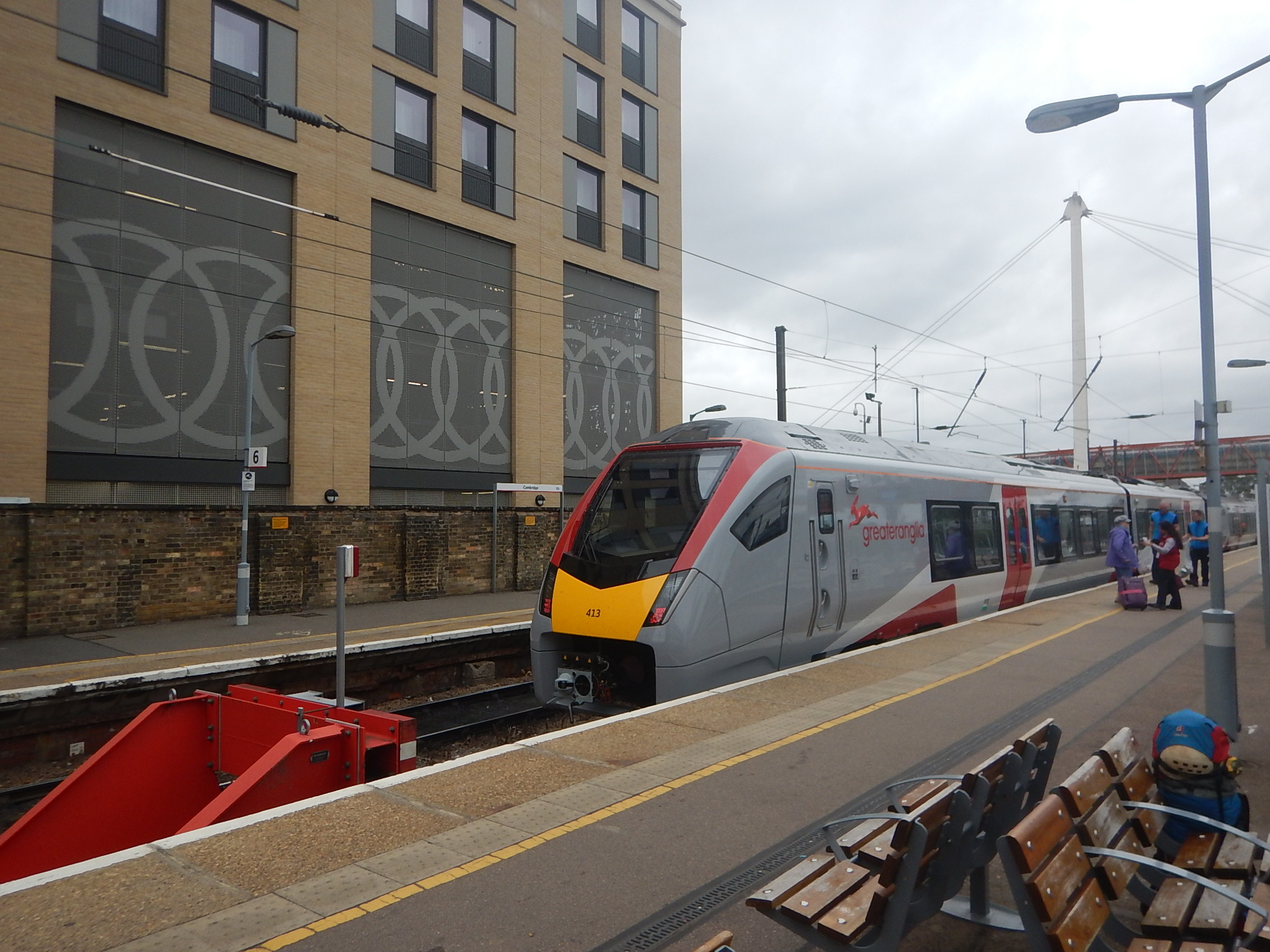
This would probably mean that no new infrastructure is needed.
As both Ipswich and Norwich stations are fully electrified, charging the batteries on hourly shuttles between the three stations, wouldn’t be a problem, if and when the trains are fitted with enough battery capacity to bridge the fifty mile gaps in the electrification on the routes.
Three-Car Trains And Batteries
The two short Southern routes; Coclester Town and Sudbury and Ipswich and Felixstowe will probably be run by three-car Class 755 trains, which have two diesel engines and two spare slots in the PowerPack.
Battery modules in both spare slots would give a twenty-seven mile range, which could enable the following.
- Running a return trip between Marks Tey and Sudbury, after charging the batteries on the main line between Colchester Town and Marks Tey.
- Running a return trip between Ipswich and Felixstowe, provided enough charge can be taken on at Ipswich.
The article in Issue 888 of Rail Magazine, also says this about the new Class 755 trains entering service.
The last line to receive them will be Sudbury-Marks Tey, will exclusively be operated by three-car Class 755/3s due to infrastructure restraints on the branch. No date has been given.
It should also be noted that the three-car trains are going to be the last to be delivered.
I feel that Stadler and Greater Anglia are following a cautious and very professional route.
Consider.
- They introduced the new trains on the Wherry Lines, which are close to the Crown Point Depot.
- Services between Norwich and Sheringham and Norwich and Cambridge were introduced next.
- All the initial services have used four-car trains
- Greater Anglia held on to the standby train of two Class 37 locomotives and Mark 2 coaches until last week.
- They have stated that training of Ipswich drivers is starting, ahead of services from the town to Cambridge, Felixstowe, Lowestoft and Peterborough.
- All the Ipswich cervices can be run using four-car trains.
- As I said earlier, the only service that needs a three-car train is Sudbury and Marks Tey.
- A three-car train could probably be thoroughly tested on one of the Norwich routes before deplayment to Sudbury.
- It should also be noted that a three-car train is only a four-car train with two less diesel engines and one less trailer car.
So far everything seems to have gone very well, with no adverse reports in the media.
Stadler have orders for further bi-mode trains for South Wales and other places in Europe. At least one of these orders, that for the South Wales Metro, includes a number of diesel/electric/battery versions.
Given the problems, that Bombardier and others have had with getting the complex software of these trains to work correctly, if I was Stadler’s Project Manager on multi-mode Flirts, I would be testing the trains and their software morning, noon and night!
So could the planned later arrival of the three-car Class 755 trains, be partly to enable Stadler to fully investigate the characteristics of a multi-mode Flirt?
After all, Greater Anglia only need a couple of three-car trains to start the service between Sudbury and Marks Tey, of the fourteen on order. And they have twenty-four four-car trains on order for the other routes.
They are also replacing twenty-four assorted diesel multiple units with thirty-eight longer new bi-mode multiple units.
I do wonder, if there is a cunning plan being hatched between Greater Anglia and Stadler.
- Stadler finalises the design and the software for a PowerPack, that contains both diesel and battery modules.
- Stadler thoroughly tests the design using a Greater Anglia three-car train in Switzerland.
- Stadler shows the concept to other prospective customers.
- Greater Anglia certifies the three-car Class 755 bi-mode train in the UK.
- Greater Anglia runs three-car 755 trains between Colchester Town and Sudbury, using the electrification between Marks Tey and Colchester Town, as they have planned for some time.
- When ready, Class 755 trains with batteries are introduced between Sudbury and Colchester Town.
Greater Anglia would be running the first battery-electric service using bi-mode battery-electric trains in the UK.
 The Anonymous Widower